ADOPTION OF BRRI DHAN 74 PRODUCTION TECHNOLOGIES BY THE FARMERS OF BRAHMANPARA UPAZILA UNDER CUMILLA
DISTRICT
SUFIA AKTER
DEPARTMENT OF AGRICULTURAL EXTENSION &
INFORMATION SYSTEM
SHER-E-BANGLA AGRICULTURAL UNIVERSITY DHAKA-1207
June, 2021
ADOPTION OF BRRI DHAN 74 PRODUCTION TECHNOLOGIES BY THE FARMERS OF BRAHMANPARA UPAZILA UNDER CUMILLA DISTRICT
BY
SUFIA AKTER Reg. No. 19-10120
A thesis
Submitted to the Faculty of Agriculture Sher-e-Bangla Agricultural University, Dhaka In partial fulfillment of the requirements for the degree of
MASTER OF SCIENCE (MS) IN
AGRICULTURAL EXTENSION SEMESTER: JANUARY-JUNE, 2021
APPROVED BY:
(M. Zahidul Haque) Supervisor
Professor
Dept. of Agril. Ext. and Info. System Sher-e-Bangla Agricultural University
(Dr. Md. Rafiquel Islam) Co-Supervisor
Professor
Dept. of Agril. Ext. and Info. System Sher-e-Bangla Agricultural University
Prof.Dr. Mohammad Zamshed Alam Chairman
Examination Committee
Dept. of Agricultural Extension and Information System Sher-e-Bangla Agricultural University
Department of Agricultural Extension and Information System Sher-e-Bangla Agricultural University
Sher-e-Bangla Nagar, Dhaka-1207
CERTIFICATE
This is to certify that the thesis entitled “ADOPTION OF BRRI DHAN 74 PRODUCTION TECHNOLOGIES BY THE FARMERS OF BRAHMANPARA UPAZILA UNDER CUMILLA DISTRICT” submitted to the department of Agricultural Extension and Information System, Faculty of Agriculture, Sher-e-Bangla Agricultural University, Sher-e-Bangla Nagar, Dhaka in partial fulfillment of the requirements for the degree of Master of Science (M.S.) in Agricultural Extension, embodies the result of a piece of bona fide research work carried out by SUFIA AKTER, Registration No. 19- 10120 under my supervision and guidance. No part of the thesis has been submitted for any other degree or diploma.
I further certify that any help or source of information, as has been availed of during the course of this investigation has been duly acknowledged by the Author.
Dated: June, 2021
Dhaka, Bangladesh Prof. M. Zahidul Haque Supervisor
Department of Agricultural Extension and Information System
Sher-e-Bangla Agricultural University Sher-e-Bangla Nagar, Dhaka-1207
DEDICATED TO
MY BELOVED
PARENTS
i
ACKNOWLEDGEMENT
At first the author expresses her gratefulness to Almighty Allah who has helped her to pursue her higher education in agriculture and for giving the potency of successful completion of this research work.
With deepest emotion the author wish to express her pious gratitude, indebtedness, felicitation, sincere appreciation to her research Supervisor M. Zahidul Haque, Professor, Department of Agricultural Extension and Information System, Sher-E- Bangla Agricultural University, Dhaka, Bangladesh for his discursive guidance, intense supervision and continuous encouragement during the entire period of research work.
The author also highly grateful and obliged to her research Co-Supervisor Dr. Md.
Rafiquel Islam, Professor, Department of Agricultural Extension and Information System, Sher-E-Bangla Agricultural University, Dhaka, Bangladesh for his continuous encouragement, innovative suggestions, and affectionate inspiration throughout the study period.
The author express her sincere respect Prof. Dr. Mohammad Zamshed Alam, Chairman, Department of Agricultural Extension and Information System, Sher-e- Bangla Agricultural University, Dhaka for providing valuable advice and sympathetic consideration regarding to the research.
The author is also grateful to her all the teachers of Department of Agricultural Extension and Information System, Sher-e-Bangla Agricultural University, Dhaka, Bangladesh for their continuous encouragement and innovative suggestions.
Sincere thanks and thanks are additionally communicated to the Upazila Farming Official and SAAOs of Brahmanpara upazila in the study territory for their altruistic assistance and collaboration in information assortment period. The scientist is particularly appreciative to all the respondents in the study zone for their participation and help in achieving the targets of this exploration work.
ii
The specialist communicates genuine thanks and true thanks to all other departmental and out of departmental teachers of Sher-e-Bangla Agricultural University for their assistance and support. Last however not the least, the author expresses her immense indebtedness, most profound feelings of appreciation to her cherished guardians, sibling and sisters who relinquished all their bliss during the entire examination time frame particularly during her MS study.
At last, the desires, genuine thanks and appreciation to reach out to every one of her family members, well-wishers particularly companions for their motivation, gift, participation and support in all periods of scholastic interest from the earliest starting point to end.
The Author
iii CONTENTS
CHAPTER Title PPAGE NO.
ACKNOWLEDGEMENT i-ii
CONTENTS iii-v
LIST OF TABLES Vi
LIST OF FIGURES Vii
LIST OF APPENDICES Vii
ABBREVIATIONS Viii
ABSTRACT Ix
CHAPTER I INTRODUCTION 1-10
1.1 General Background of the Study 1
1.2 Statement of the Problem 4
1.3 Specific Objectives of the Study 5
1.4 Justification of the Study 5
1.5 Assumptions of the Study 6
1.6 Scope of the Study 7
1.7 Limitations of the Study 8
1.8 Definition of the Terms 8
CHAPTER II REVIEW OF LITERATURE 11-31
2.1 Concept of Adoption and Agricultural Innovation 11
2.1.1 The concept of adoption 11
2.1.2 Technology adoption 12`
2.1.3 Adoption process 13
2.1.4 Levels of adoption of agricultural innovation 16
2.2 Factors Related to the Adoption of Agriculture Technology 16
2.2.1 Characteristic of technology 17
a) Relative advantage 17
b) Compatibility 17
c) Complexity 18
d) Trialability 18
e) Observability 18
2.2.2 Internal factors 19
2.3 Review of the Studies Concerning the Relationship between Farmers’ Characteristics and Their Adoption
19
2.3.1 Age and Adoption 19
2.3.2 Education and Adoption 21
2.2.3 Farm size and Adoption 23
2.2.4 Family size and Adoption 24
2.2.5 Annual income and Adoption 25
2.2.6 Training and Adoption 26
2.2.7 Organizational Participation and Adoption 27
2.2.8 Extension Media Contact and Adoption 28
2.4 The Conceptual Framework of the Study 30
CHAPTER III METHODOLOGY 32-42
3.1 Locale of the Study 32
3.2 Population and Sample of the Study 35
3.3 Distribution of the Population, Sample size and Reserve list 35
3.4 Measurement of Variables 35
3.5 Measurement of Independent Variables 36
iv
3.5.1 Age 36
3.5.2 Education 37
3.5.3 Farm size 37
3.5.4 Family size 38
3.5.5 FarmLand under BRRI dhan 74 production 38
3.5.6 Experience in rice farming 38
3.5.7 Experience in BRRI dhan 74 production 38
3.5.8 Annual family income 39
3.5.9 Income from BRRI dhan 74 production 39
3.5.10 Training on BRRI dhan 74 production technology 39
3.5.11 Organizational participation 39
3.5.12 Extension media contact 40
3.6 Measurement of Dependent Variable 41
3.7 Hypothesis of the Study 42
3.7.1 Research hypothesis 42
3.7.2 Null hypothesis 43
3.8 Instrument for Collection of Data 43
3.9 Data Collection 44
3.10 Compilation of Data 44
3.11 Categorization of Respondents 45
3.12 Statistical Analysis 45
CHAPTER IV RESULTS AND DISCUSSION 46-61
4.1 Selected Characteristics of the Farmers 46
4.1.1 Age 47
4.1.2 4.1.2 Education 48
4.1.3 4.1.3 Farm size 48
4.1.4 4.1.4 Family size 49
4.1.5 Land under BRRI dhan 74 production 50
4.1.6 Experience in rice farming 50
4.1.7 Experience in BRRI dhan 74 production 51
4.1.8 Annual family income 52
4.1.9 Income from BRRI dhan 74 production 52
4.1.10 Training on BRRI dhan 74 production 53
4.1.11 Organizational participation 53
4.1.12 Extension media contact 54
4.2 Adoption of BRRI dhan 74 Production Technologies 55 4.3 Contribution of the Selected Characteristics of the Respondents
and Their Adoption of BRRI dhan 74 Production Technologies
55 4.3.1 Contribution of adoption of BRRI dhan 74 Production
Technologies and Their Education
57 4.3.2 Contribution of experience in rice farming of the farmers to their
adoption of BRRI dhan 74 production technologies
58 4.3.3 Contribution of annual family income of the farmers to their
adoption of BRRI dhan 74 production technologies
59 4.3.4 Significant contribution of training in BRRI dhan 74 production
technology to their adoption of BRRI dhan 74 production technologies
60 4.3.5 Significant contribution of extension contact to their adoption of
BRRI dhan 74 production technologies
61
v
CHAPTER V SUMMARY OF FINDINGS, CONCLUSIONS AND RECOMMENDATIONS
62-68
5.1 Summary of Findings 62
5.1.1 Characteristics of the farmers 62
5.1.2 Adoption of BRRI dhan 74 production technologies 63
5.1.3 Contribution of the selected characteristics of the respondents and their adoption of BRRI dhan 74 production technologies
64
5.2 Conclusions 64
5.3 Recommendations 66
5.3.1 Recommendations for policy implications 66
5.3.2 Recommendations for further study 67
REFERENCES 69-77
APPENDICES 78-80
vi
LIST OF TABLES
Table Title Page No.
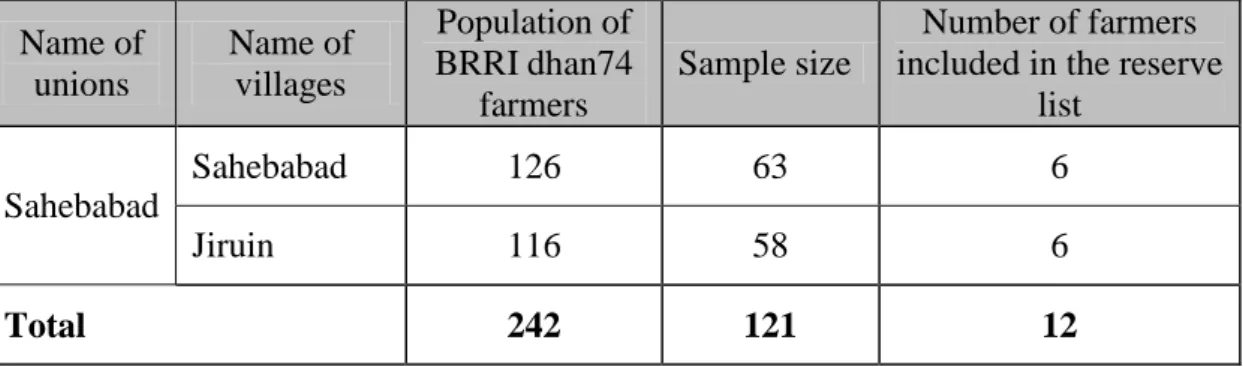
3.1 Distribution of the farmers according to population and sample size and reserve list
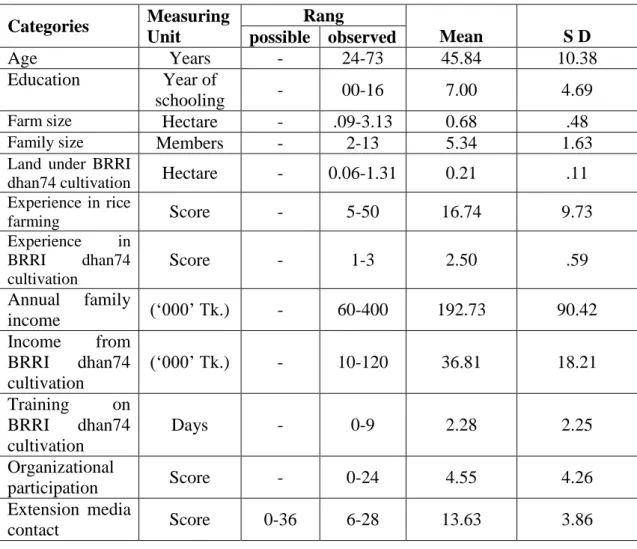
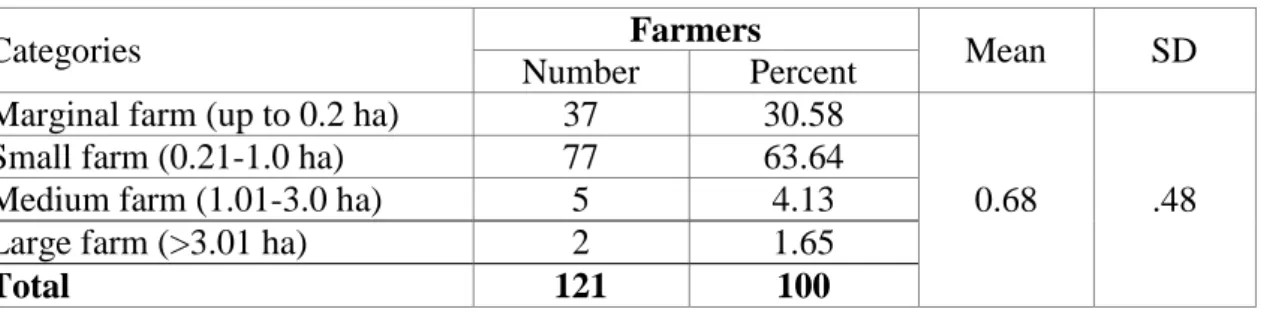
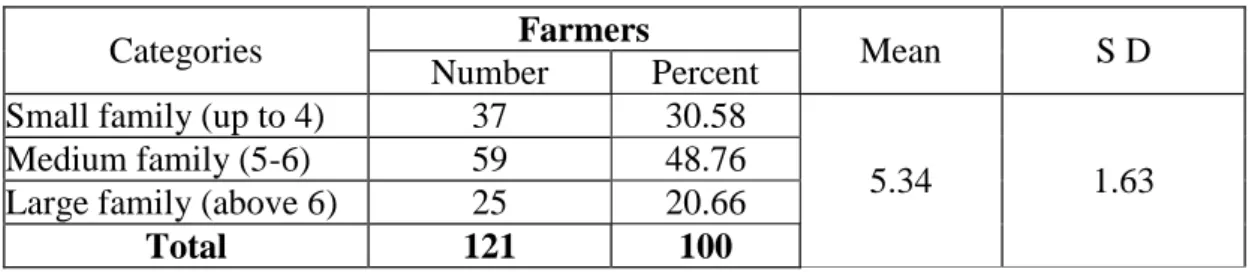
31 4.1 The salient features of the selected characteristics of the farmers 47 4.2 Distribution of farmers according to their age 44 4.3 Distribution of farmers according to their education 48 4.4 Distribution of the farmers according to their farm size 49 4.5 Distribution of the farmers according to their family size 49 4.6 Distribution of the farmers according to their land under BRRI dhan
74 production
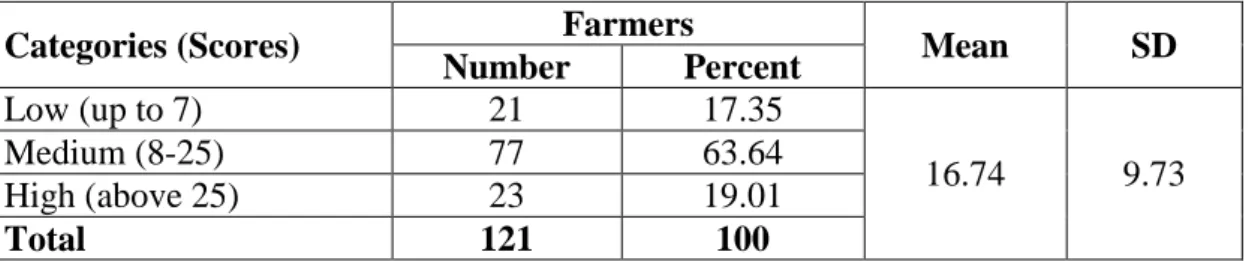
50 4.7 Distribution of the farmers according to their experience in rice
farming
51 4.8 Distribution of the farmers according to their experience in BRRI
dhan74 production
51 4.9 Distribution of the farmers according to their annual income 52 4.10 Distribution of the farmers according to their income from BRRI
dhan74 production
52 4.11 Distribution of the farmers according to training BRRI dhan74
production
53 4.12 Distribution of the farmers according to their organizational
participation
54 4.13 Distribution of the farmers according to their media contact 54 4.14 Distribution of the farmers according to their adoption of BRRI
dhan74 production
55 4.15 Co-efficient of regression showing contribution of the selected
characteristics of the cultivars and adoption of BRRI dhan 74 production technologies
56
vii
LIST OF FIGURES
Figure Title Page No.
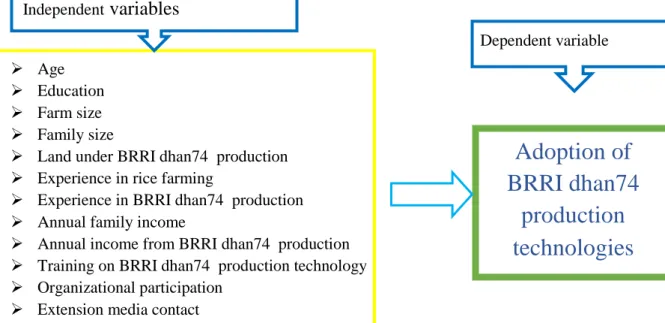
2.1 The conceptual framework of the study 31
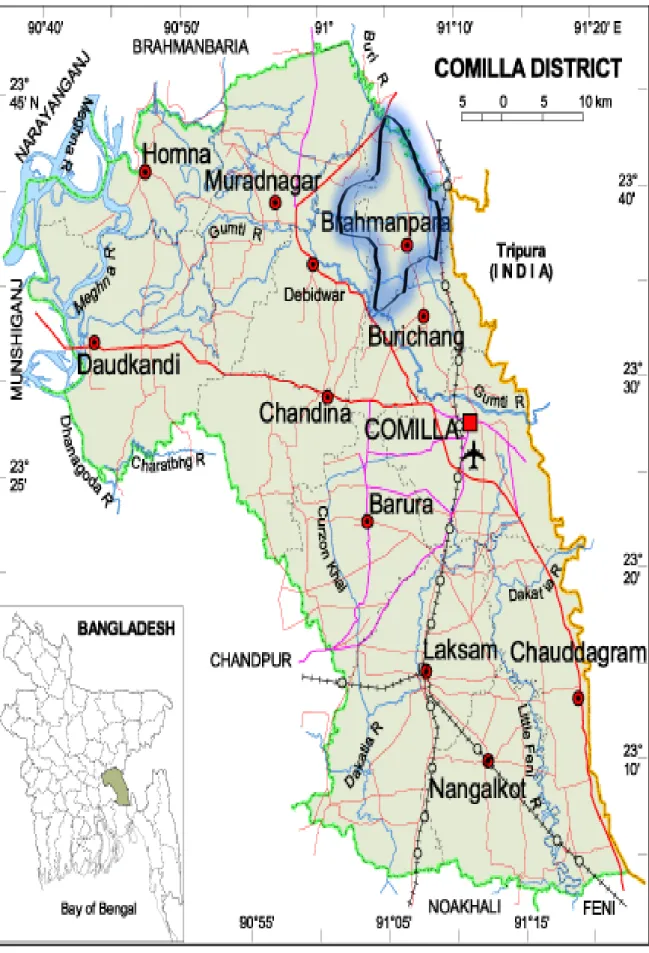
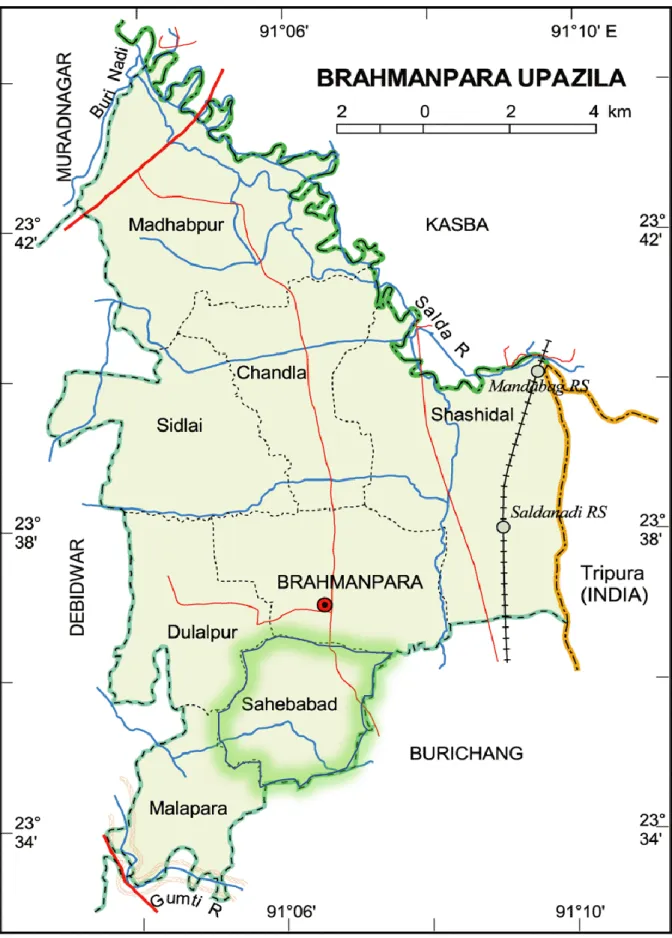
3.1 A map of Cumilla district showing Brahmanpara upazila 33 3.2 A map of Brahmanpara upazila showing the study area 34
LIST OF APPENDICES
SL. No. APPENDICES Page No.
Appendix -A English version of an interview schedule used for data
collection 78
viii
ABBREVIATIONS
β Multiple Regression
BBS Bangladesh Bureau of Statistics GDP Gross Domestic Product
DAE Department of Agricultural Extension Et al. All Others
USA United Nations of America
FAO Food and Agriculture Organization HYV High Yielding Varieties
GoB Government of Bangladesh MoA Ministry of Agriculture
UNO The United Nations MoYS Ministry of Youth and Sports
MoP Muriate of Potash TSP Triple Super Phosphate IPM Integrated Pest Management
BINA Bangladesh Institute of Nuclear Agriculture
BADC Bangladesh Agricultural Development Corporation STW Shallow Tube-well
DTW Deep Tube-well
SAAO Sub Assistant Agriculture Officer SAU Sher-e-Bangla Agricultural University SPSS Statistical Package for Social Sciences
ix
ADOPTION OF BRRI DHAN 74 PRODUCTION TECHNOLOGIES BY THE FARMERS OF BRAHMANPARA UPAZILA UNDER CUMILLA DISTRICT
ABSTRACT
The purposes of the study were to determine the socioeconomic characteristics of the BRRI dhan74 growers; to determine the extent of adoption of BRRI dhan 74 production technologies and to explore the contribution of the factors that significantly influences adoption of BRRI dhan 74 production technologies by the farmers. The study was undertaken purposively in Brahmanpara upazila under Cumilla district. Validated and well-structured interview schedule was used to collect data from 121 BRRI dhan 74 growers during 15th July, 2021 to 20 August, 2021.
Descriptive statistics, multiple regressions were used for analysis. Above half (57.02%) of the farmers had medium adoption of BRRI dhan 74 production technologies while 15.70 percent and 27.28 percent of the farmers had high and low adoption of BRRI dhan 74 production, respectively. Among 12 selected characteristics of the farmers five characteristics namely- education, experience in rice farming, annual family income, training on BRRI dhan 74 cultivation and media contact of the respondents had significant positive contribution to their adoption of BRRI dhan74 production technologies. The rest 7 characteristics namely, age, farm size, family size, land under BRRI dhan 74 production, experience in BRRI dhan 74 production, income from BRRI dhan 74 cultivation and organizational participation had no significant contribution with their adoption of BRRI dhan74 production technologies.
SUFIA AKTER
1
CHAPTER I INTRODUCTION
1.1 General Background of the Study
Bangladesh is an agrarian country; about 76% of the people live in rural areas, and 47.5% of the total manpower is involved in agriculture. In Bangladesh, agriculture contributes 13.10% of the gross domestic product (GDP) of the country in the year of 2020-2021 (BEC, 2021). Bangladesh has a long history of rice cultivation. Rice is grown throughout the country except in the southeastern hilly areas. The agroclimatic conditions of the country are suitable for growing rice year-round. However, the national average of rice yield is much lower (2.94 t/ha) than that of other rice-growing countries (BBS, 2019).
Rice is the staple food for about 166 million people of the country. The population growth rate is 1.36 percent per year, and if the population increases at this rate, the total population will reach 238 million by 2050. An increase in total rice production is required to feed this ever-increasing population. At the same time, the total cultivable land is decreasing more than 1% per year owing to the construction of industries, factories, houses, and highways. On the other hand, due to urbanization, food habits tend to be changed demanding the cultivation of new crops that should share land used for rice cultivation.
Therefore, the modern varieties of rice have the capacity to contribute to increase the yield per unit area. Among the modern varieties, BRRI dhan74 is tend to have the capacity to increase rice production in a sustainable manner for the food and nutritional security of this highly populated country.
There are three rice-growing seasons in Bangladesh: Aus, Aman, and Boro.
Aus is the pre-monsoon upland rice growing season under rain fed conditions.
Boro is the dry-season irrigated rice planted from December to early February and harvested between April and June. Earlier, Boro was grown in the very low-lying areas with residual water from the wet season and irrigated manually
2
using surface water in times of water shortage (Fujita, 2010). Such traditional boro rice was transplanted after the recession of floodwater in November and harvested from April to May. In the mid-1960s, the modern high yielding rice variety IR-8 was introduced in Bangladesh agriculture, primarily for Boro using irrigation. Then, beginning in 1970, another International Rice Research Institute (IRRI) bred variety IR-20 was introduced to farmers for the Aman season. Since 1973, the Bangladesh Rice Research Institute (BRRI), in partnership with IRRI, has been engaged in adaptive research to evaluate elite genetic lines under the IRRI-managed International Network for Genetic Evaluation of Rice (INGER). Under the brand name BR, and later BRRI dhan, it has released varieties that suit the agro-ecological conditions in Bangladesh (Hossain et al., 2013). Many IRRI lines were well suited in Bangladesh for the Boro season, such as BR1, BR3, BR14, BRRI dhan 28, BRRI dhan 29 and BRRI dhan 74.
The development of groundwater irrigation system by tube wells accelerated, the rapid installation of shallow tube wells throughout the 1980s boosted the cropped area and yield of dry-season Boro rice dramatically (Fujita, 2010).
With the introduction of ground water irrigation systems and the incorporation of modern high-yielding varieties, dry-season Boro rice gained popularity. The rice cropping pattern of Bangladesh has changed-areas once occupied by the rainfed Aus gradually shifted to Boro cultivation. As a result, the contribution from each season also changed-Aman rice previously contributed a major portion of total rice, but Boro is now the major contributor to total rice production in the country, despite Aman coverage area being greater. Aus, Aman, and Boro rice were recently reported to account for 7%, 38%, and 55%, respectively, of the total rice production in Bangladesh (Risingbd, 2014). In the year 2018-2019, rice production was 43.3 million ton (BBS, 2020). Bangladesh has made notable progress in sustaining commendable growth in rice production, and this growth in production has originated mostly from the shift from low-yielding traditional to high-yielding modern varieties when irrigation
3
facilities were developed (Hossain, 2006). Another factor contributing to the increase total rice production by irrigation and modern rice varieties such as BRRI dhan74 is the key to change the rural economy.
Although Bangladesh has an agrarian economy, about 89% of total farm- holdings are below 2.49 acres in size (Kashem, 2013). Socioeconomic factors, such as the predominance of small and marginal farmers and tenancy cultivation in agrarian structure, did not impede the adoption of modern rice varieties in Bangladesh (Mandal, 1980). Moreover, the major constraints to the adoption of modern rice varieties were in fact logistic factors (Hossain, 2006).
History proves that the logical development (when rehearsed by expansive number of rice cultivators) decisively affect rice generation in nations like Japan, the Philippines and Indonesia. It is likely that the farmers of Bangladesh will create comparable outcomes on the off chance that they receive modem innovations and utilize sufficient and gainful info on their territories. It is along these lines, vital that the idea and advantages of modem advances ought to be scattered to the farmers in persuading and appealing way, so that agriculturist reaction rapidly to receive those advances. This is without a doubt an educative process and, concerned for the most part with expanding farming generation and enhancing expectations for everyday comforts of farmers. The legislature has taken another rural augmentation strategy to achieve the craved objective.
An individual more often doesn't receive another innovation unless he finds the advantage of it by himself. Regardless of the possibility that he is persuaded about its advantage still he may not utilize the same due to absence of money related capacity. Now and again, he may have intended to utilize the innovation however his social standards and conventions does not urge him to utilize the same for prestigious elements. All these identity socio-economy and mental elements take a shot at a person when he is gone up against with another circumstance or with a changed program.
4
Cumilla locale is considered as surplus rice growing zone of the nation, where BRRI dhan 74 was a noteworthy endeavor. Brahmanpara upazila range, in this manner, considered a most reasonable area to concentrate the marvels of selection of BRRI dhan 74 innovations by the rice cultivators. Contemplates on individual, gathering and society uncovered that acknowledgment of modem innovations is restrictive upon many variables. Some of these are social, individual, practical and situational components. While directing any review on the reception of modem advancements, these elements should be considered.
An extremely couple of past research work attempted to discover the above certainties. Subsequently, the present examine felt need to lead an exploration entitled “Adoption of BRRI dhan 74 production technologies by the farmers in Brahmanpara upazila under Cumilla District.”
1.2 Statement of the Problem
The achievement of any innovation relies on its dissemination among the potential clients, which eventually is measured by the level of selection of that innovation. Whenever advancement is acquainted with the farmer, it might be promptly or somewhat or completely acknowledged and it might likewise happen that the reception of advancement is stopped or completely ceased.
These happenings are unquestionably because of various variables. Selection of BRRI dhan 74 innovations are impacted by the farmer's statistic and financial position. A comprehension about a similar will be helpful to the specialists, organizers and augmentation specialists in doing exploration, arranging and execution of expansion projects for upgrading adoption of BRRI dhan 74 production technologies. The motivation behind this review along these lines was to investigate the connections between various qualities of the farmers and their selection of BRRI dhan 74 production. This was finished by looking for answers to the accompanying queries:
5
i. What are the attributes of BRRI dhan 74 producers?
ii. To what extent the BRRI dhan 74 production technologies were adopted by the farmers?
iii. What personal and socio-economic characteristics influence farmers to adopt BRRI dhan 74 production?
iv. To what extent of the selected characteristics of farmers contribute to the adoption of BRRI dhan74 production technologies?
The above-mentioned questions obviously impel the researcher for conducting the present research entitled “Adoption of BRRI dhan 74 production technologies by the farmers in Brahmanpara upazila under Cumilla District”.
1.3 Specific Objectives of the Study
i. To determine the socioeconomic characteristics of the BRRI dhan 74 cultivars;
ii. To determine the extent of adoption of BRRI dhan74 production technologies; and
iii. To explore the contribution of the factors that significantly influences adoption of BRRI dhan 74 production technologies by the farmers.
1.4 Justification of the Study
Cumilla district has a rich heritage of the farmers mostly living in hilly areas, except Brahmanpara upazila. This area is suitable for hybrid rice seed production considering following aspects i) temperature, ii) wind follow, iii) sun light, iv) rain fall and v) low storm. In that areas deficit of food grains is a chronic problem as the pressure of population is massive. Limitation of cultivable land and lack of knowledge and skill about selective hybrid rice seed production are the major problem for the farmers. So, to ensure adequate food supply, it is necessary to give thrust to increase food production using BRRI dhan 74 production technologies. Agricultural intensification, to minimize food
6
shortage and maximize self-sufficiency in food production is possible only when Adoption of BRRI dhan 74 production technologies and their application skills create positive impact on the behavior of ultimate users.
Several research institutes have developed quite a good number of modern agricultural technologies but the farmers have so far adopted a few of them.
Technical, biological, environmental and socio-economic barriers are the main hindrances of technology transfer and adoption of hybrid rice seed production technologies. Selected BRRI dhan 74 production technologies must be simple, demand driven, locally available, economically feasible and socially acceptable to bring desirable changes in attitude of the farmers for their adoption.
It is obviously true that farmers are the key elements of adoption of BRRI dhan 74 technologies. At present, there is a lack of adequate understanding as to how the characteristics of the farmers influence their adoption of hybrid rice seed cultivation technologies. These facts indicate the need for an investigation to ascertain the relationships of the characteristics of the farmers with their adoption of BRRI dhan 74 production technologies. Findings of this study, therefore, would be helpful to the planners and extension personnel in planning and execution of programs for enhancing the rice production yield.
1.5 Assumptions of the Study
In this study, the researcher had the following assumptions in mind while carrying out the study:
1. The farmers included in the sample were competent to furnish proper responses to the items included in the interview schedule.
2. The researcher who also acted as the interviewer was well adjusted to the socio-cultural environment of the study area. The researcher collected data with utmost care and can be treated as reliable.
7
3. The responses furnished by the respondents were reliable and they truly expressed their opinion on adoption of BRRI dhan 74 production technologies and their selected characteristics.
4. The sample size was representative of the whole families of the study area.
5. The findings of the study would be useful for planning and execution of the programmers in connection with adoption of BRRI dhan 74 production technologies.
6. The measures of the adoption of BRRI dhan74 production technologies by the farmers are normally and independently distributed with their respective means and standard deviation.
7. The adoption of BRRI dhan 74 production technologies by the farmers was linearly related with their selected characteristics.
1.6 Scope of the Study
The findings of the study will particularly be applicable to Brahmanpara upazila under Cumilla district. However, the findings may also be generally applicable to other areas of the district where the social ecosystem is not differing much with those of the study area. Thus, the findings are expected to be useful to the planners for preparation of programmers for rapid adoption of BRRI dhan 74 cultivation technologies by the farmers. The findings may also be helpful to the extension workers of different national building departments / organizations to improve their technique and strategy of action for effective working method with the people to generate rural employment and to improve rural economy. Finally, there is a great scope for investigation on farmers' adoption of BRRI dhan 74 production technologies, because little study was conducted on this so far in greater Cumilla district.
8 1.7 Limitations of the Study
The present study was undertaken with a view to have an understanding on the level of adoption of BRRI dhan 74 production technologies by the farmers of Brahmanpara upazila under Cumilla district. In order to manage the handle, the research, it became necessary to impose some limitations on certain aspects of the study. Considering time, money and other necessary resources available to the researcher, the following limitations had been observed throughout the study:
1. The study was confined to villages of Brahmanpara upazila under Cumilla district.
2. Eight (8) BRRI dhan 74 production technologies were selected to examine the extent of adoption among the rice growers of farmers of Brahmanpara upazila.
3. Only the farmers who cultivated BRRI dhan 74 were selected for this study.
4. There are many attributers or characteristics of the growers that always vary but only twelve (12) were selected for investigation in this study as stated in the objectives. This was done to complete the study within limited resources and time.
5. The researcher relied on the data furnished by the farmers from their memory during interview.
6. Population for the present study was kept confined within the heads of farm families in the study area, because they were the decision makers in their respective rice cultivation technologies.
1.8 Definition of the Terms
In order to avoid confusion and misunderstanding, certain terms used throughout the study are defined as follows:
Age: Age of the respondent was defined as the period of time in actual years from his birth up to the time of interviewing.
9
Education: Education referred to the development of desirable Knowledge, skill and attitude in the individual through reading, writing and other related activities. It was measured in terms of actual grades or class passed by a respondent.
Farm size: It referred to the total area on which a farmers family carries on farming operation. The area is estimated in terms of full benefit to the farmers family.
Family size: Family size of sugarcane growers refers to the actual number of members in this family.
Experience in rice production: Experience as a general concept comprises knowledge or skill of something or some event gained through involvement in or exposure to that thing or event. Experience refers to the nature of the events someone or something has undergone. Experience is what is happening to use all the time-as long we exist. However, in this study, it was considered as the year of starting from first rice production till the year of data collection.
Annual Family Income: The term annual family income refers to the annual gross income or total earning of a respondent himself and the members of his family from agriculture, service, business and other sources during a year. It was expressed in taka. However, a unit scores of one (1) was assigned for each thousand-taka income.
Training received: It referred to the total number of days that a respondent received training in his entire life from different organization under different training programs.
Extension contact: It refers to the extent of contact with various communication media by the farmers in receiving agricultural information.
10
Improved Seed: Improved seed means standardized quality seed, which possesses the quality of the varietal purity, germination capacity, physical purity, optimum moisture content, optimum size and shape, healthy and vigorous.
Technology: Technology is a design of instrumental action that reduces the uncertainty in the cause-effect relationship involved in achieving a desired outcome (Rogers, 1995). In other words, technology refers to the combination of knowledge, inputs and managed mental practices, which are used together with productive resources to gain a desired output (ILEIA, 1991: 3).
BRRI dhan 74 production technologies: BRRI dhan 74 production technologies referred to the different kind of technologies which were used for BRRI dhan74 cultivation. In this study, technology was defined as the combination of four practices (i.e. variety, intercropping, recommended dose of urea and use of Sheller) used for BRRI dhan cultivation.
Variable: A general indication in statistical research of characteristic that occurs in a number of individuals, objects, groups etc. and that can take on various values, for example the age of an individual.
Adoption: Adoption is the implementation of a decision to continue the use of an innovation. According to Rogers (1995), “Adoption is a decision to make full use of an innovation as the best course of action available”. When an individual takes up a new idea as the best course of action and practices it, the phenomenon is known as adoption (Ray, 1991).
11 CHAPTER II
REVIEW OF LITERTURE
Review of literature gives the clear and concise direction to the researcher for conducting the experiment. In this Chapter, review of literatures relevant to the objectives of this study was presented. This was mainly concerned with
“adoption of modern technology”. There was dearth of literature with respect to research studies on this aspect. So, the directly related literatures were not readily available for this study. Some researchers addressed various aspects of the adoption of technology and its effect on client group and suggesting strategies for their emancipation from socio-economic deprivations. A few of these studies relevant to this research are briefly discussed in this chapter under the following three sections:
Section 1: Concept of Adoption and Agricultural Innovation
Section 2: Factors Related to the Adoption of Agriculture Technology
Section 3: Review of the Studies Concerning the Relationship between Farmers‟ Characteristics and Their Adoption
Section 4: Conceptual Framework of the Study
2.1 Concept of Adoption and Agricultural Innovation 2.1.1 The concept of adoption
According to Feder et al. (1985), adoption is “the degree of use of new innovation in long run equilibrium when a farmer has full information about the new technology and its potential”. However, the equilibrium level of adoption will not be achieved if the technology is still being experimented by the farmers. Rogers (1995) defines innovation as an idea, practice, or object that is perceived as new by an individual or other unit of adoption. This wide definition captures any idea or process that is perceived to have utility.
Lionberger (1968) and Van den Ban and Hawkins (1996) contended that, adoption is a process, which the decision to adopt usually takes time. People do
12
not adopt new practice or idea as soon as they hear about it; they may wait several years before trying it. Therefore, the adoption and diffusion of innovation process has been characterized as the acceptance overtime of some specific items by individuals (or adoption unit) linked to specific channels of communication. In this study the word innovation, technology and recommended practices will be used interchangeably.
2.1.2 Technology adoption
The term technology „has been defined in different ways by various authors.
Rogers (1995) defined technology as, the design for instrumental action that reduces the uncertainty in the cause-effect relationship involved in achieving a desired outcome. According to Guerin and Guerin (1994), and Rogers (1995), technology is usually comprised of hardware (the object component) and software (idea component) but it can also be made up entirely of information, which is the software component. In contrast, however, Ison and Rusell (2002) defined technology as the application of scientific knowledge to practical tasks.
Abara and Singh (1993) in their work on the ethics and biases of technology adoption supported this view. They argued that it is the actual application of knowledge that is termed - technology. According to Phiri (2011), this definition by Ison and Rusell (2002), and Abara and Singh (1993) can be best used to describe those technologies that are comprised of entirely new ideas or information. Feder and Just (1985) on the other hand, described technology as an agricultural practice that is considered new to an area. These agricultural practices (technology) may take the form of new machinery, a high yielding crop, a recommendation for a new method of fertilizer use, or new methods of controlling pests and diseases (Guerin and Guerin, 1994). The word technology and innovation are used synonymously (Rogers, 2003). Various definitions are used in the literature to refer to the ideas, practices or objects perceived to be new by a potential adopter. Guerin and Guerin (1994) support Rogers (2003) definition of innovation as an-idea, practice or object perceived as new by an individual or other unit of adoption. They defined innovation in terms of how it
13
is viewed by farmers whilst making a decision to adopt or reject it. Therefore, a technology can be a new idea, technique or object. For this study, the term technology will be used from this point onward to also mean innovation. In the following section, the adoption process is reviewed.
2.1.3 Adoption process
Rogers (2003) described adoption as the decision by an individual to use the introduced technology as the best available alternative. Feder et al., (1985) on the other hand defined adoption as-the degree of use of a new technology in the long-run equilibrium when farmers have the full information about the new technology. According to Spence (1994), adoption is not a one-off decision but a process in which the individual finally decides to use the introduced ideas or techniques, after a thorough assessment has been carried out. On the other hand, Guerin and Guerin (1994) defined technology adoption as - the implementation of the already transferred knowledge about a technological innovation and is the end product of the technology transfer is the process.
According to Rogers (2003), technology adoption involves a mental process that individual goes through when he or she becomes aware of information regarding the idea that is perceived to be new. The adoption process continues until decisions are made to use or reject the new idea (Rogers, 2003). The five steps in the adoption decision process are conceptualized as knowledge, persuasion, decision, implementation, and confirmation (Rogers, 2003). Spence (1994) on the other hand, indicated awareness, interest, evaluation, trial and adoption, as the stages involved in the adoption process. Although these authors term the adoption process differently, the steps described by them although have some minor differences, are very similar. These two models are compared in the following paragraphs.
The knowledge stage of the model is when an individual becomes aware of the existence of a technology as he/she receives information about it and
14
understands how it works (Rogers, 2003). However, Spence (1994) described this stage as the awareness stage. Spence further pointed out that the individual may obtain the information through mass media, or from written, spoken or visual material which the individual farmer can access.
The second stage of Rogers (2003) model is persuasion. At this stage, an individual may change his/her attitude towards the technology being introduced. Spence (1994) described this as the interest stage, whilst Pannell et al., (2006) referred to it as the non-trial evaluation phase. During the interest stage, an individual will typically attempt to gain more factual data in order to enable an examination of the innovation at a closer level and to explore it in the context of personal circumstances, past experiences, and prevailing beliefs (Spence, 1994).
The third stage of Rogers (2003) model is decision. During this stage, the individual farmer engages in the activities that will consequently lead to the adoption (or rejection) of the new idea or technique. Spence (1994) considered this to be the evaluation of an innovation. Furthermore, during this process, an individual is attempting to assess whether the advantages will outweigh any perceived disadvantages. Pannell et al., (2006) however, described this stage as the trial evaluation. They stressed that trials contribute substantially to both the decision-making and skill development aspects of the learning process. If small-scale trials are not possible (or not enlightening) for some reason, the opportunities for widespread adoption are greatly diminished. Farmers will be cautious about leaping into full-scale adoption due to the risk that the innovation may prove to be a full-scale failure. Practices which are not trial able may still be adopted, but generally the adoption occurs only after substantial information-seeking, discussion, analysis, and reflection (Pannell et al., 2006).
15
The fourth stage of Rogers (2003) model is implementation. At this stage, the individual begins to completely apply or use the new idea (Rogers, 1995, 2003). Also, at this stage, farmers often look for more information to find out whether they have made the correct decision by adopting the technology (Van den Ban and Hawkins, 1996). Spence (1994) considered this stage as a trial stage, since the implementation of the new idea is undertaken on a smaller scale. Duncan (1969) confirmed Spence‟s argument by stating that adoption is not an all-or-nothing decision. He suggested that there is a grey area between small-scale trialing and the eventual scale of adoption. Adoption is often a continuous process and it may occur within a gradual or stepwise manner, which sometimes results in only a partial adoption (Wilkinson, 2011). Farmers often change and modify their practices or technology, in order to adapt it to their own circumstances. However, Rogers (1995, 2003) argued that this is a full implementation stage, since the decision has already been made.
The fifth stage of Rogers (2003) model is confirmation. This stage is reached when the individual seeks more information towards supporting and reinforcing the decision he or she has made or when he or she discontinues the use of the new idea because of resultant difficulties (Rogers, 2003). Adopters, who are sometimes confronted with conflicting messages from change agents or peers, regarding the new practices, tend to discontinue using the new practice (Van den Ban and Hawkins, 1996). Some adopters may discontinue the use of a new idea or practice after adoption (Rogers, 2003). The discontinuation of a technology may be a result of the individual adopter being dissatisfied with the performance of the new idea or practice. It may also due to the fact that the individual has found a new practice that surpasses the existing one and as such they would like to replace it (Rogers, 2003). Spence (1994) on the other hand indicated that such a rejection could happen immediately after the acceptance of a technology, if there is a better alternative. The adoption of technology is influenced by a range of factors. In the following sections, the factors that influence the adoption decision of a new technology are examined.
16
2.1.4 Levels of adoption of agricultural innovation
Agriculture is a way of life to many subsistence farmers and other farmers are in constant search of ways in which to improve upon their lives. In agriculture context, adoption is decision made by an individual to start using new agricultural innovations with the aim to increase productivity. This might be a new crop variety or management practices adopted by an individual, family or corporation. Adoption of agricultural technologies is considered as one of the ways that offer opportunities for improved agricultural production and hence improved life (Niyegela, 2007).
The technology must be widely adopted in order to self-sustain. Within the rate of adoption, there is a point at which agricultural technology reaches critical mass. The categories of adopters are: innovators, early adopters, early majority, late majority, and laggard. Innovators (2.5%) - had larger farms, were more educated, more prosperous and more risk-oriented, early adopters (13.5%) - younger, more educated, tended to be community leaders, less prosperous, early majority (34%) - more conservative but open to new ideas, active in community and influence to neighbors, late majority (34%) - older, less educated, fairly conservative and less socially active, laggards (16%) - very conservative, had small farms, oldest and least educated. Level of adoption of technology manifests itself in different ways in various cultures and fields and is highly subject to the type of adopters and innovation-decision process (Rogers, 1983).
2.2 Factors Related to the Adoption of Agriculture Technology
There were a number of factors identified in the literature, which have influenced the adoption of agricultural technology. Drawing on several studies on technology adoption such as Adesina and Zinnah (1992); Aguila-Obra and Melendez (2006); Chau and Tam (1997); Doorman (1991); Feder, Just and Zilberman (1985); Rogers (1985). It can be ascertained that the factors, which influence the farmers‟ decision to either adopt or not to adopt a technology can
17
be grouped under three major headings: 1) the characteristics of the technology; 2) internal factors; and 3) external factors. These factors are discussed in the following section.
2.2.1 Characteristic of technology
Rogers (1995) identified five characteristics of a technology that influenced adoption. These are: 1) relative advantage; 2) compatibility; 3) complexity; 4) trialability; and 5) observability. Feder et al., (1985) identified three others and classified these technologies in relation to resource use. These characteristics included: 1) capital-saving or capital intensive; 2) land-saving or land-using;
and 3) labor-saving or labor using. Feder and Umali (1993), Leathers and Smale (1991), and Pannell et al., (2006) also identified associated risks with a new technology as an important factor that influenced adoption decisions of individuals. The following sections draw on the relevant literature to describe in detail each of these factors and their impacts on the adoption decisions of individuals.
a) Relative advantage
Relative advantage is the degree to which an innovation is perceived to be better than the idea it supersedes (Rogers, 1995). Relative advantage can also be described as the advantage of an innovation to achieve goals better (or at a lower cost) than previously (Van Den Ban and Hawkins, 1996). The degree of relative advantage is commonly expressed as economic profit, social prestige or other benefits (Rogers, 1995). It has been found that agricultural practices, which are believed to be profitable, have an increased likelihood of adoption, whilst those that are believed to provide less return are less likely to be adopted (Barr and Cary, 1992; Webb, 2004).
b) Compatibility
Compatibility refers to the degree to which an innovation is perceived as consistent with existing values, past experience, and the needs of the potential
18
adopter (Roger, 1995; 2003). The more compatible an innovation is to a potential farmer‟s life experiences and situation, the more familiar they will be with the innovation and the less uncertain they will be about adopting the innovation (Deressa et al., 2009). Ogunlana (2004) also defined compatibility as being the ease by which the farmers can integrate the new practices into their farming system and access other relevant inputs that would help in its adoption.
c) Complexity
The complexity factor is the degree to which a technology is perceived to be difficult to understand and use (Rogers, 2003). The greater the complexity of an innovation the more negatively a new farmer may view the technology. For example, the discontinuation of a system of rice intensification program, which was introduced in Madagascar for rice farmers, was largely due to the difficulties faced by farmers in understanding the application of the new practices and methods (Moser and Barrett, 2002). Gibson (1994) shared a similar view and reported that farmers in Papua New Guinea rejected growing rice because rice cultivation was seen as complex and difficult to manage.
d) Trialability
Trialability is the degree to which the technology can be tested on a small scale (Rogers, 2003). Ogunlana (2004) pointed out that farmers are always keen to adopt technologies which they have first trialed on a limited basis on their farm, compared to one they have to adopt on a larger scale - which might fail.
Floyd et al., (2003) and Rogers (2003) added that a technology, which can be gradually implemented without a large capital investment from outside, is important, since it will certainly enhance the farmers‟ decision to adopt the technology.
e) Observability
Observability is the degree to which the results of a technology can be visible to others (Rogers, 1995). Cary et al., (2002) argued that a profitable outcome is
19
an important factor that influences the adoption decision. A lack of observable profit, as result of adopting a technology would inhibit the adoption of the technology by others. The more observable the outcomes of an innovation offer and is perceived as being suitable by the farmer, the rate of adoption will become more positive (Rogers, 2003). For example, in a study on mangrove swamp rice varieties in Sierra Leone, Adesina and Zinnah (1992) found that farmers adopted a new variety of rice introduced to the area because they observed that the results were highly visible.
2.2.2 Internal factors
Several authors (Bantel and Jackson, 1989; Deressa et al., 2009; Knowler and Bradshar, 2006; Pannell et al., 2006; Staal et al., 2002) suggested that there are four key internal factors that influence the adoption of technology. These factors include: 1) characteristics of the farmer; 2) on-farm factors; 3) cultural factors; and 4) leadership characteristics. The following sections draw on the relevant literature to describe in detail each internal factor that can influence a farmer‟s adoption decision.
2.3 Review of the Studies Concerning the Relationship between Farmers’
Characteristics and Their Adoption 2.3.1 Age and Adoption
Khan (2019) conducted a study on adoption of hybrid rice production technologies by the farmers of Kalai upazila under Joypurhat district. He found that age of the farmers had no significant relationship with their adoption of hybrid rice production technologies.
Jahan (2017) conducted investigation on “Socio-Economic Determinants of Adoption of Sunflower Production by the Farmers of Patuakhali sadar upazila”
in Bangladesh. She found that age of the farmers had no significant contribution with their adoption of improved practices of sunflower production.
20
Islam (2002) conducted a study on adoption of modem agricultural technologies by the farmers of Sandwip. He found that age of the farmers was not related to their adoption of modem agricultural technologies.
Aurangozeb (2002) conducted a study on adoption of integrated homestead farming technologies by the rural women in RDRS. He found that there was a significant negative relationship between age and adoption of integrated homestead farming Technologies.
Sardar (2002) conducted a study on adoption of IPM practices by the farmers under PETRRA project of RDRS. He found that age of the farmers had a negatively significant relationship with their adoption of IPM practices.
Rahman (2001) observed that there was no significant relationship between age and adoption of Aalok-6201 hybrid rice cultivation practices.
Podder (1999) and Hossain (1999) are found similar results in their respective studies.
Hussen (2001) conducted a study, which concluded that age of the sugarcane growers had a significant negative relationship with their adoption of modem sugarcane cultivation practices. Rahman (1999) also found similar result in this study. Chowdhury (1997) observed that the age of the farmers had no significant relationship with their adoption of selected BINA technologies.
Sarkar 1997) observed that there was no significant relationship between age of the farmers and their adoption of improved potato cultivation practices. Similar finding were observed by Singh (1989) and Kher (1992) in their respective studies.
21
Hamid (1995) conducted a study on adoption of recommended sugarcane cultivation practices by the farmers. He found that age had a significant negative relationship with the adoption of recommended sugarcane cultivation practices.
However, researchers cannot come to a unified decision on farmers‟ age and adoption of BRRI dhan74 production technology relationship, which requires further research.
2.3.2 Education and Adoption
Khan (2019) conducted a study on adoption of hybrid rice production technologies by the farmers of Kalai upazila under Joypurhat district. He found that education of the farmers had a positive significant relationship with their adoption of hybrid rice production technologies.
Jahan (2017) conducted investigation on “Socio-Economic Determinants of Adoption of Sunflower Production by the Farmers of Patuakhali sadar upazila”
in Bangladesh. She found that education of the farmers had significant contribution with their adoption of improved practices of sunflower production.
Islam (2002) conducted a study on adoption of modem agricultural technologies by the farmers of Sandwip. He found that education of the farmers had a positive significant relationship with their adoption of modem agricultural technologies.
Sardar (2002) conducted a study on adoption of IPM practices by the farmers under PETRRA project of RDRS. He found that education of the farmers had a positive significant relationship with their adoption of IPM practices.
22
Aurangozeb (2002) conducted a study on adoption of integrated farming technologies by the rural women in RDRS. He found that there was a positive relationship between education and their adoption on integrated farming technologies.
Hussen (2001) conducted a study on farmers' knowledge and adoption of modem sugarcane cultivation practices. He found that education of the growers had a positive significant relationship with their adoption of modem sugarcane cultivation practices.
Rahman (2001) conducted a study on knowledge, attitude and adoption of the farmers regarding AaIok-6201 hybrid rice in sadar upazila in Mymensingh district. He found that academic qualification of the farmers had a significant positive relationship with their adoption regarding Aalok-6201 hybrid rice.
Chowdhury (1997) found a positive significant relationship between the education of the farmers and their adoption of selected BINA technologies.
Similar results were found by Barkatullah (1985), Ali et al. (1986), Hoque (1993), Bashar (1993) Khan (1993), Pal (1995) and Sarkar (1997) in their respective studies.
Kaur (1988) found that education influenced the opinion of the women about adoption of vegetable gardening animal husbandry etc.
Krishna (1969) conducted a research study on the adoption of hybrid maize in Karimnagar, India. He found significant negative relationship between the education of the respondents and their adoption of hybrid maize.
23
Under above circumstance, we hypothesized that there is positive relation between education and adoption.
2.3.3 Farm size and Adoption
Khan (2019) conducted a study on adoption of hybrid rice production technologies by the farmers of Kalai upazila under Joypurhat district. He found that farm size of the farmers had a positive significant relationship with their adoption of hybrid rice production technologies.
Jahan (2017) conducted investigation on “Socio-Economic Determinants of Adoption of Sunflower Production by the Farmers of Patuakhali sadar upazila”
in Bangladesh. She found that farm size of the farmers had no significant contribution with their adoption of improved practices of sunflower production.
Islam (2002) conducted a study on adoption of modem agricultural technologies by the farmers of Sandwip. He observed that farm size of the farmers had a positive significant relationship with their adoption of modem agricultural technologies. Technologies by the farmers under PETRRA project of RDRS. He found that farm size of the farmers had a positive significant relationship with their adoption of IPM practices.
Aurangozeb (2002) conducted a study on adoption of integrated homestead farming technologies by the rural women in RDRS. He found that there had no relationship between homestead area and their adoption of integrated homestead farming technologies.
Gogoi and Gogoi (1989) in their study observed that size of land holding of farmers had a significant relationship and positive effect on their adoption of plant protection practices.
24
Rahman (2001) conducted an investigation on knowledge, attitude and adoption of Aalok-6201 hybrid rice by the farmers of sadar upazila in Mymenshigh district. He observed that there was a significant positive relationship between farm size of the farmers and their adoption of Aalok-6201 hybrid rice.
Hussen (2001) conducted an investigation on adoption of modem sugarcane cultivation practices by the farmers‟ of Dewangonj upazila in Jamalpur district.
He observed that there was a significant positive relationship between farm size of the farmers and their adoption of modem sugarcane cultivation practices.
Chowdhury (1997) conducted a research on adoption of selected BINA technologies by the farmers. He indicated that farm size of the farmers had a strongly positive significant relationship with their adoption of selected BINA technologies. Okoro and Obibuak. (1992), Khan (1993). Hoque (1993) and Sarkar (1997) observed similar results in their respective studies.
2.3.4 Family size and Adoption
Jahan (2017) conducted investigation on “Socio-Economic Determinants of Adoption of Sunflower Production by the Farmers of Patuakhali sadar upazila”
in Bangladesh. She found that family size of the farmers had no significant contribution with their adoption of improved practices of sunflower production.
Hossain (2003) revealed that family size of the farmers had a significant and positive relationship with their adoption of modern Boro rice cultivation practices.
Sardar (2002) found that the family size of the farmers had significant positive relationship with their adoption of IPM practices.
25
Hossain (1999) conducted a study to determine the farmers' perception of the effects of agro-chemicals on environment. He found no relationship between the farmer's family sizes with their adoption of fertilizer.
Chowdhury (1997) conducted a research study on adoption of selected BINA technologies by the farmers of Boira union in Mymensingh district. He observed that family size of the farmers had positive and significant relationship with the adoption of selected BINA technologies.
Hossain (1991) in his study in sadar thana of Jamalpur observed that family size of the farmers had no significant effect on their adoption of improved farm practices. Similar results were observed by Sobhan (1975), Hoque (1993), Bashar (1993), Hossain (1999) also found that family size of the farmers had positive significant relationship with the adoption of agro-chemical. Similar results were also observed by Pal (1995), Muttalab (1995), Sarker (1997), Chowhdury (1997), Hoque (1993) and Khan (1993).
2.3.5 Annual income and Adoption
Sardar (2002) conducted a study on adoption of IPM practices by the farmers under PETRRA project of RDRS. He found that the annual income of the farmers had no relationship with their adoption of IPM practices.
Aurangozeb (2002) conducted a study on adoption of integrated homestead farming technologies by the rural women in RDRS. He found that there was a positive significant relationship between annual income of the respondents and their adoption of integrated homestead farming Technologies.
Rahman (2001) conducted an investigation on knowledge; attitude and adoption of Alok-6201 hybrid rice fry the farmers of sadar upaziia in
26
Mymensingh district. He observed that there was a significant positive relationship between annual income of the farmers and their adoption of Alok- 6201 hybrid rice.
Hussen (2001) conducted an investigation on adoption of modem sugarcane cultivation practices by the farmers of Dewangonj upazila in Jamalpur district.
He observed that there was a significant positive relationship between annual income of the farmers and their adoption of modem sugarcane cultivation practices.
Islam (2002) conducted a study on adoption of modem agricultural technologies by the farmers of Sandwip. He observed that the annual income of the farmers had no relationship with their adoption of modem agricultural technologies.
Chowdhury (1997) found a significant and positive relationship between annual income and adoption of selected BINA technologies. Okoro and obibuak (1992), Khan (1993), Sarker (1997) observed similar result in their respective studies. Tolawar and Hirevenkaragouder (1989) studied on factors of adoption of poultry management practices. They revealed that the farmers having high income tend to own bigger size of poultry unit and possess more knowledge of improved practices leading to higher level of adoption.
2.3.6 Training and Adoption
Rahman (2001) observed in study that training received of the farmers had a significant and positive relationship with their adoption regarding Aalok-6201 hybrid rice.
27
Islam (2002) conducted a study on farmers‟ knowledge and adoption of ecological agricultural practices under the supervision of Proshika. He found that agricultural training exposure of the farmers had no significant relationship with their adoption of ecological agricultural practices.
2.3.7 Organizational Participation and Adoption
Khan (2019) conducted a study on adoption of hybrid rice production technologies by the farmers of Kalai upazila under Joypurhat district. He found that organizational participation of the farmers had a positive significant relationship with their adoption of hybrid rice production technologies.
Jahan (2017) conducted investigation on “Socio-Economic Determinants of Adoption of Sunflower Production by the Farmers of Patuakhali sadar upazila”
in Bangladesh. She found that organizational participation of the farmers had significant contribution with their adoption of improved practices of sunflower production.
Sardar (2002) conducted a study on adoption of IPM practices by the farmers under PETRRA project of RDRS. He observed that organizational participation of the farmers had no significant relationship with their adoption of IPM practices.
Rahman (2001) conducted a study on knowledge attitude and adoption of the farmers regarding Aalok 6201 hybrid rice in Sadar upazila of Mymensingh district. He found that organizational participation of the farmers had a significant and positive relationship with their adoption regarding Aalok 6201 hybrid rice.
Mostafa (1999) conducted a study on adoption of recommended mango cultivation practices by the mango growers of Nawabganj Sadar thana. He found that organizational participation of mango growers had a significant
28
positive relationship with their adoption of recommended mango cultivation practices.
Sarker (1997) conducted a study on correlates of selected characteristics of potato growers with their adoption of improved potato cultivation practices in five village of Comilla district. He observed that organizational participation of the potato growers had no relationship with their adoption of improved potato cultivation practices.
Kher (1992) carried out a research study on the adoption of improved wheat cultivation practices by the farmers in selected village Rajouri block, India. He observed that there was no significant relationship between the farmers' social participation and their adoption of improved wheat cultivation practices.
2.2.8 Extension Media Contact and Adoption
Khan (2019) conducted a study on adoption of hybrid rice production technologies by the farmers of Kalai upazila under Joypurhat district. He found that extension media contact of the farmers had a positive significant relationship with their adoption of hybrid rice production technologies.
Jahan (2017) conducted investigation on “Socio-Economic Determinants of Adoption of Sunflower Production by the Farmers of Patuakhali sadar upazila”
in Bangladesh. She found that extension media contact of the farmers had significant contribution with their adoption of improved practices of sunflower production.
Islam (2002) conducted a study on adoption of modem agricultural technologies by the farmers of Sandwip. He found that extension media, contact of the farmers had no significant relationship with their adoption of modem agricultural technologies.