SOCIO DEMOGRAPHY OF BROILER FARMERS, THEIR PERCEPTION AND INDISCRIMINATING
USE OF ANTIBIOTIC AND ITS EFFECTS
NUSRAT JAHAN LINA
DEPARTMENT OF BIOCHEMISTRY
SHER-E-BANGLA AGRICULTURAL UNIVERSITY DHAKA-1207
DECEMBER, 2020
SOCIO DEMOGRAPHY OF BROILER FARMERS, THEIR PERCEPTION AND INDISCRIMINATING USE OF ANTIBIOTIC
AND ITS EFFECTS
By
NUSRAT JAHAN LINA REGISTRATION N0. 18-09209
A Thesis
Submitted to the Faculty of Agriculture, Sher-e-Bangla Agricultural University, Dhaka.
In partial fulfillment of the requirements for the degree of
MASTER OF SCIENCE IN
BIOCHEMISTRY
SEMESTER: JULY- DECEMBER, 2020
Approved by:
____________________________
( Dr. Kamal Uddin Ahmed )
ProfessorDepartment of Biochemistry Sher-e-Bangla Agricultural University,
Dhaka-1207.
Supervisor
____________________________
( Md. Nuruddin Miah )
ProfessorDepartment of Biochemistry Sher-e-Bangla Agricultural University,
Dhaka-1207.
Co–Supervisor
____________________________
(Prof. Dr. Ashrafi Hossain) Chairman
Examination Committee
Department of BiochemistrySher-e-Bangla Agricultural University, Dhaka-1207.
December, 2020
Department of Biochemistry Fax: +88029112649 Sher-e-Bangla Agricultural University
Web site: www.sau.edu.bd Dhaka-1207, Bangladesh
CERTIFICATE
This is to certify that the thesis entitled, “SOCIO DEMOGRAPHY OF BROILER FARMERS, THEIR PERCEPTION AND INDISCRIMINATING USE OF ANTIBIOTIC AND ITS EFFECTS” submitted to the Department of Biochemistry, Faculty of Agriculture, Sher-e-Bangla Agricultural University, Dhaka, in partial fulfillment of the requirements for the degree of MASTER OF SCIENCE in BIOCHEMISTRY, research work carried out by NUSRAT JAHAN LINA bearing Registration No. 18-09209 under my supervision and guidance. No part of the thesis has been submitted for any other degree or diploma in any other institutes.
I further certify that such help or source of information, as has been availed of during the course of this investigation has duly been acknowledged.
Dated: December, 2020 ……….
Dhaka, Bangladesh (Dr. Kamal Uddin Ahmed) Professor
Department of Biochemistry Sher-e-Bangla Agricultural University
Supervisor
I
Acknowledgements
All praises and complements are due to the Supreme Regulator and Ruler of the Universe, “Almighty Allah” for the blessing upon the successful accomplishment of education, to complete the research work and theses leading to Master of Science (MS) in Biochemistry. The author likes to express her heartfelt respect, deep sense of gratitude and profound indebtedness to her reverend Supervisor, Professor Dr. Kamal Uddin Ahmed, Department of Biochemistry, Sher-e- Bangla Agricultural University, Dhaka for his scholastic guidance, valuable advice, important suggestions and supervision throughout this research work and in preparing this theses. The author also extends her sincere appreciation, profound regards and cordial thanks to her Co–Supervisor, Professor Md. Nuruddin Miah, Department of Biochemistry, Sher-e- Bangla Agricultural University, Dhaka for his kind help constructive advice , faithful criticism and encouragement during the compilation of this theses. The author feels to express her heartfelt thanks to the honorable chairman of Biochemistry Professor Dr.
Ashrafi Hossain for her valuable suggestions, instructions, cordial help and encouragement during the period of the study. Profound thanks and indebtedness are also due to all the teachers of Biochemistry Department, Sher-e-Bangla Agricultural University, Dhaka for their valuable teaching, sympathetic co–operation and inspirations throughout the course of this study. The author pleased to all stuffs, workers of Department of Biochemistry, Sher-e- Bangla Agricultural University, Dhaka for their valuable and sincere help in carrying out the research work. Mere diction is not enough to express profound gratitude and deepest appreciation to my parents, sister, brother and husband for their ever ending prayer, encouragement, sacrifice and dedicated efforts to educate me to this level.
December, 2020 The Author
II
SOCIO DEMOGRAPHY OF BROILER FARMERS, THEIR PERCEPTION AND INDISCRIMINATING USE OF ANTIBIOTIC
AND ITS EFFECTS
ABSTRACT
Residual result of antibiotics and its inefficacy to microorganisms has been recognized as a public health hazard worldwide. This study was conducted among 98 broiler farms of three selective districts of Bangladesh from August to December, 2019 to explore the antibiotic use pattern and perception of farmers on antibiotic. Semi-structured questionnaire was used to gather information. Farmers administered antibiotics mainly as therapeutics (84.69%). Over one third (33.67%) farmers used antibiotic as prophylaxis. Almost half (48.97%) bought antibiotics with registered vet doctor’s advice. But 43.88% farmers took self-decision for antibiotics use. Ciprofloxacin (41.83%), Colistin sulphate (24.49%) and Enrofloxacin (17.35%) were found to be three main therapeutic drugs of choice. Nearly half (47.96%) of respondents thought that mal- absorption was the main residual effect of antibiotics. A vast majority (91.84%) of poultry growers had no idea about antibiotic resistance. Antibiotics were used ordinarily in broiler farm in the study area. Intervention should be taken to minimize the use of unethical and self-choosing antibiotics in the study area.
III
LIST OF CONTENTS
LIST PAGES ACKNOWLEDGMENTS………... ………..I ABSTRACT………...II LIST OF CONTENTS………...III LIST OF TABLES………...………IV LIST OF FIGURES………...V LIST OF APPENDICES……….VI LIST OF ABBREVIATIONS AND ACRONYMS
.………
VII CHAPTER I………1-2INTRODUCTION……….1
CHAPTER II………3-10 REVIEW OF LITERATURE………...3
CHAPTER III……….11-12 MATERIALS AND METHODS………11
3.1 Location………..11
3.2 Design………...11
3.3 Study variables………...11
3.4 Statistical analysis………..12
CHAPTER IV………...13-24 RESULTS AND DISCUSSION………...13
CHAPTER V………..…..23
SUMMARY AND CONCLUSION………25
CHAPTER VI……….26-35 REFERENCES……….26 APPENDICES………...36-39
IV
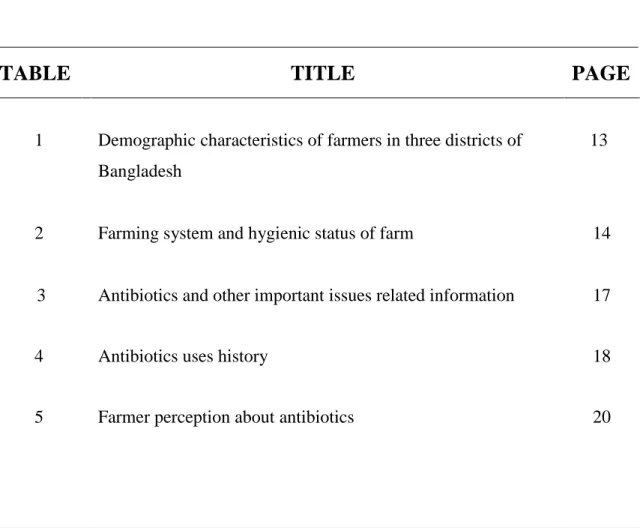
LIST OF TABLES
TABLE TITLE PAGE
1 Demographic characteristics of farmers in three districts of Bangladesh
13
2 Farming system and hygienic status of farm 14
3 Antibiotics and other important issues related information 17
4 Antibiotics uses history 18
5 Farmer perception about antibiotics 20
V
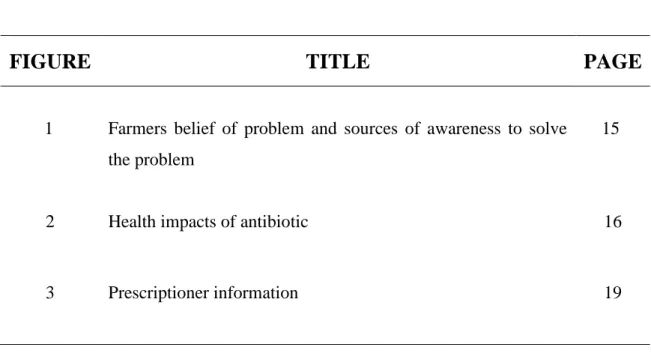
LIST OF FIGURES
FIGURE TITLE PAGE
1 Farmers belief of problem and sources of awareness to solve the problem
15
2 Health impacts of antibiotic 16
3 Prescriptioner information 19
VI
LIST OF APPENDICES
APPENDIX TITLE PAGE
I Demographic characteristics of farmers in three district of Bangladesh
36
II Farming system and hygienic status of farm 36
III Farmers belief of problem and sources of awareness to solve the problem
37
IV Health impacts of antibiotic 37
V Antibiotics and other important issues related information 38
VI Antibiotics uses history 38
VII Prescriptioner information 39
VIII Farmer perception about antibiotics 39
VII
LIST OF ABBREVIATIONS AND ACRONYMS
Full word Abbreviation
And others et al.
World Health Organization WHO Food and Agriculture Organization FAO Frequency N Percentage % Codex Alimentarius Commission CAC Statistical Package for Social Science SPSS Ministry of Agriculture, Food and Fisheries MAFF International Food Policy Research Institute IFPRI
CHAPTER I
INTRODUCTION
1
CHAPTER I
INTRODUCTION
Poultry is one of the world’s fastest growing sources of protein (Apata D.F., 2009). Although hazards from poultry has health effect on human (CAC, 1999).
Antibiotics have been successfully used in humans and veterinary medicine as therapeutics, propylaxis and growth promoting agents (Agada et al., 2014).
Veterinary antibiotics affect consumer through residual hazard (Chanda et al., 2014). Also, enormous antibiotics use in veterinary field, develop resistant bacterial strains (Hassan et al., 2014). Emerging antimicrobial resistance has become a public health concern worldwide (Agada et al., 2014; Kaye et al., 2004).
Farmers used antibiotics as prophylactics, therapeutics and growth promoter (Wadoum et al., 2016). In developing countries, overprescribing and the excessive use of antimicrobials create antimicrobial resistance in human (Coyne et al., 2018). In addition, readily available antibiotics in local stores without prescription has led to the intense use and misuse of antibiotics (Islam et al., 2016). Study revealed that antimicrobial agents are readily available to people in local drug stores without prescription in Nigeria (Kwaga and Adesiyun, 1984).
In Bangladesh, massive magnitudes of antibiotics used annually (Sarker et al., 2016). Commercial poultry farmers in Bangladesh indiscriminately use antibiotics without any veterinary consultation (Stutz et al., 1984; Sirdar et al., 2012). Antibiotics are extensively used as growth promoters as like other developing countries in Bangladesh in poultry to control diseases and facilitated feed conversion and growth of birds (Sarker, 2016; Gelband et al., 2015). The ignorance of the local farmers, lack of proper veterinary service in rural/remote areas and the desire for high profits provoke the farmers to use antibiotics indiscriminately (Stutz et al., 1984; Sirdar et al., 2012). In developing countries like Southern Thailand, the picture is much worse. There is very little control of antibiotics use in food animals (WHO,2001). Therefore, antimicrobial
2
resistance is a global problem, and emerging antimicrobial resistance has become a public health fact worldwide (Kaye et al., 2004).
Proper veterinary antibiotic use notwithstanding their use has become particularly worrisome, especially for the fact of the potential to extend such drug into the human food chain. Also the possibility of reduced efficacy of such drugs which has been observed in some reports to be administered by non- qualified personnel (Boonmar et al., 1998;Thakur and Bajaj, 2006).
But the situation in the developing countries like Bangladesh is however different, where people can be easily bought antimicrobial agents from the local drug stores without prescription and use irrationally. Therefore, that practice has led to indiscriminate use of antibiotics and all consequences cause serious health hazards with emergence of antibiotic resistance (Hassan et al., 2014).
A related survey was performed in selected Broiler Farms of Bangladesh on antibiotic usage patterns. In which common usage of antibiotics were for therapy (43.8%), and prophylaxis (31.5%). Twenty eight different patterns of antibiotic usage were observed. Most of the farmers used antibiotics without any prescription. Fluroquinolones (68.4%) were the most commonly detected antibiotics (Islam et al., 2016).
Hence, investigating the farmer’s perception about antibiotic use is essential for the safety of poultry and consumers. No comprehensive work has been documented till date on the perception of farmer’s about use of antibiotics in Bangladesh. Therefore, we need clear understanding of current antimicrobial use pattern and perception of farmers on antibiotic use.
Objectives of the study were
To collect the baseline information on therapeutic antibiotic use in broiler.
To know farmer's perception regarding the use of antibiotics in broiler farm.
CHAPTER II
REVIEW OF LITERATURE
3
CHAPTER II
REVIEW OF LITERATURE
This study explore the indiscriminating use of antibiotics in poultry and resulting residual effects on consumer through animal food origin. Antibiotic resistance in pathogenic organisms has been recognized as a severe human health hazard worldwide. The major antibiotics used for humans are usually the same as those used in veterinary medicine. It was found that the usage patterns of veterinary drugs have significant impact on human health.
Therefore, the study was conducted to assess the antibiotic usage patterns in broiler industry and the antibiotic residues in broiler meat in the country. The previous literature were reviewed and maintained in the following section.
Fouepe et al. (2017) shown that in Dschang and its surroundings, 57.8% of the men and 46.2% of the women surveyed raised broilers. These breeders had an average age of 42 years with a minimum of 18 years and a maximum of 75 years. In Chad, the poultry farmers in the six savanna territories are mainly men (90%), with an average age of 36 years, with households having an average of 7 individuals with 4 of them were active. It was mainly farmers (89%) who had been engaged in poultry farming for an average of 11 years (Thakur YR and Bajaj BK; 2006). In Bangui, in terms of education, all the breeders surveyed have been to school. Breeders with secondary education respectively account for 50 and 57.1% for broiler and laying hen breeders. Moreover, most of them (73%) are under 50 years of age. In Chad, 67% of poultry farmers had been to school, with 47% having completed primary school and only 17% had been to secondary school (Maho et al., 2004). The surveyed breeders have an average of 7 years of professional experience and 46% have less than 5 years’ experience.
Islam (2003) reported that the poultry sub-sector is crucially important in the context of agricultural growth and improvement of diets of people in Bangladesh. The sub-sector is particularly important because of its significant source for the supply of protein and nutrition in a household's nutritional
4
intake. It is an attractive economic activity as well, especially to women and poor people. So, nowadays poultry farming is recognized profitable business in Bangladesh and getting popularity as an employment opportunities.
Abdu (2007) noted that, for excluding or reducing the potential for the transmission and spread of diseases to animals, humans or an area initially free from the disease-causing agents, biosecurity is very much important. Strict biosecurity measures, in addition to vaccinations, are strategic prevention and control policies adopted to control some contagious poultry diseases. Good husbandry practices such as adequate feeding, housing and stocking to avoid overcrowding, good ventilation, proper disposal of wastes, cleaning and disinfection of poultry premises help to keep out infections and their spread (Jordan, 1990; Ameji et al., 2012).
Eze et al., (2017) reported that poor environmental sanitation and practices, leading to increased exposure to bacterial pathogens with resultant immune- suppression may have contributed to the observe dependency of poultry farms on antibiotics. Poor or absence of biosecurity practices in farms results in high levels of baseline mortality or infectious diseases (Sonaiya and Swan, 2004;
Badubi et al. 2004; Abdelqader et al., 2007; Biswas et al., 2008; Bell, 2009; Ison et al., 2012). Poultry farmers provided foot dip with disinfectant which is contrary to the finding of Ameji et al. (2012) in Kogi State, Nigeria and Ambarawati et al.
(2010) in Bali, Melbourne, Australia where poultry farmers had poor sanitation with the majority of farmers not having footbath.
According to Mccrea and Bradley (2008) sanitation is crucial in poultry houses in other to eliminate disease agents. Disinfectant footbaths may help to decrease the dose of organisms on boots. Shane (1995) noted that effective cleaning and disinfecting methods can substantially decrease disease transmission by reducing pathogens in the environment below infection level. Similarly, Sharma (2010) stated that clean poultry farm will reduce disease spread.
5
Financial difficulty is the most serious problem for poultry marketing and finance. Lack of financial assistance as an important economic problem faced by the farmer in poultry business. Inadequate capital as a problem encountered by farmer in commercial poultry farming. Lack of awareness about government sources of financial help might have made it difficult for the farmer to solve their financial problems. In accordance with the findings of Oyeyinka et al.
(2011) in Oyo state, Nigeria, inadequate capital (83.2%), high cost of feeds (86.8%) and marketing problems (81.9%) were the most severe constraints of poultry industry problem.
Oyeyinka et al. (2011) also reported that, inadequate labour supply (74.7%) and lack of veterinary knowledge (86.8%) were the constraints for the poultry enterprises. Also, in Pakistan, previous survey in the poultry industry shows that the respondents had lack of financial credit, inadequate modern poultry equipment, lack of adequate poultry rearing knowledge and absence of government help and guidance etc. (Jamali et al., 2011).
Oladeji (2011) reported that sources of information for the farmers were recommended such as veterinary officers, television, poultry association, agricultural extension officers, workshops/seminars and journals etc. Also, 88.7% of radio users as information source, made use of information obtained at Gujarat in India. There was a significant relationship among age, educational qualification, scale of operation and source of information (Oladeji, 2011).
Poultry farmers in Enugu State, Nigeria obtained information from multiple sources. However, the principal sources of information were co-poultry farmers (87.7%), veterinary officers (81.4%), textbooks (75.9%) and Internet (70.9%) (Eze et al., 2017). farmers were of the opinion that Radio (92.7%) and Television (90.3%) were the main sources of farmers awareness on poultry production techniques in Oyo state, Nigeria, (Oyeyinka et al., 2011).
The use of probiotics in animal feeds do not leave residues in animal products and promote animal performance and health (Fuller, 1989; Jin, 1997; Patterson and Burkholder, 2003; Zulkifli et al., 2000), because they improve diet
6
digestibility (Apata, 2008), resulting in better nutrient utilization and consequently, higher productivity (Kabir et al., 2004, Mountzouris et al., 2007;
2010). Zulkifli et al. (2000), observed higher weight gain in poultry when a group of poultry was treated with probiotics.
Gold and Mollering, (1996) noted that antimicrobial drugs have been proved remarkably effective for the control of bacterial infections and success in controlling infectious pathologies and increasing feed efficiencies (Engberg et al., 2000) Antibiotics, either of natural or synthetic origin are used to both prevent proliferation and destroy bacteria (Naliaka, 2005). Antimicrobials are used in food animals to treat or prevent disease and also to promote growth.
Antibiotic use in commercial poultry can be divided into two categories:
therapeutic antibiotics and growth-promotant antibiotics (Anonymous, 2003).
Majority of the antibiotics used in poultry is for treatment of infections (Oyekunle et al., 2003; Apata, 2009). Therapeutic dose of antibiotics are used for treatment of bacterial infections (Oluwasile et al., 2014). Antibiotic growth promoters are used to inhibit or destroy bacterial growth and are administered as a low sub-therapeutic dose (Hughes and Heritage, 2004; Oluwasile et al., 2014). Several classes of antibiotics, including glycolipids (bambermycin), polypeptides (bacitracin), ionophores (salinomycin) and lactams (penicillin), are used in broiler chicken production for growth promotion and prevention of infectious diseases (Butaye et al. 2003; Singer et al. 2006).
Apata (2009) reported that the antibiotics are now particularly used in poultry farming for therapeutic purposes and are added in feed and water in sub- therapeutic doses for prophylaxis and growth promotion. Food animals poses a major risk for humans due to antibiotic resistance. Such of these antibiotics were used the world as follows- Virginiamycin, Avilamycin, Synercid, Aminoglycosides, Macrolides, Fluoroquinolones, Sulphonamides, Flavomycin, Avoparcin, Spiramycin, Bacitracin, Nitrofurans, Tetracycline, Colistin sulphate, Trimethoprine and Bioprine (coccidiostats) were commonly used in Kenya on poultry species (Wegener et al. 1999).
7
But by the 1970s, the excessive use of antibiotics started contributing to a surge in drug resistant germs or superbugs. Since then, antibiotic resistance has been recognized as a serious problem for public health worldwide (Nisha, 2008). By the course of time it has now been recognized by the major world health organizations as one of the top health challenges for this modern era due to its overuse and inappropriate uses in clinical arena (Donoghue, 2003). Both vet and human medicine contribute directly or indirectly to antibiotic resistance. The antibiotic also, an inevitable side effect of the use of antimicrobials is the emergence and dissemination of resistant bacteria (Van den Bogaard and Stobberingh, 2000). Several recent reviews survey antimicrobial resistance across many animal species. In animals, antimicrobial resistance in zoonotic enteropathogens (e.g., Salmonella) and commensals is of special concern to human health because those bacteria are most likely to be transferred through the food chain to humans, or resistance genes in commensal bacteria may be transferred to the zoonotic enteropathogens. There is considerable evidence that antimicrobial use in animals selects for resistance in commensals and in zoonotic enteropathogens (Oluwasile et al., 2014).
As the veterinary drug residues in poultry products can potentially be transmitted to humans via consumption of contaminated edible tissues and may lead to several pathological implications that are considered as major health issues. Chicken meat contaminated with drug residues may pose serious public health hazards in the form of antibiotic resistant bacterial formation, allergic manifestations or alteration of useful micro flora of digestive tract to no micro flora and/or harmful or non-healthy micro flora (Mund et al., 2016).
Attention to possible adverse effects of using antibiotics to human health was first received worldwide coverage with the release of a report by Swann (1969).
It was concluded that the probable hazard to human health was from feeding sub-therapeutic levels of antibiotics to food producing animals (as is the case with growth promoters). Link between antibiotic use in animals and the development of resistance in human pathogens is described in several reports (WHO, 1998; MAFF, 1998). The majority of human antibiotic resistance
8
problems have connection with use of antibiotics in animals with problems occurring in both hospital and community settings (Gold and Moellering, 1996).
Serious and widespread community resistance problems which have developed because of over-use and misuse of antibiotics in people. (Chowdhury et al., 2009). According to the WHO, the emergence and spread of antimicrobial resistance in human pathogens is considered a global problem which increasingly affects the successful treatment of infectious diseases in humans (Acar and Rostel, 2001).
The human health concern is the risk of direct transfer of resistant human pathogens or transfer via the food chain. Antibiotic resistance genes may be transferred from animal pathogens or commensals to human pathogens (Van den Bogaard and Stobberingh, 1999 and 2000). There are many reports of resistant bacteria in animals and of human isolates of the same organism with similar resistance patterns (Van den Bogaard et al., 1997; Fey et al. 2000). There is ample evidence for transfer of this organism via the food chain (Threlfall et al., 2000) or by direct contact (Fone and Barker, 1994). Thus, antibiotic residues in foods of animal origin are one of the sources of concern among the public and medical health professionals (Nisha, 2008).
Presence of the antibiotics residues in food above the maximum level is recognized worldwide by various public health authorities as being illegal and their consumption could result in public health hazards including: development of resistant strains of microorganisms, hypersensitive reaction in sensitized individuals and distortion of intestinal micro flora (FAO, 1997).
Mund et al. (2016) reported that, penicillin residues in poultry can lead to severe anaphylactic reactions while eggs containing residues of sulfonamides in higher concentrations cause skin allergies upon consumption. The residues of animal drugs in human food threaten human health by being acutely or cumulatively allergenic, organotoxic, mutagenic, teratogenic or carcinogenic (Doyle, 2006). For example, violative residues of penicillin are the most frequently cited causes of allergic reaction in persons that consume animal
9
products containing residues. Many other drugs including tetracyclines, sulphonamides and aminoglycosides can also cause allergic reaction (Tollefson and Miller, 2000).
According to Dewdney et al. (1991) in human medicine drug allergy is a well- established side effect of the therapeutic use of antibiotics. Side effects caused by macrolides are uncommon and only a very few of these seem to be caused by allergic mechanisms. Clinically, drug allergy is characterized by a spectrum of reactions ranging from mild skin rashes to angioedema or life-threatening anaphylaxis. Antibiotic residues in meat and other foods might be responsible for similar hypersensitivity reactions in a small number of iundividuals.
Oluwasile et al. (2014) noted that antimicrobials in poultry production due to its possibility of forming residue in food and carcinogenic effect on human, most poultry farms still employs the use, as many claimed it to be effective against certain diseases especially salmonellosis, this is of serious public health concerns.
Various types of antimicrobial drugs are available in the market. The farmers are occasionally get confused by the advertisement of the different pharmaceutical companies claiming their products as the best and there is indiscriminate use without experimental support. In Bangladesh, only a few companies mention the withdrawal period of their product in packet. Our farmers are not so much literate that they can think about the residual effect of antibiotics which have been developed due to continuous use of these antimicrobial drugs. Animal producers in all parts of the world will increasingly face legislative and consumer pressures to reduce the use of antimicrobial drugs which are chemically related to antibiotics used to treat human disease (Chowdhury et al., 2009). Alo and Ojo (2007) reported a high usage of quinolones, gentamycin, neomycin, tetracycline, streptomycin and tylosin among poultry farms in Ekiti State, Nigeria. Similarly Ogunleye et al.
(2008) reported the use of enrofloxacin, tetracycline, gentamycin streptomycin, furatadone, Tylosin norfloxacin among poultry farms in Abeokuta, Nigeria,
10
while Sirdar et al. (2012) also reported the use of oxytetracycline, colistin, tylosin and enrofloxacin among poultry farms in Khartoun, Sudan.
Okoli et al. (2002) and Okoli et al. (2005) reported that non-qualified personnel such as hawkers, small traders and illiterate market women are known to be involved in the retailing of veterinary drugs especially poultry medicines in south eastern, Nigeria. Antibiotic prescription pattern is that about half of the poultry farms practices self-medication, this has also been reported by Kwaga and Adesiyu (1984) that antimicrobial agents are readily available to people without prescription. Okoli et al. (2002) and Okoli et al. (2005) also reported that self-medication is rampant among poultry farmers largely due to claim of good experience by farmers, unavailability of veterinary services and the extra cost of veterinary services.
Reduction in antibiotic resistance problems in people could be assisted by improved on-farm management and farm disease control. Improvements in food production and food hygiene would reduce contamination of meat.
However, there will be no specific reduction in antibiotic resistance in people until there is a concerted effort in hospitals, medical practices and the community to control the misuse and overuse of antibiotic in human medicine (Demir et al. 2008). Agricultural use of antibiotics causes the development of antibiotic resistance in both human and livestock pathogens. Data has shown that more bacteria are becoming resistant to one or sometimes several antibiotics. For example, the prevalence of resistance to five antibiotics among a particular strain of bacteria (like as salmonella) has increased from 0.6% in 1979 to 34% in 1996 (Gustafson and Bowen, 1997).
CHAPTER III
MATERIALS AND METHODS
11
CHAPTER III
MATERIALS AND METHODS
3.1. Location
This study was conducted at Wazirpur Upazilla of Barishal , Savar Upazilla of Dhaka, and Kaliakoir Upazilla of Gazipur district during August, 2019 to December, 2019.
3.2. Design
A cross-sectional study was conducted among broiler farmers to collect data. A total of 98 participants in three districts were selected using convenient sampling method. Data were collected using a pre-designed and semi- structured questionnaire. Face to face interview was conducted to collect information. Both the close and open type questions were asked to the respondents. Objectives and goals of the study were discussed indetails with the participants before data collection. Only interested farmers were included in this study. Those who were not interested to give their opinion and those who were absent during survey were excluded.
3.3. Study variables
The questionnaire consisted of some main subdivisions. Socio-demographic characteristics of farmers were age, sex, educational qualification, family income and farming experience. Basic information on farming system, biosecurity, causes of poultry industry problem and sources of awareness were recorded. Information on antibiotic use were its types, generation, manufacturer name, qualification of prescriptioners, route and purpose of antibiotic use and farmer knowledge and conception about antibiotic. Main problems of broiler farms and sources of preventive information were also asked from every farmers.
12
3.4. Statistical analysis
Frequency distributions and descriptive statistics (frequency, mean and median) for major demographic variables were calculated. Statistical Package for Social Sciences (SPSS) software was used for descriptive statistical analysis.
CHAPTER IV
RESULTS AND DISCUSSIONS
13
CHAPTER IV
RESULTS AND DISCUSSION
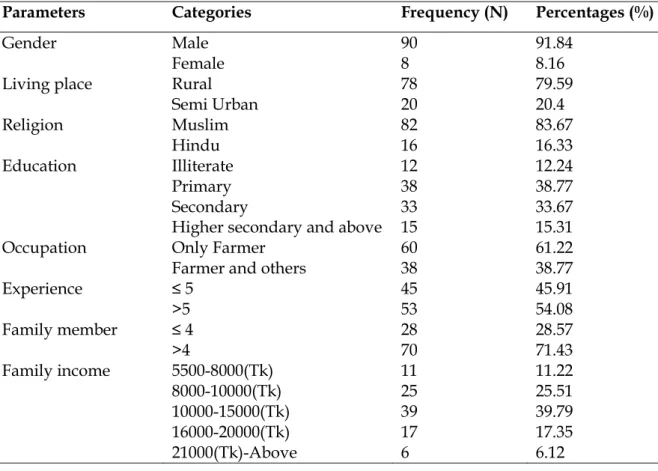
A total of 98 respondents were collected from Wazirpur Upazilla of Barishal, Savar Upazilla of Dhaka and Kaliakoir Upazilla of Gazipur district. Table 1 showed that Male and female participants were 90 (91.84%) and 8 (8.16%) respectively. Most of the farmers 78 (79.59%) lived in rural area. Majority 38 (38.77%) have completed primary education. More than half 60 (61.22%) lived depend on only farm income. Over half 53(54.08%) had more than 5 years farming experience. Maximum 70 (71.43%) family comprised of more than 4 members. About sixty 57 (58.16%) earned 10,000 BD/TK monthly.
Table 1: Demographic characteristics of farmers in three districts of Bangladesh Parameters Categories Frequency (N) Percentages (%)
Gender Male 90 91.84
Female 8 8.16
Living place Rural 78 79.59
Semi Urban 20 20.4
Religion Muslim 82 83.67
Hindu 16 16.33
Education Illiterate 12 12.24
Primary 38 38.77
Secondary 33 33.67
Higher secondary and above 15 15.31
Occupation Only Farmer 60 61.22
Farmer and others 38 38.77
Experience ≤ 5 45 45.91
>5 53 54.08
Family member ≤ 4 28 28.57
>4 70 71.43
Family income 5500-8000(Tk) 11 11.22
8000-10000(Tk) 25 25.51
10000-15000(Tk) 39 39.79
16000-20000(Tk) 17 17.35
21000(Tk)-Above 6 6.12
14
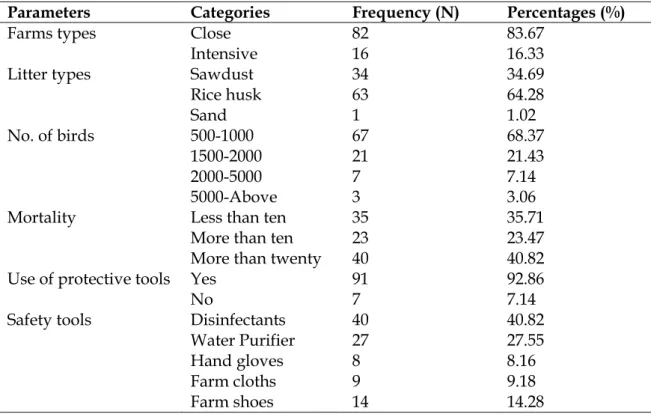
Table 2 shows that almost 82 (83.67%) farms were closed type. More than three fifth 63 (64.28%) farmers used rice husk as litter. Maximum 67 (68.37%) farms contained 500-1000 no. of birds. About 40 (40.82%) mortality of birds were more than twenty days. A great majority 91 (92.86%) respondents used the protective tools against germs. Mostly 40 (40.82%) farmers used disinfectants as safety tool.
Table 2: Farming system and hygienic status of farm
Parameters Categories Frequency (N) Percentages (%)
Farms types Close 82 83.67
Intensive 16 16.33
Litter types Sawdust 34 34.69
Rice husk 63 64.28
Sand 1 1.02
No. of birds 500-1000 67 68.37
1500-2000 21 21.43
2000-5000 7 7.14
5000-Above 3 3.06
Mortality Less than ten 35 35.71
More than ten 23 23.47
More than twenty 40 40.82
Use of protective tools Yes 91 92.86
No 7 7.14
Safety tools Disinfectants 40 40.82
Water Purifier 27 27.55
Hand gloves 8 8.16
Farm cloths 9 9.18
Farm shoes 14 14.28
15
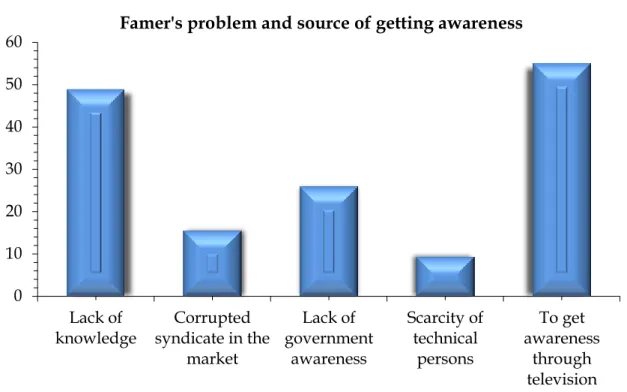
Figure 1 showed that almost half 47 (47.96%) farmers had lack of knowledge and they thought it as the main problem of farming. Lack of government awareness and corrupted syndicate believed to be the main cause by 25.51%
and 15.31% farmers, respectively. Over half 53 (54.08%) of them perceived television as the main sources of getting information regarding to solve the problem in poultry industry.
Figure 1: Farmers belief of problem and sources of awareness to solve the problem 0
10 20 30 40 50 60
Lack of knowledge
Corrupted syndicate in the
market
Lack of government
awareness
Scarcity of technical
persons
To get awareness
through television Famer's problem and source of getting awareness
16 0
5 10 15 20 25 30 35 40 45 50
Mal-absorption Ulcer Kidney failure Rapid breathing Self-immune status of body Perception on health impact of antibiotic in human body
According to this study figure 2 showed that more than one third 47 (47.96%) mal-absorption and 19.39% self-immune status of the body were effused on their health by consuming poultry meat.
Figure 2: Health impact of antibiotic
17
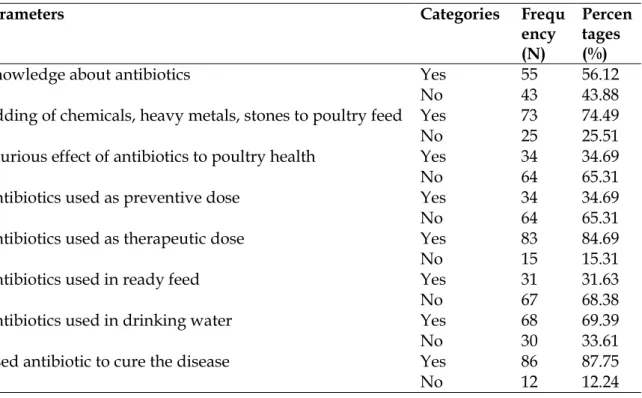
Table 3: Antibiotics and other important issues related information
From this survey, table 3 showed that 55 (56.12%) respondents had known about antibiotics. Majority 73 (74.49%) farmer’s said that they bought poultry feed in which different type of chemicals, heavy metals, stones etc. were added.
Over one third 34 (34.69%) respondents thought that antibiotics added feed had injurious effect to poultry health. Here, 34 (34.69%) farmers were used antibiotic as preventive dose. A great majority 83 (84.69%) farmers were used antibiotic as therapeutic dose. About seventy 68 (69.39%) farmers were used antibiotics in drinking water. Almost 86 (87.75%) farmers believed that used antibiotics cure the disease.
Parameters Categories Frequ
ency (N)
Percen tages (%)
Knowledge about antibiotics Yes 55 56.12
No 43 43.88
Adding of chemicals, heavy metals, stones to poultry feed Yes 73 74.49
No 25 25.51
Injurious effect of antibiotics to poultry health Yes 34 34.69
No 64 65.31
Antibiotics used as preventive dose Yes 34 34.69
No 64 65.31
Antibiotics used as therapeutic dose Yes 83 84.69
No 15 15.31
Antibiotics used in ready feed Yes 31 31.63
No 67 68.38
Antibiotics used in drinking water Yes 68 69.39
No 30 33.61
Used antibiotic to cure the disease Yes 86 87.75
No 12 12.24
18
Table 4 represents that majority 86 (87.75%) of subjects were used broad- spectrum antibiotics and 90 (91.83%) subjects were used narrow-spectrum antibiotics. Among all antibiotics, almost 41 (41.83%) farmers used Ciprofloxacin, mostly 24 (24.49%) had used Colistin sulphate, 17 (17.35%) used Enrofloxacin. In my study I found that, 2nd generation antibiotics were used by over half 54 (55.10%) farmers. Prior 1st week complete, maximum (62.24%) farmers used antibiotics in broiler.
Table 4: Antibiotics uses history
Parameter Categories Frequency
(N) Percentages (%)
Broad-spectrum antibiotic Use Yes 86 87.75
No 12 12.24
Narrow-spectrum antibiotic Use Yes 90 91.83
No 8 8.16
Repeatedly used antibiotics Ciprofloxacin 41 41.83
Enrofloxacin 17 17.35
Colistin suphate 24 24.49
Doxycycline 16 16.33
Types of antibiotic generation 1st generation 15 15.31
2nd generation 54 55.10
3rd generation 24 24.49
4th generation 5 5.10
Age of antibiotics used Prior 1st week complete 61 62.24 After 2nd weeks more 20 20.41 At 3rd weeks more 17 17.35
19
According to this survey figure 3 shows that farmers used antibiotics due to registered vet doctor’s prescription were more than one third 48 (48.97%).
Majority 70 (71.43%) from non-registered vet doctor’s prescription, Farmers used about seventy 70 (71.43%) antibiotics due to suggestion by representatives of any feed company and mostly 43 (43.88%) respondents were used antibiotics by their own decision.
0 10 20 30 40 50 60 70 80
Registered vet doctor
Non-registered vet doctor
Registered VFA Representatives of any feed
company
Own decision
Qualification of prescriptioner
Figure 3: Prescriptioner’s information
20
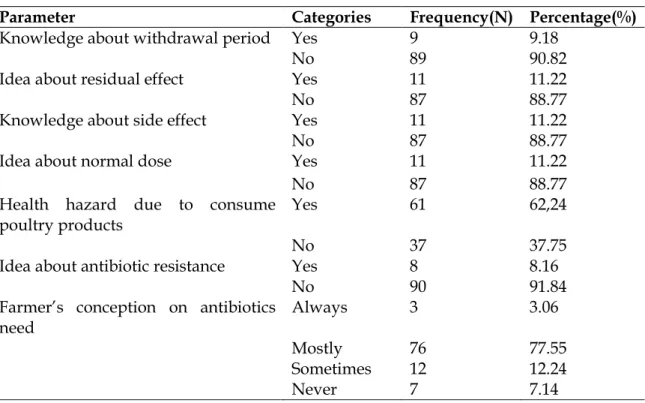
Here, table 5 shows that only 9 (9.18%) respondents had known about the withdrawal period of antibiotic. Almost 87 (88.77%) of subjects had no idea about residual effect. Few number of 11 (11.22%) farmers had knowledge about the side effect of antibiotics. A great majority 87 (88.77%) had no idea about normal dose of antibiotics. More than three fifth 61 (62.24%) respondents said that human health hazard could be occurred due to consume poultry products that have prolonged use of antibiotics. Only 8 (8.16%) respondents had idea about antibiotic resistance. Maximum 76 (77.55%) farmers thought that most of the time antibiotics were needed.
Table 5: Farmer perception about antibiotics
Parameter Categories Frequency(N) Percentage(%)
Knowledge about withdrawal period Yes 9 9.18
No 89 90.82
Idea about residual effect Yes 11 11.22
No 87 88.77
Knowledge about side effect Yes 11 11.22
No 87 88.77
Idea about normal dose Yes 11 11.22
No 87 88.77
Health hazard due to consume
poultry products Yes 61 62,24
No 37 37.75
Idea about antibiotic resistance Yes 8 8.16
No 90 91.84
Farmer’s conception on antibiotics need
Always 3 3.06
Mostly 76 77.55
Sometimes 12 12.24
Never 7 7.14
21
This study explores use pattern and awareness on antibiotics among the broiler farmers. It is found 89.00% of farmers used antibiotics within last 3 months.
Majority (55.10%) of them used 2nd generation antibiotics. More than half 55 (56.12%) respondents were known about antibiotics. Majority 64 (65.31%) farmer’s had no knowledge about harmful effect. Maximum (62.24%) farmers used antibiotics in broiler when age of birds were prior 1st week complete. More than one-third 49 (49%) used antibiotics according to the registered vet doctor’s prescription. Forty three farmers took self-decision for antibiotics use (43.88%).
Majority 47 (47.96%) thought that mal-absorption was the main side effect of antibiotics residue. Most of the (41.83%) participants used Ciprofloxacin, 17.35%
used Enrofloxacin, 24.49% used Colistin sulphate and only 16.33% used Doxycycline in last 3 months.
Extensive antibiotics use has led to develop bacterial antibiotic resistance over the years (Apata, 2009). This study showed more than four of five farmers used antibiotics within last 3 months in the farm. It was all (100%) in Ogun State, Nigeria (Oluwasile et al.,2014) and Songkhla province, Thailand (Lampang et al.,2007). Widespread use of antibiotics could have negative implications for human and animal health and the environment (Hasan et al., 2014).
In the research majority 83 (84.69%) of farmers used antibiotics within last 3 months for therapeutic purpose and (34.69%) farmers used antibiotics for preventive purpose. It was much lower at 21 (36.2%) for treatment and only 17 (29.3%) prophylactic purpose was in Ogun State, Nigeria (Oluwasile et al., 2014).
In the research findings, it was found that majority 54 (55.10%) of farmers used 2nd generation antibiotics, similar result were found in Pakistan where 2nd generation antibiotics such as norfloxacin and enrofloxacin were extensively used (Anjum and Rizvi, 1998).
In this study, more than one-third 49 (49.0%) used antibiotics according to registered vet doctor’s prescription. Farmers took self-decision for antibiotics use was 43 (43.88%). Previous study in Ogun state were noted that 29 (50%)
22
poultry farmers took antibiotics according to the prescription of veterinary doctors 25 (43.1%) farmers took self-decision for antibiotics use in their farm (Oluwasile et al., 2014). Okoli et al., (2002) and Okoli et al., (2005) who reported that about half of the poultry farms practices self-medication in south eastern, Nigeria and this were also reported by Kwaga and Adesiyu, (1984) that antimicrobial agents are readily available for the people without prescription.
Access to antibiotics was not restricted as farmers could purchase any drug from retailers without prescription. Incorrectly prescribed antibiotics also contribute to the promotion of resistant bacteria. Study results indicated that 30% to 60% of prescribed antibiotics are unnecessary, inappropriate, or suboptimal (Bergmans et al., 1997; Kollef and Frasen 2001). Overprescribing and misprescribing antibiotics are undoubtedly contributing to the growing challenges posed by antibiotic-resistant bacteria, and epidemiological studies were clearly demonstrated direct relationships between antibiotics consumption and the emergence and dissemination of resistant strains (Kollef and Frasen, 2001).
Antibiotics residue in poultry production can actually have adverse impact on human health (Mehdi et al., 2018). In this study, majority 45 (46.9%) thought that mal-absorption was the main side effect of antibiotics residue while 19.8%
farmers said that another side effect of antibiotics residue was poor self- immune status of the body. In the poultry farm of Pakistan, it was reported that about half of gastro-intestinal symptoms were caused through intake of antibiotics. Also cutaneous eruptions, dermatitis and anaphylaxis in humans are the residual effect of ingestion of antibiotics containing poultry products.
Moreover, penicillin residues in poultry can lead to severe anaphylactic reactions while eggs containing residues of antibiotics cause skin allergies upon consumption (Mund et al., 2016).
In the survey work, different types of antibiotic usage were observed among the poultry farms. Mostly (41.83%) participants used Ciprofloxacin, 17.35%
Enrofloxacin, 24.49% Colistin suphate and only (16.33%) used Doxycycline in
23
last three months. In Bangladesh it was found that, Colistin Sulfate (30.14%) was main drug choice followed by Doxycycline (20.6%), Ciprofloxacin (19.2%), and Enrofloxacin (19.2%) (Islam et al., 2016). In Ogun state, Colistin sulphate (36.2%), Enrofloxacin (27.6%) and Furazolidone (20.7%) were the commonest antibiotics used in the study area. (BB Oluwasile et al., 2014). Another study shown that in a broiler farms of Songkhla province, Southern Thailandthe, most frequently used being the combination of amoxicillin-enrofloxacin (21.18%) (Lampang et al., 2007).
The socio-economic characteristics of the respondents (farmers) showed that 91.84% of the farmers were males. Also, the average age distribution of the farmers were 35 years and they also had previous farming experience, 54.08%
had less than equal 5 years of experience. Because of the average age of farmers was 35 years, implying that the majority of the farmers in the areas were youth.
This indicates that the respondents were in physically active stage that could drive agricultural productivity in the field if supported. From their previous farming experience they can improve their farming system. In West Cameroon, men (90%) with average 36 years involved in breeder’s farm and 46% had less than 5 years of experience (Fouepe et al., 2017). It was found that majority 38 (38.77%) were primary educated. In Nigeria, it was almost similar (33.75%) according to Ajewole et al., (2014). In Oyo state, Nigeria, a higher percentage (92.7%) of the poultry farmers became aware of the recommended practices through Radio and (90.3%) from Television while a very few (18.9%) were aware of the practices through veterinary doctor and feed millers (Oyeyinka et al., 2011). But in this study it was found that to develop the public awareness message would be provided from the source of electronic and printing media, daily newspaper, facebook. Also television (54.08%) and radio (22.45%) play very important roles for the source of information that found by our study. In this survey it was found that biosecurity measures were very crucial in the poultry farms. Of the various types of safety tools enlisted, about 40 (40.82%) of the farmers were used only disinfectants and (27.55%) had used water purifier.
However, only (8.16%) farmers wear hand gloves and (9.18%) wear farm cloths
24
as safety tools against germs. Poultry farms were in and around Debre markos, amhara region and Ethiopia, more than three fifth (63.3%) of the producers dressed on protective cloth and only (8.2%) of the producers wear hand gloves.
About 77.6% of the producers used the foot path in front of their farm entrance (Yitbarek et al., 2016).
Lastly antibiotics were widely used on all farms participating in this study and all interviews and observations indicated that antibiotic practices were uncontrolled. It was reported that contributed to antibiotics use and concerns that were raised by participants about antibiotics use in food animals.
This study was not free of limitations. Only interested farmers within the fixed selected areas were interviewed. This may narrows its generalization. Lack of knowledge on asking question of participants provide some information bias in this study. Although question were discussed clearly with the farmers increase the reliability of the results.
CHAPTER V
SUMMARY AND CONCLUTION
25
CHAPTER V
SUMMARY AND CONCLUSION
This study provided information on use of therapeutic antibiotics in broiler.
Antibiotics were mainly used in therapeutics purpose by the broiler farmers.
The main choice of therapeutic drugs by the farmers were Ciprofloxacin, Colistin Sulphate and Enrofloxacin. Most of the farmers choose 2nd generation antibiotics. Almost half of the farmer bought as per antibiotics with registered vet doctor’s advice but more than one third of the farmers took self-decision for antibiotics use. Majority of farmer’s had no knowledge about residual effect and resistance of antibiotics. A vast majority of poultry growers had no idea about antibiotic resistance. It was found that the main problem of poultry industry is a lack of knowledge of farmers. Biosecurity measures were very much unsatisfactory level in the poultry farms. Education for prudent use of antibiotics in food animals and regulations are urgently needed. Findings of this study will contribute to the development of strategies for prudent use of antibiotics in the broiler industry of Bangladesh.
REFERENCES
CHAPTER VI
26
CHAPTER VII
REFERENCES
Abdelqader, A., Wollny C. B. and Gauly M., (2007). Characterization of local chicken production systems and their potential under different levels of management practice in Jordan. TAHP 39(3):155–164.
Abdu, P. A. (2007). Manual of Important Poultry Diseases in Nigeria (2nd edition). Mac Chin Multimedia Designers, Samaru-Zaria. pp. 1 – 100.
Acar J. and Rostel B. (2001). Antimicrobial resistance: an overview. Article in Revue scientifique et technique 20 (3) 797-810.
Agada, G. O. A., Abdullahi, I. O., Odugbo, M, Chollom, S. C., Kumbish, P. R.
and Okwori AEJ. (2014). Prevalence and Antibiotic Resistance Profile of Salmonella Isolates from Commercial Poultry and Poultry Farm-handlers in Jos, Plateau State, Nigeria. BMRJ 4(4) 462-479.
Ajewole, Charles, O., Akinwumi and Adekunle A. (2014). Awareness and Practice of Biosecurity Measures in Small Scale Poultry Production in Ekiti State, Nigeria. JAVS 7:24-29.
Alo, O. S. and Ojo, O. (2007). Use of antibiotics in food animals: A case of a major veterinary outlet in Ekiti State, Nigeria. Nigerian Veterinary Journal, 28(1): 80-82.
Ambarawati, I. G., Bugie, K. and Ian, P. (2010). Farmer investment into bio- security on broiler and layer farms. In Bali, Melbourne Australia. pp. 12.
Ameji, N. O., Abdu, P. A., Sa’idu, L. and Isa-Ochepa, M. (2012). Knowledge of poultry diseases, biosecurity and husbandry practices among stakeholders in poultry production in Kogi State, Nigeria. Sokoto Journal of Veterinary Sciences 10 (2): 26-31.
27
Anjum, A. D. and Rizvi, F. (1998). Use of second generation quinolones in Poultry. Pakistan Journal of Biological Sciences 1 (4) 392-395.
Anonymous (2003). Compendium of veterinary products. North American Compendiums, Inc., Port Huron, MI. pp. 302-303.
Apata, D. F. (2009). Antibiotic Resistance in Poultry. International Journal of Poultry Science. 8 (4):404-408.
Apata, D. F. (2008). Growth performance, nutrient digestibility and immune response of broiler chicks fed diets supplemented with a culture of Lactobacillus bulgaricus. Journal of Science Food Agriculture. 88: 1253- 1258.
Badubi, S. S., Ravindran, V. and Reid, J. (2004). A survey of small-scale broiler production systems in Botswana. Tropical Animal Health and Production. 36(8): 823–834.
Bell, J. G. (2009). Factors limiting production efficiency and profitability from smallholder poultry production. Worlds Poultry Science Journal. 65: 207–
210.
Bergmans, D. C., Bonten, M. J., Gaillard, C. A., Van Tiel, F. H., Van der Geest, S., De Leeuw, P. W. and Stobberingh E. E. (1997): Indications for antibiotic use in ICU patients: a one-year prospective surveillance. Journal of Antimicrobial Chemotherapy 39 527–535.
Biswas, P. K., Uddin, G. M., Barua, H., Roy, K., Biswas, D., Ahad, A. and Debnath N. C. (2008). Survivability and causes of loss of broody-hen chicks on smallholder households in Bangladesh. Preventive Veterinary Medicine Journal. 83(3–4) 260–271.
Boonmar, S., Bangtrakulnonth ,A., Pornruangwong, S., Samosornsuk S., Kaneko K. and Ogawa M. (1998). Significant Increase in antibiotic resistance of
28
Salmonella isolates from human beings and chicken meat in Thailand.
Veterinary Microbiology Journal 62(1):73-80.
Butaye, P., Devriese L. A. and Haesebrouck F. (2003). Antimicrobial growth promoters used in animal feed: effects of less well known antibiotics on gram-positive bacteria. Clinical Microbiology Reviews 16(2):175-188.
CAC (1999). Principles and guidelines for the conduct of microbiological risk assessment.
Chanda R., Fincham R. and Venter P. (2014). Review of the Regulation of Veterinary Drugs and Residues in South Africa. Critical Reviews in Food Science and Nutrition. 54: 488–494.
Chowdhury, R., Haque, M. N., Islam, K. M. S. and khaleduzzaman, A. B. M.
(2009). A review on antibiotics in an animal feed Bangladesh. Journal of animal science. 38(1&2):22–32.
Coyne, L. A., Latham, S. M., Dawson, S., Donald, I. J., Pearson, R. B., Smith, R.
F., Williams N.J. and Pinchbeck, G. L. (2018). Antimicrobial use practices, attitudes and responsibilities in UK farm animal veterinary surgeons. Preventive Veterinary Medicine Journal. 161:115-126.
Demir, Şenay, S. E., Özcan, M. A. and Suiçmez, M. (2008). The use of natural feed additives as alternative to an antibiotic growth promoter in broiler diets. European Poultry Science Journal 72:123-129.
Dewdney, J. M., Maes L., Raynaud, Blanc F., Scheid J. P., Jackson T., Lens S., and Verschueren, C. (1991). Risk assessment of antibiotic residues of lactams and marcolides in food products with regard to their immune- allergic potential. Food and Chemical Toxicology. 29(7):477-483.
Donoghue, D. J. (2003). Antibiotic Residues in poultry tissues and Eggs: Human Health Concern. Poultry Science Journal. 82:618-21.
29
Doyle, M. E. (2006). Veterinary Drug Residues in Processed Meat-Potential Health Risk. Food Research Institute Briefings, University of Wisconsin- Madison. pp. 39–48.
Engberg, R. M., Hedemann, M. S., Leser T. D. and Jensen B. B. (2000). Effect of zinc bacitracin and salinomycin on intestinal microflora and performance of broilers. Journal of Poultry Science. 79:131-139.
Eze, C. O., Chah, J. M., Uddin, I. O., Anugwa, I. J. and Igbokwe, E. M. (2017).
Bio-Security Measures Employed by Poultry Farmers in Enugu State Nigeria. Journal of Agricultural Extension. 21 (3):221-228
FAO (1997). Final Report of the FAO/IAEA Consultants Meeting on
“Monitoring of 284 Veterinary Drug Residues in Developing Countries.”
Fey, P. D., Safranek, T. J., Rupp, M. E., Dunne, E. F., Ribot, E., Lwen, P.C., Bradfors, P.A., Angulo, F.J. and Hinrichs, S.H. (2000). Ceftriaxone- resistant Salmonella infection acquired by a child from cattle. New England Journal of Medicine. 342:1242–1249.
Fone, D. L. and Barker R. M. (1994). Association between human and faun animal infections with Salmonella typhimurium DT104 in cattle in Herefordshire. Journal of Communication Disorders. 4:36-140.
Fouepe, G. H. F., Kana, J. R., Kengmo, G. M. D. and Mfewou, A. (2017).
Socioeconomic and Technical Characteristics of Broiler and Laying Hens Layers in Peri-urban and Urban Areas in the City of Dschang, West Cameroon. International Journal of Agricultural Economics. 2(4):110-121.
Fuller, R. (1989). Probiotic in man and animals. Journal of Applied Bacteriology.
66:365-378.
Gelband, H., Petrie, M. M., Pant, S., Gandra, S., Levinson, J., Barter D., White, A.
and Laxminarayan, R. (2015). The state of the world’s antibiotics. Centre
30
for Disease Dynamics, Economics and Policy, CDDEP: Washington DC, USA.
Gold, H. S. and Moellering, R. C. (1996). Antimicrobial-drug resistance. New England Journal of Medicine. 335:1445–1453.
Gustafson, R. H., Bowen, R. E. (1997). Antibiotic use in animal agriculture. A journal of Applied Microbiology. 83:531-541.
Hassan, M. M., Amin, K. B., Ahaduzzaman, M., Alam, M., Faruk, M. S. A. and Uddin, I. (2014). Antimicrobial resistance pattern against E. coli and Salmonella in layer poultry. Research Journal for Veterinary Practitioners. 2(2):30–35.
Hughes, P. and Heritage J. (2004). Antibiotic growth promoters in food animals.
In assessing food and safety of feeds, Rome, Italy: FAO. pp. 129-156.
Islam, K. B. M. S., Mahmuda, S. S. U. and Kabir, M. H. B. (2016). Antibiotic Usage Patterns in Selected Broiler Farms of Bangladesh and their Public Health Implications. Journal of Public Health in Developing Countries.
2(3):276-284.
Islam, (2003). Demand projections for poultry products and poultry feeds in Bangladesh No 54, MSSD discussion papers from International Food Policy Research Institute (IFPRI).
Ison, A. J., Spiegle, S. J. and Morishita, T. Y. (2012). Predators of poultry.
http://ohiolineosu.edu/vme-fact/0022.html.
Jamali, M. B., Soomro, H. J., Halepoto, A. H., Hashmi, M. A. and Shaikh, F. M.
(2011). Problems faced by the poultry industry in Pakistan. Australian journal of business and management research. 1 (8):96-100.
Jordan, F. T. W. (1990). Poultry Diseases (3rd edition). English Language Book Society/ Balliere Tindall, 24-28 Oval Road, London. pp. 1- 467.
31
Kabir, S. M. L., Rahman, M. M. and Rahman, M. B. (2004). The dynamics of probiotics on growth performance and immune response in broilers.
International Journal of Poultry Science 3(5):361-364.
Kaye, K. S., Engemann, J.J., Fraimow, H. S. and Abrutyn, E. (2004). Pathogens resistant to antimicrobial agents: Epidemiology, molecular mechanisms, and clinical management. Infectious Disease Clinics North America. 18:
467–511.
Kollef, M. H. and Fraser, V. J. (2001), Antibiotic resistance in the intensive care unit. Annals of Internal Medicine. 134:298–314.
Kwaga, J. K. P. and Adesiyun, A. A. (1984). Antibiograms of Staphylococcus aureus Isolates from Some Ready –to- Eat Products. Journal of Food Protection. 47(11):865-867.
Lampang, N. A., Chongsuvivatwong, K. V. and Kitikoon, V. (2007). Tropical Animal Health Production. 39:355.
MAFF, (1998). A review of antimicrobial resistance in the food chain. A Technical Report for the UK Ministry of Agriculture, Food and Fisheries.
Mccrea, B. A. and Bradley, F. A. (2008). Biosecurity for poultry at community farms. University of California Division of Agriculture and Natural Resources Publication 8280. ANR CS Web site, http://anrcatalog.ucdavis.edu
Mehdi, Y., Montminy, M. P. L., Gaucher, M. L., Chorfi, Y., Suresh, G., Rouissi, T., Brar, S.K., Cote, C., Ramirez, A.A. and Godbout, S. (2018). Use of antibiotics in broiler production: Global impacts and alternatives. Animal Nutrition. 4:170-178.
Mountzouris, K. C., Tsirtisikos, P. and Kalamara, E. (2007). Evaluation of the efficacy of a probiotic containing Lactobacillus, Bifidobacterium, Enterococcus and Pediococcus strains in promotion broiler performance
32
and modulation cecal microflora composition and metabolic activies.
Poultry Science. 86:309-317.
Mountzouris, K. C., Tsirtisikos, P. and Palamidi, I. (2010). Effects of probiotic inclusion levels in broiler nutrition on growth performance, nutrient digestibility, plasma immunoglobunis, and cecal microflora composition.
Poultry Science. 89 58-67.
Mund, M. D., Khan, U. H., Mustafa, B. E. and Fayyaz, A. (2016). Antimicrobial drug residues in poultry products and implications on public health: a Review. International Journal of Food Properties 3(15):56-62.
Naliaka, M. A. (2005). A comparative study of antibiotic resistance profiles among enteric bacteria in broilers and traditional chicken from selected farms in kericho, kenya. MS Thesis, School of Pure and Applied Sciences of Kenyatta University.
Nisha, A. R. (2008). Antibiotic residues-A global health hazard. Veterinary World.