FACTORS INFLUENCING PROPER CREDIT UTILIZATION OF THE ASA CREDIT BORROWERS
ROWSON ARA
DEPARTMENT OF DEVELOPMENT & POVERTY STUDIES SHER-E-BANGLA AGRICULTURAL UNIVERSITY
DHAKA-1207
DECEMBER, 2018
FACTORS INFLUENCING PROPER CREDIT UTILIZATION OF THE ASA CREDIT BORROWERS
BY
ROWSON ARA
REG. NO.: 11-04343 A Thesis
Submitted to the Faculty of Agribusiness Management, Sher-e-Bangla Agricultural University, Dhaka
in partial fulfillment of the requirements for the degree of
MASTER OF SCIENCE IN
DEPARTMENT OF DEVELOPMENT & POVERTY STUDIES SEMESTER: JULY-DECEMBER, 2018
Approved by:
Dr. Muhammad Humayun Kabir Supervisor
Professor
Department of Agriculture Extension and Information System
Dr. Mohammad Mizanul Haque Kazal Co-supervisor
Professor
Department of Development and Poverty Studies
Dr. Ashoke Kumar Ghosh Chairman
Examination Committee
‡W‡fjc‡g›U GÛ †cvfvwU© ÷vwWR wefvM
‡k‡ievsjv K…wl wek¦we`¨vjq
‡k‡ievsjv bMi, XvKv-1207, evsjv‡`k
‡Uwj‡dvb: +88-02-44814053
Dept. of Development and Poverty Studies Sher-e-Bangla Agricultural University Sher-e-Bangla Nagar, Dhaka-1207, Bangladesh Telephone: +88-02-44814053
CERTIFICATE
This is to certify that the research work entitled, “FACTORS INFLUENCING PROPER CREDIT UTILIZATION OF THE ASA CREDIT BORROWERS” conducted by ROWSON ARA bearing Registration No. 11-04343 (July-December/2018) under my supervision and guidance in partial fulfillment of the requirements for the degree of MASTER OF SCIENCE (M.S.) IN DEVELOPMENT AND POVERTY STUDIES in the faculty of Agribusiness Management, Sher-e-Bangla Agricultural University, Dhaka-1207, Bangladesh. No part of the thesis has been submitted for any other degree or diploma.
I further certify that any help or source of information received during this study has been duly acknowledged by her.
___________________________
Supervisor
Dr. Muhammad Humayun Kabir Professor
Department of Agril. Extension &
Info. System Dated: December, 2018
Dhaka, Bangladesh
Dedicated to---
My Beloved Parents & Elder Brother
The Person Who Taught me-
“Always Trust Your Struggle”
ABBREVIATION AND ACCRONYMS
ASA Association of Social Advancement BBS Bangladesh Bureau of Statistics BER Bangladesh Economic Review
BRAC Bangladesh Rural Advancement Committee DAE Department of Agricultural Extension
et al. Latin phrase et alia which means “an others”
etc etcetera and the other GB Grameeen Bank
HIES Household Income and Expenditure Survey Ha. Hectare
NGO Non-Government Organizations
PROSHIKA Proshikkan Shikkao Kaaz (a center for human development) RDRS Rangpur Dinajpur Rural Services
SPSS Statistical Package for Social Science TMSS Thengamara Mohila Sabuj Sangha
ACKNOWLEDGMENT
All praises and appreciation are due to the supreme power of the universe and the most gracious
“Almighty Allah” for His endless mercy bestowed upon the authoress for her successful completion of this piece of research work.
The authoress conveys her deepest sense of gratitude and heartfelt indebtedness to her honorable supervisor Professor Dr. Muhammad Humayun Kabir, Chairman, Department of Agricultural Extension and Information System (AEIS), Sher-e-Bangla Agricultural University (SAU) for his cordial supervision, constructive criticism, pleasant cooperation and consistent support throughout the study, without which this work might not have come to the present shape. His scholarly suggestions and affectionate behavior has been a fountain of great inspiration for the authoress.
The authoress also desires to express her profound gratefulness and sincere appreciation to her respected teacher and Co-Supervisor Professor Dr. Mohammad Mizanul Haque Kazal, Department of Development and Poverty Studies, Sher-e-Bangla Agricultural University, Dhaka, for his valuable suggestions, sincere co-operation and constructive criticism during the research work which helped the authoress keeping progress in the research work.
The authoress expressed heartfelt thanks and appreciation to Branch Manager, Loan Officer and all field supervisor of ASA, Akcha Branch and all the selected respondents of the study area, who gave their valuable time for interview during data collection.
Last but not the least, the authoress expresses her immense indebtedness, deepest senses of gratitude to her family members for their support, encouragement, patience and making all out of sacrifice throughout the whole period of her study and who have been constant source of blessings, sacrifices, inspirations and good wishes for her higher study. Finally she wishes to extend her heartfelt thanks and gratitude to all her friends and relatives for their inspiration and encouragement.
The Authoress
LIST OF CONTENTS
CHAPTER TITLE PAGE NO.
TITLE PAGE i
APPROVAL SHEET ii
CERTIFICATE iii
DEDICATION iv
ABBREVIATION AND ACRONYMS v
ACKNOWLEDGEMENT vi
LIST OF CONTENTS vii-ix
LIST OF TABLES x
LIST OF FIGURES xi
LIST OF APPENDICES xi
ABSTRACT xii
CHAPTER I INTRODUCTION 1-8
1.1 General background 1
1.2 Statement of the problem 3
1.3 Objectives of the study 4
1.4 Justification of the study 4
1.5 Assumptions of the study 5
1.6 Limitations of the study 6
1.7 Definition of terms 7-8
CHAPTER II REVIEW OF LITERATURE 9-15
2.1 Concept of NGO activities including ASA 10
2.2 Relationship between the selected characteristics of the respondent and proper loan utilization of the ASA
10
credit borrowers
2.3 Conceptual framework 16
CHAPTER III MATERIALS AND METHODS 17-26
3.1 Locale of the study 17
3.2 Population and Sampling 20
3.3 Instrument for Data Collection 20
3.4 Collection of Data 20
3.5 Variables of the Study 21
3.5.1 Measurement of Causal Variables 21
3.5.1.1 Age 21
3.5.1.2 Education 22
3.5.1.3 Family Size 22
3.5.1.4 Farm Size 22
3.5.1.5 Annual Income 23
3.5.1.6 Amount of Loan Received 23
3.5.1.7 Involvement with No. of NGOs 23
3.5.1.8 Duration of Involvement with ASA 23
3.5.2 Measurement of focus variable 24
3.6 Hypothesis of the Study 24
3.7 Data Processing and Analysis 25
3.7.1 Compilation of Data 25
3.7.2 Categorization of Respondents 25
3.7.3 Statistical Technique 25
CHAPTER IV SOCIO-ECONOMIC CHARACTERISTICS OF THE ASA BENEFICIARIES
27-33
4.1 Age 28
4.2 Level of Education 28
4.3 Family size 29
4.4 Farm size 30
4.5 Annual family income 30
4.6 Amount of Loan Received 31
4.7 Involvement with No. of NGOs 32
4.8 Duration of Involvement with ASA 33
CHAPTER V LEVEL OF CREDIT UTILIZATION OF THE ASA BENEFICIARIES
34-37 5.1 Level of Credit Utilization of the Borrowers 34 CHAPTER VI RELATIONSHIP BETWEEN THE SELECTED
CHARACTERISTICS OF THE RESPONDENTS AND THEIR CREDIT UTILIZATION
38-42
6.1
Relationship between education of the respondents
and their credit utilization 39
6.2 Relationships between farm size of the respondents and their credit utilization
40
6.3 Relationships between annual income of the respondents and their credit utilization
41 6.4 Relationships between involvement with no. of
NGOs and their credit utilization
42 CHAPTER VII SUMMARY OF FINDINGS, CONCLUSION
AND RECOMMENDATIONS
43-46
7.1 Summary of findings 43
7.2 Conclusion 44
7.3 Recommendations 45-46
REFFERENCES 47-51
APPENDICES 52-55
LIST OF TABLES
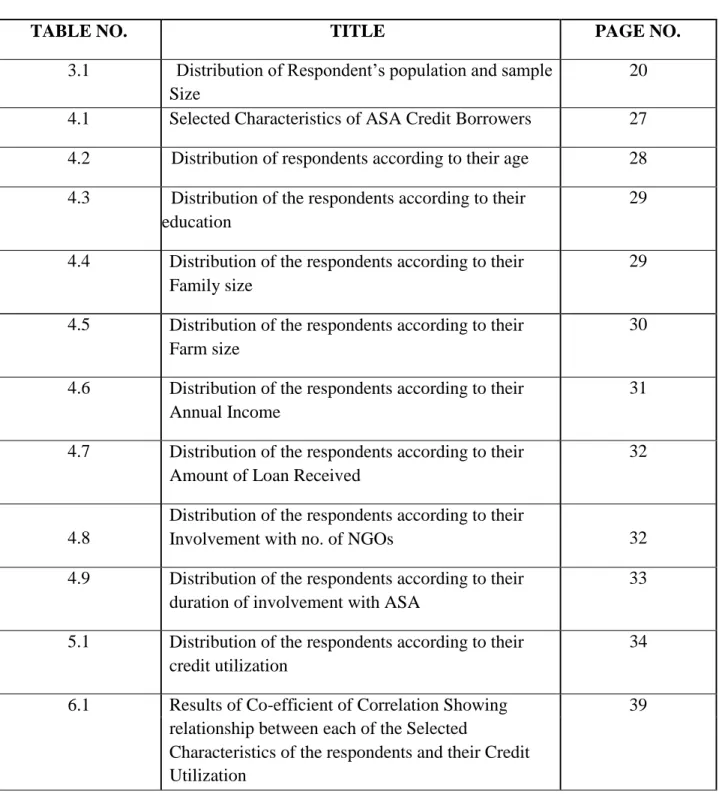
TABLE NO. TITLE PAGE NO.
3.1 Distribution of Respondent’s population and sample Size
20 4.1 Selected Characteristics of ASA Credit Borrowers 27 4.2 Distribution of respondents according to their age 28 4.3 Distribution of the respondents according to their
education
29 4.4 Distribution of the respondents according to their
Family size
29
4.5 Distribution of the respondents according to their Farm size
30 4.6 Distribution of the respondents according to their
Annual Income
31 4.7 Distribution of the respondents according to their
Amount of Loan Received
32
4.8
Distribution of the respondents according to their
Involvement with no. of NGOs 32
4.9 Distribution of the respondents according to their duration of involvement with ASA
33 5.1 Distribution of the respondents according to their
credit utilization
34
6.1 Results of Co-efficient of Correlation Showing 39 relationship between each of the Selected
Characteristics of the respondents and their Credit Utilization
LIST OF FIGURES
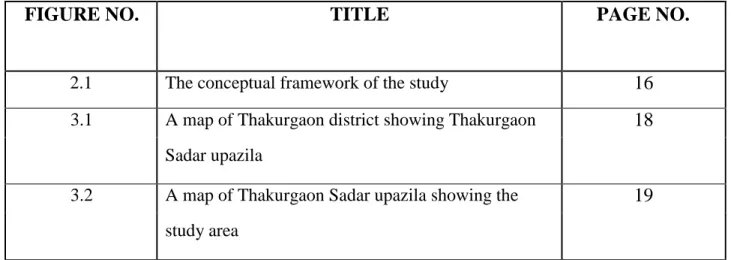
FIGURE NO. TITLE PAGE NO.
2.1 The conceptual framework of the study 16
3.1 A map of Thakurgaon district showing Thakurgaon 18 Sadar upazila
3.2 A map of Thakurgaon Sadar upazila showing the 19 study area
LIST OF APPENDICES
APPENDIX NO. TITLE PAGE NO
A An English version of the interview schedule 52-54
B
Correlation matrix among the variables of the study 55FACTORS INFLUENCING PROPER CREDIT UTILIZATION OF THE ASA CREDIT BORROWERS
ABSTRACT
Bangladesh being a developing country, many NGOs (Non Government Organizations) and MFIs (Micro Finance Institutions) are working besides Governments various activities for the improvement of the socio-economic status of its population. ASA (Association of Social Advancement) is one of the best managed microfinance institution in Bangladesh. It has multisectoral program and activities spread across the country. ASA has taken up various programs for the development of women. The present study deals with the involvement of ASA beneficiaries in micro-credit activities. The main purpose of this study is to assess the level of credit utilization of the ASA credit borrowers. Besides, attempt was also made to explore the contribution of some selected characteristics of ASA beneficiaries to their credit utilization. The study was conducted at three villages of Thakurgaon Sadar Upazila under Thakurgaon district.
Total 73 ASA beneficiaries were randomly selected which constituted the sample. Survey methods was used to collect information from the respondents. Correlation co-efficient method was administered and 9 independent variables namely: age, education, family size, farm size, annual income, credit received, attitude towards ASA, NGO involvement and duration of involvement with ASA were considered to run the analysis. The findings revealed that 43.83 percent of the borrowers had medium credit utilization where 19.19 percent had no utilization and only 31.50 had high credit utilization. Among the nine selected characteristics of the beneficiaries correlated with their credit utilization only four variables namely: education, farm size, annual income and NGO involvement had significant positive relationship. On the other hand, age, family size, credit received, attitude towards ASA and duration of involvement with ASA of the respondents had no significant relationship with their credit utilization behavior. The ASA authority should pay more attention to increase respondent’s credit utilization.
CHAPTER I INTRODUCTION
1.1. General Background:
Bangladesh is a heavily populated state and with a thickness of 1103 populations in for each square kilometer, the quantity of inhabitants is 163.7 million (MoF, 2019). Bangladesh is a member of the world’s least developed countries, having increased population density, unemployment, illiteracy, child mortality, socio-communal unrest and many more. About 5%
of the world poor people and 3% of the global extreme poor people live in our country (Ovi, 2019). Poverty rate of the country is 21.8% and extreme poverty rate 11.3% (MoF, 2019). The country has also been facing massive challenges of feeding the rapidly growing population or even to support their livelihood in a sustainable manner. Land areas are creating pressures on the government and the entire economic set up. Because, the traditional agricultural sector has failed to fully support the national economy. In general, agriculture has so far appeared as the main source of livelihood for more than half of the entire population of the country. But this sector has arguably failed to create ground, sustainable development. Other than this, the sector has been constantly facing pressures due to its typical vulnerability to natural hazards.
Increasing numbers of landless populations caused by river erosions is also adding pressure to the national economy. Visibly, the overall situation shows the limited capacity of the government for improving the existing situation and for creating more opportunities. However, the non-governmental organizations (NGOs) have been playing supportive roles with the government. In some cases, they are considered as more effective to get attached with the grass-root-level developmental initiatives.
In Bangladesh, such organizations first emerged soon after the war of liberation in 1971. Most of the NGOs during the early 1970s had their origins from outside Bangladesh. Functions of these NGOs had a narrow focus, e g, rehabilitating infants, providing shelter and organize relief and rehabilitation activities in the north west immediately after the 1974 famine, etc. Later, they switched over their operations to sustainable development activities aimed at raising the
level of poverty on increase and high population growth, number of NGOs has proliferated horrendously in Bangladesh. About 2,633 NGOs are registered with the Bangladesh NGO Affairs Bureau of which 2372 are domestic and the rest 261 are foreign. One of the major reasons for the increasing use of NGOs in developmental activities is to find an alternative and better channel for development aid in the third world countries.
A large number of Non-Government Organizations (NGOs) are engaged in various activities of social upliftment of the rural poor in Bangladesh. Some of those NGOs, in terms of both beneficiary coverage as well as investment, have the ability to reach the poor and address the issue of poverty alleviation and rural development effectively. Among the NGOs major ones are Grameen Bank (GB), Association for Social Advancement (ASA), Bangladesh Rural Advancement Committee (BRAC), Proshika, Rangpur Dinajpur Rural Service (RDRS) Bangladesh, Thengamara Mohila Sabuj Sangha (TMSS). Besisdes these national NGOs many International NGOs are also working which include Care Bangladesh, Caritas, Hellen Keller International, OXFAM Bangladesh, World Vision etc. There are also a number of local NGOs in the country, which are working in small areas with limited program coverage.
Among the NGOs, Association for Social Advancement (ASA) is one of the top micro-finance institutions in Bangladesh and one of the best managed micro-finance institutions in the world, which was established in 1978 at a remote village Tapra, under the then Manikganj sub- division about 80 kilometers away from the capital Dhaka with a mission to welfare of the poor. Since establishment the organization has been striving for assisting the underprivileged groups in attaining better livelihood and acquire means to escape poverty trap. ASA works with people whose lives are dominated by severe poverty, illiteracy and other handicaps.
By 1990, ASA was ready to recognize that for earning better income and reduce poverty ‘there is no alternative to credit’. This credit program brings about positive change in the quality of life of poor people of our country. The organization offers credit in order to facilitate shelf- employment and income generation. Verily all of the beneficiaries are women. In Bangladesh, women are targeted because women are increasingly accessible, more likely to repay credit on
time, more patient than men and less expensive to support. ASA provides credit for crop production, vegetable and fruit production, poultry rearing, livestock, fish culture, information technology, small, medium and large business, disaster and health care etc. A great extension work is required to supervise the utilization of credit which is generally generally disbursed among the women. Through such effort, the status of women would be improved and enhanced their decision making ability.
The vision of ASA is to establish a poverty free society. The institutional mission of ASA is to support and strengthen the economy at the bottom of the socio-economic pyramid by facilitating access to financial services and provide healthcare, education, sanitation, hygiene, physiotherapy and agricultural services from own resources generated out of microfinance program for the poor, marginalized and disadvantaged. The services that ASA provides are now strictly financial in nature. The institution with a huge clientele seeks to play a better role of financial intermediary by lending surplus funds of savers to those with an investment opportunity (Nadira et. al. 2017). But the respondents can not properly utilize the loan all the time. In this study, the researcher tried to identify the factors that influence the proper credit utilization of the borrowers.
1.2. Statement of the Problem:
ASA tries to improve the socio-economic condition of poor women by providing credit and other necessary support. The credit is provided to the members to enhance their capabilities of adopting improved production practices and thereby increase their family income. But very often the members utilize their agricultural credit in the non-agricultural purposes resulting poor recovery. The beneficiaries utilize the credit in purchasing food, cloth, repairing house and furniture, expenditure for education of children, religious and social festivals etc. It is now the concern to see that if members of ASA utilize the credit for the right purpose.
Therefore a study entitled “Factors Influencing Proper Credit Utilization of the ASA Credit Borrowers” is undertaken to set answers of the following questions:
i. What are the characteristics of the ASA credit borrowers?
ii. What extent the credit borrowers use credit properly?
iii. Is there any relationship between selected characteristics of ASA credit borrowers and their credit utilization?
v. What are the factors that significantly influence proper credit utilization of the credit borrowers?
1.3. Objectives of the study:
The following specific objectives are formulated in order to get proper direction of the study:
i. To describe the selected socio-economic characteristics of the credit borrowers ii. To determine the level of proper credit utilization and
iii. To explore the relationship between the selected characteristics of the women borrower and their credit utilization behaviors
1.4. Justification of the Study
ASA is one of the top microfinance institutions of Bangladesh, has been providing microfinance program since 1991 to the poor, marginalized and disadvantaged people to support them with financial leverage for breaking the chronic cycle of poverty. Almost 96 percent of ASA clients are women and of these women about 90 percent live in the rural areas (ASA Annual Report 2018). Women of Bangladesh suffer social, religious and cultural barriers in participating entrepreneurial income generating activities as well as farming exercises.
Though the situation is changing day by day in the cities, the rural women’s situation remain unchanged. Rural women have low economic status in society, their access to property and other sources of production is limited. Regardless of these obstructions, women of Bangladesh are occupied with exceptionally beneficial exercises and contributing mostly as unrecognized labor to the socio-economic development of Bangladesh.
Besides different Government action, many other Non Government Organizations (NGO) and microfinance institutions (MFI) provide microcredit and other services to assist poor women for their social upliftment through their personal involvement in income generating activities.
Along with credit ASA emphasizes on awareness of the borrowers, leading them to develop the quality of human life and the potentialities within them. The organization also provide necessary suggestions for making proper utilization of the credit. But in most cases, the beneficiaries use the credit on emergency need, old debt repayment, consumption and non- farm expenditures. There is no noteworthy studies on whether the ASA credit borrowers use the credit properly. This study will be undertaken to find out the rate of beneficiaries that use credit properly and the factors that influence the proper utilization of credit. The findings of the study will be of great value for the researcher, extension providers, students and particularly ASA authority in monitoring and strengthening the micro-credit program.
1.5. Assumption of the Study
An assumption is the supposition that an apparent fact or principle is true in light of the available evidence (Goode and Hutt, 1952). The researcher had following assumptions as a primary concern while undertaking this study:
The selected respondent included in the sample were representative part of the population of the ASA beneficiaries in the selected area. They were capable enough to provide proper responses to the questions included in the interview schedule.
The responses supplied by the respondents were valid and reliable.
Views and opinions provided by the respondents were representative views and opinions of the ASA beneficiaries of the study area.
The researcher who acted as questioner was well adjusted to the social condition of the study area. Hence, data collection from the respondent was free from biasness.
The selected characteristics and proper credit utilization of the ASA credit borrowers were usually and independently distributed with their respective means and standard deviation.
1.6. Limitation of the study:
In order to make the research meaningful and manageable from the practical point of view, considering the time, money and other resources available to the researcher the study was limited by the following constraints:
i. The study was confined to selected three villages of Akcha union under Thakurgaon Sadar upazila under Thakurgaon District.
ii. The study focused on the proper loan utilization by the ASA credit borrowers.
iii. There were many ASA credit borrowers in the study area but only 73 members were considered for this study.
iv. There were many characteristics of the borrowers but only some of them were selected for this study.
v. The information about the study, the researcher depended on the data as furnished by the sampled respondents during the interview. As none of the respondents kept records, they furnished information to different queries by recall.
vi. All data and information were collected within short possible time.
vii. Because of time and resource constraints, conducting a comprehensive study in full depth and width has not been possible.
1.7. Definition of different Terms
For simple understanding, certain terms frequently used throughout the entire study are defined and explained as follows:
ASA is the acronym of Association of Social Advancement. It is a renowned Microfinance Institution (MFI) emerged in 1978 with a view to establish a poverty free society through various activities like agriculture, education for children, health service, different income generating education as well as credit services for the poor people.
ASA Beneficiaries are those individuals who receive different types of benefits from ASA directly or indirectly. Women who are involved with different types of activities under ASA program were considered as ASA beneficiaries.
Respondents refer to those people who are involved with ASA activities and included in the sample.
Age of a respondent was defined as the span of his/her life and is measured by number of years from his/her birth to the time of interviewing.
Education characterized as the improvement of desirable knowledge, skill and attitude of individual through the experience of reading, writing, perception and other related exercises.
Education was estimated by successful year of schooling
Family size referred to actual number of permanent members in a subject’s family who live in a fixed dwelling unit and eat together in a family unit.
Farm size referred to the total area of land (in hectares) possessed by the respondent’s family on which farming activities are carried out. A respondent was considered to have full benefit from cultivated area either owned or obtained by borga system. The area was being evaluated in terms of full benefit to the respondent.
Annual income of a respondent is defined as the total annual earning of all the family members from agriculture and other accessible sources (service, business, daily working) during a year.
Credit was defined as the amount of money received by the clients of ASA for some particular purposes at a specific interest generally repayable in a year.
Credit Utilization ASA credits are disbursed among the beneficiaries for specific purposes.
Credit utilization was defined as the pattern of credit utilization by the ASA credit borrowers.
Income generating activities refer to those activities through which a women earn directly by producing, making and selling of various products such as vegetable, cow, goat, hen, cow milk, egg etc.
NGO An organization developed and managed by private initiatives being foreign and financed is a Non-Government Organization (NGO). It works independently with and are mandated to collaborate with others unless there is any felt need.
Social Participation The term referred to the voluntary sharing in person and group to group relationship beyond the immediate household. It shows the degree to which the beneficiaries are involved in formal organizations as member or office bearer and regularity in their attendance to meeting.
CHAPTER II
REVIEW OF LITERATURE
This chapter presents the literature review having significance with the present study. This study is concerned with determinants of proper loan utilization of the ASA credit borrowers.
Literature and research work in accordance with the present study were searched in libraries, research institutions and websites (internet). There is no directly related readily available for this study. Hence, an attempt has been in present chapter to review some interlinked literature in this perspective from home to abroad. The interlinked reviews helpfully presented on the major objectives of the study as far conceivable. However, the literature of available studies have been briefly presented in the chapter under following sections.
Section I: Concept of NGO activities including ASA
Section II: Relationship between the selected characteristics of the respondent and proper loan utilization of the ASA credit borrowers
Section III: Conceptual framework of the study 2.1. Concept of NGO activities including ASA
Islam (2016) stated that NGO operations are complex, multidimensional, changeable in Bangladesh. Despite many problems and difficulties, NGO activities in Bangladesh are positive and good.
Alam (2014) noted that NGO activities has benefitted the section of the population that lacks collateral or income to access traditional bank finance, yet nevertheless has the wherewithal to engage in profitable activities if they are able to access credit. He found that micro-credit has failed to alleviate poverty of the bottom 10% of the society that micro-credit institutions consider non-creditworthy. He suggested IGA model which approaches extreme poverty with a clear rational and provides a promising model with which to extend the benefits of micro-credit to more of the hard to reach 10% of the poorest people.
Nadira et al. (2017) stated that Positive aspect of ASA relating to savings mobilization from its members is reducing risk at loan that is in case of becoming a defaulter or being unable to deposit the installment of loan there is opportunity for members to reconcile with the deposit in future. As per clients need and demand ASA decided introduce to more open access savings services, providing an excellent way to ‘access relatively cheap capital, increase outreach, increase lending, maintains portfolio quality, increase productivity and reduce cost and vulnerability.
Rahman et al. (2012) in their study on the Synthesis of Grameen Bank, BRAC and ASA Microfinance Approaches in Bangladesh showed that Grameen Bank, BRAC and ASA along with other MSPs have been able to demonstrate the effectiveness of microfinance towards sustainable development for the rural poor in Bangladesh.
Sohel et al. (2013) in their study noted that in addition of different credit services, ASA introduces distinctive products like loan insurance, Members’ Security Fund, Male Members’
Security Fund, Health Assistance Security Grant Fund for ASA Clients from Central Pool, and Health Assistance Grant Fund for Minor ill clients to provide safe guard any risk and uncertainties like financial catastrophe, accident, death and physical hazards.
Rana (2007) in his study observed that ASA, a successful organization, mainly work on landless and marginal women to develop their economic and social status.
2.2. Relationship between the selected characteristics of the respondent and proper loan utilization of the ASA credit borrowers
2.2.1. Age and Credit Utilization
Zakaria (2000) in his study found that there is a significant but negative relationship between the age of the borrowers and their utilization of credit.
Samad (2004) in his study on “Poverty Alleviation of the Rural Women through Selected Improved Agricultural Practices” showed that, the age of the rural women had no significant relationship with their poverty reduction activities.
Saha (2006) revealed that there is no significant relationship between the age of the borrowers and their loan utilization.
Khatun et al. (2014) in her study observed that the age of the respondents had not any significant relationship with their credit utilization pattern and repayment behavior.
Ibrahim et al. (2015) showed that there is no significant but negative relationship between the age of the borrowers and their loan utilization.
Labani et al. (2015) reported that utilization and repayment of loan is negatively and significantly affected by the age of the women borrowers.
Ayele et al. (2016) in their study on determinants of microfinance loan utilization by smallholder farmers indicated that there is no significant relationship existed between the level of household income and their microfinance loan utilization.
2.2.2. Education and Credit Utilization
Saha (2006) in his study on “Loan Utilization and Repayment behavior of Clientele of Scotia Branch of Bank Asia Limited” stated that there is significant relationship between level of education of the borrowers and their loan utilization.
Zakaria (2000) reported that there is no significant relationship between level of education of the borrowers and their utilization of credit.
Parveen et al. (2010) explored that education had positive significant effect to change the attitude of farmers towards loan utilization and repayment.
Khatun et al. (2014) in her study observed that the education of the respondents significantly associated with their credit utilization pattern and repayment behavior.
Ibrahim et al. (2015) reported that there is no significant relationship between level of education of the household head and their utilization of credit.
Labani et al. (2015) showed that there is no significant relationship between level of education of the women borrowers and their utilization and repayment of credit.
Ayele et al. (2016) in their study on determinants of microfinance loan utilization by smallholder farmers indicated that the literacy status of the farmer significantly influenced the microfinance loan utilization.
2.2.3. Family Size and Credit Utilization
Zakaria (2000) found that there is no significant relationship between the Family Size of the borrowers and their utilization of credit.
Saha (2006) noted that there is no significant relationship between the family size of the borrowers and their loan utilization which indicate that relationship between the family size of the borrowers and their utilization of loan was independent to each other.
Bihoctavia (2013) indicated that the number of household members of the respondent had no significant relationship with their credit utilization behavior.
Labani et al. (2015) showed that there is a significant negative relationship between the Family Size of the borrowers and their utilization and repayment of loan indicating that utilization and repayment of loan decrease with increase in respondents family size.
Alio et al. (2017) found that there is a significant relationship between the household size and the loan utilization of the borrowers. It implies that the larger the size of household the more credit will be borrowed for use in productive purposes since family labor is readily available.
Bihoctavia (2013) in his study indicated that the number of household members of the respondent had no significant relationship with their credit utilization behavior.
2.2.4. Farm Size and Credit Utilization
Zakaria (2000) in his study found that there is no significant relationship between the Family Farm Size of the borrowers and their utilization of credit.
Parveen et al. (2010) in their study showed that there is negative and insignificant relationship existed between owned land and loan utilization and repayment performance of the borrowers.
Khatun et al. (2014) in their study noted that the farm size of the respondents significantly influenced credit utilization pattern and repayment behavior of the borrowers.
Ayele et al. (2016) in their study on determinants of microfinance loan utilization by smallholder farmers indicated that the size of land holding of the respondent significantly influenced the microfinance loan utilization.
2.2.5. Annual Income and Credit Utilization
Zakaria (2000) found that there is no significant relationship between the Family Income of the borrowers and their utilization of credit.
Saha (2006) in his study showed that there was positive association between the annual income of the borrowers and their utilization of loan.
Parveen et al. (2010) explored that income of the borrowers positively and significantly affected loan utilization and repayment of the borrowers.
Bihoctavia (2013) indicated that the income level of the respondent significantly influenced their credit utilization behavior.
Khatun et al. (2014) in her study noted that the income of the respondents significantly affected credit utilization pattern and repayment behavior.
Ayele et al. (2016) in their study on determinants of microfinance loan utilization by smallholder farmers indicated that there is no significant relationship existed between the level of household income and their microfinance loan utilization.
2.2.6. Amount of Loan Received and Credit Utilization
Ali (2003) stated that ninety-one percent of the respondents were small to medium credit recipient.
Credit received of the respondents showed a positively significant relationship with their change in income and housing environment. Credit received had a great influence for socio-economic development of the beneficiaries but it was not helpful in case of food consumption. As there was an existence of small to medium credit received by higher proportion of the respondent, there was a scope to increase impact of microcredit towards poverty alleviation by increasing credit recipient.
Das (2008) in his showed that the amount of loan received significantly influenced the loan utilization and loan repayment behavior of the borrowers of BRAC and BKB.
Saha (2006) showed that there was positive significant relationship between amount of loan received of the borrowers and their loan utilization which indicate that the relationship between the loan amount received and their utilization of loan effectively involved and linked.
Parveen et al. (2010) revealed that loan received from institutional sources had positive contribution to loan utilization and repayment performance of the borrowers.
Zakaria (2000) in his study found that there was positive significant relationship existed between the credit availability of the borrowers and their credit utilization.
Khatun (2015) in her study found that the credit received of the borrowers had no significant relationship with the effectiveness of Family Development Approach and Group based Development Approach of Dipshikha activities.
2.2.7. Involvement of No. of NGOs and Credit Utilization
Samad (2004) in his study noted that involvement with NGO of the rural women had no significant relationship with their poverty reduction.
Khan (2006) in his study revealed that the involvement with Grameen Bank had no significant relationship with the impact of Grameen Bank micro credit program.
Islam (2007) found that the involvement with Dipshikha had positive contribution to the extent of effectiveness of Dipshikha activities.
Hoque (2008) in his study noted that involvement of the respondent had significantly related with the impact ASA micro-credit.
Shiraj (2009) reported that involvement of the respondent had positive significant association with the impact of TMSS micro-credit program
2.2.8. Duration of Involvement with ASA
Alam (2001) in his study revealed a significant positive between the length of involvement of the respondent with TMSS and their changes to health status.
Alio et al. (2017) found that there is a significant relationship between the duration of membership and credit utilization of the borrower.
Rahman (2005) in his study on “Role of an NGO intervention on poverty alleviation in a selected area of Dinajpur District” observed a significant relationship between the duration of involvement with TMSS and their changes in food consumption and housing environment.
Khatun (2015) in her study found that involvement with Dipshikha which refers length of involvement of respondents with Dipshikha activities had no significant relationship with the effectiveness of Family Development Approach and Group based Development Approach of Dipshikha activities.
2.3. Conceptual framework of the study
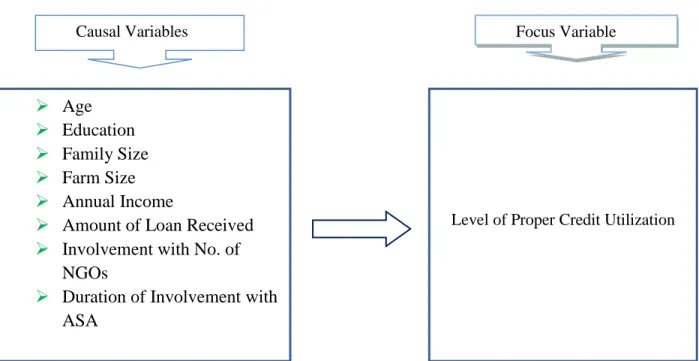
In scientific research selection and measurement of variable establish a significant task. The hypothesis of the research while developed appropriately contains at least two important variable: independent variable and dependent variable. A dependent variable is a factor which appears, disappears or varies as the researcher introduce, removes or varies the independent variables . On the other hand an independent variable is that factor which is manipulated by the researcher in his attempt to ascertain its relationship to an observed phenomenon. It was therefore assumed that, the credit utilization of the ASA credit borrowers might have influenced by their various characteristics. So, the conceptual framework of the study was found out how the characteristics of the beneficiaries contribute to the credit utilization of the borrowers. The selected characteristics were age, education, family size, farm size, annual income, credit received, NGO involvement and duration of involvement with ASA. In view of above consideration, the conceptual framework of the study is shown in the Figure 2.1
Figure 2.1: Conceptual framework of the study Causal Variables
Level of Proper Credit Utilization Focus Variable
Age
Education
Family Size
Farm Size
Annual Income
Amount of Loan Received
Involvement with No. of NGOs
Duration of Involvement with ASA
CHAPTER III METHODOLOGY
In conducting scientific research, a set of methods used for data collection and data analysis are indispensable. Appropriate methodology enables the researcher to collect valid and reliable data and to analyze the data properly in order to arrive at a meaningful conclusion. This chapter deals with locale of the study, population and sampling, instrument of data collection, collection of data, variables of the study, measurement of variable, hypothesis of the study, data processing and analysis.
3.1. Locale of the study
Thakurgaon Sadar Upazila of Thakurgaon District was selected purposively for the study.
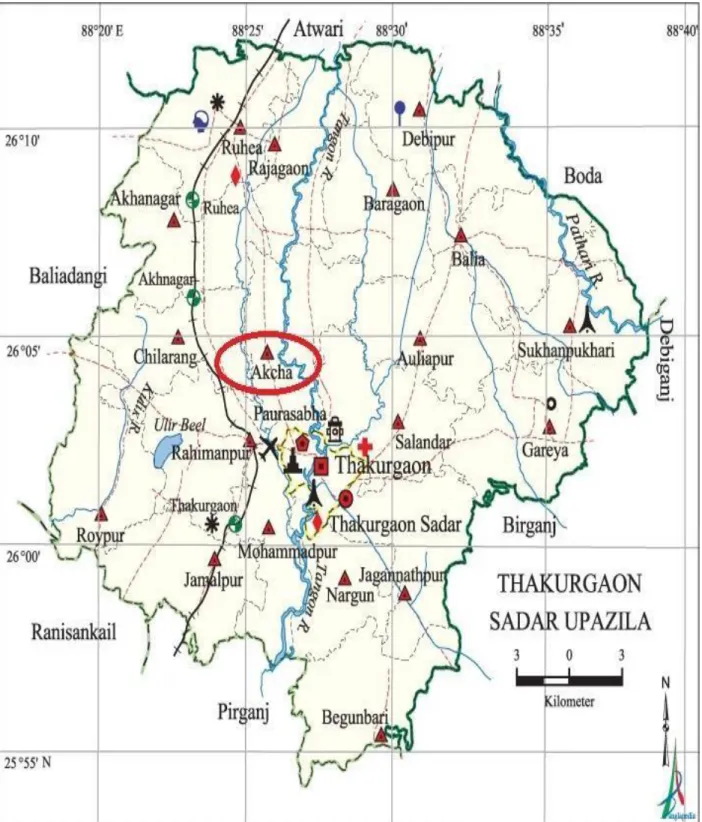
There are 19 unions in Thakurgaon Sadar Upazila. Out of 19 unions one union named Akcha was selected for the study. There are 7 villages in Akcha union. Out of 7 villages 3 villages namely Akcha, Daksin Batina and Boikunthapur were selected for the study. The justification behind selection of this upazila was that it is one of the working region of ASA. The main reasons for selecting study area were as follows:
a) Easy accessibility and good communication facilities.
b) Expected better participation from the respondent since the area and language of the respondent is well known to the researcher.
c) No such type of study was conducted previously in the study area.
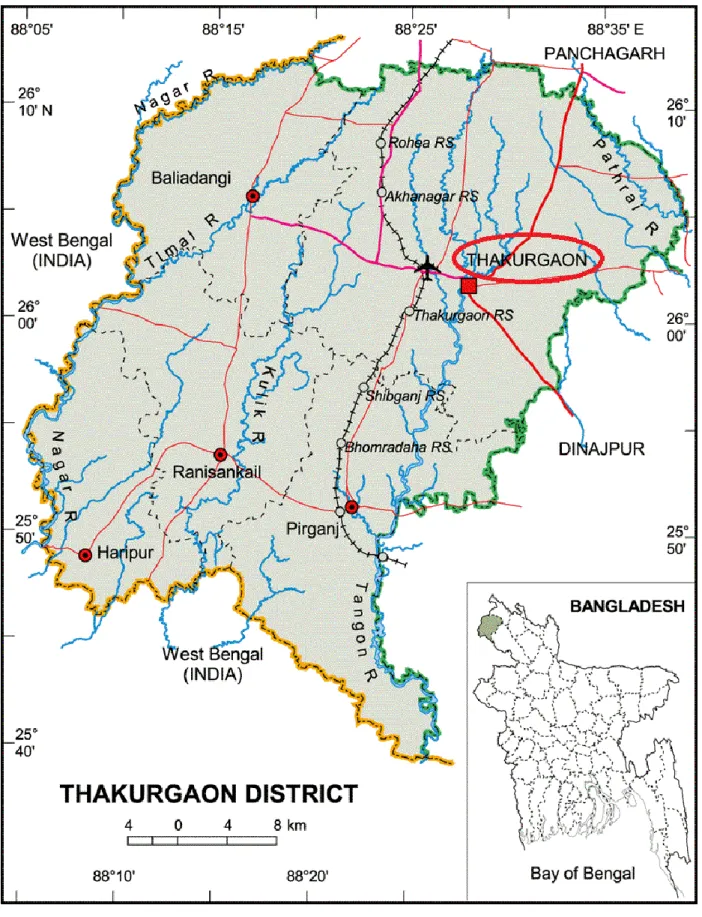
A map of Thakurgaon district and another map showing the locale of the study is presented in Fig. 3.1 and 3.2 respectively for better understanding.
Figure 3.1: A map of Thakurgaon district
Figure 3.2: A map of Thakurgaon Sadar Upazilla showing the study area
3.2. Population and Sampling
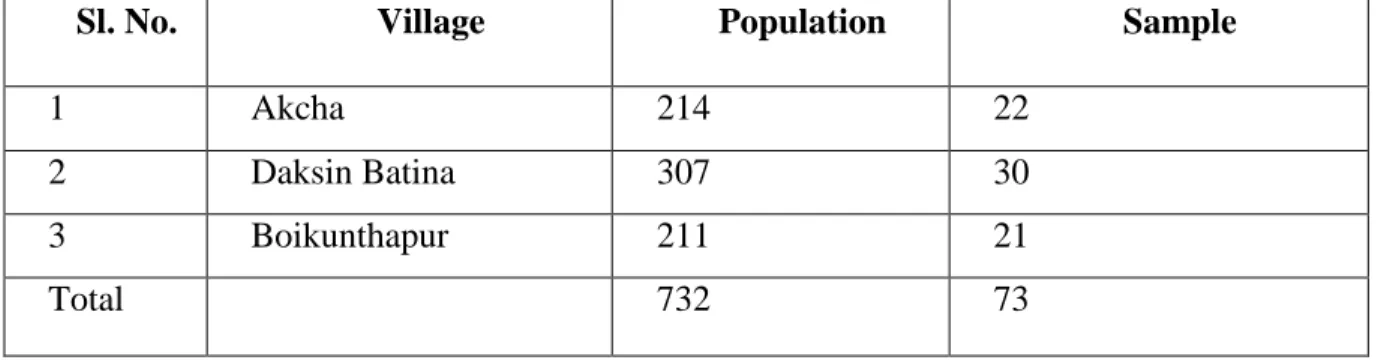
Data required for the present study was collected from the ASA beneficiaries. A total of 732 beneficiaries of ASA were the population of the study. Out of 732 ASA beneficiaries, a sample of 73 members (i.e. 10%) were selected following simple random sampling technique.
Table 3.1: Distribution of Respondent’s population and sample size
Sl. No. Village Population Sample
1 Akcha 214 22
2 Daksin Batina 307 30
3 Boikunthapur 211 21
Total 732 73
3.3. Instrument for Data Collection
In order to collect relevant, valid and reliable data from the respondents, a draft interview schedule was prepared centering the objectives of the study. The schedule contained mostly closed form of question. After preparation, the draft interview schedule was pre-tested by collecting data from 15 beneficiaries of ASA of the study area. The pre-test result assisted the research to find out faulty questions and hence necessary corrections and adjustments were made in the interview schedule on the basis of the result.
3.4. Collection of Data
Data was collected from ASA beneficiaries utilizing data collection instrument. The researcher herself collected data by personal interviewing of each respondent. Before starting data collection the researcher met district officer, branch manager, loan manager and field officers of ASA for getting necessary assistance and co-operation. Before setting off an actual interview a concise introduction of the purpose of the study was given to the respondents. The question was asked systematically in an exceptionally straightforward way and the information was recorded in the interview schedule. At whatever point any respondent faced any difficulty
in understanding any question, it was carefully explained to enable her to answer appropriately. The researcher made all possible efforts to establish a good rapport with the respondents so that they did not feel hesitate to provide responses to the questions and statements in the schedule. Very well co-operation was received from the field workers and all the respondents.
The researcher did not face any serious difficulty during the data collection. Data collection period was 1st April to 30th May, 2019.
3.5. Variables of the Study
In descriptive social research selection and measurement of variables are two most significant task. A variable is an attribute which can assume varying or different values in successive individual cases. An organized research generally contains at least two identical elements viz.
independent variable and dependent variable. Independent variables are defined as a characteristic that the researcher manipulate to identify a particular factor (www.ufl.edu).
Dependent variable is the second type of variable which is measured using independent variables. (R1). A dependent variable is expected to change as a result of an experimental manipulation of the independent variable or variables. According to the consequence of the study area, the researcher selected eight characteristics of the respondent as independent variables (e.g. age, education, family size, farm size, annual income, credit received from ASA, NGO involvement, duration of involvement with ASA). On the other hand, utilization of credit was the dependent variable of the study. The following sections include the procedures of measurement of dependent and independent variable of the study.
3.5. Measurement of Variables
3.5.1. Measurement of Causal Variables 3.5.1.1. Age
Age of ASA beneficiary was referred to the period of time from her birth to the time of interview. Age was estimated in terms of years on the basis of respondent’s responses. A score of one (1) was assigned for each year’s of the respondent age. This variable appears in item
3.5.1.2. Education
Education was measured in terms of respondents’ years of successful schooling in the educational institution. A score of 1 was set for each completed year of schooling. For example, if a respondent had 10 year of schooling, her education score was assigned as 10. If a respondent did not know how to read and write, her educational score was given as 0 while a score of 0.5 was given to a respondent who only could sign her name. This variable appears in item number I.c. in the interview schedule as presented in Appendix-A.
3.5.1.3. Family Size
Family size was measured by the total number of individuals in the family of a respondent. The family members included the respondent herself, her husband, children and other dependents who jointly live and eat together during interview time. A score of 1 was set for each member of family. This variable appears in item number I.d. in the interview schedule as presented in Appendix-A.
3.5.1.4. Farm Size
The farm size of a respondent referred to the total area of land on which the family carried out farming operations, the area being in terms of full benefit to the family. The farm size of each respondent was measured using following formula:
Fs = A1+ A2+ 1/2(A3+ A4) + A5+ A6
Where,
Fs = Farm size A1 = Homestead area
A2 = Own land under own cultivation A3 = Own land given to others’ on borga A4 = Land taken from others’ on borga
= Land taken from others’ on lease
A6 = Own pond & garden
The unit of measurement was hectares. This variable appears in item number II.a. in the interview schedule as presented in Appendix-A.
Sarker (2007), Hoque (2008) also used the above formula to measure farm size of the respondents in their thesis study.
3.5.1.5. Annual Income
The annual income has been referred as the gross earnings of the respondent and her family members both from agricultural and non-agricultural sources during a year. The annual income was expressed in thousand taka. The technique of ascertaining income from agriculture involved two steps. Firstly, the yield of all crops in the previous year was noted. Secondly, total yields were converted into cash income according to the prevailing market price. Income from non-agricultural sources like services, business and other sources of the respondent or other members of her family were included. This variable appears in item number II.b. in the interview schedule as presented in Appendix-A.
3.5.1.6. Amount of Loan received
The variable ‘Credit received’ was referred to the amount of money received by the respondent as loan from ASA during last year under its specified terms and condition. Credit received was expressed in thousand taka. This variable appears in item number II.c. in the interview schedule as presented in Appendix-A.
3.5.1.7. Involvement with No. of NGOs
NGO involvement was referred to the respondent’s involvement with various NGO. On the basis of their activities and service provided, respondent may be involved with different NGOs like ASA, Grameen Bank, ESDO, BRDR, BRAC etc. This variable appears in item number III.b. in the interview schedule as presented in Appendix-A.
3.5.1.8. Duration of Involvement with ASA
Duration of involvement with ASA was referred to how many years of an ASA beneficiary
attending at ASA to the time of interview. It was expressed in terms of years on the basis of record available in ASA. A score of 1 was assigned for each year of the respondent’s involvement with ASA. This variable appears in item number III.c. in the interview schedule as presented in Appendix-A.
3.5.2 Measurement of Focus Variable
Credit Utilization was the Focus variable of this study.
Credit utilization of each head was calculated separately by calculating the percentage of amount of credit utilized in assigned purpose in comparison to the total amount of credit using the following formula:
Credit Utilization =Total amount of credit utilized in assigned purpose
Total amount of credit received × 100
Thus the overall credit utilization score of a respondent could range from 0 to 100. Here, 0 indicates the lowest and 100 indicates the highest credit utilization. Saha (2006) in his paper named “Loan Utilization and Repayment Behavior of Clientele in Scotia Branch of Bank Asia Limited” also use the above formula in his study.
3.6. Hypothesis of the Study
A hypothesis is a conjectural statement of the relation between two or more variables.
Hypothesis are always in declarative sentence form and they are connected, either generally or specifically from variables to variables. In expansive sense hypothesis are separated into two types: (i) Research hypothesis (ii) Null hypothesis. When an investigator tries to find out relationship between variables, then formulates research hypothesis which states anticipated relationships between the variables. On the other hand, when a researcher tries to perform statistical test, then it becomes necessary to formulate null hypothesis. A null hypothesis states that there is no relationship between the concerned variables.
The following null hypothesis was formulated to explore the relationships between independent variables and credit utilization of the ASA credit borrowers.
“There is no relationship between the selected 8 characteristics (age, education, family size, farm size, annual income, amount of loan received, involvement with no. of NGOs, duration of involvement with ASA) of the respondents with the credit utilization of the ASA credit borrowers.”
The alternative hypothesis was formulated as below, Each of the selected 8 characteristics (age, education, family size, farm size, annual income, amount of loan received, involvement with no.
of NGOs, duration of involvement with ASA) of the respondents has significant relationship with the credit utilization of the ASA credit borrowers.
3.7 . Data Processing and Analysis 3.7.1. Compilation of Data
After completion of data collection, the collected raw data are compiled, tabulated and analyzed an accordance with the objectives of the study. To simplify tabulation, the responses of ASA beneficiaries were transferred to a master sheet. Tabulation and cross tabulation were done based on the categories developed by the researcher herself. Qualitative data were transformed into quantitative form by means of suitable scoring.
3.7.2. Categorization of Respondent
The respondents were classified into different categories for clear or simple understanding of various attribute of the respondents. The categories were developed by the researcher considering nature of data and general consideration prevailing in the social system. The procedure for categorization in regard of different variables is elaborately being discussed while describing those variables in chapter-4.
3.7.3. Statistical Technique
According to the objectives of the study, the collected data were analyzed and interpreted. Data analysis was performed using IBM SPSS (Statistical Package for Social Sciences) Computer
distribution, range, average and standard deviation was used for interpretation of the selected causal and focus variables. Correlation coefficient was used to explore the relationship between the selected characteristics of the respondent and their credit utilization. Throughout the study, at least five percent (0.05) level of probability was used as the basis of rejecting a null hypothesis. Co-efficient values significant at 0.05 level is indicated by one asterisk (*) and that at 0.01 level by two asterisks (**).
CHAPTER IV
SOCIO-ECONOMIC CHARACTERISTICS OF THE ASA BENEFICIARIES
There were various characteristics of the ASA beneficiaries that might have influences their credit utilization behavior. These characteristics are age, education, family size, farm size, annual income, credit received, NGO involvement and duration of involvement with ASA.
There are many interrelated and constituent characteristics that are described in the improvement of individual behavior and personality. Decision making is definitely not a simple process. Decision making of an individual is generally dictated by her characteristics.
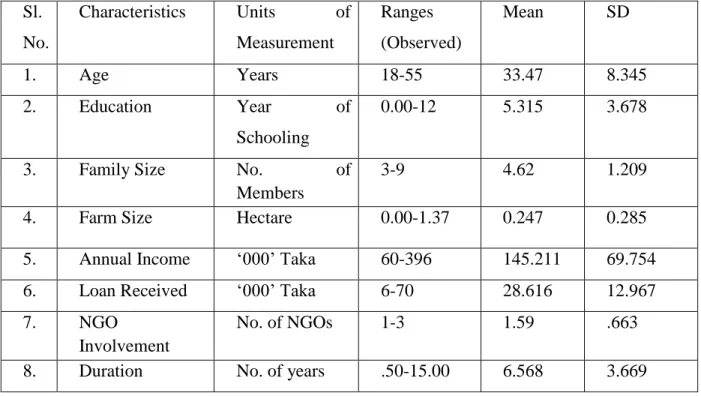
The matter of credit utilization again depend on the decision made by individual. Therefore, it was assumed that credit utilization of the ASA credit borrowers would be influenced by their various characteristics. The characteristics of the respondents have been discussed in this section. A concise outline of the measuring unit and the basic statistics of the selected characteristics of the respondents are presented in Table 4.1
Table 4.1: Selected Characteristics of ASA Credit Borrowers Sl.
No.
Characteristics Units of Measurement
Ranges (Observed)
Mean SD
1. Age Years 18-55 33.47 8.345
2. Education Year of
Schooling
0.00-12 5.315 3.678
3. Family Size No. of
Members
3-9 4.62 1.209
4. Farm Size Hectare 0.00-1.37 0.247 0.285
5. Annual Income ‘000’ Taka 60-396 145.211 69.754
6. Loan Received ‘000’ Taka 6-70 28.616 12.967
7. NGO
Involvement
No. of NGOs 1-3 1.59 .663
8. Duration No. of years .50-15.00 6.568 3.669
4.1. Age
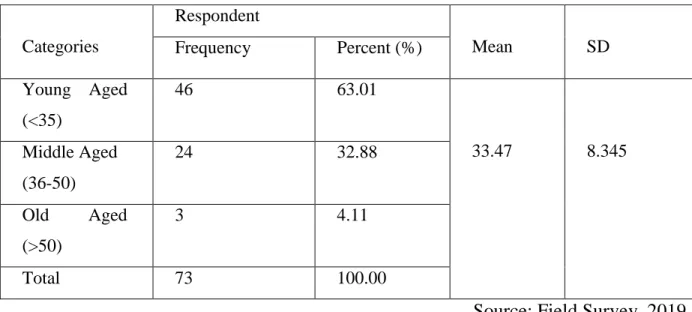
The age of the ASA beneficiaries in the study area ranged from 18-55 with a mean 33.47 and standard deviation 8.345. Based on the observed distribution of age, ASA beneficiaries were classified into three categories shown in Table 4.2
Table 4.2: Distribution of respondents according to their age
Categories
Respondent
Mean SD
Frequency Percent (%) Young Aged
(<35)
46 63.01
33.47 8.345
Middle Aged (36-50)
24 32.88
Old Aged (>50)
3 4.11
Total 73 100.00
Source: Field Survey, 2019 Table 4.2 shows that about 63.01 percent of the beneficiaries were young aged compared to 32.88 percent were middle aged and 4.11 percent were old aged. It could be observed that compared to other category, the young aged group were highly involved with ASA interventions.
4.2. Education
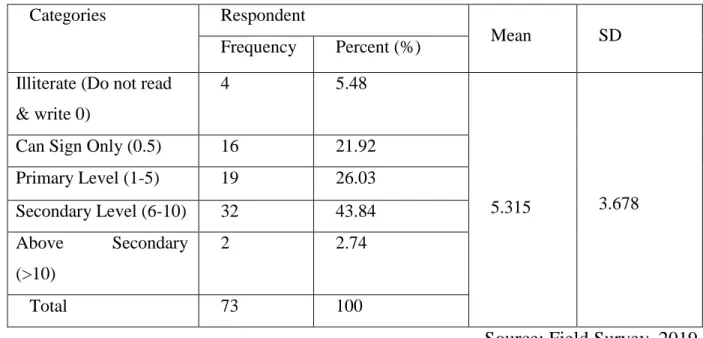
The level of education of the beneficiaries ranged from 0 to 12. The average education level was 5. 3151 with standard deviation 3.6776. On the basis of level of education, respondents were classified into five categories shown in Table 4.3
Table 4.3: Distribution of respondents according to their education
Categories Respondent
Mean SD
Frequency Percent (%) Illiterate (Do not read
& write 0)
4 5.48
5.315 3.678
Can Sign Only (0.5) 16 21.92
Primary Level (1-5) 19 26.03
Secondary Level (6-10) 32 43.84 Above Secondary
(>10)
2 2.74
Total 73 100
Source: Field Survey, 2019 It was found from Table 4.3 that, the majority proportion (43.08) of the respondents had
secondary level education where 5.48 percent had no education, 21.92 percent could sign only, 26.03 were completed primary level of education and 2.74 percent had higher level of education.
4.3. Family Size
The family size of the respondents ranged from 3 to 9 with an average 4.62 and standard deviation 1.209. Based on family size, the respondents were classified into three categories as small, medium and large family.
Table 4.4: Distribution of respondents according to their family size Categories Respondent
Frequency
Percent (%) Mean SD
Small(≤4) 35 47.94
4.62 1.209
Medium (5-6) 34 46.58
Large (>6) 4 5.48
Total 73 100
Table 4.4 revealed that the highest proportion (47.94 percent) of the respondents had small family as compared to medium (46.58 percent) and large family (5.48 percent). Most of the families in the study area were of small and medium size.
4.4. Farm Size
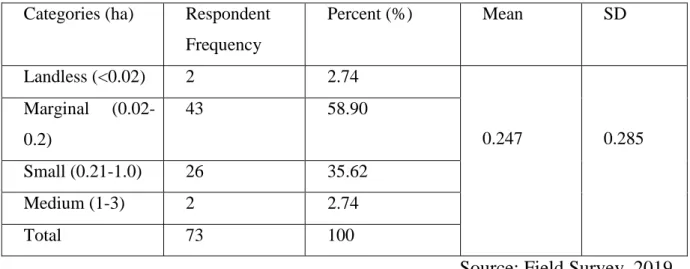
The family farm size of the respondent ranged from 0 to 1.37 hectare with an average of 0.247 hectare and standard deviation 0.28456. The respondents were classified into four categories on the basis of their farm holdings as suggested by DAE (2018) shown in Table 4.5
Table 4.5: Distribution of respondents according to their farm size Categories (ha) Respondent
Frequency
Percent (%) Mean SD
Landless (<0.02) 2 2.74
0.247 0.285
Marginal (0.02- 0.2)
43 58.90
Small (0.21-1.0) 26 35.62
Medium (1-3) 2 2.74
Total 73 100
Source: Field Survey, 2019 Computed data indicated that about 58.90 percent of the respondent belonged to marginal category while 2.74 percent of the respondent felt under landless category, 35.62 percent of the respondent had small farm size and 2.74 percent had medium farm size. The result shows that besides the resource poor some lower middle class people are also involved with ASA activities.
4.5. Annual Income
Annual Income of the ASA beneficiaries ranged from 60-396 thousand taka with an average 145211.64 and standard deviation 69754.804. Based on annual income respondents were classified into three categories as very low, small and medium (Table 4.6)
Table 4.6: Distribution of respondents according to their annual income Categories (000
taka)
Respondent Frequency
Percent (%) Mean SD
Very Low
(Mean-1sd. i.e.<
75)
9 12.33
145.211 69.754
Low
(Mean±1sd. i.e.
76-215)
54 73.98
Medium
(Mean+1sd. i.e.
>215)
10 13.69
Total 73 100
Source: Field Survey, 2019 Data presented in Table 4.6 indicated that the highest proportion (73.98) of the respondents constituted the low level of income category as compared to 12.33 percent had very low category followed by 13.69 had medium level of income category. The borrowers were highly heterogeneous in terms of their income. However the findings indicate that ASA works with people who had low income.
4.6. Loan Received
The Credit received of the respondent ranged from 6-70 thousand taka with average 28.616 and standard deviation 12.967. On the basis of credit received, ASA beneficiaries were classified into three categories as presented in Table 4.7
Table 4.7: Distribution of respondents according to their loan received Categories (000
taka)
Respondent Frequency
Percent (%) Mean SD
Low (Mean-1sd.
i.e. < 15)
8 10.96
28.616 12.967
Medium
(Mean±1sd. i.e. 15- 40)
57 78.08
High (Mean+1sd.
i.e. >40)
8 10.96
Total 73 100
Source: Field Survey, 2019 Table 4.7 showed that, majority (78.08 percent) proportion of the respondents were medium credit receiver while 10.96 percent and 10.958 percent were low and high credit receiver respectively. However only 10.96 percent received credit above Tk. 40000.
4.7. Involvement with No. of NGOs
The NGO Involvement of the respondents ranged from 1 to 3. The mean value was 1.59 and standard deviation 0.663. Based on their NGO involvement the respondents were classified into two categories presented in Table 4.8
Table 4.8: Distribution of respondents according to their Involvement with No. of NGOs Categories Respondent
Frequency
Percent (%) Mean SD
Low (Mean-1sd.
i.e. ≤ 1)
37 50.68
1.59 0.663
Medium
(Mean±1sd. i.e.
2-3)
36 49.32
Total 73 100
Data presented in Table 4.9 revealed that about 50.68 percent of the respondents had low involvement with NGO compared to 49.32 percent having medium involvement.
4.8. Duration of Involvement with ASA
The duration of involvement with ASA of ASA beneficiaries were ranged from 0.50-15 years with mean value 6.5685 and standard deviation 3.6698. The respondents were classified into three categories based on their duration of involvement with ASA (Table 4.10)
Table 4.9: Distribution of respondents according to their duration of involvement with ASA Categories Respondent
Frequency
Percent (%) Mean SD
Low (Mean- 1sd. i.e. < 4)
15 20.55
6.568 3.669
Medium
(Mean±1sd. i.e.
4-10)
49 67.12
High (Mean+1sd.
i.e.
>10)
9 12.33
Total 73 100
Source: Field Survey, 2019 From Table 4.9 it can be said that, about 67.12 percent of the respondents had medium level of involvement compared to 20.55 percent had low and 12.33 percent had high level of involvement with ASA activities.
CHAPTER V
LEVEL OF CREDIT UTILIZATION OF THE ASA BENEFICIARIES
Like other MFIs ASA provides different types of loan to its borrowers. Sometimes the borrowers properly utilize the loan to the assigned purpose, sometimes partial amount of the loan to the assigned purpose and sometimes they do not utilize the loan to the estimated project. In the present study, an attempt had been made to identify the level of credit utilization of the borrowers.
This chapter has made a brief discussion about the level of credit utilization of the borrowers.
5.1. Level of Credit Utilization of the Borrowers
Credit Utilization by the respondents of ASA was the dependent variable of the study. ASA distributed credit for certain assigned purposes. Whether the credit borrowers of ASA utilized their credit for the assigned purpose or not and to what extent the credits were used for the assigned purposes was measured on percentage basis. The utilization scores ranged from 0 to 100 with a mean value 56.64 and standard deviation 32.28. On the basis of credit utilization scores the respondents were classified into four categories as no utilization, low utilization, medium utilization and high utilization (Table5.1)
Table 5.1: Distribution of respondents according to their Credit Utilization
Categories
Credit Borrowers Mean SD
Frequency Percentage
56.64 32.28
No Utilization (0) 14 19.19
Low Utilization (up to 33)
4 5.48
Medium Utilization (34 to66)
32 43.83
High Utilization (>66) 23 31.50
Total 73 100
Table 5.1 portrays that majority proportion (43.83) of the borrowers had medium credit utilization compared to 19.19 percent had no utilization, 5.48 had low utilization and 31.50 had high credit utilization. The observed value of Table 5.1 indicate that about 31.50 percent of the beneficiaries mainly used the credit for the assigned purpose while about 19.19 percent of the respondent did not utilize any amount of the credit for the assigned purpose.
ASA provide credit for definite purposes. But the borrowers being poor can not properly utilize their loan to the assigned purpose. Many of the borrowers take loan for productive purposes but they spend the loan in different sectors like daily need, household expenditure, marriage of daughter, school fee of children, treatment of ill family member etc. Data presented in Table 5.1 shows that about 19.19 percent of the borrowers had not spent the loan to the assigned purpose, about 5.48 percent of the borrowers had spent some amount of the loan to the assigned purpose and about 43.83 percent of the borrowers had spent medium amount of the loan to the assigned purpose. Only 31.50 percent of the borrowers had highly utilize the loan to the assigned purpose.
The percentage of credit utilization of the ASA borrowers is presented in following pie chart
Fig.: Level of credit utilization of the ASA credit borrowers