This report is the result of the institute's own efforts under the leadership of dr. I would also like to express my gratitude to the Royal Netherlands Embassy whose continued support of the Institute has funded this project.
Political Governance : AYear of Change
There is also public support for the activities of the Provisional Government and optimism for the future. This characteristic consistency is supported by the results of a nationwide survey that IGS conducted in October 2007 in collaboration with SIRIUS Marketing and Research Ltd., the findings of which are presented in this chapter.
Perceptions of Governance
Furthermore, parts of the business sector that operated under the assumption of poor governance and through widespread corruption are suffering from instability and uncertainty - adding pressure to the declining economy of Bangladesh. They are internally driven and there is political will and determination on the government's behalf to make them happen, both factors that have been noticeably absent in the past.
Crime, Violence and Insecurity
With its mandate to research the impact of governance on the poor, BRACRED undertook to fill this data gap in 2007. The focus is on the qualitative component of a larger program of research on human insecurity, which includes a survey of 4,500 family, available from 2008.
Conclusions
The Purpose
This report is the result of an ongoing long-term research program on governance in Bangladesh, which was initiated by the Institute in 2006. In pursuit of this mission, the Institute is committed to understanding the strengths and weaknesses of governance in Bangladesh and South Asia through research and research. academic pursuits.
The Context
Report Structure and Methodology
The report has been prepared under the guidelines and supervision of the Institute of Governance Studies. It remains the institute's intention to build local research capacity, and the report highlights the work of the team of a new generation of Bangladeshi researchers who have contributed to the dynamic debate about the report's form and findings.
Themes
The report also explores perceptions of the state's obligation to provide security for its citizens. Throughout 2007, there was public support for the Interim Government's activities and a positive outlook for the future.
Findings
The change in the political arena in the post-January 11 period has several implications for the accountability of the state system under the interim government. In some cases the government showed a willingness to monitor and engage in public debate, such as in the case of requesting comments on the budget.
Conclusion: Mixed Performance of the First Steps toward Better Governance
The Interim Government Institution is tasked with facilitating free and fair elections, in the case of the fourth interim government, scheduled for January 22, 2007. According to the Constitution, the last retired Chief Justice is elected to lead Provisional Government. as Chief Councilor and may appoint a maximum of ten non-partisan councilors to assist him.
The Crisis
The political crisis actually began when the fourth interim government took power at the end of October without exhausting the terms for the selection of the chief adviser. When the caretaker government failed to implement its demands within the stipulated time, the Awami League announced a new agitation programme, including a blockade and siege - of the official office and residence of the President and the Chief Counsel.
The Players and their Powers
The President of Bangladesh is elected by Members of Parliament under Article 48(1). 1, in the constitution. However, the government claims that these actions are necessary to protect the country's security.
A New Governance Paradigm
The institutions of the democratic multiparty state have been dominated and undermined by partisan politics and party patronage networks run by the major parties. The resignation of the caretaker government with president as chief adviser adviser Fazlul Haque becomes the interim chief adviser.
The Economic Situation
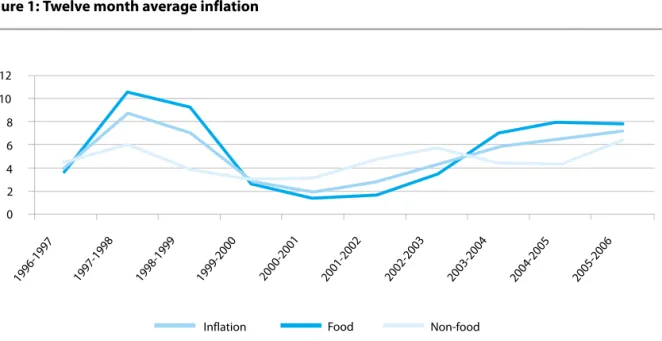
In the budget process, the Ministry of Finance prepares the annual financial statements (the budget) of the government of Bangladesh. At a crucial moment in Bangladesh's history, the budget proposals for the 2007-2008 financial year were presented directly to the country for the first time.
The Political Situation
The judiciary had to rely on the magisterial power of the executive branch, especially in the lower courts. One of the many challenges has been the presence of agents near the passport offices.
Conclusion
There is also public support for the Caretaker Government's activities and a high degree of optimism for the future (see Chapter 3). The Institute of Governance Studies decided to scientifically investigate the public perception and opinion on the above issues and the activities of the current caretaker government.
The Context
A pre-test of the questionnaire was conducted to determine the suitability of the questionnaire in the field. Half of the respondents were selected from rural areas and the other half from urban areas.
Methodology
Two thousand individuals were randomly selected from all segments of society, referred to as 'general public' in the following chapter. Seventy-two percent of the respondents have an average monthly income of up to ten thousand taka.
Findings
The majority of respondents from both groups (62-68 percent) stated that they choose based on the candidate's personal honesty (Table 16). The figure below shows the male-female and urban-rural breakdown of respondents from the general public.

Conclusion
These issues are of particularly acute relevance to the state of governance in Bangladesh in 2007, in the wake of a prolonged period of declining rule of law and continuing unequal access to justice, expected to have been halted by the installation of the government temporary in January. 2007. The research reported in this chapter aims to inform debates about how the rule of law affects human security by presenting evidence and analysis of how crime, violence and related forms of insecurity affect the lives and communities of ordinary Bangladeshis, by focused on the experiences of the poor, the marginalized and the vulnerable.
Global and National Perspectives of Human Security
Major assessments of the state of human security in Bangladesh to date have not contributed significant new knowledge about levels or dimensions of human insecurity (although there is strong knowledge about poverty, food insecurity and sex- and gender-based violence (SGBV)). A key finding of BHSA2005 was that existing data on these dimensions of human security are insufficient for assessment or monitoring purposes (Khan 2006b).
BRAC-RED Research on Crime, Violence and Insecurity
Developing a researchable working concept of human security in the Bangladeshi context was an initial challenge, as broader definitions of human security are not necessarily suitable for empirical research. Crime and violence victimization surveys are established tools for assessing and monitoring levels of human security in other contexts, although these have not been used systematically in Bangladesh to date.
Research Activities
This focus is based on the assumption that people's perceptions and behavior in relation to uncertainty are closely shaped by the accumulation of actually lived experiences, including knowledge of the experiences of others within our social network. The qualitative research exercises on which this chapter is based were designed to explore issues for which we believed that existing knowledge was insufficient to support the design of the national household survey.
The Meanings and Dimensions of Human Insecurity
The identity of the perpetrator: who commits a 'bad act' is important for its definition. A key finding of the study was that while crime and violence were features of the urban slum landscape, they were not the main sources of insecurity for the urban poor.
Structural Violence and the City Poor
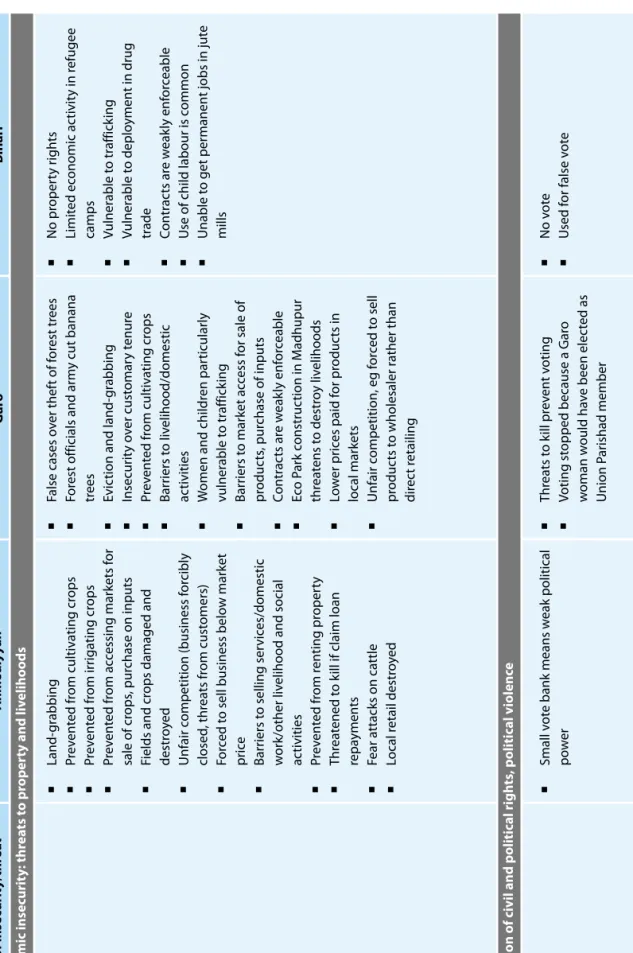
While poverty and lack of property rights took precedence as sources of insecurity, crime and violence, including 'structural violence' by the arms of the state, were present, and were particularly prevalent in one area. The research team identified major incidents and hubs of criminal activity in each of the research sites.
The Crisis of Human Insecurity among Ethnic and Religious Minority Groups
Ahmediyyah homes were again looted and women received threats from instructing them to change their religion. Sexual harassment Threats from forest officials and from BNP leaders Threats from (money lenders) Threats from BRAC staff Threats from neighbours.
Coping and Preventing: Strategies for Living with Human Insecurity
But increased accessibility cannot overcome the problem of police corruption: .. the police remain synonymous with bribery and therefore remain inaccessible to people who cannot afford to pay. thana sadars c) Be alert: loudspeakers, dogs, mobile phones . The main office is Mr. H's tea stall, and there is a sub-office in the middle of the slum.
Conclusion
An important finding of the research includes that sources of uncertainty are unexpectedly diverse and no simple patterns emerge. Policies aimed at protecting human security will first and foremost depend on reliable data to enable monitoring of the situation.
Methodology
However, the scale and diversity of NGO activities does not automatically mean that Bangladeshi civil society is politically active in the role of watchdog of the state. Issues of the role of the non-governmental sector in the provision of individual public goods; we asked about trust in non-governmental organizations and the perception of transparency of non-governmental organizations.
Governance of NGOs
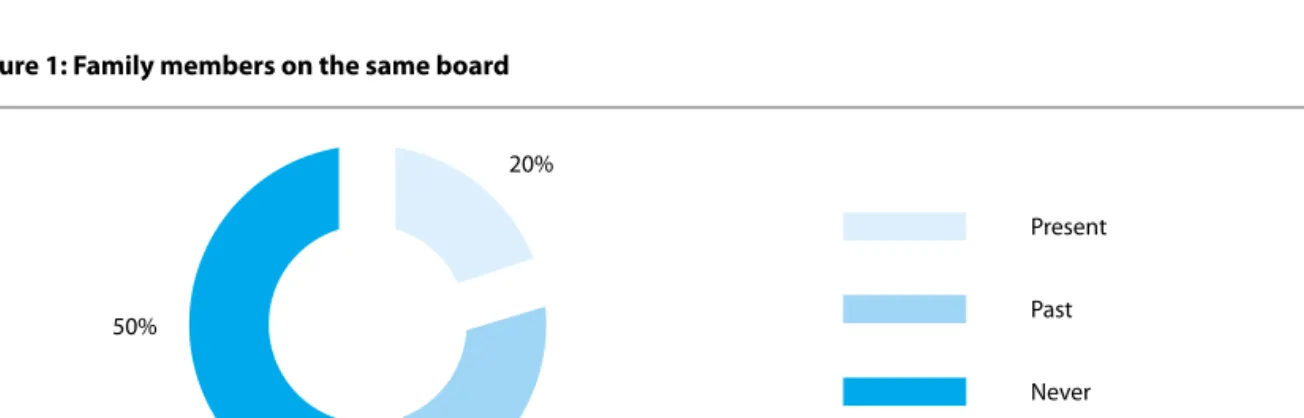
Half of the respondents also reported that their ED maintains a formal relationship with the board. As a result, the circulation of the majority of annual reports in the NGO sector remains internal.
Political Space
As a result, the recent focus of NGO activity has been on better service delivery and empowerment of the poor. In addition, NGOs generally believe in the necessity of a strong state apparatus to ensure people's basic needs and rights (DFID 2005b).
Overcoming Challenges
The registration process should be simplified and standardized requirements should be established for all NGOs. Regulations should focus on facilitating NGO activities and utmost care should be taken so that poorly drafted regulations do not stifle the NGO sector.
Public Perception of NGOs
These services are seen as generally accessible, with data somewhat scattered at the positive end of the scale. The vast majority of responses are distributed on the positive side of the five-point scale.
Conclusion
The State of Governance in Bangladesh 2007 report has attempted to provide a chronological analysis of this year's changes in the political history of Bangladesh. The State of Governance Report in Bangladesh 2006: Knowledge, Perceptions, Reality, Crime in Developing Countries: A Comparative Perspective.