Title: Usage of smartphones by Bangladeshi journalists in news gathering
Md. Rashedul Islam
Lecturer: Department of Journalism and Mass Communication Daffodil International University
PREPARED BY
Md. Shihabul Islam ID. 132-24-318
Department of Journalism and Mass Communication Daffodil International University
DATE OF SUBMISSION
August 18, 2020
©Daffodil International University
Page | i
Letter of Approval
August 18, 2020
Md. Rashedul Islam Lecturer,
Department of Journalism and Mass Communication Daffodil International University
4/2, Sobhanbag, Dhaka 1207
Sub: Application for project report submission approval
Dear Sir,
I have conducted a project entitled ‘Usage of smartphones by Bangladeshi journalists in news gathering’ as a course requirement in my graduation.
I have tried my level best to work sincerely to cover all aspects regarding the matter which I have been assigned.
I believe that this project has enriched both my knowledge and experience. I hope you will assess my report considering the limitations of the study. I shall be highly grateful if you kindly accept my project. Your kind approval is solicited.
Sincerely yours,
Md. Shihabul Islam ID: 132-24-318
Department of Journalism and Mass Communication Daffodil International University
©Daffodil International University
Page | ii
Acknowledgements
‘Project’ is an academic process which helps the students to relate their theoretical knowledge to research fields. As an Honor’s student of Journalism and Mass Communication, I think myself fortunate enough to undergo the process of fulfilling the requirements of my course curricula as per the provision of the Daffodil International University.
I am thankful to Mr. Md. Rashedul Islam, Lecturer, Department of Journalism and Mass Communication for his kind guidance as the supervisor of my project. Without his kind assistance it could not be possible for me to complete the project report. I am thankful to every member of Department of Journalism and Mass Communication of Daffodil International University for their co-operation to make the research seeing the daylights.
A special thanks goes to Print, Electronics and Online portal journalists in Bangladesh.
I am especially thankful to my family and my friends who supported my dreams and never let me give up and kept me going forward. I am very grateful to everyone who has made an input on this project and supported me through all the ups and downs-sharing their thoughts and knowledge.
©Daffodil International University
Page | iii
Certification
This is to certify that Mr. Md. Shihabul Islam ID: 132-24-318 has done his Honor’s project entitled,
‘Usage of smartphones by Bangladeshi journalists in news gathering’ under my supervision and guidance.
The study has been undertaken as a part of requirements of Bachelor of Social Science (Honor’s) Degree in the Journalism and Mass Communication.
The project is expected to contribute in the field of Journalism and Mass Communication as well as in further study about usage of smartphone by Bangladeshi journalists.
Md. Rashedul Islam
Lecturer,
Department of Journalism and Mass Communication Daffodil International University
4/2, Sobhanbag, Dhaka 1207
©Daffodil International University
Page | iv
Declaration of Authorship
I certify that the work presented here is, to the best of my knowledge and belief, original and the result of my own investigations, except as acknowledged, and has not been submitted, either in part or whole, for a degree at this or any other University.
Sincerely,
Md. Shihabul Islam ID: 132-24-319
Department of Journalism and Mass Communication Daffodil International University
©Daffodil International University
Page | v
Abstract
The media has spread widely in Bangladesh over the last few years. At the same time radio, television, online news portals, daily newspapers are making an impact through social media. With the increasing use of the internet and smartphones, people want to know information quickly or any event as soon as it happens. The journalists have to collect information quickly and send it to the office. This study has shown that smartphones are able to meet that demand of journalists. On the other hand, it is helping readers, listeners, and viewers to meet that demand.
Journalists are using smartphones to send information to the office quickly, on the other hand, the general public is getting it quickly through the internet. In this study, we will see how a journalist is using a smartphone to gather information or news in Bangladesh.
©Daffodil International University
Page | vi
Table of Contents
List of Figures
Chapter I: Introduction……….……..………....1
Scope of the study………..…..…………..2
Research objectives………....…………2
Chapter II: Literature Review and Theoretical Framework…………..………3
Literature review………3
Theoretical framework………..4
Research question and hypothesis………..….6
Chapter III: Methodology of the Study………...………..7
Mix method research………..…..…….7
Quantitative research-survey………..…….7
Qualitative research – focus groups discussion………..……….8
Focus group participant selection………..…..8
Data analysis………..……. 9
Limitation of the study………..……...9
Chapter IV: Results of the Study……….…....10
Survey results……….10
Chapter V: Findings……….….... 25
Chapter VI: Conclusion………...27
Reference ………28
©Daffodil International University
Page | vii
Appendix……….…….29
List of Figures and Tables Figure 1: Smartphone Use ratio ………..12
Figure 2: Usage of smartphone feature ………....13
Figure 3: Most usage feature of smartphone ……….14
Figure 4: Usage of smartphone for photo capture………..15
Figure 5: Number of photos capture by smartphone……….……16
Figure 6: Usage of smartphone for video capture………17
Figure 7: Times of video capture……….…….18
Figure 8: Usage of smartphone for voice/audio record……….…….19
Figure 9: Usage times of voice/audio recording by smartphone…………..20
Figure 10: Smartphone use in an interview……….…21
Figure 11: News writing by smartphone………..….22
Figure 12: Smartphones have made news gathering easier...23
Figure 13: Smartphones have make news gathering faster…………..…….24
Tables Table 1: Gender percentage of the respondents……….. 10
Table 2: percentage of journalists have or not smartphone ……….….…..11
Table 3: percentage of workplace………..……..11
Table 4: Most usage feature of smartphone……….…14
©Daffodil International University
Page | 1
CHAPTER I
Introduction
This study is based on smart-phone utilization in news-gathering, with a focus on journalists in Bangladesh. The study became imperative because when growing up information technology in Bangladesh than journalists using smart-phone widely and new technologies related to effective journalism, moreover information, or news-gathering. This Survey method is accepted in gathering responses from Bangladeshi journalists.
Purposive sampling technique is accepted and used to distribute a questionnaire to google 'Docs Forms' in 33 journalists that are using for study by the online platform in Bangladesh.
When I am analyzing the research questions, results indicated that most of the journalist's using smartphone and they think the new technology do easier news- gathering in Bangladesh, and at the same time, they are using social media and apps for collect information for a news story.
So most of the journalists are aware of the new technologies in journalism, most of the journalists using smartphone features. As-like Camera, voice recorder, E-mail, Facebook, Facebook messenger, WhatsApp, etc.
©Daffodil International University
Page | 2
Scope of the study
The smartphone gives a new opportunity in the field of journalism. Smart-phone makes easier accessibility of the Internet and news-gathering easy for journalists to reach people. So most of the journalists use smart-phone in Bangladesh and increasing day by day. In this situation many media house divert to multimedia online news portal, and the house authorities pressure to reporters use smartphone.
Research objectives
The major objective of the research is to find out the level of the journalists how to use smartphone for gathering news information.
Most of the journalists concern about new technology in Bangladesh.
The study also seeks to know how many journalists use smartphone features. For example: Facebook, WhatsApp, Email etc.
The specific objectives of the study are:
i) To identify the how many percent’s of journalists use smartphone in Bangladesh.
ii) To identify the how many percent’s of journalists use smartphone in news gathering.
iii) Who are use smartphone features of Camera Email, Facebook, Facebook messenger, WhatsApp etc.
iv) How many times record video and audio in news gathering.
©Daffodil International University
Page | 3
CHAPTER II
LITERATURE REVIEW AND THEORETICAL FRAMEWORK
LITERATURE REVIEW
Matt Duffy (2011) look at that at the elevation of the Arab Spring, journalists had no choice but to depend on smartphones to gather information’s. The simple device made it possible for journalists to successfully cover a violation rules. Rick Sanchez was the CNN correspondent, appreciate invention of smartphones stating that it is the best device of news gathering.
Sanchez, who was impressed with the big range of smartphones, stated it is a computer, word processor, still and video camera, recorder, editing system, phone call and satellite uplink all in one (Duffy, 2011, p.1). But before discover of smartphones, journalists had no choice. Smartphones was the game changer assistances journalists to gather information for news.
Casey (2010) directed a study into how advances in online media related technology are transferring journalism and the role of the journalist. The objective of the study was to experiment different ways in which technological advances have had a effective impact on journalism and the day to day performances of journalists working with online news gateway. Casey (2010) used a multitude of primary and secondary research comprising of academic readings as well as interviews with topical people among others.
Casey (2010) found out that online media related technology such as smartphone devices have made the job of journalists easier and developed the practice of journalism. Researcher were that backpack journalism, which binding in with smartphones allow reporting of news in circumstance where a big news crew. This study focused on the subsisting situation in Ireland. But the present study will look into how journalists are do with smartphones in their day to day work in Ghana, fully different from Gearing (2016) work in Australia and the Irish context.
©Daffodil International University
Page | 4
Carson (2013) experimented the challenges of newspaper investigative journalism in the nowadays. The objective of the study was to pursue if journalists could take benefit of the digital advantage smartphones present in the behalf of news print media‘s failing earnings to support this reporting practice.
In another research, Karlsen (2010) experiment how journalists working environment are changing in developing countries in Africa due to the improved in ICT. The research settled special focus on journalists, who use smartphone, because the rate of mobile entrance in Africa.
Karlsen (2010) find out that Kenyan journalists use smartphone in different ways in their job, together with setting up interview appointment’s by calling their sources, conducting telephone interviews, recording interviews using the smartphones particularly in conflict sensitive news gathering.
Theoretical framework
Technological advancement has changed journalism, but abundant small change does not always arrive easy. Users of new technology would have to go through another stages to understand the technology before they receive it. It is therefore critical to relate this study to the Technology Acceptance Model (TAM) propose by Fred Davis in his doctoral thesis (Davis 1985).
Davis theory originated from the need to understand the adoption of information technology and what informs people‘s attitude on new technologies in the 1970s. Studies on user‘s attitude on information technology failed to provide a framework to explain, why people’s receive or reject technologies. Davis built on the work of Fishbein & Ajzen (1975) who introduced the Theory of Reasoned Action. The forwardness behind
©Daffodil International University
Page | 5
the Theory of Reasoned Action is that a person will have a favorable perception towards technology based on his trusts, behavior and subjective norm about the use of the newness (Chuttur, 2009). This suggests that an individual‘s trusts can affect the way they comprehend a new information technology which in change affects their motive. The Technology Acceptance Model, however, assumes that users an attitude are informed based on how important a new information technology serves the needs of people, and how easy it is to use (Davis, 1989). This encumbrance that an individual’s attitude is influenced based on how useful and important a new technology their needs. In other words, favorable or unfavorable perception about newness is influenced by desired advantages and how easy and difficult it is when applying it in a given condition. The theory is set down in two constructs Perceived Usefulness (PU) and Perceived Ease of Use (PEU).
The Technology Acceptance Model brief that users will accept or reject a system based on the trusts that it will help them to answer on a given task and also how easy or difficult the information system proves while usage can affect user’s attitudes. The theorist used these two key characteristic in understanding the factors that user’s an attitudes towards information Technology systems. The Technology Acceptance Model (TAM) attempts to explain the thought processes leading to the adoptions or avoid of an innovation under a given situation (Davis, 1985). Therefore, before a journalist adopts or avoid a smartphone as a tool of usage in his works, they make some considerations. The model has been used in several studies to predict user adopts of new technologies or new information technology and has proven trusts in its results (Davis, 1996). The theory is able to explain how an innovation may receive a favorable or an unfavorable reaction from users or journalists (Davis et al, 1989).
©Daffodil International University
Page | 6
Research questions and hypothesis:
According to a report of Bangladesh Telecommunication Regulatory Commission statistics (BTRC) about 159.78 million peoples use mobile phone. Amount them most of the peoples use smartphone.
The total number of Internet user by mobile phone has reached 91.421 Million at the end of January, 2019. But have no statistics on how many journalists use mobile phones or smartphones for news gathering in Bangladesh.
Accordingly, the following research question has been provided:
RQ1: How many journalists are use smartphone in Bangladesh?
Our review of literature has shown that peoples take a new technology but it become so hard. But developing countries journalist adopt new technology very first.
H1: Most of the journalist adopt smartphone for news gathering and use all features. A small group of senior journalists does not use some features on the smartphone in Bangladesh.
For agreed with the now, because they are not directly involved in news or information gathering.
©Daffodil International University
Page | 7
CHAPTER III
METHODOLOGY OF THE STUDY
This chapter discusses the qualitative and quantitative research methods used in this study. It describe why the researcher has merged both the qualitative and quantitative research and the methods of sampling.
Mixed methods research
Using more than one method in a research is mixed methods research which is also known as multi-methodology. In this study the mixed methods approach is applying both qualitative and quantitative research.
The combination of the both methods provides a more in-depth analysis of problems which is quite difficult to achieve with a single method (Creswell & Plano Clark, 2011).
Quantitative research – survey
Surveys are the most used research technique. It provide a large amount of data with relative ease from a different types of people. Surveys allow researchers to analyze many variables and to use a different of statistics to analyze the data (Wimmer & Dominick, 2011).
The motive of quantitative research is to select a large number of individuals person who represent a part of the population (Creswell &
Plano Clark, 2011) with the essential goal to be able to generalize and say something about a wider population (de Vaus, 2002). This survey was
©Daffodil International University
Page | 8
designed to collect information on the Journalists, who work to Radio, Television, Online News Portal and Newspaper in Bangladesh.
Qualitative research – focus groups discussion
Qualitative research offers a certain kind of data that helps to better understand the ways in which participants think about a issues.
Qualitative research uses a flexible questioning approach. A basic set of questions is designed to start the project but the researcher can change questions or ask follow-up questions at any time (Wimmer & Dominick, 2011).
Focus group participant selection
A purposive sampling method was adopted in selecting focus group participants by using a combination of volunteer and snowball sampling.
Random sampling is rarely used in focus group research and can in fact be a real disadvantage, as participants randomly selected may not interact well enough to generate meaningful discussions (Liamputtong, 2011).
Purposive sampling is used when the researcher is interested in exploring the attitudes and beliefs in a particular group (Flick, 2002).
In this study, the participants of the focus group of journalists. The researcher has selected the participants from the different types of media where the survey was conducted. The different medium were selected to sort out the qualitative analysis with the opinion of the journalist who work as a reporter.
©Daffodil International University
Page | 9
Data analysis
As discussed above, data analysis consisted of separately analyzing the qualitative and quantitative data by using analytic approaches that were best suited to each approach. Results were then interpreted, based on how the combined results best answer the research question.
The survey was made by google Docs Forms. Following this process, I used summary statistics to determine percentages for each survey question. The results were analyzed and graphed using by google ‘Docs Forms’.
Limitation of the study
Some limitations were experienced throughout the process during this study. First of all, time limitation was an important key factor for a study like this. Total time duration for a study like this requires more time than 3 months but there were only three month to end the study as Honor’s project.
Another thing was, recruiting participants. It was so difficult because of COVID-19. We have no permission mass peoples gathering. But it has easy by using the internet to Google Forms.
©Daffodil International University
Page | 10
CHAPTER IV
RESULTS OF THE STUDY
As discussed in the methodology chapter, data analysis of the quantitative and qualitative research was primarily kept separate to ensure that the use of the analytic way was the best suited to each research method. In this chapter, I will present the findings from the survey and focus groups separately to demonstrate, how much the journalists using smart and however in Bangladesh. I will go on to a more detailed discussion of the findings results and implications of these findings in the next chapter.
Survey Result
Overall, 33 journalists from Television, Radio, Daily News Paper, and Online News Portal were the respondents of the survey. Table one shows the percentage of male and female participants.
Gender Number of
Respondents
Percentage
Male 28 84.8
Female 5 15.2
Total 33 100
Table 1: Gender percentage of the respondents
©Daffodil International University
Page | 11
The Table 1 shows 84.8 percent of the total respondents was male while 15.2 percent of were female.
The respondents were asked that do have smartphone or not. Among the 33 participants 32 journalists answered that they have smartphone while one journalist answered that they no smartphone.
Table 2 exhibits the percentage of the journalists who have smartphone is 97 percentage and while 3 percentage of the whole have no smartphone.
Smartphone have or Not
Number of
Respondents
Percentage
Yes 32 97
No 1 3
Total 33 100
Table 2: percentage of journalists have or not smartphone
The respondents were 15 or 45.4 percent journalists work in Online News Portal, 2 or 6.1 percent journalists work in Radio, 7 or 21.2 percent journalists work in Television.
Workplace Number of
Respondents
Percentage
Online News Portal 15 45.4
Radio 2 6.1
Television 7 21.2
Daily News Paper 9 27.3
Total 33 100
Table 3: percentage of workplace
©Daffodil International University
Page | 12 Figure1: Smartphone Use ratio
Smartphone use ratio of Journalists
From the figure above, we come to know that a maximum of 84.8 (Figure 1) percent of journalists uses the smartphone on news gathering and 15.2 percent journalists use sometimes, but all are journalists in Bangladesh use the smartphone for news or information gathering.
©Daffodil International University
Page | 13
Usage of smartphone feature
Figure 2: Usage of smartphone feature
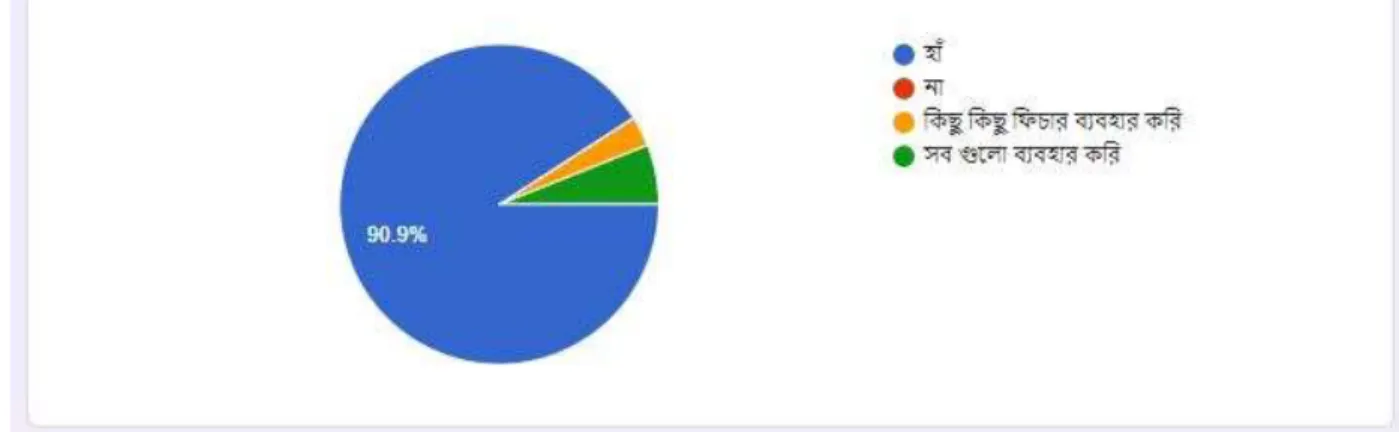
Usage of smartphone features is E-mail, Facebook, Facebook Messenger, and WhatsApp.
Above the figure (Figure 2) most of the Journalists or 97 percent use all features for news gathering and 3 percent of journalists use some features from smartphones.
©Daffodil International University
Page | 14
Most usage features of smartphone for news gathering
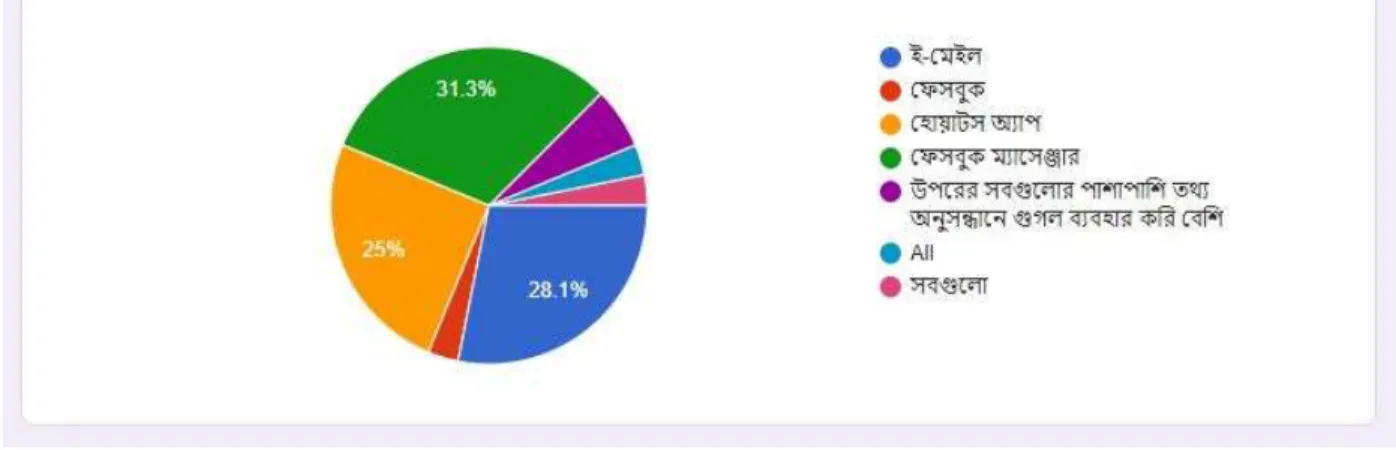
Figure 3: Most usage feature of smartphone
Smartphone Features
Number of
Respondents
Percentage
E-mail 9 28.1
Facebook 1 3.1
Facebook Messenger 10 31.3
WhatsApp 8 25
Use all features 5 12.5
Total 33 100
Table 4: Most usage feature of smartphone
Most usage feature is Facebook Messenger for news gathering in Bangladeshi Journalist of E-mail, Facebook, Facebook Messenger, and WhatsApp. It is 32.3 percent (Figure: 3 and Table: 4) of journalists. The
©Daffodil International University
Page | 15
second one useful feature is E-mail 28.1 percent, then WhatsApp 25 percent, use all features 12.5 percent and 3.1 percent use Facebook.
Usage of smartphone for photo capture
Figure 4: Usage smartphone for photos capture
From figure 4, we can understand that among the respondents the rates of using smartphones to photo capture for news. All are the journalists are using a smartphone for photo capture, but 88.4 percent of journalists use all times of photo capture when they are collecting information for news and 15.2 journalists not all times but they use sometimes.
Numbers of photos capture by smartphone
©Daffodil International University
Page | 16 Figure 5: Numbers of photos capture by smartphone
The figure of the above shows journalists how many photos capture a day when he/she in news gathering.
The figure of the above shows journalists how many photos capture a day when he/she in news gathering. Highest 31.3 percent journalist capture 5 to 10 photos a day, 18.8 percent journalists capture 2 to 3 and 3 to 5 photos a day. We also can know from the figure 6.3 percent journalists only 1 photo capture, 9.4 percent journalists capture 10 to 15 photos and more than capture 20 photos 12.5 percent journalists, from all of the participants in 3.1 percent journalists in Bangladesh capture photos when her/his needs.
Usage of smartphone for video capture
©Daffodil International University
Page | 17 Figure 6: Usage of smartphone for video capture
From figure 6, we can understand that among the respondents or journalists the rates of using smartphones to video capture for news or information. All are the journalists not use a smartphone for video capture, but most of the journalists and 96.7 percent using to video capture in news gathering. 96.7 percent journalists answered yes but among them 29 percent journalists answered sometimes capture video. 3.3 percent of journalists were answered they are totally not capturing video when they are collecting information for news.
©Daffodil International University
Page | 18
Time of video capture
Figure 7: Time of video capture
The figure of the above shows journalists how many times capture video a day when he/she in news gathering.
Highest 30 percent journalists capture video 2 to 5 minutes a day by smartphone, 26.7 percent journalists capture video 5 to 10 minutes, 16.7 percent journalists capture video 10 to 20 minutes, 10 percent journalists capture 1 to 2-minute video a day. We also can know from the figure 6.7 percent journalists’ capture less than 1-minute video, 3.3 percent journalists say they are capture video sometimes, more than 30 minutes and when he or she need video capture by smartphone.
©Daffodil International University
Page | 19
Usage of smartphone for voice/audio record
Figure 8: Usage of smartphone for voice/audio record
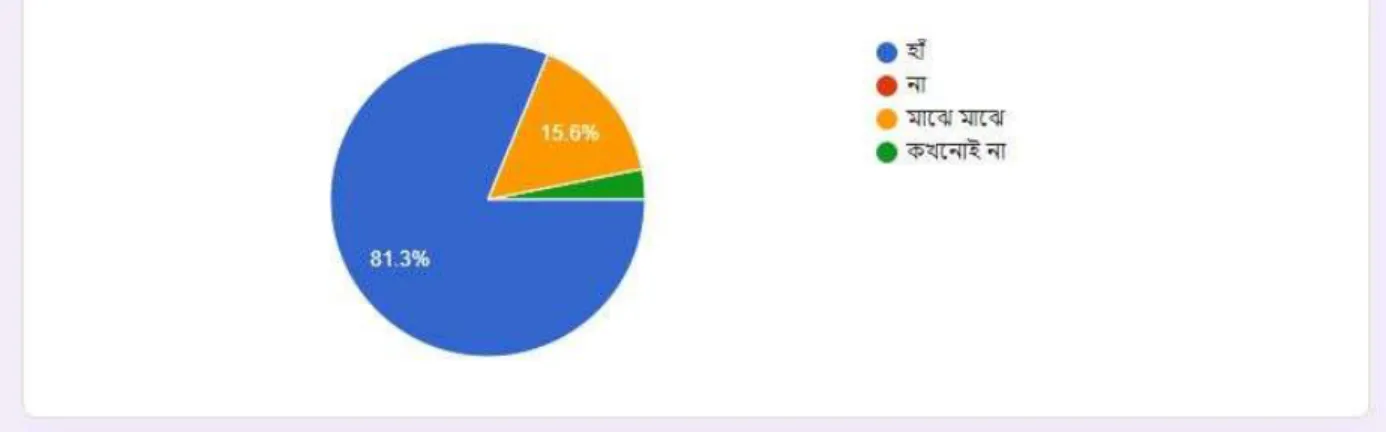
From figure 8, we can know that among the journalists what percentage do voice/audio record in newsgathering by smartphone. The question was that do you voice or audio record in news gathering by smartphone?
From all journalists, only 3.1 percent journalists answered of course Not, but all are the journalists says Yes. Among them, 81.3 percent journalists say they do voice record all times and 15.6 percent journalist says sometimes record by smartphone.
©Daffodil International University
Page | 20
Usage times of voice/audio recording by smartphone
Figure 9: Usage times of voice/audio recording by smartphone
The figure of the above shows journalists how many times capture audio a day when he/she in news gathering.
Highest 34.5 percent journalists record audio 10 to 20 minutes a day by smartphone, second highest 24.1 percent journalists record audio 5 to 10 minutes, 13.8 percent journalists record audio 2 to 5 minutes, 6.9 percent journalists record audio 1 to 2-minute a day. We also can know from figure 6.8 percent of journalists’ records 20 to 35 minutes. 13.7 percent of journalists say they are record audio sometimes when he/she need audio capture by smartphone.
©Daffodil International University
Page | 21
Smartphone use in an interview
Figure 10: Smartphone use in an interview
Above the figure we come to know that 69.7 percent of journalist use a smartphone for an interview, 18.2 percent of journalists use sometimes and 12.1 percent journalists not use smartphone in an interview.
©Daffodil International University
Page | 22
News writing by smartphone
Figure 11: The use of smartphones in news writing
The figure shows 69.7 percent of journalists use smartphones for news writing, 6.1 percent of journalists use smartphones all times for news writing. 21.2 percent of journalists use sometimes and 3 percent journalists most of the time used for news writing by smartphone.
©Daffodil International University
Page | 23
Smartphones have made news gathering easier?
Figure: 12
I asked all are the participant, do you think about smartphones have made for news gathering easier? All of them agree yes it made easier and 51.5 percent participant/journalists say totally agree and 48.5 percent say only agree.
©Daffodil International University
Page | 24
Smartphones have make news gathering faster?
Figure: 13
Above of figure 12, all are the participants think smartphone have made news gathering faster. But 54.5 percent think smartphones make only faster and the 45.5 percent participant/journalists totally agree yes smartphone make faster for news gathering.
CHAPTER V
©Daffodil International University
Page | 25
FINDINGS
The findings of the integrated results are structured around the research questions that are based on my key hypotheses on the credibility of the online newspaper to the university students in Dhaka. The key questions of the study are:
The findings of the integrated results are structured around the research questions that are based on my key hypotheses on Usage of smartphones by Bangladeshi journalists in news gathering. The key questions of the study are:
How many journalists use smartphone in news gathering?
Which feature is most usage?
Do journalists write news by smartphones?
A journalist, how many photos and video capture a day?
Is a smartphone make easier and faster for news gathering of journalist?
Now, I will move on to this discussion, to know about the Journalists usage smartphone for news gathering in Bangladesh.
At first, I found that all are journalists in Bangladesh use the smartphone for news gathering. But not all are the journalists who use smartphones all times. A maximum (84.8%) of journalists uses the smartphone on newsgathering every time but 15.2% journalists use it sometimes.
©Daffodil International University
Page | 26
From the survey, I have found that most of the Journalists (97%) use E- mail, Facebook, Facebook Messenger, and WhatsApp for news gathering, which are features of smartphones. Other 3% use some features for news gathering.
I was a question to journalists when you in newsgathering situations then you capture photos and videos by smartphone?
All are the journalists answered they are using a smartphone for photos and video capture. All of them 88.4% journalists answered they capture photos all times and 15.2% journalists capture photos sometimes. At the same time, 67.7% of journalists are use smartphones for video capture.
Now we can say maximum journalists capture photos and few journalists capture video in news gathering.
I found that all are the journalists write news by smartphone. 69.7% of journalists agree with me they use smartphones for news writing and 6.1%
of journalists use smartphones all times for news writing. 21.2% of journalists use sometimes and 3% journalists say most of the time used for news writing by smartphone.
All are the journalists say smartphones make news gathering easier and faster.
©Daffodil International University
Page | 27
CHAPTER VI CONCLUSION
Through this research, I came to know that all are journalists in Bangladesh who use smartphones to news gathering. At the same time, they also collect information from social media. And they keep up with this new technology. However, there are very few journalists who do not yet fully use their smart phones to gather information. But everyone agrees that smartphones have made news gathering easier and faster.
©Daffodil International University
Page | 28
Reference:
Data, G., & Data, A. (n.d.). Basic Concepts in Research Introduction : A Common Language for Researchers.
Davis, F. D. (2015). Perceived Usefulness, Perceived Ease of Use, and User Acceptance of Information Technology, (SEPTEMBER 1989).
https://doi.org/10.2307/249008
BTRC (March-2019). Bangladesh Telecommunication Regulatory Commission statistics.
link:http://www.btrc.gov.bd/content/mobile-phone-subscribers-bangladesh- march-2019
Elangovan, N., & Gupta, H. (2015). Impact of Smartphone News Apps on Print Media – A Twin TAM Framework, 17(4), 1–9. https://doi.org/10.9790/487X- 17420109.
Franzosi, R. (1959). Content Analysis: Objective, Systematic, and Quantitative Description of Content.
Groarke, H. (2014). The Impact of Smartphones on Social Behaviour and Relationships, (March).
Jcu, R. (2013). Gromik, Nicolas A. (2013) Investigation of the cell phone video recording feature by Japanese undergraduate EFL learners. PhD thesis, James Cook University.
Kovačević, P. (2017). The perspective of using MOOCs in journalism education : Case study of mobile journalism MOOC users‘ experiences, (41), 65–80.
https://doi.org/10.5937/comman12-15223
Karlsen, C., David, A., & Hopmann, N. (2010). Kenya Connected : Mobile Technology is linking Journalists to Local Sources, (June).
©Daffodil International University
Page | 29
Bronstein, L. R., & Kovacs, P. J. (2013). Writing a mixed methods report in social work research. Research on Social Work Practice, 23, 354-360.
Appendix
Questionnaire
Dear Sir, Your attitude will be verified by filling up this form. At the same time, we will know how Bangladeshi journalists are using smartphones to collect news or information. The information you provide will not be published in any way, only for academic purposes.
Name:
Age: M/F
1. Workplace (a) Television (b)Radio
(c) Online News portal (d) Daily Newspaper (e)Other
2. Do you have a smartphone?
(a)Yes (b) No
3. Do you use a smartphone to collect news or information?
(a) Yes (b)No
©Daffodil International University
Page | 30
(c) Sometimes
4. Do you use the features of e-mail, Facebook, Facebook Messenger, WhatsApp, etc to collect news or information by a smartphone?
(a) Yes (b) No
(c) Use some feature (d)Use all
5. Which feature of a smartphone do you most use to news gathering?
(a) E-mail (b) Facebook (c) WhatsApp
(d) Facebook Messenger
6. Do you capture photos by smartphone in news gathering??
(a)Yes (b) No
(c) Sometimes
7. If you capture photos, then how many?
(a) 1 (b)2 to 3 (c) 3 to 5 (d) 5 to 10 (e)10 to 20 (f) More then 20
8. Do you capture video by smartphone in newsgathering?
(a) Yes (b) No
©Daffodil International University
Page | 31
(c) Sometimes
9. If you capture video, then how many times?
(a)Less than 1 minute (b) 1 to 2 minute (c) 2 to 5 minute (d) 5 to minute (e)10 to 20 minute (f) More than 20 minute
10. Do you record voice/audio by smartphone in newsgathering (a) Yes
(b)No
(c) Sometimes (d)Never
11. If do you record voice/audio then how many times?
(a) 1 to 2 minute (b) 2 to 5 minute (c)5 to 10 minute (d) 10 to 20 minute (e) More than 20 minute
12. Do you use smartphone in Interviews?
(a) Yes (b)No
(c)Sometimes
13. Do you use a smartphone for news writing?
(a) Yes
©Daffodil International University
Page | 32
(b)No
(c)Sometimes
(d) Most of the times (e) All times
14.Do you think Smartphones made news gathering easier?
(a) Agree
(b)Totally agree (c) Not agree
15. Do you think Smartphones made news gathering faster?
(a) Agree
(d)Totally agree (e)Not agree