I. PENDAHULUAN
This section introduces the research topic, focusing on deindustrialization in Indonesia from 1983-2008. It establishes the context by highlighting Kaldor's growth theory, which posits the manufacturing sector as the engine of growth. The introduction contrasts this theory with the observed deindustrialization in developed countries, raising questions about whether this phenomenon in Indonesia is positive or negative and what factors contribute to it. The use of Kaldor's theory provides a specific theoretical framework and guides the research questions, which are key to directing the learning outcomes.
1.1 Latar Belakang
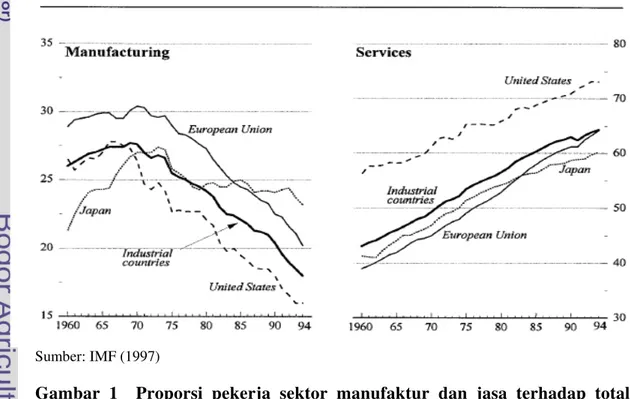
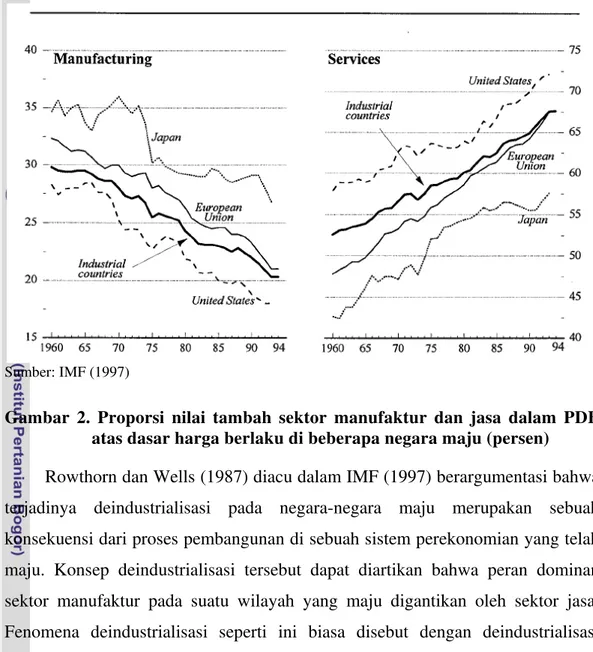
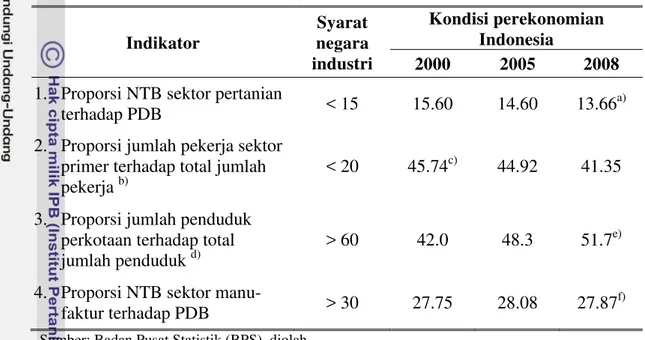
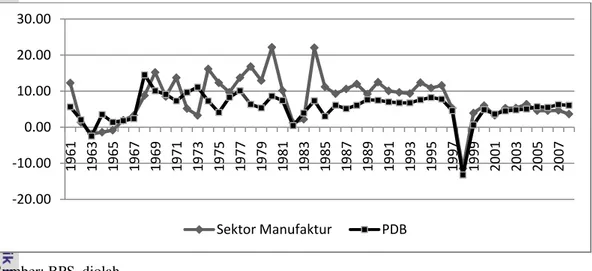
This subsection provides background information on Indonesia's industrialization process. It utilizes Ruky's (2008) criteria for industrial nations and UNIDO's classification, showing Indonesia's status as a semi-industrial nation in 2008. It highlights the contradictory observation of deindustrialization signs since 2002, characterized by negative growth in the manufacturing sector's share of employment and output. This sets the stage for the subsequent analysis and discussion. The pedagogical value lies in demonstrating how real-world data challenge theoretical expectations, promoting critical thinking skills.
1.2 Perumusan Masalah
The research questions are formulated here. The core questions address the role of the manufacturing sector in Indonesian economic growth using a Kaldorian approach, determining whether the deindustrialization is positive or negative, and identifying causal factors. The inclusion of clear research questions is crucial for structuring learning objectives and assessment criteria within an academic program. This part emphasizes the importance of clearly defined research questions in guiding the study and achieving specific learning objectives.
1.3 Tujuan dan Kegunaan Penelitian
The research objectives are clearly stated. These align directly with the research questions, aiming to analyze the role of the manufacturing sector, identify the nature of deindustrialization, and explore its contributing factors. This section highlights the practical application of the research, emphasizing the contribution to policy-making and understanding of the Indonesian economy. This connects the research directly to real-world problems, a key element in making the learning relevant and engaging.
1.4 Ruang Lingkup dan Keterbatasan Penelitian
This subsection outlines the scope and limitations of the study. The geographical scope is limited to Indonesia, and the time frame is 1983–2008. The use of quarterly data and the macro-level analysis are acknowledged as limitations. This section illustrates the importance of acknowledging limitations in research, enhancing students’ understanding of methodological rigor and responsible research practices.
II. TINJAUAN PUSTAKA
This section reviews relevant literature. It delves into Kaldor's growth laws, structural change theories, and various definitions of deindustrialization. The review critically assesses the existing literature, providing a theoretical foundation for the methodology and interpretation of findings. This part teaches students how to conduct a thorough literature review, critically assess existing theories, and justify the choice of theoretical and methodological approaches.
2.1 Tinjauan Teori-Teori
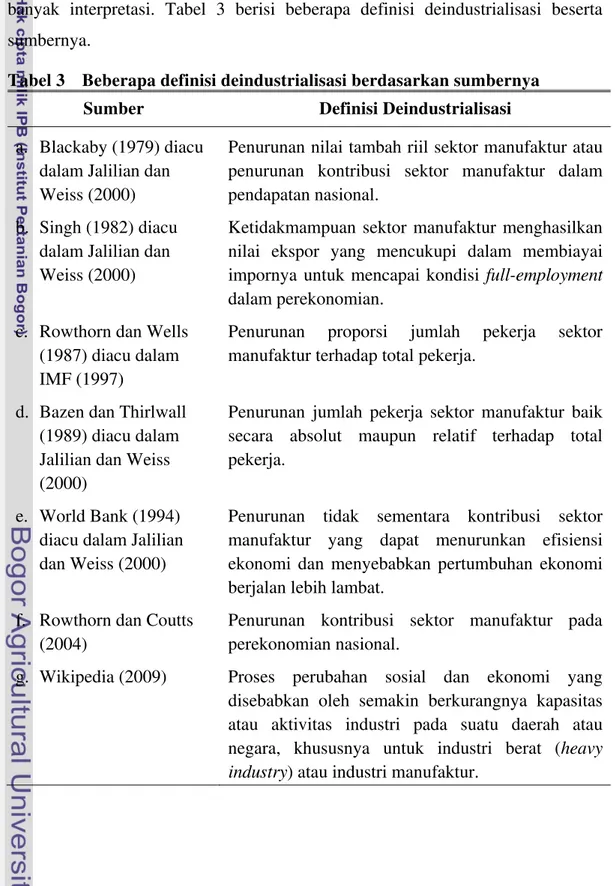
This subsection elaborates on Kaldor’s growth laws, focusing on the role of the manufacturing sector as the engine of growth. It discusses Kaldor's three laws, emphasizing their implications for economic growth and their relevance in differentiating between positive and negative deindustrialization. It further explores the concept of structural change, particularly the role of the agricultural sector in the transition to industrialization. It provides multiple perspectives on defining deindustrialization, highlighting the nuanced understanding needed to analyze the phenomenon. This teaches students about diverse theoretical perspectives and their implications for research.
2.2 Tinjauan Empiris
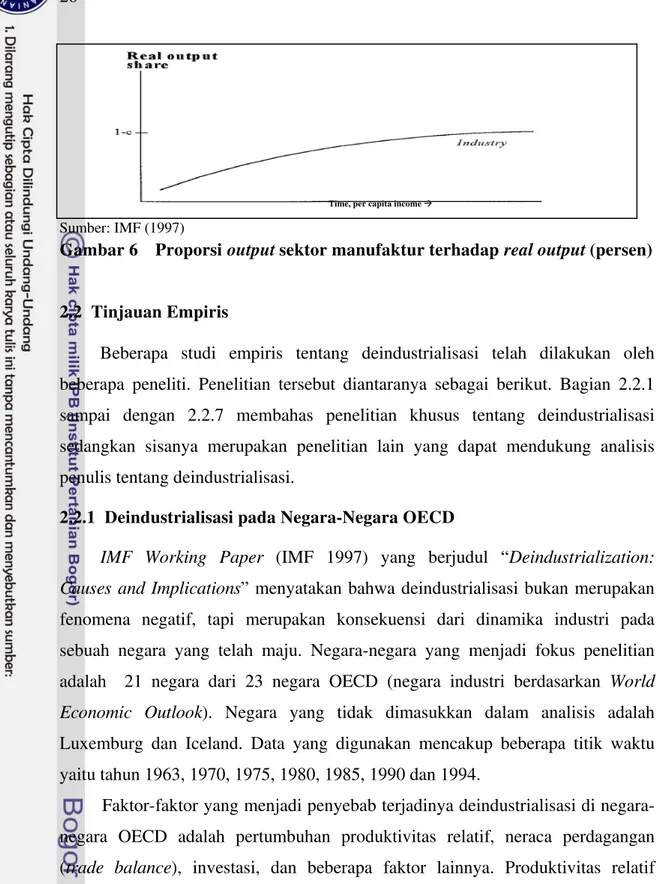
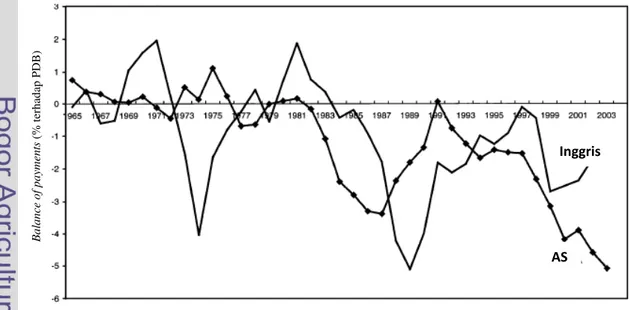
This subsection examines empirical studies on deindustrialization in various contexts, including OECD countries, sub-Saharan Africa, India, developing countries, and Indonesia. It discusses the findings of these studies, focusing on the commonalities and differences in the experiences of deindustrialization. This section highlights the significance of empirical evidence in validating or challenging existing theories, and understanding diverse contexts. This equips students with the ability to interpret and synthesize existing empirical studies.
2.3 Kerangka Pemikiran
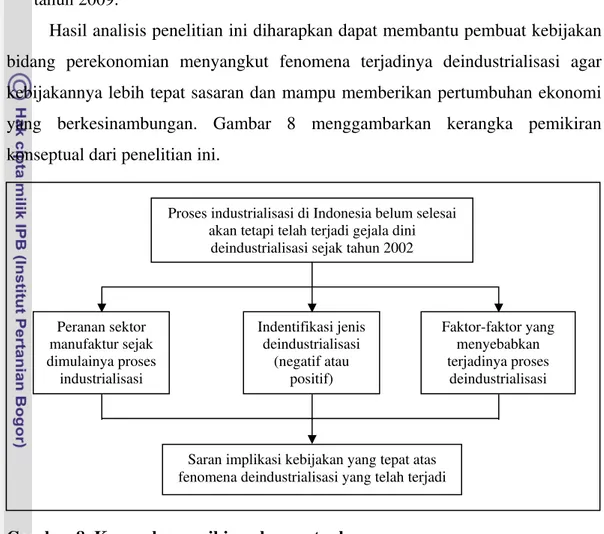
This section presents the conceptual framework guiding the research. It integrates the reviewed theories and empirical findings to develop a coherent model for understanding deindustrialization in Indonesia. The framework visually represents the key variables and their hypothesized relationships. The pedagogical impact lies in the ability to develop and visualize a conceptual framework that integrates theory and empirical evidence.
2.4 Hipotesis Penelitian
This subsection explicitly states the research hypotheses derived from the conceptual framework. These hypotheses provide testable predictions about the relationships between variables. Formulating clear hypotheses is fundamental for designing and implementing quantitative research, allowing for empirical testing and drawing clear conclusions. This enhances students’ understanding of hypothesis formulation and the importance of testable predictions.
III. METODE PENELITIAN
This section details the research methodology. It describes the data used, the operational definitions of key variables, and the econometric methods employed for analysis. The methodology includes details about the data, variables, model specifications, and statistical testing. This section teaches students the principles of research design, data analysis, and econometric techniques.
3.1 Jenis dan Sumber Data
This subsection specifies the type and source of data used in the study. This includes describing the data as secondary, quarterly data from Badan Pusat Statistik (BPS), and justifying the time period selected. This aspect underscores the significance of appropriate data selection and data quality, crucial aspects of research methodology. This part teaches students how to select appropriate data and justify their choice based on research objectives.
3.2 Definisi Operasional
This subsection provides precise operational definitions for all variables used in the analysis. This clarifies how concepts are measured and quantified for statistical analysis. It ensures that readers understand the specific variables and their measurements. This part demonstrates the importance of defining operational variables for clear and replicable research.
3.3 Metode Analisis
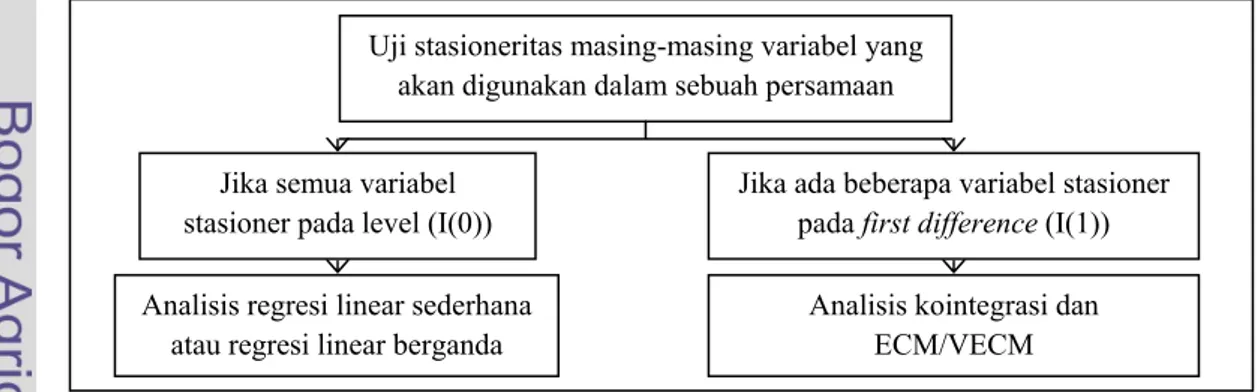
This subsection outlines the statistical methods used in the analysis. This includes econometric methods such as time series analysis, unit root tests, vector autoregression (VAR), cointegration, and error correction models (ECM). The choice of these methods is justified based on the characteristics of the data and the research questions. This section enhances students’ understanding of various analytical techniques used in econometrics.
3.4 Spesifikasi Model Ekonometrik
This subsection specifies the econometric models used for testing the hypotheses. It details the equations and variables included in each model. The justification for the chosen models is provided. This section teaches students how to specify econometric models based on theoretical underpinnings and data characteristics.
IV. HASIL DAN PEMBAHASAN
This section presents the empirical results and their interpretation. It systematically presents the findings related to the research questions, integrating them with the theoretical framework. The interpretation of the findings should be detailed and link back to the theoretical underpinnings and the research hypotheses. This section is central to learning outcomes, as it teaches students how to analyze data, interpret results, and draw meaningful conclusions.
4.1 Peranan Sektor Manufaktur dalam Perekonomian Indonesia
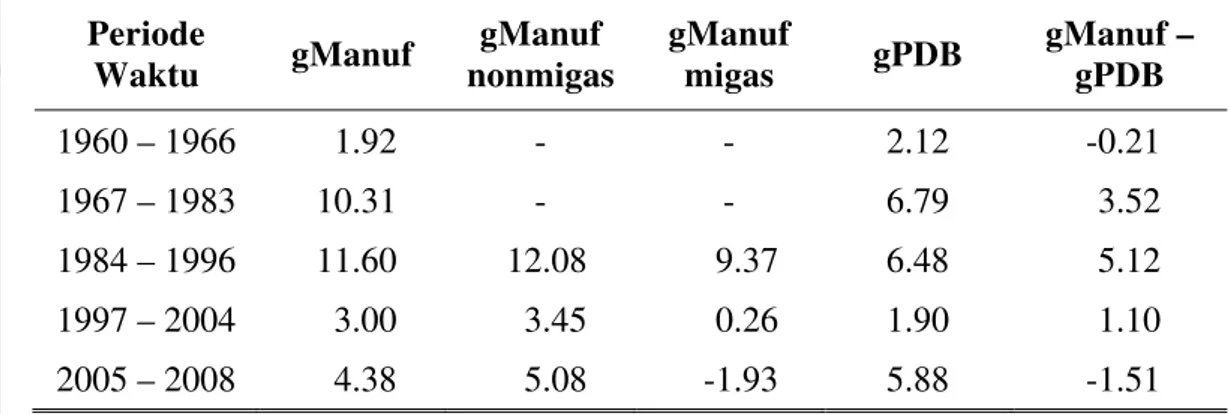
This subsection presents the findings regarding the role of the manufacturing sector during Indonesia's industrialization. It analyzes the sector's contribution to overall economic growth using the Kaldorian approach, assessing whether it acted as the 'engine of growth' as proposed by Kaldor. This section teaches students how to interpret econometric results in the context of a specific economic theory.
4.2 Proses Deindustrialisasi di Indonesia
This subsection presents the findings on the nature of deindustrialization in Indonesia. It analyzes whether it is positive or negative according to the criteria outlined in the literature review and using the econometric results. It explains the reasons why. This section emphasizes applying theoretical frameworks to real-world data to determine the characteristics of a phenomenon.
4.3 Faktor-faktor Penyebab Deindustrialisasi di Indonesia
This subsection presents the findings on the factors that contributed to deindustrialization. This includes an analysis of factors such as fixed capital investment, trade balance, imports of raw materials and consumption goods, exports to major trading partners, and imports from China. This section demonstrates how to identify and analyze multiple factors that affect economic phenomena.
V. KESIMPULAN DAN SARAN
This section summarizes the key findings and provides policy recommendations. It should reiterate the main answers to the research questions. It presents policy recommendations that are directly informed by the research findings. The concluding section emphasizes the practical implications of the research and its contribution to knowledge. This section teaches students how to synthesize research findings and formulate policy recommendations based on those findings.
5.1 Kesimpulan
This subsection summarizes the main findings of the study. This provides a concise overview of the key results and their implications for understanding deindustrialization in Indonesia. This part teaches students how to summarize complex research findings in a clear and concise way.
5.2 Saran
This subsection provides policy recommendations based on the research findings. It offers concrete suggestions for government policies and strategies to address the challenges of deindustrialization. This section emphasizes the practical relevance of academic research, and its ability to inform policy-making. This part teaches students how to translate research findings into actionable policy recommendations.