UNIVERSITI TEKNIKAL MALAYSIA MELAKA
APPLICATION OF RELATIONSHIP CHART METHOD IN
FACILITY LAYOUT
Thesis submitted in accordance with the partial requirements of the Universiti Teknikal Malaysia Melaka for the Bachelor of Manufacturing Engineering
(Manufacturing Management) with Honours
By
NURUL ARBAEYAH BT. AHMAD YASSIN
i
1.1 Concept of Facility Layout ... 2
1.2 Problem Statement ... 3
2.2 The Necessary for Facility Layout... 11
2.3 Literature Review ... 13
2.4 Conclusion ... 23
ii
Concept of Relationship Chart Method ... 25
3.0 Introduction ... 25
3.1 Background of Relationship Chart Method ... 26
3.2 Advantages of Method ... 28
3.3 Disadvantages of Method ... 29
3.4 The activity Relationship Chart in facility layout ... 29
3.5 Design Relationship chart approach ... 37
3.6 Conclusion ... 38
Chapter 4 ... 39
Case Study ... 39
4.0 Introduction ... 39
4.1 Background Company ... 40
4.3 Facilities Layout of Problem... 49
4.4 Data Collected on Current Layout ... 52
iii
6.4 Relationship Diagram ... 66
6.5 Relationship Space Diagram ... 66
6.6 Proposes layout ... 69
6.7 Discussion and Analysis ... 69
6.8 Conclusion ... 81
Chapter 7 ... 82
Conclusion ... 82
7.0 Introduction ... 82
7.1 Background of Research ... 82
7.2 Research Findings ... 83
7.3 Recommendation for further research ... 84
7.4 Conclusion ... 84
REFERENCES ... 85
i
LIST OF TABLE
Table 2. 1 Summarized Of Literature Review ... 13
Table 3. 1 Closeness Code ... 32
Table 3. 2 Reasons Code ... 35
Table 4. 1 Shareholder of IHM ... 43
Table 4. 2 Input Data of current layout ... 52
Table 5. 1 The new department after combining ... 58
Table 5. 2 Closeness Code ... 60
Table 5. 3 Closeness code with rating ... 61
Table 6. 1 Flow distance for Current layout ... 75
Table 6. 2 Flow distance for New Layout Design 1 ... 76
Table 6. 3 Flow distance for New Layout Design 2 ... 77
Table 6. 4 Flow distance for New Layout Design 3 ... 78
Table 6. 5 Flow distance for New Layout Design 4 ... 79
Table 6. 6 Flow distance for New Layout Design 5 ... 80
ii
LIST OF FIGURE
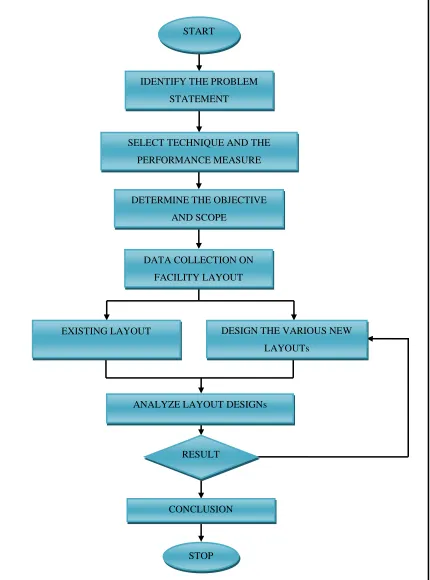
Figure 1. 1 The flow Chart showing the research step ... 6
Figure 3. 1 Sample Relationship Chart adapted from Nurul (2000) ... 31
Figure 3. 2 Sample figuring number of Relationship Chart adapted from Nurul (2009)………..……….36
Figure 3. 3 Step of design relationship chart approach ... 37
Figure 4. 1 Logo of Isuzu Hicom Malaysia ... 40
Figure 4. 2 Location of company in Pekan, Pahang ... 42
Figure 4. 3 The Organization Structure of IHM ... 45
Figure 4. 4 Model Vehicle that company produce ... 46
Figure 4. 5 General Production Process Flow diagram ... 48
Figure 4. 6 Current Layout at Isuzu Hicom Malaysia ... 49
Figure 5. 1 Flow Chart is show the step of experiment ... 57
Figure 5. 2 General flows across department ... 59
Figure 6. 1 Figure of current layout ... 64
Figure 6. 2 Figure of the Relationship Chart ... 65
Figure 6. 3 Figures of the Relationship Diagrams ... 67
Figure 6. 4 Figure of relationship Space Diagrams ... 68
Figure 6. 5 New Layout Design 1... 70
Figure 6. 6 New Layout Design 2... 71
Figure 6. 7 New Layout Design 3... 72
Figure 6. 8 New Layout Design 4... 73
vii
ACKNOWLEDGMENT
First of all, I will like to thanks to Universiti Teknikal Malaysia Melaka for giving me the opportunity to further my study in degree at Universiti Teknikal Malaysia Melaka with major in Manufacturing Engineering. I would like to thanks my research advisor DR NOR AJIAN BT MAT LAIR and my second advisor DR MOHAMED KHALED OMAR for their guidance and advice for my research.
Seconds, I would like to thank to my parents that support and advice me to me hundred percent to continue study and did not to give up after all and advice me every day without fed up. To my sisters that make me feel stronger and enthusiastic to finish up this research.
Finally, I would like to thank to my lovely lecturer and friends who provide a loving, caring, encouragement and supportive atmosphere. Without them, it is difficult for me to finish up this research.
viii
ABSTRACT
1
CHAPTER 1
INTRODUCTION
1.0
Introduction
2
1.1
Concept of Facility Layout
Facility layout is an important part in engineering field or industry. There are various definitions for facility layout. For variable capacity sizing and selection of connections in facility layout, manufacturing facility is the arrangement of a fixed number of departments so as to optimize a certain performance measure, such as travel time or manufacturing costs (Simin Huang, Rajan Batta and Rakesh Nagi, September 2001). Other researcher such as Pinto and Sahyan (2007) in their research about layout design of a furniture production line using formal methods, they defined that a plant layout problem is to find the best arrangement of physical facilities to provide an efficient operation. As a part of productivity improvement program, they conducted a project to optimize the layout design of the production line at the shop floor of the company aiming at overcoming the current problems attributed to the inefficient layout.
More than one reasons for describe the used of facility layout. For the industry, it commonly used to determine the area of the company. Area of work is important to give comfortable and easier for their worker in the production. Distance for each department and related for each section will not make the worker or product take too long time in the production. Beside it will make the control of production easier and in arrangement.
3
shorter time to market are crucial aspects to face along with customers demands and increasing competition on global marketplace. Market timing and customer requirements are very important in order to meet the market window. Because of that, the industry needs to optimize their facility layout. An optimised facility layout ensures that manufacturing operations are run in optimum performance (Fruggiero, Lambiase and Negri, 2006).
The advantage of facility layout is to help any company to improve its business performance. Having good facility layout may reduce the total production time per unit along with reduction in material movement and material handling requirements. In addition, proper control of production flow may ease defect detection and control. Meanwhile, the facility layout may bring disadvantages such as increasing in the cost of new layout set up. Other than that, it requires greater skill of personnel to design and determine the best layout profitable to the company.
1.2 Problem Statement
4
As a factory that have been establish for more than 20 years, the area of production is not longer same and there are lot of changes have been made. The changes may also become of expansion to new area of buildings. The problem for this company is the forms of facility layout that they used are not arranged according to production flow process. Furthermore, sometimes the positions are too far and too close to each other department or section. Although, the production flow process is same, the layout of production for each department is not arrangement. This will affect to the company productivity. In this research, a new layout is design to improve the space utilization and distance travel.
1.3 Research Objective
In the general the objective of this research is to design a new layout that can improve space utilization and distance travel for the company (Isuzu Hicom Malaysia).
5
1.4 Research Scope
This research mainly focuses on the facility layout at Isuzu Hicom Malaysia. The data collection will be limited from the industry actual layout. This research will only use flow distance as a single performance measure. The productivity of the production and many more will not be covered in this research. In addition, only one technique will be used to solve the flow distance layout problem in this research.
1.5 Research Methodology
6
Figure 1. 1 The flow Chart showing the research step START
STOP
IDENTIFY THE PROBLEM STATEMENT
SELECT TECHNIQUE AND THE PERFORMANCE MEASURE
EXISTING LAYOUT
DETERMINE THE OBJECTIVE AND SCOPE
DATA COLLECTION ON FACILITY LAYOUT
DESIGN THE VARIOUS NEW LAYOUTs
ANALYZE LAYOUT DESIGNs
RESULT
7
1.6 Organization of Report
Chapter 1 represents the introduction of the project conducted which is concept of facility layout, problem statement, research objectives, research scope, research methodology, statement of work and organization of report. In this chapter, it explains clearly how the subtopics influence each other in this project.
Chapter 2 represents the literature review conducted for this research. It covers the background on facility layout. It explains about the basic information and definition facility layout according to journal. After that, it defines the reasons for the necessity for facility layout to industry. Lastly summary of the journal on the facility layout problem focusing on performance measures and the methods for each authors are presented before concluding the chapter.
Chapter 3 represents the concept of method that is used for solving this research. It describes the selection technique that is used. This chapter is consisted the of background on relationship chart, which is one of the tools to manage and arrange the facility layout. The advantages and disadvantage of the relationship chart were also presented to show effectiveness of using the relationship chart. These chapter also describes the activities that is required in using relationship chart for facility layout
8
Chapter 5 presents the experimental design for this research. Specifically, this chapter presents the step by step procedures to be followed throughout the experiment.
Chapter 6 presents the result and analysis for this research. Initially, the current layout is presented. Then, the activity relationship chart, relationship diagrams and relationship space diagrams are developed. Based on the diagrams, the new layouts are proposed. Five new designed layouts are presented. The layouts are finally analyzed and compared the best layout is then selected.
9
CHAPTER 2
LITERATURE REVIEW
2.0
Introduction
Facility layout problem can be defined as to find the best arrangement of physical facilities such that to provide an efficient production operation (Pinto and Shayan, 2007).
10
2.1
Background Facility Layout
Facility layout is an important part in engineering field or industry. Each researcher has their own definitions for facility layout. For example, in variable capacity sizing and selection of connections in facility layout, manufacturing facility is the arrangement of a fixed number of departments so as to optimize a certain performance measure, such as travel time or manufacturing costs (Simin Huang, Rajan Batta and Rakesh Nagi, 2001). The location and capacity sizing for a plan have a strong impact on the efficiency of a Manufacturing Material Handling System (MHS).
In research of design and optimization of a facility layout problem in virtual environment (Fruggiero, Lambiase and Negri, 2006), said that a general facility layout problem is concerned with the physical organization / allocation of a production system. It can be considered belonging to the class of NP-hard Problems and is described as the generalization of a Quadratic Assignment Problem (QAP). Specifically, M facility needs to be allocated to M locations (where M represents the problem size). The aim is to find a criteria, which maximize/ minimize certain objectives (quantitative ones like production time, flexibility in volume and variety, allocation space, product quality, costs etc), such that the most efficient arrangement of M indivisible departments with unequal area requirement within a facility.
11
conducted a project to optimize the layout design of the production line at the shop floor of the company aiming at overcoming the current problems attributed to the inefficient of the layout.
Furthermore, Norman, Smith and Arapoglu (2004), provided different meaning to facilities layout. They defined facility layout as an integrated facility design using an evolutionary approach with a subordinate network algorithm from difference corners. They claimed that facility design problem is a common one in manufacturing and service industries and is one family of design problems involving the partitioning of planar region into departments or work centers of given area, so as to minimize the costs associated with projected interactions between departments.
2.2
The Necessary for Facility Layout
Requirement for facility layout depends on the problems that occur in the industry. For variable capacity sizing and selection of connections in facility layout, Huang, Batta and Nagi, 2001, claimed that objective and goal of the facility layout is to select the location and the capacity of connections (and to assign the flows) so as to minimize the sum of the fixed connections installation costs and material movement cost in the material handling system. This can be reducing to the incapacitated fixed charge facility location.
12
are very important in order to meet the market window. Because of this, the industry needs to optimize their facility layout. An optimised facility layout ensures that manufacturing operations are run in optimum performance (Fruggiero, Lambiase and Negri, 2006).
Moreover, Pinto and Sahyan (2007), claimed that facility layout can reduce manufacturing cost and improve quality of the product. The layout will affect the cost of material handling, lead time and throughput. Hence, it affects the overall productivity and efficiency of a plant. Apart from that, facility layout are needed to provide an efficient operation where the best layout was compared with existing layout to demonstrate improvements gained by former approach to layout design using multi-criteria objectives.