Personalisation through Individual
Budgets: Does It Work and for Whom?
Ann Netten
*, Karen Jones, Martin Knapp, Jose
Luis Fernandez, David Challis, Caroline Glendinning,
Sally Jacobs, Jill Manthorpe, Nicola Moran, Martin Stevens,
and Mark Wilberforce
Ann Netten is Professor of Social Welfare at the University of Kent and Director of the Kent branch of the Personal Social Services Research Unit (PSSRU), Director of the Department of Health’s policy research unit in Quality and Outcomes of person centred care (QORU) and an Associate Director of the NIHR School for Social Care Research. Her research interests include developing theoretically based but pragmatic approaches to the measurement of outcome, costs and quality in social care, housing and care of older people and economic evaluation of social welfare interventions, including criminal justice. Karen Jones is a Research Fellow in the Personal Social Services Research Unit, University of Kent, where she is leading on the Department of Health-funded evaluation of the personal health budgets pilots. Karen has a long-standing interest in exploring the cost-effectiveness, quality and outcomes of community care and health services. Martin Knapp is Professor of Social Policy and Director of the PSSRU at the London School of Economics and Political Science, Director of the NIHR School for Social Care Research and Professor of Health Economics at King’s College London, Institute of Psychiatry. Martin’s research activities are primarily in the mental health, long-term care and social care fields, focusing particularly on policy analysis and economic aspects of practice. Dr Jose Luis Fernandez is Deputy Director and Principal Research Fellow at PSSRU, London School of Economics. A health and social care economist, he specialises in the analysis of funding systems, service productivities, the interaction between health and social care, and the economic evaluation of health and social care services. David Challis is Professor of Community Care Research and Director of the PSSRU at the University of Manchester and an Associate Director of the NIHR School for Social Care Research. His interests include management in old age and mental health services; dementia care; health and social care interface; integration of health and social care; assessment of older people; and performance management. Caroline Glendinning is Professor of Social Policy in the Social Policy Research Unit, University of York. She is an Associate Director of the National Institute for Health Research School for Social Care Research Chair of the UK Social Policy Association; and a Trustee of the Thalidomide Trust. Sally Jacobs is currently a Research Fellow at the Centre for Pharmacy Workforce Studies at the University of Manchester. At PSSRU Manchester she was involved in the programme of research investigating care co-ordination and care management arrangements in England and her research interests include workforce issues, services for older people and integration. Jill Manthorpe is Professor of Social Work and Director of the Social Care Workforce Research Unit at King’s College London and an Associate Director of the NIHR School for Social Care Research. Her research interests are personalisation in rural, Scottish and self-funding communities and risk and safeguarding. Nicola Moran is a Research Fellow in the Social Policy Research Unit, University of York, England. Dr Moran has research interests in adult
#The Author 2011. Published by Oxford University Press on behalf of The British Association of Social Workers. All rights reserved. British Journal of Social Work (2011)1–18
doi:10.1093/bjsw/bcr159
by guest on May 5, 2016
http://bjsw.oxfordjournals.org/
social care, the transition from child to adult services, comparative social policy and also public health. Martin Stevens is a research fellow in the Social Care Workforce Research Unit, is currently Chair of the Social Services Research Group and has also been involved in Research Ethics and Research Governance developments. His research interests include choice, personalisation and adult safeguarding. Mark Wilberforce is a Research Fellow at the Personal Social Services Research Unit at the University of Manchester.
*Correspondence to Ann Netten, Personal Social Services Research Unit, University of Kent, Canterbury, Kent, CT2 7NF, UK. E-mail: [email protected]
Abstract
In England, ‘personal budgets’ are being implemented at a time of financial austerity. They are part of a growing trend internationally to give users of publicly funded social care and support more choice and control. In the individual budgets’ (IB) pilot, people were allocated and had control over the way their IB was managed and spent, offering the opportunity to explore the potential of IBs to deliver better outcomes for people than conventional services and support. We describe the way we measured out-comes, the effects we found and how they varied between and within service user groups. For some groups, there were clear benefits from IBs. However, it should not be a ‘one-size-fits-all’ approach, and, in taking personal budgets forward, it is important to consider how best to address the particular challenges for older people, effects on social work practice and resource implications if the potential benefits are to be achieved. Social workers may find themselves implementing a policy with considerable potential, but which may prove very difficult to achieve in the current financial climate.
Keywords:Outcomes of social care, personal budgets, personalisation, social work role
Accepted: October 2011
Introduction
Social workers could be forgiven for thinking themselves caught between a rock and a hard place in a policy climate that emphasises improvements in outcomes (Department of Health, 2010) and a financial climate that neces-sitates cuts in expenditure on social care (Audit Commission, 2010b). Are personal budgets the ‘magic bullet’ that delivers improved outcomes at lower costs? What are the implications for social work practice?
Personal budgets are a reflection of moves internationally towards personalisation to enable people eligible for publicly funded social care (community care or home health care support) to have more control over the resources used in their care and support (Ungerson and Yeandle, 2007; Pavolini and Ranci, 2008; Timonen et al., 2006; Da Roit and Le Bihan, 2010). While control and empowerment are important ends in themselves, a key rationale is that people are best able to identify
by guest on May 5, 2016
http://bjsw.oxfordjournals.org/
what will support them most effectively, and can potentially draw on in-formal networks, so complementing in-formal resources to achieve desired outcomes.
The roots of moving decision making closer to individuals and facilitating flexible use of resources can be traced back in the UK to early social work case management experiments (Challis and Davies, 1986). The means by which people are given more direct control over resources for their care and support were extended from care managers acting as proxy or third-party purchasers to providing monetary transfers, or cash for care, which increasingly allowed eligible people to employ personal assistants or care workers and sometimes family members. However, more recently, cash payments may combine with in-kind services (Pavolini and Ranci, 2008). Direct payments (DPs) were introduced in 1996 in England but with vari-able use geographically and by different groups of people (Ellis, 2007;
Priestleyet al., 2007). In England, younger adults with physical or sensory impairments (PDSI) have been most likely, and people with a mental health (MH) problem least likely, to use DPs (Fernandez et al., 2007). Barriers to their use include concerns about managing payments (Davey
et al., 2007), social workers’ attitudes to and expectations of people with MH problems (Spandler and Vick, 2006) and older people (Ellis, 2007;
Leece and Leece, 2006), and problems in recruiting personal assistants (Daveyet al., 2007).
Individual budgets (IBs) were first proposed for England in the report Improving the Life Chances of Disabled People(Cabinet Office Strategy Unit, 2005). This aspiration of personalisation has continued to be empha-sised, most recently in the coalition government’s Vision for Social Care (Department of Health, 2010).
Individual budget pilots
IBs were intended to build on the successes of DPs, but address some of the problems. People could have their IB as a cash DP or combination, which could be provided and managed in different ways. The approach built on the In Control model in which people plan and, if they want, manage their support, knowing the level of resources available to them (Poll and Duffy, 2006). Funding depended on an assessment of the person’s financial contribution (if any) to the costs of support. Overall, the intention was that IBs would be ‘resource neutral’ (Department of Health, 2005), although whether this was to the public purse as a whole or for adult social services departments specifically was unclear.
Once the amount of the IB was agreed, social workers or care managers undertook a support planning process to elicit individuals’ priorities and goals and how to meet them. Help with planning support might come from a social worker or care manager, an in-house or external support
by guest on May 5, 2016
http://bjsw.oxfordjournals.org/
planner or broker, the person’s family and friends, or (unusually) a service provider. A team leader or senior manager approved (‘signed off’) the support plan and also considered risk and possible safeguarding concerns (Manthorpeet al., 2009).
Projects piloting IBs ran in 13 sites across England from November 2005 to December 2007. Prior to the end of the pilots, the government announced that, in England, a system-wide transformation would include ‘personal budgets for everyone eligible for publicly funded adult social care support’ (Department of Health, 2008, p. 3). These personal budgets differed from IBs in being limited to social care expenditure, rather than drawing in additional funding streams. The new coalition government has supported this policy but emphasises that DPs are to be the main form of personal budgets (Department of Health, 2010).
A key objective of an evaluation of the pilots commissioned by the Department of Health was to identify whether the approach improved people’s outcomes. This paper describes how we measured outcomes, the effects we found and how they varied between and within service user groups. We examine the factors associated with outcomes, and end by discussing the implications of our findings for social work practice. Further findings covering the impact of IBs on care management have been published elsewhere (Jacobset al., 2011).
Method
In order to establish whether IBs delivered better outcomes for people, we needed to ensure we had a sound basis for comparison and measures likely to reflect the impact of IBs. A randomised controlled trial (RCT) design was used to ensure like-with-like comparisons between the new and standard care and support arrangements.
Design
The pilot sites varied in the ways in which they introduced IBs in terms of service user group. A target number of IB holders was calculated for each site in order to achieve an adequate sample. All eligible individuals were randomly assigned to the IB or comparison group with the objective of achieving an overall sample of 1,000 individuals (see Glendinning et al., 2008, for details).
Baseline data on demographic characteristics, household circumstances, service user group, abilities in activities of daily living (ADLs) and instrumental ADLs (IADLs) were provided by the pilot sites. People were interviewed six months after the offer of the IB or, in the comparison group, a review or assessment had been conducted.
by guest on May 5, 2016
http://bjsw.oxfordjournals.org/
Interviews
Interviews covered people’s experiences of the IB process, service receipt, self-perceived health and functional abilities, and a variety of outcome and process measures designed to reflect the intentions of IBs. Over-arching aspects of well-being were reflected through two global indicators: the General Health Questionnaire (GHQ-12; Goldberg, 1992) to reflect psy-chological well-being (or absence of ill-being) and a single quality-of-life question using a seven-point scale (Bowling, 1995). In order to pick up key areas of people’s lives that are specifically relevant to social care, an early version of the Adult Social Care Outcome Toolkit (ASCOT) measure was used (Netten et al., 2010). This measure of ‘social care related quality of life’ (SCRQoL) is applicable across all user groups, with seven domains ranging from basic areas of need such as personal clean-liness and safety to more aspirational aspects such as social participation and involvement and control over daily life. To create an overall SCRQoL ‘score’, responses were weighted to reflect the relative importance of each domain and level of need, drawing on work on popula-tion preferences (Burgeet al., 2010). Measures of satisfaction and quality of care were based on indicators used in national surveys of service user experiences (Joneset al., 2007;Malleyet al., 2006).
As far as possible, individuals were interviewed directly but, in a quarter (24 per cent) of cases, we sought proxy views when people were unable fully to communicate (the study took place before the 2005 Mental Capacity Act was implemented). In addition, we recorded when people had others with them during the interview and responded on their behalf if there were pro-blems in communicating or understanding a question. When we report the results, we have included proxy responses but, as proxies may respond dif-ferently from individual service users (Elliottet al., 2008), we also explored the impact of excluding them.
Analysis
The study was designed with the aim that there should be no systematic difference between the IB and comparison groups at baseline, so that any differences in our outcome measures could be attributed to IBs. Baseline data were used to compare the groups to ensure this and to investigate whether the sample was representative of the wider service user populations. For discrete variables, a chi-square test was used and, for continuous variables, at-test.
Multivariate analyses were used to control for potential influences and distinguish sources of variation from a range of baseline characteristics (such as age, gender and need). Ordered logit models were used when
by guest on May 5, 2016
http://bjsw.oxfordjournals.org/
the dependent variable was categorical and ordinary least squares when it was continuous. Multiple-imputation (MI) methods were used to fill in missing values in the data-set (Glendinninget al., 2008).
Ethics
The proposal was reviewed by a NHS multi-site research ethics committee and received research governance approval in each site. An advisory group of service users and carers met regularly and provided advice throughout the evaluation.
Results
The sampleA total of 2,521 service users were approached by the pilot sites to partici-pate in the research, of whom 1,594 (63 per cent) agreed to take part. The final sample for the analysis was 959, of whom half (53 per cent,n ¼ 510) were in the IB group (seeGlendinninget al., 2008, for details about sample recruitment).
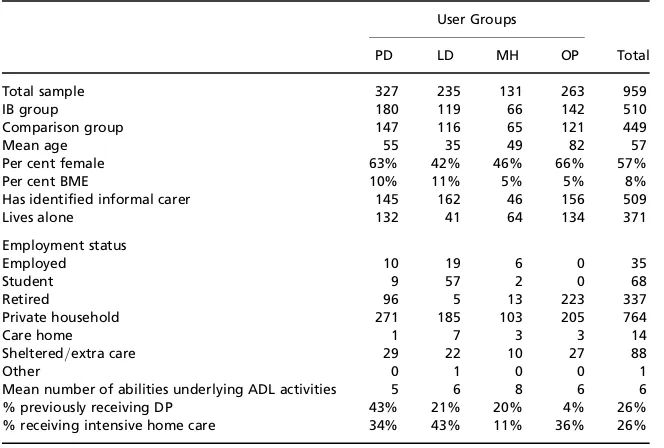
As expected, baseline characteristics varied by user group (Table1), with higher proportions of women among older and PDSI groups. A slightly higher proportion of the sample than would be expected was from black and minority ethnic (BME) groups (8 per cent compared with 6 per cent of service users nationally and 5 per cent in the pilot sites) (Department of Health, 2007). There was a significantly lower proportion of people from BME groups among MH service users than would be expected: 5 per cent compared with 12 per cent nationally (Department of Health, 2007).
Table1shows the mean and range of Activities of Daily Living (ADL) and Instrumental Activities of Daily Living (IADL) problems. Approxi-mately three-quarters of the total sample needed regular help with shop-ping and housework and two-thirds needed help cooking. A small minority required assistance with eating, and a little over a quarter needed regular help with toileting and washing their face and/or hands. There were no significant differences between the two groups.
In addition to personal characteristics, we had information about previ-ous social services support for 683 (71 per cent) of the whole sample, so less than a third of people in the study were new to social services. Overall, 26 per cent had previously had a DP. This compared with just 4 per cent nationally at the time of the study (Department of Health, 2007). A higher percentage of people with PDSI (43 per cent) had previous-ly received DPs compared with onprevious-ly 13 per cent nationalprevious-ly. A third (34 per cent) of those receiving services previously had been receiving intensive
by guest on May 5, 2016
http://bjsw.oxfordjournals.org/
homecare. Older people in our sample were more likely to receive ‘inten-sive’ homecare than nationally: 36 per cent had received over ten hours per week, compared with 26 per cent nationally.
No statistically significant differences were found between the IB and comparison groups in terms of personal characteristics, household circumstances, service use, employment status or benefit receipt at baseline (Glendinninget al., 2008).
Progress through the IB process at the time of the interview
Around 10 per cent of the IB group (fifty-two service users) refused the offer of an IB (but still wished to take part in the research). Of the IB refu-sers, there was some evidence that those who were aware of the level of funding of their previous support arrangements (because they had received DPs) were more likely to refuse an IB, particularly those who had been receiving higher levels of DPs (Glendinninget al., 2008).
The original design anticipated that all IB holders would be using their IB at the time of the six-month follow-up interview. However, of the 458 who agreed to an IB, only 371 had reached the IB assessment stage, and only 280 had support plans in place after six months. Just 231—less than half of the 510 allocated into the IB group—had IB-funded support in place at the time of the follow-up interview. Of those with IB-funded support in place, a fifth (21 per cent) reported that it was not yet all in place or had been in place
Table 1Characteristics of the sample
User Groups
PD LD MH OP Total
Total sample 327 235 131 263 959
IB group 180 119 66 142 510
Comparison group 147 116 65 121 449
Mean age 55 35 49 82 57
Per cent female 63% 42% 46% 66% 57%
Per cent BME 10% 11% 5% 5% 8%
Has identified informal carer 145 162 46 156 509
Lives alone 132 41 64 134 371
Employment status
Employed 10 19 6 0 35
Student 9 57 2 0 68
Retired 96 5 13 223 337
Private household 271 185 103 205 764
Care home 1 7 3 3 14
Sheltered/extra care 29 22 10 27 88
Other 0 1 0 0 1
Mean number of abilities underlying ADL activities 5 6 8 6 6
% previously receiving DP 43% 21% 20% 4% 26%
% receiving intensive home care 34% 43% 11% 36% 26%
by guest on May 5, 2016
http://bjsw.oxfordjournals.org/
less than a month. People with DPs were more likely to have had their IB in place at the point of their six-month interview, and for longer.
Outcomes
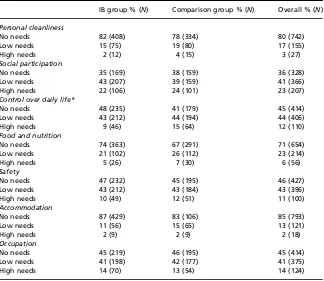
Tables2and3show overall measures of quality of life and well-being at six months for the whole sample. At this global level, there were no statistically significant differences between the IB and comparison groups, although overall SCRQoL, measured by the ASCOT score, appears slightly higher among people in the IB group. However, when individual aspects of SCRQoL were examined, people in the IB group were more likely to report feeling in control of their daily lives (48 per cent,p,0.05) compared
with those in the comparison group (41 per cent).
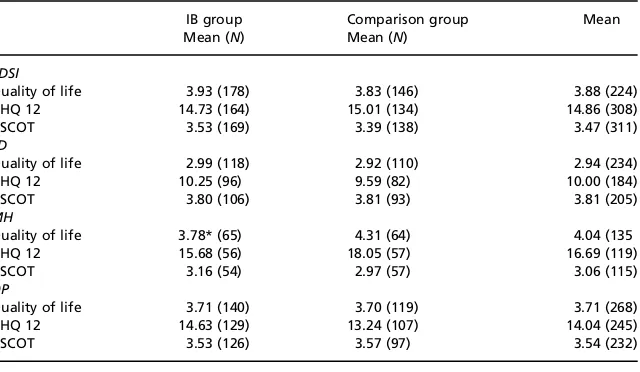
Tables 4and 5show summarised measures of outcome by user group. Self-reported quality of life for people with MH problems was significantly higher for the IB group than for the comparison group (p ,0.05). In
con-trast, older people in the IB group reported significantly lower well-being on the GHQ-12 (p,0.05). However, when proxy responses were excluded,
both differences ceased to be statistically significant.
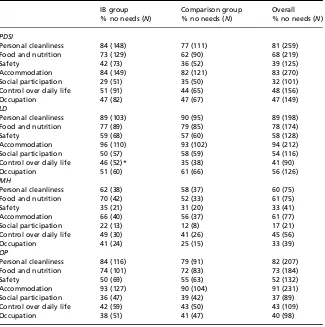
While there were some apparent differences between the IB and com-parison PD and MH groups in the individual SCRQoL domains, none reached statistical significance and there was very little difference at all for older people. The results did suggest, however, that people with LD in the IB group were more likely than those in the comparison group to feel they had control over their daily lives (46 per cent reporting they felt in control of their lives compared with 35 per cent in the comparison
Table 2.Quality of life, well-being and social care outcome states
IB group Comparison group
Quality of life N¼504 N¼439
So good, it could not be better 3% 3%
Very good 15% 18%
Good 27% 28%
Alright 38% 31%
Bad 8% 9%
Very bad 7% 7%
So bad, it could not be worse 2% 5%
GHQ-12 N¼448 N¼380
Mean score1(sd) 13.83 (6.74) 13.80 (6.85)
Percentage2scoring 4+ 36 33
ASCOT3 N
¼ 457 N ¼ 385
Social care outcome state (sd) 3.55 (0.79) 3.48 (0.89)
1GHQ item scoring 0– 3; higher GHQ scores indicate poorer outcomes.
2Using GHQ12 item scoring 0 – 1. Psychological distress is identified when the score of 4 or more
(Goldberg, 1992).
3Higher scores indicate lower levels of need.
by guest on May 5, 2016
http://bjsw.oxfordjournals.org/
group;p ¼ 0.054). Once those who refused the IB were excluded, this dif-ference grew, with 47 per cent reporting no needs and 9 per cent reporting high needs (p , 0.05).
On a less positive note, people with LD who accepted the offer of an IB (and their proxies) were significantly less likely to report being fully occu-pied in activities of their choice (51 per cent compared with 61 per cent: p , 0.05). However, this may reflect the proxy perspective and/or the type of individual with a proxy respondent: when we excluded proxy responses, users with an IB weremorelikely to report being fully occupied in activities of their choice (69 per cent, eighteen people), although the small numbers meant this difference did not reach statistical significance.
Factors associated with outcomes
The lack of impact of IBs reported above may be due to the low level of implementation at the time of the interviews, the effect of proxy informants and the combined implications of the two on effective sample size. We used
Table 3.ASCOT social care outcome state domains
IB group % (N) Comparison group % (N) Overall % (N)
Personal cleanliness
No needs 82 (408) 78 (334) 80 (742)
Low needs 15 (75) 19 (80) 17 (155)
High needs 2 (12) 4 (15) 3 (27)
Social participation
No needs 35 (169) 38 (159) 36 (328)
Low needs 43 (207) 39 (159) 41 (366)
High needs 22 (106) 24 (101) 23 (207)
Control over daily life*
No needs 48 (235) 41 (179) 45 (414)
Low needs 43 (212) 44 (194) 44 (406)
High needs 9 (46) 15 (64) 12 (110)
Food and nutrition
No needs 74 (363) 67 (291) 71 (654)
Low needs 21 (102) 26 (112) 23 (214)
High needs 5 (26) 7 (30) 6 (56)
Safety
No needs 47 (232) 45 (195) 46 (427)
Low needs 43 (212) 43 (184) 43 (396)
High needs 10 (49) 12 (51) 11 (100)
Accommodation
No needs 87 (429) 83 (106) 85 (793)
Low needs 11 (56) 15 (65) 13 (121)
High needs 2 (9) 2 (9) 2 (18)
Occupation
No needs 45 (219) 46 (195) 45 (414)
Low needs 41 (198) 42 (177) 41 (375)
High needs 14 (70) 13 (54) 14 (124)
* Significance level:p,0.05.
by guest on May 5, 2016
http://bjsw.oxfordjournals.org/
multivariate analyses to explore these and other potential factors affecting outcomes for the full sample (seeGlendinninget al., 2008, for details of the methods). Factors explored included baseline needs and other characteris-tics, as well as some operational measures such as the support received (measured by cost of support package).
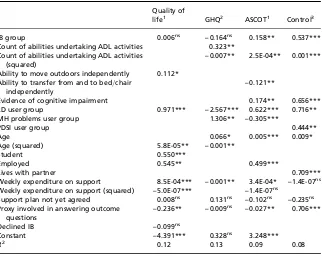
Table 6shows the results for our three main outcome indicators and, because of its central relevance to the objectives of IBs, the outcome dimen-sion in ASCOT that measured ‘control over daily life’. Positive signs indi-cate positive associations with outcome, except for the GHQ, which is coded as a negative outcome indicator, so that negative coefficients denote improvements in psychological well-being.
Not surprisingly, all outcomes were significantly associated with physical and mental health needs at baseline. The relationship between age and outcome varied. Older people generally reported better quality of life, SCRQoL and control. However, among individuals aged up to forty-eight, greater age was associated withlowerpsychological well-being. Beyond this age, the association is reversed and older individuals reported better psy-chological well-being. This U-shaped effect of age on well-being has been identified in studies of general populations (Blanchflower and Oswald, 2004). People in full- or part-time employment reported higher quality of life and better SCRQoL. Those in education also reported better quality of life. The only other contextual characteristic associated with outcome was that people living with a partner reported lower levels of control.
Turning to formal support, higher levels of weekly expenditure led to improvements in most outcomes, whether through IBs or conventional
Table 4.Quality of life,1well-being and social care outcome states by service user group
IB group
Quality of life 3.93 (178) 3.83 (146) 3.88 (224)
GHQ 12 14.73 (164) 15.01 (134) 14.86 (308)
ASCOT 3.53 (169) 3.39 (138) 3.47 (311)
LD
Quality of life 2.99 (118) 2.92 (110) 2.94 (234)
GHQ 12 10.25 (96) 9.59 (82) 10.00 (184)
ASCOT 3.80 (106) 3.81 (93) 3.81 (205)
MH
Quality of life 3.78* (65) 4.31 (64) 4.04 (135
GHQ 12 15.68 (56) 18.05 (57) 16.69 (119)
ASCOT 3.16 (54) 2.97 (57) 3.06 (115)
OP
Quality of life 3.71 (140) 3.70 (119) 3.71 (268)
GHQ 12 14.63 (129) 13.24 (107) 14.04 (245)
ASCOT 3.53 (126) 3.57 (97) 3.54 (232)
* Significance level:p,0.05.
1Mean of seven-point score based on levels shown in Table2.
by guest on May 5, 2016
http://bjsw.oxfordjournals.org/
services. For both quality of life and SCRQoL, the marginal effect was reduced as the intensity of provision increased. In contrast, levels of ex-penditure were not associated with feeling in control.
Once these factors were allowed for, those in the IB group reported better SCRQoL and control. As we might expect, IBs were only associated with better SCRQoL among IB users whose support plan had been imple-mented by the time of the interview. Sense of control was less influenced by whether the plan was in place, but it was important to allow for the impact of proxy responses.
We tested for interactions between pilot site approaches to introducing IBs and their impact; none was significant. We also examined whether the high proportion of DP users in the comparison group influenced the effect associated with IBs, given the similarities in these types of
Table 5.ASCOT social care outcome state domains by service user group
IB group
Personal cleanliness 84 (148) 77 (111) 81 (259) Food and nutrition 73 (129) 62 (90) 68 (219)
Safety 42 (73) 36 (52) 39 (125)
Accommodation 84 (149) 82 (121) 83 (270)
Social participation 29 (51) 35 (50) 32 (101) Control over daily life 51 (91) 44 (65) 48 (156)
Occupation 47 (82) 47 (67) 47 (149)
LD
Personal cleanliness 89 (103) 90 (95) 89 (198)
Food and nutrition 77 (89) 79 (85) 78 (174)
Safety 59 (68) 57 (60) 58 (128)
Accommodation 96 (110) 93 (102) 94 (212)
Social participation 50 (57) 58 (59) 54 (116) Control over daily life 46 (52)* 35 (38) 41 (90)
Occupation 51 (60) 61 (66) 56 (126)
MH
Personal cleanliness 62 (38) 58 (37) 60 (75)
Food and nutrition 70 (42) 52 (33) 61 (75)
Safety 35 (21) 31 (20) 33 (41)
Accommodation 66 (40) 56 (37) 61 (77)
Social participation 22 (13) 12 (8) 17 (21) Control over daily life 49 (30) 41 (26) 45 (56)
Occupation 41 (24) 25 (15) 33 (39)
OP
Personal cleanliness 84 (116) 79 (91) 82 (207) Food and nutrition 74 (101) 72 (83) 73 (184)
Safety 50 (69) 55 (63) 52 (132)
Accommodation 93 (127) 90 (104) 91 (231)
Social participation 36 (47) 39 (42) 37 (89) Control over daily life 42 (59) 43 (50) 43 (109)
Occupation 38 (51) 41 (47) 40 (98)
* Significance level:p,0.05.
by guest on May 5, 2016
http://bjsw.oxfordjournals.org/
self-directed support; again, there was no effect. There was no evidence of outcome differences between new referrals and current service users.
Discussion
The study was conducted at the very early stages of the introduction of the policy of personalisation and the numbers who actually experienced an IB for any length of time were limited, but the findings remain highly relevant, as later small-scale studies confirm (Lambkin et al., 2010). At the time of the study, resource neutrality was a key policy aim, although, elsewhere, cost reduction was an explicit objective of the equivalent of personal budgets (Arntz and Thomsen, 2008, 2011). At the time of the study, social workers were aware of cost tensions (Jacobs et al., 2011), which have become a central concern of English local councils. Service user researchers have further noted the difficulty for practitioners of translating the values of person-centred support
Table 6.Factors associated with variations in outcome
Quality of
life1 GHQ2 ASCOT1 Control3
IB group 0.006ns – 0.164ns 0.158** 0.537***
Count of abilities undertaking ADL activities 0.323** Count of abilities undertaking ADL activities
(squared)
– 0.007** 2.5E-04** 0.001***
Ability to move outdoors independently 0.112* Ability to transfer from and to bed/chair
independently
– 0.121**
Evidence of cognitive impairment 0.174** 0.656*** LD user group 0.971*** – 2.567*** 0.622*** 0.716** MH problems user group 1.306** – 0.305***
PDSI user group 0.444**
Weekly expenditure on support 8.5E-04*** – 0.001** 3.4E-04* – 1.4E-07ns
Weekly expenditure on support (squared) – 5.0E-07*** – 1.4E-07ns
Support plan not yet agreed 0.008ns 0.131ns – 0.102ns – 0.235ns
Proxy involved in answering outcome questions
– 0.236** – 0.009ns – 0.027** 0.706***
Declined IB – 0.099ns
Constant – 4.391*** 0.328ns 3.248***
R2 0.12 0.13 0.09 0.08
1Positive effects denote improvements in outcome. Model estimated using OLS.
2Outcome is GHQ total score using a 0/1 coding with negative effects denoting improvements in
outcome. Model estimated using OLS.
3Positive effects denote improvements in outcome. Model estimated using ordered logit. ns, not
significant; *p,0.1; **p,0.05; ***p,0.01. by guest on May 5, 2016
http://bjsw.oxfordjournals.org/
into organisational priorities and systems (Beresford et al., 2011) and others that a significant shift in the culture would be required ( Cunning-ham and Nickson, 2011). Indeed, rather than a ‘magic bullet’, delivering both better outcomes and lower costs, the results suggest a complex set of messages, with important implications for social work practice.
Perhaps the most important message is that there was evidence that indi-vidual or personal budgets can deliver improved outcomes. A key finding was the greater sense of control expressed by members of the IB group, which was not dependent on the plan being in place, or level of resources allocated to the individual. This suggests that the IB and support planning processes may have had a positive impact on people’s perceptions of their own role, which extended beyond the care planning process. When we allow for the impact of level of resources and degree to which support plans were implemented, IBs had a positive impact on SCRQoL for the sample as a whole.
However, looking at the effects in more depth, impacts are dependent on user group. Because these subsamples were smaller, some ‘real’ effects may not reach statistical significance. Analysis of the different measures and dimensions of outcome, reflected in the ASCOT measure, however, is instructive.
For people with MH problems, the impact of IBs appeared to be very positive. Although we could not identify separate statistically significant effects, in all domains of SCRQoL, the direction of effect suggested lower levels of need for those with IBs. They also reported better overall quality of life. Given the limited sample size of this particular user group, the effect must be substantial to reach statistical significance. The circum-stances and characteristics of people with MH problems vary widely and we did not have information about individuals’ more specific mental health needs, so the effect may be limited to a particular subgroup. Further, many services for many people with MH problems are provided by integrated health and social care services and teams, who were excluded from this pilot. Nevertheless, our finding is encouraging for a group who do not seem to have been served well by mainstream services and DPs in the past (Manthorpeet al., 2008). The key challenge with this group for practi-tioners may be in terms of trust and risk taking.
The flexibility and control provided by personal budgets appear well suited to working-age adults with PDSI, who also reported significantly higher levels of overall satisfaction with their support (Glendinning
et al., 2008). However, it was notable that, although the directions of effect suggested IB users felt more in control and better able to meet their needs in more ‘basic’ aspects of SCRQoL—such as personal clean-liness, food and safety—these differences were not extended to the ‘higher order’ domains of social participation and occupation. These may be particularly challenging domains to address for this group, sug-gesting the importance of social work and peer support to assist people
by guest on May 5, 2016
http://bjsw.oxfordjournals.org/
who, while able and willing to act as their own care managers, encounter significant problems in socialising and accessing activities that they value and enjoy.
For people with LD, the effect of IBs was consistently positive with respect to control, but our interpretation of effects was hampered by the high proportion of proxy responses. As with working-age adults with PDSI, people using mainstream services appeared to fare better in terms of social participation and occupation. However, the statistically significant negative effect on occupation was reversed once proxy responses were excluded. The small sample size suggests caution in interpretation, but the ‘proxy effect’ may reflect differences in perceptions between the proxy respondent and service user, and/or differences in the types of indi-viduals who needed a proxy respondent. Particularly in these ‘higher order’ aspects of outcome for people with LD using personal budgets, social workers may need to continue to play an active advocacy role in the context of family relationships, some of which may be conflictual or disempowering.
For the largest group of service users nationally—older people—there clearly are important challenges to be met if personal budgets are to prove an effective means of personalisation. IBs appeared to have a negative impact on psychological well-being, at least in the ways the new arrangements were introduced and implemented during the pilot (often taking the form of a direct payment). Use of proxies complicates the picture, but the results suggested that, while lower levels of well-being or higher anxiety levels might be only slightly more prevalent among those older people able to participate in the interview, higher levels of anxiety appear to have been systematically attributed by their proxy respondents. We cannot distinguish whether this is due to the con-cerns of more vulnerable older people, less able to respond on their own behalf, or of their relatives (the most frequent proxy). Whatever the reason, in addition to this finding, older people did not appear to experi-ence a higher level of control with IBs, unlike younger age groups. It may be that, rather than a sense of control, older people experienced higher levels of anxiety in the process of both planning and managing support—concerns raised by some providers, social workers and care workers interviewed (Glendinninget al., 2008).
Of the ‘basic’ SCRQoL domains, personal cleanliness and accommoda-tion, there were indications of a positive IB effect for older people. However, older IB users seemed to feel less safe than those receiving main-stream services, and, like other groups, tended to report more needs in the ‘higher order’ domains of social participation and occupation.
The lack of a positive effect on control, and possibly associated higher levels of anxiety for older people, may be partly a cohort effect, but clearly it has implications for the pursuit of a ‘personalisation’ policy built on personal budgets, especially direct payments. More support for
by guest on May 5, 2016
http://bjsw.oxfordjournals.org/
users, carers and practitioners will be needed to allay anxiety. Whether this is a role for social workers or can be managed (and at what cost) by third-sector groups is an open question but, asArksey and Baxter (2011)suggest, such support may require continuity and the ability to respond to frequent changes in circumstances and levels of need.
Whatever the type of support, once we allowed for levels of impairment, level of expenditure was a significant predictor of quality of life, SCRQoL and overall well-being, showing similar patterns of decreasing marginal effects of services to those receiving mainstream services in England in the 1990s (Davies and Fernandez, 2000). In Germany, an RCT demon-strated that better outcomes were achieved through personal budgets but were also associated with much higher formal care expenditure (Arntz and Thomsen, 2011).
Per capitasocial care funding for older people is lower than for equiva-lent levels of impairment in younger age groups (Forder, 2008). This raises the question of whether, when funding is comparatively low for the level of need, it is simply not possible to take advantage of the potential flexibilities of IBs. It was certainly observed that older people tended to make less use of innovative approaches to support and deployment options (Glendinninget al., 2008). This might help explain the lack of a positive impact of IBs on older people and, if so, challenge the potential for achieving better outcomes through personalisation at a time of financial austerity (Audit Commission, 2010a;Dunning, 2011). In terms of equalities, overall equity in levels of resources between age groups might be addressed through savings achieved from support of younger adults, but such shifts are never easily achieved and would be ethically hard to pursue by social workers.
Conclusion
Personal budgets are seen as a cornerstone to achieving the policy aim of enabling service users and their carers to take control over their care and support in England. Given that IBs took significantly longer to be put in place than was anticipated, the effects found in this study are encouraging. However, to achieve these benefits, social workers and other professionals may need to adopt a variety of approaches to supporting people in the process of planning and management, particularly older people (see New-bronneret al., 2011). While some have seen personalisation as a threat to the social work profession (Cunningham and Nickson, 2011), our study also identified that personalisation might require higher levels of support at set-up and planning stages (Jacobs et al., 2011). The question remains: will sufficient resources be available for adequate personal budgets and to employ professionals who can sustain the flexible and creative approaches needed to support different groups in achieving their desired
by guest on May 5, 2016
http://bjsw.oxfordjournals.org/
outcomes? Social workers may well find themselves at the forefront of implementing a policy with potential for considerable improvements in people’s lives in a context that undermines its capacity for success.
Acknowledgements
The project was funded by the Department of Health for England. The views and opinions expressed herein are those of the authors alone and should not necessarily be interpreted as those of the Department of Health. We are very grateful to all those who participated in the research and assisted with fieldwork.
References
Arksey, H. and Baxter, K. (2011) ‘Exploring the temporal aspects of direct payments’,
British Journal of Social WorkAdvance Access published April 14, 2011, 10.1093/
bjsw/bcr039.
Arntz, M. and Thomsen, S. L. (2008)Reforming Home Care Provision in Germany: Evi-dence from a Social Experiment, ZEW Discussion Paper No. 08 – 114, Mannheim, available online atftp://ftp.zew.de/pub/zew-docs/dp/dp08114.pdf.
Arntz, M. and Thomsen, S. L. (2011) ‘Crowding out informal care? Evidence from a field experiment in Germany’,Oxford Bulletin of Economics and Statistics, 73(3), pp. 398 – 427.
Audit Commission (2010a)Financial Management of Personal Budgets: Challenges and Opportunities for Councils, London, Audit Commission.
Audit Commission (2010b)Under Pressure: Tackling the Financial Challenge for Coun-cils of an Ageing Population, London, Audit Commission.
Beresford, P., Fleming, J., Glynn, M., Bewley, C., Croft, S., Branfield, F. and Postle, K. (2011)Supporting People: Towards a Person-Centred Approach, Bristol, JRF/The Policy Press.
Blanchflower, D. and Oswald, A. (2004) ‘Well-being over time in Britain and the USA’,
Journal of Public Economics,88, pp. 1359– 86.
Bowling, A. (1995)Measuring Disease, Buckingham, Open University Press.
Burge, P., Netten, A. and Gallo, F. (2010) ‘Estimating the value of social care’,Journal of Health Economics,29(6), pp. 883 – 94.
Cabinet Office Strategy Unit (2005)Improving the Life Chances of Disabled People, London, The Stationery Office.
Challis, C. and Davies, B. (1986) Case Management in Community Care, Aldershot, Gower.
Cunningham, I. and Nickson, D. (2011)Personalisation and Its Implications for Work and Employment in the Voluntary Sector, Voluntary Sector Social Services Workforce Unit, University of Strathclyde, Glasgow.
Da Roit, B. and Le Bihan, B. (2010) ‘Similar and yet so different: Cash-for-care in six European countries’ long-term care policies’,Millbank Quarterly,88(3), pp. 286– 309.
by guest on May 5, 2016
http://bjsw.oxfordjournals.org/
Davey, V., Ferna´ndez, J. L., Knapp, M., Vick, N., Jolly, D., Swift, P., Tobin, R., Kendall, J., Ferrie, J., Pearson, C., Mercer, G. and Priestley, M. (2007)Direct Payments: A National Survey of Direct Payments Policy and Practice, London, PSSRU, London School of Economics.
Davies, B. and Fernandez, J. (2000)Equity and Efficiency Policy in Community Care, Aldershot, Ashgate.
Department of Health (2005)Independence, Well-Being and Choice: Our Vision for the Future of Social Care for Adults in England, London, Department of Health. Department of Health (2007)Community Care Statistics 2006– 2007: Referrals,
Assess-ments and Packages of Care for Adults: Report of Findings from the 2006 – 2007 Rap Collection, England, London, Department of Health.
Department of Health (2008)Putting People First, London, Department of Health. Department of Health (2010)A Vision for Social Care: Capable Communities and Active
Citizens, London, Department of Health.
Dunning, J. (2011) ‘Goal of choice for all at risk as cuts start to bite’,Community Care, 31 March.
Elliott, M. N., Beckett, M. K., Chong, K., Hambarsoomians, K. and Hayes, R. (2008) ‘How do proxy responses and proxy-assisted responses differ from what Medicare Beneficiaries might have reported about their health care’,Health Services Research, 43(3), pp. 833 – 48.
Ellis, K. (2007) ‘Direct payments and social work practice: The significance of “street-level bureaucracy” in determining eligibility’, British Journal of Social Work,37(3), pp. 405 – 22.
Fernandez, J.-L., Kendall, J., Davey, V. and Knapp, M. (2007) ‘Direct payments in England: Factors linked to variations in local provision’,Journal of Social Policy, 36(1), pp. 97 – 121.
Forder, J. (2008)The Costs of Addressing Age Discrimination in Social Care, PSSRU Discussion Paper No. 2538, Personal Social Services Research Unit, University of Kent.
Glendinning, C., Challis, D., Ferna´ndez, J.-L., Jacobs, S., Jones, K., Knapp, M., Man-thorpe, J., Moran, N., Netten, A., Stevens, M. and Wilberforce, M. (2008)Evaluation of the Individual Budgets Pilot Programme: Final Report, Social Policy Research Unit, York, University of York.
Goldberg, D. (1992)General Health Questionnaire, Windsor, NFER Nelson.
Jacobs, S., Abell, J., Stevens, M., Wilberforce, M., Challis, D., Manthorpe, J., Fernandez, J.-L., Glendinning, C., Jones, K., Knapp, M., Moran, N. and Netten, A. (2011) ‘The personalization of care services and the early impact on staff activity patterns’,
Journal of Social Work Advance Access published July 6, 2011, 10.1177/ 1468017311410681.
Jones, K., Netten, A., Francis, J. and Bebbington, A. (2007) ‘Using older home care user experiences in performance monitoring’,Health and Social Care in the Community, 15(4), pp. 322 – 32.
Lambkin, C., Cohen, M. and Enchill, N. (2010)Older People’s Experiences of Planning and Arranging Support with a Personal Budget: A Report on the Findings of a Study Carried Out Jointly by Westminster City Council and Age Concern Westminster, London, Westminster City Council.
Leece, D. and Leece, J. (2006) ‘Direct payments: Creating a two-tiered system in social care?’,British Journal of Social Work,36(8), pp. 1379– 93.
by guest on May 5, 2016
http://bjsw.oxfordjournals.org/
Malley, J., Sandhu, S. and Netten, A. (2006)Younger Adults’ Understanding of Questions for a Service User Experience Survey: A Report to the Information Centre for Health and Social Care, PSSRU Discussion Paper No. 2360, Personal Social Services Research Unit, University of Kent.
Manthorpe, J., Stevens, M., Challis, D., Netten, A., Glendinning, C., Knapp, M., Wilber-force, M., Jacobs, S., Jones, K., Moran, N. and Fernandez, J.-L. (2008) ‘Individual budget projects come under the microscope’,Mental Health Today, 22 – 26 December. Manthorpe, J., Stevens, M., Rapaport, J., Harris, J., Jacobs, S., Challis, D., Netten, A., Knapp, M., Wilberforce, M. and Glendinning, C. (2009) ‘Safeguarding and system change: Early perceptions of the implications for adult protection services of the English individual budgets pilots: A qualitative study’, British Journal of Social Work,39(8), pp. 1465– 80.
Netten, A., Forder, J., Beadle-Brown, J., Caiels, J., Malley, J., Smith, N., Trukeschitz, B., Towers, A., Welsh, E. and Windle, K. (2010)Adult Social Care Outcomes Toolkit v1.0: Main Guidance, PSSRU Discussion Paper 2716, Personal Social Services Research Unit, University of Kent.
Newbronner, L., Chamberlain, R., Bosanquet, K., Bartlett, C., Sass, B. and Glendinning, C. (2011)Keeping Personal Budgets Personal: Learning from the Experiences of Older People, People with Mental Health Problems and Their Carers, London, Social Care Institute for Excellence.
Pavolini, E. and Ranci, C. (2008) ‘Restructuring the welfare state: Reforms in long-term care in Western European countries’, Journal of European Social Policy, 18(3), pp. 246 – 59.
Poll, C. and Duffy, S. (2006)A Report on In Control’s Second Phase: Evaluation and Learning, London, In Control Publications.
Priestley, M., Jolly, D., Pearson, C., Ridell, S., Barnes, C. and Mercer, G. (2007) ‘Direct payments and disabled people in the UK: Supply, demand and devolution’,British Journal of Social Work,37(7), pp. 1189 – 204.
Spandler, H. and Vick, N. (2006) ‘Opportunities for independent living using direct pay-ments in mental health’,Health and Social Care in the Community,14, pp. 107 – 15. Timonen, V., Convery, J. and Cahill, S. (2006) ‘Care revolutions in the making? A
com-parison of cash-for-care programmes in four European countries’,Ageing and Society, 26(3), pp. 455 – 74.
Ungerson, C. and Yeandle, S. (eds) (2007)Cash for Care in Developed Welfare States, Basingstoke, Palgrave Macmillan.
by guest on May 5, 2016
http://bjsw.oxfordjournals.org/