Framework for Agent-based Buying Decision Process
Sazalinsyah Razali1, and Mashanum Osman1
1 Faculty of Information & Communication Technology, Kolej Universiti Teknikal
Kebang-saan Malaysia 75450 Melaka, Malaysia {sazalinsyah, mashanum}@kutkm.edu.my
Abstract. In traditional business model, the buying decision process is poorly
coordinated among the human decision-makers. Therefore, a long-lived, adap-tive, and autonomous application called software agents, that can perform tasks such as personalization, brokering, and negotiation in e-commerce is much needed. These applications reside at the buyers’ side or at the sellers’ servers. The purpose of this paper is to research into possible deployment of software agents in a framework for e-commerce buying decision process. This paper overviews the traditional business model, the Consumer Buying Behavior (CBB) model, and also covers the requirements needed for minimizing human interactions in buying decision processes. The research proposes a software agent’s framework in which, two main approaches, namely Automated Collabo-rative Filtering (ACF) and Better Business Bureau (BBB), are merged to pro-duce better agents in assisting buying decision process. The framework will en-able the agents to get the best price for a good product from a reputen-able merchant.
1 Introduction
Two general purpose of e-commerce is interoperation and automation, whereby in most cases there is a dependency of automation upon interoperation [4]. Systems de-veloped to cater the e-commerce process are using different platforms, standards, rep-resentations, and languages. However, there is an increasing need for these systems to interoperate; communicating information from one system to another; to have a better and efficient business environment. Heterogeneity poses great difficulties in realizing interoperation [5]. In order to resolve this issue, software agents are deployed to automate many steps in the e-commerce process, which in turn can minimize cost and consequently maximizing profit.
Be-havior (CBB) model that will be explained in Section 3, agents can be seen playing significant roles in three primary CBB stages; Product Brokering, Merchant Broker-ing, and Negotiation corresponding to what to buy, who to buy it from, and how to determine the terms of the transaction respectively [4].
2 Overview of Traditional Business Model
In traditional business as well as in e-commerce, firms or organizations engage in many other activities besides buying or selling that keep them in business, such as promoting or advertising their products or services, identify demand, deliver its ucts or services, and provide after-sales support. It is a negotiated exchange of prod-ucts or services between two parties or more and includes all activities that each of the parties undertakes to complete the transaction [7].
The essence in businesses is the buying process whereby the steps of product searching, vendor selection and transaction negotiation are vital. These three steps can be regarded as the buying decision process in business. However, in e-commerce transactions, this process is quite complicated and difficult to execute because of hu-man decision-makers limitations. A huhu-man can only work in a specified time period, and the various kinds of products and services required by a company may result in negotiation with not one seller, but many sellers at a time. These and many other limi-tations make the buying decision process poorly coordinated among the human deci-sion-makers.
3 Buying Decision Process
This section will look into the buying decision process as well as how software agents can minimize human involvement in this process.
3.1 Consumer Buying Behavior (CBB) Models
There are several descriptive theories and models that attempt to capture consumer-buying behavior. The model presented here is called the Consumer Buying Behavior (CBB) Model [9] [1].
The first stage in the CBB model is where the consumer becoming aware of some unmet need. At this stage the consumer can be stimulated through product informa-tion. The Product Brokering stage comprises the retrieval of information to help de-termine what to buy which also covers evaluation of product alternatives. The result of this stage is the ‘consideration set’ of products. This ‘consideration set’ combine with merchant-specific information is used to determine who to buy from. This stage includes the evaluation of merchant alternatives based on consumer-provided criteria, example price, warranty, availability, delivery time, and reputation.
depending on the market. Purchase and delivery of a product can either signal the termination of the negotiation stage or occur sometime afterwards, in either order. In some cases, the payment methods available and delivery options can influence prod-uct and merchant brokering stage. The last stage is the prodprod-uct service and evaluation that involves product service, customer service, and an evaluation of the satisfaction of the overall buying experience and decision. These stages in the CBB model repre-sent an approximation and simplification of complex behaviors [1]. Furthermore, these stages often overlap and migration from one to another can be non-linear and it-erative.
3.2 Minimizing Human Interactions
One of the greatest roles of software agents is minimizing human interactions, espe-cially in the buying decision process. It can automate much of the tasks in the process of identification, selection, negotiation, and purchasing. An example is negotiation done by software agents, which is defined as the process by which group of agents communicate with one another to try to come to a mutually acceptable agreement on some matter [2]. Nevertheless, there are many requirements that needed to be fulfilled for software agents in order to minimize human interactions in these processes. Some of these significant requirements are security, interoperability, and acceptance. The agent owners must be assured that the agent will not compromise private information, which includes account numbers for payment mechanisms, and deviate beyond its constraints [4]. In addition, agent owners must trust the environment in which agents carry out their tasks. Software agents should also be capable of operating in different environments or platforms, because it needs to communicate with other agents that may be on a different platform. These requirements fulfillment can realize the notable role of software agents in minimizing human interactions in general.
4 Agent’s Buying Decision Process
There are already many software agents that have been developed either for commer-cial or academic purposes that can perform tasks in one or more stages in the CBB model. This section will give an overview on two approaches used by the available software agents.
4.1 Automated Collaborative Filtering (ACF)
4.2 Better Business Bureau (BBB)
This approach is in the Merchant Brokering stage of the CBB Model. It employs a distributed trust and reputation mechanism that works by rates given to each other from both parties (seller and buyer) after a transaction on how well the other party managed his or her half of the deal, such as accuracy of product condition, and com-pletion of transaction. Other agents then can use these ratings to determine if they should negotiate with agents whose owners fall below a certain specified reputation threshold.
5 Proposed Framework
The proposed framework focuses only in the Product Brokering and Merchant Bro-kering stages of the CBB model. The available approaches used are the Automated Collaborative Filtering (ACF), and Better Business Bureau (BBB) methods to rank the products and merchants respectively.
5.1 Software Agent Framework
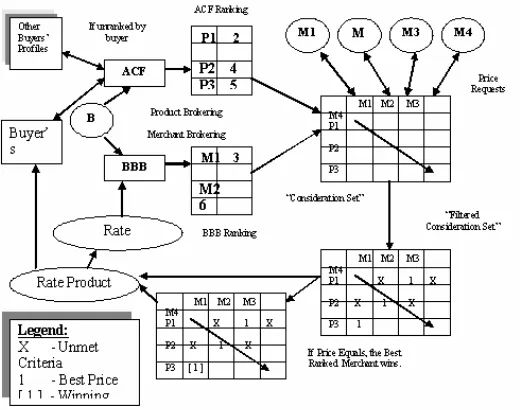
Fig. 1. The proposed combined approach for software agent buying decision process
highest price acceptable. After that, a “Filtered Consideration Set” is obtained when there are merchants that cannot meet the criteria for certain products in the set.
After obtaining the “Filtered Set”, the merchant with the product of the lowest price in the set will be selected for the buyer to continue to close the deal. In addition, the best-ranked merchant with the best-ranked product takes precedence from the lowest ranked merchant with the lowest ranked product - in a diagonal manner (top-left to bottom-right). If there are equal prices in the same precedence category, the best-ranked merchant will be considered the best candidate to continue to do business with. This is simply because it is better to do business with a trusted merchant.
Then, after the transaction has been completed, the buyer will need to rate the product or services that has been received so that it will be stored in the Buyer’s Pro-file to be used as ACF reference in future decision-making. After that, the buyer also needs to rate the Merchant in terms of its trustworthiness, reliability, support and reputation to be used for the BBB ranking.
5.2 Discussion
There are some situations that should be highlighted by using this framework. One biggest drawback in the framework is that there might be situations where all in-stances in the “Consideration Set” might not meet the requested criteria. Such a situa-tion is currently unresolved. Value Added Services (VAS) offered by the merchants such as bonus gifts, promotional items, and after-sales support are also not taken into account and will be overlooked by the user in the buying decision process. This can result in quite a big difference in the long run.
The framework does not cover the negotiation stage of the CBB model. There are still no software agents that have been developed that can effectively cover all of the stages in the CBB model. Most of them only focus in one or two stages of the CBB model. Another issue is that the main assumption for the best offer is the lowest price the merchant in the “Consideration Set” can offer following the precedence from best ranked to the lowest-ranked. It clearly overlooks other aspects in defining what is meant by best offer. Such aspects that might also be considered together with having the lowest price are delivery date and VAS.
6 Conclusions
7 Future Works
This project plans to implement the proposed framework in a large-scale multiagent electronic marketplace. Other situations will also be researched into such as non-cooperative agents in the marketplace, and the computational complexity of a simu-lated marketplace that employs the proposed framework.
References
1. Guttman, R., Moukas, A., Maes, P.: Agents as Mediators in Electronic Commerce. Interna-tional Journal of Electronic Markets, Vol. 8, No. 1 (1998)
2. Lomuscio, A. R., Wooldridge, M., Jennings, N. R.: A classification scheme for negotiation in electronic commerce. In: Dignum, F., Sierra, C. (eds.): Agent-Mediated Electronic Com-merce: A European Perspective. Springer-Verlag (2000)
3. Nwana, H., Rosenschein, J., Sandholm, T., Sierra, C., Maes, P., Guttman, R.: Agent-Mediated Electronic Commerce: Issues, Challenges, and some Viewpoints. Proceedings of the Workshop on Agent Mediated Electronic Trading (AMET'98). Minnesota (1998) 4. Genesereth, M. R.: Software Agents. Communications of ACM (CACM), Vol. 37, No. 7
(1994)
5. Franklin, S., Graesser, A.: Is it an Agent, or just a Program?: A Taxonomy for Autonomous Agents. Proceedings of the Third International Workshop on Agent Theories, Architectures, and Languages. Springer-Verlag: Berlin (1996)
6. Schneider, G. P., Perry, J. T.: Electronic Commerce: Second Annual Edition. Course Tech-nology, Canada (2001)
7. Turban, E., Lee, J., King, D., Chung, H. M.: Electronic Commerce: A Managerial Perspec-tive (International Edition) Prentice Hall, New Jersey (2000)
8. Blake, M. B.: Innovations in Software Agent-Based B2B Technologies. Proceedings of the Workshop on Agent-Based Approaches to B2B at the Fifth International Conference on Autonomous Agents (AGENTS 2001). Montreal (2001)