Glimepiride monotherapy in achieving good blood glucose control in type-2 diabetes
mellitus: a prospective observational study
Kris Pranarka1, Arini Setiawati2, Samsirun Halim3, Dian Saraswati4, Zulkili Alkaf5
1 Private Clinic, Semarang
2 Department of Pharmacology and Therapeutics – Faculty of Medicine, University of Indonesia, Jakarta 3 Private Clinic, Jambi
4 Gatoel Hospital, Mojokerto 5 Private Clinic, Medan
Abstrak
Tujuan Glimepirid adalah suatu antihiperglikemia golongan sulfonilurea untuk terapi oral diabetes melitus tipe 2. Studi ini dilakukan untuk menilai glimepirid monoterapi dalam mengendalikan gula darah (HbA1c) pada pasien DM
tipe 2, dosis yang digunakan, dan proil keamanannya.
Metode Studi observasional prospektif ini dilakukan di 4 klinik pribadi di Semarang, Jambi, Mojokerto dan Medan antara Oktober 2006 sampai September 2007 pada pasien rawat jalan, pria dan wanita, umur >20 tahun, dengan DM tipe 2, HbA1c >7%, dan tidak mendapat antidiabetik oral paling sedikit 3 bulan sebelumnya. Tablet glimepirid diberikan sekali sehari selama 3 bulan.
Hasil Dari 74 pasien yang memenuhi syarat, 18 pasien tidak kembali untuk evaluasi dan 56 pasien menyelesaikan studi 3 bulan ini, terdiri dari 26 pasien baru (belum pernah mendapat obat antidiabetes) dan 30 pasien yang sebelumnya pernah diobati (dengan obat antidiabetes). Dosis glimepirid awal dan akhir tidak berbeda untuk pasien baru maupun pasien yang sebelumnya pernah diobati (awal 2,0 mg, akhir 2,3 mg). Penurunan rata-rata kadar HbA1c 1,8% untuk semua pasien, lebih besar pada pasien baru (2,3%) dibandingkan dengan pasien yang sebelumnya pernah diobati (1,3%). Berdasarkan berat massa tubuh, penurunan rata-rata kadar HbA1c pada 20 pasien dengan BB normal 1,3%, dan lebih besar pada 20 pasien obese (2,4%). Penurunan rata-rata kadar gula darah puasa pada semua pasien 54 mg/dL, lebih besar pada pasien baru (83 mg/dL) dibandingkan pasien yang pernah diobati (30 mg/dL), tetapi tidak dipengaruhi oleh berat badan. Berat badan meningkat selama studi dengan rerata 0.9 kg. Tidak ada efek samping yang dialami oleh pasien selama 3 bulan monoterapi dengan glimepirid pada studi ini.
Kesimpulan Glimepirid monoterapi pada studi observasional dalam praktek sehari-hari selama 3 bulan ini efektif dalam menurunkan kadar HbA1c dan gula darah puasa, terutama pada pasien baru. Glimepirid pada studi ini disertai dengan peningkatkan berat badan meskipun tidak bermakna secara statistik. Tidak dilaporkan adanya efek samping dalam studi ini. (Med J Indones 2009; 18: 172-80)
Abstract
Aims Glimepiride is a sulphonylurea antihyperglycemic agent for oral therapy of type-2 diabetes mellitus. This study
was carried out to evaluate glimepiride monotherapy in controlling blood glucose (HbA1c) in type-2 DM patients, its
dosage, and safety proile.
Methods This was a prospective observational study carried out at 4 private clinics in Semarang, Jambi, Mojokerto and Medan
between October 2006 and September 2007 in outpatients of both gender, aged > 20 years, with type-2 DM, HbA1c > 7%, and
received no oral antidiabetic treatment for at least 3 months. Glimepiride tablet was given once daily for 3 months.
Results From 74 eligible patients, 18 patients were lost to follow-up and 56 patients completed this 3 months study,
consisting of 26 treatment-naive patients and 30 previously treated patients. The initial and inal doses of glimepiride were similar in both treatment-naive patients and previously treated patients (initial 2.0 mg, inal 2.3 mg). The mean reduction of HbA1c levels was 1.8% (absolute) for all patients, higher in naive patients (2.3%) compared to previously treated patients (1.3%). Based on BMI, the mean reduction of HBA1c in 20 normal weight patients was 1.3%, and more
marked in 20 obese patients (2.4%). The mean reduction of FBG levels in all patients was 54 mg/dL, more pronounced in naive patients ( 83 mg/dL) compared to previously treated patients (30 mg/dL), but not affected by body weight. Bodyweight was increased during the study by a mean of 0.9 kg. No adverse event was encountered in any patient during 3 months monotherapy with glimepiride in the present study.
Conclusion: Glimepiride monotherapy in the present observational study in daily practice for 3 months was shown to
be effective in reducing HbA1c and FBG levels, especially in treatment naive patients. Glimepiride in the present study
was associated with weight gain, although not statistically signiicant. No adverse event was reported in the present study.
(Med J Indones 2009; 18: 172-80)
Glimepiride is the latest second-generation sulpho-nylurea antihyperglycemic agent for oral therapy of type-2 diabetes mellitus. Its main action is stimulating insulin release from pancreatic β-cells.1,2 Glimepiri -de binds to a 65 kD submit of sulfonylurea receptor (SUR1) that forms a complex with an ATP-sensitive potassium channel called KIR 6.2 that is embedded in the pancreatic β-cell plasma membrane. Binding of the ligand sulfonylurea to SUR1 closes the KIR channel, resulting in membrane depolarization, which opens voltage-dependent calcium channels and leads to cal-cium inlux into the cell.1,2 The elevated intracellular calcium levels trigger insulin secretion. It is a direct insulin secretagogue action; indirectly, it also increases insulin secretion in response to fuels such as glucose.2 In comparison to glibenclamide, glimepiride produces less marked hyperinsulinemia, causing a lower risk of hypoglycemia.2 Glimepiride enhances both the irst-phase and the second-irst-phase of insulin secretion.3 Glimepiride also has extrapancreatic actions. It im-proves the insulin sensitivity of peripheral tissues by increasing the number of glucose transporter molecules (GLUT1 and GLUT4) in the plasma membrane of muscle and adipose tissues and enhances their glucose uptake.1-4 Glimepiride signiicantly improved insu-lin resistance, suggested by a signiicant reduction of HOMA-IR (homeostasis model assessment of insulin resistance).5,6 Increased plasma adiponectin and de -creased plasma TNF-α may underline the improvement of insulin resistance with glimepiride.5,6 Glimepiride also activates glycogenesis and lipogenesis, and in -hibits hepatic gluconeogenesis.1,2,4 Both pancreatic (the increase in insulin secretion) and extrapancre-atic (the improvement of glucose utilization) actions are responsible for the glucose-lowering properties of glimepiride.1-4
After oral administration, glimepiride is completely ab-sorbed, reaching peak plasma concentration at 2.4 to 3.8 hours in patients with type-2 diabetes. The terminal elimi-nation half-life of 1 to 8 mg doses was 3.2 to 8.8 hours.1 The usual initial dose is 1 mg once daily. If necessary, based on regular blood sugar monitoring, the daily dose can be increased gradually at intervals of 1-2 weeks, and carried out stepwise to 2 mg-3mg-4mg, and in ex-ceptional cases, 8 mg. The dose should be taken im-mediately before a substantial breakfast or, if none is taken, immediately before the irst main meal. It is very important not to skip meals after taking glimepiride.7 This convenient once daily dosing may enhance
com-pliance for diabetic patients who often also require medications for other co-morbid conditions.2
In comparison studies with equieffective doses of glib-enclamide, glimepiride caused a lower incidence of hypoglycemia.8,9
The primary objective of the present observational study was to evaluate glimepiride monotherapy in controlling blood glucose in patients with type-2 diabetes by exam-ining HbA1c value. The other objectives were to evalu-ate the average glimepiride dosage used to achieve good blood glucose control, and to assess glimepiride safety proile and also patients’ compliance.
PATIENTS AND METHODS
Patients
Male and female patients, aged 20 years or older, with type-2 diabetes mellitus, HbA1c more than 7%, and re-ceived no oral antidiabetic treatment for the last 3 months or longer (treatment naive or previously treated) were eligible for the study. Patients with hypersensitivity to glimepiride or other sulfonylureas or other sulfonamides or any of the excipients of glimepiride tablet, pregnant women, nursing mothers, or women of childbearing po-tential without a reliable contraceptive measure, includ-ing postmenopausal women for less than 2 years, were excluded from the study. Patients participating in another investigational study were also excluded.
Study design and procedure
This was a prospective, observational study of patients with type-2 diabetes mellitus receiving glimepiride monotherapy for 3 months. The study was carried out at 4 private clinics in Semarang, Jambi, Mojokerto and Me-dan between 18 October 2006 and 29 September 2007.
Assessments
The primary eficacy variables in the present study were the changes of HbA1c and fasting blood glucose (FBG) values from baseline at the end of 3 months treatment. The other variables to be assessed were the initial and the inal doses of glimepiride of the naive patients and of the previously treated patients, and also the decreased in HbA1c and FBG in those 2 groups of patients. The effects of BMI (normal, overweight, and obese) were also evaluated on the decrease in HbA1c, FBG, and body weight .
At the end of 3 months treatment, the percentages of patients reaching the target of HbA1c (<7%) and of FBG (<120mg/dL) were calculated and the reasons for not reaching the target were evaluated. The average glimepiride dose used and patients’ compliance for tak-ing glimepiride monotherapy were also evaluated. The safety proile of glimepiride monotherapy was as-sessed in all patients taking this drug, even only 1 tablet, as long as he/she had at least once postbaseline visit.
Data analyses
Demographics and baseline characteristics were pre-sented for all patients. Patients were then divided into 2 subgroups, the treatment naive patients and the
previ-ously treated patients. For both subgroups, the decrease in HbA1c and FBG were calculated, and also the initial and inal doses of glimepiride. Then the patients were divided into 3 subgroups based on the BMI (the normal, the overweight, and the obese), and in each subgroup, the decrease in HbA1c, FBG and body weight were cal-culated. Lastly, the proportion of patients reaching tar-get HbA1c (<7%) and those reaching target FBG (<120 mg/dL) were calculated, and also patients’ compliance was evaluated. All analyses were descriptive statistics. Adverse events, considered related or unrelated by the physicians, were listed with their respective incidences.
RESULTS
Patients
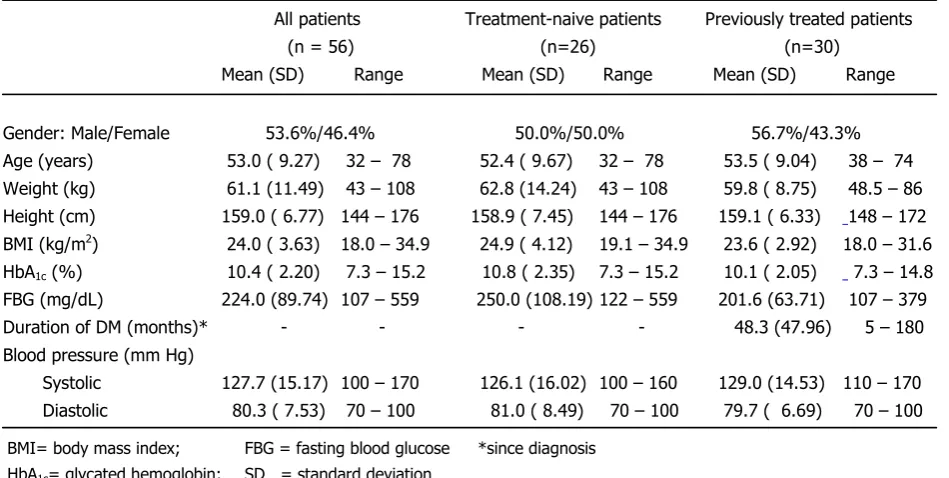
A total of 74 patients were eligible for the study and received glimepiride at baseline visit. Eighteen pa-tients were lost to follow-up at visits 2, 3, and 4 (13, 2, and 3 patients, respectively), leaving 56 patients who completed this 3 months study and who were therefore evaluable for eficacy. No adverse events were noted for those patients who were lost to follow-up. The de-mographics and baseline characteristics of the 56 pa-tients are presented in Table 1.
6
All patients Treatment-naive patients Previously treated patients (n = 56) (n=26) (n=30)
Mean (SD) Range Mean (SD) Range Mean (SD) Range
Gender: Male/Female 53.6%/46.4% 50.0%/50.0% 56.7%/43.3% Age (years) 53.0 ( 9.27) 32 – 78 52.4 ( 9.67) 32 – 78 53.5 ( 9.04) 38 – 74 Weight (kg) 61.1 (11.49) 43 – 108 62.8 (14.24) 43 – 108 59.8 ( 8.75) 48.5 – 86 Height (cm) 159.0 ( 6.77) 144 – 176 158.9 ( 7.45) 144 – 176 159.1 ( 6.33) 148 – 172 BMI (kg/m2) 24.0 ( 3.63) 18.0 – 34.9 24.9 ( 4.12) 19.1 – 34.9 23.6 ( 2.92) 18.0 – 31.6
HbA1c (%) 10.4 ( 2.20) 7.3 – 15.2 10.8 ( 2.35) 7.3 – 15.2 10.1 ( 2.05) 7.3 – 14.8
FBG (mg/dL) 224.0 (89.74) 107 – 559 250.0 (108.19) 122 – 559 201.6 (63.71) 107 – 379 Duration of DM (months)* - - - - 48.3 (47.96) 5 – 180 Blood pressure (mm Hg)
Systolic 127.7 (15.17) 100 – 170 126.1 (16.02) 100 – 160 129.0 (14.53) 110 – 170 Diastolic 80.3 ( 7.53) 70 – 100 81.0 ( 8.49) 70 – 100 79.7 ( 6.69) 70 – 100
Table 1. Demographics and baseline characteristics of patients with type-2 DM who completed the study (n=56)
6
There was a slightly higher prevalence of male than fe-male patients (54% vs 46%), while the mean age of all patients was 53.0 years. The mean HbA1c was 10.4%, the mean FBG was 224 mg/dL, and the mean BMI was 24 kg/m2 at baseline. The mean BP was 128/80 mm Hg at baseline (Table 1). The mean BMI, HbA1c, and FBG were higher in treatment-naïve patients than in previ-ously treated patients (Table 1).
n ( % )
Education : no formal 4 ( 7.1 ) low formal 30 ( 53.6) high formal 22 ( 39.3) BMI (kg/m2
): normal (18 - 22.9) 20 ( 35.7) overweight (23 - 24.9) 10 ( 17.9) obese ( > 25) 20 ( 35.7)
missing 6 ( 10.7)
Hypertension (mmHg)* 14 ( 25.0)
Dyslipidemia** 17 ( 30.4)
Smoker (current and past ) 12 ( 20.1) * Hypertension is defined as SBP > 130 mmHg or DBP > 85 mmHg
** Dyslipidemia is defined as total cholesterol > 200 mg/dL or LDL cholesterol > 100 mg/dL or HDL cholesterol < 45 mg/dL or triglycerides > 150 mg/dL
Patients receiving high formal education were only 39.3%. The obese patients were 35.7%. The hypertensive, dys-lipidemic and smoking (ever) patients were 25.0%, 30.4% and 20.1%, respectively.
The newly diagnosed patients were 26 (46%). Most of the previously (>3 months) treated patients received sulfony-lureas (96.7%), and glibenclamide was the most common sulfonylureas prescribed (62.1%) (Table 3).
n %
Previously treated patients 30 100.0 - metformin 1 3.3 - sulfonylureas 29 96.7
glibenclamide 18 62.1
gliclazide 2 6.9
glimepiride 9 31.0
Initial dose Final dose
n Mean (SD) Range Mean (SD) Range
All patients 56 2.0 (0.6) 1 – 3 2.3 (0.7) 1 – 4 Naive patients 26 2.0 (0.7) 1 – 3* 2.3 (0.8) 1 – 4† Previously treated patients 30 2.0 (0.5) 1 – 3** 2.3 (0.7) 1 – 4††
* 5, 15, and 6 patients received 1 mg, 2 mg, and 3 mg, respectively ** 3, 24, and 3 patients received 1 mg, 2 mg, and 3 mg, respectively † 4, 12, 9, and 1 patient received 1 mg, 2 mg, 3 mg and 4 mg, respectively †† 1, 21, 6, and 2 patients received 1 mg, 2 mg, 3 mg and 4 mg, respectively
Table 2. Education, BMI and other risk factors (n=56)
Table 3. Previous antidiabetic therapy of patients who completed the study (n=30)
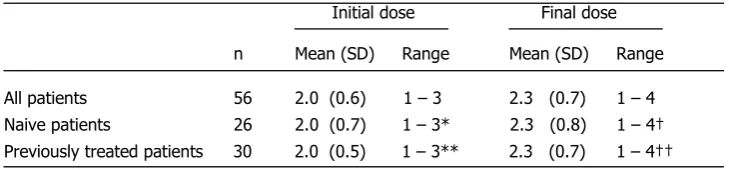
The mean initial glimepiride dose for all patients was 2.0 mg daily, which increased to 2.3 mg daily, the inal dose (at 3 months). The mean initial doses for naive pa-tients and previously treated papa-tients were similar, i.e. 2.0 mg daily. The mean inal doses were also similar, i.e. 2.3 mg daily (Table 4).
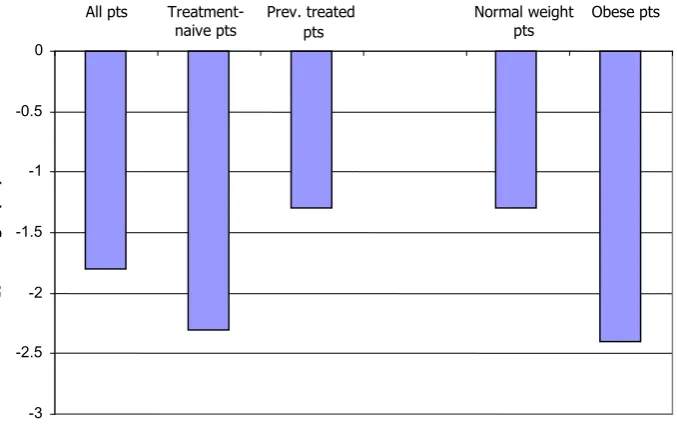
For all patients, the mean (SD) decrease in HbA1c after 3 months treatment was 1.8 (2.3%). In naive patients, the decrease was 2.3%, while in previously treated patients, it was 1.3%. According to initial BMI, the mean (SD) de-crease of HbA1c in normal weight patients was 1.3 (2.5%), but the decrease in obese patients was 2.4% (Table 5).
8
Baseline End of treatment Difference (3 months) from baseline
n Mean (SD) Range Mean (SD) Range Mean (SD) Range
All patients 56 10.4 (2.20) 7.3 – 15.2 8.6 (2.18) 6.0 – 17.3 -1.8 (2.30) -7.1→+3.9
Treatment-naive patients 26 10.8 (2.35) 7.3 – 15.2 8.5 (2.38) 6.6 – 17.3 -2.3 (2.58) -7.1→+3.9
Previously treated patients 30 10.1 (2.05) 7.3 – 14.8 8.8 (2.03) 6.0 – 13.1 -1.3 (1.95) -6.7→+2.4
Normal weight patients 20 10.4 (2.76) 7.3 – 15.2 9.1 (2.79) 6.2 – 17.3 -1.3 (2.54) -7.1→+3.9
Overweight patients 10 9.6 (1.91) 7.3 – 13.7 8.7 (2.12) 6.3 – 13.1 -0.9 (0.98) -2.4→+0.6
Obese patients 20 10.6 (1.86) 8.3 – 13.6 8.2 (1.53) 6.0 – 11.4 -2.4 (2.19) -6.7→+0.4
Missing 6 (10.7%)
8
→ → → → → →-3 -2.5 -2 -1.5 -1 -0.5 0
Mean
H
b
A1
c
c
h
a
n
g
e
(
%
)
All pts Treatment-naive pts
Prev. treated pts
Normal weight pts
Obese pts
The mean (SD) decline in FBG after 3 months treatment for all patients was 54 (83) mg/dL. For naive patients, the decrease was 83 mg/dL, and in previously treated patients, it was 30 mg/dL. Based on the initial BMI, the mean (SD) decline of FBG in normal weight patients was 59 (79) mg/ dL, and in obese patients the decline was similar, i.e. 60 mg/dL (Table 6).
After 3 months of therapy, the body weight of patients in-creased with a mean (SD) of 0.9 (2.2) kg (Table 7).
Table 5. HbA1c (%) in patients with type-2 DM who completed the study (n=56)
9
Baseline End of treatment Difference (3 months) from baseline n Mean (SD) Range Mean (SD) Range Mean (SD) Range
All patients 56 224 ( 89.7) 107 – 559 170 (63.6) 77 – 341 -54 ( 83.3) -259 →+120
Treatment-naive patients 26 250 (108.2) 122 – 559 167 (70.2) 77 – 318 -83 (104.6) -259 →+111
Previously treated 30 202 ( 63.7) 107 – 379 172 (58.8) 84 – 341 -30 ( 51.0) -127 →+120
patients
Normal weight patients 20 232 (107.9) 107 – 559 173 (59.7) 95 – 300 -59 (78.8) -259 →+76
Overweight patients 10 205 ( 73.1) 107 – 379 169 (76.3) 96 – 341 -36 (52.5) -128 →+31
Obese patients 20 223 ( 82.8) 122 – 476 163 (63.4) 77 – 318 -60 (84.6) -246 →+111
Missing 6 (10.7%)
→ → → →
9
→ → →→ → →
Baseline At 3 months treatment Difference
from baseline n Mean (SD) Range Mean (SD) Range Mean (SD) Range
All patients 50 61.4 (11.8) 43 – 108 62.3 (11.9) 42 – 108 +0.9 (2.2) -5 → +6
Normal weight patients 20 52.4 ( 5.0) 43 – 61 53.8 ( 5.9) 42 – 66 +1.4 (2.1) -3 → +6
Overweight patients 10 60.2 ( 5.2) 54 – 68.5 59.4 ( 5.0) 50 – 66 - 0.8 (2.1) -5 → +2
Obese patients 20 71.1 (11.6) 55 – 108 72.3 (11.4) 58 – 108 +1.2 (1.9) -2 → +4
Missing 6 (10.7%)
9
→ → →→ → →
→ → → →
Yes No
n (%) n (%)
All patients (n=56) 12 (21.4) 44 (78.6)
Treatment-naive patients (n=26) 5 (19.2) 21 (80.8) Previously treated patients (n=30) 7 (23.3) 23 (76.7)
Baseline HbA1c 7 - 10% (n=29) 8 (27.6) 21 (72.4)
Treatment-naive patients (n=12) 2 (16.7) 10 (83.3) Previously treated patients (n=17) 6 (35.3) 11 (64.7)
Table 6. FBG (mg/dL) in patients with type-2 DM who completed the study (n=56)
Table 7. Body weight (kg) in patients with type-2 DM who completed the study (n=56)
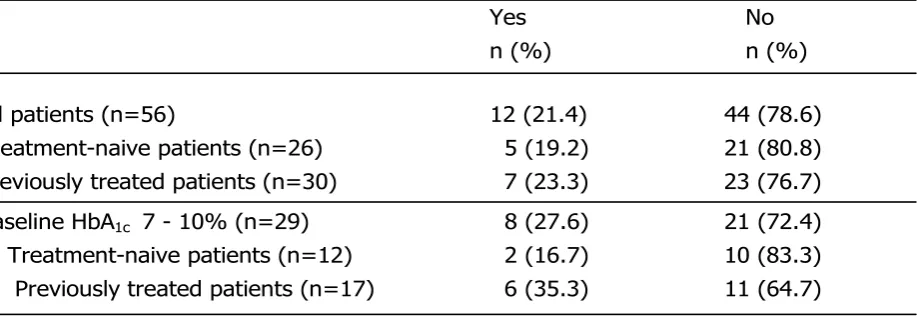
After 3 months of therapy, patients reaching the target HbA1c were 12 patients among a total of 56 patients (21.4%), consisting of 5 patients among 26 treatment-naive patients (19.2%) and 7 patients among 30 previous-ly treated patients (23.3%) (Table 8). Among 29 patients with baseline HbA1c 7–10%, there were 8 patients (27.6%) reached HbA1c <7%, consisting of 2 patients among 12 treatment-naïve patients (16.7%) and 6 patients among 17 previously treated patients (35.3%) (Table 8).
Patients reaching the target FBG after 3 months of therapy were 10 patients among a total of 56 patients (18%), consisting of 6 patients among 26 treatment-na-ive patients (23%) and 4 patients among 30 previously treated patients (13.3%) (Table 9).
The mean (range) initial glimepiride dose for patients reaching target HbA1c was 2.1 (1-3) mg daily and the inal dose was 2.0 (1-3) mg daily, while for patients not reach-ing target HbA1c the initial glimepiride dose was 2.0 (1-3) mg daily and the inal dose was 2.4 (1-4) mg/day.
Reasons for not reaching the HbA1c and FBG target at the end of study (3 months) were:
Poor diabetic education 31 (55.3%)
Dosage not optimum 19 (33.9%)
Noncompliance to all antidiabetic therapies 6 (10.7%)
Weight concern 3 ( 5.4%)
Fear of hypoglycemia 2 ( 3.6%)
Concomitant illness 1 ( 1.8%)
Other 2 ( 3.6%)
Missing 3 ( 5.4%)
The predominant reason for not reaching the target blood glucose was poor diabetic education (in 31 patients or 55% of all patients)
The mean systolic blood pressure decreased by 3.4 mm Hg and mean diastolic blood pressure by 0.7 mm Hg. No adverse event, including hypoglycemia, was encountered during 3 months monotherapy with glimepiride in the present study. Discontinuation rate was 18 patients from 74 patients originally enrolled in the present study. These 18 patients were all lost to follow up without any explanation noted in the case report forms. No AEs were reported for these 18 patients.
10
who completed the study (n=56)
Yes No
n (%) n (%)
All patients (n=56) 10 (17.9) 46 (82.1) Naive patients (n=26) 6 (23.1) 20 (76.9) Previously treated patients (n=30) 4 (13.3) 26 (86.7)
10
HbA1c (%) Daily dose (mg)
n (%) baseline final baseline final mean (range) mean (range) mean (range) mean (range)
Reach target HbA1c 12 (21.4) 9.68 (7.3 - 13.6) 6.60 (6.0 - 6.9) 2.1 (1-3) 2.0 (1-3)
Not reach target HbA1c 44 (78.6) 10.60 (7.5 - 15.2) 9.18 (7.0 - 17.3) 2.0 (1-3) 2.4 (1-4)
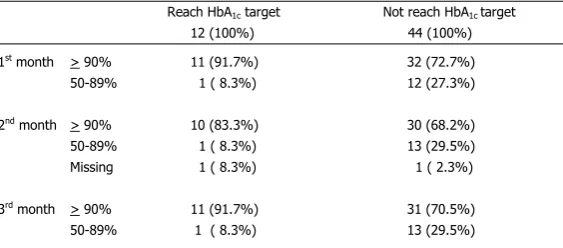
Table 11. Patients’ compliance in taking glimepiride monotherapy
Reach HbA1c target Not reach HbA1c target
12 (100%) 44 (100%) 1st
month > 90% 11 (91.7%) 32 (72.7%) 50-89% 1 ( 8.3%) 12 (27.3%)
2nd
month > 90% 10 (83.3%) 30 (68.2%) 50-89% 1 ( 8.3%) 13 (29.5%) Missing 1 ( 8.3%) 1 ( 2.3%)
3rd
month > 90% 11 (91.7%) 31 (70.5%) 50-89% 1 ( 8.3%) 13 (29.5%)
Table 9. Patients reaching the target FBG (< 120 mg/dL) among all patients with type-2 DM who completed the study (n=56)
Table 10. Doses of glimepiride in patients reaching and not reaching the target HbA1c among all patients with type-2 DM who completed the study (n=56)
DISCUSSION
After 3 months of therapy, the mean decrease in HbA1c levels was 1.8% for all patients, higher in naive patients (2.3%) than in previously treated patients (1.3%). These results were consistent with the results of Scholz et al. in more than 22.000 patients with type-2 DM.4 However, the variation was large, in some patients (17.9%) the HbA1c levels were actually increased. These increased HbA1c levels were found in 4 naive patients (15.4%), and in 6 previously treated patients (20%).
Based on initial BMI, the mean decrease in HbA1c lev -els was 1.3% for normal weight patients, and 2.4% for obese patients. These results were also consistent with the indings of Scholz et al.4 For overweight patients, the mean decrease was only 0.9%, it may be due to the small sample (only 10 patients).
The doses of glimepiride were not different in treatment-naive patients and in previously treated patients, either the initial dose (2.0 mg) or the inal dose (2.3%). The mean decrease in FBG levels after 3 months of therapy was 54 mg/dL for all patients, and higher in naive patients (83 mg/dL) than in previously treated patients (30 mg/dL). Again, the variation was large, with some patients had increased FBG levels. The in-creased FBG levels were detected in 11 patients among the whole group of patients (19.6%), in 5 naive patients (19.2%), and in 6 previously treated patients (20%). The initial BMI had no effect on the mean decrease of FBG levels, which was 59 mg/dL in normal weight pa-tients and 60 mg/dL in obese papa-tients.
Treatment with insulin or insulin secretagogue is often associated with weight gain. Glimepiride, however, has been associated with weight neutrality or even weight loss in a number of trials.4
In the present study, a mean weight gain of 0.9 kg for all patients (n= 50) was noted. These results suggested that glimepiride, just like other insulin secretagogue, was associated with weight gain, although in the pres -ent study, due to the large variation, the increase in body weight was not statistically signiicant.
In the present study, after 3 months of therapy, glimepir-ide monotherapy achieved target HbA1c (< 7%) in 12 patients from a total of 56 patients (21.4%). In 26 naive patients, 5 patients reached target HbA1c (19.2%), while in 30 previously treated patients, 7 patients reached target HbA1c (23.3%). The target FBG (< 120 mg/dL)
was reached by 10 patients among the total of 56 pa-tients receiving glimepiride monotherapy for 3 months (18%). In 26 naive patients, 6 patients reached the tar-get FBG (23%), and in 30 previously treated patients, 4 patients reached target FBG (13.3%). This low rate in achieving the target HbA1c and FBG in present study may be due to the short duration of study (3 months), high baseline values, and lack of dose escalation. Al-though the percentage of patients reaching target FBG was unexpectedly small (only 18%), but the proportion of success in treatment-naive patients and in previous-ly treated patients was as expected. On the contrary, the proportion of reaching target HbA1c in treatment-naive patients and in previously treated patients was unexpected, also among patients with baseline HbA1c 7–10%, which may be due to chance, considering the small number of patients. In the present study, the dose escalation was only until 4 mg in some patients due to the investigators’ fear of hypoglycemia considering the short duration of study (only 3 months) although no hypoglycemia was reported during the study.
There were various reasons for not reaching the target blood glucose, but the predominant reason was poor diabetic education (in 55% of all patients). There may be some correlation between this poor diabetic educa-tion with the poor formal educaeduca-tion received by most of our subjects. The major contribution, however, rested with the treating physicians, who did not spend enough time to explain the hazards of having poor diabetic con-trol, due to resource constraint. “Dosage not optimum” was reported for 34% of the patients. The mean dose of Glimepiride at the end of the study was relatively low at 2.4mg for patients who had not achieved target HbA1c, with room for further dose escalation. As expected, patients who reached good diabetic con-trol (reached target HbA1c) also had good compliance in taking glimepiride. Around 90% of these patients showed >90% compliance in taking glimepiride every month during this 3 months of therapy. Only around 70% of patients who did not achieve good blood glu-cose control showed >90% compliance in taking glimepiride.
only 4 mg daily, whilst the maximum dose permitted is 8 mg.7 More importantly, however, glimepiride is well known to cause a lower incidence of hypoglyce-mia compared to other sulfonylureas.1,2,8-10
Inconclusion, Glimepiride monotherapy in the pres -ent observational study in daily practice for 3 months was shown to be effective in reducing HbA1c and FBG levels, especially in treatment-naive patients. However, the variations were large and the percentages of patients achieving good blood glucose control (target HbA1c and target FBG) were small, which may be due to the short duration of study, high baseline values, and conserva-tive dose escalation. Contrary to the previous studies, glimepiride treatment in the present study was associated with weight gain, although not statistically signiicant. No adverse event was found in the present study with small number of patients and relatively low dosage of glimepiride.
Acknowledgements
We would like to thank the study patients for their par-ticipation and PT Aventis Pharma, sanoi-aventis Group for supporting the study.
REFERENCES
1. Langtry HD, Balfour JA. Glimepiride: a review of its use in the management of type 2 diabetes mellitus. Drugs. 1998; 55 (4): 563-84.
2. McCall AL. Clinical review of glimepiride. Exp Opin Pharmacother. 2001; 2(4): 699-713.
3. Kabadi MU, Kabadi UM. Effects of glimepiride on insulin
secretion and sensitivity in patients with recently diagnosed
type 2 diabetes mellitus. Clin Ther. 2004; 26(1): 63-9. 4. Scholz GH, Schneider K, Knirsch W, Becker G. Eficacy
and tolerability of glimepiride in daily practice: a non-in-terventional observational cohort study. Clin Drug Invest. 2001; 21 (9): 597-604.
5. Tsunekawa T, Hayashi T, Suzuki Y, Matsui-Hirai H, Kano H, Fukatsu A, et al. Plasma adiponectin plays an
impor-tant role in improving insulin resistance with glimepiri
-de in el-derly type-2 diabetic subjects. Diab Care. 2003; 26(2):285-9.
6. Koshiba K, Nomura M, Nakaya Y, Ito S. Eficacy of
glimepiride on insulin resistance, adipocytokines, and ath
-erosclerosis. J Med Invest. 2006; 53: 87-94. 7. Amaryl Prescribing Information
8. Dills DG, Schneider J. Clinical evaluation of glimepiride versus glyburide in NIDDM in a double-blind comparative study. Glimepiride/Glyburide Research Group. Horm Me-tab Res. 1996; 28(9): 426-9.
9. Draeger KE, Wernicke-Panten K, Lomp HJ, Schuler E, Rosskamp R. Long-term treatment of type-2 diabetic patients with the new oral antidiabetic agent glimepiride (Amaryl): a double-blind comparison with glibenclamide. Horm Metab Res. 1996; 28(9): 419-25.