Henriette van Rensburg1 PA Danaher Renee Malan Ronel Erwee Emilio A Anteliz
ABSTRACT
This paper examines selected current university academics’ recollections of their doctoral journeys and in particular their interactions with their supervisors. The participants’ responses to a series of questions in an online questionnaire were analysed thematically for what they demonstrated about the respondents’ experiences of agency and identity through their relationships with their supervisors and in some cases their subsequent associations with those supervisors. The results of the analysis highlight the situated and contextualised character of agency, as well as the multiple forms taken by identities within and across disciplinary and national boundaries.
KEYWORDS
Agency, challenges, doctoral students, doctoral supervisors, identity, pleasures, relationships
INTRODUCTION
Relationships are fruitful, fluid and fickle, and are crucial to developing and sustaining educational outcomes at all levels. Certainly in doctoral education the student–supervisor relationship is commonly understood as vital to the student’s eventual success. Yet its character and impact are unpredictable and difficult to plan or prescribe. Instead, this relationship needs to emerge in a supportive environment, facilitated by clear guidelines and responsive structures for nurturing students and supervisors alike.
A productive approach to analysing the doctoral student–supervisor relationship is to consider its capacity to foster agency and contribute to academic identity formation (McAlpine & Amundsen 2009). (Agency, as elaborated below, is understood here as the exercise of individual and collective autonomy within the constraints imposed by specific contexts.) This is because these simultaneous goals encapsulate a great deal of the complexity and diversity of the aspirations commonly ascribed to doctoral students and their supervisors, as well as of the contexts in which those aspirations are sought and sometimes fulfilled.
Some of that complexity and diversity is taken up in this paper, in which we explore the focused recollections by selected current university academics of their doctoral journeys, especially their interactions with their supervisors. These academics straddled principally
1
three countries—Australia, South Africa and Venezuela—and traversed three disciplines: education, engineering and humanities. The participants’ responses to a series of questions in an online questionnaire were analysed thematically according to what they demonstrated about the respondents’ experiences of agency and identity by means of their relationships with their supervisors and, in some cases, their subsequent associations with those supervisors.
The paper consists of the following sections: a literature review and conceptual framework; the study’s research design; presentation of results; discussion of results; and implications for theory and practice in postgraduate supervision. The analysis presented here emphasises the situated and contextualised character of agency, as well as its connection with the interplay between individuals and structures in influencing its development and effects. The analysis also alerts us to the multiple forms taken by identities within and across disciplinary and national boundaries, pointing to the value of ongoing international scholarship in this field.
LITERATURE REVIEW AND CONCEPTUAL FRAMEWORK
Anecdotally we have known for a long time how crucial the doctoral student–supervisor relationship is to the student’s eventual success, as well as to both students and supervisors feeling that their interactions have been a productive partnership rather than a stressful struggle of ideology and/or personality. In that context, we recognise relevant research into doctoral student supervision that was conducted in the 1990s. For example, Pole (1998) discussed the issues relating to the research environment of postgraduate supervision, as well as various approaches to supervision. Cullen, Pearson, Saha and Spear (1994) elaborated the principles of effective doctoral supervision based on their research in Australia, with Holloway (1995) depicting effective supervision in terms of artistry and understanding
students’ psychosocial histories (see also Ismail & Zainal Abiddin 2011). Cowan (1997) examined comparative perspectives on the development of the Doctor of Philosophy qualification in the United Kingdom, including their implications for different understandings of supervisory practices. Borders and Rainey (1996) studied doctoral students’ self-evaluations of their supervision ability and their conceptualisations about supervisees from which broader supervisory practices could be inferred and appraised.
Subsequently, increased attention has been given to this relationship and its parameters and constituent elements, although much more remains to be done in terms of linking robust conceptual models with rigorously analysed empirical evidence. More specifically, the centrality of the doctoral student–supervisor relationship has been identified in a diverse range of academic disciplines, ranging from communication (Probst Schilter 2009) to counselling (Nelson, Oliver & Capps 2006) to nursing (Gill & Burnard 2008; Lee 2009) to psychology (Cimino & Ferreri 2003). Research about this relationship has included elaborating various evidence-based models for maximising the effectiveness of the relationship (Mainhard, van der Rijst, van Tartwijk & Wubbels 2009), exploring what doctoral students see as most important in the relationship (Bell-Ellison & Dedrick 2008) and developing a systematic approach to matching doctoral students and supervisors (Ray 2007). Attention has also been accorded to issues related to ethnicity (McKinley, Grant, Middleton, Irwin & Williams 2009) and gender (Wall 2008) in the relationship.
(2005, p. 162) has noted, ‘Doctoral pedagogy is as much about the production of identity...as it is the production of knowledge’. This production can be interpreted in multiple ways, such as in the intersection between doctoral and professional identities (Scott & Morrison 2010) and the brokerage of knowledge between universities and industry (Wallgren & Dahlgren 2007). Likewise agency has been posited as an essential ingredient if these identity developments are to be productive and mutually beneficial (Hopwood 2010; Hopwood & Sutherland 2009).
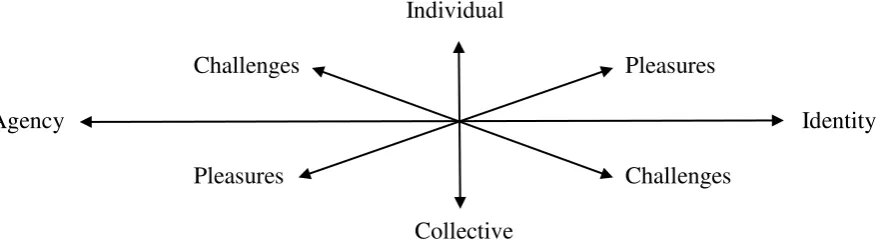
McAlpine and Amundsen (2009) have presented what we see as a useful conceptual framework that elaborates a particular understanding of the complex connections between agency and identity in the doctoral student–supervisor relationship. Their framework was based on a re-analysis of data from three earlier studies, informed by contemporary theorising about the development of identities and the crucial links between agency and affect. While it necessarily omits some of the nuances and subtleties attendant on their framework, Figure 1 below depicts the framework’s key elements that we deploy in our data analysis later in the paper.
Figure 1: Challenges and Pleasures in Developing Individual and Collective Agency and Identity in the Doctoral Student–Supervisor Relationship (based on McAlpine &
Amundsen 2009)
Individual
Challenges Pleasures
Agency Identity
Pleasures Challenges
Collective
The principal dimensions of the framework presented by McAlpine and Amundsen (2009) centre on three crucial sets of interactions. The first was between agency and identity. They described agency as occurring with ‘humans as active agents’ (p. 109), whereby ‘students were acting to shape and not just be shaped by the contexts in which they were acting’ (p. 109) and in terms of ‘intentions and related action’ (p. 112). They also explicitly conceptualised agency as ‘an evocation of identity’ (p. 112) and stated that it ‘represents the capacity to perceive personal goals towards which one is directing action’ (p. 112). Similarly, the performative dimension of identity was highlighted, with a focus on ‘identity talk—the ways in which agency is expressed both by students about themselves and through the appraisals of others’ (p. 112) and on students actively navigating simultaneously among several different and sometimes competing identities (such as those of student and scholar). Furthermore, ‘storytelling or identity talk is the means to both express these [personal goals] and negotiate them with others’ (p. 112).
intentions and the ability to influence in various ways the experiences they have’ (p. 112). This is understandable: doctoral students almost always pursue highly differentiated and personally specific areas of research that become progressively more focused and refined as they proceed. The authors identified three instances of doctoral students exercising individual agency:
a. The larger disciplinary community (e.g., continuing education literature and researchers—providing the foundation for local communities to exist).
b. Different institutional communities (e.g., university, faculty).
c. Distinct local disciplinary communities (e.g., dissertation committee, research team, and student groups) (p. 114).
At the same time, that process of research occurs within broader contexts and communities, including students’ families and work colleagues and often fellow doctoral students and their supervisors. From this perspective, McAlpine and Amundsen (2009) contended ‘the value of creating opportunities for collective identity in which doctoral students act as positive agents in improving their own doctoral experiences’ (p. 112), and they identified two specific contexts in which the collective identity of doctoral students was enacted:
a. Student identity in the institutional community (in the faculty). b. Disciplinary identity (in the university) (p. 114).
The third set of interactions central to the conceptual framework presented by McAlpine and Amundsen (2009) was between challenges and pleasures associated with the development of the doctoral student–supervisor relationship. They identified challenges as deriving from three key issues:
a. Difference, for instance, between individual and collective values. b. Lack of clarity (e.g., unexplained roles and expectations).
c. Structural features of different institutional contexts (e.g., program, department, faculty, university, which constrained or limited student agency) (p. 114).
By contrast, and despite these undeniable challenges, McAlpine and Amundsen (2009) found strong evidence of pleasures in the relationship, which ‘represent occasions when students felt a sense of enhanced agency; they were contributing to—or perceived to be contributing to—a community in a positive manner’ (pp. 114-115). The authors asserted that the occurrence of pleasures ‘balances challenges and might be conceived as essential to one’s motivation to continue the PhD despite difficulties’ (p. 115).
RESEARCH DESIGN
The study deployed the principles of a mixed methods research design (Burke Johnson, Onwuegbuzie & Turner 2007; Creswell & Plano Clark 2007; Teddlie & Tashakkori 2009). Ary, Jacobs, Razavieh and Sorensen (2010) described mixed methods research as being more than the combination of qualitative and quantitative research: ‘It incorporates and embraces blends of paradigms, philosophical assumptions, and theoretical perspectives directly driven by the purpose of the study and the intended audience’ (p. 561). The intention in deploying this design approach was to identify and elaborate specific elements of the phenomenon of the doctoral student–supervisor relationship, gleaned from the participants’ responses to a series of closed and more open-ended questions in an online questionnaire (see also Lefever, Dal & Matthiasdóttir 2007; Tuten 2010; Van Selm & Jankowski 2006), and framed by the conceptual connections between agency and identity (McAlpine & Amundsen 2009).
The questionnaire was administered in the second half of 2010 via surveymonkey by academic colleagues principally at three different universities in Australia, South Africa and Venezuela. This approach drew on existing informal partnerships among the authors of this paper and their colleagues to mobilise their respective networks of professional associations and also to solicit respondents from other institutions. The questionnaire comprised 29 questions, organised around the following six clusters: demographic information; change of supervisory team; positive and/or negative critical incidents; emotional dimension of the student–supervisor relationship; practical dimension of the student–supervisor relationship; and contact and networking opportunities.
Responses to the questionnaire were analysed thematically (Fereday & Muir-Cochrane 2006), informed by the paper’s conceptual framework of agency and identity in the doctoral student–supervisor relationship (McAlpine & Amundsen 2009). This approach entailed three distinct but overlapping phases: coding the text line by line; individual authors developing initial, descriptive themes; and the team of authors generating analytical themes (Thomas & Harden 2008). While formal inter-rater reliability testing was eschewed in favour of ongoing informal discussions among the authors, rigour in the analysis (Caelli, Ray & Mill 2003) was maximised through the continuing conversations among the authors about their separate and shared understandings of the meanings and significance of the data, as well as by the iterative interplay between the empirically generated data and the theoretically framed conceptual framework guiding the paper.
We fully acknowledge the inevitable limitations of the study’s research design. These limitations included the relatively small response rate and the consequent restrictions on the generalisability of the findings. Future iterations of the research are planned to increase the response rate and also to include semi-structured interviews with doctoral students and supervisors to enhance the richness of the data. For example, the distinctive contexts of doctoral student supervision in countries as diverse as South Africa and Venezuela could usefully be explored in these proposed future stages of the study.
PRESENTATION OF RESULTS Demographic information
highlighted under each reported question below. (Please note that owing to consistency in rounding of calculations the percentage column does not always total 100%.)
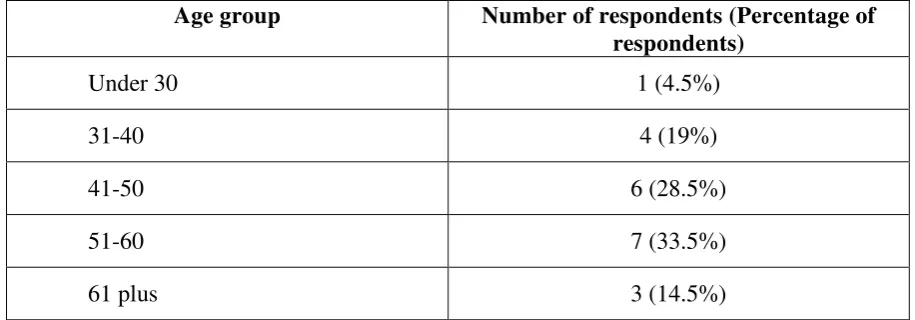
Table 1: Respondents’ Ages
Age group Number of respondents (Percentage of
respondents)
Under 30 1 (4.5%)
31-40 4 (19%)
41-50 6 (28.5%)
51-60 7 (33.5%)
61 plus 3 (14.5%)
Age. Most respondents were in the two age groups 41 to 50 and 51 to 60, which is consistent with the age demographics of most contemporary universities, regardless of country of location.
Gender. Most respondents were female (66.7%), which is consistent with the majority of participants working in the education and social science disciplines (the principal focus of this research to date) in contemporary universities.
Table 2: Respondents’ Countries of Residence and of Completion of Doctoral Study
Country Current country of
residence
N (%)
Country of completion of doctoral study
N (%)
Australia 4 (21.1%) 2 (10.5%)
South Africa 3(15.8%) 4 (21.1%)
Venezuela 3 (15.8%) 2 (10.5%)
Other 9 (47.4%) 11 (57.9%)
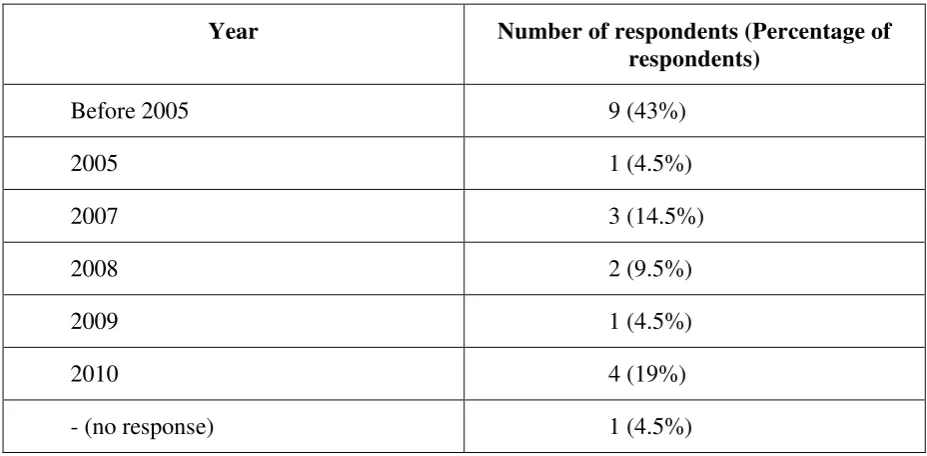
Table 3: Respondents’ Years of Completed Doctoral Study
Year Number of respondents (Percentage of
respondents)
Before 2005 9 (43%)
2005 1 (4.5%)
2007 3 (14.5%)
2008 2 (9.5%)
2009 1 (4.5%)
2010 4 (19%)
- (no response) 1 (4.5%)
Year of completion of doctoral study. There was a reasonable spread among respondents in relation to how much time had elapsed since completing their doctorates and, hence, in terms of the freshness of their recollections of completing their doctoral study vis-à-vis having had the opportunity to reflect with greater detachment and maturity on the experiences of completing that study.
Change of supervisory team
Table 4: Respondents’ Changes of Supervisory Teams
Change of supervisory team Number of respondents (Percentage of respondents)
Yes 7 (33.5%)
No 13 (62%)
- (no response) 1 (4.5%)
Those respondents who reported a change of supervisor noted the following reasons for such a change (please note that open-ended responses have undergone minor textual editing to enhance their readability):
My first supervisor was not interested at all; I was his first PhD student. He did not know how to supervise.
My master's [degree] got upgraded to a PhD and then a co-supervisor joined the supervising team.
Labs closed; jubilation of supervisors.
One supervisor was never available; it took him about three months to review work that I'd done and he was overseas most of the time. The other supervisor was never satisfied with work that I'd done and he could not clearly indicate to me what the problem was or how I could improve the work.
Lack of active supervision.
Positive and/or negative critical incidents
Positive critical incidents. In response to the stimulus statement ‘Please describe in detail a POSITIVE critical incident that you had with your supervisor’, participants presented the following responses:
My second supervisor was well organised. He had a plan and schedule right from the word ‘go’. He always gave me immediate feedback on draft chapters; he was wonderful.
No positive incident.
I made significant changes to a chapter based on a few suggestions by my supervisor and she said: ‘That is why you deserve to have Dr in front of your name’.
Agreement over length of thesis.
My advisor has been very supportive throughout the process. I can’t recall one critical moment, but she has constantly offered me support and compassion, and reminds me to not overwork myself.
Nothing critical happened.
When I had an accident and broke my shin, she drove me to the lab and helped me with my experimental work.
I applied for ethical clearance from the institution, which was denied at first for no apparent reason (and no reasons provided). My supervisor supported me and we got the project cleared, and a whole new system of ethical clearance came into play as a result. He believed in me and my project, and was always supportive and approachable.
I completed my doctoral study in 1971 so this is more appropriate for me as a supervisor. Nevertheless, the most positive incident was my supervisor's full support of my topic, which he was not an expert in.
My new supervisor was fantastic—she reviewed my work within a day or so and provided me with clear and very positive feedback. She encouraged me throughout my PhD.
Suggested change in methodological paradigm—from qualitative to post-positivist quantitative.
I was not sure at one stage how I was going to get everything done—my supervisor kept me focused and encouraged me—we stayed focused on the simple research question.
Negative critical incidents. In response to the stimulus statement ‘Please describe in detail a NEGATIVE critical incident that you had with your supervisor’, participants reported the following examples:
None.
Lack of communication; no plan; no feedback on draft chapters. I was always on my own, no direction, no help whatsoever.
‘I only want to see it when it is perfect’—no more critical analysis of the material.
I had no response from my supervisor for over eight months despite sending repeated drafts. Later I discovered she had been ill, but when I asked why she had not responded she said: ‘Oh, but you made the changes anyway without my help’.
Working through final draft—regarding applied focus of recommendations.
None; I have honestly had a very positive relationship with her!
Nothing critical happened.
None.
I sometimes had to wait a while to get feedback, and sometimes I felt he was not critical enough of my work. The co-supervisor was more timely and meticulous, which I appreciated. They made a good team in the end, balancing each other’s strengths and shortcomings.
I really didn’t have the best team for the topic I pursued, which was way out of the box of my School of Education.
Personal relationships.
No negative incidents with the new supervisor.
None that I can think of.
Emotional dimension of the student–supervisor relationship
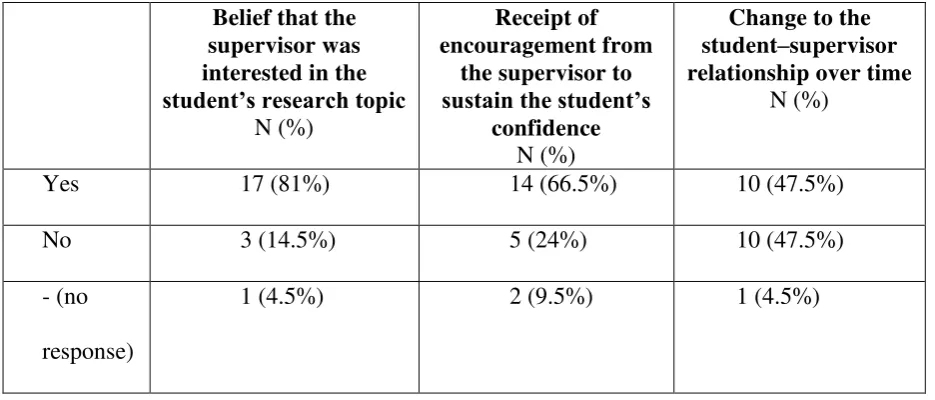
Table 5: Emotional Dimension of the Student–Supervisor Relationship Belief that the
supervisor was interested in the student’s research topic
N (%)
Receipt of encouragement from
the supervisor to sustain the student’s
confidence
N (%)
Change to the student–supervisor relationship over time
N (%)
Yes 17 (81%) 14 (66.5%) 10 (47.5%)
No 3 (14.5%) 5 (24%) 10 (47.5%)
- (no
response)
1 (4.5%) 2 (9.5%) 1 (4.5%)
Table 6: Belief that the Supervisor Was Approachable
Belief in supervisor’s approachability Number of respondents (Percentage of respondents)
Always 13 (62%)
Sometimes 7 (33.5%)
- (no response) 1 (4.5%)
Change to the student–supervisor relationship over time. Those respondents who reported a change to the student–supervisor relationship noted the following aspects of such a change:
In the beginning, I experienced him as very ‘strict’, but always very professional. Today he is one of my best friends.
Yes, only after a second supervisor was appointed and after a formal faculty appeal process. The second supervisor took the lead and really helped me a lot.
Supervisor's recognition of my professional role and what it brought to the process.
My advisor moved to another country and university.
It became more collegial.
Sorry, but my study was done way before the Internet and thus contact was quite limited. And, my supervisor is no longer with us. But I moved so far from the university that contact was limited in those days.
It further improved—now that I finalised my PhD she and I publish articles together.
Over time the relationship matured to one of professional equality.
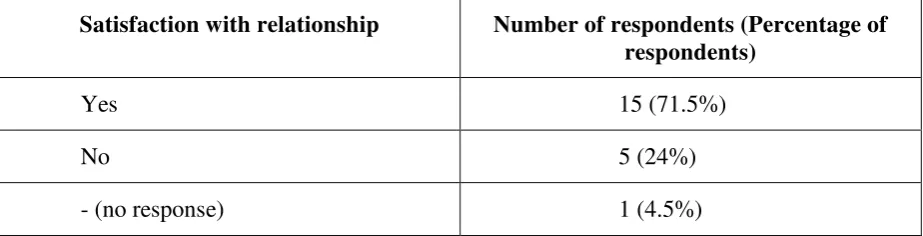
Table 7: Satisfaction with the Student–Supervisor Relationship
Satisfaction with relationship Number of respondents (Percentage of respondents)
Yes 15 (71.5%)
No 5 (24%)
- (no response) 1 (4.5%)
Satisfaction with the student–supervisor relationship. Open-ended responses to this question included the following statements:
He helped me to achieve my goals—always very professional but always approachable. He changed over time from excellent teacher to a very good and reliable friend.
There was no relationship and no progress for three years.
Basically no supervision. But there was trust and encouragement.
She always treated me as a colleague and as someone with something worthwhile saying.
Excellent flow of communication and ideas; relevant suggestions.
Constant contact and very timely feedback. A balanced view of the world was imparted by her in terms of the amount of time one should spend working. She's taught me how to balance that better.
The advisor–student relationship was close to what I expected it to be.
I had the constant presence and responsibility of my supervisor.
community and applauded each step I took towards becoming a scholar. He still encourages me.
My supervisor believed in me. But I was at a university that was behaviourist. I was pursuing a field study using participant observation methods—very new at the time. He was supportive even if he wasn’t much help!
There was respect mainly.
My supervisor is very experienced in supervising students and manages to create an excellent and productive working relationship with her students.
After the initial failure of the university to address supervisory concerns, the new supervisor displayed very high levels of professionalism and interest.
Practical dimension of the student–supervisor relationship
Table 8: Practical Dimension of the Student–Supervisor Relationship
Receipt of
Table 9: Receipt of Clear Communication from the Supervisor
Receipt of clear communication Number of respondents (Percentage of respondents)
Always 9 (43%)
Sometimes 10 (47.5%)
Contact and networking opportunities
His area of interest and mine are not the same.
My first encounter with PhD supervision was a nightmare. I was trying my best without any guidance or feedback. When I saw my supervisor on appointment, we never discussed research related issues because he never read the draft documents. He was never prepared for our meetings.
I cannot accurately answer Questions 27 and 28 because I have not yet completed my degree. I am in the final stages, but we've already collaborated on two publications and more are in the works.
None.
I learned a lot from my supervisor about the student–supervisor relationship.
No.
DISCUSSION OF RESULTS
The previous section of the paper presented the results of the online questionnaire, grouped around the six clusters underpinning the questionnaire. In this section we discuss those results, organised in terms of the previously identified three sets of interactions – agency and identity; individuality and collectivity; and challenges and pleasures—articulated by McAlpine and Amundsen (2009). These interactions emerged as robust encapsulations of the themes resulting from the data analysis outlined above.
There was considerable evidence in the reported responses to the questionnaire of participants exercising highly developed agency in their interactions with their supervisors and where relevant with other stakeholders in their doctoral journeys as well. This was demonstrated in such varied ways as having a clear set of criteria, whether explicit or implicit, for assessing the effectiveness of the student–supervisor relationship, responding to changes in the supervisory team as strategically as possible and constantly searching for supervisor feedback about draft dissertation chapters. Agency was evident also in examples of balancing empathy with supervisors who had been ill or not very knowledgeable about the student’s topic with a pragmatic determination to obtain alternative support in such situations. More broadly, these examples reflected the respondents’ capacity to place their doctoral studies in a broader context of interactions and interpersonal relationships, while retaining a shrewd understanding of how those interactions and relationships impacted, whether positively or negatively, on those studies. There was also evidence of pleasures in the participants’ responses, albeit generally tacitly—for example, in the acknowledgment of having completed successfully a project of such breadth and depth, sometimes against the backdrop of ineffective or unsupportive supervision, as well as in the references to post-doctoral contact with their supervisors that sometimes involved co-authored publications.
At the same time, the results reported above highlighted the considerable limits on the exercise of the respondents’ agency. In particular, whether their studies were enhanced by facilitative and intelligent supervision or completed in spite of that supervision, participants reinforced the centrality of the student–supervisor relationship alluded to earlier and their dependence on their supervisors to finish their studies. Moreover, there was little or no evidence in the results of collective agency (except perhaps when the relationship with the supervisor was particularly close and collegial); certainly there were no references to groups of doctoral candidates supporting one another to enact productive change to existing supervisory practices. While such student–student relationships are often evident among on-campus candidates and can be effective in nurturing and sustaining individual students, they are not usually successful in engaging with the centres and sources of institutional power wherein the capacity to change supervisory activities generally lies. The challenges in exhibiting agency reported by participants in the questionnaire therefore derived largely from this political imbalance that traversed the three principal countries reflected in the study and the three disciplines represented by those participants.
With regard to identity, despite the diversity displayed among the respondents (for example, related to whether they were in the final stages of submitting their doctorates for examination or had completed their doctorates several years previously), there was considerable evidence of “storytelling or identity talk [as] the means to both express these [personal goals] and negotiate them with others” (McAlpine & Amundsen 2009, p. 112). For instance, evaluations
participants’ assumptions explicitly about the standards required to complete the doctorate and implicitly about the expectations of becoming fully fledged members of an academic community. Again, as with agency, this “identity talk” tended to reflect individual rather than collective experiences and understandings, but nevertheless there was in many cases a strong foundation for developing the respondents’ identities as academics and researchers if they wished to pursue that option.
IMPLICATIONS Implications for theory
Theoretically, from this analysis we argue that agency from the perspective of doctoral students is reinforced as a highly situated and contextualised phenomenon, needing to be understood against the background of the grids of power of individuals and institutions, rather than being amenable to extrapolation and prediction across contexts. Furthermore, agency was constructed through the interplay of individual students and the structures in which they were located, just as the limits on the exercise of that agency were fashioned by the effects of those structures on personal aspirations and experiences.
Similarly, identity emerges as considerably varied, influenced as much by different personalities and situations as by disciplinary and national backgrounds. Its conceptual and empirical connections with agency are likewise diverse—in some ways agency might be considered one of the means to attain the purpose of forming identity, yet on the other hand the relationship between the two phenomena is less clear cut than that, with agency more than a simple means to an end; and identity more than the outcome of the exercise of agency. Certainly more research is needed in articulating and demonstrating these connections, both because such understanding is important in its own right and because it is crucial to enhancing the effectiveness of the doctoral student–supervisor relationship and to assuring the quality of the doctoral student experience.
Implications for practice
Indeed, despite the examples of unhelpful supervisory practices in the questionnaire results, there was also evidence of how the student–supervisor relationship can provide a robust framework for the exercise of agency and the building of identity for students and supervisors alike. For example, several participants reported strategies that they considered helpful in developing their competence and enlarging their confidence, such as having clear expectations for each person’s role in the relationship, negotiating clear guidelines and milestones for the doctoral student’s journey, holding regular meetings, providing prompt and detailed feedback, and organising the reliable availability of necessary resources. Ensuring that students had ready access to networks of other researchers and introducing them to the university’s intellectual life were also valued when they occurred, even if that occurrence varied from supervisor to supervisor.
doctoral students and their supervisors to seek to maximise their attainment in the context of professional and mutually beneficial relationships.
CONCLUSION
There was considerable evidence of tension in the doctoral students’ responses to the questionnaire reported in this paper. For some students that tension derived from working with supervisors whom they considered at best inattentive and ineffective; and at worst uncaring and incompetent. For others, while they recognised that their supervisors had worked hard to support them, sometimes in difficult circumstances, the result was not what they found acceptable or at the standard that they would apply to themselves as supervisors. For yet others, the experience of doctoral study was affirming and fulfilling, demonstrating a convergence rather than a divergence of motives and goals between their supervisors and themselves. In all cases, respondents had a clear understanding of what they expected from the supervisory relationship; they varied widely in the degree to which and the manner in which such expectations were achieved.
The results reported here could of course be interpreted through any number of conceptual lenses. We have found helpful the application of the interplay between agency and identity (McAlpine & Amundsen 2009), not least because that interplay enabled us to look beyond relatively straightforward and superficial accounts of specific practices to some of the underlying patterns of interactions. Some of the findings might feed readily into altered activities by universities and faculties seeking to enhance the doctoral student experience; others will need further consideration and application (for example, by examining the agency and identities of supervisors and research administrators). Certainly the continuing influence of agency and identity in the doctoral student–supervisor relationship warrants ongoing scholarly attention.
REFERENCES
Ary, D, Jacobs, L C, Razavieh, A & Sorensen, C 2010, Introduction to research in education
(8th ed.), Wadsworth, Belmont, CA.
Bell-Ellison, BA & Dedrick, RF 2008, ‘What do doctoral students value in their ideal mentor?’,Research in Higher Education, 49, 555-567.
Borders, LD & Rainey, LM 1996, ‘Impact of a counseling supervision course on doctoral students’ cognitions’,Counselor Education and Supervision, 35 (3), 204-217.
Burke Johnson, R, Onwuegbuzie, AJ & Turner, LA 2007, ‘Toward a definition of mixed methods research’,Journal of Mixed Methods Research, 1 (2), 112-133.
Caelli, K, Ray, L & Mill, J 2003, ‘“Clear as mud”: Toward greater clarity in generic qualitative research’,International Journal of Qualitative Methods, 2 (2), 1-13.
Cimino, G & Ferreri, AM 2003, ‘Doctoral training in psychology in Italy’, European Psychologist, 8 (1), 23-27.
Creswell, J W & Plano Clark, VL 2007, Designing and Conducting Mixed Methods Research, Sage, Thousand Oaks, CA.
Cullen, D, Pearson, M, Saha, LJ & Spear, RH 1994, Establishing Effective PhD Supervision, Australian Government Publishing Services, Canberra, ACT.
Fereday, J & Muir-Cochrane, E 2006, ‘Demonstrating rigor using thematic analysis: A hybrid approach of inductive and deductive coding and theme development’, International Journal of Qualitative Methods, 5 (1), 80-92.
Gill, P & Burnard, P 2008, ‘The student–supervisor relationship in the PhD/doctoral process’,
British Journal of Nursing, 17 (10), 668-671.
Green, B 2005, ‘Unfinished business: Subjectivity and supervision’, Higher Education Research and Development, 24 (2), 151-163.
Holloway, EL 1995, Clinical Supervision: A Systems Approach, Sage, Thousand Oaks, CA.
Hopwood, N 2010, ‘A sociocultural view of doctoral students’ relationships and agency’,
Studies in Continuing Education, 32 (2), 103-117.
Hopwood, N & Sutherland, K 2009, ‘Relationships and Agency in Doctoral and Early Career Academic Experience’, paper presented at the annual conference of the Higher Education Research and Development Society of Australasia, Darwin, NT.
Ismail, A & Zainal Abiddin, N 2011, ‘Improving the development of postgraduates’ research and supervision’,International Education Studies, 4 (1), 78-89.
Kamler, B 2008a, ‘Rethinking doctoral publication practices: Writing from and beyond the thesis’, Studies in Higher Education, 33 (3), 283-294.
Kamler, B 2008b, ‘Bringing pedagogy to doctoral publishing’, Teaching in Higher Education, 13 (5), 511-523.
Lee, N-J 2009, ‘Professional doctorate supervision: Exploring student and supervisor experiences’,Nurse Education Today, 29 (6), 641-648.
Lefever, S, Dal, M & Matthiasdóttir, A 2007, ‘Online data collection in academic research: Advantages and limitations’, British Journal of Educational Technology, 38 (4), 574-582.
Mainhard, T, van der Rijst, R, van Tartwijk, J & Wubbels, T 2009, ‘A model for the supervisor–doctoral student relationship’,Higher Education, 58, 359-373.
McAlpine, L & Amundsen, C 2009, ‘Identity and agency: Pleasures and collegiality among the challenges of the doctoral journey’,Studies in Continuing Education, 31 (2), 109-125.
McKinley, E, Grant, B, Middleton, S, Irwin, K & Williams, L R T 2009, ‘Supervision of Maori doctoral students: A descriptive report’,MAI Review, 1, Article 6.
Pole, C 1998, ‘Joint supervision and the PhD: Safety net or panacea?’, Assessment & Evaluation in Higher Education, 23 (3), 259-271.
Probst Schilter, C 2009, ‘Serving Different Masters: The Communication Doctorate in the Knowledge Society’, Doctor of Philosophy dissertation, Faculty of Communication Sciences, University of Lugano, Lugano, Switzerland.
Ray, S 2007, ‘Selecting a doctoral dissertation supervisor: Analytical hierarchy approach to the multiple criteria problem’,International Journal of Doctoral Studies, 2, 23-32.
Scott, D & Morrison, M 2010, ‘New sites and agents for research education in the United Kingdom: Making and taking doctoral identities’, Work Based Learning e-Journal, 1 (1), 15-34.
Teddlie, C & Tashakkori, A 2009, Foundations of Mixed Methods Research: Integrating Qualitative and Quantitative Approaches in the Social and Behavioural Sciences, Sage, Thousand Oaks, CA.
Thomas, J & Harden, A 2008, ‘Methods for the thematic synthesis of qualitative research in systematic reviews’,BMC Medical Research Methodology, 8 (45).
Tuten, TL 2010, ‘Conducting online surveys’, in S D Gosling & J A Johnson (eds.), Advanced Methods for Conducting Online Behavioral Research, American Psychological Association, Washington, DC.
Van Selm, M & Janowski, NW 2006, ‘Conducting online surveys’, Quality & Quantity, 40 (3), 435-456.
Wall, S 2008, ‘Of heads and hearts: Women in doctoral education at a Canadian university’,
Women’s Studies International Forum, 31 (3), 219-228.