LUMUT PROTECTION FOREST, EAST KALIMANTAN
Murniati1,2, Michael Padmanaba3 and Imam Basuki3
ABSTRACT
(QTGUVQH)WPWPI.WOWVKP2CUKT&KUVTKEV'CUV-CNKOCPVCPYCUCRRQKPVGFCUC
Protection Forest since 1983. The forest is surrounded by 15 villages and one settlement
NKGUKPUKFG%QOOWPKVKGUKPVJQUGXKNNCIGUFGRGPFQPVJGHQTGUVTGUQWTEGUOCKPN[HQTPQP VKODGTHQTGUVRTQFWEVU06(2U6JKUUVWF[HQEWUGFQPVJGWVKNK\CVKQPCPFEQPUGTXCVKQP
of the protection forest resources by the community living in and around the forest.
6JGUVWF[YCUEQPFWEVGFKPVYQUGVVNGOGPVUYJKEJNQECVGFKPCPFQWVUKFGPGCTVJG RTQVGEVKQPHQTGUVCTGCPCOGN[/WNWKUWDXKNNCIGCPF4CPVCW.C[WPIXKNNCIG6JGFCVC EQNNGEVKQPYCUWPFGTVCMGPVJTQWIJIGPGTCNſGNFQDUGTXCVKQPUHQEWUGFITQWRFKUEWUUKQPU CPFRGTUQPCNKPVGTXKGYU/WNWKRGQRNGYJQNKXGKPUKFGVJG)WPWPI.WOWV2TQVGEVKQP (QTGUV).2(CTGCJCFJKIJGTRQUKVKXGRGTEGRVKQPQPHQTGUVCPFEQPUGTXCVKQP CUYGNNCUQPNGICNUVCVWUQH).2(VJCPVJQUGKP4CPVCW.C[WPIRGQRNG CPFTGURGEVKXGN[YJQNKXGQWVUKFGVJGRTQVGEVKQPCTGC7VKNK\CVKQPXCNWGQHVJG ).2(TGUQWTEGUOCKPN[06(2UD[VJGEQOOWPKVKGUKUUKIPKſECPVTGCEJKPIUGXGPVQ GKIJVOKNNKQPUTWRKCJRGTJQWUGJQNFRGT[GCT2NCPVTGUQWTEGUWVKNK\GFYCUVYQVQVJTGG
times higher than animal resources. However, most of the NTFPs gathered from forest area were sold as raw materials, and no post harvesting technology applied to gain an added value of the NTF products.
Keywords: Biodiversity, non timber forest products, participatory, gathering and hunting
I. INTRODUCTION
A. Background
(QTGUVCTGCQH)WPWPI.WOWVYCUTGUGTXGFCUCRTQVGEVKQPHQTGUVVJTQWIJ VJG(QTGUVT[/KPKUVGT&GETGG0Q-RVU7O2TGXKQWUN[VJGCTGCJCF been a production forest since the beginning of 1970s and used as a concession CTGCOCPCIGFD[266GNCIC/CU)WPWPI.WOWV2TQVGEVKQP(QTGUV).2(
1 (QTGUVCPF0CVWTG%QPUGTXCVKQP4GUGCTEJCPF&GXGNQROGPV%GPVGT,N)WPWPI$CVW0Q 21$QZ$QIQT+PFQPGUKC
2 %QTTGURQPFKPI#WVJQT'OCKNOWTPKCVK"HQTFCQTI
NKGU DGVYGGP ŏŒ CPF ŏŒ 'CUV NQPIKVWFG CPF ŏŒ CPF ŏŒ5QWVJNCVKVWFGEQXGTKPICPCTGCQHJC+VUVTGVEJGUHTQOVJG north to the south about 56.3 km in length and 8.3 km in width, surrounded by 15 villages and one settlement is located inside the protection forest, as UJQYP KP VJG ).2( OCR #PQP[OQWU 5CTCIKJ TGRQTVGF VJCV there are 74,037 people living in and around the protection area who are highly FGRGPFGPVQPKVUHQTGUVTGUQWTEGUOCKPN[PQPVKODGTHQTGUVRTQFWEVU06(2U CU YGNN CU GPXKTQPOGPVCN UGTXKEGU #FOKPKUVTCVKXGN[ ).2( DGNQPIU VQ 2CUKT &KUVTKEVCPFEQPUKUVUQHHQWTUWDFKUVTKEVUKG.QPI-CNK/WCTC-QOCO.QPI Ikis, and Batu Sopang.
6JG).2(KUOCKPN[EQXGTGFD[FKRVGTQECTRNQYNCPFHQTGUVRCTVQHYJKEJ KU FQOKPCVGF D[ VJG VTGGU QH OGTCPVK Shorea URR CPF MCRWT Dryobalanops lanceolata (TQO CDQWV QPG VJKTF QH VJG RTQVGEVKQP CTGC UWTXG[GF KP JCVJGHQTGUVGFCTGCKUCTQWPFCPFVJGTGOCKPKPIKUEQXGTGF D[ UJTWDU 726& 2NCPQNQIK -GJWVCPCP $CNKMRCRCP #PQVJGT UQWTEG stated that currently only about 60% of the forest is still in pristine condition YKVJCEQORNGVGƀQTCCPFHCWPC#PQP[OQWU
$WHHGT\QPGUQHVJG).2(VJCVUGTXGCURTQFWEVKQPCPFNKOKVGFRTQFWEVKQP forest areas has been unfortunately degraded, where only small number of big FKCOGVGTVTGGUECPDGHQWPF726&2NCPQNQIK-GJWVCPCP$CNKMRCRCP 6JGUG DWHHGT \QPGU CTG KPJCDKVGF D[ VJQWUCPFU QH HQTGUVFGRGPFGPV RGQRNG $CUGF QP (QTGUV .CPF 7UG #ITGGOGPV Tata Guna Hutan Kesepakatan CPF 4GIKQPCN5RCVKCN2NCPPKPIQH2CUKT&KUVTKEVVJGDWHHGT\QPGUQH).2(KUENCUUKſGF CUCHQTGUVT[RNCPVCVKQPCTGCKawasan Budidaya Kehutanan
#NVJQWIJHQTGUVKP)WPWPI.WOWVJCUDGGPFGUKIPCVGFCUCRTQVGEVKQPCTGC NQIIKPICEVKXKVKGUJCXGEQPVKPWGFCPFGXGPYQTUGPGFKPVJGNCUVſXG[GCTUYJGP NCTIGPWODGTQHUOCNNEQPEGUUKQPU+72**-Ijin Usaha Pemanfaatan Hasil Hutan KayuCTQWPFVJGRTQVGEVKQPHQTGUVYGTGITCPVGFD[*GCFQHVJG&KUVTKEV $WRCVK(QTVWPCVGN[VJGKUUWKPIQHVJGUG+72**-JCUDGGPRWVVQCPGPFin EQORNKCPEGYKVJVJG(QTGUVT[/KPKUVGT&GETGG0Q-RVU++4GEGPVN[ the protection forest is still under heavy pressure from various activities. Several DKIHQTGUVEQPEGUUKQPU*2*Hak Pengusahaan HutanUVKNNQRGTCVGCTQWPFVJG protection forest area. In addition, forest encroachments are still taking place around the protection area.
B. 1DLGEVKXGU
1DLGEVKXGU QH VJG UVWF[ YGTG VQ QDVCKP FCVC QP UQEKQEWNVWTCN CPF socio-economy condition of the communities including household income CPFGZRGPFKVWTGRCVVGTPVQKFGPVKH[NCPFUECRGV[RGPCVWTCNTGUQWTEGUCPF NQECNWVKNK\CVKQPCPFVQGUVKOCVGVJGXCNWG of the natural resources being used by the local communities
II. MATERIALS AND METHODS
A. Locations and Time
Rantau Layung Mului
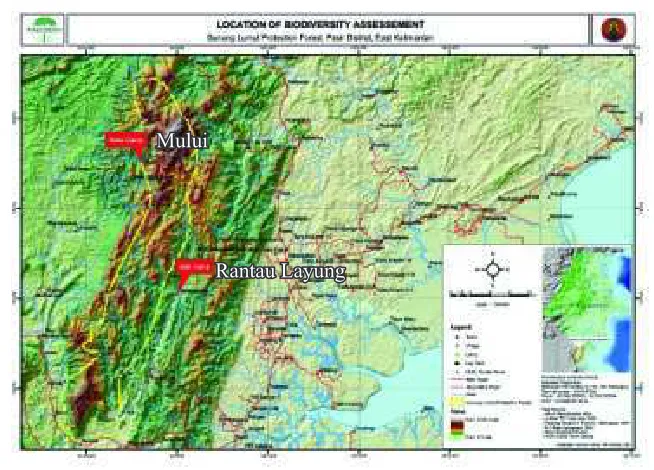
Figure 1. 6JGTGUGCTEJNQECVKQP/WNWKCPF4CPVCW.C[WPI5GVVNGOGPVUNQECVGF YKVJKP CPF CTQWPF VJG )WPWPI .WOWV 2TQVGEVKQP (QTGUV CTGC 2CUKT &KUVTKEV'CUV-CNKOCPVCP2TQXKPEG5QWTEG#PQP[OQWU
B. Data Collection
There were two types of data collected, i.e. primary and secondary data. The primary data were collected through general observation, focused group FKUEWUUKQPU()&CPFRGTUQPCNKPVGTXKGYU)GPGTCNQDUGTXCVKQPYCUEQPFWEVGF to describe the landscape characteristics and the natural resources before taking place the interviews. The observation was also done to cross check VJGKPHQTOCVKQPEQNNGEVGFHTQOVJGEQOOWPKVKGU6JG()&YCUECTTKGFQWV basically to obtain general data from various people representing different groups in the community. Personal interviews were supposed to collect detailed KPHQTOCVKQP QP NQECN RGTEGRVKQP CDQWV HQTGUV CPF EQPUGTXCVKQP CPF ).2( NGICNUVCVWUCUYGNNCUJQWUGJQNFKPEQOGGZRGPFKVWTGUNCPFQYPGTUJKRCPFVJG WUCIGQHPCVWTCNTGUQWTEGU6JGOGVJQFUQHFCVCEQNNGEVKQPYGTGKPKVKCNK\GFD[ a community meeting in the each research site.
literatures were collected from several sources e.g. local government, research institutions, and mass media.
1. %QOOWPKV[OGGVKPI
%QOOWPKV[OGGVKPIKPDQVJTGUGCTEJUKVGUYCUCttended by most of the community elements in each settlement, comprising young and old people, men and women, and customary leaders. During the meeting, participants were
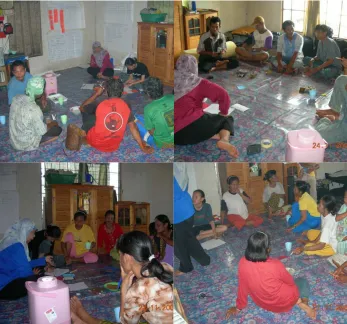
CUMGFVQFKUEWUUJQYVJG[TGEQIPK\GFNCPFV[RGUCTQWPFVJGO+PDQVJXKNNCIGU RGQRNG FGſPGF UQOG NCPF V[RGU KG TKXGT XKNNCIG TKEG ſGNFU ICTFGP HCNNQY [QWPICPFQNFCPFHQTGUV[QWPICPFQNF+PVJKUOGGVKPIHQWTITQWRUQH XKNNCIGTUKPGCEJTGUGCTEJUKVGYGTGRTQRQUGFVQRCTVKEKRCVGKP()&
2. Personal interview
Personal interview was conducted with 15 selected out of 50 households KP4CPVCW.C[WPICPFQWVQHJQWUGJQNFUKP/WNWKWUKPIUGOKUVTWEVWTGF SWGUVKQPPCKTGU+VVQQMVYQVQVJTGGJQWTUHQTGCEJTGURQPFGPVVQſNNQWVVJG SWGUVKQPPCKTGU &KUEWUUKQP HQEWUGF QP NQECN TGUQWTEG WVKNK\CVKQP GI ƀQTC and fauna, perspectives on conservation and protection area, and personal expenditure as an approach to have information on local revenue. In addition, the interview was also accomplished with some key-informants both in Rantau .C[WPICPF/WNWKKPQTFGTVQMPQYJQYRGQRNGOCPCIGVJGKTNCPFCPFPCVWTCN resources. They included the village head, customary leader, old villagers, and informal community leaders like teacher and ustadz +UNCOKEVGCEJGT
3. Focused group discussion
Figure 2. (QEWUGF )TQWR &KUEWUUKQP ()& CEVKXKVKGU YKVJ OGP CDQXG CPF YQOGPDGNQYITQWRRCTVKEKRCPVU
C. Data Analysis
was calculated using the approach of market prices at community level as far as the respondent enable to predict the volume as used and the price per unit.
Household income should be approached through earn generated from both major and minor livelihood. However, this method usually resulted in NQYGT ſIWTG UKPEG VJG TGURQPFGPV QHVGP TGXGCNGF NQYGT GUVKOCVKQP HQT VJGKT income. Therefore, in this case, household income was approached through JQWUGJQNFGZRGPFKVWTGU6JGGZRGPFKVWTGUYGTGENCUUKſGFKPVQVJTGGITQWRU i.e. food, non-food, and production means. If the expenditures were added by saving, we would have an estimated income for each household.
III. RESULTS AND DISCUSSION
A. 2GQRNGCPF.KXGNKJQQF
4CPVCW.C[WPIXKNNCIGKUKPJCDKVGFD[JQWUGJQNFUQTRGQRNGYKVJ RQRWNCVKQPFGPUKV[TGCEJKPICDQWVRGQRNGMO2 &GUC4CPVCW.C[WPI
The dominant ethnic was Paser and most of them were indigenous people. 1PN[XKNNCIGTUJCXGEQORNGVGFVJGKTGNGOGPVCT[UEJQQN5&XKNNCIGTU JCXGſPKUJGFUGEQPFCT[UEJQQN5/2CPFVJTGGRGQRNGJCXGCEEQORNKUJGFJKIJ UEJQQN5/76JGQVJGTUFKFPQVſPKUJGNGOGPVCT[UEJQQNCPFGXGPUQOGQH VJGOPGXGTIQVQUEJQQNCVCNN%WUVQOCT[NCYYCUUVKNNCRRNKGFKPVJGFCKN[NKHG CUVTCFKVKQPCNIWKFGNKPGCPFTWNGUVQFGſPGYJCVKUTKIJVQTYTQPIHQTVJGYJQNG community. Especially in managing natural resources, it was used to classify HQTGUValasKPVQECVGIQTKGUCEEQTFKPIVQKVUHWPEVKQPKGAlas Tuo, Alas Adat, Alas Nareng and Alas Mori&GſPKVKQPUQHVJGUGHQTGUVECVGIQTKGUCTGGZRNCKPGF in the discussion about landscape in the other part of this manuscript. Most of VJGXKNNCIGTUEWNVKXCVGFWRNCPFTKEGſGNFUD[UJKHVKPIEWNVKXCVKQPU[UVGOHQTVJGKT FCKN[JQWUGJQNFEQPUWORVKQP6JG[YGPVHQTJWPVKPICPFſUJKPICPFEQNNGEVKPI PQPVKODGTHQTGUVRTQFWEVU06(2UWEJCUTCVVCPHTWKVUXGIGVCDNGUCPFJQPG[ %QOOWPKVKGUWUWCNN[UGNNVJGUG06(2VQ$CVW-CLCPIVQYPECRKVCNQH$CVW 5QRCPIUWD&KUVTKEV#PQVJGTKORQTVCPVUQWTEGQHKPEQOGHQTJQWUGJQNFUKP VJKUXKNNCIGYCUVKODGTJCTXGUVUOCNNUECNGNQIIKPI(TQOVQ,WPG most of the villagers cut the trees found around the forest area and sometimes GXGPKPUKFGVJG)WPWPI.WOWV2TQVGEVKQP(QTGUV*QYGXGTCHVGT9CPC.GUVCTK operation took place in this area in July 2005 to combat illegal logging, the UOCNNUECNGVKODGTGZVTCEVKQPUKIPKſECPVN[EGCUGF
In Mului, there are 18 households of 121 peoples, most of them belong
VQ2CUGT/WNWKGVJPKEITQWR#PQP[OQWU%JKNFTGPCPF[QWPIRGQRNG
people. Separated from the other villagers, Mului people lived inside the area
QH)WPWPI.WOWV2TQVGEVKQP(QTGUVHTQOYJKEJVJG[ICVJGTGFOCP[V[RGU QHRTQFWEVU/QUV/WNWKRGQRNGEWNVKXCVGFTKEGſGNFKPCUOCNNCTGCvQPGha RGTJQWUGJQNFPGCTVJGKTJQWUGUYJKEJRTQXKFGFKPUWHſEKGPV[KGNFRGT[GCT
for their consumption. People mixed the rice plant with vegetables plant and HTWKVUVTGGU+VUGGOUVJCVCHVGTRGQRNGJCXGNGHVVJGCTGCHQTCPGYTKEGſGNFKV will become a fruit garden or agro-forests in the future. They went hunting at
NGCUVQPEGCOQPVJWUWCNN[WUGFUPCTGCPFCHGYCKTTKƀGU#VVJGUCOGQEECUKQP
they collected young sprouts and mushrooms as well for vegetables. Fishes were also important for local source of protein. Selling fruits, animal, and honey was the main source of income for Mului people. %WUVQOCT[TWNGUEQPEGTPKPI management of natural resources were still important in Mului.
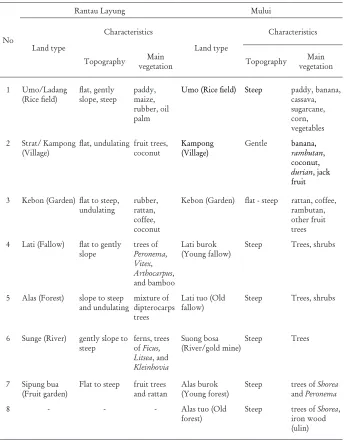
B. Land Types
Table 1. +FGPVKſGF NCPF V[RGU KP 4CPVCW .C[WPI CPF /WNWK KPENWFKPI VJGKT rubber, oil palm
7OQ4KEGſGNF Steep paddy, banana, cassava,
ƀCVWPFWNCVKPI fruit trees, coconut
3 -GDQP)CTFGP ƀCVVQUVGGR undulating
rubber, rattan, coffee, coconut
-GDQP)CTFGP ƀCVUVGGR rattan, coffee, rambutan, other fruit trees 4 .CVK(CNNQY ƀCVVQIGPVN[
slope
Steep Trees, shrubs
5 #NCU(QTGUV slope to steep and undulating
mixture of dipterocarps trees
.CVKVWQ1NF HCNNQY
Steep Trees, shrubs
6 5WPIG4KXGT gently slope to steep
ferns, trees ofFicus, Litsea, and Kleinhovia
Suong bosa 4KXGTIQNFOKPG
Steep Trees
7 Sipung bua (TWKVICTFGP
Flat to steep fruit trees and rattan
Alas burok ;QWPIHQTGUV
Steep trees of Shorea and Peronema
8 - - - #NCUVWQ1NF
HQTGUV
Steep trees of Shorea, iron wood WNKP
garden (sipung bua)VTCFKVKQPCNN[RNCPVGFD[VJTQYKPIURTGCFKPIHTWKVUGGFU QPVJGſGNFYJGPVJGladangKUUVKNNEWNVKXCVGF(CNNQYlatiYCUCPCDCPFQPGF TKEGſGNFKPXCFGFD[CDWPFCPVRKQPGGTRNCPVUVJCVECPDGWUGFCUſTGYQQF +P4CPVCW.C[WPIHQTGUValasYCUENCUUKſGFKPVQHQWTUWDV[RGUQHNCPFUECRGU
i.e. Alas Tuo, Alas Adat, Alas Nareng and Alas Mori. Firstly, Alas Tuo is a forest,
VJGWUCIGQHYJKEJKUPQV[GVQTICPK\GFD[EWUVQOCT[NCYNQECVGFHCTHTQOVJG
settlement with a steep topography. Secondly, Alas AdatEWUVQOCT[HQTGUVKU CHQTGUVCTGCYJGTGKPKVUWUCIGJCUDGGPQTICPK\GFCEEQTFKPIVQEWUVQOCT[NCY
located far from the village with a steep topography. It can not be exploited
CPFEQPXGTVGFVQTKEGſGNFUladang(WTVJGTAlas Nareng is a forest reserved
for ladangCTGCNQECVGFENQUGVQVJGXKNNCIGYKVJIGPVN[UNQRG.CUVN[Alas Mori
is a forest that is believed to be a dangerous place or haunted area, so that the
CTGCECPPQVDGWVKNK\GF
Trees in customary forest could only be cut down for subsistence or self-WUCIG9JGPRGQRNGEWVFQYPVJGVTGGHQTKPEQOGUQWTEGUUGNNVJGYQQFVJG logger have to contributed to the community through customary leader by RC[KPICMKPFQHVCZ4RRGTEWDKEOGVGTO3HQTOGTCPVKShorea URR CPFMCRWTDryobalanops URR4RRGTO3HQTKTQPYQQFEusideroxylon zwageriCPF4RRGTO3 for other species. Nowadays, this customary
regulation has not been valid anymore since the timber production activity was terminated.
C. Community Perception
1. Perception on forest and conservation
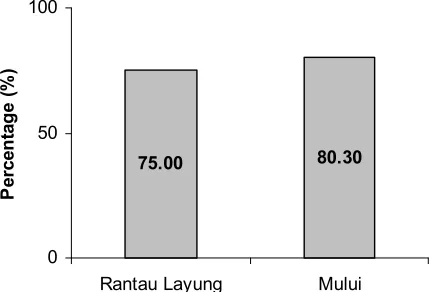
.QECNRGTEGRVKQPQPHQTGUVCPFEQPUGTXCVKQPYGTGOGCUWTGFQTRGTEGKXGF CEEQTFKPI VQ VJG EQOOQP RTKPEKRNGU QH EQPUGTXCVKQP .GXGN QH RQUKVKXG RGTEGRVKQPEQTTGEVCPUYGTDTQWIJVQWVD[EQOOWPKVKGUCV4CPVCW.C[WPI and Mului villages on forest and conservation is presented on Figure 3.
75.00 80.30
0 50 100
Rantau Layung Mului
P
e
rc
e
n
ta
g
e
(
%
)
Figure 3. .QECNRQUKVKXGRGTEGRVKQPQPHQTGUVCPFEQPUGTXCVKQPD[EQOOWPKVKGUCV VYQTGUGCTEJUKVGU4CPVCW.C[WPICPF/WNWK
In general, the correct or positive perception brought out by local community is high and the difference between two villages is relatively small XU2GQRNGKP4CPVCW.C[WPICPF/WNWKEQPſTOGFVJCVHQTGUV provides many resources for their daily livelihood. Therefore, they convinced that forest needs to be conserved.
#NNTGURQPFGPVUKP/WNWKCPFTGURQPFGPVUKP4CPVCW.C[WPI agreed with forest conservation. It was also interesting to note that more than JCNHKP/WNWKCPFKP4CPVCW.C[WPITGURQPFGPVUFKFPQVVJKPMVJCV their hunting activity would lead to animal extinction.
2. 2GTEGRVKQPQPNGICNUVCVWUQHVJG)WPWPI.WOWV2TQVGEVKQP(QTGUV the forest. For those who did not know either the decree or the borders, we told them the actual information concerning those issues and asked for their CITGGOGPV/QUVQHVJGTGURQPFGPVUCITGGFYKVJVJGFGETGGCPFQPN[VJTGG TGURQPFGPVUCITGGFYKVJVJGDQTFGTU/QUVTGURQPFGPVUEQWNFPQVCPUYGT whether or not they agreed with the borders of the protection forest since they FKFPQVENGCTN[MPQYYJGTGVJGDQTFGTUCTG+P/WNWKHQWTTGURQPFGPVU MPGYCDQWVVJGFGETGGCPFPKPGTGURQPFGPVUMPGYCDQWVDQTFGTUQHVJG HQTGUV5GXGPTGURQPFGPVUCITGGFYKVJVJGFGETGGCPFVJGDQTFGT
By calculating positive responses in each research site and dividing them with the total positive answers of all questions, we obtained relative level of MPQYNGFIGCPFRGTEGRVKQPQHVJGTGURQPFGPVQPVJGNGICNUVCVWUQHVJG).2(
Rantau Layung Mului
L
%QOOWPKV[KP/WNWKJCFJKIJGTMPQYNGFIGCPFRQUKVKXGRGTEGRVKQPQP VJGNGICNUVCVWUQH).2(EQORCTGFYKVJVJQUGKP4CPVCW.C[WPI6JKUOKIJV be due to local dependency on nature resources and the accessibility of those two village sites to information from outsiders. Mului people, who live inside the protection area, spent more times in the forest and collect forest products HQTVJGKTFCKN[PGGFU9KVJVJGKTJKIJGTFGRGPFGPE[QPPCVWTCNTGUQWTEGUVJG[ experienced better informal knowledge on the protection forest.
In addition, there was logging road connecting Mului to other places so that villagers had better opportunity to interact with outsiders and improve their knowledge on any issues concerning protection forest. In contrast, Rantau .C[WPIXKNNCIGJCFXGT[NKOKVGFCEEGUUCPFYCUEQPPGEVGFVQQWVUKFGTUQPN[D[ a poorly constructed road.
&KUEWUUKPIUQEKCNK\CVKQPCPFQTGZVGPUKQPCDQWVVJGNGICNUVCVWUQH).2( EQPFWEVGFD[TGNCVGFKPUVKVWVKQPHQWTTGURQPFGPVUKP4CPVCW.C[WPI OGPVKQPGFVJCVVJG[TCTGN[QDVCKPGFVJGGZVGPUKQPTGURQPFGPVUUVCVGF PGXGTCPFPQPGQHVJGTGURQPFGPVUIQVVJGGZVGPUKQPHTGSWGPVN[+P/WNWKſXG TGURQPFGPVUUVCVGFVJCVVJG[IQVVJGGZVGPUKQPTCTGN[UKZTGURQPFGPVU CPUYGTGF PGXGT CPF PQPG QH VJG TGURQPFGPVU QDVCKPGF VJG GZVGPUKQP frequently. The description above indicated that the community in Rantau .C[WPIYCUNGUUTGCEJGFD[VJGQWVUKFGTGZVGPUKQPYQTMGT+PXQNXGOGPVQHVJG both communities in creating the borders for the protection forest was low. 6JGTGYGTGQPN[VJTGGTGURQPFGPVUKP4CPVCW.C[WPICPFQPGTGURQPFGPV KP/WNWKQPEGKPXQNXGFKPVJGCEVKXKV[
D. Natural Resources and Local Utilization
#UVJG/WNWKCPF4CPVCW.C[WPIUGVVNGOGPVUCTGNQECVGFKPUKFGCPFPGCT VJG)WPWPI.WOWV2TQVGEVKQP(QTGUVEQOOWPKVKGUKPDQVJXKNNCIGUJCXGJKIJ dependency on the surrounding forest resources which cover wood and non-wood forest products including animals. The uses of forest resources are direct JQOGEQPUWORVKQPCPFKPFKTGEVECUJGCTPKPIYJKEJECPDGECNEWNCVGFWUKPI approach to the market prices at community level. In this report, the forest products used by the communities were differentiated into two groups, i.e. ƀQTCCPFHCWPC
1. 4GUQWTEGUQHƀQTC
as source of income which is usually sold either inside or outside the village during the period of 1995 to the midst of 2005.
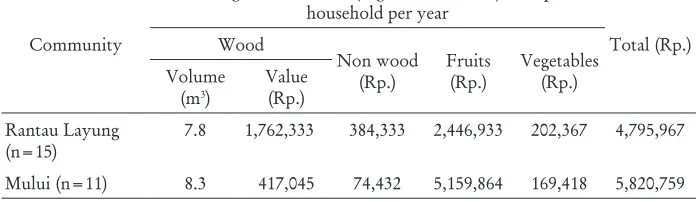
Non-wood forest products, particularly rattan and bamboo, were used for NKIJVEQPUVTWEVKQPCPFQTHWTPKVWTGVQQNUCPFCNUQCUCUQWTEGQHJQWUGJQNF KPEQOG /QUV QH HQTGUV HTWKVU UWEJ CU FWTKCP Durio zibethinuscempedak Artocarpus integerCPFleiDurio kutejensisYGTGUQNFVQVJGPGCTGUVOCTMGV KG$CVW5QRCPIHQT4CPVCW.C[WPICPF5YCP5NWVWPIHQT/WNWK8GIGVCDNGU were only used for household consumption in both research sites. Average value QHVJGƀQTCHQTGUVXGIGVCVKQPOCVVGTUWUGFD[EQOOWPKV[KP4CPVCW.C[WPI and Mului can be seen in Table 2.
Table 2. #XGTCIG XCNWG QH VJG HQTGUV HNQTC XGIGVCVKQP OCVVGTU WUGF D[ EQOOWPKV[KP4CPVCW.C[WPICPF/WNWK
%QOOWPKV[
#XGTCIGXCNWGQHƀQTCXGIGVCVKQPOCVVGTUWUGFRGT household per year
6QVCN4R
7.8 1,762,333 384,333 2,446,933 202,367 4,795,967
/WNWKP 8.3 417,045 74,432 5,159,864 169,418 5,820,759
Note: n= number of respondent
%QOOWPKV[KP/WNWKFKFPQVUGNNYQQFHTQOVJGHQTGUVVJG[OCKPN[WUGF YQQFHQTEQQMKPIſTGYQQF$GUKFGVJG[CNUQWUGFYQQFHQTOCKPVCKPKPI their houses. Their houses were built by the District Social Services in 1999 when the sub village was established as a resettlement area. Therefore, they WUGFUOCNNXQNWOGQHYQQFHQTNKIJVEQPUVTWEVKQPKPENWFKPIJWVKPVJGKTſGNFU %QOOWPKVKGUKPDQVJUGVVNGOGPVCTGCUCNUQEQPUWOGFXGIGVCDNGUICVJGTGFHTQO the forest.
Apart from those marketable resources of forest plants gathered by VJG EQOOWPKV[ KP 4CPVCW .C[WPI CPF /WNWK VJGTG YGTG QVJGT KORQTVCPV WVKNK\CVKQPU VJQWIJ RGQRNG PGXGTEQPUKFGT VJGO VQ UGNN CPF DW[ UWEJ CU VTCFKVKQPCN OGFKEKPG VQQNU DCUMGVT[ QTPCOGPVTKVWCN JWPVKPI RNCEG CPF JWPVKPIVQQNU%QORNGVGFGUETKRVKQPQHVJQUGWUGHWN plants in detail including species, category of use, habitat preference, parts being used, and availability in the nature is very important for the plants species conservation. Habitat of EGTVCKPURGEKGUYCUTGƀGEVGFD[VJGURGEKſERNCEGYJGTGVJGURGEKGUICVJGTGFD[ VJGEQOOWPKV[6JGCXCKNCDKNKV[QHKORQTVCPVRNCPVUYCUKPƀWGPEGFD[OGVJQF of harvesting, regeneration as well as growth rate of the species. Destructive way in harvesting of certain fruit bearing trees, for instance by cutting down the branch and even the tree, will decrease the species population.
6JGTGYGTGKFGPVKſGFURGEKGUQHRNCPVUHTQOVJGVQVCNQHYKFGN[ WUGFD[EQOOWPKV[KP4CPVCW.C[WPI+VEQPUKUVGFQHHCOKN[CPFV[RGU QHƀQTCVTGGENKODGTRCNODCODQQUJTWDJGTDCPFHWPIK6JGHCOKN[QH 2CNOCGJCFVJGJKIJGUVPWODGTQHURGEKGUURGEKGUWUGFD[VJGEQOOWPKV[ HQNNQYGFD[/QTCEGCGURGEKGUCPF.GIWOKPQUCGURGEKGU6JGRNCPVUYGTG used mostly for food, medicine and construction including heavy, light, and DQCVEQPUVTWEVKQPUGKVJGTHQTUWDUKUVGPEGQTHQTEQOOGTEKCNWUGUCUUQWTEGQH KPEQOG2CTVUQHVJGRNCPVUCUOQUVHTGSWGPVN[WUGFYGTGUVGOHTWKVCPFTQQV It was noted that many species had two or more useful parts, for example walor or Nauclea subditaVJGTQQVVJGDCTMVJGNGCXGUCPFVJGUCR
Data on the dynamic availability of the useful plants indicates that population of several species which tended to decrease were bekokal Saraca declinata gaharu Aquilaria malaccensis kapur/sintuk Dryobalanops lanceolatakeramu Dacryodes rostratakeranji Dialium sppperari Neolitsea spCPFulin Eusideroxylon zwageri&GETGCUGKPVJGRQRWNCVKQPQHgaharu and keranji was closely related to the local harvesting system. So far, a traditional way in collecting gaharu/eagle wood was by cutting down the stump whenever RGQRNGſPFVJGtree since none of them knows exactly which tree contains the gaharu. Fruits of keranji are small and abundant so the villagers usually cut the tree to make fruit gathering easier. However, the villagers were aware of that impact and tried to stop the destructive harvesting method through customary regulation. It was said that when someone was cutting the keranji tree, he or she has to share 50% of the yield with the community through customary leader. If KVJCRRGPUHQTVJGUGEQPFQEECUKQPVYQVJKTFQHVJG[KGNFJCUVQDGIKXGP to the community and for the third occasion, the customary leader will take them all away.
WUGHQTNQECNRGQRNG1XGTCNNKVYCUTGEQTFGFVJCVRNCPVUURGEKGUYGTGWUGF KPFCKN[/WNWKRGQRNGNKHG+PVJKUTGUGCTEJCUOCP[CUQWVQHCNNTGEQIPK\GF RNCPVUYGTGEQNNGEVGFCPFKFGPVKſGF2GQRNGEQNNGEVGFVJQUGRNCPVUOCKPN[HTQO VJGHQTGUVYJKNGCHGYYGTGEQNNGEVGFHTQOJQOGICTFGPCITKEWNVWTCNſGNFTCVVCP garden, and bushes.
#XCKNCDKNKV[QHVJGƀQTCWUGFD[/WNWKRGQRNGYCUTGRQTVGFCUPWOGTQWU HQTOQUVURGEKGU6JGTGYGTGQPN[UQOGURGEKGUQHƀQTCHQWPFKPUOCNNPWODGT of population in periods of past, present, and future. Bamboo, jombuCMKPF QHVTGGCPFluyanCMKPFQHENKODGTHQTGZCORNGYGTGTGRQTVGFCUFGETGCUKPI recently. In addition, local people believed that the number of new domesticated URGEKGUQHƀQTCGITCVVCPCPFDCODQQYQWNFKPETGCUG
2. Resources of fauna
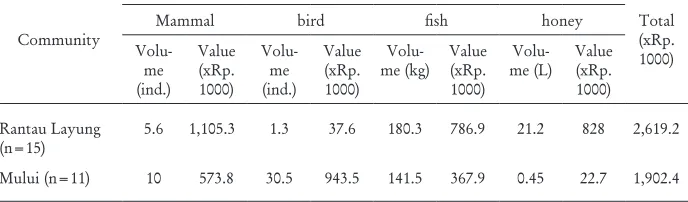
(QTGUVCPKOCNUQTVJGKTRTQFWEVUWVKNK\GFD[EQOOWPKV[KP4CPVCW.C[WPI and Mului villages can be distinguished into four categories, i.e. mammal, bird, ſUJCPFQVJGTUOCKPN[JQPG[CUCRTQFWEVQHDGGU5RGEKGUQHOCOOCNUHTGSWGPVN[ WVKNK\GFD[OQUVXKNNCIGTUYGTGrusa Cervus unicolorkijang Muntiacus muntjak kancilTragulus napuCPFtrenggilingManis javanicaYJKNGURGEKGUQHDKTFU covered ayam hutan Lophura ignitalembukon Chalcophaps indicamerak Argusianus argusCPFlensioRollulus rouloul4KXGTſUJGUYGTGICVJGTGFD[ OQUVXKNNCIGTUKP4CPVCW.C[WPIUKPEGVJGUGVVNGOGPVCTGCKUXGT[ENQUGVQVJG river. Some species of mammals, birds, and honey were used for daily household consumption and some others were sold to the nearest market as a source of JQWUGJQNF KPEQOG /QUV QH ſUJGU YGTG QPN[ WUGF HQT HQQF CPF TCTGN[ UQNF #XGTCIGXCNWGQHHCWPCCPKOCNŌTGNCVGFOCVVGTUWUGFD[EQOOWPKV[KP
Rantau
.C[WPICPF/WNWKECPDGUGGPKP6CDNG
Table 3. #XGTCIGXCNWGQHVJGHQTGUVHCWPCCPKOCNŌTGNCVGFOCVVGTUWUGFD[ EQOOWPKV[KP4CPVCW.C[WPICPF/WNWK
Mammal bird ſUJ honey
Volu-5.6 1,105.3 1.3 37.6 180.3 786.9 21.2 828 2,619.2
Most people in Mului were skillful hunters and they caught more mammals CPF DKTFU VJCP 4CPVCW .C[WPI RGQRNG 'CEJ JQWUGJQNF WUGF KPFKXKFWCN mammals and 30.5 birds in average per year or almost one mammal and 2.5 birds per month. Again, this could be understood as the Mului people are living inside the protection forest area so that they could easily got access to animal TGUQWTEG*QYGXGTVJG[QPN[EQNNGEVGFJQPG[CRRTQZKOCVGN[ſXGNKVGTUKPC [GCTYJKEJYCUOWEJNQYGTVJCPVJCVEQNNGEVGFD[4CPVCW.C[WPIRGQRNG
Apart from those marketable resources of forest animals gathered by the EQOOWPKV[KP4CPVCW.C[WPICPF/WNWKVJGTGYGTGQVJGTKORQTVCPVWVKNK\CVKQPU VJQWIJRGQRNGPGXGTEQPUKFGTVJGOVQUGNNUWEJCUVTCFKVKQPCNOGFKEKPGTKƀG, andQTPCOGPVTKVWCN+FGPVKſECVKQPQHVJQUGWUGHWNCPKOCNUKPFGVCKNUKPENWFKPI species, uses, parts being used, the way of catching, and availability in nature is XGT[KORQTVCPVCUCRQKPVKPFGXGNQRKPICPFQTEQPUGTXKPIVJGCPKOCNURGEKGU Preference site to stay for certain species was correlated with the animal habits CPF TGƀGEVGF D[ URGEKſE RNCEG YJGTG VJG CPKOCNU YGTG QHVGP ECWIJV D[ VJG EQOOWPKV[6JGKORQTVCPVCPKOCNCXCKNCDKNKV[KUKPƀWGPEGFD[OGVJQFCPF PWODGTQHJCTXGUVKPICPFDTGGFKPITCVGQHVJGURGEKGU1XGTECVEJKPIQHHQTGUV animals will lead to decrease in the species population.
&CVCQPF[PCOKECXCKNCDKNKV[QHUGXGTCNCPKOCNUKP4CPVCW.C[WPIUJQYUVJCV they tended to decrease in the coming years. Some local people mentioned that ſUJRQRWNCVKQPKP-CUWPIG4KXGTYCUFGETGCUKPIEQORCTGFVQVJCVQH[GCTU ago and it is even going to be less available in the future. This may be affected D[VJGJCTXGUVKPIOGVJQFRGQRNGWUGFUWEJCUPGVCPFGNGEVTKEſUJECVEJGTYJKEJ ECVEJGUſUJHTQOVJGYJQNGUK\GKPENWFKPIVJGUOCNNQPGU*QPG[RTQFWEVKQP was also reported to decrease compared to that of 10 years ago and it will EQPVKPWGFGETGCUKPI2TQFWEVKQPQHJQPG[KUTGNCVGFVQVJGCXCKNCDKNKV[QHƀQYGT DGCTKPIVTGGUCUUQWTEGUQHDGGHQTCIGYJKEJKUKPƀWGPEGFD[NQIIKPICEVKXKV[ +PVJGRGTKQFQHVQVJGTGYCUCUOCNNUECNGEQPEGUUKQP+72**-CTQWPF 4CPVCW .C[WPI XKNNCIG +P CFFKVKQP NQIIKPI CEVKXKVKGU EQPFWEVGF D[ NQECN RGQRNG KP 4CPVCW .C[WPI FWTKPI VQ CNUQ EQPVTKDWVGF VQ VJG FGETGCUGQHRQRWNCVKQPQHƀQYGTDGCTKPIVTGGU1VJGTCPKOCNURGEKGUYKVJVJGKT population were reported to decrease were kancilOQWUGFGGTTragulus URCPF TWUCUCODCTFGGTCervus unicolor
2GQRNGKP/WNWKKFGPVKſGFCPKOCNURGEKGUWUGFKPVJGKTNKXGNKJQQF6JG[ YGTGOQUVN[DKTFUCPFOCOOCNUCNVJQWIJTGRVKNGUCPFſUJGUYGTGCNUQTGEQTFGF People consumed most of them except reptiles, and sold big mammals such as
rusaCervus unicolorand birds e.g. tiungGracula religiosa. Some animals were
/WNWKXKNNCIGTUJWPVGFOCOOCNUDKTFUCPFTGRVKNGUKPVJGHQTGUVURGEKſECNN[ in salt springs, and shrubs near their settlement. Fish and mollusk were caught in Suong BosaCPF/WNWK4KXGTU5RGEKſECPKOCNUWEJCUDCVUYCUEQNNGEVGFKP few caves of Mount Tekedey.
The fact, as previously described, that Mului people were good hunters and VJG[NKXGFKPUKFG).2(UJQWNFDGVCMGPKPVQEQPUKFGTCVKQPKPVJGOCPCIGOGPV QH).2(2GQRNGUJQWNFDGCYCTGVJCVVJGTGCTGOCP[CPKOCNURGEKGUYJKEJ are endangered and protected by Indonesian law. Particular species such as sun DGCTUHelarctos malayanusKUCPGZCORNGQHVJGGPFCPIGTGFCPKOCNU5CNGJ DWVCVVJGUCOGVKOGTGOCKPKORQTVCPVHQTNKXGNKJQQFKP/WNWK
Rantau Layung Mului
T
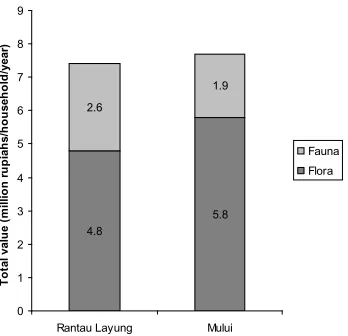
Figure 5. 6QVCNXCNWGQHƀQTCCPFHCWPCWVKNK\GFD[VJGEQOOWPKVKGUKP4CPVCW .C[WPICPF/WNWKRGTJQWUGJQNFRGT[GCT
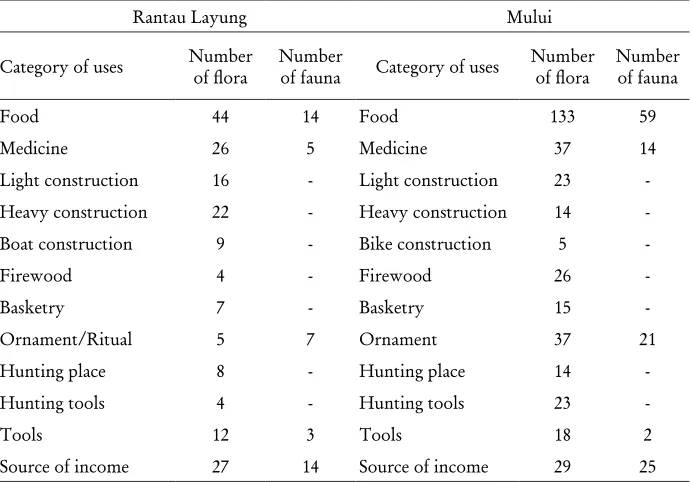
maker in managing the area. If the area is damaged and the forest becomes FGITCFGFUQOGKORQTVCPVWUGUYKNNDGFKOKPKUJGFCPFVJGEQOOWPKV[CPFQT the local government have to look for other sources to substitute for the lost DGPGſV%CVGIQTKGUQHWUGUQHƀQTCCPFHCWPCD[EQOOWPKV[KP4CPVCW.C[WPI and Mului including number of useful fauna by each category are described in Table 4.
Table 4. %CVGIQTKGU QH WUGU QH PCVWTCN TGUQWTEG D[ EQOOWPKV[ KP 4CPVCW .C[WPI CPF /WNWK KPENWFKPI PWODGT QH WUGHWN ƀQTC CPF HCWPC D[ each category
4CPVCW.C[WPI Mului
%CVGIQT[QHWUGU Number
QHƀQTC
Number
of fauna %CVGIQT[QHWUGU
Number QHƀQTC
Number of fauna
Food 44 14 Food 133 59
Medicine 26 5 Medicine 37 14
.KIJVEQPUVTWEVKQP 16 - .KIJVEQPUVTWEVKQP 23
-Heavy construction 22 - Heavy construction 14
-Boat construction 9 - Bike construction 5
-Firewood 4 - Firewood 26
-Basketry 7 - Basketry 15
-1TPCOGPV4KVWCN 5 7 1TPCOGPV 37 21
Hunting place 8 - Hunting place 14
-Hunting tools 4 - Hunting tools 23
-Tools 12 3 Tools 18 2
Source of income 27 14 Source of income 29 25
E. Household Income and Expenditure Pattern
saving. It explains that the shifting cultivation system carried out in those two areas uses very low input. They never buy, for example, good quality seeds or UGGFNKPIUHGTVKNK\GTCPFQTRGUVKEKFGGZEGRVCUOCNNXQNWOGQHJGTDKEKFG0CVWTCN fertility of forest land was the dominant input for their agricultural crops.
Table 5. *QWUGJQNFGZRGPFKVWTGUUCXKPICPFCPGUVKOCVGFKPEQOGOGCPXCNWG per year
%QOOWPKV[ 'ZRGPFKVWTGU4R[GCT 5CXKPI4R [GCT
Estimated income 4R[GCT Food Non-food Production
means
4CPVCW.C[WPI P
6,040,854 5,248,185 289,538 273,846 11,852,423
/WNWKP 3,715,164 2,487,295 34,091 472,727 6,709,277
%QORCTKUQP DGVYGGP GZRGPFKVWTGU HQT HQQF CPF HQT PQPHQQF D[ VJQUG two communities was quite similar. People spent their money to buy non-food necessities a bit less than a number of money for food. So, they have considered and allocated a proportional amount of money to buy clothes, medicines, tolls, etc.
Rantau Layung Mului
V
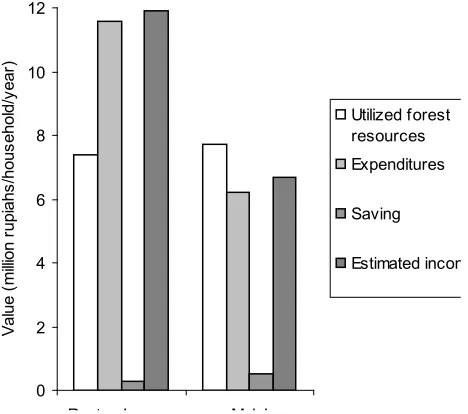
The two communities generated their cash income mostly from selling forest RTQFWEVUOCKPN[PQPYQQFHQTGUVRTQFWEVU+P4CPVCW.C[WPIEQOOWPKV[ŏU cash income was much higher than the value of total forest product gathered, YJKNGKP/WNWKKVYCUUNKIJVN[HGYGTUGG(KIWTG#NVJQWIJVJGVQVCNXCNWGQH HQTGUVRTQFWEVICVJGTGFD[VJQUGEQOOWPKVKGUEQORTKUGUFKTGEVVJGOCVGTKCN WUGFFKTGEVN[CPFKPFKTGEVWUGFVJGOCVGTKCNUQNFHQTECUJKPEQOGVJKUſIWTG UJQYU VJCV EQOOWPKV[ KP 4CPVCW .C[WPI JCU QVJGT KORQTVCPV UQWTEGU QH income such as rattan, rubber and timber.
6CDNGUJQYUVJCVGUVKOCVGFEQOOWPKV[KPEQOGUKP4CPVCW.C[WPICPF Mului are 11.85 and 6.71 million rupiahs per household per year, respectively. 'CEJJQWUGJQNFKP4CPVCW.C[WPICPF/WNWKEQPUKUVGFQHCRRTQZKOCVGN[HQWT and six people so that we can assume the average income per capita was 2.96 OKNNKQPTWRKCJUHQT4CPVCW.C[WPIRGQRNGCPFOKNNKQPTWRKCJUHQT/WNWK RGQRNG6JGKPEQOGRGTECRKVCYCUNQYGTVJCP)&42)TQUU&QOGUVKE4GIKQPCN 2TQFWEVRGTECRKVCQH2CUKT&KUVTKEVDCUGFQPCEQPUVCPVRTKEGCUOWEJCU 4ROKNNKQP+VYCUOWEJNQYGTVJCP)&42RGTECRKVCQH2CUKT&KUVTKEVDCUGF QPCXCNKFRTKEGKG4ROKNNKQP$25-CDWRCVGP2CUKT
An alternative way to improve these low community incomes in both 4CPVCW.C[WPICPF/WNWKKUD[ETGCVKPICPCFFGFXCNWGQHPQPVKODGTHQTGUV RTQFWEVU06(2UWEJCUHTWKVUTCVVCPCPFJQPG[#FFGFXCNWGQHVJQUG06(2 will be gained through application of post harvesting technologies. The raw materials should be processed into a half or a ready made good. Rattan can be made and sold as mats while honey should be sold in a desired packet. Durian and lei, for example, should be processed into lempo and sold it in a nice packet. 6QTGCNK\GVJKUOCVVGTVJGNQECNEQOOWPKVKGUPGGFCURGEKſEVTCKPKPIVQKORTQXG their skill. Sardjono, et alCNUQUWIIGUVVQKORTQXGVJG06(2ICVJGTKPI method and to develop the post harvesting technology.
F. Threats and Opportunities to the GLPF
6JG ).2( RTQXKFGU OCP[ DGPGſVU HQT DQVJ UWTTQWPFKPI EQOOWPKVKGU and outsiders, either tangible or intangible. To guarantee the sustainability of VJGDGPGſVUVJGEQPUGTXCVKQPCTGCJCUVQDGOCKPVCKPGF+PQTFGTVQOCPCIG VJG ).2( KP C UWUVCKPCDNG OCPPGT CEVWCN CPF RQVGPVKCN VJTGCVU CU YGNN CU QRRQTVWPKVKGUVQVJGEQPFKVKQPQHVJGEQPUGTXCVKQPCTGCPGGFVQDGKFGPVKſGF
1. Threats
and the neighboring areas became their target. If the existing HPHs are not RTQRGTN[EQPVTQNNGFKNNGICNNQIIKPID[VJG*2*UYKNNQEEWTKPVJG).2(
Small-scale logging, either by local community or by outsider was another threat to the protection area. As an example, small-scale logging had been EQPFWEVGFD[4CPVCW.C[WPIEQOOWPKV[FWTKPIVJGRGTKQFQHVQOKFQH YKVJVJGECRCEKV[QHVQEWDKEOGVGTURGTVGCOCOQPVJVJGTGYGTG CDQWVVGCOU#UUWOKPIVJGNQIIKPIQRGTCVGFHQTOQPVJUKPC[GCTVJG amount of wood gathered would be 2,000 cubic meter per year. If volume of one tree is equivalent to four cubic meter of wood, then 500 trees had been EWVFQYPKPC[GCTQTVTGGUKP[GCTU9KVJOQTGXKNNCIGUCTQWPFVJG ).2(ECTT[KPIQWVVJGUCOGCEVKXKV[VJGPVJGPGICVKXGKORCEVVQTGUQWTEGUYKNN DGOQTGUKIPKſECPVCPFVJG).2(OCPCIGOGPVUJQWNFVCMGVJKUKPVQCEEQWPV Shifting cultivation practices is a traditional agriculture system that would be sustainable as long as growth of population is low to limit clearance of HQTGUVGFCTGCHQTTKEGſGNF*QYGXGTJKIJRQRWNCVKQPITQYVJKPXKNNCIGUCTQWPF VJG).2(YKNNKPETGCUGNQECNPGGFHQTCITKEWNVWTCNNCPF6JKUYKNNUWDUGSWGPVN[ NGCF VQ HQTGUV ENGCTKPI 6JG ).2( YKNN RQUUKDN[ DG WVKNK\GF YJGP PQ OQTG forests outside the protection area is available for this traditional agriculture.
$QQOQHQKNRCNORNCPVCVKQPKP'CUV-CNKOCPVCPTGCEJGFCTQWPFVJG).2( /QUVXKNNCIGTUKP4CPVCW.C[WPICPFRTQDCDN[EQOOWPKVKGUKPQVJGTXKNNCIGU CTQWPFVJG).2(YGTGGCIGTVQFGXGNQRQKNRCNORNCPVCVKQP+PVJGECUGQH4CPVCW .C[WPIEQOOWPKV[UQOGRGQRNGRTQRQUGFVQFGXGNQRQKNRCNORNCPVCVKQPVQ 'UVCVG%TQR&KUVTKEV5GTXKEGU5QHCTVJG[CITGGFDWV(QTGUVT[&KUVTKEV5GTXKEGU FKFPQVUKPEGVJGCTGCKUENQUGVQVJG).2(CPFENCUUKſGFKPVQHQTGUVT[RNCPVCVKQP CTGC Kawasan Budidaya Kehutanan *QYGXGT VJG EQOOWPKV[ EQPVKPWGF VT[KPIVQGUVCDNKUJVJKUEQOOGTEKCNGUVCVGETQRRNCPVCVKQP1PEGVJGRNCPVCVKQP GZKUVUCTQWPFVJG).2(KVYKNNGZVGPFHCUVCPFOQUVRQUUKDN[GPETQCEJKPVQ the protection area.
Hunting activities was one important source of income for communities in the research sites. There was no control for hunting activity which has been CRRNKGFGKVJGTYKVJKPQTCTQWPFVJG).2(5KPEGVJGTGYGTGOCP[GPFCPIGTGF URGEKGUNKXKPIKPCPFCTQWPFVJG).2(KORNGOGPVCVKQPQHVJGJWPVKPITGIWNCVKQP in the area is a must.
#HGYRGQRNGKPTGUGCTEJUKVGUJCFMPQYNGFIGQPVJG).2(DQTFGTUCPF most of them believed that the forest next to settlement was their customary NCPF.CEMQHMPQYNGFIGQPUVCVWUCPFVJGTQNGQHRGQRNGNKXKPIKPUKFGVJG).2( OC[ECWUGEQPƀKEVUCOQPIUVCMGJQNFGTUCPFVJWUYKNNFKUVWTDVJGHQTGUVU
protection forest, and connecting Swan Slutung village to the main road created QRGPCEEGUUVQVJG).2(HTQOYJKEJCP[QPGKPENWFKPIQWVUKFGTUEQWNFGCUKN[ extract forest resources. The use of this logging road should be well monitored KPQTFGTVQOKPKOK\GVJGHQTGUVFKUVWTDCPEGU
2. 1RRQTVWPKVKGU
There were some customary rules closely related to conservation, in which RGQRNG KP DQVJ XKNNCIGU UVKNN HQNNQY +P 4CPVCW .C[WPI HQT GZCORNG RGQRNG TGEQIPK\GFQPGHQTGUVECVGIQT[KGAlas Mori which was believed as sacred area since ancient spirits still remain. Nobody may disturb this area otherwise they would get punishment, e.g. getting sick. In Mului, people were prohibited to EWVCPFUGNNVTGGU+VYCUQPN[CNNQYGFHQTUOCNNEQPUVTWEVKQPJQWUGTGRCKTKPI GVE6JGUGNQECNYKUFQOUPGGFVQDGOCKPVCKPGFCPFECPDGKPVGITCVGFKPVQVJG management plan of the protection area.
0CVWTCNTGUQWTEGUKP4CPVCW.C[WPICPF/WNWKYGTGRQVGPVKCNN[JKIJHTQO which some alternatives of livelihoods can be developed to support local source QH KPEQOG #RCTV HTQO TCVVCP UQOG RGQRNG KP 4CPVCW .C[WPI YGTG VT[KPI to establish rubber plantation in their garden. Some others were collecting CPF UGNNKPI JQPG[ KP VTCFKVKQPCN YC[U .QECN IQXGTPOGPV CPF QVJGT TGNCVGF institutions should take these into their account by training local people to increase the added value of their products.
+PCFFKVKQPEWUVQOCT[NGCFGTKP4CPVCW.C[WPIUWIIGUVGFVJCVCRQVGPVKCN spring water near the mouth of Prayan River can be developed, if there are any helps, to provide clean and clear water for local people. In Mului, natural resources and local culture may be improved into ecotourism activities.
IV. CONCLUSIONS AND RECOMMENDATIONS
A. Conclusions
1. /WNWKUGVVNGOGPVYCUNQECVGFKPUKFGVJG)WPWPI.WOWV2TQVGEVKQP(QTGUV ).2(CPFOQTGCEEGUUKDNGVJCP4CPVCW.C[WPIXKNNCIGYJKEJKUQWVUKFG the protection area. Education level of both communities was very low. Most people did not accomplish elementary school yet or even never went to school at all.
3. /WNWKRGQRNGYJQNKXGFKPUKFGVJG).2(JCFJKIJGTRQUKVKXGRGTEGRVKQP QPHQTGUVCPFEQPUGTXCVKQPCUYGNNCUQPNGICNUVCVWUQHVJG).2(EQORCTGF VQ4CPVCW.C[WPIRGQRNGYJQNKXGFQWVUKFGVJGRTQVGEVKQPCTGC
4. 'ZVGPUKQP QP WVKNK\CVKQP CPF EQPUGTXCVKQP QH PCVWTCN TGUQWTEGU KP DQVJ TGUGCTEJUKVGUYCUTCTGN[WPFGTVCMGP%QOOWPKVKGUŏKPXQNXGOGPVKPHQTGUV management was low.
5. 'EQPQOKEEQPVTKDWVKQPQHVJG).2(TGUQWTEGUOCKPN[PQPVKODGTHQTGUV RTQFWEVUVQVJGNQECNNKXGNKJQQFUYCUUKIPKſECPVKGUGXGPVQGKIJVOKNNKQPU rupiah per household per year. Plant resources contributed two to three times higher than animal resources.
6. Most non timber forest products gathered from forest were sold as raw materials. No post harvesting technology had been applied to gain an added value of the products.
7. 'UVKOCVGF KPEQOG RGT ECRKVC QH 4CPVCW .C[WPI CPF /WNWK RGQRNG YGTG CPFOKNNKQPUTWRKCJTGURGEVKXGN[+VYCUOWEJNGUUVJCP)TQUU Domestic Regional Product per capita of Pasir Regency.
8. /QTGVJCPQHGZRGPFKVWTGUD[4CPVCW.C[WPICPF/WNWKRGQRNGYGTG allocated for food, while investment for production means was only 1.5% of the total expenditure. Shifting cultivation in those two settlements was managed with very low input and there was almost no technology applied. 9. 5GXGTCNRQVGPVKCNVJTGCVUVQUWUVCKPVJG).2(YGTGKFGPVKſGFKGGZKUVKPI
DKI EQPEGUUKQPU *2*U CTQWPF VJG RTQVGEVKQP CTGC UOCNNUECNG NQIIKPI activities, boom of oil palm plantation, and shifting cultivation practices as well as hunting activities.
10. 0CVWTCNTGUQWTEGUKP4CPVCW.C[WPICPF/WNWKUWEJCURNCPVUCPFCPKOCNU resources including culture and local wisdom can be potentially developed to support local livelihoods.
B. Recommendations
1. 6QKORTQXGCEEGUUKDKNKV[VQ4CPVCW.C[WPIXKNNCIGCPFKPETGCUGMPQYNGFIG QH4CPVCW.C[WPICPF/WNWKRGQRNGKVKUPGEGUUCT[VQFGXGNQRKPHTCUVTWEVWTG facilities covering road, education, and health facilities.
2. 'ZVGPUKQPUQPWVKNK\CVKQPCPFEQPUGTXCVKQPQHPCVWTCNTGUQWTEGUCUYGNNCU RWDNKECYCTGPGUUQPVJG)WPWPI.WOWV2TQVGEVKQP(QTGUV).2(KPDQVJ research sites need to be implemented.
4. %QOOWPKV[DCUGFHQTGUVOCPCIGOGPVUJQWNFDGRTQRGTN[KORNGOGPVGF 6JG).2(OCPCIGOGPVUJQWNFKPETGCUGEQOOWPKV[KPXQNXGOGPVKPVJGKT planning and activities
5. 5QEKCNK\CVKQPVQNQECNRGQRNGQPVJG).2(DQTFGTCPFUVCVWUUJQWNFDGOQTG KPVGPUKſGFVQTGFWEGEQPƀKEVU
6. To increase agriculture yields, farming system need to be improved: more input have to be invested and suitable technology should be implemented. 7. 5GXGTCN RQUUKDNG RQVGPVKCN VJTGCVU VQ UWUVCKPCDKNKV[ QH VJG ).2( UJQWNF
DGOKPKOK\GFCPFEQPVTQNNGF#NNVJG).2(TGNCVGFUVCMGJQNFGTUUJQWNF TGEQIPK\G CPF KORNGOGPV VJG TGIKQPCN URCVKCN RNCPPKPI QH 2CUKT &KUVTKEV KP CEEQTFCPEG YKVJ (QTGUV .CPF 7UG #ITGGOGPV Tata Guna Hutan Kesepakatan
REFERENCES
#PQP[OQWU2TQſN&GUC5YCP5GNWVWPI-GECOCVCP/WCTC-QOCO
Kabupaten Pasir, Kalimantan Timur. Departemen Dalam Negeri Republik Indonesia
#PQP[OQWU2TQRQUCNQH)WPWPI.WOWV$KQFKXGTUKV[#UUGUUOGPV.QMC .KVDCPI5CVYC2TKOCVCKPEQQRGTCVKQPYKVJ6$++PFQPGUKC2TQITCOOG Balikpapan.
BPS Kabupaten Pasir. 2004. Kabupaten Pasir dalam angka tahun 2004. Badan Pusat Statistik Kabupaten Pasir.
&GUC4CPVCW.C[WPI&CHVCT+UKCP2QVGPUK&GUCVCJWP&GUC4CPVCW .C[WPI2GOGTKPVCJ-GECOCVCP$CVW5QRCPI
5CNGJ %JCKTWN 2CPFWCP +FGPVKſMCUK ,GPKULGPKU 5CVYC &KNKPFWPIK FK +PFQPGUKC9KNFNKHG9QTNF(WPFŌ2GTNKPFWPICP*WVCPFCP-QPUGTXCUK Alam. Jakarta.
5CTCIKJ$0KNCKGMQPQOKMCYCUCPJWVCPNKPFWPIIWPWPI.WOWVDCIK masyarakat dan pemerintah Kabupaten Pasir. A paper presented in 6TQRGPDQU9QTMUJQRKP$CNKMRCRCP
Sardjono, M.A., S. Soedirman, I. Kuncoro, Rujehan and Kamaruddin. 2005. Para pihak kehutanan di Kalimantan. Analisis permasalahan dan kebutuhan. Kerjasama Tropenbos Indonesia dengan Kelompok Kajian Kebijakan
Pembangunan Kehutanan.