SYNTHESIS 7-
O-
CARBOXYMETHYL-3’,4’-DIMETHOXYISOFLAVONE
Andi Hairil Alimuddin
1,2,*, Sabirin Matsjeh
2, Chairil Anwar
2, and Mustofa
3 1Department of Chemistry, Faculty of Mathematics and Natural Sciences, Universitas Tanjungpura, Jl. Jenderal Ahmad Yani Pontianak, Kalimantan Barat
2
Department of Chemistry, Faculty of Mathematics and Natural Sciences, Universitas Gadjah Mada, Jl. Sekip Utara, Yogyakarta 55281
3
Pharmacology Division, Faculty of Medicine, Universitas Gadjah Mada, Jl. Farmaco Yogyakarta
Received November 7, 2011; Accepted March 22, 2012
ABSTRACT
Synthesis of 7-O-carboxymethyl-3',4'-dimethoxyisoflavone from 7-hydroxy-3',4’-dimethoxyisoflavone derived
from eugenol had been done. 7-hydroxy-3',4'-dimethoxyisoflavone was first converted into
7-O-ethoxycarbonylmethyl-3',4'-dimethoxyisoflavone via substitution of hydroxyl group at 7-O position by ethyl-2 chloro
acetate through bimolecular nucleophilic substitution reaction (SN2). Hydrolysis of ester group of
7-O-ethoxycarbonylmethyl-3',4'-dimethoxyisoflavone using KOH produce 7-O-carboxymethyl-3',4'-dimethoxyisoflavone in 93.4% yield as a white solid with melting point of 155-159 °C.
Keywords:eugenol; isoflavone; SN2 reaction
ABSTRAK
Telah dilakukan sintesis 7-O-karboksimetil-3',4'-dimetoksiisoflavon dari 7-hidroksi-3',4'-dimetoksiisoflavon yang diturunkan dari eugenol. Senyawa hidroksi-3',4'-dimetoksiisoflavon terlebih dahulu dikonversi menjadi 7-etoksikarbonilmetil-3',4'-dimetoksiisoflavon melalui substitusi gugus hidroksil pada posisi 7-O menggunakan etil-2-kloro asetat berdasarkan reaksi substitusi nukleofilik bimolecular (SN2). Hidrolisis gugus ester pada
7-etoksikarbonilmetil-3',4'-dimetoksiisoflavon menggunakan KOH menghasilkan 7-O
-karboksimetil-3',4'-dimetoksiisoflavon sebanyak 93,4% berupa padatan putih dengan titik leleh 155-159 °C.
Kata Kunci:eugenol; isoflavon; reaksi SN2
INTRODUCTION
Isoflavone are found in fruits, nuts, soybeans, and soybased products [1]. Isoflavones have demonstrated a variety of important biological activities, including antioxidant [2], antibacterial [3], osteoporosis [4] and anticancer activities [5]. The biological activities of these compounds that related to those beneficial effects in human health had become the interest topic in isoflavones research including synthetic method.
Genistein, daidzein, biochanin A and formononetin were several examples of isoflavones that had been synthesized. The isoflavones structure could be done by on modifying hydroxyl group at 7-Oposition. Reaction of daidzein with 2-chloro-acetic acid results in 7-O -carboxymethyldaidzein. This modification has showed increasing anticancer activities (IC50 0.07 μM) as
compared to daidzein (IC50 9 μM) [6].
This research was related to the modification of
researches, 7-hydroxy-3',4'-dimethoxyisoflavone had been successfully derived from eugenol via several stages [7]. This publication is focused on the synthese of 7-O- carboxymethyl-3',4'-dimethoxyisoflavone. Reaction of 7-hydroxy-3',4'-dimethoxyisoflavone with ethyl-2-chloro-acetate produced 7-O-ethoxycarbonyl methyl-3',4'-dimethoxyisoflavone. Hydrolysis of ester with KOH resulted in 7-O- carboxymethyl-3',4'-dimethoxyisoflavone.
EXPERIMENTAL SECTION
Materials
O O O
OCH3
OCH3 O
O HO
OCH3
OCH3 Aseton K2CO3
H3CH2CO C H2 C O
Cl
O O O
OCH3
OCH3
K
O O O
OCH3
OCH3
K 2
2
C2H5OOCH2C
Fig 1.Mechanism reaction of 7-O-ethoxycarbonylmethyl-3',4'-dimethoxyisoflavone
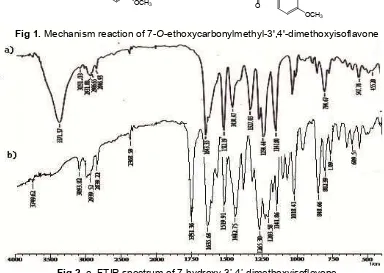
Fig 2.a. FTIR spectrum of 7-hydroxy-3’,4’-dimethoxyisoflavone
b. FTIR spectrum of 7-O-ethoxycarbonylmethyl-3',4'-dimethoxy isoflavone
acid (HCl), Potassium hydroxide (NaOH), sodium sulfate (Na2SO4) anhydrous and thin layer chromatography
(TLC) plat of aluminium F254 nm.
Instrumentation
The apparatus used in this research were infra red spectrometer (FT-IR, Shimadzu FTIR Prestige 21), proton nuclear magnetic resonance (1H-NMR JEOL JNM ECA 500 MHz) and gas chromatography-mass spectrometer (GC-MS Shimadzu QP2010S).
Procedure
Synthesis of ethyl-2-chloro acetate
Ethanol (47.48 g; 1.03 mol), chloro acetic acid (30 g; 0.32 mol) and H2SO4 (0.38 g; 3.8 mmol) was
placed in 100 mL three-necked flask equipped with
magnetic stirrer. The reaction mixture was refluxed for 4 h at 80 °C. After it had been cooled at room temperature, as much as 15 mL of aquadest and NaCl was added respectively. The reaction mixture was transferred into separator funnel, and then ester layer were collected and washed with sodium carbonate solution 10% (2 x 10 mL) and water (2 x 10 mL) respectively. The product dried with Na2SO4anhydrous
and identified using FT-IR spectroscopy.
Synthesis of 7-O-ethoxycarbonylmethyl-3',4'-dimethoxyisoflavone
Preparation of 7-O -ethoxycarbonylmethyl-3',4'-dimethoxyisoflavone was done based on procedure of Soidinsalo [8]. 7-hydroxy-3',4'-dimethoxyisoflavone (1.76 mmol), K2CO3(1.3 g; 8.80 mmol), KI (10 mg) and
(2.64 mmol) was added and the mixture was refluxed for 12 h at 70 °C. After cooling to room temperature the solvent was removed by placing it in vacuo, water (100 mL) was added, neutralization with 10% HCl gave a solid which was filtered off, washed with water, dried in vacuo and recrystallization from MeOH. The solid that produced was identified for its melting point and spectroscopic analyses using FT-IR, MS and1H-NMR.
Synthesis of 7-O-carboxymethyl-3',4'-dimethoxy isoflavone
7-O-ethoxycarbonylmethyl-3',4'-dimethoxyisoflavone (0.5 g), 10 mL ethanol and KOH were refluxed for 3 h. After cooling, the reaction mixture was neutralizing with 5% HCl and was kept in refrigerator overnight. The crystals formed were filtered off and washed with water. The solid obtained was identified for its melting point and spectroscopic analyses using FT-IR, MS and1H-NMR.
RESULT AND DISCUSSION
Synthesis of 7-O -ethoxycarbonylmethyl-3’,4’-dimethoxyisoflavone
Substitution of hydroxyl group at 7-Oposition of 7-hydroxy-3',4'-dimethoxyisoflavone by ethyl-2-chloro acetate was carried out using the same procedure of alkylation reaction. This reaction was using K2CO3 to
form alkoxide salt to increase nucleophility of isoflavonate ion to enhance the reaction with ethyl-2-chloro acetate. Isoflavonate ion is a strong base to attack methylene group of ethyl-2-chloro acetate attached chlor atom to produce 7-O -ethoxycarbonylmethyl-3',4'-dimethoxyisoflavone through bimolecular nucleophilic substitution reaction (SN2) (Fig.
1). After refluxing the mixture for 12 h at 70 °C, the product was obtained as a white solid with melting point of 146-150 °C in 90% yield. Product was analyzed using FT-IR,1H-NMR and MS spectrometers.
Substitution at hydroxyl groups with ethyl-2-chloro acetate leads to conversion of the OH group into ROR so that FT-IR spectrum of the product (Fig. 2a) would show differences in characteristic peaks that can easily be distinguished from the reactant of 7-hydroxy-3',4'-dimethoxyisoflavone (Fig. 2b). FT-IR spectrum of product shows the disappearance of the broad absorption band of the hydroxyl group (-OH) from 7-hydroxy-3',4'-dimethoxyisoflavone at 3371 cm-1 accompanied by the appearance of the absorption band of carbonyl group at wave number 1751 cm-1. The characteristic FT-IR spectrum of 7-O -ethoxycarbonylmethyl-3',4'-dimethoxyisoflavone is the presence of ester carbonyl group at 1751 cm-1. The absorption peaks show the difference between FT-IR spectrum of product and
7-hydroxy-3',4'-dimethoxyisoflavone thus it be concluded that the resulting product is a 7-O -ethoxycarbonylmethyl-3',4'-dimethoxyisoflavone.
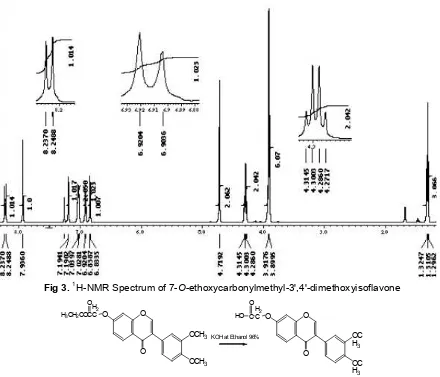
7-O-ethyl acetate-3',4'-dimethoxyiisoflavone has a characteristic 1H-NMR spectrum that can be easily identified to distinguished between product and reactant by determining the appearance of methylene (-CH2-) and methyl (CH3) group protons. Protons of
methylene group that attached to hydroxyl group at 7-O position appear at chemical shift (δ) of 4.7 ppm.
Protons of methylene and methyl group from ester group are located at chemical shift of 4.3 ppm and 1.3 ppm, respectively. Methyl and methylene protons substitutes for hydroxyl group on the 7-hydroxy-3',4'-dimethoxyisoflavone after reaction with ethyl-2-chloro acetate to 7-O -ethoxycarbonylmethyl-3',4'-dimethoxyisoflavone.
1
H-NMR spectrum of 7-O -ethoxycarbonylmethyl-3',4'-dimethoxyisoflavone. (Fig. 3) shows the peak of aromatic proton from isoflavone (rings A and B) i.e.
doublet peak at δ = 6.9; 7.02; 7.04 and 8.2 and singlet peak at δ = 7.1 and 6.8 ppm with the integration of six
protons. Interpretation of 1H-NMR spectrum indicated that the aromatic protons belongs to the hydrogen atoms of 7-O -ethoxycarbonylmethyl-3',4'-dimethoxyisoflavone. Proton C5' and C6' with H-C5 and H-C6 respectively is located next to each other so that it shows the doublet peak while H-C8 and HC2'
shows the singlet peak. Therefore, the peak at δ = 6.9;
7.02; 7.04 and 8.2 ppm are protons of C5 ', C6',
H-C6 and H-C5 while the peak at δ = 6.8 and 7.1 ppm are
respectively protons of H-C2 'and H-C8.
Determination of 7-O -ethoxycarbonylmethyl-3',4'-dimethoxyisoflavone structure using mass spectroscopy indicated a molecular ion peak at m/z 384 corresponding to a molecular weight of 7-O -ethoxycarbonylmethyl-3',4'-dimethoxyisoflavone.
The results of FT-IR, 1H-NMR and MS spectrum interpretation showed that the compound product is a 7-O-ethoxycarbonylmethyl-3',4'-dimethoxyisoflavone.
Synthesis of 7-O -carboxymethyl-3',4'-dimethoxyisoflavone
7-O-carboxymethyl-3',4'-dimethoxyiisoflavone was obtained from hydrolysis of ester group of 7-O-ethyl acetate-3',4'-dimethoxyisoflavone using KOH (Fig. 4). After being refluxed for 3 h at 80 °C, the product was obtained as a white solid with melting point of 155-159 °C in 93.4% yield. Product was analyzed using FT-IR,
1
H-NMR and MS spectrometers.
O O O
OCH3
OCH3 H2
C C O
H3CH2CO
O O O
OC H3
OC H3 H2
C C O
HO
KOH at Ethanol 96%
Fig 3.1H-NMR Spectrum of 7-O-ethoxycarbonylmethyl-3',4'-dimethoxyisoflavone
Fig 4.Synthesis of 7-O-carboxymethyl-3',4'-dimethoxyisoflavone
-3',4'-dimethoxyisoflavone has taken place to give its corresponding acid, i.e. 7-O -carboxymethyl-3',4'-dimethoxyisoflavone.
1
H-NMR spectrum of the hydrolysis product as shown in Fig. 6 is readily distinguished with that of the reactant. The success of reaction could be proven by the disappearance of protons of methylene and methyl group from ester group are located at chemical shift of 4.3 ppm and 1.3 ppm, respectively. These show that hydrolysis of 7-O -ethoxycarbonylmethyl-3',4'-dimethoxyisoflavone in the presence of KOH as the catalyst had successfully performed to give 7-O-carboxymethyl-3',4'-dimethoxyisoflavone.
Similar to the 7-O -ethoxycarbonylmethyl-3',4'-dimethoxyisoflavone, 1H-NMR spectrum of 7-O -carboxymethyl-3',4'-dimethoxyisoflavone exhibits the peak of aromatic proton from isoflavone (rings A and B)
i.e. doublet peak δ = 6.5; 6.84; 8.05 and 6.88 ppm and singlet peak at δ = 6.4 and 6.9 ppm with the integration
of six protons. Interpretation of 1H-NMR spectrum suggest that the aromatic protons belongs to the hydrogen atoms of 7-O -carboxymethyl-3',4'-dimethoxyisoflavone. Proton C5' and C6' with H-C5 and H-C6 respectively is located next to each other so that it shows the doublet peak while H-C8 and H-C2'
shows the singlet peak. Therefore, the peak at δ = 6.5;
6.8; 8.05 and 6.88 ppm must be protons of C5',
H-C6', H-C6 and H-C5 while the peak at δ = 6.8 and 7.1
ppm belongs to respectively protons of C2 'and H-C8.
Determination structure using mass spectroscopy indicates a molecular ion peak at m/z 356 corresponding to a molecular weight of 7-O -carboxymethyl-3',4'-dimethoxyisoflavone.
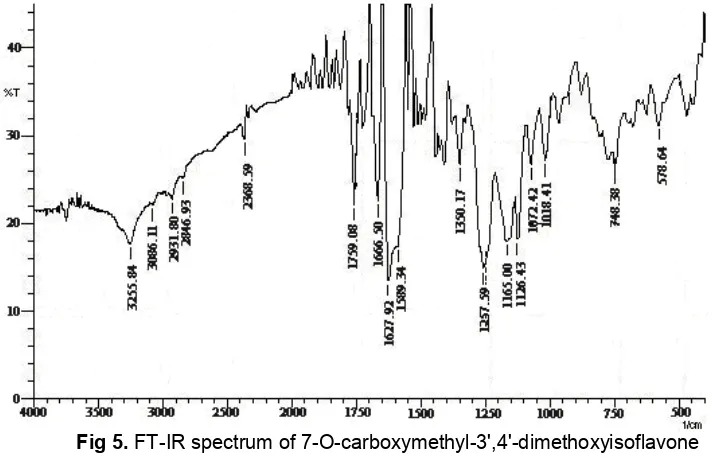
Fig 5.FT-IR spectrum of 7-O-carboxymethyl-3',4'-dimethoxyisoflavone
Fig 6. 1H-NMR Spectrum of 7-O -carboxymethyl-3',4'-dimethoxyisoflavone
CONCLUSION
Hydroxyl group at 7-O position of 7-hydroxy-3’,4’-dimethoxyisoflavone can be substituted for halide group such as ethyl-2 chloro acetate to produce 7-O -ethoxycarbonylmethyl-3',4'-dimethoxyisoflavone in 90% yield. Hydrolysis of ester group of 7-O -ethoxycarbonylmethyl-3',4'-dimethoxyisoflavone using KOH results in 7-O-carboxymethyl-3',4'-dimethoxyisoflavone in 93.4% yield.
ACKNOWLEDGEMENT
In this opportunity, We, the authors, would like to thank to Directorate General of Higher Education, The Ministry of National Education for the financial support of this research through Hibah Bersaing grant contract No: 019/SP/PL/LITHABMAS/IV/2011, 14thApril 2011.
REFERENCES
1. Liggins, J., Bluck, L.J., Runswick, S., Atkinson, C., Coward, W.A., and Bingham, S.A., 2000, J. Nutr. Biochem., 11, 6, 326–331.
2. Kampkötter, A., Chovolou, Y., Kulawik, A., Röhrdanz, E., Weber, N., Proksch, P., and Wätjen, W., 2008,Nutr. Res., 28, 9, 620–628.
3. Rukachaisirikul, T., Innok P, Aroonrerk, N, Boonamnuaylap, W., Limrangsun, S., Boonyon, C., Woonjina, U., and Suksamrarn, A., 2007, J. Ethnopharmacol.,110, 1, 171–175.
4. Alekel, D.L., Alyson, St.G., Charles, T.P., Kathy, B.H., Jeanne, W.S., and Thoshiya, T., 2000,Am. J. Clin. Nutr.,72, 3, 844–852.
5. Choi, E.J., and Kim, G-H, 2008,Phytomedicine, 15, 9, 683–690.
6. Kohen, F., Gayer, B., Kulik, T., Frydman, V., Nevo, N., Katzburg, S., Limor, R., Sharon, O., Stern, N., and Somjen, D., 2007, J. Med. Chem., 50, 25, 6405–6410.
7. Alimuddin, A.H., Darussalam, M.I., Matsjeh, S., Anwar, C., Mustofa, and Sholikha, E.N., 2011,
Indo. J. Chem., 11, 2, 163–168.