Informasi Dokumen
- Penulis:
- Rizka Putriani
- Pengajar:
- Maria Johana Ari Widayanti, S.Pd., M.Si
- Hendi Pratama, S.Pd., M.A
- Sekolah: Semarang State University
- Mata Pelajaran: English Education
- Topik: STUDENTS’ ABILITIES IN USING PERSONAL PRONOUNS IN THEIR ENGLISH SENTENCES
- Tipe: Final Project
- Tahun: 2015
- Kota: Semarang
Ringkasan Dokumen
I. Introduction
This chapter sets the stage for the research, outlining its context and rationale. The background section establishes the importance of grammar, specifically personal pronouns, in English language acquisition at the junior high school level. It highlights the challenges faced by eighth-grade students at SMP N 3 Jepara in mastering the correct usage of personal pronouns, despite prior exposure to the topic. This is supported by observations and interviews highlighting student confusion regarding the various forms and functions of personal pronouns. The reasons for selecting this specific topic are clearly articulated, emphasizing the often-overlooked importance of personal pronouns in developing effective communication and the necessity of deeper investigation into student understanding. The chapter clearly defines the research problem, stating its focus on assessing student proficiency in using personal pronouns at both the sentence and textual levels. The objectives of the study are explicitly stated, aiming to describe students' abilities in using these pronouns in sentences and extended writing. The significance of the study for both theoretical contributions to teaching methodologies and practical implications for improving student learning outcomes is also discussed. Finally, the scope of the research, including its limitations and the organization of the report, is presented.
1.1 Background of the Topic
This section emphasizes the significance of grammar in English language learning, focusing on the crucial role of personal pronouns in effective communication. It establishes the context by mentioning the four core English skills (listening, speaking, reading, and writing) and their dependence on grammatical accuracy and vocabulary. The section further explains the importance of grammatical structures and their influence on comprehension and communication. Various grammatical theories, such as traditional, formal, and functional grammar, are touched upon, setting the groundwork for understanding the complexities of grammatical analysis. The research focuses specifically on personal pronouns, and the difficulties encountered by eighth-grade students in SMP N 3 Jepara in using them effectively are highlighted, setting the stage for the research questions and objectives.
1.2 Reasons for Choosing the Topic
This section justifies the choice of personal pronouns as the central focus of the study. The researcher argues that while seemingly simple, personal pronouns often receive insufficient attention in English language instruction. Students may encounter these grammatical elements within broader lessons on vocabulary, tenses, or genres, leading to a lack of comprehensive understanding. The researcher aims to address this gap by investigating the students' abilities to use personal pronouns correctly and exploring the reasons behind any observed difficulties. The selection of eighth-grade students at SMP N 3 Jepara is also explained, highlighting their previous exposure to the topic and their readiness for a more in-depth assessment.
1.3 Statements of Problem
This concise section clearly articulates the two central research questions: (1) How do students utilize personal pronouns at the sentence level? and (2) How do students apply personal pronouns in their English essays (textual level)? These questions effectively frame the study's core inquiry, guiding the subsequent methodology and data analysis. The clarity of these questions is crucial for the overall coherence and focus of the research.
1.4 Objectives of the Study
This section directly mirrors the research questions, presenting the corresponding objectives: (1) To describe student abilities in using personal pronouns at the sentence level, and (2) To describe student abilities in applying personal pronouns in their English essays. The objectives clearly outline the intended outcomes of the research, providing a roadmap for the data analysis and interpretation phases.
1.5 Significance of the Study
This section outlines the expected contributions of the study. It discusses the theoretical implications for English language teaching, suggesting that the findings could provide valuable insights into common student difficulties and inform pedagogical approaches to teaching personal pronouns. The practical significance focuses on improving student understanding and providing a guideline for enhanced learning outcomes. Finally, the pedagogical significance is emphasized, highlighting the study's potential to contribute to the existing body of research on personal pronouns, thus benefiting future research and development in the field.
1.6 Limitation of the Study
This section acknowledges the limitations of the study, specifically the restricted scope of participants (eighth-grade students at SMP N 3 Jepara) and the focus solely on personal pronouns, excluding other types of pronouns. This acknowledgment of limitations enhances the research's credibility by highlighting its specific boundaries and preventing unwarranted generalizations.
1.7 Outline of the Report
This section provides a concise overview of the structure of the research report, outlining the contents of each chapter. This roadmap assists the reader in understanding the flow of the research and the progression of arguments and findings. The clear structure contributes to the overall readability and comprehension of the report.
II. Review of Related Literature
This chapter provides a comprehensive overview of existing research and theoretical frameworks relevant to the study. It begins with a review of previous studies on personal pronouns, summarizing key findings from several researchers who have investigated different aspects of pronoun usage in various contexts. These studies serve as a foundation for the current research, informing the methodology and providing a point of comparison for the findings. The chapter then delves into a review of relevant theories, exploring the intricacies of writing, grammar, and various types of pronouns with a specific focus on personal pronouns and their subcategories (subjective, objective, possessive, possessive adjective, and reflexive). These theoretical underpinnings provide a strong basis for understanding and interpreting the data collected. Finally, the chapter presents the theoretical framework that guides the study's methodology and analysis, illustrating how the different aspects of the research are interconnected and how the data will be analyzed to answer the research questions.
2.1 Review of Previous Studies
This section summarizes existing research on personal pronoun usage, drawing on several studies with diverse methodologies (e.g., classroom action research, qualitative analysis of political discourse). The synthesis of these studies highlights the existing body of knowledge while simultaneously identifying gaps that the current research aims to address. By examining various approaches and findings, the section provides a rich backdrop for understanding the current study's contribution to the field and its rationale. The summary shows the variety of approaches used and also highlights the need for further research into the specific area.
2.2 Review of Theoretical Study
This section provides a detailed examination of relevant theoretical concepts, including the definition and classification of pronouns, the functions of personal pronouns (subjective, objective, possessive, etc.), and their application in both sentence-level grammar and extended writing. The section draws on established grammatical frameworks and definitions to establish a robust theoretical foundation for the empirical investigation. The theoretical underpinnings provide a framework for understanding the complexities of pronoun usage and informing the analysis of student performance.
2.3 Theoretical Framework
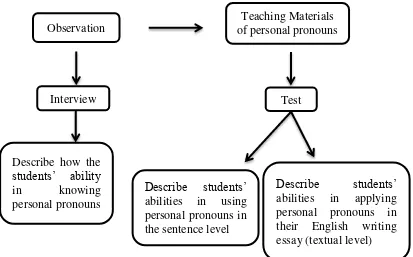
This section synthesizes the reviewed literature and theories to present the theoretical framework that guides the research. It outlines the conceptual model used to understand and interpret the data, linking the research questions to the specific methods employed in the study. A visual representation (like a diagram or figure) might be included to illustrate the relationships between different variables and the research process. This section clearly articulates how the research will approach the problem and how the findings will be interpreted within the chosen theoretical framework. This is crucial for the reader to understand the context within which the results are viewed.
III. Methods of Investigation
This chapter details the research methodology, providing a clear and comprehensive account of the research design, data collection procedures, and data analysis techniques. The object of the study is precisely defined, specifying the target population (eighth-grade students at SMP N 3 Jepara) and the specific focus on personal pronoun usage. The sampling method is described, justifying the decision to include the entire population of the class. The researcher's role is clearly outlined, emphasizing the role as observer, data collector, and data analyst. The type of data collected (qualitative, specifically using a case study approach) is explicitly stated, along with the justification for this choice. The instruments used for data collection (observation and a three-part test including fill-in-the-blank, missing words, and essay writing) are detailed, explaining the rationale for choosing each component. The procedures for data collection are clearly described, outlining the steps taken from initial classroom observations to the administration and scoring of the tests. Finally, the data analysis techniques are explained, outlining the methods used to interpret the collected data.
3.1 Object of the Study
This section clearly identifies the research focus: the abilities of eighth-grade students at SMP N 3 Jepara in using personal pronouns in both sentences and extended writing. It explains the rationale for selecting this particular group of students, acknowledging their prior exposure to the topic and the persistent challenges in mastering it. The specificity of the object of study is vital for the clarity and focus of the research.
3.1.1 Population and Sample
This section describes the research population (the entire eighth-grade class at SMP N 3 Jepara) and explains the sampling method. Because the population is relatively small (less than 100 students), the researcher justifies the decision to utilize the entire population as the sample, eliminating the need for random sampling techniques. This section ensures transparency and clarity regarding the selection of participants.
3.2 Role of the Researcher
This section describes the researcher's multifaceted role in the study, acting as observer, data collector, and data analyst. The researcher's activities are described in detail, highlighting the steps taken to gather information from the teacher, administer the tests, and analyze the results. This section enhances the trustworthiness of the research by providing a transparent account of the researcher's involvement.
3.3 Type of Data
This section clearly states that the study uses a qualitative case study approach to explore the phenomenon of student proficiency in personal pronoun use. The rationale for choosing this approach is explained, emphasizing its suitability for in-depth analysis of a specific case. The types of data collected (observation notes and test results) are detailed, and the descriptive analysis method used to interpret these data is clarified. The justification for the chosen qualitative approach and the type of case study (single instrumental case study) are well-explained.
3.4 Instrument for Collecting the Data
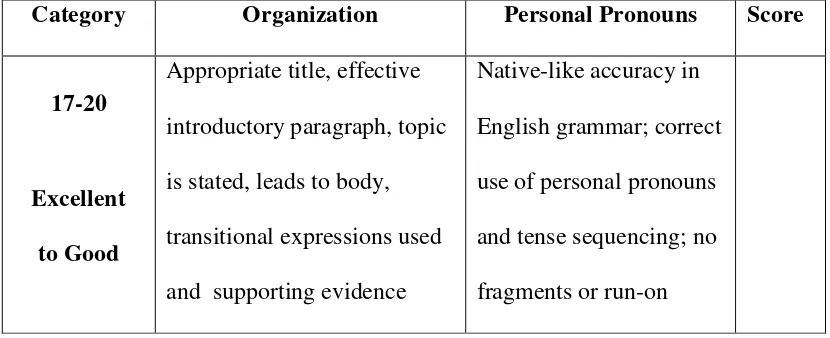
This section explains the instruments used for data collection: a three-part test comprising fill-in-the-blank, missing words, and essay writing sections. The rationale behind the selection of these specific test items is elaborated, highlighting their appropriateness for assessing different aspects of personal pronoun usage. The sources of test materials are also mentioned, indicating the reliability and validity of the assessment instrument. The section explains the choice of objective and subjective test types, justifying the use of each.
3.5 Procedures of Collecting the Data
This section describes the step-by-step procedures followed in collecting the data. It includes the preparation phase (prior classroom observation and consultation with the teacher), the administration of the test (including the review of materials), and the collection and scoring of the tests. This clear description allows for replication of the study and enhances the transparency and methodological rigor of the research. The steps are described in a clear and chronological order, showing how the data were gathered systematically.
3.6 Procedures of Analyzing the Data
This section (if present in the original document) would outline the specific steps followed to analyze the data collected. It would describe how the collected data (test scores and observations) were processed and prepared for analysis. Specific techniques used for qualitative analysis should be mentioned here. If this section is missing from the provided text, this point should be noted in the summary.
3.7 Techniques for Analyzing the Data
This section (if present in the original document) would detail the specific techniques employed to analyze the data. For a qualitative study, this might involve thematic analysis, content analysis, or narrative analysis. The rationale behind choosing these techniques should be explained, and the procedures used should be described clearly. If this section is missing from the provided text, this point should be noted in the summary.
IV. Analysis and Interpretation of Data
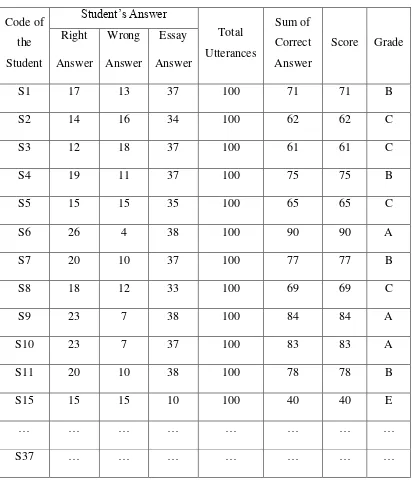
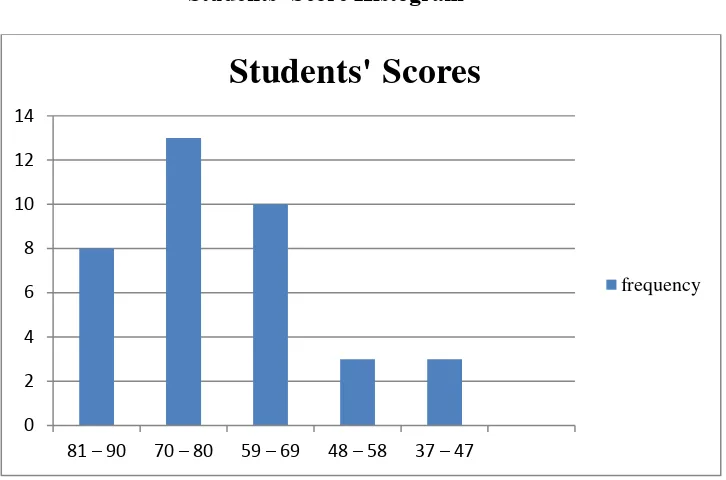
This chapter presents the results of the data analysis and their interpretation in relation to the research questions. It presents the analyzed data in a clear and organized manner, using tables and graphs to visually represent the findings. This section would likely include statistical analyses of student performance on the tests, such as frequency distributions, mean scores, and perhaps indices of difficulty for different types of personal pronouns. The interpretation of these results would be crucial, linking the quantitative data to the qualitative observations made during the study. The interpretation of results connects the numerical data to the research questions and objectives, providing a clear explanation of what the numbers mean in the context of the study. It would likely discuss which personal pronouns presented the greatest challenges for students and explore possible explanations for these difficulties.
V. Conclusions and Suggestions
This concluding chapter summarizes the key findings of the study, reiterating the main conclusions drawn from the data analysis. It answers the research questions posed in Chapter 1, summarizing the students' abilities in using personal pronouns at both sentence and textual levels. Based on the findings, the chapter provides practical suggestions for English language teachers on how to improve students' understanding and use of personal pronouns. These suggestions might include variations in teaching methodologies, more focused practice exercises, or adjustments to curriculum materials. Furthermore, it may offer recommendations for future research, suggesting areas for further investigation or expansion on the study's findings. The conclusions and suggestions are carefully linked back to the original research questions and the findings of the data analysis, ensuring a coherent and well-supported conclusion.
5.1 Conclusions
This section provides a concise summary of the key findings, directly addressing the research questions. It restates the main conclusions based on the data analysis, providing a clear and concise answer to the research questions. This section should avoid introducing new information but instead synthesize the findings presented in the previous chapter.
5.2 Suggestions
This section provides practical recommendations for improving the teaching of personal pronouns. This section offers actionable suggestions for teachers and curriculum developers, drawing directly on the findings and limitations of the study. The suggestions aim to translate the research's findings into practical strategies for enhancing student learning. This is a crucial element, linking theoretical knowledge to practical implementation.