Creating
Brand Equity
Marketing Management, 13
thed
Chapter Questions
• What is a brand and how does
branding work?
• What is brand equity?
• How is brand equity built, measured,
and managed?
Steps in
Strategic Brand Management
• Identifying and establishing brand
positioning
• Planning and implementing brand
marketing
• Measuring and interpreting brand
performance
The Role of Brands
Identify the maker
Identify the maker
Simplify product handling
Simplify product handling
Organize accounting
Organize accounting
The Role of Brands
Signify quality
Signify quality
Create barriers to entry
Create barriers to entry
Serve as a competitive
advantage
Serve as a competitive
advantage
Brand Knowledge
Knowledge
Thoughts
Experiences
Beliefs
Images
Advantages of Strong Brands
• Improved
perceptions of
product
performance
• Greater loyalty
• Less vulnerability
to competitive
marketing actions
• Less vulnerability
to crises
• Larger margins
• More inelastic
consumer response
• Greater trade
cooperation
• Increased marketing
communications
effectiveness
BAV Key Components
Differentiation
Energy
Relevance
Esteem
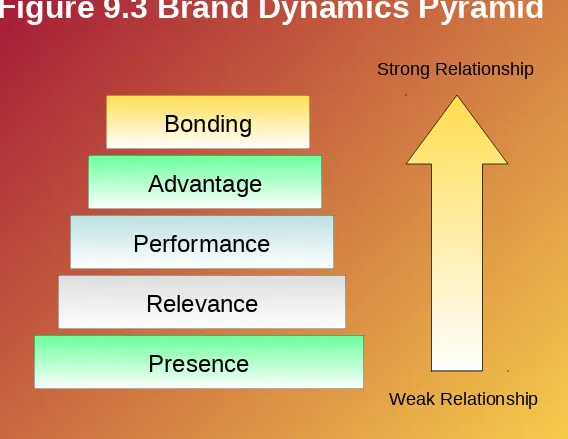
Figure 9.3 Brand Dynamics Pyramid
Presence
Relevance
Performance
Advantage
Bonding
Strong Relationship
Aaker Model
Brand Identity
Extended Identity
Elements
Brand Essence
Core Identity
Drivers of Brand Equity
Brand Elements
Marketing Activities
Brand Elements
Elements
Slogans
Brand
names
URLs
Logos
Brand Element Choice Criteria
Designing Holistic Marketing Activities
Personalization
Integration
Measuring Brand Equity
Brand Audits
Brand Audits
Brand Tracking
Brand Tracking
Branding Terms
• Brand line
• Brand mix
• Brand extension
• Sub-brand
• Parent brand
• Family brand
• Line extension
• Category extension
• Branded variants
• Licensed product
• Brand dilution
Brand Naming
Individual names
Individual names
Blanket family names
Blanket family names
Separate family names
Separate family names
Corporate
name-individual name combo
Corporate
Brand Roles in a Brand Portfolio
Flankers
Low-end
Entry-level