THE
NEW
URBAN QUESTION
URBANISM BEYOND NEO-LIBERALISM
4th Conference of International Forum on Urbanism
The New Urban Question: Urbanism Beyond Neo-Liberalism
- 4
thConference of International Forum on Urbanism
Conference Proceedings
Edited by
Published by International Forum on Urbanism [IFoU]
Copyright © 2009 by the authors, unless otherwise stated.
All rights reserved. No part of this book may be reproduced in any form by any electronic or
mechanical means (including photocopying, recording, or information storage and retrieval) without
permission in writing from the authors.
Scientific Board
Prof. Jürgen Rosemann (chairman), Delft University of Technology Prof. Henco Bekkering, Delft University of Technology
Prof. Dai Jian, Beijing University of Technology Ir. Rob Docter, Berlage Institute, Rotterdam Prof. Mooyoung Han, Seoul National University
Prof. Heng Chye Kiang, National University of Singapore Prof. Hsia Chujoe, Taiwan University, Taipei
Prof. Mao Qizhi, Tsinghua University, Beijing Prof. Han Meyer, Delft University of Technology Prof. Vincent Nadin, Delft University of Technology Prof. Yukio Nishimura, University of Tokyo Prof. Joaquin Sabaté Bel, UPC Barcelona
Dr. Suryadi Santoso, Tarumenagara University, Jakarta Prof. Bernardo Secchi, Universitá IUAV di Venezia Prof. Tsou Jinyeu, Chinese University of Hong Kong Dr. Paola Vigano, Universitá IUAV di Venezia Prof. Zheng Shiling, Tongji University, Shanghai Prof. Zhu Wenyi, Tsinghua University, Beijing
Review Panel
Prof. Henco Bekkering, Delft University of Technology Dr. Machiel van Dorst, Delft University of Technology Prof. Heng Chye Kiang, National University of Singapore Dr. Frank van der Hoeven, Delft University of Technology Prof. Hsia Chujoe, Taiwan University, Taipei
Prof. Mao Qizhi, Tsinghua University, Beijing Prof. Han Meyer, Delft University of Technology Prof. Vincent Nadin, Delft University of Technology Prof. Jürgen Rosemann, Delft University of Technology Prof. Joaquin Sabaté Bel, UPC Barcelona
Contents
Introduction
……….………..………….. .15
Jürgen Rosemann
The New Urban Question
Beyond The Crisis: Towards a New Urban Paradigm………..… 21
Laura Burkhalter and Manuel Castells
Bridging the Ecologies of Cities and of Nature………..… 45
Saskia Sassen
Looking Forward to Architecture of the New Millennium……….… 53
Wu Liangyong
Fibercity as a Paradigm Shift of Urban Design……….… 61
Hidetoshi Ohno
Dutch Spatial Planning and Hierarchy: Making Differences, Think-do-act, and Renewed Re-activism 65
Henk W.J. Ovink
The Formation of the West Coast Metropolitan Region of Taiwan in the Network Society……… 81
Chu-Joe Hsia
The New Urban Economy
Full papers:
Studies on Asian Mixed Use Urban Blocks and Their Applications on the Mono-functional Office
Districts in the Netherlands………….………..… 91
Tsaijer Cheng, Changfang Luo
Mega-event Strategy As a Tool of Urban Transformation: Sydney’s Experience……… 99
Yawei Chen, Marjolein Spaans
The Strength of Connections: Innovation Engines in Creative Industries………. 111
A.P. Drogendijk, M. J. W. van Twist
Tracing the Roots of Cultural Industries: Employment Trends in Cultural Industries in Dutch Cities
Since 1899……….. 121
Michaël Deinema and Robert Kloosterman
Tourism and Urban Economy: Branding Cities and Producing Contradictory Spaces of Consumption 133
The Decline of The Industrial City: the Limits of Neoliberal Urban Regeneration……… 143
Tahl Kaminer
The Mall in the Online Shopping Era……….. 151
Cristian Suau, Margarita Munar Bauzá
Macau’s Urban Image Production - Before and After the Credit Crunch……….. 161
Hendrik Tieben
Global Capitals Role in the (De)Structuration of Urban Space……….. 173
Nikolaos Triantafyllopoulos
New! Coastal Ecologies: Destination Croatia……… 181
Sasha Zanko
New Economies of Landscape and its New Urban Form: Eco-tourism and Ecological Urbanism as a
New Approach to Redevelopment in Post-Disaster Reconstruction in Sichuan Province, China………. 191
Shannon Bassett
The Urbanized Society
Full papers
URBAN 2.0- Urban Coding as an Alternative to Planning?... 201
Yoshihiko Baba
To Use or Not Use Urban Space………. 211
Tino Buchholz
Prosperity and Change: the Irish Manifestation of an Urbanising Waterfront City Quarter……… 219
P. Fallon, C. Wang
Informal Urbanism from Inside-Out: Internalizing Taipei Experiences of Informality………..… 229
KANG, Min Jay
Service Space……….……… 239
Esther Lorenz
Returning to Wasting Away……….. 249
Sara Marini
Inbetween Spaces for Social Interaction: New Public Realm and the Network Society……… 259
M.V. Grimaldi, P. Sulis
Housing the Elderly: Segregated in Senior Cities or Integrated in Urban Society?... 269
Anton J.H. Smets
Profile of an ‘Urbanized Society’?: Slums, Gauthans, and ‘Lifestyle City’ in Kalyan-Dombivli, India…... 279
T. van Dijk, N. Sridharan
Preservation And Regeneration via Hai Pai Cultural Renaissance - A Case Study of Tianzifang
Creative Quarter in Shanghai……….. 289
Jieqiong Wang, Zigang Yao and Alan Peter March
Urban Culture in New Town Almere……… 301
Atomizing the Urban: Social Change, Single Households and Spatial Transformations in Tokyo……... 311
Richard Ronald
Negative and Positive Freedom of Choice in Dutch Social Housing………. 323
Marco van der Land and Wenda Doff
Minimum…or Maximum Cities? Locating the New Frontiers of the Urban Question……….. 335
Alastair Donald
Imag(in)ing the Global City. Postnational Filmmaking in Brussels and Amsterdam……… 345
Arne Saeys
Post “Generic City”- When a City is Nearly Expired
Waterfront Industrial Preservation & Development: the Shunde Case, the PRD……… 355
Doreen Heng LIU
A Study of New Design Concenpts in Student Housing Applied to the Italian Urban Context………….. 361
Chiarantoni Carla
Welfare Space in Europe……….. 371
S. Munarin, M. C. Tosi
The Chinese Housing Reform and the Following New Urban Question………... 381
Xiaoxi. Hui
Poster papers
Revitalization of Panam Nagar: Social Displacement and the Minority Issue……….. 393
Tariq Mahbub Khan
A Research on the Educational Facilities in the Counties of Northwest China Based on the
Integration of Urban and Rural Areas: A Case Study on the Chengcheng County, Shaanxi Province… 397
Ma Yan, Wang Chen
New Urban Forms – Immigration in Network Societies……… 403
Eugenia Tsagkaraki
Lesbian Spaces in Beijing………. 407
TENG Jingru
Urban Technologies and Sustainability
Full papers
Between Market Principles and Equity Concerns - The Provision of Basic Services in Cities of Latin
America……… 413
Ana Maria Fernández-Maldonado
Potential of Energy Conservation Through Renovation of Existing Residential Buildings in China –
the Case of Hangzhou City in the Hot Summer and Cold Winter Region of China………. 425
GE Jian, WANG Jiaping, OUYANG Jinlong, HOKAO Kazunori
Exploration of the Urban Waterfront Greenway System Based on the ‘Interest Gravitation’………. 435
Organisation of Large Scale Green Covered Roofs- Improving the Collaboration of Policy Makers
With Urban Designers……… 445
C.M. Ravesloot, P.G. Teeuw
Rethinking Sustainable Sanitation for The Urban Environment………. 451
Christoph Lüthi, Jennifer McConville, Anna Norström, Arne Panesar, Rahul Ingle, Darren Saywell, Thorsten Schütze
The Digital City Management System in Hangzhou as a Practise of Urban Governance in China…….. 463
Shutian Li, Ka Wang, Lei Xu
Sustainable Urban Design Approaches- an Overview………. 469
N. Fleurke
The Consequences for China’s Mega Cities of the Global Economic Recession………... 479
Meine Pieter van Dijk
Urban Experiences in a Rural Environment. Small Rural Settlements in Lurin Valley, Lima,
Peru……….. 491
José Luis Chong Chong
Economic Changes and the Need for Design Strategies for More Sustainable Urban Projects: Values
of Public Life, Space and Shared Desire……… 501
Germaine Sanders and Robin Houterman
Eco-city and Eco-Planning in China: Taking An Example for Caofeidian Eco-city………. 511
Qiang Ma
Exploration on Contaminated Urban Manufactured Sites- Remediation Management Strategies in
Beijing……….. 521
GUO Yong
Assisted Living: Using GPS to Determine Design Tasks………. 529
S.C. van der Spek
A Water Field Civilization -the Hydraulic System of Three Agriculture Plains in Taiwan……… 537
Pei-chun Wen
Poster papers
Energy Conservation Research and Optimized Design of Natural Lighting Atriums- as the Example of
International Trade City in Jiaxing……….. 543
Zhuojia Wang, Jie Wang
The Characteristics of Development of Chinese Green Building………... 549
Yang Miao, Xu Lei, Jian Ge
Ecological Design With Urban Context- Case Study on “Compasso Volante Prize - Edition 2007”
about Integrative Design of Ecological Architecture………. 553
Guo Cui
Contradictions of Ecological Construction and Urban Development in Hot-Dry Valley Areas- Case
Study on Wenchuan County………. 557
Xie Yingying
Minimum Impact House: the Prototype for Sustainable Building in the City Centre and What’s Beyond
the Prototype……….. 563
The Transformation of Urban Form
Full papers
Urbanity and Desire: Neighbourhood Change in the Contemporary Economy. The Case of Fort
Greene, Brooklyn……… 571
Sandra Annunziata
Alvalade and Areeiro Neighbourhoods- From Spatiality to Significance……….. 583
Ana Beja da Costa
Architecture Can Serve, Planning is Almost Unfunctional……….. 591
Özlem Berber
Transformation of Waterfront space in Asian cities: Macau, Hong Kong, Shanghai……….. 597
Chen Yu
Challenges of Urban Form in Fast-growing Chinese Cities: a Case Study of Kunshan………. 607
Xiangmin Guo
Galópolis and Forqueta: Visions of a Regional Landscape………. 617
Sandra Maria Favaro Barella, Décio Rigatti
Agonism, Consensus, and the Exception: On The Newest Monumentalists……… 627
Justin Fowler
Agropolitana. Dispersed City and Agricultural Spaces in Veneto Region (Italy)………. 637
V. Ferrario
Grand Taipei: the Porous City- A Research on the Urban Form of a Postcolonial City………. 647
Kuanchung Huang
Spatial Chaos; Addressing Spatial Over-production in Dublin, Ireland………. 657
Alan Mee
Grassroots Landscape Architecture for the Informal Asian City………. 667
J. Rekittke
Residential Spaces as Urban Fabric: the Case of São Paulo………. 677
Christine Van Sluys
Space Syntax Analysis of Foshan Street Network Transformation in Support Historic Area
Redevelopment……….. 687
YU Han, TSOU Jin-yeu, LONG Jiangang
Privately Owned Public Space in Hong Kong and New York: the Urban and Spatial Influence of the
Policy………... 697
W.L. LUK
The Characteristics on the Generation of Urban Form of Hangzhou Combining With the High Speed
Urbanization………... 707
Xi Zhang, Lei Xu, Ka Wang
New City/ Old City………. 713
Opening the Frontier Closed Area: A Mutual Benefit Zone………. 723
Joshua Bolchover and Peter Hasdell
Significance of the Praise of Shadows in Understanding Urban Tactility………. 733
Izumi Kuroishi
Revival of Shan-Shui Idea as a Sustainable Urban Form- a Case Study on Hangzhou……… 741
Shulan FU
Poster papers
Mutation of Tianzifang, Taikang Road, Shanghai………. 749
Hiroyuki Shinohara
The Transformation of Port and City in Kaohsiung………... 753
Chung Chen Kun
The Design of the New Urban Space
Full papers
Oppidan Urbanism: Towards a New Public Space on the Waterfront………... 759
Matthew Bradbury
Design with Water in Dutch Low Land Cities……… 767
I. Bobbink
Research by Design: the ‘5X5 Project for the Dutch City’……….. 779
Roberto Cavallo
Remoulding Topography……….. 789
Sabina Favaro
Town Planning Doctrine in a Time of Pandemic……….. 799
Sławomir Gzell
Water Margins- The Redevelopment of Waterfronts and Waterways in Asian Cities………. 809
L. Hee, B.L. Low
The Construction of Landscape Pattern at Comprehensive Planning Level in Northwestern China —
—A Case Study of Ankang City……….. 819
Huang Minghua, Chen Mo, Shi Xiaonan
An Analogy of Palimpsest as a Strategy Transforming Urban Structure into Architectural Discourse-
Focused on Dominique Perrault’s Architecture of Strata……… 829
Koo, Young Min
The Rural Interior: Opening up Xochimilco to the Everyday Life of the City- Mexico City………. 837
Flor Marín Zamora
Constraint and Uncertainty: a Risk Perspective of Public Space Design and Maintenance……….. 849
Ye ZHANG
Long Live the Genius Loci– Research to the Embedding of Urban and Landscape Architectural
Designs to the Context for New Transformations………. 857
Fragmented and Dispersed: Designing Brussels Rurban Landscape………... 865
Elke Vanempten
The Rhetoric and Reality of Culture-led Urban Regeneration- a Comparison of Beijing and Shanghai,
China………... 875
J. Wang, S. Li
Neo-Mat-Building……… 889
Yuan Zhu
The Rule and the Model- an Approach to the Contemporary Urban Space………. 899
Cristina Soares Cavaco
The Design of a Productive Landscape: Barcelona Tres Turons Park, a Case Study………... 909
Ana M. Moya Pellitero, Emrah Türkyilmaz, Cigdem Canbay Türkyilmaz, Josué da Silva Eliziário
mEYEsite- an Emotional Approach to Urban Site Research……….. 919
Héctor Giró, Margit Tamás
Towards New Architectural and Urban Models;
The Dutch Urban Block, Public Domain and City Economy……… 929
Susanne Komossa
Poster papers
Research on the Development Strategy and Characteristics of the 100 Urban Complexes in
Hangzhou 945
Yuan Liao, Lei Xu, Zhenyu Cao
On intertwined and integrated dimensions- Alternative strategies to the new urban design………. 949
Kai Liu
The Overview of New Town Strategy in Hangzhou……….. 953
Qian Qi, Lei Xu, Ka Wang
Classical Form and New Form- Approach to the Form of Linear Cities’ Spatial Layout in Eastern
Region of Northwest China……….. 957
Yang Hui, Huang Minghua
Conditions for New Neighborhoods………. 961
Zaida Muxí Martínez, Roser Casanovas
Emphasize Characteristics of Small Towns by Strengthening the Urban Design………... 965
Zhang Jian, Li Hailin, Liu Jia
The New Metropolitan Region
Full papers
Regional Planning Choices: Comparing the RER in Brussels (BE) and the Stedenbaan in
South-Holland (NL)……… 973
N. Casabella, P. Frenay
Urban Shape of Ahmedabad City Triggered by Industrial Activity, Case Study of Industrial Estates of
GIDC……… … 985
Examining the Spatial Spread of the Chinese Metropolitan Region from the Administrative Division Adjustment Point of View: Taking Su-Xi-Chang Region of Yangtze River Delta Economic
Zone as an Example……….. 991
Yongfu Li, Anrong Dang and Hongying Cao
Towards a Definition of Urban Polycentrism for Brazilian Metropolises……… 1003
Renata Parente Paula Pessoa
Notes for the Identification of Large Scale movement Routes- a Configurational approach of Porto
Alegre Metropolitan Region……….. 1015
Cláudio Mainieri de Ugalde, Décio Rigatti, Fábio Zampieri
Efficient Urban Governance in Managing and Enhancing Competitiveness of Kuala Lumpur
City-Region... 1025
Azmizam Abdul Rashid, Hamzah Jusoh, Jalaluddin Abdul Malek
“Learning From China”- Transit-Oriented and Landscape Infrastructure as a catalyst for a new spatial
structuring of urban form… ……….. 1035
Shannon Bassett
The Rural-Urban Transformation Through Urban Sprawl: An Assessment of Ankara Metropolitan
Area... ……….. 1045
Kübra Cihangir Çamur, Sevinç Bahar YENIGÜL
Large-Scale Economic and Infrastructure Projects in India’s Metropolitan Cities. New Policies and
Practices Among Competing Subnational States………. 1055
Loraine Kennedy
New Approaches of Urban Governance
Full papers
Dealing With Risks in Urban Governance: What can We Learn From ‘Resilience
Thinking’……….…... 1069
I.S.A.Baud, M.A.Hordijk
Analysing the Urban Vision in Ghent and Liege- on Good Intentions and its Dubious Consequences 1077
Cassiers, T., Leclercq, E.
Gradual Empowerment- New Methods for Bottom-Up Urban Renewal in Angola……….. 1087
Gabriel Duarte, Ricardo Kawamoto, Renata Bertol
Computational Urbanism- a Parametric Relational Urban Model for Urban Plot Ratio Allocation……… 1097
Han Feng, Yu Zhang
Throw the Bums Out: Two Case Studies at the Limits of Wal-Mart’s Retail Empire……….. 1107
Jesse LeCavalier
Urban Social Movements: Gender Approaches……… 1117
Zaida Muxí Martínez, Tania Magro Huertas
Uncertainty Gap between Land Use Planning Decision Making and Implementation- Analysis of the
Greenbelt Policies of Beijing, China……… 1125
Local Institutional Environments as Filters of the Renewal of Derelict Industrial Sites- a Comparative
Analysis of Bovisa (Milan) and Westergasfabriek (Amsterdam)……… 1135
Francesca Miazzo
Shrinking Cities: Explaining (Local) Government Response……….. 1145
André Mulder
Neural Networks and Contestations in City Governance- Governing Indian Metropolises……… 1155
N. Sridharan
Bottom-Up Initiatives and the Local Spatial Agenda: Understanding Local Interests in the Functioning
of Public Space……….. 1165
Robin Houterman and Germaine Sanders
Metropolitan Strategies: Diplomacy Fuelled by Stories………...…… 1173
Bas van Leeuwen
Needed: an Intelligent and Integrated Vision for Brussels’ Urban Planning………. 1181
S. Vermeulen
Integrated Urban Strategies: Two Case Studies for Cross Border Prosperity………. 1195
Alexander G. Vollebregt
The Thinking of Mixed Use from a Perspective of the Hutong Protection……… 1203
YANG Yang, WU Songnan, HUANG Tianhang
Explorations on Socio-Spatial Integrative Strategies Based on the Transformative Potentialities of
Implementing a Polycentric Metropolitan Model……… 1211
Flavio Janchez and Diego Sepúlveda
Poster papers
Consideration of Local councils in Optimum Governance of Urban- Case Study: Local
Sub-councils of Tehran………..…… 1225
M.R. Hafeznia, H. Veicy
Endogenous Development in Making: Viewpoint of Network Structure Change in Chiufen……….. 1229
Li-Pei Peng
Urban Development in a quasi - ‘Neoliberalism’ Market Economy – Moganshan District, Shanghai,
China……… 1233
HENG Chye Kiang & WANG Jingyao
Study on the Consensus Making and the Technical Consultative Function in the Case of Bottom-up
Styled Associations in Grenoble, France……… 1237
Kumi EGUCHI
Institutional Understanding of Water Governance in Taipei……….……... 1241
Pei-Wen Lu
Changing Planning Cultures
Full papers
The Shanghai Model: A New Hanseatic League……….. 1247
The Role of Image in Creating the Post-socialist City (Case Study of Kazan, Tatarstan)……… 1255
Nadir Kinossian
Changing Public and Private Roles in Urban Area Development in the Netherlands………. 1263
Erwin Heurkens
Communicative Place-Making: Participatory Planning and the Enhancement of Sense……… 1273
Pablo Juárez
WEB 2.0 and the Emergence of a New Planning Culture………... 1283
R. Marijnissen
The Mega-Event as a Strategy in Spatial Planning: Starting from the Olympic City of Barcelona…….. 1291
Lei Qu and Marjolein Spaans
Cohesion and Flexibility in Urban Design Process in Amsterdam- Analysis by the Frame of Time and
Scale………. 1301
M. Ryu
Bringing People Back into the Picture: De-emphasizing Business Friendliness in Urban Planning……. 1311
M. Simon Rojo, N. Moran Alonso, A. Hernandez Aja
The Right to the City as a Tool for Urban Social Movements: the Case of Barceloneta……… 1321
R.W.J. Boer, J. de Vries
Catalonian Neighbourhood Development Law: the Gender Perspective as a Planning Tool……… 1331
Zaida Muxí Martínez, Adriana Ciocoletto
Planning Between Reliability and Flexibility- Contemporary Urban Development In China……….. 1339
Chiu Yuan Wang
The Conceptual Transformation From Government to Governance and its Representations- a Case
Study on the Innovations in City Management of Hangzhou……….. 1351
PengYuanfang, Xu Lei, Wang Ka
A Strategic and Sustainable Agenda for San Pedro Garza Garcia, Nuevo León, Mexico: an
Experience of Citizen Participation and Mixed Ventures………. 1359
Celia Esther Arredondo Zambrano
Post Generic City- Learning From Shenzhen……… 1369
The Gongming Experiment
Laurence LIAUW Wie Wu
Shanghai New Towns- Searching for Community and Identity in a Sprawling Metropolis………. 1379
Harry den Hartog
Research on the Beijing Rural Villages’ Classification & Development Under Urbanization………. 1387
ZHAO Zhifeng
Intensity Control in Mixed-used New Urban Area: a Case Study of the Waterfront in Xiasha,
Changing Planning by Dutch Housing Associations- From Supply to Demand-driven and From
Customer to Area-driven Strategic Housing Management……….. 1409
A.J. van Overmeeren, S. Zijlstra
Planning Culture of Turkey in Case of Bodrum……… 1415
H. Ö. Özhisar
Re-inventing Brussels: How Knowledge on Alternative Urban Development Projects Can Alter Urban
Policies………. 1421
The 4th International Conference of the International Forum on Urbanism (IFoU) 2009 Amsterdam/Delft The New Urban Question – Urbanism beyond Neo-Liberalism
INTRODUCTION
More than 35 years after the publication of La Question Urbaine by Manuel Castells, the urban question has to be asked anew. In the meantime the world is experiencing the fastest urbanisation in the history of man. In 1972 2.4 billion people lived in cities, in 2008 the urban population had already passed the 3.3 billion border (this is half of the world's population) and in 2030 with 4.9 billion people almost 60 % of the world’s population will live in cities. Never before has human society gone through a comparable process of urban growth, nor have cities expanded as they are today. Within a few decennia new mega-cities or even meta-cities have arisen that are confronting the world with new urban cultures, with increasing social contradictions, and with new and unknown environmental threats. However, although these
super-agglomerations are dominating the front pages of the urbanism debate, their actual impact is less dominant with only 9 % of the global urban population residing in cities of more than 10 million inhabitants.
Of greater importance, from this point of view, are the small and middle-sized cities (of up to 500,000 inhabitants) responsible for the accommodation of more than half of the world’s urban population. According to the United Nations Population Fund, these cities will become catchment areas for the majority of the future population growth. Actually, the quality of life of people on average is much more dependent on the quality of these secondary cities than on the quality of the dominating mega-cities.
Contrary to the assumptions of many, urban growth in developing countries is not only caused by migration from rural to urban areas. An important factor is decreasing mortality that can be recognised in cities as well as rural areas. Caused by improved health systems, a more productive agriculture, and thus more and better food, the population in developing countries is growing in both cities and in rural areas. However, the capacity of rural areas is limited. They cannot accommodate the growing number of people. Thus, additional migration and the concentration of people in cities is inevitable, even if population numbers in rural areas remain stable on a global scale.
With almost 80% of the population living in cities, urbanisation in the so-called developed countries in Europe and North America seems to have reached saturation point. At first view, an opposite development can be recognised: Due to an ongoing process of suburbanisation, many cities are losing population, are losing (tax) income, and thus are losing the load-bearing capacity for facilities and infrastructure. On the other hand, the growing populations in expanding suburban areas are far from returning to a rural style livelihood. These areas are still embedded in the urban economy, and are still characterised by an urban lifestyle. In reality, spatially the cities are expanding into new metropolitan regions, while the administrative borders continue to be limited to the old municipalities.
for the exploitation of all natural resources. Considering the strong impact of urbanisation on the environment a radical re-orientation of urban planning and design approaches seems to be unavoidable.
The destructive effects of recent urbanisation processes are banked by the social effects related to them, in particular the concentration of poverty. The UNFPA Report 2007 estimates that on a global scale one billion people reside in slums, of which 90% are to be found in developing countries.Throughout the world, slum dwellers are confronted with a variety of problems of which poverty remains only one of their burdens. Other important aspects are: poor and overcrowded shelters in sometimes large urban or suburban areas, violence and crime, the lack of public services and infrastructure, limited accessibility to education and health care, unhealthy environments, and insecure land tenure. Moreover, the increasing risks from environmental hazards disproportionately affect poor people in vulnerable areas. Manuel Castells introduced in this framework the idea of the dual city, divided between the haves and the have-not’s and based on a similarly divided labor market that allows barely any upward mobility.
We have become accustomed to the idea that urban poverty is mainly regarded as a problem of fast growing cities in developing countries. However, dual cities can also be found in developed countries. In many industrialised countries the distinction between rich and poor has increased during the last decennia. The reasons for this distinction are based on economic transformations – in particular, the loss of employment in the industrial sector, and the dismantling of the welfare state, caused by an attempt to reduce public expenditure. As a result the economical segregation within the city, and between city and suburbs, is on the increase, in many cases additionally amplified by growing ethnical contradictions. The slogan of the Third World, coming back to the First, indicates the problems many cities in ‘developed’ countries, are confronted with.
Additionally, the concentration of poverty becomes supported by a growing tendency which François Ascher once described as Metapolisation: The concentration of human and material richness in the most important agglomerations. The background of these developments is represented by fundamental changes in economic demands. Modern economies, in particular the new ICT based service economies, have become almost independent from natural resources and from the natural conditions of a respective site. The new economies have become ‘footloose’: Enterprises, factories and offices can be easily located from one city to another, from one country to the next or even, between continents. New criteria for locating enterprises, in a general sense, have become ‘man-made’. Besides socio-economic criteria such as the cost of labour, a large and diversified labour market, and a high level of services and political stability, there remain a number of criteria directly related to urban planning and design: good international connectivity and local accessibility, well established infrastructure and facilities, and attractive housing areas in particular for qualified employees and attractive business sites. Last but not least, the image and the charisma of the city itself play an important role when companies choose a site for their enterprise. A common characteristic of these new criteria is that they can be influenced and improved through planning and design interventions.
Although projects such as these play an important role for the economic development of cities they also have reverse side-effects in regard to urban sustainability. These projects demand substantial portions of public resources, concentrated on only a few areas – islands within the city – and in this way support fragmentation and segregation, and in many cases result in an unbalanced over-all development of the city at large. Moreover, the dominance of commercial interests means that there is little space or funds available for social and/or environmental aims. The majority of the projects remain socially exclusive, while focusing on the solvent demand, and reinforcing the idea that environmental issues can only play a role if they contribute to the image forming and branding of the site.
For decennia urban development has been dominated by a globalising economy and almost unlimited market demands. While economic power has become more concentrated in global command centers (Saskia Sassen), the influence of public planning has decreased in the framework of governmental decentralisation. Ulrich Beck talks about a deprivation of governmental power, while international political institutions still remain weak. However, the recent economic crisis has shown the limits of growth under the conditions of neo-liberalism. In this way the crisis also yields a chance for the urbanistic debate - what Beck is calling
Reflexive Modernization: To generate new models for urban development, new concepts for urban design, and new approaches for planning and management that are able to guide the processes of expansion and transformation of cities and regions, to bridge social contradictions, to combat segregation and fragmentation, and to face the ecological challenges.
With this challenge in mind, in 2005 the International Forum on Urbanism (IFoU) was founded as a network of universities, research institutes and knowledge centers with the aim to strengthen the international collaboration in the field of urbanism, to initiate and realise international comparative research in the fields of urban design, planning and management of metropolitan areas and regions, to support the development and dissemination of knowledge on the international level, to organise international exchange program’s of training and education and, last but not least, to facilitate the dialogue between the academic world, professional organisations, corporate entities and politicians. An important activity in this framework is the organisation of international conferences, taking place once a year in one of the member institutions.
In 2009, the 4th Conference of the International Forum on Urbanism (IFoU) takes place in Amsterdam and Delft under the title 'The New Urban Question – Urbanism beyond Neo-Liberalism'. The conference aims to rediscover the discipline of urban planning and design under the recent conditions of rapid urbanisation and urban transformation, ecological threats and economical crisis, and tries to generate an idea of urbanism beyond neo-liberalism. In this framework causes, reasons, and dependencies, of worldwide transformation processes have been analysed, and planning strategies and design concepts for a more equitable, more social, and more sustainable development of cities and regions have been explored.
This book presents the most important papers contributed to the conference and selected by the scientific committee1. The book is divided into 9 parts, following the layout of the conference.
• Part 1: The New Urban Question combines a number of fundamental articles with regard to the urbanistic debate, written by the keynote speakers of the conference. Laura Burkhalter and Manuel Castells open the debate with a contribution 'towards a new urban paradigm', emphasising the opportunities for change beyond the crisis. Saskia Sassen follows with a contribution to the ecology of city and nature. Wu Liangyong demands in his article a new thinking in architecture and urbanism in China. Remarkable is the date of publication: The text is based on a keynote speech given already in 1999 at the XX UIA Congress in Beijing. Hidetoshi Ohno proposes a paradigm shift of urban planning and architectural design away from modernist thinking, and away from the concept of growth. Henk Ovink and Hsia Chu-Joe both focus on the development of two important metropolitan regions, the Randstad Holland and the West Coast Metropolitan Region of Taiwan.
• Part 2: The New Urban Economy discusses the effects of globalisation, economical crises, competition, and competitiveness on the urban structure and city form.
1
• Part 3: The Urbanised Society focuses on new forms of living together and new urban cultures as well as the effects of social contradictions within the city and between city and suburb.
• Part 4: Urban Technologies and Sustainability in particular discusses integrated approaches for the development of sustainable urban technologies and infrastructures.
• Part 5: Transformation of the Urban Form targets the question to what extent globalisation, economic changes, and the need for more sustainable solutions are transforming the urban form. • Part 6: The Design of the New Urban Space is focusing on design concepts and design principles. • Part 7: The New Metropolitan Region discusses a new kind of spatial form that Castells is calling the new metropolitan region: ‘urban constellations scattered throughout huge territorial expanses, functionally integrated and socially differentiated, around a multicentered structure’ (Castells 2005). • Part 8: New Approaches of Urban Governance concentrates on policies, tools and instruments for
a more efficient, more integrated, and more sustainable urban development.
• Part 9: Changing Planning Cultures explores the recent transform in planning approaches and methods, as cultural changes related to changing societal systems.
The conference and this book, present a wide scope of ideas, concepts, and opportunities for a new urbanism beyond the crisis, and beyond the period of neo-liberalism. Of course, many ideas discussed in this framework will remain utopian, in particular in view of the recent tendencies of neo-liberal reconstruction even after the crisis. But Ernst Bloch has already taught us that we need utopias, that utopias are essential to maintain – what he is calling a necessary condition of human society – the principle of hope.
The 4th International Conference of the International Forum on Urbanism (IFoU) 2009 Amsterdam/Delft The New Urban Question – Urbanism beyond Neo-Liberalism
URBAN SHAPE OF AHMEDABAD CITY
TRIGGERED BY INDUSTRIAL ACTIVITY,
CASE STUDY OF INDUSTRIAL ESTATES OF GIDC
Rully Damayanti*, Altrerosje Asri** & Teguh Wijayanto***
*Petra Christian University, ASF fellow cohort-X, Surabaya-INDONESIA, [email protected]
**Petra Christian University, Surabaya-INDONESIA, [email protected]
***Ciputra University, Surabaya-INDONESIA, [email protected]
ABSTRACT:Industrial activity of industrial estates generates occupation of land on its surrounding area. The areas become more and more developed by residential and commercial uses. Development of the city for its increased population encouraged changes of agriculture area located in between central city and the three industrial estates. Since industrial activities of industrial estates become urban generators to change the use of land, from agriculture to developed land, hence it also affected to the physical morphology of the urban areas. The paper tries to analyze the growth of the city affected by the three urban generators located in eastern part of the city that are the industrial estates under GIDC management.
KEYWORDS: urbanization, rapid growth, regional planning
1 INTRODUCTION
Ahmedabad is the largest city in Gujarat state and seventh largest city in India (Fig 1). It is a growing fast city since its inception in 1411. In the year of 1960’s, there were industrial estates developed on the eastern outskirt of the city: Vatva, Odhav and Naroda; that located outside the municipal authority. The three estates are under management of GIDC (Gujarat Industrial Development Corporation) on Gujarat state level. Industrialization in Ahmedabad was highly generated by the cotton mills industry in the year of 1950s. Since then, the city becomes larger and larger in terms of population and also size.
Figure 1 Location of Ahmedabad city and industrial cluster of Gujarat
Industrial Parks. It is not only strengthening its industrial base but also consolidate the achievements in the interest of overall economic development of the state. The state is now determined to lead the rest of the country by emerging as a Model Industrialized State in Asia. One of the acts is: proactive approach of the government, government to act as a facilitator, and all the physical infrastructure should compete with the best in the world. Most important for industries development is incentives given by the government to open an industrial area/ land on the outskirt of center city.
In Gujarat alone, there are 76 industrial clusters at 90 different locations. These clusters would be defined as a group of industries manufacturing identical and complimentary products. The government has decided to recognize a cluster with a minimum of 50 units located within the radius of 10 kms at a particular location.
According to Balchin, Isaac and Chen (2000)i, in terms of urban economics, industrial activity in urban areas is a prime determinant in shaping city size and growth opportunities especially in developing countries. In some cases, the presence of industrial activity can also change the socio-economic status of an area by generating population growth and related employment opportunities (Haan 1989)ii. Therefore, the research will take place in industrial activity inside industrial estate as a prime generator of urban morphology.
2 URBANIZATION IN AHMEDABAD
The development of Ahmedabad is strongly related to the rise of the indigenous industrial sector of cotton industry. Its growth from medieval times from a major trading centre for gold, silk and cottoniii. The establishment of the first cotton mill in 1861 was the way in which this industry expanded over the years. In 1940s, the city was known as ‘the Manchester of East’ due to the famous textile industryiv which reflects the continuity of its distinct enterprise and business leadership3. In Ahmedabad, where native entrepreneurs created a textile industry that underlay the city’ growth to the sixth largest in South Asia, there were 49 mills
working in 1914 compared to 85 in Bombayv.
Cited from file by Shyam S. Dutta, refer to historian examine the Ahmedabad city (Gillion Kenneth
1968, Ahmedabad: a study in Indian Urban History)3:
“ Unlike Bombay, Culcutta, Madras and Kanpur, Ahmedabad was not a creation of the British but a city which while remaining true to itself successfully adapted to the new industrial age carrying over commercial and industrial skills and patterns of traditional social organization. In no great city of India can the continuity of past and present be seen as clearly as in Ahmedabad”
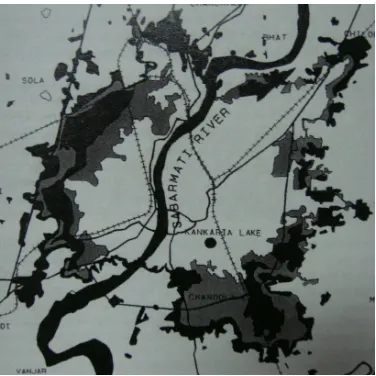
Figure 2 Growth of urban space under capitalist forcesvi
is around 4.5 million: 4,518,240viii.There are 886 female to every 1000 males. Literacy rate in Ahmedabad is 79.89% which is highest in Gujarat. There are more than 30000 rural families lives in Ahmedabad , 5,41% of those are below poverty line.
Driven by the growth of textile industry reached its peak in the 1940s, the city attracted migration from around Gujarat and India. In the post-Independence period, the city witnessed not only diversification of its industrial base but also significant development of professional and technical institutions, such as the Physical Research Laboratory, the Indian Institute of Management, and the Centre for Environmental Planning and Technology 3. In the late 1970s and 1980s, the textile industry has declined, resulting in the closure of more than half units and laying off about 60,000 workers. After 1990-1991, local economy has shown a revival. This is indicated by reduction number of lowest income group and also an increase in regular workers.
Many factories were built on large estates in or around the centre city before 1980s, and become centre of noise and pollution of its less infrastructure. The city suffered from traffic congestion and large number of slums. The old textile industries were no longer competitive, and new industries were located outside the centre city. In the year 1980s, the government did not allow polluting industries to locate in a radius of 20 kms around the city center4. The idea was not covered by any regulation, but only policy at state levelix.
The city’ population has increased in a major way following economic expansion and modernization. Ahmedabad being a centre of commerce and also government institutions and military base. The density population at 258 per one sqkms area calculated on the basis of the estimated population of the earthquake affected areas.
3 CASE STUDIES
Figure 3 Location of industrial estate in Ahmedabad under GIDC management
In order to accelerate the pace of industrialization in Gujarat, under the Gujarat Industrial
Development Act of 1962, GIDC came into existence in 1962. GIDC operates all over the state of Gujarat. It
operates and maintains industrial estates in various districts of Gujarat State. These estates are self-contained sanctuaries capable of sustaining a large number of industries within themselves. GIDC provides ready to occupy sheds for immediately starting an industry and also provides godown for storage of its material. All across the state, GIDC has planned for 252 Industrial Estates of which 171 are developed and functional.
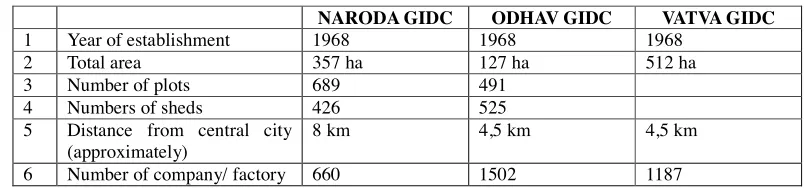
Table 1 Characteristics of GIDC case studies
NARODA GIDC ODHAV GIDC VATVA GIDC
1 Year of establishment 1968 1968 1968
Many factories in the early of industrialization have been developed inside the city and around the old city. The early industrialization of the Gujarat state in 1960s, industrial activity was clustered on the major cities such Ahmedabad. The city became overcrowding, increasingly higher land prices, and lack of effluent disposal sights. These industries and mostly the new industries began looking for location sites outside the city limits, into the industrial estates which being established by the state in the rural parts of Gujarat.
The state government under GIDC management developed some industrial estate on the outskirts city, they are located at maximum of 10 kms outside the city. The state government also gave incentives to industries to pursue land on those areas. In 1968, government under GIDC management appointed packed areas of land on the eastern outskirt of the city. The industrial estate are: Naroda, Odhav and Vatva (Fig 3).
After more than 40 years of development, the three industrial estates generated the growth of its surrounding areas. Agriculture land has been changed into developed land, and use of land had also been changed, such from agriculture to housing, housing to commercial, and public land for private or commercial use. The industrialization process in those particular areas has triggered these changes. According to Balchin,
Isaac and Chen (2000)1, industrialization always affected to people and urban shape. Population of that city
became increased since the city offer many job related to industries.
According to GIDC advisor9, in the 1980s, there are existed law that appointed land 20 kms outside the city could not be used for industries in order to protect agricultural land. Consequently, new laws restructuring the process of acquiring land making it easier to purchase land in what the government deemed outskirts, areas of low economic production and value. Incentives by the government were established to encourage industries to move away from central city, predominantly agricultural areas. As domino effects, land that left and not purchased by the state was slowly being polluted by the industries, the land became increasingly infertile and was slowly sold to the larger industrial estates.
Referred to historical data and process of urbanization driven by industrialization, which is explained on previous section, process of industrialization in Ahmedabad could be summarized as follow:
- 1861: first cotton mill were developed on the western side of the city
- 1940: since the city became famous as Manchester of East, it has attracted migration from outside Gujarat, hence the western side grew rapidly. Outside the walled city on eastern part,
- 1947: (post independence) eastern side of the city grew rapidly due to the development of some institutions and housing areas for middle income people
- 1968: development of three GIDC industrial estates (Naroda, Odhav, Vatva) on the eastern outskirt of
the city (maximum of 8 km only)
- 1970-1980: textile industry has declined, many workers became unemployed
- 1980s: industrial activity developed on the outskirt of the city in radius of 20 km (government policy)
- 1986: the boundary of AMC expanded to the three industrial estates
Figure 4 Stages of Ahmedabad urban growth driven by industrialization
1. In the year of 1960s, when economic of the city became stronger and cotton manufacturing activity
became more and more developed around the walled city, and also western side of the river developed due to service development, city boundary was expanded to western side and outside walled city in the eastern part. This shape could be define as first changing of city’ boundary generated by industrialization. Physical development of eastern and western side of the city were relatively balance in shape, it also driven by the development of bridges which connecting both sides. Odhav, Naroda, and Vatva industrial estate located outside the AMC boundary, since it connected to dirty activity and inappropriate land use inside the city.
2. In 1986, the boundary of AMC was expanded only to the eastern side. The urban shape has protruding
figurine of the three GIDC industrial estates, Naroda, Odhav, and Vatva, which are located on the eastern part of the city. The western boundary still remained same as previous. Naroda, Odhav and Vatva became part of AMC area due to the development of area in between the city and the industrial estates. The new urban shape at that time could be understood as a result of the change of land occupation development in between city centre and the industrial estates, from agriculture to developed land. It also triggered by the development of ring roads and state/ national highway around the city. Surrounding areas of the three estates became developed (radius of 1-2 kms from the estate) change also from agriculture into developed land, housing land occupation into commercial occupation. Some talukas (villages) that located around the estates merged with the estate as one big area. Since 1968 to 1986, the three estates mostly generated the growth of the surrounding areas, the three became urban generator of Ahmedabad city growth particularly on eastern part. After 1986, not only the industrial activity generated the areas, but also other service development, such as school, market, and some institutions. These activity as sub-sub urban generator which firstly driven by main generator; the industrial estates.
Above analysis has been considered based on research of AMC map and some interviews. Studying to the
current development areas of Ahmedabad city based on satellite photo (Google Earth) it can be seen that
the developed areas on eastern side mostly generated by the three estates. Study on its land coverage, nearer to the estates, more dense the area develop; and vise versa. The shape of its urban areas on eastern side actually has three protruding shape, which each shape is the location of Naroda, Odhav and Vatva industrial estates. Areas in between these protruding shape, currently is as vacant land and agricultural land. In the future, as AMC prediction, these areas will be developed and grown due to respond of urban generator of the industrial estates, as long as the industrial activity operates.
ACKNOWLEDGEMENT
Paper based on research carried out in Ahmedabad, INDIA from November 2008 to June 2009 under Fellowship provided by ASIA Fellows Award 2008 of Ford - Asian Scholarship Foundation (Ford-ASF).
REFERENCES
[i] Balchin, P. I., David; Chen, Jean, ”Urban Economics; a global perspective”, New York, Palgrave, 2000
[
ii]
Haan, H, “Urban Informal Sector Information: needs and methods”, Geneva, International Labour Office,1989
[iii] Dutta, Shyam, “Partnership in urban development: a review of Ahmedabad’s experience”, http://eau.sagepub.com/cgi/content/abstract/12/1/13, Environment and Urbanization, 2000
[
iv]
Dijk, Meine Pieter, “The Theory and Practice of Urban Management” (e-book), UK, Edward ElgarPublishing Ltd, 2006
[
v]
Heitzman, James, “The City in South Asia- Asia’s Great Cities” (e-book), NY, Routledge, 2008[
vi]
Jamdar, Avni, (theses) “Generators of Urban Space of Ahmedabad, School of Planning, CEPT University,Ahmedabad, 2000
[
vii]
Wikipedia, “Demographics and Culture of Ahmedabad”,http://en.wikipedia.org/wiki/Ahmedabad#Demographics, 2009