ECONOMICS AND THIRD WORLD
DEVELOPMENT
The new institutional economics (NIE) is the most important new body of theory to emerge in economics in recent years. This volume addresses the significance of this theory for the developing world. It combines theoretical and empirical contributions from a range of disciplines—notably development economics and economic history.
The volume begins with an overview of the origins and scope of the NIE by one of its leading exponents, Nobel Laureate Douglass North. Two chapters by leading development experts, political scientist Robert Bates and economist John Toye, extend this and provide critical commentaries on a theory which has challenged the orthodoxies about development, especially concerning the role of markets. The following chapters deal with theoretical issues and with institutions, markets and the state in a wide range of geographical and historical contexts.
The book is a major contribution to an area of debate still in its formative phase. Part of the promise of the NIE is that it offers new perspectives on both the micro-foundations of economics and the long-run dynamics of economic development. However, the conclusions of this book are that its strengths tend to lie in micro-analysis rather than in ‘grand theory’.
The book will be of great value to specialists and students of economics, economic history, politics and development studies; it will also appeal to those interested in new theoretical approaches and to readers with a particular regional interest.
THE NEW
INSTITUTIONAL
ECONOMICS AND
THIRD WORLD
DEVELOPMENT
Edited by John Harriss,
Janet Hunter and
Colin M.Lewis
by Routledge
11 New Fetter Lane, London EC4P 4EE
Simultaneously published in the USA and Canada by Routledge
29 West 35th Street, New York, NY 10001
First published in paperback 1997
Routledge is an imprint of the Taylor & Francis Group
This edition published in the Taylor & Francis e-Library, 2003.
© 1995 John Harriss, Janet Hunter and Colin M.Lewis
All rights reserved. No part of this book may be reprinted or reproduced or utilised in any form or by any electronic, mechanical, or other means,
now known or hereafter invented, including photocopying and recording, or in any information storage or retrieval system, without
permission in writing from the publishers.
British Library Cataloguing in Publication Data
A catalogue record for this book is available from the British Library
Library of Congress Cataloging in Publication Data
A catalog record for this book is available from the Library of Congress
ISBN 0-203-44429-9 Master e-book ISBN
List of illustrations viii
Notes on contributors x
Preface and acknowledgements xiii
1 INTRODUCTION: DEVELOPMENT AND SIGNIFICANCE OF NIE
John Harriss,Janet HunterandColin M.Lewis 1
Part I NIE: history, politics and development 2 THE NEW INSTITUTIONAL ECONOMICS AND
THIRD WORLD DEVELOPMENT
Douglass C.North 17
3 SOCIAL DILEMMAS AND RATIONAL
INDIVIDUALS: AN ASSESSMENT OF THE NEW INSTITUTIONALISM
Robert H.Bates 27
4 THE NEW INSTITUTIONAL ECONOMICS AND ITS IMPLICATIONS FOR DEVELOPMENT THEORY
John Toye 49
Part II NIE: theory and policy 5 STATE FAILURE IN WEAK STATES: A
CRITIQUE OF NEW INSTITUTIONALIST EXPLANATIONS
Mushtaq Khan 71
6 MAPS AND LANDSCAPES OF GRAIN MARKETS IN SOUTH ASIA
7 INSTITUTIONAL THEORIES AND STRUCTURAL ADJUSTMENT IN AFRICA
Howard Stein 109
8 THE ROLE OF THE STATE: THE CASE OF EGYPT
Heba Handoussa 133
Part III NIE: institutions and organisations 9 COCOA PLANTATIONS IN THE THIRD
WORLD, 1870s–1914: THE POLITICAL ECONOMY OF INEFFICIENCY
W.G.Clarence-Smith 157
10 PRODUCTIVITY AND POWER: INSTITUTIONAL STRUCTURES AND AGRICULTURAL
PERFORMANCE IN INDIA AND CHINA, 1900–50
B.R.Tomlinson 172
11 STATE INTERVENTION IN THE BRAZILIAN COFFEE TRADE DURING THE 1920s: A CASE STUDY FOR NEW INSTITUTIONAL
ECONOMICS?
Robert G.Greenhill 184
12 INSTITUTIONAL THEORY AND SOCIAL CHANGE IN UGANDA
E.A.Brett 200
13 THE WORLD BANK AND THE ANALYSIS OF THE INTERNATIONAL DEBT CRISIS
Beatrix Armendariz de AghionandFrancisco Ferreira 215
Part IV NIE: institutions, organisations and the state 14 THE POLITICS OF MONEY IN
MID-NINETEENTH-CENTURY ARGENTINA
Jeremy Adelman 233
15 POLITICAL FACTORS SHAPING THE ROLE OF FOREIGN FINANCE: THE CASE OF GREECE, 1832–1932
16 REGULATORY REGIMES, CAPITAL MARKETS AND INDUSTRIAL DEVELOPMENT: A
COMPARATIVE STUDY OF BRAZIL, MEXICO AND THE UNITED STATES OF AMERICA, 1840–1930
Stephen Haber 265
17 THE STATE AND THE ECONOMY IN INDONESIA IN THE NINETEENTH AND TWENTIETH CENTURIES
Anne Booth 283
18 EXPLAINING THE ECONOMIC AND
POLITICAL SUCCESSES OF RAWLINGS: THE STRENGTHS AND LIMITATIONS OF PUBLIC CHOICE THEORIES
E.Gyimah-Boadi 306
Bibliography 323
FIGURES
3.1 Pay-offs to two players and the Pareto set for the status quo
point 41
5.1 Type I and Type II state failure 72
5.2 NIE versus political economy methodologies 78
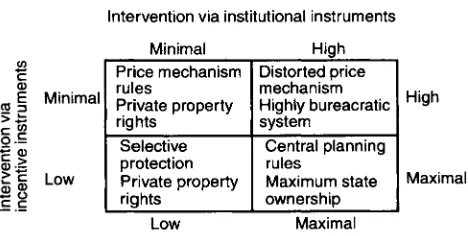
5.3 Political transaction costs versus transition costs 83 8.1 Degrees of intervention by the state in the economy 137
9.1 Average cocoa import prices, Hamburg 1850–96 159
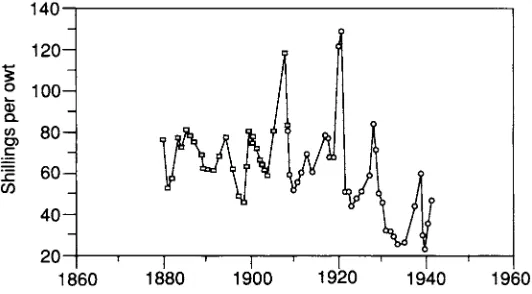
9.2 Highest price paid by Cadbury, 1880–1941 159
9.3 Deflated Lagos export prices for cocoa, 1909–39 160
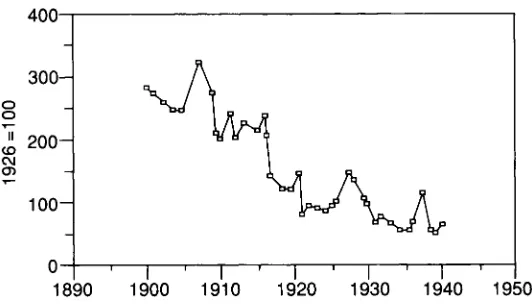
9.4 Deflated UK import prices for cocoa, 1900–40 160
13.1 The debt relief Laffer curve 222
16.1 Four-firm ratios 275
16.2 Herfindahl Indices, Brazil and Mexico 276
16.3 Herfindahl Indices, actual and predicted 280
17.1 Government revenues and expenditures as a percentage of
GDP 292
17.2 Revenues and expenditures per capita 293
TABLES
8.1 Objectives and instruments of state intervention 139 13.1 A comparison of World Bank predictions and actual data for a
number of variables in the 1980s 219
15.1 Breakdown of the foreign public debt in 1932 255
15.2 Foreign loans raised by the state 256
15.3 Nominal and real capital of foreign loans raised by the state 258 15.4 Real value of the foreign loans issued and the service of the
debt 260
16.1 Size and structure of the Brazilian cotton textile industry,
16.2 Size and structure of the Mexican cotton textile industry,
1843–1929 275
16.3 Size and structure of the US cotton textile industry, 1850–1930 276 16.4 Alternate specifications of industrial concentration
regressions: Mexico and Brazil 278
16.5 Actual and predicted Herfindahl Indices, Mexico and Brazil 279 17.1 Government revenues and expenditures per capita in
Indonesia, India and other British dependent colonies 290 17.2 Trends in public debt and debt service payments in Indonesia,
1911–90 294
17.3 Foreign trade taxes as a percentage of total government revenues and as a percentage of commodity exports and
imports 295
18.1 Presidential candidates and votes received in their ‘home’
regions 318
18.2 The pro-Rawlings votes in the 1992 presidential elections by
region 318
Jeremy Adelman is Associate Professor in the Department of History, Princeton University.
Beatriz Armendariz de Aghion lectures in Economics at the London School of Economics and Political Science, University of London.
Robert H.Bates is Professor in the Department of Government at Harvard University.
Anne Booth is Professor in the Department of Economics, School of Oriental and African Studies, University of London.
E.A.Brett is Programme Director in the Development Studies Institute, London School of Economics and Political Science.
W.G.Clarence-Smith is Reader in the Department of History, School of Oriental and African Studies.
Francisco Ferreira works for the World Bank, Washington, DC.
Robert G.Greenhill is Principal Lecturer in the Department of Business Studies at the Guildhall University of London.
E.Gyimah-Boadi teaches in the Department of Political and Administration Studies, University of Swaziland.
Stephen Haber is Professor in the Department of History at Stanford University.
Barbara Harriss-White is based at the International Development Centre of the University of Oxford.
Heba Handoussa is Professor in the Department of Economics at The American University of Cairo.
Janet Hunter is Saji Senior Lecturer in Japanese Economic and Social History at the London School of Economics and Political Science.
Mushtaq Khan is Assistant Director of Development Studies in the Department of Land Economy and a Fellow in Economics at Sidney Sussex College, University of Cambridge.
Colin M.Lewis is Senior Lecturer in Latin American Economic History at the London School of Economics and Political Science and Associate Fellow at the Institute of Latin American Studies, University of London.
Ioanna Pepelasis Minoglou teaches Economic History in the Department of International Relations, Panteion University, Athens.
Douglass C.North is Professor in the Department of Economics, Washington University, Saint Louis, and winner of the 1993 Nobel Prize for Economics.
Howard Stein is Professor in the Department of Economics, Roosevelt University, Chicago.
B.R.Tomlinson is Professor in the Department of History, Strathclyde University.
ACKNOWLEDGEMENTS
The conference from which this collection originates was organised under the auspices of the Third World Economic History and Development Group and hosted by the Department of Economic History and Institute of Development Studies at the London School of Economics and Political Science in September, 1993. Financial support was obtained from the Overseas Development Administration, the Suntory/Toyota International Centre for Economics and Related Disciplines and the British Academy. Their assistance is gratefully acknowledged.
The conference demonstrated with great clarity the congruence of interest amongst development theorists, policy-makers and historians of economic change. It is to be hoped that this volume reinforces the existence of common interests between those concerned with the present and the past, not just because they may happen to study the same geographical areas but because there are valid topics of intellectual debate and disciplinary approach which are common to both sides. The tone and content of debate at the conference illustrated the benefits to be derived from such an exchange.
The integrity of this volume—and indeed the success of the conference— owes much to the willingness of contributors to engage in a dialogue with each another. A particular debt is owed to Douglass C.North, Robert Bates and John Toye, who presented keynote papers at the conference, for their enthusiasm and encouragement, but we would like to extend our thanks to all those who participated in the event, including those who presented papers not included in this volume. The success of any conference rests on the willingness of all participants to engage in debate. We would also like to thank other staff in the Department of Economic History and the Development Studies Institute who helped with the organisation of the conference and the production of this manuscript.
INTRODUCTION
Development and significance of NIE
John Harriss, Janet Hunter and Colin M.Lewis
The importance of the new institutional economics (NIE) has been confirmed by the award of the Nobel Prize for Economics first in 1991 to Ronald Coase, whose seminal papers on ‘The Nature of the Firm’ (1937) and on ‘The Problem of Social Cost’ (1960) are widely referred to here, and then in 1993 to Douglass C.North, who contributes the following chapter in this book. The ‘new institutionalism’ is important for perhaps three reasons above all. First, it is an emerging body of theory which starts out within the frame of neo-classical economics, but offers answers to what have otherwise remained as puzzles in neo-classical theory. One of these puzzles, which, as Toye explains in his chapter, ‘acted as a catalyst of the NIE’, is the problem of the existence of the firm as an administrative and financial organisation—to which Coase offered an answer in his essay of 1937. So the NIE is important as a major development within the dominant paradigm of modern economics. Second, it is important in the context of economic policy in the 1990s because it has challenged the dominant role ascribed to the market by the orthodoxies of the last ten years or so. Thus, as Bates puts it in his chapter in this book, ‘[Those] who had emphasised the importance of market failure in development economics find in the new institutionalism new justification for their interventionist beliefs.’ However, the NIE does not simply reintroduce the state and revive the sterile confrontation between ‘state’ and ‘market’. Rather—as Toye explains—it shows that neither state nor market is invariably the best way in which to organise the provision of goods and services. Also, it offers ‘a set of tools to inform institutional design’. Herein lies much of the importance of the new institutionalism for the study of development. Third, its significance for development studies relates to another factor which underlies the contempo-rary prominence of NIE. In a period in which ‘grand theory’ in the social sciences has generally been on the retreat, it claims to offer just such a grand theory of social and economic change—a theory of development in terms of appropriate institutional change (which fosters further economic growth).
‘multi-’) disciplinary enquiry. This aspect is reflected in the fact that contributions to this book have been written by political scientists and historians as well as by economists. Among other things, the NIE provides scholars with a means of dealing rather more rigorously with the issue of distinguishing between the real world and individuals’ and groups’ perceptions of it. The question of ‘mental models’ plays a prominent part in the historical chapters, and suggests the possibility that the NIE can go a considerable way toward bridging a very real gulf between the perfectly rational actors of neo-classical theory and the often seemingly irrational decisions of economic actors in history—a problem which scholars such as Scott attempted to address through the concept of the moral economy of the peasant (Scott 1976). Mental models, however, offer another perspective on how to deal with market interaction and transaction costs. Phrases such as ‘market failure’ and ‘market imperfections’ dominate the study of late-developing economies. They also feature largely in—and are fundamental to—the NIE, given the focus on production externalities, public goods, imperfect information and the free-rider problem. Institutions, for economic historians such as North, are the way in which economies cope with ‘market failure’. Thus, by attempting to incorporate the concepts of public/rational choice into economic decision-making, NIE not only tries to suggest something about the relationship between the individual and the collective in rational decision-making, but also appears to offer an explanation as to why the evolutions of individual countries differ from each other. And this, perhaps, is the fundamental dilemma of the scholar of economic change—to find a position on the spectrum which at one end argues that the development of every economy is unique, and at the other argues, like Marx or Rostow, that there is a universality about economic development, from which economies are incapable of deviating.
WHAT IS THE ‘NIE’ AND WHY IS IT SIGNIFICANT IN MODERN ECONOMICS?
North (Ch. 2, this volume) tells us that NIE
builds on, modifies, and extends neo-classical theory to permit it to come to grips and deal with an entire range of issues heretofore beyond its ken. What it retains and builds on is the fundamental assumption of scarcity and hence competition—the basis of the choice theoretic approach that underlies micro-economics.
Thus the NIE retains the neo-classical axioms of methodological individualism but rejects certain very restrictive assumptions in the notion of ‘the market’ that is central to neo-classical economics: namely, the conception of the market:
goods by means of voluntary transactions on an equal basis between large numbers of autonomous, fully-informed entities with profit-maximising behavioural motivations and able to enter and leave freely. (Harriss-White, Ch. 6 this volume) The NIE starts from the reality that information is rarely complete, and that individuals have different ideas (or mental models) of the way in which the world about them works. Transactions thus have costs associated with them which are assumed not to exist in the neo-classical model: these are the costs of finding out what the relevant prices are, of negotiating and of concluding contracts, and then of monitoring and enforcing them. Institutions are broadly defined as means of reducing these information and transaction costs.
North also argues that institutions are formed precisely to reduce uncertainty in human exchange. Institutions—notably property rights in the North view—are thus crucial determinants of the efficiency of markets. He attributes this basic insight to Coase, who argued that the existence of ‘real-world’ firms’ actual administrative organisations—as opposed to the abstraction of ‘the firm’ as an economic actor in general equilibrium theory— stems from the fact that they allow for the reduction of information and transaction costs. This leads to the recognition, uncomfortable for some economists, that markets are only one type of social device for settling the terms of transactions, and that the performance of markets may be judged against that of other devices. To summmarise, the NIE is a development of neo-classical economics to include the role of transaction costs in exchange and so to take account of institutions as critical constraints on economic performance.
North adds yet another aspect that is of central importance. This is that the NIE modifies the ‘rationality postulate’ of neo-classical economics which maintains that values are given and constant and that individual economic agents select the most efficient means of maximising rationally chosen ends. North, however, argues here that individuals make choices on the basis of their mental models. Drawing on Boyd and Richerson (1985), North has shown that these are in part culturally derived, differ widely, are not easily changed and give rise not to the one determinate position of general equilibrium theory but potentially to multiple equilibria (North 1990a:37). As the chapters by Clarence-Smith and Greenhill—on cocoa production and the Brazilian coffee trade respectively—show, mental models can sustain systems that are anything but efficient.
refers to those kinds of problems which arise when choices made by rational individuals yield outcomes that are socially irrational. This is a real-world problem quite beyond the definitional framework of the abstract world of general equilibrium theory. Bates also alludes to ways in which institutions such as property rights resolve problems of market failure (for example, those arising from production externalities), how non-market institutions resolve problems that undermine the creation or the maintenance of public goods, and how information costs give rise to different types of contracts. For Bates, then, the ‘core logic’ of the new institutionalism is that ‘Rational individuals, confronted with the limitations of individually rational behaviour, create institutions that, by creating new incentives or by imposing new constraints, enable them to transcend these limitations’ (Ch. 3, this volume).
WHAT IS ‘NEW ABOUT NIE?
innovation. On the other hand, he argues that a differentiation between types of capitalismbased on the organisation of firms, in part founded on an attempt to take account of response to innovation, constitutes the strength of the OIE. This, of course, may be disputed and it remains unclear whether the OIE offers a convincing theoretical explanation for the occurrence of innovation. Moreover, as manifest in the implicit tension between chapters by Handoussa and Stein in this volume, the specifics of the links between NIE and OIE are a subject of continuing debate.
In sum, the OIE may be presented as descriptive, holistic and behaviourist and the NIE as formalist and reductionist. In ideological terms, the former can be depicted as collectivist and lacking technical rigour, the latter as anti-interventionist and excessively devoted to highly mathematical rational choice modelling. Nevertheless, institutionalists—old and new—are concerned with the determinants of change over time. In neo-Schumpeterian fashion, NIE presents change as evolutionary while attaching greater importance to the role of the individual, thereby acknowledging a larger debt to classical economics. This accounts for its emphasis on legal systems, property rights and organisations. Hence, too, the importance attached to public choice theory and the empowerment of the individual agent, and to rent-seeking behaviour and distributive coalitions, processes that reduce or increase transaction costs and positively or adversely affect income distribution and therefore impact on economic efficiency. Thus, as indicated above, whereas classical theory seeks to analyse an economy at a particular moment and takes little cognizance of peculiarities of time and place, institutionalists examine process and seek to explain why some economies have advanced and others have not. This is an aspect of the approach that has always commended institutionalism to historians. Moreover, it is an explicit incorporation of the political and the social into analyses of the formation of institutions that has generated interest in institutional economics amongst social scientists. These characteristics, given the multi-disciplinarity of a large part of the existing literature, also point to the relevance of NIE for future research on Third World development.
THIRD WORLD DEVELOPMENT
regions of rapid population growth and physical space, where imported technology wouldinteract with existing cultures to produce growth-oriented institutions. In less optimistic vein, for North Third World countries provide examples of antidevelopment frameworks. Statist regulation, ill-defined property rights and other constraints restrict rather than stimulate economic activity. These conditions result in rent-seeking and redistribution, not rising productivity. Organisations that operate within Third World institutional frameworks are not inefficient; they are efficient at making a society more unproductive (North 1990a:9).
(Greenhill). This analysis is extended by Haber in his analysis of regulatory regimes and the provision of industrial finance.
While the use of the conventional de-institutionalised conception of ‘the market’ as a basis for policy advocacy can result in unintended outcomes, it is also important, as Bates argues, to be aware of the ways in which NIE approaches may provide misleading or biased analyses for policy purposes. Bates takes as an example the case which, under the NIE approach, can be made for the benefits of marketing boards in Africa. However, as he points out, policy advocacy based on these arguments alone would reflect only a partial view—one which ignores the costs of the boards—and so would promote a systematic bias. The NIE does not cost out alternative options, and Bates concludes that the proper role of the new institutionalism might be to provide diagnoses rather than to prescribe cures. This view is generally supported throughout the book.
INSTITUTIONS AND THE STATE IN HISTORY
From the perspective of an economic historian, commented North (1981), the neo-classical formulation of economic activity appears to beg all the interesting questions. ‘The world with which it is concerned is a frictionless one in which institutions do not exist and all change occurs through perfectly operating markets. In short, the costs of acquiring information, uncertainty and transaction costs do not exist (North 1981:5). An attempt to incorporate these elements of friction into what remains a neo-classical based model is what lies behind the new institutional economics. As indicated above, even those who question its general value would accept that this makes the NIE particularly relevant to the study of developing economies, where non-market institutions and ‘market failure’ have been of particular importance.
In some respects NIE would seem to historians evidence that economists are at long last ‘discovering’ what historians have always known: namely that institutions play a significant role in the growth and change of economies. Those who study economic change in history have devoted much of their attention to the features highlighted by NIE, such as the role of the state, disparities between perceptions and actuality and the significance of, for example, transaction costs and property rights. Yet as Adelman observes in his chapter, public choice theorists assume that ‘states exist to defend and uphold property rights’ but rarely address the issue of how rules become encoded. States matter and can effect quite dramatic institutional changes as Booth, Haber, Khan and, indeed, Adelman indicate.
confronted. To that extent NIE is not, at least not yet, a new theory of economic history. Rather, as several chapters in this book demonstrate, it is a device that assistshistorians to reframe the questions they can ask of their material. It is not exclusive; it can usefully be employed in conjunction with other theories and concepts to sort information. However, insofar as it articulates in a more formal manner some of the concepts already familiar to economic historians, particularly those of late developing countries—for example the role of the state, already identified with the work of Alexander Gerschenkron on Russia (e.g. 1962)—it enhances the range of tools which can be applied with rigour to the study of economic change in the past.
There is a second reason why the NIE may be of particular value to historians. As a group of scholars concerned with economic change over time, economic historians are interested in what is essentially a dynamic process. Consequently, like other social scientists, historians have often found the economic theories associated with general equilibrium models and the neo-classical school less than helpful in understanding why economies change and develop as they do. For that reason in particular, historians of late developing or Third World countries, many of whose concerns lie in the presence or absence of a transformation from an agrarian to an industrial economy, have turned to the more dynamic concepts of development economics. The new institutional economics is a body of ideas which is essentially dynamic, or at least seeks to introduce an element of dynamism into the static stereotype of neo-classical theory. It would seem, therefore, to be particularly suited to the interests of those who study economies which have yet to reach the level of full industrialisation so often depicted as the ultimate goal, whether it is—as Ioanna Pepelasis Minoglou shows—nineteenth-century Greece, or sixteenth-century Western Europe, or twentieth-sixteenth-century Africa.
in Booth’s chapter on the role of the state in Indonesian development, and, as Handoussa demonstrates, in the case of Egyptian economic growth. It becomes clear that, as Khan states,according to the circumstances, there are both pros and cons to the extent of intervention. Clarence-Smith is highly critical of official intervention which, often justified in terms of macroeconomic efficiency and welfare, resulted in support schemes skewed in favour of socially and politically important planters. Moreover, the state is invariably a reflection of the hold over power within a society, representative of the dominant economic interest groups. The institutions of a society—formal and informal— are created to serve those in possession of bargaining power, and the effort to uphold these institutions, even in the face of changes in transaction costs, information flows and their increasing disutility, leads to the formation of dominant interest groups. This is shown to be found not just in Indonesia, but in the case of China and India, where, as Tomlinson shows, the weak and often corrupted nature of market stimuli promoted the strength of social and political mechanisms for controlling land and the surplus, while these very mechanisms reinforced the absence of public institutions which might otherwise have filled this vacuum. This leads, in Bates’s view, to the ultimate primacy of political activity and the need to ask whether NIE is less an economic theory than a theory of political economy. Adelman would probably agree. In the hurly burly of a free political market such as mid-nineteenth-century Argentina, no single agent wielded sufficient authority to impose a given set of rules. Of necessity, analyses of institution-building have to deal with the exercise of political power and manipulation of economic advantage. Clearly, there are states and states. It is, therefore, valid to ask what the NIE has contributed to the classification of states old and new. One suggestion may be that institutional economics offers explanatory insights into the functioning of the predatory state, which features prominently in the literature on the Third World, and the ‘weak’ or ‘lethargic’ state featured in several chapters in this collection. A number of contributors—for example, Booth, Greenhill, Handoussa, Pepelasis Minoglou and Tomlinson—hint at path-dependent development associated with quite distinct institutions.
A ‘GRAND THEORY’ OF DEVELOPMENT
result over time will be an institutional framework conducive to growth and development. Only ‘fit’ institutions will survive. An instance of this kind of reasoning, applied to institutional innovation in the context of agricultural economies, is found in the work of Ruttan and Hayami (1984). But, as Toye maintains, ‘the problem with the biological analogy is not that people cannot choose between institutions, but exactly the opposite one—that they can’ and as a result undesirable institutions survive over long periods. A case in point may be that of the social institutions of rural Bengal explored by Boyce (1987), where an ‘appropriate’ path of institutional change has apparently not been induced in the way suggested by Ruttan and Hayami (1984).
It would appear from North’s account in this book, that the NIE approach to the grand theory of institutional development ends up by emphasising the constraints upon change. It follows from the above analogy that ‘once an economy is on an “inefficient” path that produces stagnation it can persist (and historically has persisted) because of the nature of path dependence’ and because ‘…the individuals and organisations with bargaining power as a result of the institutional framework have a crucial stake in perpetuating the system’. Given its role in specifying and enforcing formal rules, the nature of the state is bound to play a central role in determining the path of development. So, for North, ‘a dynamic model of economic change entails as an integral part of that model analysis of the polity’.
The short account of North’s approach to the analysis of change over time which then follows is limited. He suggests little more than that change is a complex process which comes about as a consequence of ‘choices that individuals and entrepreneurs of organisations are making every day’—subject to limited information, diverse mental models, and the influence of historically deeply rooted norms and conventions. This account seems amply to justify Toye’s comment that the NIE, in spite of the aims of some of its exponents, is much less successful at a macro-theoretic level:
The main weakness of the NIE as a grand theory of socio-economic development is that it is empty. As a critique of other theories which altogether ignore the role of institutions…it is welcome. But when it comes to new general insights about how [institutional] determination works, the theory adds nothing to what we already have.
Nevertheless, North’s account demonstrates the need to bring ‘history’ back into the explanation. But, again according to Toye, this is only the first step as ‘history’ means many different things. There are many possible historiographies.
NIE: A CRITICAL EVALUATION
and likely to be of enduring significance in the social sciences. This has resolved some puzzles in neo-classical theory, has opened up new avenues of enquiry and has brought about a shift in the terms of the discourse about development. Accordingly, the NIE has encouraged renewed interest in the way in which economies actually work, but in a way that is theoretically much more rigorous than in the older tradition of institutionalism within economics. However, this book also highlights the limitations of the NIE. The power of the new institutionalism lies in the capacity to illuminate the micro-foundations of economies and the dynamics of institutions and organisations. As ‘grand theory’ its claims at present far out-run its achievements. Harriss-White correctly shows that even for the analysis of the micro-foundations of economies, the perspectives of the NIE essentially complement insights derived from other approaches; they do not constitute a comprehensive, new framework. Moreover, as Stein argues, for all its theoretical limitations the older institutionalism still offers perspectives, and raises questions, that illuminate contemporary problems. The significance of the OIE emphasis on understanding diversity in the organisation of firms, and differences in the way in which capitalism works in distinct contexts, is recognised in the emerging literature on East Asian industrial organisation.
the type of property rights which will prevail, depends upon the costs of transacting. As Bates points out in his discussion of Coase’s Theorem there is, however, ‘a second possible answer: that it would depend upon the structure of polities’. The NIE emphasises choices, whereas the reality is often that outcomes are determined by constraints which have to do with the political settlement. In short, while the NIE has brought about an important shift in the discourse of development, it has to be encompassed within a more thoroughly political economy.
Thus, as several of the chapters in this volume suggest, not only is NIE immensely diverse and separate, it is in many ways flawed. At the macro-level many of the institutional operations on which the new framework focuses—for example, the role of the state—cannot be measured. Possibly, the main role of the NIE may be in setting future agendas for economic historians and students of development and in providing them with an additional tool to analyse the institutional features of economies. This would be an important contribution to the methodology. The approach has a further importance, however, which lies in Toye’s observation that NIE can serve as a ‘bridge’ to mathematical neo-classicists from whom the path of economic historians and development specialists has shown a sustained tendency to diverge over recent years. If NIE seems to show that economists are rediscovering institutions, it is a valuable bridge indeed.
Part I
THE NEW INSTITUTIONAL
ECONOMICS AND THIRD
WORLD DEVELOPMENT
Douglass C.North
This chapter is intended briefly to summarise the essential characteristics of the new institutional economics, to describe how it differs from neo-classical theory, and then to apply its analytical framework to problems of development.
INSTITUTIONS AND ECONOMIC THEORY
The new institutional economics is an attempt to incorporate a theory of institutions into economics.1 However, in contrast to the many earlier
attempts to overturn or replace neo-classical theory, the new institutional economics builds on, modifies and extends neo-classical theory to permit it to come to grips and deal with an entire range of issues heretofore beyond its ken. What it retains and builds on is the fundamental assumption of scarcity and hence competition—the basis of the choice theoretic approach that underlies microeconomics. What it abandons is instrumental rationality—the assumption of neo-classical economics that has made it an institution-free theory.
Herbert Simon has accurately summarised the implications of this neo-classical assumption as follows. If values are accepted as given and constant, if an objective description of the world as it really is can be postulated, and if it is assumed that the decision-maker’s computational powers are unlimited, then two important consequences follow. First, it is not necessary to distinguish between the real world and the decision-maker’s perception of it: he or she perceives the world as it really is. Second, it is possible to predict the choices that will be made by a rational decision-maker entirely from a knowledge of the real world and without a knowledge of the decision-maker’s perceptions or modes of calculation (of course, his or her utility function must be known) (Simon 1986:210). In a world of instrumental rationality institutions are unnecessary; ideas and ideologies don’t matter: and efficient markets—both economic and political—characterise economies.
constraints on human interaction in order to structure exchange. There is no implication that the consequent institutions are efficient. In such a world ideas and ideologies play a major role in choices and transaction costs result in imperfect markets.
The place to begin a theory of institutions, therefore, is with a modification of the instrumental rationality assumption. Although a complete understanding of how the mind processes information has not yet been achieved, cognitive science has made impressive strides in recent years. Individuals possess mental models to interpret the world around them. These are in part culturally derived—that is, produced by the intergenerational transfer of knowledge, values and norms which vary radically among different ethnic groups and societies. In part they are acquired through experience which is ‘local’ to the particular environment and therefore also varies widely with different environments. Consequently there is immense variation in mental models, and as a result different perceptions of the world and the way it ‘works’. And even the formal learning that individuals acquire frequently consists of conflicting models with which to interpret the world. Individuals make choices on the basis of their mental models. Individuals do learn, and changes in mental models stem from outcomes inconsistent with expectations; but in Frank Hahn’s words ‘there is a continuum of theories that agents can hold and act upon without ever encountering events which lead them to change their theories’ (Hahn 1987:324). In consequence there is not one determinate equilibrium which will obtain; but multiple equilibria can occur. The incomplete information and limited mental capacity by which to process information determines the cost of transacting which underlies the formation of institutions. At issue is not only the rationality postulate but the specific characteristics of transacting that prevent the actors from achieving the joint maximisation result of the zero transaction cost model. The costs of transacting arise because information is costly and asymmetrically held by the parties to exchange. The costs of measuring the multiple valuable dimensions of the goods or services exchanged or of the performance of agents, and the costs of enforcing agreements determine transaction costs.2
Institutions are formed to reduce uncertainty in human exchange. Together with the technology employed they determine the costs of transacting (and producing). It was Ronald Coase (1937,1960) who made the crucial connection between institutions, transaction costs and neo-classical theory; a connection which even now has not been completely understood by the economics profession. Baldly stated, the neo-classical result of efficient markets only obtains when it is costless to transact. When it is costly to transact, institutions matter. And because a large part of national income is devoted to transacting, institutions and specifically property rights are crucial determinants of the efficiency of markets.3 Coase
skein of the performance of economies over time, which is our primary concern here.
How does this new institutional approach fit in with neo-classical theory? It begins with the scarcity hence competition postulate; it views economics as a theory of choice subject to constraints; it employs price theory as an essential part of the analysis of institutions; and it sees changes in relative prices as a major force inducing change in institutions.
How does this approach modify or extend neo-classical theory? In addition to modifying the rationality postulate, it adds institutions as a critical constraint and analyses the role of transaction costs as the connection between institutions and costs of production. It extends economic theory by incorporating ideas and ideologies into the analysis, modelling the political process as a critical factor in the performance of economies, as the source of the diverse performance of economies, and as the explanation for ‘inefficient’ markets.
This last point—inefficient markets—requires further explanation because it highlights the major contribution that the new institutional economics can make to economics, economic history and economic development. Coase began his 1960 essay by arguing that when it is costless to transact, the efficient neo-classical competitive solution obtains. It does so because the competitive structure of efficient markets leads the parties to arrive costlessly at the solution that maximises aggregate income regardless of the institutional arrangements. Now to the extent that these conditions are mimicked in the real world, they are mimicked because competition is strong enough via arbitrage and efficient information feedback to approximate the Coase zero transaction cost conditions and the parties can realise the gains from trade inherent in the neo-classical argument.
But the informational and institutional requirements necessary to achieve that result are stringent. Players must not only have objectives but know the correct way to achieve them. But how do the players know the correct way to achieve their objectives? The instrumental rationality answer is that even though the actors may initially have diverse and erroneous models, the informational feedback process and arbitraging actors will correct initially incorrect models, punish deviant behaviour and lead surviving players to the correct models.
An even more stringent implicit requirement of the discipline-of-the-com-petitive-market model is that when there are significant transaction costs, the consequent institutions of the market will be designed to induce the actors to acquire the essential information that will lead them to correct models. The implication is not only that institutions are designed to achieve efficient outcomes, but that they can be ignored in economic analysis because they play no independent role in economic performance.
feedback is typically insufficient to correct these subjective models. Institutions are not necessarily or even usually created to be socially efficient; rather they, or at least the formal rules, are created to serve the interests of those with the bargaining power to create new rules. In a zero transaction cost world, bargaining strength does not affect the efficiency of outcomes; but in a world of positive transaction costs it does—and it thus shapes the direction of long-run economic change.
It is exceptional to find economic markets that approximate the conditions necessary for efficiency. It is impossible to find political markets that do (North 1990b). Because it is the polity that defines and enforces property rights, it is not surprising that efficient economic markets are exceptional. Moreover, once an economy is on an ‘inefficient’ path that produces stagnation it can persist (and historically has persisted) because of the nature of path dependence.
Institutional path dependence exists because of the network externalities, economies of scope and complementarities that exist with a given institutional matrix. In everyday language the individuals and organisations with bargaining power as a result of the institutional framework have a crucial stake in perpetuating the system. Paths do get reversed (witness Argentina—from growth to stagnation in the past half century; or Spain—the reverse since the 1950s). But reversal is a difficult process about which we know all too little— as witness the ongoing fumbling efforts at such reversal in Central and Eastern Europe. The reason is that we still know all too little about the dynamics of institutional change and particularly the interplay between economic and political markets. What may be done with this analytical framework?
THE SOCIAL ENVIRONMENT OF ECONOMIC CHANGE
An institutional/cognitive story of long-run economic change begins by examining the changing initial conditions confronting diverse groups of individuals. As tribes evolved in different physical environments they developed different languages and, with different experiences, different mental models to explain the world around them. To the extent that experiences were common to different tribes the mental models provided common explanations. The language and mental models formed the informal constraints that defined the institutional framework of the tribe and were passed down intergenera-tionally as the customs, taboos, myths that provided the continuity of culture and forms part of the key to path dependence.
complex institutional structures were necessary to capture the potential gains from trade. Such evolution required that the society develop institutions that would permit anonymous, impersonal exchange across time and space. But to the extent that ‘local experience’ had produced diverse mental models and institutions with respect to the gains from such cooperation, the likelihood of creating the necessary institutions to capture the gains from trade of more complex contracting varied.4 The key to this story is the kind of learning that
organisations acquired to survive. If the institutional framework made the highest pay-offs for organisations’ piracy, then organisational success and survival dictated that learning would take the form of being better pirates. If on the other hand productivity-raising activities had the highest pay-off, then the economy would grow.
There is no guarantee that the perceived pay-offs will favour the latter rather than the former, and indeed economic history bears abundant testimony to economic growth being the exception. The long evolution of the Western world from the relative backwardness of the tenth century to its growth, pre-eminence, and hegemony by the eighteenth century is striking, not only because of the relative failures in the rest of the world (China and Islamic countries for example), but equally for the diverse degrees of success in the West itself.5
What went wrong with the failures and, more urgently, why is it so hard to make it right? An explanation entails some analysis of the institutional requirements necessary to capture the productivity implications of modern technology.
The second economic revolution which began in the second half of the nineteenth century was the systematic application of the modern scientific disciplines to technology and more broadly to the economic problems of scarcity.6 For those economies that could realise their potential the productivity
implications have resulted in standards of well-being simply unimagined by prior generations. But to realise the advantages of this technology has entailed a fundamental restructuring of economic activity, and, more than that, of the entire society. The economic restructuring involves realising the productive implications of world-wide specialisation and division of labour. While Chandler (1977) has captured some of the key elements of this transformation for individual firms, the overall costs of coordinating and integrating econo-mies—transaction costs—entail economy-wide restructuring, including the development of a polity that will enact and enforce the rules of the game necessary to such integration.
when there are large numbers of players. In those circumstances the gains from defection typically outweigh the gains from cooperation.
The second economic revolution created an economic world characterised by impersonal markets and all the attendant characteristics of the latter game theoretic conditions. To overcome them entails the creation of institutions that so structure the rules and their enforcement as to alter the pay-offs to induce cooperative solutions. This analysis is hardly new (although the terminology may be different). Karl Marx long ago pointed out that the tension between the organisational imperatives of a technology and the existing property rights was a fundamental source of conflict and change. Marx’s error was that he thought that it was capitalism that was incompatible with the new technology. In fact it has been the flexibility of the political and economic institutions of the market economies that has enabled them to adjust to realise the productivity implications of the second economic revolution. And, ironically, it has been the inflexibility and rigidities of centrally planned economies that have led to their demise.
But there is still more to the issue of institutional adjustment to the second economic revolution. That adjustment entails a total societal transformation. Impersonal exchange, minute specialisation and division of labour, a radical reduction in information costs, and world-wide interdependence entail a complete transformation of every aspect of societal organisation. Urbanisation, ubiquitous externalities, the insecurity arising from interdependence, and radical alteration of the traditional functions of the most fundamental organisation of all prior societies—the family—have produced and continue to produce immense modern social problems. Again it has been the flexibility of the political and economic institutions of Western economies that have, very imperfectly, provided substitutes for the traditional role of the family: insured against the new insecurities affecting individuals; and dealt with the externalities, environmental as well as social, that accompany this economic transformation.
INSTITUTIONS AND ORGANISATIONS
It is precisely in this economic and social context that the modern problems of economic development must be considered. The fundamental issue can be stated succinctly. Successful development policy entails an understanding of the dynamics of economic change if the policies pursued are to have the desired consequences. And a dynamic model of economic change entails as an integral part of that model analysis of the polity, since it is the polity that specifies and enforces the formal rules.
have typically treated the state as either exogenous or as a benign actor in the development process. Neo-classical economists have implicitly assumed that institutions (economic as well as political) do not matter, and that the static analysis embodied in allocative-efficiency models should be the guide to policy; that is, ‘getting the prices right’ by eliminating exchange and price controls. In fact the state can never be treated as an exogenous actor in development policy, and getting the prices right only has the desired consequences when agents already have in place a set of property rights and enforcement that will then produce the competitive market conditions.
Before going further it is essential to distinguish clearly institutions from organisations. Institutions are the rules of the game of a society, or, more formally, are the humanly devised constraints that structure human interaction. They are composed of formal rules (statute law, common law, regulations), informal constraints (conventions, norms of behaviour and self-imposed codes of conduct), and the enforcement characteristics of both. Organisations are the players: groups of individuals bound by a common purpose to achieve objectives. They include political bodies (political parties, the senate, a city council, a regulatory agency): economic bodies (firms, trade unions, family farms, cooperatives); social bodies (churches, clubs, athletic associations); and educational bodies (schools, colleges, vocational training centres). These definitions undergird five propositions that define the essential characteristics of institutional change:
1 The continuous interaction of institutions and organisations in the econ-omic setting of scarcity, and hence competition, is the key to institutional change.
2 Competition forces organisations continually to invest in skills and knowledge to survive. The kinds of skills and knowledge individuals and their organisations acquire will shape evolving perceptions about opportunities and hence choices that will incrementally alter institutions. 3 The institutional framework dictates the kinds of skills and knowledge
perceived to have the maximum pay-off.
4 Perceptions are derived from the mental constructs of the players. 5 The economies of scope, complementarities and network externalities of
an institutional matrix make institutional change overwhelmingly incremental and path dependent.
norms of behaviour will guide exchanges, but sometime such norms will gradually be modified or wither away. In both instances institutions are gradually being modified. Modifications occur because individuals perceive that they could do better by restructuring exchanges (political or economic). The source of the changed perceptions may be exogenous to the economy— for instance a change in the price or quality of a competitive product in another economy that alters the perceptions of entrepreneurs in the given economy about profitable opportunities. But the fundamental source of change is learning by entrepreneurs of organisations.
While some learning is a result of idle curiosity, the rate of learning will reflect the intensity of competition amongst organisations. Competition is a ubiquitous consequence of scarcity and hence organisations in an economy will engage in learning to survive. But the degree can and does vary. If competition is muted as a result of monopoly power the incentive to learn will be reduced.
The rate of learning determines the speed of economic change, the kind of learning determines the direction of economic change. The kind of learning is a function of the expected pay-offs of different kinds of knowledge, and therefore will reflect the mental models of the players and most immediately at the margin, the incentive structure embodied in the institutional matrix. As noted earlier, if the institutional matrix rewards piracy (or more generally redistributive activities) more than productive activity, then learning will take the form of learning to be better pirates.
Change is typically incremental, reflecting ongoing ubiquitous evolving perceptions of the entrepreneurs of organisations in the context of an institutional matrix that is characterised by rietwork externalities, complementarities and economies of scope among the existing organisations. Moreover since the organisations owe their existence to the institutional matrix, they will be an ongoing interest group to assure the perpetuation of that institutional structure—thus assuring path dependence. Revolutions do occur, however, when organisations with different interests emerge (typically as a result of dissatisfaction with the performance of existing organisations) and the fundamental conflict between organisations over institutional change cannot be mediated within the existing institutional framework.
POLITICAL ECONOMY, RULES AND ADAPTIVE EFFICIENCY
1 Institutions are made up of formal rules, informal norms and the enforcement characteristics of both, and it is the admixture of rules, norms and enforcement characteristics that determines economic performance. While the formal rules can be changed overnight, the informal norms change only gradually. Since it is the norms that provide the essential ‘legitimacy’ to any set of formal rules, revolutionary change is never as revolutionary as its supporters desire, and performance will be different than anticipated. More than that, societies that adopt the fomal rules of another society (for example, the adoption by Latin American countries of constitutions similar to the United States of America) will have very different performance characteristics than the original country because both the informal norms and the enforcement characteristics will be different. The implication is that transferring the formal political and economic rules of successful Western market economies to Third World and Eastern European economies is not a sufficient condition for good economic performance. Privatisation is not a panacea for solving poor economic performance. 2 It is polities that shape economic performance because they define and
enforce the economic rules of the game. Therefore the heart of development policy must be the creation of polities that will create and enforce efficient property rights. Unfortunately, however, research in the new political economy (the new institutional economics applied to polities) has been largely focused on the USA and other developed countries. While a great deal is known about the characteristics of the polities of Third World countries there is very little theory about such polities.7 Even less is known
about the consequences of radically altering the institutional framework of Central and Eastern European societies. However, the characteristics of institutions described in the foregoing sections of this chapter suggest some implications:
(a) Political institutions will be stable only if they are supported by organisations with an interest in their perpetuation. Therefore an essential part of political/economic reform is the creation of such organisations.
(b) It is essential to change both the institutions and the belief systems for successful reform since it is the mental models of the actors that will shape choices.
(c) Evolving norms of behaviour that will support and legitimise new rules is a lengthy process and in the absence of such reinforcing norms polities will tend to be unstable.
(d) While economic growth can occur in the short run with autocratic regimes, long-run economic growth entails the development of the rule of law and the protection of civil and political freedoms.
economic performance. Societies with norms favourable to economic growth can sometimes prosper even with unstable or adverse political rules. The key is the degree to which there is enforcement of the adverse political rules. Little is known about the evolution of belief systems and consequent informal constraints, although religions have clearly been a basic component of belief systems.
3 It is adaptive rather than allocative efficiency which should be the guide to policy. Allocative efficiency is a static concept with a given set of institutions; the key to continuing good economic performance is a flexible institutional matrix that will adjust in the context of evolving technological and demographic changes as well as shocks to the system. It is the creation of a stable polity with complementary norms that is the essential characteristic. Successful political/economic systems have evolved such characteristics over long periods of time. The critical issue is how to create such systems in the short run or, indeed, whether it is even possible to create them in short periods of time. However it is doubtful if the policies that will produce allocative efficiency are always the proper medicine for ailing economies. Efficient policies that are perceived to be inequitable will engender political reactions which can stall or reverse effective reforms.
There is no greater challenge facing today’s social scientist than the development of a dynamic theory of social change that will fill in many of the gaps in the foregoing analysis and yield an understanding of adaptive efficiency.
NOTES
1 The first section of this chapter is drawn from the John R.Commons lecture given at the American Economic Association meetings in January 1992 and subsequently published in the American Economist (Spring 1992:3–6) under the title ‘Institutions and Economic Theory’.
2 The transaction cost approach is unified only in its agreement on the importance of transaction costs. The approach developed here might most appropriately be termed the University of Washington approach. Oliver Williamson has pioneered a somewhat different approach.
3 Wallis and North (1986) found that 45 per cent of national income was devoted to transacting in 1970.
4 Ronald Heiner (1983) in a pathbreaking article first articulated the connection between uncertainty and institutions, and suggested that institutional development could be arrested using an argument similar to that advanced here.
5 See Jones (1981, 1988), Rosenberg and Birdzell (1986) and North and Thomas (1973) for explanations of this evolution.
6 See North (1981: Ch. 13, ‘The Second Economic Revolution’) for an elaboration of this argument.
SOCIAL DILEMMAS AND
RATIONAL INDIVIDUALS
An assessment of the new institutionalism
Robert H.Bates
The new institutionalism represents an attempt to build a coherent account of institutions from micro-foundations. It seeks to apply to non-market institutions the same forms of reasoning that neo-classical economics has applied to the analysis of markets. Focusing on the law, property rights, bureaucracies, and other non-market structures, the new institutionalism seeks to demonstrate how rational individuals might employ non-market institutions to secure (in equilibrium) collective levels of welfare that they otherwise might not be able to attain, given their responses to market incentives. When applied to the study of development, the new institutionalism focuses on sources of growth hitherto ignored by market-oriented forms of economic reasoning: those arising from the institutional setting within which economic activity takes place.
By the 1980s neo-classical theories had become the new orthodoxy in the study of economic development. They stressed the central importance of markets and counselled against an activist role for government (Little 1982; Lal 1984). While development specialists made early, critical contributions to the new institutionalism,1 the approach first conquered the field of economic
history2 before re-entering the field of development. There it has been
welcomed as an antidote to the prescriptions flowing from the neo-classical orthodoxy (see, for example, Bates 1989; Klitgaard 1991). An older generation, who had emphasised the importance of market failure in development economics, finds in the new institutionalism new justification for their interventionist beliefs. And a new generation, seeking a middle ground between the champions of the market and the defenders of the state, finds in the new institutionalism a justification for basing development efforts on community action and civic engagement.
THE ORIGINS
Neo-classical economics seeks to explain collective outcomes in terms of the choices made by rational individuals. Radical individualism constitutes a defining premise for the field. It informs its methodology: market demand, for example, is built up from the choices of individuals who seek to maximise their utility, subject to the constraint of their budgets and in the face of market prices. It also provides its normative core. Because Pareto optimality respects the inviolability of the individual’s judgement of his or her own welfare, it constitutes the sole ethical criterion that wins broad support among neo-classical economists.
A crisis of embarrassment
Given the centrality of radical individualism, it was profoundly embarrassing to modern economics that in its models market forces did not rest on the choices of individuals. On the side of demand, households made consumer choices; on the supply side, production decisions were made by firms. Neoclassical models analysed the choices of these entities as if they were made by individuals. But even Milton Friedman’s (1953) spirited defence of ‘as if explanations served only to paper over the basic reality: that the social science most profoundly committed to radical individualism rested on ‘collective’ foundations.
Despite its unconventional assumptions, Gary Becker’s (1981) theory of the family therefore won rapid and widespread recognition as a major contribution to neo-classical economics. The reason was obvious: it offered the possibility at last of resting the theory of demand upon the foundations of individual choice. Oliver Williamson (1985) also made notoriously idiosyncratic and unconventional assumptions. His work nonetheless rapidly won recognition as a contribution to knowledge, for it too promoted the completion of the neo-classical programme.3 Through the work of Williamson
and others, economists have begun to build up a theory of the firm, and thus of supply, from the rational choices of individuals.
Embarrassment may not be the mother of invention. But the fundamental embarrassment of neo-classical economics—that of having collectivities where individuals should be—does help to express why the contributions of Williamson, Coase, Becker and others so quickly became established within the discipline, despite what for mainstream economists were important limitations: their tendency to make unconventional assumptions and, in the cases of Coase and Williamson, their lack of rigorous mathematical foundations.
A crisis arising from triumph
a second: the codification of the necessary and sufficient conditions for the existence of an equilibrium in a market economy.
The work of Arrow (1951), Debreu (1951) and others proved the conditions under which it would be feasible for prices in markets to shape the decisions of consumers and firms such that all consumers would maximise their utility and all firms would maximise their profits. As this allocation enables all agents simultaneously to maximise, it constitutes an equilibrium; no agent could make herself better off by unilaterally varying her consumption or production decisions. In addition, the allocation would be efficient, that is, Pareto optimal. Under the conditions that generate market equilibrium, it would be impossible to improve the utility of any consumer or the profits of any firms without reducing the welfare of another. Insofar as Pareto optimality constitutes a defensible criterion of the social welfare, the Arrow/Debreu conditions thus render the choices of rational individuals consistent with the social welfare.
On the one hand, the proof of the fundamental theorems represented a triumph; it represented the culmination of the quest to substantiate Adam Smith’s claims about the properties of markets. On the other hand, it posed a powerful challenge; with the proof of the fundamental theorems, market economics no longer was interesting. Economists were compelled to turn from the study of perfect markets to other subjects, ones whose core properties had not yet been formalised and whose characteristics had not yet been explored using economic reasoning. The study of the conduct of rational individuals under various forms of market failure quickly became a major branch of economics. And the new institutional economics represents an outgrowth of this research.
The sections that follow focus on a series of market failures and trace the arguments that attribute to each impetus for the creation of new institutions. The sketches impart a sense of the structure of the reasoning deployed in this literature. In particular, they highlight the central role played by social dilemmas. A social dilemma arises when radical individualism becomes inconsistent with social welfare, namely when the choices made by rational individuals yield outcomes that are socially irrational. The core argument of the new institutionalism is that institutions provide the mechanisms whereby rational individuals can transcend social dilemmas. Non-market institutions enable individuals to escape the tensions between individual and social rationality created by the perverse incentives that produce the failure of markets. Market failures yield social dilemmas and thereby elicit the innovation of institutions.
SOURCES OF THE NEW INSTITUTIONALISM
related to the creation of institutions other than markets, such as property rights, contracts, revolutionary parties, and labour movements.
Production externalities
An externality represents a direct, physical link between the production functions of two or more agents. The activities of one may impose costs on another; the impact of water use by an upstream agent upon the production possibilities of one living downstream furnishes an example. Alternatively, the activities of one agent could confer benefits upon another; firms that provide generalised training increase the productivity of the labour force for all other firms in the industry. Such externalities constitute one source of market failure. In the presence of production externalities, the private decisions of rationally maximising agents will fail to promote socially rational outcomes; the outcomes will be inefficient. Firms will engage to too great an extent in the activities that generate negative externalities; they will undertake to too little an extent the activities that generate positive ones. There will be too much water use by upstream users and too little job training, in terms of the above examples.
As analysed in the new institutional economics, the creation of property rights represents a response to the problem of external effects (see for example, Barzel 1989; Libecap 1989; Ostrom 1990). The assignment of property rights enables exchange to span the links created by the physical interdependence of production functions, thereby strengthening the role of economic incentives and making it in the private interests of maximising individuals to make socially appropriate production decisions.
When there are negative externalities, for example, the creation of property rights enables the agent incurring the damage to elicit compensation. The resultant economic costs to the producer of the externality provide an incentive for that agent to engage in less of the undesirable activity. In the case of positive externalities, when property rights exist, the beneficiary would have financially to reward the provider of external benefits; and those rewards would create an incentive for the latter to undertake more of the socially desirable activity. As a result of the creation of property rights, then, producers incur financial costs or reap financial benefit. The social effects of their behaviour are thereby internalised and the overlaying of exchange relationships on top of the physical relationships provides incentives for the agents to take into private account the external (or social) impact of their production decisions.4
Public goods
public good, as opposed to a commodity, if its consumption by one individual does not diminish the utility derived from its consumption by another: the consumption of the good is non-rivalrous and its provision non-excludable. Behaving as rational individuals, consumers do not take into private account the benefits that their choices create for others; they fail to take into account the social benefit of their decisions. The private choices of individuals create allocations of resources between private and public goods that are inefficient because, in the presence of public goods, individuals, behaving rationally, will free ride. Rather than incurring the costs of contributing to the creation of a public good, individuals might instead seek to exploit its ‘non-rivalrousness’ and ‘non-excludability’. They might seek to enjoy the benefits for free. When people behave this way, they fail to contribute to the costs of creating public goods. While they might place a high value on the public good, then, they might nonetheless fail to finance as much of it as they truly desire. The equilibrium gen