Printed by: New Voyager Corporation Sdn. Bhd.
(514424 U)37 Jalan Gangsa SD 5/3D, Bandar Sri Damansara, 52200 Kuala Lumpur. Tel: 03-6273 2900 Fax: 03-6272 2380
Email: [email protected]
MJM
Official Journal of the
Malaysian Medical Association
PP 2121/01/2013 (031329) MCI (P) 124/1/91 ISSN 0300-5283
EDITORIAL BOARD
The Medical Journal of Malaysia is published six times a year
i.e. February, April, June, August, October and December.
All articles which are published, including editorials, letters and book reviews
represent the opinion of the authors and are not necessarily those of the
Malaysian Medical Association unless otherwise expressed.
Copyright reserved © 2014
Malaysian Medical Association
Advertisement Rates:
Enquiries to be directed to the Secretariat.
Subscription Rates:
Price per copy is RM70.00 or RM300.00 per annum, for all subscribers.
Secretariat Address:
Malaysian Medical Association
4th Floor, MMA House, 124, Jalan Pahang, 53000 Kuala Lumpur.
P.O. Box S-20, 51700 Kuala Lumpur.
Tel: (03) 4042 0617, 4041 8972, 4041 1375 Fax: (03) 4041 8187
E-mail: [email protected] / [email protected]
Website: www.mma.org.my
Editor-in-Chief
Lekhraj Rampal
Member
Sivalingam a/l Nalliah
Member
Teng Cheong Lieng
Member
Andrew Tan Khian Khoon
Member
Anand Sachithanandan
Member
Victor Hoe Chee Wai
Ex-officio
Ravindran R Naidu
MMA Secretariat
Rafikah
•
Introducing a Collection of Reviews on Major Diseases in Malaysia
Lim Kean Ghee, Lim Ai Wei, Goh Pik Pin
•
Bibliography of Clinical Research in Malaysia: Methods and Brief Results
Teng Cheong Lieng, Zuhanariah Mohd Nordin, Ng Chun Sien, Goh Cheng Chun
Cancer Reviews
•
A Review of Breast Cancer Research in Malaysia
Yip Cheng Har, Nirmala Bhoo Pathy, Teo Soo Hwang
•
A Review of Colorectal Cancer Research in Malaysia
Lim Kean Ghee
•
A Review of Cervical Cancer Research in Malaysia
Zaridah Shaffie
Mental Health Disorder Reviews
•
A Review of Depression Research in Malaysia
Ng Chong Guan
•
A Review of Schizophrenia Research in Malaysia
Chee Kok Yoon, Salina Abdul Aziz
•
A Review of Substance Abuse Research in Malaysia
Norliza Chemi, Norni Abdullah, Anandjit Singh, Mohd Fazli Mohamad Isa
Infectious Disease Reviews
•
A Review of Dengue Research in Malaysia
Cheah Wee Kooi, Ng Kee Sing, Marzilawati Abdul Rahman, Lucy Lum Chai See
•
A Review of HIV/AIDS Research in Malaysia
Koh Kwee Choy
•
A Review of Malaria Research in Malaysia
Timothy William, Jayaram Menon
•
A Review of Tuberculosis Research in Malaysia
Yogarabindranath Swarna Nantha
•
Nipah Encephalitis - An Update
Sherrini Bazir Ahmad, Chong Tin Tan
01
04
08
23
33
42
46
55
59
68
82
88
The Fédération Internationale de Football Association’s 2014 World Cup saw unexpected teams beating favorites, and substitute players changing the course of games. Imagine how subdued and ordinary the games would have been if the underdogs did not rise to the occasion. They were given the opportunity to shine and they did not disappoint. Moving from the field of football to the field of medicine, how do we ensure that important research in the various therapeutic areas are given prominence and not rendered oblivious outside of the research team? Presenting our work in conferences, both local and international, is one form of spreading the word. But would the opportunity to present to perhaps several hundred people merit the cost incurred in attending? Even if it does, should we stop and be content that at least some of our colleagues are aware of our research. Indeed, this is hardly sufficient. Attending and presenting in conferences are crucial; as it encourages debate, interaction, and networking, but in order to create awareness of our work, we need a wider audience.
I may risk sounding like a broken record, but I cannot overemphasise the importance of “publish or perish”, which is not only relevant for people in academia. Those of us in the Ministry of Health should also adopt this adage. If we can take it a step further, the word “perish” could be referring to the state of our medicine as well as our ability to offer best clinical care to our patients. This may sound harsh, but it is a reality we must accept. Tucking your research findings away will not benefit your colleagues, your institutions, and your country. Presenting to fellow clinicians may create a temporary buzz, but if those who heard you did not pass it on, the sizzle that you hoped to generate may just fizzle.
Another worrying trend is the lack of a historical record of the research work that we have published. The World Health Organization, for example, know little about the work we do as we do not publish much, and even when we do, these papers are not easily traced as they are rarely cited. It is ironic that we want the world to recognise our publications, but we ourselves rarely read and cite work of locals.
Without a proper compilation of our research, it is difficult to get the right perspective of the state of our healthcare. What are our strengths and weaknesses? What should be retained and what should be revolutionised?
Thus, I commend the initiative by the Clinical Research Centre in producing this Medical Journal of Malaysia supplement which consist of 12 review articles on the major illnesses, namely cancer, infectious diseases and mental health disorders. These review articles were based on articles published on Malaysian data from 2000 to 2013. It is no easy task to search, compile and review many years of publications. Here, I thank the initiatives of Prof Teng Cheong Lieng, an academic with a keen interest in improving the repository of local research and Assoc Prof Lim Kean Ghee, who possess a vast knowledge in various diseases. Both gentlemen have published books reviewing research in Malaysia. Their experience, together with the commitment and dedication of individual clinicians from the Ministry of Health, public and private universities who put in tremendous effort and time to review the articles in their respective fields, and the interest of the Medical Journal of Malaysia to publish this supplementary issue, comes this well-researched, comprehensive, open access publication, which I hope will be read and referred to. I also hope that such projects to bring to light our homegrown efforts flourish.
In the 1990s, a new disorder was coined as a result of the information revolution. Dr. David Lewis, a psychologist, described the weariness and stress that result from having to deal with excessive amounts of information as information fatigue syndrome. It also comes with its own set of symptoms; paralysis of the analytical capacity, the need to constantly search for more information, increased anxiety and sleeplessness, and increased self-doubt when making a decision. We will not dwell on whether the need for another syndrome is warranted, but it is true that we are bombarded with more information than we can digest. A simple search in PubMed can generate thousands of articles, which are bound to overwhelm any new researcher.
This is why systematic reviews are important. Not only does a systematic review sieve the high quality research evidence from the rest, the reviewer will also appraise and summarise the data generated in these articles. As professionals concerned about the delivery of healthcare, we should be reading systematic reviews to be aware of new data with clinical implications and the lack of data in our field of interest. As the data published in systematic reviews are meticulously analysed and succinctly written by healthcare specialists, we will have the assurance that what we read is the strongest summary of medical evidence.
In this Medical Journal of Malaysia supplement, we attempted to summarise research done in our country in several clinical areas. Although the methodology we employed is not entirely similar to how a systematic review is done, our objective is the same. We wanted to highlight the important findings of the best Malaysian articles that were published. The idea of doing a historic analysis of local data may not be novel, but it is crucial. How can we prepare for the future if we do not reflect on our past? Our foundation should be laid on the work of our predecessors. Our research should emulate the strengths of their studies, and if possible, elude the limitations they report. Knowing and understanding local research is not a mere exercise of patriotism. The important findings can and should be used to practice evidence-based medicine and to deliver better healthcare policies and strategies.
In addition, by knowing what we have done, we can discover what we need to do. These research gaps can perhaps be addressed by subspecialty trainees, medical doctors in post graduate training, allied health personnel as well as medical and nursing students as they do research that matters most to patients and healthcare system. In this way, their research ideas will not be redundant and resources will be concentrated in areas where we lack. This research stimulus may even give rise to one of our own as the next genius in medicine. The news of Thompson Reuters giving the distinctions of the world’s top scientific minds to two Malaysian academicians from the engineering field and one from science and technology, should spur us on. They were chosen because of the high number of articles they published and how frequently their articles were cited.
In closing, I thank the various parties involved in this endeavour. I also encourage our clinicians to keep this as a reference for your practice, and if possible, be an author to review papers in your field. The authors in this supplement, all are passionate individuals, eager to share the progress of their chosen field of medicine.
––––––––––––––––––––––––––––––– Dr Shahnaz Murad
This collection of reviews of major diseases in Malaysia was initiated by the National Clinical Research Centre (NCRC) of the Ministry of Health (MOH).The aim was to examine what has been published on diseases that contribute most to disease burden in Malaysia, to highlight research findings that have significant clinical implication and to identify research gap. The Malaysian Burden of Disease Study1 published in 2004 by Institute of Public Health, MOHshowed that, for cause-specific mortality, cardiovascular deaths (36%), consisting mainly of ischaemic heart disease and strokes, is the leading cause of deaths in Malaysia, followed by infectious diseases, chiefly septicaemia(12%), cancers(11%) and unintentional injury, contributed mainly by road accidents and falls (Table I).
When seen in the light of years lost to life (YLL), the same four categories still contributed most to Malaysia’s disease burden, albeit their relative weight changes slightly. Unintentional violent deaths roseto become the secondhighest condition for YLL after cardiovascular diseases1(Table II).
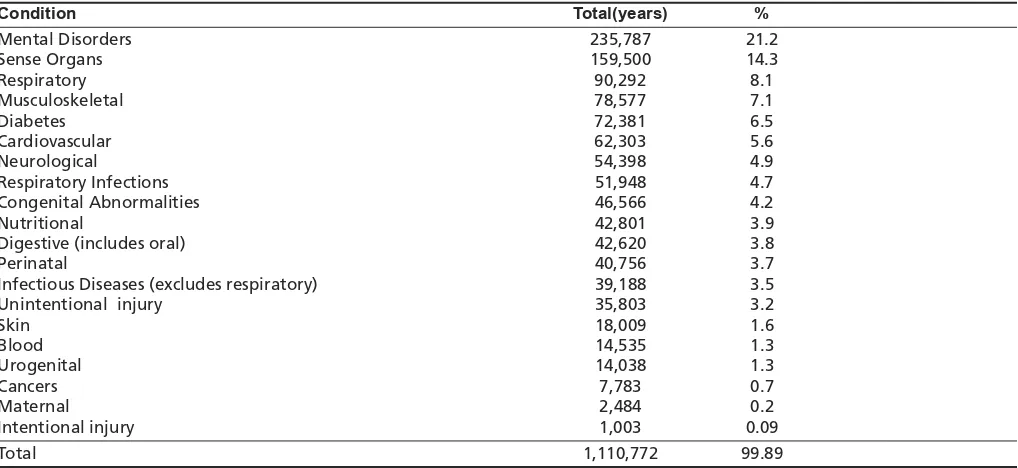
A third view of disease burden is from the perspective of years lived with disability(YLDs). Data collected in the year 2000 showed that mental disorders assumed a greater weight andbecame the leading cause contributing to most YLDs1 (Table III).
The top five disease groups, based on their contribution to disease burden in YLL and YLDs, namely cardiovascular disease, infection, cancers, mental disorders and intentional and unintentional injury were selected for review.
The purpose of this review project is, firstly to compile essential findings from published articles from both published and unpublished clinical research on Malaysian data, to see what research findings can be translated into clinical practice and to identify research gap. It is hoped clinicians will translate important findings that are relevant to clinical practice. In addition we hope policy makers, health educators and public health officers will take note of findings that need action to prevent disease occurrence and improve standard of care. Secondly, these reviews will not only show what has been done but reveal gaps and unfinished research that may give investigators, such as postgraduate master and PhD students, research ideas to pursue. Individual papers are often like pieces of a jigsaw puzzle. A review will hopefully put the pieces together in a more coherent picture. Too often published work ends up lost on some shelf back in a library, or in the web-world today, lost is some unsearchable corner.
The structure and topics for reviews previously published in the book entitled ‘A Review of Diseases in Malaysia’published in
20012was used as a model for these reviews. This book which compiled reviews of articles published up to the year 2000 on all diseases in Malaysia is a reference for medical professionals for knowledge on diseases specific to Malaysia. This supplement contains reviews that carry forward from the year 2000. The major diseases in the top five disease groups were selected for review. The details of the method of literature search for these reviews are described in the following article in this supplement entitled. ‘Bibliography of clinical research in Malaysia: methods and brief results’.
With the exponential growth of publications on diseases in Malaysia, numbering over 38,000 till date, the work of reviewing the literature is clearly beyond the capability of one person or even a few to do.Subject matter experts (SME) were sought and invited to participate in this task. We targeted clinicians and researchers who have experience and have published papers in the selected disease areas. They were requested to write a review on articles extracted from a bibliography prepared by Prof.TengCheong Lieng. We have, in this supplementary issue of journal 11 review articles on cancer (3 articles), infectious diseases (5 articles) and mental health (3 articles). In addition, we have the privilege of including a relevant update on Nipahencephalitis writtenby Tan Chong Tin and Sherrini Bazir Ahmad, not specifically written for this series.
Several findings from the reviews are worth highlighting here. In breast cancer, Malaysian women were found to have poor knowledge on risk factors, symptoms and early detection of breast cancer. That leads to late presentation, which carries a poorer prognosis. Public health education on screening methods such as breast self-examination (BSE), clinical breast examination (CBE) and screening mammography are important preventive measures that are not adequately exploited.For colorectal cancer, studies also revealed poor awareness of symptoms; risk factors and available measures for early detection of colorectal cancer among Malaysians compared to developed countries. Malaysians also perceive colorectal cancer as not such a severe disease compared to the population in our neighbouring countries. The late presentation and poorer prognosis for colorectal cancer adds up to over 1,000 lives lost annually. For cervical cancer, the mortality rate in Malaysia was more than twice as high as in developed countries. There is a need to examine why cervical cancer, potentially preventable and with good chances of early detection is still high in prevalence and mortality. There is lack of outcome research in cancer treatment. Research is needed to look into reasons for non-compliance to cancer treatment and delay in seeking treatment which currently has a big negative impact on prognosis of cancer.
Lim Kean Ghee FRCS*, Lim Ai Wei MBBS**, Goh Pik Pin FRCS**
* International Medical University Clinical School, Jalan Rasah, 70300 Seremban. ** Clinical Research Centre, Hospital Kuala Lumpur, Jalan Pahang, 50586, Kuala Lumpur
Table I: Cause-specific Mortality in Malaysia 2000
Total Deaths % Males Females M:F
Cardiovascular 39,812 36 21,705 18,107 1.2
Infectious Diseases (excludes respiratory infection) 13,607 12.3 7,657 5,832 1.31
Cancers 12,216 11.1 6,729 5,487 1.22
Unintentional injury 10,799 9.8 8,532 2,267 3.76
Respiratory diseases 8,882 8 5,532 3,350 1.65
Respiratory Infections 5,684 5.1 3,162 2,522 1.25 Digestive (includes oral) 5,335 4.8 3,343 1,956 1.71
Urogenital 3,421 3.1 1,781 1,640 1.09
Perinatal 2,575 2.3 1,441 1,134 1.27
Diabetes 2,261 2 857 1,404 0.61
Intentional injury 2,210 2 1,603 607 2.64
Congenital Abnormalities 1,545 1.4 840 705 1.19
Neurological 877 0.8 507 370 1.37
Mental Disorders 367 0.3 311 56 5.55
Skin 344 0.3 171 173 0.99
Maternal 231 0.2 - 231
--Musculoskeletal 177 0.2 55 122 0.45
Nutritional 88 0.07 42 46 0.91
Sense Organs 13 6 7
Total 110,442 64,552 45,889 1.41
Table II: Year of Life Lost (YLL) by Selected* Diseases in Malaysia in 2000
Total(years) % %YLL:
%Overall Deaths
Cardiovascular 497,668 28 0.77
Unintentional Violence 236,668 13.3 1.34
Infectious Diseases (excludes respiratory diseases ) 222,833 12.5 1.01
Cancers 178,441 10 0.9
Respiratory 163,936 9.2 1.15
Respiratory Infections 77,646 4.4 0.86
Perinatal 77,303 4.4 1.91
Digestive 78,267 4.4 0.92
Urogenital 49,355 2.8 0.9
Intentional Violence 46,324 2.6 1.3
Congenital Abnormalities 45,407 2.5 1.79
Diabetes 31,069 1.7 0.85
Maternal 6,051 0.3 1.5
Total 1,710,968 96.1 1
*some categories with small numbers are excluded
Table III: Cause-specific Years Lived with Disability in Malaysia 2000
Condition Total(years) %
Mental Disorders 235,787 21.2
Sense Organs 159,500 14.3
Respiratory 90,292 8.1
Musculoskeletal 78,577 7.1
Diabetes 72,381 6.5
Cardiovascular 62,303 5.6
Neurological 54,398 4.9
Respiratory Infections 51,948 4.7
Congenital Abnormalities 46,566 4.2
Nutritional 42,801 3.9
Digestive (includes oral) 42,620 3.8
Perinatal 40,756 3.7
Infectious Diseases (excludes respiratory) 39,188 3.5
Unintentional injury 35,803 3.2
Skin 18,009 1.6
Blood 14,535 1.3
Urogenital 14,038 1.3
Cancers 7,783 0.7
Maternal 2,484 0.2
The review of HIV/AIDS noted that although in the early years, the disease was mostly confined within the circle of injecting drug users (IDU); it has since spread to every stratum of society. In 2010, 40% of new reported HIV cases were from heterosexual transmission, a dramatic increase from 27% in 2009.Data on management of HIV-HBV and HIV-HCV co-infections is lacking. There is also a need for more research on children living with HIV,onmarginalized-at-risk-populations (MARPs) such as transgenders, migrant workers and refugees.For tuberculosis (TB), studies showed a higher incidence of TB among patients with diabetes mellitus, smokers, HIV and immunosuppressed patients, health care workers and intravenous drug users. Screening of TBis currently conducted primarily on healthcare workers, TB contacts, prisoners and foreign workers. As the number of TB cases in the country has increased, concern has been raised concerning screening and treating latent TB among high risk groups within the population. As for malaria, the epidemiology of malaria has undergone significant change over the last decade, with P.knowlesi, a previously relatively unknown simian parasite rapidly becoming the most predominant malaria species thatinfect humans in Malaysia, especially in Sabah and Sarawak. The reasons for dramatic shifts from P. Falciparumto P. Knowlesiinfectionin some localities in Malaysia remain to be elucidated. Collaboration between clinical, entomological, laboratory, public health and social science disciplines and agencies need to be strengthened.
For mental health research, understanding the pathway an individual with schizophreniatakes to receive health care is importantin order to reduce the duration of untreated illness. Depression is one of the common mental disorders worldwide and has become a leading cause of morbidity in Malaysia over the past decades.There is a lack of research in depression among men in Malaysia. Research on depression was using screening tools based on western cultures. Thereis a need to develop local screening tools based on our diverse culture and language and these tools need to be validated before being used in research or in clinical setting. We also need research onaccess to care and unmet needs in the care for people with depression. On drug abuse, secondary data analysis on data collected by the National Drug Agency is needed so as to demonstrate trend ontype of drugs used by abusers in Malaysia and to demonstrate the change from opioids to recreational drugs.
While reviewing the bibliography of published articles as well as unpublished grey literature, the authors expressed concern on the significant number of unpublished research projects by Malaysian investigators, especially dissertations and thesis bylocal postgraduate and PhD students. Concerted effort among university supervisors and MOH specialists is needed in helping postgraduate master students to do better quality research so that their research findings can be published. One such effort is identifying research gaps and listing research ideas in this supplement. There is a section on future research in the respective diseasesthat postgraduate students and subspecialty trainees can.
While doing the review, we observed that there has been significant duplication of research ideas and lack of collaboration between the Ministry of Health and medical universities. Barriers in inter-sectorial research collaboration need to be overcome and duplication of research minimised. We also propose that future research in all disease areas should focus on treatment outcome, including patient reported outcome and cost effectiveness of management and prognosis of disease, as well as basic science research in genetics of diseases.
In conclusion, clinical research has been made a national agenda as is mentioned in the 10th and 11th Malaysian Plan and also one of the 17 entry point’s projects in the Healthcare National Key Economic Area in the Economic Transformation Program. Therefore to set strategic direction for clinical research is timely and important in order to achieve the country’s goal of Vision 2020, towards a high income country. We hope this supplement issue of 10 review articles on major diseases in Malaysia will contribute towards this effort.Though we understand this is certainly an unfinished work as there remain many other diseases to be reviewed. We hope others will join in the endeavour to publish review articles so future researchers can benefit from them.
REFERENCES
1. Ahmad Faudzi Y, Amal Nasir M, Gurpeet K, M Azahadi O, Vos T, Rao VPC, Begg S. Malaysian Burden of Disease and Injury Study. Health Prioritization: Burden of Disease Approach. Institute for Public Health. Ministry of Health, Malaysia. 2004.
2. Lim KG. A Review of Diseases in Malaysia. 2nd Ed. 2001.
SUMMARY
This article describes the methodology of this bibliography. A search was conducted on the following: (1) bibliographic databases (PubMed, Scopus, and other databases) using search terms that maximize the retrieval of Malaysian publications; (2) Individual journal search of Malaysian health-related journals; (3) A targeted search of Google and Google Scholar; (4) Searching of Malaysian institutional repositories; (5) Searching of Ministry of Health and Clinical Research Centre website. The publication years were limited to 2000-2013. The citations were imported or manually entered into bibliographic software Refworks. After removing duplicates, and correcting data entry errors, PubMed’s Medical Subject Headings (MeSH terms) were added. Clinical research is coded using the definition “patient-oriented-research or research conducted with human subjects (or on material of human origin) for which the investigator directly interacts with the human subjects at some point during the study.” A bibliography of citations [n=2056] that fit the criteria of clinical research in Malaysia in selected topics within five domains was generated: Cancers [589], Cardiovascular diseases [432], Infections [795], Injuries [142], and Mental Health [582]. This is done by retrieving citations with the appropriate MESH terms, as follow: For cancers (Breast Neoplasms; Colorectal Neoplasms; Uterine Cervical Neoplasms), for cardiovascular diseases (Coronary Disease; Hypertension; Stroke), for infections (Dengue; Enterovirus Infections, HIV Infections; Malaria; Nipah Virus; Tuberculosis), for injuries (Accidents, Occupational; Accidents, Traffic; Child Abuse; Occupational Injuries), for mental health (Depression; Depressive Disorder; Depressive Disorder, Major; Drug Users; Psychotic Disorders; Suicide; Suicide, Attempted; Suicidal Ideation; Substance-Related Disorders).
[246 words]
INTRODUCTION
Research and publications in Malaysia up to the year 2000 has been documented in various bibliographic works1-5. A search of the PubMed using the text words “Malaya” and “Malaysia” retrieved 8850 items for the period 1950-1999. However, for the period 2000-2013, the number of items retrieved has increased dramatically to 17909 items [search date 22 August 2013]. PubMed is clearly a great place to look for Malaysian health sciences publications but it contains only a fraction of what is available. A search of the Scopus [all subject areas] using the text words “Malaya” and “Malaysia” retrieved 10425 items for the period 1960-1999. However, for the period 2000-2013, the number of items retrieved has increased dramatically to 30196 items [search date 22 August 2013]. Do note that, Scopus is a
general database containing citations of all disciplines, so many articles in there are not health-related.
Searching for Malaysian research has improved with the electronic access of databases. However, comprehensive search of Malaysian health sciences literature continue to pose difficulty for a few reasons:
• There are at least 50 Malaysian journals containing health sciences literature; only a few of them are indexed in major databases (six in PubMed, three Web of Science and 11 in Scopus)6,7.
• Inaccuracy of indexing of Malaysian works in the databases6,7.
• Grey literatures (e.g. books, book chapters, reports, and monograph) are not indexed by databases.
This article describe search methods for “Bibliography of Clinical Research in Malaysia”, a project funded by the Clinical Research Centre, Kuala Lumpur.
METHODS
A team of searchers (consisting of librarians, medical students and a clinician) conducted simultaneous search and import citations into a web-based bibliographic manager (Refworks, http://www.refworks.com). The type of citations retrieved consisted of the following:
1. Journal articles
2. Conference proceedings 3. Books and book chapters 4. Guidelines and reports 5. Theses and dissertations
Journal articles are searched at these databases and websites 1. PubMed (http://www.ncbi.nlm.nih.gov/pubmed/)
2. Scopus (http://www.scopus.com) 3. MyJurnal (http://www.myjurnal.my)
4. UKM Journal Repository (http://journalarticle.ukm.my/) 5. Publisher/journal websites
PubMed
PubMed is the free online database of life sciences journal articles offered by the National Library of Medicine, National Institutes of Health, United States. It currently host over 6000 journals containing over 23 millions citations from 1950s. At the moment, six Malaysian journals are indexed in this database.
Cheong Lieng Teng, MMed, Zuhanariah Mohd Nordin, MSc, Chun Sien NG, medical student, Cheng Chun Goh, medical student
International Medical University, Malaysia.
Table I: List of Malaysian biomedical journals.
1. Annals of Dentistry. http://ejum.fsktm.um.edu.my/VolumeListing.aspx?JournalID=13 2. Archives of Orofacial Sciences. http://www.dental.usm.my/aos/
3. ASEAN Journal of Psychiatry. http://www.aseanjournalofpsychiatry.org/index.php/aseanjournalofpsychiatry/issue/archive 4. Asia Pacific Journal of Molecular Biology and Biotechnology. http://www.msmbb.org.my/apjhome.htm
5. ASM Science Journal. http://www.akademisains.gov.my/index.php?option=com_content&task=view&id=291&Itemid=328 6. Biomedical Imaging and Intervention Journal. http://www.biij.org/default.asp
7. Buletin Persatuan Genetik Malaysia. http://www.persatuangenetikmalaysia.com/index_files/bulletin.html 8. Education in Medicine Journal. http://saifulbahri.com/eimj/
9. FMS Malaysia [hand search]
10. International e-Journal of Science, Medicine & Education (IeJSME). http://web.imu.edu.my/ejournal/ 11. International Journal of Public Health Research. http://journalarticle.ukm.my/view/divisions/J=5FIPHR/
12. Journal of Health Management. http://www.ihm.moh.gov.my/index.php/en/penerbitan/journal-of-health-management-ihm 13. IMR Quarterly Bulletin. http://vlibimr.moh.gov.my/eshop/eresources.php?p=p_27
14. International Medical Journal (IIUM). http://www.e-imj.com/ 15. International Medical Research Journal (IMR) [hand search]
16. Journal of Nuclear and Related Technologies. http://www.nuklearmalaysia.org/index.php?id=14&mnu=14 17. Journal of Surgical Academia. http://jsurgacad.com/
18. Journal of the University of Malaya Medical Centre (JUMMEC). http://jummec.um.edu.my
19. Jurnal Anti-Dadah Kebangsaan (Malaysian Anti-Drugs Journal). http://www.adk.gov.my/web/guest/jurnal
20. Jurnal Kesihatan Masyarakat (Malaysian Journal of Community Health). http://journalarticle.ukm.my/view/divisions/J=5FKMM/ 21. Kuala Lumpur Hospital Journal of Quality Improvement [hand search]
22. Malaysia Journal of Nursing. http://www.mjn.com.my/
23. Malaysian Family Physician (For the period 2000-2005, this journal is known as Family Physician). http://www.e-mfp.org/index.htm
24. Malaysian Journal of Analytical Sciences. http://www.ukm.my/mjas/
25. Malaysian Journal of Biochemistry and Molecular Biology. http://ejum.fsktm.um.edu.my/VolumeListing.aspx?JournalID=16 26. Malaysian Journal of Dermatology. http://www.dermatology.org.my/journal.htm
27. Malaysian Journal of Forensic Pathology and Science. www.forensiknet.com
28. Malaysian Journal of Health Sciences (Jurnal Sains Kesihatan Malaysia). http://ejournals.ukm.my/jskm 29. Malaysian Journal of Medical Sciences. http://www.mjms.usm.my/
30. Malaysian Journal of Medicine and Health Sciences. http://www.medic.upm.edu.my/index.php/en/journal 31. Malaysian Journal of Microbiology. http://web.usm.my/mjm/
32. Malaysian Journal of Microscopy. http://ibs.upm.edu.my/~aini/publications.htm
33. Malaysian Journal of Nutrition. http://nutriweb.org.my/publications/mjn0017_1/default.php 34. Malaysian Journal of Obstetrics and Gynaecology. http://www.ogsm.org.my/mjog.php 35. Malaysian Journal of Paediatrics and Child Health. http://www.mjpch.com/index.php/mjpch 36. Malaysian Journal of Pathology. http://www.mjpath.org.my/index.html
37. Malaysian Journal of Pharmacy. http://www.mps.org.my/index.cfm?&menuid=146 38. Malaysian Journal of Pharmaceutical Sciences. http://web.usm.my/mjps/home.html 39. Malaysian Journal of Psychiatry. http://www.mjpsychiatry.org/index.php/mjp 40. Malaysian Journal of Public Health Medicine. http://www.mjphm.org.my/mjphm/ 41. Malaysian Orthopaedic Journal. http://www.morthoj.org/
42. Medical Journal of Malaysia. http://www.e-mjm.org/ 43. Medicine & Health Reviews. http://mhr.uitm.edu.my/
44. Medicine & Health. http://www.ppukm.ukm.my/ukmmcjournal/ 45. NCD Malaysia [hand search]
46. Neurology Asia. http://www.neurology-asia.org/
47. Neurology Journal of Southeast Asia. http://www.neurology-asia.org/
48. Pertanika Journal of Science & Technology. http://www.pertanika2.upm.edu.my/JST.php
49. Pertanika Journal of Social Sciences & Humanities. http://www.pertanika2.upm.edu.my/JSSH.php 50. Sains Malaysiana. http://www.ukm.my/jsm/
BRIEF RESULTS
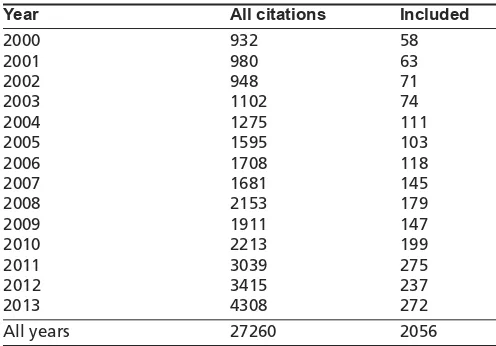
A total of 2056 publications fall within the above inclusion criteria. See Tables II and III for distribution of publications by year and topics. Of the 2056 publications, 1212 (58.9%) were retrieved from PubMed. Free full text is available for 1293 (62.9%) publications.
Table II: Number of citations by year
Year All citations Included
2000 932 58
2001 980 63
2002 948 71
2003 1102 74
2004 1275 111
2005 1595 103
2006 1708 118
2007 1681 145
2008 2153 179
2009 1911 147
2010 2213 199
2011 3039 275
2012 3415 237
2013 4308 272
All years 27260 2056
Table III: Number (in bracket) of included citations by domains and subtopics
Domain Subtopic
Cancers (589) Breast cancer (389) Cervical cancer (112) Colorectal cancer (97) Infections (795) Dengue (182)
Enterovirus infection (50) HIV infection (294) Malaria (108) Tuberculosis (193) Injuries (142) Child abuse (41)
Road traffic accidents (101) Mental Health (582) Depression (265)
Drug abuse (157) Schizophrenia (164)
Note: The content of some citations cover more than one subtopic
The full lists of citations for all 13 subtopics are available in http://www.crc.gov.my/published-articles-on-malaysian-data/.
The following search string is used to query the PubMed for the period 2000-2013:
MALAYA ORMALAYSIA ORJOHOR ORJOHORE ORMELAKA ORMALACCA ORNEGERI SEMBILAN ORNEGRI SEMBILAN ORKELANTAN ORKUALA LUMPUR ORSELANGOR ORPERAK ORKEDAH ORPENANG ORPULAU PINANG ORPERLIS OR PAHANG ORSARAWAK ORSABAH ORTERENGGANU OR LABUAN OR PUTRAJAYA ORWILAYAH PERSEKUTUAN OR KANGAR OR ALOR SETAR OR IPOH OR SEREMBAN OR KUANTAN OR KOTA BHARU OR KUCHING OR KOTA KINABALU OR (MALAYA[AD] OR MALAYSIA[AD] OR JOHOR[AD] OR JOHORE[AD] OR MELAKA[AD] OR MALACCA[AD] OR NEGERI SEMBILAN[AD] OR NEGRI SEMBILAN[AD] ORKELANTAN[AD] ORKUALA LUMPUR[AD] OR SELANGOR[AD] OR PERAK[AD] OR KEDAH[AD] OR PENANG[AD] ORPULAU PINANG [AD] ORPERLIS[AD] OR PAHANG[AD] OR SARAWAK[AD] OR SABAH[AD] OR TERENGGANU[AD]) OR MALAYSIA[MH] OR (Malays J Pathol[TA] ORMed J Malaysia[TA] ORMalays J Nutr[TA] OR Malays J Med Sci[TA] ORTrop BioMed[TA] ORBiomed Imaging Interv J [TA])
[note: AD, TA, and MH are PubMed field tags that refer to address, journal title abbreviation and Medical Subject Headings, respectively]
The above search string retrieved 21291 citations
Scopus
Scopus is a subscription-based bibliographic database owned by Elsevier. It contains over 50 millions records from around 21000 journals. A search for “Malaysia” for the period 2000-2013 in the subject area of “Health Sciences” retrieved 9720 citations.
Other journal searches
Medical and health sciences journal listed in MyJurnal (a portal of 347 Malaysian journals, 38 are listed under “Medicine & Health Sciences”) and UKM Journal Repository (a portal of 42 journals published by Universiti Kebangsaan Malaysia) are comprehensively searched. All together we conducted hand search and electronic search of 52 Malaysian journals published in the period 2000-2013 (see Table I).
Search for non-journal citations
For non-journal citations (e.g. theses and dissertations), we performed search using Google (http://google.com.my) and Google Scholar (http://scholar.google.com.my/). We queried the following databases and institutional repository, both local and international, for scholarly works containing health and medical information on Malaysia:
1. Open Access Theses and Dissertations. www.oatd.org 2. Directory of Open Access Repositories.
http://www.opendoar.org/
3. Institute for Medical Research Library. www.imr.gov.my 4. Academy of Medicine Clinical Practice Guidelines.
http://www.acadmed.org.my/index.cfm?&menuid=67 5. Ministry of Health Malaysia. www.moh.gov.my
6. International Islamic University Malaysia Repository. http://irep.iium.edu.my/
7. Malaysian Thesis Online.
http://myto.upm.edu.my/myTO/myto.html
8. Universiti Kebangsaan Malaysia Institutional Repository. https://smk.ukm.my/erep/
9. Universiti Malaya Research Repository. http://eprints.um.edu.my/
11. Universiti Malaysia Sarawak Institutional Repository. http://ir.unimas.my/
12. Universiti Putra Malaysia Institutional Repository. http://psasir.upm.edu.my/
13. Universiti Sains Malaysia Institutional Repository. http://eprints.usm.my
14. Universiti Teknologi MARA Institutional Repository. http://eprints.uitm.edu.my/
15. Universiti Utara Malaysia Repository. http://repo.uum.edu.my/
16. University of Malaya Theses and Dissertations. http://www.diglib.um.edu.my/umtheses/#sthash.2gD1j0rp.dpbs
Data cleaning and coding
After removing duplicated items and non-Malaysian references, the keywords based on National Library of Medicine’s Medical Subject Headings (MESH terms) were coded for each citation.
The inclusion criteria for the present “Bibliography of Clinical Research” has a limited scope (as requested by the funder): 1. Citations must be clinical research. The definition of
clinical research by Glasser is adopted, i.e. patient-oriented-research or research conducted with human subjects (or on material of human origin) for which the investigator directly interacts with the human subjects at some point during the study8.
2. Citations that fall within four domains and 13 subtopics (breast cancer, cervical cancer, child abuse, colorectal cancer, depression, drug abuse, enterovirus infection, HIV infection, malaria, road traffic accident, schizophrenia, ttuberculosis and dengue).
3. Citations that were published between 2000-2013.
RESULTS
A total of 1853 citations fall within the above inclusion criteria (see Tables II and III)
REFERENCES
1. Bibliomed - SM. Supplement. Tokyo: South East Asia Information Center, 1982
2. Bibliomed - SM2. 1980-1986. Tokyo: South East Asia Information Center, 1989
3. 100 Years of the Institute for Medical Research 1900-2000. Kuala Lumpur: Institute for Medical Research, 2000
4. Lim KG. A Review of Diseases in Malaysia. Kuala Lumpur: Pelanduk Publications, 1993.
5. Lim KG. A Review of Diseases in Malaysia, 2nd Edition. 2001 6. Teng CL. In Search Of Malaysia: PubMed, Google Scholar Or Scopus?
IeJSME. 2008;2(2):5-8.
7. Teng CL. Visibility of journals of Asia-Pacific countries in PubMed, Web of Science and Scopus. APAME 2012, 31 Aug - 3 Sept 2012, Kuala Lumpur.
SUMMARY
Four hundred and nineteen articles related to breast cancer were found in a search through a database dedicated to indexing all original data relevant to medicine published in Malaysia between the years 2000-2013. One hundred and fifty four articles were selected and reviewed on the basis of clinical relevance and future research implications. Overall, Malaysian women have poor survival from breast cancer and it is estimated that half of the deaths due to breast cancer could be prevented. Five-year survival in Malaysia was low and varies among different institutions even within the same disease stage, suggesting an inequity of access to optimal treatment or a lack of compliance to optimal treatment. Malaysian women have poor knowledge of the risk factors, symptoms and methods for early detection of breast cancer, leading to late presentation. Moreover, Malaysian women experience cancer fatalism, belief in alternative medicine, and lack of autonomy in decision making resulting in delays in seeking or avoidance of evidence-based medicine. There are ethnic differences in estrogen receptor status, HER2 overexpression and incidence of triple negative breast cancer which warrant further investigation. Malay women present with larger tumours and at later stages, and even after adjustment for these and other prognostic factors (stage, pathology and treatment), Malay women have a poorer survival. Although the factors responsible for these ethnic differences have not been elucidated, it is thought that pharmacogenomics, lifestyle factors (such as weight-gain, diet and exercise), and psychosocial factors (such as acceptance of 2nd or 3rd line chemotherapy) may be responsible for the difference in survival. Notably, survivorship studies show self-management programmes and exercise improve quality of life, highlighting the need to evaluate the psychosocial impact of breast cancer on Malaysian women, and to design culturally-, religiously- and linguistically-appropriate psycho-education programmes to help women cope with the disease and improve their quality of life. Research done in the Caucasian populations may not necessarily apply to local settings and it is important to embark on local studies particularly prevention, screening, diagnostic, prognostic, therapeutic and psychosocial research.
KEY WORDS:breast cancer, Malaysia, review, genetics, screening, diagnosis, prognosis, treatment, outcome
INTRODUCTION
Besides the articles searched through the database, we also conducted a literature review of articles indexed in PubMed
from 1996 to 2014 on 30th April 2014 using the key words “breast cancer” “Malaysia” and reviewed 421 articles. Of these, 154 abstracts were considered relevant to clinical practice by the authors [a breast surgeon, a genetic epidemiologist and an epidemiologist] and full text articles were reviewed. The aim of this review article is to summarise what has already been published on breast cancer in Malaysia, to discuss the impact of the research findings to clinical practice, and to identify gaps in breast cancer research in Malaysia.
SECTION 1: REVIEW OF LITERATURE
INCIDENCE AND PRESENTATION OF BREAST CANCER The National Cancer Registry (NCR) 2003-2005 reported an age-standardised rate (ASR) of 47.3 per 100 000. The incidence is highest in Chinese (59.9 per 100 000) followed by Indians (54.2 per 100 000) and Malays (34.9 per 100 000)1. The Penang Cancer Registry 2004-2008 reported an incidence of 48 per 100,0002. The International Agency for Research in Cancer (GLOBOCAN) 2012 estimated the ASR of breast cancer in Malaysia as 38.7 per 100,000 with 5410 new cases in 20123.
Malaysian women present at earlier age compared to women in Western countries. A collaborative study between two tertiary academic hospitals in Malaysia, and Singapore found that approximately 50% of women were diagnosed before the age of 50 years4, whereas in most Western countries such as UK and Netherlands, 20% are diagnosed before age 50. Two factors account for the younger mean age at presentation in Malaysia. First, Malaysia has a younger demographic with median age of 26.1 years, compared with 39.8 years in United Kingdom5. Second, the current older population in Malaysia, experience lower-risk lifestyle factors (more children, more breast-feeding and lower urbanisation) and this cohort effect results in lower risk of post-menopausal breast cancer.
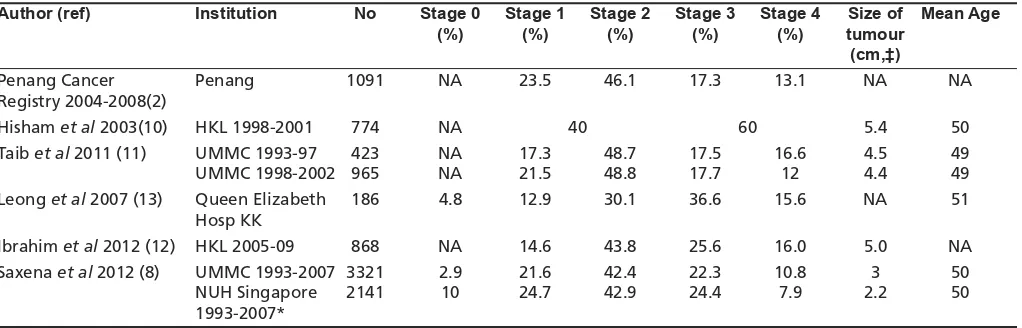
Malaysian women present at later stages compared to women in Western countries and Singapore6-8but presented at earlier stages compared to Indonesian women9. Presentation of breast cancer varies substantially not only among countries, but also within different settings in Malaysia. Table I summarises the stage at presentation, tumour size and age in different settings in Malaysia2,8,10-13. Delayed presentation remains very common14and a collaborative study in Malaysia, India and Hong Kong showed that inadequacies of health care infrastructures and standards, sociocultural barriers, economic realities, illiteracy, and the differences in the clinical and pathological attributes of this disease in Asian women compared with the rest of the world together result in significant proportion of late stage disease15. In Malaysia,
CH Yip, FRCS*, N Bhoo Pathy, MD**, SH Teo, PhD***
* Department of Surgery, Faculty of Medicine, 50603 Kuala Lumpur, ** Department of Social and Preventive Medicine, Faculty of Medicine, 50603 Kuala Lumpur, ***Cancer Research Initiatives Foundation (CARIF), Outpatient Centre, Subang Jaya Medical Centre, Subang, 47500 Selangor, Malaysia
ethnicity, education level, socio-economic status and access to treatment centres in urban areas were found to be important factors influencing stage at presentation. By combining the hospital-based breast cancer databases in University Malaya Medical Centre (UMMC) and National University Hospital Singapore (NUHS) [5264 patients], it was found that the Malay ethnicity was significantly associated with larger tumours at presentation and later stages at presentation, compared to the Chinese and to a certain extent, the Indians16. Late stage at presentation of breast cancer had been attributed to a strong belief in traditional medicine, the negative perception of the disease, poverty and poor education, coupled with fear and denial17. In Sabah, patients who presented with advanced disease were also poor, non-educated and from rural areas13.
LIFESTYLE AND GENETIC RISK FACTORS TO BREAST CANCER A number of lifestyle and genetic factors cause an increased risk of breast cancer and these have been shown to increase risk of breast cancer in Malaysian women. Table II summarises results from case control studies involving Malaysian women18-29. Well-known risk factors such as nulliparity, family history, not breastfeeding and use of oral contraceptives are observed to be associated with an increased risk of breast cancer in Malaysian women, but other risk factors are not significantly associated (e.g. age at menarche and first childbirth). However, these studies are retrospective and may be underpowered to find statistically significant results. To date, no study has examined breast mammographic density and the extent to which ethnic-differences in breast mammographic density is associated with risk of breast cancer.
Genetic predisposition also play a role in the aetiology of breast cancer. Approximately 15% of breast cancer patients report family history of breast and ovarian cancer, and the most significant genetic predisposition genes identified are BRCA1 and BRCA2. Cohort studies have shown the prevalence of BRCA1 and BRCA2 among breast cancer patients of 2.7% and 5.4% respectively, which is consistent with other Asian ethnic groups 30-31. Large genomic rearrangements (LGRs) constitute 8% of BRCA1 and 4% of BRCA2 mutations, and a number of novel rearrangements have been reported, suggesting that comprehensive BRCA testing should include detection of LGRs32,33.
Two algorithms to predict the presence of mutations, Manchester Scoring System and BOADICEA, were evaluated and found that the predictive power of these two models were significantly better for BRCA1 than BRCA2, and that the overall sensitivity, specificity and positive predictive value was lower in this population than previously reported in the Caucasian population34. Notably, breast cancers associated with BRCA1 mutations are more likely to be triple negative for estrogen, progesterone and HER2 receptors, and of higher grade; BRCA2 associated breast cancers were similar to non BRCA associated breast cancers35. These pathological characteristics are predictive of BRCA1 mutation status - twenty-eight percent of women with breast cancers negative for the estrogen, progesterone and HER2 receptors diagnosed younger than 35 years old were found to be BRCA1 carriers, while only 9.9% of women with non-TNBC and younger than 35 years were BRCA1 carriers. Addition of TNBC and PTEN status improved the sensitivity of the Manchester Scoring System36.
Genetic counselling and genetic testing were accepted by 82% of women at high risk for hereditary breast and ovarian cancer (HBOC) syndromes. However, only 78% of carriers informed their families, and 11% of relatives came forward for predictive testing even when genetic counselling and testing were offered
free37. Early experience of the genetic testing and risk management clinic for high risk breast and ovarian cancer families in UMMC showed that only 63.5% of eligible women chose to attend this clinic, 24% chose to have risk reducing mastectomy (RRM) while the rest chose breast surveillance. Sixty-three percent chose to have risk reducing salphingo-oophorectomy38.
Of the high risk women who did not have germline BRCA mutations, four mutations in TP53 (5%) suggested that TP53 screening should be considered in women with early onset breast cancer (<35 years old)39. PALB2 mutations were also reported and screening with nine PALB2 mutations found two novel truncating mutations and ten missense mutations, and one additional PALB2 mutation indicating a low prevalence of PALB2 mutations40. A truncating mutation (1100delc) in the cell cycle checkpoint kinase -2 gene (CHEK2), a common moderate penetrance allele found in Caucasians, was not found in any of the cohort of 668 breast cancer patients, suggesting that screening for this allele should not be routinely conducted in Malaysia41. Other genes or genetic loci associated with breast cancer have also been reported including the human leukocyte antigen (HLA) types42, and other loci of lower penetrance43.
SCREENING AND EARLY DETECTION
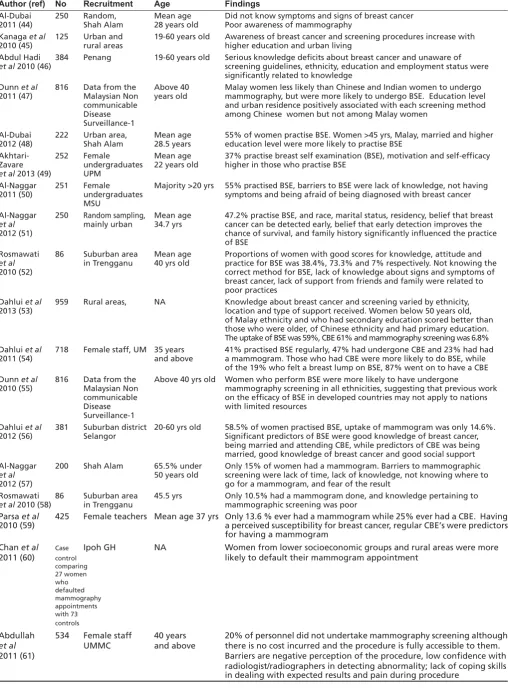
One of the main determinants of survival from breast cancer is early detection, which in turn is dependent on disease awareness and uptake of screening (both opportunistic and population-based screening). However, breast cancer awareness is poor in Malaysian women and very few eligible women attend regular mammography screening. Table III summarises results of cross-sectional studies, utilising surveys and self-administered questionnaires, that have been carried out in the Malaysian community to assess knowledge of breast cancer and screening methods i.e. breast self-examination (BSE), clinical breast examination (CBE) and screening mammography44-61. Notably, even among high-risk women, a cross-sectional study of 131 women with a family history of breast cancer showed that 71% had poor knowledge about the risk factors for breast cancer62and women with a family history of breast cancer probably did not recognise their increased risk to cancer and so presented with same stage of disease as women with no family history of breast cancer63. Many studies have shown that symptom recognition remains an important public health issue in Malaysia, highlighting the pressing need to continue to educate women, their significant others, and primary health care workers64.
To date, the only reported outreach programme, which was conducted over a 4-year period in Sarawak, showed that training health staff in hospital and rural clinics to improve their skills in early cancer detection, and raising public awareness through pamphlets, posters and sensitisation by health staff, resulted in a reduction in the proportion of stage 3 and stage 4 breast cancer from 60% in 1994 to 35% in 199865.
DIAGNOSIS AND PATHOLOGY
Mammography, ultrasounds, MRI and bone scans
(American College of Radiology) recommended view-box luminance66. Overall diagnosis was comparable between screen film mammography (SFM), computed radiography mammography (CRM) and full field digital mammography (FFDM), but FFDM improves the quality of mammography services by providing better workflow time and archiving system67, and improving the detection of microcalcifications68.
Breast mammographic density is higher in Asian women and may affect the sensitivity of mammographic screening. The majority of Malaysian women had dense breasts (59%) and age and parity were inversely related to breast density69. A number of dietary factors have been associated with mammographic density, but these require further validation70. There is currently no commonly accepted standards for quantifying breast mammographic density in Malaysia. However, a semi-automated technique for quantitative assessment of breast density from digitised mammograms correlated well with the Tabar pattern, with a kappa coefficient of 0.6371, suggesting that both methods may be clinically useful.
Ultrasound is a useful adjunct to mammography in the assessment of breast lumps. To differentiate between benign and malignant lesions, conventional ultrasound has a sensitivity and specificity of 97%, and 61.4% alone, and 100% and 93% when combined with ultrasound elastography72. The validity of ultrasound in the assessment of a palpable mass found that ultrasound had a sensitivity of 100%, specificity of 85.7%, and accuracy of 81.3% for distinguishing a malignant mass from a benign mass in another study73.
Magnetic resonance imaging of the breast is a relatively new diagnostic tool in Malaysia and should not be used for routine screening. A prospective study of SV (1)H MRS following dynamic contrast-enhanced magnetic resonance imaging (DCE-MRI) showed that there was good correlation between tCho peaks and malignancy74. The sensitivity of DCE-MRI alone in differentiating between malignant and benign breast lesions was 100% with a specificity of 66.7%75.
Staging with bone scans are recommended in women with locally advanced or metastatic breast cancer, but the role in early Stage 1 and 2 breast cancer is equivocal. Notably, no patient with clinical Stage 0 or Stage 1, 4% with Stage 2, 9.5% with Stage 3 and 63% with Stage 4 disease had a positive bone scan, showing that there is little justification to perform a bone scan in early breast cancer76.
Pathology
Diagnosis of breast cancer depends on team work between the radiologist, surgeon and pathologist. The three methods of biopsy are fine needle biopsy, core needle biopsy and excisional biopsy. The choice of diagnostic method depends on the expertise which is available. Fine needle aspiration cytology was the most common method of diagnosis (63.8% of cases) in UMMC followed by core needle biopsy and excisional biopsy77. For non-palpable breast lesions, a study of 38 cases in Hospital Kuala Lumpur showed that 26.3% of excisional biopsies after mammographic localisation with a hookwire were malignant78, compared to 32.3% in 57 patients in UMMC79. For palpable breast masses, fine needle aspiration cytology on 676 palpable breast masses showed a sensitivity of 91.7%, specificity of 91.7%, with a false negative rate of 11%80. If the cytological suspicious / equivocal category was considered as test positive, the sensitivity of FNAC was further increased to 97.4% and the specificity to 92%81.
Cytology tumour typing was accurate in 94.8%, cytology grading was accurate in 71% and evaluation of ER status in 92.5%82. Typical cytological pictures were described for invasive lobular83 as well as for mucinous carcinoma84.
Breast cancer is a heterogenous disease and pathological assessment of the tumour is important for prognosis and treatment. Size, grade, lymph node status, ER PR and cerbB2 assessment should be done routinely and are essential for accurate decision making on treatment.
Breast specimens undergo shrinkage after fixation, losing more than a third of their original closest free margin, while the tumour itself does not shrink substantially85. Infiltrating ductal carcinoma was the commonest histology in all women, where it accounts for 74.6% of women diagnosed > 50 years old and 65.2% of women diagnosed <50 years old86.
Table IV summarises the studies on molecular markers from various institutions in Malaysia13, 87-93. There are several notable points: first, the proportion of ER positive breast cancer has increased over time, probably due to the rapid urbanisation and changes in parity and breast feeding over time. Second, Malay women were more likely to be ER negative, probably because the cohort comprises women diagnosed at an earlier age of onset87. Finally, there is wide variation in proportion of HER2-positive and triple-negative breast cancer (TNBC) in the Malaysian population, which could be due to interlaboratory differences in quality assurance and standardisation of testing for the three molecular markers.
Consistent with studies in Caucasian populations, triple negative breast cancer is more likely to be associated with young age of diagnosis, high grade, dysregulation of TP53, high expression of EGFR, CK5/6 and c-KIT, and high Ki67 proliferation index89,92. Overexpression of HER2 was significantly associated with high tumour grade, PR negativity and lymphovascular invasion88. Tumours which are negative for the estrogen receptor but positive for progesterone receptor was found in 4.6% of cases and occurs at a younger age group with intermediate histopathological characteristics compared to the ER+PR+ and ER-PR- tumours, suggesting that it is likely to be a distinct entity and not a biological artifact94, but this has not been replicated in other studies. A study in Sarawak on 1034 cases of female breast cancer suggest that there may be ethnic differences in the risk to different subtypes of breast cancer. Overall, the study reported 48% luminal A (ER+ PR+ HER2-) breast cancer, 12% triple positive (ER+PR+HER2+), 29% TNBC and 11% HER2 overexpressing subtypes (ER-PR-HER2+). The indigenous population had the highest incidence (37%) of TNBC compared to Chinese (23%) and Malays (33%), and this remain significant after adjusting for other variables including age. HER2 overexpression was more frequent among the Malays (29%) compared to Chinese (22%) and the indigenous population (21%)93.
expression. PTEN loss and high levels of IGFBP2 expression were associated with poorer survival, but neither of these trends were significant96. Elevated levels of CA153 was associated with a poorer survival, suggesting its potential role as a prognostic biomarker97.
TREATMENT
Where possible, breast cancer patients should be treated by a multidisplinary team. Surgery remains the mainstay of breast cancer treatment, with chemotherapy, radiotherapy and hormone therapy as adjunctive therapy. Newer agents such as targeted therapy is also part of the armamentarium of treatment strategies.
Surgery
Over the past 10 years, there has been an increase in the number of general surgeons who subspecialise in breast surgery in Malaysia and improvements in surgery have been made. Conventional technology to use diathermy to cut and coagulate blood vessels compared with ultracision showed that the use of ultracision was able to reduce the amount of drainage annd number of drain days, hence allowing earlier discharge of patients98. Another randomised controlled trial comparing preemptive local infiltration with ropivacaine (PLA) with postoperative wound infiltration with ropivacaine (POW) found no difference in post-operative pain between the two groups99.
Axillary lymph node status is the most important prognostic factor in breast cancer. Therefore, some form of axillary dissection is needed for accurate assessment of the axilla. Given that only 24 out of 53 (45.3%) with positive axillary nodes were palpable, surgeons should be aware that clinical and intraoperative assessment of the axilla is inaccurate and all patients require at least a Level 1-2 dissection100. However, this does not apply to small T1 tumours, where axillary dissection will result in over-treatment of up to 75% of cases, and therefore, a sentinel node biopsy is justified101. Multivariable analyses show that the predictors of lymph node metastases were lymphovascular invasion and tumour size. The degree of tumour free margins after surgery is also crucial in deciding subsequent management85.
In metastatic breast cancer, mastectomy was previously not thought to improve survival. However, a study showed that breast surgery was associated with a 28% lower risk of death after adjustment for patient and tumour characteristics, metastatic profile and treatment102.
Given that the majority of Malaysian women still present at late stage, mastectomy is an essential but disfiguring operation. Immediate reconstruction can help women feel whole again and reduce the negative impact on body image, but access, cost and fear of additional surgery remain significant barriers to reconstructive surgery. Only a third of patients undergoing mastectomy were offered immediate reconstruction103.
Chemotherapy
Chemotherapy has been shown to improve survival in women with breast cancer in the adjuvant setting, but a major concern to patients is that their immune system may be compromised with chemotherapy. Anthracyclines are the most widely used anticancer agents for breast cancer and a study comparing the effect of FEC (5-fluorouracil, epirubicin, cyclophosphamide) and FAC (5-fluorouracil, adriamycin, cyclophosphamide) found no significant difference in the numbers of immune cells, percentages of lymphocytes subsets, Th/Cytotoxic-T-lymphocyte (Th/CTL) ratio, engulfment and killing abilities of polymorphonuclear cells (PMNs)104, suggesting that the
chemotherapy. Three other side effects which are major concerns to patients are hypercalcemia, neutropenia and preservation of fertility. Hypercalcemia can occur in cancer patients with and without bone metastases and in a study of 1,023 breast cancer patients, 174 patients (17%) had increased calcium levels. Chemotherapy decreases calcium levels in breast cancer cases with hypercalcemia at cancer diagnosis, probably by reducing Parathyroid Hormone-Related Peptide (PTHrP) levels105. Neutropenia is a common side effect of chemotherapy, but with adjuvant taxane based chemotherapy for early breast cancer, febrile neutropenia was reported in 10% of cases and no treatment-related deaths were reported106. Chemotherapy-induced ovarian failure occured in 57% of women <35 years, 95% at 35-45 years and 97.9% at >50 years, but notably, this was reversible in 50% of women >35 years old107.
Locally advanced breast cancer (LABC) is a common presentation in Malaysia, but may present clinical challenges in management of patients. Overall, neo-adjuvant chemotherapy gave a complete pathological response of 5.9-9.4%108-109. However, 17.6 - 25.1% of women defaulted part of the treatment, or did not receive optimal treatment, highlighting the importance of psychosocial support and counselling for this group of patients108-109.
Pharmacogenomics
Although studies in other populations describe ethnic differences in pharmacogenomics, there have been few systematic studies on ethnic-differences in pharmacogenomic responses to chemotherapy in Malaysia.
One study showed ethnic differences in CYP3A4 and CYP2D6, which may in part explain the differences in antiemetic effects of granisetron and 5-HT receptor antagonist (e.g. tropisetron and dolasetron) respectively110.
A retrospective study suggests that patients who were CYP2D6 IM (intermediate metabolisers) and homozygous CC genotype of C3435T have statistically significant higher risks of recurrence and shorter times to recurrence when treated with tamoxifen111, but this needs to be validated through prospective studies.
Traditional and complementary medicine
Traditional and complementary medicine are often used by Malaysian women with breast cancer, with one study of 116 Malay women describing uptake of 64% and another study reporting 51%. The most common medicines in Malay women were dietary supplements, followed by praying and Malay traditional medicine112. In Sabah, where women were found to present late, ~20% of patients opted for traditional alternatives and defaulted treatment13. Women who defaulted treatment were significantly more likely to be non-Chinese113.
OUTCOMES
Overall Survival
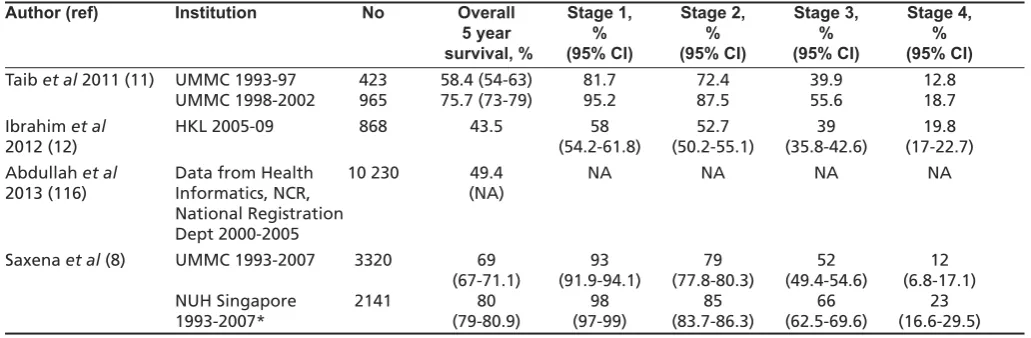
Survival from breast cancer has improved in the past 3 decades. The largest Malaysian population based study of 10,000 breast cancer patients diagnosed between Jan 2000 and Dec 2005 identified from the Health Informatics Centre, Ministry of Health Malaysia, the National Cancer Registry and the National Mortality Registry found that the 5-year overall survival rate was 49%116. However, overall 5-year survival of breast cancer patients in UMMC improved from 58% to 76% for patients diagnosed in 1993-1997 compared to 1998-2002 (11). The most likely explanation is the establishment of oncology services in the hospital in 1998. Survival analysis showed that stage, lymph node status, negativity for the estrogen receptor, tumour size and grade were the most important prognostic factors117-118. Notably, whereas several studies in Western settings had reported that lymph node ratio (LNR, i.e. the ratio of the number of positive nodes to the total number of nodes excised) was superior to the absolute number of nodes involved (pN stage), this did not improve prognostication in a Malaysian population119. Another prognostic factor is locoregional recurrence after mastectomy for breast cancer, which may predict distant recurrence and mortality. The overall post-mastectomy local recurrence rate was 16.4% and isolated local recurrence rate was 8.0% (42 of 522 patients). Race, age, size, stage, margin involvement, lymph node involvement, grade, lymphovascular invasion and ER status were associated with ipsilateral local recurrence (ILR)120. A number of studies have examined the prognostic value of new biomarkers but these studies have been limited by ascertainment bias, as patients were more likely to receive additional testing (e.g. HER2 testing) if they are at intermediate or high risk121. Investigating the prognostic value of new biomarkers in breast cancer using only patients with available biomarker status from hospital cancer registries may lead to invalid results. Compared with patients perceived as having low mortality risk, patients with high mortality risk were significantly less likely to be tested for HER2 status, whereas those with intermediate risk were more likely to be tested121.
However, although survival is improving in Malaysia, overall survival continues to lag behind that of our neighbouring countries, particularly Singapore. A combined analysis of 5,264 patients treated in UMMC and National University Hospital Singapore (NUHS), showed 5-year overall survival of 82.5% in Stage 0 to Stage II breast cancer patients, and 30.2% in Stage III and IV patients (4). Malay women had significantly higher risk of all-cause mortality, independent of age, stage, tumour characteristics and treatment, compared to Indian and Chinese ethnicity in this and another Malaysian study [Indian: 10.0%, Chinese: 71.6%, Malay: 18.4%]16,122, but in another study, delayed time from diagnosis to treatment in Malay compared to Chinese women did not result in significant impact on survival123.The combined Malaysia-Singapore database also showed that overall survival of breast cancer patients from Malaysia is much lower than that of Singaporean patients8,12. Table V summarises the 5-year survival data from different Malaysian institutions8,11-12,116. It is noteworthy that the survival in UMMC at each stage of diagnosis is better than that of Hospital Kuala Lumpur, suggesting that disparities in survival could arise from differences in compliance to treatment.
Notably, a limitation of the majority of studies conducted so far have been that they are single-institution-based studies that may not accurately provide an overall picture of presentation, management, and outcome of breast cancer in Malaysia. Recently, a multicentre retrospective observational study
showed that the performance results, while acceptable for a middle income country, was below the 95% or higher adherence rates routinely reported by centres in developed countries124. Further multi-centre studies, such as the National Cancer Patient Registry-Breast cancer (NCPR-BC), would be useful for evaluating clinical management in Malaysia125.
Another manifestation of the disparity in survival is in the over-optimistic prediction of survival from prognostic models. Prognostic models, such as Adjuvant! Online, which have been developed in Caucasian populations to guide decision making for adjuvant therapy in early breast cancers, has been found to significantly over-estimated the 10-year survival (70.3% predicted compared to 63.6% observed, difference of 6.7%)126, thus highlighting the need to address the disparities in care.
Two groups of patients may have poorer survival, namely the elderly and pregnant women. Although there is limited information on the outcomes of elderly breast cancer patients, this group of patients tend to be undertreated and have poorer survival because of competing co-morbidities. Of one hundred and thirty six women with breast cancer aged 70 and older studied, the relapse free, cause specific survival and cumulative overall 5-year survival were 79.7%, 73.3% and 51.9% respectively127. Patients who develop breast cancer whilst pregnant were rare and they require a multidisciplinary approach involving an obstetrician, surgeon and oncologist. Experience with six patients in UMMC revealed that five patients refused any treatment during pregnancy and the outcome was poor, with all patients dying between 14 months and 52 months128.
Biomarkers
To date, four pathological biomarkers have been evaluated in the Malaysian population for its prognostic value, namely HER2, TP53, PTEN and CA153. Consistent with studies in other populations, HER2 (cerbB-2 onco-protein) overexpression was associated with a shorter recurrence free survival and overall survival129. One study suggested that overexpression of p53, which was observed in 55.3% of tumours, may be a prognostic factor. With a median follow-up of 4 years, the median overall survival of tumours with wild type compared to p53 negative tumours was 3 years compared with 3.8 years while disease free survival was 2.5 years compared to 3.3 years95. However, the data was not adjusted to intrinsic subtypes of breast cancer or for treatment differences. Two other biomarkers which have been tested are PTEN and CA153. PTEN loss occurred in 48.3% of TNBC, and was significantly associated with younger age at diagnosis. Independent predictors of PTEN loss were late stage at presentation, cytokeratin 5/6 positivity and IGFBP2 expression. PTEN loss and high levels of IGFBP2 expression were associated with poorer survival, but neither of these trends was significant96. Elevated levels of CA153 was associated with a poorer survival, suggesting its potential role as a prognostic biomarker97.
SURVIVORSHIP AND PSYCHOSOCIAL ISSUES