VICTRELIS™
Boceprevir
1. NAME OF THE MEDICINAL PRODUCT & PHARMACEUTICAL FORM VICTRELIS 200 mg Capsules
Hard capsules.
Description
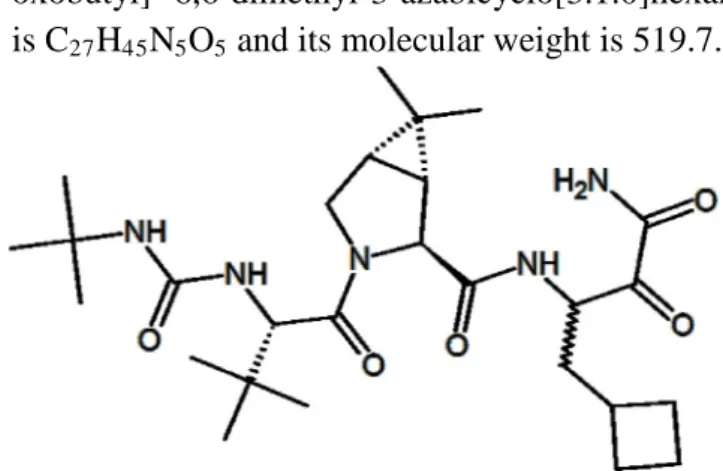
Boceprevir has the following chemical name: (1R,5S)-N-[3-Amino-1-(cyclobutylmethyl)- 2,3- dioxopropyl]-3-[2(S)-[[[(1,1 dimethylethyl)amino]carbonyl]amino]-3,3-dimethyl-1 - oxobutyl]- 6,6-dimethyl-3-azabicyclo[3.1.0]hexan-2(S)-carboxamide. The molecular formula is C27H45N5O5 and its molecular weight is 519.7.
Figure 1: Structural Formula for Boceprevir
2. QUALITATIVE AND QUANTITATIVE COMPOSITION VICTRELIS 200 mg capsule contains 200 mg of boceprevir.
Excipient: each capsule contains 56 mg of lactose monohydrate.
For a full list of excipients, see List of Excipients of Special Interest.
3. PHARMACEUTICAL PARTICULARS 3.1 List of Excipients of Special Interest
Capsule contents; sodium lauryl sulfate, microcrystalline cellulose, lactose monohydrate, croscarmellose sodium, pre-gelatinized starch, magnesium stearate
Off-white/Yellowish-brown capsule
Capsule shell: Gelatin, Titanium dioxide (E171), Yellow iron oxide (E172), Red iron oxide (E172)
Red printing ink containing: Shellac, Red iron oxide (E172)
3.2 Special Precautions for Storage
For Peelable Aciar/PVC/aluminium blisters configuration:
Store in a refrigerator (2°C - 8°C) until dispensed to the patient.
For patient use, the product may be stored in the refrigerator until the expiration date printed on the label. The product can also be stored below 30°C for up to 3 months.
Store in the original container.
3.3 Instructions for Use and Handling and Disposal
Any unused product or waste material should be disposed of in accordance with local requirements.
4. CLINICAL PARTICULARS 4.1 Therapeutic Indications
VICTRELIS is indicated for the treatment of chronic hepatitis C (CHC) genotype 1 infection, in combination with peginterferon alfa and ribavirin, in adult patients (18 years and older) with compensated liver disease who are previously untreated or who have failed previous therapy.
4.2 Posology and Method of Administration 4.2.1 General
VICTRELIS must be administered in combination with peginterferon alfa and ribavirin. The professional inserts of peginterferon alfa and ribavirin must be consulted prior to initiation of therapy with VICTRELIS.
4.2.2 Dose Posology
The recommended dose of VICTRELIS is 800 mg administered orally three times daily (TID) with food (meal or light snack).
Patients without cirrhosis who are previously untreated
· Initiate therapy with peginterferon alfa and ribavirin for 4 weeks (Treatment Weeks 1 - 4).
· Add VICTRELIS 800 mg orally three times daily to peginterferon alfa and ribavirin regimen at Treatment Week (TW) 5. Based on the patient's hepatitis C virus ribonucleic acid (HCV-RNA) results at TW 8 and TW 24, use the following Response Guided Therapy (RGT) guidelines to determine duration of treatment (see Table 1).
Table 1.
Duration of therapy using Response Guided Therapy (RGT) in Patients Without Cirrhosis Who are Previously Untreated
ASSESSMENT (HCV-RNA Results*)
ACTION At Treatment
Week 8
At Treatment Week 24
Undetectable Undetectable Complete three-medicine regimen at Treatment Week 28.
Detectable Undetectable 1. Continue all three medicines until Treatment Week 28, and then
2. Administer peginterferon alfa and ribavirin until Treatment Week 48.
Any Result Detectable Discontinue three-medicine regimen.
* In clinical trials, HCV-RNA in plasma was measured with a Roche COBAS TaqMan® assay with a limit of detection of 9.3 lU/mL.
Patients without cirrhosis who have failed previous therapy (partial responders and relapsers)
· Initiate therapy with peginterferon alfa and ribavirin for 4 weeks (Treatment Weeks 1- 4).
· Add VICTRELIS 800 mg orally three times daily to peginterferon alfa and ribavirin regimen at Treatment Week (TW) 5. Based on the patient's HCV-RNA levels at TW 8 and TW 12, use the following Response Guided Therapy (RGT) guidelines to determine duration of treatment (see Table 2). If patient has detectable HCV-RNA at TW 24, discontinuation of therapy is recommended.
Table 2
Duration of therapy using Response Guided Therapy (RGT) in Patients Without Cirrhosis Who have Failed Previous Therapy (partial responders and relapsers*)
ASSESSMENT (HCV-RNA Results*)
ACTION At Treatment
Week 8
At Treatment Week 24
Undetectable Undetectable Continue three-medicine regimen until completion through Treatment Week 36.
Detectable Undetectable 1. Continue ail three medicines until Treatment Week 36, and then 2. Administer peginterferon alfa and
ribavirin until Treatment Week 48.
Any Result Detectable Discontinue three-medicine regimen.
*Previous Partial responders - Patients with a decrease in HCV-RNA viral load ≥ 2-log10 by Week 12 but
never achieved SVR; Relapsers -Patients with undetectable HCV-RNA at end of prior treatment with a subsequent detectable HCV-RNA in plasma.
† In clinical trials, HCV-RNA in plasma was measured with a Roche COBAS TaqMan® assay with a limit of detection of 9.3 lU/mL.
Patients with prior null response
Response-Guided Therapy was not studied in patients who had less than a 2-log10 HCV- RNA decline by treatment week 12 during prior therapy with peginterferon alfa and ribavirin (null responders). If considered for treatment, these subjects should receive 4 weeks of peginterferon alfa and ribavirin followed by 44 weeks of VICTRELIS 800 mg orally three times daily in combination with peginterferon alpha and ribavirin. Discontinuation of therapy is recommended in patients with prior null response on previous therapy who have detectable HCV-RNA at TW12; if a patient has detectable HCV-RNA at TW 24, discontinuation of therapy is recommended.
Patients with cirrhosis
Patients with compensated cirrhosis should receive 4 weeks peginterferon alpha and ribavirin followed by 44 weeks VICTRELIS 800 mg orally three times daily in combination with
peginterferon alfa and ribavirin. Discontinuation of therapy is recommended in previously untreated patients who have detectable HCV-RNA at TW24. Discontinuation of therapy is recommended in patients who failed therapy with detectable HCV-RNA at TW12; if a patient has detectable HCV-RNA at TW 24, discontinuation of therapy is recommended.
Method of administration Take orally with food.
4.2.3 Dose Interruption
If a patient misses a dose and it is less than 2 hours before the next dose is due, the missed dose should be skipped.
If patient misses a dose and it is 2 or more hours before the next dose is due, the patient should take the missed dose with food and resume the normal dosing schedule.
4.2.4 Dose Modification
Dose reduction of VICTRELIS is not recommended.
If a patient has a serious adverse reaction potentially related to peginterferon alfa and ribavirin, the peginterferon alfa and/or ribavirin dose should be reduced. Refer to the professional inserts for peginterferon alpha and ribavirin for additional information about how to reduce and/or discontinue the peginterferon alfa and/or ribavirin dose. VICTRELIS must not be administered in the absence of peginterferon alfa and ribavirin.
Renal impairment
No dose adjustment of VICTRELIS is required in patients with any degree of renal impairment (see Pharmacokinetic Properties).
Hepatic impairment
No dose adjustment of VICTRELIS is required for patients with mild, moderate or severe hepatic impairment. VICTRELIS, in combination with peginterferon alfa and ribavirin, is contraindicated in cirrhotic patients with a Child-Pugh score > 6 (class B and C) (see Contraindications and Pharmacokinetic Properties).
Paediatric population
The safety, efficacy and pharmacokinetic profile of VICTRELIS in paediatric patients below 18 years of age have not yet been established.
Elderly
Clinical studies of VICTRELIS did not include sufficient numbers of subjects aged 65 and over to determine whether they respond differently from younger subjects. Other clinical experience has not identified differences in responses between the elderly and younger patients (see Pharmacokinetic Properties).
Patients co-infected with HCV/HIV
The safety and efficacy of VICTRELIS alone or in combination with peginterferon alfa and
ribavirin for the treatment of chronic hepatitis C genotype 1 infection have not been established in patients co-infected with Human immunodeficiency Virus (HIV) and HCV.
Patients co-infected with HCV/HBV
The safety and efficacy of VICTRELIS alone or in combination with peginterferon alfa and ribavirin for the treatment of chronic hepatitis C genotype 1 infection in patients co-infected with hepatitis B Virus (HBV) and HCV have not been studied.
Patients having HCV genotypes other than genotype 1
The safety and efficacy of VICTRELIS alone or in combination with peginterferon alfa and ribavirin for treatment of chronic hepatitis C genotypes other than genotype 1 infection have not been established.
Organ Transplant Recipients
The safety and efficacy of VICTRELIS alone or in combination with peginterferon alfa and ribavirin for the treatment of chronic hepatitis C genotype 1 infection in liver or other organ transplant recipients have not been studied.
5. COMPANY CORE SAFETY INFORMATION 5.1 Contraindications
VICTRELIS, in combination with peginterferon alfa and ribavirin, is contraindicated in:
· Patients with previously demonstrated clinically significant hypersensitivity to the active substance or any of its excipients.
· Patients with autoimmune hepatitis
· Patients with hepatic decompensation [Child-Pugh score >6 (class B and C)] (see Posology and Method of Administration, and Pharmacokinetic properties)
· Co-administration with medicines that are highly dependent on CYP3A4/5 for clearance, and for which elevated plasma concentrations are associated with serious and/or life- threatening events such as orally administered midazolam, triazolam, amiodarone, astemizole, bepridil, pimozide, propafenone, quinidine, lumefantrine, halofantrine, simvastatin, lovastatin, tyrosine kinase inhibitor and ergot derivatives (dihydroergotamine, ergonovine, ergotamine, methylergonovine) (see Interactions with Other Medicinal Products and Other Forms of Interaction).
· Pregnant women and in men whose female partners are pregnant because of the risks of birth defects and foetal death with ribavirin (see Pregnancy)
Refer to professional inserts for peginterferon alfa and ribavirin for additional information.
5.2 Special Warnings and Special Precautions for Use Anemia
Anemia has been reported with peginterferon alfa/ribavirin therapy. The addition of VICTRELIS to peginterferon alfa and ribavirin is associated with an additional decrease in serum hemoglobin concentrations. Complete blood counts should be obtained pretreatment, Treatment Week 4, Treatment Week 8, and thereafter, as clinically appropriate. If serum hemoglobin is < 10 g/dL, a decrease in dose or interruption of ribavirin and/or administration
of erythropoietin (epoetin alfa) may be warranted (see Undersirable Effects and Pharmacodynamic Properties).
Refer to the professional inserts for ribavirin for statements regarding dose reduction and/or interruption.
Neutropenia
In Phase 2 and 3 clinical trials, seven percent of subjects receiving the combination of VICTRELIS with peginterferon alfa-2b and ribavirin had neutrophil counts of less than 0.5 x 10⁹/L compared to 4% of subjects receiving peginterferon alfa-2b and ribavirin alone (see Table 4). Three subjects experienced severe or life-threatening infections associated with neutropenia, and two subjects experienced life-threatening neutropenia while receiving the combination of VICTRELIS with peginterferon alfa-2b and ribavirin. Complete blood count must be conducted in all patients prior to initiating VICTRELIS combination therapy.
Complete blood counts should be obtained at Treatment Weeks 4, 8, and 12, and should be monitored closely at other time points, as clinically appropriate. Decreases in neutrophil counts may require dose reduction or discontinuation of peginterferon alfa and ribavirin.
Refer to the professional inserts for peginterferon alfa and ribavirin for statements regarding dose reduction and/or interruption.
Drospirenone-containing medications
Caution should be exercised in patients taking drospirenone-containing medications with conditions that predispose them to hyperkalemia or patients taking potassium-sparing diuretics. Alternative contraceptives should be considered (see Interactions with Other Medicinal Products and Other Forms of Interaction).
Use in patient who have previously failed treatment with an HCV protease inhibitor The safety and efficacy of Victrelis alone or in combination with peginterferon alfa and ribavirin for the treatment of chronic hepatitis C genotype 1 infection has not been studied in patients who have failed previous therapy with Victrelis or other HCV protease inhibitors.
Potent CYP3A4 inducers
The concomitant use of VICTRELIS with potent CYP3A4 inducers (rifampicin, carbamazepine, phenobarbital, phenytoin) is not recommended.
HCV protease monotherapy
Based on results of clinical studies, VICTRELIS must not be used alone due to the high probability of increased resistance without combination anti-HCV therapies (see Pharmacodynamic properties).
It is unknown what effect therapy with VICTRELIS will have on the activity of subsequently administered HCV protease inhibitors, including re-treatment with VICTRELIS.
Effects on ability to drive and use machines
No studies of the effects of VICTRELIS in combination with peginterferon alfa and ribavirin on the ability to drive and use machines have been performed. However, certain side effects that have been reported may affect some patients' ability to drive or operate machinery.
Individual response to VICTRELIS in combination with peginterferon alpha and ribavirin may vary. Patients should be informed that fatigue and dizziness have been reported (see Undesirable Effects).
Please refer to professional inserts for peginterferon alfa and ribavirin for additional information.
Use in patients with rare hereditary disorders
Patients with rare hereditary problems of galactose intolerance, the Lapp lactase deficiency or glucose-galactose malabsorption should not take this medicine.
5.3 Interactions with Other Medicinal Products and Other Forms of Interaction VICTRELIS is a strong inhibitor of CYP3A4/5. Medicines metabolized primarily by CYP3A4/5 may have increased exposure when administered with VICTRELIS, which could increase or prolong their therapeutic and adverse effects (see Table 3). VICTRELIS does not inhibit CYP1A2, CYP2A6, CYP2B6, CYP2C8, CYP2C9, CYP2C19, CYP2D6 or CYP2E1 in vitro. In addition, VICTRELIS does not induce CYP1A2, CYP2B6, CYP2C8, CYP2C9, CYP2C19 or CYP3A4/5 in vitro.
VICTRELIS is partly metabolized by CYP3A4/5. Co-administration of VICTRELIS with medicines that induce or inhibit CYP3A4/5 could increase or decrease exposure to VICTRELIS.
Boceprevir is a potential inhibitor of p-glycoprotein (P-gp) based on in vitro studies. The potential for a drug interaction with sensitive substrates of p-glycoprotein (e.g., digoxin) has not been evaluated in a clinical trial.
VICTRELIS, in combination with peginterferon alfa and ribavirin, is contraindicated when coadministered with medicines that are highly dependent on CYP3A4/5 for clearance, and for which elevated plasma concentrations are associated with serious and/or life-threatening events such as orally administered midazolam, triazolam, amiodarone, astemizole, bepridil, pimozide, propafenone, quinidine, lumefantrine, halofantrine, simvastatin, lovastatin, tyrosine kinase inhibitor and ergot derivatives (dihydroergotamine, ergonovine, ergotamine, methyiergonovine) (see Contraindications).
Table 3.
Pharmacokinetic interactions data Medicinal products by
therapeutic areas
Interaction*
(postulated mechanism of action, if known)
Recommendations concerning co- administration ANTI-INFECTIVES
Antiviral
Peginterferon alfa-2b (peginterferon alfa-2b 1.5 mcg/kg subcutaneous (SC) weekly + VICTRELIS 400 mg three times daily)
boceprevir AUC** ↔ boceprevir Cmax ↔ 12%
boceprevir Cmin N/A
peginterferon alfa-2b AUC ↔ 1 % † and‡
No dose adjustment required for VICTRELIS or
peginterferon alfa-2b.
Medicinal products by therapeutic areas
Interaction*
(postulated mechanism of action, if known)
Recommendations concerning co- administration peginterferon alfa-2b
Cmax N/A Antibiotic
Clarithromycin (in
combination with diflunisal) (clarithromycin:
500 mg three times daily + diflunisal 500 mg two to three times daily + VICTRELIS 400 mg two times daily)
boceprevir AUC ↔ 21%
boceprevir Cmax ↑ 36%
boceprevir Cmin ↔ 15%
No dose adjustment is required with VICTRELIS in
combination with clarithromycin, or
VICTRELIS in combination with clarithromycin and diflunisal.
Antifungals Ketoconazole
(ketoconazole 400 mg two times daily + VICTRELIS 400 mg single dose)
Itraconazole, Posaconazole, Voriconazole
boceprevir AUC ↑ 131%
boceprevir Cmax ↑ 41%
boceprevir Cmin N/A
Not studied
Caution should be exercised when boceprevir is combined with ketoconazole or azole antifungals (itraconazole, posaconazole, voriconazole).
Antiretroviral
Nucleoside Reverse Transcriptase inhibitor (NRTl) Tenofovir
(tenofovir 300 mg daily + VICTRELIS 800 mg three times daily)
boceprevir AUC ↔ 8%**
boceprevir Cmax ↔ 5%
boceprevir Cmin ↔ 8%
tenofovir AUC ↔ 5%
tenofovir Cmax ↑ 32%
No dose adjustment required for VICTRELIS or tenofovir.
Non-nucleoside Reverse Transcriptase Inhibitors (NNRTI) Efavirenz
(efavirenz 600 mg daily + VICTRELIS 800 mg three times daily)
boceprevir AUC ↔ 19%**
boceprevir Cmax ↔ 8%
boceprevir Cmin ↓ 44%
efavirenz AUC ↔ 20%
efavirenz Cmsx ↔ 11%
Plasma trough concentrations of VICTRELIS were
decreased when administered with efavirenz. The clinical outcome of this observed reduction of VICTRELIS trough concentrations has not been directly assessed.
HIV Protease Inhibitor (PI) Ritonavir
(ritonavir 100 mg daily + VICTRELIS 400 mg three times daily)
boceprevir AUC ↔ 19%
boceprevir Cmax ↓ 27%
boceprevir Cmin ↔ 4%
No dose adjustment required for VICTRELIS or ritonavir.
ANALGESIC
Non-steroidal anti-inflammatories (NSAIDs) Diflunisal
(diflunisal 250 mg two times daily +
boceprevir AUC ↔ 4%
boceprevir Cmax ↔ 14%
boceprevir Cmin ↑ 31%
No dose adjustment required for VICTRELIS or diflunisal.
Medicinal products by therapeutic areas
Interaction*
(postulated mechanism of action, if known)
Recommendations concerning co- administration VICTRELIS 800 mg two to
three times daily) Ibuprofen
(ibuprofen 600 mg three times daily + VICTRELIS 400 mg single dose)
boceprevir AUC ↔ 4%
boceprevir Cmax ↔ 6%
boceprevir Cmin N/A
No dose adjustment required for VICTRELIS or ibuprofen.
ORAL CONTRACEPTIVES Drospirenone/Ethinyl estradiol:
(drospirenone
3 mg daily + ethinyl estradiol 0.02 mg daily + VICTRELIS 800 mg three times daily)
drospirenone AUC ↑ 99%
drospirenone Cmax ↑ 57%
ethinyl estradiol AUC ↓ 24%
ethinyl estradiol Cmax (drospirenone - CYP3A4/5 inhibition)
Caution should be exercised in with conditions that
predispose them to hyperkalaemia or patients taking potassium-sparing diuretics. Alternative contraceptives should be considered (see Special Warnings and Special Precautions for Use).
SEDATIVES Midazolam (oral
administration) (4 mg single oral dose + VICTRELIS 800 mg three times daily)
midazolam AUC ↑ 430%
midazolam Cmax ↑ 177%
(CYP3A4/5 inhibition)
Co-administration with
VICTRELIS is contraindicated (see Contraindications).
Alprazolam, midazolam, triazolam (intravenous administration)
Interaction not studied
(CYP3A4/5 inhibition)
Close clinical monitoring for respiratory depression and/or prolonged sedation should be exercised during co-
administration of VICTRELIS with intravenous
benzodiazepines (alprazolam, midazolam, triazolam). Dose adjustment of the
benzodiazepine should be considered.
IMMUNOSUPPRESSANTS Not studied Therapeutic medicine monitoring is recommended when administering
VICTRELIS with CYP3A4/5 substrates that have a narrow therapeutic window (e.g., tacrolimus, cyclosporine).
Individual patients may require additional titration of their immunosuppressant dosage when VICTRELIS is
Medicinal products by therapeutic areas
Interaction*
(postulated mechanism of action, if known)
Recommendations concerning co- administration
started or stopped to ensure clinically effective blood levels.
STATINS (e.g., atorvastatin.)
Not studied Therapeutic monitoring is recommended when administering VICTRELIS with atorvastatin, CYP3A4/5 substrates that have a narrow therapeutic window.
Individual patients may require additional titration of their statin dosage when VICTRELIS is started or stopped to ensure clinically effective blood levels.
Methadone Not studied Therapeutic monitoring is
recommended when administering VICTRELIS with CYP3A4/5 substrates that have a narrow therapeutic window. Individual patients may require additional titration of their methadone dosage when VICTRELIS is started or stopped to ensure clinically effective blood levels.
* Interaction of VICTRELIS with other medicinal products (change in mean ratio estimate of VICTRELIS in combination with co-administered medicine/ VICTRELIS alone): 1 equals a decrease in mean ratio estimate >
20%; ↑ equals an increase in mean ratio estimate > 25%; no effect (↔) equals a decrease in mean ratio estimate of ≤ 20% or increase in mean ratio estimate ≤ 25%.
** 0-8 hours
† 0-168 hours
‡ Reported AUC is 200 mg and 400 mg cohorts combined.
5.4 Pregnancy and Lactation Pregnancy
There are no adequate and well-controlled studies with VICTRELIS in pregnant women.
Fertile women should only be treated when they are using effective contraception.
No effects on fetal development have been observed in rats and rabbits (see Nonclinical Toxicology).
VICTRELIS, in combination with ribavirin and peginterferon alpha, is contraindicated in women who are pregnant (see Contraindications).
Please refer to professional inserts for ribavirin and peginterferon alpha for additional
information.
Breastfeeding
Available pharmacodynamic/toxicological data in rats have shown excretion of boceprevir/boceprevir-derived material in milk (see Nonclinical Toxicology).
A risk to the newborns/infants cannot be excluded.
A decision must be made whether to discontinue breast-feeding or to discontinue/abstain from therapy with VICTRELIS taking into account the benefit of breast feeding for the child and the benefit of therapy for the woman.
5.5 Undesirable Effects 5.5.1 Clinical Trials Experience
The safety profile represented by approximately 1,500 patients for the combination of VICTRELIS with peginterferon alfa-2b and ribavirin was based on pooled safety data in two clinical trials in patients who were previously untreated and one clinical trial in patients who had failed prior therapy. Patients with chronic hepatitis C received VICTRELIS 800 mg three times daily in combination with peginterferon alfa-2b and ribavirin. SPRINT-1 (P03523) evaluated the use of VICTRELIS in combination with peginterferon alfa-2b and ribavirin with or without a four week lead-in period with peginterferon alfa-2b and ribavirin compared to peginterferon alfa-2b and ribavirin alone in subjects who were previously untreated.
SPRINT- 2 (P05216 - subjects who were previously untreated) and RESPOND-2 (P05101 - subjects who had failed previous therapy) evaluated the use of VICTRELIS 800 mg three times daily in combination with peginterferon alfa-2b and ribavirin with a four-week lead-in period with peginterferon alfa-2b and ribavirin compared to peginterferon alfa-2b and ribavirin alone (see Clinical Trials). The population studied had a mean age of 49 years (2%
of patients were > 65 years of age), 39% were female, and were 82% white and 15% black.
Subjects received VICTRELIS 800 mg three times daily in each study. Patients with chronic hepatitis C were randomized to receive VICTRELIS in the three studies for a median exposure of 201 days.
The most frequently reported adverse reactions were similar across all study arms. The most frequently reported adverse reactions considered by investigators to be causally related to the combination of VICTRELIS with peginterferon alfa-2b and ribavirin in adult subjects in clinical studies were: fatigue, anemia, nausea, headache, and dysgeusia.
During the four-week lead-in period with peginterferon alfa-2b and ribavirin, 28/1,263 subjects in the VICTRELIS -containing arms experienced adverse reactions leading to discontinuation of treatment. During the entire course of treatment, the proportion of subjects who discontinued treatment due to adverse reactions was 13% for subjects receiving the combination of VICTRELIS with peginterferon alfa-2b and ribavirin and 12% for subjects receiving peginterferon alfa-2b and ribavirin alone. Events resulting in discontinuation were similar to those seen in previous studies with peginterferon alfa-2b and ribavirin. Only anemia and fatigue were reported as events that led to discontinuation in > 1% of subjects in any arm.
Adverse reactions that led to dose modifications of any medication occurred in 39% of subjects receiving the combination of VICTRELIS with peginterferon alfa-2b and ribavirin
compared to 24% of subjects receiving peginterferon alfa-2b and ribavirin. The most common reason for dose reduction was anemia, which occurred more frequently in subjects receiving the combination of VICTRELIS with peginterferon alfa-2b and ribavirin than in subjects receiving peginterferon alfa-2b and ribavirin alone.
Adverse reactions considered by investigator to be causally related reported in >10% of subjects who received the combination of VICTRELIS with peginterferon alfa-2b and ribavirin and are listed by System Organ Class (see Table 4). Within each system organ class, adverse reactions are listed under headings of frequency using the categories: very common (≥ 1/10); common (≥ 1/100 to < 1/10); uncommon (≥ 1/1,000 to < 1/100); rare (≥
1/10,000 to < 1/1,000).
Table 4.
Adverse reactions in combination with VICTRELIS with peginterferon alfa-2b and ribavirin reported during clinical trials† and ‡
System Organ Class Adverse Reactions
Infections and infestations
Common: Bronchitis*, cellulitis*, herpes simplex,
influenza, oral fungal infection, sinusitis
Uncommon: Gastroenteritis*, pneumonia*, staphylococcal
infection*, candidiasis, ear infection, fungal skin infection, nasopharyngitis, onychomycosis, pharyngitis, respiratory tract infection, rhinitis, skin infection, urinary tract infection
Rare: Epiglottitis*, otitis media, sepsis
Neoplasms benign, malignant and unspecified (including cysts and polyps)
Rare: Thyroid neoplasm (nodules)
Blood and lymphatic system disorders
Very common: Anemia*, neutropenia*
Common: Leukopenia*, thrombocytopenia*
Uncommon: Haemorrhagic diathesis, lymphadenopathy,
lymphopenia
Rare: Haemolysis
Immune system disorders
Rare: Sarcoidosis*, porphyria non-acute
Endocrine disorders
Common: Goitre, hypothyroidism
Uncommon: Hyperthyroidism
Metabolism and nutrition disorders
Very common: Decreased appetite*
Common: Dehydration*, hyperglycaemia*,
hypertriglyceridaemia, hyperuricaemia
Uncommon: Hypokalaemia*, appetite disorder, diabetes
mellitus, gout, hypercalcaemia Psychiatric disorders
Very common: Anxiety*, depression*, insomnia, irritability
Common: Affect lability, agitation, libido disorder, mood
altered, sleep disorder
Uncommon: Aggression*, homicidal ideation*, panic attack*, paranoia*, substance abuse*, suicidal ideation*, abnormal behaviour, anger, apathy, confusional state, mental status changes, restlessness
Rare: Bipolar disorder*, completed suicide*, suicide
attempt*, hallucination auditory hallucination visual, psychiatric decompensation
Nervous system disorders
Very common: Dizziness*, headache*
Common: Hypoaesthesia*, paraesthesia*, syncope*,
amnesia, disturbance in attention, memory impairment, migraine, parosmia, tremour, vertigo
Uncommon: Neuropathy peripheral*, cognitive disorder,
hyperaesthesia, lethargy, loss of consciousness, mental impairment, neuralgia, presyncope
Rare: Cerebral ischaemia*, encephalopathy
Eye disorders
Common: Dry eye, retinal exudates, vision blurred, visual impairment
Uncommon: Retinal ischaemia*, retinopathy*, abnormal
sensation in eye, conjunctival haemorrhage, conjunctivitis, eye pain, eye pruritus, eye swelling, eyelid oedema, lacrimation increased, ocular hyperaemia, photophobia
Rare: Papilloedema
Ear and labyrinth disorders
Common: Tinnitus
Uncommon: Deafness*, ear discomfort, hearing impaired
Cardiac disorders
Common: Palpitations
Uncommon: Tachycardia*, arrhythmia, cardiovascular
disorder
Rare: Acute myocardial infarction*, atrial fibrillation*, coronary artery disease*, pericarditis*, pericardial effusion
Vascular disorders
Common: Hypotension*, hypertension
Uncommon: Deep vein thrombosis*, flushing, pallor,
peripheral coldness
Rare: Venous thrombosis
Respiratory, thoracic and mediastinal disorders
Very common: Cough*, dyspnoea*
Common: Epistaxis, nasal congestion, oropharyngeal pain,
respiratory tract congestion, sinus congestion, wheezing
Uncommon: Pleuritic pain*, pulmonary embolism*, dry
throat, dysphonia, increased upper airway secretion, oropharyngeal blistering
Rare: Pleural fibrosis*, orthopnoea, respiratory failure
Gastrointestinal disorders
Very common: Diarrhoea*, dry mouth, dysgeusia nausea*, vomiting*
Common: Abdominal pain*, abdominal pain upper*,
constipation*, gastrooesophageal reflux
disease*, haemorrhoids*, abdominal discomfort, abdominal distention, anorectal discomfort, aphthous stomatitis, cheilitis, dyspepsia, flatulence, glossodynia, mouth ulceration, oral pain, stomatitis, tooth disorder
Uncommon: Abdominal pain lower*, gastritis*, pancreatitis*, anal pruritus, colitis, dysphagia, faeces
discoloured, frequent bowl movements, gingival bleeding, gingival pain, gingivitis, glossitis, lip dry, odynophagia, proctalgia, rectal
haemorrhage, salivary hypersecretion, sensitivity of teeth, tongue discolouration, tongue ulceration
Rare: Pancreatic insufficiency
Hepatobiliary disorders
Uncommon: Hyperbilirubinaemia
Rare: Cholecystitis*
Skin and subcutaneous tissue disorders
Very common: Alopecia, dry skin, pruritus, rash
Common: Dermatitis, eczema, erythema, hyperhidrosis,
night sweats, oedema peripheral, psoriasis, rash erythematous, rash macular, rash maculo- papular, rash papular, rash pruritic, skin lesion
Uncommon: Photosensitivity reaction, skin ulcer, urticaria
Musculoskeletal and connective tissue disorders
Very common: Arthralgia, myalgia
Common: Back pain*, pain in extremity*, muscle spasms,
muscular weakness, neck pain
Uncommon: Musculoskeletal chest pain*, arthritis, bone pain, joint swelling, musculoskeletal pain
Renal and urinary disorders
Common: Pollakiuria
Uncommon: Dysuria, nocturia
Reproductive system and breast disorders
Common: Erectile dysfunction
Uncommon: Amenorrhoea, menorrhagia, metrorrhagia
Rare: Aspermia
General disorders and administration site conditions
Very common: Asthenia*, chills, fatigue*, influenza-like illness,
pyrexia*
Common: Chest discomfort*, chest pain*, malaise*, feeling of body temperature change, mucosal dryness, pain
Uncommon: Feeling abnormal, impaired healing, non-
cardiac chest pain Investigations
Very common: Weight decreased
Uncommon: Cardiac murmur, heart rate increased
* Includes adverse reactions which may be serious as assessed by the investigator in clinical trial subjects,
† Since VICTRELIS is prescribed with peginterferon alfa and ribavirin, please also refer to the respective professional insert of peginterferon alfa and ribavirin.
‡ Injection-site reactions have not been included since VICTRELIS is administered orally.
Anemia
Anemia_was observed 49% of subjects treated with the combination of VICTRELIS with peginterferon alfa-2b and ribavirin compared with 29% of subjects treated with peginterferon alfa-2b and ribavirin alone. VICTRELIS was associated with an additional decrease of approximately 1 g/dL in hemoglobin concentration. The mean decreases in hemoglobin values from baseline were larger in previously treated patients compared to patients who had never received prior therapy. Dose modifications due to anemia/hemolytic anemia occurred twice as often in patients treated with the combination of VICTRELIS with peginterferon alfa-2b and ribavirin (26%) compared to peginterferon alfa-2b and ribavirin alone (13%). In these clinical trials, proper management of anemia was associated with continued treatment and higher sustained virologic response, with the majority of the anaemic subjects having received erythropoietin (see Clinical Trials). The proportion of subjects who received a transfusion for the management of anemia was 3% of subjects in the VICTRELIS -containing arms compared to < 1% of subjects receiving peginterferon alfa-2b and ribavirin alone.
Neutrophils and Platelets
The proportion of subjects with decreased neutrophil and platelet counts was higher in the VICTRELIS -containing arms compared to subjects receiving only peginterferon alfa-2b and ribavirin. Seven percent of subjects receiving the combination of VICTRELIS with peginterferon alfa-2b and ribavirin had neutrophil counts of < 0.5 x 10⁹ /L compared to 4%
of subjects receiving only peginterferon alfa-2b and ribavirin. Three percent of subjects receiving the combination of VICTRELIS with peginterferon alfa-2b and ribavirin had platelet counts of < 50 x 109 /L compared to 1% of subjects receiving only peginterferon alfa-2b and ribavirin.
5.5.2 Post-Market Experience N/A
5.6 Overdosage
Daily doses up to 3,600 mg have been taken by healthy volunteers for 5 days without untoward symptomatic effects.
There is no specific antidote for overdose with VICTRELIS. Ingestion of VICTRELIS at higher than recommended doses may potentially increase the risk of adverse events from drug-drug interactions associated with concomitantly administered medications that are metabolized via the CYP3A4 pathway. Treatment of overdosage with VICTRELIS should consist of general supportive measures, including monitoring of vital signs, and observation of the patient’s clinical status.
6. PHARMACOLOGICAL PROPERTIES 6.1 PHARMACODYNAMIC PROPERTIES 6.1.1 Pharmacotherapeutic Group
ATC Code: J05AE12;
Pharmacotherapeutic group: antivirals for systemic use, protease inhibitors Pharmacologic Class: HCV Protease Inhibitor
6.1.2 Mechanism of Action
VICTRELIS is an inhibitor of the HCV NS3 protease. VICTRELIS covalently, yet reversibly, binds to the NS3 protease active site serine (Ser139) through a (alpha)-ketoamide functional group to inhibit viral replication in HCV-infected host cells.
6.1.3 Pharmacodynamic Effects Antiviral activity in cell culture
The antiviral activity of boceprevir was evaluated in a biochemical assay for slow binding inhibitors of NS3 protease and in the HCV replicon system. The IC50 and IC90 values for boceprevir were approximately 200 nM and 400 nM, respectively, in a 72-hour cell culture assay. Loss of replicon RNA appears to be first-order with respect to time of treatment.
Treatment at lC90 for 72 hours resulted in a 1-log drop in replicon RNA. Prolonged exposure resulted in a 2-log decrease in RNA levels by Day 15.
Evaluation of varying combinations of boceprevir and interferon alfa-2b that produced 90%
suppression of replicon RNA showed additivity of effect; no evidence of synergy or antagonism was detected.
Resistance
Resistance to VICTRELIS was characterized in biochemical and replicon assays.
VICTRELIS potency was reduced (2-to-10 fold) by the following major resistance resistant- associated amino acid variants (RAVs): V36M, T54A, R155K and V170A. A loss of potency (> 50 fold) was observed with resistant-associated amino acid variants: A156T and A156V.
Of note, replicons carrying the A156T variant are less fit than replicons carrying other RAVs.
The fold increase in resistance for double RAVs was approximately equal to the product of fold resistances for the individual RAVs.
In a pooled analysis of subjects who are previously untreated and subjects who have failed, previous therapy who received four weeks of peginterferon alfa-2b and ribavirin followed by VICTRELIS 800 mg three times daily in combination with peginterferon alfa-2b and ribavirin in two Phase III studies, post-baseline RAVs were detected in 15% of all subjects.
In VICTRELIS-treated subjects who did not attain sustained virologic response (SVR) for whom samples were analyzed, 53% had post-baseline RAVs detected. The most frequently
(> 25% of subjects) detected post-baseline RAVs in these subjects were amino acid substitutions V36M (61%) and R155K (68%) in subjects infected with genotype 1a viruses and T54A (42%), T54S (37%), A156S (26%) and V170A (32%) in subjects infected with genotype 1b viruses. In subjects treated with VICTRELIS, interferon responsiveness (as defined by > 1- log10 decline in viral load at Treatment Week 4) was associated with detection of fewer RAVs, with 6% of these subjects having RAVs compared to 41% of subjects with < 1-log10 decline in viral load at Treatment Week 4 (poorly interferon responsive). In subjects treated with VICTRELIS with post-baseline samples analyzed for RAVs, interferon responsiveness was associated with detection of fewer RAVs, with 31% of these subjects having post-baseline RAVs compared to 68% of subjects with < 1-log10 decline in viral load at Treatment Week 4. In a pooled analysis, the presence of baseline RAVs (in 7% of VICTRELIS-treated subjects) did not appear to have a notable association with treatment response in subjects receiving the combination of VICTRELIS with peginterferon alfa-2b and ribavirin.
Data from an ongoing, long-term follow-up study in subjects who did not achieve SVR with a median duration of follow-up of approximately 2 years suggest post-baseline RAVs of VICTRELIS may return to wild-type over time.
6.2 PHARMACOKINETIC PROPERTIES 6.2.1 General Introduction
Not Available
6.2.2 Absorption and Bioavailability
Boceprevir was absorbed following oral administration with a median Tmax of 2 hours.
Steady state AUC, Cmax and Cmin increased in a less-than dose-proportional manner and individual exposures overlapped substantially at 800 mg and 1,200 mg, suggesting diminished absorption at higher doses. Accumulation is minimal and pharmacokinetic steady state is achieved after approximately 1 day of three times daily dosing.
In healthy subjects who received 800 mg three times daily alone, boceprevir medicine exposure was characterized by AUC(T) of 6,147 ng.hr/mL, Cmax of 1,913 ng/mL, and Cmin of 90 ng/mL. Pharmacokinetic results were similar between healthy subjects and HCV-infected subjects.
The absolute bioavailability of VICTRELIS has not been studied.
Effects of food on oral absorption
VICTRELIS should be administered with food. Food enhanced the exposure of boceprevir by up to 60% at the 800 mg three times daily dose when administered with a meal relative to the fasting state. The bioavailability of boceprevir was similar regardless of meal type (e.g., high-fat vs. low-fat) or whether taken 5 minutes prior to eating, during a meal, or immediately following completion of the meal. Therefore, VICTRELIS may be taken without regard to either meal type or timing of the meal.
6.2.3 Distribution
Boceprevir has a mean apparent volume of distribution (Vd/F) of approximately 772 I at steady state. Human plasma protein binding is approximately 75% following a single dose of
VICTREUS 800 mg. Boceprevir is administered as an approximately equal mixture of two diastereomers which rapidly interconvert in plasma. The predominant diastereomer is pharmacologically active and the other diastereomer is inactive.
6.2.4 Metabolism
Studies in vitro indicate that boceprevir primarily undergoes metabolism through the aldo- ketoreductase (AKR)-mediated pathway to ketone-reduced metabolites that are inactive against HCV. After a single 800-mg oral dose of 14C-boceprevir, the most abundant circulating metabolites were a diastereomeric mixture of ketone-reduced metabolites with a mean exposure approximately 4-fold greater than that of boceprevir. Boceprevir also undergoes, to a lesser extent, oxidative metabolism mediated by CYP3A4/5.
6.2.5 Elimination
Boceprevir is eliminated with a mean plasma half-life (t½) of approximately 3.4 hours.
Boceprevir has a mean total body clearance (CL/F) of approximately 161 l/hr. Following a single 800 mg oral dose of 14C-boceprevir, approximately 79% and 9% of the dose was excreted in faeces and urine, respectively, with approximately 8% and 3% of the dosed radiocarbon eliminated as boceprevir in faeces and urine. The data indicate that boceprevir is eliminated primarily by the liver.
6.2.6 Special populations Paediatric Use
The safety, efficacy, and pharmacokinetic profile of VICTREUS in pediatric patients below the age of 18 years have not been established.
Hepatic Impairment
In a study of patients with varying degrees of stable chronic liver impairment (mild, moderate and severe), no clinically significant differences in pharmacokinetic parameters were found, and no dosage adjustment is recommended. The VICTRELIS, in combination with peginterferon alpha and ribavirin is contraindicated in cirrhotic patients with a Child- Pugh score >6 (class B and C) (see Contraindications).
Renal Impairment
No clinically significant differences in pharmacokinetic parameters were observed between patients with end-stage renal disease (ESRD) and healthy subjects. No dosage adjustment is required in these patients and in patients with any degree of renal impairment.
Gender
No gender related pharmacokinetic differences have been observed in adult patients.
Race
Population pharmacokinetic analysis of VICTRELIS indicated that race had no apparent effect on exposure.
Age
Population pharmacokinetic analysis of VICTREUS indicated that age had no apparent effect on exposure.
7. NONCLINICAL TOXICOLOGY 7.1 Carcinogenesis, Mutagenesis
Two-year carcinogenicity studies in mice and rats were conducted with boceprevir. Mice were were administered doses up to 650 mg/kg. Rats were administered doses of up to 125 mg/kg in males and 100 mg/kg in females. At the high dose of 650 mg/kg in female mice, the incidence of hepatocellular adenomas was increased at systemic exposures 5.7-fold higher than those in humans at the recommended 800 mg three times daily clinical dose; there was no increase in incidence at the next highest dose which corresponded to systemic exposure greater than the human exposure at the recommended 800 mg three times daily clinical dose.
There were no increases in mortality or malignancy associated with the hepatocellular adenomas, induction of CYP450 enzymes has been demonstrated previously in mice administered boceprevir, and liver tumours are a recognized sequelae with chronic exposure to an enzyme inducer. There were no increases in the incidence of tumours in male mice at any dose in the study. In rats, no adenomas or carcinomas occurred at systemic exposures higher than those in humans at the recommended 800 mg three times daily clinical dose. The clinical relevance of the hepatocellular adenomas observed in female mice, if any, is unknown.
VICTRELIS was not mutagenic or genotoxic in a battery of in vitro or in vivo assays, including bacterial mutagenicity, human peripheral blood lymphocyte and mouse micronucleus assays.
Following a single, oral dose of 30 mg/kg 14C-boceprevir, medicine-derived radiocarbon was transferred into the milk of lactating, 12-day postpartum rats. Peak systemic concentrations of medicine-derived radiocarbon in nursing pups were over 100-fold lower than in the mothers. Exposure to medicine-derived materials in nursing human infants is estimated to be less than 1% of the dose.
7.2 Impairment of Fertility
In rats, boceprevir induced reversible effects on fertility and early embryonic development in female rats with a no effect level (NEL) of 75 mg/kg. At this dose, the rat-to-human exposure multiple is 1.3-fold higher than the systemic human exposure at the recommended human therapeutic dose of 800 mg three times daily. Decreased fertility was also observed in male rats, most likely as a consequence of testicular degeneration (NEL of 15 mg/kg which represents a rat-to-human exposure multiple of less than 1-fold the human exposure at the human therapeutic dose of 800 mg three times daily). Testicular degeneration has not been observed in mice or monkeys and therefore is considered species-specific to rats.
Additionally, clinical monitoring of the surrogate marker inhibin-B, as well as semen analysis has revealed no evidence that this finding is clinically relevant in human subjects.
8. CLINICAL TRIALS
The efficacy of VICTRELIS as a treatment for chronic hepatitis C (genotype 1) infection was assessed in approximately 1,500 adult subjects who were previously untreated (SPRINT-2) or who had failed previous therapy (RESPOND-2) in Phase III clinical studies. In both studies, the addition of VICTRELIS to the current standard of care (peginterferon alpha and
ribavirin) significantly increased sustained virologic response (SVR) rates compared to the current standard of care alone.
Patients who are previously untreated
SPRINT-2 (P05216) was a randomized, double blinded, placebo-controlled study comparing two therapeutic regimens of VICTRELIS 800 mg three times daily in combination with PR [peginterferon alfa-2b 1.5 µg/kg/week subcutaneously and weight-based dosing with ribavirin (600-1,400 mg/day orally divided twice daily)] to PR alone in adult subjects who had chronic hepatitis C (HCV genotype 1) infection with detectable levels of HCV-RNA and were not previously treated with interferon alfa therapy. Subjects were randomized in a 1:1:1 ratio in two cohorts (Cohort 1/non-Black and Cohort 2/Black) and stratified by HCV genotype (1a or 1b) and by HCV-RNA viral load (≤ 400,000 IU/mL vs. > 400,000 IU/mL) to one of the following three treatment arms:
· Peginterferon alfa-2b + ribavirin for 48 weeks (PR48).
· Peginterferon alfa-2b + ribavirin for 4 weeks followed by VICTRELIS 800 three times daily + peginterferon alfa-2b + ribavirin for 24 weeks. The subjects were then continued on different regimens based on Treatment Week (TW) 8 response-guided therapy (VICTRELIS-RGT). All patients in this treatment arm were limited to 24 weeks of therapy with VICTRELIS.
o Subjects with undetectable HCV-RNA at TW 8 (early responders) and who were also negative through TW 24 discontinued therapy and entered follow-up at the TW 28 visit.
o Subjects with detectable HCV-RNA at TW 8 or any subsequent treatment week but subsequently and negative at TW 24 (late responders) were changed in a blinded fashion to placebo at the TW 28 visit and continued therapy with peginterferon alfa- 2b + ribavirin for an additional 20 weeks, for a total treatment duration of 48 weeks.
· Peginterferon alfa-2b + ribavirin for four weeks followed by VICTRELIS 800 mg three times daily + peginterferon alfa-2b + ribavirin for 44 weeks (VICTRELIS-PR48).
All subjects with detectable HCV-RNA in plasma at TW 24 were discontinued from treatment. Sustained Virologic Response (SVR) to treatment was defined as undetectable1 plasma HCV-RNA at follow-up week 24.
The addition of VICTRELIS to peginterferon alfa-2b and ribavirin significantly increased the SVR rates compared to peginterferon alfa-2b and ribavirin alone in the combined cohort (63% to 66% VICTRELIS-containing arms vs. 38% PR48 control) for randomized subjects who received at least one dose of any study medication (Full-analysis -Set population) and decreased the length of therapy to 28 weeks for early responders (see Table 5). SVR rates for Blacks who received the combination of VICTRELIS with peginterferon alfa-2b and ribavirin were 42% to 53%; these rates are approximately two-fold higher than the SVR rate for the PR48 control (23%) (see Table 5). A secondary analysis of subjects who received at least one dose of VICTRELIS or placebo after the four -week lead-in with peginterferon alfa- 2b and ribavirin (Modified-Intent-to-Treat population) demonstrated SVR rates in the combined cohort of 67% to 68% VICTRELIS-containing arms vs. 40% PR48 control.
Table 5.
Sustained Virologic Response (SVR)*, End of Treatment (EOT) and Relapse† Rates for patients who are previously untreated
Study Cohorts VICTRELIS-
RGT
VICTRELIS- PR48
PR48
Cohort 1 Plus Cohort 2 n=368 n=366 n=363
SVR‡ % 63 66 38
EOT (Undetectable HCV-RNA) % 71 76 53
Relapse† % (n/N)
9 (24/257)
9 (24/265)
22 (39/176)
Cohort 1 (non-Black) n=316 n=311 n=311
SVR‡ % 67 68 40
EOT (Undetectable HCV-RNA) % 74 77 57
Relapse† % (n/N)
9 (21/232)
8 (18/230)
23 (37/162)
Cohort 2 (Black) n=52 n=55 n=52
SVR‡ % 42 53 23
EOT (Undetectable HCV-RNA) % 50 65 29
Relapse†% (n/N)
12 (3/25)
17 (6/35)
14 (2/14)
*The Full Analysis Set (FAS) consisted of all randomized subjects (N=1,097) who received at least one dose of any study medication (peginterferon alfa-2b, ribavirin, or VICTRELIS). Mean age of subjects randomized was 49.1 years. The race distribution of subjects was as follows: 82% White, 14% Black, 2% Asian, 1%
multiracial, 1% American Indian or Alaskan Native. The distribution of subjects by gender was 60% men and 40% women.
†Relapse rate was the proportion of subjects with undetectable HCV-RNA at End of Treatment (EOT) and detectable HCV-RNA at End of Follow-up (EOF) among subjects who were undetectable at EOT and not missing End of Follow-up (EOF) data.
‡SVR: The Iast available value in the period at or after Follow-up week (FW) 24. if there is no such value, the FW 12 value is carried forward. SVR24 rates (SVR with "missing=failure" approach) were nearly identical. Cohort 1: 39% PR48; 66% VICTRELIS-RGT, 68% VICTRELIS-PR48. Cohort 2: 21% PR48, 42% VICTRELIS-RGT, 51% VICTREL1S-PR48. Cohort 1+ Cohort 2: 37% Control; 62% VICTRELIS- RGT, 65% VICTRELIS-PR48.
Interferon-responsiveness (as defined by > 1-log10 decline in viral load at TW 4) was predictive of SVR. VICTRELIS-treated subjects who demonstrated interferon responsiveness by TW 4 achieved SVR rates of 79-81%. In subjects with < 1-log10 decline in viral load at TW 4 (poor interferon-responsiveness), treatment with the combination of VICTRELIS with peginterferon alfa-2b and ribavirin resulted in SVR rates of 28-38%, respectively, compared to 4% in patients treated with standard of care.
Response-guided therapy based on TW 8 response is equally effective as adding VICTRELIS to the 48-week standard of care regimen. Fifty-seven percent (208/368) of subjects in the VICTRELIS-RGT arm had undetectable HCV-RNA at TW8 (early responders). After accounting for treatment discontinuations, 44% (162/368) of subjects reached TW 24 and were assigned a short (28 weeks) treatment with VICTRELIS in combination with peginterferon alfa-2b and ribavirin in the VICTRELIS-RGT arm. These VICTRELIS-RGT early responders demonstrated similar SVR rates (156/162 or 96%) after 28 weeks of treatment compared with the matched population in the VICTRELIS-PR48 arm (e.g., those