Education for Sustainable Development
Country Guidelines for Changing the Climate of
Teacher Education to Address Sustainability:
Putting Transformative Education into Practice
Foreword
The “Guidelines and Recommendations for Reorienting Teacher Education to Address Sustainability” (UNESCO Education Sector Technical Paper No. 2 - 2005) emphasised the need to begin the process of reorienting teacher education. The Guidelines and Recommendations indicated that today's education systems have an inadequate number of trained teacher educators who are aware of the importance of Education for Sustainable Development (ESD) and are knowledgeable about ESD. This shortfall has led to a lack of institutional support for the creativity, innovation and risk-taking necessary to transform sustainability education.
To address the current gaps and challenges in ESD, UNESCO has organised a regional workshop within the framework of the UNESCO-Japanese Funds-in-Trust/JFIT Project. The Regional Training Workshop Programme, titled "Developing Capacities of Teacher Education Institutions (TEIs) of Brunei Darussalam, Indonesia, Malaysia, Philippines and Timor-Leste in Reorienting Teacher Education to Address Sustainability," was held in Jakarta, Indonesia on 8-10 December 2010. The training was organised in close cooperation with the respective National Commissions for UNESCO, TEIs and Ministries of Education in the five cluster countries of the UNESCO Office, Jakarta: Brunei Darussalam, Indonesia, Malaysia, Philippines and Timor-Leste.
The Workshop was a great opportunity for TEI teacher educators and representatives of the Ministries of Education (MoEs) responsible for teacher education from the five cluster countries to develop Country Guidelines to Reorient Teacher Education to Address Sustainability. The Workshop was conducted to equip TEIs and Ministries of Education (MoEs) with the tools to develop their country guidelines to address sustainability in teacher education. Several outcomes therefore resulted from the Workshop, including: 1) Establishment of a contract in support of ESD country guideline development by each participating country; 2) Identification of contractors for the ESD country guidelines; 3) Creation of a template for ESD country guidelines preparation, and; 4) Timeline for the development and finalisation of the ESD country guidelines by each participating country.
descriptions of sustainability and sustainability education exist, faculties of education must decide which themes should receive particular focus and create their own guidelines and design criteria on this specific area. Therefore, these ESD Country Guidelines are significant initial steps to ensuring teacher education programmes fit the environmental, social, cultural and economic conditions and goals of each country's communities, regions and nations.
UNESCO Office, Jakarta is incredibly grateful for all the contributing ESD Country Guideline Working Group Members, who are also ESD and Teacher Education experts not only in their countries but also in the Asia and the Pacific region. We would also like to convey our heartfelt thanks to the UNESCO National Commissions and the MoEs in the five cluster countries for their acknowledgements, which enabled all working group members to finalise this project. Finally, we would like to express our particular gratitude to the Japanese Funds-in-Trust for their financial support. Without all this effort and support, the ESD Country Guidelines for TEIs would have never been completed.
Hubert Gijzen, Ph.D.
Abbreviations and Acronyms
ACB ASEAN Centre for Biodiversity
APEID Asia-Pacific Programme of Educational Innovation for Development ASEAN Association of South East Asian Nations
CC Climate Change
CCC Climate Change Council
CCE Climate Change Education
CHED Commission on Higher Education
CPS Community Problem Solving
CSR Corporate Responsibility
DepEd Department of Education
DENR Department of Environment and Natural Resource DEPR Department of Environment, Parks and Recreation
DID Drainage and Irrigation Department
DR Disaster Risk
DRR Disaster Risk Reduction
DESD Decade of Education for Sustainable Development DOST Department of Science and Technology
DND Department of National Defense
DRRM Disaster Risk Reduction Management
ECE Early Childhood Education
EE Environmental Education
EFA Education for All
EPA Enhanced Philippine Agenda
EMB Environmental Management Bureau
ESD Education for Sustainable Development ESF Education for a Sustainable Future GCE General Certificate of Education
ITC Information-Technology Communication
INFORDEPE Instituto de Formação de Docentes e Professores de Timor-Leste ISDR International Strategy for Disaster Reduction
ITB Institut Teknologi Brunei
ITC Information-Technology Communication
KD Basic Competence (Kompetensi Dasar)
KEMDIKNAS Ministry of National Education (Kementerian Pendidikan Nasional) KUPUSB Kolej Universiti Perguruan Ugama Seri Begawan
LPMP Institute of Education Quality Assurance LPTKS Lembaga Penempatan Tenaga Kerja Swasta M&E Monitoring and Evaluation
MDGs Millenium Development Goals
MDT Multi-Disciplines Teaching
MGT Multi-Grade Teaching
MKU Matakuliah Umum
MOE Ministry of Education
MoNE Ministry of National Education
MOSTE Ministry of Science, Technology and Environment MPTE Master Plan for Teacher Education
MTT Mobile Training Team
NATCOM National Commission
NCBTS National Competency-Based Teacher Standards of the Philippines NDCC National Disaster Coordinating Council
NDMO National Disaster Management Office
NEAP National Environmental Action Plan Framework NEDA National Economic Development Authority NESP National Education Strategic Plan
NGOs Non-Governmental Organizations
NSTP National Service Training Program
P4TK Centre for Development and Empowerment Teachers and Education Personnel PAIKEM Active, Innovative, Creative, and Fun Learning Models
PAFTE Philippine Association for Teacher Education
PBL Problem Based Learning
PCARRD Philippine Council for Agriculture, Forestry and Natural Resources Research and Development
PCBD Philippine Council for Sustainable Development
PF Portfolio Assessment
PLPG Education and Training for Teacher Provision PSPL Educator Certificate in Direct Provision
PMO Prime Minister Office
SHBIE Sultan Hassanal Bolkiah Institute of Education SK Standard of Competence (Standar Kompetensi) SNAP Strategic National Action Plan
SPN 21 National Education System for the 21st Century (Brunei Darussalam) STEP Science, Technology and Environment Partnership Centre
SSP Subject Specific Pedagogy
TEC Teacher Education Council
TEIs Teacher Education Institutions
TL Timor-Leste
TVET Technical and Vocational Education and Training
UBD Universiti Brunei Darussalam
UNDESD United Nations Decade of Education for Sustainable Development
UNDP United Nations Development Programme
UNESCO United Nations Educational, Scientific and Cultural Organization UNICEF The United Nations Children's Fund
UNITWIN University Twinning and Networking Programme
UTM Universiti Teknologi Malaysia
UU Law (Undang-Undang)
Table of Contents
FOREWORD
ABBREVIATION AND ACRONYMS
LIST OF TABLES AND FIGURES
1 INTRODUCTION
2 BRUNEI DARUSSALAM
2.1 Introduction
2.2 National Status of ESD in Brunei
2.3 Goals and Focus of this ESD Country Guideline
2.4 Collaboration and Supports
2.5 Promoting Teaching, Learning, and Reflection in ESD
2.6 Expected Outputs
2.7 Addressing Climate Change Education
2.8 Education for Disaster Risk Reduction
2.9 Monitoring and Evaluation
References
3 INDONESIA
Preface
3.1 The UN DESD 2005-2014 and National Policy
3.2 Status of National ESD
3.3 Goals and Focus of the National ESD Guideline
3.4 Promoting ESD Teaching, Learning, and Expected Outputs
3.5 Climate Change
3.6 Education for Disaster Risk Reduction (DDR)
3.7 Monitoring and Evaluation
4 MALAYSIA
4.1 Introduction
4.2 Definition of ESD in TEIs
4.3 ESD and Climate Change
4.4 Disaster Risk Reduction
4.5 ESD Strategy at Global and Regional Levels
4.6 ESD National Strategy Development
4.7 Teaching Pedagogy Development in ESD
4.8 National ESD Curriculum Development:
Indigenous Education and Environment Needs
4.9 Conclusion
References
5 PHILIPPINES
5.1 Introduction
5.2 Historical Background and Current National Status of ESD
5.3 Goals and Focus of the Education For Sustainable
Development Country Guidelines for Teacher Education
5.4 Collaboration and Support
5.5 Promoting Education for Sustainable Development
Teaching, Learning and Reflection
5.6 National Competency-Based Teacher Standars Domains in the Context
of Education for Sustainable Development Concept and Principle
5.7 Expected Outputs
5.8 Monitoring and Evaluation
5.9 Conclusion
39
40
41
43
44
45
52
53
55
55
57
58
61
63
64
65
67
67
6 TIMOR-LESTE
6.1 Introduction
6.2 National Status and the Policy of ESD in Timor-Leste
6.3 Definition, Vision, Mission, and Objectives of CCE in Timor-Leste
6.4 Collaboration and Support
6.5 Promoting Teaching, Learning and Reflection in ESD
6.6 Expected Outcomes
6.7 Adressing Climate Change in Timor-Leste
6.8 Disaster Risk Reduction
6.9 Monitoring and Evaluation
6.10 Conclusion
References
7 CONCLUSION: FURTHER QUESTIONS FOR FUTURE ACTIONS
APPENDIX I: LIST OF WORKING GROUPS
71
72
73
75
75
75
76
77
78
78
79
80
List of Tables and Figures
TABLES
Table 2.1 Collaboration and Support from Relevant Stakeholders to
Move Forward ESD at the National Level
Table 2.2 Ways of Promoting, Learning and Reflection in ESD
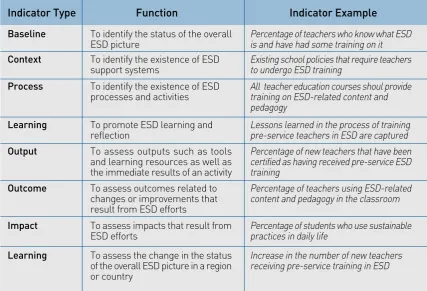
Table 2.3 Indicators for Monitoring and Evaluation
Table 4.1 Topics on Climate Change Across Various Programmes
Table 4.2 Policies, Strategies and Action Plans in Malaysia
Table 5.1 Indicator Types using Teacher Education
Table 5.2 The New Definition of Functional literacy
Table 5.3 Indicators of the New Functional Literacy
Table 5.4 Minimum Standard for Common Module for
the National Service Training Program
FIGURES
Figure 1.1 Five Cluster Countries of UNESCO Office, Jakarta
Figure 3.1 Integration of ESD Values into the Curriculum of
LPTK and P4TK
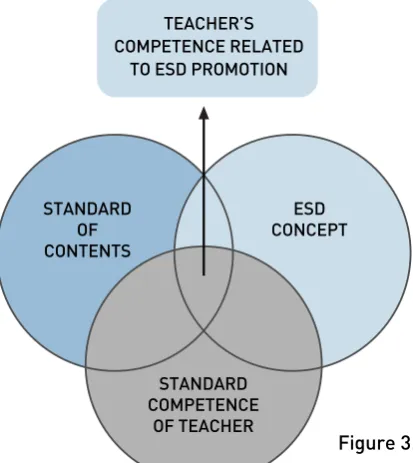
Figure 3.2 Teacher Competence on Three Components
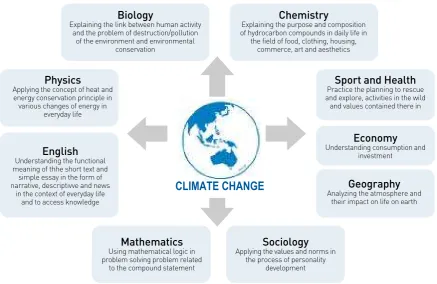
Figure 3.3 Integration of CC Across Fields of Study
Figure 3.4 DRR Integrated in Education System
Figure 3.5 DRR within Education System
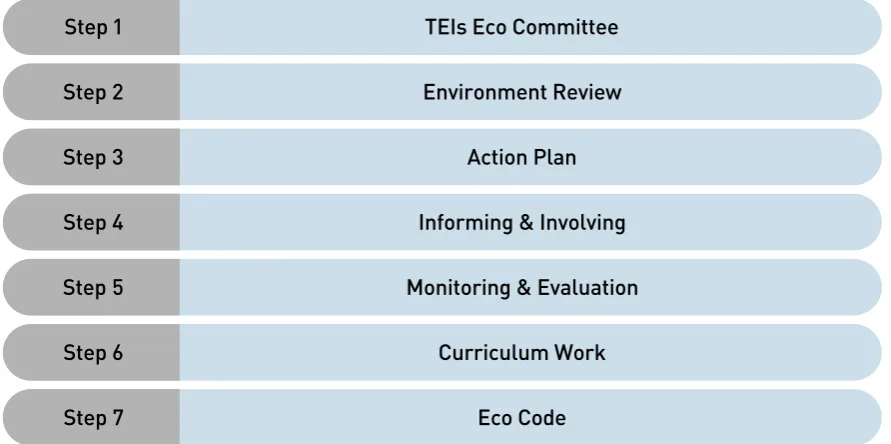
Figure 4.1 Seven Step Methodology
07
08
12
42
47
67
68
68
69
02
26
27
31
33
34
1. Introduction
The three terms above have only one goal: to create a better world for the current and future generations of all living things on planet Earth. ESD therefore aims to improve access to quality basic education, reorient education curricula, train and raise public awareness and help people develop the behaviours, skills and knowledge they need (UNESCO, 2002)2. Like SD, ESD is also
a vision of education that empowers individuals to create a sustainable future. ESD is therefore not a particular programme or project, but is rather an umbrella for many forms of education that already exist, and new ones that remain to be created. ESD promotes efforts to rethink educational programmes and systems (both methods and contents) that currently support unsustainable societies (UNESCO, 2011)3 .
Since the Johannesburg Summit in 2000, the UN DESD was proclaimed by the UN General Assembly as a ten-year period for education action beginning on the 1st January 2005. To promote the UNDESD 2005-2014 and also to accomplish Task Manager for Chapter 36 of Agenda 21, UNESCO has strived to define and promote the environmental perspectives of ESD and coordinating environmental lobbying as the lead agency since its designation in 2003. In particular, UNESCO continues to guide the global process to reorient education in support of SD and strengthen Member States' capacities to integrate its principles into their education policies and programmes, also in the context of the 2012 UN Conference on Sustainable Development (Rio+20). Furthermore,
Sustainable Development (SD) seeks to meet the needs of the present without compromising those of future generations. SD [therefore] is a vision of development that encompasses respect for all life-human and non-human-and natural resources, as well as integrating concerns such as poverty reduction, gender equality,human rights, education for all, health, human security and intercultural dialogue.
Education for Sustainable Development (ESD) aims to help people to develop the attitudes, skills, perspectives and knowledge to make informed decisions and act upon them for the benefit of themselves and others, now and in the future.
The United Nations Decade for Education for Sustainable Development (UNDESD) 2005-2014 [in which UNESCO was designated as the leading agency in 2003] seeks to integrate the principles, values and practices of sustainable development into all aspects of education and learning, in order to address the social, economic, cultural and environmental issues we face in the 21st century1 .
1
http://www.unesco.org/new/en/education/themes/leading-the-international-agenda/education-for-sustainable-development/three-terms-one-goal/
2 UNESCO (2002) Education for Sustainability - from Rio to Johannesburg: Lessons Learnt from a Decade
of Commitment
3
UNESCO will focus on three components in the education system linked with ESD to respond to contemporary challenges for SD: advocacy for and monitoring of the DESD; provision of policy advice on Climate Change Education (CCE); and strengthening of CCE in secondary school teacher education programmes, curricula and assessment 4 .
To align with the global ESD directions above, UNESCO Office, Jakarta has promoted ESD projects especially focusing on reorienting Teacher Education, CCE and Education for Disaster Risk Reduction (DRR) to address sustainability. This paper is one of the tangible outputs from ESD project activities 2010 -2011 and has particular significance with respect to the dearth of development of country guidelines which can be a foundational step for relevant strategies and policies in the five cluster countries (See Figure 1.1. for these five countries' location information).
2. Brunei Darussalam
2.1 INTRODUCTION
The Decade of Education for Sustainable Development (DESD) initiative has been established since 2005 with the aims of integrating 'values, activities, and principles that are inherently linked to sustainable development into all forms of education and learning and help usher in a change in attitudes, behaviours, and values to ensure a more sustainable future in social, environmental, and economic terms. Its main intention is the promotion and improvement in the integration of Education for Sustainable Development (ESD) into the educational strategies and action plans at all levels and sectors of education in all countries.
Education plays an important role in disseminating knowledge and information about ESD to the public and society. Knowledge on ESD allows individuals to deal with and find ways to tackle problems that threaten the sustainability of the planet. Education serves in the broadest sense in promoting public awareness on ESD and for moving towards a sustainable future. UNESCO (2005) advocates the importance of Teacher Education Institutes (TEI) as key agents of transformative change for education and society. It is stated that “Not only do teacher-education institutions educate new teachers, they update the knowledge and skills of in-service teachers, create teacher-educationcurriculum, provide professional development for practicing teachers, contribute to textbooks, consult with local schools, and often provide expert opinion to regional and national ministries of education. Institutions of teacher education also perform similar services for school principals who have significant impact on what occurs in schools”. TEIs play a larger role than training teachers for the country as it is also a key institution in acculturating change. In Brunei, there are two TEIs namely Sultan Hassanal Bolkiah Institute of Education (SHBIE) and Kolej Universiti Perguruan Ugama Seri Begawan (KUPUSB). The focus of this paper relates to SHBIE while understanding that KUPUSB may also apply these guidelines.
2.2 NATIONAL STATUS OF ESD IN BRUNEI
As a member of the United Nations, Brunei Darussalam supports the ideals of The United Nations Decade of Education for Sustainable Development (UN DESD) which provides an opportunity to progress towards implementing universal quality education that fosters the knowledge, skills, perspectives, and values that lead to a more sustainable future.
In 2007, the Government of Brunei Darussalam introduced a National Development Policy and Strategy. In its publication “Outline of Strategies and Policies for Development (OSPD)”, Brunei Darussalam National Vision has 3 long range goals it hopes to achieve by 2035. The long term goal is For Brunei Darussalam to have an accomplished and well-educated people brought about by an education system that is comparable to the highest international standards; For its citizens to achieve a high quality of life that is among the top 10 nations in the world; and thirdly, to have a dynamic and sustainable economy that would place the country among the top 10 nations in the world in terms of income per capita.
The Brunei Government is also working on preserving the natural environment and cultural habitat which is properly protected and conserved. The strategies are: Conserving the country's unique biodiversity, rain forests and natural habitat; Implementing the highest environmental standards for existing and new industries in accordance with established international standards and practices; Establishing clear guidelines for the preservation of buildings and landmarks of cultural and historical values; Enforcement of appropriate regulations with regard to maintenance of the environment that affect public health and safety; and Supporting global and regional efforts to address trans-border and regional environmental concerns.
With regards to Brunei Darussalam, the Ministry of Education, which is the country's National Commission for UNESCO, serves as the lead agency that is responsible to report and update the status of the “Decade of Education for Sustainable Development” (DESD) in the Sultanate to the organisation.
Although ESD is a new concept, it is interesting to note that matters relating to the DESD had already been integrated into Brunei's school curriculum before the UN announced the 2005-2014 Decade of Education for Sustainable Development. The Ministry of Education (MOE) through its Brunei Darussalam National Commission for UNESCO is responsible for implementing, analysing, and monitoring best practices in ESD. This holistic self-development is in line with the Ministry's vision through its New Education System SPN 21 (National Education System for the 21st Century) as well as the goals of DESD.
biodiversity and many others. One of the significant efforts in the realization of ESD include: the collaboration of the Ministry of Education of Brunei Darussalam with UNESCO Bangkok to organize a workshop on Education for Sustainable Development (ESD) Co-ordination and Capacity Building, with Government and municipal level officials, as well as representatives from the private sector. The workshop was held from 19th-22nd April 2010.
The emphasis on sustainable development is clearly reflected by the previous Minister of Education. The former Minister of Education, Pehin Dato Hj. Abdul Rahman Taib, in his keynote speech at the Asia Inc Forum in 2007 stated that education for a sustainable future is important because it can contribute to improving and transforming the world in which we live. We can move faster towards a sustainable world if we understand the principles underlying this concept, provide humanity with the skills to critically evaluate information, adapt to change, and find creative solutions to intricate problems. A sustainable future will require people who think and act differently than they do today and will necessitate industries and businesses to minimize their own negative impact on the earth's ecosystems. It will therefore require persons with new skills, knowledge, attitudes, and values in order to take personal responsibility for sustainable development. Because human beings are at the centre of concerns for sustainable development, significant attention must be given to education to improve their capacity to address environment and development issues. The challenge of Education for a Sustainable Future (ESF) is to enable students to make choices that incorporate the essential principles and values of sustainability. To do this, students need to be given opportunities to think and act according to the principles of sustainability. This process will contribute to their development as informed and responsible citizens who demonstrate attitudes and make decisions that reflect concern for the sustainability of this planet. Brunei Darussalam, and perhaps many other nations, must recognise a number of barriers and challenges if they are to be successful in achieving their goals for education for a sustainable future.
The former Minister also urged that Bruneians must work harder towards translating Brunei desire for a sustainable future through the curriculum and teaching in the schools. School and higher institutions should be committed to and involved in special projects. It should not be just about reading textbooks in school but about putting into practice what has been learnt. Here, the teachers and school leaders can become role models for promoting positive attitudes towards a healthy environment and sustainability of our natural resources. They must not be perceived to just preach but must be seen to practice it. However, teaching children to understand and respect our environment and become committed to sustainability should not be confined to just within the school. It should be a wider community effort, beginning with the home and including private or public partnerships. This is part and parcel of quality education for all.
2.3 GOALS AND FOCUS OF THIS ESD COUNTRY GUIDELINE
The target types of teachers will include:
l Early Childhood l Primary
l Secondary
l TVET (Technical and Vocational Education and Training)
There will be a need to re-orient existing curricula and materials in order to integrate ESD into existing courses in SHBIE. Based on the issues and concerns of the National Development Policy and Strategy, topics such as these below should be integrated in some ways:
l Conservation of unique biodiversity, rain forests and natural habitat;
l Implementing high environmental standards for existing and new industries;
l Establishing clear guidelines for the preservation of buildings and landmarks of cultural
and historical values;
l Regulations for maintenance of the environment;
l Supporting global and regional efforts to address trans-border and regional environmental
concerns;
l Disaster Risk Reduction and Climate Change.
While these are the key areas to address, such implementation would require collaboration and supports from relevant stakeholders.
2.4 COLLABORATION AND SUPPORTS
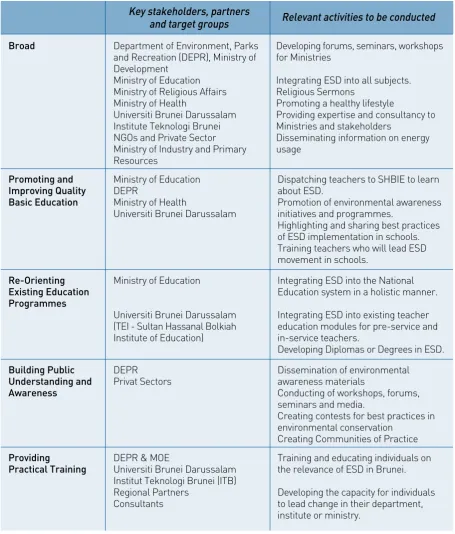
For the realisation of the guidelines to be realised and implemented, it is imperative that a multi stakeholder participation process and a concerted effort from relevant authorities are required. As such, the key stakeholders and their relevant actions for ESD are depicted in Table 2.1.
An important step to foster collaboration and support is to raise awareness on the importance of ESD and its relevance to the country. While SHBIE can train teachers, other Ministries and stakeholders play a vital role in disseminating ESD to their agencies and support initiatives from SHBIE. Partnerships also need to be developed with other TEI's who are also implementing their guidelines. It will be vital to learn on successful initiatives of other TEIs while also taking into account on the particularity of context for the guidelines to be implemented and to be carried out successfully.
and activities which are of relevance to the school and their studies. This would allow student teachers to learn the challenges and opportunities about teaching and learning ESD in schools. The Ministry of Education can also develop recognition systems for awarding schools with good ESD practices and publicize the awarding. These will help reinforce what schools are doing and the mass media can help to raise awareness of such issues to the public. There is a need for such recognition to take place, if not schools will not see the incentives of implementing such practices.
Key stakeholders, partners
and target groups Relevant activities to be conducted
Department of Environment, Parks and Recreation (DEPR), Ministry of Development Ministry of Industry and Primary Resources
Developing forums, seminars, workshops for Ministries
Integrating ESD into all subjects. Religious Sermons
Promoting a healthy lifestyle
Providing expertise and consultancy to Ministries and stakeholders
Dispatching teachers to SHBIE to learn about ESD.
Promotion of environmental awareness initiatives and programmes.
Highlighting and sharing best practices of ESD implementation in schools. Training teachers who will lead ESD movement in schools.
Table 2.1 Collaboration and Support from Relevant Stakeholders to Move Forward ESD at the National Level
Re-Orienting Existing Education Programmes
Ministry of Education
Universiti Brunei Darussalam (TEI - Sultan Hassanal Bolkiah Institute of Education)
Integrating ESD into the National Education system in a holistic manner.
Integrating ESD into existing teacher education modules for pre-service and in-service teachers.
Developing Diplomas or Degrees in ESD.
Building Public
Creating contests for best practices in environmental conservation
Training and educating individuals on the relevance of ESD in Brunei.
Developing the capacity for individuals to lead change in their department, institute or ministry.
2.5 PROMOTING TEACHING, LEARNING AND REFLECTION IN ESD
To develop an effective ESD programme for the targeted teachers, it will need to go beyond the presentation of facts. The learning experience will need to be "transformative" in order to "help the individual become a more autonomous thinker by learning to negotiate his or her own values, meanings, and purposes rather than to uncritically act on those of others"(Mezirow, 1997). The underlying principle would be to develop the capacity of the teachers to think and act.
Research indicates that Problem-Based Learning (PBL) is an appropriate pedagogy associated with ESD. Problem-based learning emphasizes learning by doing. It also provides a motivating context for learning. Students are given a real-world problem similar to those they would face as professionals. They take ownership of the problem and the problem-solving process (Steinemann, 2003).
The Institute aims to develop appropriate and relevant case studies for students to engage in PBL in relevant modules. This would allow teachers to take an active role and allow them to think critically. Studies have also indicated that PBL encourages and promotes critical thinking among students in comparison to teacher centred approaches (Ozturk et al, 2008).
Some of the ways of promoting, learning and reflection of ESD are depicted in Table 2.2.
Create partnerships between governments, institutions, organisations, civil society, the private sector and the media to translate ESD concepts into goals and actions.
Provide professional development opportunities for in-service teachers to enhance their skills and knowledge of ESD.
Provide recognition of relevant of ESD activities carried out in schools and their contribution to society.
Promoting
Develop innovative and hands on materials for teaching and learning ESD. Create a website and newsletters for teachers and students on related ESD events.
Develop initiatives and competition between schools on ESD related activities. Learning
Using indicators to measure progress of ESD related activities in schools and TEI's.
Undertaking research (quantitative and qualitative) on the impact of ESD in schools and TEI's.
Identify problems and challenges in the implementation of ESD.
Designing solutions and strategies to overcome problems and challenges. Reflection
2.6 EXPECTED OUTPUTS
A. ESD Modules in Teacher Education Programme
Develop ESD training modules for pre-service early childhood, primary, secondary teacher education programmes. Include a mandatory sustainability education component in current pre-service teacher education programmes. The modules are expected to develop teachers' understanding of the concept of sustainability; to develop teachers' understanding of the relationship between sustainable development, environmental education and citizenship; to develop teachers' ability to plan for sustainability across the curriculum; to develop teachers awareness of the contribution made by specific subjects - in particular Science, Geography, Information and Technology - and to develop the knowledge, skills and attitudes which will enable teachers to take action for change in their personal and professional lives.
B. ESD Related Certification (Capacity Building for Teachers)
Design as an in service training programme with the objective to enable teacher-learners to take up environment and sustainable development concerns and issues in the classroom, and engages their students in practical, action-oriented activities and projects.
Build teacher capacity to incorporate sustainable development topics into their teaching programmes using a practical and relevant approach. Develop a pilot/demonstration project on integrating ESD into postgraduate programmes at SHBIE as part of sustainability education, develop concept paper on options for integrating/providing ESD training at SHBIE and develop educator capacity to deliver programmes.
C. ESD Related Instructional Tools (Handbooks and Case Studies)
Develop course materials for the delivery of sustainability content in the Graduate programmes at SHBIE; Develop a resource/guidebook for inclusion and teaching of sustainability content across national curricula; Conduct in-service teacher; workshops/seminars to encourage use of guidebooks. Enhance the capacity of curriculum developing units to integrate ESD input into curriculum reforms factoring in the views of different stakeholders; e.g. health, green environment, HIV/AIDS.
Courses and materials available covering various aspects of ESD, including environmental, social, and economic considerations. The reoriented curriculum addressing sustainability and expanded to include critical thinking skills, skills to organize and interpret data and information, skills to formulate questions, and the ability to analyze issues that confront communities. Guidelines available to all teachers and curriculum developers on integrating ESD into national curricula Sustainability content actively taught across national curricula.
social, and environmental issues in Brunei. It is recommended that the instructional tool should include a basic understanding of sustainable development, help in understanding the range of social, economic, and environmental issues facing the world today, the interrelationships among these different types of issues, and the ways that education is key to the empowerment of Bruneian working for a sustainable future.
D. ESD Network for Teacher Education Institutes (Create Communities of Practice)
Teachers and administrators of the schools should recognize the need to involve local people in helping the school to improve. This might include improvements in its students' achievements, curriculum, and the campus and its contribution to local community development. This will provide an opportunity for the school to work in partnership with parents, children, and local volunteers to develop a curriculum that relates at the same time to Educating for Sustainable Development.
The Community Problem Solving (CPS) project should be practiced as it contains components that would help in developing actions and competency among teachers that would be sustainable. CPS is a very good approach because it focused more on working out local problems. CPS provides teachers with an opportunity to practice the skills that are needed to participate in finding solutions to the local issues that concern them. This helps to develop the important citizenship objectives of learning for a sustainable future and integrates skills - for both students and teachers - of using experiential and enquiry-based strategies. It also integrates skills in the planning of values clarification and values analysis with the possible solutions so students can take action to help achieve a sustainable future.
E. ESD website
Given the number of environmental, social, and economic problems we currently face worldwide, the need for ESD is paramount and the Internet is key. The ESD website offers educators a seemingly endless supply of resources and materials for integrating ESD into the curriculum and classroom. The advent of collaborative online work spaces will enable educators in Brunei to share resources, knowledge, and ideas. The website also serves to facilitate networking linkages, exchange and interaction among stakeholders in ESD.
2.7 ADDRESSING CLIMATE CHANGE EDUCATION
Teacher training programmes more than 15 years ago had little, if any, coverage on climate change. Thus, re-orienting teacher education through Climate Change Education is crucial. In-service teachers will need to update their knowledge through professional development programmes and pre-service teachers will need to learn to address these new challenges. These are important for teachers of the new generation.
In addressing climate change education, teachers should be aware on the key areas such as:
l Willingness to take actions on environmental issues;
l Understanding their role as teachers in teaching students about climate change; l Developing future leaders (their students) to lead in environmental issues and initiatives; l Awareness of the connections between global and local events;
l Interpreting the causes and consequences of events related to climate change; l Pedagogies for teaching climate change in schools;
l Knowledge of best practices in promoting ESD in schools.
2.8 EDUCATION FOR DISASTER RISK REDUCTION
The Director General of UNESCO, Mr. Koichiro Matsuura, highlighted the significant role of education in improving the capacity of individuals and communities to reduce the risk of disasters:
“anticipating, educating and informing are the keys to reducing the deadly effect of such natural disasters”.
Education for Disaster Risk Reduction (DRR) takes into account the relationships between society, environment, economy, and culture and their impacts. It also promotes critical thinking and problem-solving as well as social and emotional life skills that are essential to the empowerment of groups threatened or affected by disasters. ESD, through its interdisciplinary and holistic approach to learning, helps create resilient societies. It encourages a long-term perspective in decision-making processes, critical thinking, and holistic and innovative approaches to problem-solving. ESD therefore, contributes to DRR while DRR increases the relevance and the quality of education in disaster-prone areas.
Earth's climate is rapidly changing and a lot of countries are not safe in the event of disasters. Although Brunei appears to be safe from major natural disasters such as earthquakes and volcanoes, it received a wakeup call in January 2009. During that night, torrential rain had caused flash floods which have disrupted much of the nation. It was the worst flood that Brunei had in the last 40 years and 2 people died during this incident. During the event, landslides occurred in settlement near to hills. Brunei, during that period was not prepared for such disaster. Other threats include dry seasons which can cause forest fires and pandemics such as swine flu (H1N1) and avian flu (H5N1).
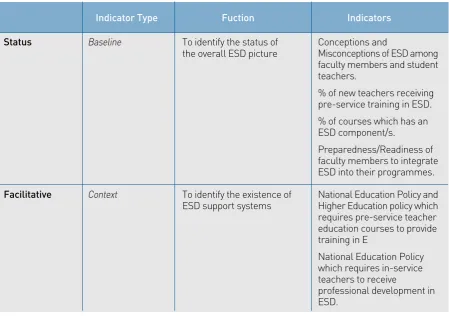
Status
Indicator Type Fuction Indicators
Baseline To identify the status of the overall ESD picture
Conceptions and
Misconceptions of ESD among faculty members and student teachers.
% of new teachers receiving pre-service training in ESD. % of courses which has an ESD component/s.
Preparedness/Readiness of faculty members to integrate ESD into their programmes. Table 2.3 Indicators for Monitoring and Evaluation
2005-2015 by the International Strategy for Disaster Reduction (ISDR). Knowledge of such disasters are currently limited to students who are taking Geography in Cambridge General Certificate of Education (GCE) 'O' and 'A' Level as in depth case studies are presented here. It is proposed that such knowledge of natural disasters be integrated to other subject areas as well. This would allow all students and teachers to be knowledgeable and updated on what actions should be taken should such disasters occur again such as flooding.
2.9 MONITORING AND EVALUATION
Monitoring and Evaluation of ESD-related activities are required to ensure adequate progress in ESD development. Thus, we propose the use of Indicators to monitor the development of ESD in teacher education. We have used the ESD indicators as proposed by UNESCO (UNESCO, 2007):
l Status Indicators: Assess variables that determine the position or standing of ESD
in a country. These are also known as baseline indicators.
l Facilitative Indicators: Assess variables that assist, support or encourage engagement
with ESD. Context, process and learning indicator types belong to this category.
l Effect Indicators: Assess variables relating to initial, medium and long-term achievements
during the DESD. Output, outcome, impact and performance indicators belong to this category.
We have adapted table 2.3 from Tilbury & Janousek (2006) and UNESCO (2007) and made relevant examples to Brunei which could be potentially useful indicators.
National Education Policy and
In short, integrating ESD into TEIs in the country and the school curriculum is promising. The authors would like to thank UNESCO for inviting the authors and the Dean of SHBIE, Dr. Romaizah Salleh for her support in writing this guideline.
Indicator Type Fuction Indicators
Facilitative Prosess To identify the existence of ESD processes and activities
Pre-service and In-service teacher education courses provide training on ESD-related content and pedagogy.
Learning To assess outputs such as tools and learning resources and the immediate results of an activity
Reflections on insights, challenges and obstacles in the process of training pre-service and in-pre-service teachers in ESD.
Effect Output To assess outputs such as tools and learning resources, and the immediate results of an activity
% of new teachers certified as having received pre-service
Outcome To assess outcomes related to changes or improvements that result from ESD efforts
% of new and experienced teachers using ESD-related content and pedagogy in the classroom.
Impact To assess impacts that result from ESD efforts
Students in schools use sustainable practices in daily life.
ESD related activities are the norm in schools.
Parents take active
involvement in childrens’ ESD related activities
Performance To assess the change in the status of the overall ESD picture in a region or country
% increase in new and experienced teachers received training and professional development in ESD.
New courses and certification in ESD.
% increase in usage of ESD-related content and pedagogy in the classroom
REFERENCES
Ibrahim, N. E. (2009). What does education for sustainable development (ESD) mean for Brunei Darussalam? In Ministry of Education (Ed.), Understanding ESD: A compilation of articles and UNESCO publications regarding education for sustainable development (ESD) relevant for Brunei Darussalam (pp. 75-92). Brunei Darussalam: Ministry of Education.
Mezirow, J. (1997). Transformative learning: Theory to practice. New Directions for Adult and Continuing Education, Summer(74), 5-12.
Ozturk, C., Muslu, G. K., & Diele, A. (2008). A comparison of problem-based and traditional education on nursing students' critical thinking dispositions. Nurse Education Today, 28(627), 632.
Steinemann, A. (2003). Implementing sustainable development through problem-based learning: Pedagogy and practice. Journal of Professional Issues in Engineering Education and Practice, 129, 216-224.
Thomas, I. (2009). Critical thinking, transformative learning, sustainable education and problem-based learning in universities. Journal of Transformative Education, 7, 245-264.
Tilbury, D., & Janousek, S. (2006). Development of a national approach to monitoring, assessment and reporting on the decade of education for sustainable development - Stage 1: Identification of national indicators. Report submitted by the Australian Research Institute in Education for Sustainability to the Australian government Department of the Environment and Heritage.
UNESCO (2011). Definition of Education for Sustainable Development. Retrieved February 28, 2011, from http://www.unescobkk.org/education/esd-unit/definition-of-esd/
UNESCO (2005). Guidelines and recommendations for reorienting teacher education to address sustainability. Education for Sustainable Education in Action: Technical Paper No. 2. Paris, France: UNESCO.
UNESCO (2007). Asia-Pacific guidelines for the development of national ESD indicators. Bangkok, Thailand: UNESCO Asia and Pacific Regional Bureau for Education.
UNESCO (2007). Natural disaster preparedness and education for sustainable development. Bangkok, Thailand: UNESCO Asia and Pacific Regional Bureau for Education.
UN/ISDR (2005). Hyogo framework for action 2005-2015: Building the resilience of nations and communities to disasters. Switzerland: UN/ISDR.
Prepared by:
3. Indonesia
PREFACE
Indonesia participated in the Decade of Education for Sustainable Development (DESD) on the World Environment Day in 2005 through the signing of a memorandum of understanding between the Ministry of National Education and the Ministry of Environment. This is to reflect Indonesian's commitment to the 2009 Bonn Declaration which mandated that every country should integrate the concept of Education for Sustainable Development (ESD) into its education system, teacher development, subject development, and curriculum development. The declaration states that:
Reorient curriculum and teacher education programs to integrate ESD into both pre-service and in-service programs. Support teacher education institutions, teachers and professors to network, develop, and research sound pedagogical practice. Specifically support teachers to develop ESD strategies that can work with large class sizes, and to evaluate ESD learning processes.
The 6th Biennial Meeting of the International Network of Teacher Education Institutions associated
with the UNESCO Chair on Reorienting Teacher Education to Address Sustainability, 19-21 May 2010 in Paris reaffirmed the message above and encouraged each participating country to take necessary steps to implement ESD.
3.1 THE UN DESD 2005 - 2014 AND NATIONAL POLICY
Sustainable development is a current priority, considering the current world's condition of population growth There are also various current issues, such aslimited natural resources, energy crisis, water crisis, food crisis, environmental crisis (global warming, pollution) affecting globalization, democracy, human rights, and civil society. Those factors are the reasons why we need sustainable development. It is expected that sustainable development can increase public awareness on the importance of harmonizing environment management, economic aspects, as well as cultural aspects within the society. In short, sustainable development is development that meets the needs of the present without compromising the ability of future generation to meet their own needs.
Related to the problems addressed above, the United Nation declared the period of 2005-2014 as the Decade of Education for Sustainable Development (DESD), which aim to integrate principles, values, and practices of education sustainable into all education and learning aspects. Besides, the Bonn Declaration 2009 also mandated that every country should integrate the concept of Education for Sustainable Development (ESD) into education system, teacher development, subject development, and curriculum development.
Indonesia launched the Decade of Education for Sustainable Development on the World Environment Day in 2005, with an initial emphasis on improving environmental protection and conservation measures within the country. This launch involved the signing of a memorandum of understanding between the Ministry of National Education and the Ministry of the Environment which aims to improve environmental understanding amongst communities and to provide support in addressing environmental and conservation issues. Since then, there has been progression of DESD-related activities as Indonesia has included a wider range of stakeholders and focus on additional areas of importance for sustainable development. With Indonesia being exposed to so many natural disasters, disaster reduction has been chosen as one of the themes for ESD and the DESD as an opportunity to strengthen national policies on education for disaster management and preparedness.
be assumed that these factors may become obstacles to implement ESD at schools level since teachers do not have sufficient knowledge in integrating ESD into their subjects.
The most determining aspect to effectively implement ESD in schools is the competency of teachers to integrate ESD into their teaching and learning process. This may be achieved by providing sufficent knowledge and understanding on ESD to teachers and prospective teachers. In the end, integrating ESD into TEIs' curriculum seems to be the most effective way to produce ESD-oriented teachers and lead prospective teachers to be accustomed to ESD issues.
This material aims to provide guidelines to TEIs on how to create an ESD-oriented teaching and learning climate through intervening in the existing curriculum and syllabus so that TEIs can produce ESD-oriented teachers who possess sufficient knowledge on ESD issues.
3.2 STATUS OF NATIONAL ESD
Implementation of ESD in the national education should be based on legislation, national education policy, and strategy. The legislation, national education policy, and strategy will provide a clear direction on various programs and activities of ESD from the central, local to the education unit level, including curriculum and competencies of educators and education personnel in the implementation of ESD.
In Indonesia, ESD is relevant to the mandate of the 1945 Constitution, particularly in Article 31 Paragraph 3 which mandates that government shall establish and conduct a national education system, which increases the faith, piety, and noble character in the context of the intellectual life of the nation, governed by legislation. Act No. 20 of 2003 on National Education System as a follow-up of the 1945 Constitution states that the national education serves to develop skills and to form the character and civilization of a dignified nation in order to achieve the intellectual life of the nation. The objective of national education is to form comprehensive intelligence and competitive Indonesian human beings, which include spiritual intelligence, emotional and social intelligence, smart and kinesthetic intelligence (the Ministry of National Education Strategic Plan 2010-2014). Mandate of Law Number 17 Year 2007 on the National Long Term Development Plan (RPJPN) Year 2005-2025 also becomes an important foothold in implementing ESD. It was showed in 2005-2025 RPJPN the direction of vision, mission and direction of the 2nd medium-term development (2010-2014) :
l Vision and Mission of RPJPN 2005-2025
usefulness of natural resources and environment while maintaining function, carrying capacity, and comfort in life in the present and future, through harmonious space utilization between the use for residential, social and economic activities, and conservation efforts; improve the economic utilization of natural resources and sustainable environment, improving the management of natural resources and environment to support the quality of life, provide beauty and comfort of life, and to improve the maintenance and utilization of biological diversity as a basic capital of construction.
l Direction of The 2nd Medium Term Development (2010-2014)
In order to achieve sustainable development, natural resource management and conservation of environmental functions should become more developed through institutional strengthening and increased public awareness. This is characterized by the development process of rehabilitation and conservation of natural resources and environment, accompanied by the strengthening active participation of society, preservation of biodiversity and distinctiveness of other tropical natural resources utilized to realize the added value, competitiveness of the nation, as well as national development capital in the future; solid institutional, anticipatory capacity and disaster management at every level of government and implementation of marine development as a movement supported by all sector. The condition is supported by the increased quality and consistency of spatial planning of space utilization by integrating it into development planning documents and regulatory enforcement in order to control the utilization of space.
Sustainable development in ESD is considered as an important process and goal directed to ensure human life in the present and future. This was corroborated also by Act No. 23 of 1997 on Environmental Management. The preamble of the Act states that: in order to efficiently utilize natural resources to promote the general welfare as mandated in the 1945 Constitution and to achieve happiness of life based on Pancasila, it is necessary to implement environmentally sustainable development based on integrated and comprehensive national policy while taking into account the needs of present and future generations. Furthermore, Article 1 Paragraph 3 of the Act asserts the notion of sustainable development. It defines that environmentally sustainable development is a conscious and planned effort, which integrates the environment, including resources, into the development process to ensure capability, welfare, and quality of life of the present and future generations.
ecosystem. Education should provide insight on the values of natural and social responsibility to demonstrate to learners that they are part of the social system which requires synergy with other human beings and part of the natural systems that must work together with nature and all of its contents. By having a critical understanding of the environment (social and natural) and all forms of investment in the environment, the good and the bad, including development will be displayed (Kemdiknas Strategic Plan 2010-2014).
Operationally, the 2010 ESD policy is characterized by joint agreement between the Ministry of Environment with the Ministry of National Education (No. 03/MENLH/02/2010 and Number 01/II/KB/2010) on Environmental Education, which is a renewal of joint agreement on 1996 and 2005. Article 2 on Scope of the agreement includes: (a) Development of the implementation of (ESD), including environmental education conducted in all lines, levels, and types of education as a place or a means in creating change in the mindset, attitude, and behavior of environmentally cultured human; (b) Coordination and synergy in the preparation of short, medium, and long term environmental education program as part of ESD; (c) Revitalization of research and development in the field of environmental protection and management; (d) Giving awards to individuals, institutions, and community who care, serve or get achievement in the field of environmental protection and management; and (e) Increasing participation, capacity, and commitment of community, central and local education policy makers as well as educators and education personnel to actively maintain and preserve the environmental functions. It was agreed that the Minister of Environment as the first party responsible in the field of environmental protection and management is obliged to preserve the environmental functions and to prevent pollution and /or damage to the environment. The national education of minister, as the second party, is responsible in managing the education system to determine national policy and education standards to ensure quality education. The implementation of national sustainable development requires human resources who are conscious and able to maintain the sustainable function of the environment. Knowledge, values, attitudes, behaviours, and insights about the environment need to be taught early to all levels of society and learners in all units, path, level, and type of education. Knowledge and empowerment of community and institutions actors and environmentalists need to be improved (Joint Decree of Minister of Environment and Minister of Education, 2010). It was also followed by Minister Regulation Number 63 Year 2009 on Education Quality Assurance System which has similar contents with the Strategic Plan.
Although the curriculum does not explicitly incorporate ESD programs in learning, the ESD values which are summarized in the 15 components of ESD (Human Rights, Security, Gender Equality, Cultural Diversity and Cross-cultural Understanding, Health, HIV /AIDS, Governance, Natural Resources, Climate Change, Rural Development, Sustainable Urbanization , Prevention and Disaster Relief, Poverty Reduction, Corporate Responsibility (CSR), and the Market Economy) have been implicitly included in the Standard of Competence/Basic Competence (SK /KD) in almost all subjects in appropriate portion with the characteristics of each subject (Puslitjaknov, 2009). However, reorientation of programmed learning activities integrating ESD values needs to be done. The implication is the need to prepare educators and education personnel who are competent in the implementation of ESD through the reorientation of teacher education curriculum through in-service and pre-in-service training.
In order to implement ESD optimally, the status of ESD should be explicitly stated in the legislation and national education policy. Therefore, the Strategic Plan must be followed up by operational and measureable components of ESD through learning activities in each educational unit. The National Strategy on ESD implementation should be established through coordination among the parties (stakeholders) from national, regional, to education unit levels.
3.3 GOAL AND FOCUS OF THE NATIONAL ESD GUIDELINE
A. Goals and Focus of the National ESD Guideline for Reorienting Teacher Education to Address Sustainability
Objectives and Focus
While TEIs (LPTKs) have the autonomy to develop their own curriculum and syllabuses, a guideline is necessary to be used as a reference. A common background should be set at the national level to make sure that the goal set by the government is achieved. The present Guide Book was developed with the following objectives in mind:
l To provide TEIs with guidelines on how to intervene in the existing curriculum and
syllabuses to facilitate ESD;
l To provide TEIs with guidelines on establishing national networking with potential
stakeholders that are mandated to implement ESD;
l To provide TEIs with guidelines on how to establish research centers on ESD to get
recognition from the government and other stakeholders;
l To provide TEIs with guidelines on how to establish international networking with
international agencies of ESD;
l To provide TEIs with guidelines on how to establish coordination with local governments,
such as governor, regent, and subregent;
l To provide TEIs with guidelines on how to develop ESD learning objectives, ESD learning
materials, ESD teaching methodology, and ESD learning evaluation techniques.
The focus of the Guide Book
Among the uiversities, LPTKs or TEIs have a specific missionto train prospective teachers. As indicated earlier, TEIs have not explicitly incorporated ESD into their curriculum, it is then wise to encourage all TEIs to implement ESD by focusing on ESD teacher training with the following framework:
l ESD is to be incorporated as an addition to the existing curriculum. Therefore, it is not
necessary for TEIs to create a new deparment, say, ESD department. It is not only unnecessary, but will also lead to obligation of recognizing a newly-claimed expertise or specific profession of ESD teachers;
l By completing the required courses, TEI graduates will be qualified to teach either as a
class teacher or a subject teacher. Either way, they should be provided with skills of teaching ESD across the curriculum;
l As all TEI students are required to conduct a teaching practice at patner school as part
of internship program, it is recommended that the internship be evaluated against the criteria including ESD implementation.
Reorienting TEIs to address sustainability
There are 12 public TEIs (Teacher Education Institute) and more than 100 private TEIs throughout Indonesia offering preservice training for more than 700,000 education students, which constitute the majority (27.16 %) of the total university students. Those prospective teachers are potential propagaters and practitioners of ESD. Unfortunately, ESD is currently not incorporated in the existing curriculum of TEIs. Efforts should be made to incorporate ESD without necessarily causing major changes in the curriculum. Reorienting TEIs implies empowering schools and teacher educators to develop ESD awareness on the part of students.
Following are the guidelines for reorienting schools and teachers educators:
1. Reorienting all school teachers All teachers, regardless of their subjects, should promote ESD in their teaching. ESD is not to be positioned as a school subject like English, Mathematics, Science, etc. Ideally as students learn school subjects, they will not realize that they are being exposed to ESD. That is to say, ESD is learned uncosnciously, where ESD is taught across the curriculum. To do this, the following are practical suggestions to be implemented at schools:
l. ESD be socialized through seminars and workshops designed for different groups of
teachers
l. ESD materials be made available for use, such as brochures, film, video, powerpoints, etc.
Developing appropriate and meaningful materials of long-established school subjects such as mathematics and sciences is still problematic, let alone of those newly-established ones like ESD. Therefore, schools should develop, enrich, and update their own collection of ESD materials and teaching media.
l. ESD be included in in-service training curriculum for teachers as part of professional
development
ESD is not incorporated in the existing curriculum of most TEIs throughout Indonesia. Incorporation is not simply inserting the technical words of ESD in the syllabus, but inimplementing ESD in the classroom and outside. Teachers are ESD advocators and propagators while students are practitioners of ESD. This suggests that teaching ESD is not solely the teaching of theories or concepts of ESD, but in implementing ESD in day-to-day activities inside the class and outside.
l. Schools to promote ESD through extra-curricular activities.
ESD is a concept to be shared by all, including school principals, teachers, and students. When ESD is implemented through extra-curricular activities, the lesson is shared not only by students, but also by parents and the public in general. Tangible ESD programs will be more impressive for the public and the impact will be more tremendous. Such programs are worth publicizing in the local community. Finally, it is the public that educates the public.
2. Reorienting teacher educators The suggestions for school teachers above would be much more easier to follow if they had received ESD in their pre-service training. Therefore, the current TEI curriculum should be reoriented to prepare prospective ESD-concious teachers. To do this, the following are practical suggestions to be implemented at TEIs:
l. Research on ESD be promoted to find alternative strategies of implementing ESD at different
levels of schooling.
Preschool, elementary, junior secondary, and senior secondary school students whom are of different ages should be taught differently. Introducing ESD to them should be designed accordingly.
l. All departments regardless of their area of study need to provide students with ESD.
Considering that ESD is an area open for anyone, it is not uncommon that faculty members count on their fellow members to secure ESD in the curriculum. There should be a school teacher or principal mandated to monitor ESD implementation, otherwise it will not take place at all.
l All prospective teacher students be encouraged to explore ways of integrating ESD in their
respective field of study.
have more opportunities to integrate ESD issues into almost all school subjects all day long. However, relevant teaching media should be made available for use.
l ESD be included in the curriculum of general subjects such as MKU Agama, MKU Bahasa,
MKU Lingkungan Hidup, etc.
MKU courses are generally perceived as less important undergraduate subjects, while MKU Bahasa Indonesia is perceived as the least important one. Absence of redefining and revitalizing the content and mode of delivery, the MKU subjects will remain “the neglected step child.” Thus, the MKU subjects need invigorating by incorporating new content including ESD issues.
l TEIs collaborate with other stakeholders such as the Ministry of Environmental Affairs on
joint research and projects on ESD
The Ministry of Environmental Affairs is probably the ministry most responsible for safeguarding the earth from pollution, global warming,etc. The ministry has initiated many ESD projects involving schools and NGOs. Unfortunately, these projects are not known by other stakeholders including those within MONE.
3.4 PROMOTING ESD TEACHING, LEARNING, AND EXPECTED OUTPUTS
A. Promoting ESD Teaching and Learning
Despite the national guidelines, universities including TEIs have their autonomy in developing their curriculum. Recently promoted by the Ministry of National Education, the ideas of ESD are not well socialized within the bureaucracy of MONE, universities, and schools. Some claim that conceptually they are familiar with ESD, and to a certain extent, have implemented ESD in one way or another. The fact shows, however, that collectively TEIs have not done much. Reasons include lack of coordination among the stakeholders. Internally, most TEIs would perceive ESD as a soft skill to be taught indirectly, and therefore no one is fully liable for the failure nor accountable for the success. Adopting different curriculum, pedagogy, and assessment approaches within different countries context could be a solution. International networking on ESD is indeed inevitable to enable participating country members to share the lessons learned.
It would be helpful to identify teacher educators' competencies for ESD before designing the curriculum, pedagogy, and assessment approaches. The competencies of ESD teachers include, but not limited to, the following:
l Ability to introduce ESD across the curriculum.
l Ability to convince students on the importance of sustainable development.
Nothing is more convincing than real life examples of their immediate life. Teaching ESD is identifying ESD issues from students' experiences and relating those issues with life in general. Students shoud get convinced that those issues are part of their responsibilities.
l Ability to create learning situations to facilitate students' understanding of ESD.
Optimal learning take place in situations that facilitate the learning process. Situations include not only physical but also psychological and social atmosphere. This suggests that luxirous rooms and buildings do not necessarily guarantee optimal learning. Of out most importance are the teachers themselves.
l Ability to present examples of implementing ESD in daily life.
Giving examples is a technique of optimal teaching. When ESD is incorporated across the curriculum and accross school subjects, the source of examples becomes unlimited to explore.
l Ability to collaborate with fellow teachers on joint programs on ESD.
As all teachers are expected to play a role in developing ESD programs, overlapping will be unavoidable. Overlapping is to be encouraged when it facilitates learning and it happens when teachers collaborate for sucess in ESD.
It is hoped that in the short future we will see the outcomes as follows:
l An increase in faculty members who are conversant in ESD and are willing to incorporate ESD
into their syllabus.
An active campaign should be initiated to convert teachers into ESD experts through deliberate dialogues and communication formally and informally. Lecturer-initiated textbooks on ESD are a good indicator of success.
l A body of research (e.g. case studies and action research) that illustrate reorienting teacher
education to address sustainability.
Research findings are the most powerful means of convincing pople of new ideologies and perspectives including ESD. Small scale research like classroom action research and case studies are inexpensive yet insightful and inspiring for teachers especially novice ones. The findings are to be shared to reach more people.
l Increased discourse of ESD in conferences and publications
Conferences and publications are good indicators of successful socialization and conciousness arising among people. Teachers and researchers should be encouraged to present in conferences and share publications as part of professional development.
l Increase in numbers of ministries and directorates within the MONE which incorporates ESD
into policy (e.g. teacher certification guidelines and primary and secondary curriculum).
In the International Symposium of the International network of TEI, May 19-21, 2010, sample ESD success stories from different countries were reported and shared by member countries. Similar symposiums have been held nationally and internationally. The reports are available for access and adoption by TEIs. It is critical that a working group representing major TEIs be established to develop a common curriculum across the TEIs to ensure that the government's commitment to ESD is achieved.
To integrate ESD in TEIs means that ESD is to be promoted into pre-service training and in-service training programs. The integration should take place in the framework elaborated as follows. In pre-service training programs, ESD is implemented in many ways including but not limited to the following:
l Creating a mandatory course on ESD as part of general subjects to be taken by TEI
students. The ESD course should cover introduction to ESD, techniques of teaching ESD, ESD material development, and ESD evaluation.
l Encouraging students to do research for graduating (skripsi research) on ESD issues. l Integrating ESD on teaching internship in a partner school.
In in-service training programs, ESD is implemented in many ways including but not limited to the following:
l Teachers are encouraged to conduct classroom action research in ESD.
l ESD is included in the training as part of professional development and promotion. l Teachers are encouraged to collaborate with fellow teachers in developing projects on
ESD across the curriculum.
B. Expected Output
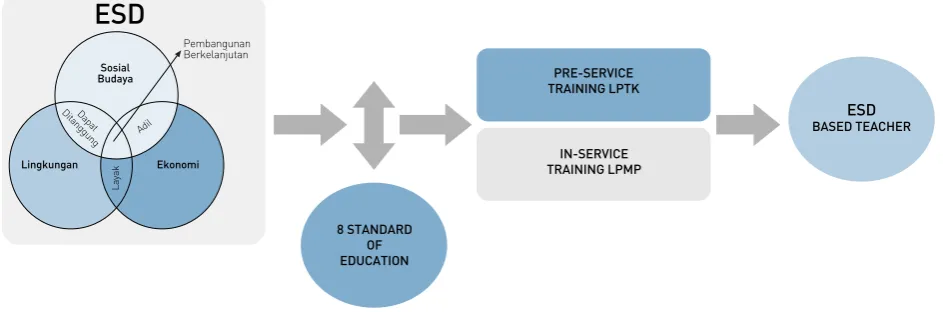
ESD
Figure 3.1 Integration of ESD values into the curriculum of LPTK and P4TK
Integrating ESD values into the existing curriculum of TEIs entails the following mechanism that involves key components as follows.
l ESD comprising environment, economy, and culture is a concept to be incorporated
into the existing curriculum of LPTK or TEIs and P4TK;
l The existing curriculum of LPTK or TEIs and P4TK varies from institution to institution,
yet they have commonalities in many respects. The integration should be interdisciplinary and holistic, in which the ESD is not a subject taught separately but integrated in the existing subjects;
l The development of curriculum at any educational level should made with reference
to eight standards of national education;
l LPTK, LPMP (Institute of Education Quality Assurance), and P4TK (Center for
Development and Empowerment of Teachers and Education Personnel) are responsible for developing their own curriculum;
l The final product as expected from this mechanism is professional ESD-based teachers.
ESD and Teacher Certification
LPTK, PPPPTK, and LPMP have very vital roles in maintaining education in Indonesia. Their role is very crucial to bring changes in the education system in order to produce future teachers who have the sustainable knowledge, skills, attitude, and behavior. LPTKs host pre-service education to produce prospective teacher. Like LPTK, PPPPTK and LPMP are granted authority to grant a diploma for prospective teachers and educator certification for teachers. Diploma, educator's certificate should guarantee that teachers are professionally capable of educating, teaching, guiding, directing, training, assessing, and evaluating students on early childhood education, formal education, basic education, and secondary education.