Master in Public Policy and Management Student Research Project
INSTITUTE OF POLICY STUDIES
PROJECT MEMBERS
Khin Nilar Soe is a diplomat of the Republic of the Union of Myanmar. She is the Deputy Director of the Political Department’s Europe Division at the Ministry of Foreign Affairs. She was assigned to the Myanmar Embassy in Berlin, Germany as Second Secretary from 2002 to 2006 han-dling political matters. She was also posted to the Myanmar Embassy in Cairo as First Secretary from 2009 to 2011. She graduated with honors from the University of Yangon and earner her Bachelor in Arts (BA) degree in International Relations in 1994.
Ms. Siti Diana Othmanserves as a Research Officer at the Directorate of Defense Policy, Ministry of Defense, Brunei Darussalam. In this position, Ms. Othman is exposed to various defense and security undertakings, which includes her participation in Joint Defense Working Groups meetings, ASEAN Defense Ministers’ Meetings (ADMM) and the United Nations General Assembly (2012) as the First Committee representative. Ms. Othman's previous positions include her appointments as a Research Officer in the Directorate of Intelligence, Ministry of Defense in 2006 and as the Assistant Defense Attaché at the Embassy of Brunei Darussalam in the Philippines in 2008. Ms. Othman graduated from Cardiff University, Wales, United Kingdom with BSc in Economics.
Virgemarie A. Salazar is a Senior Foreign Affairs Researcher at the For-eign Service Institute in Manila, Philippines. Before joining the civil service, she worked at the News and Public Affairs Department of GMA Network, Inc. She earned her Journalism degree, with honors, from the University of the Philippines. Her research interests include Philippine Studies, Interna-tional Relations and Development Studies.
ABOUT THE PROJECT
The Master in Public Policy and Management Student Research Project (MSRP) is a core requirement of the degree programme. Students are tasked to examine relevant policy issues to gain insights into real-life policymaking processes and develop efficient teamwork. Each group consists of four students supervised by a faculty member serving as the Project Academic Advisor (PAA).
The objective of this project is to identify and evaluate the economic, socio-cultural and political contributions of Brunei Darussalam to developments in the Association of Southeast Asian Nations (ASEAN). To this end, the research project shall seek to:
1. Explain the legal, economic, political and other related parameters that define the relations between Brunei Darussalam and ASEAN, as an intergovernmental regional organization, and the other Member States as well;
2. Identify the strategic objectives of each stakeholder in terms of their economic, socio-cultural and political viabilities;
3. Explain and assess the existent synergies between each stakeholder’s strategic objectives and their policy formulation and/or implementation processes; and 4. Recommend to the Brunei Government a hypothetical strategic plan or policy
that will define the country’s relations with other ASEAN Member States related to the three pillars of ASEAN, namely Economic, Politico-Security and Socio -Cultural, for the short, medium and long terms.
ACKNOWLEDGEMENT
The members wish to express their sincerest gratitude to all those who have helped and supported them in doing the research project.
Kolonel (B) Pg Dato Paduka Haji Rosli bin Pg Haji Chuchu Director
National Disaster Management Centre (NDMC) Mohamad Adib bin Matali
Special Duties Officer
National Disaster Management Centre (NDMC) Rozman Junaidi
Deputy General Manager
CAE Brunei Multi-Purpose Training Centre Sdn Bhd.
Senior Superintendent Muhammad Shahreeni bin Haji Yussof Commanding Officer ‘B’ Division Belait District
Brunei Fire and Rescue Department Jolkipli Hidop
Senior Research Officer and Lecturer Brunei Defence Academy
Professor Hj Suhaimi Ali Project Academic Adviser Professor Amin Abdul Aziz
Overall MSRP Coordinator
TABLE OF CONTENTS
Title Page 1
Project Members 2
About the Project 3
Acknowledgement 4
Executive Summary 7
Introduction 8
Significance of the Study 8
Objectives 10
Rationale 10
Policy Review 11
Disaster Management in ASEAN 11
Brunei ‘s Initiatives on Disaster Management 16
Methodology 22
Research Design 22
Study Framework 22
Policy Analysis 24
Geohazard Map 24
Incident Command System 27
TABLE OF CONTENTS
Criteria-Alternatives Matrix 34
Conclusion and Recommendations 36
Conclusion 36
Recommendations 37
Plan of Action 38
Bibliography 40
List of Boxes/Tables/Figures
Box 1. Hyogo Framework of Action: Priorities 12
Box 2. AADMER ‘s General Objectives (Article 4) 14
Box 3. Brunei Darussalam’s Disaster Management Strategy 20
Box 4. Uses of GIS in Disaster Management 25
Figure 1. Data on the Impacts of Disasters in Southeast Asia 11
Figure 2. Disaster Management Process 13
Figure 3. Facade of NDMC Building 17
Figure 4. SNAP Objectives and Targets 18
Figure 5. Logic Model 23
Figure 6. Incident Command Structure 28
Figure 7. Natural Hazards Center Logo 32
Figure 8. Reported Landslides in January 2014 36
EXECUTIVE SUMMARY
Disaster management is gaining momentum as one of the pressing issues the world is facing today for it is closely linked to climate change and the environment. Natural disasters have affected millions of the world’s population and have serious repercussion on econo-mies and governments. Notably, the effects of disasters tend to transcend national boundaries; thus, the impact of disasters cannot be effectively resolved by a country acting alone.
Brunei Darussalam, as a member of ASEAN, has been aspiring to play a more active role in the region, partic-ularly as the country marked 30 years of joining the or-ganization in 2014. Disaster management is an area wherein the country could significantly strengthen its participation in ASEAN. Disaster management is an im-portant security issue; albeit a non-controversial one in keeping with ASEAN’s non-interference policy. This top-ic has been parttop-icularly relevant to Brunei Darussalam as of late given the frequent occurrence of flooding and landslides around the country.
Indeed, ASEAN countries are greatly exposed to nat-ural disasters. Philippines and Indonesia sit right on the Pacific Ring of Fire; with the region having hundreds of active volcanoes. Moreover, typhoon passes through the region bringing on average 30 typhoons per year, according to the Joint Typhoon Warning Center. Mean-while, heavy monsoon rains cause flooding and
land-slides, especially in the region’s low-lying areas such as the Mekong Delta and other densely-populated towns and villages. The region is also subjected to an intense hot and dry season, leading to drought and forest fires, destroying agriculture, and exposing some countries to serious haze problems in the dry months.
Hence, this project aimed to recommend policies that Brunei Darussalam can initiate to strengthen its nation-al capacity on disaster management, as well as to con-tribute to regional efforts toward achieving the ASEAN Vision 2020 of having a disaster-resilient region and safer communities.
“...menekankan pentingnya untukmengkukuhkan kemampuan di dalam pengurusan bencana. Kejadian bencana alam yang kerap dan bertambah teruk di tahun-tahun kebelakangan ini
menyebabkan kemusnahan besar dan keperitan kepada ramai masyarakat di serata dunia.”
HM Sultan Haji Hassanal Bolkiah Mu'izzaddin Waddaulah 69th United Nations General Assembly, New York
1World Bank, “Advancing Disaster Risk Financing and Insurance in ASEAN Member States: Framework and Options for Implementation”, Volume 1, 2012, World Bank website 2UNISDR, “Terminology”, August 30, 2007, UNISDR website,
Significance of the Study
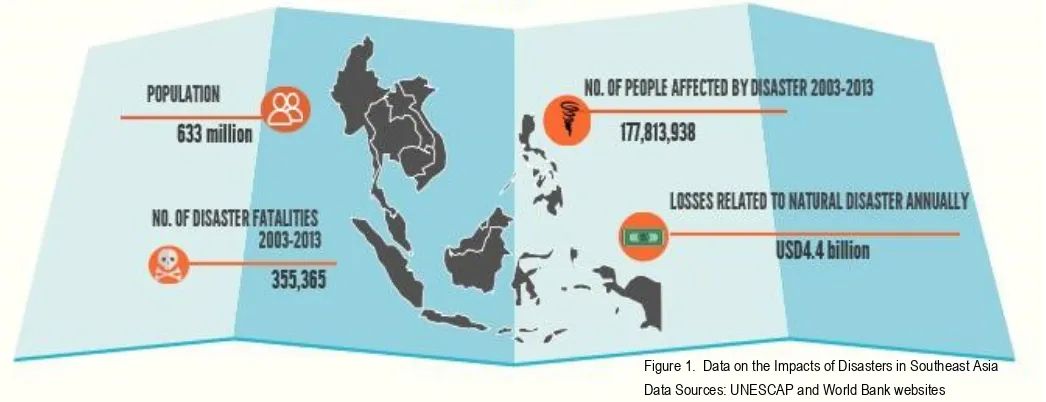
Southeast Asia is a region vulnerable to both natural and manmade disasters such as storm, flood, drought, earthquake, landslide, volcanic eruption, wildfire, haze and epidemic. Disasters disrupt the functioning of a community or a society by causing widespread human, economic and envi-ronmental losses. The Indian Ocean tsunami in De-cember 2004, which affected Indonesia and Thai-land, Cyclone Nargis, which struck Myanmar in May 2008, and Typhoon Haiyan, which hit the Phil-ippines in November 2013, left thousands dead and destroyed homes and livelihoods. Losses relat-ed to natural disasters cost the ASEAN region, on
average, more than USD 4.4 billion annually.1 Since
a disaster is usually an unforeseen and often sud-den event that causes great damage, destruction and human suffering, assistance from the national or international level is necessary.
A disaster is typically seen as a function of the risk process for it results from the combination of hazards, vulnerabilities and insufficient capacity to decrease the negative consequences of risk.2
member states recognize the importance of coop-eration in addressing natural and manmade disas-ters. The ASEAN Political-Security Blueprint has identified disaster management and emergency response as one of the region’s main non -traditional security challenges along with transna-tional crime and counterterrorism. Natural disas-ters can be classified as a non-traditional security issue for they arise out of non-military causes and are transnational in scope. These kinds of security threats require multilateral cooperation because national efforts are often inadequate and the effects are not confined to one state.3 Disasters
pose threats to development in the region by dis-rupting production and flows of goods and ser-vices, worsening the balance of payments and gov-ernment budgets, derailing economic growth, in-come distribution, and poverty reduction, as well as causing adverse effects to political stability, so-cial structures and the environment.4 With the
on-set of climate change, the frequency and intensity of severe weather-related hazards are expected to increase over the next decades.
Hence, governments and communities have to prepare for such events. Disaster management is considered a proactive approach to avoid or re-duce human and material loss. Government agen-cies play a critical role during times of disaster for they have the resources and manpower needed in
disaster relief operations and mitigation. The na-tional government has the responsibility to reduce risk, mitigate effects of, prepare for, respond to and recover from disasters. Therefore, disaster management is a public policy issue.
The government of Brunei Darussalam has ini-tiated efforts to enhance the nation’s capacity for disaster preparedness and response. In recent years, the country has been hit by floods and land-slides. To address this problem, the National Disas-ter Management Centre (NDMC) was established to develop strategies on building disaster-resilient communities. ASEAN, being a cornerstone of Bru-nei’s foreign policy, is an important partner in pro-moting dialogue, consultation and cooperation on disaster management and emergency response. Moreover, cooperation with ASEAN exemplifies Brunei’s commitment to uphold efforts on building ASEAN’s capacity to deal with disasters on a re-gional level.
This research project aims to arrive at useful, evidence-based and effective policy recommenda-tions on strengthening the capacity of Brunei Da-russalam and ASEAN on disaster management. Ca-pacity building can be defined as “the process by which people, organizations and society systemati-cally stimulate and develop their capacities over time to achieve social and economic goals, includ-ing through improvement of knowledge, skills, sys-tems, and institutions.”5 Although the primary
re-3 Mely Caballero-Anthony, "Non-traditionalsecurity challenges, regional governance and the ASEAN Political-Security Community (APSC)", Asia Security Initiative Policy Series,
Working Paper, September 2010
sponsibility to respond to disasters and implement programs to reduce disaster risk rests on individual Member States, addressing natural and manmade disasters requires a regional approach for such events affect the ASEAN Community as a whole. In 2006, ASEAN Member States signed the Agreement on Disaster Management and Emergency Response (AADMER), a legally binding framework, which seeks to increase both national and regional capac-ities on disaster management. The Strategic Na-tional Action Plan (SNAP) 2012-2025 of the Brunei Government on Disaster Management also identi-fied capacity building as one its priorities. Thus, building the capacity of Brunei and ASEAN is an im-portant policy area that has to be examined. It is hoped that through this research the Brunei Gov-ernment can implement concrete and actionable policies and programmes which can contribute to the realization of ASEAN’s goal of having a disaster -resilient region and safer communities.
Objectives
The objectives of the research project are the following:
To review current policies and programmes of the Brunei Government and ASEAN on disaster management ;
To recommend policies that will strengthen the capacity of Brunei Darussalam and ASEAN on disaster management; and
To propose a Plan of Action for the policy recommendation to the NDMC
Rationale
The AADMER is a regional framework for coop-eration, coordination, technical assistance and re-source mobilization in all aspects of disaster man-agement. It embodies ASEAN’s commitment to attain the vision of disaster-resilient nations and safe communities.
The AADMER Work Programme was developed to achieve concrete actions and initiatives from 2010-2015. It was designed to support the national agenda and complement the capacities of ASEAN Member States in the different aspects of disaster management. The ASEAN Committee on Disaster Management (ACDM), the body responsible for policy oversight and supervision of the implemen-tation process, approved the Work Programme in 2010.
Figure 1. Data on the Impacts of Disasters in Southeast Asia Data Sources: UNESCAP and World Bank websites
Disaster Management in ASEAN
Since 2000, close to 200 million people in the region have been adversely affected by natural dis-asters, and over 300,000 of them died as a result of these catastrophic events. In terms of economic cost, ASEAN countries have incurred losses of a staggering USD 92 billion, between 2000 and 2014, due to natural disasters.6 To put things into
per-spective, a person living in Southeast Asia is 11 times more likely to be affected by natural disaster than a person living in North America, and almost 18 times more likely to be affected than a person living in Europe.7
Not only is Southeast Asia prone to disasters,
6 Natural Disasters Indicators in Southeast Asia region (2000 – 2014), ESCAP Online Statistical Database , UNESCAP website 7 Ibid.
strikes. Member States are also dealing with gov-ernance issues, which result in weak planning and implementation challenges.
The United Nations International Strategy for Disaster Reduction (UNISDR) defines disaster risk management as "the systematic process of using administrative directives, organizations, and opera-tional skills and capacities to implement strategies, policies and improved coping capacities in order to lessen the adverse impacts of hazards and the pos-sibility of disaster."8 This process aims to avoid or
reduce the negative effects of hazards through pre-vention, mitigation and preparedness. In 2005, members of the UN adopted the Hyogo Frame-work for Action (HFA), which set an overarching goal to achieve substantive reduction of disaster losses by 2015 by building communities resilient to disasters. It underscored the importance of pro-moting disaster risk reduction efforts on the local, national and international levels.
Under the HFA, regional organizations are re-sponsible for the following:
(1) promoting regional programs for disaster risk reduction;
(2) undertaking and publishing regional and sub-regional baseline assessments;
(3) coordinating reviews on progress toward
implementing the Hyogo Framework in the region;
(4) establishing regional collaborative centers;
(5) supporting the development of regional early warning mechanisms .9
8 UNISDR website
9UNISDR, “Hyogo Framework for Action 2005-2015: Building the Resilience of Nations and Communities to Disaster”, January 2005, UNISDR website
Box 1. Hyogo Framework for Action: Priorities
1. Ensure that disaster risk reduction is a national and a local priority with a strong institutional basis for implementation. Governments are enjoined to develop or modify policies, laws, and organiza-tional arrangements, as well as plans, programs, and projects, to integrate disaster risk reduction. They must also allocate sufficient resources to support and maintain them.
2. Identify, assess and monitor disaster risks, and enhance early warning. Early warning is widely accepted as a crucial component of disaster risk reduction. When effective early warning systems provide information about a hazard to a vulnera-ble population, and plans are in place to take action, thousands of lives can be saved.
3. Use knowledge, innovation, and education to build a culture of safety and resilience at all levels. Disasters can be reduced substantially if people are well informed about measures they can take to reduce vulnerability, and if they are motivated to act.
4. Reduce the underlying risk factors. Coun-tries can build resilience to disasters by
investing in simple, well-known measures to
reduce risk and vulnerability.
5. Strengthen disaster preparedness for effec-tive response at all levels. Being prepared, including conducting risk assessments, be-fore investing in development at all levels of society will enable people to become more resilient to natural hazards.
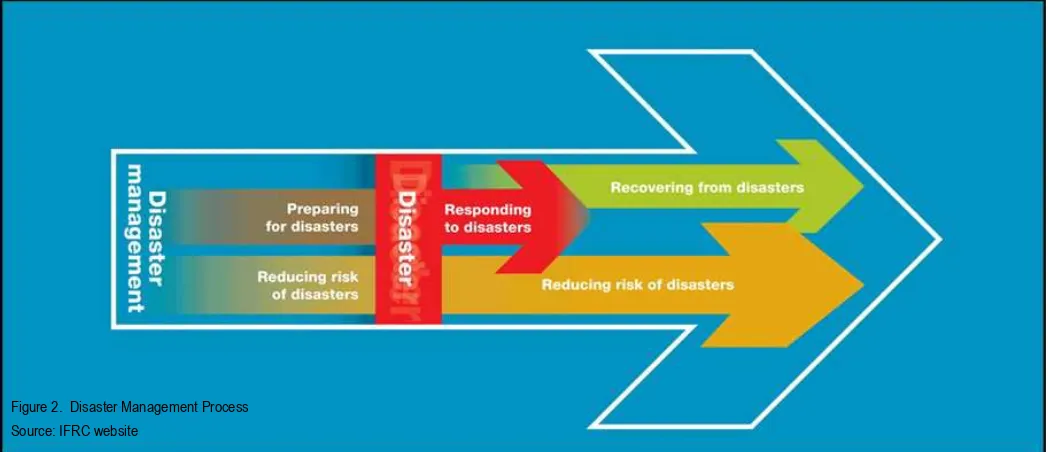
The disaster management process can be divid-ed into different phases:
(1) Prevention and preparedness is done be-fore disasters occur to minimize the possi-ble impact of disasters (i.e. setting up early warning systems, emergency training, cre-ating plans, imposing safety regulations and evacuation measures).
(2) Response involves coordinated multi -agency response to reduce the impacts of disasters (i.e. search and rescue, relocation, providing relief such as food, water, tempo-rary shelters, medical care).
(3) Recovery is about helping the affected com-munity to return to normal.10
Disaster management is considered a proactive approach for it avoids or reduces human and mate-rial loss. Part of ASEAN's 2020 vision is to have
dis-Figure 2. Disaster Management Process Source: IFRC website
10 Corina Wayfield, ‘The Disaster Management Cycle’, Global Development Research Center website
coordinated regional approaches to prepare for disasters and ensure swift response in situations that require international assistance. The AADMER requires members to cooperate in developing and implementing measures to reduce disaster losses; immediately respond to disasters occurring within their territory; promptly respond to a request for assistance from an affected country; and take legis-lative, administrative and other measures to imple-ment provisions under the agreeimple-ment.
The AADMER has two different levels of com-mitment: one, to build regional capacity focused
on supporting Member States in preparedness and response capacities, coupled with a regional sys-tem of rules to expedite collaboration during dis-asters; and two, to assist governments in improv-ing their disaster risk management systems through all stages of the disaster management process.11 Moreover, the agreement intends to
accomplish concrete actions in the strategic com-ponents of (1) risk assessment, early warning and monitoring; (2) prevention and mitigation; (3) pre-paredness and response; and (4) recovery.12
Member states came up with the AADMER Work Programme for 2010-2015 to serve as a roadmap in effectively translating the goals of AADMER into flagship projects based on the four components of disaster management.
Several bodies are involved in implementing, monitoring and evaluating the AADMER Work Pro-gramme. The representatives of the national disas-ter management agencies of Member States com-prise the ACDM. Established in 2003, its function is to provide a link between national and regional institutions, and manage and implement regional activities. It also does policy oversight and supervi-sion of the Work Programme. The ACDM has four Working Groups which correspond to the strategic components of the AADMER. Member States agree to be lead shepherds of projects and are tasked to coordinate the activities of the members of the Working Group. The Chair of the ACDM pro-vides leadership and guidance to fulfill the goals of
11 Daniel Petz, “Strengthening Regional and National Capacity for Disaster Risk Management: The Case of ASEAN”, Brookings-LSE Project on Internal Displacement,November 2014, p. 14
12 AHA Centre, “AADMER Work Programme 2010-2015”, AHA Centre website
Box 2. AADMER General Objectives (Article 4)
In pursuing the objective of this Agreement, the Par-ties shall:
a. cooperate in developing and implementing measures to reduce disaster losses including identi-fication of disaster risk, development of monitoring, assessment and early warning systems, standby arrangements for disaster relief and emergency re-sponse, exchange of information and technology, and the provision of mutual assistance;
b. immediately respond to a disaster occurring within their territory. When the said disaster is likely to cause possible impacts on other Member States, respond promptly to a request for relevant infor-mation sought by a Member State or States that are or may be affected by such disasters, with a view to minimizing the consequences;
c. promptly respond to a request for assistance from an affected Party; and
d. take legislative, administrative and other measures as necessary to implement their obliga-tions under this Agreement.
the AADMER. The Chair is primarily tasked to initi-ate and direct the execution of activities in the Work Programme. It is also the task of the ACDM to collaborate with Dialogue Partners, internation-al and multilaterinternation-al agencies, non-government or-ganizations and the private sector to advance the objectives of the AADMER.
The ASEAN Coordinating Centre for Humanitar-ian Assistance on Disaster Management (AHA Cen-tre) was established to facilitate cooperation and coordination among ASEAN Member States and with relevant United Nations agencies and other international organizations. The AHA Centre per-forms operational coordination and technical functions under the AADMER, and it operates on a 24/7 basis.
The ASEAN Secretariat provides policy coor-dination support, conducts monitoring and eval-uation of the AADMER, and serves as the custo-dian of the AADMER Fund. In addition, the ASEAN Secretariat assists the ASEAN Secretary -General in fulfilling his duties as the ASEAN Hu-manitarian Assistance Coordinator in times of a major disaster or emergency. The ASEAN Disas-ter Monitoring and Response System (DMRS), which provides the emergency operations center using streams of hazard data from all over ASEAN, is located in the AHA Centre. In its 2013
13 Daniel Petz, “Strengthening Regional and National Capacity for Disaster Risk Management: The Case of ASEAN” 14 Australia, Canada, China, European Union, India, Japan, New Zealand, Republic of Korea, Russia and United States
15 Led by Oxfam Great Britain as the current chair, it includes the following members: ChildFund International, HelpAge International, Mercy Malaysia, Plan International, Save the Children, and World Vision.
Annual Report, the AHA Centre reported a budg-et of almost USD 5.8 million, most of which came from Dialogue Partners. Each ASEAN Mem-ber State has to contribute USD 30,000 annually for operational expenses. Members can also give voluntary contributions to the AADMER fund. 13
In implementing AADMER, ASEAN collaborates with its Dialogue Partners14 and formed the
AADMER Partnership Group15, a consortium of
seven civil society organizations, for it acknowl-edges the significance of establishing a wide net-work of cooperation in addressing the issue.
translating policies into strategies and activities remain.
Brunei
’
s Initiatives on Disaster Management
Although Brunei is one of the least hazard -prone countries in Southeast Asia, it had its share of disasters over the years. Based on the records of emergency calls received by the Fire and Res-cue Department since 2006, NDMC acknowledges that the occurrence of hazards have been in-creasing. In addition to floods and landslides, other hazardous events such as strong winds, haze, fire and outbreak of diseases have been re-ported as of late. NDMC has also recognizes the possibility that natural disasters such as drought, beach erosion, tsunamis and earthquake, and in-dustrial hazards like explosions, pollution and oil spills are likely to happen.
At the beginning of 2015, many areas suffered from severe flooding after days of torrential rains. Floods were reported in 13 sub-districts of Brunei-Muara, Tutong and Temburong. The ab-normal amount of rainfall recorded and high tide of 2.4 meters from 2:00 to 4:00 am caused the flooding in the three districts.17
In 2014, some 44 cases of landslides have been recorded by the Brunei-Muara District Dis-aster Management Committee. The worst -affected areas in the district were Kg Telanai, Kg
Lambak Kiri, Kg Perpindahan Lambak Kanan, Sg Tilong, Kg Kapok Kanan and Kg Mentiri.In Tutong District, landslides were reported in a number of villages: Kg Piasan Lamunin, Kg Kebia, Kg Pengka-lan Mau, Kg Luagan Timbaran, Kg PengkaPengka-lan Tangsi, Kg Birau, Kg Sinaut and Kg Bukit Panggal. Flooding was also reported in several areas around the country. Radio Televisyen Brunei gathered reports that Mukim Lamunin, Mukim Rambai, Mukim Tanjong Maya and Mukim Ukong were among the areas worst hit by floods in Tutong District; as well as Kg Sungai Mau, Jalan Bukit Puan, Kg Singap and Kg Laid Lakang, Jalan Setia Diraja, Jalan Jaya Negara, Jalan Puteri Bru-nei, Jalan Panglima, Jalan Singa Menteri and Jalan Sungai Pandai in Belait District and Mukim Bokok in Temburong District.16
As a signatory to AADMER, Brunei is expected to comply with the objectives of the agreement. One way for the Brunei Government to operation-alize the AADMER objectives is by strengthening the capacity of NDMC for it is the country’s focal point for disaster management in ASEAN. NDMC is part of the country's National Disaster Council.
The Disaster Management Order of 2006 mandated the establishment of a National Dis-aster Council. The Council was assigned the following functions:
16 Rafidah Hamit, “Floods and 44 Landslides”, 23 January 2014, Brunei Times website
(1) to develop a strategic policy framework for disaster management for Brunei Darus-salam;
(2) to ensure that an effective disaster man-agement system is developed and imple-mented;
(3) to ensure that regional and international arrangement concerning matters relating to effective disaster management are estab-lished and maintained;
(4) to identify resources that may be used for disaster operations;
(5) to provide reports and make recommenda-tions to His Majesty the Sultan and Yang Di -Pertuan about matters relating to disaster management and disaster operations;
(6) to prepare the National Disaster Manage-ment Plan;
(7) to exercise or perform any other function conferred or imposed to the Council under this Order or under any other written law;
(8) to decide on the assistance to be provided to any country or territory relating to disas-ter operations; and
(9) to decide on the assistance offered by any country or territory, organisational or individual.
The Order also provided legal basis for the establishment of NDMC in August 2006. NDMC reports to the National Disaster Council, and is under the administrative purview of the Ministry of Home Affairs. Under the Order, NDMC was given the following functions:
(1) to help the Council exercise or perform its functions;
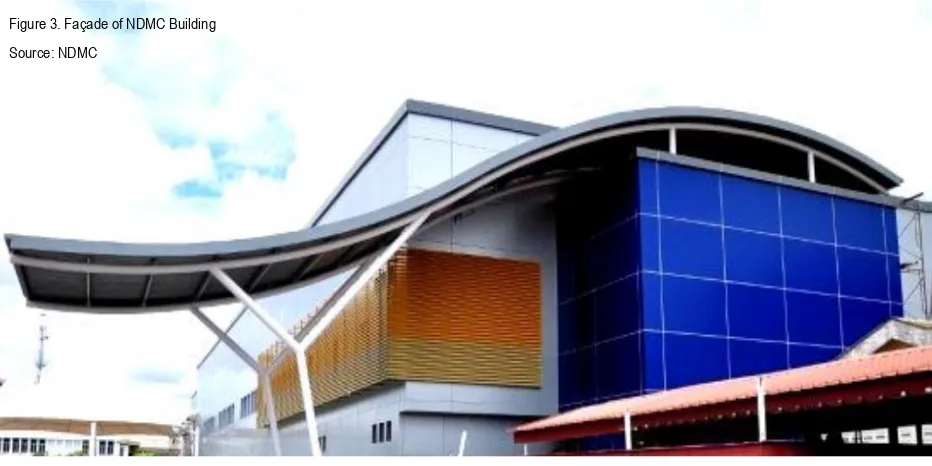
Figure 3. Façade of NDMC Building
(2) to advise and make recommendations to the Council about matters relating to disas-ter management referred by the Council to the Centre; and
(3) to exercise or perform such other functions as the Council may determine.
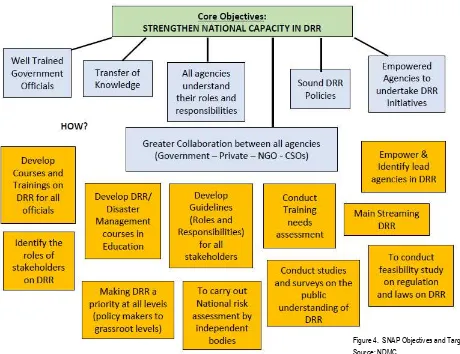
The NDMC has formulated the SNAP for Disas-ter Risk Reduction 2012-2025, which serves as comprehensive and cohesive plan of action aimed at building the capacity of both government and non‐government institutions in promoting disaster
risk reduction. The SNAP is in line with the objec-tives of the AADMER and the five priority areas of the HFA. Similarly, NDMC came up with the Na-tional Standard Operating Procedures (NaSOP) for Response that outlines the agreed procedures that must be followed by all agencies involved in a dis-aster operation. The SNAP was developed in part-nership with the UNISDR to assess the needs of the country in the field of disaster management. How-ever, it is still awaiting endorsement from the different government agencies. Some of the issues identified in the SNAP are the following:
(1) Inadequacies in hazard data and vulnerabil-ity information;
(2) Multi-stakeholder coordination;
(3) Level of emergency preparedness of the population;
(4) Weak early warning system; and
(5) Integration of disaster risk reduction con-cerns in social, environmental, physical and land use planning.
Given these issues, NDMC planned to direct its resources to meet four priorities, which are:
(1) to enhance disaster risk reduction mecha-nisms by ensuring that policies are imple-mented in accordance with the objectives of AADMER and HFA;
(2) to build multi-sectoral disaster manage-ment capacity through strong cooperation and coordination among different stake-holders;
(3) to increase community awareness and pre-paredness by promoting an understanding of the disaster management concept at the community level; and
(4) to upgrade the competencies of NDMC staff.
NDMC has initiated a few programs to opera-tionalize the SNAP. One of which is the Communi-ty-Based Disaster Risk Management programme which was launched in March 2010. It is part of NDMC’s efforts to increase the readiness and pre-paredness of the communities for disasters by identifying hazards and reducing risks associated with them. The objective is to create disaster -resilient communities in Brunei since it is at the district level where disaster impacts are felt the most. Under this programme, NDMC conducts public awareness exercises, early warning and risk assessment, and safety checks of houses and buildings. NDMC has also put together modules used in the National Service programme and train-ing for trainors programme primarily focused on teachers. Moreover, it conducts training activities for the different government agencies on radio communications technology, emergency rapid as-sistance team training in cooperation with Singa-pore, table-top workshops, and simulation exercis-es pursuant to the NaSOP. It also made efforts to introduce the US-based Incident Command Sys-tem (ICS) into the country’s disaster response sys-tem. This two-year training was carried out by US Forest Service as part of the ASEAN-ICS Pilot Coun-try Project since 2010.
a joint venture between a Canadian firm and the Brunei Government to launch a word-class training centre by delivering a range of training solutions to different sectors such as defence, aviation, emer-gency and crisis management, healthcare and en-ergy, among others. CAE-Brunei MPTC has estab-lished an Emergency and Crisis Management
Cen-tre of Excellence that will provide relevant local authorities such as the Ministry of Home Affairs and NDMC with comprehensive training activities to enable the Government to better plan and pre-pare for emergencies. Using simulation-based training, the Centre is offering emergency and cri-sis management training programs to improve the
Box. 3 Brunei Darussalam’s Disaster Management Strategy
NATIONAL DRIVERS
Brunei Vision 2035
Disaster Management Order
National Disaster Council
National Disaster Management Centre
Strategic National Action Plan (SNAP) for Disaster Risk Reduction 2012-2025
National Standard Operating Procedures for Response
INTERNATIONAL DRIVERS
ASEAN Agreement on Disaster Management and Emergency Response
Hyogo Framework for Action
ASEAN Committee on Disaster Management
ASEAN Secretariat
ASEAN Coordinating Centre for Humanitarian Assistance on Disaster Management
ASEAN Dialogue Partners
AADMER Partnership Group
International Relief Agencies
Government's coordination, response and opera-tional decision making given a range of emergency scenarios. It also plans to offer emergency and cri-sis management training to ASEAN.
On the international level, NDMC is working closely with the AHA Centre in Jakarta. NDMC's own Disaster Command Centre is linked with the AHA Centre to facilitate cooperation and coordi-nation among ASEAN Member States, and rele-vant UN agencies and international organiza-tions engaged in disaster response and giving early warning. NDMC is also engaged with other regional research and training centres such as the Asian Disaster Reduction Centre, the Asian Disaster Preparedness Reduction Centre, the Pacific Tsunami Warning Center and Pacific Dis-aster Centre. To improve interoperability, NDMC attends the ASEAN Regional Disaster Re-sponse Exercises (ARDEX), a biennial event, fo-cused on increasing the region’s capacity in re-sponding to disasters; as well as the Disaster sponse Exercises (DIREX) under the ASEAN Re-gional Forum. It also participates in the Human Assistance and Disaster Response (HADR) Exer-cises as part of the ASEAN Defence Minister's Meeting Plus Eight (ADMM+8) initiative.
Research Design
The study was conceived mainly as a qualita-tive research that employed case studies, contex-tual analysis and interviews as the research meth-ods. Case studies were done to benchmark the proposed policy options with the initiatives of other countries. For the policy review, conducting a contextual analysis of relevant policies and pro-grammes helped in linking the concepts and ob-jectives with the realities of policy implementa-tion. Semi-structured interviews with experts and stakeholders were helpful in determining the fea-sibility of policy options and the challenges relat-ed to implementation. This research project has also examined ways to expand or modify current policies for it was deemed important to take note of the projects that key political actors are active-ly proposing or seriousactive-ly considering.
In evaluating the three policy options, a Crite-ria-Alternatives Matrix (CAM) was used. The out-comes of the each policy option were assessed using a set of criteria and were presented in the matrix. The CAM was useful in evaluating and priortizing a list of options. Set of evaluative crite-ria was developed, and a relative weight was
as-signed to each criterion. All the options were ranked according to how well each met the crite-rion. Each option was multiplied by the weight, and the option with the highest ranking was se-lected for further examination.
The main institutional partner of this project is the NDMC. Understanding the mandate, organi-zational framework, strategies and priorities of NDMC is important for it functions as Brunei’s na-tional focal point for Disaster Management in ASEAN. The NDMC is the lead coordinating agen-cy of the Disaster Management Council, which includes other government agencies.
Study Framework
and long term outcomes. The outcomes must ful-fill two objectives: (1) to build Brunei's capacity on disaster management; and (2) to contribute to regional collaboration on disaster preparedness, response, recovery and mitigation.
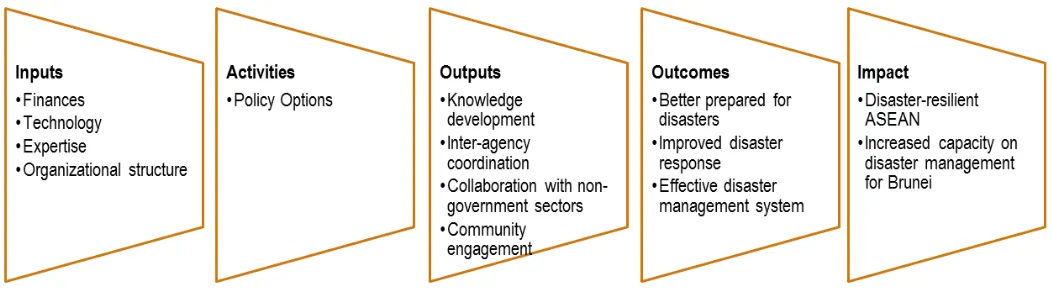
Below is a logic model to explain how the pro-posed policy options are understood to contrib-ute to the accomplishment of intended outcomes and impacts. It provides a visual representation of the development of the research project by
showing the relationship of inputs and activities with the expected results. The model specifies the inputs or resources needed; activities, which are the tactical actions to fulfill the strategy; out-puts are the indicators that activities generate; outcomes are determined by changes in aware-ness, knowledge, skill or behavior; while impact reflects the changes over time.
From the policy review and consultations with various stakeholders at the nation and regional levels on the disaster management process, three policy options have been identified: (1) producing a geohazard map for Brunei Darussalam, (2) put-ting in place an Incident Command System, and (3) establishing an ASEAN Think Tank on disaster management.
Geohazard Map
Through geohazard mapping, areas which are susceptible or vulnerable to various geohazards are determined. Information gathered from sur-veying and assessing certain areas can increase
awareness on the types of hazards present in the community. Geographic Information System (GIS) helps in identifying disaster points; GIS combines geospatial input, hardware and software that can analyze data to produce information. The use of satellite data and GIS enabled large-scale map-ping, 3D analysis, updating of existing maps and project planning. In recent years, GIS has been applied in disaster management to forecast and reduce the risks of geohazards.18 These maps can
also be integrated into a country's early warning system to provide stakeholders with valuable in-formation in implementing programs and activi-ties to reduce risk and mitigate the impacts of
natural or manmade disasters. Moreover, maps can be utilized for development and land use planning in terms of large-scale infrastructure in-vestments.
CASE STUDY: THE PHILIPPINES
The Department of Environment and Natural Resources (DENR) of the Philippine government started its program on geohazard mapping and as-sessment in 2004. It is an on-going priority of the DENR, which is being implemented by the Mines and Geosciences Bureau (MGB). The components of the program are the following: (1) rapid assess-ment survey to generate geohazard maps that will indicate which areas are prone to natural hazards; (2) printing and reproduction of maps, manuals and information materials for public dissemination; and (3) conduct of seminars and workshops for lo-cal government officials and public school teachers to increase their awareness and preparedness on various natural hazards, as well as teach them on the proper use of the geohazard maps.
Direct beneficiaries of the project are segments of the population living in vulnerable areas, the local government units, various government agen-cies, non-government organizations and institu-tions engaged in land use planning and classifica-tion, environmental regulation and protecclassifica-tion, and
disaster management and mitigation. Also to befit are public and private schools, businesses en-gaged in infrastructure and resources develop-ment, general utility companies such as water dis-tricts, construction companies engaged in public works and energy producers.
The DENR allocated some PhP 354 million for the creation of a detailed geohazard mapping in various disaster prone areas in the country as part of the agency's efforts to enhance the prepared-ness of local government units and the implemen-tation of various mitigation measures against natu-ral disasters.19 The Philippine government has
al-Box. 4. Uses of GIS in Disaster Management
Pre-Disaster
Hazard mapping, Risk and Vulnerability
Assessment, Preparedness Plans, Early Warning and Monitoring, Risk Modelling, Forecasting
During Disasters
Public Warning Systems, Emergency
Oper-ations, Search and Rescue, Evacuation Planning, Relief Operations
Post-Disaster
Damage Assessment, Setting up of
Tempo-rary Shelters, Processing and Granting Land Claims, Identification of Reconstruc-tion Sites
Source: UN-SPIDER
20 Beverly Natividad, "JICA donates P4 million worth of geohazard mapping tools", 5 April 2006 , BusinessWorld website 21 BusinessWorld, "UNDP funds mapping project," 25 March 2005, BusinessWorld website.
so received foreign assistance for this program. The Japan International Cooperation Agency (JICA) gave PhP 4 million worth of new geohazard map-ping materials to the Philippines which included 20 units of Global Positioning System (GPS) equip-ment, 30 digital cameras, 20 binoculars, a large for-mat plotter 42-inch printer capable of printing large-size maps, a 4x4 vehicle, about 12,000 infor-mation and educational posters on geohazards, 1,500 frames of aerial photographs, scanners, lap-tops and projectors.20 In addition, the United
Na-tions Development Program (UNDP) extended a PhP 2.24 million grant for geohazard mapping for it recognized the program’s substantial impact on the country's disaster management goals by reduc-ing, if not eliminatreduc-ing, the possible loss of lives and properties caused by the interplay of natural ca-lamities and existing geohazards.21
The program has accomplished a number of noteworthy outputs. It has identified the top 10 provinces which are highly susceptible to land-slides, and another list of top 10 provinces highly susceptible to flooding. Some 1,634 municipalities and cities have undergone geohazard assessment and mapping that led to the creation of maps in 1:50,000 scale. A total of 75,000 map sheets were distributed to all local government units with cor-responding training and capacity building in inter-preting the maps. In 2011, the DENR decided to
update the maps of 218 municipalities by making them more detailed using a scale of 1:10,000. The interactive maps are also accessible and down-loadable from three government websites.
BENEFITS TO BRUNEI
Those who will benefit from having geohazard maps are the general population, especially those living and working in vulnerable areas. Geohazard maps can accurately pinpoint these areas and pro-vide salient information needed in planning and improving measures on disaster preparedness, re-sponse and recovery. It can assist government in infrastructure and development planning.
environmen-tal, physical and land-use planning as issues that have to be addressed. Thus, conducting geohaz-ard mapping and assessment will enable NDMC and the Brunei Government to build capacity on disaster management.
CHALLENGES
The geohazard maps are expected to be costly; for example Philippine government had to spend around PhP300 million or almost BND10 million. However, taking into account of the country total land area compared to the Philippines the costs is expected to be lower for Brunei. After identifying geohazard areas, some people living in areas vul-nerable to flooding and landslides may be com-pelled to leave and find safer places to reside. This can be a difficult and costly process, and some peo-ple may resist from moving from their homes be-cause of traditional and sentimental values. The geohazard mapping project is an inter-agency effort. The agency responsible for producing and maintaining maps, which is the Survey Department under the Ministry of Development, would need to work with agencies such as the Meteorological Section of the Department of Civil Aviation, Public Works Department and Town and Country Plan-ning, etc. The project may be slowed down be-cause of bureaucratic and coordination problems.
BENEFITS TO ASEAN
As for ASEAN, the geohazard maps will allow Brunei to feed accurate data and information to AHA Centre which can be used in conducting re-gional-level analysis. With Brunei’s know how it can support other ASEAN Member States consid-ering to implement geohazard mapping in terms of knowledge sharing and technology transfer. Of the 10 ASEAN Members, only the Philippines, Thailand and Indonesia have geohazard maps. Brunei can also hold trainings and workshops on geohazard mapping in cooperation with other ASEAN members.
Incident Command System
inte-gration not only across institutions or domestic agencies, but also across state, region, and/or na-tional boundaries.
CASE STUDY: UNITED STATES
The concept of ICS was developed in the Unit-ed States more than thirty years ago, in the after-math of a devastating wildfire in California. Alt-hough all of the responding agencies cooperated to the best of their ability, numerous problems with communication and coordination hampered their effectiveness. As a result, the Congress man-dated that the U.S. Forest Service design a system that would "make a quantum jump in the capabil-ities of Southern California wild land fire
protec-tion agencies to effectively coordinate inter -agency action and to allocate suppression re-sources in dynamic, multiple-fire situations."22
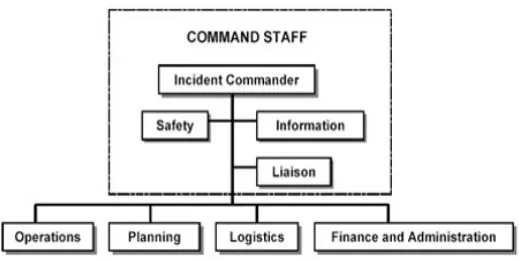
ICS is structured into five essential functions: Command, Operations, Planning, Logistics, and Finance and Administration.23 The Command
function is basically enabling all responsible agen-cies to manage a unified command and establish a single command structure. The Command func-tion consist of:
An Incident Commander who provides
overall leadership for incident response, and delegate authority to others;
Figure 6. Incident Command Structure of the US Department of Labor Source: OSHA website
A Public Information Officer who
dissemi-nates information and media relations;
A Liaison Officer who assist the Incident
Commander by serving as a contact point for agency representatives who are help-ing to support the operation; and
A Safety Officer who provides advices to
the Incident Commander on issues regard-ing incident safety.
Supervised by a Coordinator, the Operations Section responsible for coordinating all opera-tions in support of the emergency response and implementation of the action plans. This function may include the following branches:
Public Safety which includes Traffic
con-trol, access concon-trol, and evacuation;
Health and Safety such as Hazmat
Re-sponse, Fire Safety, Building Coordinators, Chemical/ Biological/ Radiological experts or specialist;
Search and Rescue to locate trapped and
injured person, and moved injured person to medical triage;
Medical such the Paramedics, Coordinate
Medical Transportation, Psychological Trauma Response;
Information Technology and
Communica-tions for Radio Dispatch, NotificaCommunica-tions, and Network communications.
The Planning Section is responsible for plan-ning ongoing operations, and supervising situa-tion status and damage assessment. The func-tions of this section include collecting, evaluating, processing, and disseminating information; devel-oping action plan, in coordination with the other sections, maintaining information on the current and forecast situations and on the status of re-sources, and conducting documentation. The task of the Logistic Section is to support the Opera-tions Section. The Section is in charge of all re-sources from off-site locations and provides facili-ties, services, personnel, equipment and materi-als, including food and transportation. The Fi-nance and Administrative Coordinator is respon-sible for all accounting and financial aspect of the disaster operations and any other administrative requirement, which covers accounting, insurance and procurement.
BENEFITS TO BRUNEI
disas-ters). It allows personnel from various agency to meld rapidly together into a common manage-ment structure, and enables Incident Command-ers to make decisions by establishing a single command structure. ICS ensures that sufficient logistical and administrative support are available given that multiple logistics are usually required in response to an incident. It is designed to be in-terdisciplinary and most importantly organization-ally flexible, which means that ICS is not a perma-nent organizational structure and is only activated in times of emergency. Moreover, the ICS is also cost-effective for it avoids duplication of efforts.
Before ICS, the following weaknesses in inci-dent management were iinci-dentified:
Multiple Incident Commanders, too many
‘heads’ leading the operations causing confusion and clashes of operating proce-dures;
Different emergency response
organiza-tional structure;
Lack of reliable incident information;
Inadequate and incompatible
communica-tions;
No mechanism for coordinated planning
among agencies;
Unclear lines of authority;
Agencies using different terminologies;
and
Unclear or unspecified incident objectives.
In an effort to address the weaknesses in inci-dent management, NDMC conducted research and workshops in collaboration with the US For-estry Department in 2009. At present, the major framework of the NaSOP in Brunei Darussalam is based on the ICS -- from the collaboration, format of reporting, to the terminologies used in disaster man-agement. All four districts use and implement termi-nologies such as District Disaster Management Com-mittee (DDMC), District Emergency Operation Centre (DEOC) and Incident Command Post (ICP). The initia-tive to implement ICS went hand-in-hand with the NaSOP. Starting in 2011, NDMC conducted seminars, roadshow, workshop, tabletop exercise and simula-tion exercises in all four districts to promote the use of ICS. However, this initiative has not been fully im-plemented to cover all kinds of incidents, and it does not involve non-governmental organizations.
CHALLENGES
Silo mentality of the different government agen-cies hinders cooperation. In times of disasters, all agencies involved have to work together and should be able to take orders from the incident commander. Those in command of respective agencies prefer to use old, more familiar meth-ods, rather than ICS.
For ICS to stick, periodic drills are necessary. Thus, sustainability is a challenge. Since emer-gencies do not happen every day, it is difficult to instill ICS as a standard operating procedure. More importantly, ICS is a complex system. Be-fore Brunei can implement this system, it needs to amass experience in disaster management to develop a system that can effectively address disasters. The country needs to clearly define the command and control system, lines of coordina-tion and supporting roles of actors involved in disaster management. Since ICS is an evolving system, there are no quick solutions available. Evaluation is required to ensure that operations reach the desired level of efficiency and effec-tiveness. It requires hard work, compromise and commitment to go beyond one’s jurisdiction to make ICS work. There should be regular inter -agency trainings, simulation exercises and drills. Thus, a combination of strong political will and uses ICS. Currently, only Thailand and the Philip-pines have been training their respective re-spond team to follow the ICS structure. The AHA center in Jakarta also tries to implement ICS as part of its disaster response operations in the region. In the future, Brunei can be a ‘model’ country for ICS, and may contribute to ICS devel-opment in ASEAN through trainings, knowledge sharing and technology transfer. Because of the Brunei’s size and population, the scale of disas-ters in the country are more manageable. Brunei can be the prototype for ICS that can be eventu-ally implemented in all ASEAN countries.
Think Tank
The term ‘think-tank’ refers to any organization undertaking technical and scientific research to sup-port policy-related analysis.24 These institutions of-ten act as a bridge between the academic and poli-cymaking communities and between states and civil society, serving in the public interest as independent voices that translate applied and basic research into a language that is understandable, reliable, and ac-cessible for policymakers and the public.25
25 Think Tanks and Policy Advice in the US, Routledge 2007 and in The Fifth Estate: The Role of Think Tanks in Domestic and Foreign Policy in the US, University of Pennsylvania Press
26 International Federation of Red Cross and Red Crescent Societies (IFRC) definition 27 Corina Wayfield, The Disaster Management Cycle
28 Natural Hazards Center website
Think tanks in disaster management can bridge the gap between scientific researches in natural disaster and translate it to policy recommenda-tions that can be applied in improving disaster management capacities. Disaster Management can be defined as the organization and management of resources and responsibilities for dealing with all humanitarian aspects of emergencies, in particular preparedness, response and recovery in order to lessen the impact of disasters;26 hence, it includes
activities before, during and after disasters occur.27
Think tanks in disaster management provides holis-tic approach to the disaster management process and can institutionalize capacity building efforts.
CASE STUDY: NATURAL HAZARDS CENTER
Natural Hazards Center, based in University of Colorado, has served as a national and interna-tional clearinghouse of knowledge concerning the social science and policy aspects of disasters. The Center collects and shares research and experi-ence related to preparedness for, response to, re-covery from, and mitigation of disasters, empha-sizing the link between hazards mitigation and sustainability to both producers and users of re-search and knowledge on extreme events. The Center publishes bi-monthly newsletter, the
Natu-ral Hazards Observer, and an electronic bi-weekly newsletter, Disaster Research. It maintains a web site containing updated information on upcoming conferences and links to publications, organiza-tions, and other internet resources for hazards research and practice. It also hosts annual invita-tion-only Hazards Research and Applications Workshop, among its tasks. The Center is funded by a consortium of US federal agencies (Federal Emergency Management Agency, National Science Foundation, US Geological Survey, National Oce-anic and Atmospheric Administration, National Aeronautics and Space Administration, US Army Corps of Engineers, the Centers for Disease Con-trol and Prevention, and the US Forest Service) and the Public Entity Risk Institute.28
There are several ASEAN-based think tanks such as ASEAN Studies Centre and Institute of Southeast Asian Studies in Singapore. Under the AADMER, Singapore is working on the ASEAN Net-work of Disaster Management Training Institute (DMTI) initiative. Among its functions are to serve as a recognized center for excellence in disaster management training, education, and information in the ASEAN region; facilitate capacity building and sharing of knowledge and resources; and de-velop the pool of subject matter experts. Moreo-ver, there are also various think tanks in other ASEAN countries, among them: Institute of Policy Studies (IPS) –Singapore, Institute of Strategic and Development Studies (ISDS) – Philippines, Centre for Strategic and International Studies (CSIS) – In-donesia and Institute of Strategic and Internation-al Studies (ISIS) – Malaysia. However, none of these think tanks focused specifically on natural disaster management.
BENEFITS TO BRUNEI
This think tank can assist NDMC in developing plans, guidelines and SOPs related to the country’s disaster management efforts. It can also advise the Government on policymaking by translating evidence-based research into policy recommenda-tions. In addition, the think tank can help develop local expertise on disaster management, and open opportunities for collaboration between the
gov-ernment and the non-government sector, particu-larly the academe.
CHALLENGES
Should Brunei take on this initiative, it will re-quire strong commitment on the part of the Gov-ernment for it will involve huge funding and vari-ous logistical issues. The country has to determine whether the Government is willing to fund the whole operations of the think-tank, which is like providing a public good for the region, or just the initial investments of setting it up and let the oth-er Memboth-er States share the costs. Othoth-er logistical considerations include human resources, tech-nical capabilities, infrastructure, etc. As the pro-ject is for the benefit of ASEAN, Brunei needs to consider the perspective of other Member States, be it in terms of support, as well as sharing of sen-sitive information. Moreover, Brunei has to ad-dress the issue of credibility for the country lacks experience in disaster management.
BENEFITS TO ASEAN
also institutionalize the role of research in policy-making on disaster management efforts in the re-gion. It can also contribute to ASEAN initiatives on knowledge and skills development, and provide support to the functions of the ASEAN Secretariat and AHA Centre.
Criteria
-
Alternatives Matrix
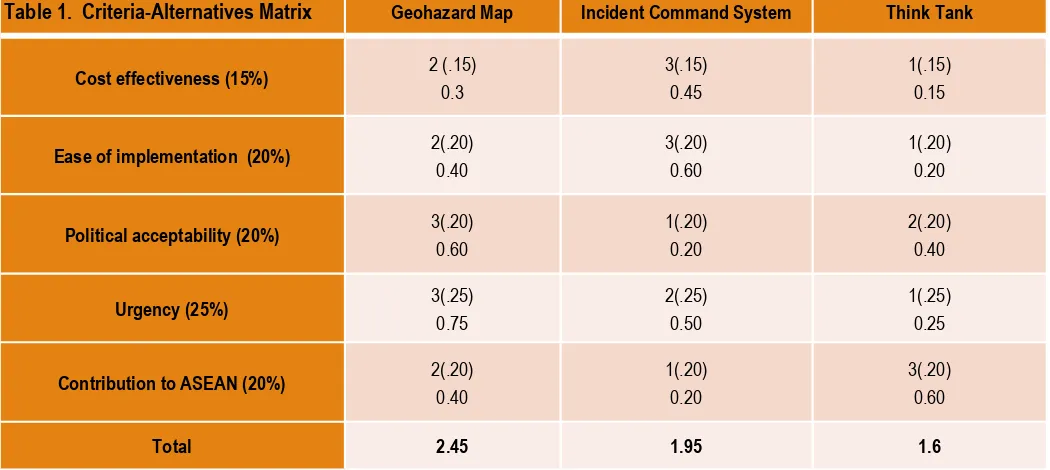
The CAM was used in evaluating the policy options. The outcome of the each policy option was examined using a set of criteria and present-ed in a matrix. A typical CAM organizes policy op-tions across the columns and the evaluative crite-ria down the rows. A scale was applied to meas-ure how well the outcomes meet a certain criteri-on. Each cell represents the projected outcome of a particular policy option as assessed with refer-ence to the evaluative criterion.
Five criteria were developed to determine which policy to recommend. The following are the criteria for evaluation:
Cost-effectiveness: This criterion looks at
the cost of initiating each policy option, which includes initial investment in setting up the policy, infrastructure development needed and funding for other logistical needs such as technical and human re-sources.
Ease of implementation: This refers to the
capacity of the Government to implement the policy options, in terms of organiza-tional structure, experiences, technology capacity, expertise and skills needed.
Political acceptability: It pertains to public
support and credibility of the Government to carry out the policy options. In some instances, ASEAN’s acquiescence for Bru-nei to carry out the policy option is also considered.
Urgency: This criteria refers to how
im-portant the policy option at the short to medium term and whether it meets the immediate concerns of the country on dis-aster management.
Contribution to ASEAN: In line with the
pro-ject’s objectives, the policy option recom-mended must contribute to ASEAN’s goals.
Geohazard Map Incident Command System Think Tank
Ease of implementation (20%) 2(.20)
0.40
Table 1. Criteria-Alternatives Matrix
option was multiplied by the percentage assigned to the criteria. All the scores were added to get the total, which was used in comparing all three op-tions. The policy option with the highest total was deemed the best one to recommend.
Results of the CAM indicated that the geohaz-ard map is the more favorable policy option given the set of evaluative criteria. Although the ICS will require very little financial costs on the part of the government, research indicates that it will only work if there is a strong push from the top level and complimented by a commitment from the middle and lower levels of the bureaucracy. It will take years of constant interaction and collabora-tion among the different government agencies to institutionalize ICS. Moreover, the government would have to engage the non-government sector
and the communities to achieve a whole-of-nation approach. Of the three policy options, ICS ranks lowest on contribution to ASEAN for its benefits are more focused on Brunei.
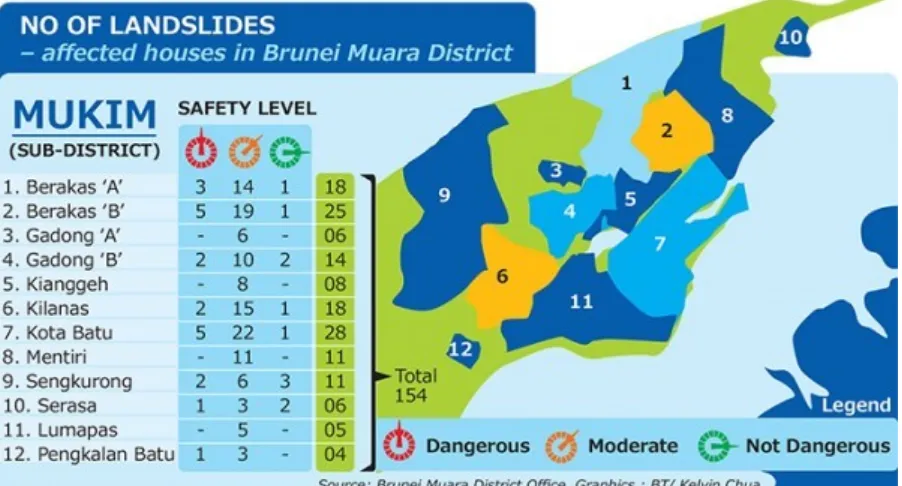
Figure 8. Reported Landslides in January 2014 Source: Brunei Times website
Conclusion
Geohazard mapping allows the Government to identify areas susceptible to geohazards such as floods, landslides, coastal erosion29, peat fires, etc.
in all the four districts. The maps can be integrated into the country’s early warning system to increase awareness for better preparedness and improved disaster response. These maps can also be used in land use planning particularly for large-scale infra-structure investments and can provide
stakehold-ers with information needed to be able to mitigate the impacts of disasters. This policy recommenda-tion is not a new one for it has been identified as a main deliverable under the Disaster Management Order of 2006 and one of the priorities in the SNAP for Disaster Risk Reduction 2012-2025. Despite the fact that the Government acknowledges its im-portance, geohazard maps are barely available in the country. Thus, this research project recom-mends geohazard mapping to be done in all the four districts.
The recommendation is also based on the anal-ysis of the Government’s capacity to implement the chosen policy by looking into initiatives done in the past, ongoing efforts and the available exper-tise, technology and human resources. It was nec-essary to know the Government’s priorities and constraints in order to think of ways to address these issues. From the policy recommendation, a Plan of Action was developed.
Recommendations
Since 2008, more than 900 incidents of land-slides have been recorded nationwide. Landland-slides not only cause damage to properties and areas where they occur, but also harbor an untold num-ber of deaths and injuries. Given the severity of the problem, the Public Works Department con-ducted a pilot study in 2014 toward developing a national landslide hazard zoning map. A slope sta-bility study has been carried out around residen-tial development areas in Jalan Kota Batu and Jalan Tutong, which are known to be prone to landslides. The immediate outcomes of the study include mapping of landslide conditioning factors for the areas under review, as well as identifying landslide risks and hazards. The threshold for rainfall was also measured for it is a contributing factor to the occurrence of landslides.30 The
na-tional landslide hazard zoning map will allow planners to gain a working knowledge of
con-cepts and considerations for incorporating land-slide hazard assessment into the planning pro-cess, while civil engineers will be able to evaluate the appropriate mitigation measures in a timely manner.31 This project highlights the importance
of being proactive rather than reactive in dealing with disasters. Reports indicate that the govern-ment spends an average of BND 5 million annual-ly for slope rectification works.
The pilot study and the landslide zoning map can serve as fundamental building blocks in com-ing up with a national geohazard map. The govern-ment can utilize the data, findings and processes from the pilot study in doing the geohazard map. The only difference is that the geohazard map looks at various natural and manmade hazards in-stead of focusing on landslides only. Another initia-tive that can strengthen the geohazard map pro-gramme is to link it with the Climate Modeling and Weather Forecasting Project developed by the Uni-versiti Brunei Darussalam in partnership with IBM. This project investigates the impact of climate change on flood forecasting using the "Blue Gene Supercomputer," which is the first in the ASEAN region. The joint efforts between researchers from UBD and IBM led to the creation of climate models using regional climate data, which were then incor-porated into the weather models to enable flood forecasting and prediction of the impacts of cli-mate-related events.32
30 Syazwa Souyono, “Pilot study to serve as 'first step' for landslide map”, 16 January 2014, Brunei Times website 31Rabiatul Kamit, “Landslide hazard map for Brunei”, 16 January 2014, Brunei Times website
Having geohazard maps will benefit the general population, especially those living, schooling and working in vulnerable areas, and the Government, particularly the Ministry of Development, for it can make better informed decisions when investing in big infrastructure projects. Businesses also stand to benefit from this project such as the oil and gas sector, which has pipes running across peat lands and shorelines, construction companies, real es-tate developers, and the like. Furthermore, con-ducting geohazard mapping and assessment will enable NDMC and the Brunei Government to build national capacity on disaster management. Inter -agency coordination is crucial to successfully im-plement this policy. To produce geohazard maps with comprehensive risk assessments, agencies such as the Department of Meteorology of the Ministry of Information, Marine Department, Sur-vey Department and Land SurSur-vey Department of the Ministry of Development, along with the NDMC, have to work together. The Government should also engage the private sector, academe and communities.
Capacity-building through geohazard mapping and assessment is also enshrined in the objectives of the AADMER. One of the strategic components of the AADMER Work Programme 2010-2015 is on risk assessment, early warning and monitoring. The Work Programme also supports activities that build
on national priorities and agenda by turning ex-pected benefits and outcomes as leverage to pro-duce a multiplier effect on a regional scale. Multi -hazard mapping and vulnerability assessment based on national data inputs are considered as part of an ASEAN-wide disaster risk assessment for these efforts allow for data consolidation and re-gional-level analysis. With geohazard maps, NDMC can feed accurate data and information to the AHA Centre. Part of the functions of AHA Centre is to receive and consolidate data pertaining to risk lev-els from the national focal points. On the basis of such information AHA Centre is able to conduct analyses on possible implications of disasters on a regional level. Thus, having a geohazard pro-gramme enables NDMC to contribute to the devel-opment of a disaster preparedness platform and disaster response planning on a regional level.
Plan of Action
The Plan of Action is divided into five phases, and each phase has a list of tasks to ensure the successful implementation of geohazard mapping in Brunei.
PHASE 1
Identify lead agency