
Extended-spectrum penicillins (aminopenicillins and antipseudomonal penicillins) - these drugs retain the antibacterial spectrum of penicillin and have improved activity against gram-negative rods. The core of the cephalosporins, 7-aminocephalosporanic acid (Figure 43-6), is very similar to 6-aminopenicillanic acid (Figure 43-1).
Parenteral
Clinical Uses
SECOND-GENERATION CEPHALOSPORINS
Pharmacokinetics & Dosage
Oral
THIRD-GENERATION CEPHALOSPORINS
Antimicrobial Activity
Due to increasing resistance, cefixime is no longer recommended for the treatment of uncomplicated gonococcal urethritis and cervicitis. Third-generation cephalosporins should be avoided in the treatment of Enterobacter infections – even if the clinical isolate appears to be susceptible in vitro – due to the emergence of resistance.
FOURTH-GENERATION CEPHALOSPORINS
A single daily dose of 1 g is sufficient for most serious infections, with 2 g every 12 hours recommended for meningitis and 2 g every 24 hours recommended for endocarditis. Ceftriaxone and cefotaxime are approved for the treatment of meningitis, including meningitis caused by pneumococci, meningococci, H influenzae and susceptible enteric gram-negative rods, but not by L monocytogenes.
Cephalosporins Active against Methicillin- Resistant Staphylococci
Third-generation cephalosporins are used to treat a wide variety of serious infections caused by organisms that are resistant to most other drugs. Other possible indications include the empiric therapy of sepsis in both immunocompetent and immunocompromised patients and the treatment of infections for which a cephalosporin is the least toxic drug available.
Cephalosporins Combined with a-lactamase Inhibitors
The other third-generation cephalosporins are excreted by the kidneys and therefore require dose adjustment in renal failure. Ceftriaxone and cefotaxime are the most active cephalosporins against penicillin-nonsusceptible strains of pneumococci and are recommended for empiric therapy of severe infections caused by these strains.
ADVERSE EFFECTS OF CEPHALOSPORINS
Allergy
Toxicity
OTHER BETA-LACTAM DRUGS
MONOBACTAMS
BETA-LACTAMASE INHIBITORS (CLAVULANIC ACID, SULBACTAM,
While neither agent is active against organisms that produce metallo-β-lactamases, ceftazidime-avibactam may be an option for carbapenemase-producing organisms. Ampicillin-sulbactam is thus active against β-lactamase-producing S aureus and H influenzae, but not against Serratia, which produces a β-lactamase that is not inhibited by sulbactam.
CARBAPENEMS
The new non-β-lactam β-lactamase inhibitor avibactam is active against Ambler class A β-lactamases, but also active against Ambler class C and some Ambler class D β-lactamases. An inhibitor extends the spectrum of its companion β-lactam, provided that the inactivity against a specific organism is due to destruction by a β-lactamase and that the inhibitor is active against the β-lactamase produced.
GLYCOPEPTIDE ANTIBIOTICS
Similarly, if a strain of P aeruginosa is resistant to piperacillin, it is also resistant to piperacillin-tazobactam because tazobactam does not inhibit the chromosomal β-lactamase produced by P aeruginosa. Beta-lactam-β-lactamase inhibitor combinations are routinely used as empiric therapy for infections caused by a wide range of potential pathogens in both immunocompromised and immunocompetent patients.
VANCOMYCIN
They are not good inhibitors of class C β-lactamases, which are typically chromosomally encoded and inducible, produced by Enterobacter sp, Citrobacter sp, S marcescens and P aeruginosa, but they inhibit chromosomal β-lactamases of B fragilis and M catarrhalis.
Mechanisms of Action & Basis of Resistance
However, these strains have altered cell wall metabolism, resulting in a thickened cell wall with increased numbers of d-Ala-d-Ala residues, which serve as dead-end binding sites for vancomycin. Vancomycin is sequestered in the cell wall of these false targets and may be unable to reach its site of action.
Antibacterial Activity
Pharmacokinetics
However, vancomycin is not as effective as an antistaphylococcal penicillin in treating serious infections such as endocarditis caused by methicillin-susceptible strains. Vancomycin (in combination with cefotaxime, ceftriaxone, or rifampin) is also recommended for the treatment of meningitis suspected or known to be caused by a penicillin-resistant pneumococcal strain.
Adverse Reactions
Vancomycin clearance is directly proportional to creatinine clearance, and the dose is reduced accordingly in patients with renal insufficiency. Furthermore, recent clinical data suggest that vancomycin is associated with higher initial response rates than metronidazole, particularly for moderate to severe cases of C difficile colitis.
TEICOPLANIN
For serious infections (see below), an initial dose of 45–60 mg/kg/day should be given with dose titration to achieve trough levels of 15–20 mcg/ml. For S aureus infections, recommended trough levels are 10–15 mcg/mL for mild to moderate infection and 15–20 mcg/mL for more serious infections such as endocarditis, meningitis, and necrotizing pneumonia.
TELAVANCIN
Major indications for parenteral vancomycin are bloodstream infections and endocarditis caused by methicillin-resistant staphylococci. However, the use of oral vancomycin does not appear to be a significant risk factor for the acquisition of vancomycin-resistant enterococci.
DALBAVANCIN AND ORITAVANCIN
The recommended dose in a patient with normal renal function is 30-60 mg/kg/day in two or three divided doses. Because of the emergence of vancomycin-resistant enterococci and the potential selective pressure of oral vancomycin for these resistant organisms, metronidazole was preferred as initial therapy.
OTHER CELL WALL- OR MEMBRANE-ACTIVE AGENTS
Dalbavancin was initially approved as a two-dose, once-weekly intravenous regimen (1000 mg by infusion on day 1 and 500 mg by infusion on day 8), but a subsequent phase 3 study comparing the two-dose regimen with a single regimen, 1500 mg. intravenous dose showed that the single-dose regimen is non-inferior. The results of this study allowed for updated labeling, making dalbavancin and oritavancin suitable for single-dose treatments for complicated skin and soft tissue infections.
DAPTOMYCIN
A practical difference between the two is the infusion time: dalbavancin can be administered over 30 minutes, while oritavancin must be infused over 3 hours.
FOSFOMYCIN
There are limited clinical data supporting the use of dalbavancin for uncomplicated catheter-associated bloodstream infections, although it is not approved for use in this setting. Fosfomycin is approved for use as a single 3-g dose for the treatment of uncomplicated lower urinary tract infections (UTIs) in women.
BACITRACIN
Limited data in case reports have suggested efficacy in men with UTI and prostatitis; in these cases, a 3-g dose was given every 3 days for 9 days when treating UTI or 21 days for prostatitis.
CYCLOSERINE
Ceftriaxone: Intravenous drug, third generation, mixed clearance with long half-life (6 hours), good CNS penetration, many uses including pneumonia, meningitis, pyelonephritis, and gonorrhea. Vancomycin Inhibits cell wall synthesis by binding to the d-Ala-d-Ala terminus of nascent peptidoglycan.
Rybak M et al: Therapeutic monitoring of vancomycin in adult patients: A consensus review of the American Society of Health-System Pharmacists, the. Zar FA et al: A comparison of vancomycin and metronidazole for the treatment of Clostridium difficile-associated diarrhea.
TETRACYCLINES
Tetracyclines,
Macrolides, Clindamycin, Chloramphenicol,
Streptogramins, &
Oxazolidinones
Lisa G. Winston, MD
Mechanism of Action & Antimicrobial Activity
Resistance
- Oral Dosage
- Parenteral Dosage
- Gastrointestinal Adverse Effects
- Bony Structures and Teeth
- Other Toxicities
Tetracyclines are also excellent drugs for the treatment of Mycoplasma pneumoniae, chlamydia and some spirochetes. Tetracyclines are sometimes used in the treatment or prophylaxis of protozoan infections, e.g. those caused by Plasmodium falciparum (see Chapter 52).
MACROLIDES
All tetracyclines chelate with metals, and none should be administered orally with milk, antacids, or ferrous sulfate. To avoid deposition in growing bones or teeth, tetracyclines should be avoided in pregnant women and children under 8 years of age.
ERYTHROMYCIN Chemistry
The intravenous dose of erythromycin lactobionate is 0.5-1.0 g every 6 hours for adults and 15-20 mg/kg/d divided every 6 hours for children. This side effect may actually be desirable in some circumstances, leading to the off-label use of erythromycin to treat patients with gastroparesis.
CLARITHROMYCIN
Erythromycin metabolites inhibit cytochrome P450 enzymes and thus increase the serum concentrations of numerous drugs, including theophylline, warfarin, cyclosporine, and methylprednisolone.
AZITHROMYCIN
FIDAXOMICIN
KETOLIDES
Telithromycin is metabolized in the liver and eliminated via a combination of biliary and urinary excretion routes. In the US, telithromycin is now indicated only for the treatment of community-acquired bacterial pneumonia.
CLINDAMYCIN
Telithromycin is also contraindicated in patients with myasthenia gravis because it may worsen this condition. Solithromycin is a new fluoroketolide awaiting FDA approval after two phase 3 clinical trials demonstrated non-inferiority to moxifloxacin in the treatment of community-acquired pneumonia.
Mechanism of Action & Antibacterial Activity
Although not yet marketed, the dose used in clinical trials was a loading dose of 800 mg orally or intravenously, followed by 400 mg daily for a total of 5 days. Its chemical structure lacks the pyridine-imidazole side-chain group, which is thought to contribute to telithromycin's hepatotoxicity; serious toxicity was not shown in Phase II or III clinical trials.
Clinical Use
It is administered as a single dose of 800 mg, resulting in peak serum concentrations of approximately 2 mcg/ml. The intravenous formulation was associated with higher rates of infusion-related reactions compared to moxifloxacin.
Adverse Effects
STREPTOGRAMINS
MECHANISM OF ACTION &
ANTIBACTERIAL ACTIVITY
Clinical Uses & Adverse Effects
CHLORAMPHENICOL
Newborns less than one week old and premature infants also clear chloramphenicol less well, and the dosage should be reduced to 25 mg/kg/d. To avoid this toxic effect, chloramphenicol should be used with caution in infants, and the dose should be limited to 50 mg/kg/d (or less in the first week of life) for full-term infants and 25 mg/kg/d. premature babies.
OXAZOLIDINONES
Chloramphenicol commonly causes a dose-related reversible suppression of red blood cell production at doses above 50 mg/kg/d after 1-2 weeks. Consequently, when infants receive doses above 50 mg/kg/d, the drug may accumulate, resulting in the gray baby syndrome of vomiting, lethargy, hypothermia, gray color, shock, and vascular collapse.
ANTIMICROBIAL ACTIVITY
Mechanism of Action
The initial event is passive diffusion through porin channels across the outer membrane (see Figure 43-3). The drug is then actively transported across the cell membrane into the cytoplasm through an oxygen-dependent process.
Aminoglycosides &
Transport can be enhanced by cell-active agents such as penicillin or vancomycin; this improvement may be the basis of the synergism of those antibiotics with.
Spectinomycin
AMINOGLYCOSIDES
General Properties of Aminoglycosides
- Physical and Chemical Properties
- Mechanisms of Resistance
- Pharmacokinetics and Once-Daily Dosing
- Adverse Effects
- Clinical Uses
However, administration of the entire daily dose in a single injection may be preferred in many clinical situations for at least two reasons. When aminoglycosides are used, the choice of agent and dose depends on the infection being treated and the susceptibility of the isolate.
STREPTOMYCIN
Mycobacterial Infections
The dose is 15 mg/kg/day with a maximum of 1 g/day (20–40 mg/kg/day for children) and can be given intramuscularly or intravenously.
Nontuberculous Infections
GENTAMICIN
Intramuscular or Intravenous Administration
Topical and Ocular Administration
Intrathecal Administration
It should only be used in combination with other agents to prevent the emergence of resistance. Ototoxicity is partly genetically determined, having been linked to point mutations in mitochondrial DNA, and occurs in 1-5% of patients receiving gentamicin for more than 5 days.
TOBRAMYCIN
Inhaled and Ophthalmic Administration
Such toxicity requires, at the very least, an adjustment of the dosage regimen and should prompt a reexamination of the need for the drug, especially if a less toxic alternative agent exists.
AMIKACIN
NETILMICIN
NEOMYCIN, KANAMYCIN, &
PAROMOMYCIN
Antimicrobial Activity & Resistance
Topical Administration
Oral Administration
Intravenous and Intramuscular Administration When used intravenously, the standard dose for kanamycin is
PLAZOMICIN
SPECTINOMYCIN
The standard regimen is a single dose of 2-4 g/d (40 mg/kg in children). There is pain at the injection site and occasionally fever and nausea. Tobramycin could be administered as a single injection once daily at a dose of 350-490 mg (5-7 mg/kg).
SUMMARY Aminoglycosides
Spectinomycin is no longer available for use in the US, but is still recommended elsewhere. At clinic, she is febrile (38.5°C [101.3°F]) but otherwise stable and states that she is not experiencing any nausea or vomiting.
46 Sulfonamides,
Trimethoprim, &
Quinolones
ANTIFOLATE DRUGS
SULFONAMIDES Chemistry
- Oral Absorbable Agents
- Oral Nonabsorbable Agents
- Topical Agents
- Urinary Tract Disturbances
- Hematopoietic Disturbances
Sulfamethoxazole is a commonly used absorbent agent; however, in the US, it is available only as a fixed-dose trimethoprim-sulfamethoxazole combination. However, since 2015, there have been challenges with pyrimethamine production, supply, and pricing in the US.
TRIMETHOPRIM & TRIMETHOPRIM- SULFAMETHOXAZOLE MIXTURES
- Oral Trimethoprim
- Oral Trimethoprim-Sulfamethoxazole (TMP-SMZ) A combination of trimethoprim-sulfamethoxazole is effective
- Intravenous Trimethoprim-Sulfamethoxazole
- Oral Pyrimethamine with Sulfonamide
Oral trimethoprim-sulfamethoxazole (TMP-SMZ) The trimethoprim-sulfamethoxazole combination is effective The trimethoprim-sulfamethoxazole combination is effective in the treatment of many infections, including P jiroveci pneumonia, urinary tract infections, prostatitis, and some infections caused by susceptible strains of Shigella, Salmonella, and nontuberculous mycobacterium. Infections with P jiroveci and some other pathogens such as Nocardia or Stenotrophomonas maltophilia can be treated with high-dose oral or intravenous combinations (dosed based on the trimethoprim component at 15–20 mg/kg/day).
DNA GYRASE INHIBITORS
A mixture solution containing 80 mg of trimethoprim and 400 mg of sulfamethoxazole per 5 ml diluted in 125 ml of a 5% solution. The combination of trimethoprim-sulfamethoxazole can cause all the adverse reactions associated with sulfonamides.
FLUOROQUINOLONES
One double-strength tablet (each tablet contains trimethoprim 160 mg plus sulfamethoxazole 800 mg) given every 12 hours is effective treatment for urinary tract infections, prostatitis, uncomplicated skin and soft tissue infections, and infections caused by strains of susceptible to Shigella and Salmonella. . It can be an effective alternative for infections caused by some drug-resistant species such as Enterobacter and Serratia; shigellosis; or typhoid.
Mechanism of Action
For falciparum malaria, the combination of pyrimethamine with sulfadoxine (Fansidar) is used (see Chapter 52); however, it is no longer commercially available in the US. Norfloxacin, which is no longer available in the US, is the least active of the fluoroquinolones against both gram-negative and gram-positive organisms, with minimum inhibitory concentrations (MICs) four to eight times higher than that of ciprofloxacin.
SUMMARY Sulfonamides, Trimethoprim, and Fluoroquinolones
Gupta K et al: International clinical practice guidelines for the management of acute uncomplicated cystitis and pyelonephritis in women. Talan DA et al: Prevalence and risk factor analysis of trimethoprim-sulfamethox-azole- and fluoroquinolone-resistant E.
DRUGS USED IN TUBERCULOSIS
Mycobacterial cells can also be dormant and thus resistant to many drugs or only killed very slowly. The response of mycobacterial infections to chemotherapy is slow, and treatment must be administered for months to years, depending on which drugs are used.
Antimycobacterial Drugs
Mycobacterial species are intracellular pathogens, and organisms that reside in macrophages are inaccessible to drugs that poorly penetrate these cells. Combinations of two or more drugs are needed to overcome these obstacles and to prevent the emergence of resistance during the course of therapy.
ISONIAZID
Mechanism of Action & Basis of Resistance
Immunologic Reactions
Direct Toxicity
Isoniazid promotes pyridoxine excretion, and this toxicity is readily reversed by administration of pyridoxine at a dose as low as 10 mg/day. Various other reactions include hematological abnormalities, provocation of anemia due to pyridoxine deficiency, tinnitus and gastrointestinal complaints.
RIFAMPIN
Mechanism of Action, Resistance, &
Other Indications
ETHAMBUTOL
Mechanism of Action & Clinical Uses
PYRAZINAMIDE
SECOND-LINE DRUGS FOR TUBERCULOSIS
Streptomycin
On average, 1 in 108 tubercle bacilli can be expected to be resistant to streptomycin at levels of 10-100 mcg/ml. Resistance may result from a point mutation in the rpsL gene encoding the ribosomal S12 protein or the rrs gene encoding 16S ribosomal RNA, which alters the ribosomal binding site.
Clinical Use in Tuberculosis
Ethionamide
Capreomycin
Cycloserine
Aminosalicylic Acid (PAS)
Kanamycin & Amikacin
Fluoroquinolones
Linezolid
Rifabutin
Rifapentine
Bedaquiline
DRUGS ACTIVE AGAINST NONTUBERCULOUS
MYCOBACTERIA
Table 47–3 lists some representative pathogens, along with their clinical presentation and the drugs to which they are often sensitive. Azithromycin, 500-600 mg once daily, or clarithromycin, 500 mg twice daily, plus ethambutol, 15 mg/kg/d, is an effective and well-tolerated regimen for the treatment of disseminated disease.
DRUGS USED IN LEPROSY
Emergence of resistance during therapy is also a problem with these mycobacterial species, and active infection must be treated with drug combinations. Rifabutin at a single daily dose of 300 mg has been shown to reduce the incidence of MAC bacteremia but is less effective than macrolides.
DAPSONE & OTHER SULFONES
M kansasii is susceptible to rifampin and ethambutol, partially susceptible to isoniazid and completely resistant to pyrazinamide. Rifampin (see earlier discussion) at a dose of 600 mg daily is highly effective in leprosy and is given with at least one other drug to prevent the emergence of resistance.
CLOFAZIMINE
SUMMARY First-Line Antimycobacterial Drugs
Griffith DE et al: An official ATS/IDSA statement: Diagnosis, treatment, and prevention of nontuberculous mycobacterial disease. Nahid P et al: Official American Thoracic Society / Centers for Disease Control and Prevention / Infectious Diseases Society of America Clinical Practice Guidelines: Treatment of drug-susceptible tuberculosis.
Antifungal Agents
The new drugs in these classes offer more targeted, less toxic therapy than older drugs such as amphotericin B for patients with severe systemic fungal infections. Unfortunately, the emergence of azole-resistant and echinocandin-resistant organisms, as well as the increase in the number of patients at risk for mycotic infections, have created new challenges.
Daniel S. Maddix, Pharm D
Human fungal infections have increased dramatically in incidence and severity in recent years, largely due to advances in surgery, cancer treatment, treatment of solid organ and bone marrow transplant patients, the HIV epidemic, and the increased use of broad-spectrum antimicrobial therapy. sick patients. In the last few decades, the pharmacotherapy of fungal diseases has been revolutionized by the introduction of relatively nontoxic azole drugs (both oral and parenteral formulations) and echinocandins (available only for parenteral administration).
SYSTEMIC ANTIFUNGAL DRUGS FOR SYSTEMIC INFECTIONS
AMPHOTERICIN B
Chemistry & Pharmacokinetics
Therefore, oral amphotericin B is effective only for fungi within the lumen of the tract and cannot be used to treat systemic disease. The drug is widely distributed in most tissues, but only 2-3% of the blood level reaches the cerebrospinal fluid, thus occasionally requiring intrathecal therapy for some types of fungal meningitis.
Mechanisms of Action & Resistance
Intravenous injection of amphotericin B at a dose of 0.6 mg/kg/day results in a mean blood concentration of 0.3–1 mcg/mL.
Lipid Formulation of Amphotericin B
Some binding to human membrane sterols occurs, which is probably due to the prominent toxicity of the drug. Resistance to amphotericin B occurs if ergosterol binding is impaired, either by reducing the membrane concentration of ergosterol or by modifying the sterol target molecule to reduce its affinity for the drug.
Antifungal Activity & Clinical Uses
Infusion-Related Toxicity
Cumulative Toxicity
FLUCYTOSINE
AZOLES
During initiation of therapy, many physicians administer a test dose of 1 mg intravenously to assess the severity of the reaction. The pharmacology of each of the azoles is unique and accounts for some of the variation in clinical use.
Clinical Uses, Adverse Effects, & Drug Interactions
The antifungal activity of azole drugs results from the reduction of ergosterol synthesis by inhibiting fungal cytochrome P450. The selective toxicity of azole drugs results from their greater affinity for fungal enzymes than for human cytochrome P450 enzymes.
KETOCONAZOLE
ITRACONAZOLE
FLUCONAZOLE
VORICONAZOLE
Voriconazole is less toxic than amphotericin B and is the treatment of choice for invasive aspergillosis and some environmental fungi (see Box: Iatrogenic fungal meningitis). Measurement of voriconazole levels may predict toxicity and clinical efficacy, particularly in immunocompromised patients.
POSACONAZOLE
Visual disturbances are common, occurring in up to 30% of patients receiving intravenous voriconazole, and include blurring and changes in color vision or clarity.
ISAVUCONAZOLE (ISAVUCONAZONIUM SULFATE)
ECHINOCANDINS
Iatrogenic Fungal Meningitis
Of note, caspofungin is licensed for use in invasive aspergillosis only as salvage therapy in patients who have failed to respond to amphotericin B, and not as primary therapy. Micafungin is licensed for mucocutaneous candidiasis, candidemia, and prophylaxis of candidal infections in bone marrow transplant patients.
ORAL SYSTEMIC ANTIFUNGAL DRUGS FOR MUCOCUTANEOUS
Echinocandins act at the level of the fungal cell wall by inhibiting the synthesis of β(1-3)-glucan (Figure 48-1). Caspofungin is currently licensed for disseminated and mucocutaneous candidal infections, as well as for empiric antifungal therapy during febrile neutropenia, and has largely replaced amphotericin B for the latter indication.
GRISEOFULVIN
For esophageal candidiasis, it is administered intravenously at 100 mg on the first day and 50 mg/day thereafter for 14 days. For candidemia, a loading dose of 200 mg is recommended followed by 100 mg/day for at least 14 days after the last positive blood culture.
TERBINAFINE
TOPICAL ANTIFUNGAL THERAPY
NYSTATIN
TOPICAL AZOLES
TOPICAL ALLYLAMINES
SUMMARY Antifungal Drugs
Topical and shampoo forms of ketoconazole are also available and useful in the treatment of seborrheic dermatitis and pityriasis versicolor. Diekema DJ et al.: Activities of caspofungin, itraconazole, posaconazole, ravuconazole, voriconazole and amphotericin B against 448 recent clinical isolates of filamentous fungi.
Antiviral Agents
Sharon Safrin, MD
AGENTS TO TREAT HERPES SIMPLEX VIRUS (HSV) &
VARICELLA-ZOSTER VIRUS (VZV) INFECTIONS
ACRONYMS & OTHER NAMES
In comparative trials with acyclovir for the treatment of patients with zoster, the rate of cutaneous healing with valacyclovir or famciclovir was similar, but. The antiherpes agents may also be administered prophylactically to prevent HSV or VZV infection in patients undergoing organ transplantation, as well as to treat these infections should they occur.
ACYCLOVIR
VALACYCLOVIR
FAMCICLOVIR
PENCICLOVIR
DOCOSANOL
TRIFLURIDINE
INVESTIGATIONAL AGENTS
AGENTS TO TREAT
CYTOMEGALOVIRUS (CMV) INFECTIONS
GANCICLOVIR
VALGANCICLOVIR
FOSCARNET
CIDOFOVIR
ANTIRETROVIRAL AGENTS
NUCLEOSIDE & NUCLEOTIDE REVERSE TRANSCRIPTASE
ABACAVIR
Take on an empty stomach. Peripheral neuropathy, pancreatitis, diarrhea. Avoid concomitant use of neuropathic drugs (eg, stavudine, zalcitabine, isoniazid), riba, or allopurinol. Nevirapine NNRTI 200 mg twice daily. Increase the dose from 200 mg per day within 14 days. Rash, hepatitis (occasionally fulminant), nausea, headache See note 4. Avoid atazanavir, dolutegravir, elvitegravir/cobicistat, fosamprenavir.
DIDANOSINE
EMTRICITABINE
LAMIVUDINE
STAVUDINE
TENOFOVIR DISOPROXIL FUMARATE
Reports of retinal changes and optic neuritis in patients receiving didanosine, especially in adults receiving high doses and in children, necessitate periodic retinal examinations. For this reason, tenofovir should be used with caution in patients at risk for renal dysfunction.
TENOFOVIR ALAFENAMIDE
Serum creatinine levels should be monitored during treatment and tenofovir should be discontinued if new proteinuria, glycosuria or calculated glomerular filtration rate
ZIDOVUDINE
Tenofovir-associated proximal renal tubulopathy causes excessive renal phosphate and calcium losses and 1-hydroxylation defects of vitamin D; loss of bone mineral density and osteomalacia have been reported.
NONNUCLEOSIDE REVERSE TRANSCRIPTASE INHIBITORS
Tenofovir may compete with other drugs that are actively secreted by the kidneys, such as cidofovir, acyclovir, and ganciclovir. Given the large number of non-HIV drugs that are also metabolized by this pathway (see Chapter 4), drug-drug interactions should be expected and looked for; Dose adjustment is often required and some combinations are contraindicated.
DELAVIRDINE
EFAVIRENZ
Efavirenz is one of the NNRTIs recommended for use in pregnancy (Table 49–5), but must be started after the first 8 weeks because of birth defects observed in a primate study. As both an inducer and an inhibitor of CYP3A4, efavirenz induces its own metabolism and interacts with the metabolism of many other drugs (Tables 49-3 and 49-4).
ETRAVIRINE
Psychiatric symptoms such as depression, mania and psychosis have been observed in the weeks following initiation and may necessitate discontinuation. Skin rash has been reported early in treatment in up to 28% of patients; the rash is usually mild to moderate in severity and typically resolves despite persistence.
NEVIRAPINE
High rates of fetal abnormalities, such as neural tube defects, occurred in pregnant monkeys exposed to efavirenz at doses approximately equivalent to the human dose; several cases of congenital anomalies have been reported in humans. Levels of lopinavir/ritonavir, maraviroc, methadone and telaprevir may be decreased when co-administered with efavirenz.
RILPIVIRINE
Other possible side effects include nausea, vomiting, diarrhea, crystalluria, elevated liver enzymes and a 10-20% increase in total serum cholesterol. The most common adverse reactions associated with rilpivirine treatment are rash, depression, headache, insomnia, and increased serum aminotransferases.
PROTEASE INHIBITORS (PIs)
ATAZANAVIR
In contrast to the other PIs, atazanavir does not appear to be associated with dyslipidemia or hyperglycemia. As an inhibitor of CYP3A4, CYP2C9, and UGT1A1, the potential for drug-drug interactions with atazanavir is high (Tables 49-3 and 49-4).
DARUNAVIR
Elevation of serum aminotransferases has been observed separately, usually in patients with underlying HBV or HCV co-infection. Tenofovir and efavirenz should not be co-administered with atazanavir unless ritonavir is added to increase levels.
FOSAMPRENAVIR
Atovaquone and voriconazole levels may decrease with coadministration, and maraviroc and ranolazine levels may increase.
INDINAVIR
In addition, co-administration of atazanavir with other drugs that inhibit UGT1A1, such as irinotecan, may increase its levels. Indinavir should not be administered concomitantly with astemizole, cerivastatin, efavirenz, ergotamine, etravirine, lovastatin, pimozide, rifampicin, simvastatin, terfenadine or triazolam.
LOPINAVIR
NELFINAVIR
RITONAVIR
SAQUINAVIR
TIPRANAVIR
FUSION INHIBITORS
ENFUVIRTIDE
ENTRY INHIBITORS
MARAVIROC
Maraviroc is a substrate for CYP3A4 and therefore requires adjustment in the presence of drugs that interact with these enzymes (Tables 49-3 and 49-4). However, to date, there has been no evidence of an increased risk of malignancy or infection in patients receiving maraviroc.
INTEGRASE STRAND TRANSFER INHIBITORS (INSTIs)
Hepatotoxicity has been reported, which may be preceded by a systemic allergic reaction (ie, pruritic rash, eosinophilia or elevated IgE); discontinuation of maraviroc should be rapid if this constellation occurs. There was concern that blockade of the chemokine CCR5 receptor - a human protein - could lead to reduced immune surveillance, with a subsequent increased risk of malignancy or infection.
DOLUTEGRAVIR
The dose of maraviroc should be reduced if co-administered with strong CYP3A inhibitors (eg delavirdine, ketoconazole, itraconazole, clarithromycin or any protease inhibitor other than tipranavir) and increased if co-administered with CYP3A inducers (eg .efavirenz, etravirine, carbamazepine, phenytoin or St. John's wort). Potential adverse effects of maraviroc include upper respiratory tract infection, cough, pyrexia, rash, dizziness, muscle and joint pain, diarrhea, sleep disturbance, and elevations in serum aminotransferases.
ELVITEGRAVIR
RALTEGRAVIR
ANTIHEPATITIS AGENTS
INTERFERON ALFA
Pegylated interferon alfa-2a is licensed to treat chronic HBV and HCV infection; pegylated interferon alfa-2b is licensed to treat chronic HCV infection. Contraindications to interferon-alpha therapy include liver decompensation, autoimmune disease, and history of cardiac arrhythmia.
TREATMENT OF HEPATITIS B VIRUS INFECTION
Renal elimination of pegylated interferon alfa-2a and pegylated interferon alfa-2b accounts for about 30% of clearance; the dose should be adjusted in case of renal insufficiency due to impaired clearance. Adverse effects of interferon alfa include a flu-like syndrome (ie, headache, fever, chills, myalgia, and malaise) occurring within 6 hours of dosing in more than 30% of patients.
ADEFOVIR DIPIVOXIL
ENTECAVIR
TELBIVUDINE
TENOFOVIR DISOPROXIL
TREATMENT OF HEPATITIS C INFECTION
There are four current classes of DAAs, which are defined by their mechanism of action and therapeutic target: nonstructural protein (NS) 3/4A protease inhibitors, NS5B nucleoside polymerase inhibitors, NS5B non-nucleoside polymerase inhibitors, and NS5A inhibitors. The safety profiles of all the combination regimens (see Table 49-7) are generally excellent, with adverse events of mild severity and very low rates of discontinuation due to adverse events in clinical trials in the absence of concomitant use of ribavirin.
NS5A INHIBITORS
The main targets of the DAAs are the HCV-encoded proteins that are vital for the replication of the virus (Figure 49-1).
Daclatasvir
Elbasvir
Ledipasvir
Ombitasvir
Velpatasvir
NS5B RNA POLYMERASE INHIBITORS
Dasabuvir
Sofosbuvir
NS3/4A PROTEASE INHIBITORS
Grazoprevir
Paritaprevir
Simeprevir
In patients with genotype 1a, the presence of a baseline NS3A polymorphism Q80K was associated with significantly reduced SVR at 12 weeks in patients treated with simeprevir plus peginterferon and ribavirin. Since simeprevir contains a sulfa moiety, caution should be exercised in patients with a history of sulfa allergy.
RIBAVIRIN
Simeprevir is a substrate and mild inhibitor of CYP3A and a substrate and inhibitor of P-gp and OATP1B1/3. Transient, mild increases in bilirubin due to decreased bilirubin excretion associated with inhibition of the hepatic transporters OATP1B1 and MRP2 were observed with simeprevir, but no pattern of hepatotoxicity was observed.
ANTI-INFLUENZA AGENTS
Concomitant administration with moderate or strong inhibitors or inducers of CYP3A may significantly increase or decrease the plasma concentration of simeprevir.
OSELTAMIVIR & ZANAMIVIR
The concentration of the drug in the respiratory tract is estimated to be more than 1000 times the 50% inhibitory concentration for neuraminidase, and the pulmonary half-life is 2.8 hours. Of the total dose (10 mg twice a day for 5 days for treatment or 10 mg once a day for prevention), 5-15% is absorbed and excreted in the urine with minimal metabolism.
PERAMIVIR
Possible side effects include cough, bronchospasm (occasionally severe), reversible decrease in lung function, and transient discomfort in the nose and throat. Although resistance to oseltamivir and zanamivir can occur during treatment and is transferable, >98% of H1N1 and H3N2 strains and 100% of influenza B virus tested by the Centers for Disease Control during the 2014–2015 season retained susceptibility to both. representatives.
AMANTADINE & RIMANTADINE
Fatigue and diarrhea have also been reported and appear to be more common with prophylactic use.
OTHER ANTIVIRAL AGENTS
INTERFERONS
In addition to oral administration for HCV infection in combination with interferon alfa (see Antihepatitis Drugs), ribavirin is administered in aerosol form by nebulizer (20 mg/ml for 12–18 hours continuously per day) to children and infants with severe respiratory syncytial virus . (RSV) bronchiolitis or pneumonia to reduce the severity and duration of the illness. Injected ribavirin may cause conjunctival or bronchial irritation and the aerosolized agent may precipitate on contact lenses.
PALIVIZUMAB
IMIQUIMOD
Pregnancy should be excluded and the patient should be advised that efavirenz should not be taken during pregnancy. Finally, the patient should be made aware that immediate discontinuation of these medications may precipitate an acute flare of hepatitis. pegylated interferon alfa-2a) Pegasys Peginterferon alfa-2b.
METRONIDAZOLE,
FIDAXOMYCIN, RIFAXIMIN, MUPIROCIN, POLYMYXINS, &
URINARY ANTISEPTICS
METRONIDAZOLE
Miscellaneous
Antimicrobial Agents;
Disinfectants, Antiseptics,
Although teratogenic in some animals, metronidazole has not been associated with this effect in humans. It is also active against anaerobic bacteria, but is not approved in the US for the treatment of anaerobic infections.
RIFAXIMIN
A structurally similar agent, tinidazole, is a once-daily drug approved for the treatment of trichomonas infection, giardiasis, amebiasis, and bacterial vaginosis. Fidaxomicin is a narrow-spectrum, macrocyclic antibiotic that is active against Gram-positive aerobes and anaerobes, but lacks activity against Gram-negative bacteria.
MUPIROCIN
It is as effective as oral vancomycin and may be associated with lower rates of recurrent disease.
POLYMYXINS
Nitrofurantoin
Traditional recommendations are to avoid use in patients with creatinine clearance 30 mL/min. Neuropathies and pulmonary toxicities may occur, especially with prolonged use or in patients with renal failure.
Methenamine Mandelate &
It is not known which of the many effects of nitrofurantoin is primarily responsible for its bactericidal action. The dose for urinary tract infection in adults is 100 mg orally four times a day.
Methenamine Hippurate
Antibacterial activity appears to correlate with rapid intracellular conversion of nitrofurantoin to highly reactive intermediates by bacterial reductases. A single daily dose of nitrofurantoin, 100 mg, may prevent recurrent urinary tract infections in some women.
DISINFECTANTS,
As resistance to trimethoprim-sulfamethoxazole and fluoroquinolones has become more common in Escherichia coli, nitrofurantoin has become an important alternative oral agent for the treatment of uncomplicated urinary tract infection. It is metabolized and excreted so quickly that no systemic antibacterial effect is achieved.
ANTISEPTICS, & STERILANTS
There is no cross-resistance between nitrofurantoin and other antimicrobial agents, and resistance develops slowly. Some of the chemical classes of antiseptics, disinfectants, and sterilants are briefly described in the text that follows.
ALCOHOLS
CHLORHEXIDINE
Cleaning wounds with soap and water may be less harmful than applying antiseptics. Chlorhexidine should not be used during middle ear surgery as it causes sensorineural deafness.
HALOGENS Iodine
The advantage of this combination over povidone-iodine may stem from its faster onset of action after administration, its retained activity after exposure to body fluids, and its persistent activity on the skin.
Iodophors
Chlorine
PHENOLICS
QUATERNARY AMMONIUM COMPOUNDS
The bactericidal action of quaternary compounds has been attributed to the inactivation of energy-producing enzymes, protein denaturation and cell membrane disruption. The CDC recommends that quaternary ammonium compounds such as benzalkone chloride not be used as antiseptics because there have been several outbreaks of infections that were due to the growth of Pseudomonas and other Gram-negative bacteria in quaternary ammonium antiseptic solutions.
ALDEHYDES
The charged nitrogen portion of the cation has a high affinity for water and prevents separation from solution. Quaternary ammonium compounds bind to the surface of colloidal protein in blood, serum and milk and to the fibers in cotton, mops, rags and paper towels used to apply them, which can cause inactivation of the drug by removing it from solution.
SUPEROXIDIZED WATER
They are inactivated by anionic detergents (soaps), by many non-ionic detergents and by calcium, magnesium, ferric and aluminum ions.
PEROXYGEN COMPOUNDS
Automated equipment using vaporized hydrogen peroxide or hydrogen peroxide mixed with formic acid is available to sterilize endoscopes. Peracetic acid (CH3COOOH) is prepared commercially from hydrogen peroxide, acetic acid and a catalyst such as sulfuric acid.
ULTRAVIOLET IRRADIATION
Systems that produce hydrogen peroxide vapor or dry mist are now available for room decontamination in healthcare facilities. The food processing and beverage industries use peracetic acid on a large scale because the breakdown products in high dilution do not produce offensive odor, taste or toxicity, and rinsing is not necessary.
HEAVY METALS
Vapor phase hydrogen peroxide (VPHP) is a cold gaseous sterilizer that has the potential to replace the toxic or carcinogenic gases ethylene oxide and formaldehyde. An automatic machine using buffered peracetic acid liquid of 0.1–0.5% concentration was developed for sterilization of medical, surgical and dental instruments.
STERILANTS
When diluted in high quality deionized water to 6% and 3% and placed in clean containers, the products remain stable. It is usually used in a diluted solution and transported in containers with vented lids to prevent pressure build-up when oxygen is released.
PRESERVATIVES
Bischoff WE et al: Healthcare worker compliance with handwashing: impact of introducing an accessible alcohol-based hand antiseptic. Gordin FM et al: Reduction of nosocomial transmission of drug-resistant bacteria after introduction of an alcohol-based hand rub.
SUMMARY Miscellaneous Antimicrobials
Noorani A et al: Systematic review and meta-analysis of preoperative antisepsis with chlorhexidine versus povidone-iodine in clean-contaminated surgery. Rutala WA, Weber DJ: Disinfection and sterilization in health care facilities: an overview and current issues.
Clinical Use of
The patient has mild dysuria and pyuria and empirically receives oral ciprofloxacin therapy for a suspected urinary tract infection before the procedure and tolerates the procedure well. Approximately 48 hours after the procedure, the patient presents to the emergency department with confusion, dysuria, and chills.
Antimicrobial Agents
Daniel S. Maddix, PharmD
Is it possible to reduce morbidity or mortality from the infection by reducing the host's immunological response to the infection (eg, by using corticosteroids to treat severe Pneumocystis jiroveci pneumonia or meningitis due to Streptococcus pneumoniae).
EMPIRIC ANTIMICROBIAL THERAPY
Approach to Empiric Therapy
Formulate a Clinical Diagnosis of Microbial Infection Using all available data, the clinician should determine that there
Obtain Specimens for Laboratory Examination
Formulate a Microbiologic Diagnosis
Determine the Necessity for Empiric Therapy
Institute Treatment
Choice of Antimicrobial Agent
Pharmacokinetic differences between drugs with similar antimicrobial spectra can be exploited to reduce the frequency of dosing (eg, ceftriaxone, ertapenem or daptomycin can conveniently be given once every 24 hours). Finally, increasing consideration is being given to the cost of antimicrobial therapy, especially when several agents with comparable efficacy and toxicity are available for a specific infection.
ANTIMICROBIAL THERAPY OF INFECTIONS WITH KNOWN
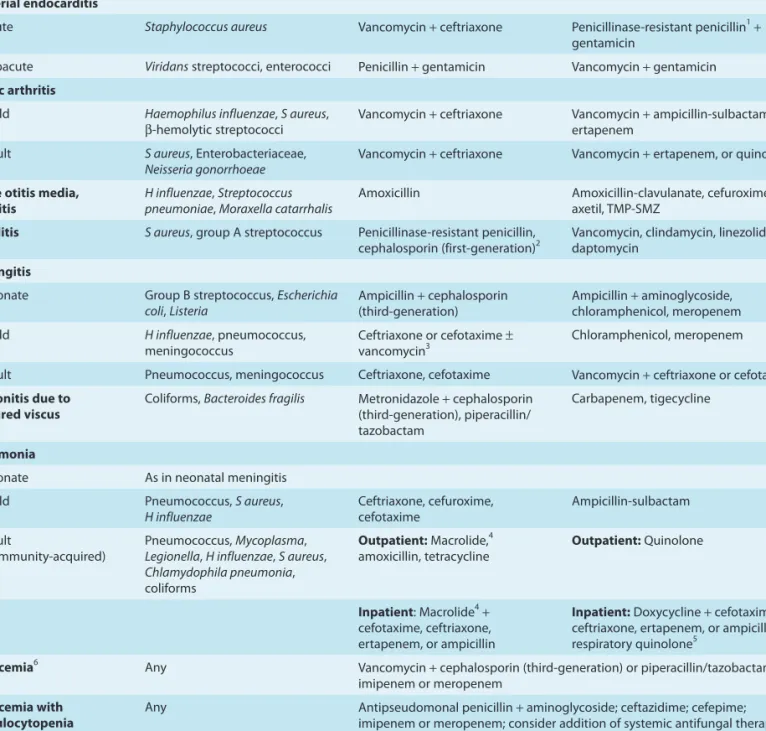
When choosing empiric therapy, it is important to know the susceptibility of the organism to a particular agent in the hospital or in the community. Brief guidelines for empiric therapy based on the suspected microbial diagnosis and site of infection are provided in Tables 51–1 and 51–2.
INTERPRETATION OF CULTURE RESULTS
GUIDING ANTIMICROBIAL THERAPY OF ESTABLISHED INFECTIONS
Susceptibility Testing
Specialized Assay Methods
Beta-Lactamase Assay
Synergy Studies
MONITORING THERAPEUTIC
RESPONSE: DURATION OF THERAPY
Clinical Failure of Antimicrobial Therapy
Clinical data should be reviewed to determine whether the patient's immune function is adequate and, if not, what. Finally, culture and susceptibility testing should be repeated to determine if superinfection has occurred with another organism or if the original pathogen has developed resistance to the drug.
ANTIMICROBIAL
PHARMACODYNAMICS
Bacteriostatic versus Bactericidal Activity
Postantibiotic Effect
This is thought to be due to post-antibiotic leukocyte enhancement (PALE) and exposure of bacteria to sub-inhibitory antibiotic concentrations. Aminoglycosides and quinolones have concentration-dependent PAEs; thus, high doses of aminoglycosides given once daily result in increased bactericidal activity and prolonged PAEs.
PHARMACOKINETIC CONSIDERATIONS Route of Administration
Conditions That Alter Antimicrobial Pharmacokinetics
Drug Concentrations in Body Fluids
Monitoring Serum Concentrations of Antimicrobial Agents
MANAGEMENT OF
ANTIMICROBIAL DRUG TOXICITY
ANTIMICROBIAL DRUG COMBINATIONS
RATIONALE FOR COMBINATION ANTIMICROBIAL THERAPY
SYNERGISM & ANTAGONISM
Mechanisms of Synergistic Action
Trimethoprim-sulfamethoxazole has been successfully used to treat bacterial infections and P jiroveci (carinii) pneumonia.* β-Lactamase inhibitors restore the activity of intrinsically active but hydrolyzable β-lactams against organisms such as Staphylococcus aure fragiliserus and Bactamer . Blockade of the two sequential steps of the folic acid pathway with trimethoprim-sulfamethoxazole results in a much more complete inhibition of growth than achieved by either component alone.
Mechanisms of Antagonistic Action
The addition of gentamicin or streptomycin to penicillin allows a reduction in treatment duration for selected patients with viridans streptococcal endocarditis. Inhibition of Enzymatic Inactivation: Enzymatic inactivation of β-lactam antibiotics is an important mechanism of antibiotic resistance.
ANTIMICROBIAL PROPHYLAXIS
Other synergistic antimicrobial combinations have been shown to be more effective than monotherapy with individual components. Enhancement of absorption of antimicrobial agents: Penicillins and other cell wall-active agents can increase the absorption of aminoglycosides by a number of bacteria, including staphylococci, enterococci, streptococci, and P aeruginosa.
Surgical Prophylaxis
The shortest possible course of treatment – ideally a single dose – of the most effective and least toxic antibiotic should be used. For many antimicrobials, doses must be repeated if the procedure lasts longer than 2 to 6 hours.
Nonsurgical Prophylaxis
The antibiotic must be present in sufficient concentrations at the surgical site before incision and throughout the procedure; initial dosing is dependent on volume of distribution, peak levels, clearance, protein binding and bioavailability. Common errors in antibiotic prophylaxis include choosing the wrong antibiotic, administering the first dose too early or too late, failing to repeat doses during prolonged procedures, excessive duration of prophylaxis, and inappropriate use of broad-spectrum antibiotics.
National Research Council (NRC) Wound Classification Criteria
Blumberg HM et al: American Thoracic Society/Centers for Disease Control and Prevention/Infectious Diseases Society of America: Treatment of tuberculosis. Mandell LA et al: Infectious Diseases Society of America/American Thoracic Society Consensus Guidelines for the Management of Community-Acquired Pneumonia in Adults.
DRUG CLASSIFICATION
In P vivax and P ovale infections, a dormant hepatic stage, the hypnozoite, is not eradicated by most drugs, and relapses may occur after therapy directed against erythrocytic parasites.
Antiprotozoal Drugs
Philip J. Rosenthal, MD
MALARIA
PARASITE LIFE CYCLE
Most non-falciparum infections and falciparum malaria from areas without known resistance should be treated with chloroquine. Severe falciparum malaria is treated with intravenous artesunate, quinidine, or quinine (intravenous quinine is not available in the US).
CHLOROQUINE
Multiple drugs are available for the treatment of malaria occurring in the US (Table 52-3). Uncomplicated falciparum malaria from most areas is most often treated with Malarone, but new artemisinin-based combinations are increasingly the international standard of care, and one combination, Coartem, is now available in the US.
Antimalarial Action & Resistance
Self-treatment regimens include new artemisinin-based combination therapies (see below), which are widely available internationally (and, in the case of Coartem†, in the United States); Malarone; mefloquine; and quinine. For vivax malaria from areas with suspected chloroquine resistance, including Indonesia and Papua New Guinea, other therapies effective against falciparum malaria can be used.
CHEMOPROPHYLAXIS & TREATMENT
Amodiaquine1 4-Aminoquinoline Treatment of infection with some chloroquine-resistant P falciparum strains and in fixed combination with artesunate. Lumefantrine2 Amyl alcohol Treatment of P falciparum malaria in fixed combination with artemether (Coartem) Pyronaridine Mannich base acridine Treatment of P falciparum malaria in fixed combination with artesunate (Pyramax) Artemisinins.
Contraindications & Cautions
OTHER QUINOLINES
Recently, piperaquine combined with dihydroartemisinin (Artekin, Duocotecxin) showed excellent efficacy and safety for the treatment of falciparum malaria, although reduced efficacy has recently been seen in Southeast Asia, associated with decreased activity of both components of the combination. Dihydroartemisinin-piperaquine is now the first-line therapy for the treatment of uncomplicated falciparum malaria in some countries in Asia.
ARTEMISININ & ITS DERIVATIVES
Dihydroartemisinin-piperaquine is a newer regimen that has shown excellent efficacy; is a first-line therapy for falciparum malaria in parts of Southeast Asia. Thus, intravenous artesunate has replaced quinine as the standard of care for the treatment of severe falciparum malaria.
Adverse Effects & Cautions
Of concern, increased failure rates for artesunate-mefloquine and dihydroartemisinin-piperaquine have recently been reported in parts of Southeast Asia, in the context of reduced activity of both components of the regimens. Artesunate and artemether have also proven effective in the treatment of severe malaria when administered rectally, providing a valuable treatment modality when parenteral therapy is unavailable.
QUININE & QUINIDINE
Malaria chemoprophylaxis – Quinine is generally not used in chemoprophylaxis because of its toxicity, although a daily dose of 325 mg is effective. Babesiosis - quinine is the first-line drug in combination with clindamycin in the treatment of Babesia microti or other human babesiosis infections.
MEFLOQUINE
Quinine (or quinidine) should be discontinued if signs of severe cinchonism, hemolysis, or hypersensitivity occur. Quinine should not be given concomitantly with mefloquine and should be used with caution in a malaria patient who has recently received mefloquine.
PRIMAQUINE
In any case, primaquine should be discontinued if there is evidence of hemolysis or anemia. Primaquine should be avoided during pregnancy because the fetus is relatively deficient in G6PD and thus at risk of hemolysis.
ATOVAQUONE
Standard doses of primaquine may cause hemolysis or methemoglobinemia (manifested by cyanosis), especially in persons with G6PD deficiency or other inherited metabolic defects. Primaquine should be avoided in patients with a history of granulocytopenia or methemoglobinemia, in those receiving potentially myelosuppressive drugs (eg, quinidine), and in those with disorders that commonly involve myelosuppression.
INHIBITORS OF FOLATE SYNTHESIS
Folic acid antagonists should be used with caution in case of renal or hepatic dysfunction. In pregnant women receiving preventive therapy with Fansidar, high-dose folic acid supplementation (e.g., 5 mg per day) should be replaced by the standard recommended dosage (0.4–0.6 mg per day) to avoid possible loss of protective efficacy .
ANTIBIOTICS
Standard treatment includes high-dose intravenous or oral therapy (15 mg/kg trimethoprim and 75 mg/kg sulfamethoxazole per day in three or four divided doses) for 21 days. The chemoprophylactic dosing schedule is much better tolerated than high-dose therapy, but rash, fever, leukopenia, or hepatitis may necessitate switching to another agent.
HALOFANTRINE, LUMEFANTRINE, &
Clindamycin (see Chapter 44) is slowly active against erythrocytic schizonts and can be used after courses of treatment with quinine, quinidine, or artesunate in those for whom doxycycline is not recommended, such as children and pregnant women. Antimalarial activity of azithromycin and fluoroquinolones has also been demonstrated, but efficacy for malaria therapy or chemoprophylaxis has been suboptimal.
PYRONARIDINE
Doxycycline has also become a standard chemoprophylactic drug, particularly for use in areas of Southeast Asia with high rates of resistance to other antimalarials, including mefloquine.
AMEBIASIS
Treatment of Specific Forms of Amebiasis
METRONIDAZOLE & TINIDAZOLE
Pharmacokinetics & Mechanism of Action
Metronidazole has a disulfiram-like effect, which may cause nausea and vomiting if alcohol is taken during treatment.
IODOQUINOL
DILOXANIDE FUROATE
Diloxanide furoate is not commercially available in the US, but can be obtained from some pharmacies. Bloating is common, but nausea and abdominal cramps are rare, and rashes are rare.
PAROMOMYCIN SULFATE
EMETINE & DEHYDROEMETINE
OTHER ANTIPROTOZOAL DRUGS
PENTAMIDINE
Balantidium coli Tetracycline, 500 mg 4 times daily for 10 days Metronidazole, 750 mg 3 times daily for 5 days Cryptosporidium species Paromomycin, 500–750 mg 3 or 4 times daily for 10 days Azithromycin, 500 mg daily for 21 days Cyclospora cayetanensis Trimethoprim- sulfamethoxazole, one double strength tablet 4 times. Dientamoeba fragilis Iodoquinol, 650 mg three times a day for 20 days Tetracycline, 500 mg four times a day for 10 days or.
SODIUM STIBOGLUCONATE
The drug is inferior to suramin for the treatment of early East African sleeping sickness. Leishmaniasis-Pentamidine is an alternative to sodium stibogluconate and newer agents for the treatment of visceral leishmaniasis.
NITAZOXANIDE
Pentamidine has also been used for chemoprophylaxis against African trypanosomiasis, at a dose of 4 mg/kg every 3-6 months. Pentamidine is a highly toxic agent, with adverse effects noted in approximately 50% of patients receiving 4 mg/kg/d.
OTHER DRUGS FOR TRYPANOSOMIASIS
Suramin
Melarsoprol
Eflornithine
Benznidazole
Nifurtimox
Nifurtimox is well absorbed after oral administration and excreted with a plasma half-life of approximately 3 hours.
Amphotericin
Miltefosine
Paromomycin
Drug Combinations Used in the Treatment of Visceral Leishmaniasis
Bhattacharya SK et al: Phase 4 trial of miltefosine for the treatment of Indian visceral leishmaniasis. Sundar S et al: Efficacy of miltefosine in the treatment of visceral leishmaniasis in India after ten years of use.
Clinical Pharmacology of the Antihelminthic Drugs
CHEMOTHERAPY OF HELMINTHIC INFECTIONS
ALBENDAZOLE
Basic Pharmacology
Hydatid disease - Albendazole is the treatment of choice for medical therapy and is a useful adjunct to surgical removal or aspiration of cysts. Other infections - Albendazole is the drug of choice for the treatment of cutaneous larva migrans (400 mg daily for 3 days), visceral larva migrans (400 mg twice daily for 5 days), intestinal capillariasis (400 mg daily for 10 days), microsporidial infections (400 mg twice daily for 2 weeks or longer) and gnathostomiasis (400 mg twice daily for 3 weeks).
Adverse Reactions, Contraindications, &
Neurocysticercosis - Indications for medical therapy in neurocysticercosis are controversial, as anthelmintic therapy is not clearly superior to corticosteroid therapy alone and may worsen neurologic disease. Albendazole is now generally considered the drug of choice over praziquantel because of its shorter duration, lower cost, better penetration into the subarachnoid space, and increased levels of the drug (as opposed to decreased levels of praziquantel) when given with corticosteroids.
Cautions
It appears to be less active than diethylcarbamazine or ivermectin for this purpose, but is included in control programs in combination with either of these drugs. Albendazole has been recommended as empiric therapy for the treatment of those returning from tropical areas with persistent unexplained eosinophilia.
BITHIONOL
One reported therapeutic strategy is to treat with albendazole and praziquantel, to evaluate response after 1 month or more, and, depending on the response, to then manage the patient with continued chemotherapy or combined surgical and drug therapy.
Basic Pharmacology & Clinical Uses
DIETHYLCARBAMAZINE CITRATE
Wuchereria bancrofti, Brugia malayi, Brugia timori, and Loa loa—Diethylcarbamazine is the drug of choice for treating infections with these parasites because of its effectiveness and lack of serious toxicity. However, limited information suggests that the drug is not effective against adult Mansonella ozzardi or Mansonella perstans and that it has limited activity against microfilariae of these parasites.
Adverse Reactions, Contraindications,
Microfilariae of all species are killed quickly; adult parasites are killed more slowly, often requiring several courses of treatment. Other uses - For tropical eosinophilia, diethylcarbamazine is given orally at a dose of 2 mg/kg three times daily for 2-3 weeks.
The extent to which adults are killed by W bancrofti and B malayi is not known, but after appropriate therapy, microfilariae no longer occur in the majority of patients. Lymphatic filariasis is treated with 2 mg/kg three times a day for 12 days, and loiasis is treated with the same regimen for 2 to 3 weeks.
DOXYCYCLINE
Antihistamines may be given during the first few days of treatment to limit allergic reactions, and corticosteroids should be initiated and diethylcarbamazine doses reduced or interrupted if severe reactions occur. An important use of diethylcarbamazine is mass treatment to reduce the prevalence of W bancrofti infection, usually in combination with.
IVERMECTIN
Only with the first treatment, patients with microfilariae in the cornea or anterior chamber can be treated with corticosteroids to avoid inflammatory eye reactions. In loiasis, although the drug reduces microfilaria concentrations, it may occasionally produce severe reactions and appears to be more dangerous in this respect than diethylcarbamazine.
MEBENDAZOLE
Other parasites - Ivermectin reduces microfilariae in B malayi and M ozzardi infections, but not in M perstans infections. It occurs in 5-30% of persons and is generally mild, but may be more frequent and more severe in individuals who are not long-term residents of onchocerciasis-endemic areas.
METRIFONATE (TRICHLORFON)
NICLOSAMIDE
OXAMNIQUINE
In the Western Hemisphere and West Africa, the adult dose of oxamniquine is 12-15 mg/kg given once. In East Africa and the Arabian Peninsula, the standard dose is 15-20 mg/kg twice in 1 day.
PIPERAZINE
Rare side effects are low-grade fever, an orange-red stain in the urine, proteinuria, microscopic hematuria, and transient leukopenia. Because the drug makes many patients dizzy or drowsy, it should be used with caution in patients whose work or activity requires mental alertness (eg, no driving for 24 hours).
PRAZIQUANTEL
However, praziquantel was not effective in fascioliasis even at doses up to 25 mg/kg three times daily for 3–7 days. The intensity and frequency of adverse effects increase with dosage, occurring in up to 50% of patients receiving 25 mg/kg three times daily.
PYRANTEL PAMOATE
Hymenolepis nana – Praziquantel is the drug of choice for H nana infections and the first drug to be highly effective. Other parasites – Limited studies demonstrated the efficacy of praziquantel at a dose of 25 mg/kg three times daily for 1 to 2 days against fasciolopsiasis, metagonimiasis, and other forms of heterophyiasis.
THIABENDAZOLE
Olveda RM et al: Efficacy and safety of praziquantel for the treatment of human schistosomiasis in pregnancy: A phase 2, randomized, double-blind, placebo-controlled trial. Steinmann P et al: Efficacy of single-dose and triple-dose albendazole and mebendazole against soil-transmitted helminths and Taenia spp.: A randomized controlled trial.
Cancer Chemotherapy
Edward Chu, MD
CAUSES OF CANCER
For example, hepatitis B (HBV) and hepatitis C (HCV) are associated with the development of hepatocellular carcinoma; HIV is associated with Hodgkin's and non-Hodgkin's lymphomas; human papillomavirus (HPV) is associated with cervical cancer, anal and penile cancer, and head and neck oropharyngeal cancer; Epstein-Barr virus (EBV), also known as human herpesvirus 4 (HHV-4), is associated with nasopharyngeal cancer, Burkitt's lymphoma, and Hodgkin's lymphoma; and Merkel cell polyoma virus (MCV) causes Merkel cell carcinoma, a rare but aggressive form of skin cancer. Another class of genes, known as tumor suppressor genes, can be deleted or mutated, causing the neoplastic phenotype.
CANCER TREATMENT MODALITIES
These mammalian cellular genes, known as oncogenes, have been shown to encode specific growth factors and their corresponding receptors. These genes can be amplified (increased number of gene copies) or mutated, both of which can lead to constitutive overexpression in malignant cells.
ACRONYMS
The goal of the neoadjuvant approach is to reduce the size of the primary tumor so that surgical resection becomes easier and more effective. One of the most important roles for cancer chemotherapy is as an adjunct to local treatment modalities such as surgery, and this is called adjuvant chemotherapy.
ROLE OF CELL CYCLE KINETICS &
Generally, additional chemotherapy is given for a period of time, usually three to four months, after the surgery has been performed. In this setting, chemotherapy is administered after surgery has been performed, and the goal of chemotherapy is to reduce the incidence of both local and systemic recurrence and improve patients' overall survival.
ANTI-CANCER EFFECT
In general, chemotherapy regimens with clinical activity against advanced disease may have curative potential after surgical resection of the primary tumor, provided the appropriate dose and schedule are administered. A critical difference between Gompertzian and exponential growth is that the proportion of tumor growth is not constant with Gompertzian kinetics, but rather decreases exponentially with time (exponential growth corresponds to exponential growth retardation due to blood supply limitations and other factors).
The Role of Drug Combinations
Toxicity: When multiple drugs of a given class are available and are equally effective, a drug should be selected based on its toxicity that does not overlap with the toxicity of other drugs in the combination. Mechanism of interaction: There must be a clear understanding of the biochemical, molecular and pharmacokinetic mechanisms of interaction between the individual drugs in a given combination, to enable maximum antitumor effect.
Dosage Factors
Efficacy: Only drugs known to have some degree of clinical efficacy when used alone against a given tumor should be selected for use in combination. Because long intervals between cycles adversely affect dose intensity, the treatment-free interval between cycles should be the shortest time necessary to recover the most sensitive normal target tissue, which is usually the bone marrow.
DRUG RESISTANCE
Certain principles have guided the selection of drugs into the most effective drug combinations, and they provide a paradigm for the development of new therapeutic programs. Optimal scheduling: Drugs should be used at the optimal dose and schedule, and combinations of drugs should be given at consistent intervals.
BASIC PHARMACOLOGY OF CANCER CHEMOTHERAPEUTIC
ALKYLATING AGENTS
Thus, although alkylating agents are not cell cycle specific, cancer cells are most susceptible to this class of drugs in late G1. The major toxicities of individual alkylating agents are described in Table 54–2 and discussed below.
NITROSOUREAS
The liver appears to be protected by the enzymatic formation of the inactive metabolites 4-ketocyclophosphamide and carboxyphosphamide. Carboplatin Same as cisplatin Non-small cell and small cell lung cancer, breast cancer, bladder cancer, head and neck cancer, ovarian cancer.
NONCLASSIC ALKYLATING AGENTS
After oral administration of lomustine, peak plasma levels of metabolites appear within 1-4 hours; Central nervous system concentrations reach 30-40% of the activity present in the plasma. This drug has activity in the treatment of insulin-secreting islet cell carcinoma of the pancreas.
Procarbazine
Dacarbazine
Bendamustine
PLATINUM ANALOGS
There are various iterations of the FOLFOX regimen, which have now become the most widely used combinations in the first-line treatment of advanced colorectal cancer. This regimen also plays an important role in the adjuvant therapy of stage III colon cancer and high-risk stage II colon cancer.
ANTIMETABOLITES
Neurotoxicity is the most important dose-limiting toxicity and is manifested by peripheral sensory neuropathy. Although the chronic form of oxaliplatin toxicity is dependent on the cumulative dose of drug administered, it tends to be more easily reversible than that observed in cisplatin-induced neurotoxicity.
ANTIFOLATES Methotrexate
Therefore, it has been widely used in transplant regimens to treat refractory hematologic malignancies. There are two forms of neurotoxicity, an acute form that is often induced and exacerbated by exposure to cold, and a chronic form that is dose dependent.
Pemetrexed
Oxaliplatin was originally approved for use as second-line therapy in combination with the fluoropyrimidine 5-fluorouracil (5-FU) and leucovorin, called the FOLFOX regimen, for metastatic colorectal cancer. Pemetrexed is currently approved for use in combination with cisplatin in the treatment of mesothelioma, as a single agent in the second-line therapy of NSCLC, in combination with cisplatin in the first-line treatment of NSCLC, and more recently, as maintenance therapy in patients with NSCLC whose disease has not progressed after four cycles of platinum-based chemotherapy.
Pralatrexate
Pralatrexate is currently approved for use in the treatment of relapsed or refractory peripheral T-cell lymphoma. Consistent with other antifolate analogs, pralatrexate is primarily excreted in the urine, and dose modification is necessary in renal dysfunction.
FLUOROPYRIMIDINES 5-Fluorouracil
This molecule was originally designed to be a more potent substrate for the RFC-1 carrier protein and to serve as an improved substrate for FPGS.
Capecitabine
TAS-102
The advantages of TAS-102 are that it retains clinical activity in 5-FU-resistant tumors and it exhibits similar clinical activity in the setting of wild-type and mutant RAS colorectal cancer. The major dose-limiting toxicity is myelosuppression, with neutropenia more commonly observed than anemia and thrombocytopenia.
DEOXYCYTIDINE ANALOGS Cytarabine
Other side effects commonly seen with this oral fluoropyrimidine are GI toxicity with diarrhea and nausea/vomiting, fatigue, and anorexia.
Gemcitabine
PURINE ANTAGONISTS 6-Thiopurines
6-TG has a synergistic effect when used with cytarabine in the treatment of acute leukemia in adults. Patients who have a pharmacogenetic syndrome involving partial or complete deficiency of this enzyme are at increased risk of developing severe toxicity in the form of myelosuppression and gastrointestinal toxicity with mucositis and diarrhea.
Fludarabine
This is an important distinction because the purine analog allopurinol, a potent xanthine oxidase inhibitor, is often used as a supportive care measure in the treatment of acute leukemia to prevent the development of hyperleukemia that often occurs with tumor cell lysis. Because allopurinol inhibits xanthine oxidase, concomitant treatment with allopurinol and 6-MP will result in increased levels of 6-MP, leading to excessive toxicity.
Cladribine
6-MP is converted to an inactive metabolite (6-thiouric acid) by an oxidation reaction catalyzed by xanthine oxidase, while 6-TG undergoes deamination. In contrast, no such interaction occurs with 6-TG, which can be used at full doses with allopurinol.
NATURAL PRODUCT CANCER CHEMOTHERAPY DRUGS
Various metabolic lesions result, including inhibition of purine-nucleotide interconversion; decrease in intracellular levels of guanine nucleotides, leading to inhibition of glycoprotein synthesis; interference with the formation of DNA and RNA; and incorporation of thiopurine nucleotides into both DNA and RNA.
VINCA ALKALOIDS
Vinblastine
Vincristine
Vinorelbine
TAXANES & OTHER ANTI-MICROTUBULE DRUGS
EPIPODOPHYLLOTOXINS
CAMPTOTHECINS
ANTITUMOR ANTIBIOTICS
ANTHRACYCLINES
Daunorubicin was the first agent of this class to be isolated and is still used to treat acute myeloid leukemia. It is currently used to treat advanced, hormone-refractory prostate cancer and low-grade non-Hodgkin's lymphoma.
MITOMYCIN
It was initially approved for use as a component of adjuvant therapy in early-stage, node-positive breast cancer, but is also used in the treatment of metastatic breast cancer and gastroesophageal cancer. It is also indicated in breast cancer and in pediatric and adult acute myeloid leukemia.
BLEOMYCIN
In combination with cytarabine, idarubicin appears to be more active than daunorubicin in inducing complete remissions and improving survival in patients with acute myeloid leukemia. The incidence of pulmonary toxicity is increased in patients over 70 years of age, in patients receiving cumulative doses greater than 400 units, in patients with underlying pulmonary disease, and in patients who have previously undergone mediastinal or thoracic irradiation.
MISCELLANEOUS ANTI-CANCER DRUGS
IMATINIB & OTHER TYROSINE KINASE INHIBITORS (TKIs)
GROWTH FACTOR RECEPTOR INHIBITORS
Cetuximab, Panitumumab,
However, it is now also approved for use in combination with FOLFOX chemotherapy in the first-line treatment of metastatic CRC. It is approved for use in combination with gemcitabine and cisplatin chemotherapy for the treatment of squamous NSCLC.
Erlotinib
Panitumumab was originally approved for patients with unresponsive metastatic CRC who had been treated with all other agents. Recent clinical studies have shown that this antibody can be effectively and safely combined with irinotecan-based chemotherapy in the second-line treatment of metastatic CRC.
Bevacizumab, Ziv-Aflibercept, Ramucirumab, Sorafenib, Sunitinib,
Acneiform skin rash and hypomagnesemia are the two major adverse effects associated with its use. However, as with cetuximab, necitumumab is of the G1 isotype, and as such its antitumor activity may also be mediated, at least in part, by immunologically mediated mechanisms.
It was initially approved for advanced renal cell cancer and is also approved for advanced hepatocellular cancer. It is approved for the treatment of advanced renal cell cancer and for the treatment of gastrointestinal stromal tumors after disease progression on or with intolerance to imatinib.
CLINICAL PHARMACOLOGY OF CANCER CHEMOTHERAPEUTIC
Sorafenib is a small molecule that inhibits multiple receptor tyrosine kinases (RTKs), mainly VEGF-R2 and VEGF-R3, platelet-derived growth factor-β (PDGFR-β), and raf kinase. Pazopanib is a small molecule that inhibits multiple RTKs, mainly VEGF-R2 and VEGF-R3, PDGFR-β and raf kinase.
THE LEUKEMIAS
Sunitinib is similar to sorafenib in that it inhibits multiple RTKs, although the specific types differ slightly. Therefore, each of these agents has potential interactions with drugs that are also metabolized by the CYP3A4 system, especially warfarin.
ACUTE LEUKEMIA Childhood Leukemia
Sorafenib, sunitinib, and pazopanib are metabolized in the liver by the CYP3A4 system, and elimination is primarily hepatic with excretion in feces. For sunitinib there is also an increased risk of cardiac dysfunction, which in some cases can lead to congestive heart failure.
Adult Leukemia
CHRONIC MYELOGENOUS LEUKEMIA
CHRONIC LYMPHOCYTIC LEUKEMIA
HODGKIN’S & NON-HODGKIN’S LYMPHOMAS
HODGKIN’S LYMPHOMA
NON-HODGKIN’S LYMPHOMA
MULTIPLE MYELOMA
This drug is thought to exert its major cytotoxic effects through inhibition of the 26S proteosome, leading to downregulation of the nuclear factor kappa B (NF-κB) signaling pathway, which is thought to be an important signaling pathway for this disease. Ixazomib is the newest proteosome inhibitor approved in multiple myeloma, and unlike the other proteosome inhibitors, it is administered orally with good oral bioavailability.
BREAST CANCER
In patients considered candidates for high-dose stem cell transplant therapy, melphalan and other alkylating agents should be avoided as they may affect the success of stem cell harvesting. The side effect profiles of these IMiDs appear similar, although neurotoxicity is observed more commonly with thalidomide, somewhat less frequently with pomalidomide and rarely with lenalidomide.
Lenalidomide is approved in combination with dexamethasone for patients with multiple myeloma who have received at least one prior treatment, and clinical data show that this combination is effective as first-line therapy. Bortezomib was first approved for use in relapsed or refractory multiple myeloma and is now commonly used as first-line therapy.
PROSTATE CANCER
GASTROINTESTINAL CANCERS
Furthermore, regimens based on cisplatin in combination with irinotecan or one of the taxanes (paclitaxel or docetaxel) also show clinical activity. Single-agent irinotecan or liposomal irinotecan in combination with intravenous 5-FU are appropriate treatment options in the second-line setting.
LUNG CANCERS
Maintenance chemotherapy with pemetrexed is now used in patients with non-squamous NSCLC whose disease has remained stable after four cycles of platinum-based first-line chemotherapy. Topotecan is used as second-line monotherapy in patients who have failed a platinum-based regimen.
OVARIAN CANCER
In patients considered unsuitable candidates for bevacizumab therapy and patients with squamous cell histology, a platinum-based chemotherapy regimen in combination with the anti-EGFR antibody cetuximab is a reasonable treatment strategy. This form of NSCLC responds to platinum-based chemotherapy with either cisplatin or carboplatin in combination with gemcitabine.
TESTICULAR CANCER
In 2015, the immune checkpoint inhibitor nivolumab was approved for the treatment of metastatic squamous NSCLC whose cancer has developed during or after standard platinum-based chemotherapy. It is usually exquisitely sensitive, at least initially, to platinum-based combination regimens, including cisplatin and etoposide or cisplatin and irinotecan.
MALIGNANT MELANOMA
For patients with a good performance status and those with nonsquamous histology, the combination of the anti-VEGF antibody bevacizumab with carboplatin and paclitaxel is a standard treatment option. Trametinib and cobimetinib are reversible inhibitors of mitogen-activated extracellular signal-regulated kinase 1 (MEK1) and kinase 2 (MEK2), and in combination with a BRAF inhibitor molecule are approved for patients with metastatic melanoma whose tumors express the BRAF. V600E or V600K mutation.
BRAIN CANCER
In addition, nivolumab is also approved in combination with ipilimumab for BRAF V600 mutation-positive unresectable or metastatic melanoma. Two oral and highly selective small molecule inhibitors of BRAF V600E have been approved for metastatic melanoma: vemu-fenib and dabrafenib.
SECONDARY MALIGNANCIES &
Studies are underway to determine their activity in combination with other cytotoxic and biologic agents for metastatic melanoma as well as their potential role in the adjuvant and neoadjuvant therapy of early stage melanoma. While these agents have clinical activity as monotherapies, clinical studies suggest that the most promising clinical activity is seen when they are used in combination with a BRAF inhibitor.
CANCER CHEMOTHERAPY
Nivolumab and pembrolizumab are IgG4 antibodies that bind to the programmed death (PD)-1 receptor, expressed on T cells, and inhibit the interaction between programmed death ligand 1 (PD-L1) and ligand 2 (PD-L2). and the PD-1 receptor. The PD-1 signaling pathway mediates an immune escape mechanism, and inhibition of this pathway enhances the T cell immune response, leading to T cell activation and proliferation.
SUMMARY Anti-cancer Drugs
Slaag HI et al: Principles and Practice of Lung Cancer: The Official Reference Text of the International Association for the Study of Lung Cancer (IASLC), 4th ed. Drugs that enhance the immune response or selectively change the balance
