paediatric nursing
Comprehensive
paediatric nursing
By
Rajalakshmi Murugan
Assistant Professor and Head
Department of Paediatric Nursing, Centralized School of Nursing Faculty of Medicine,
Addis Ababa University, Ethiopia
Reviewed by
Dr Amha Mekasha
Associate Professor
Paediatric and Child Health Department, and Head of Medical Education in Ethiopia Unit,
Addis Ababa University, Ethiopia
Laxmi PubLications Pvt Ltd
Bangalore
•
Chennai•
CoChin•
guwahati•
hyderaBad Jalandhar•
KolKata•
luCKnow•
mumBai•
PatnaranChi
•
new delhiUNIVERSITY SCIENCE PRESS
(An Imprint of Laxmi Publications Pvt. Ltd.) An ISO 9001:2008 Company
Bengaluru ● Chennai ● CoChin ● guwahati ● hyderaBad
Jalandhar ● KolKata ● luCKnow ● mumBai ● ranChi ● new delhi Boston (usa) ● aCCra (ghana) ● nairoBi (Kenya)
© by Laxmi Publications (P) Ltd.
All rights reserved including those of translation into other languages. In accordance with the Copyright (Amendment) Act, 2012, no part of this publication may be reproduced, stored in a retrieval system, or transmitted in any form or by any means, electronic, mechanical, photocopying, recording or otherwise. Any such act or scanning, uploading, and or electronic sharing of any part of this book without the permission of the publisher constitutes unlawful piracy and theft of the copyright holder’s intellectual property. If you would like to use material from the book (other than for review purposes), prior written permission must be obtained from the publishers.
Printed and bound in India Typeset at Sukuvisa Enterprises, Delhi
First Edition : 2012, Reprint 2013, Second Edition : 2017 ISBN 978-93-81159-30-9
Limits of Liability/Disclaimer of Warranty: The publisher and the author make no representation or warranties with respect to the accuracy or completeness of the contents of this work and specifically disclaim all warranties. The advice, strategies, and activities contained herein may not be suitable for every situation. In performing activities adult supervision must be sought. Likewise, common sense and care are essential to the conduct of any and all activities, whether described in this book or otherwise. Neither the publisher nor the author shall be liable or assumes any responsibility for any injuries or damages arising here from. The fact that an organization or Website if referred to in this work as a citation and/or a potential source of further information does not mean that the author or the publisher endorses the information the organization or Website may provide or recommendations it may make. Further, readers must be aware that the Internet Websites listed in this work may have changed or disappeared between when this work was written and when it is read.
All trademarks, logos or any other mark such as Vibgyor, USP, Amanda, Golden Bells, Firewall Media, Mercury, Trinity, Laxmi appearing in this work are trademarks and intellectual property owned by or licensed to Laxmi Publications, its subsidiaries or affiliates. Notwithstanding this disclaimer, all other names and marks mentioned in this work are the trade names, trademarks or service marks of their respective owners.
Publishedin indiaby
UNIVERSITY SCIENCE PRESS
(An Imprint of Laxmi Publications Pvt. Ltd.) An ISO 9001:2008 Company
113, GOLDEN HOUSE, DARYAGANJ, NEW DELHI - 110002, INDIA
Telephone : 91-11-4353 2500, 4353 2501
Fax : 91-11-2325 2572, 4353 2528 C—
www.laxmipublications.com [email protected] Printed at:
& Bengaluru 080-26 75 69 30
& Chennai 044-24 34 47 26, 24 35 95 07
& Cochin 0484-237 70 04, 405 13 03
& Guwahati 0361-254 36 69, 251 38 81
& Hyderabad 040-27 55 53 83, 27 55 53 93
& Jalandhar 0181-222 12 72
& Kolkata 033-22 27 43 84
& Lucknow 0522-220 99 16
& Mumbai 022-24 91 54 15, 24 92 78 69
& Ranchi 0651-220 44 64
Branches
All children in Ethiopia, who could have benefited and from treatment of different diseases and
appropriate nursing care
As the number of children in the world, younger than age 15 increases annually, now representing more than 30% of the total population. It becomes apparent that clinical nursing and midwifery students need to know about well-child health care, acute and chronic diseases states in paediatric population and appropriate nursing intervention. Recognizing development stages, acquiring skills and teaching families are critical in the care of children and require different skill sets than caring for adults. Nurses and midwives with strong grasp of these important concepts are in a good position to help the families deal with everyday situation, resulting in positive outcomes for their children. Unfortunately, the clinical experience in the care of children are commonly limited in nursing programmes because most ill children are cared for in the home and hospital stays are short.
Therefore, to be well prepared to care for these patients and their families and to have adequate knowledge and competence on paediatric practice.
This edition has a wide range of coverage and includes the relevant issues of all paediatric diseases and care.
The book also has evidence based neonatal and children interventions, including instructional and community based care aspects.
Mrs Rajalakshmi has worked hard to structure the text especially according to our context, so this book is educationally sound and very relevant in the field of neonatal and child health nursing. It is my sincere belief that this book will contribute to reduce the neonatal and child mortality and morbidity in this country, besides it helps to overcome the shortage of paediatric nursing textbook. I appreciate her efforts to our nursing profession especially for child health, surely all nursing and midwifery students will get benefit from this book.
Mr Asrat Demisse Director, Centralized School of Nursing Faculty of Medicine, Addis Ababa University Ethiopia
This fully revised book, now in its Second Edition, continues to provide a compact state of the art resource for clinicians in simple, lucid and user-friendly manner for easy understanding.
I have received numerous emails, and letters from readers commenting on the book and suggesting how it could be improved. With the aid of all this information, I have completely revised. In this Edition, new topics such as paediatric formulas, calculation of drugs, degrees of malnutrition as for IPA/WHO, calculation of weight according to age, and to find out the degree of malnutrition, identification of dehydration, current immunization schedule, and breast feeding and calculation of artificial feeding have been included at appropriate places. Some sections are also updated to enrich the contents.
Let me thank everyone who has provided me with suggestions and corrections for improving the First Edition. I am extraordinarily grateful to them all.
author
It gives me immense pleasure and satisfaction in introducing Comprehensive Paediatric Nursing to the Ethiopian society. Today nurses are challenged to make quick yet critical and update clinical practice about variety of patient’s/client’s problems occurring within the context of a complex and rapidly health care system. Our nursing profession is increasingly in the development of scientific knowledge related to its practice. I have been teaching paediatric nursing in Ethiopia for the last 8 years. There is no adequate books and those available are costly and of the standard of developed countries. Keeping in view the problems and needs of Ethiopian nursing students and nurses, I conceived the idea of writing a book on paediatric nursing since there is a lacunae of such books in Ethiopia by the local authors.
This edition of the Comprehensive Paediatric Nursing provides a compact state of the art resource for clinicians in simple, lucid and user-friendly language for easy understanding. It has been designed to ensure that specific information can easily be identified and applied in clinical setting. This book provides special information on Care of Children with HIV/AIDS and Integrated Management of Neonatal Childhood Illness (IMNCI).
The text of the book has been divided into 14 chapters. Chapter 1 focuses on growth and development and includes concepts, principles, theories, assessing and measuring of growth and development from newborn to adolescent period. Chapter 2 provides an essential component of the physical assessment like purpose, approaches and detailed physical examination. Chapter 3 provides a summary of twenty neonatal common health problems and interventions. Each illness/disorders includes concise description of the problems, schematic presentation of pathophysiology, clinical sign and symptoms, investigations, treatment and nursing management. Chapter 4 deals with the care of newborn with congenital anomalies. It includes anomalies of each organ system in detail.
Chapter 5 provides the details of altered respiratory conditions. It includes etiology, pathophysiology, clinical manifestations, treatment and nursing management. Chapter 6 details the alteration in cardiovascular functions and their management. Chapter 7 describes the details of altered gastrointestinal functions and their nursing management. Chapter 8 deals with the alterations in genitourinary functions and their nursing care. Chapter 9 provides the information about neurological disorders and the role of nursing care in their management.
Chapter 10 deals with the management and care of altered musculoskeletal conditions. Chapter 11 provides the details of altered haematological conditions, their management and nursing care. Chapter 12 is specially devoted to the causes, pathophysiology, complications, clinical manifestations, investigations, medical management and nursing care of common oncological conditions and Chapter 13 deals with altered endocrine conditions, finally Chapter 14 describes care of children with HIV/AIDS.
I hope the Comprehensive Paediatric Nursing will fill the gap for a book on paediatric nursing in the Ethiopian context as well as for developing countries. This book will provide enough knowledge related to paediatric nursing and enable the students to apply it in clinical practice and it will be definitely useful for faculty who is teaching paediatric nursing.
The suggestions for improvement would be gratefully accepted and will be incorporated in next revised edition.
author
I take this opportunity to express my deepest sense of gratitude to Mr Asrat Demisse, Director of School of Nursing, Addis Ababa University and the President, Ethiopian Nurses Association for his inspiration for writing this book, great encouragement and cordial support.
I am deeply appreciative of Dr Amha Mekasha, Associate Professor of Paediatrics and Child Health, Medical Faculty, Addis Ababa University for his valuable guidance and wholehearted efforts in editing the book.
I am greatly indebted to all my professional colleagues and friends in the institution who have initiated and encouraged me to write this textbook.
Finally not least but most, my acknowledgement goes to my sons and husband Mr Murugan for their enthusiastic encouragement and continuous effort to complete this book.
I also take this opportunity to express my heartfelt thanks to management, consultant and the staff of Laxmi Publications Pvt. Ltd. for giving proper shape to bring out and efforts to publish the first Indian book in the field of nursing in Ethiopia.
author
Foreword (vii)
Preface to the Second Edition (viii)
Preface to the First Edition (ix)
Acknowledgements (x)
List of Plates (xv)
List of Figures (xvi)
List of Tables (xviii)
IntroductIon to PaedIatrIc nursIng 1–3
Principles of Paediatric Nursing 1
Role of the Nurse in Paediatric or Child Health 1
Nursing Process in Paediatric Care 2
growth and develoPment 4–24
Concepts of Growth and Development 4
Assessing and Measuring of Growth and Development 7
Infant (Birth through Age 1) 8
Toddler (Ages 1 to 3) 12
Preschool Child (Ages 3 to 5) 15
School-Age Child (Ages 5 to 12) 18
Adolescent (Ages 12 to 18) 21
PaedIatrIc assessment 25–40
Overview 25
Assessment of Growth Pattern and Nutrition 25
Physical Examination of Body System 26
Neurologic “Soft” Signs 40 care of neonates wIth common health Problems 41–72
Care of the Preterm Newborn (Premature Baby) 41
Low Birth Weight Infants 45
Meconium Aspiration Syndrome 47
Asphyxia 48
Respiratory Distress Syndrome (RDS) 50
Neonatal Pneumonia 52
Neonatal Hypoglycaemia 53
Anaemia in Newborn 55
Injuries of the Newborn (Birth Injury) 56
Haemolytic Disease of the Newborn 59
Hyperbilirubinemia 62
Infection of Newborn 65
Neonatal Sepsis 65
Necrotizing Enterocolitis (NEC) 67
Ophthalmic Neonatorum 68
Oral Thrush (Oral Candidiasis) 68
Neonatal Seizures 69
Neonatal Coagulation Disorders 70
Haemorrhagic Disease of the Newborn (HDN) 71
care of newborn wIth common congenItal anomalIes 73–98
Congenital Abnormalities 73
Head 73
The Eye 76
Mouth 77
Esophageal Atresia with Tracheoesophageal Fistula 79
Hypertropic Pyloric Stenosis 81
Obstructive Disorders 83
Hirschsprung’s Disease (Congenital Aganglionic Megacolon) 84
Anorectal Malformation 85
Hernias 87
Neural Tube Defect 89
Cleft Foot 92
Developmental Dysplasia of the Hip 94
Defects of Genitourinary Tract 95
Down’s Syndrome 97
altered resPIratory condItIons 99–111
Respiratory Infection 99
Common Upper Respiratory Tract Infections (URTI) 100
Croup Syndrome 102
Lower Respiratory Tract Infections (LRTI) 104
altered cardIovascular functIons 112–129
Anatomy and Physiology of Paediatric Differences 112
Congenital Heart Diseases 112
Acyanotic Defects 113
Non-Obstructive Defects 114
Obstructive Defects 117
Cyanotic Heart Defects 120
Hypoplastic Left Heart Syndrome 124
Common Signs and Symptoms of Cardiac Diseases in Infants 124
General Nursing Care of the Child with Congenital Heart Diseases 125
Congestive Heart Failure 125
Rheumatic Fever 128
altered gastroIntestInal functIons 130–141
Diagnostic Tests 130
Nursing Diagnoses 131
Appendicitis 132
Meckel’s Diverticulam 132
Intussusception 133
Gastroenteritis 134
Complications 135
Inflammatory Bowel Diseases, Crohn’s Disease and Ulcerative Colitis 136
Nutritional Disorders 138
Rickets 141
altered genItourInary functIons 142–151
Understanding Kidneys and Urine 142
Urinary Tract Infection 143
Glomerulonephritis 144
Nephrotic Syndrome 147
Wilm’s Tumor (Nephroblastoma) 150
altered neurologIcal condItIons 152–164
Assessment of Neurological Conditions 152
Convulsion 154
Meningitis 156
Encephalitis 158
Cerebral Palsy 159
Mental Retardation 160
Head Injuries 162
Skull Fracture 163
altered musculoskeletal condItIons 165–181
Diagnostic Tests 165
Deformities of Spine 166
Fractures 168
Burns 171
Infectious Disorders 177
Impetigo Contagiosa 178
Contact Dermatitis: Diaper Rash 180
Contact Dermatitis: Poison Ivy 180
altered haematologIcal condItIons 182–191
Diagnostic Tests 182
Blood Disorders 182
Haemophilia 183
Anaemia 186
common oncologIcal condItIons In chIldren 192–201
Overview 192
How Cancer Metastasizes 192
Hodgkin’s Lymphoma 194
Leukaemia 195
Rhabdomyosarcoma 197
Oestosarcoma 199
Neuroblastoma 200
altered endocrIne condItIons 202–207
Diabetes Mellitus 202
Pituitary Dysfunction 206
care of chIldren wIth hIv/aIds 208–226
Comprehensive Paediatric HIV/AIDS Care and Treatment 208
Staging and Classification of HIV/AIDS in Children 210
Care of the HIV-Exposed Infants 211
Care of the HIV-Infected Child 214
Common Illnesses and Treatment in HIV-Infected Children (Opportunistic Infections) 216
Antiretroviral Therapy in Children 219
Adherence in Children 224
Paediatric Formulas 227–229
References 230–232
Index 233–242
instruments used in neonatal intensive care unit Pl. 1: Radiant warmer
Pl. 2: Blood pressure monitor Pl. 3: Blood gas machine Pl. 4: Cardiorespiratory monitor Pl. 5: Defibrillator
Pl. 6: Infant ventilator
Pl. 7: IV Pump or infusion pump Pl. 8: Phototherapy light
Pl. 9: Pulse oximeter Pl. 10: Warmer
Pl. 11: Baby in incubator Pl. 12: Infusion syringe pump
(Between pages 40–41) disorders of newborn
Pl. 13: Baby with phototherapy bed Pl. 14: Baby with mummy restrain
Pl. 15: Child with poor skin turgor and sunken eyes in dehydration Pl. 16: Child with pale palm in anaemia
Pl. 17: Infant with umbilical sepsis Pl. 18: Child with leg edema Pl. 19: Child with muscle wasting Pl. 20: Baby with encephalocele
Pl. 21: Child with shunt in hydrocephalus Pl. 22: Sign of good attachment in breast feeding Pl. 23: Newborn baby
Pl. 24: Preterm newborn baby
(Between pages 72–73)
Fig. 3.1: Preterm baby 41
Fig. 3.2: Kangaroo mother 42
Fig. 3.3: Care of baby with kangaroo mother 42
Fig. 3.4: Position of baby with kangaroo parents 43
Fig. 3.5: Care of preterm baby in NICU 44
Fig. 3.6: Baby with oral candidiasis 68
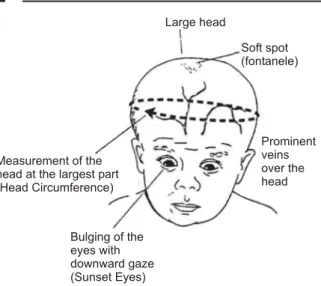
Fig. 4.1: Hydrocephaly 74
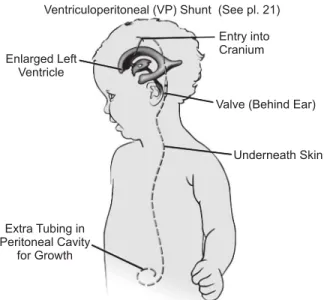
Fig. 4.2: Child with ventricular peritoneal shunt 75
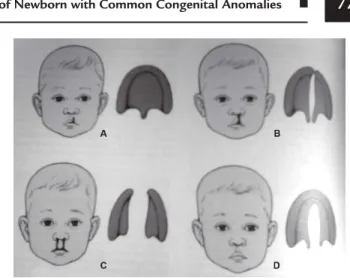
Fig. 4.3: Types of cleft lip and cleft plate 77
Fig. 4.4: Types of tracheoesophageal atresia and fistula 79
Fig. 4.5: Pyloric Stenosis 81
Fig. 4.6: Diagram of the colon and rectum 84
Fig. 4.7: Sigmoid colon showing a transition zone. The big, enlarged colon is normal while the smaller colon has the Hirschsprung’s disease. The arrow points to the transition
zone 85
Fig. 4.8: A huge “megacolon” consisting of sigmoid colon in an older child with Hirschsprung’s disease. There is a transition zone in the last part of the sigmoid colon which has a “funnel”. A colostomy was formed to allow the colon to get smaller before a
pullthrough was performed 85
Fig. 4.9: Baby with encephalocele 91
Fig. 4.10: Baby with anencephaly 91
Fig. 4.11: Baby with Talipes equinovarus 92
Fig. 4.12: Types of various deformity of foot 93
Fig. 4.13: Degree of developmental dysplasia 94
Fig. 4.14: Congenital defect in urethral opening 96
Fig. 6.1: Normal heart features 112
Fig. 6.2: (A) Normal heart (B) Heart with atrial septal defect 114
Fig. 6.3: Ventricular septal defect 115
Fig. 6.4: Atrioventrcular canal defect 116
Fig. 6.5: Aortic stenosis of the heart 118
Fig. 6.6: Coarctation of aorta 119
Fig. 6.7: Heart defect with tetralogy of fallot 120
Fig. 8.1: Anatomy of urinary system 142
Fig. 8.2: Nephron 142
Fig. 8.3: Pathophysiology of nephrotic syndrome 148
Fig. 10.1: Types of fractures 168
Fig. 10.2: Percentage of body surface area 172
Fig. 11.1: Taking blood sample 183
Fig. 12.1: Child with rhabdomyosarcoma in left eye 197
Fig. 12.2: Oestosarcoma in thigh 199
Fig. 14.1: Signs of HIV infection in infant 213
Fig. 14.2: Oral thrush 217
Fig. 14.3: Impetigo 217
Fig. 14.4: Extensive molluscum 217
Fig. 14.5: Herpes Zoster 217
Fig. 14.6: Chicken pox (Varicella Zoster virus) 218
Table 1.1: Theories of growth and development 7
Table 2.1: Expected growth rates in various ages 25
Table 2.2: Grading of reflexes 39
Table 3.1: Classification of neonatal seizures 69
Table 4.1: Classification of anorectal malformation 86
Table 5.1: Scale to identify the severity of Croup 103
Table 5.2: Cut off for fast breathing according to IMNCI guidelines–2009 109
Table 6.1: Major and minor clinical manifestations 128
Table 7.1: Clinical manifestations of ulcerative colitis and Crohn’s disease 137
Table 9.1: Levels of consciousness 152
Table 9.2: Glasgow coma scale for assessing neurologic status 153 Table 9.3: Normal values of cerebrospinal fluid in children 157
Table 9.4: Levels of concussion severity 162
Table 9.5: Types of skull fractures 163
Table 10.1: Classification of burns severity 172
Table 11.1: Normal blood values in children 182
Table 13.1: Types of insulins and their duration of action 204
Table 14.1: Components of paediatric HIV care and treatment 208
Table 14.2: Developmental warning signs in infant 212
Table 14.3: WHO classification of immunodeficiency in infants and children 215
Table 14.4: Follow-up schedule for HIV-infected children 216
Table 14.5: WHO 2010 guidelines when to start children on ART 220 Table 14.6: WHO guidelines 2010 immunologic criteria for starting ART in children 220 Table 14.7: Clinical criteria for presumptive diagnosis of severe HIV disease in infants
and children < 18 months of age 222
Table 14.8: Preferred second-line regimen for children 224
Introduction To Paediatric Nursing
PRINCIPLES OF PAEDIATRIC NURSING
Patient Population
• Children from birth to adolescence.
• Care spans the continuum from well-child care to illness and death.
Intervention Goals and Considerations
• All interventions are family-centered: The child and family are treated as a unit.
• Interventions are geared towards helping the child and family unit attain, maintain, or regain optimal health.
• Health interventions are guided primarily by the children’s level of development and secondarily by chronological age.
ROLE OF THE NURSE IN PAEDIATRIC OR CHILD HEALTH
Clinical Practice
Paediatric nursing focuses on protecting children from illness and injury, assisting them to attain optimal levels of health, regardless of health problems, and rehabilitation. The scope of nursing practice encompasses, “the diagnosis and treatment of human responses to actual or potential health problem.” The nursing roles in caring for children and their families include direct care, patient education, advocacy and case management.
Direct Nursing Care
The primary role of paediatric nurse is to provide direct nursing care to children and their families. The nursing process provides the framework for delivery of direct paediatric nursing care. The nurse assesses the child, identifies the nursing diagnosis that describes the responses of the child and family to the illness or injury, and implements and evaluates nursing care. This care
is designed to meet the child’s physical and emotional needs. It is tailored to the child’s developmental stage, giving the child additional responsibility for self-care with increasing age.
Nurses play an important role in minimizing the psychological and physical distress experienced by children and their families. Providing support to children and their families is one component of direct nursing care. This often involves listening to the concerns of children and parents, being present during stressful or emotional experiences, and implement strategies to help children and family members. Nurses can help families by suggesting ways to support their children in the hospital, and in the home.
Patient Education
In paediatric nursing, patient education is especially challenging, because nurses must be prepared to work with children at various levels of understanding and to change the behaviour of family members.
As patient educators, nurses help children adapt to the hospital setting and prepare them for procedures.
Most hospitals encourage parent to stay with the child and to provide advanced care. Taking an active role prepares the parent to assume total responsibility for care after the child leaves the hospital.
Counselling is another form of patient education.
Counselling may involve provision of information such as injury-prevention strategies and anticipatory guidance to promote development. Advance practicing nurse or other experienced nurse is often responsible for counselling. That is directed towards helping them or family in solving a problem.
Patient’s Advocacy
Advocacy acting to safeguard and advance the interests of another is directed at enabling the child and family to adjust to the changes in the child’s health in their own way. To be an effective advocate, the nurse must be aware of the child’s and the family’s needs, the family’s resources, and the health care services
available in the hospital and the community. The nurse can then assist the family and the child to make informed choices about these services and to act in the child’s best interests.
Nurse, acting as an advocate also ensures that the policies and resources of health care agencies meet the psychosocial needs of child and its family.
The nurse must also protect the child and its family by taking appropriate actions against any incidents of incompetent, unethical, or illegal practice by any member of the health care team.
Case Management
What happens when a child has significant health problems? Can you handle it all?
When a child has a significant health problem or handicapping condition, health care professionals (physician, nurse, social worker, physical and occupational therapist, and other specialist) create an interdisciplinary plan to meet the child’s medical, nursing, developmental, educational, and psychosocial needs. Because nurse spends large amounts of time providing nursing care for the child and family, she often knows more than other health care professionals about the family’s wishes and resources. As a member of the interdisciplinary care plan team, the nurse serves as an advocate to ensure that the care plan considers the family’s wishes and contains appropriate services. The nurse often becomes the child’s case manager, coordinating the implementation of the interdisciplinary care plan. Sometimes, the parent or a social worker becomes the case manager.
Case management is a process of coordinating the delivery of health care services in a manner that focuses on both quality and cost outcomes. This is often a collaborative practice with other health care providers that promotes continuity of care, an interdisciplinary process of facilitating a patient’s transition between and among settings based on changing needs and available resources. The nurse as case manager has control over the use of health care resources that are considered appropriate for the patient’s condition and links the child and family to these services. The goal is to help the child and family to have the best health care outcome and decrease fragmentation of care, while controlling the cost of health care services. Case management may be used for the care of the patient when hospitalized as well as for long-term care of chronic conditions.
Discharge planning is a form of case management.
Good discharge planning promotes a smooth, rapid, and safe transition into the community and improves the results of treatment begun in the hospital. To be
a discharge planner, the nurse needs to know about community medical resources, home care agencies qualified to care for children, educational interventions, and services reimbursed by the child’s health plan or other financial resources.
NURSING PROCESS IN PAEDIATRIC CARE Can you describe how the five steps of the nursing process relate to children? Paediatric nurse uses the nursing process to identify and solve problems and to plan patient care. The systematic framework for practice that the nursing process provides is the same for paediatric patients as for other patients.
l Assessment involves collecting patient and family data and performing physical examinations during community-based health services, at admission, periodically during the child’s hospitalization, and when home care services are provided. The nurse analyzes and synthesizes data to make a judgment about the patient’s problems.
l Nursing diagnoses describe the health promotion and health patterns that nurse can manage. Once health patterns have been identified, specific nursing actions can be planned.
l Nursing care plans are based on goals that will improve the child’s or family’s dysfunctional health patterns. Specific expected outcomes should be realistic. The family and the nurse (and the child, when old enough) should agree with care plan goals.
Standard care plans for specific diagnosis are often used in the paediatric unit of the hospital and by home health agencies. The nurse is responsible for individualizing standard care plans based on data collected from the child’s assessment and from evaluation of the child’s response to care. Individualized nursing action plans provide directions for nursing care.
l Implementation is the carrying out of interventions outlined in the nursing care plan.
Interventions may be modified if the child’s response is undesirable.
l Evaluation is the use of specific objective and subjective measures (often called outcome measures or criteria) to assess the child’s and family’s progress in reaching the goals defined in the nursing care plan. Following the evaluation of their progress towards the goals, the nursing care plan may be modified. For example, as the child’s
condition improves and goals are attained, new goals and nursing action plans must be defined.
Data from ongoing assessments are collected to guide the revision of the care plan.
Clinical practice guidelines and critical pathways are comprehensive interdisciplinary care plans for specific conditions, which describe the sequence and timing of interventions that should result in expected patient outcomes. The care plans are increasingly evidence-based, using a synthesis of research, group consensus, and past medical decisions to identify the most effective practices for a patient’s condition.
Family-Centered Care
Efforts to address and meet the emotional, social, and developmental needs of children and families seeking health care in all settings is a concept known as family-centered care. The importance of the family in helping the child recover from an illness or injury is recognized. Families are often considered as partners in care, learning about children’s health care problems.
The key elements of family-centered care are as follows:
Key Elements of Family-Centered Care
l Incorporating into policy and practice the recognition that the family is the constant in a child’s life, while the service systems and support personnel within those systems fluctuate.
l Facilitating family/professional collaboration at all levels of hospital, home, and community care:
m Care of an individual child
m Programme development, implementation,
evaluation, and evolution
m Policy formation.
l Exchanging complete and unbiased information between family members and professionals in a supportive manner at all times.
l Incorporating into policy and practice the recognition and honouring of cultural diversity, strengths, and individuality within and across all families, including ethnic, racial, spiritual, social, economic, educational, and geographic diversity.
l Recognizing and respecting different methods of coping and implementing comprehensive policies and programmes that provide developmental, educational, emotional, environmental, and financial supports to meet the diverse needs of families.
l Encouraging and facilitating family-to-family support and networking.
l Ensuring that home, hospital, and community service and support systems for children needing specialized health and developmental care and their families are flexible, accessible, and comprehensive in responding to diverse family-identified needs.
l Appreciating families and children as children, and recognizing that they possess a wide range of strengths, concerns, emotions, and aspirations beyond their need for specialized health and developmental services and support.
1 Growth and Development
The concepts of growth and development are fundamental to the practice of paediatric nursing.
Throughout the periods of child development, major milestones are accomplished. For each of these development periods, important aspects of care involving such topics as nutrition, language, safety and discipline must be addressed.
CONCEPTS OF GROWTH AND DEVELOPMENT
Definition
Growth: Growth implies an increase in size, such as height and weight. Height is measured in centimetre or inches. Weight is measured in kilogram or pound.
Development: Development refers to the acquisition of skills and abilities or milestones the baby achieves according to age and grasping knowledge and its practice.
Principles of Growth and Development
1. Growth and development are continuous processes from conception until death.
2. Growth and development proceed in an orderly sequence.
3. Different children pass through predictable development stages at different rates.
4. All body systems do not develop at the same rate (developmental pace).
5. Physical development is in cephalocaudal direction (head to tail).
6. Physical development proceeds from proximal to distal body parts.
7. Development proceeds from gross to refined skills.
8. There is an optimum time for initiation of development experiences or learning.
Factors Influencing or Affecting the Growth and Development
l Cultural and socioeconomic status:
m Cultural environment determines a child‘s language and greatly influences his actions.
m Socioeconomic status may affect the child’s access to medical care, housing and nutrition
—all of which can impact growth and development.
l Hereditary factors:
m Family characteristics,
m Genetic factors.
l Race and nationality
l Illness or injury
l Exercise
l Sex
l Prenatal factors:
m Drugs
m Infections
m Nutrition
m Radiations
m Maternal illness.
Growth and development occur in following ways:
1. Physically (in body) 2. Mentally (mind/intellect)
3. Emotionally (personality formation) 4. Socially (contact with others/interaction).
Theories of Growth and Development Cognitive Theory (Jean Piaget)
l Mental activity occurs in successive stages during childhood.
l By successfully encountering new experiences, the child adapts and progresses to the next stage.
l The child incorporates new ideas, skills and knowledge into familiar pattern of thought and
action. When faced with a problem that’s new or too complex to fit into existing pattern of thought, the child accommodates, drawing on past experiences that are closest to his current problem to solve it.
l Development occurs in four stages. The child cannot progress to more advanced stages if he has not accomplished the one preceding it.
m Sensorimotor stage (birth to age 2): During this stage, the child progresses from reflex activity through simple repetitive behaviours to imitative behaviours.
m Preoperational stage (ages 2–7): This stage is marked by egocentricity (the child cannot comprehend a point of view different than his own), it is a time of magical thinking and increases the ability to use symbols and language.
m Concrete operational stage (ages 7–11): The child’s thinking processes become more logical and coherent; he/she can use inductive reasoning to solve the problems but still cannot think abstractly; he/she is less self-centered.
m Formal operational thinking stage (ages 12–15):
This stage is characterized by adaptability and flexibility; the adolescent can think abstractly, from logical conclusions from his observations and establish and test hypothesis.
Psychosocial Theory (Erik Erikson)
l Major personality changes occur throughout an individual’s life cycle.
l Passage from one stage to another depends on the use of skills acquired in the preceding stage; however, new situations may provide opportunities for learning to cope with deficits experienced in earlier stages.
There are five childhood stages:
l Trust vs. mistrust (birth to age 1): The child develops trust on the primary caregiver who meets his/
her needs.
l Autonomy vs. shame and doubt (ages 1–3): The child learns to control his body functions and becomes increasingly independent, preferring to do things himself.
l Initiative vs. guilt (ages 3–6): The child learns about the world through play and develops a conscience.
l Industry vs. inferiority (ages 6–12): The child enjoys working on projects and with others and tends
to follow rules; competition with others is keen, and forming social relationships takes on great importance.
l Identity versus role confusion (ages 12–18): Changes in his body are taking place rapidly, and the child is preoccupied with how he looks and how others view him. While trying to meet the expectations of his peers, he’s also trying to establish his own identity.
Psychosexual Theory (Sigmund Freud)
l The human mind (personality) consists of three major entities:
m The Id (seeks immediate gratification)
m The Ego (orients the individual to reality)
m The super-ego (is responsible for the existence of a conscience and individual’s ideas)
l Each stage must be mastered before the child moves to the next stage:
m Oral stage (birth to age 1): The child seeks pleasure through sucking, biting and other oral activities.
m Anal stage (ages 1–3): The child undergoes toilet training and learns to control his excreta.
m Phallic stage (ages 3–6): The child is interested in his genitalia and various sensations and discovers the difference between the boy and girl.
m Latency period (ages 6–12): The child expands on traits developed in earlier stages and concentrates on playing and learning.
m Genitalia stage (age 12 and older): The production of sex hormones becomes intense and the reproductive system reaches maturation.
Moral Development (Lawrence Kohlberg)
l This theory addresses the way children develop a sense of right and wrong. They develop stages of thought as well as to moral behaviour.
l There are three sequential levels of cognitive development:
m Preconventional levels of morality (ages 2–7): The child attempts to follow rules set by those in authority; he tries to adjust his behaviour according to good, bad, right, and wrong.
m Conventional levels of morality (age 7–7): The child seeks conformity and loyalty; he attempts to justify, support, and maintain the social order and follows fixed rules.
m Post conventional autonomous levels of morality (age 12 and older): The adolescent strives to construct a personal and functional value system independent of authority figure and his peers.
Spiritual Development
l Spiritual beliefs are closely related to the moral and ethical portion of children self concept and as such must be considered as part of the child’s basic need assessment.
Fowler Theory
He identified seven stages in the development of faith, five of which are parallel and closely associated with congnitive and psychosocial development in childhood.
Stage 0: Undifferentiated—This stage of development encompasses the period of infancy, in which there is no concept of right or wrong, no beliefs, and no convictions to guide behaviour. However, the development occurs through relationships with the primary caregiver.
Stage 1: Intuitive-projective—Toddlerhood is prim- arily a time of imitating the behaviour of others. The children imitate religious gestures and behaviours of others without comprehending the meaning or significance of the activities. In preschool age they assimilate some of the values and beliefs of their parent’s attitudes towards their religion
Stage 2: Mythical-literal—Through the school age years spiritual development parallels cognitive develop- ment and is closely related to the children experience and social interaction. Most children have a strong interest in religion during school age. They accept that good behaviour is rewarded and bad behaviour is punished. They relevance for many thoughts and matters and are able to articulate their faith. They may even begin to question its validity.
Stage 3: Synthetic-convention—As children approach adolescence they become increasingly aware of spiritual disappointment. They recognize that prayers are not always answered. They begin to reason, to question some of the established parental religion standards and to drop or modify some religious practices.
Stage 4: Individuating-reflexive—Adolescence beco- me more sceptical and begin to compare the religious standards of their parents with the standards of others. They attempt to determine which to adopt and incorporate into their own set of values. They also
begin to compare religious standard with the scientific viewpoint. Adolescents are uncertain about many religious ideas but will not achieve profound insight until late adolescence or early adulthood.
Language Development
Children learn the complex symbol system of language with astonishing speed. Infants use abstract signifiers (word) to refer to objects and activities before they can talk. However, at all stages of language development, children’s comprehension and vocabulary is greater than their expressed vocabulary, and the acquisition of vocabulary and language keeps pace with cognitive advancement.
Children are born with the mechanism and capacity to develop speech and language skills, using intact physical functions of:
l The respiratory system.
l Speech control centers in the cerebral cortex.
l Articulation and resonance structure of the mouth and nasal cavities.
In addition, acquisition of language requires
l An intact and discriminating auditory apparatus
l Intelligence
l A need to be communicable
l Stimulation.
Stages in Development of Language
Prelinguistic stage: The period before a child utters its first meaningful word; develops in step like fashion over first 10–12 months from crying through cooing to babbling.
Holophrastic stage: The period when children’s speech consists of one-word utterance, some of which are thought to be holophrases (single word utterances that represent the meaning of an entire sentence) begins at appropriately 1 year of age.
Telegraphic stage: The period when children’s speech consists solely of content word, omitting the less meaningful part of speech (such as articles, prepositions and auxiliary verbs) begins at approximately 18 to 24 months of age.
Preschool period: The period when children begin to produce some very lengthy sentences and speech increases in complexity (age 3 months to 5 years).
Middle childhood period: The period when children refine their language skills and increase linguistic competence (ages 6 to 14 years). They use bigger words. Produce longer and more complex utterances, and learn suitable exceptions to grammatical rules. They begin to understand even the most complex syntactic structures of their native language.
Theories of Growth and Development
The child development theories discussed in this chart should not be compared directly because they measure different aspects of development. Erik Erickson’s psychosocial-based theory is the most commonly accepted model for child development although it cannot be empirically possible or reliable.
TABLE 1.1: Theories of Growth and Development Age-Group Psychosocial
Theory
Cognitive Theory Psychosexual Theory
Moral Development Infancy period
(birth to age 1)
Trust vs. mistrust Sensorimotor (birth to age 2)
Oral Not applicable Toddler period
(age 1 to 3)
Autonomy vs.
shame and doubt
Sensorimotor to preoperational
Anal Preconventional
Preschool period (age 3 to 6)
Initiative vs. guilt Preoperational (age 2 to 7)
Phallic Preconventional School age
(age 6 to 12)
Industry vs.
inferiority
Concrete operational (age 7 to 11)
Latency Conventional Adolescence
(age 12 to 19)
Identity vs. role confusion
Formal operational thought (age 12 to 15)
Genitalia Postconventional
ASSESSING AND MEASURING OF GROWTH AND DEVELOPMENT
l Chronological age
m Years or months since birth date
l Mental age
m Level of cognitive function
m This determination is based on atleast two types of intelligence test administered over 6 months; with the child in optimal health.
l Bone age
m Radiographic studies of the tarsal’s and carpal’s indicate the degree of ossification.
m This measure is used for the child who’s shorter or taller than chronological age suggests.
l Adjusted or corrected age
m Chronological age minus the number of weeks born prematurely.
m Used upto age 2.
l Developmental assessment
m Determines whether the child has achieved certain expected goals during a development stage.
m If an expected goal is not achieved, the acquisition of subsequent skills may be delayed.
m Denver Developmental Screening Test (Denver II).
n The test is designed for a child upto age 6.
n It measures gross motor, fine motor, language, and personal – social development; it does not measure intelligence.
n Other standardized screening tests in use include
Parents Evaluation of Developmental Status (PEDS) for children age 0 to 8; has 10 items and is accompanied by a decision path way.
Ages and Stages Questionnaire (ASQ) for children age 0 to 5; measures development of communication, gross motor, fine
motor, problem-solving, and personal (social) skills.
INFANT (BIRTH THROUGH AGE 1)
Neonatal Period (Birth to 28 days)
l Head and chest circumferences are relatively equal; head circumference may be upto 2 cm (3/4”) greater than the chest circumference (HC- 33–35 cm, CC- 31–33 cm).
l Head length is one-fourth of total body length.
l Brain growth depends upon the myelinisation.
l All behaviour is under reflex control; extremities are flexed.
l Hearing and touch are well developed; a hearing screening is recommended for all neonates.
l Vision is poor; the neonate fixates momentarily on light.
l The neonate is stimulated by being held or rocked, listening to music and watching a black and white object.
l When lying prone, the neonate can lift its head.
l Normal pulse rate ranges from 110/beat to 160 beat/minute (Count the apical pulse for one minute).
l Normal respiratory rate ranges from 32 to 60 breath/minute.
m Respiration is irregular
m The neonate is an obligate nose breather.
l Average blood pressure is 82/46 mm Hg (use the correct size of cuff, one and one-half times the diameter of the extremity or no less than one- half and no greater than two-thirds the length of the part of the extremity being used to measure the BP).
l Temperature regulation is altered because of poorly developed sweating and shivering mechanism.
m Limit exposure time during bath.
m When the neonate is wet or cold, cover the head and body (dry with towel when wet).
m Mortality is higher in the neonatal period than in any other growth stage.
Ages 1 to 4 Months
l The posterior fontanel closes (usually within two months).
l The infant begins to hold up its head.
l At ages 4 to 8 weeks, reflexes reach their peak, especially the sucking reflex, which affords nutrition, survival and psychological pleasure.
l At the age 3 months, the most primitive reflexes begin to disappear except for the protective and postural reflexes (blinking, parachute, cough, swallow and gag reflexes) which remain for life.
l The infant observes the people’s faces and watches mobiles (an appropriate toy for an infant younger than age 3 months).
l The infant develops binocular vision; the eyes can follow an object 180 degree and any intermittent strabismus should be resolved by age of 4 months.
l The infant begins to put its hand to its mouth.
l The infant reaches out voluntarily but uncoordinatedly.
l The infant cries to express needs.
l The infant’s instinctual smile appears at age 2 months and social smile at age 3 months.
m The social smile is the infant’s first social response.
m The social smile initiates social relationships, indicates memory traces and signals the beginning of thought processes.
l At age 4 months, the infant laughs in response to its environment.
l The infant recognizes his parents voice.
l The infant sits in an infant seat.
l The infant explores its feet.
Ages 5 to 6 Months
l Birth weight doubles.
l The infant can sleep through the night with one or two naps a day.
l The infant begins teething (lower central incisors appear first); this may result in increased drooling and irritability.
l The infant rolls over from its stomach to its back.
l When lying prone, the infant uses its arms to push its chest up and to push its body toward its feet (crawl).
l The infant voluntarily grasps and releases objects.
l The infant sits with support.
l The infant cries when its parents leave; this is a normal sign of attachment.
l The infant discerns one face from another and exhibits stranger anxiety (is wary of strangers and clings to or clutches its parents).
l The infant begins to exhibit comforting habits—
sucks his thumb, rubs his ear, holds a blanket or stuffed toy, rocks.
m All these habits symbolize parents and security.
m Thumb sucking in infancy does not result in malocclusion of permanent teeth.
Ages 7 to 9 Months
l The infant sits alone without assistance.
l The infant creeps on its hand and knees with its belly off of the floor.
l The infant stands and stays up by grasping for support.
l The infant develops a pincer grasp, places everything in its mouth, and is, therefore, at high risk aspirating the objects.
l The infant self-feeds crackers; the infant who is physically and emotionally ready can begin to be weaned to a cup.
l The infant verbalizes all vowels and most consonants but speaks no intelligible words.
l The infant begins to imitate the expressions of others.
l The infant likes to look in to the mirror.
l The infant develops objects permanence and searches for objects outside its perceptual field.
l The infant understands the word “no.”
Ages 10 to 12 Months
l Birth weight triples and birth length increases about 50%.
l The infant cruises (takes side steps while holding on) at age 10 months, walks with support at age 11 months, and stands alone and takes its first steps at age 12 months.
l The infant says “mama” and “dada” and also responds to its name at the age of 10 months, it can say about five words but understands many more at age 12 months.
l The infant claps its hands, waves bye-bye and enjoys rhythm games.
l The infant enjoys books and toys to build with.
l The infant explores everything by feeling, pushing, turning, pulling, biting, smiling, and testing for a sound.
Care Needs During Neonatal Period
l Maintain a neonate airway
l Maintain a stable body temperature
l Prevent infection or injury
l Administration of vitamin K
l Provide optimum nutrition
l Elimination needs
l Exhibit attachment behaviour
l Immunization Maintain a Patient Airway
l Suction: Clean the mouth and nasopharynx with bulb syringe or mechanical suction to prevent aspiration of fluid.
l Position: The infant should be kept on right side after feeding to prevent aspiration.
l Position the infant on back during sleep.
l Administration of oxygen if needed during first hour after delivery and also if infant is on respiratory distress.
l Take vital signs according to the institutional policy.
l Observe for signs of respiratory distress and report any of the following immediately.
m Tachypnea
m Grunting, stridor
m Abnormal birth sound
m Flaring of nostril
m Severe chest indrawing
m Cyanosis or pallor
Maintain a Stable Body Temperature
l Wrap the infant comfortably in a warm blanket.
l Place the infant under the radiant warmer or near to mother.
l Place the infant on a padded, covered surface.
l Frequently monitor the infant temperature.
l Maintain the room temperature between 24° C to 25.5° C.
l Infant temperature is stable—give bath, prevent chilling of infant during bath.
l Head should be covered to prevent heat loss, infant should be dressed and covered with blanket.
l Observe the sign of hypothermia or hyperthermia.
Prevent Infection or Injury
l Wash the hands before and after caring for each infant.
l Protect the infant from potential source of infection, e.g. a person with respiratory infection, skin infection, improperly prepared food source and other unclean items.
l Check the eyes every day for the evidence of inflammation or discharge.
l Apply appropriate eye prophylaxis if prescribed.
l Wear the hand gloves when in contact with body fluids.
l Keep the umbilical stump clean and dry.
l Assess the cord daily for odour, colour, and drainage.
l Apply antibacterial agent or alcohol to cord as per order.
l Place the diaper below the umbilical stump.
l Clean the perineal area to prevent foecal contamination.
l Infant should be properly identified for placement with correct mother.
l Ensure that the infant identification band is properly and securely placed.
l Never leave the infant alone in crib or room.
l Keep pointed or sharp objects away from infant.
l Keep infant fingernails short and trimmed, avoid jewellery that can scratch infant.
l Employ appropriate methods of handing and transporting infant.
Administration of Vitamin K
l Administration of vitamin K injection (1 mg IM) in anterior mid thigh.
Provide Optimum Nutrition
l Assess strength of suck and coordination with swallowing to identify the problem affecting feeding.
l Prepare the mother for breast feeding specially for demand feeding to her infant.
l Assist and support breast feeding mothers during initial feeding.
l Educate the mother about exclusive breast feeding upto six months to the infant, water or other supplements are not necessary for the infant.
l Educate the mother regarding good position and attachment.
l Behaviour such as restlessness, crying and moving the head can indicate hunger.
l Place the infant on right side to prevent aspiration, left side position compresses the stomach and causes regurgitation and aspirations.
Elimination Needs
l Newborn babies cannot control defecation and urination.
l Meconium is the first foecal material passed by the newborn, normally up to 24 hours after birth.
l The stool is black tarry colour, odourless and sticky in nature.
l The new born passes stool frequently, often after each feeding because intestine is immature.
l Educate the parents about infant feeding and sleeping behaviour; if it is changed it should be informed.
l Guide the parents placing the diapering and cleanliness of the perineal area.
l Urine output varies according to fluid intake but usually it is 15 to 60 ml/day after birth.
l Educate the mother to change the diaper frequently after baby void urine, to prevent infection.
l Check for diaper rashes.
Exhibit Attachment Behaviour
l Encourage the mother to see and hold infant;
place newborn close to face of parent to establish visual contact.
l Rubbing the infant with finger tip.
l Keep the baby near to mother (rooming in) in same room.
l Encourage the parent to talk to newborn by responding verbally to the cries, cough and sneezes.
l Responding early to the newborn’s needs.
l Explain the siblings to participate in newborn care.
l Encourage the parents to participate in newborn care.
Immunization
l After birth zero oral polio vaccine and BCG vaccine to be given.
Care Needs During Infant Period
l Nutrition
l Sleep
l Prevention of infection
l Immunization
l Prevention of accident
l Provide love and affection Nutrition
l Breast feeding is most desirable and is the complete diet for first six months of the year (exclusive breast feeding).
l Formula feeding—Iron-fortified commercial for- mula is a complete food for the first half of the year in children, mothers died with HIV/
AIDS condition and HIV mothers CD4 count is decreased.
l After 6 months solid foods to be started (weaning).
l First foods are strained, pureed, or finely mashed.
l Finger foods such as teething crackers, cooked fruit or vegetables can be introduced by 6 to 7 months.
l As the quality of solid increases the amount of formula should be limited to approximately 900 ml daily and fruit juice to less than 360 ml daily.
l Calorie requirement for 0–6 month infant—
weight in kg × 117, 6–12 months infant—weight in kg × 108.
l Protein requirement for 0–6 month infant—weight in kg × 2.2 gm, 6–12 months infant—weight in kg × 2 gm.
Sleep
l Concerns regarding sleep are common during infant stage.
l Normally infant should sleep 15 to 18 hours per day.
l Identify if the infant has any sleep disturbance from the parents.
l When a sleeping problem is presented, a careful assessment is essential.
Prevention of Infection
l Encourage the mother to give daily bath and change the clothes daily.
l Protect the child from infected persons.
l Protect child from cold.
l Wash the hands before and after caring for each infant.
l Protect the infant from potential source of infection e.g., persons with respiratory infection, skin infection, improper prepared food source and other unclean items.
Immunization
One of the most dramatic advances in paediatrics has been the decline of infectious diseases during the twenty-first century because of the widespread use of immunization for preventable diseases. The recommended primary schedule begins during infancy period. The immunization for tuberculosis (BCG), oral polio, diphtheria, tetanus, pertussis, hepatitis B (Pentaviollent), haemophilus influenza type b (Hib), measels is included under health promotion during infancy.
Prevention of Accident
l Injuries are a major cause of death during infant period, especially for children aged 6 to 12 months.
l Encourage the parents to have vigilance. Aware- ness and supervision are essential as a child gains increased locomotors and manipulative skills.
l Children are more prone to get aspiration of foreign objects, suffocation/drowning, falls, burns etc., so do not leave the child alone.
l Educate the mother to keep all plastic bags stored out of infant reach.
l Always raise crib rails.
l Never leave alone on a raised, unguarded sur- face.
l Never leave infant alone in bath.
Provide Love and Affection
l Encourage parents to give love and affection by providing or satisfying the need of the child.
TODDLER (AGES 1 TO 3)
Introduction (Physical Development)
l This is a period of slow growth, with a weight gain of 1.8 to 2.7 kg per year.
l Growth is measured in height rather than length after 2 years. Between age 1 and 2 years, the average growth of the height is 10 to 12 cm and between ages 2 to 3 years it is 6–8 cm per year.
l Normal pulse rate is 100 beats/minute.
l Normal respiratory rate is 26 breaths/minute.
l Normal blood pressure is 99/64 mm Hg.
l Vision still is not mature, visual activity is fairly well established by 1 year, and however it is continually refined until the age 6 years.
l The senses of hearing, taste, smell, and touch become increasingly developed and associated with one another.
l Posture of toddlers has a pronounced lumbar lordosis and a protruding abdomen. The abdo- minal muscles develop gradually as the toddler grows and the abdomen flattens.
l The anterior fontanel closes between ages 12 and 18 months.
l The head circumference of the toddler increases in an average about 2.5 cm. The brain is 70% of its adult size by the time the infant is 2 years old.
Psychosocial Development
l The toddler is egocentric.
l The toddler follows wherever his parents go.
l Starts playing peek-a-boo to develop trust.
l Progresses to playing hide-and-seek to reinforce the idea that his parents will return.
l Separation anxiety arises.
l The toddler sees bedtime as desertion.
l The toddler develops a fear of the dark.
l Separation anxiety demonstrates closeness between the toddler and his parents; the todd- ler screams and cries when his parents leave and then may sulk and engage in comfort measures.
l The parents who are leaving should say so and promise to return.
m The parent should leave a personal item with the toddler.
m Prepare the parents for the toddler’s reaction, and explain that this process promotes trust.
l Transitional objects (blankets, bottles, comforting habits) represent the toddler’s parents and security; as long as they do not impede daily functioning and social interactions, they are not detrimental to mental health.
l If the toddler is a head-banger or rocks in bed, ensure his safety but ignore the behaviour.
l The toddler may engage in solitary play and have little interaction with others, this progresses to parallel play (the toddler plays alongside not with other children).
l To promote the development of autonomy, allow the toddler to perform tasks independently.
Cognitive Development
l The toddler understands object permanence.
l The toddler engages in ritualistic behaviour to master skills and decrease anxiety.
l The toddler exhibits magical thinking (believes that thoughts affect events).
l The toddler uses symbols (understands that gestures, such as waving bye-bye, have meaning).
l Memory and learning are enhanced by exper- iences.
l The toddler shows curiosity about everything but cannot lead to aspiration or ingestion of dangerous items.
l The toddler begins imitative play and role play to express his feelings.
l The toddler lacks the concept of sharing and does not know the value of items
l The toddler points to mentioned body part and recognizes himself in the mirror.
Motor Skills Development
l The toddler explores the environment and is usually active.
l The toddler uses his arms to balance.
l The toddler plants his feet wide apart and walks by age 15 months, if it does not happen, seek further evaluation.
l Feet are flat with no arches.
l Provide push-pull toys to encourage walking.