DOI: https://doi.org/10.31849/reila.v6i1.15851 Vol. 6, No. 1, April 2024, pp. 38-58
38
Grammatical Gaps in Student Translations: Analyzing English-Indonesian Translation in Academic Projects
Veni Roza, Melyann Melani, & Muhammad Riko Yohansyah Zulfahmi
Universitas Islam Negeri Sjech M. Djamil Djambek, Bukittinggi, Indonesia [email protected]
ARTICLE HISTORY
Received : 2023-08-25 Revised : 2023-12-04 Accepted : 2024-01-20
KEYWORDS
Translation
Grammatical Equivalence Error Analysis
Language Education Language Acquisition Language Proficiency
ABSTRACT
Translating messages across languages while maintaining grammatical equivalence presents significant challenges, often resulting in deviations. These deviations stem from differences in grammatical structures between the source and target languages. This qualitative research study aimed to analyze the translation outputs of students enrolled in an English-Indonesian translation course, with a primary focus on grammatical equivalence indicators. The study encompassed 70 students across two parallel classes, resulting in a total of 70 documents available for analysis. The data were collected from the students' responses to a project involving news texts, specifically a news article from The Jakarta Post. The analysis employed Corder and James' Error Analysis (1998) methodology, encompassing error identification, classification, and specification based on grammatical equivalence indicators. The findings revealed that students frequently made errors in various grammatical aspects, including tense, aspect, number, voice, and person, with the exception of gender. Additionally, the study identified specific challenges related to the misplacement of English modifiers within noun phrases, leading to inaccuracies in their translations. These results underscore the importance of balancing theory and practical application in English language teaching, specifically in the context of translation. Emphasizing grammatical equivalence in both English and Indonesian is essential to enable students to produce accurate and idiomatic translations. This study not only sheds light on the challenges faced by students when translating from English to Indonesian but also offers valuable insights for enhancing translation education.
1. Introduction
Translating languages opens a window to cultural nuances and linguistic complexities. In the intricate dance of language, translation emerges as a crucial bridge connecting cultures, ideas, and expressions (Bachmann-Medick, 2009; Ajtony, 2017; Liang, 2022).
Navigating through the complex waters of linguistic structures and cultural subtleties, translators embark on a journey towards fidelity in translation, which unfolds as an exploration of both academic and practical realms (Frashëri & Kastrati, 2013; Jandová, 2017; Thompson &
Dooley, 2019). This study aims to conduct a
comprehensive analysis of errors made by students in a translation course, focusing particularly on issues of grammatical equivalence when translating texts from English into Indonesian. Such research is crucial, as it tackles the challenges students face in achieving equivalence between source and target texts, especially at the grammatical level. Furthermore, the importance of translation courses in defining the profile of the study program is highlighted, emphasizing the need for collaborative efforts between students and teachers to create a supportive classroom environment (Olvera- Lobo, 2009; Cook‐Sather & Abbot, 2016; Cole et al., 1999;Johnson et al., 1995).
39 The complexities of achieving grammatical
equivalence in translation, a well-documented challenge, underscore the importance of investigating student errors and their implications for language teaching (Brislin, 1970; Sechrest et al., 1972). Additionally, incorporating translation activities into English language learning not only enhances foreign language skills but also fosters the correct application of translation techniques (Dagilienė, 2012). The introduction further explores the evolving role of translation in language teaching, stressing the need to shift from traditional translation methods to a more integrative approach that develops language skills through translation exercises.
Furthermore, the challenges faced by students when translating between English and Indonesian due to differences in grammatical structures are highlighted, shedding light on the factors influencing students' errors, such as the lack of translation practice in different genres and the complexity of news texts (Elmgrab, 2013;
Graves & Garton, 2017; Zhao & Guo, 2017). The implications for language teaching are underscored, emphasizing the need for a detailed exploration of the types of errors made by students and their potential impact on language teaching methodologies. The introduction effectively sets the stage for the study by outlining the challenges of translation, particularly in achieving grammatical equivalence, and emphasizing the implications for language teaching. By incorporating additional high-quality references, the introduction can further strengthen the study's state of the art and highlight its novelty and implications.
Nevertheless, the introduction lacks a discussion on the gaps in the existing literature and the potential contributions of the current study to address these gaps.
Additionally, the implications of the study on language teaching methodologies could be further emphasized by integrating references that discuss the practical implications of addressing errors in language teaching methodologies, thereby providing a more comprehensive overview of the significance of the study. In addressing the gaps in the existing literature, Nyanchoka et al.
(2019) provide insights into the methods used to identify, prioritize, and display gaps in health research, which can be adapted to the context of language teaching and translation studies (Nyanchoka et al., 2019; Tricco et al., 2016). offer a scoping review on the conduct and reporting of scoping reviews, which can guide the methodological approach of the current study, ensuring robustness in the research design and reporting (Tricco et al., 2016).
Further, Xu et al. (2017) present a bibliometric study mapping the global research landscape and knowledge gaps on multimorbidity, demonstrating the importance
of understanding knowledge gaps in a specific domain to inform research directions (Xu et al., 2017). These references contribute to the methodological and theoretical underpinnings of the current study, enhancing its rigor and scholarly foundation. Moreover, the study by Jack (2010) on approaches to studying networks provides valuable insights into the utilization of external networks by emerging firms, which can be paralleled with the context of language learning and the role of collaborative efforts in language teaching (Jack, 2010).
Moreover, Arianto et al. (2021) shed light on the limitations of previous studies, emphasizing the need for further exploration of research gap strategies, which aligns with the current study's aim to address gaps in understanding errors in translation courses. Similarly, Thomas & Mahmud (2021) provide a comprehensive analysis of students' errors in solving quadratic equations, offering a methodological approach that can be adapted to the current study's analysis of errors in translation. These references contribute to the theoretical and methodological framework of the current study, enriching its scholarly foundation and potential contributions to the field.
While previous research has provided insights into translation errors, there remains a significant gap in understanding how these errors manifest in the context of English-Indonesian translations in an educational setting. This study seeks to bridge this gap by providing a detailed analysis of grammatical equivalence errors in this specific context. Furthermore, it introduces novel perspectives on the pedagogical implications of these errors, offering insights into how translation exercises can be more effectively integrated into language teaching methodologies. The uniqueness of this study lies in its focus on a specific language pair and its setting within a classroom environment, providing valuable contributions to both translation studies and language pedagogy.
2. Method
This study aimed to reveal grammatical errors in English-to-Indonesian translations by Indonesian students, adopting descriptive research in qualitative approach to provide an in-depth understanding of these errors within a key component of the English Education curriculum. The research was conducted within the context of the Translation English-Indonesian course, an integral component of the English Education curriculum designed for aspiring translators.
Data were collected from 70 students enrolled in this course during the 2022/2023 academic year, specifically their translated versions of news texts from The Jakarta Post (April 2023). These texts were chosen for their
40 complexity in terms of lexical and grammatical density,
offering a rich source for error analysis. The study examined the challenges presented by various grammatical aspects such as tenses and lexical density in the news articles.
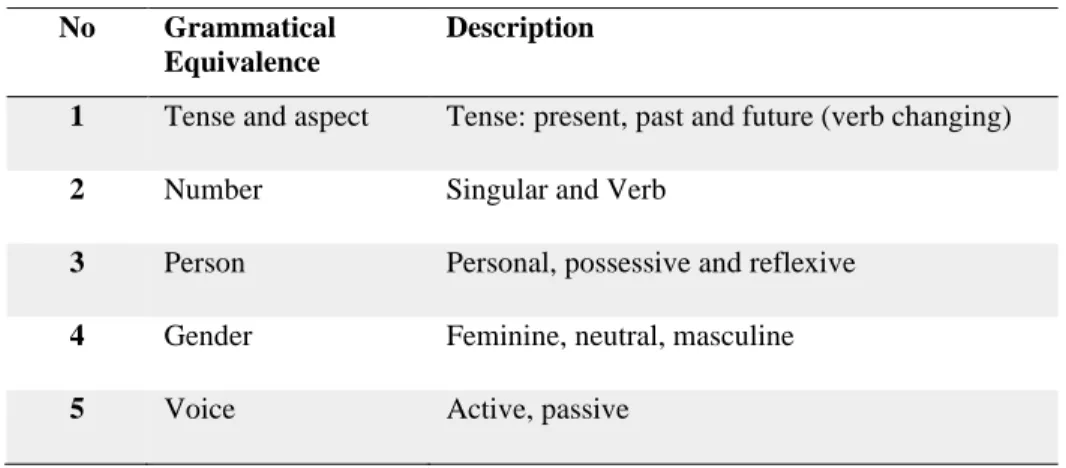
The assessment of these translations was based on Baker's (2018) indicators of grammatical equivalence (outlined in Table 1), focusing on identifying and evaluating the nature and frequency of translation errors.
This methodological framework aimed to shed light on the specific grammatical hurdles faced by students and their implications for translation teaching practices.
Table 2.1. The Indicator of Grammatical Equivalence No Grammatical
Equivalence
Description
1 Tense and aspect Tense: present, past and future (verb changing)
2 Number Singular and Verb
3 Person Personal, possessive and reflexive
4 Gender Feminine, neutral, masculine
5 Voice Active, passive
To analyze the data, the researcher employed Corder (1975) and James’s (2013) Error Analysis. This method was utilized to conduct a comprehensive error analysis.
While numerical analysis was applied to quantify student errors, its primary function was to aid in the identification of deviations. The analytical process encompassed multiple stages, including error identification, classification, and error specification within the students' translation projects, guided by grammatical equivalence indicators.
Error identification entailed recognizing all deviations made by students during the translation of English text. Subsequently, errors were categorized into distinct types, including omission, addition, misformation, and misordering, based on grammatical equivalence in terms of tense, aspect, number, person, gender, and voice. Error specification involved providing a detailed description of each error, including the underlying reasons for its occurrence.
This study acknowledges student errors as an integral facet of their learning journey, considering the inherent fallibility of human beings. This approach aligns with principles of integrity and accountability. Notably, this methodology is favored over approaches reliant solely on machine translation and artificial intelligence, as it
acknowledges the potential for errors to impede student progress.
3. Results
The study aims to address the research question of which grammar mistakes are made by students when translating English text into Indonesian. The research gathered data from the translation output of students, who translated a news text from English to Indonesian, which were then analyzed qualitatively. Although numbers were used to categorize errors, it was solely for the purpose of organizing them. The news article titled
"Indonesian Police Fired Tear Gas to Disperse Protestants at Parliament" contained six complex sentences, which may contain errors. The research project involved 70 students who produced approximately 420 outputs of Indonesian translations, which the researcher analyzed.
Based on data analysis and interpretation, the findings indicate that certain students made grammatical errors across four categories: omission, addition, misformation, and misordering. These errors were observed in five grammatical categories proposed by Baker (2018), including tense and aspect, number, person, voice, and modifier-head in noun clauses. Figure 3.1 illustrates these findings.
41 Figure 3.1. The Research Result
Figure 3.1 presents a detailed examination of the research findings concerning grammatical equivalence errors made by students during their English-to- Indonesian translation projects. The analysis reveals several notable patterns and insights into the nature of these errors:
a) Tense and Aspect Errors (46%): The most prevalent category of errors is related to tense and aspect, accounting for a substantial 46% of the observed errors. Within this category, students often struggled with maintaining accurate tense and aspect equivalence between the source and target languages.
Common errors included both omissions and additions of tense markers, leading to inconsistencies in the translated texts. This highlights the challenges students faced in conveying the temporal nuances of the original English texts accurately.
b) Numerical Errors (24%): The second most common category of errors, constituting 24% of the total errors, involved numerical mistranslations. Students frequently encountered difficulties in accurately translating English numbers, leading to errors in determining singular or plural objects in the target language. These errors underscore the importance of precision when handling numerical data in translation.
c) Pronoun Reference Errors (12%): Pronoun reference errors make up the third most frequent category, with a frequency of 12%. These errors stemmed from inaccuracies in translating English pronoun references, resulting in incorrect person referents in the Indonesian translations. Such errors not only affect grammatical accuracy but also impact
the overall coherence and clarity of the translated texts.
d) Language Mistranslation (10%): Approximately 10% of the errors were attributed to language mistranslation. In this category, students struggled with accurately translating English language, which encompasses idiomatic expressions, colloquialisms, and language-specific nuances. These challenges highlight the complexity of language translation and the need for a deep understanding of both source and target languages.
e) Modifier-Head Organization Errors (8%): The final category relates to errors in organizing the modifier- head relationship within noun clauses, accounting for 8% of the observed errors. Students faced difficulties in structuring noun clauses correctly, leading to syntactic inaccuracies in their translations. This category highlights the importance of syntactic precision in maintaining grammatical equivalence.
It is crucial to note that many sentences and utterances contained multiple errors, underscoring the intricate nature of translation challenges faced by students. To provide a more comprehensive understanding, each sentence will be individually analyzed, with data presented for each grammatical category and corresponding error type. This detailed analysis aims to illuminate specific areas where students encountered challenges and made errors during their translation projects, contributing to a deeper comprehension of the complexities involved in translation tasks.
46%
24%
12%
10%8%
Findings
Tense and aspect English Number Pronoun English word Modifier-head
42
3.1 Errors of Tense and Aspect
The section examines the frequent grammatical errors in translation that students commit, particularly in tense
and aspect within a single sentence. The focus here is on tense and aspect errors, as outlined in the following analysis:
Table 3.1. Omission Errors of Tense and Aspect
No Source Text Tense and
Aspect Errors
Overall Amount MF MO
1 Indonesian police fired tear gas… on Monday
44 0 0 0
2 The rally was one of several across Indonesia on Monday…
34 0 0 0
3 Jakarta police Chief Fadil Imran told a news conference….
44 0 0 0
4 …a university lecturer who was participating in the demonstration sustained
47 0 0 0
5 …a “non-student” group battered and stomped on him..
52 0 0 0
6 Six police officers who tried to help… 55 0 0 0
7 …the lecturer were also injured… 54 0 0 0
8 …he added. 45 0 0 0
9 …some influential political figures publicly backed it.
56 0 0 0
10 …since he was first elected in 2014… 45 0 0 0
11 …a recent survey by pollster Saiful Mujani Research and Consulting showed…
45 0 0 0
12 …a university lecturer who was participating in the demonstration…
23 0 0 0
13 The idea of extending his tenure …has gained momentum lately…
15 0 0 0
14 Jokowi has retained a high approval rating since he…
17 0 0 0
15 He has been criticized for his ambiguous stance on the issue..
23 0 0 0
16 …hundreds of students wearing neon jackets had marched towards parliament…
34 0 0 0
(Note: O = Overall, A = Amount, MF = Missing "Telah" for Past Tense, MO = Missing "Sudah" for Past Tense)
43 The data presented in Table 3.1 The table categorizes
errors across 16 different source texts, each illustrating a scenario where the translator failed to correctly apply tense and aspect markers in the translation process. It meticulously outlines the omission errors concerning tense and aspect, which are paramount for conveying temporal relations and nuances in translation. The analysis here is centered on a selection of sentences to illustrate the frequent grammatical missteps students encounter, particularly in the realm of tense and aspect within a single sentence framework.
a) Sentence Analysis: The student omitted critical markers of past tense and aspect, failing to convey the completed action of the police firing tear gas and water cannon. In Indonesian, the absence of "telah" or
"sudah" removes the emphasis on the action's completion, which is vital for accurate temporal representation. The refined translation underscores the event's completion and its contextual timing, enhancing the translation's fidelity to the source text.
b) Sentence Analysis: This datum reveals the student's struggle with English's nominal sentence structure and the corresponding expression in Indonesian. The lack of a temporal marker for the rally that already took place, and the omission of "telah" in "had marched," dilutes the temporal precision and the past action's completed nature. A more nuanced translation would restore these temporal markers, aligning the Indonesian version closer to the English source's temporal framework.
c) Sentence Analysis: Here, the omission of past tense markers for several verbs and the past continuous tense in "was participating" indicates a fundamental misunderstanding of how to convey completed actions and ongoing actions in the past in Indonesian.
Incorporating "telah" or "sudah" and correctly translating the continuous aspect offers a more nuanced understanding of the events' temporal sequencing and completeness.
The analysis of Table 3.1 highlights the complex interplay between linguistic structures and translation practices. It underscores the need for a nuanced approach to teaching and translating tense and aspect, tailored to address the specific challenges posed by the source and target languages' grammatical systems. By focusing on these areas, educators and translators can enhance the accuracy and expressiveness of translations, ensuring they more faithfully convey the original text's temporal and aspectual nuances.
The consistent omission of temporal markers across the translations suggests a systemic gap in the students' understanding of tense and aspect transfer from English to Indonesian. This gap not only affects the accuracy of the translations but also reflects broader challenges in grasping the nuances of aspectual distinctions and their implications for interlingual representation.
This analysis reveals a critical area for pedagogical intervention, emphasizing the need for targeted instruction on tense and aspect in translation. The unique findings suggest that students may benefit from explicit teaching on the use of temporal markers in Indonesian and their counterparts in English, particularly in the context of translation exercises. Furthermore, this insight opens avenues for further research into cognitive processes underlying language transfer, specifically how students navigate temporal and aspectual distinctions between languages.
This finding underscores the intricate interplay of tense and aspect in translation, highlighting the necessity for nuanced linguistic education that bridges the gap between theoretical knowledge and practical application in translation. Through such pedagogical efforts, students can develop a more refined understanding of linguistic nuances, thereby enhancing their translation competence and contributing to the broader field of linguistics and translation studies.
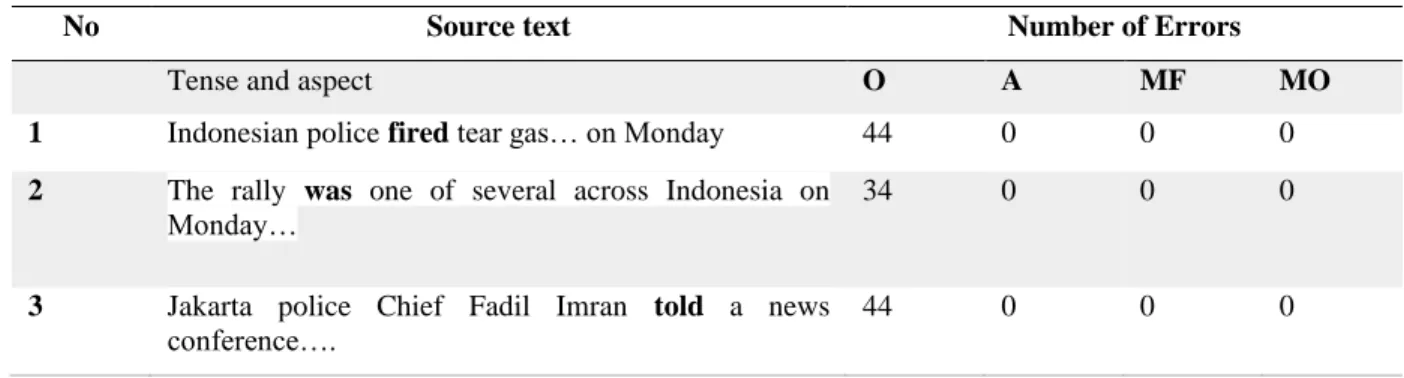
Table 3.2. Omission Errors of Tense and Aspect
No Source text Number of Errors
Tense and aspect O A MF MO
1 Indonesian police fired tear gas… on Monday 44 0 0 0
2 The rally was one of several across Indonesia on Monday…
34 0 0 0
3 Jakarta police Chief Fadil Imran told a news conference….
44 0 0 0
44
No Source text Number of Errors
4 …a university lecturer who was participating in the demonstration sustained
47 0 0 0
5 …a “non-student” group battered and stomped on him..
52 0 0 0
6 Six police officers who tried to help… 55 0 0 0
7 …the lecturer were also injured… 54 0 0 0
8 …he added. 45 0 0 0
9 …some influential political figures publicly backed it. 56 0 0 0
10 …since he was first elected in 2014… 45 0 0 0
11 …a recent survey by pollster Saiful Mujani Research and Consulting showed…
45 0 0 0
12 …a university lecturer who was participating in the demonstration…
23 0 0 0
13 The idea of extending his tenure …has gained momentum lately…
15 0 0 0
14 Jokowi has retained a high approval rating since he… 17 0 0 0
15 He has been criticized for his ambiguous stance on the issue..
23 0 0 0
16 …hundreds of students wearing neon jackets had marched towards parliament…
34 0 0 0
The table 3.2 on Omission Errors of Tense and Aspect, we see a more streamlined representation focusing solely on the errors related to tense and aspect without the breakdown of specific types of omissions (i.e., "telah" and "sudah") as was previously presented.
This table seems to emphasize the overall challenge in accurately translating tense and aspect from English into another language, likely Indonesian, given the context provided.
This omission leads to translations that lack temporal precision, failing to convey the completion of actions that have clear consequences for the narrative context. For example, the failure to include "telah" in translations of actions like the police firing tear gas ("Polisi Indonesia telah menembakkan gas air mata") significantly alters the temporal framework, suggesting a need for enhanced pedagogical focus on the function and application of aspectual markers in Indonesian.
3.1.1 Omission in Past Continuous Tense
The analysis indicates a singular error in translating the past continuous tense, highlighting a gap in understanding how to convey ongoing past actions in Indonesian. The omission of "sedang" before verbs to indicate ongoing action at a past point reflects a misunderstanding of the dynamic nature of such actions and their relevance in narrative sequences. This oversight underscores the importance of distinguishing between actions completed in the past and those ongoing at a specific past moment, a distinction crucial for nuanced translation.
3.1.2 Present Perfect Tense Errors
The three errors identified in translating the present perfect tense underscore a broader challenge in capturing the essence of actions that have relevance to the present moment. The omission of aspectual markers like "telah"
in contexts that require an emphasis on the current relevance of past actions (e.g., "Jokowi telah
45 mempertahankan") points to a need for a deeper
understanding of how temporal perspectives are encoded differently across languages. These findings suggest that students may benefit from targeted instruction on the implications of aspectual choices for narrative coherence and temporal alignment.
3.1.3 Past Perfect Tense Error
The single error involving the past perfect tense highlights a specific challenge in conveying sequences of events where one action precedes another in the past. The omission of "telah" in contexts requiring the past perfect tense (e.g., in "had marched") reveals a nuanced gap in understanding how English and Indonesian differ in expressing temporal sequences. Addressing this error requires a focused approach to teaching the narrative value of the past perfect tense and its equivalents in Indonesian, emphasizing the importance of clear temporal sequencing in translation.
The analysis of tense and aspect errors in student translations not only highlights specific areas of difficulty but also offers insights into the cognitive and linguistic processes underlying second language acquisition. These findings underscore the importance of a nuanced approach to language teaching that goes beyond simple grammatical rules, aiming instead to cultivate a deep understanding of the temporal and aspectual systems of both the source and target languages.
Pedagogically, this analysis suggests the need for curricular innovations that integrate explicit instruction on tense and aspect with practical translation exercises designed to reinforce these concepts. Such an approach could include comparative analyses of tense and aspect systems in English and Indonesian, targeted exercises on the use of aspectual markers, and reflective translation tasks that encourage students to consider the temporal implications of their linguistic choices.
In conclusion, the comprehensive re-examination of the data on tense and aspect errors reveals significant educational opportunities. By addressing the identified gaps in understanding and application, language educators can better prepare students to navigate the complexities of translation, ultimately enhancing their ability to convey nuanced temporal relationships and aspectual distinctions across languages.
3.2 Omission Errors of Number
The analysis of omission errors concerning number in student translations from English to Indonesian highlights critical challenges in conveying numerical precision and plurality. This section aims to offer a refined interpretation of these errors, emphasizing their implications for translation accuracy and linguistic nuance. To summarise the deviations in grammatical categories relating to English numbers, based on the type of errors made by students, please refer to Table 3.3.
Table 3.3. Analysis of Omission Errors in Tense and Aspect
No Source text Amount of Errors
O A MF MO
1 …to disperse hundreds of university students protesting …
35 0 0 0
2 …protesting high cooking oil prices and a mooted extension of President…
45 0 0 0
3 …protesting high cooking oil prices and a mooted extension of President…
47 0 0 0
4 The rally was one of several across Indonesia on Monday
32 0 0 0
5 …where hundreds of students wearing neon jackets had marched towards parliament…
42 0 0 0
6 …where hundreds of students wearing neon jackets had marched towards parliament…
42 0 0 0
7 …parliament to complain about rising goods costs and the prospect of the president…
43 0 0 0
46
No Source text Amount of Errors
O A MF MO
8 Jakarta police Chief Fadil Imran told a news conference that a university lecturer...
37 0 0 0
9 Jakarta police Chief Fadil Imran told a news conference that a university lecturer…
45 0 0 0
10 …who was participating in the demonstration sustained “grave” injuries after a “non-student” group battered…
50 0 0 0
11 …who was participating in the demonstration sustained “grave” injuries after a “non-student”
group battered…
60 0 0 0
12 Six police officers who tried to help the lecturer 43 0 0 0 13 Jokowi has retained a high approval rating.. 33
14 …but a recent survey by pollster Saiful Mujani Research…
21 0 0 0
15 …showed more than 70% of Indonesians reject the extension plan.
33 0 0 0
(Note: O = Overall frequency, A = Amount, MF = Missed translation of "Telah" for Past Tense, MO = Missed translation of "Sudah" for Past Tense)
Table 3.3, highlights a series of entries that detail the frequency of omission errors in translating tense and aspect from English to Indonesian. The data indicates that students frequently failed to accurately translate numerical indicators, both singular and plural, from English to Indonesian. This oversight not only affects the accuracy of the translations but also impacts the clarity and specificity of the information being conveyed. The analysis below revisits selected sentences to illustrate these issues more clearly.
a) Sentence Analysis: The omission of "ratusan" to indicate the plural form 'hundreds' and the singular indicator "satu" or "sebuah" for 'a mooted extension' reflects a gap in understanding how English numerical indicators translate into Indonesian. The corrected translation incorporates these elements, ensuring the number of students and the singular nature of the extension are clearly communicated.
b) SentenceAnalysis: Similar to the first sentence, the error in translating "one of several" as merely "suatu unjuk rasa" and the omission of plural markers for 'hundreds' and suffixes indicating plurality in 'neon jackets' and 'goods costs' demonstrate a misunderstanding of how to convey quantity and specificity in Indonesian. The revised translation addresses these omissions, enhancing the clarity and fidelity of the translation to the source text.
c) Sentence Analysis: The neglect of singular markers like "seorang" for 'a university lecturer' and "sebuah"
for 'a news conference', as well as plural markers in 'grave injuries' and 'six police officers', indicates a broader challenge in translating numerical and quantity indicators accurately. The corrected translation reintroduces these markers, ensuring that the singularity and plurality are correctly represented in Indonesian.
d) Sentence Analysis: The omission of "sebuah" to indicate singular objects like 'a recent survey' and the failure to use "lebih dari 70% orang-orang Indonesia"
to reflect the plural 'more than 70% of Indonesians' show a similar pattern of errors. The refined translation corrects these mistakes, thereby improving the translation's accuracy and alignment with the source text.
The analysis of omission errors related to number underscores the necessity for a nuanced understanding of numerical expressions in translation. These errors reveal not just linguistic gaps but also conceptual misunderstandings about the representation of quantity and specificity in Indonesian compared to English.
Pedagogically, this suggests the need for targeted instruction that focuses on numerical expressions' linguistic and cultural aspects. Educators should emphasize the importance of accuracy in translating
47 numbers, given their critical role in conveying specific
information and nuances in both source and target languages. Exercises that specifically target the translation of numerical indicators can help students develop a more nuanced understanding of these concepts.
In conclusion, the comprehensive re-examination of the data on number omission errors illuminates significant opportunities for pedagogical intervention.
By addressing the identified challenges, language educators can enhance students' ability to navigate the complexities of numerical expression in translation,
ultimately fostering greater linguistic precision and cultural awareness in their translations.
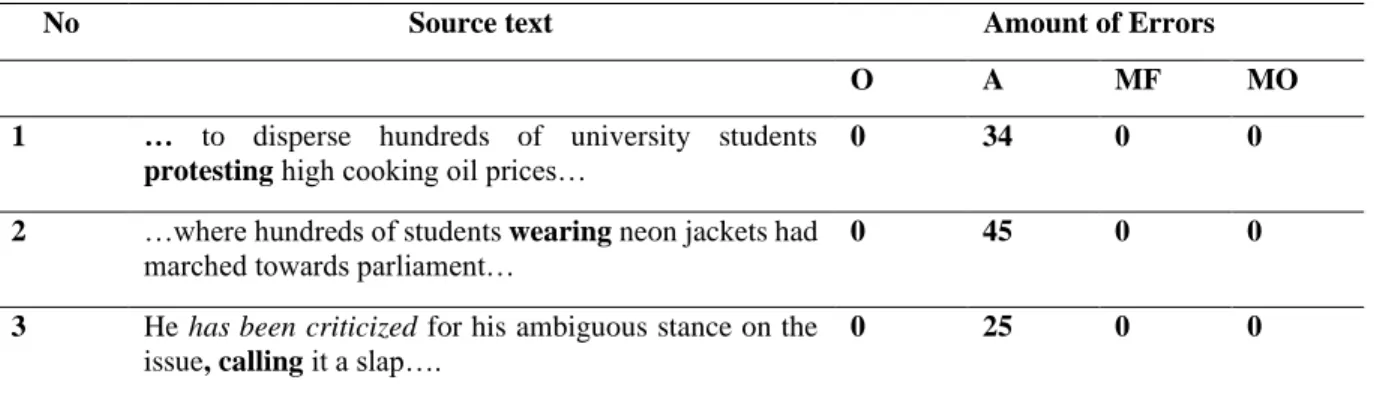
3.3 Addition Errors of Tense and Aspect The analysis of addition errors concerning tense and aspect in student translations from English to Indonesian offers valuable insights into the intricacies of translating continuous actions and embedded clauses. This section aims to provide an in-depth examination and interpretation of these errors, highlighting their impact on the equivalence and coherence of translations.
Table 3.4. Addition Errors of Tense and Aspect
No Source text Amount of Errors
O A MF MO
1 … to disperse hundreds of university students protesting high cooking oil prices…
0 34 0 0
2 …where hundreds of students wearing neon jackets had marched towards parliament…
0 45 0 0
3 He has been criticized for his ambiguous stance on the issue, calling it a slap….
0 25 0 0
Table 3.4, presents data related to errors made in the addition of tense and aspect markers in student translations from English to Indonesian. These errors are crucial as they can significantly affect the translated text's equivalence and coherence, especially in conveying continuous actions and the structure of embedded clauses. Unlike omission errors, addition errors involve the inappropriate insertion of elements that are not present in the original text, which can alter the intended meaning or temporal context.
The presence of unnecessary additions in translations, particularly the misuse of "sedang" to indicate ongoing action where it is not required, represents a fundamental misunderstanding of the grammatical and semantic functions of embedded clauses and participial adjectives in English and their equivalents in Indonesian.
a) Sentence Analysis: The student's addition of
"sedang" before "memprotes" reflects a misinterpretation of the participial adjective 'protesting' as a present continuous verb. In English, 'protesting' functions as an adjective describing the students, not as a verb indicating ongoing action. This unnecessary addition alters the intended meaning, suggesting that the action is currently in progress rather than describing the students. The correction removes "sedang," aligning the translation with the original sentence's intent and structure.
b) Sentence Analysis: Similar to the first sentence, the addition of "sedang" before "memakai jaket neon"
mistakenly interprets 'wearing' as a present continuous verb rather than an adjective describing the students. This error not only disrupts the grammatical coherence of the translation but also misrepresents the temporal aspects of the source text.
The corrected version omits "sedang," accurately reflecting the adjective's modifying function.
c) Sentence Analysis: The translation error involving the addition of "sedang" before translating 'calling' incorrectly interprets the verb's participial use as a present continuous action. In the source text, 'calling' functions as part of an adjective clause that describes the nature of the criticism. The correction involves removing "sedang," thereby restoring the intended meaning and improving the translation's fidelity to the source text.
These addition errors highlight a critical area for linguistic education, particularly in the translation of participles and the interpretation of tense and aspect between English and Indonesian. The incorrect use of
"sedang" in these contexts suggests a need for a deeper understanding of how actions and states are expressed differently across languages.
48 Educationally, this analysis underscores the
importance of teaching not just the direct equivalents of tense and aspect between English and Indonesian but also the nuanced ways in which actions and descriptions are embedded within sentences. Instruction should focus on the distinctions between participial adjectives and verbs in continuous tenses, emphasizing the importance of context in determining the appropriate translation.
Pedagogical strategies could include comparative analysis of sentence structures in English and Indonesian, targeted exercises on participial adjectives and their translations, and translation tasks that specifically address the challenge of embedded clauses and tense aspect nuances.
This findings detailed examination of addition errors in tense and aspect reveals significant opportunities for improving translation accuracy and understanding
between English and Indonesian. By addressing these specific challenges, educators can enhance students' ability to navigate the complex grammatical landscapes of both languages, leading to more nuanced and faithful translations.
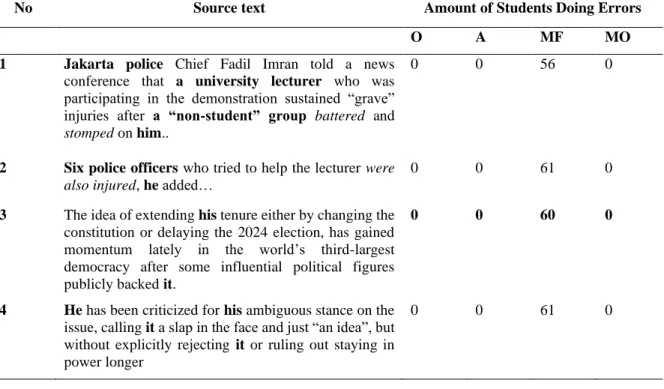
3.4 Misformation Errors of English Person The analysis of misformation errors related to the use of English personal pronouns in student translations from English to Indonesian provides a crucial lens through which to examine the challenges of accurately conveying person distinctions across languages. This section offers an in-depth examination and interpretation of these errors, focusing on their implications for the clarity and accuracy of translations. Table 3.5 presents a summary of grammatical category deviations in English pronoun or person translations committed by students.
Table 3.5. Misformation Errors of English Person
No Source text Amount of Students Doing Errors
O A MF MO
1 Jakarta police Chief Fadil Imran told a news conference that a university lecturer who was participating in the demonstration sustained “grave”
injuries after a “non-student” group battered and stomped on him..
0 0 56 0
2 Six police officers who tried to help the lecturer were also injured, he added…
0 0 61 0
3 The idea of extending his tenure either by changing the constitution or delaying the 2024 election, has gained momentum lately in the world’s third-largest democracy after some influential political figures publicly backed it.
0 0 60 0
4 He has been criticized for his ambiguous stance on the issue, calling it a slap in the face and just “an idea”, but without explicitly rejecting it or ruling out staying in power longer
0 0 61 0
Table 3.5 presents data related to errors made in the addition of tense and aspect markers in student translations from English to Indonesian. These errors are crucial as they can significantly affect the translated text's equivalence and coherence, especially in conveying continuous actions and the structure of embedded clauses. Unlike omission errors, addition errors involve the inappropriate insertion of elements that are not present in the original text, which can alter the intended meaning or temporal context.
Misformation errors occur when incorrect morphemes or words are used in translations, leading to inaccuracies in conveying the intended meanings. In the context of personal pronoun formation, such errors can significantly alter the interpretation of text by obscuring or misrepresenting the relationships and actions of the subjects involved.
a) Sentence Analysis: The translation errors involving the pronouns "he" and "him" reflect a common challenge in maintaining clear referential coherence
49 in translations. The incorrect use of "nya" to translate
these pronouns without explicitly identifying their antecedents leads to ambiguity. Correcting these errors involves ensuring that pronouns are accurately translated in a manner that clearly indicates to whom they refer, enhancing the clarity and coherence of the translation.
b) Sentence Analysis: The misinterpretation of "his" in the translation process illustrates a similar challenge.
The use of "nya" for "his" without specifying that it refers to the President's tenure introduces ambiguity into the translation. The corrected translation explicitly identifies the subject, thereby maintaining the referential clarity present in the source text.
c) Sentence Analysis: This sentence further exemplifies the difficulty students face with pronoun reference in translation. The indiscriminate translation of "he,"
"his," and "it" as "nya" obscures the relationships and actions described in the source text. A more accurate translation would ensure that each pronoun is clearly linked to its respective antecedent, thereby preserving the semantic integrity of the original sentence.
The identified misformation errors highlight a critical aspect of translation that extends beyond mere linguistic equivalence to encompass the pragmatic and referential dimensions of language use. These errors underscore the importance of understanding the functional roles that pronouns play in establishing coherence and reference in text.
Educationally, this analysis suggests a need for targeted instruction focused on the nuances of pronoun use and reference in both English and Indonesian. Such
instruction should emphasize the importance of maintaining referential clarity and coherence in translation, particularly in languages with differing pronoun systems and referential practices.
Strategies for addressing these challenges could include exercises designed to enhance students' abilities to track pronoun references across sentences and paragraphs, as well as translation tasks that require the explicit identification of antecedents for all pronouns.
Additionally, comparative studies of English and Indonesian pronoun systems could help students appreciate the complexities of translating personal references accurately.
These findings highlights the misformation errors related to English personal pronouns in translation reveals significant challenges and opportunities for language learning and instruction. By addressing these errors through focused educational interventions, educators can help students develop a more nuanced understanding of pronoun use and reference in translation, ultimately improving their ability to convey meaning accurately and coherently across languages.
3.5 Misformation Errors of English Voice
The analysis of misformation errors of English voice in student translations reveals a fundamental misunderstanding of how to accurately translate between active and passive voices. This section delves into the implications of these errors for translation accuracy and linguistic nuance. To summarize the grammatical deviations in English voice committed by students, Table 3.6 is presented.
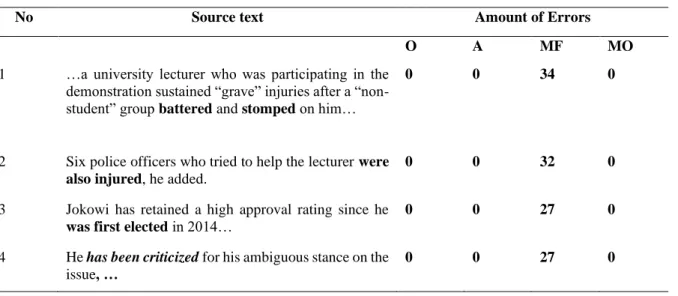
Table 3.6. Misformation Errors of Voice
No Source text Amount of Errors
O A MF MO
1 …a university lecturer who was participating in the demonstration sustained “grave” injuries after a “non- student” group battered and stomped on him…
0 0 34 0
2 Six police officers who tried to help the lecturer were also injured, he added.
0 0 32 0
3 Jokowi has retained a high approval rating since he was first elected in 2014…
0 0 27 0
4 He has been criticized for his ambiguous stance on the issue, …
0 0 27 0
50 Table 3.6, provides insight into a specific type of error
encountered in student translations concerning the representation of grammatical person in English.
Misformation errors occur when the translator inaccurately represents the grammatical person from the source text in the target language, potentially altering the meaning or focus of the sentence. Misformation errors related to voice involve incorrect translations of sentences from active to passive voice or vice versa.
a) Sentence Analysis: The translation of active voice verbs "battered" and "stomped" into passive forms
"dipukul" and "diinjaknya" introduces inaccuracies in the depiction of actions within the sentence.
Similarly, translating "were also injured" as "dilukai"
instead of maintaining the passive voice further distorts the original sentence's meaning. Correcting these errors involves ensuring that the voice of the verb in the translation matches that of the source text, thereby preserving the original's intent and clarity.
b) Sentence Analysis: The error in translating the passive voice "was first elected" into the active voice
"memilih" misrepresents the subject's role in the action. The correct translation should maintain the passive construction to accurately reflect the action's reception by the subject, as indicated by the original English sentence.
c) Sentence Analysis: Similar to the previous examples, translating "has been criticized" from passive to active voice changes the focus from the subject's reception of criticism to an incorrect depiction of the subject as the critic. Correcting this error requires a return to the passive voice to align the translation with the source text's intended meaning.
These misformation errors highlight the critical importance of understanding and accurately translating the voice of verbs between English and Indonesian. The challenges encountered by students in these translations underscore a need for focused instruction on the
grammatical and semantic differences between active and passive voices in both languages.
Educationally, addressing these errors calls for targeted teaching strategies that emphasize the role of voice in shaping meaning within sentences. Instruction might include comparative analysis of active and passive constructions in English and Indonesian, exercises designed to practice translating between voices, and detailed feedback on translation exercises that specifically focus on voice accuracy.
Moreover, integrating lessons on the thematic roles of subjects and objects in sentences could deepen students' understanding of how voice changes affect meaning.
Such instruction could enhance students' ability to preserve the original text's intent and clarity, thereby improving overall translation quality.
In conclusion, the examination of misformation errors of English voice in student translations reveals significant opportunities for enhancing linguistic understanding and translation skills. By focusing on the accurate representation of voice, educators can help students navigate the complexities of translation more effectively, leading to translations that faithfully convey the original text's meaning and nuances.
3.6 Misordering Errors of English Modifier- Head
The analysis of misordering errors related to the English modifier-head structure in student translations highlights a critical aspect of linguistic accuracy: the correct order of modifiers and heads in noun phrases.
Such errors can significantly distort the original meaning by altering the grammatical relationship between the modifying elements and the nouns they describe. This section delves into the implications of these errors and proposes educational interventions to address them.
To summarize the grammatical deviations in English modifier-head categories made by students during translation, please see Table 3.7.
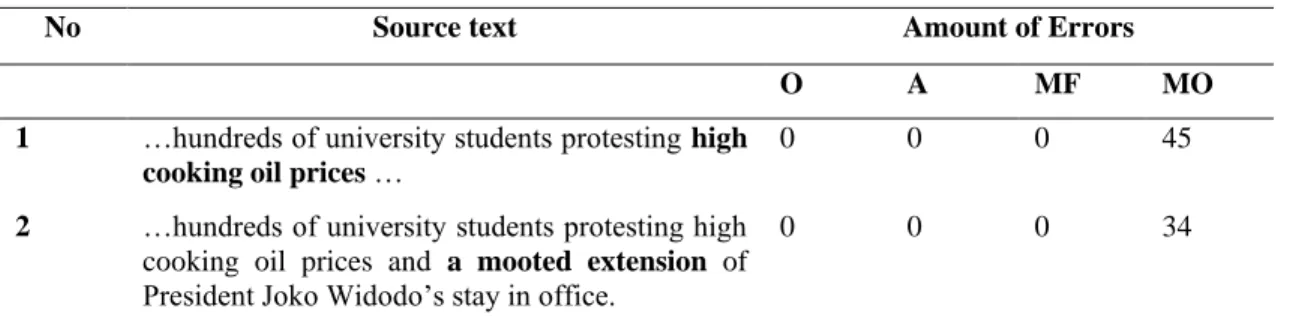
Table 3.7. Misformation Errors of Modifier-Head
No Source text Amount of Errors
O A MF MO
1 …hundreds of university students protesting high cooking oil prices …
0 0 0 45
2 …hundreds of university students protesting high cooking oil prices and a mooted extension of President Joko Widodo’s stay in office.
0 0 0 34
51
No Source text Amount of Errors
3 Jokowi has retained a high approval rating since he was first elected in 2014...
0 0 0 46
4 …but a recent survey by pollster Saiful Mujani Research and Consulting showed more than 70%
of Indonesians reject the extension plan.
0 0 0 23
Table 3.7, focuses on the translation errors related to the modifier-head structure in English sentences. The table aims to quantify and analyze the errors students make in translating English modifier-head structures into another language, presumably Indonesian, based on the context provided. These errors are particularly important to address because they can significantly impact the clarity and accuracy of the translated text by misrepresenting the grammatical relationship between modifiers (adjectives, noun modifiers, prepositional phrases) and the nouns they describe.
Misordering errors occur when the sequence of modifiers and the nouns they describe (the heads) are inaccurately translated, leading to a potential misinterpretation or loss of the original text's meaning.
These errors are particularly significant in translation because they can alter the nuanced relationship between descriptive elements and the entities they modify.
a) Sentence Analysis: The student's translation of "high cooking oil prices" as "kenaikan harga minyak goreng" illustrates a misordering error where the modifier-head structure of the English noun phrase is not preserved in the translation. In English, the modifier "high" directly describes the noun "prices,"
and this relationship should be maintained in the translation to accurately reflect the original meaning.
The correct translation should clearly indicate that it is the prices of cooking oil that are high, not merely an increase in oil prices.
b) Sentence Analysis: Similarly, translating "a high approval rating" as "tingginya tingkat kepercayaan"
shows a misunderstanding of how to accurately convey the modifier-head relationship in Indonesian.
The modifier "high" should directly affect the noun
"rating," and the translation should reflect this structure to preserve the original's intent. The corrected translation needs to ensure that "approval
rating" is understood as the entity being described as
"high," thereby maintaining the semantic integrity of the phrase.
These misordering errors underscore the importance of understanding and applying the correct syntactic structures when translating between English and Indonesian. The challenges highlighted by these errors suggest a need for focused instruction on syntactic accuracy and the preservation of modifier-head relationships in translation.
Educationally, addressing these errors involves teaching students about the syntactic differences between English and Indonesian, especially regarding the placement of descriptive elements. Instruction should emphasize the importance of maintaining the original phrase's meaning by accurately translating the relationships between modifiers and heads.
Strategies for improving students' abilities in this area could include exercises that focus on identifying and translating English noun phrases into Indonesian while preserving the modifier-head structure. Additionally, comparative analysis of syntactic structures in both languages could help students better understand the nuances of accurate translation.
This finding highlights the examination of misordering errors related to the English modifier-head structure in translations highlights a key area for improvement in translation practice. By focusing on the accurate representation of syntactic relationships, educators can help students develop more precise and faithful translations, thereby enhancing their overall linguistic competence and translation skills.
Furthermore, on the basis of this finding, a comparison of English and Indonesian grammatical categories can be made, as it is in Table 3.8.
52 Table 3.8. Grammatical Categories Comparison
No English Indonesian
1
recognizes tense and aspect indicated by verbal inflection, making it a language with tense
lacks tense and aspect in its grammatical categories due to being a tenseless language. However, it utilizes lexical markers, such as 'sudah' or 'telah' for past tense, 'sedang' for present progressive, and 'akan' for future tense.
2 has a singular and plural distinction for numbers like "a" and "an," as well as the use of suffixes "-s/-es." Integrate with tense and aspect for subject-verb agreement.
does not have numerical markers for grammatical categories, but rather uses lexical markers such as satu (one), beberapa (several), and banyak (many), as well as suffix-an (for multiples of hundreds) and repetition.
3 incorporates several categories for referring to people, including personal pronouns, possessive pronouns, and reflexive nouns.
encompasses the usage of first, second, and third- person pronouns, including a distinct inclusive and exclusive form of "we".
4 generally follows a pattern for voice that aligns with tense and aspect. The construction "be plus past participle" is often used.
verbs have different prefixes to indicate the voice, with di- for passive voice (intentionally), ter- for unintentional actions, and me- and ber- for active voice.
5 recognizes gender in certain lexical categories indicated by suffixes, such as policeman vs policewoman and actor vs actress. It also distinguishes between he and she pronouns to indicate gender.
distinguishes between genders using different suffixes such as pa vs pi. –wan for males and -wati for females., muslimin is used for addressing men while muslimat is used for men.
Table 3.8, offers an insightful comparison between English and Indonesian grammatical structures, highlighting significant differences in how these two languages handle various linguistic elements.
Tense and Aspect
• English: Utilizes verbal inflection to indicate tense and aspect, which plays a critical role in conveying temporal relationships within discourse.
• Indonesian: Operates without grammatical tense and aspect, relying instead on lexical markers such as
"sudah," "telah," "sedang," and "akan" to express time relations.
This difference poses challenges for translation, especially for students who must learn to interpret the temporal nuances of English through the use of Indonesian lexical markers, potentially leading to errors in conveying the precise temporal context of actions.
Number
• English: Distinguishes between singular and plural forms through articles ("a," "an") and suffixes ("-s," "-
es"), integrated with tense and aspect for subject-verb agreement.
• Indonesian: Does not use numerical markers in grammatical structure, instead employing words like
"satu," "beberapa," "banyak," suffix "-an," and repetition to express quantity.
The lack of grammatical number in Indonesian can result in misinterpretation or misrepresentation of plural forms when translating from English, as students may overlook or inaccurately apply these markers.
Person or Pronoun
• English: Has a variety of categories for referring to people, including personal, possessive, and reflexive pronouns.
• Indonesian: Uses first, second, and third-person pronouns, with the unique distinction of inclusive and exclusive "we."
Students translating between English and Indonesian must navigate these differences, particularly the inclusive and exclusive forms of "we," which have no direct
53 equivalent in English, potentially leading to confusion or
ambiguity in translation.
Voice
• English: Voice is often indicated by the construction
"be plus past participle" for passive forms.
• Indonesian: Indicates voice through prefixes like "di-
" for passive and "me-" and "ber-" for active voices.
The structural differences in expressing voice between the two languages can result in misformation errors during translation, as students may struggle with the use of prefixes in Indonesian to accurately convey the voice of the English source text.
Modifier-Head in Noun Phrases
• English: Generally, follows a modifier-head pattern in noun phrases.
• Indonesian: The order of modifiers and heads can vary, but typically it may follow a head-modifier structure in many contexts.
Misordering errors can occur as students translate complex noun phrases from English to Indonesian, failing to adjust the order of elements to match the syntactic norms of the target language.
Gender
• English vs. Indonesian: Both languages recognize gender in lexical categories, though the mechanisms and markers for indicating gender differ.
While no specific errors related to gender were identified in the student translations, the potential for confusion exists, particularly in personal pronouns and other gender-specific lexical items. The differences highlighted between English and Indonesian grammatical categories underscore the need for targeted instructional strategies that address these specific areas.
4. Discussion
The exploration of grammatical equivalence errors in student translations from English to Indonesian is a pivotal area of research within the broader context of English as a Foreign Language (EFL) learning challenges. This study aims to dissect these errors to enhance our comprehension of the specific hurdles encountered by Indonesian learners. Understanding these errors is crucial, as it not only illuminates the complexities of language acquisition but also the particular nuances of the Indonesian context. Such insights are instrumental in devising targeted educational strategies that address the linguistic and cognitive gaps faced by learners. This research, therefore, serves as a vital contribution to the ongoing dialogue on language
education and acquisition, offering a nuanced perspective on the challenges specific to the Indonesian EFL learners (Bybee, 2006; Sneddon et al., 2012).
To delve deeply into the findings, we uncover significant insights across three primary areas: tense and aspect errors, numerical markers, and voice translation issues, each with its own implications and contextual challenges.
4.1 Tense and Aspect Errors
The acquisition of tense and aspect poses significant challenges for students, particularly evident in translating between English and Indonesian. The contrast in how each language denotes time—English with specific tense forms and Indonesian primarily through context—
underscores a broader cognitive and linguistic challenge in language learning (Sneddon et al., 2012; Bybee, 2006).
This gap necessitates not only the learning of grammatical forms but also a fundamental shift in conceptualizing time within a language.
For example, the frequent mistranslation of "I ate" as
"Saya makan" instead of "Saya telah makan" exemplifies the practical ramifications of these challenges, illustrating the difficulty in applying English tense markers in Indonesian translations. Such errors indicate a profound misunderstanding of English verb inflections, as Indonesian does not inherently use tense markers to denote past actions (Sneddon, 2012; Sutrisno & Sari, 2020).
The cognitive process of understanding and applying temporal references is thus a universal challenge, exacerbated by cross-linguistic differences. Learners often omit necessary temporal markers like "telah" or
"sudah" in Indonesian, leading to inaccuracies that fail to convey the intended temporal nuances of the source text (Bybee, 2006; Sutrisno & Sari, 2020).
To mitigate these issues, it is essential to provide targeted instruction that emphasizes the cognitive foundations of tense and aspect. Educators should focus on the importance of temporal markers in both languages, incorporating practical translation exercises and comparative linguistic analyses to bridge theoretical knowledge with practical skills. This approach not only addresses the immediate challenges of tense and aspect translation but also contributes to a deeper understanding of language structure and cognitive processing (Sneddon et al., 2012; Bybee, 2006).
Recent research highlights the universality of these challenges, suggesting that the difficulties faced by Indonesian learners are indicative of broader cognitive and linguistic phenomena. Such findings underscore the necessity for teaching methodologies that are informed