Department Of Culture, Gianyar Regency In Collaboration With
Prof. Dr. I Wayan Pastika, M.S. (et al.)
BRANDING
OF GIANYAR REGENCY
Identity Representation of Kabupaten Seni and Kota Pusaka in the Local, National, and International Communication
Prof. Dr. I Wayan Pastika, M.S. (et al.) By
DEPARTMENT OF CULTURE, GIANYAR REGENCY IN COLLABORATION WITH
CENTER COR BALI STUDIES UDAYANA UNIVERSITY 2015
Identity Representation of Kabupaten Seni and Kota Pusaka in the Local, National, and International Communication
©2015 Department of Culture, Gianyar Regency
Authors
Prof. Dr. I Wayan Pastika, M.S.
Prof. Dr. Phil. I Ketut Ardhana, M.A.
Prof. Dr. I Wayan Dibia, M.A.
Drs. I Wayan Geriya
Dr. Drs. Anak Agung Gd. Raka, M.Si.
I Dewa Ngurah Anom, S.Pd., M.Pd.
Translator
Sang Ayu Isnu Maharani, S.S., M.Hum & friends Preprint
Slamat Trisila Publisher Pustaka Larasan
Jalan Tunggul Ametung IIIA/11B Denpasar, Bali 80116 Email: [email protected] DEPARTMENT OF CULTURE, GIANYAR REGENCY
in collaboration with
CENTER FOR BALI STUDIES UDAYANA UNIVERSITY First Edition: 2015
ISBN 978-602-1586-55-6
Prof. Dr. dr. I Ketut Suastika, Sp.PD. KEMD (Rektor Universitas Udayana)
A.A. Gde Agung Bharata, S.H.
(Bupati Gianyar) Officer In Charge:
Prof. Drs. I Made Suastra, M.A, Ph. D.
(Pembantu Rektor IV Unud) Drs. I Gusti Ngurah Wijana, M.M., M.Pd.
(Kepala Dinas Kebudayaan Kabupaten Gianyar) Organizing Committe :
Prof. Dr. I Wayan Pastika, M.S.
(Head)
Prof. Dr. Phil. I Ketut Ardhana, M. A.
(Secretary) Dra. Sulanjari, M. A.
(Finance) Members:
Ir. Wayan Suwija, M.M.
Dra. Ida Ayu Made Adnyani, M.Si.
A.A. Gde Putra Parwata, S.Sn.
I Gusti Nyoman Kodim, S.S.Kar.
I Wayan Darya, S.Sn.
I Gusti Putu Gotama, S.Sn.
Dr. I Ketut Setiawan Dra. A.A.A. Rai Wahyuni, M. Si.
Drs. Ida Bagus Gede Putra, M. Hum.
I Wayan Ery Setiawan, S.H.
Fransiska, S.S.
Ida Bagus Gede Baskara Cokorda Gde Eka Badrayana
Ni Luh Nyoman Juliari Team of Authors:
Prof. Dr. I Wayan Pastika, M.S.
Prof. Dr. Phil. I Ketut Ardhana, M.A.
Prof. Dr. I Wayan Dibia, M.A.
Drs. I Wayan Geriya
Dr. Drs. Anak Agung Gd. Raka, M.Si.
I Dewa Nyoman Anom, S.Pd., M.Pd.
Prof. Dr. Ir. I Wayan Windia, S.U.
Prof. Dr. I Nyoman Wedakusuma, M. S.
Drs. I Wayan Muliarsa, Ir. Ketut Witarka Yudiata, M.T.
Ir. I Wayan Gomudha, M.T.
Ir. I Gusti Made Rena Yoke Darmawan
Om Swastyastu,
This branding book of Gianyar regency can be published as it was planned because of the blessing from Ida Sang Hyang Widi Wasa/Almighty God. Therefore, we should deliver our gratefulness, angayu bagia, and parasuksma over His greatness.
Before the book was written by Team of the Authors, it was firstly performed a number of academic activities and field activities that can enrich the data and the information design for Gianyar Regency Branding. Those academic activities are such literature study and Focus Group Discussion (FGD) that are ordered to explore and assess the referral sources that can be used as a conceptual basis for the branding. In addition, the Branding Plan Committee of Gianyar Regency was also conducting several meetings and roundtable discussions to accomplish two things, they are: (1) the availability of graphic design draft (2) realization of a branding book of Gianyar regency.
In the branding book of Gianyar regency was examined seven aspects: Chapter I Introduction (by Drs. I Wayan Geriya), Chapter II Overview of Gianyar Regency: The Arts Regency and Heritage City (by Prof. Dr. I Ketut Ardana, M.Phil.), Chapter III Branding in the Modern Era: Definition, Function, Meaning (by I Wayan Geriya, Chapter IV Transformation of Kecak as the Basic Foundation Branding of Gianyar Regency (by Dr. Drs. Anak Agung Gde Raka, M. Hum.), Chapter V Application of Branding in the development of Gianyar regency (by Prof. Dr. I Ketut Ardana, M.Phil.), Chapter VI Legislation, IPR and socialization of the Branding (by Prof.
Dr. I Wayan Pastika, MS), and Chapter VII Inference (by Prof. Dr.
I Wayan Pastika, MS). In addition of those seven chapters, the book is also attached with a number of appendixes that inform the preparatory process of its designing: the formulation of FGD,
Chairman of the Committee, the attendant list of FGD, proposal of graphic design for the Branding of Gianyar regency from the Committee, and the Branding Competition Guidelines of Gianyar regency.
On this auspicious occasion we should express our gratitude profusely and highest appreciation to the honorable Regent of Gianyar that has given way to us for this noble task. Further, uur gratitude also goes to the Rector of Udayana University and staffs who have commissioned us through Bali’s Udayana University Research Center to work together to succeed creation Branding Gianyar regency. We would also thank the Head of Department of Culture, Gianyar regency and staffs that have facilitated us with the excellent cooperation so that all activities can be carried out smoothly. Finally, we would also express our highest appreciation to all the public figures in Gianyar and members of the committee for their contributions, either idea or energy, to the realization for the Branding of Gianyar regency.
Om Shanti, Shanti, Shanti Om.
Gianyar, 10 Desember 2015 Editor
Om Swastyastu,
First, I would like to show my gratefulness, angayu bagia, before Ida Sang Hyang Widi Wasa/the almighty God so I could have the opportunity to give this written speech for the publishing of Gianyar Regency Branding Book 2015. As the regent of Gianyar, I consider that the establishment of branding either as the city or county, as it has been prepared this far, is a compulsion. A branding is not merely a symbol or emblem of an institution, but it is a symbolic representation of the potential and predominance that refer to the institution. In addition, branding is also a visual image, emotional, rational and cultural image as a symbol of the identity of the institution; or symbols of products or services that belong to an agency. In the industrial world the term branding has the same meaning as a trademark. In accordance with branding of Gianyar, the chosen emblem will be used as a media campaign to gain recognition at the local, national, and international levels.
Gianyar Regency has a lot of potential and predominance in various aspects of life characterized by the culture of Bali that are dominant, therefore the preservation and empowerment of Balinese culture are very important. Preservation of culture is not only important because of Balinese culture, itself, is showing our identity as Balinese Hinduism, however it is also able to prosper us, both materially and spiritually. In this regard, I feel very happy to read this book who has studied the existence of “Cak” dance as a
Cak dance was born in Gianyar in 1935, but I have the confidence, based on stories that have been told by elders in Puri Gianyar, that dance is already in Gianyar long before 1900 in more innocent and simple form. Cak dance not only depicts about harmony of nature-human-God that we called it Tri Hita Karana, but also shows the high level of dynamics and collaboration regardless of social status. Therefore, I also believe that the dynamics of Gianyar society portrayed in Cak dance which latter was inspiring the scheme of Gianyar Regency Branding.
Finally, I hope that imaging through Gianyar Regency Branding can be socialized properly so that all components of society can be continuously work together and could always drive them to a successful progress.
My gratitude goes to all those who have been objectified the creation of Gianyar Regency Branding.
Om Shanti, Shanti, Shanti, Om.
Gianyar, 15 Dessmber 2015 REGENT OF GIANYAR,
A.A. GDE AGUNG BHARATA
OF UDAYANA UNIVERSITY
Om Swastyastu,
By saying grace before the almighty God, I feel honored to give my regards on the publishing of this Branding book of Gianyar regency. The publishing of the branding book that is done by a remarkable work the Cultural Expert Team of Gianyar Regency is an academic step to establish a branding design. It was not only done through literature, but also a field study with the application of theory, methods and instruments that its validity could be accounted. Gianyar regency basically inhabited by people of Bali those are very dynamic in their livelihood, social, religion, art and culture life, so that the source of inspiration for the creation of branding can be extracted from those regarding elements. The elements of their life could never be separated from the character of Balinese people in general, with a breath of Balinese Hinduism.
Therefore, Gianyar in its branding is worth of the slogan: “Gianyar the Soul of Bali”.
As the Rector of Udayana University I was also concerned to express gratitude to all parties who have provided positive support, both material and spiritual towards the achievement of the publication of Gianyar Regency Branding book. For the first and foremost gratitude that goes to the honorable Regent of Gianyar and staffs for the credence that has been given to our academics to actively participate in realizing the development programs of Gianyar, and one of which is the publishing of this Branding book
the members of the Expert Team, both from inside and outside the University of Udayana. Further, we would also express our gratitude to every level of society as much as it has demonstrated by positive support to the activities of the Cultural Expert Team in Gianyar, so that the government programs of Gianyar regency are successfully done according to plan. Finally, we prayed for the welfare of society, both materially and spiritually can be achieved as soon as it has planned. Hopefully, Ida Hyang Widhi Wasa will always enlightening the path of truth, goodness and peace for all of us.
Om Shanti, Shanti, Shanti, Om.
Denpasar, 10 Desember 2015 Rector of Udayana University,
Prof. Dr. dr. Ketut Suastika, Sp.PD-KEMD NIP 195503291980121001
FOREWORD ...
MESSAGE FROM REGENT OF GIANYAR ...
MESSAGE FROM RECTOR OF UDAYANA UNIVERSITY ...
TABLE OF CONTENTS ...
I. INTRODUCTION ...
1.1 Background ...
1.2 The Objective and Benefit ...
1.3 Problems ...
1.4 Concept and Theoretical Framework ...
1.5 Research Method ...
II. GENERAL OVERVIEW OF GIANYAR REGENCY:
KABUPATEN SENI AND KOTA PUSAKA ...
2.1 History of Gianyar ...
2.2 Ecosystem, Demography, Economy, and Tourism...
2.3 Government ...
2.4 Gianyar and Its Wealth and Diversity of Art and Culture ...
2.5 Natural, Cultural, and Visual of Kota Pusaka Gianyar ...
2.6 Local, National, International Network of Kota Pusaka Gianyar ...
III. BRANDING IN MODERN ERA: DEFINITION, FUNCTION, MEANING ...
3.1 Concept, Dimension and Indicator ...
3.2 Forming Excellence in Branding ...
3.3 Definition, Function, and Meaning ...
3.4 SWOT Analysis ...
v vi ix xi 1 1 4 5 6 6
9 9 19 20 22 27 31 51 51 54 56 58
IV. TRANSFORMATION OF KECAK AS THE BASIC FOUNDATION FOR THE BRANDING OF GIANYAR REGENCY ...
4.1 Introduction ...
4.2 Transformation of Kecak into Graphic Design ...
4.3 Meaning and the Form of Branding ...
4.4 Branding Message: Local, Nasional, and Universal V. APPLICATION OF BRANDING ON THE DEVELOPMENT
OF GIANYAR REGENCY ...
5.1 Background ...
5.2 Branding and Identity ...
5.3 Branding and Merchandise ...
5.4 Branding and Land Mark ...
5.5 Branding as Decoration...
5.6 Branding as Promotion ...
5.7 Branding on Digital, Website, Social Network, Google, Youtube, Yahoo! ...
5.8 Branding and Event Management ...
5.9 Branding and Development of Bumi Seni ...
5.10 Branding and Development of Kota Pusaka ...
VI. LEGISLATION, INTELLECTUAL PROPERTY RIGHTS (IPR) AND SOCIALIZATION OF THE BRANDING ...
6.1 Legislation through PERDA ...
6.2 Branding and IPR ...
6.3 Branding Socialization ...
6.4 Branding Conservation ...
VII. INFERENCE ...
7.1 Conclusion ...
61 61 66 67 69
75 75 78 80 82 87 88 90 91 91 93
95 95 100 102 107 111 111
BIBLIOGRAPHY ...
APPENDICES ...
Appendix 1 Graphic Design Draft for the Branding of Gianyar Regency ...
Appendix 2 Formulation of FGD ...
Appendix 3 Material for Presentation of FGD from the Chairman of the Committee ...
Appendix 4 Reporter Notes of FGD ...
Appendix 5 Attendant List of FGD ...
Appendix 6 The Competition Guidance of Branding Design Creation of Gianyar Regency ...
Appendix 7 Photos of FGD ...
.
115 119 119 121 123 125 137 143 153
I
INTRODUCTION
1.1 Background
T
he 21st century is a culture revitalization century.Functionally, the culture revitalization is concerned with the three basic fuctions of culture for the human life, livelihood and the excellence. Firstly, the function for the life concerns with identity aspect, soul and psychology and psychological unity. Secondly, the function for livelihood concern with the welfareness. Thirdly, the function for excellence concerns with the geniousity and the sustainaibility of existency within the relation of cross community, generation and civilization.
The culture revitalization is appreciated by the scientist, artist, and anthropologist is identical with the rise and the development. The culture revitalization as the culture movement is the human response and smart community toward the globalism dynamic and modernism which enter the all aspects of public life; having various opportunities and challenges. Peluang terkait kemungkinan akselerasi nilai tambah secara ekonomi, teknologi dan kultural. The challenges concern with all pragmatic lifestyle, materialistic and the image simulacra which hide the distortion phenomena, desivilisation, and dehumanism. The culture revitalization is an indication that human with soul of creative culture which has the strength to rise evolution diffusion, and even the mental revolution.
Optimalization answers various positive opportunities in the midst of globalism and modernism, various communities develop various strategies and smart steps, adaptive in accordance to the potency which they have. The Gianyar Regency, Bali in responding various opportunities creatively in economy, technology, education, social network, the improvement of competitiveness is creating branding of Gianyar regency. The Branding which is explored, developed and improved and formulated based on the uniqueness, the soul, and the excellence owned by Gianyar with culture base, Tri Hita Karana philosophy, the main values of logic, ethic, aesthetic, creativity, spirituality as the representation of Gianyar, the Art Regency, the City of Heritage.
To prevent and minimalize the negative impact of the various challenges and threat of globalism and modernism in all aspects of life, micro, meso and macro,culture strength of branding is a soft power to realize, to trigger, to put synergy the dynamic movement of globalization and the turning point of civilization as mentioned by Prof. I. B. Mantra (1998), Shinji Yamashita (2003), dan Fritjof Capra (2004). Through the branding culture, it is expected that Gianyar community will found its identity which based on the harmonious soul, tolerance, and dedication for the noble civilization of Gianyar, Bali; reknowned nationally and internationally.
In the modern era, in the lately decade, each city/regency around the world including Gianyar, is competing to optimalize information and communication and also competency in achieving appreciation and symphaty of the world through the regency program or city branding. This is done not only to make the city/regency will have the improvement in the number of tourist, however, it is more concern with the preparation of the software in making projection and more holistic future planning.
The holistic planning develops with vision, mission, the identity of city/regency, the city infrastructure, symbol, mentality and creativity which include education, health, tourism, trade, service and cultural industry which inline with the UNESCO program,
WTO, which cover national, regional and international condition.
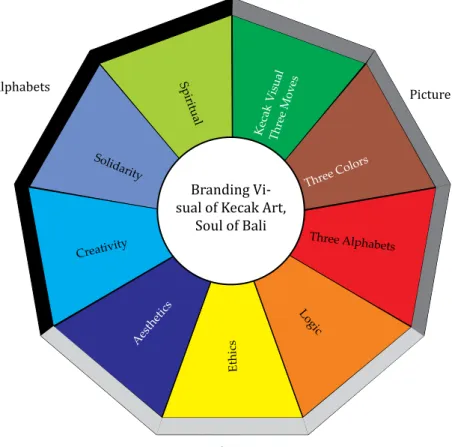
Richard Florida emphasized through his book who is your city (Florida, 2002), that the important decision for a person in this century is to choose a region or city which will become the place of visit, settle, and trade. The region/city which is chosen should be able to give comfort, security, new experience, inspiration, climate, and the creativity support, productivity, and to ensure life and the future survival for a better future, to give welfare and make the community happy. The sixth value which are very inspiring universally includes logical values, ethic, aesthetic, creativity, solidarity, and spirituality. (see diagram I).
Diagram I : The Orientation of the Universal Value which inspired Life and Branding Formulation
Orientation of Universal Value Logic
Ethic
Aesthetic Creativity
Solidarity
Spirituality
There are some principals and core values in Kecak performance :
(1). Authenticity : Kecak grows in the Art Regency, Gianyar (2). Harmony : The harmonius relation human and
human, human and nature and human and God.
(3). Ekspresive : Having solidarity value, ethic and aesthetic
(4). Progresive : The dynamic shown through the energy representation, spirit, creativity and togethernesss.
(5). Humanist & Noblety : Open toward antitesis, synergy and sintesis
(6). Togetherness : Inclusive, tolerance and appreciating multi culture
1.2 The Objectives and Benefits
The Objectives The Benefits
To construct by formu- 1. lating branding of Gi- anyar Regency based on culture, philosophy, main value representa- tion of Art Regency and Heritage City Gianyar with the main theme Ke- cak Performance.
To narrate Gianyar 2. Branding based on local wisdom which harmo- nius with the national ideology, national cul- ture, mental revolution and the nationality.
To promote various ac- 3. tivities, creativity, prod- uct, of Art Regency, Gian- yar and Heritage City in local, national and world communication.
1). Local
The human revitalization, the creative community of Gianyar based on culture to foster econo- my, technology, education, to im- prove the added value for welfare and happiness.
2). National
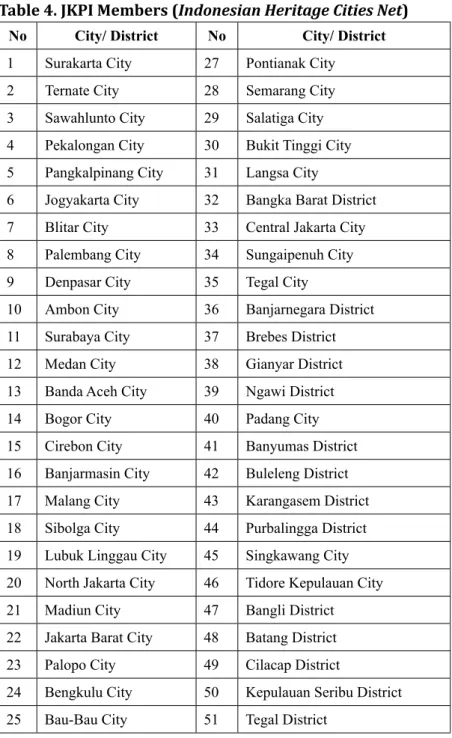
To widen the national network as Art Regency and Heritage City in the network of JKPI, BPPI, Min- istry and integrity as a nation, Unity and Diversity.
3). International
To develop international network cross countries with UNESCO about WBD, OWHC concern with Heritage City, having the brand- ing as the media establish civi- lization strength of Gianyar, Bali, Indonesia
1.3 The Problem Formulation
Gianyar Regency has large potency and base capital as the Art Regency and Heritage City. The regency has long historical experiences through the community culture, keraton culture, colonial culture, national culture and modern as well as postmo culture. The Regency of Gianyar, Bali is also open in local, national and international communication through art activity, tourism and the culture diplomacy.
In the midst of open world which bring the opportunity of economy, technology, social, sains and cultural, the regency of Gianyar has not yet owned a branding which functioned strategically as the representation of identity, the medium of communication, the promo trade, or branding about compentency, authenticity and quality insurance.
Based on above problem, this analysis answer five main problems:
1. How is the construction and the formula of the branding by having reference of Kecak performance as the authentic art element, excellence and representing Gianyar Soul of Bali?
2. What are the base philosophy, main value, base character which represents Kecak Performance, Gianyar Soul of Bali which able to obtain the pride appreciation and become an effectifve medium of communication in the local, national and international scale?
3. How to transform the Kecak Performance into design grafis (brand mark) which represents kecak Performance visually as a simple, ethnic, holistic, ethic, aesthetic and metaksu branding?
4. How to apply the Kecak Performance branding into various innovationa and activation which concern with (1) identity, (2) marchandise, (3) landmark, (4) decoration, (5) promotion and publication, (6) digitalisasi, website, social-network, (7) google, youtube, yahoo, (8) event promotion, (9) event manajement, (10) others?
5. How to start, to maintain and to preserve the branding as a sustainable Gianyar culture heritage (tangible dan intangible)?
1.4 Branding Concept and Indicator
Conceptually, branding is a brandmark of an institutiton, company, government institution, such as in the regency/city as the representation of identity, quality, represents in developing the local, national, and international effective communication which is based on culture and sustained. The communication covers: governemtn, edication, trade, tourism, technology, science, culture and others.
The branding formulation should follow scientific, comprehensive procedure and should fulfill the tenth indicators:
(1) Having authentic value as the representation of a region (2) Having strong base on the local wisdom
(3) Having clear configuration of the main values: logic, ethic, aesthtetic, creative, solidarity, and spirituality
(4) Able to develop local, national and international situation (5) Having the continuity principal
(6) The Branding Icon should not become a plagiarism or fake
(7) The Branding should has applicative value (8) Transformatif toward the marketing (9) Clear in terms of mening and functions.
(10) Able to reach traditional or even modern (digital) media 1.5 Scientific Method
The three scientific suppport, the three scientific processes and the three keys paradigm were being applied as the scientific base in analyzing the formulation of the Branding. The three scientifics method include: (1) objectivity, (2) systemic, dan (3) methodology. The three scientific processes consist of: (1) inductive process (2) deduktive process (3) verificative process.
The three paradigm keys are taken from the local wisdom in the universal spirit, they cover: (1) siwam (divine and spirituality), (2)
satyam (the truth) and (3) sundaram (art dimension, aesthetic).
The research location covers art centers of Gianyar which spreads in seven districts and concentrated in the villages which are knowned as the art village or the cultural village which rooted from the long periodical history, having creative lifes of the art maestro, in particular the Kecak Performance which is chosen as the icon of the branding of Gianyar. The villages spread from Bedulu village, Peliatan, Ubud, Bona, Blahbatuh, Sukawati, even Singapadu and also Batubulan, Gianyar City is becoming the center of the Heritage City.
The source of the data includes premier data which was obtain from the field through observation and interview with some key informants. They consists of Kecak artist, art maestro who is still exist and actively produce art work. The secondary data obtained from various heritage book, documentation and also the result of research which concern with Kecak performance as well as other related art performance for comparative study and analysis. The informants chosen were scientist, head of the sanggar (foundation) and head of Sekaa Kecak. The informants were the representative of five-elix : beaureacrat, scientist, artist, anthropologist, head of sekaa and also local figures.
The method of collecting data was: (1) systemic observation method, (2) indepth interview method, (3) discussion method in fosus grous discussion (FGD), (4) visual method. The analysis applied covers content analysis: meaning analysis, SWOT sustainability analysis.
Validity and realibility is emphasized in the analysis of the branding. Validity concerns with the valid of the research, started by the validity of choosing experts, who put the various experts together: anthropological experts, art expert, literature expert, design grafis expert, marketing expert, and management branding expert. Realibility or the trust of information was done by check – crosss – check method, counter interview, FGD and comparative study.
The road map of the research includes one systemic and
dynamic process, which consist of five main steps, they are : (1) library research , (2) pra concept about branding, (3) socialization through FGD (4) final concept, (5) legislation in the form of local act (Perda).
10
Diagram : Peta Jalan dan Langkah Pokok Penyusunan Branding Kabupaten Gianyar
I II III IV V
Kajian
Pusataka Pra
Konsep Sosialisasi
dan FGD Final
Konsep PERDA
I II III IV V
Diagram : Road Map and Main Steps The Formulation of Branding of Gianyar Regency
II
GENERAL OVERVIEW OF GIANYAR REGENCY:
“KABUPATEN SENI”
AND “KOTA PUSAKA”
2.1 Dynamics of Gianyar History
2.1.1 Arceological and Historical Heritage in Gianyar
A
ccording to archeological and historical record, Gianyar Regency has many old heritages that are still exist in the life of society since long time ago until this present. This could clearly observe as what is founded on the area between the flow of two rivers, Petanu and Pakerisan River in the area that covers Bedulu-Pejeng until Tampaksiring (Ardhana & Setiawan, 2014).This archaeological evidence seems scattered along the Petanu River from the upstream in Timbul village, Bukian, Marga Tengah, Melayang, Bintang Kuning, and down to Bedulu. It can be said that starting from Bedulu to Pejeng, distribution of sarcophaguses are located on some area of Petemon, Beng, Sengguan, Bona and many more in other regencies in Bali. (see: https://id.wikipedia.
org/wiki/Kabupaten_Gianyar) (see also: https://id.wikipedia.org/
wiki/Kabupaten_Gianyar#Sejarah_Kota_Gianyar).
2.1.2 Gianyar on the period of Ancient Bali Kingdoms
Based on those archeological and historical discoveries, so then Gianyar has been regarded as the centre of development
and old civilization in Bali (Ardhana & Setiawan, 2014). There are several “Pura” or temples that located along the river, they are: Pura Pegulingan (Stupa Pegulingan), Pura Tirta Empul, Pura Mengening, Pura Sakenan Manukaya, and Candi Tebing Gunung Kawi Tampaksiring. In addition, if it is traced to the south (downstream) there are many heritages such as Candi Tebing Krobokan, niche of Goa Garba in the Pura Pangukur-ukuran, and Candi Tebing Tegelinggah. In the village of Pejeng has been founded some historical and archaeological remains that are stored in the temple and in the homes of residents, Pura Kebo Edan in which there is a statue of Ciwa Bhairawa, Pura Pusering Jagat is famous for sangku Sudamala has the year of 1329 AD and it has ornate reliefs of Samudra Mantana (Mandara Giri). In Pura Penataran Sasih there is Nekara – A piece of Bronze that is known as “Bulan Pejeng” or literally means “The Moon of Pejeng”.
Moreover, there are still many other temples such as; Pura Agung, Pura Melanting,Pura Pangukur-ukur, and Pura Kahyangan Jagat Samuan Tiga. Pura Samuan Tiga is a place of worship for Ciwa- Buddha and in the vicinity there are more temples such as;
Santian (lingga caksu), Telangu (the bronze Ganesha), Batan Jeruk, Goa Gajah, Patapan, Pura Desa Pengastulan, Pura Desa Alit (Arca Ciwa Mahadewa), Pura Dalem (Arca Ciwa Guru), Pura Jaksan and Pura Dari Arca Durga Mahisa From Sura Mardini, Pura Jero Agung, and Relief Yeh Pulu (source: https://id.wikipedia.org/wiki/
Kabupaten_Gianyar#Masa_kerajaan), (https://id.wikipedia.org/
wiki/Kabupaten_Gianyar).
With those heritages in Gianyar Regency particularly in the region of Bedulu-Pejeng-Tampaksiring, it is proposed that the centre of Reigns on the period of ancient Bali was situated on the area along the rivers of Petanu and Pakerisan. As for the Kings that ruled on that range of time, however, one of them that was very famous is King Udayana Warmadewa. Based on some incriptions, the one that is called Prasasti Sading A has pointed out King Udayana and his queen, Gunapriyadharmapatni togetherly ruled in Bali from 1001-1011 AD (Ardhana & Setiawan, 2014:5). Further,
King Udayana ruled without his queen from 1011-1016 AD, as it is written on Prasasti Batur Pura Abang A that is only pointed the name of King Udayana. According to Prasasti Pandak Badung (1071 AD), it is said that “…paduka aji anak wungsu nira kalih bhatari lumah I buruan, bhatara lumah I banyu wka…” (Callenfels, 1926: 14). That means “…His Exellency King Anak Wungsu (son) both of the King and Queen as one (husband-wife) Queen that is honoured with the temple in Buruan and King that is honoured with the temple in Banyu Wka…” When the Queen and King Udayana passed away the reigns was continued by their sons King Marakata and King Anak Wungsu, they were mentioned as the King who had issued many inscriptions. Prasasti Langgahan Saka 1352 (1435 AD) mentioned that Sriastasuraratnabumibanten was the Last King of ancient Bali before it was finally bowed to Majapahit (source: https://id.wikipedia.org/wiki/Kabupaten_Gianyar).
2.1.3 Development of Gianyar History
The next stage of Gianyar history was began from the replacement of Central reign of Bali Kingdom that was centered in Gelgel, Kelungkung Regency. For decades, Gelgel Kingdom was on its golden age under the reign of King Sri Dalem Segening, meanwhile it was said that one of his son in Bengkel village who was becoming the origin of the emergence of Gianyar Kingdom.
It began from the existence of a knight whose name is I Dewa Manggis Kuning from what had said before a palace of Alas Bengkel, precisely located on the area of Beng village, north of the present capital of Gianyar. He is the son of King Gelgel, Sri Dalem Segening (1580-1630) that was given birth from one of his empress Ni Desak Ayu Gedong Artha, from Manggis village. When I Dewa Manggis Kuning was a man, he finally went before the King and reminded him that he is his son. As the King recognized this prince so then he announced at the time to all the relatives in the Kingdom that he claimed that is true I Dewa Manggis Kuning is his own son and appointed him to ascend the throne as the King of Badung. However, soon after his reign was started, it was said that
there was occurred riot because of a slander which was intendly issued to him. Therefore, he fled to Alas Bun and there he was married to I Gusti Ayu Pahang, a daughter of I Gusti Pinatih Resi.
From Alas Bun he continued his journey back to Bengkel. There he has become a formidable knight and has succeed to assemble his soldiers. When the King heard of his success he again invited him comeback to Gelgel but he did not want to leave Bengkel.
Once upon a time, Gelgel was being attacked by Karangasem and Buleleng Kingdoms and I Dewa Manggis Kuning was came to help and proudly won the battle against both kingdoms. For that he was awarded the King’s robe and a Keris of Ki Baru Obag- Obag along with 40 soldiers. Further, it was said that I Dewa Manggis Kuning partied with paramilitary troops of Sidemen had won another battle against the reign of Gusti Agung Maruti who ruled Gelgel in 1873. Since then, Gelgel regained its power that previously was crumbled by the war of the throne. I Dewa Agung Jambe who was ruled in Gelgel gave his appreciation for I Dewa Manggis Kuning for his loyalty to Gelgel dynasty.
Thereupon, from his marriage with Ni Gusti Ayu Pahang he bequeathed a son named I Dewa Manggis Pahang that continued his father’s throne in Bengkel. He has three wifes, first is Desak Ketut Sunia who was given birth to a prince named I Dewa Manggis Bengkel; the second wife is I Gusti Pinatih from Tulikup who was given birth to three princes, they are I Dewa Gede Pinatih, I Dewa Nyoman Pinatih, and I Dewa Ketut Pinatih; and the third wife is Putri Pasek Kebayan from Dauh Uma village who was given birth to I Dewa Gde Kesiman. Afterward, the reign of I Dewa Manggis Pahang became much stronger because of the union with Dauh Uma, Angkling, and Peling village. However, it was not the same for Serongga and Teba Jero Kesihan village that were in a colony to fight against the reign of Bengkel. Knowing this threat of rebel, he appointed his son I Dewa Ketut Pinatih with some knights Gusti Kebon Tubuh, Pungakan Nyoman Tegal, and I Gde Meranggi Dana to attack those villages, so then the threat were managed and finally Serongga and Kesihan were under the authority of Bengkel
Kingdom (source: https://id.wikipedia.org/wiki/Kabupaten_
Gianyar).
When I Dewa Manggis Pahang was passed away, the throne of Bengkel dynasty went to I Dewa Manggis Bengkel. He was married to Ni Dewa Ayu Nila Putri who was the princess of Taman Bali and by this marriage meant an expansion of Bengkel’s domain up to Petak, Madangan, Suwat, Mantring, Kendran and Manuaba village. Moreover, he could expand his domain to Pejeng as he married to the daughter of I Dewa Pemayun Putra, the elder of Pejeng village, however, it was not blessed with any child so he adopted one of the princes from Pejeng dynasty named Tjokorda Anom Bende who was latter strengthen the relation between Bengkel and Pejeng. After I Dewa Manggis Bengkel was passed away, he was replaced by his son, I Dewa Manggis Sakti. He was considered to be the greater King for Manggis dynasti because he was born with the birthmark on his belly which has the shape of
“tapuk manggis” or literally means “a mangostine’s skin”. As the story went, he finally departed to Geria Mas Lod Peken to learn spiritual knowledge (kediatmikan) from Ida Pedanda Sidawa Taman Bali. In addition, he as well learned the political study (NIti praja) from I Dewa Agung Mayun at Puri Sukawati. Shortly, the stay was managed to be a marriage of him with the daughter of I Dewa Agung Mayun; afterward he came home to Bengkel.
(https://id.wikipedia.org/wiki/Kabupaten_Gianyar).
2.1.4 The Raise of Gianyar Kingdom
The idea of esthablishing a new kingdom had stroke his head after he was arrived in Bengkel. The selected location was on the south of Bengkel Kingdom which was belong to Brahmana Ida Pedanda Sakti Tarukan. The emergence of this kingdom was started in 1770. As the location was a “Geria” or literary means the house for the strata of Brahmana (priest family, the highest of society) then it was named as Geria-Anyar (New House)and later was shorten as GIANYAR. It was said that the construction of the new Palace could be completely done with the following ritual of
Melaspas and Memungkas Agung that was held on Friday, Wage wuku Krulut (based on Balinese Lunisolar calendar), specificly on April 19, 1771. So then it was understanable that in accordance with those informations that date is presently celebrated as the anniversary of Gianyar City with commemoration of I Dewa Manggis Sakti as the first King of Gianyar (244 years old on April 2014). (https://id.wikipedia.org/wiki/Kabupaten_Gianyar).
When I Dewa Manggis Sakti was passed away, he was replaced by his son I Dewa Manggis Di Madya (1814–1839) as the first successor. Briefly, after he was passed away, he was replaced by I Dewa Manggis Di Rangki as the King Gianyar III (1839–1847).
Shortly, he was replaced by his son, I Dewa Pahang (1847–1892) as the King Gianyar IV. It was said that on his period, there was a political chaos between the Kingdoms of Bangli, Klungkung, and Badung. I Dewa Pahang was threated by Ida I Dewa Agung Kelungkung and was exiled to Satria, so then he named as I Dewa Manggis Mantuk Di Satria. However, both of his sons, I Dewa Pahang and the little brother I Dewa Gede Raka was succeed to escape and return to Gianyar. Finally, Ida I Dewa Pahang was ascended the throne as the King Gianyar V (1893–1896) and said that he could regained the unity of Gianyar Kingdom.(See: Sutaba, Astawa, and Wirawan, 2007:310—333), (https://id.wikipedia.
org/wiki/Kabupaten_Gianyar).
2.1.5 Gianyar Kingdom in the Colonial Period of Dutch and Japan
The next King of Gianyar was I Dewa Gede Raka, as King Gianyar VI (1896-1912) he was not capable to rule until many conflicts were emerged and the good relationship with others kingdoms was turning into a distrust. He finally took the choice to ask for protection from the Dutch colony that was already settled in Bali. According to the General Governor of Dutch East Indies, I Dewa Gede Raka was promoted as “stedehourder” or representative of Dutch East Indies Government since January 2, 1901. His official promotion was completed with some traditional
ceremony and ritual (Abisekaratu) on June, 15 1903, where we was given the title of Ida I Dewa Manggis VIII. Since that time, the Dutch East Indies government as well had succeed to place their handler, JHBF Schwartz, in Gianyar that was considered to comprehend the Balinese culture and tradition with a diplomacy purpose. Afterwards, there was a customization of the government structure that was generally in Bali and particularly in Gianyar.
The “stedehourder” was changed into a regent, that indicating that was a turnover from kingdom to a regency. The titles that were given for each regencies was different one to another, however, in Gianyar the title that was given is “Anak Agung”. In additions, there were many regulations that were reformed under the authority of Dutch East Indies government, such as the appointment of Patih or knight that were selected from Pasek clan, the appointment of Dewan Kerajaan that was consist of the punggawa, manca, and pendeta, the esthablishment of King’s military corps called Para Yuda or Prayoda as tax collector. Moreover, regarding to the regulations that issued from the Dutch East Indies government on July 1, 1938 said that the each region that spred out in Bali were
Puri Gianyar sekitar akhir abad XIX
called as Swapraja that is headed by a King and it had its own rights to autonomy that refered to the regulations of religious ceremony, tradition, prayoda, education, general occupancies, health, tax, and income. Finally, after he passed away, I Dewa Manggis VIII was replaced by his son, Ida Anak Agung Ngurah Agung as the King of Swapraja Region of Gianyar. (https://id.wikipedia.org/wiki/
Kabupaten_Gianyar), (https://id.wikipedia.org/wiki/Kabupaten_
Gianyar#Masa_kolonialisme).
Dynamics of Gianyar history later developed into the period of the influx of outside influences into the Dutch East Indies government in Indonesia, and particularly in Bali. On the Second World War, the Japanese troops was landed in Bali on March 1942. The take over of Dutch authority by Japan had changed some regulations for the government structure in Bali, which could seen by the change of Swapraja into Syutjo. In order to get the intensive occupation in Gianyar, further, Japanese troops was arrived in Gianyar on February 23, 1942 and all the Dutch handler, one of them was Van-Romoudt, were arrested and sent to Denpasar. Some Japanese quarters were constructed using the former Prayodas’ quarters. However, the prominent Japanese regulation that was newly applied to Indonesia, and particularly Bali, was the sadistic forced labor system that was called Romusha.
(https://id.wikipedia.org/wiki/Kabupaten_Gianyar), (See also:
Sutaba, Astawa, and Wirawan, 2007:418-428).
2.1.6 Integration with Republic of Indonesia
The proclamation of the independent of Indonesian Republic that was announced to all over Nusantara on August 17, 1945 had brought a revolutionary changes. It was not only the end of the colonial period that extruded Dutch and Japan from the lands of Indonesia, but the restructure of the Nation’s government had transformed Bali into a province of Sunda Kecil that was headed by I Gusti Ketut Poedja as the governor and Ida Bagus Putra Manuaba as the head of National Commision of Bali Province. Several youth organization were emerged, for instances are Angkatan Muda
Indonesia (AMI) and Pemuda Republik Indonesia (PRI). They were came up with demonstration on Desember 13, 1945 and asked Japanese government to release all the Indonesian activists that were captured previously when they were on the revolt. Finally, all the Indonesian activists and leaders were released with the help of Tentara Serikat or the Indonesian National Army that were sent to Bali. However, the appearance of Red Elephant Armyin Bali that was leaded by Letkol Inf F.H. Ter Meulen, was indicating that Dutch was not finished with Bali. They were landed on March 2, 1946 and joining the Dutch East Indies armies that were still not leaving their colonies. Further, they were again coming to some regions in Bali, as well as Gianyar to start again the friction.
In this fragile political situation, then was the emergence of some figures of Balinese national hero, such as I Gusti Ngurah Rai, and in Gianyar; Anak Agung Anom Asta and I Ketut Suetha that were joined themselves into a group that was called Maskar Besar.
They were later integrated their resistance under the operation of Ciung Wanara troops as the prominent battalion. On November 20, 1946, 88 people were dead on the fierce battle of Puputan Margarana. In addition, 10 more victims of young fighter from the youth members of Gianyar were died on that time, some of their leaders were Kapten I Nyoman Sueta from Ubud, Lettu I.B. Manik from Sukawati, Kopral I Limbuk from Ketewel, Kopral I Rudeg from Batuyang, Kopral I Sara from Pejeng, Peratu I Rambug from Sasih, and Perak I Roja from Samu. However, there were uncounted of the young fighters from Gianyar that were sacrificed their lives while defending the independent of Indonesia. Apparently, the Dutch colony was not giving up for Bali, it was in accordance with the esthablishment of their federal authority of Negara Indonesia Timur (NIT) or the East Federation of Indonesia, and Bali Island was geographically registered on the list. They were using the situation of government structure in Bali on that time that could be considered as a form of federation that consists Badung, Bangli, Buleleng, Jembrana, Gianyar, Karangasem, Klungkung, and Tabanan. From the bureaucratic system administration, it
was seen that tha Balinese government had a Paruman Agung or Supreme Court of Kings Board which serves as the House of Representatives (DPR). In the year 1947, King of Gianyar, Anak Agung Gede Oka as the head of Kings Board and it seemed that the federalist group were integerated and formed a Security Lines on every kingdoms in Bali. (https://id.wikipedia.org/wiki/
Kabupaten_Gianyar), (https://id.wikipedia.org/wiki/Kabupaten_
Gianyar#Masa_awal_kemerdekaan), (See also: Sutaba, Astawa, and Wirawan, 2007: 438--458).
Paruman Agung or Supreme Court that was formed was then convened on June 8, 1950 with an agreement that the kings formed a Temporary Local Government Executive Agency.
This Paruman Agung was then transformed into the Regional Representatives Council (DPRD) Bali, with the inauguration ceremony on September 25, 1950 in Denpasar. There has been a change in the system of government in the 1950’s started from the capital of Jakarta, hereinafter, implemented incorporation of the states into the Republic of Indonesia (NKRI), which occurred on August 17, 1950. Meanwhile, in the regions there were transformation of regional level/Swapraja unoccupied for eight of the former kingdom in Bali. According to Law No. 69 on the Establishment of the Government of the Autonomous Region-II, as the Head of the Autonomous Region-II raised Ida Anak Agung Gede Oka, who served between 1958–1960. Subsequently, he was replaced by Tjokorda Ngurah with the period between 1960- 1963. Then he was replaced by Dra. Tjokorda Anom Pudak, and then replaced by I Made Suyoga, B.A. The dynamics of government on the local level seemed to continue, there was a change of power shift towards the Old Order to the New Order government, which was showed by the change of Regents that was entering the era of the Reformation. It can be said, there has been a political dynamic in Gianyar administration and later became one of the districts in Bali within the frame of the Unitary State of the Republic of Indonesia (NKRI) until the present.
(https://id.wikipedia.org/wiki/Kabupaten_Gianyar), (https://
id.wikipedia.org/wiki/Kabupaten_Gianyar#Masa_sekarang), (See also: Sutaba, Astawa, and Wirawan, 2007: 438-458).
2.2 Realm, Demography, Ekonomy, and Tourism
Gianyar regency with its capital Gianyar is located on the area of Southern Bali with its boundaries; on the north is Bangli regency, on the east are Bangli and Kelungkung regency, on the south are Indonesian Ocean and Badung Strait, and on the west is Denpasar capital and Badung Regency. Geographically, Gianyar regency is located between 080.18’.48” - 08038:58” South Latitude dan 1150.13’.29”-1150.22’.23” East Longitude, with the total width of area 36.000 hectares. Administratively, Gianyar consists of seven subdistricts, they are:
1). Sukawati Subdistrict 2). Blahbatuh Subdistrict 3). Gianyar Subdistrict 4). Tampaksiring Subdistrict 5). Ubud Subdistrict
6). Tegallalang Subdistrict 7). Payangan Subdistrict
Gianyar regency is a region that is fertile and has a farm fields with a water system that is regulated by a system of Subak as other districts in Bali. Gianyar regency has a lot of tourist attractions; therefore, tourism is growing rapidly based cultural tourism.
2.3 The Goverment
The government institution that has the role of maintenance and preservation of cultural heritage is Department of Culture and Balai Pelestarian Cagar Budaya (BPCB) Bedulu, Gianyar.
Under the SKPD of Department of Culture there are four sections that play the roles according to each field, they are: field of art and
culture, field of cultural heritage (archeological artifacts), field of literature, and field of law. Whereas, BPCB Bedulu, Gianyar is particular institution that is dealing with matters of maintenance and preservation of cultural heritage. Thus, the source of funds for the maintenance and preservation of cultural heritage, apart from information obtained from a source of funds that has budgeted by Gianyar regency SKPD Disbud, it is also came from BPCB. For those Desa Pakraman who revitalized as an object of cultural heritage and tourist attraction, they get an additional cost (capital) for the maintenance and preservation from the funds (donations) of the incoming visitors. Besides the government, the role of the legislature is also very important in supporting the government’s program, which in this case is represented by the legislature, namely the Regional Representatives Council Gianyar regency.
Legislative Council has a strategic role in the maintenance and preservation of cultural heritage. As we know, who designed the Cultural Heritage Act (UU-Cagar Budaya) is the Parliament. It is the Legislative Council that was considered to know and understand about the maintenance and peletarian cultural heritage, as well as, for the rights, responsibilities, and benefits derived from the cultural heritage. Provincial Parliament as an arm of the House of Representatives in the region, in addition to receiving proposals for the planning of maintenance and preservation of SKPD, the board itself may be intimated to SKPD, how important the existence of the cultural heritage. There are at least four major considerations that the Parliament used when formulating the Cultural Heritage Act (UU-Cagar Budaya), they are: (1) the economic side; (2) on the side of public responsibilities; (3) on the side of civilization, and (4) the governance of the country (Yunus Satrio A, 2012:17).
In addition to the government and the legislature, there is also the role of the academics. The existence and the role of academic institutions here is refered to the formal educational institutions. One of them is the state higher education institutions in Denpasar, the Udayana University. Two faculty who have a role in the maintenance and preservation of cultural heritage is
the Faculty of Letters, Department of Archaeology, Department of Literature, Department of History and Anthropology; and the Faculty of Agriculture in particular courses that have the relevance to the Subak. Those who pursue the world of education related to cultural heritage has duties and obligations in the maintenance and preservation of cultural heritage, both institutionally and individually. Therefore, they who engaged in the academic field, their role is needed in research, education, and community service. The existence and the role of Four Helixes (communities, governments, legislators and academics) are very important in maintaining and preserving the cultural heritage.
Gianyar regency is one of those regencies/municipalities in Bali’s most rich in its cultural heritage (Ardika, 2007; 2015). Gianyar regency which is made up of seven subdistricts is the owner of a wide range of cultural heritage. To make it easier to map out the heritage property, the Government of Gianyar has divided Gianyar into five zones, namely: North Gianyar Zone (Tampaksiring, Tegalalang, and Payangan Subdistrict) as an agricultural zone to the life of the creative industries; West Gianyar Zone (Ubud Subdistrict) with the heritage of art and culture; South Gianyar Zone (Sukawati and Blahbatuh Subdistrict) with creative icons of heritage-based economy; East Gianyar Zone (District of Gianyar) is the heritage of urban culture with a multi-ethnic, castles, courts, markets, temples, catuspata and so forth; and Central Gianyar Zone (Pejeng and Bedulu Subdistrict) as conservation zones and cultural heritage (religious archeology sites) (Department of Tourism Gianyar 2011:117). Community institution that was told is desa pakraman or the traditional villages. The institute’s role can not be ignored because of the cultural heritage located in the area of traditional villages/ desa pakraman. Thus the involvement of citizens in the maintenance and preservation either directly or indirectly is needed. As we know that the existence of the cultural heritage has a multi-use, other than as identity also have economic benefits and so forth. Especially in this era of global tourism, desa pakraman can revitalize the cultural heritage as a resource for
improving the economy of society.
2.4 Gianyar with Its Diversity and Predominance of Art and Culture
The globalization that influence rapidly and followed by its dynamics has led to a culture of individualism, materialism, consumerism, and homogenism that are also affecting the social order. The negative impact of globalization, was not only in the cities, but also in the lives of the people at the district level.
If this persists, it is considered to be a negative impact also on the order of a society which is already having roots culture, and has been used as a way of life from far behind on the period of prehistoric times to the history (Sutaba, Astawa, and Wirawan 2007 cf. Sjoberg, 1965). In line with that, the evidences of archaeological and historical could be seen in physical heritage such as temple building, castle, subak (tangible culture), as well as on non-physical culture that is laden and thick with values that contain elements of kebersamaan (togetherness), gotong royong (mutual cooperation), so that implied the existence of adiluhung or the outstanding cultural values (Eiseman, 1990). Their social and cultural capital as shown in the abandonment of cultural heritage, which until now still being developed and maintained in public life, it seems relevant to the dynamics of universal values (Covarrubias, 1937), as has been appreciated by world bodies like UNESCO. The condition seems to need to be developed, because the social capital and culture in society Gianyar actually have also what is called outstanding universal values, as already developed by other cities in Indonesia (See: Leushuis, 2014 and
“Kota Pusaka: The Other Side of Ternate”, the Indonesian Kota Pusaka preservation Magazine, (Indonesia-heritage.net, edition 01/2015).
Archaeological remains are actually numerously exposed in Gianyar regency compared with those other districts or cities in Bali. It’s understandable, because both prehistoric relics such as those found in Penataran Sasih, there is also a relic of prehistory
known as the “Moon of Pejeng”, which since the first until now still sanctified and consecrated by the community not only by people who come from the Gianyar Regency but also from other districts or cities in Bali (See: Sutaba, Astawa, and Wirawan, 2007:49). Similarly, the historical heritage of Bali Kuna seems to be centered in Pejeng (Pejeng in Gianyar as their previous royal on period of Udayana dynasty from 10th until 11th century) (Ardhana and Setiawan, 2014), which became the foundation of the development of civilization and culture of Bali until now the.
King Udayana is king renowned not only in Bali, but up in East Java who was married to Queen of Java called Mahendradatta or Ratu Sri Gunapriyadharmapatni are the two central figures in the development of Balinese culture both in terms of philosophy, religion, socio-cultural, legal, gender, and political governance.
Because of the role played quite important in his reign, so that their names had become an icon of the big names in the name of government institutions such as the name of Military Command Udayana, was also used to name the biggest University in Bali, Udayana University, while the name of Mahendradatta used as the name of the Mahendradatta University.
After the expiry of Udayana kingdom centered in Pejeng, then subsequently transferred to Bedahulu-- kingdom at that time called Pejeng, also refers to the designation Bedulu-- under the authority of Sri Asura Ratnabumi Banten until the coming to power of the kingdom of Majapahit to Bali (cf. Catrini and Carey , 2014). There are changes in the tradition of building that can be seen, for example, when the king Udayana ruled in Bali in the Period of Bali Kuna, many of the buildings are made of materials rocks as can be seen at Gunung Kawi and Goa Gajah, while when Bedulu is under Majapahit dynasty, a change that is the building tradition which has introduced the use of brick as can be seen in the buildings of the castle and the temple in Gianyar regency until now. The dynamics of culture and society Gianyar still growing, although the Dutch colonial powers come since the end of the 19th century, until the Japanese landing in the 20th century. At
the time of independence Gianyar social and cultural life of society continue to be developed, so that the existing cultural heritage that remains to be revitalized until the present time. Various heritage still appreciated its existence and developed, even accompanied by enrichment activities that are creative in innovative efforts to develop quality.
The following can be seen, for example, the existence of some superior cultural heritage contained in the seven districts of Gianyar regency as follows.
1. Sub-district Sukawati: cobra, padas sculpture, silver statue, Pakraman, Subak, banjo, pesantian, barong (about Barong Landung, see: Gottowick, 2005), masks, puppets, gambuh, Calonarang, Rejang, painting, sculpture , wood, calendar systems, Batuan village temple, temple Puseh Batubulan, taksu, processions peed, monuments and statues of the baby,
2 Blahbatuh: Pande gong (equipment gamelan, gableran, endek Bona, handicraft, rontal and bamboo, Pakraman, sekeha, banjo, gong pindha, myth Kebo Iwa, Usada castle Blahbatuh, Pura Masceti, Mrana and Melasti, Sarad, and pura Bukit Dharma Kutri.
3. Gianyar: Bade, nagabanda, pelebon Puri Gianyar, endek woven Beng, culinary (kelepon snacks and a variety of traditional snacks), Pakraman, sekaa gong Sengguan, pesantian, big gong percussion, angklung Sidan, Gianyar Puri adventures pelebon
4. District Tampaksiring: irrigation technology systems, Pejeng batik, handicraft, bone and horn, Pakraman, boil and Subak Subak Pulagan, banjo, sekaa goong, nekara “Pejeng Moon,” Tatiapi, Tirta Empul, Denawa Maya legend, and system pattern rice planting, knowledge usada, Tirta Empul as a place of physical and spiritual cleansing, Heritage DAS Pakerisan, and Heritage Village Pejeng.
5. District of Ubud: Bade, nagabanda, adventure, pelebon Puri Ubud, Puri Peliatan, Mask cats, Ubud market, culinary (pork roll), Pakraman, banjar, galleries, stories Buana Sari, Studio Sri Ratih Ubud Writers and Readers, festivals, literature, kakawin, Oleg Tambulilingan dance, painting, umbrella universal belief in the five religions.
6. District Tegallalang: bowl, tray Sebatu, kepeng, handicraft, Pakraman, Subak, wayang wong, telepud, Sebatu Nyepi culture, robber-begalan ceremony, rice terraces, bamboo culture, aesthetics waterfall Sebatu
7. Kecamatan Payangan: tray, Payangan markets, galleries, yasa Son Sedana, Pengaji, Subak, sinom mentioning Payangan, Sekatian percussion, musical instruments Gong Gede, heritage (Sarcopagus Keliki)
In addition to the results of the inventory of cultural arts are considered superior, to the typical and rare at this point in more detail can be read in the book Blueprint Revitalization of Gianyar Toward Regency Excellence in Arts and Culture (2013), a study conducted in collaboration between the district Gianyar and study Center Bali - Udayana University. It can be said that all the districts it is an area that is very rich with heritage values are rooted in prehistoric times, Bali Kuna History, History of Modern and Post-Modern. It shows that people in Gianyar can selectively receive the influence of foreign cultures in order to preserve the cultural traditions that have been held it is flexible and dynamic.
In the area of this district are important sites that are not only significant for the local community, but also for the community at the national level, for example, in the District Tampaksiring Tampaksiring are Presidential Palace that have been built since the time of the first President of Indonesia, President Soekarno.
In addition, the international community in this regard UNESCO also recognized the importance to world heritage, namely the existence of traditional Balinese irrigation system called Subak system which has now been recognized to be a world cultural heritage . This shows that not only the cultural heritage , but also very intense natural heritage developed in Gianyar . It can be seen from the recognition given by world bodies like UNESCO to organizational development and Subak Subak Pulagan boil as one of the world heritage proud people and government of Gianyar regency . This is understandable because the concept of local communities as supporters of the tradition and culture of Subak, by itself implies the support of the spiritual values, solidarity, mutual aid, which is the social capital and cultural capital that is still being developed today and tomorrow will come.
Some of the cultural heritages in Gianyar regency is certainly there that the situation is still intact, partially damaged, and there is a faded, and even destroyed, because of the age of the building is quite old. In general it can be said that the physical cultural heritage spread in Gianyar regency until today still can be seen among others, the castle buildings, temples, markets, bale banjar which is an integral smallest social unit, Setra, or the grave, and so on. Some of the building if it is not declared as cultural heritage or cultural heritage (she’s over 50 years), then as a city asset inheritance, alleged existence can switch function (Priyanto, 2014). Puri Gianyar region which in the past was the center of the traditional center of government activity, economic and socio-cultural activities can be considered as the center of civilization and culture of the people in Gianyar. It can be seen from a philosophical understanding which follows the pattern of the arrangement of the great intersection as shown in the Catuspatha concept. Commitment Gianyar regency government leaders and the public on this issue appears to contain heritage significance to the cultural life of the community (sustainable cultural development).
2.5 Natural, Cultural, and Visual of Kota Pusaka Gianyar As with any natural sloping topography of Bali Island, the natural topography Gianyar regency is also tilted towards the south. In the sloping topography that is flowing rivers that cut Gianyar, including Pakerisan River and River Petanu. In the area of these rivers are the remains, remains critical of the era it represents, with superior quality. Village area located between two rivers among which are Pejeng and Bedulu Village. In both villages listed as base areas remains, archaeological remains, especially in the form of art remains of statues by the hundreds.
Arca was stored on dozens of sacred places (temples), and highly purified by villagers who nyungsung (manage) Pura TSB. (Geriya, et al., 2013). In the area Pakerisan River, from upstream, is the location of Pura Tirta Empul (Tampaksiring), with a source of water that is unique, recorded in an inscription which dates to the year 960 AD (882 years Caka) (Goris, 1954 and Damais, 1955, in Ardika, et al., 2013). Then flows to the south, there is a temple Mengening (Tampaksiring), Cliff Temple Gunung Kawi (Tampaksiring), Cliff Temple Kerobokan (Pejeng), Temple Estimator-size (Pejeng), Cliff Temple Tegallinggah (Bedulu), Rlief Bitra (Gianyar), and downstream is in the Pura Masceti in Turkish Masceti (Blahbatuh). In Petanu River region, there is also an important remains representing two beliefs (Religion) is Hindu and Buda, a site Elephant Cave.
All the remains of those mentioned above, that is associated with the controlling authority at the time, is the remains of dynastic rule Warmadewa. Sri Kesari as a forerunner to the kings of the dynasty Warmadewa left three inscriptions. Two of them are in the mountains (Malat Gede and Panempahan in Tampaksiring), and another in the area of Sanur, which is in Belanjong. The third inscription was framed in Caka 835 (913 AD) (Goris, 1948). Based on the position where the remains of past cultures whose location is located in the Pakerisan River and the Petanu River, especially in the area of Pejeng and Bedulu, there may be mentioned that the center of the kingdom era Kuna
Bali is situated in Pejeng and Bedulu. Researchers, such as Goris were more emphasis on research in the field of inscriptions.
Meanwhile, Kempers and Stutterheim, concentrate more on the field of cultural. Although the approach was done in different ways, but the synergy of research led to the conclusion about the character and power controllers of that era. Power controllers are the kings of the dynasty Warmadewa (10–14 century AD).
The golden age era of work in Bali, recorded in the reign of King Udayana Warmadewa. He was accompanied by a priest, named MPU Kuturan. Under the policy MPU Kuturan, all sects in Bali that are conflict can be brought together. The development of art and culture thrive, based in Pakerisan and Petanu River region, particularly in Pejeng and Bedulu. In fact it can be mentioned that the center of civilization in the Age of Bali Kuna is in Pejeng and Bedulu, Gianyar regency. With the various remains of the need to develop the implementation of cultural tourism, in the form of One Day Cultural Tour. Can be started from the remains in Coast region Masceti (being built Subak Museum). Followed by a visit in the city area Gianyar (Traditional Market), then to the region Bedulu and Pejeng (Pura Samuan Tiga, archaeological remains of the Institute for Preservation of Cultural / BPCB). Proceed to the World Cultural Heritage area in Tampaksiring (Subak and temple). Today, UNESCO has recognized the headwaters region Pakerisan in Tampaksiring Gianyar, as a World Cultural Heritage area (WBD). Among these include Pulagan Subak, Subak Top boil, boil Subak Down, Pura Tirta Empul, Pura Mangening, Pura Gunung Kawi and Pura Pegulingan.
Culture or culture (Koentjaraningrat, 1993) has three states, namely the values, social, and artifacts (material). As mentioned earlier that the Gianyar Regency has the region Pakerisan River, and in the upper reaches of the system of Subak (Subak Pulagan and Subak boil (Up and Down). Subak is a cultural heritage that is intangible (not shown), such as the values of Tri Hita Karana, and tangible (visible), in the form of system of rice terraces, and also systems pura subak. Furthermore, the system water control