Self-Determined Learning
Meeting the Challenges of Change in Postgraduate Education, edited by Trevor Kerry
Pedagogy and the University: Critical Theory and Practice, Monica McClean
Transforming Learning in Schools and Communities:
The Remaking of Education for a Cosmopolitan Society, edited by Bob Lingard, Jon Nixon and Stewart Ranson
Self-Determined Learning
Heutagogy in Action
Edited by
Stewart Hase and Chris Kenyon
LON DON • NEW DELHI • NEW YORK • SYDNEY
50 Bedford Square 1385 Broadway
London New York
WC1B 3DP NY 10018
UK USA
www.bloomsbury.com
Bloomsbury is a registered trademark of Bloomsbury Publishing Plc First published 2013
© Stewart Hase, Chris Kenyon and Contributors, 2013 All rights reserved. No part of this publication may be reproduced or
transmitted in any form or by any means, electronic or mechanical, including photocopying, recording, or any information storage or retrieval system, without prior permission in writing from the publishers.
Stewart Hase, Chris Kenyon and Contributors have asserted their right under the Copyright, Designs and Patents Act, 1988, to be identified as Author of this work.
No responsibility for loss caused to any individual or organization acting on or refraining from action as a result of the material in this publication
can be accepted by Bloomsbury Academic or the author.
British Library Cataloguing-in-Publication Data A catalogue record for this book is available from the British Library.
eISBN: 978-1-4411-0891-3
Library of Congress Cataloging-in-Publication Data
Self-determined learning : heutagogy in action / edited by Stewart Hase, Chris Kenyon.
pages cm
Summary: “Explores how heutagogical approaches can be used in a range of learning circumstances”– Provided by publisher.
Includes bibliographical references and index.
ISBN 978-1-4411-4277-1 (hardback) – ISBN 978-1-4411-0891-3 – ISBN 978-1-4411-9148-9 1. Learning, Psychology of. 2. Self-culture. I. Hase, Stewart, editor of compilation.
LB1060.S388 2013 370.15’23–dc23
2013015211
Design by Newgen Knowledge Works (P) Ltd., Chennai, India
Contents
List of Illustrations vi
Notes on Contributors vii
Part 1 The Fundamentals of Heutagogy
Introduction Chris Kenyon and Stewart Hase 3
1 Heutagogy Fundamentals Chris Kenyon and Stewart Hase 7 2 The Nature of Learning Stewart Hase and Chris Kenyon 19
Part 2 Applying Heutagogy in Formal Education
3 Crafting Learner-Centred Processes Using Action Research
and Action Learning Bob Dick 39
4 E-Learning and Self-Determined Learning Skills
Lisa Marie Blaschke 55
5 Applying the Principles of Heutagogy to a Postgraduate
Distance-Learning Programme Trevor Kerry 69
6 Workplace Learning for Nurses Mike Ramsay, John Hurley
and Gavin R. Neilson 85
7 The Learner’s Perspective Barbara A. Brandt 99
Part 3 Heutagogy in the Wider Education World
8 Developing Creativity Fred Garnett 117
9 Putting Heutagogy into Learning Fred Garnett and
Ronan O’Beirne 131
10 Lifelong Learning Jane H. Eberle 145
11 Learner Defined Learning Stewart Hase 159
12 Practitioner Development in Early Years Education Natalie Canning 169 13 Transitioning from Pedagogy to Heutagogy Boon Hou Tay 181 14 Innovations in Community Education Roslyn Foskey 193 15 Where to Next? Stewart Hase and Chris Kenyon 207
Index 211
Figures
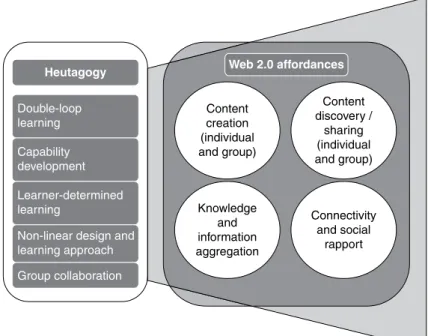
4.1 Web 2.0 affordances and heutagogy 58
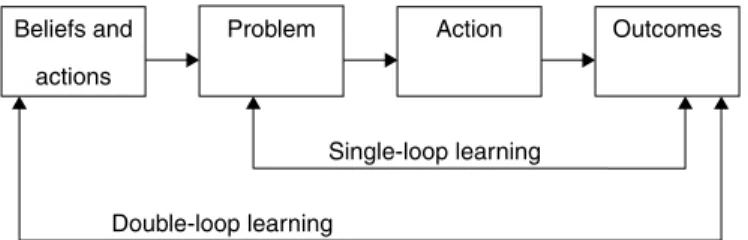
10.1 The flow of double-loop learning (from Eberlee and
Childress, 2006) 146
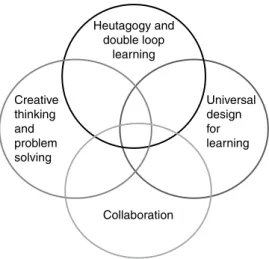
10.2 The relationship among heutagogy, UDL, collaboration and
creative thinking and problem solving 152
12.1 Empowerment and heutagogy 174
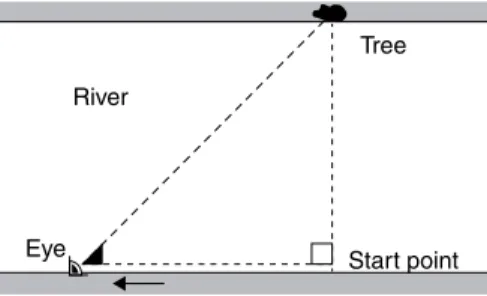
13.1 Estimating the width of a river 182
13.2 A paper-cutting activity for Pythagoras Theorem lesson 185 13.3 Knowledge gained in the pedagogical stage 186
13.4 The known and the unknown 188
13.5 Knowledge gained in the andragogical stage 189 13.6 Knowledge gained in the heutagogical stage 191
Tables
4.1 Web 2.0 features 57
9.1 The PAH Continuum 139
10.1 Clark and Mayer’s (2011, p. 17) definitions of behavioural and
psychological engagement 147
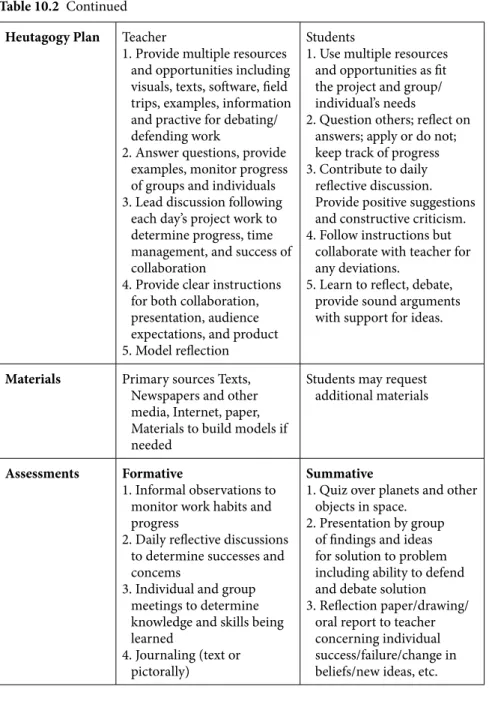
10.2 Template for heutagogical teaching of the solar system 154
Boxes
5.1 Initial background information about heutagogy 72 5.2 A sample of part of the survey instrument 74
Contributors
Lisa Marie Blaschke is program director of the Master of Distance Education and E-Learning (MDE) graduate program at Carl von Ossietzky Universität Oldenburg, Germany. She is also an associate professor (adjunct faculty) within the MDE partner graduate program at University of Maryland University College (UMUC) in Maryland, USA. Her research interests are in the areas of online collaborative learning and pedagogical application of Web 2.0 technologies. Lisa is also head of a communications consulting firm, which offers a wide range of distance education services, from e-learning design and development to project management.
Barbara A. Brandt is an educator, mathematician and mathematics consultant.
As a mathematics consultant, she instructs teachers on the use of manipulative materials in mathematics education using a Piaget approach and emphasizing concept development from the concrete to the abstract. She is a proponent of
‘play’ as an instrument of learning. She is engaged in obtaining both a Master of Education and a Master of Science in Applied and Computational Mathematics at the University of Minnesota Duluth, USA.
Natalie Canning is a lecturer in education (early years) at the Open University, UK. Her background is in playwork and social work, supporting children to explore personal, social and emotional issues through play. She has published within the field of professional development in the early years, children’s play and creative spaces. Her main research interest is children’s empowerment in play. She has taught across a variety of early childhood undergraduate and postgraduate programmes and has edited Play and Practice in the Early Years Foundation Stage (2011), Reflective Practice in the Early Years (2010) and Implementing Quality Improvement and Change in the Early Years (2012).
Bob Dick is an independent scholar, an occasional academic and a freelance consultant in the fields of community and organizational change. In much of his current consulting he helps set up action learning programmes for leadership development, cultural change or the development of organizational resilience. In this work, and in his earlier work as a full time academic, his strong preference is to use highly participative and engaging processes. He lives in the leafy Western suburbs of Brisbane with the love of his life, Camilla.
Jane H. Eberle is an associate professor in Instructional Design and Technology in the Teachers College at Emporia State University (ESU), USA. She earned her PhD from Kansas State University, USA, and was an elementary school teacher in Manhattan, Kansas, USA, prior to joining the ESU faculty in 2003. She teaches Instructional Technology for Educators to preservice teachers and graduate courses in visual literacy, creativity in the classroom and integrating technology into the classroom. Her research interests include heutagogy, universal design for learning, technology integration and classroom teacher practices.
Roslyn Foskey is an adjunct lecturer in Education at the University of New England (UNE), Armidale, Australia. She has a particular interest in older adult learning and a background in applied rural social research. She was employed for many years with the multidisciplinary Institute for Rural Futures at UNE where she worked on projects examining farm succession, rural ageing, farming and retirement and older people and technology. She has often incorporated innovative and creative approaches to community engagement within her work, and is currently exploring an international collaboration with the 50+ ACT 11 STUDIO at Ryerson University, Canada.
Fred Garnett has worked with learning technologies since 1997 when he helped create the Lewisham TaLENT Community Grid for Learning. As Head of Community Programmes at Becta he lead on the UK’s Community Access to Lifelong Learning programme, a £250 m digitally inclusive e-learning initiative, subsequently working on national policy development and on Participative Media Literacy with OFCOM. Since leaving Becta he has been a Visiting Research Fellow at the University of Sussex, UK, and the London Knowledge Lab, UK, advising on Digital Literacy. He is part of the Learner-Generated Contexts research group applying heutagogy to ambient learning in Manchester, UK, and self-accreditation in WikiQuals.
Stewart Hase is a psychologist who has been, variously, an academic, a therapist and an organizational consultant. He is now semi-retired and lives in a small fishing village on the north coast of New Souh Wales, Australia. Stewart spends his time writing, undertaking occasional organizational development projects, fishing, playing golf and travelling. He also talks about new approaches to learning whenever he can both nationally and internationally, and develops them concepts in his organizational consulting.
John Hurley is a mental health nurse, researcher, therapist and associate professor at Southern Cross University, Australia. John has a range of research
Contributors ix projects and published work focusing on workforce development within health contexts. He has also previously published on heutagogy and adult learning approaches within the context of health education.
Chris Kenyon has worked as an adviser and consultant since 1980. Although much of his work has been in Australia, he has also worked in Saudi Arabia, USA, Malaysia, Thailand, Zambia and New Zealand. His clients have generally been government departments, though commercial clients have included several banks, grain exporters and power producers. His belief is that life is about learning, and he has at various times been a film producer, pilot, medical technician, academic, author (four books published) and ice cream vendor. He lives in a country house he designed and largely built himself about 30 km from Canberra, Australia.
Trevor Kerry taught in all phases of education before becoming a senior adviser with a UK local authority. He was formerly Professor of Education, Dean and Senior Vice-President at the College of Teachers, UK. He is the first Emeritus Professor of the University of Lincoln, UK, and Visiting Professor at Bishop Grosseteste University, Lincoln, UK. He has written and edited 30 education texts as well as hundreds of academic articles and journalistic pieces; and published a book of eco-history about a parson-naturalist. A keen photographer, he won the titles Honorary Master of Colour (International Colour Awards 2006, 2010) and Spider Fellow in Photography (2006, 2011).
Gavin R. Neilson is a lecturer in the School of Nursing and Midwifery, University of Dundee, UK. Gavin received his Doctor of Education from the University of Stirling, UK, and his thesis examined fifth- and sixth-year school pupils’ perceptions of nursing as a career choice. He has published in the area of recruitment and perceptions of nursing as a career. Gavin’s research interests include school pupils’ reasons for choosing/not choosing nursing as a career;
recruitment and retention; career socialization; images of nursing; career choice theory; and teaching and learning methodologies.
Ronan O’Beirne has spent 20 years working in public libraries and has been involved in many community-based learning projects. He was an early advocate of open learning resource use and worked on developments of metadata standards for learning opportunity information. His recent book From Lending to Learning; the Development and Extension of Public Libraries, which calls for public libraries to support informal lifelong learning, was published with excellent reviews. He is Director of Learning Development and Research at
Bradford College, UK. As a Fellow of the Chartered Institute of Library and Information Professionals he is actively involved in the library profession, chairing the national Library and Information Research Group and sitting on the editorial board of their international journal. In 2009 he was awarded the UK National Information Literacy practitioner of the year award. Ronan is completing a Doctor of Education EdD at the University of Sheffield, UK, looking at the relationship between academic libraries and research in the knowledge economy.
Mike Ramsay contributes extensively to undergraduate and postgraduate nursing courses, predominantly in mental health. He publishes widely in his field, mainly around older people, mental health nursing identity and education. His research interests are in nurse education, dementia and carer support. The latter reflects Mike’s extensive experience in caring for older people’s mental health in his 20-year clinical career prior to entering academia. He is currently undertaking a professional doctorate in education at the University of Dundee, UK.
Boon Hou Tay is currently the Director and Project Manager of IN Technology Pte Ltd. He pioneers three strategic research activities in the company, namely, Artificial Intelligence, Systems Engineering (via Action Research) and Datalink. The first involves development of an intelligent diagnostic expert system shell (DES) for implementing expert systems, embedded systems and prognostic solutions in automotive industries. The second involves the use of Action Research. For close to 14 years, he has been using Action Research as a meta-methodology for solving engineering and mathematical problems in the field of Systems Engineering. The third focuses on wireless and satellite communications.
Part One
The Fundamentals of Heutagogy
Introduction
Chris Kenyon and Stewart Hase
This book is not designed to be read chapter by chapter, rather, it is written for you to dip into, choosing the chapters that spark your interest. Our aim is to give you some idea of how self-determined learning is being adopted and adapted around the world. Heutagogy is not meant to replace other forms of learning, but it does offer an approach to learning that is quite different and that has been enthusiastically embraced by people working in academic education and in other areas of learning.
We start with two chapters that provide the details of how self-determined learning is used, and the theoretical concepts that underlie the approach. These chapters will be useful in appreciating the ideas put forward by other contributors to the book. However, if you are already familiar with the practicalities and the theory, you might want to jump in elsewhere in the book. Or, you might just like to confirm your understanding of what self-determined learning is all about.
In Chapter 3, Bob Dick writes that he has always had something of a learner- centred approach to education, but using action research and action learning, he has been able to provide learners with an approach that they find more rewarding. Bob describes how his approach was progressively implemented, and the benefits that ensued. Lisa Marie Blaschke provides examples of how Web 2.0 can be used to support self-determined learning. She suggests that future learning will increasingly use Web 2.0 and that self-determined learning lends itself particularly well to the use of information technology.
Trevor Kerry, in Chapter 5, describes how he came across the concept of self-determined learning, was attracted to it, and then used the approach in a postgraduate course. He provides a description of all the elements of the course and the way in which heutagogical principles were applied. Although the outcomes of the approach have been very positive, Trevor writes that he would like to make further improvements – the learning never ends. John Hurley, Mike
Ramsay and Gavin Neilson in Chapter 6 explain the use of heutagogy in the clinical component of undergraduate nursing education. The clinical experience opens up personal learning for students who can be given the opportunity to apply knowledge and skills in novel situations.
And for insights from a learner, Barbara Brandt’s chapter provides a host of good reasons why self-determined learning can provide not just appeal, but more importantly, great satisfaction. She describes how, having been empowered by a self-determined learning, later being exposed to a more traditional approach was disappointing. As an experienced teacher, Barbara now sees the need for more teachers to adopt a heutagogical approach, believing that both they and the learners will thereby benefit.
Fred Garnett offers something quite different in his chapter – he looks at how the Beatles developed in stages to finally entering a heutagogical phase of their musicianship. Fred’s knowledge of the Beatles is encyclopaedic and so his analysis of their learning and development is not only fascinating but well informed. In the next chapter Fred teams with Ronan O’Beirne in Chapter 9 to describe a community learning programme which moves along the pedagogy- andragogy-heutagogy continuum. They find that e-learning offers great opportunities for self-determined learning and will probably be vital in future learning programmes.
Jane Eberle also thinks that e-learning offers opportunities for adopting a heutagogical approach to learning, but says that the approach can work equally well with face-to-face learning. Her argument is that by providing the right learning environment, it is not only the learners who greatly benefit, but the facilitators of the learning also come to appreciate the extension of their own knowledge. Stewart Hase extends this approach in face-to-face learning, by describing how he has used self-determined learning in what would normally be considered a ‘teaching’ situation – running training courses. He shows how, given the freedom to learn, participants become actively involved in their learning, rather than being merely passive ‘trainees’.
Natalie Canning writes about her research on the UK Early Years Professional Status (EYPS) programme, which is designed to give formal qualifications to people working with young children. She describes how the elements of self- determined learning, such as complexity, motivation and emotion can play an integral part in a learning programme, and how graduates should be able to adopt the approach in their subsequent work with youngsters. Boon Hou Tay in Chapter 13 offers a fascinating look into how he sees the pedagogy-andragogy- heutagogy continuum applying in the way we look at and understand the world
Introduction 5 around us. He argues that heutagogy gives us a greater desire and capability for learning, so that we see learning as an ever-open door, and not something that is closed and completed.
Ros Foskey describes her work with older men living in rural communities, to enhance their health and well-being through the use of interactive theatre.
She shows how giving people the opportunity to determine what they want to learn and be involved in, not only increases their sense of self-worth but has consequent health benefits.
Finally we look at the future for self-determined learning. We consider that, given its adoption around the world and its ready fit with e-learning (as well as in more traditional learning situations), a useful future is assured.
1
Heutagogy Fundamentals
Chris Kenyon and Stewart Hase
Summary
This chapter provides an overview of the various elements that make up the heutagogical approach to learning. It includes information on why heutagogy seems to be successful for many learners, and describes the steps to be taken when heutagogy is introduced into a formal education system. The benefits and challenges of the approach are also discussed along with helpful hints. Other chapters in this book describe in more detail many of the elements in this chapter.
Here we provide a broad picture of what heutagogy is and how it is applied.
Introduction
Welcome to the world of heutagogy, or as it is defined, ‘self-determined learning’
(Hase and Kenyon, 2000). The essence of heutagogy is that in some learning situations, the focus should be on what and how the learner wants to learn, not on what is to be taught. Hence this approach is very different from the more formal and traditional way of ‘teaching’ people. In heutagogy the educational process changes from being one in which the learned person (teacher, tutor, lecturer) pours information into the heads of learners, to one in which the learner chooses what is to be learned and even how they might learn it. It represents a change from teacher-centred learning to learner-centred learning. In the heutagogical approach the ‘learned’ person takes on more of a role as a facilitator or guide as to how the desired learning might take place, and if formal assessment of the
learning is required, then the ‘learned’ person assists in determining what will be an appropriate means of assessment.
There are further elements to this approach to learning, such as the question of how the learning is going to take place, and how the learner is to be guided in their learning. Also, we need to be sure that the desired learning is within the capabilities and maturity level of the potential learner. An average 10-year- old might find themselves unreasonably challenged, no matter how much they might want to learn about existential theory! That said, one of the inherent benefits of the heutagogical approach that many learners have already discovered is that their learning capabilities are considerably enhanced through using this approach. Hence the challenge of learning something that, conventionally, might be perceived as being outside their capabilities, may in fact develop and extend learners’ capabilities. This has particular relevance given today’s emphasis on lifelong learning.
Examples of heutagogy in action
Let’s look at an example. Bronwyn is studying tourism and hospitality, and one of the subjects in her final year is Hotel Management. While Bronwyn could attend lectures and sit the usual exam at the end of the year, she prefers to take a different approach to her learning. She negotiates with her lecturer to spend two months working as an employee in different roles in a large hotel – she wants to see ‘management’ from the other side. She sits down with her lecturer and plans her assignment: together they agree on how often she will report her progress, identify appropriate learning resources, engage with content and how a final assessment will be made. They might agree that the assessment will be a lengthy paper on her experiences, indicating how management theories stack up in the practical world of hotel management. She might support her paper with a diary kept during the work period. She might give a presentation to a small group of academic staff. If assessment is required, then its format would be determined by agreement between the learner and her guide. If the subject can be measured by the appropriate length of time spent ‘studying’, then two months of day and night shifts in a major hotel could well be sufficient for this purpose.
So, in this case of Bronwyn having to satisfy an academic requirement, there are the following elements to the planned learning: guided choice of topic, guided approach to the proposed learning, agreement on reporting progress and agreement on the content and method of final assessment. It seems simple
Heutagogy Fundamentals 9 enough, and can be so, but there may also be some challenges in adopting self- determined learning, and these are discussed a little later in this chapter.
Let’s take another example, but this one does not concern learning for academic purposes. Owen has just retired and has been attending lectures on the history of the Middle East. He is fascinated by the very long journeys that people made by camel and on foot in the eighteenth centry: how did they do it, how did they survive? He reads a lot, and searches for yet more information on the internet. Finally he asks his lecturer at the University of the Third Age, or maybe the writer of one of the books he has read, to advise on how he can learn more. Perhaps the advice is to go to the Middle East and experience a journey for himself. Off he goes, trekking through the edges of deserts, stopping in small villages, wearing traditional clothing and eating local foods.
On the way, he occasionally comes across the ruins of a small fort inside which travellers used to pitch their tents. He is intrigued by the structures – where did the stones come from and how was a fort built? On returning home he might develop an interest in archeology or the Arabic language or geology.
Most probably he would seek guidance on how he can learn more – before he heads off again.
In both of these examples, the learners have a strong desire to gain knowledge and understanding in particular areas. This search for understanding may come from a desire to expand their knowledge, or from having questions to which they do not yet have the answers. It is this strong motivation that is at the heart of the learning. As young children we often ask hundreds of questions – possibly to the dismay of our parents. In fact young children are very capable learners. But as we get older our education system seems to suppress our wish to ask questions, by telling us what we need to know. What we need to know has been determined through decades of teaching and development, and is based on what are the perceived needs of the average learner at any particular age: generally there is no room for satisfying individual learning desires. And yet we are no longer living in an industrial age but in an information age: it is our motivation to learn more, to gain ever more information and to find answers to our questions that underlie the effectiveness of learner-centred learning.
Motivation and desire are the emotional commitment to learning which makes the heautagogical approach so highly successful. There is evidence that many heutagogical learners not only achieve good academic results, but also go on to further studies. Where heutagogy has been used outside academia, there is anecdotal evidence that learners have enjoyed the learning experience, and have gained increased confidence in their ability to learn: not surprisingly,
this has also led to many people wanting to undertake further learning. Barbara Brandt describes the experience from the learner’s perspective in more detail in Chapter 7.
Learning outcomes
The reason for the successful learning appears fairly simple – the joy and the satisfaction from learning what was needed and wanted. But there is probably an associated reason for success – the amount of time spent in the learning process.
Our experience has been that learners can become so fascinated and absorbed by their learning that they spend far more time than is formally required for any assessment purpose. They spend hours and hours learning, pursuing what fascinated them because they want to; the learning is no longer seen in terms of a ‘requirement’ but becomes a pleasurable and inherently rewarding experience.
It doesn’t matter – within reason – how long the learning takes, the learners tend to be absorbed in their learning and are less aware of time constraints. For those learners in a non-academic environment, the time spent learning can perhaps extend for ever.
A second successful outcome for learners who are exposed to a heutagogical approach to learning, is that they develop the desire and the skills to be better and more active learners. While we initially thought that this continuation of a drive for learning was based on the high level of satisfaction from previous learning (people enjoyed their learning and so wanted to repeat the experience) there are probably at least two other factors at work. First, learners develop learning capability, they learn how to learn. They become increasingly skilled in research methods, in undertaking relevant practical work and in seeking information from people around the world (rather than just those in their immediate environment).
They also become proficient in planning their learning. The second factor is neurological. It seems that while learning is taking place, brain plasticity allows for existing neural pathways to be enhanced, and also for new pathways to be established – the learners’ brains become more efficient. While further research would be needed to establish if and how such brain development occurs, current evidence suggests that the brain can develop increased capability. It is probable that learning something may lead to unpredictable outcomes for the learner, as they make myriad connections in their brain and start asking new questions and seeing the world in a new way. This change in the way we see things is discussed in more detail in Chapter 2.
Heutagogy Fundamentals 11
Applicability to most learners
Although the theory and practice of heutagogy was first developed for working with learners at postgraduate level, it is clear from the enthusiastic response to the approach that heutagogy has a far more widespread application. It is being used in primary and secondary education, and in commercial organizations where the focus is on learning and development. It is being used online, and it is being used in situations where no assessment is needed and people learn simply for the joy of learning. However, heutagogy should not be considered as being the prime method of learning for all situations. There still is an essential role for the more didactic, pedagogical, forms of teaching where the learner must develop certain skills or knowledge in order to get started in a completely new area. A medical student cannot learn surgery in a completely self-determined way, a welder must learn and practice appropriate skills before firing up his (or her) torch as a professional welder. In Chapter 2 we see how the teaching process moves from pedagogy and andragogy and then to heutagogy, as the learner matures. Heutagogy is not simply an alternative to pedagogy and androgogy, but a useful extension that provides a valuable and different approach to learning.
Elements
Let’s look now at the various elements that are part of adopting a heutagogical approach to learning. Some of these elements will not be needed in situations of non-formal education.
1. Approval. Depending on the level of autonomy granted to teaching staff, someone, or some body, may need to approve the use of heutagogical approach to learning before it is implemented in a curriculum. The body might be an academic board, and the individual decision makers could be heads of departments, senior staff or even lecturers. In corporate training the consultant/facilitator may need to convince a CEO or training manager of what initially appears to be a rather innovative approach. In many circumstances, as you’ll see in the rest of this book, heutagogy can be implemented in part, and in areas outside of formal education settings requires no approval.
2. Facilitators. People who are going to facilitate the progress of the learners are best described as facilitators or guides. Their role is to ensure that learners
are provided with relevant guidance to ensure that the learning outcomes are optimized. This interaction with the learner can also provide learning for the facilitator. Our experience has been that lecturers and teachers who take on the role of facilitator can perhaps find such work quite demanding, but also their own interest in and joy of learning is rekindled as they try more exciting learner-centric methods. Clearly, any lecturers and teachers who are firmly committed to their lectures and lesson plans are going to feel challenged by a suggestion that heutagogy offers a more appropriate approach to learning in the twenty-first century. Some will stick to their established teaching methods, some will half-heartedly attempt to adopt heutagogy, and perhaps some will see the benefits of the new approach and fully embrace it.
3. Choice. Learners, as would be expected, range widely in the extent of the learning they wish to undertake. Some want to gain in-depth understanding of highly complex areas, while others have more narrowly defined areas for learning. Many know the sort of area they want to learn about, for example eco-tourism, container shipping or local geology, but need to find a particular aspect to focus upon. This is where the facilitator comes in:
their role is to help the learner more clearly define what they want to learn.
The facilitator will consider three things: relevance, achievability and level.
What the learner is seeking to learn about must be relevant to the course of study being undertaken, the topic needs to be appropriate and not merely something that the learner thinks is interesting. How much time is available to the learner to undertake their work? It is important to establish the scope of the proposed learning so that a successful outcome can be achieved.
That said, our experience has been that the majority of learners do spend far more time on their work than ‘officially’ required when pursuing a topic of their choosing, many saying that they do not regard the extra time as
‘work’ rather that it is something they enjoy doing. Finally, level. While a primary school student may want to learn about the disappearance of dinosaurs, a postgraduate student could be expected to learn about a far more complex subject – although of course, the disappearance of dinosaurs may have complex geological, environmental and biological elements. The choice of learning topic is thus scaled to the abilities of the learner, the time available and the complexity of the topic.
There is also choice about the way learning might occur. The traditional teacher-centric approach to learning has been that the teacher chooses both content and process. Here, the learner might want to apply knowledge and
Heutagogy Fundamentals 13 skills in a novel context, work with others, undertake interviews or other research, or try and create something new.
4. Agreement. The learner and facilitator agree on a time frame for the
learning, the methodologies to be used, the frequency of reviews of progress and the form of a final assessment – should one be required. While a verbal agreement may suffice with some learners, experience suggests that having a documented agreement is a good idea. The learner can then be reminded of their responsibilities, should the plan of learning go off track. This is not to say that the agreement should be a formal and binding contract.
On the contrary, there needs to be some flexibility so that if circumstances change, the learning programme can adapt accordingly. We have found that the most frequent change is that learners have found one aspect of their learning that is of particular relevance or interest to them, and they want to amend the focus of their learning. Provided that the new focus is still achievable and at the right level, then there should be a green light to continue the learning.
5. Review. The heutagogical definition of learning assumes that as people are presented with new knowledge and skills there is a possibility that the learner will develop new insights unknown to the facilitator: it is this acquisition of insights that we define as learning. The learner, then, has new questions, challenges and possibly further avenues to pursue. Thus, it is vital for the facilitator to find out at regular intervals what progress has been made and what any new needs might be. The review session involves more than a general question such as “How is your work progressing?’ It is a deeper process that embeds the learning experience associated with the tenets of double loop learning and action learning. Bob Dick describes this in more detail in Chapter 3.
In short, however, review sessions might involve agreed meetings with the facilitator as individuals or groups, face-to-face or using available technology. In the latter case it can be synchronous or asynchronous using blogs, Wikis or similar approaches. Review can also be embedded in the learning experience by having participants engage in group and individual reflection that results in a reportable output. This latter aspect is discussed in Chapter 11.
6. Assessment. At the end of the defined learning period, if there is a requirement for assessment, then this will be in the form agreed to at the start of the learning. Common forms of assessment have included papers, reports, presentations to colleagues and briefings to academic staff.
Assessment is discussed further in the later section on the challenges of the learner-centred approach.
7. Feedback. While this is not a requirement as such, experience indicates that an informal discussion where the learner and facilitator exchange ideas and experiences can be most beneficial. The learner may talk about the challenges faced (and overcome) and the learner’s new capabilities, while the facilitator gains useful information on ways of guiding future learners. This activity can be done in groups and can take the place of a didactic lecture or a planned group activity.
This exchange of experiences generally confirms the value of learner- centred learning, while also offering insights as to how future learning, by both parties, might be approached.
Benefits of the approach
The benefits that accrue from a self-determined approach to learning are significant, not only for the individual learner, but most probably for society as a whole.
The obvious benefit is that an individual learns what they have chosen to learn, not just what is dictated by a curriculum. In effect the curriculum is the starting point, a springboard. The satisfaction in this process is enormous, not only from the learning that takes place, but also because the learner experiences their personal empowerment in becoming directly responsible for their learning as an active rather than a passive learner. From these core benefits, experience shows that another benefit commonly occurs, and that is a learner’s increased capability. In this context, we mean that the learner comes to understand more about the learning process, and becomes more adept at learning for themselves.
They become confident in using different approaches and sources to advance their learning, and know how and where to look, not only for information but for experiences that will contribute to, or enhance, their learning. In turn, this increased capability often results in learners continuing to learn more and more, probably because of the sense of satisfaction in so doing, but possibly also because their brains are now more fully developed in undertaking learning. A further advantage to self-determined learning is that, usually, it is not time-bound. In other words, the learner is able to choose the time when they wish the learning to start, and to some extent, the length of time during which the learning will take place. Of course, outside the world of formal education, there is often no
Heutagogy Fundamentals 15 limit on when someone can begin their learning, nor any constraints on the amount of time taken to achieve that learning. So the flexibility of the approach can provide learners with greater opportunities than the more traditional approaches to learning.
For those who guide the learning of self-determined learners, there can also be new forms of satisfaction. One form is in the nature of directly and positively influencing a learner, not by directing them or lecturing to them, but by listening to the learner’s ideas and then offering guidance appropriate to their desired path of learning. Further satisfaction may come from the establishment of a direct relationship with the learner; this will often have a strength and positivity that is not found in more formal approaches to teaching and learning. Thirdly, these facilitators of learning usually find themselves also learning, not only because they realize there is more to learn, but also because the enjoyment of directly facilitating learning engenders a desire for more learning on their part.
On a wider scale, there are benefits to society through having people who are more knowledgeable, more skilled and more capable of learning. As the world continues to change at an ever-increasing rate, society needs more and more people who are capable learners. And as the approach is not limited to one area of learning, it can be applied to formal and informal learning, for all ages.
Challenges of the approach
The primary challenge, as with all significant changes to the ways in which things are accepted as being ‘properly’ done, is for those involved in education and learning to accept that heutagogy does not represent a threat to conventional methodologies, but is a highly desirable development beyond current approaches.
Self-determined learning does not undermine established systems of education, rather it offers those who desire to follow it, and those who wish to facilitate it, an opportunity to learn in a most fulfilling and satisfying way.
A second obstacle may be found in those who see education as being the process by which information and appropriate experiences are provided to learners. This view of education may be held by the individuals who provide the education, as well as by those who control the institutions in which the education takes place. Some educators see self-determined learning as a threat to their status as learned persons who bestow their knowledge on learners; this reaction might be thought quite understandable. However, what heutagogy offers is for these educators to not only help other people learn through working
as facilitators, but also the chance for greater learning (and kudos perhaps) for themselves.
A third obstacle is time. There is a suggestion that while heutagogy is all very well in principle, in practical terms it is difficult to adopt, and that is because it is more time consuming than the more traditional ways of teaching. But is that the case? We have only heard this view from people who do not wish to adopt the self-determined learning approach. None of those organizations around the globe that have adopted the heutagogical approach have mentioned that it requires more time of the facilitators. This may indicate that even if any extra time is required, it is not significant, or perhaps is considered to be of little consequence given the benefits to learners that accrue from this approach.
Non-universality is a fourth obstacle. While self-determined learning approaches are widely welcomed in several countries and by groups ranging from those involved in primary education to those in tertiary education and in informal learning groups, it does not purport to be the one ideal method of learning. For a variety of reasons, more traditional approaches to learning will be appropriate in some circumstances. For example where skills and knowledge need to be taught before the learner can be considered safe to use them; we would not want to be represented in a court of law by someone learning law, or be operated on by a would-be surgeon. There is also a need to take into account the personality of the learner; less confident learners may well feel that self- determined learning is too great a challenge, and they may prefer to sit and be taught in the traditional manner. Given the strength of some traditions, it is probable that in those societies where education is conducted in a very traditional didactic manner, and where teachers are seen as the fonts of knowledge, that the heutagogical approach will not easily find acceptance, except perhaps as an interesting concept.
Next comes culture. There are inevitably difficulties in implementing heutagogical approaches to learning in those cultures, which have a great respect for centuries-long, traditional teaching methods, and where there is a belief in the important status of teachers and older people. In such cultures, even asking questions of the teacher would be frowned upon, and hence allowing young people to have any say in what they learn is most unlikely to happen. And lest we jump to the conclusion that such cultures might mainly be found in Africa and Asia, let us not forget that there are many august institutions of learning in Europe and the Americas, where hundreds of years of tradition still demand that would-be learners gain their knowledge from those chosen to educate them. Allowing for a flexible curriculum and offering assessment forms other
Heutagogy Fundamentals 17 than exams will be, for the time being, too great a challenge for cultures where tradition is respected and revered. However, as the world grows smaller, and as information spreads ever more rapidly around the globe, perhaps there will be a more universal recognition of the value of heutagogy in learning.
The final obstacle can be that of assessment. If an institution has always relied on examinations as a way of assessing a learner’s knowledge, then moving to a different form of assessment may be seen as a threat; it may also be seen as an opportunity, depending on the outlook of the decision makers. If there is a requirement for formal assessment, then this is usually in the form agreed to by the learner and the facilitator at the start of the learning assignment. It is possible that during the learning assignment the focus of the learning may change slightly, and hence the agreed method of assessment might also need to change. There needs to be a recognition that the form of assessment needs to be appropriate to the learning that has taken place. Should a 10,000-word paper be required? Is a one-hour presentation to fellow students and interested staff appropriate? Is a report to the external organization in which the learning was pursued needed?
This range of options may cause unease to those who have always used exams for assessment. But our argument would be that choosing an assessment method that best fits the learning provides a more appropriate indicator of learning than does an exam. Moreover, as staff, educators are trusted to mark exams objectively.
When staff become facilitators of learning there is no reason for them to provide less objective assessments of the learning that has taken place. In short, there is a need to move from the ‘one size fits all’ approach that examinations provide, to an approach of ‘what is the best fit for this learner?’
The next chapter discusses the underlying theories, which underpin the self- determined learning approach, and also the theories that help explain some of the reasons for heutagogy being adopted in many different levels of learning and many different areas around the world.
2
The Nature of Learning
Stewart Hase and Chris Kenyon
Summary
This chapter will do two things. It will, for the uninitiated, summarize the origins of heutagogy and the theories from which it was derived. At the same time we will have a look at more recent work and thinking from authors around the globe and see what they have discovered through using or thinking about heutagogical principles. The main theme of the chapter is that people are naturally very efficient learners and that we can more effectively make use of this fact in our current education and training systems.
Origins and influences
The power to learnHeutagogy has come a long way since its initial inception over a bottle of wine and notes written on a napkin in a restaurant in 2000 (Hase, 2002, 2009;
Hase and Kenyon, 2000, 2003, 2007, 2010; Kenyon and Hase, 2010). Don’t most good ideas happen this way? The discussion came about as a result of a general dissatisfaction with the way in which education was being conducted in universities. We thought that, despite the role of higher education to foster our brightest minds and to expand the frontiers of knowledge, teaching was primarily a pedagogic, teacher-centric, activity. To our way of thinking, teaching in our universities needed to be more aspirational.
Like other humanists such as Carl Rogers (1969) we believe that the power to learn is firmly in the hands of the learner and not the teacher. We also recognize, as have Russell Ackoff and Daniel Greenberg (2008), that humans are from early childhood really adept learners and that much of the education system confuses learning with teaching. In fact, there is sometimes so much confusion that it can interfere with people’s natural ability to explore, ask questions, make connections and to learn. This humanistic view of how people learn has been coined as student-centred learning (Rogers, 1969) or, more recently, learner- centred learning (Armstrong, 2012; Graves, 1993; Long 1990) as opposed to teacher-centric approaches.
Recently I was asked to talk to a group of trainers working for the NSW Rural Fire Service in Australia. It was their annual conference and they were interested in finding more exciting ways to train their 70,000 or so volunteers in the various competencies required to fight fires. I showed a picture of an ancient fire engine from the end of the nineteenth century but suggested that they think of it as a new piece of fire equipment. A teacher-centric approach to learning about this new equipment would be to show some pictures to the group, go through the manual, demonstrate the required skills and then have the group practice until the required competency might be attained. A more learner-centric approach and rather more naturalistic, would be to let the group go play with the machinery and leave the manual on the seat. The facilitator can play an important role by watching and making sure that all is safe and intervening if someone is going to initiate a catastrophic event. Everyone agreed that, indeed, the group would work it out for themselves.
Unfortunately, as Ackoff and Greenberg (2008) describe so elegantly, humans are hijacked very early in life by an educational system that was designed in the industrial revolution to educate workers to make the industrial wheel go around. Thus, education has become a commodity and the curriculum, chiselled in stone, is delivered by ‘experts’ from on high. Assessment becomes the key for opening doors and teaching is geared to providing the key. The needs and motivations of the learner and, more importantly, what is happening in their brain is of secondary importance, if it is of any importance at all.
The late Fred Emery was a little more scathing in his assessment of the education system (1974, p. 1) when he said that, ‘School pokes your eyes out.
University teaches you braille and postgraduate education is speed-reading in braille.’ Less controversially, a number of educationalists have questioned the assumptions that underpin common educational practice and the need for approaches that recognize the complexity of the relationship between the learner,
The Nature of Learning 21 the curriculum and learning (e.g. Davis et al., 2000; Doll, 1989; Doolittle, 2000;
Sumara and Davis, 1997). Current education practice places the process and outcomes of learning in the hands of the teacher who determines what is to be taught and how it is to be taught when, in fact, it needs to be in the hands of the learner (Coughlan, 2004).
Given these beliefs about people’s ability to learn and an education and training system that disempowers rather than empowers, we decided on the term self-determined learning to describe this innate power of people to learn as an alternate view. Chris, the linguist that he is, then manipulated the Greek word for self, ηαυτος, and came up with the word heutagogy: the study of self- determined learning.
Humanism and constructivism
Heutagogy is underpinned by the assumptions of two key philosophies:
humanism and constructivism. As mentioned above, the idea of the learner being central to the educational process is a humanistic concept. Carl Rogers later adapted his client-centred approach to psychotherapy (1951) to education (1969) in what was termed student-centred learning. Similarly, constructivism places the learner at the heart of the educational experience (e.g. Bruner, 1960;
Dewey, 1938; Freire, 1972, 1995; Piaget, 1973; Vygotsky, 1978). Constructivism is based on the notion that people construct their own version of reality using past experience and knowledge, and their current experience. Thus, the learner is creative, actively involved in their learning and there is a dynamic rather than passive relationship between the teacher and the learner.
Constructivism challenged educators to let go of some of the structure in what they did and allow greater dynamism into the curriculum. Constructivism led to a rise in the popularity of designing experiential learning as a means for loosening this control. However, in our view, it did not have the impact on lessening the control of the learning experience by the teacher and hence education at all levels has remained teacher-centric. While many constructivist approaches cleverly engage the learner in experience and active learning, the teacher is still actively designing the learning task and process. In learner- centred learning tasks become less specific as control of learning is taken over by the learner (Coomey and Stephenson, 2001).
Andragogy (Knowles, 1980, 1986) is also based on humanism and constructivism and was central to the original paper we wrote in 2000. Andragogy was important because it provided an alternate to pedagogical approaches to
teaching towards those more suitable for adults. Knowles was interested in the motivational aspects of adult learning and emphasized the previous experience of the learner, relevance, problems versus content and involvement of the learner in the learning process. The idea of the self-directed learner can be sheeted back to Andragogy. However, while context might be in the hands of the learner, the teacher is still largely in control of process and task. Unfortunately, some students of heutagogy refer to it as self-directed rather than self-determined learning: the two are perhaps related but quite different.
Finally, Argyris and Schon’s (1978) notion of double-loop learning influenced our thinking about heutagogy and others have since associated the two concepts (e.g. Blaschke, 2012; Canning, 2010; Canning and Callan, 2010). Double-loop learning often occurs spontaneously and involves internally challenging our deepest values, beliefs and ways of knowing. While it is difficult to change any of these schema that drive human behaviour, it is at this level that the deepest learning occurs.
Reconceptualizing learning
The science of learning, discovering how people learn, as apposed to the philosophy of learning and education that goes back to Egyptian times, can be sheeted back to around the tenth-century. However, it is only recently that advances in neuroscience and the capacity to investigate the functioning of the brain have really enabled us to see what happens when we learn. In the past ten years our understanding has risen exponentially.
Commonly used definitions of learning have failed to keep pace with these advances in neuroscience and appear to be rather outmoded (Hase, 2010). Learning is often referred to as knowledge being gained through study, instruction or scholarship or the act of gaining knowledge. Many accepted psychological definitions refer to learning as being the result of any change in behaviour that results from experience. Discussions about learning mostly concern the education process rather than what happens in the brain of the learner – where learning really takes place.
It’s important to establish at this point that we are not attempting a neurological reductionist explanation of learning. Clearly learning is a complex interaction of myriad influences including genes, neurophysiology, physical state, social experience and psychological factors. However, we suggest that understanding what is happening in the brain when we learn might provide important new insights into what is happening to the learner in the education or training experience.
The Nature of Learning 23 When we learn something, networks of neurons are established that can later be accessed, what we call memory (e.g. Benfenati, 2007). Laying down larger and larger numbers of pathways creates an increasingly complex matrix (Willis, 2006). Thus, old and new pathways influence each other in potentially quite dramatic ways through a process of activation and association (Khaneman, 2011). It appears that humans seek to make patterns from their experience.
Furthermore, it is hard to predict just what the effect of this pattern making from the mix of new and old learning might be. We might be aiming for a simple change in behaviour, a new competency perhaps. But the learner may end up making a whole bunch of cognitive leaps and end up seeing the world in completely different ways: ways not necessarily defined by the curriculum, which now becomes a constraint.
Thus, every brain is different. Our experiences mean that each person will selectively focus on different issues, concerns and applications of the things they are learning. They will be asking different questions in their minds, testing their own hypotheses, making their own conclusions as a result. John Medina in ‘Brain Rules’ (2008a) gives a great example of the neuroscience underpinning the above assertion. The part of the cerebral cortex for the use of the fingers of the left hand in a right-handed violinist is extremely dense with cells. Presumably this is the result of practice. People who do not play the violin do not have this density in the same place but presumably have denser areas elsewhere depending on what their areas of interest might be. So, the response of the individual to new information, to new experiences will vary a great deal due to this unconscious selection. In fact, it may take years before a person has that ‘ah, ah’, moment. This all questions the fixed curriculum, didactic teaching, teacher-directed learning and many of the methods we currently use.
The notion of brain plasticity recently popularized by Doidge (2007) also provides some fascinating insights into how people learn. More importantly these insights have led to the development of highly focused techniques being used to target very specific areas of the brain. Neuroscience research shows that the more we actually ‘do’ with a new piece of learning the greater the number of neuronal pathways that are established and cemented in place through the development of matrices of dendrites mediated by the release of neurotrophins (Willis, 2006). This supports previous well-known evidence that an enriched environment leads to increased development of the brain (Rosenzweig et al., 1962) and this finding is used in a number of educational contexts.
Exploration is far more effective for learning than using rote methods or passive processes. It is also interesting that the more satisfying, engaging and
perhaps exciting the education process, the more internally reinforcing it is to the learner through the release of dopamine (Willis, 2006). There are parts of the brain that are responsible for watching others, forming hypopheses, testing assumptions and generally exploring (Gopnik et al., 2000). These skills and the relevant brain activity is seen in children – they are great learners.
Repetition using different senses, application and providing context or at least finding out what the learner’s context might be are critical to learning. In fact the more elaborately we experience something more likely we are to learn it (Craik and Tulving, 1975; Gabrielli et al., 1996; Grant et al., 1998; Hasher and Zacks, 1984; LeDoux, 2002; Medina, 2008b). The converse is also true. The human attention span has been shown to be limited to about ten minutes when stimulation is low and there is an absence of activity (Johnstone and Percival, 1976; Middendorf and Kalish, 1996). Humans are built to be active, to do things, to apply, to explore and to be curious. They are not designed to sit still and pay attention to the same stimuli for long periods – this induces a state of trance, as most hypnotists know.
Our understanding of learning can best be summarized by Sumara and Davis (1997, p. 107) as: ‘. . . a process of organizing and reorganizing one’s own subjective world of experience, involving the simultaneous revision, reorganization and reinterpretation of past, present and projected actions and conceptions’. Learning results in a whole new set of questions to ask, based on their new understanding, not only different from their colleagues but also outside the curriculum, if not well beyond it. These new questions provide a motivation to learn. Perhaps the example below will illustrate what is meant by this.
Until 1697 all known swans were white. Nobody had seen a black swan, so in English poetry the idea of a black swan represented the impossible. In that fateful year Willem de Vlamingh, a Dutch explorer, discovered black swans in what was later to become Western Australia. Suddenly, the whole idea of swans changed, as did the metaphor for impossibility. The change eventually led Nassim Taleb in 2004 to write about black swan events. These are unpredictable things that happen, good and bad, that have profound effects on the world.
They are things we often fail to plan for and, in fact, we cannot prepare for, except by building resilience in people and in organizations. Taleb’s novel conceptualization of the black swan leads to a complete rethinking of what we mean by strategic planning by focusing on building capacity for dealing with uncertainty.
Heutagogy also draws on the notion of capability (e.g. Stephenson, 1996;
Stephenson and Weil, 1992) by distinguishing between the acquisition of
The Nature of Learning 25 knowledge and skills or competencies and the deeper cognitive processes described above. Capability involves using competencies in new contexts and challenging situations. It is about the unknown and the future, rather than the routine. In demonstrating capability the person is making a host of new neuronal connections, creating new hypotheses and testing them mentally and physically, in understanding the best way to proceed. At the same time, capability requires the learner to have a high degree of self-efficacy in their ability to learn and access appropriate resources. Capable people also recognize the need to work with others to deal with new and changing circumstances. Competencies are the building blocks of learning but our life experiences, serendipity, challenges, the unknown future, things outside our control, make us do more with these building blocks.
Thus, we propose that there are perhaps two levels of learning: the acquisition of knowledge and skills on the one hand and, on the other, this more complex neuronal activity. Pedagogy and andragogy describe the educational activities used in the development of competence, the acquisition of knowledge and skills (Tay and Hase, 2004) as learners struggle with new concepts and ideas.
Andragogical techniques are used as the learner makes connections with their previous experience. Tay and Hase (2004) studied engineers and business managers undertaking a PhD using an action research approach. With backgrounds based in technical and scientific research, action research was a completely new concept. Tay and Hase found that the students moved from pedagogy, with a high reliance on the supervisors, to andragogy as they started to make sense of how to apply action research to their life experience.
They then found that reliance on the supervisor diminished and the process became more learner-centric or heutagogic. There is less predictability about the task and process. Here the needs of the learner and their motivation may change rapidly as new connections are made, novel applications are tested and concepts are redesigned to suit individual needs. This higher-level learning may not be,
‘. . . necessarily in concert with the aims of the teacher or the curriculum’ (Hase, 2009, p. 46).
While this study clearly showed a shift from dependent learner to self- determined learner we do not completely agree with some writers (Anderson, 2006; Luckin et al., 2011) who suggest that pedagogy, andragogy and heutagogy (PAH) necessarily lie on a continuum – the PAH Continuum (Luckin et al., 2011).
This continuum assumes that the learner moves from pedagogy to heutagogy depending on their level of sophistication. This may be the case (as described by Tay and Hase (2004)) but is not always so. For example, children are very
competent learners until process and content are pulled from their grasp by schooling, no matter their level of sophistication.
Emotion and motivation
Studies of the human brain also demonstrate the important role of emotions in learning, memory and decision-making (e.g. Damasio, 2003; Dolcos et al., 2004;
Medina, 2008a). The driver of emotions, the amygdala, is connected to areas of the cortex responsible for higher-order cognitive functions and learning. Thus, emotions affect learning, as they do analysis, decision-making and action. As Hase (2009, p. 46) states:
It is also clear that there are complex interactions between learning and emotions in that the latter may make learning more indelible (Ingleton, 1999). Learning, then, is probably enhanced by excitement and enjoyment, and when there is a gap in understanding that creates curiosity, confusion or a gentle unease. Thus, it is the questions that the learning experience raises rather than the provision of answers that are the primary concern of heutagogy.
It is our contention that it is the role of the learning facilitator to create or at least enable these kinds of positive emotions.
Closely linked to positive emotions, and perhaps even indistinguishable from it is motivation. Given the vast literature on motivation and learning, it can probably safely be said that the two are indelibly intertwined, so we won’t go into much detail here about the importance of motivation except where it relates to heutagogy. Motivation to learn has survival value and that is why we are naturally good at it. The organism’s capacity to attend to relevant stimuli in the environment is the critical initial element in a process of analysis, decision-making and action.
The human brain seeks to make patterns out of stimuli, to make sense of the environment, to find associations (e.g. Caine et al., 1999; Sousa, 2011). Moreover, the learner seeks to make even grander patterns with each new experience.
Associations are made by the learner, not by the teacher, no matter how hard teachers might try to make them on the learner’s behalf. I like to ask groups to think of something that they learned once that really made a difference to their lives, either positively or negatively. My bet that the significant learning experience did not happen in the classroom is always won.
Motivation to learn is enhanced by: greater involvement in and control by the learner in the learning process; self-initiated learning; the opportunity to develop and share patterns; and relevance.
The Nature of Learning 27 Ackoff and Greenberg (2008) provide a great example of the role of motivation in learning. This involved a group of students in a poor city neighbourhood with a high level of illiteracy and no interest in education (over 65% of households had no books). Knowing that these young people were incredibly street smart and not dumb a local university professor came up with a novel idea. He started to show old silent movies, which became very popular in a neighbourhood where entertainment was scarce. The interesting side-effect, however, was that the young people started teaching themselves how to read so that they could understand the captions.
Our environments
Finally, the other influence that has strongly affected the conceptualization of heutagogy has to do with how we understand context, the environment.
Humans have an apparently innate tendency to want to find simple explanations for phenomena and the essential reductionism that occurs in science supports this drive. Complexity theory (e.g. Lissack, 1999; Stacey et al., 2000; Waldrop, 1992) and systems thinking (Emery and Trist, 1965; Emery, 1993), however, claim that this can be counterproductive because the world in which we live is far more complex than can be explained by linear associations, or by simple cause and effect relationships. This is particularly true of social phenomena, which involve the interplay of rapidly changing, multiple variables that create a high level of unpredictability. The importance of complexity theory and systems thinking in relation to how we learn has been clearly described in a paper by Phelps et al. (2005). The key factors involved in these two theories can be summarized as (Hase, 2009, p. 46):
systems are open and non-linear
l
systems are affected by their environment (and vice-versa) in complex ways
l
environment systems are not in equilibrium but are constantly adapting to
l
changes
these changes are unpredictable and non-linear but are self-generating and
l
self-maintaining (autopoiesis)
the system is greater than the sum of its parts, and hence, we cannot
l
understand a system by only considering its parts
outcomes are dependent on initial conditions that may be unknowable