APPLICATION OF TIMELINE STRATEGY TO IMPROVE RECOUNTING TEXT WRITING OF TENTH GRADE STUDENTS OF MAN 1 LAMPUNG TIMUR IN THE ACADEMIC YEAR 2018/2019. THE USE OF TIMELINE STRATEGY TO IMPROVE RECOUNTING TEXT WRITING SKILLS OF 1ST GRADE STUDENTS OF MAN 1. The purpose of this research was to know whether the use of Timeline Strategy can improve students' ability to recount text writing in English learning.
The result of this research shows that the timeline strategy plays a positive role in improving the narrative text writing skills of the present class MAN 1 Lampung Timur students. This can be demonstrated by the average score of the students from the pre-exam to the post-exam. This means that using the Timeline strategy can improve text writing skills among students.
Tujuan dari penelitian ini adalah untuk mengetahui apakah penggunaan strategi time-sequencing dapat meningkatkan keterampilan menulis recount dalam pelajaran bahasa Inggris.
INTRODUCTION
- Background of the Study
- Problem Identification
- Problem Limitation
- Problem Formulation
- Objective and Benefit Of Study
The student has difficulty writing retelling text because students have difficulty organizing the sentences and setting precise events. Based on the above problem, the writer would like to provide treatment for them, to create a timeline for when they will write a retelling text. Based on the problems found in the teaching of retelling text and the importance of timeline strategy, the author tries to conduct a research.
So, in this research the researcher will conduct the research under the title "Using Timeline Strategy to Improve Recounting Text Writing Ability of Tenth Grade Students of MAN 1 Lampung Timur in Academic Year 2018/2019". So, the researcher wants to conduct the research under the title of using time limit strategy to improve the writing ability of recount text in the tenth grade students of MAN 1 Lampung Timur in the academic year 2018/2019. Based on the formulation of the problem above, the objective of this research is to improve students' narrative text writing skills and their learning activities using the time period strategy in the tenth grade students of MAN 1 Lampung Timur in the academic year 2018 /2019.
The result of the study can be useful as a consideration material in facilitating the learning of English, especially in narrative text writing.
REVIEW OF RELATED THEORIES
Concept of Writing Recount Text Skill
- The Concept of Writing
- The Concept of Recount Text
In this case, students are expected to be able to express their ideas, feelings and thoughts in written language. 30-27 Excellent The students really understand and can express the knowledge that matches the content of the title broadly and comprehensively. 26-22 Good Students are able to understand express knowledge that matches the title in the content broadly and completely, although it is not effective.
20-18 Excellent Students are really able to organize the generic structure of writing clearly and effectively. 9-7 Weak Students are unable to organize the generic structure of writing clearly and effectively. 2 Weak Students are unable to effectively master and produce the mechanics of words and punctuation.
If students can speak it fluently, it is possible for them to write it down with the same flow of fluency.
Concept of Timeline Strategy
- The Definition of Timeline Strategy
- The Use of Timeline Strategy
- Kind of Timelines
- Procedure of Using Timeline in Recount Text
In education timeline is one of the visual media that can help the students in the teaching and learning process. Visual media is related to sense of sight, so it helps the students to understand and remember concept more easily. This timeline is also a simple timeline, the line of timeline only one and different from horizontal.
This makes the timeline interesting and makes it easier for students to remember the event. Similar to illustrated timelines, students can provide additional information to make the timeline interesting. The shape of this timeline is a circle, so students can use this timeline as a clock or represent an activity.
Students directly represent historical events and then tell the rest of the class.
Action Hypothesis
RESEARCH METHOD
- The Variable and Operational Definition of Variable
- Setting of The Study
- Object of The Study
- Action Plan
- Data Collecting Method
- Data Analysis Technique
As the focus of the research, how the use of the timeline to improve students' writing skills to retell text. It was carried out until there is an increase in students' writing skills to retell text. In this action, the author made pre-test, treatment and post-test for the students.
The results of the pre-test showed that most of the students found it difficult to do the test. Based on the result of students' score in pretest and posttest I, there was an improvement from the students' result score. Based on the results of the pre-test, post-test I and post-test II, it was known that there was a positive significant increase in the students' score.
Based on the graph above, it could be deduced that the task-based instruction method could improve the students' writing skills in Recount text.
RESULT OF THE RESEARCH AND DISCUSSION
Result of The Research
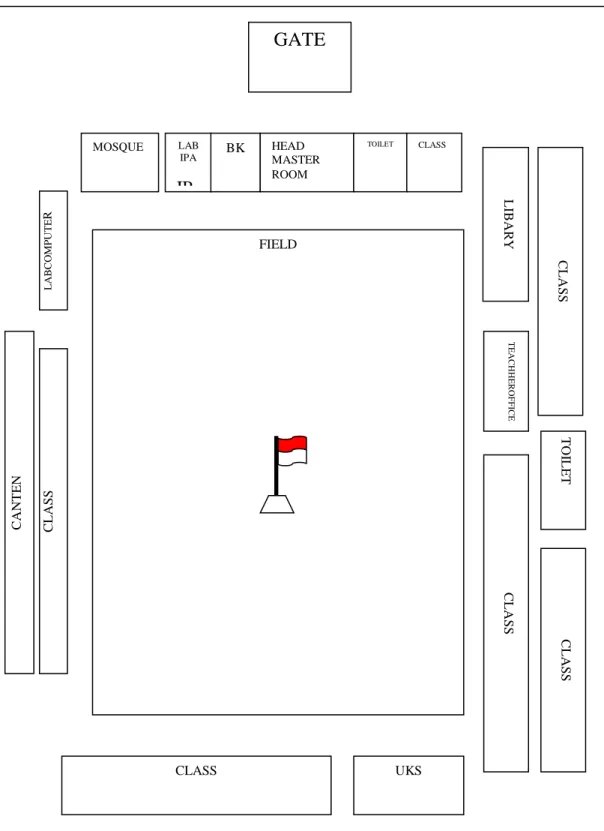
- Description of Research Location
- Description of Research Result`S Data
From the table above, it can be seen that the average of the core students in the pre-examination is 56.63. In addition, the researcher created an observation sheet that consists of a list of students' names and a list of student activities that will be observed during the teaching of the learning process. The writer distributes the material and selects the material to teach. f) The writer informs about the material. g).
For example: "What about your vacation?" .. k) Before the processing is done, the author explains the procedure for the timeline. l) After the treatment, the writer gives post-test to the students by asking the students to make retelling text. m) Students ask and discuss the difficulties of the lesson. n) Make the union of the material. o) End the lesson by praying. In the observation of the research, the researcher used two observations in cycle I to find information about the activity of the teacher and the students in writing Retell text. Then the researcher observed the students' activity, such as how the students should pay attention to the teacher's explanation, the students ask/answer the question from the teacher, the student's can create a timeline and the students do retell texts well.
At the end of this cycle, the researcher analyzed and calculated all the processes, such as the students' pre-test score and the result of the students' I-score after the test. The researcher has prepared an observation sheet consisting of a list of the students' names, a list of the students' activities, and a list of the teacher's activities that will be observed during the learning process. Based on the result of students' recount text in post-test II, it can be deduced that there were 80% or 24 students for the score below the interval of >75 who completed the Minimum Standard Criteria (MSC) at least 75, while 20% or 6 students for the score below the interval <75 who fail to complete the Minimum Standard Criteria (MSC) at least 75.
Then the researcher observed the students' activity, for example, how the students pay attention to the teacher's explanation, the students ask/answer the teacher's question, the students make a timeline from the material, and the students can create a narrative text well. Comparison of student results after exam I and results after exam II in cycle II.
Discussion
This means that in cycle I the students' performance could have been sufficient, but it was not successful because the indicator of success had not yet been reached. The researcher offered the post-test II to measure the students' ability after the implementation of the treatment. Based on table 17, the students' average was 75.57. It showed that most of the students achieved the Minimum Standard Criteria (MSC) of at least 75.
Moreover, in cycle II, the average score of the students was higher than that of cycle I. Below is the illustrative score table in cycle I and cycle II. It is supported by the increase in student scores from pre-test to post-test I and from post-test I to post-test II. 5. The result of the learning activities of the students in cycle I and cycle II The data of the learning activities of the students were obtained from all the learning activities of the students in the observation sheet. Students pay attention to the teacher's explanation The students' attention to the teacher's explanation increased from the first meeting to the next meeting.
The number of students who completed the task increased. d) Pupils form a narrative text well. Then, based on the interpretation of cycle I and cycle II, it can be concluded that the use of the timeline strategy improved the students' writing skill in the Recount text, that the mean score progressed from 56.63 to 65.93 and to 75.57. Graph 9 shows that the average grade and the total number of students who passed the test increased from the pre-test, post-test I to post-test II.
The researcher concluded that timeline strategy was an alternative strategy that had improved the students' writing skills. In conclusion, there was a positive and significant improvement of the use of the timeline strategy on the students' writing skills in retelling texts in the tenth grade students of MAN 1 Lampung Timur. After the students became interested, the material taught by the teacher would be more easily understood by the students.
Based on the above discussion, it could be concluded that the students felt comfortable and active in the learning process, as most of the students found that the learning activities improved well when the time strategy was used in the learning process from Cycle 1 to Cycle 2. of the plan. It made it easier for students to understand the material so that their ability to write narratives could be improved. It was clear that the timeline strategy could be used to improve students' writing skills.
Based on the observation of the class, the students will become more active after the teacher motivates the students.