Against this background, KINU conducts its research into the reality of North Korean human rights. The 2018 White Paper on Human Rights in North Korea is written in accordance with the following principles:
Extrajudicial, Summary, or Arbitrary Execution
Amnesty, pardon or commutation of the death penalty may be granted in all cases. Under the provisions of Article 6 of the ICCPR, Article 14 of the ICCPR (which provides for the right to a fair trial), and Article 15 of the ICCPR (which establishes the principle of non-retroactivity of punishment), extrajudicial, summary, or arbitrary execution is prohibited.
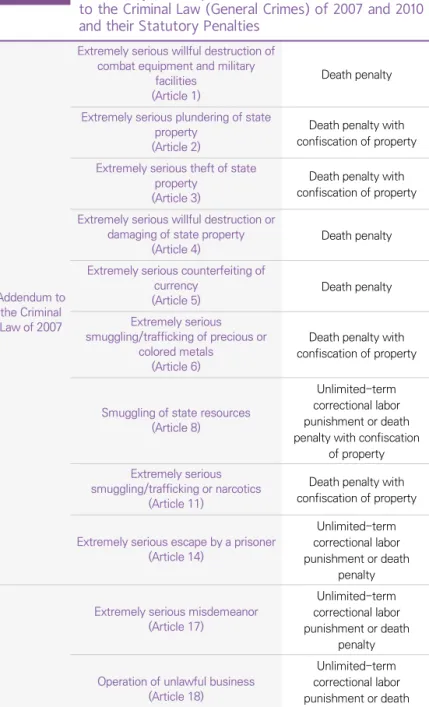
Broad Imposition of Death Sentence for Crimes
When the action in subsection 3 is particularly serious, they must be sentenced to life imprisonment or the death penalty. When the action in subsection 3 is particularly serious, they must be sentenced to indefinite detention or the death penalty.
Death Sentence to Juvenile Offenders and Execution of Pregnant Women
Other infringements on the Right to Life
Evaluation
Regular execution of the death penalty violates Article 6, paragraph 2 of the ICCPR, which states that in a country with a death penalty system, the death sentence shall be imposed only in cases of "the most serious crimes". However, according to the 2010 revision of the Addendum, which was obtained in 2017, North Korea reduced the number of crimes subject to the death penalty and added lifelong corrective labor to crimes previously punishable by death only or the death penalty with confiscation of property. As in the UDHR, Article 7 of the ICCPR also prohibits torture and inhuman treatment, and even goes a step further by prohibiting medical and scientific experiments.
Torture and Inhumane Treatment in the Handling of Criminal Cases
A North Korean defector who was arrested for illegal border crossing and held in an MSS detention facility in Musan County, North Hamgyeong Province, for 20 days in 2014 was severely abused during the investigation process. A North Korean defector interrogated at an MSS detention facility in Yanggang in 2014 testified to being forced to admit that he called South Korea, not China.
Public Execution of the Death Penalty
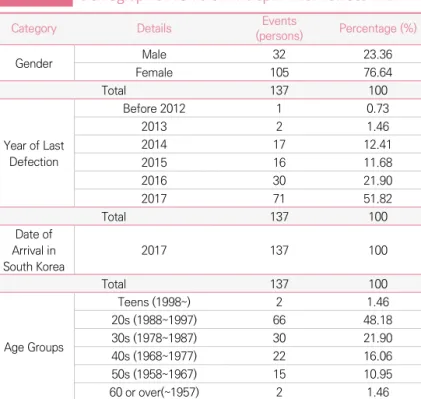
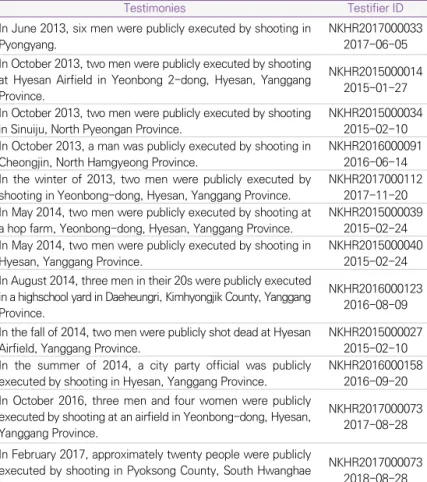
According to the testimonies of North Korean defectors, public executions are still carried out in North Korea, and a 2017 survey collected cases of public executions. In general, public executions are more concentrated in border areas than inland areas and in cities than in rural areas.
Enforced Disappearances
This may be because there is relatively more illegal activity in border regions and cities, and the North Korean authorities try to warn and instill fear in residents in those regions through public executions.
Evaluation
No one may be held in slavery; slavery and the slave trade in all their forms will be prohibited. This chapter will examine the situation in North Korea regarding the right not to be forced into labour.
Labor Training Punishment for Minor Offenses
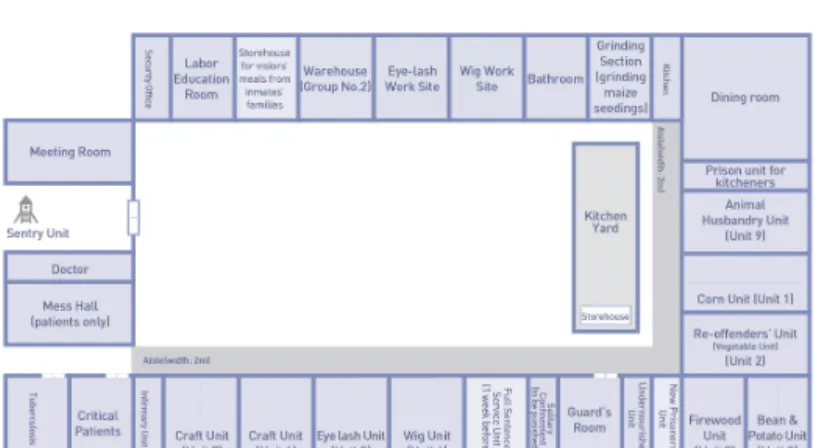
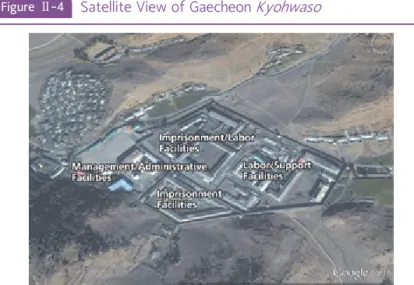
Penalties depriving liberty and imposing forced labor in the North Korean Criminal Law include the penalty of corrective labor - i.e., the penalty of indefinite corrective labor and the penalty of limited corrective labor - and the penalty of labor training (Article 27). The sentence of indefinite/limited-term correctional labor detains criminals in prison camps (kyohwaso) and forces them to work, with the period of the sentence of limited-term correctional labor ranging from one year to fifteen years (art. 30).
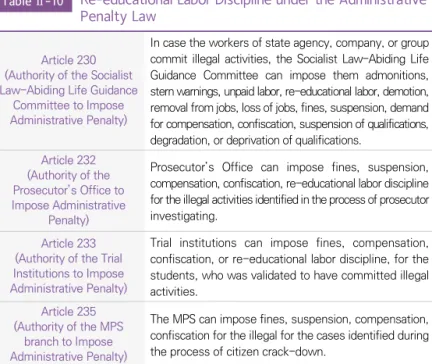
Re-Educational Labor Discipline
The prosecutor's office can impose fines, suspension, compensation, confiscation, disciplinary work re-education for the illegal activities identified in the prosecutorial investigation process. Judicial institutions may impose fines, compensation, confiscation or re-educational labor discipline for students who have been proven to have committed illegal activities.
Labor Exploitation of Prisoners in Holding Centers ( jipkyulso )
A North Korean defector testified that he was forced to give birth while detained in a detention center in Cheongjin, North Hamgyeong Province, for four months in 2014. In March 2013, the witness was mobilized for apartment construction work when he/ she was detained at the detention center in Hyesan, Yanggang Province.
Arbitrary or Unlawful Arrest/Detention
Anyone who is arrested shall be informed, at the time of arrest, of the reasons for his arrest and shall be promptly informed of any charge against him. Regarding arrest or detention during preliminary examination, North Korea's Criminal Procedure Law stipulates that "the preliminary examination officer may arrest or detain the person undergoing preliminary examination to prevent evasion of the examination or preliminary trial or disruption of the investigation" ( article 175). .
Insufficient Procedural Guarantee of Liberty and Security of Person
The preliminary review of a criminal case, in which a punishment for work training can be used, is completed within ten days. Persons on preliminary examination for cases for which a sentence of work training may be applied shall be detained for five days.

Evaluation
North Korea's criminal procedure laws do not provide for a provision to inform the suspect of the reasons for his or her arrest and the facts of the charges. It appears that North Korea also does not recognize the right to demand a review of the legality of arrest and detention.
Inhumane Treatment of Persons Deprived of Liberty
In December 2015, the witness was forced to remain in a fixed position at an MSS detention center in Hyesan, Yanggang Province. In 2016, the witness was forced to hold a fixed position in an MSS detention center in Hyesan, Yanggang Province.

Issues Related to Treatment of Unconvicted Prisoners
In 2016, the witness was detained at the MSS Detention Center in Hyesan, Yanggang Province, and was given corn and cabbage soup for meals. There are also no separate provisions for the separate detention of unconvicted and convicted prisoners and the treatment of unconvicted prisoners.87 As noted above, there appears to be a basic separation of unconvicted and convicted prisoners; premises for those sentenced to correctional sentences, sentences for work training or work disciplinary training are different from facilities for suspects or accused of crimes.
Issues Related to Treatment of Convicted Prisoners
A more detailed survey appears to be necessary to better identify whether acquittals receive appropriate treatment distinct from that of convicted prisoners. First, there appear to be no separate provisions on the treatment of convicted prisoners in the North Korean laws.88 Provisions related to punishment in the North Korean Penal Code seek to train convicted prisoners through labor in prison camps, etc.
Issues Related to Treatment of Unconvicted and Convicted Juvenile Prisoners
Violence and ill-treatment in detention facilities may also constitute violations of Article 7 of the ICCPR (which prohibits torture and inhuman treatment), and deaths in detention facilities may constitute violations of Article 6 of the ICCPR (which sets out the protection of the right for life). The right to freedom of movement and residence is one of the basic human rights.
Using Travel Permits to Control People and Restrict Movement
In the fall of 2012, the witness obtained a travel permit to go to Pyeongseong from Hyesan, Yanggang Province to sell and hawk. In 2015, a witness traveled from Hyesan, Yanggang Province to southern Hamgyeong Province without a travel permit.
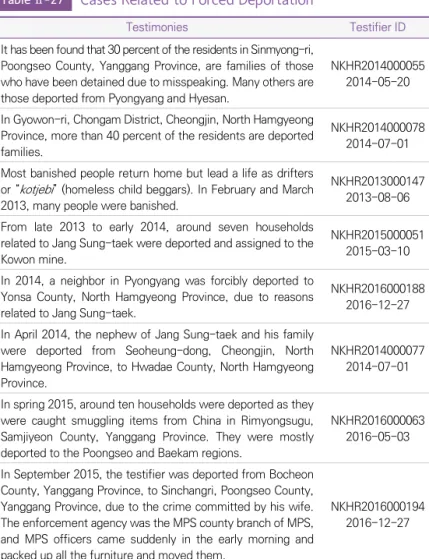
Restriction of Access to Certain Areas and Forced Deportation
If the restriction of access to certain areas through regulation and the imposition of approval numbers via the travel permit system constitutes a passive violation of the right to freedom of movement and residence, forced deportation carried out by the North Korean authorities is a form of active violation. North Korean authorities use forced deportation as a policy to control political reactionaries, anti-government individuals and their families.
Restrictions on Entry to Border Areas and Prohibition against the Freedom to Leave
The 2017 survey assesses that the right to freedom of movement and residence of the North Korean people is seriously violated by the policies of the North Korean authorities. An example of this is the restrictions on the right to freedom of movement through the maintenance of the travel permit system and crackdowns per zone.
Lack of Judicial Independence
People's jurors participate in the trials of first instance (Article 9 of the Law on the Constitution of Courts). Rulings and decisions are made by majority vote of the judge and the people's jurors (Article 17 thereof).
Unfair Trials
Although the witness tried to protest, the guards stopped him.122 Another North Korean defector who went through a trial in Hyesan, Yanggang Province, in 2010 reported that he/she had requested and was promised a witness for the trial. In the end, the witness was sentenced to five years of correctional labor at the preliminary examination, but was sentenced to one year of labor training at trial.125 A North Korean.
Operation of Quasi-Judicial Systems
A prosecutor at the MSS prosecutor's office makes a decision in the name of the main court, the trial is held behind closed doors, and punishment is determined according to the Criminal Code. Administrative sanctions are also provided for in the Law on People's Security Enforcement and the Law on Prosecution and Surveillance.
Infringement on the Right to Defense
The Criminal Procedure Act also stipulates that "a person who is in preliminary proceedings or a person who is accused of a criminal act has the right to a lawyer of his choice". North Korea's Criminal Procedure Law states that “a designated defense attorney may contact and talk with a person undergoing preliminary interrogation or a person accused of a crime.
Insufficient Guarantee of the Right to Appeal and Perfunctory Operation of the Appeal System
Some individuals also stated that they did not appeal because they thought they would not be able to last in detention for the duration of the appeal process. A North Korean defector who went on trial in Samjiyeon County, Yanggang Province in August 2014 said he did not appeal the court's decision because the process could take another year or two.
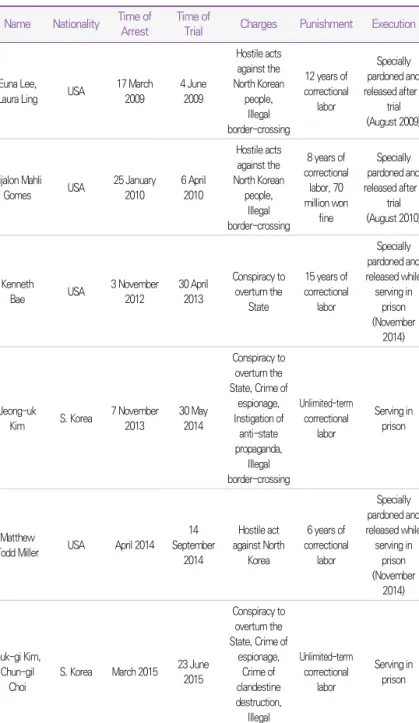
Infringement on Foreigners ’ Right to Trial
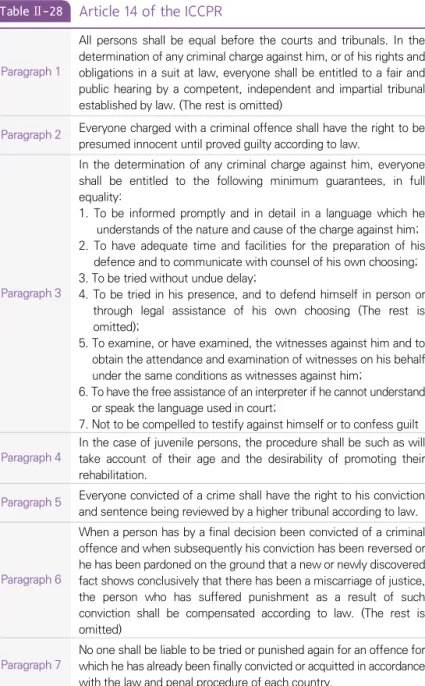
This violates the right to freely appoint counsel as enshrined in Article 14(3)(b) of the ICCPR and ultimately also violates the general right to a fair trial. The second feature is the arbitrary restriction of foreigners' right to consultation with the consul during their period of detention.
Evaluation
Everyone has the right to the protection of the law against such interference or attacks." Article 17 of the ICCPR also provides for the right to privacy. This chapter will examine the main issues related to the right to privacy in North Korea.
Infringement on Privacy through the General System of Surveillance of the People
162_The head of the people's unit is proposed by the city/county (county) people's committees on the recommendation of the residents. The head of the people's unit is responsible for controlling the movement of all residents of the people's unit.
Violation of Privacy through Unlawful House Investigations
In particular, many people have stated that regular searches took place to prevent defections along the border areas. The right to freedom of ideology, conscience and religion is related to the freedom of one's inner world and is one of the most fundamental human rights.
Maintaining the Unitary Suryong Ruling System and the Ten Principles
The name was changed to "Ten Principles for Firmly Establishing the Party's Unified Leadership System" (hereinafter referred to as "Ten Principles"). See, Kim Jong Un, On the Absolute Protection of the Party's Unified Leadership System to Meet the Party's Development Needs (Pyongyang: KWP Publisher, Table Ⅱ-33 Ten Principles.
De Facto Restriction of Religious Freedom
Such restrictions on religious activities stem from the state's continued persecution of religion, based on Kim Il Sung's teaching that “religion is the opiate of the people.”188 North Korean views. The fact that freedom of religion is being restricted is also evident from the criminal cases against people involved in religion and defectors who are forcibly repatriated to North Korea.
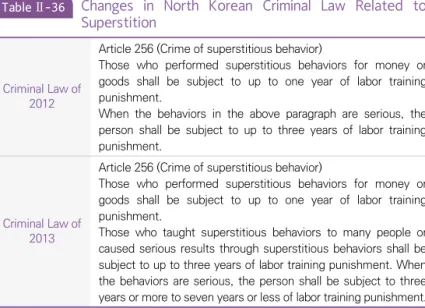
Heavier Punishment for Superstitious Behavior
In particular, the Juche ideology and the ten principles of the unified leadership system have a fundamental limitation, as they are incompatible with the right to freedom of ideology, conscience and religion. This chapter will examine the main issues related to freedom of expression in North Korea.
Restrictions on Forming and Expressing Political Opinions
The exercise of the rights according to subsection 2 of this article entails special duties and responsibilities. 198_"In the Democratic People's Republic of Korea, the rights and duties of citizens are based on collectivism
Arbitrary Censorship and Control of the Press and Publication
Broadcasting in North Korea is also operated under the guidance of the Korean Central Broadcasting Committee which is under the Cabinet. The Korean Central Broadcasting Committee is in charge of both broadcasting and regulation as the institution that plans and manages all broadcasting tasks, with the broadcasting content controlled by the Propaganda and Agitation Department of the KWP and the United Front Department.209.