Direct seeding of rice (DSR) offers an alternative production system because low inputs save labor, water and costs (Kaur and Singh, 2017). Manual direct seeding is performed by manually placing dry seeds (Figure 2a) and broadcasting pre-germinated seeds on a well-prepared and leveled field (Figure 2b).

Summary and Recommendations
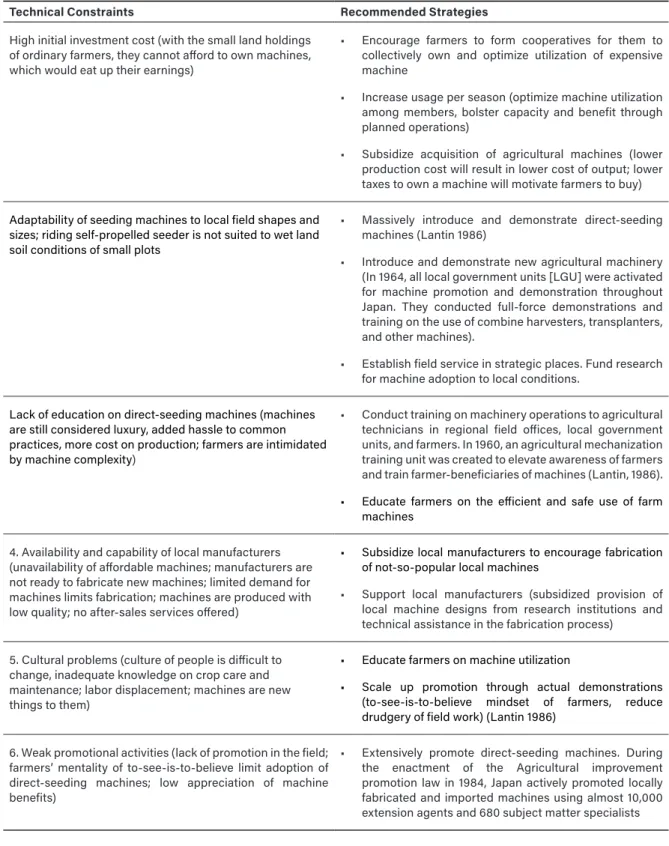
Lack of training on direct seeding machines (machines are still considered a luxury, added difficulty to common practice, more cost of production; farmers are intimidated by machine complexity). Weak promotional activities (lack of promotion in the field; . farmers' seeing-is-believing mentality limits the adoption of direct seeding machines; low appreciation of machine benefits).
Literature Cited
IN SITU GROWTH OF THE CYANOBACTERIUM, Nostoc commune VAUCHER, IN THE UPLAND
PHILIPPINES
Abstract
FULL PAPER
Introduction
It is one of the main contributors to the sequestration of carbon dioxide in organic compounds, especially in the nitrogen-poor environments of India, Indonesia and other Asian countries. Its spread in the area has been associated with the richness of the land, but nowadays, the inhabited areas have decreased significantly.
Materials and Methods
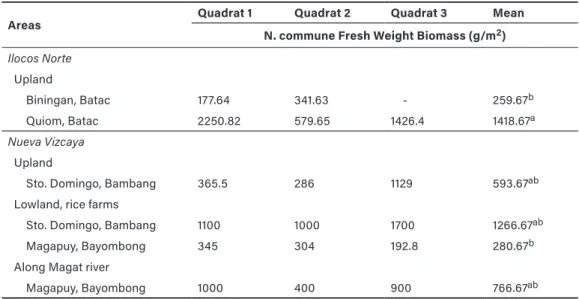
In the 1980s to the early 2000s, it was predominantly observed coexisting with rice in large biomasses in northern Luzon, especially in the rice fields and hilly areas of the Ilocos and Cagayan Valley regions (Martinez, 1988) and in Albay, Bicol -region (Rodulfo, 1990). Samples were sent to the CAFS-ASI Analytical Services Laboratory at the University of the Philippines Los Baños, Laguna for analysis.
Results and Discussion
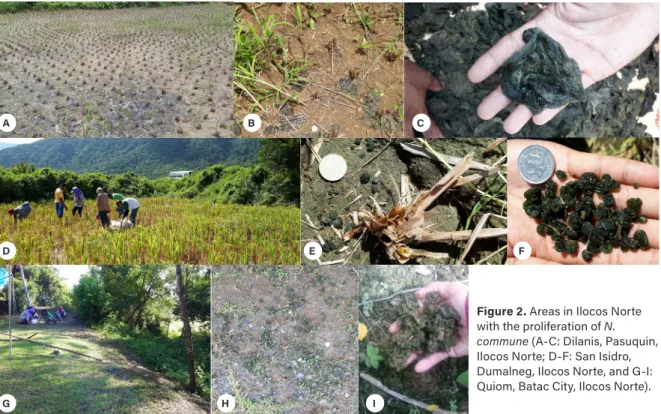
Quezon, Solano, and Bagabag were also identified by locals for the spread of N. commune, but the presence of this species was not established. Topography generally contributes to the persistence of N. Being surrounded by mountains and constant afternoon rainfall allows for high soil moisture, creating a very favorable environment for abundant reproduction. the commune, which thrives on its rice fields, also said it uses fewer chemicals.
Conclusion and Recommendation
Of the samples collected and analyzed, one of the two samples from CES (sample no. 7 soil) showed a slightly acidic pH and this is the sample without Nostoc. The rest of the samples showed very low content of organic matter suitable for rice production (<2.5%).
Acknowledgment
Arima H, Horiguchi N, Takaichi S, Kofuji R, Ishida KI, Wada K, Sakamoto T (2012) Molecular genetic and chemotaxonomic characterization of the terrestrial cyanobacterium Nostoc commune and its neighbors. Briones-Nagata MP, Martinez-Goss MR, Hori K (2007) Comparison of morphocytology and chemical composition of two forms of the cyanobacterium, Nostoc commune Vauch., from the Philippines and Japan.
EFFECTS OF RED EARTHWORMS
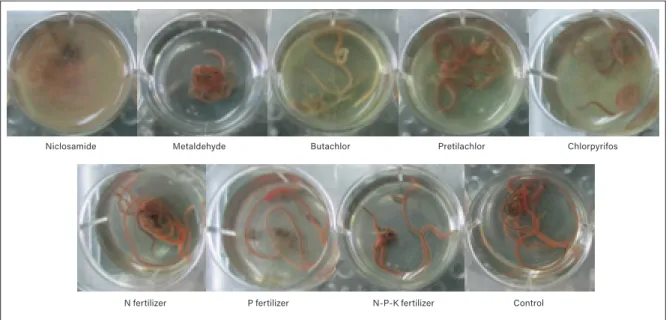
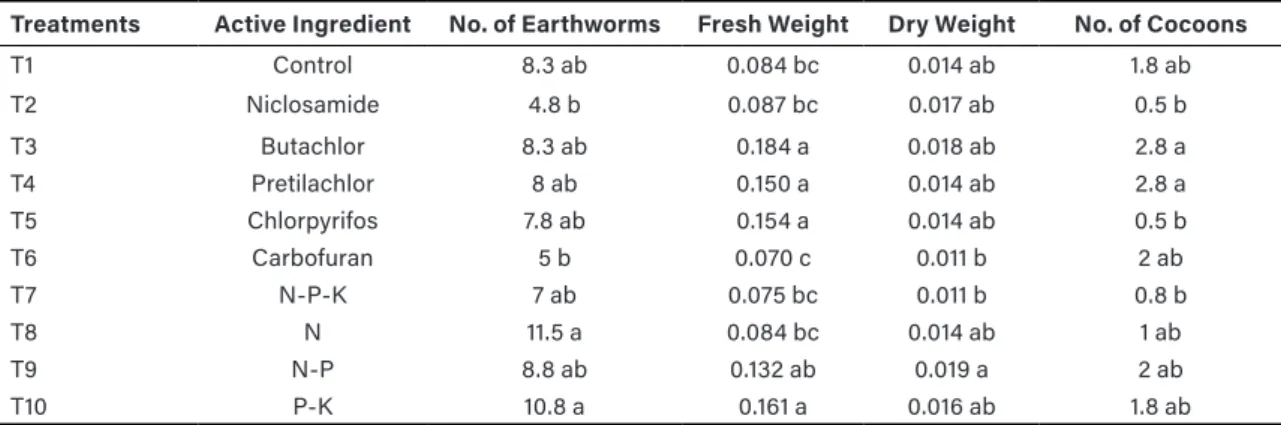
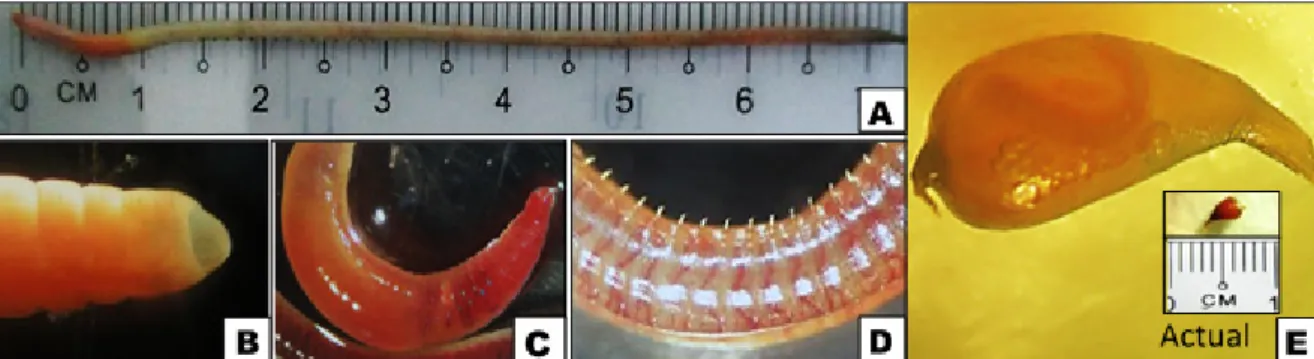
Effect of pesticides on earthworms depends on routes of exposure for each type of pesticide, information about earthworm habitats and feeding preferences (Bertrand et al., 2015). As a result, large patches of bare soil are formed, which are impermeable to water and air (Chauvel et al., 1999).
Conclusion and Recommendations
Effects of Red Earthworms Pontoscolex corethrurus (Müller, 1857) on Rice Seedlings Kale RD, Krishnamoorthy RV (1979) Pesticidal effects. Trap J, Blanchart, Ratsiatosika O, Razafindrakoto M, Becquer T, Andriamananiara A, Morel C (2021) Effects of the earthworm Pontoscolex corethrurus on rice P nutrition and plant-available soil P in a tropical Ferralsol.
EFFECTS OF STORAGE MATERIALS AND DURATION ON THE MILLING POTENTIALS, PHYSICOCHEMICAL PROPERTIES,
Comparison of Burdagol-Laguna type brown rice extraction stored with different duration at each level of storage material. Comparison of the Burdagol-Laguna type CPC stored with different durations at each level of storage material.

Conclusion
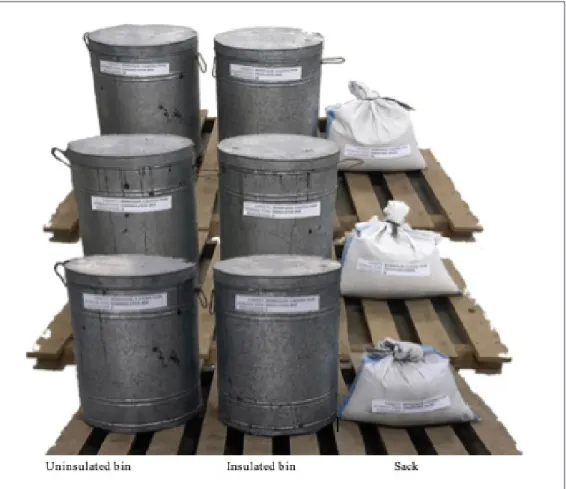
The milled rice yields of the samples stored in bins (insulated and non-insulated bins) remained constant until the fourth month of storage, while they fluctuated in the control bin. Moreover, the CPC of Burdagol-Laguna type rice stored in the isolated bin did not decrease during the five-month period, implying that the isolated bin can maintain the CPC of the aromatic rice. Furthermore, the TPC of the samples stored in containers (insulated and non-insulated) increased with increasing storage time.
Comparison of Total Phenolic Content Burdagol-Laguna Type Stored Using Different Materials at Each Storage Level. Retrieved from https://docplayer.net/44699384-Effect-of-parboiling-and-storage-on-grain-physical-and-cooking-characteristics-of-the-some-nerica-rice-varieties.html (accessed in August 31, 2022).
GRAIN QUALITY AND SAFETY ASSESSMENT OF LOCAL AND IMPORTED MILLED RICE
IN THE PHILIPPINES
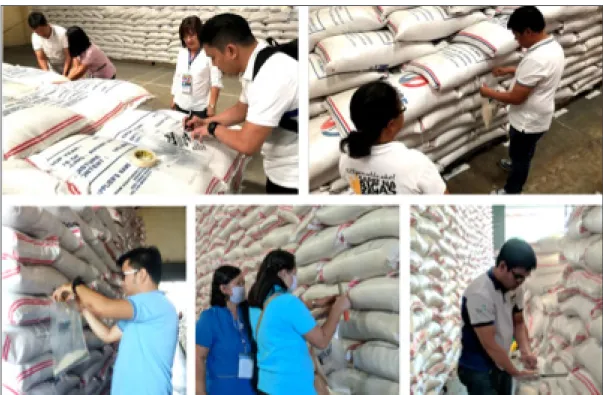
Most of the collected samples (76%) had high AC, including all imports from Thailand and Myanmar and six each from Vietnam and the Philippines (Figures 7 and 8). Percentage distribution of collected local and imported milled rice samples according to amylose content. Regarding the hardness of Instron cooked rice, the majority of rice samples (96%) fell into the preferred soft to medium classification (kg/cm2).
The majority of the rice samples from Thailand were separated, hard to slightly tender and rough. Finally, the majority of the local rice samples were somewhat grayish/slightly creamy, somewhat shiny, separated to somewhat cohesive, somewhat tender, and somewhat smooth.
IMPROVED SOMACLONES WITH MULTIPLE ABIOTIC TOLERANCE DERIVED
FROM RICE LANDRACE Y Dam Do
The majority of the population (63%) had an erect culm angle, while the remainder (37%) had a semi-erect culm (Figure 4b). Frequency distribution of the IVC lines for salt tolerance at the seedling stage, PhilRice CES, 2015 WS. Drought stress tolerance response of the IVC lines: DRR (a), recovering plants, 14 days after renewal (b), frequency of tolerant and sensitive lines (b) and soil moisture content (c).
Agronomic traits of the IVC lines under irrigated (ILD) and managed drought stress (MDR) conditions, PhilRice, CES, 2018 DS. Survival (a) of the IVC lines after 21 days from immersion; agronomic traits (b) of the IVC lines under NS and SUB growth conditions.
Summary and Conclusion
Phillips RL, Kaeppler SM, Olhoft P (1994) Genetic instability of plant tissue cultures: Composition of normal controls. Reddy A, Devender M, Mittra BN (2022) Effects of full plant submergence on vegetative growth, grain yield and some biochemical changes in rice plants. Roy SC, Shil P (2020) Assessment of genetic inheritance in rice breeding lines based on morphological traits and ultrastructure of Caryopsis.
Studies on the mechanism of submergence tolerance in relation to carbohydrates, chlorophyll and leaf specific gravity in rice (Oryza sativa L.). Yadav V, Prasad S, Singh S, Verma OP (2018) Effect of submergence stress on yield and yield components of different genotypes of rice (Oryza sativa L.) with its mapping population.
SOIL WATER EXTRACT WITH MINIMAL PHOSPHORUS ENHANCEMENT
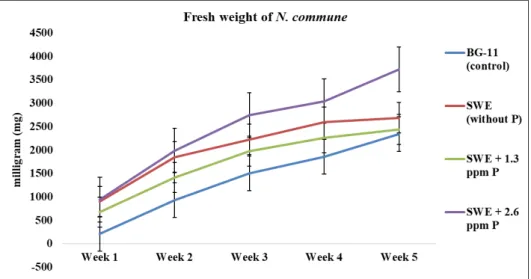
Importantly, the most common storage products of cyanobacteria are polyphosphate as a P storage compound, cyanophycin or the protein pigment phycobilin as a N storage product, and glycogen as a carbon and energy storage product (Krompkamp, 1987). commune to persist despite environmental stresses is beneficial, but further improvements may still be needed to improve its viability, especially in non-natural areas. Apparently, BG-11 does not perform well in supporting the growth and development of N. commune outdoors, despite being an established indoor medium for N. Although biomass weights of N. commune in different nutrient medium formulations under outdoor growing conditions. According to Tukey's HSD (weight gain = actual weight of N. commune - initial weight), values with the same letter in a column are not significantly different at the 5% level.
The addition of SWE medium prepared from Maligaya soil series with 1.3 - 2.6 ppm P increased the chlorophyll production in N. Meanwhile, there has been no significant difference in the number of heterocysts among all the SWE formulations compared to BG-11 .
TRAITS IMPROVEMENT OF GAL-ONG, A TRADITIONAL RICE VARIETY,
THROUGH INDUCED MUTATION
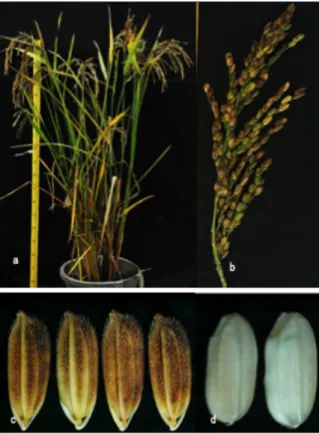
Naala ti Wild-type Gal-ong (WTGO) manipud kadagiti gubuayan ti germplasm ti PhilRice, Siudad ti Batac, Ilocos Norte. . . . Napili ken nailasin dagiti gal-ong mutant rice lines iti tallo nga agsasaruno a panawen ti panagtubo iti PhilRice Batac City, Ilocos Norte (dry season 2017 [DS] ken wet season 2017 [WS]) ken New Ecija (DS 2018). Apit ken agronomic properties ti wild-type a Gal-ong idi 2015 WS iti PhilRice Batac.
Morphological characteristics of Gal-ong wild type under field conditions at maturity in 2015 WS at PhilRice Batac. Severe stem borer incidence destroyed almost all of the putative Gal-ong mutants in the field in PhilRice CES (A-B), leading to the selection of M1 plants with apparent SB resistance (C).

PURITY AND STABILITY EVALUATION OF PHILRICE-BRED LINE PR35742A
AND PR35742B
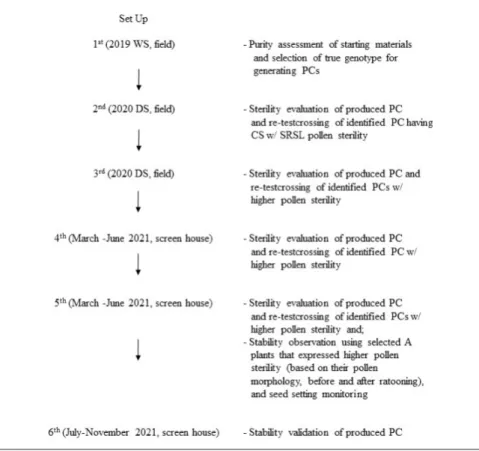
The pollen sterility of evaluated PCs with unstained pollen or 100% CS and unstained pollen + colored round sterile light was monitored. In addition, selected A plants were ratoon treated to validate the pollen sterility stability by observing the percentage of uncolored. Purity evaluation of 30 A plants of PR35742 based on the degree of pollen sterility plants in 2019 WS.
Pollen sterility evaluation of 11 pairs of crosses generated in July - November 2021 (6th setup). colorless pollen; UWS - colorless wilted sterile; USS -unstained spherical sterile; SRS-D - colored round sterile-dark;. Evaluation of pollen sterility fluctuations and self-fertilization among the selected complete sterile plants from the 5th setup.
IDENTIFICATION AND CHARACTERIZATION OF RHIZOBACTERIAL DIVERSITY IN THE IRRIGATED RICE
RNA GENE SEQUENCING
This study is part of the project supported and funded by the Philippine Council for Agriculture, Aquatic, and Natural Resources Research and Development (PCAARRD) entitled “Development of Multiple Strains of Plant Growth-Promoting Rhizobacteria-Based Biofertilizer for Sustainable Irrigated Lowland Rice Production. ”. Compant S, Clément C, Sessitsch A (2010) Plant growth-promoting bacteria in the rhizo- and endosphere of plants: their role, colonization, mechanisms involved and prospects for use. Joshi P, Bhatt AB (2011) Diversity and function of plant growth-promoting rhizobacteria associated with wheat rhizosphere in the northern Himalayan region.
Kumar AP, Shruti A, Kumar VS, Kumar SS, Prashad SK (2011) Molecular characterization of plant growth promoting bacteria from soil of Central and Upper Himalayan Region. Raweekul W, Wuttitummaporn S, Sodchuen W, Kittiwongwattana C (2016) Plant growth promotion by endophytic bacteria isolated from rice (Oryza sativa L.).
THE ROLE OF YOUNG PEOPLE
IN ENHANCING FARMERS’ ADAPTIVE CAPACITY TO CLIMATE CHANGE IMPACTS
RESEARCH NOTE
I argue that there is wisdom in mobilizing young people regarding increasing farmers' adaptability to the impacts of climate change. Youth play an important role in shaping climate change governance and policy-making processes (Han and Ahn, 2020). These methods are effective in capturing young people's stories and insights about climate change.
These enablers help young people fulfill their role in increasing farmers' adaptability to climate change. The role of youth in increasing farmers' adaptive capacity Salvago MR, Phiboon K, Faysse N, Nguyen TPL (2019) Young.

COMPARISON OF THE TOTAL PHENOLIC CONTENT AND ANTIOXIDANT CAPACITIES OF SOME PLANT FOODS AS
AFFECTED BY DRYING TREATMENTS
The DPPH radical scavenging activities of the plant extracts were evaluated using the method of Brand Williams et al. The ABTS radical cation scavenging activity of the sample extracts was evaluated based on the procedure of Pellegrini et al. The ABTS radical scavenging activities of the in the oven-dried and lyophilized vegetables are shown in Table 4.
The results generally show significant differences in the antioxidant capacities of most of the dried vegetables using the two treatments (Table 4). The analyzes show that the two drying techniques have variable effects on the phenolic content and antioxidant capacities of the different plant samples.
CALL FOR PUBLICATION
SCOPE
AUTHOR’S GUIDELINES
The preferred location for inserting figures and tables should be marked in the margin of the text of the manuscript. Captions for the figures must provide a precise description of the content and should not be repeated in the figure. The author's name and the date of publication must be included in the text.
Instructions for submitting a full article and research note are in numbers 1-5 of the Author Guidelines. The conclusion summarizes the general or most important implications and main points of the current studies.
EDITORIAL POLICY
CALL FOR PAPERS
![Figure 6. Fresh N. commune specimens collected from the rice paddies in Nueva Vizcaya (Bayombong [A]; Bambang [B]);](https://thumb-ap.123doks.com/thumbv2/filepdforg/10973597.0/25.892.139.800.586.911/figure-commune-specimens-collected-paddies-vizcaya-bayombong-bambang.webp)