
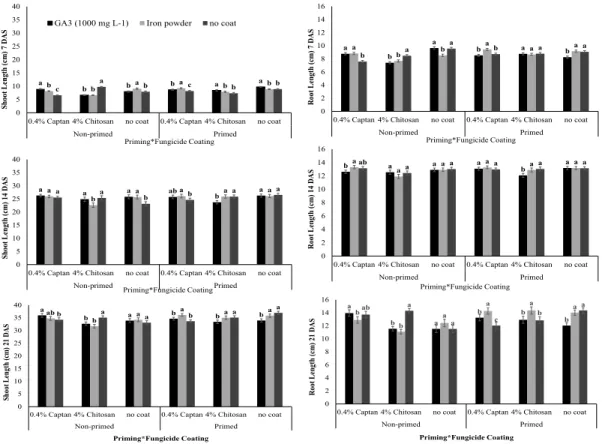
EIs of non-primed seeds coated with chitosan and non-primed seeds without fungicide coating were not significantly different. There was no significant difference in the EI of seeds coated with GA3, iron powder, or without establishment layer under 0.4% captan (Figure 3). Seed priming and coating of direct seeded hybrid rice Mestiso 19 . respectively) than seeds coated with GA3 (4.99 days).
Among non-primed seeds without fungicide coating, seeds coated with iron powder had the highest FE, followed by seeds coated with GA and seeds without root coating (95.5%). In uncoated seeds with 0.4% captan, root length (RL) of seeds coated with iron powder. For seeds filled with 0.4% captan and seeds filled with 4% chitosan, iron powder-coated seeds had significantly higher SDW than GA3-coated seeds and the no-coating treatment.
In pretreated seeds that were not treated with fungicide coating, seeds without establishment coating had a higher SDW than seeds coated with iron powder.

Kamei M, Yamauchi M (2012) Physiological performance of iron-coated primed rice seeds
Boonlertnirun K (2012) Chitosan in combination with chemical fertilizer on agronomic traits and some physiological responses related to yield potential of rice (Oryza sativa L.) Research Journal of Biological Sciences 7: 64-68. Du LV, Tuong TP (2002) Performance enhancement of dry-seeded rice: Effects of seed filling, seedling speed and seedling time. Thobunluepop P (2009) Inhibitory effect of different seed coat substances against rice seed borne fungi and their shelf life.
Yamauchi M (2005) Improved rooting and bird protection with iron-coated seeds in wet direct seeding of rice crops. Effects of steaming on the milling yield, quality and antioxidant activity of parboiled black rice (Oryza sativa L.).
Effects of Steaming on the Milling Yield, Quality, and Antioxidant Activity of Parboiled Black Rice (Oryza sativa L.)
Because of its commercial and marketing advantages, parboiled rice accounts for a quarter of the rice consumed worldwide (Bhattacharya, 2004). Retrogradation refers to the reassociation of starch grains into a more crystalline structure; leading to hardening of rice grains (Wani et al., 2012). Hulling yield was calculated using the International Rice Research Institute (IRRI) formula (2009).
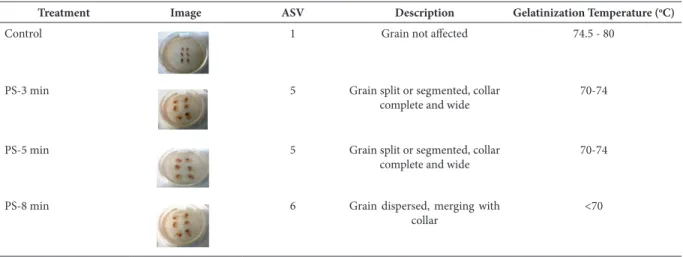
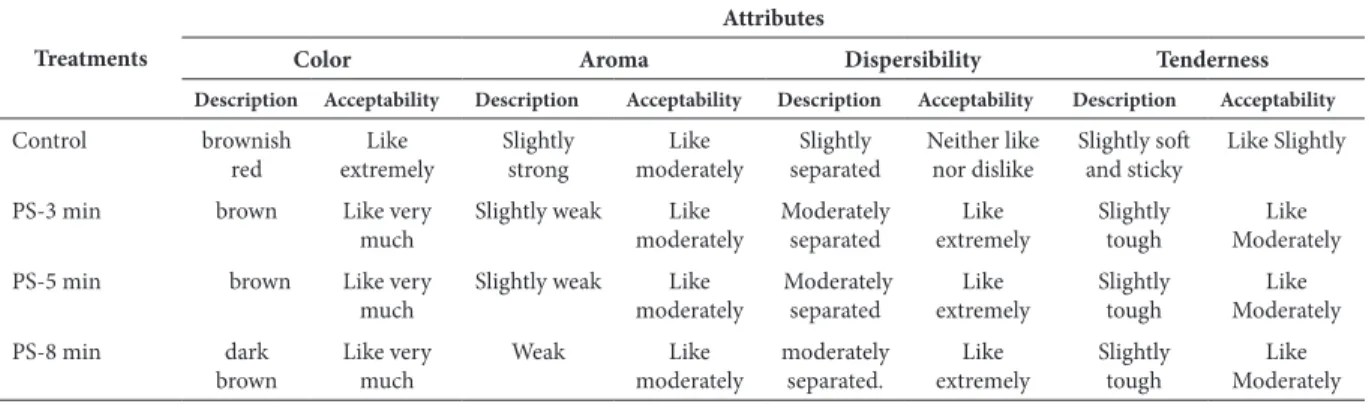
The water absorption ratio is expressed as the ratio between the final and initial volume or weight of the rice. Hulling and head rice yield of control or non-parboiled black rice and parboiled black rice steamed for 3, 5 and 8 min (i.e. PS-3 min, PS-5 min and PS-8 min). Alkaline dispersion value (ASV) and gelatinization temperature (GT) of control or non-parboiled black rice and parboiled black rice steamed for 3, 5, and 8 min (i.e., PS-3 min; PS-5 min; and PS). -8 minutes).
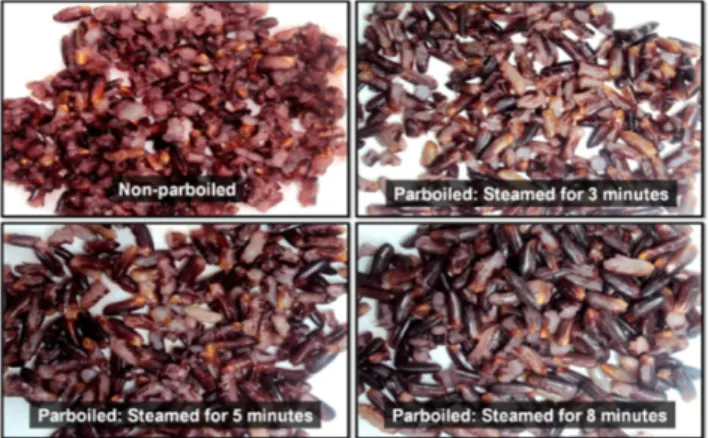
Water absorption ratio, volume expansion ratio and moisture content of the control or non-parboiled black rice and parboiled black rice steamed for 3, 5 and 8 min (i.e. PS-3 min; PS-5 min; and PS-8 min). Colors of the control or non-parboiled samples and parboiled black rice samples steamed for 3, 5 and 8 min. Manual threshing was implemented in this study due to the limited supply of black rice seeds.
Anthocyanin content and DPPH radical scavenging activities of control or unboiled and parboiled black rice steamed for 3, 5, and 8 min (i.e., PS-3 min; PS-5 min; and PS-8 min). GT refers to the water temperature at which at least 90% of the starch granules have gelatinized or lost birefringence. Gariboldi (1984) reported that pigments in the husk that were dissolved in water and introduced into the endosperm through heat (Gariboldi, 1984) caused the dark color of perfumed black rice.

2011) Parboiling of rice: changes in starch and protein and their relation to cooking
Nam S, Choi S, Kang M, Koh H, Kozukue N, Friedman M (2006) Antioxidant activities of bran extracts from twenty-one pigmented rice cultivars. Que F, Mao L, Pan X (2006) Antioxidant activities of five Chinese rice wines and the involvement of phenolic compounds. Ryu S, Park S, Ho C (1998) Determination of anthocyanin pigment by high-performance liquid chromatography in some black rice cultivars.
Suzuki M, Kimura T, Yamagishi K, Shinmoto H, Yamaki K (2004) Comparison of mineral content in 8 pigmented brown rice cultivars. Yodmanee S, Karilla T, Pakdeechanuan P (2011) Physical, chemical and antioxidant properties of pigmented rice grown in Southern Thailand. Analysis and study of the parboiling method and the following impact on reducing waste and increasing the operation of the rice conversion stage.
Productivity and Profitability Results of Seed Selection Behavior of Rice Farmers in Quezon, Palawan, Albay and.
Productivity and Profitability Outcomes of Seed Choice Behavior of Rice Farmers in Quezon, Palawan, Albay and
Based on data from experiments conducted in Nueva Ecija, the yield advantage of certified seeds over farm-saved seeds ranged from 7 to 13%. Fifty percent of farmers planted certified seeds in WS and 29% planted certified seeds in DS. Farmers in rainfed areas tended to use 30% more of the certified seeds than farmers in irrigated areas.
Farm-saved seeds had the highest mean yield among other seed sources in DS and WS, followed by certified seeds. A cost-benefit analysis showed that net returns for using certified seeds were higher in DS than in WS for irrigated and rainfed areas (Table 9). Differences in net returns between certified seeds and exchanged seeds were negative in WS in rainfed areas as crops were infected with black bugs.
Yields between certified seed and farm-saved seed in WS and DS in rainfed and irrigated areas did not differ significantly (Table 10B). In terms of costs, certified seed was more expensive than farm-saved seed in three out of four cases. Therefore, net returns from planting certified seed over farm-saved seed had a negative difference in rainfed areas in WS.
It was observed that farmers who purchased certified seed spent more on other material inputs than users of farm saved seed. In many cases, yields were not significantly different between the seed sources, except for certified seeds over exchanged seeds in wet season irrigated areas. In general, net yields of certified seed and farm-saved seeds were higher than exchanged seeds.

Constraints to Adoption of Organic Rice Production in Selected Areas in the Philippines
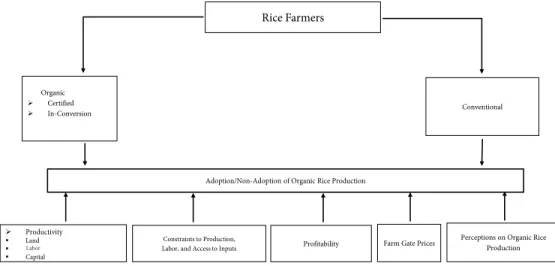
Furthermore, the perceptions of both organic and conventional rice farmers on the yield performance of organic rice farming were discussed. Analytical framework for the adoption and non-adoption of organic rice production in selected provinces in the Philippines. The respondents from organic rice growers used natural materials, while the respondents from conventional rice growers used chemical or inorganic fertilizers.
Respondents of both conventional and organic rice farmers had an average age of 56 years. Thirty percent of the converting respondents and 12% of the certified organic rice growers surveyed had problems accessing organic inputs. This was followed by respondents certified organic rice growers with a grain yield of 3.4 t/ha.
Issues related to organic rice production and perceptions regarding the adoption of organic rice farming were presented. The farmers also highlighted the low yield recovery during the early phase of organic rice production adoption. This study showed that conventional rice production had higher grain yield than certified organic rice production (Table 3).
However, certified organic rice production had higher gross and net income than conventional rice production. Therefore, based on income, switching to certified organic rice production could be incentivized. Conventional rice farmers have not switched to organic rice production due to the belief that organic farming reduces yields, is laborious, time-consuming and less profitable.
2012) Organic agriculture as an Opportunity for sustainable agricultural development,
Suitability Assessment of Maligaya Soil Series for Potential Enhancement of Rice-Based Cropping Systems
The LUT survey questionnaire was formulated based on the Food and Agriculture Organization soil evaluation framework (FAO, 1976). Information on land management attributes describing the land quality requirements (LQR) of the identified LUTs was requested. S3 Land is slightly suitable – land units with more than 2 moderate constraints but does not exclude land use.
Not Suitable N1 The land is not currently suitable - land units with severe restrictions that preclude the use of the land or more than one serious restriction that can be remedied. N2 Land is permanently unsuitable - land units with severe or very severe restrictions that exclude land use and cannot be repaired. Soil texture was determined using the hydrometric method after spraying the soil with sodium hexametaphosphate.
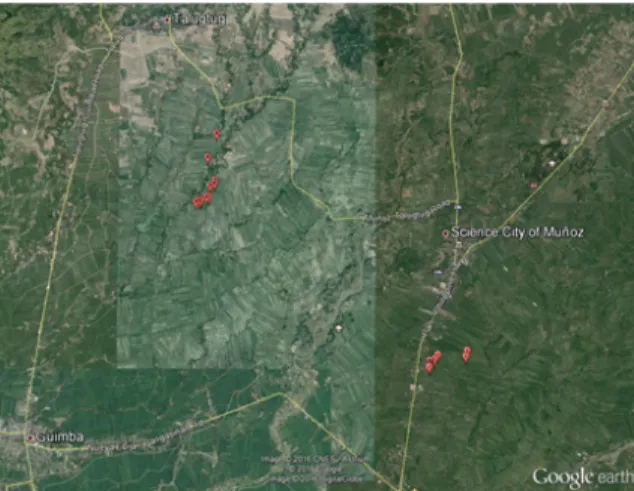
Cost and yield analyzes of the existing and recommended cropping systems were assessed based on prevailing agricultural costs and updated production. Summary of land use types (LUTs) of Maligaya series in irrigated lowlands in Brgy. Summary of land use types (LUTs) of Maligaya series in rain-fed lowlands in Brgy.
Among the crops evaluated, rice had high inherent suitability indicating that the land unit favored the cultivation of the commodity. This was based on the recent soil analysis of the test sites belonging to the Maligaya series. Flooding of the area followed by lime application is suggested prior to establishment of non-rice crops to correct the problem of low soil pH.
Call for publication
Rice-Based Biosystems Journal
The main text should be divided into the following sections: Introduction, Materials and Methods, Results, Discussion, Conclusion, Acknowledgment, and. The manuscript consists of a printout of the text and a list of all figures and tables with their captions and titles on a separate piece of paper. In anticipation of the online edition, we ask that you convey the essential information within the first 60 characters of the subtitles.
The preferred position for inserting figures and tables should be marked on the margin of the text of the manuscript. The number of tables and figures must be kept to the minimum necessary, and have a maximum of 13 cm in height and 17 cm in width. Figures submitted as electronic file should be saved in PNG instead of JPEG for better quality.
Images must be of high quality in terms of detail, contrast and fineness of grain to withstand the inevitable loss of contrast and detail during the printing process. Captions for images should accurately describe the content and should not be repeated within the image. The listed literature should be arranged alphabetically and contain: the author's surname, first and middle initials, year of publication, title of the paper, name of the journal, year number and number of the first and last pages of the publication.
The name of the author and the date of publication must be included in the text. If more than one publication by the same author appeared in one year, it must be marked with small letters after the year, e.g. References to publications by more than two authors should be cited as follows: Luna et al.
Call for Papers
Philippine Rice Research Institute





![|¿ÂÌZ|̼u Êf Àz]lÀ³Z̸,](data:image/gif;base64,R0lGODlhAQABAIAAAP///wAAACH5BAEAAAAALAAAAAABAAEAAAICRAEAOw==)