What is the role of agricultural extension in simultaneously promoting food security and conserving biodiversity. 6 responses to constraints and barriers (including training and operational issues) that limit agricultural expansion while promoting food security and conserving biodiversity.
In addition, small scale agricultural production helps reduce rural poverty and food insecurity (Lele & Agarwal, 1989). This paper has highlighted the various ways in which agricultural extension can help address food security and poverty at the household level.

The importance of extending biodiversity conservation beyond the boundaries of formally designated Protected Areas (PAs) has recently been recognized (Scoones, Melnyk & Pretty, 1992; Halladay & Gilmour, 1995; Mc Neely, 1995). Extending biodiversity conservation to Dwesa/Cwebe communal lands: qualitative assessment based on Nqabara Administrative Area.
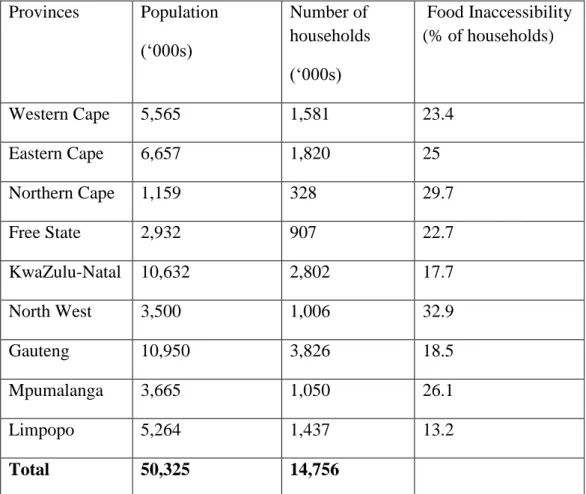
Environmental sustainability and food security are both part of the Millennium Development Goals (MDGs) which must be achieved simultaneously. For example, of the 441 vegetation types found in the country, 110 are not protected at all. In light of the food and conservation needs of South Africa outlined so far, there is an urgent need to explore solutions to achieve both goals.
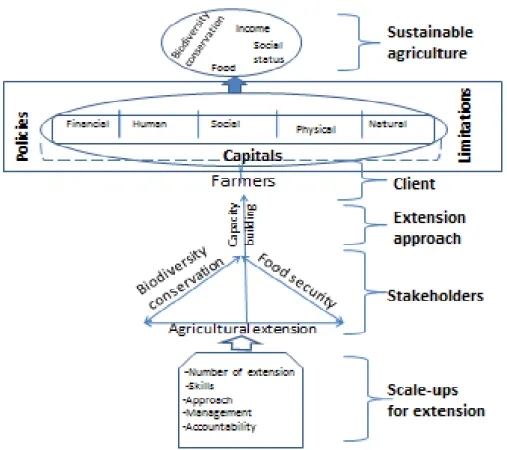
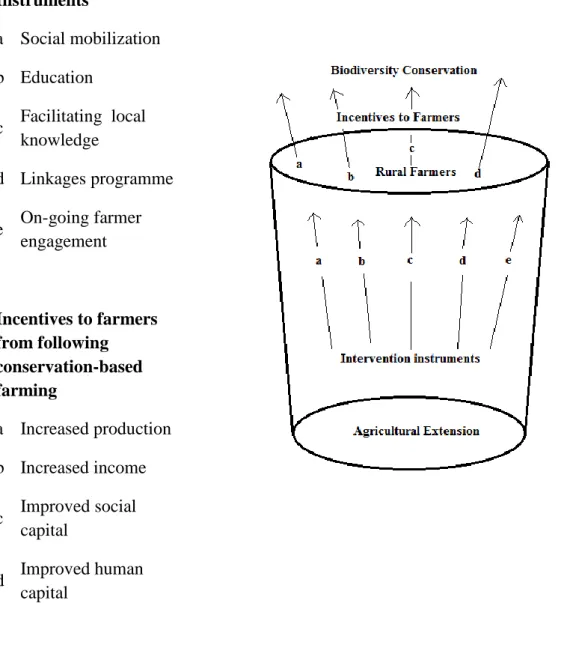
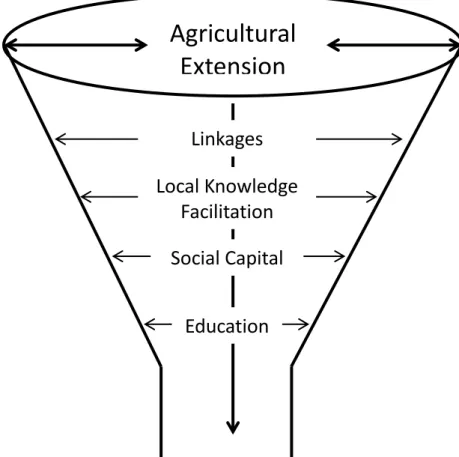
It is the conglomerate of the various components of this wealth of biodiversity that is dying out, thereby creating food shortages in the world. It is argued that achieving food security is hardly realistic in the context of the unprecedented rate at which agro-biodiversity resources are being lost. Also indicated in Figure 1 is “facilitation of local knowledge” as one of the viable tools available for extension to facilitate adoption of sustainable agriculture.
74 with the relationships that exist between them and the context of society within which decisions are made. This helps landowners identify the most appropriate methodology of applying the innovation in the context of their environment. Importance of local trade in natural resource products for livelihoods and poverty alleviation in South Africa.
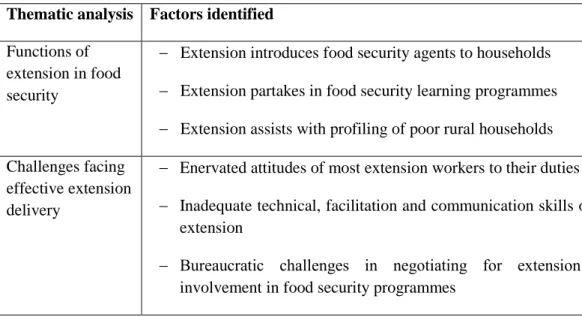
They were also asked about the relevance of current food security policies for enlargement and the importance and assessment of enlargement's contributions to food security efforts. Three provincial food security managers were interviewed to explore the role of extension in promoting food security and the challenges associated with it. Three respondents were interviewed from jointly two private organizations involved in food security and extension services.
The interview questions covered their assessment of the role of extension in achieving household food security and their perception of the challenges extension faces in promoting household food security. This study is the first of its kind to specifically investigate the role of extension in promoting household food security in the KZN province of South Africa. The findings and discussion focus on two themes: the actual contribution of extension to household food security and the factors affecting the effectiveness of extension service delivery in relation to household food security in the province.
It further found that it makes no significant contribution to household food security in the province. Household food security in South Africa: evaluating the extension paradigms against current food security and development goals. Exploring Statistics South Africa's National Household Surveys as Sources of Information on Food Security and Subsistence Agriculture.
Conservation of biodiversity outside designated Protected Areas remains challenging in South Africa, where 80% of biodiversity resources are located on private and communal lands. The study explored the nature and effectiveness of the KwaZulu-Natal agricultural extension public service's contributions to biodiversity conservation on farmland. The respondent was asked about two key issues: the adequacy of national extension policy to encourage extension support for organic farming in South Africa; and an overall assessment of the country's agricultural extension system.
The way the government of South Africa is structured, expansion only takes place at the provincial level...the implementation of the national extension strategies and evaluation of extension activities in relation to other sectors can only be done at the provinces.... The respondent was asked about the appropriateness of the current policy regarding the conservation of biodiversity on private and communal lands, the factors considered to be major drivers of biodiversity loss, and the participation of extension in the biodiversity efforts. Regarding the roles of extension in ecological agricultural systems and practices, no specific role was identified by the respondents.
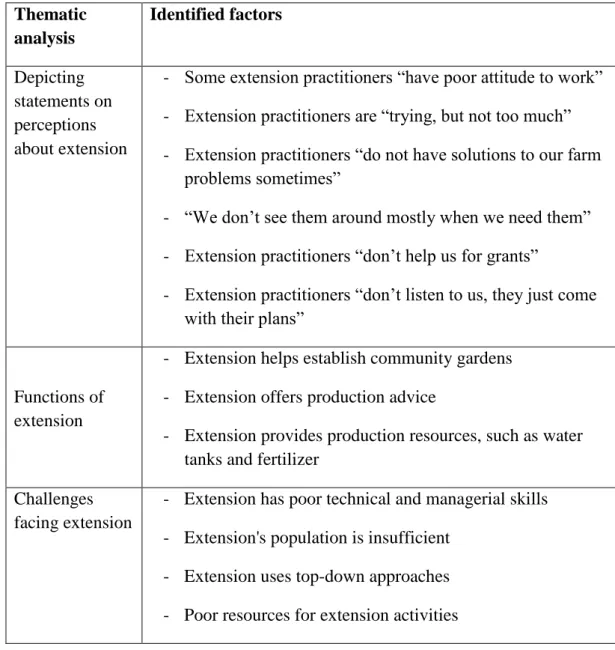
Regarding the role of extension in promoting ecological agriculture, the respondents confirmed the perception of the extension frontline that extension promotes and provides the use of external inputs, including hybrid and genetically modified seeds, chemical fertilizers and pesticides. In terms of the factors that hinder successful practice of ecological agriculture, the farmers echoed three areas identified by the extension frontline (government factors, extension management factors and household community factors) as well as a fourth area, namely ecological factors. Some of the farmers also confirmed the point raised by the extension frontline that some extension workers are not convinced of the viability of ecological agriculture.
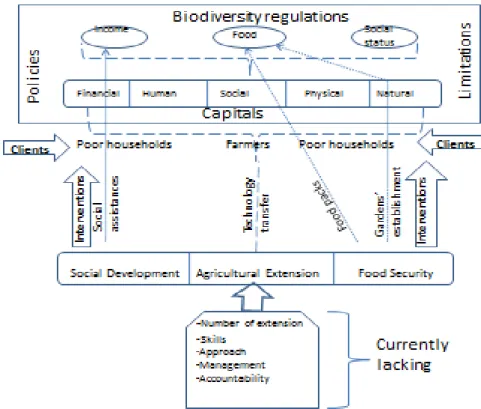
This inefficiency extends to promoting household food security in the context of promoting biodiversity conservation on agricultural land. The revised model envisages that expansion together with farmers would be in a better position to promote new agricultural ideologies to address concerns about food security and biodiversity conservation. Within the KwaZulu-Natal Department of Agriculture, there are separate departments directly responsible for food security and biodiversity conservation programmes.
The renovated model proposes to create coherent and collaborative networks in the form of institutions and processes between and within the various government departments that currently individually pursue goals related to food security and biodiversity conservation. These are particularly applicable in the national context within which extension, biodiversity conservation and food security operate in South Africa. The ineffectiveness of extension to drive or otherwise contribute meaningfully to the achievement of South African goals for agriculture, food security and biodiversity conservation is evident.
This study documented the current working model under which extension is expected to promote household food security goals as well as on-farm biodiversity conservation. Based on responses from key stakeholders in all three sectors – extension, food security and biodiversity conservation – the study proposes a revised extension model. 154 families to consider their farming and food security in the context of biodiversity conservation principles.
This condition places achieving household food security on the priority list of governmental concerns in South Africa, with the challenge directed at agricultural extension to address the situation in the context of increasing household agricultural production. In this model, the extension is envisaged to be flexible, as situations warrant, in the use of one or combinations of its dynamic approaches. However, the reality of the extension's contribution to biodiversity conservation in the KZN province (Chapter 6) contradicts the submissions.
This extension approach used in the KZN province is not consistent with the definitions of extension currently prevalent in the literature. Some recommend a complete overhaul of the extension system in place, while others suggest simply strengthening the current framework and mode of service delivery. Furthermore, this study ultimately recommends that in order to become effective in the context of simultaneously promoting the objectives of food security and biodiversity conservation in KZN and South Africa in general, the extension system requires a comprehensive re-evaluation and restructuring, starting with the creation of coherent policies.
167 Juxtaposed with the findings from the literature and the findings from the primary research presented in Chapters 5 and 6, it is clear that extension in the KZN province, both in policy and practice, is unable to promote food security in the context of biodiversity conservation . This suggests a large disconnect between the standards in the literature and the extension in practice, particularly in the KZN province. Norms and Standards for Extension” (Ministry of Agriculture, 2005) - the guiding policy document for extension management and service delivery in the country - and the extension implementation framework and mode of service delivery in practice in KZN.
Ethical Clearance Certificate
Consent Form
Letters requesting permission for assistance
Interview Guide – Food Security
Where is food waste greatest in the food chains in the South African food chain, and what measures can be taken significantly to reduce it. What are the best indicators that can be used to define thresholds for agricultural sustainability (eg soil conditions, biodiversity, nutrient cycling, energy use, key biological processes such as pollination) and how can these be communicated through the food chain. What priority investments are needed to develop efficient input and output markets in South Africa to increase household food security.
As energy prices rise, how can agriculture increase its efficiency and use fewer inputs and fertilizers to become economically sustainable and environmentally sensitive, but still feed a growing population. How can market-based food supply systems be developed that provide economically sustainable levels of financial reward to all participants in the food chain (i.e. farmers, processors and retailers), while simultaneously providing safe, nutritious, natural resource-controlled and affordable food to consumers. What mechanisms will provide incentives for further investment in sustainable, high-yield agriculture that also maintains ecosystem services.
Should national food safety policies be designed to be more compatible with global open market food policies. If so, how can this be done while ensuring the interests of local farmers and equal access to food. Can (or do you think) intervention methods can be developed that encourage and provide incentives to all consumers to eat healthy diets.
Interview Guide - Farmers
Interview Guide – Extension Officers
Interview Guide - Biodiversity Conservation
Confirmation of data collection