AN ASSESSMENT OF THE GIBA GORGE SPECIAL RATING AREA AS A BIODIVERSITY STEWARDSHIP PRACTICE
By
CHUMA BANJI CHINZILA
Submitted in fulfilment of the academic requirements for the degree of Doctor of Philosophy in Geography and Environmental Science In the School of Agricultural, Earth and Environmental Sciences
University of KwaZulu-Natal Westville campus
March 2015
As the candidate’s supervisors we have approved this thesis for submission.
1. Name: Dr. Fathima Ahmed 2. Name: Prof. Urmilla Bob
ABSTRACT
Traditional conservation practices restricted resources to formally Protected Areas leaving biodiversity lying outside Protected Areas with minimal or no formal management. Increasing evidence of significant biodiversity lying outside Protected Areas, even in urban areas has necessitated innovative strategies for conserving biodiversity for human well-being. One such strategy is the use of a ‘Special Rating Area’ (SRA) legislative instrument to raise funds for managing biodiversity on privately owned properties through a pilot project in the Giba Gorge Environmental Precinct (GGEP). The aim of this study is to assess the Giga Gorge SRA as a biodiversity stewardship practice by understanding the processes of open space management and the impact it has had on local communities, ecosystems and adjacent property. The study was conducted involving the GGEP property owners and the Tshelimnyama community members (local community adjacent to the GGEP) comprising the traditional healers and general community members. The study is guided by the political ecology conceptual framework for understanding environmental issues in the GGEP and how socio-political processes at various scales have shaped the GGEP project. In addition, stakeholder theory provides a framework for exploring relationships among GGEP stakeholders and how their interests are managed. The study uses a sequential explanatory mixed methods approach in data collection and analysis. Analysis of data reveals improvement in the quality of ecosystems during the period 2010 to 2012. Secondly, findings reveal unsustainable natural resource uses such as recreational activities and medicinal plant harvesting. Thirdly, the study highlights negative stakeholder perceptions towards management activities resulting from communication breakdown.
Fourthly, findings show that majority of the property owners did not find security concerns in the GGEP open space as factors that would restrict their interactions with the open space and other open space users. Lastly, the study reveals that the GGEP project had no impact on property value. This study recommends that the GGEP management develops and implements research based communication strategies for engaging stakeholders in the processes of managing the GGEP project.
PREFACE
The experimental work described in this thesis was carried out in the School of Agriculture, Earth and Environmental Sciences, University of KwaZulu-Natal, Westville campus, from July 2011 to December 2014, under the supervision of Dr. Fathima Ahmed and Professor Urmilla Bob.
This study represents original work by Chuma Banji Chinzila and has not otherwise been submitted in any form for any degree or diploma to any tertiary institution. Where use has been made of the work of others it is duly acknowledged in the text.
DECLARATION - PLAGIARISM
I, Chuma Banji Chinzila declare that:
1. The research reported in this thesis, except where otherwise indicated, is my original research.
2. This thesis has not been submitted for any degree or examination at any other university.
3. This thesis does not contain other persons’ data, pictures, graphs or other information, unless specifically acknowledged as being sourced from other persons.
4. This thesis does not contain other persons' writing, unless specifically acknowledged as being sourced from other researchers. Where other written sources have been quoted, then:
a. Their words have been re-written but the general information attributed to them has been referenced
b. Where their exact words have been used, then their writing has been placed in italics and inside quotation marks, and referenced.
5. This thesis does not contain text, graphics or tables copied and pasted from the Internet, unless specifically acknowledged, and the source being detailed in the thesis and in the References sections.
Signed: Date: 26 March 2015
TABLE OF CONTENTS
Contents Page No.
ABSTRACT……… ii
PREFACE ……….. iii
DECLARATION – PLAGIARISM……… iv
TABLE OF CONTENTS……… v
LIST OF TABLES……….. x
LIST OF FIGURES ………... xii
ACKNOWLEDGEMENTS ……….. xiv
LIST OF ACRONYMS ………. xv
CHAPTER ONE: INTRODUCTION 1.1 Preamble……….. 1
1.2 Background……….. 4
1.3 Rationale………... 6
1.3.1 Landscape context………. 7
1.4 Aim and objectives……….... 11
1.5 Chapter sequence……….. 12
1.6 Conclusion……… 13
CHAPTER TWO: CONCEPTUAL AND THEORETICAL FRAMEWORK 2.1 Introduction……….. 14
2.2 Political ecology approach……… 14
2.2.1 Political ecology discourses in natural resource conservation……….. 16
2.2.1.1 Discourse of spatial scale……… 16
2.2.1.2 Power discourses……… 17
2.2.1.1 Conservation policy discourses………. 18
2.2.1.3 Gender discourses……….. 19
2.2.1.4 Discourses of Environmental ethics……… 20
2.2.2 Political ecology and conservation……….. 21
2.2.2.1 Paradigm shifts in environmental management……… 21
2.2.2.2 The politics in environmental conservation………. 22
2.2.3 Application of the political ecology approach……… 24
2.2.4 Linking Political ecology to Stakeholder Theory……… 25
2.3 Stakeholder theory……….. 25
2.3.1 Stakeholder theory in perspective……… 25
2.3.1 Principles of the stakeholder theory……… 27
2.3.2 Criticism of the stakeholder theory………. 28
2.3.3 Stakeholder identification……… 30
2.3.4 Stakeholder management………. 32
2.3.4.1 Stakeholder management strategies……….. 33
2.3.5 Application of the stakeholder theory……….. 35
2.6 Conclusion………... 37
CHAPTER THREE: LITERATURE REVIEW 3.1 Introduction………. 38
3.2 Sustainable development………. 39
3.2.1 International multilateral agreements……… 41
3.2.2 South African legislative framework………. 44
3.2.2.1 Biodiversity stewardship……… 47
3.2.2.2 Institutions for managing biodiversity……… 51
3.3 Urbanisation and its impacts on biodiversity……… 53
3.3.1 Contextualising the South African urban environment and dependence on ecosystems……… 55
3.4 Ecosystems and livelihoods………. 57
3.4.1 Human well-being………. 58
3.5 Drivers of ecosystem change……… 60
3.5.1 Indirect drivers of change……….. 60
3.5.2 Direct drivers of change………. 64
3.5.2.1 Land-use change……… 64
3.5.2.2 Overexploitation………. 65
3.5.2.3 Climate change………... 68
3.5.2.4 Nutrient loading, pollution and invasive alien species……….. 74
3.5.3 Ecosystem restoration and rehabilitation……….. 76
3.6 Urban conservation……….. 78
3.6.1 Open spaces………... 80
3.6.2 Management systems of open spaces……… 83
3.6.3 Management challenges in open spaces……… 85
3.6.3.1 International funding models for open spaces……… 86
3.6.4 Perceptions on open spaces……… 87
3.6.5 Land-use conflicts……….. 88
3.7 Conclusion……… 92
CHAPTER FOUR: STUDY AREA AND METHODOLOGY 4.1 Introduction………... 93
4.2 Background to the case study………... 93
4.3 Study area………. 94
4.3.1 Location………. 95
4.3.2 Ownership………. 96
4.3.3 Physical environment……… 97
4.3.4 Ecosystems……… 98
4.3.4.1 Grassland ecosystem……….. 99
4.3.4.2 Scarp forest………. 101
4.3.4.3 Rivers and wetlands……… 102
4.3.4.4 Cliffs………... 103
4.3.5 Umhlatuzana rock shelter……….. 105
4.3.6 Invasive alien species………. 106
4.3.7 Red data species……… 107
4.3.8 Social-economic status………. 108
4.4 Research methodology……….. 110
4.4.1 Research design………. 111
4.4.1.1 Rationale for combining qualitative and quantitative research techniques………… 113
4.4.1.2 Mixed methods sequential explanatory design……….. 114
4.4.4 Population and sample……….. 114
4.4.5 Implementation of the research design……….. 116
4.4.5 Phase 1: Quantitative techniques in data collection……….. 118
4.4.6 Phase 2: Qualitative techniques………. 118
4.4.6 Primary data analysis……… 123
4.4.7 Secondary data analysis……… 124
4.4.7.1 Change analysis methodology……… 124
4.4.7.2 Property value analysis: proximate premium analysis………... 126
4.4.8 Integration……….. 127
4.5 Limitations of the study……… 128
4.6 Conclusion……… 129
CHAPTER FIVE: DATA PRESENTATION AND ANALYSIS
5.1 Introduction……….. 131
5.2 Stakeholder identification……… 129
5.3 Demographic information……… 133
5.3.1 Tshelimnyama community members……… 133
5.3.1.1 Organisation of the traditional healers……… 133
5.3.1.2 Gender………. 135
5.3.1.3 Age……….. 136
5.3.1.4 Race……… 136
5.3.1.5 Level of education……….. 137
5.3.1.6 Income……… 137
5.3.2 GGEP property owners………. 138
5.3.2.1 Gender……… 138
5.3.2.2 Age………. 139
5.3.2.3 Race……… 140
5.3.2.4 Level of education attained……… 141
5.3.2.5 Occupation and Income group……….. 141
5.3.2.6 Place of residence and length of stay in the GGEP……… 143
5.3.2.7 Stakeholders’ understanding of the GGEP project………. 144
5.4 Stakeholder Management………. 145
5.4.1 Changes in natural resource base in the period 2010 to 2012 ..……… 146
5.4.2 Contextualising changes in natural resource abundance………... 160
5.4.2.1 Natural Resource harvesting……….. 160
5.4.2.2 Invasive Alien Species……… 167
5.4.2.3 Soil erosion……… 172
5.4.2.4 Pollution………. 174
5.4.2.5 Unplanned fire regime……… 178
5.4.3 Current uses of natural resources……… 179
5.4.3.1 Prospects of allowing non-GGEP residents into the open space……….. 186
5.4.4 Stakeholders’ perceptions of the GGEP project……… 189
5.4.4.1 Communication………. 189
5.4.4.2 Natural resource management contestations in the GGEP………. 193
5.4.4.3 Perceptions on funding for the GGEP project……… 201
5.4.4.4 Perceptions on desirability of the GGEP……… 203
5.4.5 The impact of security measures on stakeholder perceptions……… 208
5.4.6 Impact of the GGEP project on property values or surrounding development………. 211
5.5 Conclusion……… 214
CHAPTER SIX: CONCLUSIONS AND RECOMMENDATIONS
6.1 Introduction……….. 216
6.2 Reflections on the theory or conceptual framework……… 217
6.3 Summary of key findings in relation to the aim and objectives of the study………….. 218
6.3.1 Changes in natural resource during the period 2010 to 2012……… 218
6.3.2 Current uses of natural resources in the GGEP in relation to the extent to which resources are extracted………. 219
6.3.2.1 Management of natural resource in the GGEP………... 220
6.3.3 Stakeholders’ perceptions towards the GGEP project……….. 221
6.3.4 The extent to which security measures affect the stakeholders’ perceptions of the interactions with the community and the GGEP project………... 223
6.3.5 Impact of the GGEP SRA on property values or surrounding development…………. 223
6.3.6 Recommendations……….. 224
6.3.6.1 Management of the GGEP open space ecosystems……… 224
6.3.6.2 Recreational activities………. 224
6.3.6.3 Natural resource harvesting……… 225
6.3.6.4 Natural resource management contestations among property owners……….. 226
6.3.6.5 Security in the GGEP open space………... 227
6.3.6.6 Environmental education and awareness……… 227
6.3.6.7 Development of open spaces in South Africa………. 228
6.3.6.8 Future of the GGEP project……… 228
6.4 Concluding remarks………. 229
REFERENCES……….. 230
APPENDICES……… 269
Appendix 1: GGEP property owners’ questionnaire……….. 269
Appendix 2: Focus group discussions……… 276
Appendix 3: Key informant interview guides……… 282
Appendix 4: Stakeholder identification……….. 287
Appendix 5: Proximate premium analysis………. 289
LIST OF TABLES
Table Page No.
Table 2.1: The RDAP Scale………. 34
Table 3.1: International multilateral agreements ratified/acceded by South Africa………. 42
Table 3.2: Some of South Africa’s biodiversity conservation related legislation and instruments… 47 Table 3.3: Principles of biodiversity stewardship……… 49
Table 3.4: Value of open spaces in Durban………. 59
Table 3.5: Development of open spaces……….. 81
Table 4.1: Red Data species of the GGEP………... 107
Table 4.2: Species targeted in medicinal plant harvesting……….. 108
Table 4.3: Stakeholder identification criteria……….. 115
Table 4.4: Research techniques, methods, and research areas……… 122
Table 4.5: Themes emerging from qualitative data in relation to set objectives …………. 123
Table 4.6: Land use/land cover Classification for the GGEP……….. 125
Table 4.7: Open space quality scale for determining proximate premiums……… 126
Table 4.8: Steps in calculating an estimate of the impact of open spaces on the property tax base………. 127
Table 4.9: Reasons given for not participating in the questionnaire survey……….. 128
Table 5.1: Stakeholder groups of the GGEP identified for this study………. 132
Table 5.2: Gender composition of the Tshelimnyama sample for interviews and focus group discussions……….. 135
Table 5.3: Occupation and Income Group of the GGEP respondents………. 142
Table 5.4: Basis of their knowledge on the state of the GGEP open space………. 147
Table 5.5: Perceptions of the state of the GGEP ecosystems before the GGEP project started………. 147
Table 5.6: Perceptions on current quality of the GGEP ecosystems……… 151
Table 5.7: Changes in land use/land cover of the GGEP open space……….. 154
Table 5.8: Activities residents participated in……….. 181
Table 5.9: Activities performed by non-GGEP resident open space users……….. 174
Table 5.10: Prospects of allowing non-GGEP residents into the GGEP open space…….. 187
Table 5.11: Stakeholder interests in the Giba Gorge……… 198
Table 5.12: Amount that the respondents are willing to contribute towards the GGEP project……….. 201
Table 5.13: Comparative value of GGEP property value……… 204
Table 5.14: Benefits of maintaining the GGEP project……….. 205
Table 5.15: Disadvantages of maintaining the GGEP project………. 207
Table 5.16: Impact of the GGEP project on property value……… 211
Table 5.17: Actual impact of GGEP open space………. 214
LIST FIGURES
Figure Page No.
Figure 1.1: Funding for the GGEP management budget ……… 5
Figure 1.2: Aerial view of the GGEP area in 1954………. 10
Figure 1.3: Aerial view of the GGEP area in 2008………. 10
Figure 2.1: Venn diagram: combination of stakeholder attributes……….. 31
Figure 3.1: Conservation categories available in terms of the Protected Areas Act and the Biodiversity Act……… 46
Figure 3.2: Schematic representation of the biodiversity stewardship model being implemented in South Africa……….. 50
Figure 3.3: Illustration of resilience………. 71
Figure 3.4: Concept of ecosystem-based adaptation……… 73
Figure 4.1: Location of the GGEP………... 96
Figure 4.2: GGEP land ownerships………. 97
Figure 4.3: The GGEP open space ecosystems……… 99
Figure 4.4: GGEP open space sandstone sourveld grassland .……… 100
Figure 4.5: Scarp forest of the GGEP open space……… 101
Figure 4.6: Pools and waterfalls characteristic of the upper Umhlatuzana river…………. 103
Figure 4.7: Cliff Ecosystem with the blood lily (Gladiolus cruentus).……… 104
Figure 4.8: Umhlatuzana rock shelter……….. 105
Figure 4.9: Location of the Tshelimnyama community relative to the Giba Gorge Environmental Precinct……….. 109
Figure 4.10: Tshelimnyama community downstream of the GGEP……… 110
Figure 4.11: Summary of data collection process and techniques used in the study…….. 117
Figure 5.1: Age composition of the Tshelimnyama community participants……….. 136
Figure 5.2: Level of education attained (Tshelimnyama community)………. 137
Figure 5.3: Gender composition of the GGEP respondents………. 139
Figure 5.4: Age of respondents……… 139
Figure 5.5: Level of education attained (GGEP property owners)……….. 141
Figure 5.6: Respondents’ place of residence……… 143
Figure 5.7: Length of stay in the GGEP of the respondents……… 144
Figure 5.8: Toyota Dealership development……… 149
Figure 5.9: Francolinus………... 152 Figure 5.10: (a) Bush pig (Potamochoerus larvatus) dung
(b) Nile monitor (Varanus niloticus)……… 153
Figure 5.11: GGEP land use/land cover changes between 2010 and 2012………. 154
Figure 5.12: GGEP Management Activities……… 155
Figure 5.13: Alien clearing in the GGEP open space Sandstone Sourveld grasslands.…. 157 Figure 5.14: GGEP mental map……… 158
Figure 5.15: GGEP - St. Heliers’ rehabilitated grasslands and spring of life on rehabilitated grassland………. 159
Figure 5.16: Containers of traditional medicines inside a traditional healer’s consultation room……… 162
Figure 5.17: Destructive medicinal plant harvesting……….. 164
Figure 5.18: GGEP management team slashing invasive alien species……….. 168
Figure 5.19: Alien clearing using herbicides on cut stumps……… 169
Figure 5.20: GGEP designated area for logs……… 171
Figure 5.21: Erosion control contours on trails and slopes of the GGEP open space……. 173
Figure 5.22: Litter seen in the GGEP open space……… 175
Figure 5.23: Wilting hydrophilic plant in the GGEP forest………. 177
Figure 5.24: The Working on Fire team burning bushes in the GGEP open space……….. 178
Figure 5.25: Frequency with which GGEP residents visit the GGEP open space………... 180
Figure 5.26: Routes taken by mountain bikers……… 182
Figure 5.27: A view into the GGEP open space taken from one of the properties………. 183
Figure 5.28: Non-GGEP resident open space users………. 184
Figure 5.29: Perception of property owners on the GGEP and continuity beyond the pilot phase………... 208
ACKNOWLEDGEMENTS
I acknowledge the University of KwaZulu-Natal for the three year tuition fee remission which made it possible for me to pursue the Doctoral degree. I also acknowledge the College of Agriculture Engineering and Science bursary and National Research Foundation (NRF) and Research and Innovation Support and Advancement (RISA) grants (Knowledge Fields Development Grants).
Opinions expressed and conclusions arrived at are those of the author and are not necessarily to be attributable to the College of Agriculture Engineering and Science, the NRF or RISA bursary and grant.
I would like to render my gratitude to my supervisors Dr. Fathima Ahmed and Prof. Urmilla Bob for their guidance and instruction during the course of my studies. I have learnt and grown so much through my interactions with them. I thank them.
I am grateful to the following communities and people who participated in this study:
1. The Giba Gorge community members who participated in the questionnaire survey and focus group discussion. I am grateful to Steve Camp for helping with the distribution of questionnaires and publishing my research activities in the GGEP newsletter; the GGEP project management team, Thuthuka Majola and his team; and, Mike Lohrenzt and his family for facilitating my field visits. I am also grateful to the estate agents Claudine Hickman and Di Apsey for all the information they provided and the field visit.
2. The Tshelimnyama traditional healers and community members together with their leaders Mrs. Dlamini and Baba Majola.
3. The Silverglen Education Officer Zodwa Msweli and her team for the interview and field visit at the Silverglen open space.
I render my gratitude to Alistair McInnes from the eThekwini Municipality who facilitated my first field visit, attendance at the GGEP management meetings and for the support and guidance rendered in the initial phase of this study. I am also grateful to Graham Baillache from the eThekwini Municipality for providing Tax Valuation Roll data for the Giba Gorge and Archie Van der Meer for providing the rates for the GGEP area.
The assistance rendered by Dr. Michael Gebreslasie on the GIS analyses is hereby acknowledged.
This research would not have been possible without the help of my research assistants Aubrey Mzuvukile Bhulela, Sibusiso Nxumalo, Meghan Crosby and Mnikeni Phakathi.
LIST OF ACRONYMS AEO 2 Africa Environmental Outlook 2
BMA Biodiversity Management Agreements
BRICS Brazil, Russia, India, China, and South Africa CBD Convention on Biological Diversity
COP Conference of the Parties
CPRE Campaign to Protect Rural England D’MOSS Durban Metropolitan Open Space System DEA Department of Environmental Affairs
DEAT Department of Environmental Affairs and Tourism EASAC European Academies Science Advisory Council
EPCPD Environmental Planning and Climate Protection Department GGEP Giba Gorge Environmental Precinct
GIS Geographical Information System
IPCC Intergovernmental Panel on Climate Change IUCN International Union for Conservation of Nature JMOSS Johannesburg Metropolitan Open Space System
MEA Millennium Ecosystem Assessment
MOSS Metropolitan Open Space System
NEMA National Environmental Management Act
NEMBA National Environmental Management: Biodiversity Act NEMPAA National Environmental Management: Protected Areas Act
NGOs Non-governmental organisations
PRA Participatory Rural Appraisal
RDAP Reaction, Defence, Accommodation, and Proaction RDP Reconstruction and Development Programme SANBI South African National Biodiversity Institute SANRAL South African National Roads Agency Limited SPSS Statistical Package for Social Statistics
SRA Special Rating Area
UK United Kingdom
UNEP United Nations Environmental Programme
UNFCC United Nations Framework Convention on Climate Change
USA United States of America
WCED World Commission on Environment and Development
WESSA Wildlife and Environment Society of South Africa
WoF Working on Fire
CHAPTER ONE INTRODUCTION 1.2 Preamble
The need to conserve is deeply rooted in the value attached to the natural environment; whether of intrinsic or instrumental value (Ladle et al., 2011). As such, conservation values materialise through delineation of the natural environment to be conserved which gives rise to Protected Areas (Ladle et al., 2011). Dudley (2008: i) defines Protected Areas as “a clearly defined geographical space, recognised, dedicated and managed, through legal or other effective means, to achieve the long-term conservation of nature with associated ecosystem services and cultural values.” Conservation through Protected Areas permits the resuscitation of biodiversity which then trickles down to well-functioning ecosystem processes giving rise to incessant supply of ecosystem services (Dudley et al., 2014), with manifold benefits to people.
Protected Areas take many forms such as game reserves, national parks, nature parks, biosphere reserves, national monuments, conservation networks and protection areas all which vary according to land use, resource planning and management (Brockington et al., 2008; Aubertin and Rodary, 2011).
The International Union for the Conservation of Nature (IUCN) developed categories of Protected Areas recognised by the United Nations and nations throughout the world (Dudley, 2008). These categories have evolved since the late 18th century with the current categories being a product of the revisions made since 1960 (Brockington et al., 2008). The IUCN categories integrate into conservation, human activities, provisions of multilateral international agreements and also take into consideration pursuits of other sectors of the economy (Aubertin and Rodary, 2011; Ladle et al., 2011). Categorisation of Protected Areas was based on the purpose of establishment such as protection and conservation, restriction and restoration of species, habitats and landscapes (Brockington et al., 2008). The IUCN categories include the following:
Ia. Strict Nature Reserve;
Ib. Wilderness Area;
II National Park (ecosystem protection; protection of cultural values);
III Natural Monument;
IV Habitat/Species Management;
V Protected Landscape/Seascape; and,
VI Protected Area with sustainable use of natural resource
(Dudley 2008: 4).
Protected Areas are valued as a tool for managing and conserving biodiversity and by doing so sustain ecosystem services and cultural aspects of the natural environment (Lockwood et al., 2012; Dudley et al., 2014). Management of Protected Areas varies from purely government and community-based to partnerships between governments, non-governmental organisations (NGOs), private companies and communities (Dudley, 2008; Lockwood et al., 2012). It must be noted however that, the act of earmarking biodiversity for protection does not in itself guarantee conservation and a rather deliberate move to conserve biodiversity is required to attain the desired outcomes (Lockwood et al., 2012).
Protected Areas are the main tool and strategy for conserving biodiversity globally. However, researchers such as Mora and Sale (2011) demonstrate the continued loss of biodiversity managed through Protected Areas and other strategies. This is attributed to “budget constraints, conflicts with human development, and a growing human population that will increase not only the extent of anthropogenic stressors but the difficulty in successfully enforcing Protected Areas” (Mora and Sale, 2011: 251). Hamilton et al. (2013) assert that land use around Protected Areas constrain biodiversity conservation through alteration of ecological processes and movement of species. Additionally, implementation of Protected Areas may not be warranted as indicated by Gross (2012) who states that context is important in determining whether or not to implement Protected Areas because sometimes, small measures can be more effective than extensive ones. All in all, Protected Areas supplement conservation efforts outside Protected Areas as provided for by the Convention on Biological Diversity (CBD) (Dudley, 2008).
The main focus of this study is biodiversity management outside Protected Areas and in particular, the study assesses the Giba Gorge Special Rating Area (SRA) as a biodiversity stewardship practice.
Biodiversity stewardship is defined as a strategy where landowners or users become guardians of their land including all the biodiversity and manage the land using sustainable use and management practices (South African National Biodiversity Institute-SANBI, 2009). The Giba Gorge SRA is an eThekwini Municipality pilot project in the Giba Gorge Environmental Precinct (GGEP) of Hillcrest area of Durban which started in 2009. It is a partnership between the Municipality and the GGEP property owners and is implemented using a legislative instrument called the Special Rating Area (SRA). A SRA has been developed and used in managing communities by providing extra services in addition to those provided by the Municipalities (Msunduzi Municipality, 2013). Extra services include security, cleansing services such as refuse collection, campaigns against crime, maintenance of infrastructure, upgrading the environment such as streets and social amenities (Lohrentz, 2010). In
general, the driver of this instrument in South Africa is to empower communities to take an active role in making their communities better and more secure in a crime-infested country (Lohrentz, 2010;
Stellenbosch Municipality, 2014). However, in the GGEP, this legislative instrument was specifically adopted for managing biodiversity. Thus, the extra service sought by the GGEP community is biodiversity management; given the rich biodiversity in the Giba Gorge open space, the GGEP uses the SRA specifically to conserve the biodiversity by restoring the degraded ecosystems to their natural state (GGEP, 2011).
The eThekwini Municipality population is composed of 45% rural, 30% peri-urban and 25% urban inhabitants (eThekwini Municipality, 2013: 38). The GGEP lies at the fringe of urban area and at the forefront of traditional areas rendering it to be regarded as peri-urban (eThekwini Municipality, 2010a). The GGEP open space falls within the jurisdiction of the eThekwini Municipality and is managed using an urban spatial framework known as the Durban Metropolitan Open Space System (D’MOSS) (Environmental Planning and Climate Protection Department-EPCPD, 2010).
The study is guided by the political ecology approach, for example, as advocated by Forsyth (2013), in understanding the relationships among natural resource users, environmental problems and how decision-making processes at different scales affect natural resource management in the GGEP. In addition, the study adopts the stakeholder theory (Freeman, 1984), which forms the basis for conducting this study using a multi-stakeholder approach. Stakeholder theory provides a framework for identifying stakeholders which is crucial for this study. Overall, it provides a platform on which to engage the various stakeholders of the GGEP in this study.
The study assesses the processes of the GGEP project and perceptions of stakeholders on the GGEP project. This is crucial for understanding the aspects pertaining to the sustainability of the GGEP project. The study also seeks to understand how sustainable the various natural resource extraction practices in the GGEP area are and how these natural resource extraction processes affect the biodiversity of the GGEP open space. In view of this, the study explores the processes of biodiversity management in terms of the proposed SRA planning and management of the GGEP pilot project within the context of biodiversity stewardship.
The study further examines the benefits of the GGEP project to stakeholders as well as contestations which exist among stakeholders over natural resources. In addition, the study assesses the current uses of natural resources in the GGEP in relation to their rate of harvest. In order to do so, quantitative techniques (questionnaire survey for data and descriptive statistics for analysis) as well as qualitative techniques (interviews, focus group discussions, observations and document analysis for data collection and thematic analysis for data analysis) are used. The study incorporated Participatory
Rural Appraisal (PRA) techniques during focus group discussions to assess changes in natural resource abundance between the years 2010 and 2012. Additionally, the study utilises the proximate principle and change analysis to complement the perceptual analysis in determining the impact of the GGEP project on proximate property value and ecosystems.
1.2 Background
A SRA is a registered cooperative under Section 21 of the South African Company Act, which uses the provisions of Section 22 of the Municipal Property Rates Act to raise funds for the provision of additional services to properties within a precinct (eThekwini Municipality, 2011; eThekwini Municipality, 2012a). In order to provide additional services, community members of a proposed SRA are charged an additional rate to their property rates to raise funds for the provision of additional services (Republic of South Africa, 2005; Msunduzi Municipality, 2013). A group of property owners (pioneers) living within a precinct can initiate the establishment of a SRA by developing a proposal which includes budget, activities and timeframes of the proposed activities (City of Cape Town, 2009). Besides the proposal, pioneers provide a justification for the establishment of a SRA to other property owners living within the precinct through the management plan (Republic of South Africa, 2005; City of Cape Town, 2009; Schlemmer, 2011).
Before establishing a SRA, it is vital to know the size and extent of the proposed geographical area as well as the actual additional services to be implemented under the SRA project (Republic of South Africa, 2005; Stellenbosch Municipality, 2014). This means then that the geographical area in question and the additional services sought should be clearly defined within the management plan and understood by the community. Most importantly, the proposed rates should be sufficient to run the SRA project (Republic of South Africa, 2005; Msunduzi Municipality, 2013). Through consultations with other property owners, the pioneers seek consent through majority vote (66% of property owners living within the proposed SRA) to establish a SRA (Republic of South Africa, 2005; Schlemmer, 2011). In addition, the municipality and the SRA project pioneers make an undertaking to transfer funds raised under Section 22 of the Property Rates Act to the SRA according to the provisions of Section 67 of the Municipal Finance Management Act (eThekwini Municipality, 2011). Under the Municipal Property Act 6 of 2004, a municipality can establish a SRA if the business proposal falls within the Integrated Development Plan of the City in question (City of Cape Town, 2010). For a community to be a SRA it has to be composed of at least 200 properties or they must meet the required value of properties, which is determined by the city council (City of Cape Town, 2010).
Once the SRA is established, a committee should be elected to oversee the running of the activities as well as management of the finances generated (Republic of South Africa, 2005).
Various SRAs have been established in South Africa with more than 19 in Cape Town (City of Cape Town, 2009). Two SRAs have been established in Durban, that is, the GGEP SRA and the Umhlanga Urban Improvement Precinct (eThekwini Municipality, 2012b). All these SRAs with the exception of the GGEP were established to provide additional services as cleansing and security services (City of Cape Town, 2009; eThekwini Municipality, 2012b). Funding for the GGEP project, just like other SRAs, is sourced from additional rates and the Municipality (EPCPD, 2010a). Figure 1.1 depicts the sources of funding for the GGEP budget.
As shown in Figure 1.1, the sources of the GGEP project funding include property owner (SRA) contributions, eThekwini Municipality co-management contribution and eThekwini environmental management contributions (EPCPD, 2010a). Funding for the GGEP project is thus accessed through Section 67 of Municipal Finance Management Act and channelled to the Section 21 Company for implementation of the management plan (EPCPD, 2010a). A key aspect of the funding is that the eThekwini Municipality co-management contribution to the budget only lasts for a stipulated period of three years (EPCPD, 2010a). After the stipulated period of funding, the GGEP project is expected to be self-sustainable financially using the property owner contributions and other independently sourced funding (EPCPD, 2010a).
Management Budget
Property owner contributions (SRA)
Municipal contribution for environmental Management
Municipal co-management contribution (3 years)
Directed via municipal rates system to Section
21 Company
Implementation of managementobjectives
Figure 1.1: Funding for the GGEP management budget (Adapted from: EPCPD, 2010a: 9)
1.3 Rationale
The Millennium Ecosystem Assessment-MEA (2005) asserts that biodiversity conservation and management is critical in a world where degradation and the pressures on biodiversity are rising.
Ecosystems contain diverse species which provide many services that are important for human well- being and as such, biodiversity is recognised as an important component of human well-being in all sectors of living (MEA, 2005; Costanza and Farley, 2007; Jones and Solomon, 2013). Researchers such as Costanza and Farley (2007) and Alves et al. (2013) recognise the need for integrative biodiversity conservation in recognition of the fact that human well-being is embedded in a complex web of interactions with various natural resources. Thus, integrative approaches to biodiversity management ensure sustainability of biodiversity and natural resources that are critical for continuous support of the activities on which human well-being is dependent (DEAT, 2006).
The DEAT (2006) reveals the following trends in South Africa’s biodiversity conservation:
Prior to 2004, more focus was on managing biodiversity in formally Protected Areas mostly in rural areas. This excluded critically important ecosystems in urban areas, which were not under legislative protection but provided multiple ecosystem services.
Since 2004, various natural resource management strategies have emerged, largely presenting a departure from traditionally state managed to more integrated management strategies. Thus, the conservation model changed and is more inclusive as it provides incentives for conservation as well as instilling a sense of individual responsibility towards conservation. Conservation funding has since incorporated business principles, outsourcing and economic empowerment all in a bid to increase the size of Protected Areas and to include biodiversity in urban areas.
Initiatives such as biodiversity stewardships and the D’MOSS emerged and through such strategies 75 000 hectares of land (falling outside Protected Areas) is formally under conservation (Driver et al., 2012: 59). This is in line with global trends in biodiversity management best practice, which focus on the involvement of communities and integration of indigenous knowledge in environmental management and conservation (Secretariat of the CBD, 2010; Dudley et al., 2014). Effective natural resource management is impossible without the involvement of various stakeholders (Schwilch et al., 2012). This is because of the many challenges faced in natural resource management strategies (such as conflict of interest) that do not integrate stakeholders in management (Adger et al., 1998; Warner, 2007). For instance, degradation of an ecosystem may not necessarily be caused by factors within the ecosystem but the cause may be emanating outside the ecosystem. An integrated ecosystem approach is therefore important to resolving environmental issues as well as considering all possible threats to the ecosystem (Vallejo and Hauselmann, 2004). According to Redpath et al. (2013), conservation
conflicts result when parties disagree on management objectives with one party imposing their interests at the expense of other parties. This implies that integrating stakeholders in natural resource management achieves efficiency by reducing conflicts and increasing consultations in policy formulation and implementation, thereby achieving sustainable and capacity development (Vallejo and Hauselmann, 2004; Dickman, 2010; Redpath et al., 2013).
1.3.1 Landscape context
The 20th century saw a significant rise in urbanisation not only in the developed world but also in the developing world, including sub-Saharan Africa (Ward et al., 2009; Goddard et al., 2010; Nagendra et al., 2014). This rapid urbanisation meant increased land use change due to increased demand for natural resources, which negatively affected habitats through degradation (Wilby and Perry, 2006;
Williams and Winfree, 2013) and pollution such as air pollution, water pollution, industrial pollution, traffic, vehicle-generated pollution, solid waste and carbon emission (Li and Yao, 2009).
Transformation of urban spaces from the natural environment to more complex artificial environments (such as concrete environments), significantly affect availability of open spaces and ecosystems services required for human well-being (Ward et al., 2009). However, research reveals that urban areas possess complex ecosystems with diverse species composition (Grobler et al., 2002;
McConnachie et al., 2008; Aronson et al., 2014). Within South Africa, urban areas possess natural and artificial open spaces which are designed to make urban spaces liveable places (Schopfer et al., 2004; Rotenberg, 2008). Such urban open spaces include “formal parks, sports fields, agricultural fields, town squares, private gardens, road reserves, servitudes for services such as electricity transmission lines, and dams” (eThekwini Municipality, 2002: 6). Some of these urban open spaces provide a home to many indigenous animal and plant species (Goddard et al., 2010).
Within the eThekwini Municipality, the D’MOSS is a management tool used for establishing and maintaining urban natural open spaces with conservation efforts directed at conserving high value ecosystems (EPCPD, 2011). The main purpose of integrating high value ecosystems within the D’MOSS is to secure ecosystem services for human well-being (EPCPD, 2011). Since 2010, conservation under the D’MOSS has become part of town planning and the conservation area has been increasing through re-zoning of land as conservation zone or environmental conservation reserves (EPCPD, 2011). In addition, the D’MOSS uses the following tools to secure high value ecosystems for conservation and the GGEP project falls within these environmental conservation tools:
Non-user conservation servitudes: in some instances, the outcome of the development assessment process requires the registration of conservation servitude over that portion of the
application property that is within the D’MOSS (EPCPD, 2010: 12). Developers are thus required to register conservation servitude over the portion of the property which requires protection from development (EPCPD, 2010: 12). The area affected by the servitude remains in the ownership of the property owner and can be used for purposes that do not compromise the integrity of the natural environment (EPCPD, 2010: 12).
Re-zoning: land in the city is zoned for a number of uses such as industrial, residential and agricultural. Historically, when demarcating areas of the eThekwini Municipal area into zones, environmental sustainability and resilience was not taken into account (EPCPD, 2010:
13). This has necessitated a re-zoning process in certain areas in order to better protect the globally significant biodiversity of Durban (Mittermeier et al., 2004; EPCPD, 2010: 13;
Perera et al., 2011). Land can be re-zoned into conservation zone (applied to privately owned areas requiring permanent protection from development) and environmental conservation reserve (applied to land owned or intended to be owned by either the Municipality or Ezemvelo KwaZulu-Natal Wildlife for conservation purposes) (EPCPD, 2010: 13).
Land Acquisition: in some restricted instances, threatened or important areas are protected through acquisition (EPCPD, 2010: 13). This is achieved by either purchasing the property from the owner at an agreed upon value or registering a conservation servitude on the property (EPCPD, 2010: 13).
Nature reserve proclamation: this refers to establishing a protected area as per provision of the National Environmental Management Protected Areas Act-NEMPAA (EPCPD, 2011: 13).
Proclamation of a Nature Reserve gives land a higher conservation status (EPCPD, 2011: 12).
The GGEP is rich in biodiversity; it contains endemic and threatened species and vulnerable ecosystems, and is home to a historical site. The combination of all the characteristics renders the GGEP a unique open space whose value is important for both current and future generations. The EPCPD (2010) asserts that the GGEP open space ecosystems are rich in biodiversity and history, and yet environmental problems threaten ecosystem sustainability. Further, the EPCPD (2010) states that the threats to the GGEP open space ecosystems include the existence of alien plants which, if not properly managed, may lead to the displacement of the natural habitats, unsustainable commercial medicinal plant extraction which can completely destroy the habitats if not controlled, soil erosion;
pollution and sedimentation of rivers; unplanned fire regimes and hunting. The EPCPD (2010) ascribes proliferation of invasive alien species as the biggest threat to the GGEP ecosystems. In South Africa, it is estimated that invasive alien species cause about R6.5 billion loss of ecosystem services annually (Driver et al., 2012: 3).
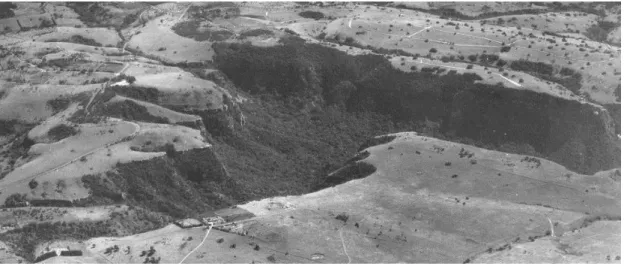
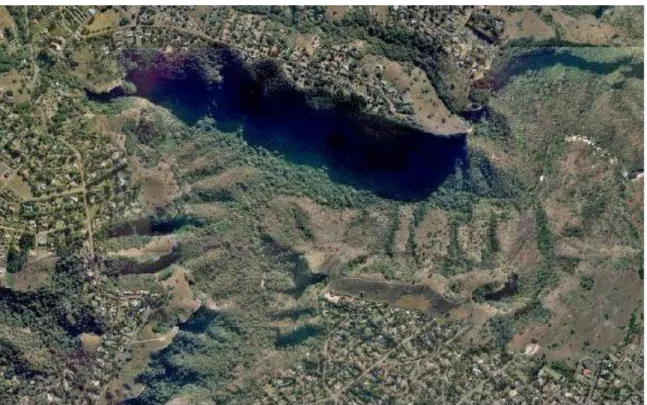
Similar to global trends, the GGEP is faced with ecosystem degradation and the D’MOSS (undated) highlights land use change as one of the causes. This is demonstrated by, Figure 1.2 and 1.3 which show changes in land use change at two different stages: in 1954 and 2008.
Figure 1.2: Aerial view of the GGEP area in 1954 (Source: D’MOSS, undated: 6)
Figure 1.3: Aerial view of the GGEP area in 2008 (Source: D’MOSS, undated: 6)
Figure 1.2 shows the undeveloped state of the GGEP area in 1954 while Figure 1.3 shows the developed state of the GGEP area in 2008. Land use activities, such as developments have transformed South Africa’s landscapes owing to growing population resulting from liberalised movement in the post-apartheid South Africa, increasing poverty and unemployment, among others (Miraftab, 2007; South African National Biodiversity Institute-SANBI, 2013; Brown and Du Preez, 2014). This scenario reflects some underlying causes of ecosystem change in the GGEP and Durban as a whole and is revealed through unsustainable natural resource harvesting which is one of the major environmental problems of the GGEP (EPCPD, 2011).
The significance of this study is embedded in the intrinsic value of the study area as well as the funding model adopted for managing the GGEP open space. As established in the previous section, the SRA instrument ideally used in managing the social environment of communities was adopted in the GGEP for natural resource management. This presents a unique scenario in South Africa for natural resource management outside Protected Areas, which mandates that the various processes be documented for further research into the subject or informing replication of the project in other provinces in South Africa. This is in the wake of the need for government to collaborate with communities, businesses, and people in increasing resources required for biodiversity management (Department of Environmental Affairs and Tourism-DEAT, 2004). Therefore, the successes and challenges of the GGEP project are intended to be examined and documented through this study.
In relation to the GGEP project, the perceptual analysis is important in informing GGEP management decisions aimed at improving the management strategies currently undertaken. This study is critical to understanding how stakeholders perceive the GGEP project as this indicates the future of this project since its sustenance is dependent on the willingness of the property owners to support the project financially. Being the first biodiversity management project to utilise the SRA in South Africa, the study will provide knowledge on the various processes of managing a SRA in relation to biodiversity management.
1.4 Aim and objectives
The aim of this study is to assess the Giba Gorge SRA as a biodiversity stewardship practice. Thus, the study seeks to understand the impact of the GGEP project on local communities, ecosystems and adjacent property value.
The objectives provided direction in implementing the study. They informed the research instruments and analysis of data to provide relevant conclusions for this study. The following objectives were set:
To ascertain the occurrence of changes in natural resource abundance during the period 2010 to 2012.
To assess the current uses of natural resources in the GGEP in relation to the extent to which resources are extracted.
To assess various stakeholders’ perceptions towards the GGEP project.
To ascertain the extent to which security measures affect the stakeholders’ perceptions of the interactions with the community and the GGEP project.
To determine the impact of the GGEP SRA on property values or surrounding development.
1.5 Chapter sequence
Chapter one provides the context for this study. It highlights the background to the study which was based on managing biodiversity outside Protected Areas in urban areas and the need to conserve natural ecosystems for a secure provision of ecosystem services within urban areas. In addition, the chapter rationalises this study within the context of fragmented ecosystems in urban areas, biodiversity stewardship and the biodiversity management challenges in GGEP. Further, the chapter provides the aim, objectives and the sequence of chapters.
Chapter two, the theoretical and conceptual framework provides constructs upon which this study is based. The study is underpinned by the political ecological approach in understanding the context within which natural resource management occurs. It highlights various discourses in natural resource management including power, gender, environmental ethics and scale on which social and environmental processes occur. The political ecological approach is operationalised through the stakeholder theory, which provides a platform for engaging multi-stakeholders in the study.
Chapter three reviews literature pertaining to this study. It contextualises the study within biodiversity, its importance and the threats within the South African and global context. The chapter also provides the local and international legislative framework underpinning biodiversity management. By doing so, it highlights the various institutions and strategies for the management of biodiversity in South Africa. Urban open spaces are discussed highlighting the purpose, benefits and threats to urban biodiversity management. Various studies conducted in South Africa and other parts of the world are discussed highlighting the processes in establishing open spaces, the impact on adjacent properties and stakeholder perceptions on open spaces.
Chapter four is the description of the research methodology and the study area. The first part of the chapter provides the geographical and environmental context in which the study was conducted. Maps and pictures are provided which show the scope of the study as well as the general overview of the natural resources under study. The second section of the chapter presents the research design of the study by detailing the various methods and instruments used to collect and analyse data. In addition, this section highlights the population and sub sample used in this study.
Chapter five presents the research findings and analyses of the findings. Data is presented and subsequently analysed according to themes guided by the research questions. This chapter highlights the main findings of the study, which are discussed and analysed within the context of the conceptual and theoretical framework underpinning the study. The results are also analysed in context of various other research findings. The main themes that are highlighted in this study include changes in natural resources during the period 2010 to 2012, current uses of natural resources, stakeholder perceptions towards the GGEP project, the impact of security measures on stakeholder perceptions and the impact of the GGEP project on property value or surrounding development.
Chapter six is the summary and conclusion chapter which highlights the general findings of this study.
Further, conclusions are drawn in relation to the general objectives of this study. Lastly, the study uses the major findings of this study to make recommendations for the GGEP project, policy-makers and future research.
1.6 Conclusion
Human well-being is intricately dependent on biodiversity through various services that are critical to meeting the basic needs of life. Ecosystem services provide the basis of all development and thus provide a foundation upon which global economies are built. This implies that poor ecosystem health affects human well-being through disrupted economic activities and livelihoods. Consequently, it is critical to adopt sustainable conservation strategies to manage biodiversity not only in the rural but also in urban areas where ecosystem services are critical. Such conservation strategies should manage biodiversity wherever it exists in its natural form to maintain incessant supply of ecosystem services.
Besides managing biodiversity outside Protected Areas, current practice in biodiversity stewardship strategies management incorporates all relevant stakeholders in management, empowers communities to manage biodiversity and act responsibly in decision-making processes for environmental sustainability. In addition, current practice in biodiversity stewardship strategies pools resources from the public and private sectors for biodiversity management. By doing so, government increases resources for biodiversity management and areal extent of ecosystems.
CHAPTER TWO
CONCEPTUAL AND THEORETICAL FRAMEWORK
2.1 Introduction
Ecosystems are important to all living organisms because they sustain life through the goods and services they provide, such as air purification, food, fuel wood and carbon sequestration (Jones and Solomon, 2013). Natural resource management is enabled by adopting appropriate legislation for implementing ecosystem management strategies. Participatory management presents complex processes and challenges, involving natural resource legislation, implementation and management strategies.
A political ecological approach as a conceptual framework facilitates an understanding of the forces influencing and shaping natural resource management. The political ecology approach is operationalised through stakeholder theory as a platform for engaging GGEP open space stakeholders.
Thus, the stakeholder theory is used to understand the various relationships among the users of the GGEP open space and its ecosystems, using the multi-stakeholder approach. From the conceptual and theoretical framework, a methodology was derived which is presented in chapter four.
2.2 Political ecology approach
Forsyth’s (2013: 3-4) review of the definition of the term political ecology reveals disparities in understanding and use of the term and some of the meanings include:
Phenomenological interaction of biophysical processes, human needs, and wider political systems;
Political activism in favour of deep green environmentalism and its critique of modernity and capitalism;
Interconnectedness of political relations;
Analysis of Marxist debates about materialism, justice and nature in capitalist societies, with the view of achieving a fairer distribution of rights and resources; and
General terms to politics of environmental problems without specific discussion of ‘ecology’.
However, Forsyth (2013) reiterates that a generally acceptable understanding of the term political ecology relates to social and political nature of the causes, state and management of environmental problems. As a field, political ecology embraces “place-based, often qualitative approaches that seek to understand the differentiation of resource access across different groups and individuals, and how variable access shapes their material engagement with the biophysical world” (Turner, 2013).
Similarly, Peterson (2000: 324) defines political ecology as an “approach that combines the concerns of ecology and political economy to represent an ever-changing dynamic tension between ecological and human change, and between diverse groups within society at scales from the local individual to the earth as a whole.” It integrates social sciences with natural sciences in understanding human- nature relationships (Peterson, 2000: 324). In its initial phase, political ecology focused on ecological conflicts emanating from risks such as pollution from industries (Forsyth, 2005). However, attention has shifted towards understanding not just risk but the nature of the risk and how powerful social actors influence ecology (Forsyth, 2003). According to Peterson (2000), the shift in focus came about from understanding that available natural resources determine the range of alternatives for their use and this will ultimately affect the politics and economics surrounding management of the natural resources.
The political ecology approach provides the key impetus in understanding the dynamics explored within interdisciplinary fields such as geography (Neumann, 2009). In this framework, injustices existing in natural resource management focus mainly on the poor and marginalised groups in society, exposing the relationship between environmental degradation and social inequality (Springate- Baginski and Blaikie, 2007; Maldivian, 2008). Turner (2013: 5) asserts that “political ecological analysis is generally motivated by normative commitments to social and environmental justice with a stronger human-centric orientation than is adopted by ecologists.” Environmental justice is a major component of political ecology and it is expressed in two ways, justice in costs and benefits emanating from natural resource management and, representation in all decision-making processes for natural resource management (Blaikie, 2012). Political ecology also focuses on natural resource management politics which are characterised by knowledge and social justice and power imbalances in the interactions between vulnerable societies and environmental problems (Forsyth, 2008). In a broader sense, “political ecology addresses the conflicts and convergences between development, conservation, cultural survival, gender equality and political autonomy in a search for social, ecological and technological alternatives” (Rocheleau, 2008: 178).
Nature and society are inextricably related and the state of the environment or its nature is a result of interactions between political processes and dominant actors in society (Adams and Hutton, 2007;
Pincetl, 2012). For instance, a study by Lanckriet et al. (2014) reveals that environmental degradation north of the Ethiopian Highlands was a result of unfair land rights during feudal times which drove the poor farmers onto marginal land. Thus, political ecology, within the geography field, views environmental phenomena to be a consequence of socio-political processes acting at various spatial scales or contexts (Adams and Hutton, 2007). It “attempts to link an understanding of the logics, dynamics and patterns of economic change, the politics of environmental action and, ecological outcomes, a set of relationships fundamental to conservation” (Adams and Hutton, 2007: 149).
2.2.1 Political ecology discourses in natural resource conservation
Various political ecology discourses within natural resource conservation address issues of politics, social justice, democracy and conflicts revealed through interests, power and vulnerabilities of different social groups (Brown and Purcell, 2005; Blaikie, 2012; Forsyth, 2013). This section considers discourses of spatial scales at which social-environment interactions occur, power interplay among natural resource users and policy makers, conservation policy, gender and natural resource use and environmental ethics.
2.2.1.1 Discourses of spatial Scale
Political ecology highlights the relationships between social and environmental processes which occur at different spatial scales ranging from local to global (Mauro, 2009; Bixler, 2013; Forsyth, 2013).
Neumann (2009) argues that scale is not a definite or fixed concept but varies depending on its social and context specific interpretation. In political ecology, scale discourses focus on how international and national policies affect natural resource management and social-environmental interactions such as access and use of natural resources and, involvement in decision-making and sustenance of livelihoods of local communities (Brown and Purcell, 2005). Scale in political ecology also pertains not only to policies but to interconnectedness of phenomena at a local, regional, national and global level (Thomas-Slayter et al., 2013). Some researchers believe that the local scale is crucial to achieving desired outcomes (such as environmental sustainability, social justice and democracy) in natural resource management (Brown and Purcell, 2005). However, Brown and Purcell (2005: 608) argue that “the politics of scale literature offers the a priori conclusion that there is nothing inherent about scale; it does not allow for assumption that there is something intrinsically desirable about the local scale.” Mauro (2009: 117) states:
The scale of analysis adopted in a research project may depend on the kind of question one wishes to answer, but ultimately larger-scale processes must be included to arrive at explanations that go beyond appeals to complexity or beyond eclecticism in the frameworks being combined.
Because social-environmental relations are complicated, it is vital that any study thereof incorporate contributions to the phenomenon under study from all levels of scale (Neumann, 2009). Thus, this study incorporates the contribution of various policies, legislations and agreements that shape natural resource management in South Africa.
There are various interactions that exist across scales, which can take the form of international agreements (for instance, the CBD) or even governance at local organisations (Adger et al., 2006).
Such interactions are promoted as a means of achieving efficiency in resolving global environmental problems locally (Kolstad, 2014). For example, Community-Based Natural Resource Management systems provide formal and universal guidelines (in the case of international agreements) and recommendations viewed as best practice in natural resource management (Adger et al., 2006).
However, what determines the cross-scale interaction is power and how it is used (Adger et al., 2006).
While this study is undertaken at a local level, it does not obviate taking into consideration the impact of national and global-scale processes and power structures influencing the management of the GGEP open space. Various processes that affect natural resource management in the study area are considered and their implications to the GGEP project pursued.
2.2.1.2 Power discourses
Power plays an important role in shaping natural resource management through policy formulation, generation of scientific knowledge, access and use of natural resources (Blaikie, 2012; Pincetl, 2012;
Bixler, 2013;). Roth (2015) asserts that political ecology perceives social, economic and political power as important factors in the relationship between humans and the environment. As demonstrated previously by Kimenyi et al. (2004), disparities exist among actors with various types and levels of power. In terms of natural resource access and use, differences are mainly determined by the various ways in which power is used in society (Turner, 2013). However, power is acquired in various ways by actors and/ or groups in society and can be acquired through election or appointment to positions of power (Celliers et al., 2007). Peterson (2000) highlights three types of power functioning at different scales and they include overt, covert and structural. Overt power is a direct form of power which uses coercion, incentives or intimidation in decision-making processes. However, covert power deprives actors of opportunities to act through control of decision-making processes. Structural power relates to organisations’ ability to control the number of issues which actors can make decisions on (Peterson, 2000). Celliers et al. (2007) describe structural power in terms of legislative, executive, moral and enforcement aspects. According to Celliers et al. (2007),
Legislative power is that which enables an actor to participate in formulating rules and regulations. Organisations commissioned to participate in policy formulation and implementation (for instance, the SANBI), possess such power.
Executive power is bestowed upon an organisation by government to make decisions, which affect all the people under the jurisdiction of that organisation.
Moral power is vested in organisations that have moral obligations by virtue of their expertise and reputation to speak and act on an issue. Such an organisation is influential based on its moral authority, an example of which maybe a research institute.
Enforcement power allows an actor to impose its decisions on members of their group or society in general, to be complied with. Examples of such organisations include environmental and wildlife authorities, and in a general sense, the police force.
Andrews and McCarthy (2014: 9) assert that “any adequate analysis of the operations of power must carefully and empirically trace how, where, and by whom power is used.” Noteworthy is that people possessing power may not necessarily be decision-makers; rather, decision makers are usually influenced by external factors at various scales such as lobby groups and the media (Wangler et al., 2013). A key aspect in exercising power is knowledge, without which there is no basis of negotiations amongst a group of actors with varying degrees of power (Adger et al., 2006).
In the context of this study, power interplay within the GGEP is examined. The study focuses on the eThekwini Municipality’s EPCPD which possess executive and enforcement power. It also examines power interplay among the GGEP open space stakeholders.
2.2.1.1 Conservation policy discourses
Conservationists’ role in policy processes is to question “...who pays, who benefits, and who loses”
from policies and to evaluate policies (Neumann, 2008: 729). Policy formulation processes involve making choices by weighing the various alternatives available based on costs and benefits and potential risks of the policy to society (Kimenyi et al., 2004; Blaikie, 2012). According to Kimenyi et al. (2004), the purpose of the policy formulation process is to maximise social-welfare while ensuring availability of resources required for implementing policies despite disparities in agendas and bargaining power of participating parties. Disparities in agendas and bargaining power of parties involved in policy formulation cannot guarantee maximum social welfare rather they can benefit more powerful parties (Kimenyi et al., 2004). For instance, governments’ agenda in policy formulation may be to win the favour of voters for possible re-election and may in due course have to yield to the pressure from the media or lobby groups (Wangler et al., 2013). Kimenyi et al. (2004) further state that the main concern with the process of policy formulation and the resultant policy is that policy affects the environment and humans, now and in the future. It is therefore essential to minimise politics in policy formulation by considering the environmental impacts of the policy (including the