Published by the University of Cape Town (UCT) under a non-exclusive license granted to UCT by the author. Colonial powers invoked problematic notions of indigenous property rights to justify expropriation of land through trusts.
- I NTRODUCTION
- B ROKERING PROPERTY RIGHTS THROUGH TRUSTS
- R ICHTERSVELD : A CASE STUDY OF TRUSTS THROUGH TIME
- S TRUCTURE OF THE DISSERTATION
To analyze the operation of funds in the establishment of bantustans and colored reserves. The chapter then draws on the Richtersveld case study to analyze the role of funds in democracy.

I NTRODUCTION
- Modelling property
- Delegated sovereignty: property as state-making
- Property, territory, and the state
- Complexities of using property as a lens to explore communal land tenure
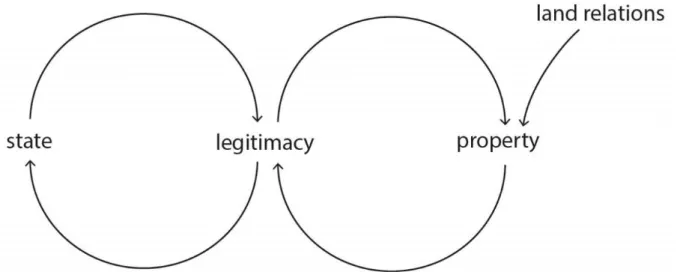
Put another way, Blomley (2014) points out that property rights unlike other rights have no meaning abroad. In this way, the perceived ethnocentric baggage of the West in ideas of property can be mitigated.
T RUSTS AS AN INSTITUTION TO HOLD PROPERTY
- History of the institution
- Unpacking the early British state and its relationship with Trusts
- Trusts and Trusteeship
Upon the death of the original owner of the property, Salman, the property transferred to the designated beneficiary (Manie, 2015). It seems that the success of introducing the waqf principles to the use of trusts in England was short-lived.
C ONCLUSION
A common misunderstanding that arose was to conflate customary land claims as equivalent to usufructuary and occupational rights (Ng'ong'ola, 1992). Observing this difference, colonial authorities then perceived African claims to land as pure usufructuary rights in relation to agricultural land and rights to occupy in relation to residential land (Ng'ong'ola, 1992).
I NTRODUCTION
R ESEARCH APPROACH
This made the qualitative approach the most appropriate as it allowed me to collect broad narrative data to gain deep insights into the topic (Sutherland et al., 2018). Second, through the qualitative approach, data collection and analysis can be done simultaneously and iteratively (Creswell, 2015) which allowed me to refine the research process as the knowledge unfolded.
R ESEARCH DESIGN
This was due to the nature of the questions being investigated as well as the context of the case study being investigated. Second, the third objective of the case study dealt with contemporary questions, and this is where the case study was useful, but document analysis continued to provide a larger proportion of the data obtained.
E VOLUTION OF THE RESEARCH QUESTIONS
The selection of the case involved choosing a locality that had been influenced by trusts in all three periods of the South African state. One of these mechanisms is the community trust model, which is used to, among other things, hold mine royalties and shares in the mining company on behalf of the affected local communities (Matebesi, 2020).
D ATA COLLECTION
- Archival material
- Trust deeds, government reports and minutes from portfolio committee meetings
- Interviews
- Observations
At the same time, online methods of engagement were difficult for community members due to the socio-economic profile of the community and the location - there is limited network connectivity in the Richtersveld. This observation was made in the early stages of the interviews and thus provided the basis for my approach in subsequent interviews.

D ATA A NALYSIS
Without this context, the analysis of the legislative changes that occurred would lack depth. Therefore, a political ecological approach to understanding the archive was necessary to make sense of the legislative changes holistically.
A NOTE ON TERMINOLOGY
These conversations provided much needed insight into the principles behind the various laws and further aided my understanding of the judicial arm of the state. The transcription of the interviews began during the fieldwork when the data were still fresh in my mind. I benefited from having a fieldwork assistant who helped with this to improve the accuracy of the notes taken.
For the interviews with the civil servants, a summary of the key points of the interview was sent after the interview and the civil servants confirmed the summary as an accurate reflection of what they expressed in the interview.
L IMITATIONS OF THE STUDY
Promotion of access to information indicating that members of the public, including beneficiaries of these trusts, may access public records. It should be noted that there are fifteen graduate offices in the country, and as such my experience represents only one-fifth of the offices. At the same time, it is important to remember that the Cape Town and Pretoria offices are one of the largest offices, with the Pretoria office being where the master's head office is based.
Richtersveld is 700 km from my residence in a remote part of the Northern Cape, where a 4x4 vehicle is required for travel.
E THICAL CONSIDERATIONS
C ONCLUSION
I NTRODUCTION
In the British context, individuals took center stage with the state, which consisted of a monarchy at the time, and tried to gain some control over these trusts. It is not the intention here to dwell on this difference, as the purpose of this chapter is not to contrast the trusts in the colonies with the trusts in Great Britain, but to go further and grapple with the nature of trusts in the colonies. Trusts in the colonies varied according to context, as we will see later, but a common feature was their effect on the indigenous people's claim to their property—in this case, land.
Therefore, a broader and less rigid definition should be applied when tracing the origin of trusts in the British colonies.
T HE SPREAD OF TRUSTS TO B RITISH COLONIES
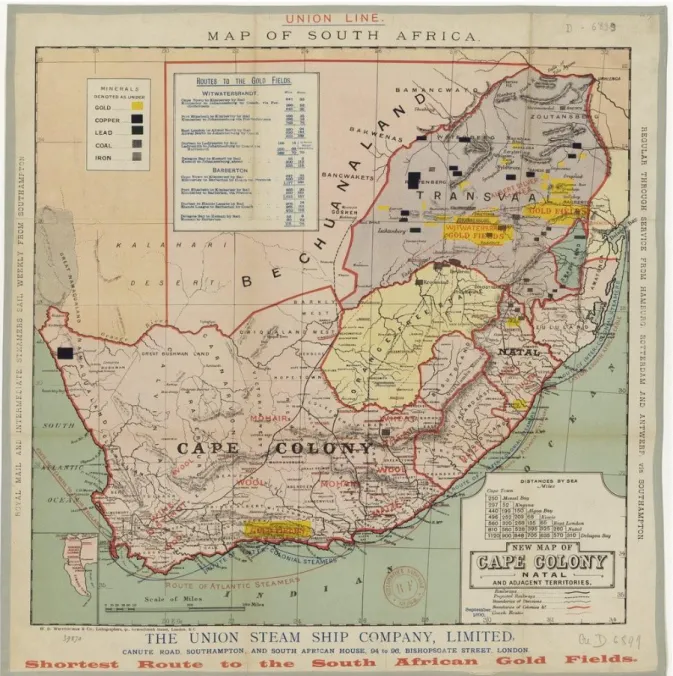
In Kenya, the declaration of the protectorate came after a decade of the Imperial British East Africa Company's influence over the area (Atieno-Odhiambo, 1972). As such, Atieno-Odhiambo (1972) argues that the declaration of the protectorate was simply a formalization of British control over Kenya as the Imperial British East Africa Company represented British interest. The sentiment expressed by the British government in Kenya is similar, if not identical, to that of the Cape Colony government on Lesotho.
Declaring territories as protectorates must be seen within the development and refinement of the stewardship model.
T HE S OUTH A FRICAN PERMEATION OF TRUSTS
- Trusts: an arm of direct or indirect rule?
- Political landscape surrounding the creations of trusts
- Land relations re-organised through trusts
- Implications of trusteeship on the former Coloured Reserves
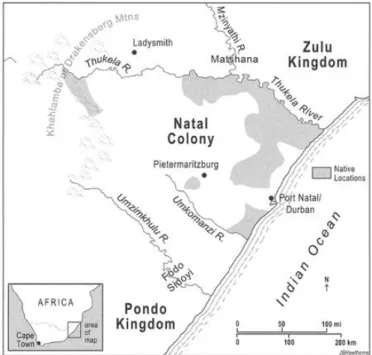
To unpack this further, a brief history of the missionaries in the Cape Colony and Natal is useful. We see this happening in the latter part of the nineteenth century after the defeat of the Zulu nation. This can be seen in the formulation of the laws and grants that establish these trusts.
This somewhat haphazard enforcement of the Mission Stations Act by the colonial government is further evidence that the trusteeship model is embedded in a continuum of direct and indirect rule.
C ONCLUSION
Smalberger (1969) and Ashton (2018) detail how the colonial government began to override the leases that missionaries had entered into with mining companies on behalf of local communities. Bregman (2010) explains this change quite well by arguing that after the discovery of diamonds, the colonial government began to rethink the economic viability of the area. It is important here to highlight the differentiated contexts that mediated the extent of ambiguities in the agreement.
Interestingly, a year before the establishment of the Union of South Africa, the Cape Colony government approved mission posts and municipal reserves, giving the Cape Colony's people of color and natives significant decision-making power through elected boards of directors.
- I NTRODUCTION
- N ATIVE T RUST AND L AND A CT : STRENGTHENING TENUOUS WHITE POLITICS
- Territorial segregation without Native Bills is ludicrous
- The final version of the Native Trust and Land Act
- M AKING THE B ANTUSTANS
- F ORGOTTEN I SLANDS : T HE C OLOURED R ESERVES POST 1936
- C ONCLUSION
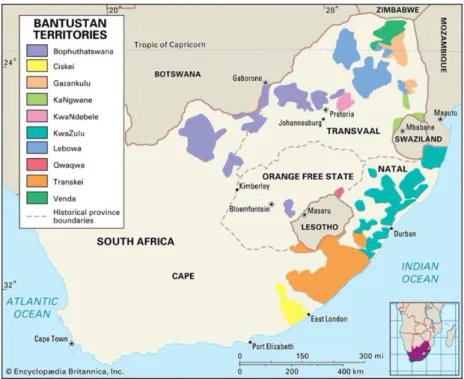
This territory was transferred to the Bantustan governments to become the national territory of the respective Bantustan. This use of revenue was previously determined by the apartheid government as part of the NTLA (section 5, subsection f). The resistance of the remaining Bantustans prompted the apartheid state to use various tactics to co-opt their leaders.
The analysis of trusts between 1936 and the late 1970s provided evidence of the indispensability of trusts in the apartheid toolbox.
I NTRODUCTION
The people of the Richtersveld consider themselves a separate indigenous people and are called Richtersvelders (Richtersveld Community and others v Alexkor Limited and others, 2001). Today, the four Richtersveld towns fall under the Richtersveld Local Municipality, which falls under the Namakwa District Municipality.
T RUSTS DURING THE T RANSITION
- Development trumps property: implications of the Richtersveld Gemeenskaps Trust
- Ingoyama Trust: creating gatekeepers, thwarting reforms
As such, De Klerk and the wider NP (Liberal or Conservative) saw value in establishing the Ingonyama Trust for two reasons. Although the chairman of the ITB is the king (Ingonyama) or his nominee, the appointment of the eight remaining board members rests with the minister, in consultation with the prime minister, the Ingonyama and the House of Traditional Leaders (Ingonyama Act, section 2A, subsection 3). This is partly because the Ingonyama Trust's audits have never been clean (Pikoli, 2021).
The Minister is empowered by both the Ingonyama Trust Act and the Constitution to act to protect the rights of the community.
R ICHTERSVELD TRUSTS POST 1994
- Using trusts to contain radical judgements
- Poor Millionaires: status of the Richtersveld Trusts
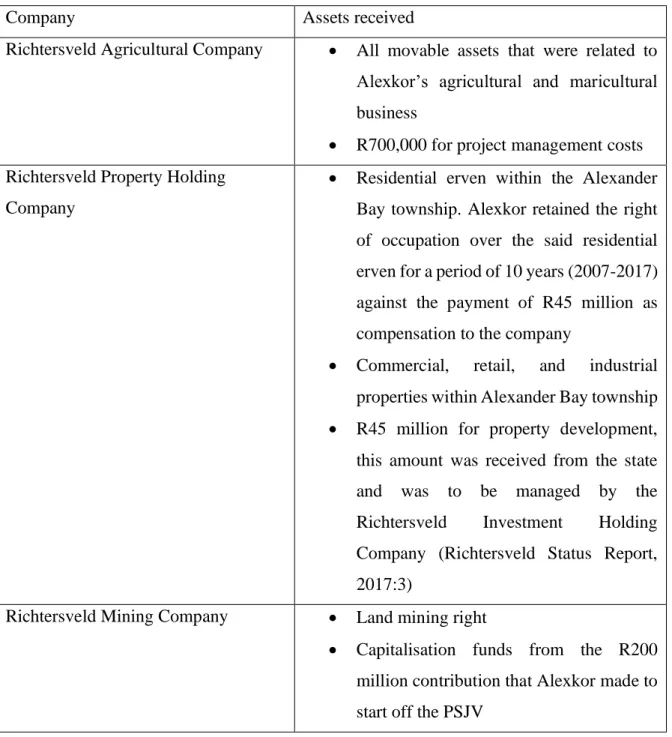
The Deed of Settlement outlined the terms of the negotiated settlement between the three parties and the compensation the community would receive for the minerals that had been extracted from its land since possession. As part of the settlement agreement, two trusts and various companies were thus created to hold the assets returned to the community. As a result of the land claim, the government was then forced to have the community as its strategic equity partner.
From the deed of settlement, much hope was to be expected for the improvement of the lives of the Richtersveld people.
S ITUATING THE STATE BACK IN
- Government’s blunders during the land claim process
- A failed second chance: analysing departmental oversight post-settlement
- Elevating the analysis of government action
The Minister for DPE indicated that the government will respect the court's decision. Later, the Minister of Agriculture and Land Affairs requested to intervene in the proceedings on behalf of the government. Therefore, Alexkor's decisions to oppose the land claim are a government decision.
In the early years, DRDLR was not actively involved in community activities.
C ONCLUSION
I NTRODUCTION
T HE MAIN FINDINGS OF THE STUDY
- Trusts, property, and geography
- State, trusts and the trusteeship model
- Trusts in democratic South Africa
To give effect to the apartheid project, the trusts were placed in the creation of Bantustans and Colored Reserves. However, at the end of the lease period, these rights revert to the property owner. Interestingly, the configuration of how the community is represented reveals the weakness of community property rights.
What eventually became the negotiators' priorities were not the original priorities of the community.
C ONCLUDING REMARKS
The platinum mining industry and the apartheid mineral property system in South Africa's political transition. Settlement Agreement between the Richtersveld Community and Alexkor Limited and the Government of the Republic of South Africa. The Peace Deal: The Establishment of the Ingonyama Trust and the IFP's Decision to Join the 1994 South African Elections.
The Founders: The Origins of the ANC and the Struggle for Democracy in South Africa.