AN EXPLORATIVE STUDY OF YOUNG PEOPLE’S ECOLOGICAL CITIZENSHIP IN DURBAN, SOUTH
AFRICA
Milda Jonusaite November 2013
Submitted as the dissertation component (which counts for 50% of the degree) in partial fulfilment of the requirements for the degree of Master of Development Studies in the
School of Built Environment Development Studies, University of KwaZulu-‐Natal.
As the candidate's supervisor I have/have not approved this short dissertation for submission.
Date:
Name:
Signature:
ABSTRACT
In the context of growing concern for the potential impact of climate change, climate governance mechanisms are employed by nation states aiming to influence environmental actions of various actors. Promoting green behaviour of individual citizens is one of the current climate governance approaches. Furthermore, increasing attention is given towards the younger generations, as they will have to bear the consequences of climate change.
Empowering young people to act against climate change is, therefore, important. This study aims to explore whether ecological citizenship among young people in Durban, South Africa, could be a valuable component of climate governance. It will do so by: 1) exploring how young people conceptualise climate change, 2) how they understand and experience citizenship, 3) whether they possess features of ecological citizenship.
This research consists of a qualitative study based on semi-‐structured interviews with eighteen young individuals. The conceptual tools of practice theory and citizenship, that incorporate aspects of ecology and youth, are utilised for understanding the empirical study.
The findings suggest that young people in Durban have a vague understanding of climate change-‐related concepts. Furthermore, it shows a gap between the understanding and the experience of citizenship. The youth comprehend citizenship with its features of rights and obligations; however, their experience of citizenship is largely dominated by detachment from politics, a sense of exclusion, and a lack of authentic opportunities to play out citizenship activities. Lastly, everyday practices of young people reveal a limited range of environmentally friendly actions accompanied by a moderate sense of agency in relation to environmental problems. This study shows that in order for young people to be able to act as ecological citizens, there are several structural constraints that need to be transformed into opportunities. This research suggests that there is a need to: 1) enable citizenship options for young people, 2) establish practical alternatives for sustainable behaviour. This study argues that providing such structural opportunities has the potential to develop young citizens that can act in an environmentally friendly way, without providing any guarantee for green behaviour. However, the potential for such behaviour is nevertheless greater with structural opportunities, rather than constrains.
DECLARATION
I declare that this dissertation is my own unaided work. All citations, references, and borrowed ideas have been duly acknowledged. I confirm that an external editor was used and that my Supervisor was informed of the identity and details of my editor. It is being submitted for the degree of Masters in Development Studies in the Faculty of Humanities, Development and Social Science, University of KwaZulu-‐Natal, Durban, South Africa. None of the present work has been submitted previously for any degree or examination in any other University.
_____________________________
Student signature
28.11.2013
______________________________________
Date
TABLE OF CONTENT
ABSTRACT ... ii
DECLARATION ... iii
FIGURES AND TABLES ... vi
Figures ... vi
Tables ... vi
Appendices ... vi
ACRONYMS AND ABBREVIATIONS ... vii
AKNOWLEDGEMENTS ... viii
CHAPTER 1: INTRODUCTION ... 1
1.3 Purpose of the Study ... 5
1.4 Research Methods and Structure ... 6
CHAPTER 2: LITERATURE REVIEW ... 8
2.1 Responses to Climate Change ... 9
2.2 Youth ... 10
2.3 Citizenship ... 15
2.4 Climate Change and Youth ... 16
The Northern Context ... 17
The Southern Context ... 18
2.5 Young People’s Citizenship ... 19
An Ambiguous Picture of Youth ... 19
2.6 Ecological Citizenship ... 24
2.7 Practice Theory ... 26
Summary ... 27
2.8 Conclusion: Young Ecological Citizens ... 27
CHAPTER 3: METHODOLOGY ... 29
3.1 Introduction ... 29
3.2 The Setting ... 29
3.3 Target Population and Study Sample ... 30
3.4 Data Collection ... 31
3.5 Data Analysis ... 32
3.6 Ethics ... 33
3.7 Limitations ... 33
CHAPTER 4: THE ROLE OF YOUNG PEOPLE AS ECOLOGICAL CITIZENS IN CLIMATE GOVERNANCE 36 4.1 Conceptualising Climate Change ... 36
4.2 Analysing Conceptions of Climate Change ... 39
4.3 Understandings and Experiences of Citizenship ... 42
Understanding Citizenship ... 42
Experiences of Citizenship ... 43
Recommendations ... 47
4.4 Analysing Understandings and Experiences of Citizenship ... 47
4.5 Features of Ecological Citizenship ... 50
Environmentally Friendly Behaviour ... 51
4.6 Analysing Everyday Practices and Ecological Citizenship as a Climate Governance Tool for Youth ... 52
4.7 Concluding Remarks ... 55
CHAPTER 5: CONCLUSION ... 57
REFERENCES: ... 59
APPENDICES ... 69
FIGURES AND TABLES
Figures
FIGURE 1: THE INTERRELATEDNESS OF THE CONCEPTS IN THIS STUDY ... 8
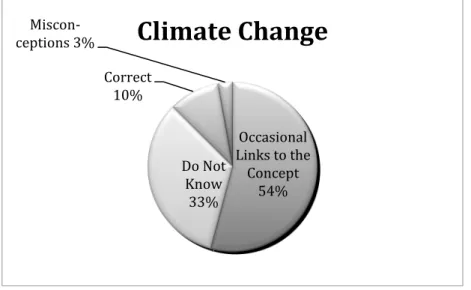
FIGURE 2: THE DISTRIBUTION OF RESPONSES ON CLIMATE CHANGE-‐RELATED TOPICS ... 36
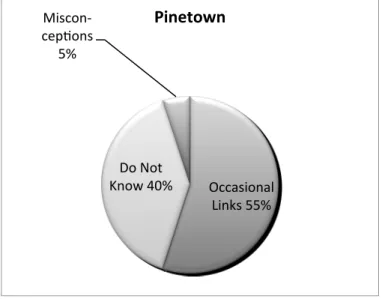
FIGURE 3: CONCEPTUALIZING CLIMATE CHANGE-‐RELATED TOPICS, PINETOWN ... 40
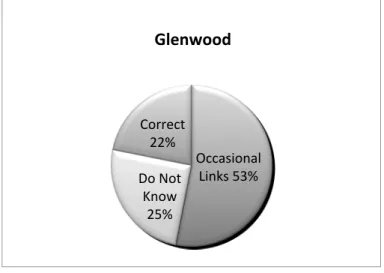
FIGURE 4: CONCEPTUALIZING CLIMATE CHANGE-‐RELATED TOPICS, GLENWOOD ... 41
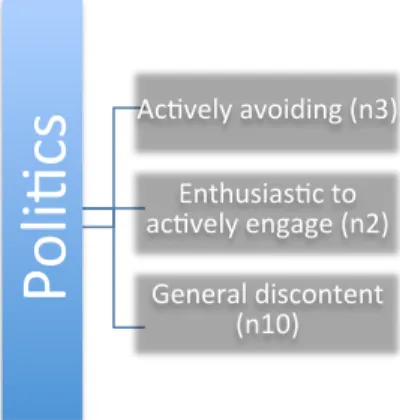
FIGURE 5: EXPRESSED ATTITUDES TOWARDS THE POLITICAL SYSTEM ... 45
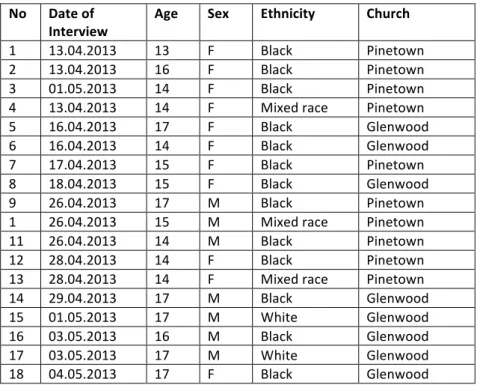
Tables TABLE 1: SAMPLE CHARACTERISTICS OF THE PARTICIPANTS ... 31
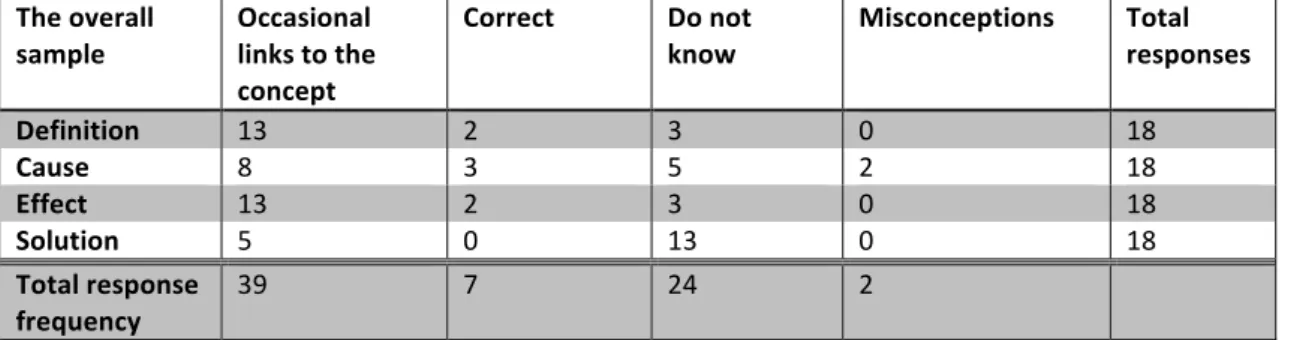
TABLE 2: FREQUENCY OF RESPONSES CATEGORISED, TOTAL SAMPLE ... 39
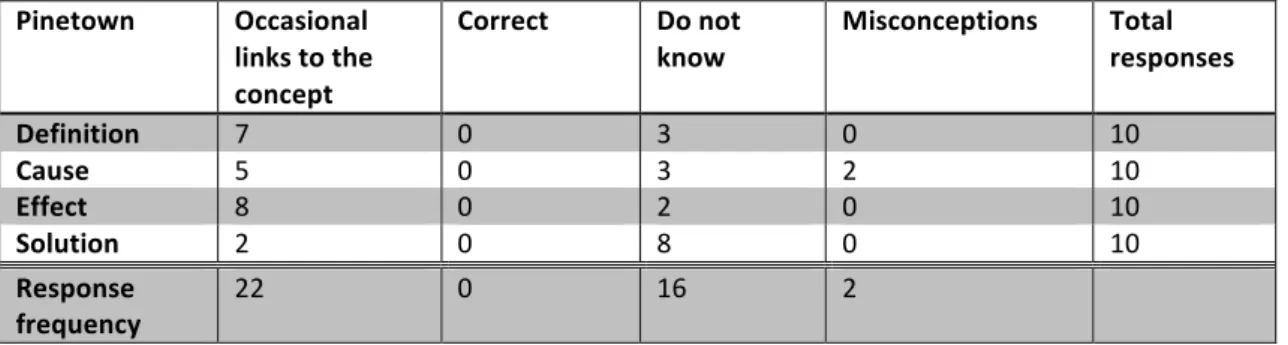
TABLE 3: FREQUENCY OF CATEGORISED RESPONSES, PINETOWN ... 40
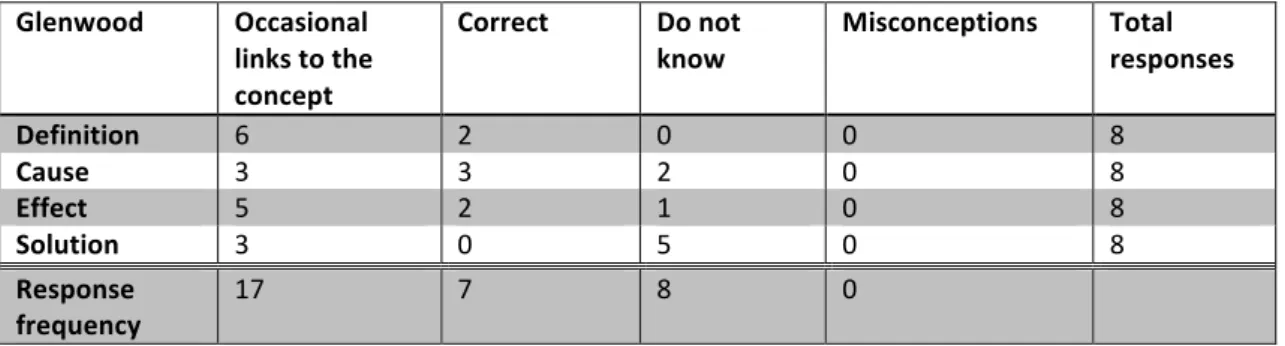
TABLE 4: FREQUENCY OF CATEGORISED RESPONSES, GLENWOOD ... 41
Appendices APPENDIX A: INTERVIEW GUIDE ... 69
APPENDIX B: INFORMATION PACK ... 71
APPENDIX C: PHOTOGRAPHY EXERCISE ... 79
ACRONYMS AND ABBREVIATIONS
CO2 Carbon Dioxide
COP Conference of Parties GHGs Green House Gasses
IPCC Intergovernmental Panel on Climate Change KZN KwaZulu-‐Natal
UNCRC United Nations Convention on the Rights of the Child UNFCCC United National Framework Convention on Climate Change
AKNOWLEDGEMENTS
I would like to express my gratitude to all who made this study possible. More specifically, thank you to Harald Witt who shaped my values and reminded me of how nature features in my life. Without you, I would not be doing this. I would also like to express a great deal of gratitude to Richard Ballard for his outstanding supervision with quick feedback, support, long discussions, and motivation in times of need. To my family and friends who have been supportive in numerous ways during this process, I am forever grateful.
Last, but not least, I would like to express my gratitude to all participants of this study, and to the two churches for suggesting and allowing me to conduct this research there. I am proud to say that I have worked with eighteen inspiring and reflective young people in Durban. While analysing their answers and re-‐reading the themes countless times, I experienced many moments of pride, hope, and excitement. I am honoured to say that I have been let into eighteen young South African hearts that have showed me everything from vulnerability to strength, from helplessness to being and owning the future, and from fears to dreams and hopes. I was worried that I would find that young people are apathetic and pessimistic, but they turned out to have (to borrow the words of one of the participants) a “cup of awesome” instead.
CHAPTER 1: INTRODUCTION
Climate change is a major environmental problem caused by production and consumption patterns that result in increasing amounts of green house gasses (GHGs)(Giddens, 2009;
IPCC, 2007, 2013). Climate governance aims to remove and lower the amount of GHGs in the atmosphere by influencing environmental actions of various actors through regulatory processes and fiscal incentives. The role of non-‐state actors in climate governance is increasingly a response to the stalling role of the state in international climate governance (Lemos & Agrawal, 2006). Ecological citizenship that aims for green behaviour by individual citizens is a relatively new climate governance approach (ASSAf, 2011; Dobson, 2003; Latta
& Garside, 2005; Melo-‐Escrihuela, 2008; Smith & Pangsapa, 2008). Simultaneously, there is growing attention given to young people as they contribute the least to the causes of climate change, but will have to live with the consequences of current decisions and actions.
Furthermore, the daily practices of young people will eventually determine the future quality of the environment (Alier, 2009; Hayward, 2012; IPCC, 2007; Jackson, 2009; UNICEF
& RSA, 2011). Climate governance that targets young citizens is thus the main motivation in this study.
This study entails a degree of complexity, as it combines three concepts: climate change, youth and citizenship, and the resultant explorative study of ecological citizenship among young people as a climate governance tool. Furthermore, the analytical framework will in part be based on practice theory that is grounded on a dialectical structure and agency approach. This chapter intends to provide the rational for the study. Firstly, a contextual background of climate change related issues of relevance are explained. Thereafter, a brief introduction of the citizenship concept is presented in relation to youth and environmentally related issues. The purpose of the study is address subsequently by introducing the research questions. Lastly, the methodology and the structure of this paper are attended to.
Firstly, climate change is a problem in need of urgent attention. The point of departure for this study is the fact that climate change is a global challenge in need of urgent attention (IPCC, 2007, 2013). Defined by the UNFCC, “[C]limate change means a change of climate which is attributed directly or indirectly to human activity that alters the composition of the global atmosphere” (UNFCC, 1992, p. 7). A recent study reveals that 97 per cent of climate
change-‐related, peer reviewed articles published between 1991 and 2011 concluded that climate change is directly caused by human actions (Cook et al., 2013). The IPCC report from 2007 is considered as a tipping point in the climate change science, as it established with more than 95 per cent certainty that climate change is unambiguous due to indisputable evidence of increasing average temperatures (Alier, 2009; IPCC, 2007). The most recent Intergovernmental Panel on Climate Change (IPCC) report (2013) confirms with greater certainty both the severity of climate change and the human influence on the changing climate systems. The point of view here is that climate change is no longer a debate, but rather an accepted fact (Alier, 2009).
The IPCC (2007) report singles out Africa as one of the most vulnerable continents. This is due to the wide range of projected impacts coupled with the multiple stresses that they entail and combined with the low adaptive capacity (IPCC, 2007, 2013). Moreover, children, the elderly, and poor people are particularly at risk (IPCC 2007). The impacts of climate change are not exclusively an environmental issue in South Africa. They are far reaching across sectors due to widespread developmental issues of both a social and economic nature (Naidu, Hounsome, & Iyer, 2006). South Africa is an interesting case study as it illustrates the international climate change debate. Typically, developing countries suffer the most from the effects of climate change, but contribute the least, while the developed countries on the other hand contribute the most to the global pool of emissions, but suffer least of the consequences (Giddens, 2009). South Africa, however, is in an ambiguous position as it is considered to be both a developing and a developed country. The South African population suffers significant consequences, mostly due to the low adaptive capacity rooted in socio-‐economic issues that cut across all sectors and that climate change-‐related events exacerbate. Nonetheless, South Africa is also one of the world’s dirty economies, and is a major contributor to GHG emissions globally (Letete, Guma, & Marquard, 2010).
This creates an extraordinary challenge for strategies of climate governance in South Africa.
There is a necessity to balance widespread developmental needs attained by fostering economic growth with environmental concerns constraining the options for unlimited growth that South Africa so desperately requires (ASSAf, 2011).
Durban, KwaZulu-‐Natal
The study is located in the city of Durban, in the province of KwaZulu-‐Natal, where climatic changes are being observed that conform to climate change projections (DAEARD, 2010).
The mean temperature in Durban is expected to increase between 1°C and 3°C during the
next 50 years. Heat waves, meaning temperatures reaching 35°C and lasting three days, are expected to double (ASSAf, 2011). KwaZulu-‐Natal is by South African standards already a wet region, nonetheless floods and erosion will increase as an effect of increased rainfall patterns. The city of Durban is also vulnerable to sea level increases due to its coastal position. Durban can, according to Hughes (1992) in ASSAf (2011), withstand a sea level rise of 0.2 meters, but the predictions for the sea level rise in Durban vary from 0.44 to 1.0 meter (KZN energy 2001:27). In addition, the indirect effects of climate change such as food price hikes, migration, and decreasing tourism are expected to effect Durban (ASSAf, 2011).
This indicates that the population of Durban will most likely be negatively affected by climatic changes.
The climate change related context is now established, allowing us to move towards the next theme of this study, namely citizenship. Conventional concepts of citizenship with the inherent balance between rights and duties, exclude both environmental aspects and the role of young people. It is today’s young people, however, who will inevitably have to deal with the multifaceted challenges of climate change. Empowering young people to face these challenges is therefore crucial, as their decisions and actions will determine the future environment and, in turn, their own quality of life. The concept of citizenship allows for an exploration of how young people are positioned in society and whether or not they are able to act as citizens (Back & Cameron, 2008; Hayward, 2012; Jeffrey, 2012; Manning & Ryan, 2004; Smith & Bjerke, 2009; Weller, 2007). According to Smith and Bjerke (2009), the more young people are treated as citizens, the more they will act as such. By contrast, if young people are regarded as insignificant, they can become insecure in their own capabilities and choose not to engage (Jeffrey, 2010, 2012; Pearce & Larson, 2006; September & Roberts, 2009; Smith & Bjerke, 2009; Youniss et al., 2002). Youth is a phase of transition from childhood to adulthood where identity takes shape through various learning experiences in social processes. With the right balance of guidance, challenges, support, and experience in social situations, young people develop as citizens(Back & Cameron, 2008; Hayward, 2012;
Jeffrey, 2012; Manning & Ryan, 2004; Smith & Bjerke, 2009; Weller, 2007). The emphasis on developing young citizens is necessary due to the increasingly challenging and rapidly changing global context that young people grow up in (Jeffrey, 2010, 2012). According to Fauske (2011), these changes are happening more rapidly and are combined with a longer generational exchange rate, which makes it more challenging to pass on traditions and culture from one generation to the next. This passing on of knowledge and experience has
historically prepared the young for life and guided them through the transition from childhood to adulthood. In other words, the global changes happen rapidly, while the generations change at a slower pace (Fauske, 2011). This indicates that it may be
worthwhile to invest more energy into assisting the youth in their transition to adulthood by providing guidance and a passing on of knowledge gained, in order to ensure that they are capable of more easily handling the challenges of the current global and local contexts. On that note, young people are not necessarily more suitable for achieving greater
sustainability than adults, but there is a tendency to overlook young people both in citizenship and in climate governance, which is arguably disadvantageous.
Promoting sustainable behaviour of individual citizens is a specific climate governance mechanism (Dobson, 2003; Jelin, 2000; Smith & Pangsapa, 2008). Ecological citizenship is based on the idea that information and awareness among citizens will cause them to voluntarily modify their behaviour towards sustainability. For Andrew Dobson, a central figure in the theoretical development of the concept, the value of virtue is of essence.
Dobson argues that greater sustainability will be achieved if citizens’ actions are grounded in the idea that it is the right thing to do, rather than responding to fiscal incentives (2003).
There are also more pragmatic climate governance approaches to ecological citizenship that rely on fiscal incentives to guide the individual behaviour of citizens (ASSAf, 2011). Either way, the goal is to influence the outcome of individual actions towards sustainability.
The major criticism of ecological citizenship is that it leaves the underlying power dynamics unchallenged, as it ignores the role of structures that bring about climate change (ASSAf, 2011; Melo-‐Escrihuela, 2008). Practice theory is utilised in this instance to comprehend the limitation of ecological citizenship and to ground the complexity of this study. Ortner (2006) presents practice theory as a dialectical relationship between social actors and the larger structures. In other words, structures shape the practices of social actors, however, the social practices produce and reproduce the social structures (Ortner, 2006). The essence of the argument is that this dialectical relationship is best represented by the everyday practices of ordinary people; these practices are a result of the structure and agent
combination (Page & Mercer, 2012). This point of view will serve as a viable tool to explore the everyday practices of young people in Durban, South Africa, positioned within both environmental and developmental pressures.
The rationale for this study is based on a combination of variables. There is an explicit need for empirical work on ecological citizenship as it is a relatively new concept (Dobson, 2007;
Latta, 2007; Melo-‐Escrihuela, 2008). Thereafter, this study aims to investigate what is often neglected in the Southern hemisphere; namely, the possible role of young people as agents, rather than victims of climate change. The largely report-‐based literature on young people and climate change from the global South focus on young people’s vulnerability (Back &
Cameron, 2008; Gautam & Oswald, 2008; IDS, 2009; PLAN, 2003; Polack, 2010; Seballos, Tanner, Tarazona, & Gallegos, 2011; UNICEF & RSA, 2011; UNICEF, 2007, 2008). While the Northern studies focus on young people as potential agents in the battle against climate change (Lovell & Brien, 2009; Partridge, 2008; Schreiner & Sjøberg, 2005; Strandbu &
Skogen, 2000; UNICEF & UNDP, 2011). Exploring how to include youth in climate
governance is arguably not an issue exclusive to the global North, however, the context of developmental pressures in the global South is inevitably highly influential. Nevertheless, it is not a reason to ignore the potential of environmental social practices among young people in the Southern hemisphere.
1.3 Purpose of the Study
The main research aim is to investigate the environmental practices of young people in Durban, South Africa, and what possible role can young people play as ecological citizens in climate governance. The following sub-‐questions allow investigating the above:
1. How do young people conceptualise climate change-‐related topics?
2. How do young people understand and experience citizenship?
3. Do young people possess features of ecological citizenship?
The results of this research reveal that the participants have a vague understanding of climate related concepts and an inability to relate to it as personally relevant. It further shows a fair understanding of citizenship, while the experiences of citizenship are influenced by a sense of exclusion, detachment from politics, and limited options for executing
citizenship activities. Lastly, the everyday practices of young people reveal a limited range of environmentally friendly actions, accompanied by a moderate sense of agency. Overall, this paints a rather bleak, if unsurprising, picture. This study, however, argues that it is possibly the everyday lives of young people within the context of structural constrains that partly determines the outcomes of their actions. Therefore, the responsibility for environmentally friendly behaviour cannot be placed on the young citizens alone, when the structural
opportunities for doing so are limited. This research suggests that there is need for policy targeting to enable young people’s citizenship options and to establish practical alternatives for sustainable behaviour.
In summary, the overall argument is that sustainable practices of individual citizens are significant and it is therefore important to incorporate young people into climate
governance, but climate governance relying merely on individual incentives is insufficient.
There is a need for a more hybrid climate governance approach, that incorporates various actors from across sectors. An approach that acknowledges the role of structural
constraints and opportunities that shape the potential of environmentally friendly practices for young individuals.
1.4 Research Methods and Structure
The research paradigm of constructivism is employed in this study, as this is an exploratory study based on qualitative research methods. The main research instrument for collecting data is semi-‐structured interviews that provide grounds for the thematic analysis. A hybrid approach of both deductive and inductive methods was utilised during the thematic analysis of the findings. As a result, the overall research process was guided by reciprocity between theory and enquiry, consequently resulting in what I will refer to as young people’s
ecological citizenship.
The definition of youth varies within a range of people from 14 to 35 years of age depending on the source (African Union, n.d.; National Youth Commission Act, 1996; UN, 2010, p. 3).
Youth is a broad group and there are evidently different characteristics that dominate the younger and the older cohort. In this paper, the younger cohort of 13 to 18 years of age will be in focus. The terms used to refer to this cohort in the literature are adolescents, children, youth, young people, and teenagers. In this dissertation the terms youth and young people are employed interchangeably. The literature refers to low carbon, ecological and
environmental citizenship. In this paper the term ecological citizenship is predominantly applied.
Chapter Two provides a literature review that firstly focuses on covering the foundational topics of climate change, youth, and citizenship. Subsequently, the associations between these themes are outlined. Lastly, practice theory and young ecological citizenship are
approached in an attempt to combine all the concepts. Chapter Three outlines the
methodology utilised for conducting this study. The limitations of this study are addressed towards the end of the chapter. Chapter Four presents the findings separately according to the research objectives of the study, where each of the sections outlines the descriptive findings, as well as providing a thematic analysis. Chapter Five outlines the main features of this research, provides a summary of the study, and outlines a few recommendations.
CHAPTER 2: LITERATURE REVIEW
“Like nightmares disappear and seem distant in the light of day, the worst-‐scenario environmental disasters seem so abstract and distant that they cannot be thought of as
‘realistic’. They therefore belong in the same timeless realm as the dream and the nightmare, and for that reason they exist beyond a reality that can be conceived of within a linear conception of time” (Nilsen, 1999, p. 190)
This chapter considers the interaction of three major thematic areas: climate change; youth;
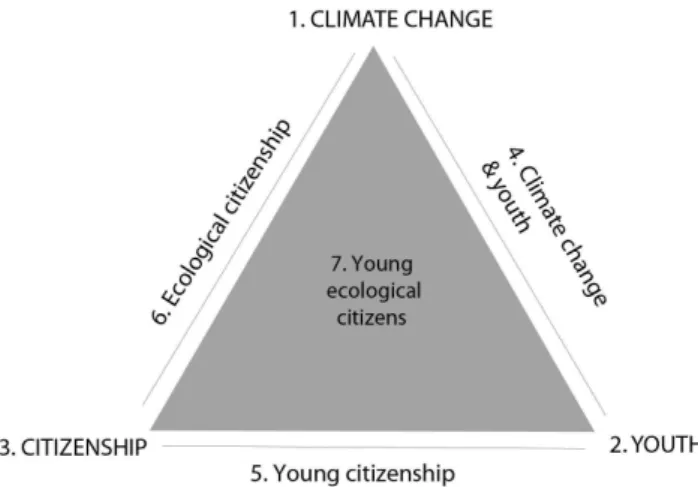
citizenship. Although the result is a complex framework, which Figure 1 attempts to illustrate, this is justified by the complex nature of the subject itself. In order to deal with this complexity, each of the three major themes will initially be outlined separately.
Thereafter, the interaction along the axes will be explored respectively. Lastly, I will consider how all three concepts fit together and utilise practice theory to manage the complexity of the argument -‐ that in order for young people to be able to act as ecological citizens, several structural constraints need to be transformed into opportunities. This intricate combination of the literature offers a conceptual tool for understanding the empirical story that will allow for the analysis to explore the environmental practices of young people in Durban, South Africa, and the possible role they can play as ecological citizens in climate governance. The numbers in Figure 1 indicate the order in which the topics will be presented in this chapter.
Figure 1: The Interrelatedness of the Concepts in this Study
2.1 Responses to Climate Change
This section introduces characteristics of climate change that are of relevance to this study.
The delayed affects of climate related impacts, the tragedy of the commons, and the abstract nature of climate change, make it a time-‐less and space-‐less phenomenon, which are characteristics that create a great deal of challenges when it comes to motivating actors to change their practices (ASSAf, 2011; Giddens, 2009; IPCC, 2013).
The delay in the manifestation of climate-‐related impacts is one critical feature of climate change. This is simply due to the time scales required to remove GHGs from the
atmosphere, which takes between five and two hundred years (Gardiner, 2006; Giddens, 2009; IPCC, 2007). Due to the impact delays, the past and current emissions will accumulate effects for centuries, even if the amount of GHG emissions were stabilised today (IPCC, 2007, 2013; Lemos & Agrawal, 2006). Following from the delayed effects of climate change, the second challenging feature is that climate change is so abstract and its effects so long term that it practically exists beyond people’s realities (Nilsen, 1999; Ojala, 2012a, 2012b).
“If phenomena involve characteristics that cannot even be described by the concept of threat, they are so far beyond any notion of time and space as to appear utterly unreal in people’s minds” (Nilsen, 1999, p. 189). (For more on risk theory, refer to Ulrick Beck, 1992).
People relate more easily to matters that are near in space and time to themselves, and that can be perceived as both tangible and understandable (Nilsen, 1999). Climate change is a timeless and space-‐less phenomenon for the majority of people, thus the incentive for individual actors to act in favour of the climate is weak (Nilsen, 1999; Ojala, 2012a). This will be revisited in the Findings chapter, as the respondents in this study struggled to relate climate change to their personal sphere.
Another problematic characteristic of climate change is the tragedy of the commons, first introduced by Garrett Hardin in 1968. The foundational idea is that individuals act rationally based on self-‐interest in order to maximize their own short-‐term gain. Individual actors therefore exploit and eventually deplete the common resources at the cost of the common recourse itself, despite the group’s common long-‐term interest (Beinart, 2000; Gardiner, 2006; Hardin, 1968). When the cost of pollution is less than purifying emissions, countries will choose to continue to emit GHGs. This is partly linked to the fact that the externalities of production processes are not yet linked to major fiscal costs (Hardin, 1968; Meadows,
1999). Thus, climate change is a complex phenomenon that does not provide individuals, countries, or continents with an incentive to act independently in favour of the commons.
In summary, climate change is considered with a great deal of certainty to be a problem that people, both globally and in South Africa, will have to deal with. Firstly, the effects of climate change are so sluggish, that responding to the problem will have significant delays.
Yet, these responses and their effects will also have delays, creating a great deal of uncertainty (Giddens, 2009; IPCC, 2007). Climate change is not a matter of concern for individuals because it is rarely present in people’s immediate sphere in a way that they can grasp. This is not to argue that people do not care about climate change, but rather that it is challenging to regard something that is so vague and distant as significant. Lastly, the tragedy of the commons gives actors little reason to change; as long as someone else emits GHGs, why should they change their individual behaviour? The negative effects will still happen as a result of the consumption patterns of others, despite their costly change of behaviour towards the better. Despite all of this, the inevitable question is nonetheless:
how do we deal with a challenge of such scope? A complex problem requires a complex response. Climate governance is not a set standard of procedures and mechanisms, and can in theory be designed according to the needs. Managing climate change might then require a complex climate governance design.
2.2 Youth
Ramphele (2002) emphasises that youth are not only the future, but also current decision-‐
makers and consequently are an essential part of building a society. It is therefore
important to investigate the context that young people grow up in. Young people often feel that they are continuously treated as inferior due to the mere fact that they are young. The argument is that there is room to acknowledge young people and partially include them in decision-‐making that affects them, without giving them the full control of the process; the benefits of which arguably apply to both the society (structure) and the young people (actor) themselves (Butler et al., 2009; Roholt et al., 2008; Smith & Bjerke, 2009; Weller, 2007). This subsection of the literature review will provide a brief contextual background in order to position this study within a context. Subsequently, a short discussion on the benefits of including youth and the pitfalls of excluding youth will take place, thereafter the factors that increase youth engagement will be presented.
Wray-‐Lake et. al. (2010, p. 62) claim that shifts in youth’s attitudes are significant indicators of long term social change, as the young generation will eventually become the local, national, and global leaders, as well as those leaders’ followers (UN, 2005; Wray-‐Lake et al., 2010; Youniss et al., 2002). Paying attention to these shifts thus has high social relevance.
Furthermore, youth is a context-‐specific social construct shaped by three vital structures:
their family, education, and community (Bjerke, 2010; Boyce, 2010; Fussell & Greene, 2002;
Hart, 1997; Ramphele, 2002; Weller, 2007; Youniss et al., 2002). This indicates that different structural opportunities determine the well-‐being, aspirations, and the opportunities for young people across the globe (Bjerke, 2010; Chawla, 1999; Ramphele, 2002). According to the World Bank (2006), there were 1.5 billion youth defined as people aged 12 to 24 years in 2005, of which 1.3 billion were located in the developing world. This draws some attention to the question of how to foster healthy and functioning young people in a developing context.
In South Africa, youth are defined as 14-‐35 years of age in the National Youth Commission Act (No.19 of 1996), which is a wide definition. Youth account for an estimated 37 per cent of the population, meaning that South Africa has a younger population than the global average of 18 per cent (Makiwane & Kwizera, 2008; UN, 2005). Overall, the level of socio-‐
economic well-‐being among the majority of youth remains low in South Africa due mainly to historical racial segregation, mass unemployment, and the AIDS pandemic (Makiwane and Kwizera 2008, Boyce 2010). Serving as a foundation for South Africa’s future, this indicates a few challenges ahead.
The literature repeatedly underlines that youth is neither a singular classification nor a homogenous group. Youth does signify a specific stage of a person’s life as a transition from childhood to adulthood, while not being able to identify with either. It is an intermediate period influenced by emotional instability, where dependence and independence coexist.
The turmoil during this transitional phase often results in youth being stigmatised by clichés ranging from hope of the future to rebellious and apathetic (Boyce, 2010; Hart, 1997;
Partridge, 2008; Pole, Pilcher, & Williams, 2005; Weller, 2007; Youniss et al., 2002).
In understanding the responses to participation of youth, Kruger and Chawla (2005) cover a case study from 1999 with young people in Johannesburg partaking in the process of identifying dangers and necessary improvements to make the city more child-‐friendly. The
study was part of a UNESCO program with the objective of guiding future municipal policies in Johannesburg. The study showed that the children and youth were able to identify, evaluate, and recommend reflective solutions.
Harré (2007), Matthews (2010), Pearce and Larson (2006), Smith and Bjerke (2009), and Weller (2007), among others, studied the benefits of youth participation and claim that it furthers the establishment of new social and practical skills, which also have emotional benefits such as self-‐worth, and feelings of belonging and empowerment. These factors serve as a positive cycle that result in further commitment and therefore reinforce the sense of agency (Harré, 2007). It goes without saying that these benefits apply not to the young individuals exclusively, but also to the society as a whole (UN, 2005).
The literature also points out recurring challenges of working with youth (Clements, 2005;
Harré, 2007; Hipskind & Poremski, 2005; Hordijk, 2012; Kruger & Chawla, 2005; Matthews, 2010; Partridge, 2008; Pearce & Larson, 2006; Weller, 2007). The nature of participatory processes proves to be too slow for the youth due to the lack of immediate results.
Secondly, the attitudes of adults manifest as a challenge as it is difficult to make adults and young people work together harmoniously. Thirdly, characteristics of young people such as a lack of confidence, culture of peer pressure, and lack of interest are stalling factors for participation (Hordijk, 2012; Matthews, 2010). The second and third points are partially evident in the findings of this study, which will be examined in greater detail in Chapter Four. Furthermore, the more general obstacles for young people’s engagement are usually a combination of structural and individual constraints. Factors such as language, culture, availability of alternatives for participation, institutional barriers, individual marginalisation due to psychological difficulties, lack of resources, and poverty are some of the factors that create a higher threshold for young people to engage. These factors need to be actively targeted by policy in order to lower the threshold for participation in society among youth (Backe-‐Hansen, 2011). When young people are marginalised, they do not feel that their contributions are valuable and so they become insecure of their capabilities (Ramphele, 2002; September & Roberts, 2009; Smith & Bjerke, 2009; Weller, 2007; Youniss et al., 2002).
There are several factors that increase the likelihood of youth involvement in society.
Pearce and Larson (2006) investigated the factors that turn initially disengaged youth into motivated participants. Three factors were identified as essential components to the
favourable outcomes of this process; namely, peer support, the essential role of the mentor, and the need for the issues at stake to be of personal relevance. This encouraged the shift from a passive to an active role where the choice to stay within the program became voluntary rather than compulsory (Pearce & Larson, 2006). This will be outlined in greater detail as it is significant for youth engagement.
A fine balance of co-‐operation between young people and adults is evidently necessary. The role of adults is important in providing guidance and support, however, there needs to be a degree of freedom, which requires adults to let go of some of their authority (Smith &
Bjerke, 2009). To complicate the matter the co-‐operation between young people and adults often proves to often be a challenge (Clements, 2005; Hordijk, 2012; Kjørholt, Bjerke, Stordal, Hellem, & Skotte, 2009; Smith & Bjerke, 2009; Weller, 2007).
Vague challenges are often hard for young people to relate to. Issues on the agenda need to be of personal relevance, or at least they need to be understood as personally relevant. The role of the mentor is crucial here in breaking the phenomenon up into tangible issues that youth can relate to personally (Nilsen, 1999; Ødegård, 2007; Pearce & Larson, 2006). As a result, youth engagement tends to be more cause-‐oriented due to the necessity of personal relevance (Nilsen, 1999; Ødegård & Berglund, 2008a, 2008b; UN, 2010; UNICEF & UNDP, 2011; Weller, 2007).
In addition to Pearce and Larson’s (2006) recommendations, the importance of spaces for young people’s participation in society seems to be a recurring element in the majority of the reviewed studies (Clements, 2005; Hall, Coffey, & Williamson, 2010; Harré, 2007;
Hipskind & Poremski, 2005; Hordijk, 2012; Jennings, Parra-‐medina, Hilfinger Messias, &
McLoughlin, 2006; Matthews, 2010; Roholt, Hildreth, & Baizerman, 2008; Thomson &
Holland, 2004; Weller, 2007). Hall, Coffey and Williamson (1999) argue that youth need a space outside their school and home environments that is unsupervised, accessible, and affordable in order to construct identity and show presence.
Clements (2005) followed up on the case study introduced earlier by Chawla and Kruger (2005) to evaluate the outcomes of the participatory project from Johannesburg. It appears that the report with the recommendations from the young people had disappeared and had not been circulated through the official channels. The improvements were not implemented
and as a result, the initial success that led to enthusiasm and empowerment among the young and their teachers was replaced by disappointment, anger, and disbelief. Clements (2005) concludes that the government structures failed to incorporate and follow through on the agreed objectives. It was evident that the government lacked skills and knowledge about how to co-‐operate with young people (Clements, 2005).
Clements (2005) makes it clear that the official representatives working with child-‐related matters must know how to interact with young people in person. It has been established that the role of the adult is vital, however, it is evident that the success factor is highly dependant on the personal characteristics of the mentor. It is possible to learn how to connect well with youth to a certain degree, although this is evidently an instinctive feature in some individuals (Clements, 2005; Pearce & Larson, 2006). The benefit of people who work with youth having this inherent ability to co-‐operate and communicate well with them is repeatedly mentioned in the literature as an invaluable resource for successful youth initiatives (Clements, 2005; Pearce & Larson, 2006; Weller, 2007).
Smith and Bjerke(2009, p. 21) support this by arguing that a common problem with youth initiatives is the lack of skills and knowledge around how to work with young people.
Furthermore, the authors point out that the agenda for including young people is not always genuine (Smith & Bjerke, 2009). It is at this point essential to question the grounds for inclusion of young people. Any youth initiative needs to ask how the young people will benefit from the process, or whom the process is actually intended to benefit (Hart, 1997;
Kjørholt, 2002; Mniki & Rosa, 2007; UN, 2005). Kjørholt and colleagues (2009) studied the motives behind a multitude of youth projects. There is evidence of certain projects using young people as valuable tools to realise objectives other than the interests of youth. In such cases, young people are often included in participatory projects for political publicity as
‘tokens’ of symbolic value (Backe-‐Hansen, 2011; Clements, 2005; Kjørholt et al., 2009;
Kjørholt, 2002).
In conclusion, it is evident that both young people and society benefit from including youth.
However, there are several challenges in working with youth due to their transitionary position. There are also several factors that increase both the likelihood of youth engagement and the success rate of youth initiatives. The authors argue that the young people need to feel that the matters are of personal relevance to them, that they need to
receive guidance in the form of mentoring, and support in terms of resources and
motivational challenges in order for them to engage and the initiatives to succeed (Hipskind
& Poremski, 2005; Pearce & Larson, 2006; Smith & Bjerke, 2009; Weller, 2007). Young people generally ask to be included, respected, and acknowledged as persons with valuable contributions in social relations to adults (Bjerke, 2011a).
2.3 Citizenship
This subsection will briefly present the concept of citizenship to provide a short contextual background in order to allow for the later sections of this chapter to address concepts that build on citizenship.
Citizenship broadly symbolises a membership of a community; conventionally a nation state with set territorial boundaries (Dobson, 2003). Citizenship is therefore constructed as a relationship between a state and an individual citizen (Smith & Pangsapa, 2008). The foundation of this relationship is an asymmetrical combination of obligations and rights.
This combination is unique and often the distinctive feature that defines various approaches to citizenship (Dobson, 2003; Isin & Wood, 1999, p. 117; Manning & Ryan, 2004; Smith, 1998, p. 98; Weller, 2007).
The liberal theory on citizenship sees citizenship as a status, and emphasises contractual rights of an individual nature (Manning & Ryan, 2004; Smith & Pangsapa, 2008; Weller, 2007). The public sphere within the nation state is recognised as the arena for citizenship activity. This approach is criticised both for a singular focus on rights and for overlooking the potential significance of obligations in citizenship (Dobson, 2003; Manning & Ryan, 2004;
Smith & Pangsapa, 2008; Weller, 2007). The civic republican notion of citizenship has lost some of its ground due to the dominance of liberal citizenship. The republican approach to citizenship is duty-‐based and is more community oriented. In contrast to the liberal rights based approach, the republicans emphasise the notion of active participation grounded in a moral framework for the greater good, rather than individual rights (Dobson, 2003; Manning
& Ryan, 2004; Smith & Pangsapa, 2008; Weller, 2007).
In conclusion, globalisation alters the political nature, political processes, and political thoughts. It is only natural to think that the citizenship concept, which is an inherent part of any political process, is also changing. Whether the context of citizenship is changing in or
out of line with the political changes is still uncertain, nonetheless, change is evident (Sáiz-‐
Valencia, 2005). Although conventional notions of citizenship exclude both youth and the environment, these changes will serve as useful grounds at a later stage for examining the interactions between these nodes (Manning & Ryan, 2004; Weller, 2007).
2.4 Climate Change and Youth
Having set out the three core themes informing this study, the discussion will now turn to the way in which these themes interact with one another, as represented by the axes of the triangle in Figure 1 on page 6. This part of the chapter will account for why it makes sense to combine climate change and youth. The relationship between young people and climate change is approached with a pronounced North and South disparity in the literature. The reports from the global South focus dominantly on risk reduction and the vulnerability of children, while the studies from the global North, on the other hand, are more centred on environmental knowledge, attitudes, and actions among young people. Both types of reports will be covered in this section. Finally, the intention of this study will be justified by pointing to a gap in the literature.
The inherent delays of climate change account for the importance of younger generations, as they will have to bear the consequences of current decisions and actions (Wray-‐Lake, Flanagan, & Osgood, 2010). Wray-‐Lake et.al. (2009) call to mind the significant value of young people’s environmental understandings, attitudes, and actions, as they will determine the future climate governance strategies and consequently the quality of the environment.
The proposed argument of this section is that youth will eventually have to cope with both the effects of climate change and the increasing pressure of finding viable solutions.
Rational thought dictates that it is important to investigate the ways in which the youth can be better prepared for the tasks awaiting them in life. This is also motivated by the reality that marginalised population groups generally have few available options when it comes to participating in efforts towards climate governance (Lemos & Agrawal, 2006, p. 312).
The most noteworthy point of divergence in the literature is the approach to young people in relation to the environment, which evidently depends on the development level of the country studied. Research from Australia, the UK, the US, Norway, New Zealand, and Montenegro investigates the environmental knowledge, attitudes, and practices among young people, which treats youth as independent actors in society (Lovell & Brien, 2009;
Partridge, 2008; Schreiner & Sjøberg, 2005; Strandbu & Skogen, 2000; UNICEF & UNDP, 2011). While the largely report-‐based literature from Cambodia, Nepal, Kenya, El Salvador, Guinea, Sierra Leone, Vietnam, and South Africa tends to conversely study the negative impacts of climate change on young people, especially younger children and how vulnerable they are, which has a rather victimising effect (Back & Cameron, 2008; Gautam & Oswald, 2008; IDS, 2009; PLAN, 2003; Polack, 2010; Seballos, Tanner, Tarazona, & Gallegos, 2011;
UNICEF & RSA, 2011; UNICEF, 2007, 2008).
The Northern Context
Young people in the developed world have a basic understanding of environmental issues with a