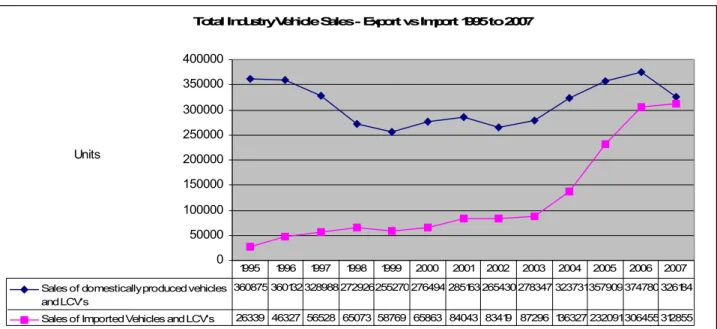
In September 1995, the South African government introduced the Motor Industry Development Program (MIDP) as a means to make the South African automotive industry a competitive industry. In this regard, the South African automotive industry, with regard to sales of vehicles and parts, both exported and imported, growth trends in the sector and the views of people working within the South African automotive industry will be analyzed to to determine the extent to which the MIDP has lost ground compared to its original intent.
Introduction
Problem statement
The MIDP was implemented in 1995 to reshape the future direction of the South African automotive industry. Since the inception of the MIDP, the South African automotive industry has not only accepted the challenges posed by global integration, but in a relatively short period of time has succeeded in many of the objectives of the MIDP and transformed itself (South -Africa - Automotive: Motor Vehicle Manufacturing 2002).
Research objective of the study
To establish the essence and sentiment of people working in the South African automotive industry in relation to the Motor Industry Development Program (MIDP). To determine whether people in the auto industry believe that higher tariffs or restrictions should be placed on imported vehicles and components.
Outline of the study
- Chapter Two – Literature Review
- Chapter Three – Research Methodology
- Chapter Four – Research Finding
- Chapter Five – Conclusion and Recommendations
To test the extent to which these people believe the MIDP has impacted the South African automotive industry and whether or not they are confident in the Program going forward. It was intended that people working in the automotive industry at middle and senior management level could answer the questionnaire.
Conclusion
The data is discussed in this chapter, leading to recommendations on how to improve the operation of the MIDP. The study then concludes with an assessment of the extent to which the data explored the problem and addressed the objective of the study.
Introduction
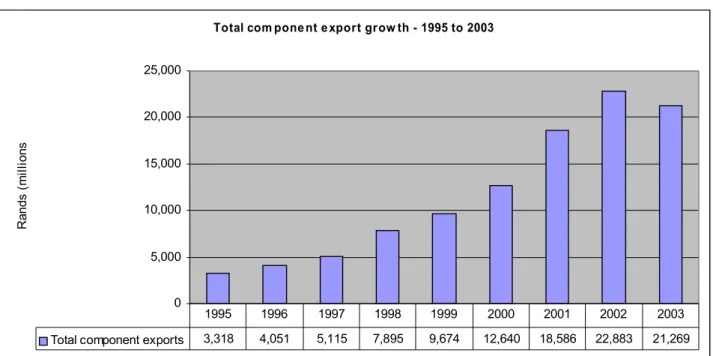
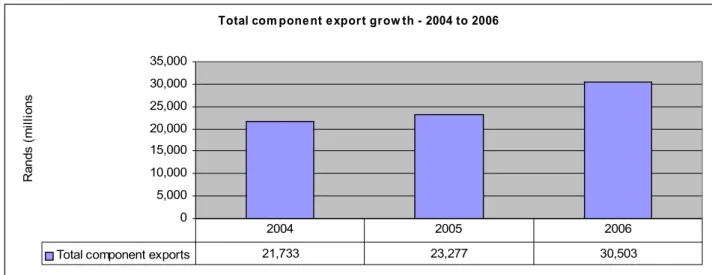
1 To what extent has the MIDP contributed to the integration of the SA automotive industry into the global market since 1995. The weaker Rand also contributes to the competitive export nature of the South African automotive industry. The integration of the South African automotive industry into the global export market has seen the industry grow significantly over the years.
The MIDP is considered a key driving force in the integration of the South African automotive industry into the global automotive market. The MIDP has not contributed as successfully to the competitiveness of the South African domestic automotive industry. Low import tariffs have placed significant pressure on the competitiveness of the South African automotive industry.
7 To what extent is the MIDP responsible for the future of the South African automotive industry. 12 To what extent do you think standards in the South African automotive industry have improved as a result of the MIDP.
Reason for MIDP introduction
Aim and objective of MIDP – Overview
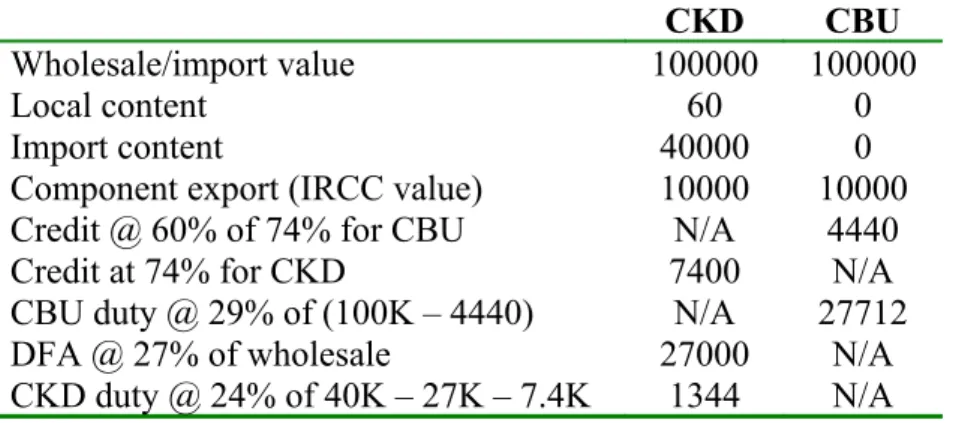
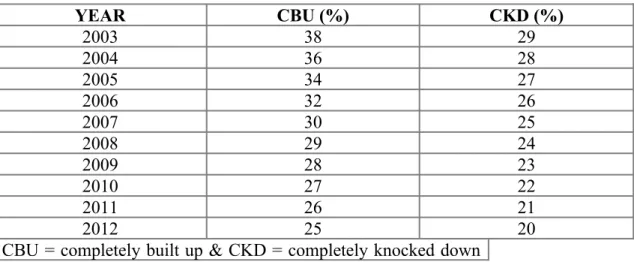
A duty-free allowance for imported components of 27 percent of the value of vehicles produced for the domestic market (Flatters 2005: 2). Thanks to so-called Import Rebate Credit Certificates (IRCCs), OEMs can bring a fuller range of vehicles from other factories around the world for sale in South Africa at a reduced level of tariffs.
Mechanisms of the MIDP
The DFA is a simple calculation that allows components worth 27% of the vehicle's ex-factory value to be imported duty-free (Pitot 2008). For every rand of CBU exported, a percentage determined by the value of export performance (VEP) of CBUs can be imported duty-free.
The impact of the MIDP on the SA automotive industry
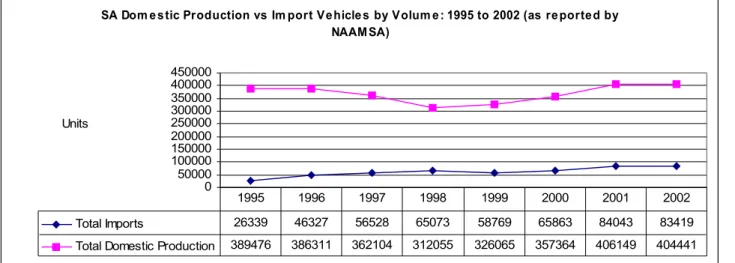
As depicted in Figure 2.1, the automotive industry saw vehicle exports grow from the beginning of the MIDP in 1995 to 2002. Following the announcement that the MIDP would continue until 2012, the automotive industry experienced a phenomenal increase in investment, domestic sales and export growth (SouthAfrica.info reporter 2008 ).

Concerns of low import duties
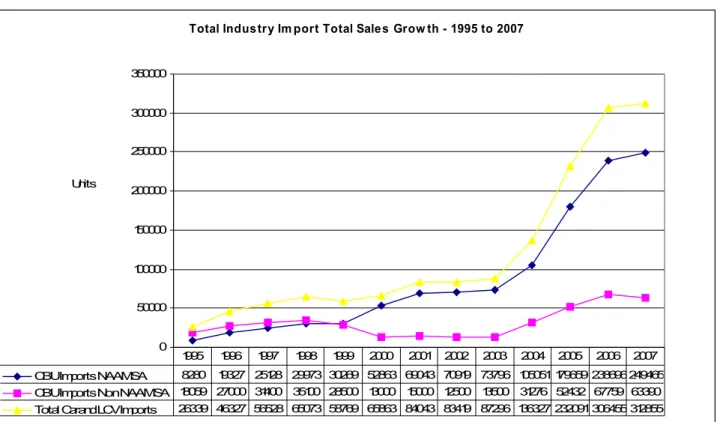
Coincident with the increase in imports into the South African car market is also the MIDP's removal of minimum local content requirements, which directly enabled car companies to source more components from overseas suppliers, putting further pressure on local component manufacturers (Financial Mail 2007 : 41). . Compared to South Africa's 35% local content average, both Thailand's and Australia's automotive industry achieved local content averages of more than 80% in 2007. Hedderich et al (2005) more importantly, also argue that the Chinese car industry has also consistently reported a high percentage average of local content in their products.
Therefore, Chinese manufacturing companies had the extremely inviting incentive to be exempted from any import tax if local content of more than 40% was reached and this has a significant impact on the domestic automobile industry in China.
Conclusion
The MIDP has attracted a world-class automotive industry to South Africa as a result of protective government policies that would otherwise not have existed. Without the MIDP, domestic production of vehicles and parts would have become outdated and could no longer meet global standards, and the industry could have become extinct (Business Map Foundation 2003: 1-4). But key elements of the MIDP have also had a negative impact on the automotive industry, causing local manufacturers to question their confidence in the future of the MIDP.
South Africa's low volume, low local content assembly industry supplying the domestic market is not very closely integrated with the growth of a large export sector created by the MIDP.
Introduction
Qualitative Research
Leedy and Ormrod (2005) argue that the term qualitative research encompasses several approaches to research that are in some respects quite different from each other. Researchers who use qualitative research methods often formulate only research questions about the problem. However, Leedy and Ormrod (2005) say that despite the fact mentioned above, qualitative research requires significant preparation and planning.
Qualitative research methods should be used when there is little information about a topic or when some variables are unknown, because qualitative research can help determine what is important and what should be studied.
Quantitative Research
Observations and interviews are conducted in quantitative research, but in quantitative research, unlike qualitative research, where, for example, interviews are often open-ended, the interviews are more structured and the researcher will ask a standard set of questions and nothing more. Telephone interviews are used when a researcher needs to obtain research information from a large sample of people in order to gather data needed for analysis. As with observations, this form of information gathering focuses on a specific aspect of a particular behavior in quantitative research, whereas in qualitative research, observations are usually recorded in great detail and capture a wide range of information relevant to the problem.
Another difference between quantitative and qualitative research is the use of paper-pencil questionnaires that are used in quantitative research to collect information from a large number of people, including people living in different countries.
Aim of the study
Overview
The sample
The list of respondents also included 17 people who work for major car manufacturers in South Africa, namely Toyota, General Motors South Africa and Volkswagen South Africa.
Data collection
Procedure for data collection
Data analysis
Conclusion
Introduction
The questionnaire seeks to gather empirical data on the opinions of people working in the South African automotive industry regarding the effects of the MIDP and the confidence people have in the program going forward. In the sections that follow, the data collected through the questionnaire will be presented and the findings discussed.
Questionnaire data
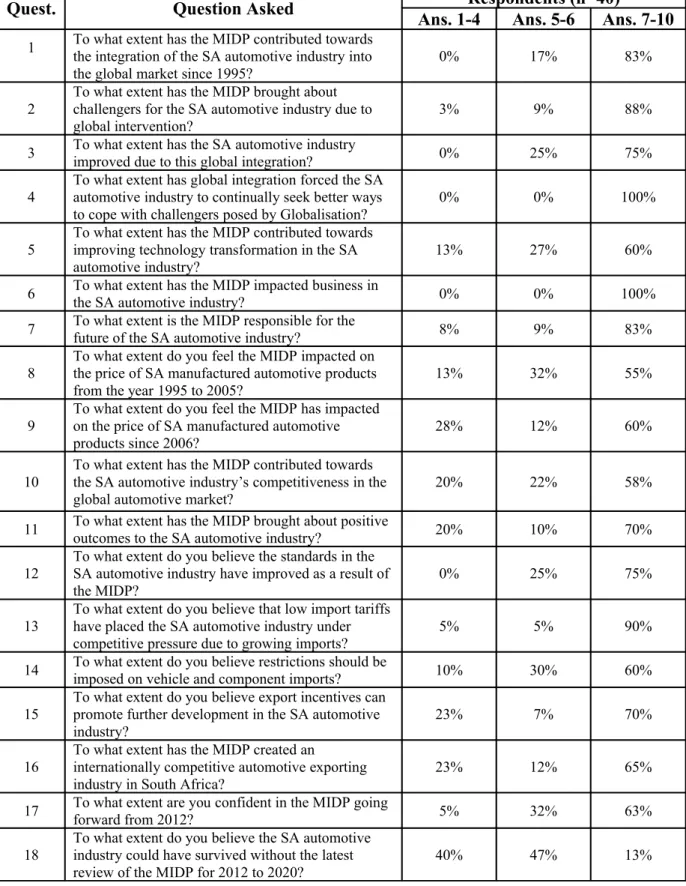
As shown in Table 4.1, 83% of respondents (Question 1) believe that the MIDP has been a major driving force behind the integration of the South African automotive industry into the global automotive market. 75% of respondents to Question 3 as shown in Table 4.1 agree that the South African automotive industry has improved significantly due to the implementation of the MIDP and the integration into the global markets that the MIDP has promoted. MIDP can certainly be considered the driving force behind the successful integration of the South African automotive industry into the global export and import market.
Surprisingly, however, after 83% said the MIDP was responsible for the future of the SA automotive industries, only 63% did.
Conclusion
The answer to Question 18 as presented in Table 4.1 shows that only 40% of the respondents were determined that the South African automotive industry could not have survived without the latest revision of the MIDP and the introduction of the new APDP from 2013 to 2020 . only 13% agreed that the SA car industry could have survived, leaving a large number of respondents very uncertain about what the DTI's programs hold for the future of the South African car industry. The main reason, it seems, for this uncertainty and loss of confidence with the MIDP is the significant pressure that imports are putting on the local vehicle and component market in South Africa.
The research findings from data collected through the questionnaire support this assumption and also support the researchers' conclusion that higher tariffs or restrictions on imported vehicles and components should improve the local content level of exported and domestic vehicles and that this will ultimately affect the success of local businesses. competes with international manufacturers.
Introduction
Discussion…
Substance and Sentiment
Confidence levels in MIDP going forward are quite low considering how MIDP is responsible for the future of the South African automotive industry. A marginal majority of respondents believe that the South African automotive industry could not survive without the recent revision of the MIDP and the introduction of the new APDP from 2013 to 2020.
The problem with the MIDP
These two critical points are putting a lot of pressure on the competitiveness and survival of the South African automotive industry, as increased levels of imports take jobs away from local assembly plants. MIDP, with its low tariffs and export credits, almost encourages companies to look at importing automotive vehicles and components without even hesitating to consider localizing production or assembling parts with local suppliers.
Recommendations
Limitation of study
Future research
Recommendations for future research would be to investigate whether the APDP's production incentive framework has a positive impact (reduces the number of imports) on the level of imported vehicles and parts brought into the South African automotive industry following its establishment in 2013 . A further recommendation for future research would be to investigate the effects of the APDP's production incentive strategy on the growth of auto parts production in South Africa. Finally, one of the concerns with the MIDP was the decline in local content levels.
It is recommended that future research investigates whether the APDP manufacturing promotion-based strategy has a positive impact on increasing the use of local content in locally produced vehicles and components.
Conclusion
2 To what extent did the MIDP bring challengers to the SA car industry as a result of global intervention. 5 To what extent has the MIDP contributed to the improvement of technology transformation in the SA automotive industry. 10 To what extent has the MIDP contributed to the SA automotive industry's competitiveness in the global automotive market.
11 To what extent has the MIDP delivered positive results for the South African automotive industry.