It is increasingly rural and urban areas that will experience a lack of water and sanitation. The question addressed by the thesis is whether implementation of IWRM reduces water and sanitation poverty or perpetuates it (IWRM, Dublin Principles, 1992).
Preliminary literature review
Global trends
Water and sanitation poverty is not related to the scarcity of the resource itself, but to "economic water scarcity": the cost of raising or diverting water from the source and delivering it in a clean state to end users. Governments often abdicate their electoral mandate and responsibility to provide water and sanitation, especially to voiceless rural residents.
African case studies in IWRM
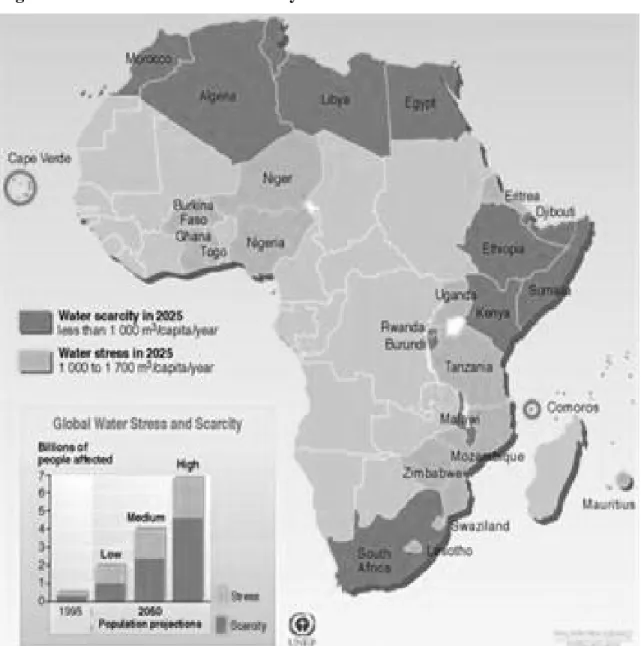
Ghana is one of the countries that struggled with private sector participation in the water and sanitation sector. In addition, Ghana is one of the countries that adopted IWRM and enacted legislation that promotes decentralization and private sector participation in water supply and sanitation (Aryeetey and Ahene, 2008:5, Laube, 2007:420).
Research problems and objectives
Objectives of this thesis
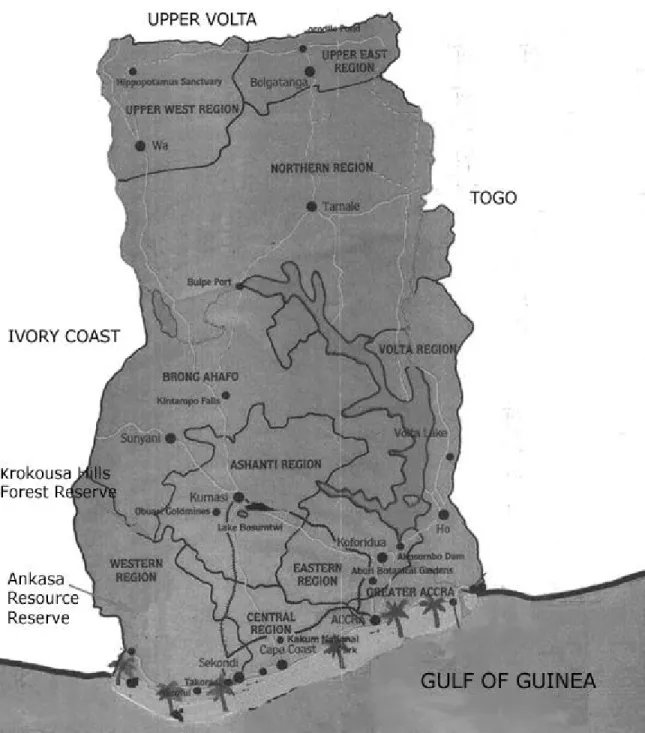
The project chosen as a case study in Ghana, the Accra Sanitation Project, was designed and implemented following the adoption of the IWRM policy in 2000, as well as the implementation of the Rural Water Supply and Sanitation Initiative (RWSSI), which came into effect was completed in 2007. The Accra Sanitation Project is an example of a RWSSI project and one of the AfDB's first efforts to operationalize the IWRM approach.
Specific research questions
What ecological efficiency, environmental performance, physical and economic scarcity trends, sustainability variables, and externalities are associated with the implementation of IWRM in Africa and elsewhere?” This last question is probing. 15 respondents on the various pollution abatement strategies adopted as a result of the implementation of IWRM in Africa.
Broader issues investigated
Principal theories
16 Water and Sanitation Management: This theory is about making and implementing rules and exercising power through institutional mechanisms. The Nottawasaga Institute (2009) report entitled “Analysis of Water and Sanitation Policies and Status of IWRM in Africa” reflects the progress made in adopting IWRM principles in 17 countries (Zambia, Mozambique, Lesotho, Botswana , Chad, Cameroon, DRC, Senegal, Ghana, Burkina Faso, Mali, Nigeria, Kenya, Tanzania, Uganda, Ethiopia and Rwanda).
Research methodology and methods
- Rationale for the methodology
- The research strategies
- Target population
- The research instrument
- Interviews
- Focus group discussions
- Data analysis
- Validity and reliability
- Limitations of the study
- Elimination of bias
- Ethical considerations
- Conclusion
It is also important to reflect on the similarities and differences of the three projects on the water and sanitation continuum. The focus of the study was on the extent to which IWRM implementation is limiting access to water and sanitation by rural households.
Structure of the thesis
This chapter provides information on the relationship between theories of water and sanitation governance (the Veblenian dichotomy, collective action, principles of water and sanitation governance, institutional mechanisms, property rights, public and private provision, decentralization and centralization, and the role of market mechanisms). , new institutional economic theories (transaction costs and information costs, institutional transaction costs, institutional evolution, constitutional choice, law and economics of contracts, theory of institutions) and environmental economic theories (eco-efficiency, sustainability, environmental performance, physical and economic scarcity and externalities ). This chapter also presents qualitative data to help assess applications of water and sanitation governance, new institutional economics, and environmental economics.
Introduction
Decision making
The key concepts one finds in IWRM include equity, efficiency and sustainability, but evidence on the ground points to the lack of operationalization of these concepts in projects (Moriarty, et. al, 2004:6). The water supply and sanitation sector as a whole has a vital interest in engaging with IWRM to protect the right of people to access domestic water in the face of growing competition from other uses and sectors (Jayyousi McDonnell Moriarty, et. al, 2004:6 ) ).
IWRM is a systematic process
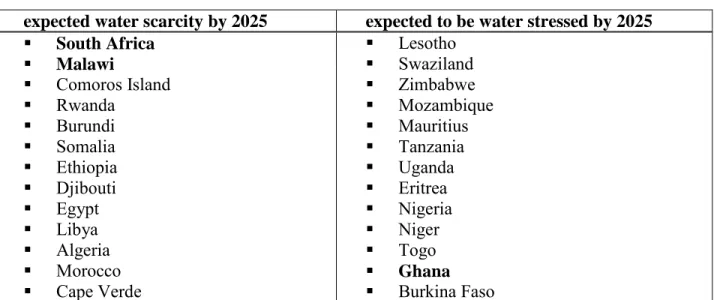
Ghana, Malawi and South Africa have developed water and sanitation policies as required by the AfDB as a condition for implementing IWRM. In South Africa, Malawi and Ghana, water and sanitation authorities have resorted to community management in rural areas.
Why IWRM?
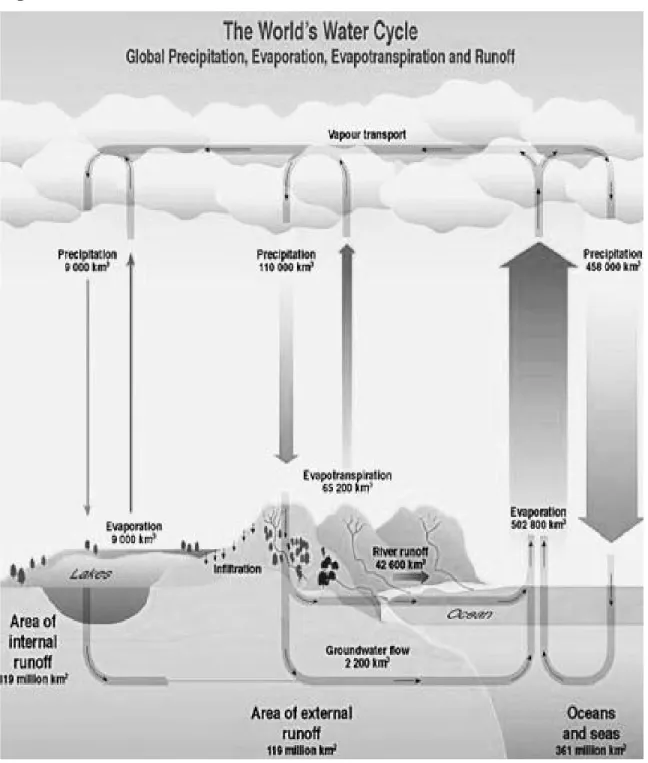
55 Vorosmarty et al (2010) highlight the lack of balance between ecosystem protection and human consumption of water as a significant contributor to water scarcity. Therefore, it is necessary to take parallel measures to reduce population growth (especially wealthier water users, who use many times more water than poor people), protect and rehabilitate the environment, and take an integrated approach to the integrated management of water resources.
Dublin principles of IWRM
However, it remains an important indicator of the ideological acceptance of water as an economic good. A participatory approach involves raising awareness among policy makers and the general public about the importance of water.
Principles of IWRM developed after Dublin
- Water source and catchment conservation and protection are essential Environmental degradation of water resources may have an immediate and severe impact
- Water allocation to be agreed within a national framework
- Management needs to be taken care of at the lowest appropriate levels
- Capacity building is the key to sustainability
- Involvement of all stakeholders is required
- Efficient water use is essential
- Water should be treated as having an economic and social value
- Striking a gender balance is essential
Proponents of IWRM (Moriarty, et. al, 2004:8) advocate the view that water is recognized as a social and economic value. The Dublin Principles of IWRM and the eight principles developed subsequently have been used in part in water and sanitation projects funded or funded by the African Development Bank (Moriarty, et. al, 2004:24).
Water is a basic human right
Impacts of water and sanitation on other sectors
Competition
In Ghana there are District Assemblies, a Ministry of Food and Agriculture (MOFA), CWSA, GWCL, PURC, a Ministry of Health, Ghana Health Service, EPA, a Ministry of Fisheries, a Department of Cooperatives and Community Development (DCCD) , the Volta River Authority (VRA), Departments of Hydrology and Meteorological Service, a Council for Scientific and Industrial Research (CSIR), the Water Research Institute (WRI), WRC, Minerals, Forestry and Lands Commissions, Traditional Authorities, WGVs, WATSAN as stakeholders in the water - and sanitation sector. In Malawi, stakeholders include the Ministry of Irrigation and Water Development (MIWD), WRB, Water Boards, local municipalities, Ministry of Agriculture, Ministry of Irrigation, Ministries of Natural Resources, Health, Meteorological Services, NGOs, private sector and Mpira Water Authority (Focus group discussions, 2010 and 2012, Maganga, et. al Pahl-Wostl, et. al, 2011, Lloyd, et. al, 2006:49, Moriarty, et, al, 2004:16).
Pollution
The pollution of the Lilongwe River and the lack of waste disposal facilities at Balaka in Malawi are examples of the failures of IWRM's decentralization mantra (Bruschweiler, 2003:7, Pahl-Wostl, et. al, 2011). Durban and Accra are some of the few cities in Africa with local environmental departments, suggesting that water service providers are not regulated at the local level and therefore do not heed IWRM commitments (Brown and Clarke, 2007, Moriarty, et al., 2004:16).
The need for reliability and buffers
The social dimensions of water supply and sanitation are enshrined in the constitutions of most countries. This is seen to be complemented by income from a healthy water and sanitation market, particularly when local providers of goods and services supporting the water sector are active players and when there is active reinvestment in the sector.
Benefits of IWRM
84 Demand management in traditional water and sanitation thinking tends to be primarily related to improving the efficiency of transmission systems. Social inclusivity and the inclusion of women in decision-making have been considered desirable in the water and sanitation sector for some time.
Barriers to the implementation of IWRM
- Willingness to change
- Lack of tools and systems for integration
- Domination of water administration by water experts
- Lack of quantitative knowledge on water resources
- Sustainability, operation and maintenance
This is due to the failure to appreciate the value of water and the environment in the past which caused a serious lack of quantitative knowledge on freshwater ecosystems. The fundamental weakness of IWRM implementation in water supply and sanitation is the lack of operation and maintenance of water and sanitation infrastructure resulting in deterioration.
Implications for the implementation of IWRM
Most of the projects financed by the AfDB were implemented piecemeal, based on political expediency and short-term oriented (Clement et. al, 2000:10, Dauda, 2006:291). About half of the world's population lives in river basins shared by more than one country.
Conclusion
The concept of IWRM has been associated with the promotion of the river basin as a logical geographical unit for its practical implementation. There are certainly benefits to implementing IWRM, such as gender equality and improved waste management.
Introduction
Proponents of IWRM believe that promoting water as an integral part of a vital ecosystem can be achieved by managing water demand and preventing wasteful practices. In this chapter, water and sanitation management theories, NIE, and environmental and ecological economics work together to show how IWRM is causing shifts in institutional frameworks, governance, environmental management, and pollution abatement.
Water governance and collective action
Definitions of water and sanitation governance
Castro (2007:98) argues that poor water and sanitation management is neither technical nor natural, but social and political in nature. Hydro-political conflicts of interest here are caused by clashes between techno-scientific and socio-political paradigms of water and sanitation management.
Collective action
Awareness of the positive cumulative outcomes of successful collective action lends credibility and enables further social enterprises and arrangements. They take collective action to frustrate DWS (Notes notes implementation of the DWS strategy for managing water resources for the agricultural sector, on September 20, 2014).
Principles of water and sanitation governance
If done correctly, this can lead to civil society being socialized into governance on a wide range of issues. Water and sanitation management must be based on the ethical principles of the society in which it operates.
Institutional mechanisms
Institutional problems in the water and sanitation sector in Africa pose a very serious challenge to sustainable development. Price and other market mechanisms are not a panacea for the ills of water and sanitation management in Africa.
Property rights
In Africa, it is argued that IWRM stakeholders such as commercial agricultural enterprises do not experience water scarcity and sanitation due to private property rights that allow them to extract water without permits. The mining sector is also guilty of manipulating private property rights and some operate without water permits.
Public and private provision
This thesis argues that the distribution of private property rights within IWRM platforms has promoted water and sanitation scarcity in Africa. The failure to balance public provision with private sector involvement is responsible for water and sanitation shortages in Africa.
Decentralisation and centralisation
Decentralization is further complicated by the privatization of water and sanitation services in the form of public utilities and local government structures. An example of the reclaiming of authority and resources allocated to local government in South Africa is the fact that the Department of Water and Sanitation (DWS) continues to issue water licenses in all parts of the country.
The role of market mechanisms
They are (i) the institutional theory of consumption, (ii) the institutional theory of production and (iii) the institutional theory of distribution (Miller. The key to the theory of consumption is the availability of goods that have a ceremonial and instrumental function (Veblen, 2001 ).
New Institutional Economics
- Institutional evolution
- Constitutional choice
- Law and economics of contracts
- Theory of institutions
What it abandons is instrumental rationality, ie the assumption of neoclassical economics that made it an institution-free theory (North, 1995:17, Richter, 2003:8). The same factors related to water and sanitation institutions include institutional linkages and path dependence.
Environmental economics
- Eco-efficiency and sustainability
- Environmental performance
- Physical and economic scarcity
- Externalities
Environmental problems are described only as negative externalities and the effects on economic actors outside the center of market theory. 143 problem of social costs, which advocates that both the polluter and the victim of the pollution must pay.
Conclusion
Although the above cost-benefit methods are recommended by environmental economists, they are weak when it comes to the willingness to pay for the quality of the environment and the preservation of natural resources for future generations. Environmental performance related to willingness to pay for environmentally sustainable products is a bone of contention in various parts of the world.
Introduction
155 The danger of the IDA analysis of access to water and the community management challenges is that full cost accounting is not taken into account. The study provides a good overview of the water and sanitation status, coverage and challenges facing Malawi in achieving the MDGs.
Malawi’s Mpira Balaka Rural Water Supply Project
According to AfDB (1999), non-payment by the rural beneficiaries of the project poses a serious threat to its sustainability. AfDB identified the problems (encountered in maintaining the scheme) as provision of free water and central control of the water scheme by the Ministry of Water Development.
Ghana’s Sanitation Improvement Project
Excreta and wastewater services
Another key point was to improve the use of existing treatment capacity, increasing the number of connections to the sewage system and increasing the capacity of the sewage unit staff.” (Accra Learning Alliance). About 15% of the metropolitan area of Accra, mainly in the central area, is served by a water sewer network.
Conclusion
The immediate beneficiaries are the urban and peri-urban populations of Accra, which make up about of the Accra population in 2020), the majority of whom are poor. The next chapters present the results of IWRM implementation in each of the case countries (Ghana, Malawi and South Africa) and explore the footprints of IWRM in Africa presented in this chapter.
Introduction
173 function of water and sanitation institutions in the various water management areas, institutional framework and environmental management is one of the themes that emerged in the area. The institutions participating in the IWRM platform reflect differences in power relations (Birner et al, 2005:6, Laube.
Water and sanitation governance
The institutions participating in the IWRM platform reflect differences in power relations (Birner et al, 2005:6, Laube, 2007:421). In the devolution of water resource management, existing water and sanitation rights were abolished and a basis for the allocation and taxation of water use rights was created.
Meso and micro institutions in Accra and Ghana
The Ghana Water and Sewerage Corporation (GWSC) was established as a result of the promulgation of Act 310 of 1965. The main focus of the GWCL was to facilitate partnerships with the private sector in the field of urban water supply.
Water resource management institutions
Water scarcity in Accra is confirmed on the ground as unrelated to water availability, but rather due to economic issues related to electricity supply, privatization and commercialization and community management of schemes. Scarcity of water resources is related to the type of water management institutions established to support IWRM implementation (Focus Group Discussion, 2010, Benson, 2008).