THE POLITICS OF KNOWLEDGE:
CASE STUDY OF THE MANAGEMENT OF BEACH WATER QUALITY IN DURBAN, SOUTH AFRICA
PAUL VAN HEERDEN
November 2015
Submitted in fulfilment of the academic requirements for the Master of Social Science degree in the School of Built Environment and Development Studies,
University of KwaZulu-Natal, Durban.
i
ACKNOWLEDGEMENTS
The financial assistance of the National Research Foundation (NRF) towards this research is hereby acknowledged. Opinions expressed and conclusions arrived at are those of the author and are not necessarily attributable to the NRF.
I would like to extend thanks to my supervisor, Dianne Scott, for encouraging me ‘to take the escalator instead of the stairs’. I am grateful for the continuous academic (and life) advice and support given to me over the last seven years and for again walking me through the journey of another research project.
On this note, thanks must also be given to my co-supervisor (and boss for one year), Louis Celliers, for providing advice and guidance related to my research and for exposing me to the inner-workings of a research institute
I would like to thank all the interviewees who willingly gave of their time and experience.
Their contributions informed my understanding of the complexities of water quality management in Durban and were instrumental in the development of the final product.
eThekwini Municipality must also be thanked for providing the necessary permissions for me to interview municipal employees and therefore for enabling the research.
Thanks must also be extended to the South African Weather Service (SAWS) for providing me with climatic and weather data for the study area.
On a personal note, thanks must go to my parents, Derek and Sharon, for their continued support, financial and otherwise, given to me over the course of my extended academic career.
The innumerable hours spent editing chapters, assisting with illustration advice, and providing motivation to finish are invaluable and cannot be earned back. Thank you for willingly giving of your time and love.
Most importantly, to my loving wife, Leanne, thank you for making the big sacrifices necessary for me to undertake this degree and for slaving away to support us financially. The unending
ii
financial and emotional support you have given me over the last two years has freed me up to focus on this thesis. Without this support I do not think I would have made it to the finish line.
iii
PREFACE
The experimental work presented in this study was carried out in the School of Built Environment and Development Studies, University of KwaZulu-Natal from July 2013 to November 2015 under the supervision of Professor Dianne Scott and Dr. Louis Celliers.
All work presented herein represents the author’s original work and has not otherwise been submitted in any form for any degree or diploma to any tertiary institution. Where use has been made of the work of others it is duly acknowledged in the text.
_________________
Signature
As the candidate's supervisor I have/have not approved this thesis for submission.
Date:
Name:
Signed:
iv
LIST OF ACRONYMS
ANC African National Congress AFRI Acute Febrile Respiratory Illness BFP Blue Flag Programme
CEC Council of the European Community CFU Colony Forming Units (of bacteria) CKM Co-Production of Knowledge Model CMP Coastal Management Programme
CSCM eThekwini Municipality Coastal Engineering, Storm Water and Catchment Management Department
CSIR Council for Scientific and Industrial Research CZM Coastal Zone Management
DA Democratic Alliance (South African political party) DEA National Department of Environmental Affairs
DEAT National Department of Environmental Affairs and Tourism
DEDT KwaZulu-Natal Department of Economic Development and Tourism DWAF National Department of Water Affairs and Forestry
EDTEA KwaZulu-Natal Department of Economic Development, Tourism and Environmental Affairs
EEA European Environment Agency
EU European Union
EXCO Executive Committee
FEDHASA Federated Hospitality Association of South Africa FEE Foundation for Environmental Education
FSC Forestry Stewardship Council GDP Gross Domestic Product GI Gastrointestinal Illness
ICM Integrated Coastal Management ICM Act Integrated Coastal Management Act IDP Integrated Development Plan
ISO The International Organisation for Standardisation
KZN KwaZulu-Natal
LED Local Economic Development
v LOAEL Lowest-observed-adverse-effect-level MCMP Municipal Coastal Management Plan MEC Member of the Executive Council
MF Minority Front
NCMP National Coastal Management Plan NEMA National Environmental Management Act NGO Non-Governmental Organisation
NOAEL No-observed-adverse-effect-level NRF National Research Foundation PDM Public Deficit Model
PCMP Provincial Coastal Management Plan PEM Public Education Model
RSA Republic of South Africa
SA South Africa
SABS South African Bureau of Standards
SALGA South African Local Government Association SANAS South African National Accreditation System SANS South African National Standards
SANCOR South African Network for Coastal and Oceanographic Research SSA Statistics South Africa
SAWS South African Weather Service
UN United Nations
WESSA Wildlife and Environmental Society of South Africa WHO World Health Organisation
WRC Water Research Commission
vi
ABSTRACT
Whatmore (2009: 588) suggests that knowledge controversies surface when the “rationales of environmental science and policy fail to convince those affected by what is at issue” and force a variety of actors to be included in the policy processes around these issues These situations are increasingly commonplace in the socio-economic context of the ‘network society’ which requires a form of governance able to accept and process a diverse array of knowledge inputs to arrive at robust policies and decisions. Increasing emphasis is placed on the demand for inclusion of varied knowledge claims, policy-making, and knowledge production processes.
In Durban, a knowledge controversy surfaced when the public questioned eThekwini Municipality’s reasoning, position, and knowledge regarding the unsuitability of the Blue Flag Programme for its ‘Golden Mile’ beaches. This thesis aims to provide a social science understanding of a marine science issue: the faecal contamination of urban coastal waters, by using the case of Durban’s involvement with the Blue Flag Programme between 2002 and 2014. A qualitative methodology, discourse analysis, is utilised as a tool for exploring meaning bound up in language. It is proposed that numerous environmental discourses were used by a variety of Durban residents to understand and argue about eThekwini Municipality’s decision- making around its beach management policies. Furthermore, evidence collected in the research illustrates that the absence of a formal public engagement process created an environment in which the media, primarily the popular press, was the primary source of information for the public. This gave rise to a situation which resulted in an ever-evolving political debate in which public opinion was galvanised against the Municipal authority’s decision-making through informal establishment of a discourse coalition comprising varied actors from Durban’s civil and professional societies. It also created an enabling environment for co-production of knowledge although this ideal was not fully realised as the Municipal decision to re-join the Blue Flag Programme sated widespread public antipathy for Municipal decision-makers by effectively resolving the knowledge controversy.
vii
TABLE OF CONTENTS
ACKNOWLEDGEMENTS ... i
PREFACE ... iii
LIST OF ACRONYMS ... iv
ABSTRACT ... vi
TABLE OF CONTENTS ... vii
LIST OF FIGURES ... xi
LIST OF TABLES ... xi
CHAPTER 1 INTRODUCTION ... 1
1.1 Introduction ... 1
1.2 Rationale... 2
1.3 Aim and objectives ... 3
1.4 Structure of thesis ... 4
CHAPTER 2 THEORETICAL FRAMEWORK ... 8
2.1 Introduction ... 8
2.2 The network society and governance ... 10
2.3 The knowledge society ... 12
2.4 Science and society ... 13
2.4.1 Evidence-based decision-making ... 13
2.4.2 Shift from mode 1 knowledge to mode 2 knowledge ... 15
2.4.3 Environmental controversies ... 18
2.5 Types of knowledge ... 19
2.5.1 Tacit knowledge ... 19
2.5.2 Embedded knowledge ... 21
2.5.3 Codified knowledge ... 21
2.6 Discursive knowledge (discourses) ... 21
2.6.1 Discourse analysis ... 22
2.6.2 Environmental discourses ... 24
2.6.3 Ecolabels ... 27
2.7 Conclusion ... 29
CHAPTER 3 CONTEXT OF THE STUDY ... 31
viii
3.1 Introduction ... 31
3.2 eThekwini Municipality ... 32
3.2.1 Socio-economic context ... 34
3.2.2 Climatic context ... 34
3.2.3 Climatic context and the implications for tourism ... 34
3.3 Coastal governance policy and legislation ... 36
3.3.1 The international context ... 36
3.3.2 The South African and Durban context ... 37
3.4 The Blue Flag Programme ... 40
3.4.1 The international context ... 40
3.4.2 The South African and Durban context ... 41
3.5 Water quality: the regulatory and scientific context ... 47
3.5.1 The international context ... 48
3.5.2 Monitoring marine water quality in South Africa ... 52
3.6 Conclusion ... 56
CHAPTER 4 RESEARCH METHODS AND METHODLOGY ... 58
4.1 Introduction ... 58
4.2 Primary and secondary data sources ... 59
4.3 Data collection... 59
4.3.1 Interviews ... 60
4.3.2 Newspaper articles ... 63
4.3.3 Policy and statutory documents ... 63
4.3.4 Photographs... 63
4.4 Sampling... 64
4.5 Data analysis and interpretation ... 64
4.5.1 Thematic analysis... 65
4.5.2 Discourse analysis ... 68
4.6 Limitations and considerations to the research ... 70
4.6.1 Ethical considerations ... 70
4.6.2 Positionality ... 70
ix
4.6.3 Time constraints ... 71
4.6.4 Gender and racial skewing ... 71
4.7 Conclusion ... 72
CHAPTER 5 UNDERSTANDINGS OF BEACH WATER QUALITY AND THE UNDERLYING KNOWLEDGE OF BEACH QUALITY MONITORING AND MANAGEMENT POLICIES IN ETHEKWINI MUNICIPALITY ... 74
5.1 Introduction ... 74
5.2 Understanding sea water quality ... 74
5.2.1 Introduction ... 74
5.2.2 Experiential discourses of sea water quality ... 75
5.2.3 Scientific and technical discourses of water quality ... 78
5.3 eThekwini beach water quality knowledge ... 82
5.3.1 Introduction ... 82
5.3.2 The Blue Flag Programme as an approach to sea water quality management ... 83
5.3.3 The Municipal Programme to marine water quality management... 88
5.4 Conclusion ... 91
CHAPTER 6 THE POLITICS OF WATER QUALITY MANAGEMENT IN ETHEKWINI MUNICIPALITY ... 93
6.1 Introduction ... 93
6.2 Actors and discourse coalitions politically engaged in contesting eThekwini’s sea water and beach management policies ... 94
6.2.1 The Municipal discourse coalition ... 94
6.2.2 The Blue Flag Programme discourse coalition ... 95
6.3 Phases of political support for the Blue Flag Programme ... 96
6.3.1 Introduction ... 96
6.3.2 Phase 1: ’Political support and advocacy’ discourses... 97
6.3.3 Phase 2: Discrediting Blue Flag through discourses of ‘defiance’ ... 100
6.3.4 Phase 2: The counter-discourses of ‘rejection, despair and hope’ ... 107
6.3.5 Phase 3: The ‘conciliation’ discourse and ‘a willingness to rethink’ ... 109
6.3.6 Phase 4: ‘Political support and advocacy’ discourse ... 111
x
6.4 Knowledge production and contestation ... 111
6.4.1 Introduction ... 111
6.4.2 Phase 1: Uncontested meta-narrative of beach management (Blue Flag Programme status quo) ... 113
6.4.3 Phase 2: Engagement with eThekwini’s beach management approaches ... 115
6.4.4 Phase 3: Opportunity for meaningful collaboration... 118
6.4.5 Phase 4: Public engagement with ‘the debate’ ceases ... 118
6.5 Conclusion ... 119
CHAPTER 7 CONCLUSION... 121
REFERENCES ... 125
APPENDICES ... 142
Appendix A: Blue Flag Programme criteria for 2014/ 2015 season ... 142
Appendix B: Interview Schedule for beach users, scientists, Municipal officials, politicians, and media persons ... 145
Appendix C: Michael Sutcliffe Interview Schedule ... 148
Appendix D: Alison Kelly Interview Schedule ... 150
xi
LIST OF FIGURES
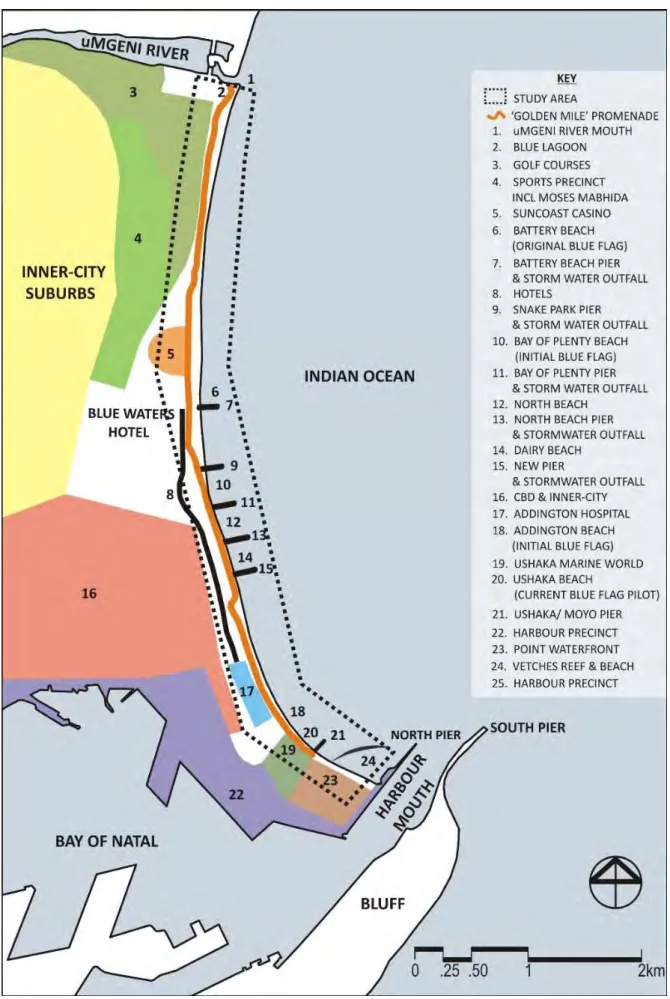
Figure 3.1. A schematic representation of the study area, including Durban's inner-city suburbs,
CBD and Golden Mile ... 33
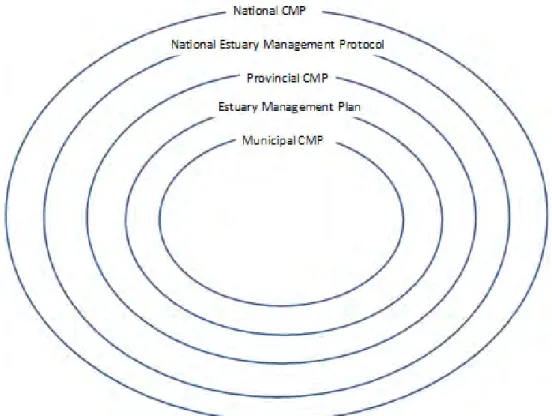
Figure 3.2. Conceptualisation of the intention of the ICM Act in relation to CMPs ... 39
Figure 3.3. Municipal signboard showing beach inspection under the Municipal Programme (27/10/2014) ... 45
Figure 3.4. History of Durban's Blue Flag Programme experience ... 46
Figure 5.1. Discourses related to the Blue Flag Programme knowledge base ... 84
Figure 5.2. Discourses related to the Municipal Programme knowledge base ... 88
Figure 5.3. Discourses related to the contrasting knowledge bases of the Blue Flag Programme and the Municipal Programme ... 92
Figure 6.1. Conceptualisation of the characteristics of, and relationship between, the two discourse coalitions and their members ... 96
Figure 6.2. The four phases of political engagement over water quality management in eThekwini ... 99
Figure 6.3. Discourse tree illustrating the multiple sub-discourses of the ‘defiance’ discourse of the Municipal discourse coalition. ... 100
Figure 6.4. Number of newspaper articles written on the Blue Flag Programme in Durban over the period 2004 to 2014 ... 114
Figure 6.5. Phases of knowledge production/ contestation... 115
LIST OF TABLES
Table 3.1. Blue Flag water quality criteria (imperatives for all regions) ... 40Table 3.2. Blue Flag limits of microbiological pathogens in beach waters ... 41
Table 3.3. Microbiological limits used by eThekwini Municipality ... 44
Table 3.4. Litter index used by eThekwini Municipality... 44
Table 3.5. Definition of terminology commonly used in water quality testing ... 48
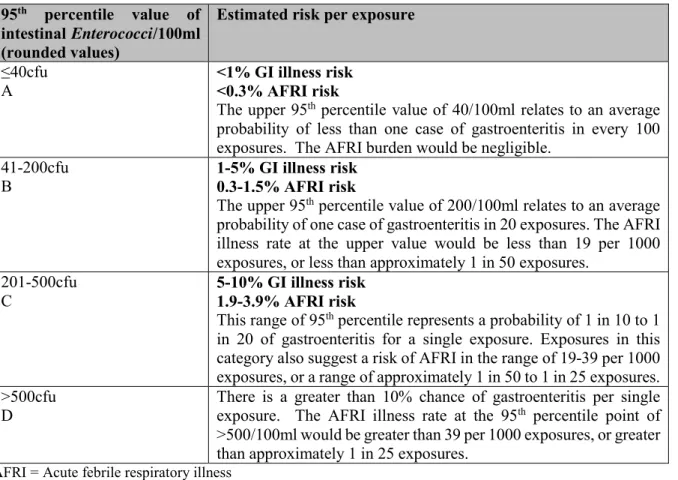
Table 3.6. Guideline values for microbiological quality of recreational waters ... 50
Table 3.7. Microbiological limits for EU coastal and transitional waters ... 51
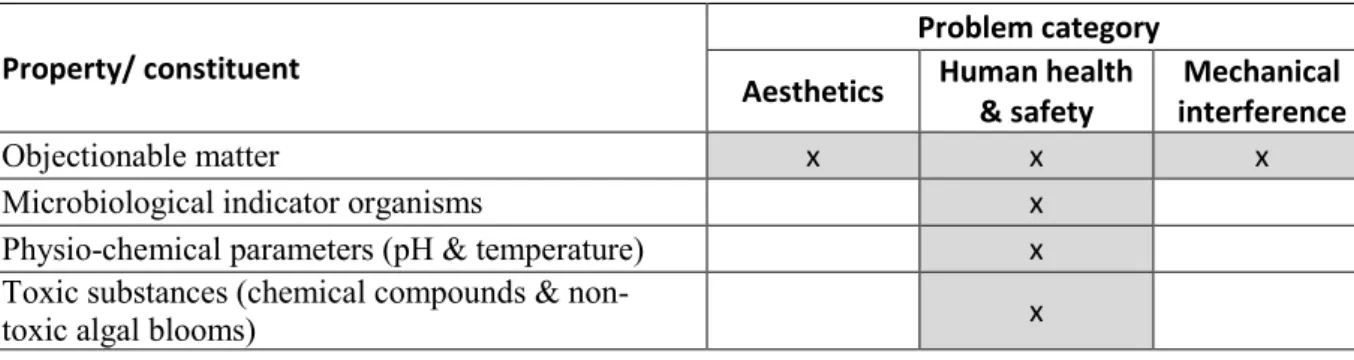
Table 3.8. Key water quality properties/ constituents used to assess different problem categories associated with recreational use of coastal marine waters ... 53
xii
Table 3.9. Microbiological limits recommended for South African coastal marine recreation
waters ... 54
Table 3.10. SANS analytical methods for the different microbiological parameters ... 55
Table 4.1. Scheduling of interviews ... 60
Table 4.2. Table illustrating Participant grouping and composition ... 62
Table 4.3 Table showing master themes derivation from objectives ... 67
1
CHAPTER 1 INTRODUCTION
1.1 Introduction
The coastal zone is the zone found at the interface of land and sea and is among "the most favoured locations to either live permanently, for leisure, recreational activities, or tourism”
(Martínez et al., 2007: 255). Being a zone of high biophysical complexity and a rich source of socio-economic opportunities, especially those arising from tourism, places the coastal zone under significant pressure. The global tourism industry is one of the fastest growing industries, regarded by some authors as the most appropriate industry for generating local economic development (LED). Tourism has become an integral feature of economic development planning and policy-making in both the developed and developing world (Kaplan, 2004;
Maharaj et al., 2006; Nel et al., 2003). South Africa has taken cognisance of this trend and have actively engaged in marketing the coastal zones and beaches of the country. Durban1 is currently marketed as South Africa's playground with specific focus assigned to those beaches situated in what is colloquially known as the 'Golden Mile' (Durban Tourism, 2013). The biophysical complexity of Durban's 'Golden Mile', coupled with existing and potential socio- economic opportunities creates an imperative for good governance of the resource in order to ensure that the most economic, ecological, and social benefit is realised.
There is growing recognition among scientists, experts, and lay persons that the world is becoming increasingly complex and interconnected. It is suggested by some academics and researchers that this increasing complexity often results in instances in which orthodox problem solvers, namely, the scientists, possess insufficient knowledge to provide robust solutions and technical advice to solve problems; these solutions are frequently rejected by the public (Callon, 1999; Lane et al., 2010; Whatmore, 2009). Public rejection arises around disputes over the efficacy or accuracy of expert knowledge claims. Whatmore (2009: 588) suggests that these instances of rejection represent “unsettled public trust in scientific expertise and its relationship to public policy making” and terms such instances, ‘knowledge controversies’.
1 The name Durban is historically and currently used to refer to the city. However, since 2001, the urban area of Durban and its peri-urban fringe have been demarcated as the eThekwini Municipality for administrative purposes. The name Durban is used when referring specifically to features of the city, while eThekwini and Municipality (capitalised) are used interchangeably when referring to the administrative area in which policy decisions are made.
2
In the past decade, the ‘Golden Mile’ beaches have been subjected to two distinct management approaches by eThekwini Municipality authorities. The decision to change from the Blue Flag Programme (BFP) approach to its own in-house, Municipal Programme of beach management in 2008 has attracted criticism and controversy. In light of this problem, the main research question is: what is the basis for the intense politicisation and contestation of the eThekwini Municipality’s changing stance towards managing the water quality of its ‘Golden Mile’
beaches?
1.2 Rationale
A number of factors were considered when deciding to undertake the research project. Central to the research into beach management programmes is the problem of potential pathogenic contamination of urban recreational beaches. The primary motivation for the study is to provide an understanding of the impact of environmental politics on the implementation of a particular aspect of Integrated Coastal Management (ICM), namely, beach water quality management. In so doing, recommendations for improving the governance of Durban’s
‘Golden Mile’, especially from a water quality perspective, are made.
The central beaches of Durban are located on what is commonly referred to as the ‘Golden Mile’. This name is apt since these beaches add value to the city, and the province, as major tourism attractions (Durban Tourism, 2013; Maharaj et al., 2006). In 2001, South Beach, on the ‘Golden Mile’ was awarded Blue Flag accreditation (Bisetty, 08/07/2004; Fourie, 04/07/2012). By 2006, in addition to South beach, a further six eThekwini beaches, three of which were located on the ‘Golden Mile’, were awarded Blue Flag status and accredited by the BFP. These were: Addington Beach; Bay of Plenty Beach; and North Beach (Nzama, 28/10/2005). Accreditation by the BFP indicated that these beaches complied with 33 criteria, spread over four categories, namely, environmental education and information, water quality, environmental management, and safety and services (The Foundation for Environmental Education, 2014). In 2008, after exceeding the microbiological standards for water quality set by the BFP (FEE, 2014), eThekwini Municipality, responsible for the management of the city, withdrew from the programme, refuting its relevance for Durban and choose instead to use their own in-house system and standards to monitor beach water quality (De Boer, 14/03/08;
Fourie, 04/07/2012; Ryan, 04/05/2008). According to some, these self-designed standards did
3
not conform to the World Health Organisation (WHO) standards, nor to those of the Blue Flag (Carnie, 16/03/2008; FEE, 2014). This refutation of the Blue Flag standards and the loss of Blue Flag status at all of eThekwini’s beaches was criticised from many quarters of Durban’s civil and professional bodies. Such criticism was highly publicised in the popular press between 2006 and 2010 (Fourie, 04/07/2012; Jones, 12/07/2008; Pullan, 29/08/2012; Savides, 01/11/2009).
As a voluntary eco-label, a major benefit of the Blue Flag is its ability to serve as a marketing tool, since it is suggested that tourists, especially those from Europe, can plan beach holidays to accredited sites (Buckley, 2002; Gallastegui, 2002; Teisl et al., 2002). The loss of Blue Flag status therefore has potential implications for the local tourism industry. This economic value of the central coastal zone provides an economic motivation for effectively managing the water quality of the ‘Golden Mile’ beaches.
This study provides a social science perspective of marine science which is currently lacking in the literature (Scott, 2013; Snowman, et al., 2013). The feasibility of the study, accessibility to the study area, and information available were also factors conducive to conducting the study. Poor water quality poses a serious health risk to users. As a Durban resident and surfer, the researcher has on several occasions, fallen victim to gastrointestinal illness after being in the water for extended periods. This provides a personal motivation for conducting the study.
1.3 Aim and objectives
In light of the research problem, namely, the political contestation of the management of Durban’s ‘Golden Mile’ beaches, the aim of the research is to understand the politicisation and contestation in relation to eThekwini Municipality's changing policies of beach water quality monitoring and management and the underlying knowledge upon which these policies are based, in order to make recommendations for improving governance of eThekwini’s ‘Golden Mile’ beaches.
In order to achieve the aim a number of objectives have been set. These objectives will aid in research design and will guide the research:
1. To explore understandings of water quality held by a wide range of knowledge holders;
4
2. To explore the knowledge that forms the basis of the two different water quality management approaches employed by the Municipality and understand how this knowledge is used;
3. To explore the politics in relation to the adoption of these different management approaches within the Municipality;
4. To assess which of Callon's (1999) three models of knowledge production is most applicable to each of the water quality management approaches adopted by eThekwini;
1.4 Structure of thesis
This chapter provides an introduction to the research and outlines motivations for conducting the study. Additionally, it presents the aim and objectives of the study. Finally, a brief outline is provided of the structure of the thesis by way of a chapter summary.
Chapter Two reviews the relevant literature and establishes the theoretical framework for the study. It is split into five sections. The research takes place within the hermeneutic constructivist paradigm in which meaning is assumed to be a social construct that can only be accessed and understood through qualitative enquiry and all five main bodies of literature are reviewed through the lens of the theoretical framework.
The first section focuses on the socio-economic shifts characteristic of Castells' (2005) 'network society'. The ‘network society’ is characterised by increasing complexity and interconnectedness. Governance within this socio-economic setting occurs through networks comprising multiple, diverse actors. In this study, the actors are knowledge holders and the network is viewed as an informal arrangement of knowledge holders from Durban’s professional and civil society.
Building on this, the second part of this chapter explores the role and value of knowledge within the ‘network society’. The commodification of knowledge characteristic of an increasingly interconnected and complex societal context has resulted in a shift in the thinking around knowledge production and decision-making processes (Callon, 1999; Castells, 2005; Gibbons et al., 1994, Lane et al., 2010; Whatmore, 2009). Owing to the complexity of the biophysical environment, solutions to environmental problems within a governance framework are generally challenging and necessitate inclusion of multiple knowledge holders, especially those
5
previously disregarded on the basis of assumed inferiority of their knowledge: non-scientific knowledge holders.
The third part of this chapter reviews literature that critiques the orthodox relationship between science and society. An orthodox reliance on scientific knowledge to provide solutions to societal problems is termed mode 1 knowledge by some authors (Gibbons et al., 1994). Callon (1999) proposes three models of knowledge production, two of which accord with the conceptualisation of mode 1, namely, public education model (PEM) and the public deficit model (PDM). This mode of knowledge production provides evidence for decision-makers. It is argued that a new way of conceptualising knowledge production processes is required in response to the increasing complexity of the ‘network’ and ‘knowledge’ societies. This literature provides further motivation for including multiple knowledge types in deliberative processes, through what is conceptualised as mode 2 knowledge production (Gibbons et al., 1994). Callon (1999) suggests that mode 2 knowledge is essentially co-produced within what he terms a co-production of knowledge model (CKM).
Progressing from this critique of knowledge production, a typology of knowledge is presented in the fourth part of this chapter. The typology presents the following knowledge types because it is argued that the research encounters all three knowledge types: tacit knowledge; embedded knowledge (political and professional); and codified knowledge (Gibbons et al., 1994). This typology assumes a continuum of knowledge from experiential at one extreme to scientific knowledge at the other extreme. It is argued that all three knowledge types should be treated with equal consideration in decision- and policy-making processes.
Finally, the chapter concludes with a review of discursive environmental knowledge. It is suggested that transmission of knowledge occurs discursively and therefore discourse analysis is an appropriate analytical tool for exploring meaning which is bound up in language. The BFP, marketed as an ecolabel2 by the Foundation for Environmental Change (FEE) is conceptualised as environmental discourse that constructs an environmental story-line about a specific model of beach management.
2 An ecolabel is considered to be any form of label that seeks to inform potential consumers about the effects on the environment of the various lifecycle phases of a product or service (Gallastegui, 2002).
6
Chapter Three sets the scene for the research by providing a detailed context to the study area.
This forms the contextual framework of the study and describes Durban’s ‘Golden Mile’
beaches. Initially the geophysical context is presented before exploring the links between climate, tourism, and the economy of Durban. An examination of coastal governance and the Integrated Coastal Management Act, No. 24 of 2008 (ICM Act) follows, before presenting an analysis of Durban’s involvement with the BFP, graphically summarised through use of a timeline. Finally, the regulatory and scientific context of water quality monitoring is discussed.
In Chapter Four, the methodology employed in the research is described. All methodologies utilised are framed within the social constructivist philosophical approach because the research is concerned with interpreting and understanding multiple layers of meaning bound up within environmental discourses present in the debate around Durban’s future involvement with the BFP. A purposive sampling technique enabled the researcher to select knowledge holders with an assumed competence of the ‘Golden Mile’ beaches. Semi-structured interviews were conducted with all identified knowledge holders as a means of collecting primary data;
documentary data in the form of newspaper articles is used to supplement primary interview data. A thematic discourse analysis was used to explore and interpret the data and identify the multiple environmental discourses used by Durban residents to understand Durban’s BFP involvement.
Chapter Five and Six present the findings of study and consist of an analysis of data collected from interviews and newspaper articles, with emphasis on achieving the objectives of the study.
Chapter Five focuses on an account of water quality, as understood by a broad spectrum of knowledge holders, before exploring the perceived knowledge base for each of the two beach management approaches adopted in eThekwini over the past 12 years, namely the BFP and the Municipal Programme. Chapter Six employs a discourse analysis to highlight the environmental discourses present in the political debate around the BFP in Durban, enabling identification of four distinct phases of engagement in the debate about Durban and eThekwini’s future involvement with the BFP. Additionally, discourse analysis enables the engagement between the public, the BFP, and eThekwini to be better understood and categorised according to Callon's (1999) knowledge production models. Timelines are employed as a means of graphically illustrating the analysis.
7
Finally, Chapter Seven provides a conclusion to the study and presents recommendations for future governance of Durban’s ‘Golden Mile’ beaches by exploring some lessons that can be drawn from the study.
8
CHAPTER 2
THEORETICAL FRAMEWORK
2.1 Introduction
This thesis aims to understand the environmental politics within the eThekwini Municipality that have surrounded the Blue Flag Programme (BFP) from 2002 to 2014. The project focuses on the subjective understanding of water quality and what it means to the users, residents, managers and scientists of Durban. Additionally, it seeks to understand the environmental politics and political contestation that has been part of the policy-making process within Durban’s local government. The primary objective of the research is to understand the eThekwini Municipality’s changing policies towards beach water quality management. This chapter provides a review of the relevant literature and in so doing will develop a theoretical framework for the research. This will provide the conceptual and analytical tools to answer the research questions.
Knowledge production processes and contestation lie at the heart of this study and it can therefore be said that this body of social theory forms the meta-theory within which the research is framed. An interpretive, qualitative approach to knowledge has been employed since the research is concerned both with exploring understandings of water quality as well as understanding the political contestations surrounding the BFP within the Durban local government over the period 2002 to 2014. In providing such an understanding meaning is assumed to be bound up in social context and thus can only be understood within a qualitative and hermeneutic framework (Griggs, 2000; Kitchin & Tate, 2000; Mottier, 2005).
Section 2.2 reviews literature on the socio-economic shifts that have taken place in the past three decades providing the impetus for a new form of governing that is more inclusive of multiple actors and knowledge types (Castells, 2000; Hajer & Wagenaar, 2003). Within the
‘network society’ knowledge is a commodity to be traded like any other and this has prompted a number of authors to begin theorising about the processes that produce and disseminate knowledge, with emphasis placed on who participates and what knowledge types dominate these processes (Castells, 2000; Funtowicz & Ravetz, 2003; Gibbons et al., 1994; Hajer &
Wagenaar, 2003; van Ewijk & Baud, 2009). Some suggest that the ‘network society’ is also the ‘knowledge society’ (Bruckmeier & Tovey, 2008; Castells, 2005; Tovey, 2008). This
9
theory grounds the research within a post-positivist paradigm and provides the foundation for much of the literature that has been reviewed.
Section 2.3 focuses on the ‘knowledge society’. It deals exclusively with knowledge production and its contestation in governance and explores the processes by which knowledge is created, who is involved in these processes, what knowledge is deemed valuable, and what knowledge is discarded. The literature further highlights the paradigmatic shift in thinking about these processes towards more deliberative forms of decision-making, especially within the environmental field where knowledge controversies often arise (Callon, 1999; Castells, 2000; Gibbons et al., 1994; Lane et al., 2010; Whatmore, 2009).
Building on the theories of the ‘network society’ and the ‘knowledge society’, section 2.4 explores the relationship between science and society. The literature in this section deals with the orthodox relationship between scientific knowledge and the public and provides an understanding of knowledge production processes. Various authors speak of the reliance on science as a basis for decision- and policy-making, or evidence-based decision-making (Callon, 1999; Castells, 2005; Gibbons, et al., 1994; Lane et al., 2010; Nowotny et al., 2003; Whatmore, 2009). Additionally, the literature shows the shift away from decision-making processes dominated by scientific or expert knowledge, termed mode 1 knowledge, and towards more inclusive processes that seek to bring lay persons into these circles, termed mode 2 knowledge (Callon, 1999; Lane et al., 2010; Whatmore, 2009). It is proposed that this shift has been driven by the increasing complexity and interconnectedness characterising the ‘network society’, and in this case in the realm of the environment where environmental controversies are increasingly evident.
A typology of knowledge is presented in section 2.5 and this highlights the three knowledge claims present in the reviewed literature: tacit; embedded; and codified (Callon, 1999; Gibbons et al., 1994; van Ewijk & Baud, 2009). Traditionally, knowledge production processes have prioritised codified knowledge (and embedded to an extent) over tacit knowledge. The political shifts from government to governance in society explored in the preceding sections, point towards a need to be more inclusive of these previously marginalised knowledge types.
Finally, section 2.6 presents an understanding of discursive forms of knowledge. The common way of expressing, transmitting or exchanging knowledge is through language, in either oral
10
or written form. Discourses are social constructions that allow users to interpret information and define the realm of possibility (Dryzek, 2005). They are often contested and groups of actors form discourse coalitions to jointly promote particular discourses. This section examines environmental discourses, environmental controversies, and then ecolabelling as a form of environmental discourse.
2.2 The network society and governance
The literature points to a shift in the manner in which government functions within the globally transforming socio-economic context. This socio-economic transformation has brought about new ways of governing characterised by an increasing emphasis on the inclusion of multiple actors aside from the state. The section that follows explores this transition from government to governance within what Castells (2005) calls the ‘network society’. This is particularly relevant to this research as it is concerned with the way in which knowledge is produced for coastal governance and management.
The shift from government to governance has been underway for approximately four decades (Castells, 2005; Hajer & Wagenaar, 2003). Castells (2000:1) suggests that towards the end of the twentieth century a “technological revolution, centred around information technologies, began to reshape, at accelerated pace, the material basis of society”. This reshaping of society and the progression towards new ways of governing is inextricably related to global economic trends in which “economies throughout the world have become globally interdependent, introducing a new form of relationship between economy, state, and society” (Castells, 2000:
1). Within this socio-economic context, new and different commodities are created and traded, dominated by the industries of technological innovation and information technologies, placing increasing emphasis on the concept of intellectual property and intellectual property rights (Nowotny et al., 2003). The emergence of a new social context has resulted in wholesale re- engineering of the political, social, and economic landscape which has necessitated a new conceptualisation of government, as well as motivating for new ways of thinking about knowledge.
This new conceptualisation of the way in which governments function through governance, involves the inclusion of multiple actors in decision-making circles, and rests on the premise of participatory democracy in which laypersons have the potential to contribute to, and in some
11
instances direct, policy-making decisions (Hajer & Wagenaar, 2003). This is due, in part, to the receding role of the neo-liberal state in providing essential goods and services required for the socio-economic functioning of society, coupled with a lack of certainty over the state’s role and its political functions (Castells, 2000). A common conceptualisation of this new form of governance is that of a network in which numerous actors create connections around multiple nodes, political, cultural, and institutional. Such conceptualisation has found its way into mainstream literature leading a number of authors to posit that this new era of governance functions in what is known as the ‘network society’ (Castells, 2000; Hajer & Wagenaar, 2003;
Innes & Booher, 2003). The shift from government to governance is linked with a shift in the global economy where knowledge is deemed a commodity to be traded like all other goods and services.
Within the ‘network society’, three broad characteristics emerge that provide insight into the socio-economic restructuring of society. The ‘network society’ is global since this is the scale at which “production, consumption and circulation” of commodities takes place (Castells, 2000: 77). Secondly, it is said to be networked because the production, consumption and circulation of commodities takes place through a global network of interconnections (Castells, 2000). Finally, it is informational because knowledge and information technologies and their outputs are the main commodities traded in the ‘network society’. Indeed, Castells (2000: 77) suggests that “productivity and competitiveness units or agents … fundamentally depend upon their capacity to generate, process, and apply efficiently, knowledge based information”. This third characteristic of the ‘network society’ has led some authors (Bruckmeier & Tovey, 2008;
Castells, 2005; Tovey, 2008) to theorise about the ‘knowledge society’ and knowledge production.
A number of authors have suggested that the transition from government to governance marks a sea change in the manner in which science is perceived by lay persons (Castells, 2000;
Funtowicz & Ravetz, 2003; Hajer & Wagenaar, 2003; Gibbons et al., 1994; van Ewijk & Baud, 2009). This in turn has implications, not only for public engagement with science and policy, but also for the legitimacy and credibility ascribed to scientific knowledge by laypersons (Castells, 2000; Gibbons et al., 1994; van Ewijk & Baud, 2009; Whatmore, 2009). The relative value assigned to the knowledge produced by both science and the state is questioned; the orthodox relationship between science and policy is critiqued; and confidence is waning in the
12
ability of the state, as the chief employer of science as the basis for policy-making (evidence- based decision-making), to provide effective guidance and resources.
2.3 The knowledge society
The past two decades have witnessed changing trends in the manner in which knowledge is generated, produced, and taken up into policy (Callon, 1999; Castells, 2000; Gibbons et al., 1994). These changing trends, among others, have given rise to the concept of the ‘knowledge society’. Central to this concept is recognition of the crucial socio-economic function fulfilled by knowledge and information (Bruckmeier & Tovey, 2008; Castells, 2005; Tovey, 2008).
Knowledge is regarded as a commodity, “produced, accumulated, and traded like other goods and services” (Callon, 1999: 185) and this has altered and transformed the nature of the research process. According to Nowotny et al. (2003: 181) there are three broad trends considered to be important in this shift: “the ‘steering’ of research priorities … the commercialization of research, and … the accountability of science”. These trends have implications for the credibility or legitimacy of the objectivity of scientific research and the knowledge it produces.
A number of authors observe that, in recent decades, the processes of knowledge production and exchange have been subject to substantial critique and reflection. The outcome of such research is a paradigmatic shift in the thinking around these systems of knowledge production (Callon, 1999; Castells, 2000; Gibbons et al., 1994; Lane et al., 2010; Whatmore, 2009). At the crux of this change is the applied nature of knowledge, wherein problem solving “is organised around a particular application” (Gibbons, et al, 1994: 3). It is argued that this context of application is a consequence of the growing realisation that the increasing complexity of society and the problems created, particularly environmental, necessitate new ways of thinking about potential solutions that alter the relationship between science and policy (Callon, 1999; Lane et al., 2010; Whatmore, 2009).
In order to provide adequate solutions to increasingly complex problems, knowledge domains other than science are being called to provide input into knowledge production, and to fill the gaps that science alone is unable to fill. In this new paradigm, the processes by which knowledge is produced are deemed more inclusive, with participation by varied knowledge holders or stakeholders a necessity (Callon, 1999; Gibbons et al., 1994; Nowotny et al., 2003).
This challenges the current orthodoxy in which scientific and expert knowledge devalues or
13
supresses all other knowledge claims (Bruckmeier & Tovey, 2008). Within the orthodox paradigm, techno-scientific knowledge dominates and is regarded as the only credible and legitimate knowledge claim, creating a binary division between knowledge produced by science and all other types of knowledge, especially locally specific lay knowledge. Gibbons et al. (1994: 2) suggest that the elevated legitimacy of scientific knowledge within the orthodox model of knowledge production is so socially ingrained that “all other [knowledge] claims will be judged with reference to it”.
2.4 Science and society
The literature on the relationship between science, policy and the public, sees increasing attention being given to research focussed on the understanding of processes whereby knowledge is formed. Indeed, several authors have already begun the task of analysing processes by which knowledge is produced, exchanged, and contested, while theorising about the ways in which this process is changing due to socio-economic restructuring prevalent in the ‘network and knowledge society’ (Callon, 1999; Castells, 2005; Gibbons, et al., 1994; Lane et al., 2010; Nowotny, et al., 2003; Whatmore, 2009). This literature points to the conventional relationship between science and the public and the ways in which scientific knowledge is taken up into policy. An outcome of the conventional reliance on science is evidence-based decision-making, where science provides the basis for decision and policy-making (Lane et al., 2010). The following sections examine the shift away from evidence-based decision-making towards new ways of producing knowledge in the ‘network and knowledge society’.
2.4.1 Evidence-based decision-making
The orthodox model of policy- and decision-making rests on the implicit assumption that lay knowledge is subjective, non-generalisable, and valueless, versus the superiority of scientific knowledge which is assumed to be objective, universal, and valuable (Lane et al., 2010). These implicit assumptions are often unchallenged and, within certain professions so entrenched, that relying on other forms of knowledge to make to decisions is tantamount to malpractice. The orthodoxy creates, according to Owens (2005: 288), “an unproblematic, linear relationship in which the output from one process, the production of knowledge by disinterested experts, becomes the raw material for another, the making of policies and decisions by elected representatives and their officials”.
14
A reliance on expert or scientific knowledge for policy-making, especially within the environmental sphere, has resulted in development of norms, standards and regulations, based on objective, rational measurement of natural phenomena. This is founded on the scientific method’s emphasis on rigour, replication, and objectivity. Expert scientific knowledge has, and continues to, dominate policy-making in the context of coastal zone management (Scott, 2013; Snowman et al., 2013). A plethora of norms and standards, and the requisite measurements and measurement techniques, have been developed as criteria to judge the quality of knowledge for use within marine and coastal environments, such as for example, those associated with marine water quality testing. In many instances links exist between the standards of one scientific discipline and those of another. For example, epidemiological knowledge, which is generated by scientific method, has determined levels of microbiological pathogens in marine recreational waters in order to develop standards to prevent the transmission of illness in humans (Mardon & Stretch, 2004). The development of standards for water quality has enabled local governments around the world to develop water quality monitoring programmes that place emphasis on the measurement of pathogenic pollutants present in tested water (Mardon & Stretch, 2004).
Environmental standards
Environmental standards and the measurement of associated criteria and indicators are critical tools for evaluating environmental impact or change. They enable environmental managers and scientists to ascertain impacts on the environment and to take action to limit or reduce harmful or negative impacts, especially those with anthropogenic drivers. The Royal Commission on Environmental Pollution (1998: 3) provides a detailed definition of environmental standards, which, in their view, "may cover modifications to the environment, or the repurcussions of such modifications, or activities or objects that have the capacity to bring about such modifications". In the setting of standards, Power (2014: 114) posits that,
“… science plays a number of different roles: as the foundational framework for standards … ; as a form of testing and monitoring practice, such as for water toxicity; and simply as a general cultural resource …”
According to the Royal Commission on Environmental Pollution (1998: 4), environmental standards can be split into two categories: those dealing with “the pathways which substances
15
follow until they meet or enter an entity that is susceptible to damage” and those that focus on environmental modification. The BFP could be classified as an environmental standard concerned with environmental modification and management. Embedded within this programme are standards aimed at setting thresholds for human exposure to microbiological pathogens. Standards are set on the premise that one can only manage what can be measured.
In the highly complex coastal zone, an ability to ascertain environmental change is critical for managers and civil society alike, especially in the face of the potential impacts associated with climate change in the coastal and marine systems. These include impacts such as, rising sea levels, increased storm frequency and associated flooding on the ‘Golden Mile’, and damage to coastal tourism and economic infrastructure. Setting thresholds or standards aimed at limiting the impacts of climate change on the coast line, enables managers to be aware of the risks and to establish the necessary risk and disaster management plans to mitigate these risks.
2.4.2 Shift from mode 1 knowledge to mode 2 knowledge
As a result of the socio-economic restructuring present in the ‘network society’, there has been a shift in the processes by which knowledge is produced and exchanged. The reliance on expert, scientific knowledge for policy-making was prevalent in the conventional, centralised model of government. This model of knowledge production has been termed mode 1 knowledge. Under the new socio-economic paradigm and governance model, significant attention has been given to an alternative process of knowledge production and exchange, one that is less centralised, more context specific and more inclusive of stakeholders other than scientific experts. This has been termed mode 2 knowledge (Callon, 1999; Gibbons, et al., 1994; Lane et al., 2010; Nowotny et al., 2003; Whatmore, 2009). The shift from mode 1 knowledge production to mode 2 knowledge production will be explored below.
The orthodox relationship between scientific knowledge and policy has relied largely on mode 1 knowledge. Numerous authors have noted the shift between this orthodox mode of knowledge production and a new way of producing knowledge, i.e. mode 2 knowledge (Callon, 1999; Gibbons et al., 1994; Lane et al., 2010; Nowotny et al., 2003; Whatmore, 2009). These two models of knowledge production contrast starkly with one another. Mode 1 knowledge is characterised as disciplinary, homogenous, hierarchical, and generalisable, while mode 2 knowledge is characterised as transdisciplinary, heterogeneous, heterarchical, transient and context specific (Gibbons et al., 1994). Whatmore (2009) suggests further that mode 1
16
knowledge is codified, certified and scientific, contrasting with mode 2 knowledge which is democratic, informed by non-specialists and negotiated.
A defining feature of the ‘network society’ is the shift from mode 1 knowledge production to mode 2 knowledge production that is linked to socio-economic restructuring (Castells, 2005).
The shift demands a more inclusive process of knowledge construction that promotes collaboration and reflection among research teams and therefore requires input from multiple actors aside from the state. The literature suggests numerous characteristics of such inclusive processes and Callon (1999) provides a synopsis of three models that describe the progression of knowledge production and exchange processes towards more inclusivity.
For Callon (1999) there are three models or modes by which knowledge is produced and taken up by the public. He proposes that the relationship between scientific knowledge production and the public can be understood via the following models:
1. The Public Education Model (PEM);
2. The Public Debate Model (PDM);
3. The Co-Production of Knowledge Model (CKM)
Different assumptions about the relative importance and inclusion of lay knowledge are inherent in each of these models which focus on the relationship between science and society.
The Public Education Model (PEM) premises that lay persons hold inferior knowledge to that of scientists and experts and therefore cannot be relied on to know what is best for them (Callon, 1999). The public is therefore reliant on education and awareness, delivered by experts who hold objective, generalisable and universal knowledge (Lane et al., 2010). It assumes that only education can improve the knowledge held by lay persons and enable them to have effective voices in decision and policy-making processes. The orthodox relationship between science and the public is an implicit condition of this model, succinctly summed up in the following assertion by Callon (1999: 82), “not only must scientists teach the public everything, they also have nothing to learn from it”. This model relies on a relationship of trust between scientists and lay persons.
The Public Debate Model (PDM) can be said to be a progression towards a more inclusive relationship between science and society. In this model, scientific and expert knowledge;
objective, universal and generalisable is dominant and still stands in contrast to the lay
17
knowledge of the public, which cannot be relied upon to make decisions (Callon, 1999). This model is more inclusive since it rests on the premise of including numerous and varied public actors, invited to comment on the scientific knowledge that is to be used for policy- and decision-making. However, the public are invited simply to comment on and not debate the scientific knowledge in relation to their locally relevant and contextually specific knowledge (Callon, 1999). This can be understood as an acknowledgement that science is incomplete and requires input from a public who may be affected by a policy solution and that there needs to be consultation of people to create a more democratic process of decision-making . There is therefore a progression towards accepting the inherent value of lay knowledge by science.
However, it could equally be suggested that the consultation of the public in these decision and policy-making arenas and processes is politically expedient and serves to limit instances of rejection of policies by the public (Lane et al., 2010). Representivity becomes a crucial tool for attaining legitimacy within this model (Callon, 1999). This model explains the ‘stakeholder processes’ that are mandated by government to include interested and affected parties in policy- making processes and represents the current ‘stakeholder consultation’ model currently prevalent in South Africa.
The Co-Production of Knowledge Model (CKM) accords with the concept of mode 2 knowledge in that its explicit premise is the valuing and recognition of lay knowledge, and the promotion of truly collaborative dialogue in decision and policy-making processes, where all knowledge claims are considered of equal value (Callon, 1999; Lane et al., 2010). Thus, all knowledge is regarded as equally credible and legitimate. It proposes that it is necessary to arrive at robust and mutually negotiated outcomes in policy-making processes (Callon, 1999).
Legitimacy within this model “relies entirely on the ability of the concerned groups to gain recognition for their actions” (Callon, 1999: 92).
Hajer & Wagenaar (2003) term this ‘deliberative policy-making’. Under the rubric of deliberative policy-making, knowledge is negotiated by all interested and affected parties and feeds into policy-making (Hajer & Wagenaar, 2003; Innes & Booher, 2003). All knowledge claims are deemed equal.
18 2.4.3 Environmental controversies
The literature proposes that environmental controversies arise when scientific explanations of environmental catastrophes or issues are rejected by the public (Dryzek, 2005; Eden, 1998;
Lane et al., 2010; Whatmore, 2009). This is becoming increasingly common due to the unintended consequences of human technological actions, which have a scientific foundation.
Environmental controversies can be described as instances in which human action in both the
‘knowledge and network societies’ has impacted the environment to such a degree as to cause environmental catastrophe and people to lose trust in science.
The notion of an environmental controversy is closely related to Beck’s Risk Society (1992) where he theorises the risks associated with modernity such as “leakages from factories, nuclear power generation and the ingestion of pesticides” (Eden, 1998: 425). Related to Castells' (2005) theory on the socio-economic structuring of the ‘network society’, environmental controversies are allied to the amplification of risk and uncertainty in a global and interconnected world, where seemingly benign actions can have unintended consequences.
The response of science in attempting to address these unintended consequences often exacerbates the issue at hand or creates additional risk and controversy and results in public rejection of scientific solutions. Indeed, according to Sarewitz (2004: 386),
“In areas as diverse as climate change, nuclear waste disposal, endangered species and biodiversity, forest management, air and water pollution, and agricultural biotechnology, the growth of considerable bodies of scientific knowledge, created especially to resolve political dispute and enable effective decision making, has often been accompanied instead by growing political controversy and gridlock”.
Whatmore (2009: 588) conceptualises environmental controversies as “moments of ontological disturbance in which the things on which we rely as unexamined parts of the material fabric of our everyday lives become molten and make their agential force felt”. These moments often play out in real life environmental disasters or calamities where they are brought to the forefront of people’s experience with the environmental problem at hand. The central problem dealt with in this research serves as a good example of an environmental knowledge controversy:
public rejection of the science behind the measures and standards employed by eThekwini Municipality in their self-designed beach water quality policy.
19
Environmental controversies fall within the realm of environmental politics since they give rise to an intense contestation between a range of actors, each framing their argument within a particular environmental discourse. Hajer (2005) refers here to ‘argumentative discourses’, each of which argues for a different understanding of an environmental controversy and view of the environmental future. Not all discourses have equal power and in the contestation of knowledge certain discourses will attain dominance. Hajer and Wagenaar (2003) refer to the most dominant of these as a ‘hegemonic discourse’. They suggest that the hegemonic discourse is usually the “entrenched position of the political-administrative elite” (Hajer & Wagenaar, 2003: 34). Hegemonic discourses are adept at precluding certain types of action that might erode the power of the political-administrative elite. This results in marginalisation of groups whose lives will be affected by decisions made by those who subscribe to the hegemonic discourse. Torgerson (cited in Hajer & Wagenaar, 2003: 34) suggests that it is important to challenge hegemonic discourses in order “to create reflective moments of policy discourse”
and serve to open up the policy process.
2.5 Types of knowledge
According to the literature, all knowledge claims can be classified into three broad categories or groups, namely tacit, embedded, and codified (Gibbons et al., 1994). This section provides the reader with a brief explanation of these three knowledge types in order to understand the types of knowledge that will be encountered in the research. It must be noted that overlaps between knowledge categories are possible and do occur. It is not unusual for an individual to hold all three types of knowledge on a variety of subjects.
2.5.1 Tacit knowledge
Tacit knowledge, often referred to as experiential knowledge is defined in contrast to codified expert knowledge (Callon, 1999). Gibbons et al., (1994: 25) suggest that this type of knowledge “is learned on the job through training and experience”. This is a narrow definition of the term suggesting that tacit knowledge is embedded only in labour practices. There are other definitions of tacit knowledge that broaden its scope beyond labour practices.
Bruckmeier and Tovey (2008: 320) contend that tacit knowledge, also referred to as lay knowledge, is “pluralised, situated, local”. Hey (2004: 5, 10) suggests “tacit knowledge is ephemeral, transitory … notoriously difficult to ‘get a hold of’ and ‘retain’” as it is not codified.
As the alternative terms suggest, this knowledge type is the domain of lay persons, gained from
20
experience, is usually contextually and locally specific and difficult to pass on to others. Such knowledge is held by everyone.
Michael (1992) provides insight into the various public (lay) discourses of science which are helpful in elucidating lay understandings of science. Based on his research, he suggests that there are generally two lay discourses of science: science-in-general and science-in-particular.
Science-in-general
The lay discourse of science-in-general presents science “as a coherent entity and emphasis is placed upon both the form of its activities and its knowledge domain of technological and natural phenomena” (Michael, 1992: 313). Within this discourse, science is viewed as exclusive, technical and practical and therefore beyond the ambit of laypersons. Science-in- general is depicted as mysterious and unfathomable and is “constituted through discourse about what it is not” (Michael, 1992: 320). Science-in-general is therefore socially constructed by lay persons as being about non-ignorance and non-subjectivity and this reinforces the hegemonic domain in which scientific knowledge claims operate.
Science-in-particular
This lay discourse speaks of particular instances of science and seeks, according to Michael (1992: 321), to “downplay the status of science - to shift the emphasis from the mystique of science to its mundane character”. Within this discourse, science is viewed in terms of its
“specific types of knowledge, techniques and goals” (Michael, 1992: 321). This provides the rationale to interpret this particular discourse as falling within a division-of-labour discourse in which science-in-particular rests on the notion that science is only one function necessary to achieve a common aim or goal. Science therefore becomes socially constructed by lay people as a necessary, albeit complex component of knowledge.
Both of the lay discourses of science presented by Michael (1992) above, reinforce public understandings of people’s relationship with science, while simultaneously underscoring the orthodox relationship between science and society, in which all other knowledge claims are devalued in the face of scientific knowledge
21 2.5.2 Embedded knowledge
Embedded knowledge “is learned on the job through training and experience” (Gibbons et al., 1994: 25). Thus, it can also be said to be locally and contextually explicit, largely embedded in a specific work context, and difficult to pass on. Gibbons et al., (1994: 167) suggest that this type of knowledge “cannot move easily across organisational boundaries, its movement ...
[is] constrained in a given network or set of social relations”. Transmission of this type of knowledge typically takes places through the movement of human resources, i.e. people switches. For example, this knowledge is held by mechanics, politicians, and municipal officials.
2.5.3 Codified knowledge
Codified knowledge is described by Gibbons et al. (1994: 25-26) as “proprietary knowledge
… subject to licensing and commercialisation … practised by patents and trade secrecy and … perceived as typical of business firms and also of military establishments”. A critical element of codified knowledge, according to Gibbons et al. (1994: 24) is that the process of its production “should be systematic enough to be written down and stored … available to anyone who knows where to look”. For van Ewijk & Baud (2009: 220) a defining characteristic of codified knowledge is that it is “explicitly and systematically expressed”. Codified knowledge is, in layman’s terms, knowledge acquired through formal training and education, ratified or certified by professional bodies and formal learning institutions and signified through the acquisition of a formal degree or diploma. It is the domain of scientists and experts such lawyers, accountants, environmental practitioners, and engineers.
2.6 Discursive knowledge (discourses)
Knowledge is usually expressed and transmitted to others in either oral or written form. This expression and transfer of knowledge is thus discursive and is what is being referred to when one speaks of discourses. Discourses are socially constructed languages that give meaning to everyday life and occurrences. Discourses are embedded in language and allow those who subscribe to the discourse to interpret and understand information, while simultaneously defining the realm of possibility with regards to knowledge, problems and potential solutions (Dryzek, 2005).
22
Environmental knowledge is, like other knowledge types, often expressed in the form of discourses, which, according to Dryzek (2005: 9) “are bound up with political power”.
Environmental discourses, therefore, have implications for the uptake of science into policy and the relationship between science, policy, and the public. Once an environmental discourse dominates to such an extent that it becomes a hegemonic discourse (Hajer & Wagenaar, 2003), it has the potential to entrench the political power of those who subscribe to it while simultaneously alienating those who do not. This can impact on the manner in which research aimed at informing policy, is designed and directed. By entrenching political power, discourses have the potential to preclude certain actions and to direct research aimed at providing the basis for policy. The power of environmental knowledge as embodied in discourses has received much attention from authors within the discipline of environmental politics (Dryzek, 2005;
Hajer & Wagenaar, 2003; Innes & Booher, 2003). A further implication of environmental discourses arises from their ability to direct environmental policy-making by providing “a bias both in conceptualizing the policy problem at hand as well as the solutions that can be conceived for those problems” (Hajer & Versteeg, 2005a: 179).
In order to understand the environmental politics within the eThekwini Municipality in this case study, it is necessary to identify and analyse the competing discourses present in the decision-making around beach water quality management. Discourse analysis is a useful analytical tool for this purpose and will be covered in this section. Environmental discourses will also be discussed and linked to the typology of knowledge presented in the previous section. Finally, the concept of ecolabelling, a form of discourse that provides a narrative about a product, will also be explored. Ecolabels serve to confer some assurance of the environmental credentials of a product or service to consumers. In the tourism industry, they act primarily as a market mechanism (Aliraja & Rughooputh, 2004; Buckley, 2002; Gallastegui, 2002). The Blue Flag is an example of a tourism ecolabel aimed at attracting tourists who are concerned about the environmental quality of beach destinations.
2.6.1 Discourse analysis
The term ‘discourse’ is used in a number of contexts and has a range of meanings. To explore the theory of discourse analysis the term needs to be defined. Dryzek (2005: 9) provides the following definition of discourse: