Isaac Levi, thank you for always being willing to help with both the research and design process. Thanks for always keeping it "real" and sharing the good times and the hard times. 2.35 10 Anglesea Street (2010); Archiseek website: accessed 15 August 2010; . http://ireland.archiseek.com/buildings_ireland/dublin/southcity/tem plebar/anglesea_street/templebar_two.html).
INTRODUCTION
MOTIVATION/ JUSTIFICATION OF STUDY
RESEARCH PROBLEM
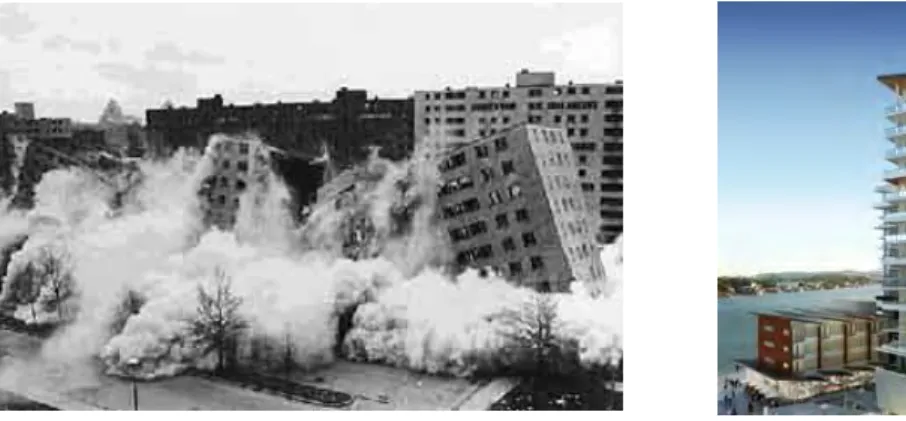
Vitality is the dominant quality of a successful city (Ravenscroft) and so urban intervention is necessary to help restore vitality within the walls of the city centre.
AIMS AND OBJECTIVES
DEFINING THE TERMS
HYPOTHESIS
The implementation of artistic and cultural facilities that express the city's identity helps in the revitalization and integration of the decaying inner city. Art and culture are what define a city and express its people, heritage and history. An arts and culture area, if properly implemented and set up, can contribute to the revitalization of a city and the integration of its people and urban fabric.
RESEARCH QUESTIONS a) Main Questions
A city can be compared to a physical container of a city's culture, ultimately an expression of its people…” (Marshall, 2001 cited in Haiden, 2008; 1). It expresses the unique character of the place and provides a base for economic and social activity which appeals to a wide range of people from all walks of life. Arts and culture attract a variety of people, encourage diverse activity through both local residents as well as international visitors, and promote activity at different times of the day depending on their function or use.
RESEARCH METHODOLOGY a) SECONDARY RESEARCH
- WHAT IS DECLINE?
- THE CAUSES OF DECLINE a) Demographic Shifts
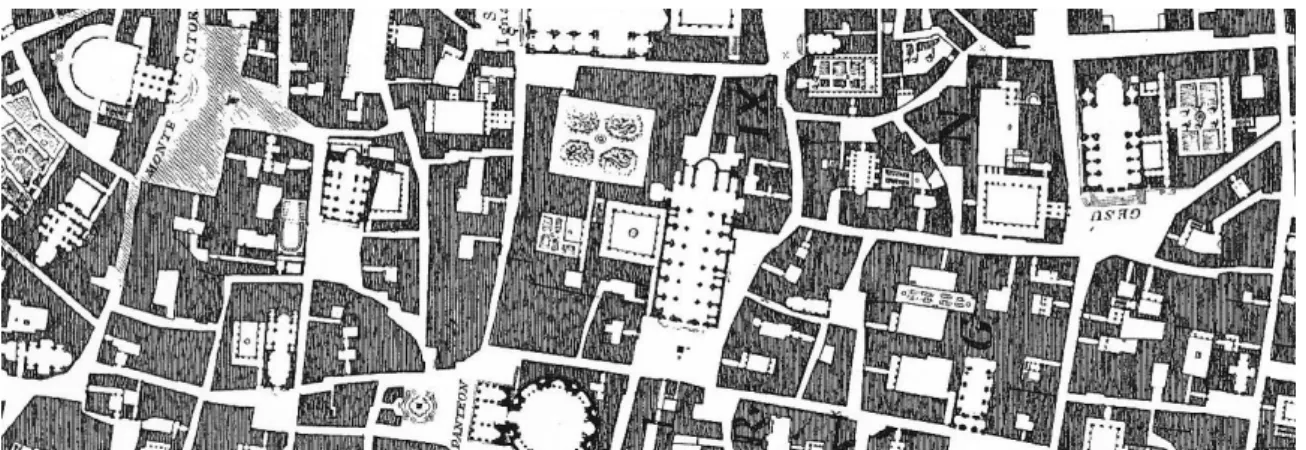
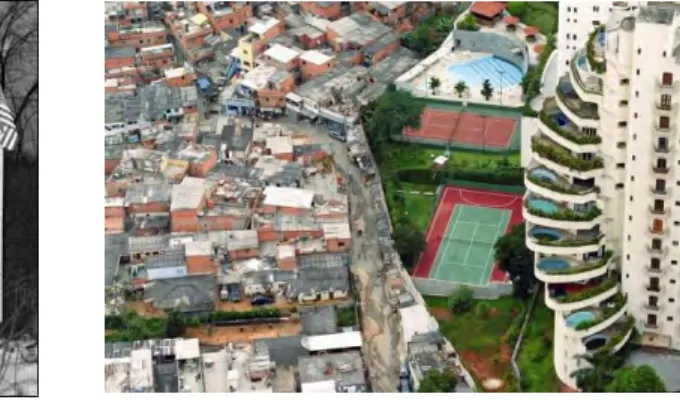
Private transport – the car – has thus become a more attractive, safer and efficient method of transport (Evans c) Government Policy. In the post-war rush to turn town planning into an applied science much was lost – the city of memory, of desire, of the soul; the importance of place and the art of place-making.” (Sandercock, 1998; 4). Development beyond city limits—in the form of low-density sprawl—has contributed to the decline problem.
KEY CONCEPTS AND THEORIES
- INTRODUCTION
- CONTEXTUALISM
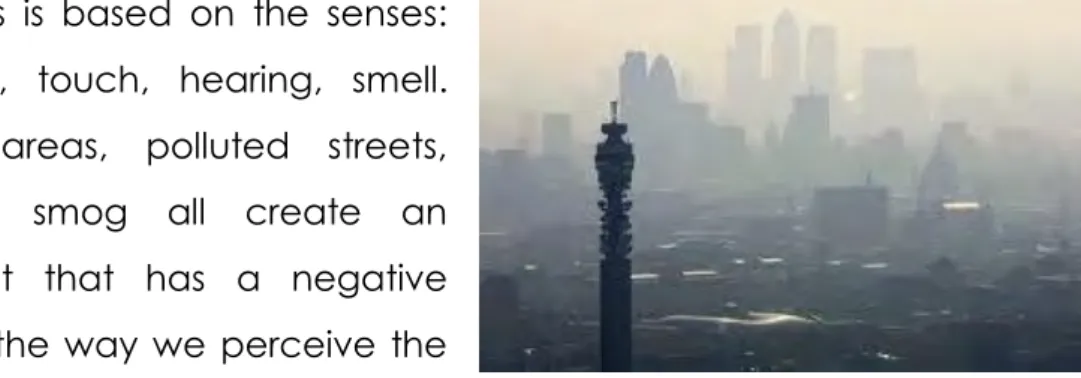
- PHENOMENOLOGY
- CRITICAL REGIONALISM
- SOLVING DECLINE: A LOOK AT REVITALISATION a) DEFINING REVITALISATION?
This excerpt is an in-depth summary of the impact and significance of the sensory realm on the built form. Critical regionalism seeks to draw from the past as well as the present through representation of the area and climate in built form. This practice ensures that a variety of building styles and building ages are maintained, contributing to the city's diversity.

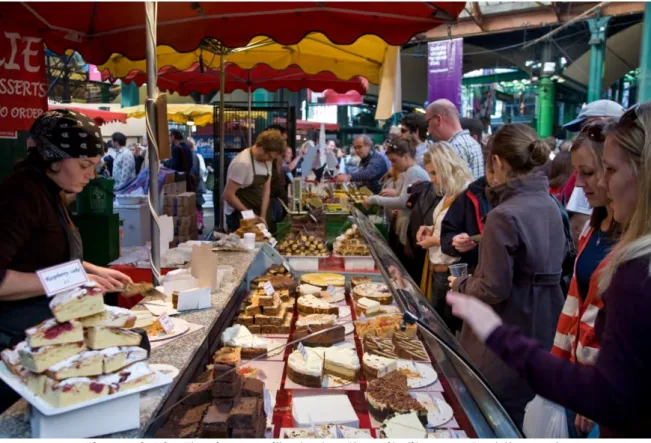
Jan Gehl has further noted that public spaces create a place for encounters and interaction and engage one to be among and experience a range of other people functioning in different situations (Gehl, 1987; 17). Markets, festivals, places to eat, sit and watch all promote the social interaction that takes place within the spaces provided by pedestrian streets and other public spaces, such as squares or plazas. These spaces constitute a network referred to as 'public sphere': places and environments of public life (Carmona et al.
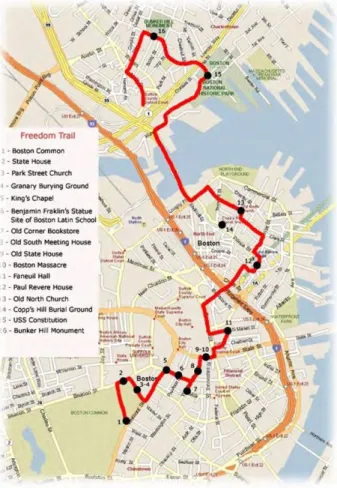
Hertzberger calls for smoothing the transition between public and private domains and illustrates the concept of the arcade, which moves smoothly from public to private (Ibid, 79). Pedestrian networks become the natural transition between areas, districts and other parts of the city that have remained fragmented and make the city accessible to all. These pedestrian networks form routes through the urban framework, well-known and prominent crossings that can also connect a series of urban landmarks, districts and public spaces within the city.
An example of this can be seen in the Willis, Faber and Dumas building by Norman Foster. A further boundary that exists within the city is the division between workday and "after hours" activity. Oldenburg further argues that these spaces should form an active part of the public sphere and should be created on neutral ground, be fully inclusive, be open during and after regular business hours and encourage a 'playful mood', to name just a few. (Yes there).
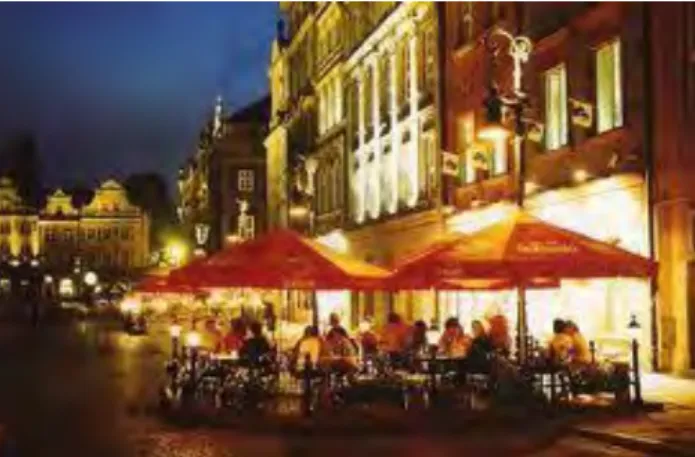
Creating an 'after work' environment encourages a longer stay within the walls of the city which contributes to the evening economy and encourages activity over a longer period of the day.
If arts and culture, in the form of a cultural area (or similar) will be the method of revitalization of an area, then the idea must be analyzed in terms of each of the elements of successful revitalization, namely Activity, Form. and Understanding. This refers specifically to arts and culture through performances, event performances, concerts and other arts and cultural experiences. Activities and events should be varied to the extent that they satisfy the interests of different people and be planned for different times of the day.
Artists and creative thinkers no longer need to 'export' themselves to areas where 'everything is happening'. They no longer need to leave their cities in order to expand business or opportunities (Ibid). Furthermore, arts and culture areas should be compact and permeable to ensure maximum exposure to all parts of the area.
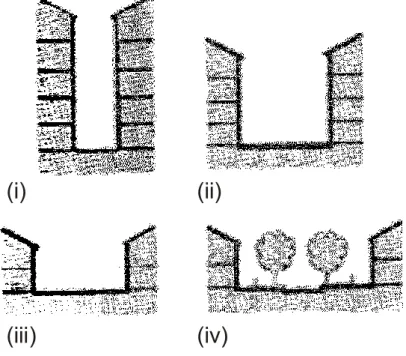
Buildings should also vary in scale, with heights ranging from two to six stories (Montgomery, 2004; 25). Art and culture areas depend more on the activity that exists within their boundaries and less on the physical form, even though, as just mentioned, the urban environment must express good characteristics of the place. Public art is an example of how art and sculpture can be used as landmarks throughout the district (as well as the larger urban fabric) and help establish the district's identity.
Public art is also an expression of the identity of the art area in which it is located.
CASE STUDY 1
- NEWTOWN CULTURAL PRECINCT, JOHANNESBURG
- BACKGROUND
- ACTIVITY
- FORM
- MEANING
- CONCLUSION
- BACKGROUND
- ACTIVITY
- FORM
- MEANING
- CONCLUSION
- BACKGROUND
- ACTIVITY
- FORM
- MEANING
- CONCLUSION
- PLACE
- REVITALISATION
- ARTS AND CULTURAL PRECINCTS
- CLOSING REMARKS
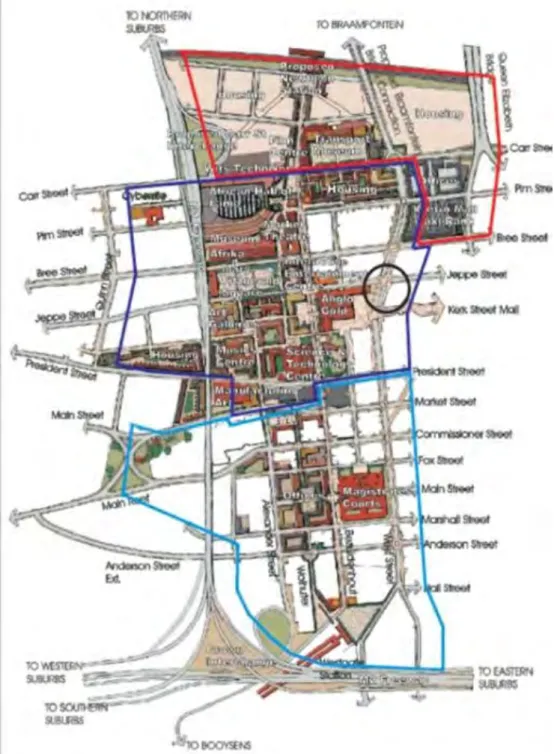
Newtown provides a platform for a wide range of activities that take place within the area's boundaries. The festival is an initiative for the people, by the people, contributing to the consumption of art and the artistic production of the area. Newtown creates a deep sense of past and present in the overall architectural form of the area.
Many of the buildings in the area express their unique character, which in turn acts as a marker in the urban environment. Other features that act as landmarks include Mary Fitzgerald Square - the main public space within the area - as well as Turbine Square and Newtown Park. The area is rich in small business ventures as well as creative businesses that add to the local economy of the area and create a unique place and activity.
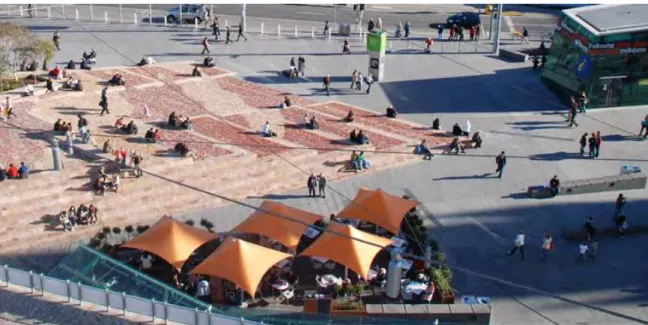
The Newtown Precinct is a good representation of an arts and culture area that expresses the identity and images of the city and is rich in vitality and diversity. Activity is dependent on the specific time of day as well as weather conditions, as the square offers very little shelter from extreme conditions. Other commendable aspects of the square can be found in the square's sense of history and landmark value.
Interaction between different functions, time frames and people (demography) and their integration.
BIBLIOGRAPHY
- UNPUBLISHED REFERENCES – THESES
- ONLINE NEWSPAPER ARTICLES
Urban Design: A Typology of Procedures and Products;. 1998); Urban Design Downtown: Poetics and Politics of Form;. Community design and urban culture: The Way of the Cross and the Wall; Cambridge University Press; Cambridge. Globalization – complex places, interface buildings, generic design; in Cole, R.J. 2006); Concise Oxford English Dictionary; Oxford University Press; Oxford.
The Rise of Modernism and the Decline of Place: The Case of Surrey City Center, Canada;. Identity through spatial design: Topos, a principle derived from historical and local cultures; Urban Design International; 13;. Boston College Environmental Affairs Law Review; 25(3); Available at:. 1998); Inner City Decline, Poverty, Social Isolation, and Crime: A Research Design; Annual Meeting of the American Sociological Association; San Francisco, California; August 1998.
European Planning Studies, 6(3); Available at: 2006); Linking integration concepts from different fields to build community tourism planning. Kagiso Special Cities (2006); Newtown Official Website; [online] Available at: www.newtown.co.za; Accessed April 1, 2010.
THROUGH ARTS AND CULTURE
Design Report
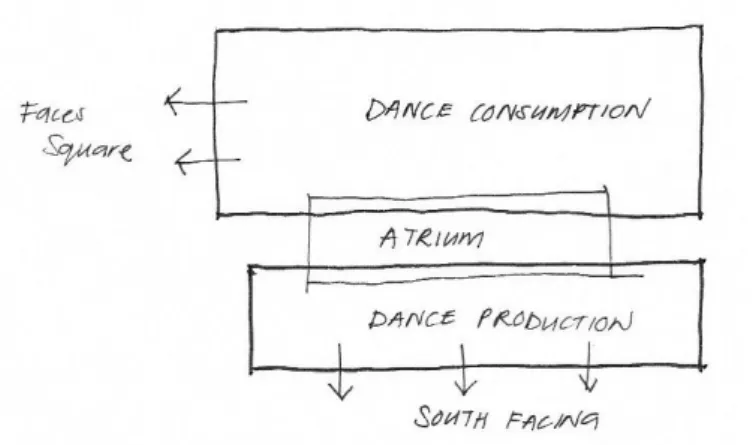
The building would be used by a variety of different people within the context of the arts. The ICC must be taken into account in both the urban design as well as the design of the Dance Centre. The positioning of the main square within the proposed area is essential to the design of the area as well as the proposed Dance Center which is to face it.
23 Stadium, City Lodge and Hilton Hotel and 'fill' the gap in the city. One of the key visions for the district is to create a space in the city that expresses Place. Only part of the building would be visible from the square and vehicular and pedestrian access is limited.
Both the Library and the Lecture Hall are positioned at the rear of the site away from the general public. Backstage facilities as well as management facilities are positioned at the rear of the site, away from the general public. These facilities overlook the pedestrian path to the south as well as the main square to the west of the building.
At the back of the building, an outdoor amphitheater is created for public use as well as a performance space for informal performances. The second entrance is open to the audience, users of the dance facilities and the dance center's performers and employees. The shape of the building was derived from the context and existing construction site pressure.
Recreate the memory of water through a continuous water feature that will cover the extent of the historic Milne Drain. Establish the area as part of the main North-South pedestrian route connecting 2 of Durban's natural water bodies. Each entrance to the Convention Center has a direct point that creates direct access to the main square without changing direction.
Thus, the ICC is connected to the area through this single pedestrian path which draws residents along the culturally lined walkways into the main space of the cultural area. Create safe pedestrian paths and areas away from traffic that will encourage walking and strolling. Create a legible environment for pedestrians to navigate safely and easily through the area.
Provide soft landscaping areas for planting and odd greenery in the area creating an outdoor environment for people to enjoy. The Public Square acts as a gathering place as well as providing relief space for the dense sprawl of the city. The square will also provide space for the cultural buildings that line its edges.
Create a vibrant public space for arts and culture as well as leisure and café culture that will generate activity in the area.
SITE ANAlYSIS