University of Cape Town
The Elephant in the Room:
The Rise and Role of India in the Climate Change Negotiations.
by
Kim Coetzee, BA(Hons), MSocSc
Thesis Presented for the Degree of
DOCTOR OF PHILOSOPHY
at the Energy Research Centre
in the Department of Mechanical Engineering
UNIVERSITY OF CAPE TOWN
November 2015
The copyright of this thesis vests in the author. No quotation from it or information derived from it is to be published without full acknowledgement of the source.
The thesis is to be used for private study or non- commercial research purposes only.
Published by the University of Cape Town (UCT) in terms of the non-exclusive license granted to UCT by the author.
University of Cape Town
Abstract
The climate change negotiations under the United Nations Framework Convention on Climate Change have been ongoing since the first conference of the parties in 1995. Twenty years on there has been little progress reducing greenhouse gas emissions, the climate regime is in a state of flux and the role of developing countries therein is changing. During this period the majority of the work on climate change from within the International Relations discipline has been framed in a neoliberal institutionalist or neorealist frame. Studies in the climate policy canon have been predominantly similarly located, albeit implicitly. In its focus on India this dissertation provides a bridge between the climate policy literature and the theoretically framed climate change policy studies in the International Relations literature.
This dissertation employs the Critical International Relations theoretical framework of Robert Cox.
His theory outlines a ‘framework for action’ that enables and constrains how states act, and how they conceive of their agency. This framework, or historical structure, is created by a particular configuration of the forces exerted by ideas, institutions, and material capabilities, which when aligned, create a hegemonic historical structure. In the climate negotiations, India has been a vocal proponent of the ideas of equity and common but differentiated responsibilities from the earliest days of the Convention. India’s changing material circumstances and geo-political status in the past decade raised the question of its role in the regime in relation to its long-supported ideas.
This is a qualitative case study using documentary evidence triangulated with interview data from a range of key Indian stakeholders. I found that in the transition from abstract principle to operational precept the intersubjective idea of addressing climate change did not transmute into an intersubjectively shared idea of differentiation. Furthermore, once the idea of differentiation was to be operationalised in the negotiations, its primacy, indeed its very “intersubjectiveness”, was contested by the idea of symmetry of obligations and responsibility. The ongoing regime flux is the outcome of this contestation between ideas held collectively by groups, as no stabilising hegemonic historical structure has been created. India’s emergence has been insufficient to reinstate differentiation as an intersubjectively held idea and it is thus unable to secure a hegemonic historical structure in favour of differentiation.
Dedication
This work is dedicated to Deirdre who is deeply and daily missed.
Life is a process of becoming, a combination of states we have to go through.
Where people fail is that they wish to elect a state and remain in it.
This is a kind of death.
– Anais Nin – Most people believe the mind to be a mirror, more or less accurately reflecting the world outside them,
not realizing on the contrary that the mind is itself the principal element of creation.
– Rabindranath Tagore –
Acknowledgements
It is said that it takes a village to raise a child; well, this is my child, and these are the people who inhabit this village.
My thanks go to Harald and Stef for creating the MAPS Programme and inviting me to be part of it whilst pursuing my PhD research. The contacts made and opportunities gained were crucial to finishing.
Undertaking this long-term project would also have been impossible without the African Climate and Development Initiative’s (ACDI) Carnegie Mellon Scholarship for which I am extremely grateful.
In addition, the financial assistance of the National Research Foundation (NRF) towards this research is hereby acknowledged. Opinions expressed and conclusions arrived at, are those of the author and are not necessarily attributed to the NRF.
The highlight of my fieldwork was the Fellowship with the Climate Initiative (CI) at the Centre for Policy Research in New Delhi. Thanks to Dr Navroz Dubash for the opportunity, the funding, a place to work and introductions to senior members of the Indian climate policy establishment. Navroz, Anu, Neha, Vyoma, Shibani, Radikha and Lavanya (even in your absence) – thank you for graciously welcoming me into your space and looking out for me. I look forward to working with you all in future.
Thanks go to my interviewees for taking the time to answer the questions posed by a stranger and thus broaden my horizons and deepen my knowledge.
I was incredibly lucky to have Prof. Harald Winkler as my supervisor. His encyclopeadic knowledge of the IPCC and the UNFCCC is incredible and his steadfast encouragement (and not a little) patience over the years have been invaluable to me. In addition, Harald’s work ethic and prodigious output is simultaneously intimidating and motivating!
My good fortune continued when Dr Karen Smith in the Politics Department at UCT agreed to co- supervise; not only is Karen an impressive IR scholar, but her research interests include India and she is both inspiring and caring. Crucially, Karen kept her door open to me and she was always willing to engage and help me find a path out of any IR theory wilderness.
To the wonderful women of the Thursday Writers’ circle – Lucia, Aditi, Jennifer, Nicki, Erna, Shanali, Theresa and Carolyn – meeting weekly kept me sane and helped me hone this craft of writing. Every writer should have such a safe space for feedback, critique and laughter. Those of you ahead of me in the PhD writing process personified Madiba’s words that “it always seems impossible until it’s done”.
To all my friends who cheered me from the side-lines and kept my spirits up, read drafts, or simply reminded me that there was a life beyond the PhD – Anya, Siham, Marta, Holle, Malcolm, Lucy, Rowen, Annwyn, Nick, Clinton, Rheka, Ian, Caroline, Luke & Marja, Ursh, Britta, Kat, Aalia, Sam, Carla and Jiska – I’d have struggled to make it this far without you all. Thanks!
And lastly, my thanks go to DSL who helped me navigate through the swamplands and who (still) reminds me of Robert Frost’s phrase: “the best way out is always through”.
Contents
Abstract ... i
Dedication ... iii
Acknowledgements ... iv
List of figures ... ix
List of tables ... xi
Abbreviations and glossary ... xiii
Selected UNFCCC country groupings ... xvii
1 Introduction ... 1
1.1 Research Question ... 3
1.2 Background ... 3
1.2.1 The science of climate change ... 3
1.2.2 Institutional background ... 6
1.2.3 Geopolitical milieu ... 8
1.3 Situating the research in the literature ... 10
1.4 Theoretical framework ...15
1.5 Methodology ... 16
1.6 Chapter outline ... 16
2 Robert Cox’s theory of the configuration of forces ... 19
2.1 Robert W. Cox: a brief biography ... 20
2.2 Use of Cox’s theory ... 21
2.3 Historicism: ontology and method ... 21
2.4 Historical structures: a configuration of forces which frames action ... 23
2.4.1 The configuration of forces at different levels ... 26
2.4.2 The limited totality that is addressing climate change ... 27
2.5 Hegemonic structures ... 28
2.6 Critical theory and the possibility of change ... 29
3 Research design: the “why?” and the “how?” ... 33
3.1 Introduction ... 33
3.2 Rationale for research decisions: the “why?” ... 34
3.2.1 Qualitative approach... 34
3.2.2 India as the case study ... 36
3.2.3 Case study methodology ... 37
3.3 Methods of data generation: the “how?” ... 40
3.3.1 Interviews ... 41
3.3.2 Documentary evidence ... 45
3.3.3 Participant observation ... 46
3.4 Method of data analysis ... 47
3.4.1 Document analysis ... 48
3.5 Issues of trustworthiness ... 49
3.6 Limitations and delimitations ... 50
Section II: overview ... 51
4 India in the audience: the first phase (1988–1994) ... 53
4.1 Ideas ... 53
4.1.1 Ideas internationally ... 53
4.1.2 India: ideas for change ... 61
4.2 Material capabilities... 63
4.2.1 Material capabilities at international level: pervasive globalisation ... 63
4.2.2 India: struggling out of a macro-economic crisis ... 64
4.3 Institutional arrangements ... 69
4.3.1 Institutional arrangements at the beginning of phase one ... 69
4.3.2 Uncertain times in India ... 72
4.4 Configuration of forces and influences in phase one ... 74
5 India in the wings: the second phase (1995–2004) ... 78
5.1 Ideas ... 78
5.1.1 International ideas: the Second and Third Assessment Reports of the IPCC ... 78
5.1.2 India: multilateral aspirations and globalisation ... 83
5.2 Material capabilities... 86
5.2.1 Material capabilities at the international level ... 86
5.2.2 India’s material capabilities: slow but (mostly) steady improvement ... 87
5.3 Institutional arrangements ... 91
5.3.1 Institutions at the international level: the FCCC negotiations ... 91
5.3.2 Institutional arrangements in India ... 97
5.4 Configuration of forces and influences in phase two ... 101
6 India onstage – as part of the chorus: the third phase (2005–2010) ... 105
6.1 Ideas ... 105
6.1.1 Equity and differentiation ... 105
6.1.2 The science ... 115
6.1.3 India as an emergent power ... 119
6.2 Material capabilities... 125
6.2.1 Global recession and promises of Fast-start financing ... 125
6.2.2 India rides out the global recession ... 129
6.3 Institutional arrangements ...135
6.3.1 International institutional arrangements ...135
6.3.2 India steps up its institutional response ... 144
6.4 Configuration of forces and influences in phase three ... 151
7 India vying to occupy centre stage with the USA & China: the fourth phase (2011–2015) .... 155
7.1 Ideas ... 155
7.1.1 CBDR – more common than differentiated? ... 155
7.1.2 The science in the Fifth Assessment Report ...159
7.1.3 India steps forward, and then back ... 161
7.2 Material capabilities ... 167
7.2.1 Material capabilities internationally ... 167
7.2.2 Material capabilities in India ... 170
7.3 Institutional arrangements ... 173
7.3.1 Institutional arrangements internationally ... 173
7.4 Configuration of forces and influences in phase four ... 187
8 Conclusion ... 191
8.1 India in the audience: Pre-INC to FCCC (1988-1994) ... 191
8.2 India in the wings: Berlin Mandate to Marrakech Accords (1995-2004) ... 193
8.3 India in the chorus: Kyoto to Cancun (2005-2010) ... 196
8.4 India vying to occupy centre stage with the USA & China (2011–2015) ... 197
8.5 Final thoughts on differentiation vs symmetry, and the importance of hegemony ... 199
8.6 The import of this research: contribution to knowledge ... 200
8.7 Looking forward ... 201
9 Appendices ... 203
9.1 Interview guide ... 203
9.2 List of semi-structured interviews ... 205
9.3 Consent form ... 209
9.4 Conferences and meetings attended ... 210
9.5 Schedule of ADP meetings held 2012-2015 ... 211
9.6 Detail of multilateral funds ... 212
9.7 Climate finance flows (US$ billion & annualised) ... 213
10 Bibliography ... 215
List of figures
Figure 1: Percentage change of total aggregate GHG emissions of Annex I Parties ... 6
Figure 2: Venn diagram showing overlapping literatures ... 10
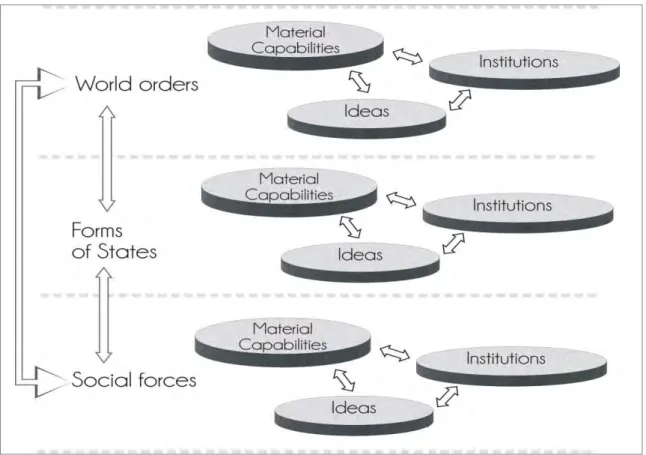
Figure 3: Cox’s configuration of forces that characterise historical structures ... 23
Figure 4: Configuration of forces at multiple levels and interaction between them ... 27
Figure 5: Research design components ... 34
Figure 6: Spectrum of types of interviews ... 42
Figure 7: Interviewees and their sectors ... 44
Figure 8: Cycles of analysis ... 47
Figure 9: Four phases of the evolution of the climate regime ...51
Figure 10: First phase: INC negotiations to establish FCCC ... 54
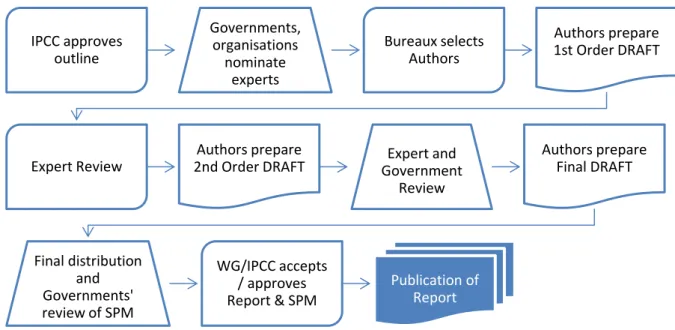
Figure 11: IPCC Assessment Report process ... 56
Figure 12: Working groups of the First Assessment Report of the IPCC... 57
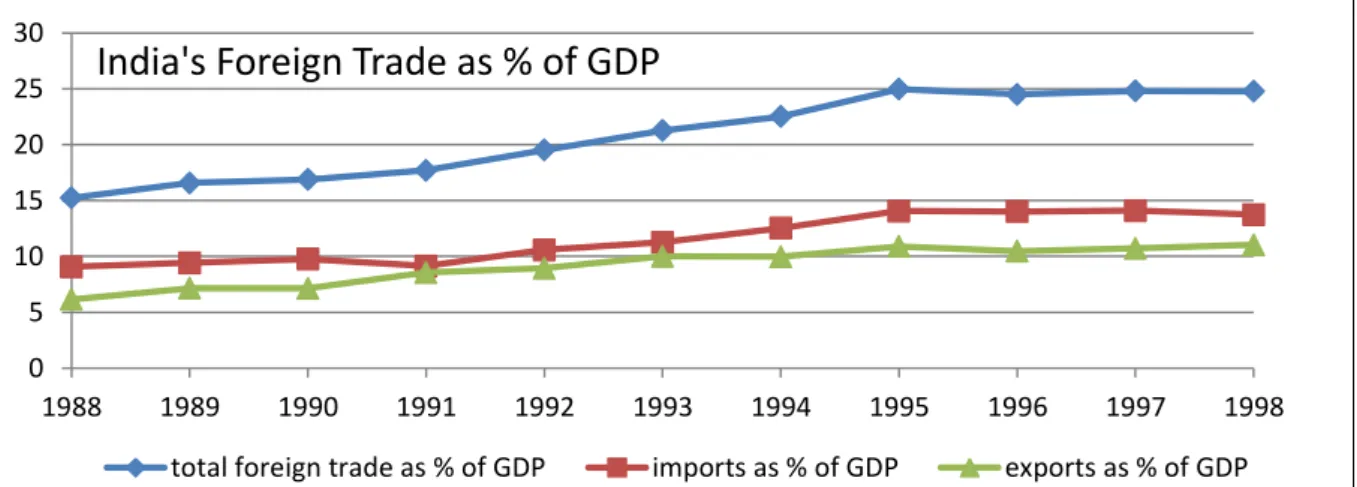
Figure 13: Foreign Trade as percentage of GDP 1988-1998 ... 61
Figure 14: Real GDP Growth – annual percentage change ... 63
Figure 15: India’s GDP growth between 1987 & 1994 ... 64
Figure 16: UNDP Human Development Index trend from 1980 to 2013 ... 66
Figure 17: Emissions Intensity of the Indian economy ... 68
Figure 18: Intergovernmental Negotiating Committee meetings, venues and dates ... 69
Figure 19: Indian delegates to INC meetings and their institutional affiliation ... 70
Figure 20: Visual representation of configuration of forces in phase ... 77
Figure 21: Second phase: Berlin Mandate to the ratification of the Kyoto Protocol. ... 79
Figure 22: Working groups of the Second Assessment Report of the IPCC ... 80
Figure 23: Working groups of the Third Assessment Report of the IPCC ... 81
Figure 24: IPCC authors’ language for confidence and certainty ... 82
Figure 25: Real GDP Growth – annual percentage change ... 87
Figure 26: India’s GDP growth between 1995-2004 ... 88
Figure 27: Emissions Intensity of the Indian economy ... 90
Figure 28: The road to a ratified Protocol to the FCCC ... 91
Figure 29: Table from Ninth Five Year Plan ... 99
Figure 30: Visual representation of configuration of forces in phase 2 ... 103
Figure 31: Third phase: ratification of the KP to the Cancun Agreements ... 106
Figure 32: Contending world views over time ... 111
Figure 33: Timeline of significant events in the lead-up to the Copenhagen COP ... 112
Figure 34: IPCC AR4 WGIII, Box 13.7 ... 119
Figure 35: India’s multilateral links related to energy and climate change ... 124
Figure 36: Global GDP growth between 2007 and 2010 ... 125
Figure 37: Funding available under the Convention and the Kyoto Protocol ...127
Figure 38: Estimated annual incremental climate costs required for a 2°C trajectory ... 129
Figure 39: India’s GDP growth between 1987-2013 with 2005 – 2010 ... 130
Figure 40: Kilowatt Hours (KWh) consumed per capita ... 132
Figure 41: Type of energy used and net energy imports as percentage of energy use ... 133
Figure 42: CO2 emissions profile of India in 2005 ... 134
Figure 43: Principal elements of the Bali Action Plan ... 137
Figure 44: Logos of the newspapers participating in the COP15 joint editorial ... 140
Figure 45: Institutions in India’s domestic climate change governance pre-2007 ... 144
Figure 46: Institutions in India’s domestic climate change governance 2007-2009 ... 145
Figure 47: The 8 National Missions of the NAPCC . ... 147
Figure 48: Visual representation of configuration of forces in phase 3. ... 152
Figure 49: Fourth phase – negotiating the post-2020 agreement ... 156
Figure 50: Real GDP Growth – annual percentage change ... 168
Figure 51: Fast-start Finance by aim (mitigation or adaptation) ... 169
Figure 52: Fast-start Finance by disbursement type ... 169
Figure 53: India’s GDP growth 2011-2013 ...170
Figure 54: UNFCCC finance mechanism and the Kyoto Protocol flexible mechanisms ... 175
Figure 55: The Technology Mechanism of the UNFCCC ... 177
Figure 56: Timeline of global stocktaking in the Paris Agreement ...178
Figure 57: Projected emission intensity reduction over 2005 levels ... 180
Figure 58: Share of each fuel in total energy production and consumption ... 182
Figure 59: Visual representation of configuration of forces in phase 4. ... 189
Figure 60: Competing collective image ideas of implementation ... 192
Figure 62: Multilateral climate funds ... 212
Figure 63: Estimated climate finance flows ... 213
List of tables
Table 1: Search results from top 15 International Relations journals ... 12
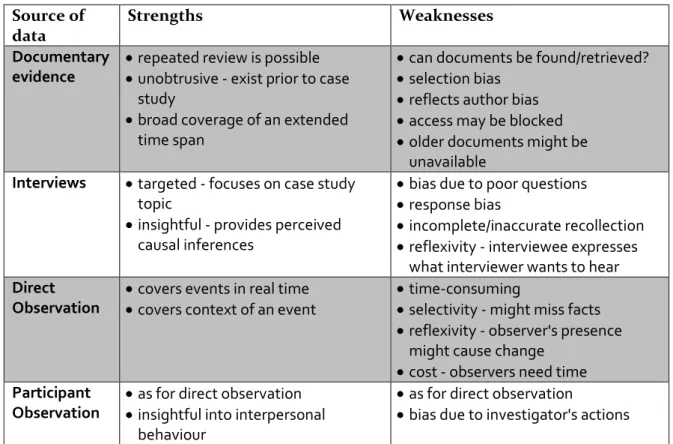
Table 2: Strengths and weaknesses of different kinds of data ... 41
Table 3: Three Indian world views related to climate change ... 110
Table 4: Multidimensional Poverty Index – figures for India ... 131
Table 5: Meetings in the lead-up to Copenhagen’s COP15 ... 140
Table 6: Key information of the NAPCC’s missions. ... 150
Table 7: Three Indian world views related to climate change ...165
Table 8: Elements of a possible nascent fourth world view / idea held by a collective ... 166
Table 9: Alignment of forces throughout the phases ...195
Table 10: Schedule of ADP meetings held 2012-2015... 211
Abbreviations and glossary
AAU ... Assigned Amount Unit (aggregate amount of CO2 equivalent emissions - unit created pursuant to KP Art. 17/Emissions trading) ADP ... Ad Hoc Working Group on the Durban Platform for Enhanced Action AF ... Adaptation Fund
AGBM ... Ad hoc group on the Berlin Mandate
Annex I ... Parties to the Convention: industrialized countries, OECD, EIT counties (see Non-Annex I below)
Annex B ... Parties to the Kyoto Protocol having binding emission reduction targets
APEC ... Asia-Pacific Economic Cooperation
APP ... Asia-Pacific Partnership on Clean Development and Climate AR4 ... Fourth Assessment Report (of the IPCC)
AR5 ... Fifth Assessment Report (of the IPCC) ASEAN ... Association of Southeast Asian Nations AWG-LCA ... Ad hoc group on long-term cooperative action
AWG-KP ... Ad hoc working group on further commitments for Annex I countries under the Kyoto Protocol
BAP ... Bali Action Plan
BAPA ... Buenos Aires Plan of Action BAU ... Business as Usual
BEE ... Bureau of Energy Efficiency BGE ... BASIC Group of Experts BJP ... Bharatiya Janata Party
CBDR & RC ... Common but differentiated responsibilities & respective capabilities CCFU ... Climate Change Finance Unit
CCU ... Climate Change Unit/Division CDM ... Clean Development Mechanism
CER ... Certified Emission Reduction (unit created pursuant to KP Art 12/
Clean Development Mechanism) Cess ... A tax (Indian tax on coal)
CIRT ... Critical International Relations Theory
CMP ... Conference of the Parties serving as the Meeting of the Parties to the Kyoto Protocol (initially known as the MOP)
CTBT ... Comprehensive Nuclear Test Ban Treaty
CO2... Carbon Dioxide – one of the GHGs covered by the Kyoto Protocol CO2e ... Carbon Dioxide equivalent – comparative measure of global warming
potential of the range of GHGs
COP ... Conference of the Parties to the UNFCCC Congress ... Indian National Congress Party
CTCN ... Climate Technology Centre and Network
EGLCSIG ... Expert Group on Low Carbon Strategies for Inclusive Growth; also called the low carbon expert group (India)
EGTT ... Expert Group on Technology Transfer ET ... Emissions trading
ENB ... Earth Negotiation Bulletin (hosted by IISD)
ERU ... Emission Reduction Unit (unit created pursuant to KP Art 6/ Joint Implementation)
FAR ... First Assessment Report (of the IPCC)
Flexible Mechanisms ... Emissions trading (ET), Joint Implementation (JI), and the Clean Development Mechanism (CDM)
FSF ... Fast-start Finance FYP ... Five Year Plan
G8 ... Group of 8 highly industrialized States: France, Germany, Italy, the United Kingdom, Japan, the United States, Canada, and Russia(up until 2014)
G20 ... Group of 20 States: Argentina, Australia, Brazil, Canada, China, France, Germany, India, Indonesia, Italy, Japan, Republic of Korea, Mexico, Russia, Saudi Arabia, South Africa, Turkey, the United Kingdom, the United States and the European Union
GCF ... Green Climate Fund
GEF ... Global Environment Facility GEG ... Global Environmental Governance GHGs ... Greenhouse Gases
GIM ... Green India Mission
GW ... Gigawatt = 1000 MW HDI ... Human Development Index
ICA ... International Consultation and Analysis IMF ... International Monetary Fund
INC ... Intergovernmental Negotiating Committee INCCA ... Indian Network of Climate Change Assessment INDC ... Intended Nationally Determined Contribution INR ... Indian Rupees (Rs)
IPCC ... Intergovernmental Panel on Climate Change IPR ... Intellectual Property Rights
IR/T ... International Relations / Theory JI ... Joint Implementation
JNNSM ... Jawaharlal Nehru National Solar Mission KP ... Kyoto Protocol to the UNFCCC
LCEG ... Low Carbon Expert Group; see also EGLCSIG above LDCF ... Least Developed Countries Fund
Lok Sabha ... Lower house of India’s Parliament LTF ... Long Term Finance
LULUCF ... Land use, Land-use Change and Forestry MEA ... Ministry of External Affairs (India)
MEF ... Major Economies Forum
MoEF ... Ministry of Environment and Forests (India) (prior to 2014)
MoEFCC ... Ministry of Environment, Forests and Climate Change (India) (Ministry renamed after BJP win in 2014)
MNES ... Ministry of Non-Conventional Energy Sources (India) MNRE ... Ministry of New and Renewable Energy (India)
MOP ... Meeting of the Parties to the Kyoto Protocol (latterly called the CMP) MPI ... Multidimensional Poverty Index
MRV ... Measurement, Reporting and Verification Mtoe ... Million tons of oil equivalent
MW ... Megawatt – a million Watts (106 Watt) NAI ... Non-Annex I Parties to the Convention NAM ... Non-Aligned Movement
NAMA ... Nationally Appropriate Mitigation Action NAPCC ... National Action Plan on Climate Change NCEF ... National Clean Energy Fund (India) NGO... Non-Governmental Organisation
NMEEE ... National Mission for Enhanced Energy Efficiency NMGI ... National Mission for a Green India; also GIM NMSA ... National Mission for Sustainable Agriculture NMSH ... National Mission on Sustainable Habitat
NMSHE ... National Mission for Sustaining the Himalayan Ecosystem NMSKCC ... National Mission on Strategic Knowledge for Climate Change NPT ... Treaty on the Non-Proliferation of Nuclear Weapons
NWM ... National Water Mission
Non-Annex I ... Parties to the Convention: mostly developing countries ODA ... Official Development Assistance
OPEC ... Organization of the Petroleum Exporting Countries PA ... Paris Agreement
PAT ... Perform, Achieve and Trade
PMCCC ... Prime Minister’s Council on Climate Change
ppm ... Parts per million (measurement of concentration in atmosphere) QELRO ... Quantified Emission Limitation and Reduction Objective
QERT ... Quantified Emission Reduction Target
QELRC ... Quantified Emission Limitation and Reduction Commitment Raj Sabha ... Upper house of India’s Parliament
RMU ... Removal Unit (unit of GHGs created pursuant to Marrakech Accords) Rs ... Rupees (also, INR)
SAARC ... South Asian Association for Regional Cooperation SAR ... Second Assessment Report (of the IPCC)
SBI ... Subsidiary Body for Implementation
SBSTA ... Subsidiary Body for Scientific and Technological Advice SCCF ... Special Climate Change Fund
SCF ... Standing Committee on Finance
SPM ... Synthesis (of IPCC ARs) for Policy Makers TAR ... Third Assessment Report (of the IPCC) TPCES... Total primary commercial energy supply TEC ... Technology Executive Committee TTF ... Technology Transfer Framework TNA ... Technology Needs Assessment
UNDP ... United National Development Programme UNEP ... United National Environment Programme
UNFCCC ... United Nations Framework Convention on Climate Change UNGA ... United Nations General Assembly
UNSC ... United Nations Security Council WB ... World Bank
WG ... Working Groups of IPCC authors for the Assessment Reports WTO ... World Trade Organisation
Selected UNFCCC country groupings
AOSIS ... Alliance of Small Island States BASIC ... Brazil, South Africa, India & China
G77 + China ... Largest intergovernmental organization of developing countries LDC ... Least Developed Countries
LMDC ... Like-Minded Developing Countries: Bolivia, China, Cuba, Dominica, Ecuador, Egypt, El Salvador, India, Iran, Iraq, Malaysia, Mali, Nicaragua, Philippines, Saudi Arabia, Sri Lanka, Sudan, Venezuela.
SIDS ... Small Island Developing States
Umbrella Group ... US, Canada, Japan, Australia, New Zealand, Norway, Iceland, Russia and Ukraine
___________________________________________________________________________ Chapter 1. Introduction
1 Introduction
In the final days of the snowed-in United Nations Framework Convention on Climate Change’s (UNFCCC) Copenhagen Conference of the Parties (COP) in 2009 – when the public-relations juggernaut that was “Hopenhagen” was clearly grinding to a halt, without agreement on a fair and binding treaty or a confirmed second-commitment period of the Kyoto Protocol – rumours surfaced concerning the behind-the-scenes role of Brazil, South Africa, India and China (BASIC).
Depending on which reports on the COP one reads and believes, a BASIC meeting held on the 18th of December 2009 was “inadvertently” stumbled upon by President Obama of the United States of America (Express News Service, 2009; Lustig, 2009; Stone, 2009). This meeting was apparently pivotal in the formulation of the Copenhagen Accord, which saved the multilateral process from complete stalemate that year, even though the Accord was not accepted as a COP decision.
This widely reported anecdote was central to some of my earliest thoughts, and prompted two lines of questioning for me. The first line of questioning related to the seemingly stuttering multilateral process itself and the influence that might have on state-level ambition and therefore on global mitigation efforts.
For the past 20 years, sovereign states have met once a year as a Conference of the Parties to the UNFCCC. One of the primary reasons for doing so - as set out in the objective (Article 2) of the Convention – is to achieve a “stabilization of greenhouse gas concentrations in the atmosphere at a level that would prevent dangerous anthropogenic interference with the climate system”. This stabilisation should also take place within an unspecified time-frame, which would still allow ecosystems time to adapt naturally to changes and ensure unthreatened food production, while in addition enabling sustainable economic development. At the time of writing (November 2015), however, the negotiations among signatories to the UNFCCC have failed to stabilise greenhouse gas emissions, and globally carbon dioxide (CO2) emissions in particular have continued to rise since 1992 (WMO Global Atmosphere Watch Programme, 2014).
The apparent shakiness of the multilateral process (as embodied by the UNFCCC) and the failure of international cooperative negotiations to effectively compel the achievement of meaningful emissions reductions by Annex B1 countries to date has thus increasingly turned the
1 Annex B countries are developed countries and “Economy In Transition” (EIT) countries that agreed to an emissions reduction target under the Kyoto Protocol. For a list see: http://unfccc.int/kyoto_protocol/items/3145.php
spotlight on national-level mitigation efforts. State-driven mitigation efforts feature prominently in the voluntary “pledge-and-review” approach favoured as part of the so-called
“bottom-up” alternative to the “top-down” focus of the Kyoto Protocol in the climate change literature (Rayner, 2010). Thus it seemed particularly pertinent to explore the interaction between state-based drivers and international forces on global emission reduction efforts.
The second line of questioning prompted by the anecdote related to the changing role of developing countries in the climate change negotiations. That the larger developing countries like China, Brazil, India and, to some extent, South Africa had been increasingly flexing their diplomatic muscles on the international stage in other fora had been evident for some time by 2009’s COP15. This increased influence has been even more apparent in the wake of the global economic recession that evidently weakened some developed countries' economies relative to the less affected economies of larger developing countries like Brazil and South Africa.
The question of the changing role of developing countries was underlined again in 2011. The wording of Paragraph 22 of the Durban Platform for Enhanced Action has ushered in the possibility that developing countries – particularly larger ones like India and China – will also have to take on mitigation targets of some sort under the new agreement (whatever its form), to be negotiated between 2012 and 2015 (UNFCCC, 2012a: decision 1/CP.17).
Thus these two lines of questioning led me to pose myself the following broad questions: How fundamentally different is the “new geopolitics” of climate change? Given that large developing countries like India have been at the forefront of calls for equity and fairness in the international climate change regime, what, if anything, would be the effect on the regime should they become more dominant players? If the international, multilateral “top-down” approach as embodied in the Convention’s Kyoto Protocol is not producing emission reductions as fast as science suggests is necessary to avoid anthropogenic climate change, would not state-driven (i.e. national level or even local-level) mitigation actions become more important to the overarching agenda of reducing emissions? Therefore, would an explanatory theory that does not hold to a strict national-international analytical division be a more useful analytical tool than one that does? With all these questions in mind I formulated the research question that this dissertation will explore.
2In Article 7 the COP17 “Also decides to launch a process to develop a protocol, another legal instrument or an agreed outcome with legal force under the Convention applicable to all Parties (author’s emphasis), through a subsidiary body under the Convention hereby established and to be known as the Ad Hoc Working Group on the Durban Platform for Enhanced Action”.
___________________________________________________________________________ Chapter 1. Introduction
1.1 Research Question
In response to these areas of interest I decided to ask: what are the factors that have shaped India’s position at the UNFCCC climate change negotiations? My broader aim is to explore why India's stance on the equitable distribution of the burden of effort to reduce emissions has not markedly changed over more than two decades despite India's remarkable emerging economy, national institutional developments and the evolution of the UNFCCC in the same period. I have decided to do this exploration and analysis by employing a Coxian Critical International Relations framework which will be elaborated on below in chapter two.
1.2 Background
Though interdependent and interlinked in reality, it is useful to separately consider the scientific, institutional and geopolitical contexts that form the background to this question.
These three contexts are outlined below, in order to provide a rationale for the choice and current importance of the research question.
1.2.1 The science of climate change
The idea that temperatures would rise in response to the concentration of greenhouse gases (particularly – but not limited to – Carbon Dioxide or CO2) in the atmosphere was first postulated by Swedish scientist Svante Arrhenius3 in 1896 (Paterson, 1996). However, it was only after the technological and institutional arrangements related to collecting CO2 concentration and weather data became more advanced in the 1960s that awareness of climate as an issue began to leave the lab and enter mainstream consciousness. Continued research and data collection led to a declaration at the 1979 World Climate Conference directly linking fossil fuel burning, deforestation and land-use change with increases in atmospheric carbon dioxide levels. The declaration stated that it was plausible that increased CO2 levels could contribute to the warming of the lower atmosphere, which in turn would affect temperature distribution, rainfall etc. Furthermore the declaration called on nations “to prevent potential man-made [sic]
changes in climate that might be adverse to the well-being of humanity” (Paterson, 1996).
Broadly speaking, this sentiment was to underpin future discussions and efforts in the climate sphere.
Nearly 30 years later, the Intergovernmental Panel on Climate Change (IPCC) issued its Fourth Assessment Report in 2007, in which it stated that the “warming of the climate system is
3Although Arrhenius was the first to draw this particular link he was building on earlier 19th century research by Baron Jean Baptiste Joseph Fourier and British scientist John Tyndall.
unequivocal” (IPCC, 2007a) and furthermore that “most of the observed increase in global average temperatures since the mid-20th century is very likely (greater than 90%) due to the observed increase in anthropogenic GHG concentrations. It is likely (greater than 66%) there has been significant anthropogenic warming over the past 50 years averaged over each continent (except Antarctica)” (IPCC, 2007b). The assessment report continued that there was
“high agreement”’ and “much evidence”4 that current mitigation policies and related sustainable development practices will ensure that global GHG emissions will continue to rise over the next few decades (IPCC, 2007b). Later academic research provided emission scenarios demonstrating that the “probability of exceeding 2°C rises to 53–87% if global GHG emissions are still more than 25% above 2000 levels in 2020” (Meinshausen et al., 2009).
A 2°C (about 35.6 degrees Fahrenheit) temperature increase has gained widespread acceptance as the point beyond which adaptation to climatic changes by human society and natural ecosystems becomes increasingly difficult, with concomitantly increased risks of social and ecological disruption due to water and food shortages, health impacts and biodiversity loss (Richardson et al., 2009; IPCC, 2012). This is still, however, a contentious limit and well known figures like NASA scientist James Hansen have called it “a prescription for long-term disaster"
(McKibben, 2012); the Association of Small Island States (AOSIS), Least Developed Countries (LDCs) and Africa Group blocs all champion a 1.5°C limit in temperature rise.
Since about 2009, the idea of planetary boundaries has gained traction in the academic and even in the more mainstream literature. Planetary boundaries in this sense represent biophysical thresholds: to go beyond the conjectured “safe operating space” is to enter a “zone of uncertainty” that is postulated to be a tipping point beyond which there is no possibility for stopping the changes wrought (Rockström et al., 2009a). Climate Change is only one of the nine earth-system processes but it is one of the three – climate change, biodiversity loss rates and nitrogen-cycle interference – that analysis suggests have already transgressed their safe boundaries. The other six earth-system processes are global freshwater use, change in land use, ocean acidification and interference with the global phosphorous cycle (part of the nitrogen cycle), stratospheric ozone depletion and atmospheric aerosol loading and chemical pollution (Rockström et al., 2009b)
The writing of this dissertation has coincided with a series of extreme weather events around the world. In 2012 the United States of America alone experienced a gamut of events from
4This is IPCC terminology for qualitatively assessed data giving a relative sense of the amount and quality of evidence - more discussion of the IPCC terminology and assessments follows in section 2 of the dissertation.
___________________________________________________________________________ Chapter 1. Introduction
extreme heat and raging wild-fires in several western states to floods in June in Minnesota and Florida while two-thirds of the country was experiencing drought (Freedman, 2012). The year 2013 was classified the 6th hottest on record and it saw the strongest tropical cyclone on record to hit land – the devastating Typhoon Haiyan. While Australia perspired through its hottest year ever, China and Russia suffered severe flooding and the United Kingdom experienced its coldest spring since 1962 (Kostigen, 2014; Vaughan, 2014).
The first two months of 2014 saw an unusual number of rain, cold and heat extremes across the globe – for instance, while on some days Chicago was colder than the poles, California experienced no winter (Erdman, 2014; Huffington Post, 2014; Vidal, 2014). While it is not possible to draw direct causal links between each event and climate change, an increase in the heat in the atmosphere caused by heat-trapping carbon dioxide molecules creates conditions that facilitate extreme weather events. It is precisely this increase in extreme weather events that climate scientists posited in the fourth assessment report5 (IPCC, 2007b) and in the “Special Report on Managing the Risks of Extreme Events and Disasters to Advance Climate Change Adaptation” (SREX) (IPCC, 2012). Some scientists, like Thomas Lovejoy, a former World Bank chief biodiversity advisor, suggest that "[i]f we're seeing what we're seeing today at 0.8 degrees Celsius [rise above pre-industrial temperatures], two degrees is simply too much" (McKibben, 2012). Thus the combination of empirical science and observable events underscores the fact that the climate is changing and therefore that the window for negotiating reduced emissions, to forestall even worse future changes, is rapidly closing.
5“Altered frequencies and intensities of extreme weather, together with sea level rise, are expected to have mostly adverse effects on natural and human systems” (3.3.5) (IPCC 2007b)
Figure 1: Percentage change of total aggregate greenhouse gas emissions of Annex I Parties, 1990-2012 (including LULUCF)
Source: UNFCCC (2015f)
1.2.2 Institutional background
The end of 2012 marked the end of the first commitment period of the Kyoto Protocol to the UNFCCC. The European Community and 37 industrialised countries (known as Annex I countries6), having agreed to an average 5%
reduction on 1990 emission levels in the form of Quantified Emissions Limitation and Reduction Objectives (QELROs), should have reduced their emissions by at least that percentage by the end of 2012. The “Final Accounting Period” for the first commitment period began on the 10th of August 2015; it will lead to a comprehensive compliance assessment by the Secretariat that should be completed in early 2016 (UNFCCC, 2015a). A final report for each Annex B7 Party will then be published. Preliminary figures released by the UNFCCC Secretariat claim a 22.6%
reduction from the 1990 baseline by the end of 2012 (Nuttall & Hayes, 2015) with individual countries’ contributions varying widely as shown in Figure 1, although not all of this was attributed to the KP.
It should also be taken into account that, however successful these Annex I countries may actually be in the official accounting, together they represent only a fraction of global greenhouse gas emissions (UNFCCC, 2007a). Indeed even 100% compliance would have a negligible impact on slowing climate change, given that the Kyoto targets lacked the serious ambition really needed to avoid “dangerous” climate change. From the beginning of the second commitment period – 1st of January 2013 – this fraction will be even less, as just days after the end of COP17 Canada withdrew from the Kyoto Protocol and Russia and Japan refused to take on new emission-reduction targets. Thus legally binding emission reduction targets will apply to
6Annex I roughly equated to OECD membership at the time the Convention was agreed and thus comprised developed countries, whereas developing countries, were termed Non-Annex I (NAI) countries.
7Annex B Parties are countries with quantified emission limitation or reduction commitments and are so called as they are listed in Annex B of the Kyoto Protocol.
___________________________________________________________________________ Chapter 1. Introduction
only 34 industrialised countries (UNFCCC, 2012b), the commitments of which together represent only approximately 17% of global GHG emissions (SEAN-CC, 2012).
Critics point to numbers like this to question the utility of both the Protocol and the multilateral UNFCCC process that produced it. Indeed, as the process has stuttered over the past few years, there has been an ongoing debate between proponents of a “bottom-up”, pledge-and-review system and supporters of the “top-down” system currently exemplified by the Convention’s Kyoto Protocol and led by multilaterally built consensus on targets (Dubash & Rajamani, 2010;
Hare et al., 2010; Rayner, 2010; Bodansky, 2011). Supporters of the Kyoto Protocol – including the BASIC countries – point to the fact that the Protocol remains the only legally binding agreement to reduce emissions. Furthermore they maintain that the Protocol’s differentiation between Annex I and Non-Annex I countries is key to operationalising concepts of historical responsibility and common but differentiated responsibility (CBDR).
In paragraph 1 of the Copenhagen Accord (UNFCCC, 2010: decision 2/CP.15) and then paragraph 4 of the Cancun Agreement (UNFCCC, 2011: decision 1/CP.16), countries recognised that GHG emissions would have to be cut in order to maintain global temperature increase below 2°C above pre-industrial levels. Several scientists have pointed out that the combined Copenhagen Accord emissions-reduction pledges will be insufficient to keep the temperature rise to below 2°C (Meinshausen et al., 2009; Rogelj et al., 2010). However, states’
disagreements over the status of the Protocol, the role of developing countries in emissions reduction and the flux and uncertainty in the process resulted in a compromise agreement in the form of the Durban Platform for Enhanced Action (DPEA) at COP17 in 2011.
Despite the applause and palpable relief at the end of the marathon 2011 COP17, the Durban Platform for Enhanced Action (DPEA) left the climate change regime in a state of flux, since, it called for a decision by COP21 in 2015 to adopt a “protocol, legal instrument or agreed outcome with legal force” (UNFCCC, 2012a: decision 1/CP.17, para 4) to be implemented from 2020. The DPEA effectively delayed the hard decisions regarding emissions reductions to 2015, with implementation by 2020; these decisions will eventually be made in the context of an ever- narrowing window of opportunity to keep temperature increase below a 2°C rise. Achim Steiner, head of the UNEP, put the dilemma succinctly when he remarked that using a 2020 emissions “peak” was a high-risk strategy, and that a “bottom-up” approach by nations “needs a top to which it can aim – and a time-line for building that top is narrowing every year”
(Steiner, 2012).
In addition to the internal problems besetting the UNFCCC, several other fora have been established in the past few years that also discuss climate change issues, but in a much less inclusive format. For instance, the Group of 8 (G8)8 industrialised countries, which meets annually to discuss international economic issues, convened the Gleneagles Dialogue on Climate Change, Clean Energy and Sustainable Development in November 2005 and the USA established the Major Economies Forum on Energy and Climate (the MEF) as an annual high- level political meeting. In addition the USA was instrumental in setting up the Asia-Pacific Partnership on Clean Development and Climate (Vihma, 2009). These are all non-UN initiatives with a limited membership, no time-tables, targets or compliance mechanisms (i.e. they are voluntary); they primarily emphasise technology and consider climate change only in the context of a range of other topics. Most importantly, in the context of this discussion of the UNFCCC and Kyoto Protocol, these non-UN fora make no explicit differentiation between the roles or responsibilities of developed and developing countries (van Asselt, 2007).
Thus the current state of flux in the climate change regime and the ongoing evolution thereof makes it a very interesting time to undertake the research presented here.
1.2.3 Geopolitical milieu
It seems almost redundant to state that the world as it is now is a radically different place to the world in which the UNFCCC first came into being in 1992, or even to the world of 2005, when the Kyoto Protocol was finally ratified and came into force. UNFCCC negotiations do not take place in a vacuum, but are influenced and affected by the prevailing geopolitical winds.
Larger developing countries like China, Brazil, India and, to some extent, South Africa have been increasingly flexing their diplomatic muscles on the international stage, in other fora. In 2003, Brazil, India and South Africa institutionalised their trilateral engagement by forming IBSA (India, Brazil, and South Africa), which is driven by the Foreign Ministers through the Trilateral Commission. This initiative facilitates ministerial-level consultations in order to voice common concerns, deepen ties and contribute to constructing a new international architecture (IBSA, 2015). It is explicitly acknowledged as a stepping stone towards broader “south-south”
developing country cooperation and the re-legitimatisation of failing global governance institutions (like the UN) through increased regional representation (Alden & Vieira, 2005). In this way IBSA can be seen as one of several attempts by larger developing countries to be less
8G8 members are Germany, France, the United Kingdom, Italy, Japan, the United States, Canada (since 1976) and Russia (since 1998) (Peichert & Meyer-Ohlendorf, 2008); Russia was excluded/withdrew in 2014 over its annexation of Crimea.
___________________________________________________________________________ Chapter 1. Introduction
reactive and more proactive in setting global agendas and often to situate themselves in leadership positions.
These four countries are also grouped with Russia as countries considered to be at a similar stage of emergence in terms of their economic development. The acronym BRIC (when it still excluded South Africa) was coined in 2001 by Jim O’Neill, then the research director of Goldman Sachs (Hounshell, 2011), and denoted a group of countries that together looked extremely likely to substantially increase their share of world GDP. Indeed in 2001 China’s and India’s economies, when calculated using a Purchasing Price Parity (PPP) weighting (rather than current GDP), were the second and fourth largest global economies respectively (O’Neill, 2001).
South Africa lobbied, and was accepted as the “S” of BRICS in 2010. Despite this growth, the countries of the ‘global South’ continue to have lower per capita incomes than those of the industrialised states. One recent study, for instance, projected that “average income per capita
… will still be significantly higher in the advanced economies than the emerging economies in 2050” and attributed this to the enormous extent of the existing disparity in income per capita (Hawksworth & Chan, 2015). In the past decade BRICS has become shorthand for a group of countries increasingly accepted as having the potential to challenge the existing order of the international system (Downie, 2015) – particular in relation to global economic governance (Kahler, 2013). In other areas of international governance, a recent analysis of their voting patterns at the UN General Assembly (UNGA) indicates a high and growing degree of voting cohesion between BRICS, although nuclear disarmament and human rights remain persistent areas of divergence (Ferdinand, 2014).
As of 2009, China, Brazil, India and South Africa belong to the enlarged Group of 20 (G20) – a high-level body for international economic cooperation that includes the G8 industrialised countries. This enlarged G20 indicates an acknowledgement on the part of the G8 industrialised nations of the growing economic standing and importance to long-term decision-making of large developing countries (Ghosh, 2009a). Developing countries are increasingly a force to be reckoned with in any global economic or diplomatic undertaking, as has been particularly evident in the wake of the global economic recession that began in America in 2008. The global
“Made in America” recession weakened some developed countries' economies relative to the less affected economies of larger developing countries like Brazil (Barrionuevo, 2008). It has also “undermined the capacity and credibility of the world’s global economic architects – the United States and Europe” while accelerating nascent trends toward a more multi-polar world (Quinlan, 2011).
Figure 2: Venn diagram showing overlapping literatures
The UNFCCC negotiations are not immune to any of these changes in affluence, influence and agenda setting. A fundamental issue is that, while industrialised, developed countries still have higher per capita incomes (even since the recession of 2008) despite slower economic and population growth rates, developing countries of the South have lower incomes per capita, growing populations and (often) growing economies (Whalley & Walsh, 2009). This opposition creates differing priorities between developed and developing countries; however, larger developing countries’ interests are likely to alter with time and development. Consider that by 2010 India had joined China as one of the top five net importers of oil along with USA, Germany and Japan (Siddiqi, 2011) and that a 2012 report by the European Commission put the average Chinese person’s carbon footprint only just a little lower than that of the average European (PBL, 2015). Understanding how the changes “outside” the UNFCCC negotiations influence the process and the negotiating stance of India at the UNFCCC will be an important part of this dissertation.
1.3 Situating the research in the literature
In order to situate the research in the context of the broader literature, this dissertation has sought to find overlapping literatures relating to international climate change science and policy, India, and critical International Relations theory. The area of this overlap is the locus of this dissertation. This approach of reviewing literatures has been called the “bedraggled daisy” approach to situating research (Luker, 2008) but can also be visualised as the more familiar Venn diagram in Figure 2 In this particular case, however, there appears to be little that could be
situated at the nexus of all four of these literatures.
___________________________________________________________________________ Chapter 1. Introduction
Literature is available, however, where any two of these circles overlap – for instance, literature on India and climate change policy, or climate change science focussing on the impacts on India. In response, these literatures have been woven throughout the four chapters in Section II, and the latter literature in particular has been signposted under the heading of science in the ideas sub-sections. The climate change science literature alone is voluminous and the research purpose would not be served by reviewing it all. In fact the review and assessment of the scientific literature has already been undertaken in the form of the IPCC’s Assessment Reviews in 1990 (IPCC, 1990), 1995 (IPCC, 1995), 2001 (IPCC, 2001), 2007 (IPCC, 2007b), and 2014(IPCC, 2014). Thus the relevant science of the reviews is discussed where appropriate during each of the phases in Section II.
Where International Relations as a discipline and expositions of climate change policy overlap, the focus may be on the determinants of successful climate regime formation or operation (Bättig & Bernauer, 2009; Bailer & Weiler, 2014), international diplomacy and negotiation (Ott, 2001; Alden & Vieira, 2005); climate-related conflict (Theisen, 2008; Ahmed, 2011) and the impact on food and water availability (Tir & Stinnett, 2012; Hendrix & Haggard, 2015; Yeeles, 2015), the role of carbon markets (Caney, 2010; Purdon, 2013; Ervine, 2014) and a focus on the role of actors – business, epistemic communities, NGOs and civil society (Newell & Paterson, 1998; Bernstein & Cashore, 2007; Foa, 2010; Bernauer, 2013; Prys & Wojczewski, 2015). Many of these same concerns are reflected in a number of texts exploring the international politics of climate change that have emerged since 1992 (Paterson & Grubb, 1992; Luterbacher & Sprinz, 2001; O’Neill, 2009) but which were presaged by texts on the broader topic of environmental change and IR (Hurrell & Kingsburg, 1992; Vogler & Imber, 1996).
As an exercise to assess the overlap of (three venn circles) International Relations, climate change and India-focused literature, a thorough scoping of the literature in peer-reviewed International Relations (IR) journals was undertaken. Table 1 ranks the top fifteen journals in this subject category according to the ISI Web of Knowledge five-year impact factor rankings (Thompson Reuters, 2015). The search results for the very broad topic-related search strings are included in the final three columns – as can be seen below, India and climate change negotiations at the UNFCCC have been the subject of very few peer-reviewed journal articles in the International Relations disciplinary sphere. Notably, the few higher results in the table above are a result of India being mentioned as an example – usually in the same sentence as China and sometimes, Brazil – not of India being the focus of the articles surveyed.
Table 1: Search results from top 15 International Relations journals Source: Thompson Reuters (2015)
Metrics Search strings
Rank Journal Available from Impact factor 5 year impact factor India AND "climate change" NOT nuclear NOT Pakistan India AND "climate change" AND equity NOT Pakistan India AND "climate change" AND "UNFCCC"
1 International Organization 1947 3.019 4.922 4 2 0
2 World Politics 1948 2.45 4.02 0 0 0
3 International Security 1976 4.455 3.899 0 0 0
4 Journal of Peace Research 1964 3.387 3.549 11 2 1
5 Journal of Conflict
Resolution 1957 1.609 3.099 10 1 0
6 Marine Policy 1995 2.61 2.768 0 0 0
7 European Journal of
International Relations 1995 1.972 2.541 3 0 4
8 International Studies
Quarterly 1992 1.705 2.189 5 0 1
9 Security Dialogue 1999 1.356 2.078 4 0 1
10 Foreign Affairs 1922 2.009 1.951 12 8 1
11 Review of International
Political Economy 1994 1.875 1.929 1 0 0
12 J. Common Market Studies 1.855 1.814 no access to this journal
13 New Political Economy 1997 1.75 1.731 8 3 2
14 Common Market Law
Review 1963 1.881 1.723 4 1 3
15 Review of International
Organizations 2006 1.714 1.698 8 1 7
Despite the apparent dearth of literature focusing on climate change in the IR journals, there is a wide array of literature in the climate policy field. Indeed, since the turn of the century, peer- reviewed journals like Global Environmental Change, Climate Policy, Global Environmental Politics, Nature Climate Change and Climate and Development have been established, focusing specifically on the policy aspect of climate change in contrast to the several natural science journals that have publish articles on the science of climate change.
Much of this international climate policy literature would be, from the perspective of an International Relations theorist, broadly categorised as neoliberal-institutionalist in its theoretical perspective, whether or not the authors themselves explicitly position themselves as such. In this subset of the literature the emphasis is on the nature, architecture and agency of
___________________________________________________________________________ Chapter 1. Introduction
international institutions (the UNFCC in this case) and on how the institution could be amended, augmented or replaced. The focus on an institution as an organisation or more broadly as a set of norms or rules underpins much of current writing in both Europe and the US (Aldy, Barrett &
Stavins, 2003; Michaelowa, Tangen & Hasselknippe, 2005; Bäckstrand & Lövbrand, 2007; Evans
& Steven, 2009; Bodansky, 2011; Verbruggen, 2011).
GEG literature burgeoned in the 1970s, and in the decades since has diversified from its initial single-issue focus (like migrating birds or whaling) and “simple” trans-boundary issues (pertaining to watercourses for instance) to the multi-scale, multi-actor issues of the late 20th and early 21st centuries (Andonova & Mitchell, 2010). The proliferation of multilateral environmental agreements under the auspices of the United Nations has driven the marked growth in analyses of the design of environmental institutions or regimes (Sanwal, 2007), placing many analyses (Levy, 1996; Thoms, 2003; Biermann & Dingwerth, 2004; Kanie, 2007) firmly in the neo-liberal-institutionalist paradigm since they focus on “overlapping networks of inter-state regimes” (Paterson, Humphreys & Pettiford, 2003). This interpretation of GEG was gradually contested by the growing conceptualisation of GEG as multilevel and trans-national governance including non-state stakeholders (Arts, 2005; Bäckstrand, 2008; Andonova, Betsill
& Bulkeley, 2009; Andonova & Mitchell, 2010).
In this literature the multilateral climate change negotiations are conceptualised as taking place within a subset of global environmental governance that deals particularly with the thematic issue area of climate change (Biermann & Pattberg, 2008; Buehrs, 2009; Dellas, Pattberg &
Betsill, 2011; Held, Hervey & Theros, 2011). Thus global environmental governance (GEG) is just one subset of global governance, along with, for instance, global economic governance (IMF, World Bank and WTO) and global security governance (UN Security Council, NATO etc.). GEG encompasses a very broad range of international environmental-policy issues, from waste to biodiversity, deserts, the oceans and the atmosphere (Chasek, Downie & Brown, 2010). In turn the climate regime complex is just one of many subsets of GEG, dealing exclusively with the negotiations on climate change and the current multilateralism embodied by the UNFCCC and an increasing number of other fora.
In the climate policy literature, this move was expressed in the rise of the concept of regime complexes – a loosely grouped set of issue-specific regimes (Keohane & Victor, 2011; Orsini, Morin & Young, 2013; Abbott, 2014). Also within this paradigm can be found literature on restructuring specific aspects of the architecture of the UNFCCC itself (Aldy, Barrett & Stavins, 2003; Evans & Steven, 2009; Keohane & Raustiala, 2010; Werksman, 2010) or addressing flaws
in the design of the market mechanisms under Kyoto Protocol (Michaelowa, Butzengeiger &
Jung, 2005; Wettestad, 2009) or expositions on the workings of the climate-finance institutions (Roberts, Stadelmann & Huq, 2010; Saran, 2010; Schalatek, Bird & Brown, 2010). In contrast, writers of a more critical theoretical inclination are more likely to question the underlying issue of neo-luiberal capitalism and the global consumption that drives production, trade and the associated emissions (Newell & Paterson, 1998; Princen, Maniates & Conca, 2002; Dauvergne, 2010; Paterson, 2010; Purdey, 2010; Harris & Symons, 2013) or the very nature of the relationship between humans and the environment (Kolbert, 2007; Wapner, 2008; Antal &
Hukkinen, 2010; Khor, 2010), for instance.
Within the literature on climate policy is a body of work focusing on the architecture of the climate-regime complex (Aldy, Barrett & Stavins, 2003; Biermann et al., 2009; Evans & Steven, 2009; Keohane & Raustiala, 2010; Bodansky, 2011; Verbruggen, 2011; Dirix et al., 2013). The main point of contention has long been between the proponents of so-called “top-down”
architectures (Biermann et al., 2009; Hare et al., 2010) like the Kyoto Protocol and supporters of a more “bottom-up” approach (Rayner, 2010; Diringer, 2011). Top-down architectures are heavily reliant on institutional reinforcement of globally agreed-upon goals, entailing both mitigation-reduction targets and a timetable within which these should be achieved. While not explicitly discussed in terms of an international relations theoretical framework, this kind of architecture is very much in keeping with a neoliberal-institutionalism in which a common- resource/collective-action problem is addressed through the interactions of states as filtered through an international institution. Conversely, bottom-up architectures place prime importance on the sovereignty of states and the nationally determined nature of their actions, and consider institutions to be epiphenomenal, optional or merely facilitative – thereby sharing key features of IR neorealism, especially inasmuch as the insistence on the setting of nationally determined limits allows for calculations of relative gains in relation to other countries.
The overlap of climate policy and India is the site of a body of literature which has burgeoned since the late 2000s and particularly in the 2010s. India’s rise on the international stage has made it the subject of several studies of its actions at the climate change negotiations (Betz, 2012; Michaelowa & Michaelowa, 2012; Hochstetler & Milkoreit, 2013; Negi, 2014). These are frequently found within the ‘emerging powers’ literature and often framed as political economy analyses (Mehra, 2008; Rastogi, 2011; Sengupta, 2012a) or alternatively, as more constructivist analyses (Gupta, 1999; Mathur & Varughese, 2009; Stevenson, 2011). In addition, much of the climate policy-India literature emanates from Indian Civil Society - one of the earlier and most
___________________________________________________________________________ Chapter 1. Introduction
famous being Agarwal & Narain’s 1991 book, “Global Warming in an Unequal World” (Agarwal
& Narain, 1991) which sought to challenge the prevailing Developed-country view of how burden sharing should be allocated. Other more contemporary books have included several compilations - generally broad in scope - produced by think tanks and academic institutions (Michel & Pandya, 2009; Scott, 2011; Dubash, 2012a).
Much of the focus of the literature at the overlap of International Relations and India is focussed on its relations with Pakistan and China and nuclear security concerns (for instance Chiriyankandath, 2004; Pant, 2007; Ferdinand, 2014; Boggs, 2015) or competition for energy resources (Noronha, 2009; Siddiqi, 2011). Additionally, a prevalent IR focus concerns India’s role as a regional power in Southeast Asia and as an Indian Ocean nation (Scott, 2011; Stewart- Ingersoll & Frazier, 2011) and post-cold war realignment (Chiriyankandath, 2004; Hurrell, 2006;
Chacko, 2013). A flourishing strand of IR literature explores the role of the emerging powers in global governance, in exercising multilateralism and in moving from a post-cold war unipolar to a more multipolar order (Panagariya, 2008; Safadi et al., 2009; Heine, 2010; Nel, 2010; Roberts, 2011; Hurrell, 2013; Kahler, 2013; Mohan, 2013; Sidhu, Mehta & Jones, 2013).
What is lacking is a study which bridges the divide between the often theoretically-lite India- focused climate policy literature and the India and climate change-lite Critical IR literature. This is the lacuna this dissertation - a Critical International Relations theory-framed study of India's role in the climate change negotiations over the lifespan of the UNFCCC - intends to fill.
1.4 Theoretical framework
In order to explore the factors influencing India’s changing role in the climate change negotiations, a critical theoretical or conceptual framework has been employed. A “critical”
theory by its very nature does not preclude the possibility for change as the more “problem- solving” theories of neorealism and neoliberal institutionalism typically do. Since this dissertation explores how India’s role has changed over time, it makes use of Robert W. Cox’s critical theory, which proposes that at any point in time three types of forces (or potentials) – ideas, material capabilities and institutions – can be conceptualised as being in a historically specific configuration (Cox, 1985). This historicity creates a “framework for action” in which the three types of forces or potentials are reciprocally constitutive and influential. This framework may change over time as each of the three forces change and affect