GROWTH AND YIELD OF SUGAR BEET VARIETIES AS INFLUENCED BY SPACING AND SOWING METHOD
MD. SUJAN KABIR
DEPARTMENT OF AGRONOMY
SHER-E-BANGLA AGRICULTURAL UNIVERSITY DHAKA-1207
JUNE, 2020
GROWTH AND YIELD OF SUGAR BEET VARIETIES AS INFLUENCED BY SPACING AND SOWING METHOD
By
MD. SUJAN KABIR
REGISTRATION NO. 18-09021
A Thesis
submitted to the Department of Agronomy, Faculty of Agriculture Sher-e-Bangla Agricultural University, Dhaka-1207
in partial fulfilment of the requirements for the degree of
MASTER OF SCIENCE (MS) IN
AGRONOMY
SEMESTER: JANUARY- JUNE, 2020
APPROVED BY:
Prof. Dr. H. M. M. Tariq Hossain Prof. Dr. Md. Jafar Ullah Supervisor Co-Supervisor
Prof. Dr. Md. Shahidul Islam Chairman
Examination Committee
DEPARTMENT OF AGRONOMY Sher-e-Bangla Agricultural University
Sher-e-Bangla Nagar, Dhaka-1207
CERTIFICATE
This is to certify that the thesis entitled ‘GROWTH AND YIELD OF SUGAR BEET VARIETIES AS INFLUENCED BY SPACING AND SOWING METHOD’ submitted to the Faculty of Agriculture, Sher-e-Bangla Agricultural University, Dhaka, in partial fulfillment of the requirements for the degree of MASTER OF SCIENCE (MS) IN AGRONOMY, embodies the result of a piece of bona fide research work carried out by MD.
SUJAN KABIR, Registration number: 18-09021, under my supervision and guidance. No part of the thesis has been submitted for any other degree or diploma.
I further certify that any help or source of information, received during the course of this investigation has duly been acknowledged.
Dated: Prof. Dr. H. M. M. Tariq Hossain
Place: Dhaka, Bangladesh Department of Agronomy Supervisor
i
ACKNOWLEDGEMENTS
Alhamdulillah, all praises are due to The Almighty Allah Rabbul Al-Amin for His gracious kindness and infinite mercy in all the endeavors the author to let his successfully completing the research work and the thesis leading to Master of Science degree.
The author would like to express his heartfelt gratitude and most sincere appreciations to his Supervisor Prof. Dr. H. M. M. Tariq Hossain, Department of Agronomy, Sher-e-Bangla Agricultural University, Dhaka, for his valuable guidance, advice, immense help, encouragement and support throughout the study. Likewise grateful appreciation is conveyed to Co-supervisor Prof. Dr. Md. Jafar Ullah, Department of Agronomy, Sher-e- Bangla Agricultural University, Dhaka, for his constant encouragement, cordial suggestions, constructive criticisms and valuable advice to complete the thesis.
The author would like to express his deepest respect and boundless gratitude to all the respected teachers of the Department of Agronomy, Sher-e-Bangla Agricultural University, Dhaka, for their valuable teaching, sympathetic co-operation, and inspirations throughout the course of this study and research work.
The author wishes to extend his special thanks to his class mates and friends for their keen help as well as heartiest co-operation and encouragement during experimentation. Special thanks to Md. Maruf Hasan for his support and encouragement to complete this study.
The author is deeply indebted and grateful to his parents, brothers, sisters and relatives;
without whose love, affection, inspiration and sacrifice this work would have not been completed.
Finally the author appreciates the assistance rendered by the staff members of the Department of Agronomy, Sher-e-Bangla Agricultural University Farm, Dhaka, who have helped him during the period of study.
The Author
ii
GROWTH AND YIELD OF SUGAR BEET VARIETIES AS INFLUENCED BY SPACING AND SOWING METHOD
ABSTRACT
An experiment was conducted at Sher-e-Bangla Agricultural University farm, Dhaka to study on growth and yield of sugar beet varieties as influenced by spacing and sowing method during November, 2018 to May, 2019. Terrace Soils under Tejgaon soil series. The experiment consisted of three factors.
Factor A: Two sugar beet variety viz., V1= Shubhra and V2= Cauvery; Factor B:
Three plant spacing viz., S1= 40 cm × 20 cm, S2= 50 cm × 20 cm and S3= 60 cm
× 20 cm and Factor C: Two sowing method viz., M1= Direct sowing and M2= Transplanting. The experiment was laid out in 2×3×2 factorial design with three replications. Plant height, leaves plant-1, beet length, beet girth, fresh shoot weight, fresh beet weight, fresh weight of plant, total dry weight of plant and yield were compared for different treatments. Results indicated that, variety, plant spacing and method of sowing had significant influence on most of the growth, yield and yield components of sugar beet. The maximum yield (76.33 t ha-1) was obtained from sugar beet variety V1 (Shubhra) and the minimum yield (75.22 t ha-1) was obtained from V2 (Cauvery). Under this investigation it was revealed that the highest yield (77.63 t ha-1) was recorded with 50 cm × 20 cm spacing and the lowest yield (73.69 t ha-1) was obtained from 40 cm × 20 cm spacing. The maximum yield (78.37 t ha-1) was obtained from the sowing method M1 (Direct sowing) and the minimum yield (73.19 t ha-1) was obtained from the sowing method M2 (Transplanting). Variety V1 (Shubhra) along with plant spacing S2 (50 cm × 20 cm) and sowing method M1 (Direct sowing) produced maximum yield (81.93 t ha-1) of sugar beet than variety V2 (Cauvery) along with plant spacing S1 (40 cm × 20 cm) and sowing method M2 (Transplanting) which produced (71.30 t ha-1) of sugar beet. So it was concluded that variety V1 (Shubhra) along with plant spacing S2 (50 cm × 20 cm) and sowing method M1 (Direct sowing) could be the best production package for sugar beet cultivation.
iii
LIST OF CONTENTS
Chapter Title Page No.
ACKNOWLEDGEMENTS i
ABSTRACT ii
LIST OF CONTENTS iii
LIST OF TABLES vii
LIST OF FIGURE viii
LIST OF APPENDICES ix
LIST OF ACRONYMS x
I INTRODUCTION 1
II REVIEW OF LITERATURE 4
2.1 Effect of variety 4
2.2 Effect of spacing 9
2.3 Effect of sowing method 13
III MATERIALS AND METHODS 19
3.1 Site description 19
3.2 Climate 19
3.3 Soil characteristics 19
3.4 Experimental treatments 20
3.5 Plant materials and collection of seeds and features 20
3.6 Preparation of experimental land 21
3.7 Application of manures and fertilizers 21
3.8 Experimental design and layout 22
3.9 Seed sowing 22
3.10 Seedling uprooting and transplanting in the main field 22
3.11 Intercultural operations 22
3.11.1 Irrigation and drainage 23
3.11.2 Gap filling 23
3.11.3 Weeding 23
3.11.4 Top dressing 23
3.11.5 3.12
Earthing-up
Pest and disease management
23 23
iv
LIST OF CONTENTS (Contd.)
Chapter Title Page No.
3.13 3.14 3.15 3.15.1 3.15.2 3.16 3.16.1 3.16.2 3.16.3 3.16.4 3.16.5 3.16.6 3.16.7 3.16.8 3.16.9 3.17 IV 4.1 4.1.1 4.1.1.1 4.1.1.2 4.1.1.3 4.1.1.4 4.1.2 4.1.2.1 4.1.2.2 4.1.2.3 4.1.2.4
Harvesting
Experimental field observation Recording of data
Crop growth characters
Yield contributing parameters and yield Procedures of recording data
Plant height (cm) Leaves plant-1 (no.) Fresh shoot weight (g) Beet length (cm) Beet girth (cm) Fresh beet weight (g) Fresh weight of plant (g) Total dry matter of plant (g) Beet yield (t ha-1)
Statistical analysis
RESULTS AND DISCUSSION Growth parameters
Plant height (cm) Effect of variety Effect of plant spacing Effect of sowing method
Interaction effect of variety, plant spacing and sowing method Leaves number plant-1 (no.)
Effect of variety Effect of plant spacing Effect of sowing method
Interaction effect of variety, plant spacing and sowing method
24 24 24 24 24 25 25 25 25 25 25 25 25 26 26 26 27 27 27 27 28 29 30 32 32 33 34 35
v
LIST OF CONTENTS (Contd.)
Chapter Title Page No.
4.1.3 4.1.3.1 4.1.3.2 4.1.3.3 4.1.3.4 4.2 4.2.1 4.2.1.1 4.2.1.2 4.2.1.3 4.2.1.4 4.2.2 4.2.2.1 4.2.2.2 4.2.2.3 4.2.2.4 4.2.3 4.2.3.1 4.2.3.2 4.2.3.3 4.2.3.4 4.2.4 4.2.4.1 4.2.4.2 4.2.4.3 4.2.4.4 4.2.5 4.2.5.1 4.2.5.2 4.2.5.3 4.2.5.4
Fresh shoot weight (g) Effect of variety Effect of plant spacing Effect of sowing method
Interaction effect of variety, plant spacing and sowing method Yield components and yield
Beet length (cm) Effect of variety Effect of plant spacing Effect of sowing method
Interaction effect of variety, plant spacing and sowing method Beet girth (cm)
Effect of variety Effect of plant spacing Effect of sowing method
Interaction effect of variety, plant spacing and sowing method Fresh beet weight (g)
Effect of variety Effect of plant spacing Effect of sowing method
Interaction effect of variety, plant spacing and sowing method Fresh weight of plant (g)
Effect of variety Effect of plant spacing Effect of sowing method
Interaction effect of variety, plant spacing and sowing method Total dry matter of plant (g)
Effect of variety Effect of plant spacing Effect of sowing method
Interaction effect of variety, plant spacing and sowing method
37 37 37 38 39 41 41 41 41 42 43 44 44 44 45 46 48 48 48 49 50 51 51 51 52 53 54 54 54 55 56
vi
LIST OF CONTENTS (Contd.)
Chapter Title Page No.
4.2.6 Beet yield (t ha-1) 57
4.2.6.1 Effect of variety 57
4.2.6.2 Effect of plant spacing 57
4.2.6.3 Effect of sowing method 58
4.2.6.4 Interaction effect of variety, plant spacing and sowing method 59
V SUMMARY AND CONCLUSION 61
REFFERENCES 64
APPENDICES 73
vii
LIST OF TABLES
Table Title Page No.
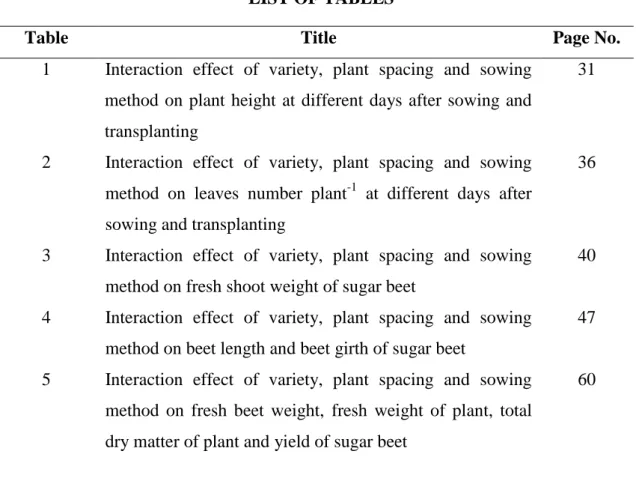
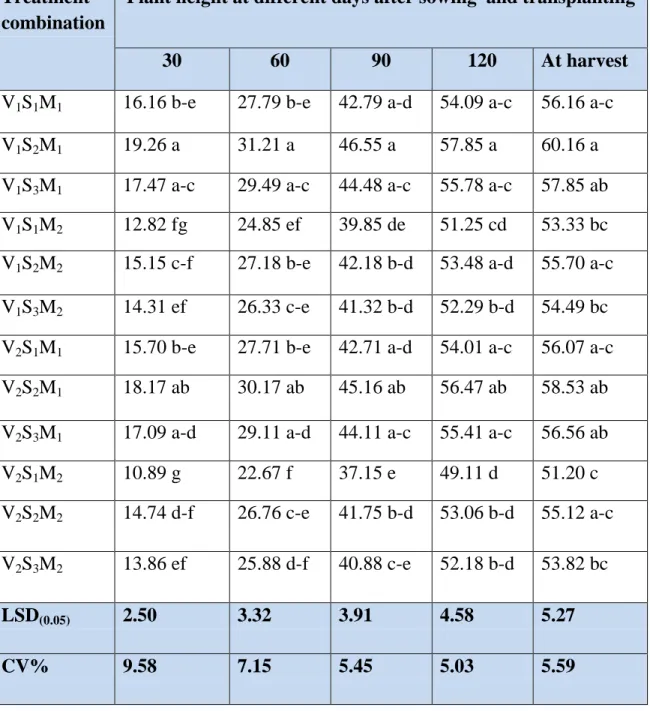
1 Interaction effect of variety, plant spacing and sowing method on plant height at different days after sowing and transplanting
31
2
3
Interaction effect of variety, plant spacing and sowing method on leaves number plant-1 at different days after sowing and transplanting
Interaction effect of variety, plant spacing and sowing method on fresh shoot weight of sugar beet
36
40 4 Interaction effect of variety, plant spacing and sowing
method on beet length and beet girth of sugar beet
47 5 Interaction effect of variety, plant spacing and sowing
method on fresh beet weight, fresh weight of plant, total dry matter of plant and yield of sugar beet
60
viii
LIST OF FIGURES
Figure Title Page No.
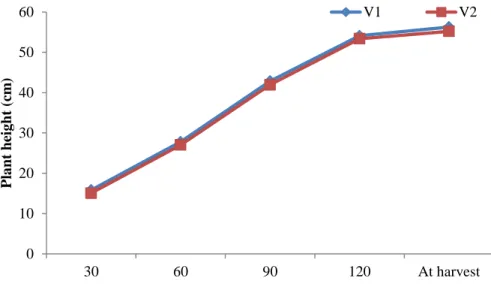
1 Effect of variety on plant height at different days after sowing and transplanting
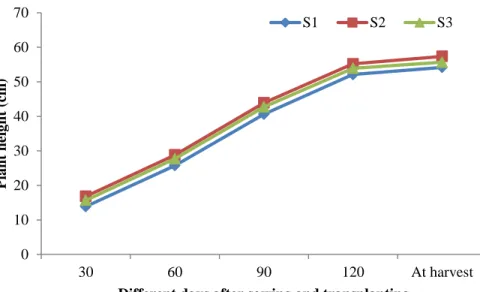
28 2 Effect of spacing on plant height at different days after
sowing and transplanting
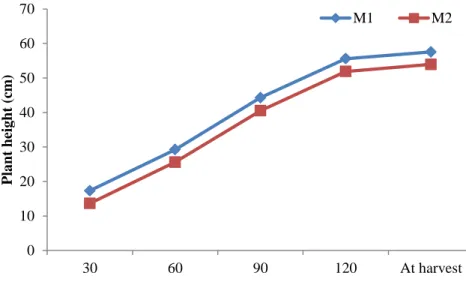
29 3 Effect of sowing method on plant height at different days
after sowing and transplanting
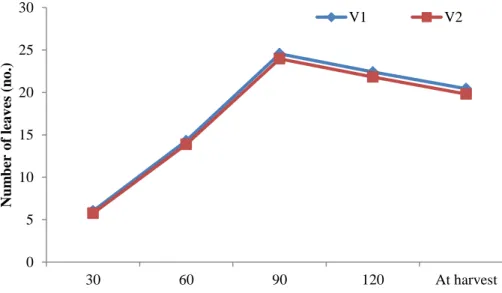
30 4 Effect of variety on number of leaves plant-1 at different
days after sowing and transplanting
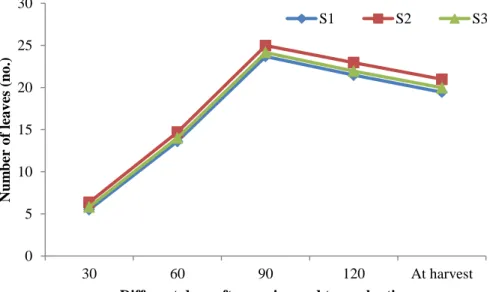
32 5 Effect of spacing on number of leaves plant-1 at different
days after sowing and transplanting
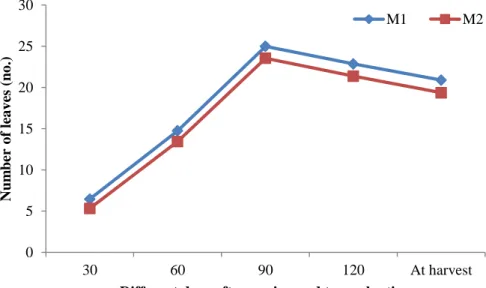
33 6 Effect of sowing method on number of leaves plant-1 at
different days after sowing and transplanting
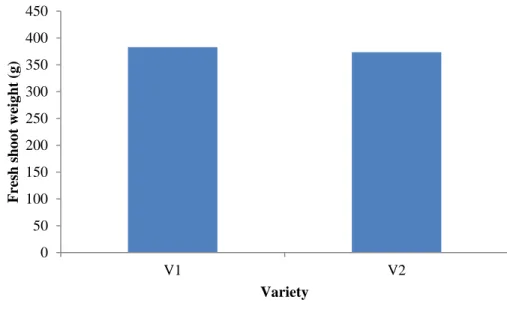
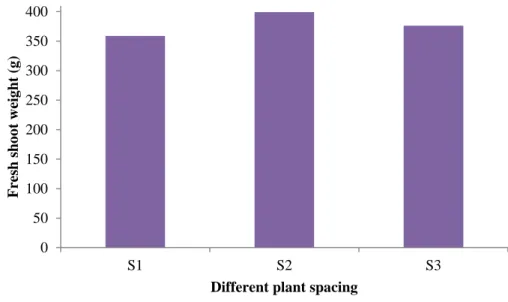
34 7 Effect of variety on fresh shoot weight (g) 37 8 Effect of plant spacing on fresh shoot weight (g) 38 9 Effect of sowing method on fresh shoot weight (g) 39
10 Effect of variety on beet length (cm) 41
11 Effect of plant spacing on beet length (cm) 42 12 Effect of sowing method on beet length (cm) 43
13 Effect of variety on beet girth (cm) 44
14 Effect of plant spacing on beet girth (cm) 45
15 Effect of sowing method on beet girth (cm) 46
16 Effect of variety on fresh beet weight (g) 48
17 Effect of plant spacing on fresh beet weight (g) 49 18 Effect of sowing method on fresh beet weight (g) 50 19 Effect of variety on fresh weight of plant (g) 51 20 Effect of plant spacing on fresh weight of plant (g) 52 21 Effect of sowing method on fresh weight of plant (g) 53
22 Effect of variety on total dry matter (g) 54
23 Effect of plant spacing on total dry matter (g) 55 24 Effect of sowing method on total dry matter (g) 56
25 Effect of variety on beet yield (t ha-1) 57
26 27
Effect of plant spacing on beet yield (t ha-1) Effect of sowing method on beet yield (t ha-1)
58 59
ix
LIST OF APPENDICES
Appendix Title Page No.
I Agro-Ecological Zone of Bangladesh showing the experimental location
73
II Monthly records of air temperature, relative humidity, rainfall and sunshine hours during the period from November 2018 to May, 2019
74
III Characteristics of experimental soil analyzed at Soil Resources Development Institute (SRDI), Farmgate, Dhaka
74
IV Layout of the experimental field 75
V Mean square values of plant height at different days in sugar beet growing under the experiment
76 VI Mean square values of number of leaves plant-1 at different
days in sugar beet growing during experimentation
76 VII Mean square values of beet length, beet girth, fresh shoot
weight and fresh beet weight in sugar beet growing under the experiment
77
VIII Mean square values of fresh weight of plant, total dry matter of plant and beet yield in sugar beet growing during experimentation
77
x
LIST OF ACRONYMS
AEZ = Agro-Ecological Zone
% = Percent
µg = Micro gram
0C = Degree Celsius
BARI = Bangladesh Agricultural Research Institute
cm = Centimeter
CV% = Percentage of coefficient of variance
cv. = Cultivar
DAS = Days after sowing
DAT = Days after transplanting
et al. = And others
g = Gram (g)
ha-1 = Per hectare
HI = Harvest Index
kg = Kilogram
LSD = Least Significant Difference
mm = Millimeter
MP = Muriate of Potash
N = Nitrogen
No. = Number
NPK = Nitrogen, Phosphorus and Potassium
NS = Non-significant
q = Quintal
SAU = Sher-e-Bangla Agricultural University SRDI = Soil Resources and Development Institute
t = Ton
TSP = Triple Super Phosphate
viz. = Videlicet (namely)
Wt. = Weight
1
CHAPTER I INTRODUCTION
Sugar beet (Beta vulgaris L.) belongs to the family Amaranthaceae, which is considered as the second important sugar crop all over the world after sugar cane (Sacchurum officinarum L.) in terms of world’s sugar production. Sugar beet provides about 40% of sugar production in the world and plants whose root contains a high concentration of sucrose. It is grown commercially for sugar production mostly in temperate countries (Rashid, 1999). It is grown in 57 countries. Top fifteen sugar beet producing countries are Russian Federation, Ukraine, United States of America, Germany, France, Turkey, China, Poland, Egypt, United Kingdom, Iran (Islamic Republic of), Belarus, Netherlands, Italy and Belgium. Sugar beet is mainly produced in Europe and, to a lesser extent, in Asia and North America (Kumar and Pathak, 2013). This crop is also a promising alternative energy crop for the production of bio-fuel (ethanol) (BSRI, 2005). It contributes about 21.8 % of world sugar (Anonymous, 2013).
It is a biennial halophytic as well as Na- salts scavenger C3 plant containing up to 20 % sugar on fresh weight basis. The storage organ of this plant is usually called the root, of which 90% is actually root derived and the remaining 10% (the crown) is derived from the hypocotyls (Shrivastava et al, 2013). Composition wise, a freshly harvested sugar beet root contains 75-76% water, 15-20 % sugars, 2.6%
non-sugars and 4-6 % the pulp. It has great nutritive value. Each 100 g beet contains 42.68g calories, 8g carbohydrates, 2g fiber and 1g protein. Processing one ton of fresh sugar beet roots yields 121 kg sugar, 38 kg molasses (containing 18.2 kg sugar, 12.1 kg impurities and 7.8 kg water) and 50 kg of pulp. It can be high values crops as raw materials for production of syrup, sprit and bio-fuel. Beet top and beet pulp can also be used as cattle feed. Beet sugar is known to have demulcent and diuretic properties. Beet pulp accounts for 5 % (on dry weight
2
basis) of total roots, which is a good source of feed (forage/silage) for livestock.
However, as an alternative crop sugarbeet has an important role in decreasing the production cost, reducing crop period and arresting decline in factor productivity as well as sustaining crop productivity at higher level under abiotic stresses viz., water and salt stresses. This is mainly because of its short-duration (6-7 months as compared to 10-12 months of sugarcane), high sugar content (15-17%), high sugar recovery (12-14%), high purity (85-90%), and ability to withstand drought and tolerant to salinity ( Shrivastava, 2006). The total demand of sugar in Bangladesh is 1.8 million metric tons. The amount of sugar produced from sugarcane is not sufficient to meet the demand of the country. To fulfill the requirements, the country needs to import 1.3 million metric tons of sugar at the cost of hard earned foreign exchange. Additional 0.4 million metric tons of sugar remains is need (BSRI, 2010). So, it is important to move towards an alternative crop to produce more sugar per year.
Recently, some tropical sugar beet varieties have been developed which can be grown in tropical as well as subtropical region of the world. In Bangladesh, sugar beet is a new crop and few farmers are growing in limited areas for vegetable purpose (Rashid, 1999). Sugar beet is a short duration crop, having growth period of about half of sugarcane with high sucrose contents (14-20%) while sugarcane is a long duration crop (12-14 months) with low sucrose (10-12%) contents (Syngenta, 2004). Since sugarcane is long duration crop thus farmers are moving to grow short duration crop for higher profit. So its productivity per unit time is higher than sugarcane. Furthermore, sugar beet requires less water. For the production of one kilogram of sugar from sugar beet about 1.4 m3 water is required, whereas, for the production of same quantity of sugar from sugarcane about 4.0 m3 water is required (Sohier and Ouda, 2001). Optimum plant spacing has been found to affect the yield and quality of sugar beet. When the planting spacing exceeds the optimum level, competition among plants becomes severe and
3
consequently the plant growth slows and the yield decreases (Chaudhary et al., 2015). It is, therefore necessary to determine the optimum spacing of plant population per unit area for obtaining maximum yield. Wider spacing had linearly increasing effect on the performance of individual plants (Dwivedi et al., 2015).
Plant density per unit area at a proper spacing of cultivated land is a major factor in determining the quality and quantity of the sugar roots, for instance, optimum plant density provides a larger area of nutrients which allows plant sufficient quantity of water, light and thus raises the efficiency of photosynthesis which contribute to increase the dry matter proportion in the roots and higher roots yield per unit area (Freckleton et al., 1999).
Performance of the crop is likely to be greatly influenced by method of sowing.
The underground part of sugarbeeet is the main economic yield component.
Therefore, the soil physical conditions near the plough sole depth affect its root growth. There are a few investigations with respect to the effect of sowing methods on sugarbeet productivity. Ahmad et al. (2007) showed that planting methods significantly affected the root and foliage weights, root/top ratio, root and top yields/ha of sugarbeet crop. The composition of sugar beet is mainly affected by cultivation methods like planting method and population density (Marlander et al., 2003). Root yield was affected by plant spacing, sowing method and interaction effect of plant spacing and sowing method in a field experiment (Sogut and Arioglu, 2004).
From the above mentioned facts, this study was undertaken by the following objectives:
i. to identify the best variety in respects of yield and quality.
ii. to determine the suitable plant spacing for yield maximization of sugar beet.
iii. to determine the best sowing method for sugar beet cultivation and
iv. to find out the best interaction of variety, spacing and method of sowing effect on sugar beet cultivation for yield and quality
4
CHAPTER II
REVIEW OF LITERATURE
Yield and yield contributing attributes of sugar beet are considerably depended on manipulation of basic ingredients of agriculture. The basic ingredients include varieties of sugar beet, environment and agronomic practices (plant spacing &
method of sowing, fertilizer, irrigation etc.). Among the mentioned factors plant spacing, varieties and sowing methods are more responsible for the growth and yield of sugar beet. The available relevant reviews related to varieties, plant spacing and sowing methods in the recent past have been presented and discussed under the following headings:
2.1 Effect of variety
Sanghera et al. (2016) conducted an experiment to evaluate Sugar beet Genotypes (Beta Vulgaris L.) for root yield and quality traits under Subtropical Conditions during robi season in 2014-15. In the experimentation, 13 sugar beet genotypes were sown in randomized block design (RBD) in a plot size of 36 m2 having three replications. Data were recorded for germination (%), shoot length (cm), root length (cm), total length (root + shoot, in cm), shoot weight (kg), root weight (kg), root/shoot ratio, root girth (cm), root volume (cm3), biological yield per plant (kg), harvest index (%), sucrose (%), purity ( %) in juice and root yield per plot (kg).
Analysis of variance was significant for parameters viz: germination (%), shoot length, root length, total length, root girth, root volume, sucrose (%), purity (%) and root yield per plot. Germination (%) varied from 60% (Calixta) to 89.67%
(Cauvery). Magnolia produced the highest root length (31.33 cm).The most promising genotype for both root girth (cm) and root volume (cm3) respectively was Cauvery (46.25, 1755.78 cm3). Regarding quality analysis, the superior genotype for sucrose (%) and purity (%) was H10671 (18.00, 15.20 and 84.42, respectively). Cauvery (194.51 kg) recorded highest for root yield per plot
5
followed by Indus (165.31 kg) and SV 892 (163.85 kg). The correlation coefficients of different traits with root yield and among themselves showed that there were highly significant and positive associations between root yield with total length while it was negatively correlated with root length and harvest index.
Therefore, these traits should be given emphasis while making selections for high yielding genotypes in sugar beet. The results revealed that the genotypes/varieties of sugar beet are capable to produce high amounts of root yield and sugar content.
Radivojevic et al. (2013) in Serbia studied the biological and technological characteristics of 17 commonly grown commercial sugar beet varieties and reported that the highest yield (106.63 t/ha) was recorded for the variety Marcus and the variety Esprit performed best sugar yielding (16.75%). The best performing variety was Tibor with mean granulated sugar content of 15.71 t/ha.
Balakrishnan and Selvakumar (2008) reported that among the sugarbeet hybrids (Cauvery, Indus and Shubhra), Cauvery performed better in terms of yield and Shubhra recorded higher brix.
Balakrishnan et al. (2007) was carried out an investigation on tropical sugarbeet to evaluate integrated nutrient management with suitable hybrids. The experiment was conducted in strip plot design. The Factor I consist of four integrated nitrogen management and the factor II consist of three tropical sugarbeet hybrids (Cauvery, Indus and Shubhra). Higher crop biometrics of tropical sugarbeet was recorded in application of 100 % N through urea along with FYM and bio-fertilizer treatment.
The yield characters and yield (71 and 89 t ha-1 during 2005 and 2006 respectively) of tropical sugarbeet and brix (18 %) were higher in application of 100 % N through urea along with bio-fertilizer and FYM during both the experiments conducted during 2005-06 and 2006-07. With respect to tropical sugarbeet hybrids, Cauvery performed better in terms of yield (76 and 94 t ha-1 during 2005 and 2006 respectively) and Shubhra recorded higher brix (20 %).
Application of 100 % N through urea along with FYM and bio-fertilizer with
6
Cauvery hybrid performed better for tropical sugarbeet emergence, establishment, yield and quality.
BSRI (2012) investigate an experiment in BSRI farm to evaluate the yield performance of five sugar beet varieties. From the investigation, they observed that the variety Shubhra (133 t/ha) yielded higher than the other (Cauvery, EB- 0618, EB-0626 and EB-0809) varieties. BSRI (2012) also conducted an experiment in BSRI farm to evaluate the yield performance of two varieties (Shubhra and Cauvery). The experiment was conducted at two factors having varieties and planting time. From the result showed that Cauvery (82.33 t/ha) yields higher than Shubhra (75.77 t/ha) which was planted on 17th November 2011.
Selvakumar et al. (2007) reported that among the different tropical sugarbeet hybrids, Shubhra recorded maximum root length and followed by Cauvery and Indus. Indus recorded maximum root girth and followed by Cauvery and Shubhra.
Among the hybrids, Indus recorded higher average root weight (794 and 946 g root-1) which was on par with Cauvery. Similarly, Cauvery and Indus hybrids yield characters were comparable. Ahmad et al. (2012) at Islamabad evaluated eleven sugarbeet varieties and the results showed that SD-PAK09/07 produced the highest sugar yield (9.35 t/ha) with highest sugar contents (12.60%) and beet root yield (74.2 t/ha) followed by California and Magnolia with sugar yield 7.08 and 6.99 t/ha, respectively. They reported non-significant difference among varieties for leaf weight, beet root yield and root size. Ferdous et al. (2015) was carried out an experiment to evaluate the effects of sowing dates on growth and yield of tropical sugar beet. From the experiment they observed that EB0616 (103.5 t/ha) when sown at 1 November produced highest root yield than Couvery and Shubhra at same date of sown.
7
BSRI scientists (2011) was conducted an experiment on 3 varieties to evaluate the yield performance of sugar beet in BSRI farm. Results from the experiment showed that variety Dorotea (82.00 t/ha) yielded more than the variety HI 0064 and Posada. BSRI (2006) scientists was conducted an experiment to assess the yield performances of five sugar beet varieties. Recorded data noted that, variety Posada produced (60.00 t/ha) where Cauvery produced (22.00 t/ha) (Rahman et al., 2006). BSRI (2010) was carried out a field study to evaluate the yield performance of seven sugar beet varieties viz. Shubhra, Cauvery, C- Green, EB- 0513, EB-0616, EB-1317 and EB-0621. Recorded data observed that EB-0513 (64.00 t/ha) produced the maximum beet yield where EB-1317 (38.00 t/ha) yielded the lowest beet production (Rahman, 2011).
Islam et al. (2012) evaluated phenotypic differences and agronomic performances of 12 exotic tropical Sugar beet genotypes in Bangladesh. The genotypes were shown to vary each other with differences in leaf, vein, and root color, number of leaves plant-1, root length and girth, plant height and weight, sugar content, stress and disease responses etc. Considering yield potential and sugar content in root, some Sugar beet genotypes (e.g., SB01, SB03, SB06-09) were considered as promising for cultivation under Bangladesh condition. Balakrishnan and Selvakumar (2009) showed that yield performance of Sugar beet varieties depends on the time of sowing and they found that Cauvery (SB06) performed better in yield than Shubhrha (SB05) and Indus varieties. Bhullar et al. (2009) at Ludhiana revealed that the superiority of Posada variety of sugar beet over HI0064 as far as root yield/ha, root top ratio as well as sugar yield/ha is concerned.
Paul et al. (2013) was carried out an experiment to evaluate the effect of variety and fertilizer application on the yield of tropical sugar beet (Beta vulgaris). The experiment consists of 3 varieties or lines viz. CS 0327, CS 0328 and HI 0473 and 4 levels of urea, TSP and MoP fertilizer application viz. 230-80-185, 260-100-225, 290-120-265 and 320-140-305 kg ha-1 of urea, TSP and MoP, respectively. Results
8
showed that the varieties or lines had a significant effect on the plant characters and beet yield of tropical sugar beet. The highest beet yield (55.61 t/ha) was obtained from the HI 0473 which was as good as CS 0327 and lowest beet yield (31.96 t/ha) was obtained from the lines CS 0328 and the best fertilizer treatment was 290 kg urea, 120 kg TSP and 265 kg MoP for better beet yield and quality of HI 0473.
BRAC (2010) was conducted an investigation to study the feasibility of sugar beet cultivation under Bangladesh condition during winter season of 2009-2010. Seeds of 14 sugar beet genotypes were sown in the experimental field of Horticulture Research Centre of BARI, Gazipur on 10 November 2009. Visible root swelling in all genotypes started between 36 and 40 days after sowing (DAS). Nine genotypes had white root color while rests were red purple. Plant height varied from 26.8 cm to 55.0 cm at 165 DAS. Similarly, whole plant weight among the genotypes ranged from 0.76 kg to 1.60 kg. Mean root yield in all genotypes was 66.22 t/ha when harvested at 165 DAS, which was decreased to 56.29 t/ha at 180 DAS.
However, the highest root yield was recorded from the genotypes SB001 (85.30 t/ha) closely followed by SB006 (84.40 t/ha) at 165 DAS. All the genotypes showed lower yield potential at 180 DAS compared to 165 DAS. Severe leaf shedding and drying up of the root in the later stage might be the reason for yield reduction. Nine genotypes had more than 10% sucrose and can be considered for sugar producing genotypes. Five genotypes had very less sucrose content in the root and can be useful for vegetable purpose. The genotypes SB001 and SB006 had comparatively high amount of sucrose (13.0%) in the root. The fungal disease Sclerotium root rot and the insect Spodoptera litura were found the most limiting factor for sugarbeet cultivation.
9
2.2 Effect of spacing
Ransom et al. (1998) was studied at Oregon State University, at the Malheur Experiment Station, to evaluate the effect of narrow row sugarbeet production (11- inch row spacing) with transgenic sugarbeet and no cultivation. Results from the experiment showed that, root yields from sugarbeet grown in 11-inch rows with 16-inch in-row spacing produced higher RSA than sugarbeet grown in 22-inch rows with 6 or 8-inch in-row spacing. Results also noted that, Sucrose was higher in sugarbeet from the 11-inch row spacing compared to the 22-inch row spacing except where sugarbeet were grown in 22-inch row spacing with 6-inch in-row spacing. Overall, estimated recoverable sucrose per acre was highest in the 11- inch row spacing with 12-inch or 16-inch in-row spacing compared to the 22-inch row spacing. One unmeasured advantage (data not presented) was expedited row closure in the 11-inch row spacing resulting in increased competition from sugarbeet with weeds. The production of Recoverable Sucrose per Acre (RSA) from 11-inch row spacing was 11,546 lbs was higher compared to the 22-inch row spaced which produced 9,410 lbs RSA.
A sugarbeet research trial at University of Nebraska (2003) used eight replicates to compare 18- and 30-inch row spacing in field length strips. Data from machine harvested sugarbeet indicated a significantly greater yield from the 18-inch row spacing as compared to the 30-inch spacing. Sugarbeet yield increased by 1.9 tons per acre, 1.1% sucrose content, and 1,400 lbs Recoverable Sucrose per Acre from the 18-inch rows (Rogers and Alberta, 2003). A review of sugarbeet row spacing literature compared 22-inch row spacing with the same effects narrow row planted sugarbeet had on overall sucrose production. These studies investigated narrow row sugarbeet production and 22-inch row spacing with the same or similar plant populations per acre. Also, research was conducted using similar within-row spacings and comparing 22-inch row spacing with narrow rows, primarily comparing 18-inch and 11-inch row spacing to 22-inch row spacing. One study
10
reviewed compared 22-inch rows spacing with 30-inch row spacing. Early narrow- row sugarbeet production research was performed by Skuderna around 1940 (Cattanach and Schroeder, 1979).
Camp and Foote (2003) was conducted an experiment to compared 11-inch row spaced production with 22-inch row spaced production with 8, 12, 16, and 20 inch in-row plant spacing. They found from this experiment, no significant variation in tons per acre, sucrose (%) or Estimated Recoverable Sucrose (ERS) per acre within the row spacing. Sucrose (%) tended to be higher with the 12-inch in-row spacing using the 11-inch row width. But when compared with a nearby 22-inch plot, the 11-inch rows observed approximately a 1 % increase in sucrose content.
However, root yields were similar from 11-inch and 22-inch row spacing. Row closure in the 11-inch row spacing was a week to ten days sooner than the 22-inch row spacing. Row closure was significantly faster with the narrower in-row spacing in the study and this may allow better weed control or management.
Khan et al. (2004) did an experiment to compare sugarbeet production in an 11- inch row spacing with 8, 10, 12, and 14 inches between plants within the row to 22-inch row spacing, with 8-inch in-row spacing. Result showed that, the 11-inch row width with 8-inch in-row spacing produced the lowest mean root weight.
Respiration rates of the roots from the differing row configurations and also from the differing in-row spacing were measured. Respiration rates increased in the smaller roots (11-inch row spacing and 8-inch spacing) and respiration rates were decreased in larger roots from the 22-inch row spacing with 8-inch in-row spacing.
Overall, the data observed that RSA was highest in sugarbeet produced in 11-inch rows, and spaced 12 to 14 inches apart compared to the 22-inch row width spaced 8 inches apart. Result showed that, the higher population of beets, root size and root weights were significantly smaller in the 11-inch row spacing.
11
In 2005, 11-inch and 22-inch row widths were compared (Khan and Nelson, 2005). The lowest average root weights were found in the 11-inch row width with 8-inch in-row spacing. Reducing the row spacing from 22- inches to 11-inches, decreased the average root weight per beet. However, sugarbeet from the 11-inch row produced sugarbeet also trended lower in LTM. A trend of increasing RSA occurred as spacing within-row increased in the 11-inch row width. Although not significantly different than 22-inch row width treatment, the within row spacing of 12- and 14-inch spacing in the 11-inch row width yielded the highest RSA in the study. This increase in RSA was perceived to have occurred from less inter and intra-row competition for essential water, sunlight, and plant food. The authors concluded that producing sugarbeet in 11-inch row spacing provided no economic advantage. The traditional 22-inch row spacing sugarbeet production generated RSA as high as from sugarbeet in 11-inch rows when higher stand counts of up to 175 beets per 100 feet of row were established.
Stebbing et al. (2000) were conducted field experiments in 1996 and 1997 near Scottsbluff, Nebraska, to evaluate sugarbeet and red root pigweed yields as affected by sugarbeet row spacing and red root pigweed densities. Row spacing of 46, 56, and 76 cm were compared. In 1996, sugarbeet gained a height advantage over redroot pigweed and sugarbeet root and sucrose yield was not affected by weed competition, regardless of row spacing. In 1997, redroot pigweed grew at a faster rate due to warmer temperatures and gained a height advantage over sugarbeet and shaded the crop. This resulted in a reduction in sugarbeet root yield.
Sugarbeet root yield, averaged over all red root pigweed densities, decreased approximately 18% and 25% as row spacing increased from 56 to 76 cm and 46 to 76 cm, respectively. Averaged across row spacing, sugarbeet root and top yield were reduced approximately 12% from 4000 red root pigweed plants/ha compared with the weed free control in 1997. At 15000 red root pigweed plants/ha, sugarbeet root and top yields declined approximately 31 %. When averaged over
12
the entire field, 'Monohikari' produced a higher sugarbeet root yield than 'KW2398', but was not as competitive with red root pigweed as 'KW2398'.
Ismail and Allam (2007) reported that sowing sugarbeet at 70000 and 105000 plants per hectare gave high values of yield and quality traits. Masri (2008) observed a positive effect of increasing plant density from 87500 to 100000 plants ha-1 as well as significant increase in sucrose content, purity, extractable sucrose and sugar yield. El-Sarag (2009) studied three plant densities (20, 28 and 46 thousand plants fed-1) and reported that the highest plant density (46 000 plants fed-1) recorded the maximum root fresh weight and sugar yield as compared with the lower densities (Mahmoud et al. 1999).
Nassar (2001) found that sucrose content and recoverable sugar percentages were linearly decreased with the reduction in plant density. Gill and Verma (1969) was conducted a study in India showed that row spacing of 40 cm gave the highest yield while that of 50 and 60 cm gave similar yields. In a yield comparison (Yonts and Smith, 1997) reported that 56 cm row spacing produced a greater yield of both roots and sugar than 36 or 76 cm rows. Their study showed that 56 cm row width increased sugar approximately 0.4 Mg/ha over both 36 and 76 cm rows. Narrower rows, such as 45 cm, are more likely to produce large yields because they help to compensate for poor plant establishment (Anonymous, 1995). Sugarbeet has traditionally been grown in 56 cm rows in Nebraska and Wyoming. Growers became interested in using wider row spacing so field equipment could be used for more than one crop with minimal adjustments (Fornstrom and Jackson 1983).
Many studies with controlled plant densities demonstrated that sugarbeet grown in rows greater than 50 cm produced less than maximum yield (O'Connor, 1983).
Winner and Merkes (1975) showed some advantages of 40 and 45 cm row spacing compared to 50 and 35 cm row spacing, although the advantages were not statistically significant. Optimum plant population density has been found to affect
13
the yield and quality of sugarbeet. When the planting densities exceed the optimum level, competition among plants becomes severe and consequently the plant growth slows and the yield decreases (Chaudhary et al., 2015). Hozayn et al.
(2013) reported that planting density of 36000 plant/fed (50 cm × 23.50 cm spacing) produced the highest root yield and sugar yield with good quality and less detract components.
Wiklicky (1981) recommended row spacing of 42 to 45 cm to produce a full leaf canopy. Sugarbeet root yield, sugar percentage, and purity were higher for sugar beet planted in 50 cm rows compared with sugarbeet planted in 60 cm rows (O'Connor, 1983). Bhullar et al. (2010) studied the effect of three planting densities i.e. 83,333 plants (rows spaced at 60 cm and plants at 20 cm), 1,00,000 plants (50 cm x 20 cm) and 1,11,111 plants (60 cm x 15 cm) ha-1 on root and sugar yield of Beet (Beta vulgaris L.). They observed that planting density of 1, 00,000 plants ha-1 (50 cm x 20 cm) produced the highest beet root and sugar yield.
Increasing plant density, root yield and white sugar yield increased, and most of them were achieved in 12 plants m-2 (Sadre et al, 2012).
2.3 Effect of sowing method
El-Maghraby et al. (2008) reported that sowing of sugarbeet at a laser leveled soil + deep ploughing gave a significant increase in root length, root diameter in comparison to other treatments (Seadh et al., 2013). Direct sowing of sugarbeet on ridges was more suitable than transplanting seedlings on flat bed or on ridges. The former technique led to establishment of higher number of plants and greater mean weight of individual roots. The estimated yield of white sugar was also greater from crop grown on ridges by direct seed sowing than that from the crop raised by transplanting of seedlings (Garg and Srivastava, 1985). Flatbed planting is a method of seed bed preparation whereby the top soil is ploughed and leveled. In ridge method, the top soil is scrapped and concentrated in a defined region to
14
deliberately raise the seed bed above the natural terrain, which affect the soil physical and chemical properties as well as biological activities and ultimately the crop yield. Moreover, sugarbeet is sensitive to stagnant water, which may be avoided by ridge planting (Kashiwagi et al., 1999). El-Kassaby and Leilah (1992) stated that maximum diameter and weight of roots were obtained with planting beets on one side of ridges 70 cm width, 30 cm apart. The highest yields of roots and sugar were obtained with planting beets on both sides of ridges 70 cm width, 25 cm apart. Zahoor et al. (2007) and Ahmad et al. (2010) while working on silt clay loam soil reported that planting methods significantly affected the days to emergence, petiole length, leaf weight, number of beets harvested, specific leaf area, top to root ratio, top yield and root yield of crop. The experiment was designed to compare the conventional ridge planting method (ridges 50 cm apart) with new bed and flat planting techniques under different row geometries. The two sugar beet varieties, Kawe Terma and KWS 1451, were grown on ridges (40 cm, 50 cm and 60 cm apart, pair of ridges 50 cm apart and strip of three ridges 50 cm apart), beds (with two rows 80 cm apart and with three rows 120 cm apart) and flat (with two rows 50 cm apart and with three rows 50 cm apart). Results of the study showed that beet growth (mean leaf area, root diameter and root weight) and quality (sugar percentage, Brix percentage, purity percentage and sugar yield) was significantly affected by new planting methods. The mean root diameter of beets reached a maximum of 12.7 cm on beds with two rows. The mean root weight of beets increased on pair of ridges (1.54 kg) and on the recommended ridge planting method. Sugar and purity percentage of beets increased by 1.1% and 2.7%, respectively, on beds with two rows as compared to the beets planted on conventional ridge spacing. Sugar yield was equally higher on beds with two rows and the recommended ridge planting method.
15
Ahmad et al. (2007) reported maximum top and root yield by planting two rows on bed. The quality of sugar beet is influenced by a number of factors. The composition of sugar beet is mainly affected by variety, population density, cultivation methods, site and year. The selection of an appropriate planting method will directly or indirectly affect the efficiency of all these cultural practices as well as the environment for sugar beet growth which will ultimately affect the beet quality. For example, beds and tide ridges conserve the moisture for a longer period of time as compared to loss ridges and flat planting.
Khaiti (2012) mentioned that, use of high population increases interplant competition. However in this study, it is observed that by planting two rows on bed or planting two rows on both sides of ridge (planting density 1.23 lakh plants ha-1), the plant to plant distance remains 27 cm in ridge and 24 cm in bed planted crop as compare to 16 cm in flat sowing (planting density 1.23 lakh plants ha-1);
20 cm in flat, 16.5 cm in ridge & 15 cm in bed with planting density 1.00 lakh plants ha-1 and 25 cm in flat, 21 cm in ridge and 18.5 cm in bed with planting density 0.80 lakh plants ha-1. This helps to accommodate more number of plants per ha-1, without or with little increase in interplant competition for light, water and nutrients. Although the value of root parameters at higher planting density is on slight lower side but increase in number of plants per unit area leads to higher root and top yield.
In the recent scenario of limiting water and land resources, new cultural techniques are being worked out to get maximum benefits from the available resources. Bed planting is one of these techniques which got renowned for water conservation, efficient fertilizer use and other benefits while flat planting is less expensive as well as easy to perform. In spite of this recognition, these new planting techniques could not fetch the attention of crop researchers for sugar beet cultivation. Therefore, the current experiment was designed to compare the conventional ridge planting method (ridges 50 cm apart) with new bed and flat
16
planting techniques under different row geometries. The two sugar beet varieties, Kawe Terma and KWS 1451, were grown on ridges (40 cm, 50 cm and 60 cm apart, pair of ridges 50 cm apart and strip of three ridges 50 cm apart), beds (with two rows 80 cm apart and with three rows 120 cm apart) and flat (with two rows 50 cm apart and with three rows 50 cm apart). Results of the study showed that beet growth (mean leaf area, root diameter and root weight) and quality (sugar percentage, Brix percentage, purity percentage and sugar yield) was significantly affected by new planting methods. The mean root diameter of beets reached a maximum of 12.7 cm on beds with two rows. The mean root weight of beets increased on pair of ridges (1.54 kg) and on the recommended ridge planting method. Sugar and purity percentage of beets increased by 1.1% and 2.7%, respectively, on beds with two rows as compared to the beets planted on conventional ridge spacing. Sugar yield was equally higher on beds with two rows and the recommended ridge planting method. It was observed that the growth and quality of Kawe Terma was exceptionally better than the variety KWS 1451.
Meaningfull comparisons were also performed among the different planting methods to evaluate the overall performance of ridge, bed and flat planting methods and results have been discussed. It can be inferred from the results that equally better growth and higher yields can be achieved by replacing the current ridge planting method with new two-rows-bed planting technique (Zahoor et al., 2010 and Leilah et al., 2005).
Saini et al. (2017) carried out a field experiment at the Students’ Research Farm, Department of Agronomy, Punjab Agricultural University, Ludhiana during Rabi 2013-14 and 2014-15 to determine the optimum method of planting, crop density and depth of sowing for sugarbeet under subtropical conditioned of northern India.
Nine Planting Methods × Densities and Two sowing depths were evaluated. The maximum root yield was recorded under treatments Planting two rows on bed &
Planting two rows on both side of ridge with planting density 1.23 lakh plants ha-1
17
i.e. 55.00 t ha-1 & 50.22 t ha-1 during year 2013-14 and 47.85 t ha-1 & 44.19 t ha-1 during year 2014-15. Sowing depth of 2-3 cm shows higher yield as compare to 4- 5 cm during both years of study. Thus planting sugarbeet as two rows on beds or two rows on both side of ridge with planting density 1.23 lakh plants ha-1 and planting depth 2-3 cm, could be recommended for cultivation of sugarbeet in loamy sand soils under sub-tropical conditions.
Crop growth and productivity may differ under different sowing methods and planting densities. A field experiment was conducted to evaluate the influence of different sowing methods and planting densities on growth, yield, quality and economic returns of cotton. Sowing methods included pit planting (1 m × 1 m pits), bed planting (75 cm apart beds), ridge planting (75 cm apart ridges) and line sowing with varied inter row spacing (25, 50 and 75 cm). Sowing methods significantly affected growth and yield of cotton. Pit planting imposed maximum increase in plant height (152 cm), number of monopodial branches (4.7) and sympodial branches (22.6) per plant, number of unopened (9.4) and opened bolls (41.1) per plant, and average boll weight (3.0 g) of cotton. However, highest seed cotton yield (2944.5 kg ha ) was obtained by flat sowing on 25 cm apart rows owing to highest planting density per unit area. Maximum ginning out turn (GOT) (41.6%) was noticed in pit planting of cotton, while, fiber quality was not affected significantly by sowing methods. Economic analysis showed that economic returns and benefit cost ratio (BCR) (1.52) was elevated by flat sowing on 25 cm apart rows. In conclusion, maximum seed cotton yield and economic returns can be acquired by flat sowing with 25 cm apart rows, while, fiber quality is independent of sowing methods (Ehsanullah et al., 2017).
As direct-seeding in main field due to more susceptibility of plant early growth stages to environmental conditions such as temperature have a negative effect on crop and reduce desirable yields, usually transplants raised under greenhouse or nursery conditions used in sugar beet production which help to accelerate the
18
sugar beet germination and growth to prevent seed exposure to not appropriate environmental conditions and escape from bolting damage due to early season cold weather in spring. Transplanting method lengthen the growing season by earlier planting in greenhouse when direct seeding may impossible due to not appropriate environmental condition outside the greenhouse and this prolongation of growing season have a positive effect on yield. In addition, due to sugar beet susceptibility to salinity at early stages of growth, using transplanted sugar beet in which transplant were raised in appropriate mixture of soil could help to sugar beet production especially in saline soils (Draycott, 2006)
19
CHAPTER III
MATERIALS AND METHODS
The experiment was carried out at Sher-e-Bangla Agricultural University, Dhaka during the period from November, 2018 to May, 2019. This chapter deals with the materials and methods of the experiment with a brief description on experimental site, climate, soil, land preparation, planting materials, experimental design, land preparation, fertilizer and manures application, transplanting, irrigation and drainage, intercultural operation, data collection, data recording and procedure of their analysis. The details of investigation for achieving stated objectives are described below.
3.1 Site description
The experiment was conducted at central farm of Sher-e-Bangla Agricultural University, Dhaka, under the Agro-ecological zone of Madhupur Tract, AEZ- 28. The experimental site was situated at 23°47′ North latitude and 90°35′ East longitude at an altitude of 8.2 meter above the sea level. The experimental site is shown in the AEZ Map of Bangladesh in Appendix I.
3.2 Climate
The geographical location of the experimental area was under the sub-tropical climate characterized by high temperature, high humidity and heavy rainfall with occasional gusty winds in kharif season (April-September) and less rainfall associated with moderately low temperature during the Rabi season (October- March). Information respect to monthly maximum and minimum temperature, rainfall, relative humidity and sunshine during the period of study of the experimental site was collected from Bangladesh Meteorological Department, Agargaon and is presented in Appendix II.
3.3 Soil characteristics
The experiment was done in a typical potato growing soil belonging to the Madhupur Tract. The experimental site belongs to the General soil type, Red
20
Brown Terrace Soils under Tejgaon Series. Top soils were silty clay loam in texture, olive-gray with common fine to medium distinct dark yellowish brown mottles. The experimental area was flat having available irrigation and drainage system. The experimental site was a medium high land. It was above flood level and sufficient sunshine was available during the experimental period. Soil samples from 0-15 cm depths were collected from experimental field. The analyses were done by Soil Resources and Development Institute (SRDI), Dhaka. The physicochemical properties of the soil are presented in Appendix III.
3.4 Experimental treatments
The following treatments were included in this experiment Factor A: Variety (2)
V1 = Shubhra V2 = Cauvery
Factor B: Spacing (3 levels) S1 = 40 cm × 20 cm
S2 = 50 cm × 20 cm S3 = 60 cm × 20 cm
Factor C: Method of sowing (2 levels) M1 = Direct sowing
M2 = Transplanting
3.5 Plant materials and collection of seeds and features
Two sugar beet varieties viz., Shubhra and Cauvery were used as plant materials for the present study. The seeds of Shubhra and Cauvery were collected from BSRI, Ishwardi, Pabna, Bangladesh.
Shubhra: Shubhra sugar beet variety is grown in mainly temperate area but cultivated also in both tropical and sub-tropical. This variety is recommended for cultivation in medium high land and medium low land. The life cycle of the
21
variety is 140-150 days. It observed a plant height 50-90 cm. It gives an average yield of 70-110 t ha-1.
Cauvery: Cauvery sugar beet variety is grown in mainly temperate area but cultivated also in both tropical and sub-tropical. This variety is recommended for cultivation in medium high land and medium low land. The life cycle of the variety is 140-150 days. It observed a plant height 50-75 cm. It gives an average yield of 80-125 t ha-1.
3.6 Preparation of experimental land
The selected plot for the experiment was opened in the first week of September 2018 with a power tiller, and was exposed to the sun for a week. On 15 September, the selected land was harrowed, ploughed and cross-ploughed several times followed by laddering to obtain a good tilt. Weeds and stubble were removed and a desired tilt was obtained of soil finally for seed sowing.
3.7 Application of manures and fertilizers
The following doses of fertilizer were applied for cultivation of sugar beet as recommended by BSRI, 2012.
Manures and Fertilizers Recommended doses (kg ha-1)
Cowdung 15000
Urea 260
TSP 100
MoP 225
Zinc sulphate 10
Gypsum 100
Borax 7
Fertilizers like as Urea, TSP, MoP, Gypsum, Zinc sulphate and Borax were used as sources for N, P, K, S, Zn and B respectively. Fertilizers were applied to the each plot as recommended doses. The full doses of TSP, MoP, gypsum, zinc sulphate and borax were applied during the final preparation of plot land. 15
22
days before the seed sowing, mixture of cowdung and compost was applied at the rate of 15 t ha-1. Urea was applied in three installments. During seed sowing, 50% urea was applied. Rest 50% of urea was applied in two equal installments at after 25 days of seed sowing and after 50 days of seed sowing.
3.8 Experimental design and layout
The experiment was carried out in a 2×3×2 factorial design with three replications. Each replication consisted of 12 plots where treatment combinations were assigned. Thus the total number of unit plots was 12×3=36.
The size of the unit plot was 2 m × 1.8 m (3.60 m2). The distance maintained between two unit plots was 0.5m for drainage channel and that between blocks was 0.75m. The treatments were distributed to the plots within each replication.
The layout of the experiment field is shown in Appendix IV.
3.9 Seed sowing
Seeds were sown in the main field and also in the polybag on 3rd October, 2018.
Seeds were sown in the main field according to the treatments as per mentioned on the treatments.
3.10 Seedlings uprooting and transplanting in the main field
One month old seedlings were uprooted carefully from the polybag and were kept in shade. The soil of the polybags were made wet by application of water in previous day before uprooting the seedlings to minimize mechanical injury of roots. The seedlings were uprooted on November 3, 2018 without causing much mechanical injury to the roots. The seedlings were transplanted as per the experimental treatments in the main field on 4th November, 2018.
3.11 Intercultural operations
After establishment of sugar beet seedlings, different intercultural operations were performed during the course of experimentation for better growth and development of the sugar beet seedlings.
23
3.11.1 Irrigation and drainage
Irrigated the experimental field was with adequate water in the early stages to enhance the growth of the sugar beet seedlings. A good drainage facility was also maintained for immediate release of excess rainwater from the field. The field was finally dried out at 15 days before harvesting.
3.11.2 Gap filling
Minor gap filling was done for all of the plots at 7-10 days after transplanting (DAT) by planting same aged seedlings.
3.11.3 Weeding
Experimental plots were infested with some common weeds, which were controlled by uprooting and remove them three times from the field during the period of experiment. Weeding was done after 30, 45 and 65 days of transplanting.
3.11.4 Top dressing
Top-dressed of urea fertilizer was done in 2 equal installments at 25 days after sowing and transplanting and 50 days after sowing and transplanting.
3.11.5 Earthing-up
Earthing-up were done around the roots of the sugar beet at 30 days after sowing and transplanting for the first time. 50 days after sowing and transplanting earthing-up were also done to protect the plant from lodging against the possibility of strong wind and for the better root formation.
3.12 Pest and disease management
In the experimental plots, some plants were infested with leaf cutworm, beet cutworm, caterpillar, leaf roller and thrips to some extent; which was successfully controlled by application of insecticides spraying Ripcord, Score, Nitro 505 EC @1ml per liter water and Bavistin. Crown rot of sugar beet was
24
controlled by spraying Tilt 250 EC and Score 250 EC. Apart from chemical, cultural and mechanical control measures were done for insect-pests and disease management as and when required.
3.13 Harvesting
The sugar beet was harvested depending upon the maturity of plants. Harvesting was done manually from each plot. Maturity of sugar beet was determined when 70-80% of the leaves were dried. The harvested sugar beet crop of each plot was bundled separately, tagged properly. Proper care was taken for harvesting and cleaning of sugar beet roots. Fresh weight of beets were recorded plot wise.
Yields of sugar beet plot-1 were recorded and converted to t ha-1. 3.14 Experimental field observation
The experimental field was observed time to time to observe visual difference among the treatments and detect any kind of infestation by weeds, insects and diseases so that considerable losses by pest was minimized.
3.15 Recording of data
The following data were collected during the experimentation:
3.15.1. Crop growth characters 1. Plant height (cm)
2. Leaves plant-1 (no.) 3. Fresh shoot weight (g)
3.15.2 Yield contributing parameters and yield 1. Beet length(cm)
2. Beetgirth (cm) 3. Fresh beet weight (g) 4. Fresh weight of plant(g) 5. Total dry weight of plant(g) 6. Beet yield (t ha-1)
25
3.16 Procedures of recording data
A brief outline of the data recording procedure is given below:
3.16.1 Plant height (cm)
Plant height was recorded at the time of 30, 60, 90, 120 DAS and DAT and at harvest. Data were recorded as the average of same 5 plants pre-selected at random from the inner rows of each plot. The plant height was measured from the ground level to tip of the plant.
3.16.2 Leaves plant-1 (no.)
Leaves plant-1 was counted from the average of same 5 plants pre-selected at random from the inner rows of each plot.
3.16.3 Fresh shoot weight (g)
Shoots were counted randomly from each plot and weighed by using a digital electric balance and the mean weight was expressed in gram.
3.16.4 Beet length (cm)
Measurement of beet length was taken with a meter scale from 5 selected plants and the average value was recorded.
3.16.5 Beet girth (cm)
Measurement of beet length was taken with a meter scale from 5 selected plants and the average value was recorded.
3.16.6 Fresh beet weight (g)
Beet were collected from pre-selected of 5 plants each plot and weighed by using a digital electric balance and the mean weight was expressed in gram.
3.16.7 Fresh weight of plant (g)
Fresh weight was recorded at harvest from 5 randomly collected plants of each plot from inner rows leaving the boarder row. Collected plant were weighed by
26
using a digital electric balance and the mean was recorded and expressed in gram.
3.16.8 Total dry matter of plant (g)
Total dry matter of plant was recorded at harvest from 5 randomly collected plants of each plot from inner rows leaving the boarder row. Collected plant were oven dried at 70°C for 72 hours then transferred into desiccator and allowed to cool down at room temperature, final weight was recorded and converted into dry matter content and expressed in gram.
3.16.9 Beet yield (t ha-1)
Beet yield was determined from the central 1 m2 area of each plot and expressed as t ha-1.
3.17 Statistical analysis
Analysis of variance (ANOVA) technique was used to analyze the collected data on different parameters with the help of STATISTIX 10 computer program and LSD (Least Significant Difference) test was done to determine the significance in statistical analysis at 5 % level of provability (Gomez and Gomez, 1984).
27
CHAPTER IV
RESULTS AND DISCUSSION
This chapter comprises of the presentation and discussion of the results obtained from the present study. The results have been presented, discussed and possible interpretations were given in tabular and graphical forms. The results obtained from the experiment have been presented under separate headings and sub- headings as follows:
4.1 Growth parameters 4.1.1 Plant height (cm) 4.1.1.1 Effect of variety
Non-significant influenced was observed on plant height by different variety of sugar beet at different growth stages (Figure 1). Result found that non-significant variation was observed on the plant height of sugar beet due to varietal variation (Figure 1). The taller plant (15.86, 27.81, 42.86, 54.12 and 56.28 cm at 30, 60, 90, 120 DAS and harvest, respectively) was obtained from treatment V1 (Shubhra) and the shorter plant (15.08, 27.04, 41.96, 53.37 and 55.22 cm at 30, 60, 90, 120 DAS and harvest, respectively) was observed from treatment V2 (Cauvery). The result of the present study was coincided with the findings of Islam et al. (2012), Selvakumar et al. (2007) and Sanghera et al. (2016).