Children and Their Families
Perspectives and Experiences on
Poverty and Social Protection
Acknowledgements
The Indonesia United Nation Children’s Fund (UNICEF) commissioned this study to Reality Check Approach plus (RCA+). We gratefully acknowledge the support provided by the Ministry of Social Affairs and the Ministry of National Planning and Development for this research. The study was initiated and conceptualised by the Social Policy Cluster of UNICEF Indonesia. The data collection and analysis approach was designed and conducted by the RCA+ team of international and local researchers (see Annex 1).
Most importantly, this study was only possible thanks to the many families, their neighbours and communities who welcomed our researchers into their homes and shared their lives with them for a short while. The dedicated and enthusiastic RCA+ research team carried out the study with professionalism, motivation and respect for their host communities. We are grateful to the communities for this opportunity and for openly sharing insights into their lives, activities, perspectives and aspirations. We hope that the
report relects well their views and experiences and
helps to make the programmes implemented in their name relevant and meaningful for them.
Disclaimer:
The work is a product of the RCA+ Team and
UNICEF Indonesia. The indings, interpretation
and conclusions therein are those of the authors
and do not necessarily relect the views of
UNICEF, the Government of Indonesia or the Palladium Group.
This publication has been inanced by UNICEF.
You are free to copy, distribute and transmit this work for non-commercial purposes. The report is available on the Reality Check Approach website, www.reality-check-approach.com, and the UNICEF Indonesia website, www.unicef.org/ indonesia.
Photographs: All photographs credited to The Reality Check Approach plus Team
Suggested Citation: Reality Check Approach plus and UNICEF Indonesia, 2016. “Children and Their Families Perspectives and
Glossary and Abbreviations
Adit Sopo Jarwo Popular animated TV series
Angkot Public bus transportation
Arisan A form of rotating saving and credit association
ATM Automated Teller Machine
Baitul Mal A regional agency in Aceh which manages Zakat (Islamic alms)
Belis Dowry in Sumba tradition
Bidikmisi Scholarship for tertiary education
BLT Bantuan Langsung Tunai (Direct Cash Transfer Assistance)
Bolang Bocah ilang (the lost kids)
Bomba Playing cards with celebrity picture
BPJS Badan Penyelenggara Jaminan Sosial (Social Security Agency)
BRI Bank Rakyat Indonesia (Indonesian People’s Bank)
BSM Bantuan Siswa Miskin (Cash Transfers for Poor Students)
Dana Desa Village funds
DFAT Department of Foreign Affairs and Trade, Government of Australia
FHH Focal households (neighbours of the host households)
Futsal Five-a-side football played on a hard court rather than a ield GOI Government of Indonesia
HHH Host households; where members of the study team stayed with families
Honai Papua traditional house
ID Identiication IDR Indonesian rupiah
Idul Fitri Islamic festival
JKN Jaminan Kesehatan Nasional (National Health Insurance)
Kartu keluarga Family ID card
Kedai Coffee shop
Kejar Paket A/B/C Equivalency programme for primary/secondary/senior secondary school levels
KIP Kartu Indonesia Pintar (Indonesia Smart Card)
KIS Kartu Indonesia Sehat (Indonesia Health Card)
KJP Kartu Jakarta Pintar (Smart Jakarta Card)
KKS Kartu Keluarga Sejahtera (Prosperity Family Card)
KPS Kartu Perlindungan Sosial (Social Protection Card)
Listrik Pintar National programme on electricity
Madrasah Islamic religious school
MSG Monosodium glutamate
NGO Non-Government Organization
Ngondel Costumed dancer
Ojek Motorbike taxi (informal)
Ojek payung Renting out umbrellas in the rain
PAUD Pendidikan Anak Usia Dini (Early Childhood Education)
Pengamen Street musician
PKH Program Keluarga Harapan (Conditional Cash Transfer Programme for Families)
Puskesmas Pusat kesehatan masyarakat (people’s health centre)
Posyandu Pos pelayanan terpadu (integrated health post)
Pokemon Popular animated TV series
Pustu Puskesmas pembantu; sub-health centre under the Puskesmas, usually supporting 2-3 villages
PNS Pegawai Negeri Sipil (Civil Servant)
Raskin Program Subsidi Beras Bagi Masyarakat Berpendapatan Rendah (Rice for Poor Households)
RCA Reality Check Approach
RCA+ RCA+ Project funded by DFAT
RT / RW Rukun Tetangga / Rukun Warga (Neighbourhood unit, the lowest level of formal community structure)
SD Sekolah Dasar (primary school)
SMA Sekolah Menengah Atas (senior secondary school)
SMP Sekolah Menengah Pertama (junior secondary school)
Sopi Traditional liquor originated from North Sulawesi or Maluku
TBA Traditional Birth Attendant
TK Taman Kanak-kanak (Kindergarten)
Upin and Ipin Popular animated TV series
Warung Kiosk
Content
Ringkasan
vi
Summary
xiii
Introduction
1
Findings
Context
9
Who is a child?
13
What is it to be poor?
13
Public
poverty
25
What is it like to be a child these days?
34
Our
relationships
46
Money needed for children
49
Experience of social assistance
52
Study
Implications
68
RINGKASAN
Laporan ini menyampaikan hasil temuan utama dari studi Reality Check Approach (RCA) yang dilaksanakan pada Oktober 2016 dan bertujuan untuk mengumpulkan berbagai wawasan atas perspektif dan pengalaman anak-anak serta keluarga mereka dalam hal kemiskinan anak dan perlindungan sosial. Studi ini didukung oleh UNICEF sebagai komisioner dan bertujuan untuk membantu UNICEF serta Pemerintah Indonesia dalam menjelajah berbagai opsi untuk memperkuat sistem perlindungan sosial. Studi ini secara khusus membahas dan memberikan pemahaman lebih dalam mengenai pengalaman anak-anak dalam hal kemiskinan dan program transfer tunai tingkat nasional serta tingkat kabupaten yang berjalan pada saat ini. RCA merupakan pendekatan penelitian kualitatif yang telah mendapatkan pengakuan internasional dan bertujuan untuk memahami konteks, aspirasi, perilaku dan keseharian masyarakat melalui sudut pandang mereka. Dalam pendekatan ini, para peneliti tinggal di rumah masyarakat selama beberapa hari. Kesempatan ini digunakan untuk ‘bercengkerama’ dan berinteraksi secara informal melalui perbincangan serta percakapan yang santai dan penuh kepercayaan. Hal ini memberikan kesempatan yang luar biasa bagi para peneliti untuk melaksanakan triangulasi karena mereka dapat secara langsung mengalami dan mengamati kehidupan masyarakat sehari-hari serta berbagai relasi yang menambah kredibilitas pada temuan-temuan.
Studi ini dilaksanakan di sepuluh kabupaten di lima provinsi. Lokasi ditentukan bersama dengan UNICEF dan dipilih dengan tujuan
untuk mencakup beragam lokasi geograis
dengan konteks perkotaan dan pedesaan,
keragaman etnis serta agama dan berbagai macam mata pencaharian. Demi memastikan bahwa lokasi studi mencakup anggota masyarakat yang dapat dianggap lebih memerlukan, pemilihan beberapa lokasi menggunakan indikator proxy seperti angka putus sekolah pada tingkat SMA. Beberapa lokasi dipilih dengan tujuan khusus yaitu mengumpulkan pemahaman atas program transfer tunai tingkat kabupaten yang sedang berjalan (pedesaan Aceh, pedesaan Papua dan Jakarta).
Tim studi ini tinggal dengan 32 rumah tangga dan memiliki percakapan serta interaksi yang intensif dengan 1,810 orang (964 pria dan anak laki-laki, 846 wanita dan anak perempuan). Dari jumlah tersebut, anak-anak yang berinteraksi dengan para peneliti berjumlah 824 anak (460 laki-laki, 364 perempuan), lebih dari 90 di antaranya adalah anggota rumah tempat kami tinggal.
Studi ini mencoba sebaik mungkin untuk menyampaikan temuan-temuan dari perspektif anak-anak dan orang tua atau kerabat mereka sendiri dan berbagai upaya telah dilakukan demi menghindari tumpang-tindih dengan interpretasi para peneliti. Tema-tema disampaikan melalui pandangan para masyarakat dan penekanan diberikan pada hal-hal yang dianggap penting oleh para masyarakat. Bagian-bagian yang merupakan observasi atau interpretasi para peneliti telah ditandai dengan jelas.
Diferensiasi yang paling umum digunakan oleh masyarakat dalam menentukan seseorang sebagai seorang anak atau orang dewasa adalah apakah mereka masih duduk dalam bangku sekolah. Meninggalkan bangku sekolah/universitas menandakan kebutuhan
untuk bekerja dan para orang tua serta anak-anak melihat masa dewasa sebagai masa untuk mengambil tanggung jawab untuk diri sendiri melalui pekerjaan. Perubahan
isik turut dianggap penting dan, bagi anak
perempuan, menstruasi dianggap sebagai hal determinan yang menandai mereka sebagai perempuan muda yang dapat diharapkan untuk membantu ibu mereka dengan cara memasak atau mengurus adik-adik mereka. Bagi anak laki-laki, bertambahnya tinggi dan kekuatan mereka pada masa pubertas menandakan bahwa mereka dapat diharapkan untuk membantu dalam pekerjaan seperti pertanian dan perikanan. Anak perempuan dianggap tumbuh lebih cepat dibanding anak laki-laki dan, oleh karena itu, dianggap mencapai usia dewasa dengan lebih cepat.
Memiliki ketertarikan isik terhadap lawan
jenis, melakukan hubungan seksual dan menikah turut dianggap sebagai indikator dari kedewasaan terlepas dari umur mereka. Dalam studi ini, anggota masyarakat yang hidup dalam kemiskinan menggunakan berbagai macam istilah untuk menggambarkan diri mereka dan istilah yang paling umum digunakan adalah ‘miskin’. Istilah lain termasuk ‘orang susah’, ‘nggak punya’, ‘kurang mampu, ‘orang kampung’ dan ‘sederhana’. Anak-anak memiliki pandangan yang sama dengan orang tua mereka tentang kemiskinan tapi mereka sering menjelaskan dengan cara menunjukkan kebutuhan minimum seperti ‘selama ... .. maka anda tidak miskin’. Penjelasan berikut tentang arti miskin bagi anak-anak dicatat sesuai dengan urutan penjelasan yang paling sering diberikan oleh mereka; miskin adalah... (i) tidak memiliki uang tunai (terutama untuk membeli makanan ringan/uang saku); (ii) tidak merasa kenyang (merasa lapar); (iii) jenis pekerjaan orang tua (terutama pendapatan tetap dan keragaman sumber pendapatan); (iv) jenis rumah tinggal (ukuran, bahan dan permanen atau tidak, disewa atau dimiliki serta stigma yang kadang melekat pada mereka yang tinggal di pemukiman ilegal dan kadang-kadang, apakah memiliki toilet atau tidak); (v) tidak mampu membayar uang sekolah (bukan suatu masalah pada tingkat sekolah dasar, tetapi menjadi semakin sulit pada tingkat sekolah menengah atas); (vi) ‘tidak memiliki barang’ (khususnya, tidak memiliki telepon genggam, TV, sepeda motor).
Anak-anak sering merasa lebih mudah ketika menjelaskan kemiskinan dengan cara membandingkan diri mereka dengan orang lain. Akan tetapi, anak-anak yang tinggal di antara komunitas yang lebih homogen mengatakan bahwa mereka tidak merasa miskin karena ‘semua orang sama seperti kita’. Mereka juga menganggap orang yang menerima bantuan sosial sebagai orang miskin. Sementara, orang dewasa memiliki indikator-indikator tambahan yang terkadang memberi kesan bahwa hanya orang malas yang hidup miskin dan ketika mereka sendiri berada dalam kemiskinan waktunya hanya sementara dan diakibatkan oleh siklus kehidupan keluarga, musim tertentu dan adanya krisis dalam keluarga - pandangan bernuansa yang tidak disebutkan oleh anak-anak.
Kemiskinan turut berkaitan dengan tempat tinggal yang berlokasi dalam daerah yang kekurangan. Dua lokasi studi di NTT memiliki akses jalan yang buruk ke ibukota kabupaten masing-masing, salah satunya tidak dapat dilalui pada musim hujan. Lokasi pertama tidak memiliki listrik (NTT1) dan lokasi kedua hanya memiliki listrik pada malam hari (NTT2). Walau lokasi perdesaan di Papua lebih sejahtera dibanding lokasi studi lain dalam banyak aspek, lokasi ini tidak memiliki listrik dan jalan menuju ibukota kabupaten merupakan jalan tanah.
500.000-6.000.000 tapi para orang tua dan siswa-siswi mengatakan bahwa keharusan untuk memiliki berbagai seragam sangat membebankan karena dapat memakan biaya hingga 1 juta rupiah per tahun. Mereka juga berbagi kekhawatiran tentang ‘permintaan tanpa henti’ oleh pihak sekolah untuk mengumpulkan uang demi berbagai layanan dan hal-hal ‘ekstra’ yang tidak diketahui kejelasannya. Sebagian besar dari pendidikan anak usia dini berbentuk swasta dan orang tua dalam penelitian ini merasa bahwa pendidikan ini tidak diperlukan tetapi mahal sehingga sebagian besar orang tua tidak mengirim anak-anak mereka ke pusat pendidikan anak usia dini (PAUD) atau taman kanak-kanak (TK).
Masyarakat bercerita bahwa akses terhadap pendidikan dasar dan perawatan kesehatan primer telah membaik dan sebagian besar keluarga dalam penelitian ini dapat mengakses fasilitas kesehatan primer dari tempat tinggal mereka dengan mudah kecuali dalam lokasi studi yang terpencil di NTT karena jarak menuju puskesmas terdekat memerlukan perjalanan selama satu jam dengan sepeda motor di atas jalan yang buruk. Semua lokasi penelitian memiliki posyandu yang aktif dan orang-orang mengatakan bahwa mereka menghargai dan menggunakan fasilitas ini. Sebagian besar keluarga dalam studi ini mendapatkan subsidi untuk asuransi kesehatan nasional, tetapi beberapa merasa bahwa dampak negatif dari peningkatan dalam cakupan asuransi kesehatan adalah antrean di fasilitas kesehatan, terutama di daerah perkotaan, dan mereka merasa bahwa waktu konsultasi yang mereka dapatkan semakin cepat dan hanya sepintas.
Terlepas dari kedua lokasi di NTT dan lokasi di pedesaan Papua, masyarakat merasa bahwa lokasi bank ‘tidak jauh’ dari komunitas mereka dan, selama studi-studi RCA dalam tiga tahun terakhir, tim peneliti telah melihat bahwa keluarga-keluarga semakin siap menggunakan fasilitas bank. Namun, penggunaan bank oleh para keluarga dalam studi ini adalah untuk mengirim uang serta menerima bantuan sosial dan tidak digunakan untuk menabung atau transaksi sehari-hari. Kebanyakan dari keluarga dalam studi ini tinggal dalam jarak 15 menit dengan naik motor dari mesin ATM.
Meningkatnya persyaratan untuk menyerahkan dokumentasi, misalnya untuk mendaftar di sekolah dan memenuhi syarat untuk berbagai program bantuan, menjadi kendala bagi beberapa keluarga. Mereka yang tinggal secara ilegal, pindah dari distrik ke distrik, mengalami kelahiran di rumah atau merupakan anggota keluarga yang terpisah sering menghadapi kendala dalam mengumpulkan dokumentasi yang diperlukan untuk penerbitan akta kelahiran, KTP dan Kartu Keluarga. Ini kemudian berdampak pada kemampuan mereka untuk mengakses bantuan sosial dan asuransi kesehatan. Walau beberapa orang mengatakan bahwa aparat desa dan lain-lain dapat membantu, ada yang mengalami pengalaman tidak baik dan ada yang yang diminta uang suap sehingga mereka memilih untuk tidak menyelesaikan proses pendaftaran.
Lebih dari setengah rumah tangga dalam studi ini memiliki televisi (TV) sendiri dan lainnya memiliki akses rutin terhadap TV dan menghabiskan waktu yang cukup banyak untuk menonton bahkan banyak anak menonton hingga larut malam. Para orang tua mengatakan bahwa mereka merasa TV memiliki pengaruh besar pada kehidupan anak-anak mereka. Setiap keluarga dalam studi ini memiliki setidaknya 1 telepon seluler dan beberapa keluarga memiliki sebanyak 7 telepon seluler. Anak-anak ingin memiliki telepon seluler sendiri dan melihat ini sebagai aset penting untuk berpartisipasi dalam interaksi sosial dan media sosial. Penyelesaian tugas-tugas sekolah juga semakin membutuhkan akses terhadap internet.
Studi ini beserta studi RCA lain menunjukkan bahwa tingkat pembangunan yang semakin cepat telah mengambil ruang untuk bermain terbuka. Hanya empat dari seluruh lokasi studi ini memiliki area khusus untuk berolahraga serta bermain dan tiga dari empat lokasi tersebut berada di daerah perkotaan. Di lokasi tanpa area khusus untuk bermain, anak-anak bermain di ladang, pantai, sungai dan kolam tapi penggunaan tempat-tempat ini dibatasi oleh musim.
Anak-anak menekankan bahwa memiliki uang adalah indikasi kesuksesan dan, oleh karena itu, mereka cenderung menginginkan pekerjaan tetap dan banyak mengatakan bahwa mereka tidak mau menjadi petani,
nelayan atau pedagang kecil seperti orang tua mereka. Akan tetapi, pekerjaan tetap memerlukan pendidikan, kenalan dan seringkali, uang suap. Sejumlah besar anak muda menceritakan tentang aspirasi mereka untuk mengambil pendidikan tinggi tetapi biaya menjadi kendala. Anak muda lainnya merasa ambivalen tentang keuntungan pendidikan tinggi setelah melihat lulusan perguruan tinggi yang masih menganggur sementara keluarganya dibebani oleh utang. Pendidikan kejuruan dilihat sebagai jalur yang lebih tepat untuk mendapatkan pekerjaan. Anak-anak bercerita bahwa komunitas miskin tidak memiliki panutan dan hal ini menghambat mereka dalam mencari peluang baru dan melebarkan pandangan mereka. Orang tua membolehkan anak-anak memutuskan masa depan mereka sendiri dan berharap anak-anak mereka menjadi bahagia serta dapat ‘mengejar impian mereka’ tapi menyesali ketidakmampuan mereka sebagai orang tua untuk mendukung ini secara
inansial. Hal ini membuat mereka memilih
untuk berinvestasi atas sebagian anak-anak mereka berdasarkan potensi yang dirasakan, terlepas dari gender. Walaupun anak-anak memiliki ambisi yang kuat, pengamatan menunjukkan bahwa mereka jarang menerapkan semangat ini secara akademis, sangat jarang belajar di luar sekolah dan lebih melihat sekolah sebagai tempat interaksi sosial.
Anak-anak berbagi tentang apa yang mereka paling ingin lakukan (dalam suatu bentuk urutan prioritas); (i) berbagi makanan ringan dengan teman-teman (yang terjadi di mana-mana kecuali daerah terpencil) dan anak-anak selalu ingin diikutsertakan dalam aktivitas ini; (ii) menonton TV (setiap hari jika memungkinkan dan bagi beberapa anak, menonton TV selama 8 jam di akhir pekan); (iii) menggunakan telepon seluler (terutama untuk bermain tetapi juga untuk mendengarkan musik hasil unduhan atau menonton video); (iv) berselancar di internet (di warung internet, bersama teman-teman melalui smartphone atau laptop); (v) merokok (aktivitas sosial utama di antara remaja laki-laki, kadang-kadang mulai umur 8 tahun); (vi) minum alkohol di kalangan remaja laki-laki (terutama di lokasi studi di NTT dan Papua); (vii) menghasilkan uang mereka sendiri (untuk memenuhi keperluan konsumsi mereka sendiri seperti cemilan, rekreasi, pulsa dan,
terkadang, baju serta kosmetik) dan (viii) pergi ke sekolah (karena ini merupakan kesempatan penting untuk berada bersama teman-teman).
Mereka juga berbagi tentang apa yang mereka paling tidak ingin lakukan dan ini termasuk (dalam suatu bentuk urutan prioritas); (i) membantu pekerjaan rumah tangga(meskipun hanya beberapa anak-anak yang diharapkan untuk melakukan hal ini, mereka cenderung menolak ketika diminta membantu dan orang tua cenderung tidak memaksa mereka tetapi ada beberapa anak yang mengatakan bahwa mereka merasa terbebani oleh pekerjaan rumah tangga); (ii) menjaga adik-adik (anak perempuan tertua yang paling diharapkan untuk membantu); (iii) pergi ke sekolah (terutama anak-anak yang bersekolah tanpa uang jajan, tidak memiliki bantuan yang cukup ketika membuat tugas sekolah di rumah, merasa bahwa kelas mereka sulit diikuti atau membosankan, saat mereka diharapkan untuk melakukan tugas bersih-bersih di sekolah dan bagi beberapa karena mereka “lagi tidak mau”) dan; (iv) melakukan pekerjaan rumah (jarang diberikan dan bahkan lebih jarang lagi dilaksanakan). Dalam keseharian mereka, anak-anak paling sering menghabiskan waktu dengan teman-teman karena mereka cenderung tidak mengerjakan pekerjaan rumah tangga dan jarang diberi tugas sekolah. Penekanan terhadap aktivitas bermain dan pertemanan terjadi dalam kehidupan seluruh anak-anak dalam studi ini. Anak-anak selalu mencari cara untuk diikutsertakan oleh kelompok sebaya mereka dan mereka merasa bahwa ini sangat berkaitan dengan kemampuan mereka untuk membeli makanan ringan bersama-sama, berbagi rokok, menghabiskan waktu dengan telepon seluler mereka atau di kafe internet, menonton TV bersama-sama, memiliki peralatan yang diperlukan untuk mengikuti klub olahraga atau bergaul sambil naik sepeda motor. Persahabatan dengan rekan sebaya mereka sangat penting dan anak-anak memberitahu kami bahwa ini membuat mereka merasa bahagia.
perceraian. Beberapa telah dikirim untuk tinggal dengan kerabat lain karena orang tua mereka tidak mampu untuk menjaga mereka di rumah. Beberapa anak yang lebih tua mengatakan bahwa mereka memilih untuk hidup terpisah dari orang tua mereka. Sebagian besar anak mengatakan bahwa mereka merasa aman karena mereka memiliki hubungan yang kuat dengan keluarga mereka. Para anak perempuan mengatakan kepada kami bahwa mereka memiliki ikatan yang kuat dengan ibu mereka sementara para anak laki-laki merasa lebih dekat dengan ayah mereka tapi banyak anak mengatakan kepada kami bahwa mereka merasa dekat dengan kedua orang tua mereka. Mereka menceritakan bahwa mereka akan lebih dahulu pergi ke orang tua mereka jika mengalami masalah di sekolah atau membutuhkan saran. Mereka juga mengatakan bahwa mereka merasa aman karena mereka memiliki hubungan yang baik dengan para tetangga. Hubungan kuat yang beragam ini sangat penting terutama ketika keluarga mengalami perpisahan. Para orang tua dengan senang hati mengakui bahwa mereka lebih menyayangi anak bungsu mereka dan terbuka dalam preferensi mereka terhadap anak-anak mereka yang lebih gemar membantu atau berprestasi di sekolah. Mereka mengatakan bahwa mereka tidak membedakan antara putra dan putri mereka dalam hal investasi pendidikan tetapi mereka mengatakan bahwa mereka lebih protektif terhadap anak-anak perempuan mereka.
Seperti ditekankan juga dalam ‘RCA Household Finance Study’ (Studi Keuangan Rumah Tangga oleh RCA) pada tahun 2016 yang mencakup 11 provinsi di Indonesia, para keluarga membutuhkan uang tunai untuk membayar berbagai biaya sehari-hari serta bulanan (misalnya uang saku, listrik, pasokan air, bahan bakar untuk sepeda motor, sewa rumah, telepon seluler dan pembayaran kredit) dan biaya periodik (misalnya pendidikan, pernikahan, pemakaman). Pengeluaran rumah tangga bervariasi, tergantung pada konteks dan berkisar dari sekitar 1,3 juta rupiah per bulan di lokasi pedesaan terpencil di NTT dan Sulawesi Selatan hingga 5,35 juta rupiah per bulan di lokasi perkotaan di Papua, yang mencerminkan perbedaan dalam konteks pedesaan/perkotaan dan pendapatan tunai
yang siap dibelanjakan oleh para keluarga. Biasanya sekitar 15-30% dari pengeluaran rutin bulanan digunakan untuk mendukung biaya sehari-hari anak-anak yang terdiri dari uang saku, pulsa telepon dan biaya transportasi tetapi pengeluaran ini menjadi jauh lebih banyak ketika ditambah dengan biaya periodik seperti pendaftaran sekolah dan seragam. Keluarga yang tinggal jauh dari sekolah menengah atas (terutama di lokasi studi di NTT) mengeluarkan uang yang lebih banyak untuk transportasi, akomodasi dan biaya hidup. Studi RCA ini dan sebelumnya telah menunjukkan bahwa ada dua periode dalam siklus kehidupan keluarga ketika keluarga merasa sangat kekurangan uang; ketika anak-anak transisi dari sekolah dasar ke sekolah menengah dan ketika ada bayi yang baru lahir. ASI eksklusif jarang dan keluarga menganggap bahwa mereka harus membayar susu bubuk dan mengatakan bahwa mereka mengorbankan biaya keluarga lainnya demi membeli susu. Ketika rumah tangga tersebut memiliki keluarga dan tetangga yang rela membantu merawat anak, para ibu cenderung dapat terus bekerja. Tetapi kami diberitahu bahwa, tanpa dukungan tersebut, mereka sering merasa kesusahan. Keluarga yang bergantung pada pekerjaan musiman seperti bertani dan memancing semakin sering mencari pekerjaan tambahan pada bulan-bulan yang kurang produktif tapi mereka merasa akan sangat terbantu bila skema bantuan dapat disesuaikan dengan pendapatan musiman mereka.
Semua keluarga yang terlibat dalam penelitian ini menerima bantuan sosial. Seperti ditekankan dalam studi RCA pada tahun 2015 mengenai Bantuan Sosial, banyak orang mengatakan bahwa mereka bingung dengan beragam program bantuan sosial yang cenderung sering mengalami perubahan. Persyaratan yang tidak jelas menjadi sumber ketidakpuasan seperti kurangnya transparansi atas jumlah bantuan yang diberikan, biaya pelayanan dan pemotongan ‘pada sumber’ lainnya. Persyaratan untuk mengikuti Program Keluarga Harapan (PKH) dirasakan sangat tidak jelas. Orang-orang terus mengeluh bahwa kelayakan penerima manfaat sering ditentukan oleh adanya hubungan keluarga dengan anggota Administrasi Desa, terutama Kepala Desa. Beberapa sekolah terus melakukan intervensi pada program
transfer tunai pendidikan agar manfaat dapat tersebar lebih merata melalui skema rotasi atau pengurangan atas nilai bantuan yang diterima secara individu. Seperti ditemukan dalam studi RCA pada tahun 2015, program transfer bantuan sosial nasional hanya mewakili 6-12% pendapatan bulanan rumah tangga bagi sebagian besar rumah tangga tempat kami tinggal. Sedangkan di lokasi studi yang menjalankan program-program bantuan sosial tingkat lokal (pedesaan di Aceh, pedesaan di Papua dan Jakarta), jumlah yang diterima jauh lebih tinggi dan mewakili antara 25-50% dari pendapatan rumah tangga.
Orang-orang mengatakan bahwa pembayaran lump sum pada saat-saat kritis seperti awal tahun ajaran sangat membantu dan mereka lebih memilih untuk mendapatkan sisa saldo melalui pembayaran rutin bulanan agar mereka dapat merencanakan arus kas mereka dengan lebih baik. Walau mereka menghargai bantuan pendidikan Kartu Jakarta Pintar (KJP) yang berjumlah lebih besar, orang-orang mengeluh tentang dokumentasi yang diperlukan (akte kelahiran, KTP dan kartu keluarga) untuk mendapat bantuan tersebut. Seperti disebutkan di atas, persyaratan mengenai dokumentasi dapat menjadi kendala bagi beberapa keluarga. Mereka juga mengeluhkan tentang adanya batasan atas apa yang dapat dibeli. Hal ini menunjukkan bahwa batasan tersebut tidak mencakup kebutuhan mereka yang paling mendesak. Para orangtua berkata bahwa mereka berada dalam posisi yang lebih baik untuk mengetahui apa yang perlu diprioritaskan bagi anak-anak mereka. Hibah senilai 2 juta rupiah bagi seluruh anak-anak sekolah di Sabang sangat dihargai, terutama karena ini merupakan bantuan tambahan, bukan pengganti hibah lainnya. Dalam lokasi studi pedesaan di Papua, pemerintah kabupaten telah menguji coba empat program bantuan sosial tingkat kabupaten yang berbeda antara tahun 2012-2016, tetapi banyak orang tidak mengetahui perbedaan antara program-program tersebut atau bahwa tiga dari keempat program tersebut telah berhenti beroperasi. Sebaliknya, orang-orang mengatakan kepada kami bahwa setiap rumah tangga menerima apa yang mereka sebut sebagai ‘dana desa’ meski jumlah yang diterima masyarakat bervariasi. Mereka mengatakan bahwa bantuan tersebut
membuat perbedaan yang signiikan dan
mereka turut mengapresiasi pemberian ini karena ditujukan kepada semua orang (universal) dan tidak diskriminatif. Hanya beberapa keluarga yang mengatakan bahwa mereka telah menerima manfaat secara langsung dari beberapa program bantuan yang memiliki target lebih khusus. Ketika pembayaran dibuat secara lump sum, orang-orang bercerita bahwa mereka bisa menggunakan jumlah tersebut untuk berinvestasi dalam usaha dengan tujuan menabung (pemeliharaan ternak, perikanan) demi membangun modal untuk biaya pendidikan anak-anak mereka pada masa depan.
Selain skema pemerintah nasional dan lokal, ada hibah dan dukungan lain yang disediakan oleh organisasi non-pemerintah, kelompok berbasis agama, yayasan serta inisiatif tanggung jawab sosial perusahaan swasta. Walau hal ini dapat membantu mengisi kesenjangan yang ada ketika orang-orang tidak mendapatkan dukungan resmi, mungkin akibat adanya kekurangan dalam hal dokumentasi, orang-orang sering mengeluh mengenai kurangnya informasi tentang skema bantuan serta kurangnya transparansi dalam proses seleksi penerima manfaat. Namun demikian, ada contoh skema bantuan yang berhasil memberikan informasi dengan baik dan dihargai oleh masyarakat seperti dalam lokasi studi di pedesaan Aceh ketika rincian dari program bantuan dipasang di dinding luar kedai-kedai kopi yang merupakan tempat bagi orang-orang dari segala usia untuk berkumpul, bercengkerama dan berbicara. Di Papua, beberapa skema bantuan non-pemerintah ini menjalankan diskriminasi positif bagi penduduk asli Papua tetapi hal ini dapat mengakibatkan para pendatang, yang juga hidup dalam kemiskinan, merasa terdiskriminasi.
Laporan ini diakhiri dengan sejumlah implikasi studi yang diringkas sebagai berikut;
studi di luar jam sekolah, terutama yang dijalankan oleh orang-orang yang bisa menebar inspirasi dan menjadi panutan. • Keluarga tidak memprioritaskan sanitasi
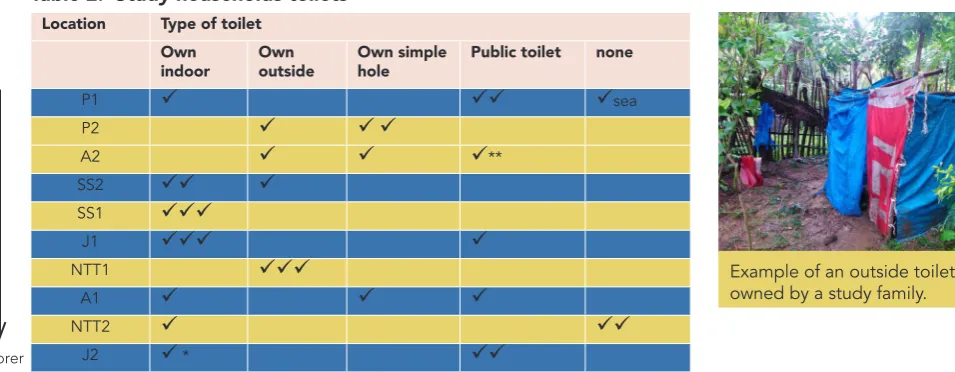
namun para peneliti menemukan hal ini sebagai masalah besar yang harus ditangani.
• Anak-anak yang hidup dalam kemiskinan hanya memiliki sedikit peluang untuk mengakses area-area yang dibangun khusus untuk berolahraga atau bermain. Ketentuan untuk hal ini dapat dimasukkan dalam program pembangunan masa depan dan diadakannya area tersebut dapat dijelaskan sebagai penggunaan Dana Desa yang baik.
• Para orang tua merasa kesulitan menghadapi tuntutan yang meningkat dan dibuat terus menerus oleh anak-anak demi mendapatkan uang saku yang sebagian besar digunakan untuk membeli makanan ringan di sekolah. Bila ditolak, ada risiko anak-anak tidak diikutsertakan dalam kelompok-kelompok sosial dan menolak untuk pergi ke sekolah. Hal ini menimbulkan saran bahwa sekolah harus lebih aktif dalam memfasilitasi penyediaan alternatif yang terjangkau (atau gratis), sehat dan dibuat secara lokal terhadap makanan ringan saat makan pagi serta makan siang.
• Regulasi yang lebih baik atas biaya sekolah sehingga sekolah-sekolah negeri dapat mengikuti bimbingan yang seragam mengenai pendaftaran dan biaya sekolah serta persyaratan mengenai akuntabilitas kepada orang tua atas semua biaya yang diminta. Pengurangan dalam jumlah seragam sekolah yang diperlukan dapat mengurangi beban pada pendapatan keluarga.
• Dorongan bagi keluarga agar menabung untuk hal pendidikan, mengambil inspirasi dari program arisan yang dipimpin seorang siswa di perkotaan Papua dan investasi yang dibuat oleh para penerima hibah lump sum di Aceh dan Papua demi memenuhi biaya pendidikan tinggi. • Selain pengakuan bahwa orang-orang
lebih memilih untuk menerima uang tunai daripada barang atau bantuan sosial dengan sistem pembelian yang terbatas,
mereka juga meminta perhatian atas kebutuhan siklus hidup (misalnya suntikan uang tambahan ketika anak-anak transisi dari sekolah dasar ke sekolah menengah atau dari sekolah menengah atas ke pendidikan tinggi dan kelahiran seorang bayi), dukungan yang memperhitungkan siklus pendapatan musiman, kebutuhan atas jumlah yang lebih besar pada awal tahun ajaran yang diikuti oleh transfer rutin bulanan (bukan kuartal) dan lebih memilih transfer yang dilakukan melalui bank daripada perantara.
• Kebutuhan untuk menyederhanakan persyaratan terkait dokumentasi untuk mengakses bantuan sosial dan mendaftar di sekolah serta bantuan untuk menanggapi persyaratan bagi keluarga dalam berbagai situasi berbeda yang tidak memiliki dokumentasi yang lengkap. • Pengakuan yang lebih besar atas nilai
pendidikan anak pada usia dini dan peningkatan akses yang termasuk regulasi atas biaya terkait fasilitas yang disediakan oleh pihak swasta.
• Menyadari akan akses TV yang luas serta pengaruh TV dan menggunakan hal ini untuk menyebarkan informasi tentang hak atas bantuan sosial, prosedur, manajemen keuangan rumah tangga, gaya hidup dan perubahan perilaku melalui penggunaan budaya populer.
• Pergeseran dari pandangan sempit bahwa bantuan pendidikan hanya berlaku terhadap biaya seragam, biaya sekolah dan perlengkapan sekolah agar dapat mencakup penyediaan uang tunai yang diperlukan anak-anak untuk ikut serta dalam kegiatan belajar, rekreasi serta kehidupan sosial sekolah.
RCA+ REPORT ON CHILD POVERTY AND SOCIAL PROTECTION xiii
SUMMARY
This report presents the main indings of
the Reality Check Approach (RCA) study conducted in October 2016 to gather insights into the perspectives and experiences of children and their families about child poverty and social protection. The study was commissioned by UNICEF and aims to assist UNICEF and the Government of Indonesia (GOI) in exploring options for strengthening the social protection system. The study
speciically explores and provides a deeper
understanding of children’s experience of poverty and their experience of the current nationwide and district-run cash transfer programmes. The RCA is an internationally recognised qualitative research approach to try to understand context, people’s aspirations and behaviours and their day to day lives through their lenses. It involves researchers staying in people’s own homes for several days and nights and using this opportunity to ‘hang out’ and interact informally through relaxed, trusted exchanges and conversations. It also provides researchers with exceptional opportunities for triangulation because they
experience irst–hand and observe daily life
and relations which augment the credibility
of indings.
The study was conducted in ten districts
in ive provinces. These were purposefully selected in consultation with UNICEF to include geographically diverse locations representing both urban and rural contexts, ethnic and religious diversity and diverse main livelihoods. To ensure that the study locations characterised those which can be considered more deprived, proxy indicators including high school drop-out rates were used in selecting particular locations. Some
locations were speciically selected in order
to gather insights into district-run cash transfer programmes (rural Aceh, rural Papua and Jakarta).
The study team stayed with a total of 32 families and had detailed conversations and interactions with a total of 1,810 people (964 men and boys, 846 women and girls).
Speciically they interacted with 824 children
(460 boys, 364 girls), over 90 of these were members of the families we lived with.
As far as possible indings are presented
from the perspective of children and their parents or relatives themselves and efforts have been made to avoid overlaying researcher interpretation. The themes are presented through the lens of people and emphasis given to what people thought was important. Where researcher observation or interpretation is provided this is made explicit in the text.
The most common differentiator used by people to determine who is a child is whether or not they are still in full time education. Leaving school/college signals the need to work and parents and children alike see adulthood as taking responsibility for oneself through working. Physical changes are also key and for girls the determinant is menstruation which marks the time they are considered to be young women and when they are expected to help their mothers with cooking or taking care of younger siblings. For boys, increases in height and strength at puberty means they can be expected to
help with work such as farming and ishing.
and being married are also indicators of adulthood at any age.
People living in poverty in this study use a variety of terms to describe themselves including the most common ‘miskin’ (poor). Other terms include ‘orang susah’ (people
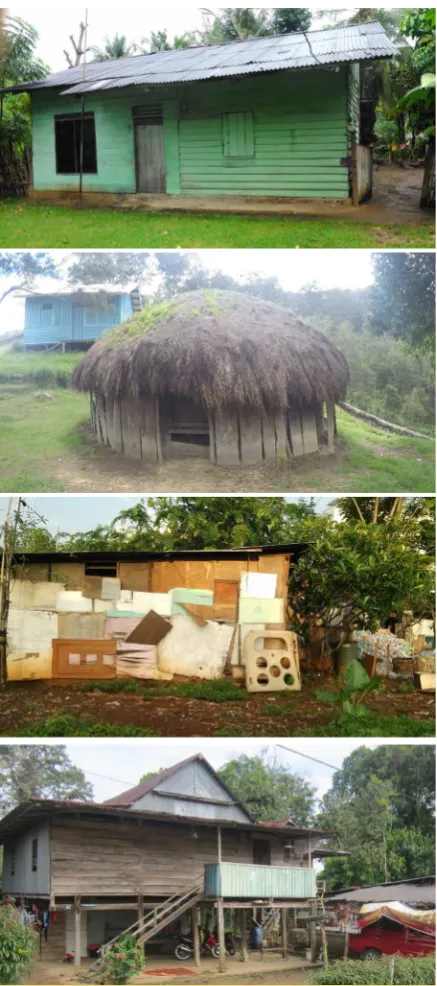
living in dificulty), ‘nggak punya’ (not having things), ‘kurang mampu’ (not able), ‘orang kampung’ (village/rural people) and ‘sederhana’ (simple). Children share similar views of what is being poor to their parents but often couch explanations in terms of minimum needs ‘as long as….. then you are not poor’. The following explanations of what being poor means to children are presented in order of those most frequently shared; being poor is… (i) not having cash (mainly to be able to buy snacks/have pocket money); (ii) not feeling full (feeling hungry); (iii) what sort of work my parents do (especially regularity of income and diversity of income sources); (iv) what kind of house I live in (size, materials and whether it is permanent or not, rented or owned as well as the stigma sometimes attached to living in illegal settlements and more rarely whether it has a toilet or not); (v) not being able to pay for school (not an issue at primary school but
increasingly dificult at high school); (vi) ‘not having stuff’ (in particular, not having phones, TV, motorbikes).
Children often ind it easier to explain poverty
when comparing themselves to others. But where they live in communities which are more homogenous they say they do not feel poor ‘because everyone is like us’. They also point to those who receive social assistance as poor. Adults note additional indicators suggesting sometimes that only lazy people are poor and that their experience of poverty is temporal depending on family life cycles, seasonality and family crises - a nuanced view not mentioned by children.
Poverty is also about living in relatively deprived areas. The two NTT study locations suffer from poor road access to their respective district capitals, one of which is impassable in the rainy season. One has no electricity (NTT1) and the other has limited evening connection only (NTT2). The rural Papua study location while less poor in many aspects than other study locations has no electricity and access to the district capital is via a dirt road.
People feel that access to education facilities has improved and nearly all the primary school children in this study not only attend school but live within 15 minutes walk from school (the only exceptions were in rural Papua and NTT study locations where children had longer walks). However access to high
school may be more dificult especially in the
rural Papua and NTT study locations where high school students had a two hour walk to school (Papua), had to board in the main town (NTT1) or had to hitch perilous truck rides to get to school (NTT2). The main barrier to
access to education was identiied by people
as the costs of high school while completion of primary education has become a norm and ‘manageable’. High school registration fees range from IDR 0.5-6 million but parents and students shared that the need for multiple uniforms in particular which can cost up to IDR 1 million/year was a particular burden. They also shared concerns about the ‘never-ending demands’ made by schools for cash for various services and unaccounted for ‘extras’. Early childhood education is mostly private and parents in this study felt it was costly and unnecessary so mostly did not send their children to early childhood education centre (PAUD) or kindergarten (TK).
Like access to primary education, access to primary healthcare, people share, has improved and most families in this study lived within easy access of primary healthcare facilities except in the remote NTT study location where the nearest puskesmas
(Health Clinic) was a one hour motorbike ride away on a poor road. All the study locations had active posyandu (mother/child monthly clinics) and people shared that they accessed and appreciated these. Most study families have subsidized national health insurance but some felt that the downside of increased health insurance coverage was queues in health facilities, especially in urban areas, and the increasing experience of cursory and swift consultations.
Apart from both NTT locations and rural Papua, people felt that banks were ‘not far’
RCA+ REPORT ON CHILD POVERTY AND SOCIAL PROTECTION xv
payments and is not used for savings or day to day transactions. Most families in the study lived within 15 minutes motorbike drive from ATMs.
Increasing requirements for documentation, for example to enrol in school and to be eligible for various social assistance programmes are especially challenging for some families. Those squatting illegally, those who have moved from district to district, those who experienced home births and members of fragmented families face particular problems in accumulating the necessary documentation for the issuance of
birth certiicates, ID and Family Cards which
then impacts on their ability to access social assistance and health insurance. While some
shared that village oficials and others can
be helpful, others experienced frustrations and requests for bribes which led to them abandoning the process.
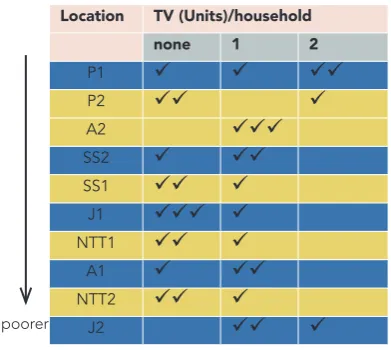
More than half of the study families have their own TVs and the others have regular access to TV and spend considerable time watching, with many children watching late into the evening. Parents share that they feel
that TV has a key inluence on their children’s
lives. Every study family owned at least one mobile phone and some study families owned as many as seven. Children aspire to having their own and see this as an important asset to enable them to participate in social interactions, social media and increasingly in school assignments requiring access to the internet.
This and other RCA studies highlight the problem of an accelerating rate of construction which is encroaching on open play spaces. Only four of the study locations have designated purpose-built sports or play areas and three of these are in urban areas.
Otherwise children play in ields, beaches
and in rivers and ponds but the usability is often constrained by seasonal access.
Given children’s emphasis on having cash as an indication of doing well, it is unsurprising that their aspirations are for regular jobs and most share they do not want to be farmers,
ishermen or petty traders like their parents.
But accessing regular employment requires educational attainment, networks and, often,
bribes. A signiicant number of young people
shared their aspirations for tertiary education
but costs were often regarded as prohibitive. Others were ambivalent about the advantages citing graduates who remained unemployed and with families burdened by debt. Vocational education was often viewed as a better route to secure employment. Children shared that poor communities lack role models and this hindered seeking new opportunities and widening horizons. Parents let children decide for themselves about their futures and are content to aspire for their happiness and for them to ‘pursue their dreams’ but rue their inability
to inancially support this. This leads them
to making investment choices between their children and favouring those with perceived potential, irrespective of gender. Although children have ardent ambitions, observations suggest that they rarely apply themselves academically, very rarely study outside of school and see school mostly in terms of social interaction.
Children shared what they like to do most which is (in some sort of priority order); (i) taking snacks with friends (happens everywhere except remote rural areas) and is an activity children do not want to be excluded from; (ii) watching TV (everyday, if possible, and for some up to 8 hours at weekends); (iii) using mobile phones (mostly to play games but also to listen to downloaded music or to watch
videos); (iv) internet suring (at internet cafés,
with friends with smartphones or laptops); (v) smoking (a key social activity among teen boys, sometimes starting as young as 8 years old); (vi) drinking alcohol among teen boys (in the NTT and Papua study locations mostly); (vii) earning their own money (to service their own consumption needs such as snacks, recreation, phone credit and sometimes clothes and cosmetics) and; (viii) going to school (because it is an important opportunity to be with friends).
They also shared what they least like doing and these included (again in some sort of priority order);. (i) doing chores (although few children are expected to do this, many refuse when asked and parents are rather lenient although a few said they felt burdened by chores); (ii) looking after younger siblings (especially expected of eldest daughters); (iii) going to school (especially without snack money, those who have little help with school
or boring, at times when they are expected to do chores at school and for some because they ‘don’t feel like it’) and; (iv) doing homework (rarely given and even more rarely undertaken).
Given that children often have few chores and rarely have homework much of their typical days are spent with friends. The emphasis on play and friendship with peers permeates all the lives of the children in this study. Children actively seek inclusion into peer groups and this is strongly correlated, they feel, with their ability to buy snacks together, share cigarettes, spend time on mobile phones or
in internet cafés, watch TV together, have
the equipment needed for sports clubs or hanging around with motorbikes. Their peer friendships are very important and children tell us this is what makes them happy.
Most of the ninety nine study family children live with both their parents but about one in
ive live with only one parent or with other
relatives because of the death of a parent or marriage break-up. A few had been sent to live with other relatives because their parents could not afford to keep them at home. Some older children shared that they chose to live apart from their parents. Children mostly shared that they feel secure because they have strong relations with their families. Girls told us they feel strong bonds with their mothers while boys felt closer to their fathers though many children told us they felt close to both parents. They shared that they
would go to parents irst if they had problems
at school or needed advice. Children also shared they feel secure because they have good relations with neighbours. These diverse strong relationships are especially important when families face break-up. Parents happily admit to favouritism towards their youngest children and are overt in their preference for their children who are more helpful or do well in school. While they share that they do not make education investment distinctions between their sons and daughters, they tell us they are more protective of their daughters.
As also highlighted in the RCA Household Finance Study (2016) which covered 11 provinces in Indonesia, families need cash to pay for a wide range of day to day and monthly expenses (e.g. pocket money,
electricity, water supply, fuel for motorbikes, rent, mobile phones and credit repayment) and periodic costs (e.g. education, wedding, funerals). Household cash expenditure varies considerably depending on the context and ranged from about IDR 1.3 million per month in remote rural locations in NTT and S Sulawesi to IDR 5.35 million per month in the urban
locations in Papua, relecting differences in
rural/urban contexts and families’ disposable cash income.
Typically between 15-30% of routine monthly expenditure is used to support their children’s day to day costs comprising pocket money, phone credit and transport costs but is actually much more when the periodic costs of school registration and uniforms are included. Additional transport, accommodation and living costs are also incurred for families living far from high schools (especially in the NTT study locations). This and previous RCA studies have indicated that there are two periods in the family life cycle where families feel particularly cash-strapped; when children transition from primary to high school and when there is a new baby. Exclusive breastfeeding is rare and families expect to have to pay for milk
powder and say they make sacriices on other
family expenses to be able to do this. Where families have family and good neighbour networks providing child care, mothers can often continue to work but families without this, people tell us, often struggle at this time. Families reliant on seasonal work such
as farming and ishing increasingly search for
additional employment in the lean months
but feel they would beneit from assistance
schemes aligned to their seasonal incomes. All the study families received some form of social assistance. As highlighted also in the 2015 RCA studies on Social Assistance many people shared that they are confused by the variety of social assistance programmes and what seems to be constant changes in these arrangements. Eligibility criteria remain unclear and are sources of dissatisfaction as is the lack of transparency about disbursement amounts, service fees and other ‘at source’ deductions. Eligibility criteria for Program Keluarga Harapan (PKH) is felt to be particularly unclear. People continue to
complain that beneiciaries are often
RCA+ REPORT ON CHILD POVERTY AND SOCIAL PROTECTION xvii
with the Village Administration, especially the Village Head. Some schools continue to intervene in the education cash transfer
programmes so that the beneits are spread
more equally through rota schemes or reduced individual disbursements. As also found in the 2015 RCA study, for most families we lived with the national social assistance cash transfer programmes contribute only between 6-12% monthly household income at best whereas in the study locations where local social assistance programmes are operating (rural Aceh, rural Papua and Jakarta) the transfers are much higher and represent between 25-50% of household income.
People shared that lump sum payments at critical times such as the beginning of the school year are helpful and would prefer regular monthly payments of the balance
so that they can plan their cash low better.
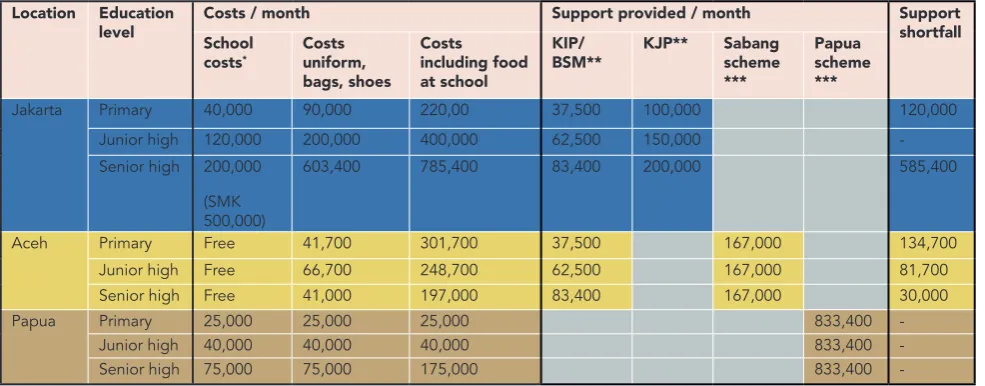
While appreciating the larger sums of money provided by the Jakarta education cash transfers (KJP), people complained about the
documentation required (birth certiicates, ID
cards and Family cards) to get included in the scheme which, as mentioned above, can be problematic for some families. They also complained about the restrictions on what can be purchased indicating that it did not necessarily cover their most pressing needs. Parents share that they are in a better position to know what to prioritise for their children. The IDR 2 million grants for all school children in Sabang are particularly appreciated, especially as these are supplementary to, rather than replacement of, other grants. In the rural Papua study location, the district have piloted four different district social assistance programmes between 2012-2016, but many people were not aware of the variety of programmes or that three of them had stopped operating. People instead told us that every household receives what they refer to as the ‘village funds’ although the amount people received varied. People
shared it made a signiicant difference
and appreciated it for being for everyone (universal) and non-discriminatory. Only a few
families shared they had directly beneited
from some more targeted assistance programmes. Where lump sum payments are made, people shared how they could use these to invest in savings endeavours
(livestock rearing, ishing) to build capital for
their children’s future education costs.
In addition to national and local government schemes, grants and other support are provided by non-government organisations, faith based groups, foundations and private sector corporate social responsibility
initiatives. Whilst these may help to ill
gaps when people have missed out on
oficial support, perhaps through lack
of documentation, people again often complained about the lack of information about the schemes and the lack of
transparency in the beneiciary selection
process. There are, however, examples of schemes which provide good information which are much appreciated by people such as in the rural Aceh study location where details of assistance programmes are posted on the outside walls of coffee shops, which are village hubs where people of all ages gather to hang out and chat. In Papua some of these non-government assistance schemes operate positive discrimination for indigenous Papuans but this can result in incomers, also living in poverty, feeling discriminated against.
The report concludes with a number of study implications summarised as follows;
• Children living in poverty have aspirations to do better than their parents and especially to earn cash incomes particularly in waged or salaried employment. Yet the lack of role models, weak application to study and limited networks constrain these aspirations and suggest a role for after school study programmes, especially run by those who can inspire as role models.
• Families do not prioritise sanitation but researchers found that this is a major issue to be addressed.
• Children living in poverty have few opportunities to access purpose-built sports or play areas and provisions could be made in future construction programmes and can be encouraged as a good use of Village Funds (Dana Desa). • Parents struggle with continuous and
to go to school. This raises the suggestion that schools should be more active in facilitating provision of affordable (or free) healthy, locally sourced alternatives to snacks at breakfast and lunch.
• Better regulation of school costs so that state schools follow uniform guidance regarding registration and tuition fees as well as requirements for accountability to parents for all charges made. Reduction in the number of school uniforms required to reduce this burden on family income. • Encouragement for families for savings
for education, taking inspiration from the child-led arisan programme in urban Papua and investments being made by recipients of lump sum grants in Aceh and Papua to support higher education costs .
• In addition to recognition that people prefer cash to in-kind or restricted purchase social assistance, they also call for a response to life cycle needs (e.g extra cash injections when children transition from primary to high school or from high school to tertiary education and on the birth of new babies), need support that takes into account seasonal income ups and downs, need larger amounts at the start of the school year followed by regular monthly (rather than quarterly) transfers and prefer transfers to be made through banks rather than intermediaries. • Need for simpliied requirements for
documentation to access social assistance and enrol in school as well as assistance with navigating these requirements for families in a range of different situations where documentation is lacking.
• Greater recognition of the value of early childhood education and improved access including regulation of the costs of private provision.
• Recognising the wide access to and
inluence of TV and exploiting this
to disseminate information on social assistance entitlements, procedures,
family inancial management, lifestyle
and behaviour change through the use of popular culture.
• A shift from the narrow view of education
RCA+ REPORT ON CHILD POVERTY AND SOCIAL PROTECTION xix
This report presents the main indings of the Reality Check Approach (RCA) study which was conducted in October 2016 and designed to gather insights into the perspectives and experiences of children and their families about child poverty and social protection. The study was commissioned by UNICEF as part of its two year strategy to develop a comprehensive evidence-based strategy to address child poverty and social protection. The in-depth qualitative indings from this study provide rich evidence to complement other research being conducted by UNICEF on iscal space analysis and modelling alternative policy options. This study aims to assist UNICEF and the Government of Indonesia (GOI) in exploring options for strengthening the social protection system.
1. INTRODUCTION
Child poverty rates in Indonesia have been decreasing although the number and percentage of children and families living in poverty are still not meeting targets set by GOI. The disparity of poverty rates between rural and urban areas, the cycle of poverty and the multidimensional aspects of deprivation lead to a high degree of complexity in understanding child poverty in the country. The GOI poverty reduction agenda has an explicit focus on child poverty reduction. The 2002 Child Protection Law, which was revised in 2014, requires the consideration of both the mental and physical needs of children. The Government aims to improve aspects of children’s lives including education, health and social protection. This includes provision of various cash transfer programmes, subsidies and support to income generating activities for their families. Programmes
which have speciically targeted children
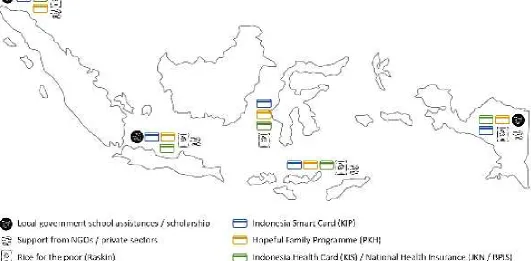
living in poverty include the nationwide schemes Program Keluarga Harapan (PKH)
–Hopeful Family Programme, and Bantuan Siswa Miskin (BSM) –Poor Student Assistance
now being replaced by the Kartu Indonesia Pintar (KIP).
Indonesia’s decentralized government structure along with the presence of individual district-run social protection schemes means there are often parallel programmes which may not be well coordinated or well integrated with other services. Previous RCA+ studies have found that many people are not aware of the differences between different social protection programmes, including their reasons for being included/excluded
and the intended beneits from participating.
The GOI recognises that the current cash transfer programmes are not as effective as they should be in reducing child poverty and would like to explore alternative policy options for strengthening the social protection system. A deeper understanding of children and their families’ views and experiences of
poverty and what they would ind helpful
to address the challenges they are facing is intended to provide the evidence to design relevant child-centred social assistance
programmes. Speciically, this study explores
and provides a deeper understanding of children’s experiences of poverty and their experience of the current nationwide and district-run cash transfer programmes.
Structure of this Report
This report begins with an overview of the RCA methodology, including adaptations made for this study as well as study limitations.
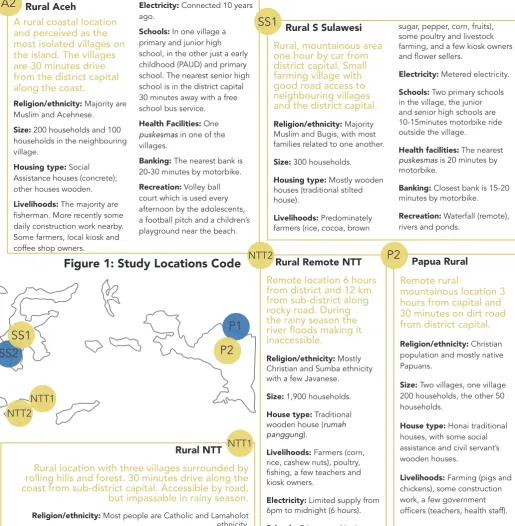
The indings section begins with an overview
of the study locations and an attempt to rank them in terms of relative poverty in order to
help the reader contextualise the indings.
These rankings are used in all the subsequent
tables. The indings then cover people’s
views on who is a child and what it is to be poor from their perspective. The following section documents the public poverty of the study locations looking at provision of education services, health services, banking, administrative services, communications technology provision and recreation facility provision. The subsequent section covers children’s views of what it is like to be a
child these days, speciically examining their
dreams and aspirations, what they like and dislike doing, typical daily routines and their
relationships. The inal sections focus on the
money required for children and families’ experience of social assistance programmes. The last section of the report provides study
implications, intended to fuel relection on the indings in terms of possible programme
and policy interventions.
1.1Methodology
The Reality Check Approach (RCA) is a qualitative research approach involving trained and experienced researchers staying in people’s homes for several days and nights, joining in their everyday lives and chatting informally with all members of the family, their neighbours and others they come into contact with. This relaxed approach ensures that power distances between researcher and study participants are diminished and provides the enabling conditions for rich insights into people’s context and reality to emerge. By building on conversations, having multiple conversations with different people and having opportunities for direct
experience and observation, conidence in
the insights gathered is enhanced compared to many other qualitative research methods. RCA is often used to understand longitudinal change through staying with the same people at approximately the same time each year over a period of several years.
RCA+ REPORT ON CHILD POVERTY AND SOCIAL PROTECTION 3
to research. Firstly, it is not theory-based so that there are no preconceived research frameworks or research questions. This is deliberate as the approach seeks to enable emic (insider) perspectives to emerge and to limit etic (outsider) interpretation or validation. The premise for researchers is one of learning directly from people themselves. Secondly, RCA is always carried out in teams in order to minimise researcher bias and to optimise opportunities for triangulation. Thirdly, and importantly, RCA teams are independent and make this explicit with the people who participate in the study. Our objective is to ensure that the views, perspectives and experiences of people are respectfully conveyed to policy and programme stakeholders. The researchers become a conduit rather than an intermediary. This is why RCA studies do not provide recommendations but promote the idea of sharing implications, which are grounded in what people themselves share and show us. The approach builds on and extends the tradition of listening studies (see Salmen 1998 and Anderson, Brown and Jean 20121) and beneiciary assessments (see SDC 20132)
by combining elements of these approaches with researchers actually living with people and sharing their everyday lives in context. RCA is sometimes likened to a ‘light touch’ participant observation. But while it is similar in that it requires participation in everyday life within people’s own environments, it differs by being comparatively quick and placing more emphasis on informal, relaxed and insightful conversations rather than on observing behaviour and the complexities of relationships. It also differs by deriving credibility through multiple interactions in multiple locations and collective pooling of
uniltered insights so that emic perspectives
are always privileged.
Important characteristics of the RCA are:
• Living with rather than visiting (thereby meeting families/people in their own
1 Salmen, Lawrence F 1998 ‘Towards a Listening Bank: Review
of best Practices and Eficacy of Beneiciary Assessments’
Social Development Papers 23, Washington World Bank; Anderson, Mary B, Dayna Brown, Isabella Jean 2012 ‘Time to Listen: Hearing People on the Receiving end of International Aid, Cambridge MA: CDA.
2 SDC; Shutt, Cathy and Laurent Ruedin 2013 ‘SDC
How-to-Note Beneiciary Assessment’; Berne; Swiss Agency for
Development Cc-operation.
environment, understanding family/ home dynamics and how days and nights are spent);
• Having conversations rather than conducting interviews (there is no note-taking thereby putting people at ease and on an equal footing with the outsider);
• Learning rather than inding out
(suspending judgement, letting people
take the lead in deining the agenda and
what is important);
• Centring on the household and
interacting with families/people rather than users, communities or groups;
• Being experiential in that researchers themselves take part in daily activities (cooking, work, hanging out, playing) and accompany people (to school, to market, to health clinic);
• Including all members of households/ living units;
• Using private space rather than public space for disclosure (an emphasis on normal, ordinary lives);
• Accepting multiple realities rather than public consensus (gathering diversity of opinion, including ‘smaller voices’);
• Interacting in ordinary daily life
(accompanying people in their work and social interactions in their usual routines);
• Taking a cross-sectoral view, although each study has a special focus, the enquiry is situated within the context of everyday life rather than simply (and
arguably artiicially) looking at one aspect
of people’s lives;
• Understanding longitudinal change and how change happens over time.
1.2 Study locations
The study was conducted in ten districts in
ive provinces. The locations for the study
were purposefully selected based on criteria worked through in consultation with UNICEF. The following criteria were regarded as important in the purposive selection of locations:
• Location diversity ranging from remote to locations close to urban centres (in other words a range of urban, peri urban and rural areas)
• Ethnicity/religious diversity
• Areas where different livelihoods
predominate (e.g. ishing, farming, wage
labour)
• Areas where school dropout is relatively high (an intended proxy for poverty) • Areas where other development indicators
suggests a higher concentration of people living in poverty
• Areas with experiences of implementation of district- administered cash transfer programmes.
Two districts in Aceh, Papua and Jakarta were proposed by UNICEF as they have experience with universal cash transfer and/ or are interested in testing unconditional universal child grants. In addition the RCA+ team proposed further locations in S Sulawesi and East Nusa Tenggara to capture a wider view of the issues and experiences in other areas of Indonesia.
1.3 The Study Team
The study team comprised twenty one researchers, including two international researchers in the roles of team leader and co-team leader (see Annex 1). All co-team members have completed a full six day Level 1 RCA training which emphasises the good practice
of relexivity, understanding and mitigating
bias, maintaining informality and ethical considerations in conducting this kind of work as well as having participated in previous RCA studies. The researchers are predominantly young enthusiastic ‘people persons’ from a broad range of academic backgrounds including: anthropology, arts, development studies, journalism, law, political sciences, and sociology. All researchers were required to undergo Child Protection training, which was followed by a mandatory signing of Child Protection and Data Protection policies. The sub-teams were led by experienced Indonesian RCA practitioners who had also passed a Level 2 training aimed at preparing Level 1 researchers to assume a leadership
position during ieldwork.
1.4 Study Participants
Each team comprised three or four team members so that the study involved living with a total of 32 families. As well as interacting closely with neighbours of the households, the teams had further opportunistic conversations with other members of the community including local informal and formal service providers, especially teachers and health providers.
A total of 1,810 people (964 men and boys, 846 women and girls) participated in this
irst round
second round
RCA+ REPORT ON CHILD POVERTY AND SOCIAL PROTECTION 5
study which included 824 children (460 boys, 364 girls), over 90 children were members of the families with which the researchers stayed. The study participants can be broadly categorised into three key types: host households (where the study team members lived), focal households (immediate neighbours of host households) and a range of other people, mostly those with whom the families have everyday interactions. The full details of the study participants can be found in Annex 3.
The team members entered communities independently on foot in order to keep the process ‘low key’. They then spent time in the communities getting to know them, being known and making their purpose clear before negotiating access to particular homes where they would stay for a minimum of four days and nights. Care was taken to ensure that people understood the nature of the RCA and the importance of staying with ordinary families and not being afforded guest status. All study households were selected by individual team members through informal discussions with people in the community in situ, e.g. at warungs (small shops or kiosks). Each household selected had a child or children of the ages which are intended to be
beneiciaries of social assistance programmes
(children under 5, primary, junior and senior high school-aged children). The selected
households were at least 15 minutes walk away from each other and, where possible, even further away to ensure that researchers had interactions with a different constellation of focal households and other community members.
Each team member discretely left a ‘gift’ for each host household on leaving, to the value of about IDR 200,000 to compensate for any costs incurred in hosting them. As team members insist that no special arrangements are made for them, they help in domestic activities and do not disturb income-earning activities, the actual costs to host families are in fact negligible. The timing of the gift is important so people do not feel they are expected to provide better food for the team members or give the impression that they are being paid for their participation.
1.5 Study Process
As noted above, RCA is not a theory-based research approach although it often generates
A child’s ‘river of life’.