The Difference of Average Mean Platelet Volume
(MPV) Values in Stable Angina Pectoris Patients
with Symptoms of Depression and without
Symptoms of Depression
Arief Wibawa1, Agus Siswanto2, Hariadi Hariawan2
1Specialty Training Program, Department of Internal Medicine, Faculty of Medicine,
Universitas Gadjah Madam Dr. Sardjito General Hospital
2The Division of Psychosomatic, Department of Internal Medicine, Faculty of Medicine,
Universitas Gadjah Mada, Dr. Sardjito General Hospital
ABSTRAK
Latar Belakang: Depresi merupakan prediktor independen kejadian kardiovaskular. Peningkatan reaktifi tas
platelet merupakan salah satu dari beberapa kemungkinan mekanisme yang diajukan untuk menerangkan hubungan antara faktor psikososial dengan penyakit jantung koroner. Mean platelet volume (MPV) merupakan indikator aktivasi platelet.MPV berhubungan dengan kejadian kardiovaskular mayor pada penyakit jantung koroner.
Tujuan : Penelitian ini bertujuan untuk mengetahui perbedaan rerata MPV pada penderita angina pektoris stabil (APS) dengan simtom depresi ndan tanpa simtom depresi.
Metode: Desain penelitian adalah studi potong lintang. Pengambilan sampel dilakukan secara berurutan dari pasien APS yang dirawat di bagian Penyakit Dalam RSUP Dr Sardjito Yogyakarta. Pengukuran MPV dan skor HAD dilakukan satu kali saat pasien masuk rumah sakit. Data disajikan dalam bentuk analisis deskriptif tentang karakteristik subjek penelitian berupa rata-rata dan simpangan baku. Korelasi antara MPV dengan simtom depresi pada APS diuji dengan Pearson’s correlation. Angka kemaknaan adalah p< 0.05.
Hasil Terdapat 40 subjek, terdiri dari 20 APS dengan simtom depresi dan 20 APS tanpa simtom depresi. Rerata kadar MPV pada penelitian ini 7,56 ± 0,95 fl . Rerata MPV pada pasien APS dengan simtom depresi sebesar 8,45
± 0,82 fl , sedangkan pada pasien APS tanpa simtom depresi sebesar 7,68 ± 0,99 fl dengan nilai p 0,009.
Kesimpulan: Pada penelitian ini terdapat perbedaan rerata MPV yang bermakna secara statistik pada pasien angina pektoris stabil dengan simtom depresi dan tanpa simtom depresi.
Kata kunci: APS, MPV, simtom depresi
ABSTRACT
Background: Depression is an independent predictor of cardiovascular events. Increased platelet reactivity is one of several possible mechanisms proposed to explain the relationship between psychosocial factors to coronary heart disease. Mean platelet volume (MPV) is an indicator of platelet activation. MPV associated with major cardiovascular events in coronary heart disease.
Objective: This study aimed to determine the average difference of mean platelet volume (MPV) in stable angina pectoris patients with symptoms of depression and without symptoms of depression.
between Stable Angina Pectoris patients with symptoms, depression and without symptoms depression assessed with Pearson's correlation. The results were considered at the signifi cance level of p <0.05.
Results: There were 40 subjects, consisting of 20 Stable Angina Pectoris patients with symptoms, depression and 20 Stable Angina Pectoris without symptoms depression. The difference average of MPV in this study was 7.56 ± 0.95 fl . Average MPV in Stable Angina Pectoris patients with symptoms depression was 8.45
± 0.82 fl and without symptoms depression was 7.68 ± 0.99 fl with p = 0.009.
Conclusion: In this study, there was a statistically signifi cant difference of average MPV values in stable
angina pectoris patients with symptoms of depression and patients without symptoms of depression.
Keywords: Stable Angina Pectoris, MPV, symptoms depression
Coronary Angioplasty in patients with stable and unstable coronary artery disease.4 In
addition a large MPV was also associated with an increased risk for heart attacks independently in patients who are known to have cardiovascular risk factors. Qualified stated that the large MPV is a major predictor of cardiovascular events in acute coronary syndromes.6
Increased platelet reactivity is one of several possible mechanisms proposed to explain the relationship between psychosocial factors with coronary heart disease. Incidence of thrombosis during stress may be mediated by stress hormones such as catecholamines. Catecholamine stimulation activates platelets through the platelet receptor ơ2. Platelet activation mediated by catecholamines is only partially inhibited by aspirin.7
To date, there was no data showing the difference of average MPV values in stable angina pectoris patients who have symptoms of depression and patients who don’t have symptoms of depression.The aim of the study was to check whether there is a difference of average MPV values in stable angina pectoris patients with symptoms of depression and patients without symptoms of depression. The hypothesis of this study was there is a difference of average MPV values in stable angina pectoris patients with symptoms of
INTRODUCTION
In cross-sectional and longitudinal studies, it was shown that depression and CAD have a two-way association. Depression is an independent risk factor of CAD and its complication, including recurrent ischemia, heart failure, and arrhythmia.1 The incidence of heart failure
could increase the incidence of depression up to 65%.2 In addition, patients with ischemia heart
disease (IHD) who had undergone coronary angiography could raise symptoms of depression and major depression disorder.1
Depression could affect patient’s habits such as smoking, compliance to the drug, and physical activities. In addition, depression also influences various physiological responses, including thrombocyte activities, autonomic nervous system disorders, and infl ammation.3
Thrombocytes activities in turn associated with its size.4 Platelets play an important role
in the formation of atherosclerotic lesions and complications. Increased platelet activity is associated with increased platelet volume. Greater platelet metabolically more active than smaller platelets and has a higher potenty for the occurrence of thrombosis.5
Mean platelet volume (MPV) is an indicator of platelet activation.5 Large MPV
depression and patients without symptoms of depression who had been hospitalized in RSUP dr. Sardjito.
METHOD
The study design was cross-sectional. The research was conducted in internal medicine department ward Dr. Sardjito Hospital, the study began in Maret 2013 to Mei 2013. Subjects were stable angina pectoris patients treated in inpatient wards in the internal medicine department Dr. Sardjito and willing to follow the course of the study as well as meet the inclusion and exclusion criteria. At the time of inspection demographic data including age, social data, body weight (kg), blood pressure, comorbid illnesses, medications taken and laboratory data were recorded. Laboratory tests performed are blood sugar levels, total cholesterol, LDL, HDL, triglycerides, platelet number and MPV.
Study inclusion criteria: hospitalized SAP patients and willing to be responsive for MPV examination. Exclusion criteria in this study are: the sample is not willing to be the subject of research for some reason, the sample had a chronic disease that is chronic renal failure, malignancy, liver cirrhosis, chronic infl ammation, severe infection/sepsis,
impaired mental/cognitive, acute stroke and acute coronary syndrome.
Informed consent is required to provide clear information about the purpose and course of study so that subjects could follow the research. The entire examination variables covered by the researcher.
Statistical data analysis in the form of mean and standard deviation (mean ±standard deviation) was done in this study. Shapiro-Wilk
test (one-sample K-S test) was done to determine data distribution. The difference of average MPV values in stable angina pectoris patients with symptoms of depression and patients without symptoms of depression was analyzed using Pearson’s correlation if the data was normally distributed or Spearman rank correlation if the data was abnormally distributed. A confi dence interval of 95% and p value <0.05
were considered statistically signifi cant.
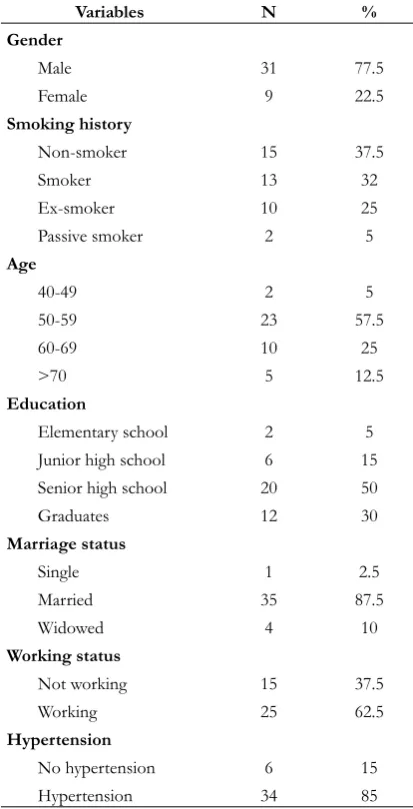
Table 1. Baseline characteristics of the subject
Passive smoker 2 5
Age
Elementary school 2 5
Junior high school 6 15 Senior high school 20 50
Graduates 12 30
Not working 15 37.5
Working 25 62.5
Hypertension
No hypertension 6 15
Hypertension 34 85
Metabolic syndrome
No MS 31 77.5
MS 9 22.5
Dyslipidemia
No Dyslipidemia 20 50
Dyslipidemia 20 50
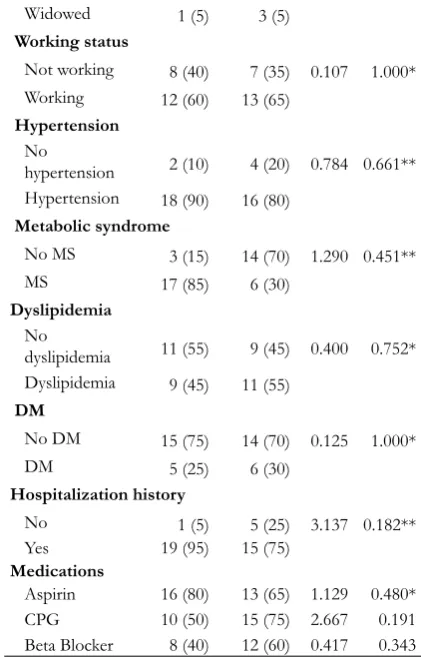
Table 2. The difference of baseline characteristics of patients with symptoms of depression and patients
without symptoms of depression
Variables
Male 16 (80) 15 (62.5) 0.143 1.000** Female 4 (20) 9 (37.5)
Smoking history
Non-smoker 5 (25) 8 (40) 3.692 0.297** Smoker 9 (45) 6 (30)
Ex-smoker 6 (30) 4 (20) Passive smoker 0 2 (10) Age
school 2 (10) 0 8.200 0.042** Junior high
school 3 (15) 3 (15) Senior high
school 6 (30) 14 (70) Graduates 9 (45) 3 (15) Marriage status
Single 1 (5) 0 2.029 0.363** Married 18 (90) 17 (85)
Table 3. The difference of mean between patients with symptoms of depression
and patients without symptom of depression
Variables N MPV CI 95% P Mean SD
Non-depression 20 7.68 ±
0.99 0.21 1.37 0.009* Depression 20 8.45 ± 0.82
Widowed 1 (5) 3 (5) Working status
Not working 8 (40) 7 (35) 0.107 1.000* Working 12 (60) 13 (65)
Hypertension No
hypertension 2 (10) 4 (20) 0.784 0.661** Hypertension 18 (90) 16 (80)
Metabolic syndrome
No MS 3 (15) 14 (70) 1.290 0.451**
MS 17 (85) 6 (30)
Dyslipidemia No
dyslipidemia 11 (55) 9 (45) 0.400 0.752* Dyslipidemia 9 (45) 11 (55)
DM
Aspirin 16 (80) 13 (65) 1.129 0.480* CPG 10 (50) 15 (75) 2.667 0.191 Beta Blocker 8 (40) 12 (60) 0.417 0.343 P<0.05. *Fisher. **Chi-square
Continued from page 29
RESULT
Table 4. Multivariate analysis of HT, HDL, and symptoms depression variables
Variables B SE Β T p
Constant 9.788 0.842 - 11.620 0.000
HT group -0.505 0.452 -0.172 -1.117 0.271
HDL group 0.004 0.007 0.527 0.527 0.602
Depression group -0.881 0.297 -2.569 -12.569 0.005
(Shapiro-Wilk test, P = 0.014). The average of MPV value in this study was 8.07 ± 0.98
fl , the average of MPV value in stable angina
patients with symptoms of depression was 8.45 ± 0.82 fl , while stable angina patients
without symptoms of depression was 7.68 ± 0.99 fl . In this study, there was a difference of
average MPV values in stable angina patients with symptoms of depression and patients without symptoms of depression with p value 0.009.
DISCUSSION
From previous studies, it has been proved that psychosocial factors were considered as a major risk factor for coronary heart disease, as with other classic risk factors such as hypertension, diabetes mellitus, smoking, obesity, and age. This was supported by a multinational study INTERHEART conducted on 29.972 patients from 52 countries, whose aim was to defi ne the effect
of classic risk factors of coronary heart disease and psychosocial factors to the incidence of acute myocardial infarction. Psychosocial stress was associated with higher adjusted relative risk for acute myocardial infarction, compared with hypertension, abdominal obesity, diabetes, and other classic risk factors.8
Stress, either physically or mentally, is one of risk factors for coronary heart disease. Nowadays, working environment has become the main cause of stress.9 In addition, stress
also triggers cardiovascular response by releasing catecholamine which increases heart beat and results in vasoconstriction.10 Both
anxiety and depression is of an important predictor for coronary heart disease.11
Depression is also a condition that has been known to hasten the progression of cardiovascular disease. Platelet has a similar feature with central nervous system in terms of serotonin uptake, metabolism, and storage. The similarity between platelets and central ner vous system, along with the central role of platelets in the pathophysiology of cardiovascular disease, has become the main reason on why patients with depression have relatively high cardiovascular risk.12
Platelet size measured as mean platelet volume (MPV), a marker of platelet function and is associated with platelet activity. The increased platelet MPV is an indicator of a bigger and more active, associated with myocardial damage in acute coronary syndromes and is a predictive factor in myocardial infarction10. Increased platelet reactivity is one of several possible mechanisms proposed to explain the relationship between psychosocial factors to coronary heart disease. The incidence of thrombosis during stress may be mediated by stress hormones such as catecholamines. Catecholamines activates platelets through stimulation of α2 receptors platelet.7
events associated with depression. After the early detection it is necessary to have appropriate intervention in this regard include more intensive antiplatelet therapy that is directly aimed in the mechanisms of platelet reactivity and behavioral interventions also include activity can reduce anxiety and improve event-free survival in patients with coronary heart disease, as well as overall stress management can reduce risk by improving the psychosocial well together event-free survival and emotional stress that leads to myocardial ischemia. It is expected to reduce the level of depression symptoms may improve platelet activity or improve cardiovascular outcomes.
CONCLUSION
In this study, there was a statistically signifi cant difference of average mean platelet
volume (MPV) value between MPV values in stable angina pectoris patients with symptoms of depression and patients without symptoms of depression. Further study is needed in order to deeply understand the correlation between depression symptoms and mean platelet volume (MPV) in cardiovascular patients. Psychosocial factors should be included in clinical evaluation of cardiac patients.
REFERENCES
1. Yoon S.G., Jung M.E. and Her S.H., 2011. Effect of Percutaneous Coronary Intervention on Depressive Mood in Elderly Patients, Journal Korean Geritr Soc; 15(2) J: 107-108
2. Januzzi S.C., Stein T.A., and Pasternak R.C., 2000. The Infl uence of Anxiety and
Depression on Outcome of Patients with
Coronary Artery Disease, Arch Intern Med; Vol. 160(10): 1915-1916
3. Lett,H.S., James A., Blumenthal, Michael A. Babyak, and Andrew S., 2004. Depression as a Risk Factor for Coronary Artery Disease: Evidence,Mechanisms, and Treatment, Journal Psychosomatic Medicine; 66: 305 (abstract)
4. Yang A., Pizzuli L., and Luderitz R., 2006. Mean platelet volume as a marker of restenosis after percutaneous transluminal coronary angioplasty in patients with stable and unstable angina pectoris, Thrombosis research; 117: 371-377
5. Aşikar K., Association between mean platelet volume and coronary artery calcification in patients without overt cardiovascular disease: an observational study (Anadolu Kardiyol Derg 2012; 12: 35-9). 6. Mumpuni, H. 2011. Hubungan Mean
Platelet Volume (MPV) dengan Kejadian Kardiovaskular Mayor pada Penderita Sindroma Koroner Akut Selama Perawatan di Rumah Sakit.Tesis.Universitas Gadjah Mada Yogyakarta.
7. Larsson PT, Wallen NH, Hjemdahl P, 1993). Norepinephrine induced human platelet activation in vivo is only partly counteracted by aspirin.Circulation 1994; 89: 1951-7.
8. Yusuf S, Hawkin S, Ounpuu S, et al, 2004, Effect of potentially modifi able risk factors
associated with myocardial infarction in 52 countries (the INTERHEART study): case-control study. Lancet. 2004; 364:937– 952. [PubMed: 15364185]
10. Long B.C., 1996. Medical and Surgical Nursing–A nursing process approach, The C.V Mosby Company St. Louis, USA. 11. Burg M.M., Stress Behavior and Heart Disease,
www.med.yale.edu/library/heartbk/8pdf