Informasi Dokumen
- Penulis:
- Asep
- Supriadi
- S.Kom
- M.Kom
- Sekolah: Universitas Pendidikan Indonesia
- Mata Pelajaran: Manajemen Informatika
- Topik: Sistem Informasi Pelayanan Pasien Di Puskesmas Lembang
- Tipe: Skripsi
- Tahun: 2010
- Kota: Bandung
Ringkasan Dokumen
I. Background of the Research
This section establishes the context for the research by highlighting the challenges faced by the Lembang Public Health Center (Puskesmas Lembang) due to its manual patient service system. The high daily patient volume leads to inefficiencies in data retrieval, medication record-keeping, and visit summaries. The research aims to understand the existing system, design a new one, test it, and implement it, ultimately improving patient services and providing valuable insights for staff and future researchers. This section effectively sets the stage, explaining the problem and justifying the need for a new information system. The academic value lies in demonstrating the practical application of information systems to address real-world issues in healthcare.
1.1. Research Background
This subsection details the current state of information and communication technology (ICT) in healthcare and its potential for improving organizational efficiency. It emphasizes the increasing importance of ICT in the health sector, especially in primary healthcare settings like Puskesmas. The context of Puskesmas Lembang is established, including its services and the challenges posed by manual data management. Specific problems such as time-consuming data searches, data redundancy, and inaccurate medication records are identified, underscoring the need for an improved system. The use of a table to present patient visit data adds quantitative support to the qualitative description of the problem, strengthening the justification for the research. This section showcases the relevance of ICT solutions in solving real-world healthcare problems; a valuable lesson in applied research.
1.2. Problem Identification and Formulation
This section clearly identifies five key problems stemming from the manual system: difficulties in patient data retrieval, redundant data entry leading to excessive paperwork, inefficient patient follow-up due to lost or damaged records, inaccurate medication usage tracking, and delays in report generation. These problems are then converted into focused research questions: how the current system operates, the design of a new information system, its testing, and its implementation. The well-defined problems and research questions demonstrate a strong foundation for a structured research approach. This subsection highlights the importance of clear problem definition and the formulation of focused research questions, essential skills for conducting robust academic research.
1.3. Purpose and Objectives of the Research
This subsection clarifies the research's purpose: to develop an information system to support health services and improve patient data management at Puskesmas Lembang. Four specific objectives are outlined: understanding the existing patient service process, designing the new system, testing it, and implementing it. The clear articulation of purpose and objectives provides a framework for evaluating the research's success. This exemplifies a crucial step in research design: defining clear, measurable, achievable, relevant, and time-bound (SMART) objectives. This section offers a valuable pedagogical example of planning and structuring research.
1.4. Usefulness of the Research
This section divides the research's benefits into practical and academic contributions. Practical uses include providing the Health Department with insights for system development, improving patient services at Puskesmas Lembang, streamlining staff workflow, and enhancing the patient experience. Academically, the study offers a comparison between management theory and real-world practice, providing insights for future researchers and contributing to the field of information management. This dual approach highlights the importance of research that combines practical impact with theoretical contributions. This subsection demonstrates the significance of research that bridges the gap between theory and practice and benefits multiple stakeholders.
1.5. Research Limitations
This section explicitly states the limitations of the research scope to avoid overgeneralization. It outlines specific constraints regarding the types of patient services covered, data included, medication tracking, and the exclusion of other integrated systems. These limitations are essential for maintaining research integrity. Defining these boundaries is crucial for establishing the scope and validity of the findings. It teaches students the importance of transparency and realistic scope in research design.
1.6. Research Location and Time
This section specifies the location of the research (Puskesmas Lembang) and the timeframe (approximately two months). A table outlining the research schedule with timelines for each phase provides an important element of project management. This concise section provides essential contextual information for the reader, emphasizing the importance of clear documentation of research parameters. This is a good example of transparency and methodological rigor in research reporting.
II. Basic Concepts
This section lays the theoretical foundation for the research, introducing key concepts related to systems, information, information systems, application architecture, and the software used. It demonstrates a thorough understanding of relevant theories and their application to the research problem. The academic value stems from the clear exposition of fundamental concepts necessary for developing and evaluating information systems.
2.1. Basic System Concepts
This subsection defines a system, outlining its characteristics (components, boundaries, environment, connectors, input, output, processing, and objectives) and classifications (abstract vs. physical, natural vs. man-made, deterministic vs. probabilistic, closed vs. open). Definitions from relevant authors are cited, demonstrating proper academic referencing. This foundational discussion provides a solid theoretical base for understanding the information system being developed. This offers a robust overview of systems theory, equipping students with the fundamental concepts necessary for systems analysis and design.
2.2. Basic Information Concepts
This subsection defines information and its qualities (accuracy, relevance, and timeliness), emphasizing the value of information based on its cost-benefit ratio and effectiveness. It explains the difference between data and information, which is crucial for understanding the data processing aspect of the research. This section demonstrates a clear understanding of the core concepts of information management, vital for anyone studying information systems. The discussion on the value of information is particularly important for understanding resource allocation in system design.
2.3. Information System Definition
This subsection defines an information system within an organizational context, encompassing transaction processing, operational support, managerial activities, strategic planning, and external reporting. It describes the five components of an information system: hardware, software, brainware (people), data, and procedures. A visual representation would further enhance understanding. This section emphasizes the interconnected nature of components in an information system and their combined function. The inclusion of the five components provides a practical framework for designing and implementing information systems.
2.4. Application Architecture
This subsection covers computer networks, including their types (LAN, MAN, WAN, GAN), topologies (bus, star, ring, tree), and benefits (resource sharing, high reliability, cost savings). It lays the groundwork for understanding the client-server model, the chosen architecture for the proposed system. The detailed discussion of network topologies and their characteristics is important for understanding system design choices. The explanation of various network types and their relative benefits provides valuable insight into selecting an appropriate network infrastructure.
2.5. Client-Server Model
This section explains the client-server model, highlighting its advantages (centralized system, scalability, flexibility, easy integration of new technologies) and disadvantages (high initial investment, dependence on server functionality). This is a crucial discussion as this model forms the basis for the proposed system’s architecture. Understanding the trade-offs of this architectural choice is essential. The discussion of advantages and disadvantages encourages critical thinking about selecting appropriate technologies.
2.6. Supporting Software
This section provides a brief overview of Visual Basic 6.0 (VB6) and MySQL Server 5.0, the chosen programming language and database system. The descriptions include their capabilities and functionalities, justifying their selection for the research. This section provides necessary technical details and demonstrates appropriate justification for technology choices. This section shows the importance of selecting appropriate tools for research and development, a crucial aspect of practical research.
2.7. Definition of Service
This subsection defines services as the provision of public goods and services by government institutions to meet societal needs. It differentiates between services provided by private and public organizations, distinguishing between primary and secondary public services and using the Puskesmas as an example of a secondary public service provider. This section helps define the context of the healthcare services offered by Puskesmas Lembang, showing the broader governmental framework. The nuanced distinction between service types adds depth and context to the research.
2.8. Definition of Patient
This section provides a concise definition of a patient as an individual receiving medical care, often due to illness or injury, requiring assistance from healthcare professionals. This simple yet crucial definition ensures clarity and understanding. This straightforward definition ensures that the target group for the information system is clearly defined.
2.9. Definition of Puskesmas
This subsection defines a Puskesmas (Public Health Center) as a primary healthcare unit responsible for integrated health promotion, prevention, and disease management within its designated area. This contextual definition establishes the research setting and clarifies the role of a Puskesmas within the Indonesian healthcare system. This definition of the central research site is essential to understand the organizational context and the research scope.
III. Research Methodology
This section details the research design and data collection methods. The choice of a qualitative descriptive approach, using observation and interviews for primary data and documents for secondary data, is justified. The use of the Waterfall methodology for system development is also explained. The academic value lies in the clear and systematic description of the research methods and their appropriateness for the research questions.
3.1. Research Object
This subsection specifies the focus of the research within Puskesmas Lembang, concentrating on patient registration, general and dental examinations, medication dispensing, and administrative functions. This clearly defines the scope of the system to be developed. This section provides a focused definition of the scope and target area of the research.
3.1.1. Brief History of Puskesmas in Indonesia
This subsection provides background on the history and function of Puskesmas in Indonesia, highlighting its role in primary healthcare and community participation. This contextual information helps the reader understand the larger context of the research. This section provides crucial background on the institutional setting of the research, showing its broader societal and governmental role.
3.1.2. Vision and Mission of Puskesmas Lembang
This subsection presents the vision and mission statements of Puskesmas Lembang, outlining its goals and objectives. This helps to contextualize the research objectives within the organizational goals. This section aligns the research goals with the organizational aspirations, demonstrating relevance and practical application.
3.1.3. Organizational Structure
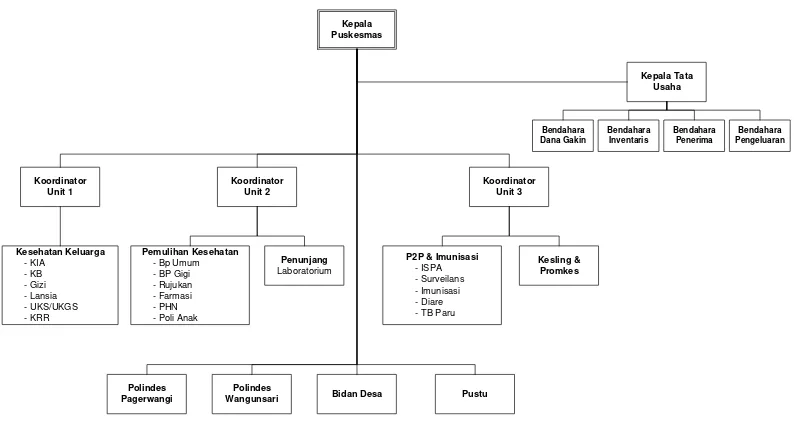
This subsection illustrates the organizational chart of Puskesmas Lembang, showing the hierarchy and responsibilities of different units. This provides a visual understanding of the organizational setup. This visualization aids in understanding the interconnectedness of different units and facilitates the integration of the proposed system.
3.1.4. Description of Main Duties and Functions
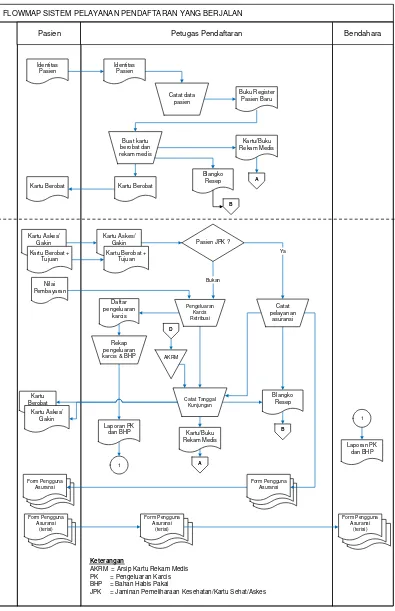
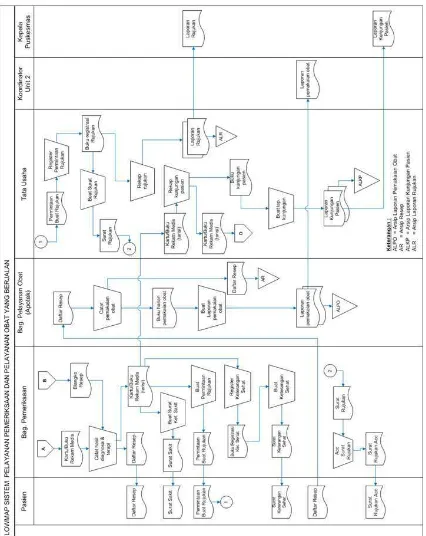
This subsection describes the responsibilities of key personnel and units within Puskesmas Lembang, highlighting the workflow and interdependencies. This detailed explanation of functional roles facilitates the understanding of the research context. This section helps understand the complexities of workflow within Puskesmas Lembang, highlighting the areas where the new system could improve efficiency.
3.2. Research Methods
This section explains the research methodology, justifying the choice of a qualitative descriptive approach. It highlights the suitability of this approach for gathering information about the current state of affairs. This section demonstrates methodological rigor by clearly outlining the research design. The explanation of the qualitative approach and its justification demonstrate a strong methodological foundation.
3.2.1. Research Design
This subsection details the rationale for using a qualitative descriptive approach and its suitability for this research. This shows a clear understanding of research paradigms. The discussion of the research design demonstrates the selection of the most appropriate approach for the research objectives.
3.2.2. Types and Methods of Data Collection
This subsection describes the methods used for data collection, including the sources of primary data (observation and interviews) and secondary data (books and documents from Puskesmas Lembang). This provides essential methodological details. This section demonstrates the use of triangulation by incorporating both qualitative and quantitative data, strengthening the reliability of the findings.
Referensi Dokumen
- Pemrograman Visual Basic 6.0 ( Kurniadi, Adi )
- Belajar Database Menggunakan MySQL ( Kadir, Abdul )
- Analisis dan Desain Sistem Informasi, Edisi Pertama Cetakan Pertama ( Al-Bahra Bin Ladjamudin )
- Jaringan Komputer ( Irawan, Budhi )
- 101 Tip & Trik Visual Basic 6.0, Buku kedua ( Dwi Prasetyo, Didik )
- Basis Data ( Fathansyah, Ir )
- Rekayasa Perangkat Lunak, Edisi 6 jilid 1 ( SOMMERVILE, Ian )
- Analisis dan Desain Sistem Informasi Pendekatan Terstruktur dan Aplikasi Bisnis ( Jogiyanto HM., Akt., MBA., Ph.D )
- Software Engienering : A Practioner's Approach ( Pressman, Roger S, Ph.D )