NAMA : VINNY MEIDIANA PUTRI KELAS : D3 LOGISTIK BISNIS 2C
NPM : 5163100
UNIT JONES QUALITY CHAPTER I
Overview of modern quality Introduction
Often domestic economic conditions such as the national trade deficit are linked to a country’s manufacturing competitiveness. Given that trade is driven by customers’ willingness to pay for products and services, and many studies suggest that customers would pay more for a better quality of product, quality is an important factor for driving trade in the United States. In this chapter, we hope to provide an overview on the definition of quality. Section I of this book deals with the “Quality Trail” as given below.
1.2 What is quality?
1.2.1 How is quality defined?
Merriam-Webster defines quality in several ways, including the following: (1) peculiar and essential character, (2) degree of excellence, (3) superiority in kind, (4) distinguishing attribute, and (5) acquired skill. These definitions range from describing products to describing people. Our focus will be mainly on describing products and services. The five approaches to quality include global or transcendent, product-based, user-based, manufacturing-based, and value-based approaches.
1.2.1.1 Global approach
The global approach to quality is a very generic view. Often this type of quality is further defined by companies as good enough not to get sued. In other words, if no one is defining this as bad quality, then it must be good quality.
1.2.1.2 Product-based approach
The product-based approach to quality relates to defining a product’s attributes. The attributes or features that customers find more desirable would define the product as having higher quality.
1.2.1.3 User-based approach
The user-based approach to quality is related to users defining the features and attributes they consider important. One of the more important quality gurus, Joseph Juran (1998), defines quality as “fitness for use” as defined by the user. In other words, the users and their expectations of the product determine quality. This is further clarified that different users may use the product in different ways, and a high-quality product must possess multiple elements that “fit” different uses effectively.
1.2.1.4 Manufacturing-based approach
The manufacturing-based approach to quality is related to meeting engineering specifications in order to meet quality standards. This is generally the most comfortable definition for engineers in defining quality in that it is specific, measurable, and objective. Unfortunately, meeting engineering specifications does not always ensure higher sales from finicky customers. This approach is generally attributed to Crosby’s (1979) “conformance to requirements” concept. The concept describes a set of requirements that must be met in a manner required by specifications or standards. Generally, if these specifications are not met, then the product is considered noncompliant and defective. Every distinct noncompliant attribute is considered a defect.
1.2.1.5 Value-based approach
There are attributes that are associated with the value-based approach. These attributes are generally associated with Garvin (1984) and include (1) performance, (2) features, (3) reliability, (4) conformance, (5) durability, (6) serviceability, (7) aesthetics, and (8) perceived quality.
1.2.1.5.1 Performance.
The performance attribute refers to the primary operating characteristics of the product. It describes the ability of a product to meet its intended purpose.
1.2.1.5.2 Features.
The feature attribute describes the “nice to have” or the “bells and whistles” of a product. 1.2.1.5.3 Reliability.
The reliability attribute describes the probability of the failure of a product within a specified period of time. Reliability in manufacturing literature is generally measured in the following terms: mean time to first failure (MTFF) and mean time between failures (MTBFs).
1.2.1.5.4 Conformance.
The conformance attribute is described as the degree to which a product’s design and operating characteristics meet pre-established standards. It involves the following:
2. External elements (outside the factory): Conformance is measured commonly by the number of repairs under warranty.
1.2.1.5.5 Durability.
The durability attribute is described as the measure of product life, defined in two dimensions:
1. Technically: Durability is the amount of use one gets from a product before it deteriorates physically and repair is not possible (i.e., after many hours of use, the filament of a light bulb burns up and the bulb should be replaced).
2. Economically: Durability is the amount of use one gets from a product before it breaks down and repair is required. The product’s life is determined by repair costs, personal valuation of time and inconvenience, loss due to downtime, and other economic variables.
1.2.1.5.6 Serviceability.
The serviceability attribute is described as the speed, courtesy, and competence of the repair service. Objective and subjective views play a role in defining serviceability.
1.2.1.5.7 Aesthetics.
The aesthetic attribute is described as to how a product looks, feels, sounds, tastes, or smells (appearance and impression): quality is viewed as the combination of these attributes that best match consumer preferences.
1.2.1.5.8 Perceived quality.
The perceived quality attribute is described as how consumers feel when they use the product. If financially capable of making a choice, would choose a product with higher durability as a means of choosing a product with higher quality.
1.3.1.2 Operations perspective on quality
The operations planning and management view of quality is rooted in the engineering
approach. Like engineers, operations managers, planners, and schedulers are tasked with optimizing product and process design. In contrast to traditional engineering, operations researchers and some specialized industrial engineers focus on decision modeling rather than on the technical (traditional engineering) aspects of these activities; operations concentrates specifically on the best decisions and policies for the management to execute these activities. Operations management has developed into an integrative field, combining concepts from engineering, operations research, organizational theory, organizational behavior, and strategic management.
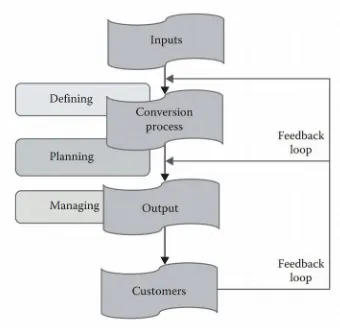
Operations management, in conjunction with industrial and systems engineers, utilizes a systems view to address quality problems that support modern QM thinking. The systems view involves the understanding that product quality is the result of the interaction of several variables such as machines, labor, procedures, planning, and management
Figure 1.2 Engineering perspective of quality.
Figure 1.3 Systems perspective of quality. 1.3.1.4 Executive management perspective on quality
Figure 1.4 Executive management perspective of quality.
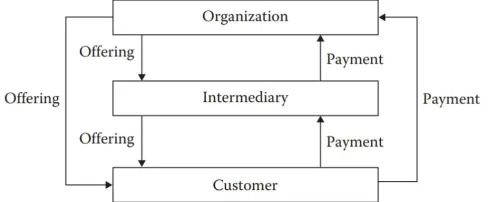
Figure 1.5 Marketing perspective of quality. 1.3.1.5 Marketing perspective on quality
Marketing efforts are often focused on managing the perception of quality by the public. The marketing perspective primarily focuses on the end customer’s perspective of the product. Customer service surveys are important mediums for assessing quality (Figure 1.5).
1.3.1.6 Financial perspective on quality
(Figure 1.6). According to this law, there is a point at which investments in quality improvement become uneconomical. According to the quadratic economic quality-level model, higher levels of quality will result in higher expenditures. The focus of deriving the firm return or the intrinsic value that will be received by performing quality as opposed to a firm seeking to do continual improvement on an ongoing basis has been a point of distinction (Figure 1.7).
Figure 1.7 Financial perspective of quality. 1.3.1.7 Human resources perspective on quality
Understanding the human resources perspective on quality is difficult and necessary because implementation of quality without the commitment of employees brings disastrous results. This perspective of quality generally encompasses several concepts that include but are not limited to employee empowerment, organizational design, job analysis, and 360-degree evaluation:
1. Employee empowerment: Empowering employees involves moving decision making to the lowest level in the organization.
2. Organizational design: Human resource managers are involved in many aspects of organizational design, such as the design of rewards system, pay system, organizational structure, compensation, training mechanisms, and employee grievance arbitration.
3. Job analysis: This involves collecting detailed information about a particular job. 4. 360-degree evaluation: This is a performance measurement system in which an
employee’s peers, supervisors, and subordinates are involved in evaluating the worker’s performance.
1.4 Total quality management and quality overview
The idea is prescribed that the quality of products and processes is the responsibility of everyone in the organization including the management, the workforce, and the suppliers.
Cua et al. (2001) identified the following nine common TQM practices: 1. Cross-functional product design
2. Process management 3. Supplier QM
5. Information and feedback 6. Committed leadership 7. Strategic planning 8. Cross-functional training 9. Employee involvement
1.5 Who is taught and trained to attain quality by an organization? 1.5.1 The implementation of quality
Generally, there are two ways of implementing quality organizationally. One approach is to take the attitude that quality is integral to all functions, policies, and procedures of the firm. Another approach is to implement quality on an “as-needed” basis. The “asneeded” approach seeks to add quality as a means to improve profits through a highly specialized team. Generally, companies perform both approaches. They maintain acceptable quality throughout their operations so as to put acceptable products in the market.
1.5.1.1 The integrated approach
The integrated approach to quality is generally associated with a concept called the three spheres of quality. It is implied that the conceptual areas of quality are integrated throughout a firm’s policies, procedures, and products.
1.5.1.2 Three spheres of quality
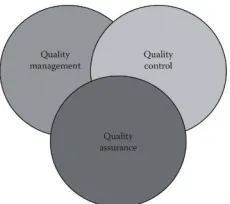
The three spheres of quality originated by Juran (1998) refer to quality control (QC), quality assurance (QA), and QM. Often activities in one sphere could also be completed in another sphere, and this is subject to the interpretation of how the activity supports the firms’ needs. The tasks associated with these spheres are described in next page (Figure 1.8):
1.5.1.2.1 Quality control.
QC focuses on providing analysis and identifying relationships and causes of variation that create lower quality. QC generally refers to the following activities:
• Monitoring process capability and stability • Measuring process performance
• Reducing process variability
• Optimizing processes to nominal measures • Performing acceptance sampling
• Developing and maintaining control charts
1.5.1.2.2 Quality assurance.
QA focuses on testing and researching activities guarantees that products meet specifications and perform as advertised. QA activities are related to the following:
• Failure mode and effects analysis • Concurrent engineering
• Experimental design • Process improvement
• Design team formation and management • Off-line experimentation
• Reliability/durability testing of product 1.5.1.2.3 Quality management.
QM describes the management processes that overarch and tie together the completion, control, and transitioning of quality activities. QM activities include
• Planning for quality improvement • Creating a quality organizational culture • Providing leadership and support
• Providing training and retraining
• Designing an organizational system to reinforce quality ideals • Providing employee recognition
• Facilitating organizational communication 1.6 What if quality is too expensive to justify? 1.6.1 “As-needed” implementation of quality
This concept drives the thought that activities that do not support the customers’ view of quality are nonvalue activity or wasted effort in the firm.
1.7 Limitation of quality measures
Quality is difficult to measure and often organizationally difficult to justify in traditional accounting terms such as return on investment (ROI). The timing between quality initiatives and cost saving creates difficulty in justifying quality investments.Generally, hidden costs that usually are not accounted for are the main drivers of quality investment. Understanding the cost of quality (COQ) is one of the main reasons why modern LSS techniques have replaced other quality initiatives. Six Sigma focuses on the COQ.
1.8 How can the COQ be justified? 1.8.1 Cost of quality
1.8.2 Traditional COQ
Conformance costs are those that are incurred to ensure manufactured products or delivered services conform to specifications. Conformance costs are made up of the following:
1. Prevention costs or activities relating to preventing defects
2. Appraisal costs or activities relating to measuring and evaluating the product or service
3. Nonconformance costs are the prices paid when the product or service does not conform to a customer’s requirement. Nonconformance costs are made up of internal failure costs, failures incurred prior to shipment to customer, external failure costs, and costs discovered after shipment or service delivery.
a. Internal failure costs can be remedied by using rework, identifying the amount of scrap produced, reinspection, and retesting, to name a few.
b. External failure costs can be remedied by investigating customer complaints, inspecting warranties, and repairs.
Caveats are the direct tradeoffs between conformance and nonconformance expenditures that are economically difficult to measure. Some of the main issues with the hypothetical COQ concepts include the following:
• Cost-of-quality reports do not provide specific actions.
• Cost-of-quality calculations do not capture all of the costs, and multiple tasks may count the same savings many times leading to inaccuracies in corporate accounting. • Accounting conventions such as capital spending and rules for defining period and
product cost render COQ of little use for evaluating a quality program. 1.9 Who started quality and what ideas did they contribute?
1.9.1 Quality philosophers, gurus, and contributors 1.9.1.1 William E. Deming
Deming is often considered the father of modern quality. Deming, a US quality consultant who had limited success with American businesses, introduced quality principles to the more-accepting Japanese manufacturers on a large scale post-World War II. The idea of understanding the psychology of the employee was a major contribution. This concept is realized in his overarching philosophy described as the “Fourteen Points.” Deming’s Fourteen Points is based on three principles: constancy of purpose, continual improvement, and cooperation between factions.
Deming believed in the following Fourteen Points of quality: 1. Create constancy of purpose
2. Adopt the new philosophy
6. Train and educate all employees 7. Supervisors must help people 8. Drive out fear
9. Eliminate boundaries 10. Eliminate use of slogans 11. Eliminate numerical standards 12. Let people be proud of their work 13. Encourage self-improvement 14. Commit to ever-improving quality 1.9.1.2 Joseph M. Juran
Juran (1998) followed Deming in Japan and is mainly known for using the Quality Trilogy (planning, control, and improvement). He also originated the three spheres of quality: QC, QA, and QM.
1.9.1.3 Philip B. Crosby
1.9.1.4 Armand V. Feigenbaum 1.9.1.5 Garvin
1.9.1.6 Ishikawa 1.9.1.7 Taguchi
1.9.1.8 Japanese contributions to quality
1.10 How is quality rewarded and enforced globally? 1.10.1 Quality awards
1.10.1.1 The Deming Prize
1.10.1.2 Malcolm Baldrige National Quality Award
1.11 Quality standards 1.11.1 ISO 9000
International Organization for Standardization (ISO) 9000 is a quality initiative that is widely used across the world. There are 12 member countries that work together to eliminate separate standards. ISO 9000 is currently used in 91 countries, and this number is growing on a yearly basis. Additionally, there are three levels of audit robustness: ISO 9001, 9002, and 9003. ISO 9000 is the basic set of requirements for a TQM system (TQMS). Registering for ISO 9000:2008 is thorough and the steps are listed as follows:
1. Inquiry—Client contacts registrars to investigate the terms for registration and makes a selection.
2. Contract with registrar—Registration steps are determined and a price is negotiated. A preassessment or gap analysis may be done.
3. Phase 1 audit—Registrar performs an onsite audit of the documented quality system against the applicable standard.
4. Certification audit—Every element of the ISO 9000 standard is audited several times during the registration process. During each 3-year period, 100% of the organization is audited.
5. Process audits (optional)—The client may choose business processes for auditing to the applicable standard, allowing the client to learn and experience the registrar’s auditing methods.
6. Final certification audit—Once the client’s documented quality system has met the applicable standard, the registrar will conduct an audit to determine the system’s effective implementation.
7. Rolling certification (surveillance) audits—The registrar returns either on a 6-month or on an annual cycle. Sometimes they are referred to as surveillance audits.
1.11.2 ISO 14000 and 14001
ISO 14000 is a series of standards that provide guidelines and compliance standards for environmental compliance. ISO 14001 is the compliance standard for ISO 14000 which focuses on environmental management systems.
1.13 Will LSS really work?
• To compete successfully with the best companies in the world
• To establish standard language and approaches across functions and across businesses • To develop the next generation of leaders
1.14 How can I integrate LSS into the operations throughout my supply chain?
Operations phase is expected to begin once LSS methodologies are implemented, that is, the change in processes, network, and outlook of the organization has been accepted. The following steps could be followed to integrate LSS into the operations (Devane 2004):
1. Executives must accept their roles and responsibilities and be able to set priorities. 2. Leaders must consider newly established expectations while evaluating performance.
Those who ignore these new values must be discarded from the functional team. 3. Periodic review of efforts toward improvement and sustainability in the new
framework with accurate data representing financial impact must be recorded.
4. Active management must support the project lead by the new perspective of LSS with proper training and feedback sessions.
5. Gain in cash flows need not be excessively emphasized as the net result of improvement. Encouragement through awards for quality and recognition is best for creating motivation in employees.
6. All goals must tally with the organization’s overall mission and strategic plan for steering into the future successfully.
7. Cross-functional team exchanges are encouraged while keeping boundaries of each team intact. This is considered to be the job of the manager.
8. The organizational human resource structure must be flexible enough to incorporate such transformations.
9. The new methods must be publicized by the management who must be supportive of the change to encourage other employees to accept them.
CHAPTER II 12. Let people be proud of their work 13. Encourage self-improvement 14. Commit to ever-improving quality
Another contribution that directly relates to Six Sigma techniques was that Deming was the first guru to theoretically attempt to link quality improvements to financial results. It was described as the “Deming Value Chain.”
B. Joseph M. Juran
Juran followed Deming in Japan and is mainly known for using the quality trilogy (planning, control, and improvement). He also originated the three spheres of quality: quality control (QC), quality assurance (QA), and quality management (QM). Juran (1995) described quality’s “fitness for use” as that which is defined by the user. In other words, the users and the expectations that they have of the product determines quality. This is further clarified to mean that different users may use the product in different ways, and a high-quality product must possess multiple elements that “fit” different uses effectively.
C. Philip B. Crosby
D. Armand V. Feigenbaum
Excellence-driven, rather a defect-driven, view is defined by the customer. Feigenbaum had 19 steps to QM that the entire company should follow. The 19 steps are as follows:
1. Total quality control (TQC) is defined as a system for improvement.
2. Big Q quality (companywide commitment to TQC) is more important than little quality (improvements on the production line).
3. Control is a management tool with four steps. 4. QC requires integration of uncoordinated activities. 5. Quality increases profits.
6. Quality is expected, not desired. 7. Humans affect quality.
8. TQC applies to all products and services. 9. Quality is a total life-cycle consideration. 10. Control the process.
11. Total quality system involves the entire companywide operating work structure. 12. There are many operating and financial benefits of quality.
13. The costs of quality are a means for measuring QC activities. 14. Organize for QC.
15. Managers are quality facilitators, not quality cops. 16. Strive for continuous commitment.
17. Use statistical tools.
18. Automation is not a panacea. 19. Control quality at the source.
E. Garvin
Garvin’s (1984) approach is generally accepted in engineering. The five approaches to quality include global or transcendent, product-based, user-based, manufacturing-based, and value-based approaches.
F. Ishikawa
Ishikawa perfected the cause-and-effect diagram. He also believed that the customer defines the quality definition the organization believes in. He was also a pioneer in quality circles and teamwork to improve quality. Ishikawa spent his life perfecting quality In Japan. He believed a company should hold everyone accountable for the statistics and output of the company.
G. Taguchi
Taguchi created loss function and focused on improving quality in design with reduction of noise in the form of system design, parameter design, and tolerance design.
H. Japanese contribution
eliminated. The second view of Lean is a systems view stating the JIT is a group of techniques or systems focused on optimizing quality processes. Other contributions include visibility, in-process inspection, 5S, and emphasizing teamwork and quality circles. Japanese quality is the belief and methods of quality the Japanese used post-World War II to the present day. These are the following:
• Fitness to Standard: ingrained in management to have quality over profit • PDCA Style: plan–do–check–act (Shewart charts)
• Fitness to Use: understand customer needs • Fitness to Cost: high quality, low cost
• Fitness to Latent Requirement: discover customer needs before they do
• Kano Diagram: model of a set of ideas for planning a new product, service, or process • Hoshin Kanri: vertical deployment of TQM strategy
CHAPTER III
Quality awards and standards 3.1 The Deming Prize
Renewed appreciation of the quality assurance function. Japan initiated a quality revolution in the 1970s and has since received worldwide recognition for its achievements. More recently, Europeans have launched cooperative efforts to improve quality (Izadiet al. 1996). Japan has successfully transformed from a country whose economy and industrial base was in shambles after World War II to become a true “economic superpower.”
Japanese goods, once equated with poor craftsmanship and quality, now inundate the US market and have driven many US firms out of business. A number of different theories— ranging from macro to micro to cultural—have been advanced to explain the success of Japanese companies in penetrating foreign markets (Dooley et al. 1990).
Japanese corporations used “superior quality” to capture, hold, and build market share (Ghobadian and Woo 1996). A key theme that has emerged is the relentless pursuit of quality by most of the successful Japanese companies. The emphasis on quality permeates throughout Japanese organizations and is embodied in the widespread adoption of TQC principles and statistically based methods within firms and across industries. Positive reinforcement is provided in the form of a national award—the Deming Prize (Dooley et al. 1990).
3.1.2 Deming Prize and TQM
The Deming Prize Committee defines TQM as follows (SaferPak 2012):
TQM is a set of systematic activities carried out by the entire organization to effectively and efficiently achieve company objectives so as to provide products and services with a level of quality that satisfies customers, at the appropriate time and price.
1. “Systematic activities” mean organized activities to achieve the company’s mission (objectives) that are led by strong management leadership and guided by established clear mid- and long-term vision and strategies as well as appropriate quality strategies and policies. 2. The phrase “carried out by the entire organization to effectively and efficiently achieve” means to involve everyone at all levels and all parts of the company so as to achieve the business objectives speedily and efficiently with minimal management resources. This is accomplished through an appropriate management system that has a quality assurance system at its core, and it integrates other cross functional management systems such as cost, delivery, environment, and safety.
3. “Company objectives” refer to securing appropriate profit for the long term by satisfying customers consistently and continuously. Also, they encompass improving the benefit to all stakeholders including employees, society, suppliers, and stockholders.
preparation, purchasing, manufacturing, installation, inspection, order-taking, sales and marketing, maintenance, after-sales services, and after-usage disposal and recycling.
5. “Products and services” include manufactured products (finished products and parts and materials), systems, software, energy, information, and all other benefits that are provided to customers.
6. “Quality” refers to usefulness (both functional and psychological), reliability, and safety. Also, in defining quality, influence on the third parties, society, environment, and future generations must be considered.
3.1.3 Deming Prize in detail
The Deming Prize is given to organizations that have exerted an immeasurable influence directly or indirectly on the development of quality control/management in Japan (Dooley et al. 1990). Its primary purpose was to spread the quality gospel by recognizing performance improvements flowing from the successful implementation of company-wide or total quality control (CWQC or TQC) based on statistical quality control techniques (Ghobadian and Woo 1996). Historically, the Deming Prize, especially the Deming Application Prize that is given to companies, has exerted an immeasurable influence directly or indirectly on the development of quality control/management (SaferPak 2012). Hence, the Deming Application Prize is discussed in more detail in this book.
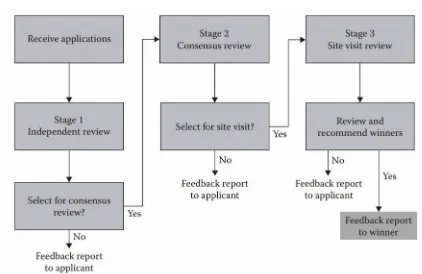
The steps involved in the application for the Deming Prize are (Dooley et al. 1990):
1. Application and initial screening,
2. A documented “Description of QC practices” document, and for those companies which pass this stage,
3. Site examinations.
The site examinations consist of three phases, in the following order (Dooley et al. 1990):
1. Schedule A, where the applicant presents the main points of their quality program and tour operations sites,
2. Schedule B, where the inspectors perform on-site investigations of locations of their choice, and interrogate people at those sites, and
3. An interview with the CEO. 3.2 The Malcolm Baldrige Award
Organizations strive to produce higher quality products and services and enhance profitability by implementing the Baldrige criteria. These criteria are well represented in the Six Sigma process improvement method (SSPIM). Whereas the Baldrige criteria and SSPIM have followed different development paths, they have similar roots. Congress established the Baldrige Award in 1987 to enhance US competitiveness by promoting quality and business excellence among US companies, and to publicize the successful performance of these companies.
Motorola developed SSPIM in the late 1980s as an improvement initiative focused on quality. Both quality activities originated from management philosophies that attempted to enhance performance, increase profitability, and improve quality. The Baldrige framework can be used as a generic model for process improvement in an organization.
3.2.1 Baldrige model for quality
Described as a “badge of honor” and “the most important catalyst for transforming American business,” the Baldrige Award is much more than a quality award for an organization. Juran argued that it is a helpful model for achieving world-class quality.
The Baldrige model consists of seven categories (Mellat-Parast et al. 2007a): 1. Leadership
2. Strategic planning
3. Customer/patient and market focus
4. Measurement, analysis, and knowledge management
The award is used not only as a model for quality management implementation, but also as a self-system for overall organizational performance management. It has also been used as a guideline for organizations to achieve higher levels of quality.
3.2.2 Six Sigma method
Six Sigma is defined by Feld as a data-driven philosophy used to influence management decisions and spark action across an organization (quoted in Jones et al. 2010). Six Sigma proponent Caulcutt says Six Sigma reduces waste, increases customer satisfaction, and improves processes with a considerable focus on financially measurable results (quoted in Jones et al. 2010). For the purpose of this book, Six Sigma is defined (definition by Rasis et al.) as the relentless pursuit of process variation reduction and breakthrough improvements that increase customer satisfaction and impact the bottom line (quoted in Jones et al 2010). The standard framework for implementing a Six Sigma method is define, measure, analyze, improve, and control (DMAIC) process.
3.2.3 Baldrige model and Six Sigma
The goal of SSPIM is to reduce variation in the product, service, or process in dimensions (characteristics) essential for customer satisfaction (Mellat-Parast et al. 2007b). To do so, firms need to analyze their product, process, or service, and determine the variables that affect customer satisfaction. Motorola’s experience with Six Sigma helped the company receive the Baldrige Award in 1988. SSPIM laid the foundation for Motorola to be the first company to receive the Baldrige Award, which suggests a strong link between the two. The advantage of the Baldrige model over other quality improvement systems (e.g., TQM or the PDCA cycle) revolves around the systems approach in the Baldrige model. The Baldrige model specifically addresses the areas companies need to concentrate on to improve their performance.
3.2.3.1 Implementing Six Sigma within the Baldrige model
Our approach for implementing the SSPIM within the Baldrige model is consistent with other approaches taken to relate Six Sigma with ISO 9001:2000. According to one approach, the implementation of the Baldrige model would mean:
• A focus on performance excellence for the entire organization in an overall management framework.
• Identifying and tracking all important organizational results, customer satisfaction, product/service, financial objectives, human resources, and organizational effectiveness.
While the Baldrige model does not provide any specific method, tool, or technique that can be incorporated, it does offer general guidelines. As such, SSPIM is a practical, appropriate, and useful tool that can be used to transform the goals of the Baldrige model into reality. Accordingly, we might apply Six Sigma to improve the performance of each of the seven Baldrige categories. SSPIM serves as a mechanism to determine how much progress we have made in each Baldrige category. In this respect, whereas companies are using Baldrige criteria as an overarching model for business excellence, improving enterprisewide quality level could be achieved through different Six Sigma projects. In other words, Six Sigma projects facilitate pr cess improvement in a firm through focus on Baldrige criteria. 3.3 ISO 9000
3.3.1 Purpose
ISO 9000 describes the guidelines for use of a particular standard whereas ISO 9004 describes the guidelines for establishing an internal quality management system within the broad and general context of TQM. The other three standards, ISO 9001, 9002, and 9003, are the generic standards containing minimum requirements for establishing and maintaining a documented quality system to instill confidence in customers that the intended products or services meet customer requirements (Tummala and Tang 1996). There is always a misconception that ISO would mandate higher levels of product quality. ISO certification gives no guarantee that the quality of products or services of an organization is better than the quality of other organizations. Thus, ISO-certified organizations do not automatically have a good product quality. In fact it is possible that the products or services of a registered organization are not of such good quality, but of constant quality (Singels et al. 2000).
3.3.2 ISO 9000—Performance
As discussed earlier, firms adopt ISO 9000 certification as an effort of continuous process improvement. However, after implementing ISO 9000 standards the performance solely depends on the type of that firm. There are significant differences in the performance of manufacturing and service industry. The factors that affect the performance of a firm that has implemented ISO 9000 are (Lafuente et al. 2009):
• Implementation of just-in-time (JIT) • Labor intensity
• Technology
• Ownership structure
In a nutshell, ISO 9000, altogether, increases labor productivity and revenue to total assets (ROA), thereby increasing the overall productivity of the firm.
3.4 Other quality awards and standards 3.4.1 Strategic quality planning
Strategic quality planning is an important process to be undertaken. It starts by designing the quality service with the help of creating the following (Foster 2010):
1. The value chain: The value chain consists of a network of value chains and value chain activities are the tasks that add value for the customers. Nonvalue chain activities typically have costs but create no effect on customers. The value chain can be considered as the linkage of customers and suppliers.
a. Baldrige b. ISO 9000:2000
c. Vendor management inventory (VMI)
3. Applying the contingency perspective to supplier partnering: One variable which affects what customers want from their suppliers is the position in the supply chain. Suppliers are only marginally more interested in relationships than customers are.
4. A supplier development program: Using the following measures we plan to achieve supplier development:
a. Identify critical products and services b. Identify critical suppliers
c. Meet with supplier top-management d. Form cross-functional teams
e. Identify key projects f. Define details of agreement
g. Monitor status and modify strategies
5. Acceptance sampling and statistical sampling techniques: Acceptance sampling is done when dealing with unproven suppliers; during start-ups and when building new products; when products can be damaged during shipment; and when problems with a certain supplier have been noticed.
3.4.2 European Quality Award
Much like the MBNQA, Europe issues the European Quality Award every year to the most accomplished applicant. There is also a second-level award given to all organizations that meet the award criteria.
3.4.3 Quality Systems
Continuous learning under modern quality systems is required for development of sustainable systems (GMP Training Systems 2012). These systems have a necessity for identifying the weak points of a given process. Timely identification and having contingency measures can help avoid risks. One must allocate (qualified) resources for assessing the risk incurred, accuracy of reports, and the current quality in order to create carefully structured standardized processes and a quality control unit (QCU).
Appendix 3A: A relationship between Six Sigma and Malcolm Baldrige Quality Award
3A.1 Introduction
The Malcolm Baldrige National Quality Award (MBNQA) has evolved from a means of recognizing best quality management practices to a comprehensive framework for worldclass performance, where it is widely used as a model for process improvement (Flynn and Saladin 2001). Companies strive to achieve higher quality of products and/or services and enhance their profitability through implementing the Baldrige criteria. Interestingly, these criteria are well established by the Six Sigma process improvement method (SSPIM). While the Baldrige criteria and the SSPIM have followed different development paths, they have the same roots. The US Congress established the MBNQA in 1987 to enhance US competitiveness by promoting quality awareness, recognizing the quality and business excellence of US companies, and publicizing the successful performance of these companies. 3A.2 The Baldrige model for quality
Despite being described as a “badge of honor” (Dow et al. 1999), the MBNQA is much more than quality award for an organization. Garvin (1991) described it as “the most important catalyst for transforming American business.” Further, Juran (1994) argues that the MBNQA is a helpful model for getting into world-class quality. MBNQA has been primarily used as a framework for business improvement rather than as an award for quality. The Baldrige model consists of seven categories, as follows:
1. Leadership
2. Strategic planning
3. Customer and market focus
4. Measurement, analysis, and knowledge management 5. Human resource focus
6. Process management 7. Business results
MBNQA is not only used as a model for quality management implementation, but can also be helpful as a self-assessment tool, providing a framework for continuous business process improvement. Figure 3A.1 shows the framework for the MBNQA.
3A.3 Six Sigma methodology
Sigma is defined as the relentless pursuit of process variation reduction and breakthrough improvements that increase customer satisfaction and impact the bottom line (Rasis et al. 2002a). A popular framework for implementing a Six Sigma methodology is the DMAIC process.
3A.4 The Baldrige model and Six Sigma
We found that the goal of the SSPIM is to reduce variation in the product/service/process in dimensions (characteristics) that are essential for customer satisfaction. To do so, the firms need to analyze their products, processes, and services and determine the variables that affect customer satisfaction. The experience of Motorola with Six Sigma helped the company to win the Baldrige Award in 1988. According to Sumberg (2005), the SSPIM quality laid the foundation for Motorola to be the first company to win the Baldrige Award.
We hypothesize that the linkage between these two initiatives may provide a strong indicator to business success as evidenced by the success of Motorola. The advantage of the Baldrige model to other quality improvement systems (e.g., TQM and PDCA) revolves around the systems approach within the Baldrige model. The Baldrige model specifically addresses the areas companies need to concentrate on to improve their performance. In addition, it should be noted that the Baldrige model is a self-assessment model. Companies can use the Baldrige model to assess their performance over time, identify their strengths and weaknesses, and focus on the areas that need improvement. This valuable feedback mechanism in the Baldrige model makes it attractive to the majority of companies to use it as a tool to improve their performance over time. In sum, we argue that the Baldrige model is a better choice for companies in their never-ending journey for excellence in quality.
3A.4.1 Implementing Six Sigma within the Baldrige model
Our approach for implementing the SSPIM within the Baldrige model is consistent with the approach Lupan et al. (2005) have taken to relate Six Sigma with ISO 9001:2000. According to this approach, the implementation of the Baldrige model would mean:
• A focus on performance excellence for the entire organization in an overall manage-ment framework.
• Identifying and tracking all-important organizational results: customer satisfaction, product/service, financial objectives, human resource, and organizational effectiveness.
We need to recognize that whereas the Baldrige model does not provide any specific methodology, tool, or technique that can be incorporated, it does offer general guidelines. 3A.5 Integrating Six Sigma with the Baldrige model
The proposed integrative Six Sigma and Baldrige model is based on the following principles:
Such a performance requirement is set by top management. After the establishment of such goals (which need to be aligned with the requirements of the Baldrige model) SSPIM is used to improve processes, and meet quality objectives.
• SSPIM can be applied to all types of the projects, processes, and products. The selection, administration, and control mechanisms are directed by the top management.
• The Baldrige self-assessment includes both the assessment of each of the seven categories, in the Baldrige model, as well as the efficiency and effectiveness of the SSPIM. Such an approach toward quality ensures that the company is gaining benefit from implementing the SSPIM.
• The proposed model for the integrative Six Sigma–Baldrige framework is capable of addressing the core values of the Baldrige model. Through the focus of the SSPIM on management by fact (data analysis and statistics) and goal setting (focus on results) the Baldrige core values: visionary leadership, customer-driven excellence, organizational and personal learning, valuing employees and partners, agility, focus on the future, managing for innovation, social responsibility, and systems perspective can be addressed.
3A.5.1 The case for Motorola
To show how the principles described in this chapter can be applied in a real-world setting, we provide an example from a company that has effectively implemented Six Sigma and has been awarded the Baldrige Award twice: Motorola. Motorola’s success rests on integrating quality management initiatives with statistical quality control tools and techniques. Having been influenced by Japanese management practices at one of the previously owned Motorola’s plants: Quasar, Motorola’s management learned how to improve the quality of their products. Under Motorola’s leadership, Quasar was losing market share to foreign competitors that sold products of better quality and lower cost. In 1974 Motorola sold Quasar to a Japanese consumer electronic company, Matsushima. Under Japanese management, the factory made drastic improvements in the quality of its products, producing TV sets with 1/20th number of defects that were made under Motorola’s management.
Appendix 3B: Comparing quality management
practices between the United States and Mexico* 3B.1 Introduction
has been conducted on international quality management (Rao et al. 1999), especially in the cross-cultural arena (Sila and Ebrahimpour 2003). While most quality management research has focused on comparing practices in the United States and Japan in early 1990, recent quality management research has been extended to other countries and regions around the world (Rao et al. 1999).
3B.2 Literature review
The importance of TQM in manufacturing and service organizations has increased significantly over the past 20 years. Firms with international trade devote special attention to the tools and techniques recommended by quality management experts. Early studies on international quality practices were mainly focused on developed countries such as the United States and Japan (Benson et al. 1991; Ebrahimpour and Johnson 1992; Flynn 1992; Garvin 1986; Khoo and Tan 2003; Knotts and Tomlin 1994; Reitsperger and Daniel 1991; Richardson 1993; Rogers 1993). Moreover, the empirical literature has extended its scope by studying and comparing quality management practices in other developed and developing countries, such as the United States and Taiwan (Madu et al. 1995; Solis et al. 1998); Asia and the South Pacific (Corbett et al. 1998); Japan, Korea, and Denmark (Dahlgaard et al. 1990); the East and West (Russia, Taiwan, Japan, Korea, Finland, Estonia, Denmark, India, Sweden, England, and New Zealand) (Dahlgaard et al. 1998); Costa Rica and the United States (Tata et al. 2000); the United States, Mexico, China, and India (Quazi et al. 2002); the United States and Mexico (Burgos Ochoategui 1998); Canada and Mexico (Galperin and Lituchy 1999); the UK and Ireland (McAdam and Jackson 2002); and the West, East, and Russia (Selivanova and Eklof 2001).
3B.3 Theoretical framework: Comparative management
Traditionally, research in comparative management fits within three schools of thought (Corbett et al. 1998): culture free (Haire et al. 1966), convergence (Form 1979), and culture specific (Hofstede 1980). In this appendix, a culture-free perspective is employed, indicating that, based on the MBNQA criteria, there is no difference between quality management practices in the United States and Mexico. Despite the development of different TQM models, little conceptualization has been done on quality management in the international and global context. The international quality management model, developed by Rao et al.
3B.5 Research methodology 3B.5.1 Survey instrument
underlying quality practices were conceptualized. While the 1992 version of the MBNQA model with seven constructs was used as a starting point for developing the survey, the instrument has been tested, modified, and refined in different stages to reflect all aspects of quality management.
3B.5.2 Data collection