Legume seeds and rapeseed press cake as repLacers
of soybean meaL in feed for fattening pigs* *
Ewa Hanczakowska♦, Małgorzata Świątkiewicz
Department of Animal Nutrition and Feed Science, National Research Institute of Animal Production, 32-083 Balice n. Kraków, Poland
♦Corresponding author: [email protected]
abstract
the possibility of replacing soybean meal with a mixture of legume seeds and rapeseed press cake (rpc) was evaluated on 60 pigs weighing about 30 kg at the beginning of the experiment. pigs were allocated to 5 experimental groups. group i (control) received standard feed mixture containing soybean meal as a main protein source. next groups received rapeseed press cake (rpc) mixed with fodder pea (Pisum sativum var. Ramrod) – group II, ield bean (Vicia faba var. kasztelan) – group iii, blue lupin (Lupinus angustifolius var. regent) – group iV or yellow lupin (Lupinus luteus var. mister) – group V. soybean protein was replaced by experimental protein sources at about 30% in grower (17% legumes, 13% rapeseed press cake) and at 100% in inisher diets (experimental proteins in equal ratio accounted for about 55% of mixture protein). Limited feed-ing was used, water was available ad libitum. Half the animals in each group received mixtures supplemented with ibrolytic enzymes Ronozyme VP and Ronozyme WX. Apparent digestibility of feed nutrients was estimated using the balance method on 30 fatteners not used in the fattening experiment, weighing about 40 kg for grower and 70 kg for inisher diets. Gross composition of legume seeds and rpc, amino acid composition of their protein, glucosinolate content in rpc and tannin content in faba bean and alkaloids in lupins were analysed. carcass traits and meat quality were also estimated. Legume protein content ranged from 19.6% (pea) to 39.8% (yellow lupin). RPC protein contained more sulphur amino acids than legume protein. There was no signiicant difference in protein and fat digestibility. body weight gains of fatteners fed with blue lupin were comparable to controls but signiicantly lower than those of the remaining groups. Supplemental enzymes improved body weight gains of fatteners receiving ield bean. There was no signiicant difference in carcass traits and meat quality except for sensory analysis. it is concluded that the mixture of rpc and legume seeds can replace soybean meal in fattener feed.
key words: legume seeds, rapeseed press cake, pig fattening, feed enzymes
Soybean meal is the most popular protein source in pig feeding. Other legumes: pea, ield bean, lupins and also rape grown in Central and Eastern Europe are less
E. Hanczakowska and M. Świątkiewicz
922
important. About 98% of commercially available soybean meal is derived from ge -netically modiied plants (Sieradzki et al., 2006). Earlier experiments suggest that genetic modiication has no effect on nutritive value of feeds (Padgette et al., 1996; Aurlich et al., 2003) or animal performance and carcass and meat quality (Flacho -vsky et al., 2005). Also our experiments have shown that feeds containing geneti -cally modiied soybean and corn had no effect on pig fattening results. There was also no transfer of transgenic DNA from feed to animal tissues (Świątkiewicz et al., 2011). Despite this, in some countries, including Poland, there is a strong and vocal opposition against using genetically modiied plants in farm animal and human nutri -tion. Therefore, further experiments on alternative protein sources are needed.
Pea, ield bean and lupins are plants cultivated in Poland in relatively large amounts. Their common drawback is the low content of sulphur amino acids (me -thionine and cystine) and the presence of various antinutritional factors. Their con -tent in pea is relatively low, though colourful blooming varieties contain tannins (Canbolat et al., 2007). Tannins also occur in ield bean, but due to the breeding work their content was signiicantly lowered even in colourful blooming varieties (Jezi -erny et al., 2010). Lupin seeds do not contain phenolic compounds and their alkaloid content was lowered to 0.01% (Ruiz et al., 1977). Because of this lowering they can substitute soybean meal even in human food (Petterson, 1998).
Digestibility of nutrients may be improved by supplementing feed enzymes. Glu -canase, pectinase or hemicelullase decompose polysaccharides present in seed cell walls that account for a signiicant part of the seed. This increases availability of nutrients for enzymes present in the animal digestive tract.
Rapeseed is cultivated mainly as a source of fat but press cake remaining after pressing of oil (rapeseed press cake) can be a good protein source. Its protein is relatively rich in sulphur amino acids, thus it could be a good supplement to legume seeds. Apart from the low content of methionine in legume seed its intestinal digest -ibility is low (Partanen et al., 2001). Because rapeseed contains antinutritional fac -tors (mainly glucosinolates), its amount in fattener feed should be limited to about 20% (Partanen et al., 2006).
Publications on using mixtures of rapeseed and legumes in fattener feeding are scarce. Good results were obtained by Thacker and Qiao (2002). Also Partanen et al. (2006) found that a mixture of ield bean and rapeseed press cake produces better results than rapeseed alone. Many experiments on nutritive value of legume seeds (Kasprowicz and Frankiewicz, 2004; Stanek et al., 2010) and rapeseed (Raj et al., 2000; Hanczakowska et al., 2012) were carried out in Poland but information on using both these protein sources together are scarce. Turyk et al. (2003), who com -pared the effect of rapeseed cake and its mixture with ield bean, found that while this mixture was comparable to soybean meal, rapeseed cake alone lowered the results. In the experiment of Sobotka et al. (2010) mixture of rapeseed meal with ield pea seeds in growing-inishing pigs gave better results than mixture of rapeseed meal with ield bean seeds.
The aim of this experiment was to investigate the effect of replacing soybean meal with a mixture of rapeseed press cake and new varieties of legumes in fattener feeds on their performance and carcass and meat quality. The additional aim was to
Unauthenticated
examine the possibility of improving the nutritive value of experimental diets by supplementing them with feed enzymes Ronozyme VP and Ronozyme WX.
material and methods
The Second Local Cracow Ethics Committee for Experiments on Animals ap -proved all procedures used in this experiment.
growth experiment
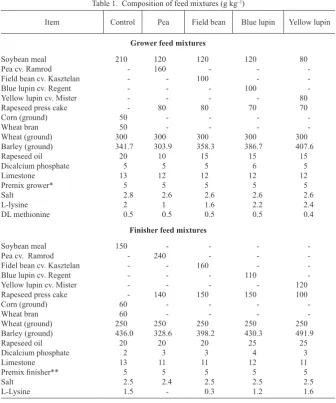
The growth experiment was performed on 60 fatteners weighing about 30 kg at the beginning of the experiment, originating from Polish Landrace (PBZ) sows and a Duroc × Pietrain boar. Animals were allocated to 5 groups, with 12 pigs per group. Group I (control) was fed with standard mixture based on soybean meal. Group II received the same basal mixture but part of soybean meal was replaced with rapeseed press cake mixed with pea (Pisum sativum var. Ramrod) and in group III with ield bean (Vicia faba var. Kasztelan). In groups IV and V a mixture of RPC and seeds of blue lupin (Lupinus angustifolius var. Regent) or yellow lupin (Lupinus luteus var. Mister) respectively, was used. Soybean protein was replaced by experimen -tal protein sources at about 30% in grower (17% legumes, 13% rape) and at 100% in inisher diets (experimental proteins in equal ratio accounted for about 55% of mixture protein). Half the animals in each group received mixtures supplemented with ibrolytic enzymes Ronozyme VP and Ronozyme WX, both in amount of 100 mg per kg of mixture. The mixture of enzymes contained endo-1,4-β-xylanase (minimum activity 1000 FXU g–1), endo-1,3(4)-β-glucanase (minimum activity 50 FBG g–1), pentosanase, hemicellulase and pectinase. Enzymes were kindly supplied by DSM Nutritional Products Ltd. in Mszczonów, Poland. Rapeseed cake was pro -duced in an on-farm biofuel production plant in the Experimental Station Grodziec Śląski, Poland. Composition of the grower (30–60 kg) and inisher feed mixtures (60–114 kg) is given in Tables 1 and 2. Their gross composition is presented in Ta -ble 3. Animals were kept in individual pens and individually fed twice a day with restricted feed amounts according to body weight: from 1.6 kg per day from 30 to 80 kg BW and 3.2 kg above 80 kg BW. During the trial animals had free access to water.
E. Hanczakowska and M. Świątkiewicz
924
Table 1. Composition of feed mixtures (g kg–1)
Item Control Pea Field bean Blue lupin Yellow lupin
grower feed mixtures
Soybean meal Pea cv. Ramrod Field bean cv. Kasztelan Blue lupin cv. Regent Yellow lupin cv. Mister Rapeseed press cake Fidel bean cv. Kasztelan Blue lupin cv. Regent Yellow lupin cv. Mister Rapeseed press cake
Apparent digestibility was evaluated on 30 fatteners not used in the fattening experiment weighing about 40 kg for grower diets and 70 kg for inisher diets. The experimental group consisted of 6 fatteners. Animals were kept individually in bal
-Unauthenticated
ance cages and fed with the same feeds as in the fattening experiment. Limited feed -ing was used, animals received 2.0 kg (grower) or 3.0 kg (inisher period) of feed mixture daily. Faeces from each animal were collected daily, weighed and frozen at –20°C. At the end of the experiment faeces from all animals from the same group were mixed and the average sample was prepared. Chemical composition of these samples was analysed.
Table 2. Chemical composition of mixtures (g kg–1)
Item Control Pea Field bean Blue lupin Yellow lupin
grower mixtures
Metabolizable energy MJ*
884.8 * ME calculated using the equation of Hoffmann and Schiemann (1980).
chemical analyses
Chemical composition of legume seeds, rapeseed press cake, feeds and faeces was analysed with the standard methods (AOAC, 2005). Acid detergent ibre (ADF), neutral detergent ibre (NDF) and acid detergent lignin (ADL) were estimated us -ing the Tecator Fibertec System M equipment accord-ing to Goer-ing and van Soest (1970) procedures. Glucosinolates content of RPC was determined by HPLC (EN ISO 91-67-1). Tannins content in faba bean was analysed using the vanillin-sulfuric acid method (Kuhla and Ebmeir, 1981) and that of alkaloids in lupins was estimated by gas chromatography according to Gardner and Panter (1993).
Amino acids were determined using HPLC method after acid hydrolysis of sam -ples in 6N hydrochloric acid at 110° during 22 hours in the colour reaction with the ninhydrin reagent using AAA 400 INGOS automatic analyser. Sulfur amino acids were estimated after initial peroxidation with performic acid to cysteic acid and me -thionine sulfone. Tryptophan content was estimated after alkaline hydrolysis of sam -ples in BaOH solution and precipitation of barium ions using sulfuric acid.
E. Hanczakowska and M. Świątkiewicz
926
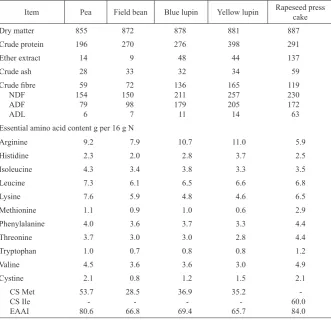
Table 3. Chemical composition (g kg–1) and essential amino acids content of seeds
Item Pea Field bean Blue lupin Yellow lupin Rapeseed press cake
Dry matter 855 872 878 881 887
Crude protein 196 270 276 398 291
Ether extract 14 9 48 44 137
Crude ash 28 33 32 34 59
Crude ibre NDF ADF ADL
59 154 79 6
72 150 98 7
136 211 179 11
165 257 205 14
119 230 172 63 Essential amino acid content g per 16 g N
Arginine 9.2 7.9 10.7 11.0 5.9
Histidine 2.3 2.0 2.8 3.7 2.5
Isoleucine 4.3 3.4 3.8 3.3 3.5
Leucine 7.3 6.1 6.5 6.6 6.8
Lysine 7.6 5.9 4.8 4.6 6.5
Methionine 1.1 0.9 1.0 0.6 2.9
Phenylalanine 4.0 3.6 3.7 3.3 4.4
Threonine 3.7 3.0 3.0 2.8 4.4
Tryptophan 1.0 0.7 0.8 0.8 1.2
Valine 4.5 3.6 3.6 3.0 4.9
Cystine 2.1 0.8 1.2 1.5 2.1
CS Met CS Ile EAAI
53.7 -80.6
28.5 -66.8
36.9 -69.4
35.2 -65.7
-60.0 84.0
statistical analysis
Statistical analysis of treatment effect on pig performance, carcass and meat qual -ity was performed by three-way analysis of variance, including experimental fac -tors: legume type, enzymes supplementation and sex. Comparison of means was performed with Duncan’s multiple range test at P≤0.05 and P≤0.01 levels of signii -cance. Statistical analysis of treatment effect on apparent digestibility coeficients of feed mixtures was performed by one-way analysis of variance, including experi -mental factor, the legume type. All analyses were conducted using the Statistica 10 package (StatSoft, 2011).
results
Chemical composition of legume seeds varied within broad limits (Table 3). Pro -tein content was the lowest in pea (19.6%) and the highest in yellow lupin (39.8%). Field bean contained the lowest amount of fat (0.9%), while the highest content was found in blue lupin (4.8%). Lupins and RPC contained more ibre and NDF
Unauthenticated
and ADF fractions than pea and ield bean. RPC contained 23.6 mmol of glucosi -nolates per g of fat-free DM. Alkaloid content in yellow lupin was 0.03% and that in blue lupin 0.01% of dry matter. The low-tannin variety Kasztelan contained 0.04 mg of tannins per g of dry seeds. Large differences were found in amino acid composi -tion of proteins (Table 3). RPC protein contained twice as much sulfur amino acids (5.0 g per 16 g N) as lupins (2.1 and 2.2 g) and ield bean (1.7 g) and also more sulfur amino acids than pea protein (3.3 g). Lysine content in RPC protein was also higher than that in lupins and ield bean but about 15% lower than that of pea protein. Methionine was the limiting amino acid in legume proteins (CS 28.5–53.7) and isoleucine was deicient in rapeseed protein (CS 60.0). Rapeseed protein had the highest EAAI. EAAI was high in pea (80.6) but lower in ield bean and lupins (65.7–69.4).
Table 4. Apparent digestibility coeficients of grower and inisher feed mixtures
Item Control Pea Field bean Blue lupin Yellow lupin SEM
grower mixtures a, b – mean values in the same rows with different letters differ statistically at P≤0.05.
A, B – mean values in the same rows with different letters differ statistically at P≤0.01.
There were no signiicant differences in digestibility of the most important nutri -ents: protein and fat (Table 4). Such differences were found only in the case of dry matter and N-free extractives. There were also some differences in digestibility of ibre in the irst phase of the experiment (grower).
E. H
Table 5. Fattening results
Item
Experimental group legumes (L) Enzyme supplement (E) Sex (S)
SEM
P-value
control pea beanield lupinblue yellow lupin 0 200
mg kg–1 gilts barrows L E S I*
Number of pigs 12 12 12 12 12 30 30 30 30 60 60 60 60 60
Initial body mass (kg) Final body mass (kg) Days of fattening
average daily weight gain (g) 28–60 kg feed conversion ratio (kg)
28–60 kg a, b – mean values in the same rows with different letters differ statistically at P≤0.05.
ac
Experimental group legumes (L) Enzyme supplement (E) - Sex (S)
SEM
P-value
control pea ield bean lupinblue yellow lupin 0 200
mg kg–1 gilts barrows L E S I*
Number of pigs 12 12 12 12 12 30 30 30 30 60 60 60 60 60
BW at slaughter (kg) Cold dressing yield (%) Meat of ham (%) Loin eye area (cm2) Meat of primal cuts (kg) Meatiness of carcass (%) Backfat of 5 measurements (cm) Backfat in point C (cm)
112 a, b – mean values in the same rows with different letters differ statistically at P≤0.05.
I* – Interaction.
E. H
Table 7. Meat quality traits (longissimus muscle)
Item
Experimental group legumes (L) supplement (E)Enzyme Sex (S)
SEM
P-value
control pea ield bean lupinblue yellow lupin 0 200
mg kg–1 gilts barrows L E S I*
Number of pigs 12 12 12 12 12 30 30 30 30 60 60 60 60 60
Water holding
capacity index (%) 17.51 16.68 17.86 17.98 16.43 17.30 17.28 17.34 17.24 0.24 0.14 0.96 0.82 L*E; S*E
Meat colour L*a*b Sensory evaluation of meat:
odour a, b, c – mean values in the same rows with different letters differ statistically at P≤0.05.
Different legumes and enzyme supplement had no effect on carcass and meat quality (Tables 6 and 7). Carcasses of gilts and their hams contained more meat and had larger loin eye area (P≤0.05).
The type of legume seed or enzyme preparation included in the pig diet did not affect the quality of meat (Table 7). Water holding capacity and colour were similar in all groups. The tested legume seeds had no detrimental effect on the organoleptic characteristics of meat. Sensory evaluation of meat from animals fed the mixture containing yellow lupin revealed signiicantly poorer smell and taste (P≤0.01) com -pared to that from pigs fed blue lupin and control ones.
discussion
Rapeseed press cake used in this experiment probably had no harmful effect on animal performance. This was shown by the best body weight gains of fatteners fed the highest amount of RPC (15%) in mixture with ield bean in the second part of the experiment. Similarly high body weight gains were obtained when weaned pig -lets were fed the same low-tannin ield bean and RPC mixture (Hanczakowska and Świątkiewicz, 2013). In our earlier experiment (Hanczakowska and Węglarzy, 2012) on fatteners receiving RPC from the same source we did not ind lowering of fatten -ing results compared with soybean meal. This is not in accordance with the results of Schöne et al. (2001), who also fed RPC at 15% of feed and received poorer results than those obtained with soybean meal. On the other hand we must remember that RPC is not a standardized product and batches produced under different conditions may differ signiicantly.
Protein content of Ramrod pea used in this experiment was relatively low (19.6%). In the experiment of Igbasan et al. (1997) protein content of different varieties of pea ranged from 20.7 to 26.4%. Also Partanen et al. (2001) found higher protein content in pea and also in ield bean (from 32 to 34.7%), but lower content in blue lupin (22%). Also our yellow lupin had higher protein content than those reported by Sudzinova et al. (2009) and Martinez-Villaluenga et al. (2006). According to these last authors protein content in lupins and other legume seeds depends on their variety and cultivating conditions. Because the amount of seeds in feed depends on their protein content, pigs receive different amounts of legumes in different experiments, which had to affect the results.
E. Hanczakowska and M. Świątkiewicz
932
The only small (non-signiicant) differences in fat digestibility found in this ex -periment are in accordance with results of Jorgensen et al. (2000) and Duran-Montgé et al. (2007) who found no signiicant differences in fat digestibility in pigs.
Differences in ibre digestibility were found only in the irst period of the experi -ment which could be due to the fact that older animals have better developed diges -tive tract (Guilloteau et al., 2010) and thus can digest ibre more eficiently.
The available literature contains little information concerning the utilization of mixtures of rapeseed and legumes. Turyk et al. (2003) found slightly better per -formance of fatteners fed a mixture of RPC and pea compared to those fed soybean meal but RPC fed alone gave signiicantly poorer results. There was no difference in carcass and meat quality but thyroids of animals receiving the mixture were twice as large as those fed soybean. Similar diets (mixture of rapeseed meal and pea) were used by Stanek et al. (2007). Body weight gains of fatteners receiving this mix -ture were signiicantly higher than those of pigs fed with control diet (soybean). Pea alone lowered weight gains, which increased again after supplementing the feed with enzyme having ß-glucanase, xylanase and cellulase activity. According to the authors, the good effect of the mixture was due to the complementary amino acid composition of rapeseed and legumes.
In the experiment of Partanen et al. (2006) RPC in fattener feed was partially replaced with blue lupin seeds. Best results were obtained when the replacement was 33%. Higher amount of lupin lowered weight gains, which probably resulted from lower feed consumption. Also in this experiment no difference in carcass and meat quality was found except for softer fat in animals fed the higher amount of lupin. This was probably due to relatively high content of unsaturated fatty acids in lupin oil.
In conclusion, mixtures of rapeseed press cake with legume seeds, used in the irst fattening period at about 30% of protein level and at 100% in inisher period, can replace soybean meal in fattening pigs without lowering body weight gains and carcass and meat quality. Blue lupin can be used with caution.
references
AOAC (2005). Association of Oficial Analytical Chemists, Oficial Methods of Analysis. 18th Edition by AOAC International, Revision II 2007, USA.
A u r l i c h K., B o h m e H., D a e n i c k e R., H a l l e L.T., F l a c h o v s k y G. (2003). Genetically modiied feeds in animal nutrition. Bacillus thuringiensis (Bt) corn in poultry, pig and ruminant nutrition. Arch. Anim. Nutr., 54: 183–195.
B a r y ł k o - P i k i e l n a N. (1975). Outline of Food Sensory Analysis (in Polish). WNT, Warsaw, pp. 483.
C a n b o l a t O., Ta m e r E., A c i g k o z E. (2007). Chemical composition, metabolizable energy and digestibility in pea seeds of differing testa and lower colors. J. Biol. Environ. Sci., 1: 59–65. D u r a n - M o n t g é P., L i z a r d o R., To r r a l l a r d o n a D., E s t e v e - G a r c i a E. (2007). Fat and
fatty acid digestibility of different fat sources in growing pigs. Livest. Sci., 109: 66–69.
F l a c h o w s k y G., C h e s s o n A., A u r l i c h K. (2005). Animal nutrition with feeds from genetically modiied plants. Arch. Anim. Nutr., 59: 1–40.
Unauthenticated
G a r d n e r D.R., P a n t e r K.E. (1993). Comparison of blood plasma alkaloid levels in cattle, sheep and goats fed Lupinus caudatus. J. Nat. Toxins, 2: 1–11.
G o e r i n g H.K., Va n S o e s t P.J. (1970). Forage Fiber Analyses. Agric. Handbook U.S. Department of Agriculture, p. 379.
G r a u R., H a m m R. (1953). Eine einfache Methode zur Bestimmung der Wasserbindung im Muskel. Naturwissenschaften, 40, p. 29.
G u i l l o t e a u P., Z a b i e l s k i R., H a m m o n H.M., M e t g e s C.C. (2010). Nutritional program -ming of gastrointestinal tract development. Is the pig a good model for man? Nutr. Res. Rev., 23: 4–22.
H a n c z a k o w s k a E., Ś w i ą t k i e w i c z M. (2013). Legume seeds and rapeseed press cake as re -placers of soybean meal in sow and piglet feed. Agricult. Food Sci., 22: 435–444.
H a n c z a k o w s k a E., W ę g l a r z y K. (2012). Rapeseed press cake in pig fattening diets supple -mented with iodine, xylanase or phytase (in Polish). Rocz. Nauk. Zoot., 39: 105–117.
H a n c z a k o w s k a E., W ę g l a r z y K., B e r e z a M. (2012). Effectiveness of rapeseed press cake (RPC) in sow feeding in two reproduction cycles. Ann. Anim. Sci., 12: 95–104.
H i d v e g i M., B e k e s F. (1984). Mathematical modeling of protein quality from amino acid composi -tion. Processing of the International Association of the Cereal Chemistry Symposium, (IACCS`84), Akademia, Kiado, Budapest, pp. 205–208.
H o f f m a n n L., S c h i e m a n n R. (1980). Von der Kalorie zum Joule: Neue Grössenbeziehungen bei Messungen des Energieumsatzes und bei der Berechnung von Kennzahlen der energetischen Fut -terbewertung. Arch. Tierernähr.. 30: 733–742.
I g b a s a n F.A., G u e n t e r W., S l o m i n s k i B.A. (1997). Field peas: chemical composition, energy and amino acid availabilities for poultry. Can. J. Anim. Sci., 77: 293–300.
J e z i e r n y D., M o s e n t h i n R., B a u e r E. (2010). The use of grain legumes as a protein source in pig nutrition: a review. Anim. Feed Sci. Technol., 157: 111–128.
J o r g e n e s e n H., G a b e r t V.M., H e d e m a n n M.S., J e n s e n S.K. (2000). Digestion of fat does not differ in growing pigs fed diets containing ish oil, rapeseed oil or coconut oil. J. Nutr., 130: 852–857.
K a s p r o w i c z M., F r a n k i e w i c z A. (2004). Apparent and standardized ileal digestibility of pro -tein and amino acids of several ield bean and pea varieties in growing pigs. J. Anim. Feed Sci., 13: 463–473.
K u h l a S., E b m e i r C. (1981). Untersuchungen zum Taningehalt in Ackerbohnen. Arch. Tierernahr., 31: 573–588.
M a r t i n e z - V i l l a l u e n g a C., F r i a s J., V i d a l - Va l v e r d e C. (2006). Functional lupin seeds (Lupinus albus L. and Lupinus luteus L.) after extraction of α-galactosides. Food Chem., 98: 291–299.
O s e r B.L. (1951). Method for integrating essential amino acid content in the nutritional evaluation of protein. J. Am. Diet Assoc., 27: 396–399.
P a d g e t t e S.R., Ta y l o r N.B., N i d a D.L., B a i l e y M.R., M a c D o n a l d J., H o l d e n L.R., F u s c h R.L. (1996). The composition of glyphosate-tolerant soybean seeds is equivalent to that of conventional soybeans. J. Nutr., 126: 702–716.
P a r t a n e n K., Va l a j a J., J a l a v a T., S i l j a n d e r - R a s i H. (2001). Composition, ileal amino acid digestibility and nutritive value of organically grown legume seeds and conventional rapeseed cakes for pigs. Agric. Food Sci. Finl., 10: 309–322.
P a r t a n e n K., S i l j a n d e r - R a s i H., A l a v i u h k o l a T. (2006). Feeding weaned piglets and growing-inishing pigs with diets based on mainly home-grown organic feedstuffs. Agric. Food Sci., 15: 89–105.
P e t t e r s o n D.S. (1998). Composition and food uses of lupins. In: Lupins as Crop Plants: Biology, Production and Utilization,. Gladstones J.S., Atkins C.A, Hamblin J. CAB International, Walling -ford, pp. 353–384.
R a j S., F a n d r e j e w s k i D., We r e m k o G., S k i b a G., B u r a c z e w s k a L., Ż e b r o w s k a T., H a n I.K. (2000). Growth performance, body composition and protein and energy utilization of pigs fed ad libitum diets formulated according to digestible amino acid content. Asian-Aus. J. Anim. Sci., 13: 817–823.
E. Hanczakowska and M. Świątkiewicz
934
Swine Performance Testing Stations. In: Report on pig breeding in Poland (in Polish). NRIAP, Kraków, XXVIII: 93–112.
R u i z L.P. Jr., W h i t e S.F., H o v e E.L. (1977). The alkaloid content of sweet lupin seed used in feed -ing trial on pigs and rats. Anim. Feed Sci. Technol., 2: 59–66.
S c h ö n e F., T i s c h e n d o r f F., L e i t e r e r M., H a r t u n g H., B a r g h o l z J. (2001). Effects of rapeseed-press cake glucosinolates and iodine on performance, the thyroid gland and the liver vita -min A status of pigs. Arch. Tierernahr., 55: 333–350.
S c h u m a c h e r H., P a u l s e n H.M., G a u A.E., L i n k W., J ϋ r g e n s H.U., S a s s O., D i e t e r -i c h R. (2011). Seed prote-in am-ino ac-id compos-it-ion of -important gra-in legumes Lup-inus angust-i- angusti-folius L., Lupinus luteus L., Pisum sativum L. and Vicia faba L. Plant Breeding, 130: 156–164. S i e r a d z k i Z., Wa l c z a k M., K w i a t e k K. (2006). Occurrence of genetically modiied maize and
soybean in animal feedingstuffs. Bull. Vet. Inst. Pulawy, 52: 567–570.
S o b o t k a W., D r a z b o A., S t a n e k M. (2010). Effect of the source of vegetable dietary protein on nitrogen excretion to the environment in growing-inishing pigs. Ecol. Chem. Engin., 17: 657–663. S t a n e k M., P u r w i n C., B i e n i a s z e w s k i T. (2007). Effect of feeding diets containing pea seeds
and rapeseed cake or feed enzymes on the fattening results of pigs (in Polish). Zesz. Probl. Post. Nauk Roln., 522: 419–425.
S t a n e k M., B o g u s z J., S o b o t k a W. (2010). Nutrient digestibility and nitrogen balance in fat -tening pigs fed diets containing blue lupine (Lupinus angustifolius) seeds. Ecol. Chem. Engin., A 17: 671–676.
S u d z i n o v a J., C h r e n k o v a M., Č e r e s n a k o v a Z., M l n e k o v a Z., To m i k o v a A. (2009). Effect of lupine and ield pea on growth parameters and nitrogen balance in rats. Slovak J. Anim. Sci., 42: 107–110.
Ś w i ą t k i e w i c z M., H a n c z a k o w s k a E., Tw a r d o w s k a M., M a z u r M., K w i a t e k K., K o z a c z y ń s k i W., Ś w i ą t k i e w i c z S., S i e r a d z k i Z. (2011). Effect of genetically modi -ied feeds on fattening results and transfer of transgenic DNA to swine tissues. Bull. Vet. Inst. Pu -lawy, 55: 121–125.
T h a c k e r P.A., Q i a o S. (2002). Performance, digestibility, and carcass characteristic of growing/ inishing pigs fed barley-based diets supplemented with an extruded or unextruded blend of peas and canola seed or meal. Asian-Aust. J. Anim. Sci. 15, 102–105.
T u r y k Z., O s e k M., K l o c e k B., W i t a k B. (2003). The effect of protein feeds on fattening results and post-slaughter evaluation in swine. Pol. J. Food Nutr. Sci., 12/53: 63–67.
Wa n g T.L., D o m o n e y C., H e d l e y C.L., C a s e y R., G r u s a k M.A. (2003). Can we improve the nutritional quality of legume seeds? Plant Physiol., 131: 886–891.
Received: 25 IV 2014 Accepted: 1 VIII 2014
Unauthenticated