Volume 11 Number 3 2012
Valuation of Information Technology
Investment Using the Discounted
Cash Flow and Real Options Analysis:
A Case Study of Unified TICARES
in PT.Telekomunikasi Indonesia
Abstract
PT.Telekomunikasi Indonesia (Telkom) planned to develop an IT-based integrated Customer Relationship Management (CRM) system called Unified Telkom Integrated Customer Care System, or Unified TICARES, in 2012 as a part of corporate strategic initiatives. The key question is whether the value of this investment is truly feasible for the company. The purpose of this research is to provide an IT-based investment valuation analysis using two approaches, namely the discounted cash flow (DCF) and real options analysis (ROA). It compares the results to find out whether different approach will arrive to different conclusions about the investment feasibility. The finding result from both approaches show that Unified TICARES is a promising investment, indicated by positive NPV. However, the result with ROA did not show much difference against the DCF approach. It indicates that the use of ROA is not always necessary to value an investment due to its complexity. The usefulness of ROA will be visible in valuing investments that involve complex configurations. ROA is also required when DCF is not sufficient to provide quantitative judgment on project that subject to high risk and uncertainty.
Keywords: investment valuation, real options, capital budgeting, risk management
Abstrak
PT.Telekomunikasi Indonesia (Telkom) merencanakan untuk membangun sebuah sistem Customer Relationship Management (CRM) berbasis IT yang disebut Unified Telkom Integrated Customer Care System, atau Unified TICARES, pada tahun 2012. Pertanyaan yang kemudian muncul adalah apakah Unified TICARES memang merupakan investasi yang layak bagi perusahaan. Tujuan dari penelitian ini adalah untuk melakukan valuasi investasi berbasis IT menggunakan dua pendekatan, yaitu discounted
Lely Triastiti Achmad Herlanto Anggono
cash flow (DCF) dan real options analysis (ROA). Hasil dari kedua pemodelan tersebut dibandingkan untuk melihat apakah keduanya akan memberikan kesimpulan yang berbeda. Hasil analisa dari kedua model memperlihatkan bahwa Unified TICARES adalah investasi yang menguntungkan. Hal ini ditunjukkan melalui nilai NPV yang positif. Namun, hasil yang diperoleh dari ROA tidak menunjukan perbedaan yang berarti dibandingkan DCF. Hal ini menunjukkan bahwa analisa ROA tidak selalu diperlukan pada semua kasus mengingat kompleksitas dari pemodelan ini. Keunggulan dari ROA akan terlihat dalam valuasi investasi yang melibatkan konfigurasi yang kompleks. ROA juga diperlukan sebagai analisa tambahan ketika DCF dinilai tidak cukup untuk memperlihatkan nilai sesungguhnya dari suatu proyek dengan resiko tinggi.
Keywords: valuasi investasi, discounted cash flow, real options, capital budgeting, manajemen resiko
1. Introduction
PT. Telekomunikasi Indonesia (Telkom) is a state-owned telecommunication enterprise in Indonesia serving 129.7 million customers. These customers consist of 8.6 million fixed wire line telephone subscribers, 14.2 million fixed wireless telephone subscribers, and 107.0 million cellular subscribers (Telkom, 2011). As a state-owned enterprise, the Telkom operation is regulated by the Indonesian Ministry of Communication and Information.
Tight competition in the telecommunication business and industry has created challenges for Telkom to stay ahead of other operators which also provide similar products and target the same customer segments. To be competitive, part of Telkom corporate strategy is to strengthen relationship with retail customers as one of their key customers beside SMEs and enterprise segments. This is done, among others, by developing an IT-based integrated Customer Relationship Management (CRM) support system called Unified Telkom Integrated Customer Care System, or Unified TICARES.
The initial deployment of Unified TICARES is administered in 2012. To perform the investment valuation, DCF approach is used as the standard capital budgeting method. However, this traditional capital budgeting methodology is exposed to a crucial drawback: it only focuses on whether or not to invest on a project. The DCF approach does not consider the presence of managerial intervention during the project execution and potential follow-on that might positively change the investment opportunity value. Therefore, ROA is also applied to overcome this limitation. ROA explicitly recognizes the value of flexibility and the additional value associated with options in the context of uncertainty and this fundamental conceptual advantage is the primary reason why the approach should be adopted (Neufville, 2003).
In this study, results of analysis using the real options approach will be compared to those obtained using the traditional capital budgeting method. It is expected that this research will provide thorough answers to the question: how does the NPV of Unified TICARES investment using the traditional DCF series compare to the ROA approach?
2. Business Issue Exploration
2.1. Data Collection and Analysis Method
Data related to the case study are primarily gathered from Telkom's internal documentation and discussions with Telkom's management and personnel, including those from Investment Analysis, IT Strategic Planning, and IS Center Division. In addition, other significant data required in the investment valuation is collected from public data, for example official website of Bank of Indonesia.
The methodology of this research is started from understanding the business context of Unified TICARES and analyzing the issues that will be addressed in this research. Afterwards, the method is continued by performing the investment valuation in two approaches, namely DCF and ROA. The latter will be further analyzed using the Option-Based Risk Management (OBRiM) framework proposed by Benaroch et al (2007). The next step is conducting a comparative analysis of the finding results from both approaches. Finally, the methodology includes developing recommendations to apply the suggestions in Telkom.
2.2. Unified TICARES Investment
Unified TICARES is an integrated CRM solution for Telkom's retail customers. This project is planned to be deployed in 2012 by third party consultant and developer. Unified TICARES is aimed to enhance company's business capability in several key areas involving campaign management, customer membership, customer experience management, customer insight analysis, and customer loyalty program.
Unified TICARES will be developed in four phases. The phases are classified based on the aim or purpose as summarized in Table 1. Phase 0 is the initial phase that aims to upgrade and harmonize the master data for all upcoming phases. Phase 1 is designated to develop several modules that enable the up-selling and cross-selling. Phase 2 focuses on integrating existing channels with the new system and develop modules that allow the same customer data to be available across all channels. Finally, Phase 3 aims to extend the marketing channels into social media integration. The required time to complete the project is approximately two years under condition that the phases can be deployed in parallel.
Table 1. Development Phase of Unified TICARES
Phase Focus Explanations
Phase 0 Upgrade and
Harmonization
Harmonization of master data is aprerequisite for all upcoming phases
Phase 1 Service and
Marketing
Developing several modules that enable up-selling and cross-up-selling, hence improve the customer services
Phase 2 Customer
Loyalty and Unified Sales
Integratingexisting channels with the new system and enable the same customer data to be available across all channels
Phase 3 New Channel
Interaction
3.1. Investment Analysis with DCF Approach
In valuing this investment, some initial input data that are used include:
1. Budget requirements or capital expenditures.The initial outlay required for the Unified TiCARES investment is IDR 24,295,250,000. The payment will be delivered to the third-party developer in two terms. The first settlement is in 2012 in amount of IDR 9,989,250,000 for the completion of Phase 0 and Phase 1. The second settlement is in 2013 in amount of IDR 14,306,000,000 for the completion of Phase 2 and Phase 3.
2. Assumptions to estimate the operating revenues. These are gathered from company's internal documentation and Telkom Annual Report 2011.
3. Assumptions to estimate the operating expenses, which are gathered from company's internal documentation, Telkom Annual Report 2011, and public data (e.g. Indonesian inflation rate, Indonesian Government Bond rate, etc.).
4. Estimation of investment time horizon. Applications and software have finite useful lives. According to Winslow et al (2012), the average lifespan of an enterprise application package is between 10-15 years. However, it can be specified further into the type of application system. For a CRM system, the lifespan is estimated to be 5 to 7 years. This analysis uses 5 years as the average lifespan of Unified TICARES system. Adding this lifespan period with the time required to build the system (2 years), the time horizon of Unified TICARES investment project becomes 7 years.
5. Tax rate.The statutory tax rate is used as the applicable tax rate on this investment project.
According to PwC (2011), a flat rate of 25% has been stipulated by Ministry of Finance of Indonesia since 2010, but public companies that satisfy a minimum listing requirement of 40% are entitled to a tax discount of 5% off the standard rate. Since 47.53% of Telkom's common stock is owned by public, thus the company meets the mentioned condition. This way, the statutory tax rate of Telkom is 20%.
6. Terminal value. The perpetuity growth model is used to calculate the project's terminal value. The net cash flow projection shows that the growth rate is decreasing from year to year. The rate will finally decline to negligible long term growth. Therefore, the perpetuity growth rate of 0% is used to calculate the terminal value
7. Discount rate. This analysis uses discount rate of 13.56% which is calculated based on company's WACC added by the additional risk factor. The WACC rate is 8.56% and calculated based on company's book value. The book-value approach is chosen because this analysis is undertaken from the standpoint of company's internal investment decision makers instead of the external investor. The first step in WACC calculation is determining the capital structure to find the firm's debt and equity proportion, which are 46.94% and 53.06%, respectively. These are based on Telkom's capital structure in 2011. The second step is calculating the cost of debt and cost of equity. The cost of debt is calculated as the proportion of book-value interest expenses of total debt, namely 3.89%. Meanwhile, the cost of equity is calculated as the proportion of dividend paid of total equity in 2011, namely 14.29%. Finally, the WACC is calculated as the weighted average of cost of debt and cost of equity which yields 8.56%. Afterwards, the additional risk factor of 5.00% is determined based on expected inflation rate and is added to the existing WACC to produce the discount rate.
2.3. Comparison Between DCF and ROA Approach
Theoretically, the DCF is the most well-accepted and standard method of valuation. Nevertheless, this method focuses more on deciding the 'go or not go' on an investment project based on some profit level metrics such as NPV and IRR. The DCF approach does not account risk management as an integral part of valuation. It ignores or separating the economic value that might come from the presence of risks. Meanwhile, the ROA views risks as something that might offer added value to the investment. This is in accordance with the principle of “high risk, high return”. The presence of risks encourages the company to plan the risk countermeasures which, in real options theory, is seen as managerial flexibility. This flexibility has values that potentially increase the investment value.
The biggest benefit of considering real options in the capital budgeting process is that they help decision makers reach optimal investment decisions (Stout, 2008), especially in an investment that consists of several configurations. ROA not only do find a more correct value of an investment, but also guide how to find the most optimal investment configuration and how decision makers should act in the future. ROA might be useful to find the true value of strategic investment which reveals negative NPV under standard DCF approach. For instance in a R&D program which is commonly cost-oriented but the outcomes offer some improvements in company's product and services in the long-term. Not executing the projects might cause the company risk losing the market share to competitors that have the technology. Therefore, management must stay investing in the project although the NPV is negative. Providing the positive justifications of such investment might be difficult using the standard DCF approach. In this regards, ROA can be a powerful model to address this valuation issue.
However, ROA method has flipsides, too. The major cost of incorporating real options is that the decision process can quickly become quite complex (Stout, 2008). The complexities of ROA come from the requirements to determine more variables. There are basically five input variables which include the underlying asset, the exercise price, time to maturity, the risk-free rate and the volatility. Assigning these variables could be a demanding task. The prior calculations related to each real option embedded in the investment also require further investigation and assumptions identification. Moreover, the real-life capital investment projects may have many embedded real options simultaneously. These complexities do not simply go away if some real options are ignored in the decision models since it will cause the resulting analysis to be less reliable.
Through a research study, Bodén and Ahlén (2007) list the factors that they have found to impede the implementation of ROA the most. One of these factors is companies' demand on models that are easy to understand. With DCF is widely accepted as standard capital budgeting process, using the ROA would cause some resistance due to its complexity and unfamiliarity. Several persons within the organizations will have to learn about ROA before it is implemented and this will slow down the implementation rate (Bodén and Ahlén, 2007). Due to this unfamiliarity factor, ROA has not been a large breakthrough among practitioners who are mostly relying on DCF.
3. Business Analysis and Solution
As mentioned earlier, Unified TICARES investment is analyzed by means of DCF and ROA approach. The aim is to find the NPV resulting from these approaches.
Valuation of Information Technology Investment Using the Discounted Cash Flow and Real Options Analysis: A Case Study of Unified TICARES in PT.Telekomunikasi Indonesia Valuation of Information Technology Investment Using the Discounted Cash Flow and Real Options Analysis:
means of Monte Carlo simulation is generated under 20,000 trials. It assumed that each variable follows normal distribution with standard deviation of 10%. NPV forecast with 95% statistical confidence is between IDR 15,621 million and IDR 146,451 million with only 0.34% chance that the NPV will be negative. Figure 1 presents the resulting simulation.
Mean 71,763 million between IDR 15,621 million and IDR 146,451 million with 0.6478% percentage error precision.
3.2. Investment Analysis with ROA Approach
P
ROA is performed by adding the value of managerial flexibility to the passive NPV, orNPV , in order to
A P
obtain the value of active NPV or NPV . NPV is what traditional NPV analysis measures. The formula of A
NPV can be translated into Equation 1.
A P
NPV = NPV + Value of managerial flexibility due to an embedded option ...(1)
P
In this context, the value of NPV is in accordance to NPV from previous DCF result, namely IDR 70,537 million. Value of managerial flexibility is calculated using the real options valuation. The methodology of ROA analysis used in this research is based on the Option-Based Risk Management (OBRiM) frame-work proposed by Benaroch et al (2007). OBRiM prescribes four analysis steps which are described as follows.
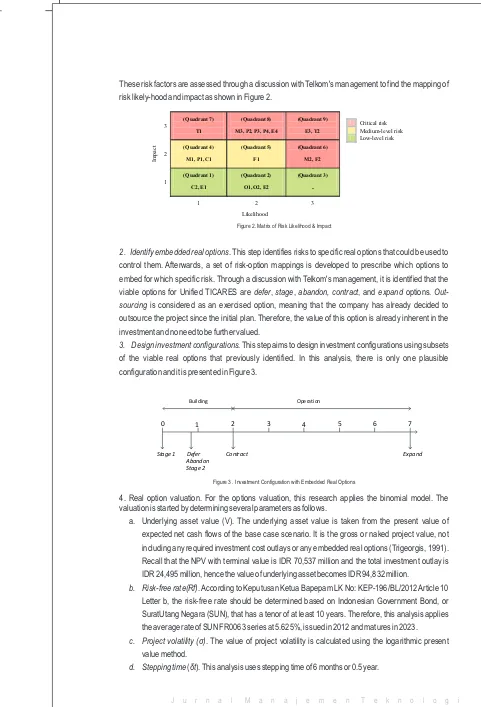
1. Risk analysis. This step identifies risks present in the pro-posed investment. There are 19 general IT risk factors based on Benaroch (2002) and Benaroch et al (2006) as shown in Table 2.
Table 2. Development Phase of Unified TICARES
Risk Area General IT Risk Factor
Monetary M1 Firm cannot afford the project M2 Poor estimation in costs and/or benefits. M3 Development or operational costs may not remain in
line with projected benefits.
Project P1 Staff lacks needed technical skills and experience. P2 Lack of architectural stability or compliance P3 Project is too large or too complex regarding to the
usage of company’s resource.
P4 Inadequate infrastructure for implementation. Functionality F1 Inadequate design that may lead to performance
shortfalls.
F2 Problematic or unclear requirements. Organizational O1 Uncooperative internal parties
O2 Parties are slow to adopt and/or adapt the new system Competition C1 Competition’s response eliminates the firm’s
advantages
C2 Competitive preemptive actions from competitors that eliminates firm’s advantages.
Environmental E1 Low customer/supplier demand or usage
E2 Demand exceeds expectation (follow-up opportunities exist)
E3 Demand or usage may overwhelm the application E4 Unanticipated action of regulatory bodies. Technological T1 Application may be infeasible with the technologies
considered, or the implementation technologies considered may be immature
T2 The introduction of a new superior implementation technology may render the application obsolete
Im
Figure 2. Matrix of Risk Likelihood & Impact
2. Identify embedded real options. This step identifies risks to specific real options that could be used to control them. Afterwards, a set of risk-option mappings is developed to prescribe which options to embed for which specific risk. Through a discussion with Telkom's management, it is identified that the viable options for Unified TICARES are defer, stage, abandon, contract, and expand options. Out-sourcing is considered as an exercised option, meaning that the company has already decided to outsource the project since the initial plan. Therefore, the value of this option is already inherent in the investment and no need to be further valued.
3. Design investment configurations. This step aims to design investment configurations using subsets of the viable real options that previously identified. In this analysis, there is only one plausible configuration and it is presented in Figure 3.
Figure 3 . Investment Configuration with Embedded Real Options
4. Real option valuation. For the options valuation, this research applies the binomial model. The valuation is started by determining several parameters as follows.
a. Underlying asset value (V). The underlying asset value is taken from the present value of expected net cash flows of the base case scenario. It is the gross or naked project value, not including any required investment cost outlays or any embedded real options (Trigeorgis, 1991). Recall that the NPV with terminal value is IDR 70,537 million and the total investment outlay is IDR 24,495 million, hence the value of underlying asset becomes IDR 94,832 million.
b. Risk-free rate(Rf). According to Keputusan Ketua Bapepam LK No: KEP-196/BL/2012 Article 10 Letter b, the risk-free rate should be determined based on Indonesian Government Bond, or SuratUtang Negara (SUN), that has a tenor of at least 10 years. Therefore, this analysis applies the average rate of SUN FR0063 series at 5.625%, issued in 2012 and matures in 2023.
c. Project volatility (ó). The value of project volatility is calculated using the logarithmic present
value method.
d. Stepping time (ät). This analysis uses stepping time of 6 months or 0.5 year.
3.3. Comparison Result Between DCF and ROA
Through this case study, it can be analyzed how DCF and ROA approach differ in process and results. It is said earlier that DCF analysis does not account for managerial flexibility to intervene the project in order to adapt the investment with arousing future business situation. With ROA approach, the value of these flexibilities can be included to the project static value, revealing the true investment value. This way, the value of TICARES investment evaluated with the ROA approach is higher than that obtained from DCF approach.
As shown in Figure 5, with DCF approach, the value of investment is IDR 70,537 million for net cash flow discounted at 13.56%. Using ROA model, the true value of the investment yields a slight higher value which is IDR 70,934 million.
The configuration investment of Unified TICARES is considered as sequential compound option, meaning that the scenario has multiple stages and the latter depends on the success of previous stage. The analysis requires the calculation of the longer-term option first and then the shorter-term option because the value of a compound option is based on another option (Mun, 2002).
The first step of this real options valuation is generating the lattice of underlying asset. Prior to this process is calculating the up factor, down factor and risk-neutral probability using the following equations:
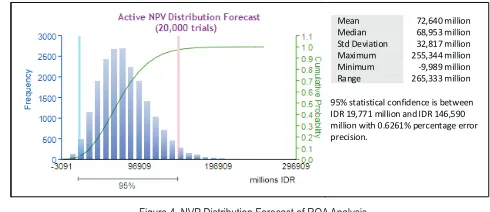
Figure 4. NVP Distribution Forecast of ROA Analysis
Up factor : ...(2)
Down factor :
...(3)
Risk-neutral probability :
...(4)
Where ó is volatility of the natural logarithm of the underlying asset and ät is the stepping time.
The second step is calculating the intermediate equity lattice of the longer-term option, which is Stage 2. The value of each node in this lattice is generated using a backward induction method. Finally, the third step is calculating the shorter-term option, which is building Stage 1. The value of this sequential compound option is IDR 70,934 million. This number represents the value of active NPV or
A A
NPV .Inputting the figure of NPV into Equation 1 can result to the value of managerial flexibilities, which is IDR 397 million. The presence of real options increases the static project value by 0.56%.
A sensitivity analysis also conducted to see whether the configuration is robust to changes within reasonable parameter value ranges. Monte Carlo simulation is generated under 20,000 trials. It
A assumed that each variable follows normal distribution with standard deviation of 10%. NPV forecast with 95% statistical confidence is between IDR 19,771 million and IDR 146,590 million with only 0.08% chance that the NPV will be negative. Figure 4 presents the resulting simulation.
Mean 72,640 million Median 68,953 million Std Deviation 32,817 million Maximum 255,344 million Minimum -9,989 million Range 265,333 million 95% statistical confidence is between IDR 19,771 million and IDR 146,590 million with 0.6261% percentage error precision.
Figure 5 . Comparison Results of Unified TICARES Investment Value
The Monte Carlo simulations for the two approaches also show almost similar results. With the 95% statistical confidence, the lower boundary values are in the range of IDR 15,000 million and IDR 20,000 million. The upper boundary values are around of IDR 146,000 million. In addition, both simulations show that the probability of negative NPV to likely occur is very small. This way, both approaches indicates that Unified TICARES project is a promising investment.
The ROA results show how the managerial flexibility can increase the investment opportunity by lifting the static project value. However, the results with the ROA approach did not show much difference against the DCF approach. This is due to limited viable real options that can be embedded in the investment and the value of these existing real options only give small contributions to the investment value. In addition, some viable real options do not offer any benefits for the company when it is executed. For example, the abandon option is viable for the Unified TICARES investment, but executing this option do not give any additional salvage value for the project. In other words, the value of flexibility is not remarkable in this investment.
As seen from the overall analysis step, ROA is also more tasks demanding than DCF approach. The DCF process stops as the analyst find the value of NPV. However, from the ROA perspective, this NPV
P
only represents the passive NPV, or NPV , hence further analysis is required to calculate the active NPV, A
or NPV . This extended procedure demands extra effort to identify the values of more variables.
4. Conclusion
Considering the costs and benefits of each approach, it cannot be said that DCF is superior to ROA, and vice versa. ROA can be applied as a supplement to DCF if the company deems the latter approach is not sufficient to give a comprehensive justification. ROA is also useful when the investment project consists of more than one configuration. Unfortunately, this advantage cannot be demonstrated through Unified TICARES project which only consist of one configuration and the flexibility values are not remarkable.
Valuation of Information Technology Investment Using the Discounted Cash Flow and Real Options Analysis: A Case Study of Unified TICARES in PT.Telekomunikasi Indonesia Valuation of Information Technology Investment Using the Discounted Cash Flow and Real Options Analysis:
Mun, J. (2010). Modelling Risk: Applying Monte Carlo Risk Simulation, Strategic Real Option, Stochastic Forecasting, and Portfolio Optimization. 2nd ed. New Jersey: John Wiley & Sons.
Neufville, R. (2003). Real Options: Dealing with Uncertainty in Systems Planning and Design. Integrated Assessment, 40 (1), p.26-34.
NIST. (2002) Risk Management Guide for Information Technology Systems.National Institute of Standards and Technology Special Publication.
PwC. (2011). Indonesian Pocket Tax Book 2011.Available at http://www.pwc.com/id/en/indonesian-pocket-tax-book/assets/Indonesian-Pocket-Tax-Book_2011.pdf [accessed November 10, 2011]
Sekaran, U. and Bougie, R. (2009). Research methods for Business. 5th ed. Netherlands: John Wiley & Sons, Inc.
Smit, H. and Trigeorgis, L. (2004). Strategic Investment, Real Options and Games. United Kingdom: Princeton University Press.
Stout, D. et al. (2008). Improving Capital Budgeting Decisions with Real Options. Management Accounting Quarterly, Summer 2008 9 (4).
Telkom. (2006). Speedy Broadband Service Was Held Nationally.Available at
http://www.telkom.co.id/media-corner/press-release/speedy-broadband-service-was-held-nationally.html [accessed August 3, 2012]
Telkom. (2009).Telkom Info Memo 2009.Available at
http://www.telkom.co.id/download/File/UHI/Tahun2010/InfoMemoIndo/InfoMemoTelkom_FY 09.pdf [accessed November 5, 2012]
Telkom. (2010a) .Telkom Indonesia Annual Report 2010. Available at
http://www.telkom.co.id/download/File/UHI/Tahun2011/AnnualReport/AR_2010_EnglishF.pdf [accessed September 1, 2012]
Telkom. (2010b). Telkom Info Memo 2010.Available at http://www.tel
kom.co.id/download/File/UHI/Tahun2011/InfoMemo/Info_Memo_FY2010v16.pdf [accessed November 5, 2012]
Telkom. (2011c. Telkom Indonesia Annual Report 2011. Available at
http://www.telkom.co.id/download/File/UHI/2012/AnnualReport/AR_Telkom_2011_English_L owrest.pdf. [accessedJune 20, 2012]
Telkom. (2011d).Telkom Info Memo 2011.Available at http://
www.telkom.co.id/download/File/UHI/2012/InfoMemo/Infomemo_FY11__30Jul12.pdf [accessed November 5, 2012]
Te l k o m . ( 2 0 1 2 ) . Te l k o m I n f o M e m o N i n e M o n t h o f 2 0 1 2. A v a i l a b l e a t http://www.telkom.co.id/download/File/UHI/2012/InfoMemo/InfoMemo_FINAL_1.pdf [accessed November 5, 2012].
Telkom (2011a). Justifikasi Full Maneuver Customer Relationship Management, unpublished document.
Telkom (2011b). Nota AnalisaKelayakanInvestasi Unified TICARES Full Maneuver CRM, unpublished document.
Trigeorgis, L. (1991). A Log-Transformed Binomial Numerical Analysis Method for Valuing Complex Multi-Option Investments.The Journal of Financial and Quantitative Analysis, 26 (3), pp.309-326
Winslow, P. et al (2012). The Apps Revolution Manifesto, Volume 1: The Technologies. Credit Suisse. In Unified TICARES, DCF has been confirmed to be adequate in providing reason for the company to
execute the project. ROA in this particular case does not give additional perspective that might change management decision to execute the project. In addition, it would take extra efforts to perform ROA. However, when the management requires further insight into the risk management aspect of the investment, ROA should be taken. To conclude, if the capital budgeting process of one investment is not sufficient through the use of DCF approach, ROA should be used to complement the previous analysis and create a better strategic insight on the investment. Using ROA is more related to company management than with valuation methodology.
References
Angelou, G.N. and Economides, A.A. (2007). Controlling Risks in ICT Investments with Real Options Thinking. Proceedings 11th Panhellenic Conference on Informatics (PCI 2007), University of Patras, Greece.
Appari, A. and Benaroch, M. (2005). A Viable Approach for Measuring the Risk-Return Relationship of IT Investments.Proceedings of the Eleventh Americas Conference of Information Systems, Omaha, NE, USA August 2005: 361-366.
B a n k I n d o n e s i a ( 2 0 1 2 ) .T h e I n f l a t i o n T a r g e t. A v a i l a b l e a t http://www.bi.go.id/web/en/Moneter/Inflasi/Bank+Indonesia+dan+Inflasi/penetapan.htm [accessed November 19, 2012]
Benaroch, M. (2001). Option-Based Management of Technology Investment Risk. Manage-ment, Syracuse University.
Benaroch, M. (2002). Managing Information Technology Investment Risk: A Real Options Perspective.
Journal of Management Information Systems 19 (2):45-86.
Benaroch, M. et al. (2006). Real Options in IT Risk Management: An Empirical Validation of Risk-Option Relationship. MIS Quarterly 30 (2): 827-864.
Benaroch, M. et al. (2007). Option-Based Risk Management: A Field Study of Sequential IT Investment Decisions. Journal of Management Information Systems, 24 (2).
Brach, M.A. (2003). Real Options in Practice. New Jersey: John Wiley & Sons, Inc.
Bodén, B. and Ahlén A. (2007). Real Option Analysis, A Study of Implementation Impe-diments.Undergraduate.School of Business, Economic and Law, Göteborg University.Available at https://gupea.ub.gu.se/bitstream/2077/4725/1/0607.32.pdf [accessed June 5, 2012].
Gartner (2012). Gartner-Forbes 2012 Board of Directors Survey Shows IT Is at Top of Investment Priorities, Tied With Sales. Available at http://www.gartner.com/it/page.jsp?id=2088815 [accessed November 6, 2012].
Howell, S. et al. (2001). Real Options, Evaluating Corporate Investment Opportunities in a Dynamic World. Great Britain: Pearson Education Limited.
Jialei, Wang.(2006). A Real-Options Based Approach to Venture Business Valuation. The Eighth West lake International Conference on SMB.
Kendrasti, K. and Ranti, B. (2009). Penerapan Kerangka Kerja OBRIM (Options-Based Risk Management) Dalam Upaya Memaksimalkan Nilai Investasi Teknologi Informasi Studi Kasus Pada PT.X. Konferensi Nasional Sistem dan Informatika: 83-88.