Due to the content of the programme, the course had to focus on federalism and regionalism in Western Europe. Of the regions of the UK, I focused primarily on Scotland and almost completely dropped the Northern Ireland case.
Federalism and federation
Conversely, representatives on the federal team can make binding decisions for which they do not seek the approval of the regions first. Consequently, governments of different colors should be allowed to form at the federal level and in each of the regions.

Confederalism, regionalism and regionalized states
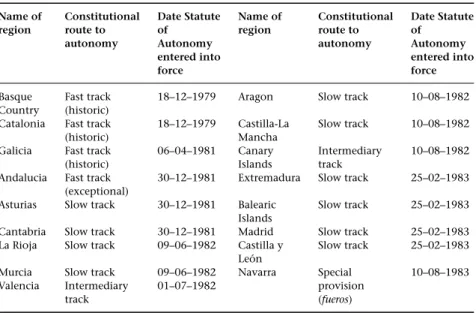
The Center can increase, decrease or even suspend or revoke the regional level of autonomy without requiring the consent of the regions. In Spain, the central government negotiated a statute of autonomy with each of the regions (autonomous communities).
Multilevel governance
Federations then simply become a special type of MLG, a different brand of MLG than that which characterizes EU governance. Dividing MLG into two types expands our understanding of public policy making beyond the traditional framework of the state.
Conclusion
This applies to most French and Italian regions or Scandinavian municipalities. Although there are ongoing discussions on expanding the legislative, fiscal and administrative powers of the Italian regions, the level of decentralization has reached that of the Spanish regions in the 1980s.
Introduction
Centre–periphery relations and the process of state formation
State and nation building in the European core: Germany Germany: the origins of a federal nation-state
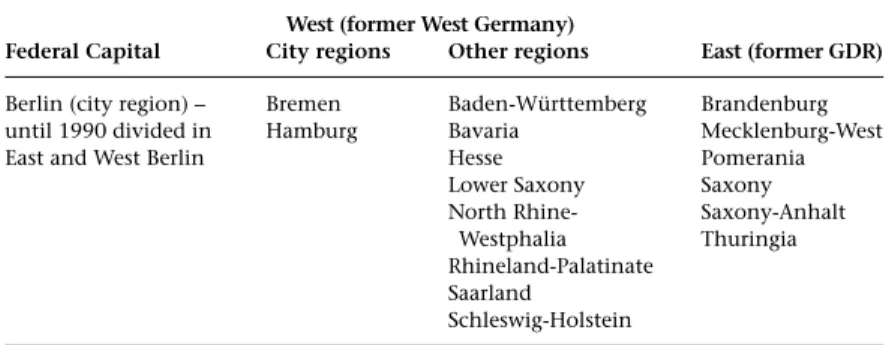
At the same time, Prussia expanded its territory by controlling additional territories in the east and west of the confederation. In addition, each of the 25 regions was represented in the Bundesrat, the federal second chamber.
State and nation building in the West European periphery: Spain, the United Kingdom and Austria
The Austrian Constitution of the First Republic (1920) was also the basis for its constitution, which was created after the Second World War (1948). This is partly a reflection of the strong centralization that occurred in the nineteenth century.
State building in the interface peripheries
Many of the Flemish people who had actively collaborated with the Nazis would find even less legitimacy in the Belgian state. The first three are also recognized as official (working) languages by the Swiss Federal Center.
Conclusion
In the first part of the chapter, I elaborate on the distinction between dual and organic federalism. The final part of the chapter considers the "flexibility" of federal or decentralized arrangements.
Dual, cooperative and organic federalism
Dimension 1: assignment of legislative competencies General concepts
For such a move, a constitutional article must be adopted, which first states the exclusive legislative competence of the center. The Belgian constitution does not specify the powers of the regions and communities in great detail. Third, there is no supreme, written "British Constitution" in the strict sense of the word.
Dimension 2: administrative versus legislative federalism General concepts
They also wanted to maintain control over the resources (revenue raising) to finance the implementation of federal legislation. In addition to civilian governors, the central government appoints a central government delegate (delegado del gobierno) for each of the regions. The civilian governors (assistant provincial deputies) are directly responsible to the central government, not to the presidents or executives of the regions.
Constitutional asymmetry
- Diminishing constitutional asymmetry in Spain
- Constitutional asymmetry in Britain
- Modest constitutional asymmetry: Belgium
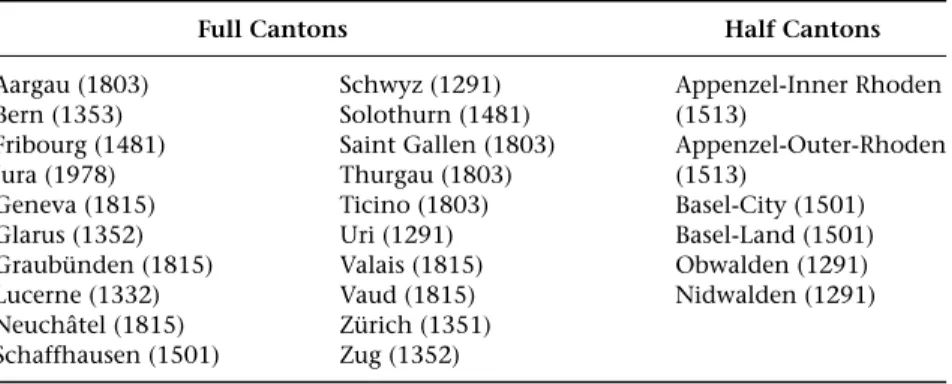
- Switzerland: do half cantons constitute an example of constitutional asymmetry?
More than 75 percent of voters turned against the proposal (BBC News website 5 November 2004). Therefore, the inhabitants of the Brussels Capital Region rely on the Flemish or French Community for Community matters. These elections coincide with the renewal of the Flemish Parliament and the Brussels Capital Region Parliament.
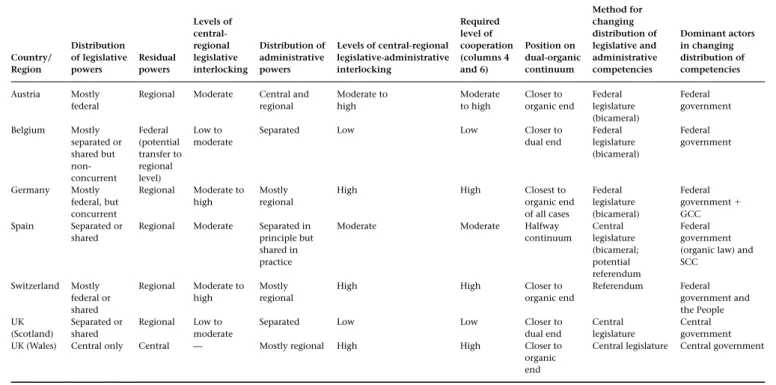
Formal processes for changing the distribution of central-regional competencies
General observations
The first method is to require the consent of the central second chamber next to the lower house. When a federal government introduces a constitutional amendment, the consent of the federal bicameral legislature is required. Unlike in Switzerland, constitutional amendments do not usually require the consent of the people.
Changing the distribution of central-regional competencies by means of judicial review
General observations
Therefore, we expect that the Spanish Constitutional Court will play an important role in clarifying the meaning of the Spanish Constitution. Consequently, members of the Federal Parliament and the Federal Government have had the greatest interest in clarifying the division of central-regional powers. Second, in what sense has the case law of the constitutional courts influenced the division of central and regional powers?
The composition of constitutional courts
2 are appointed by the General Judicial Council and 8 are appointed directly by the central parliament (4 from each chamber on the basis of a three-fifths majority; Rubio Llorente 1988a: 127–31). Finally, even in Belgium, only the Federal Parliament decides on the composition of the Constitutional Court. The jurisprudence of the constitutional courts and their impact on the distribution of central-regional powers.
The jurisprudence of constitutional courts and their impact on the distribution of central-regional competencies
To that end, with the support of the Social Democracy (PSOE), it adopted LOAPA (Ley Orgánica de Armonización del Proceso Autonómico). For the first nine years of its existence, all members of the Austrian Constitutional Court (ACC) were appointed by the Federal Parliament. Most of the court's rulings have run parallel to the dominant (federal) political trends of the time (Welan and Noll 1997: 171).
Conclusion
The regions' input in co-determining the composition of the Constitutional Court is limited. The Spanish Constitutional Court has played a central role in the consolidation of the "state of the autonomies". In the fifth section, I analyze the state's contribution to reducing such imbalances.
Competence assignment in a federal state
In some federations, the center and the regions may be prohibited from participating in unilateral deficit spending. The center will play a dominant role in controlling development programs, but the regions may bear the brunt of the redistribution programs. Conversely, the regions may be keen to retain some of the authority for implementation as well.
Competence assignment in Western Europe
Testing the predictive value of the legislative and functional theories of federalism
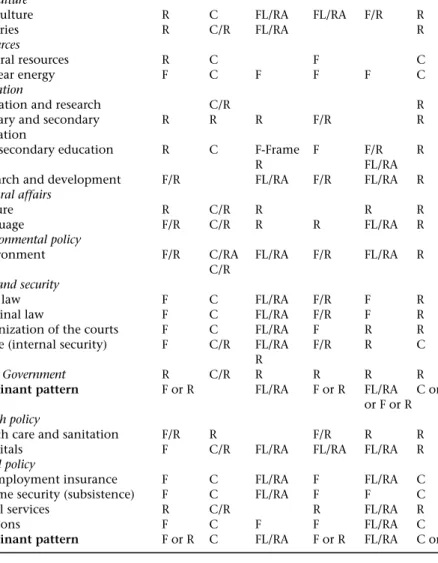
There is a clear dominance of the central governments in the management of the most important instruments of macroeconomic stabilization. Clearly, the empirical findings raise the question of why we find so little evidence in support of the legislative theory of federalism. The American political system has some institutional features that make the predicted outcome of the legislative theory more likely than in Western Europe.
Some observations on the predictive value of the regulatory theory of federalism
In multinational states, minority nations may challenge the authority of the state and seek to take full control of policy measures that are still shared with the center. Business groups also occasionally sided with the center as they lamented high levels of regulatory uncertainty. Therefore, in Belgium the distribution of environmental policies does not fully comply with the regulatory theory of federalism.
Whither the European Union? A brief intermezzo
The Belgian regions can represent Belgium at EU (and international) levels in matters that fall within their area of competence. In each of these four policy areas, the EU has become an important regulator, even in some respects (for example, external commercial relations) the only one (Hooghe and Marks. For the EU has turned into an active regulator, especially in the four policy areas mentioned above , but it still relies on the goodwill of the member states or their regions for the implementation of most of these regulatory policies (Börzel and Risse 2000; Kelemen Swenden 2004a).
The scope of federalism: expenditure and tax (de-)centralization
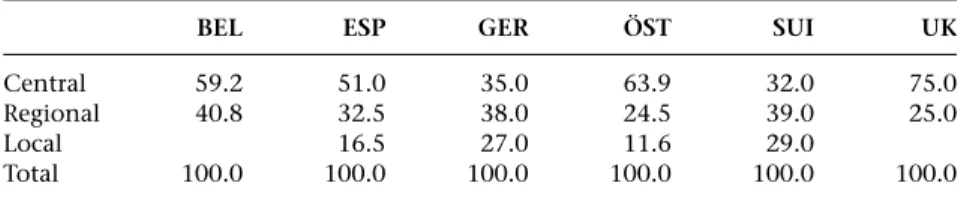
The German states and the Swiss cantons absorb approximately a similar share of the public expenditure pie. We must therefore take into account the role of the center and the regions in each of these aspects. With the German context in mind, Dietmar Braun and his team also specified the federal administration of the tax as one of its core features.
Vertical fiscal imbalances and why they arise
Why not all taxes are suitable for decentralization
For example, due to the mobility of the tax base, sales taxes and VAT are equally suitable for decentralization. In contrast, VAT is a 'multi-stage tax', levied at different stages of the production process. For example, in Belgium, levels of interregional personal mobility are low due to the presence of a significant linguistic fault line (Murphy 1988).
Why not everyone favours a decentralized tax structure
Regional governments that prefer a less restrictive economic philosophy may oppose such regulatory intervention from above. Money sticks with the regional governments that receive it, rather than flowing to the citizens for whom it is intended (Ahmad and Craig. In contrast, central governments that adhere to a Keynesian strategy are more likely to centralize the power to raise taxes .
Vertical and horizontal fiscal imbalances and how they can be reduced
Central governments can decide to redistribute tax revenues to the regions on the basis of the 'diversion principle' (principe de juste retour). When central governments act accordingly, we can say that they are engaging in horizontal fiscal equalization in the broadest sense of the word. When this happens, we can say that the resource-rich regions engage in horizontal fiscal equalization in the narrow sense of the word.
Regional spending, tax autonomy and equalization
- Switzerland
- Germany
- Austria
- Belgium
- Spain
- United Kingdom
For example, only 57 percent of the regional share of FDT receipts is distributed by origin. Corporate income tax comes in third, filling nearly 7.0 percent of local and regional revenue coffers. In 2003, such equalization payments represented 13.6 percent of the Walloon Regional Budget (Verdonck and Deschouwer 2003: 107).
Conclusion
All regions except the Swiss cantons and the Spanish fueros (Basque and Navarre) have no significant revenue or autonomy to raise taxes. This chapter aims to illustrate the relationship between federalism, the party system and the internal organization of the main political parties. On the basis of the most recent general (central) election results, I will illustrate the changes in the regional support base for the most important statewide and non-state parties.
Mapping the fragmentation of the party system
However, in the 2005 general election the party received only 15.8 per cent of the vote in Scotland. Regional differences in state-level party support are not necessarily due to the strength or weakness of competing state-level parties. With the exception of the United Kingdom, these non-state parties garnered more than 10 percent of the electoral vote.

Non-state-wide parties
Non-state-wide parties of a (predominantly) non-ethno-regionalist character
The group of non-state parties itself is diverse and in some respects their classification is cross-classified with that of ethno-regionalist parties. Aided by the preselection of a CSU candidate for chancellor, it attracted 58.6 percent of the Bavarian vote in the 2002 federal election. The CSU electorate represents 9 percent of the total German electorate and almost a quarter of the Christian Democrats' overall vote .
Ethno-regionalist parties Definition and ideological variation
Strictly speaking, the classification of the Vlaams Blok as an ethno-regionalist party is questionable. The success of ethno-regionalist parties is also determined by a number of factors external to the party. Combined support for the ethno-regionalist parties has since stabilized or declined somewhat (in the 1999 regional elections they received 18.9 percent of the vote).

The organization of state-wide parties
General overview
However, the party leader usually plays a leading role in the day-to-day management of the party. Normally, the regional party divisions of a federal state coincide with the regions of the federation. The relative strength of the regional party branches can be emphasized in several ways.
Six hypotheses with regard to the relationship between party and state structure
In this sense, the influence of the central party branch in determining the regional party leaders has weakened. At the same time, the autonomy of the regional party branches (in personnel, finances and regional campaigns) must also increase. Furthermore, the involvement of the regional party branches in central party affairs is likely to increase.
Belgium: the odd fellow in party organizational terms
In 2001, the party presidents of the Flemish Liberal Democrats and Greens as well as the party president of the French-speaking Social Democrats served as regional MPs. The party presidents of the Flemish Christian Democrats and the French-speaking Christian Democrats served as federal MPs. The party presidents of the extreme-right Flemish nationalists and the French-speaking liberals represented their party in the European Parliament.
Parties in the electoral arena
Party strategies in a multilevelled electoral environment: general observations
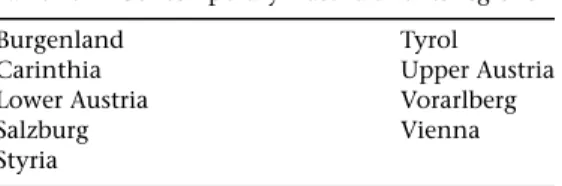
For example, some of the regional elections of Austria and East Germany coincide (Tyrol and Upper Austria; Carinthia and Salzburg; and the election of some East German regional parliaments). The result of the first non-united regional election (June 2004) was widely interpreted through the lens of the result of the previous (regionally split) federal election. Similarly, a conservative Spanish government may care more about the outcome of regional elections in Catalonia than in Extremadura.
Party strategies in a multilevel electoral environment with ethno-regionalist parties
A first set takes the distribution of voters on the ethno-regionalist issue as a starting point. Because the ethno-regionalist camp represents a significant portion of the electorate, state-wide parties cannot so easily downplay the regionalist issue. Of all the state-wide parties, no one responded more drastically to the rise of the ethno-regionalist parties than the Belgian parties.