i
TEACHING ENGLISH READING THROUGH TEAM-BASED-PROJECT IN SMPN 4 BISSAPPU
(A Pre- Experimental Research at the Second Grade of SMPN 4 Bissappu)
A THESIS
Submitted to the Faculty of Teacher Training and Education Muhammadiyah University of Makassar in Partial Fulfillment of the Requirement for the
Degree of Education in English Education Department
SUCI INDAH SARI 105351112517
ENGLISH EDUCATION DEPARTMENT
FACULTY OF TEACHER TRAINING AND EDUCATION UNIVERSITAS MUHAMMADIYAH MAKASSAR
2022
LEMBAR PENGESAHAN
APPROVAL SHEET
COUNSELING SHEET
UNIVERSITAS MUHAMMADIYAH MAKASSAR FAKULTAS KEGURUAN DAN ILMU PENDIDIKAN
SURAT PERNYATAAN
Saya yang bertanda tangan di bawah ini:
Nama : Suci Indah Sari NIM : 105351112517
Jurusan : Pendidikan Bahasa Inggris
Judul Skripsi : Teaching English Reading Through Team Based Project In SMPN 4 Bissappu
Dengan ini menyatakan:
Skripsi yang saya ajukan di depan tim penguji adalah hasil karya saya sendiri bukan hasil ciplakan dan tidak dibuatkan oleh siapapun.
Demikian pernyataan ini saya buat dengan sebenar-benarnya dan bersedia menerima sanksi apabila pernyataan saya tidak benar.
Makassar, Juni 2022 Yang Membuat Pernyataan
Suci Indah Sari
UNIVERSITAS MUHAMMADIYAH MAKASSAR FAKULTAS KEGURUAN DAN ILMU PENDIDIKAN
SURAT PERJANJIAN Saya yang bertanda tangan di bawah ini:
Nama : Suci Indah Sari
Nim : 105351112517
Jurusan : Pendidikan Bahasa Inggris Fakultas : Keguruan dan Ilmu Pendidikan Dengan ini menyatakan perjanjian sebagai berikut:
1. Mulai dari penyusunan proposal sampai selesai penyusunan skripsi ini, saya akan menyusun sendiri skripsi saya (tidak dibuatkan oleh siapapun).
2. Dalam menyusun skripsi, saya akan selalu melakukan konsultasi dengan pembimbing yang telah ditetapkan oleh pimpinan fakultas.
3. Saya tidak akan melakukan penjiplakan (plagiat) dalam penyusunan skripsi.
4. Apabila saya melanggar perjanjian seperti pada butir1, 2, dan 3, saya bersedia menerima sanksi sesuai dengan aturan yang berlaku.
Demikian perjanjian ini saya buat dengan penuh kesadaran.
Makassar, Juni 2022 Yang Membuat Perjanjian
Suci Indah Sari
MOTTO & DEDICATION
MOTTO
“Make insults as motivation for succes”
DEDICATION
This research study to my beloved family,my mother sumiati, my father haeruddin, to my brother Muh. Sulfikar, to my sister Kurnia, to my grandfather Sunusi, to my grandmother Rohani, to my aunty Nurdiana, and Nuraeni, to my uncle Sunardi and all my cousin.
ABSTRACT
Suci Indah Sari. 2022. Teaching English Reading Materials Through Team Based Project (A Pre-Experimental Research at the Second Grade of SMPN 4 Bisappu). English Education Department, Faculty of Teacher Training and Education, Muhammadiyah University of Makas- sar. Supervised by Saiful and Maharida.
This study aimed to improve students' reading ability related to understanding main ideas and supporting ideas. Regarding the use of the team based project method, students can learn while discussing with oth- er students.
This study applied Pre-Experimental Method using one group pre- test and post-test research and collect data through pre-test and post-test instruments. The sample in this study was VIII SMP Negeri 4 Bisappu which amounted to 25 students. Sample was taken by using Simple Ran- dom Sampling Technique. The data obtained was also analyzed by using SPSS Application version 25.
The results of the data showed that there was a difference between the students' pre-test and post-test. The main score of the students before being given treatment was 52.5 and increased to 80.36 after applied the Team-Based-Project. In addition, from the t-test analysis, the t-test value is greater than the t-table, the students' total vocabulary mastery (8.34>1.714). The research hypothesis can be concluded that the Null Hypothesis (H0) is rejected and the Alternative Hypothesis (H1) is accepted. This means that the team based project method is effective in improving students' reading abilities.
Keywords : Teaching English, Reading Ability, Team-Based-Project.
ABSTRAK
Suci Indah Sari 2022. Mengajar Membaca Bahasa Inggris Melalui Projek Berbasis Tim di SMPN 4 Bisappu (Penelitian Pre-Experimental di Kelas Dua SMPN 4 Bisappu). Fakultas Keguruan dan Ilmu Pendidi- kan Universitas Muhammadiyah Makassar. Dibimbing oleh Saiful dan Maharida.
Penelitian ini bertujuan untuk meningkatkan kemampuan mem- baca mahasiswa terkait pemahaman ide-ide utama dan ide-ide pen- dukung. Mengenai penggunaan metode proyek berbasis tim, siswa dapat belajar sambil berdiskusi dengan siswa lain.
Penelitian ini menerapkan Metode Pra-Eksperimen dengan menggunakan satu kelompok penelitian pre-test dan post-test serta mengumpulkan data melalui instrumen pre-test dan post-test. Sampel da- lam penelitian ini adalah VIII SMP Negeri 4 Bisappu yang berjumlah 25 siswa. Sampel diambil dengan menggunakan Teknik Simple Random Sampling. Data yang diperoleh juga dianalisis dengan menggunakan Ap- likasi SPSS versi 25.
Hasil data menunjukkan bahwa ada perbedaan antara pre-test dan post-test siswa. Nilai utama siswa sebelum diberikan perlakuan adalah 52,5 dan meningkat menjadi 80,36 setelah menerapkan Projek Berbasis Tim. Selain itu, dari analisis uji-t, nilai uji-t lebih besar dari tabel-t, total penguasaan kosakata siswa (8,34>1,714). Hipotesis penelitian dapat disimpulkan bahwa Hipotesis Null (H0) ditolak dan Hipotesis Alternatif (H1) diterima. Artinya, metode proyek berbasis tim efektif dalam meningkatkan kemampuan membaca siswa.
Kata Kunci : Mengajar Bahasa Inggris, Kemampuan Membaca, Projek Berbasis Tim.
ACKNOWLEDGEMENT ميحرلانمحرلاهللامسب
Alhamdulillah Robbil Alamin. The researcher would like to expresse her highest gratitude to the almighty Allah SWT, who has given guidance, blessing, and mercy to his in completing this thesis. Salam and Shalawat are addressed to the final, chosen, religious messenger, the prophet Muhammad S.A.W.
Further, the researcher also expresses sincerely deepest gratitude to her beloved parents; Haeruddin and Sumiati for their prayer, financial, motiva- tion, and sacrifice for his success, and their love sincerely and purely without time. The researcher realized that in carrying out the research and writing this proposal, many people have contributed their valuable suggestions, guidance, assistance, and advice for the completion of this proposal. Therefore the re- searcher would like to acknowledge them:
1. Prof.Dr. H. Ambo Asse, M.Ag, the Rector of Muhammadiyah University of Makassar.
2. Erwin Akib, M.Pd., Ph.D., the Dean of FKIP UNISMUH Makassar.
3. Dr. Ummi Khaerati Syam, S.Pd, M.Pd, the Head of English Education
Department of FKIP UNISMUH Makassar, who gave her valuable authorities and suggestion in doing this thesis.
4. My biggest thanks to Dr. Saiful.S.Pd.M.P.d as my first supervisor who has given his valuable time and patients, to support assistance and guid- ance to complete this thesis.
5. My biggest thanks to Maharida S.Pd.M.Pd as my second supervisor who has given her valuable time and patients, to support assistance and guidance to complete this thesis.
6. Her gratitude to Syabier Karim, S.Pd.MM. The headmaster of SMPN 4 Bissappu, Helmy Fadillah Nur,S.Pd. The english teacher, all of staff and also all respondents of this research, the second grade students of SMPN 4 Bissappu.
7. The researcher’s beloved sister, and brother muh.sulfikar who always pray to allah swt. For my succes.
8. The resercher sudirman S.E who always pray to Allah swt for my success.
9. All of friends and her beloved people, who help and support the researcher to finish the graduating paper, and her close friends which cannot be named of the time.
Amin.
Billahi Fi Sabillil Haq Fastabiqul Khaerat
July 2022, Makassar The Researcher,
Suci Indah Sari
LIST OF CONTENTS
COVER ... i
LEMBAR PENGESAHAN ... ii
APPROVAL SHEET ... iii
CONSELLING SHEET ... iv
SURAT PERNYATAAN... vi
SURAT PERNJANJIAN ... vii
MOTTO AND DEDICATION ... viii
ASBTRACT ... ix
ABSTRAK ... x
ACKNOWLEDGEMENT ... xi
TABLE OF CONTENTS ... xiii
LIST OF TABLE ... xv
LIST OF FIGURES ... xvi
LIST OF APPENDICES ... xvii
CHAPTER I INTRODUCTION ... 1
A. Background. ... 1
B. Problem Statement ... 6
C. Research Objective ... 6
D. Significance of The Research ... 6
E. Scope of The Research ... 7
CHAPTER OF RELATED STUDY ... 8
A. Previous of Related Study ... 8
B. The Concept of Reading. ... 11
1. Definition of reading ... 11
2. Principle of reading ... 13
3. The importance of reading... 13
4. The aims of reading ... 14
5. Techiques in reading... 15
C. The Concept of Narrative Text... 18
1. Definition of narrative text ... 18
2. Generic structure of narrative text ... 18
D. The Concept f Team-Based-Project ... 20
1. Definition of team based project ... 20
2. The implementation of team based project ... 20
3. Basic elements in the team based project ... 21
4. The advantages and disadvantages of team based project ... 22
E. Conceptual Framework ... 24
CHAPTER III RESEARCH METHOD ... 26
A. Research Design ... 26
B. Population and Sample ... 27
C. Research Variable ... 28
D. Research Instrument ... 28
E. Data Collection ... 29
F. Data Analysis ... 31
CHAPTER IV FINDING AND DISCUSSION ... 35
A. Findings ... 35
B. Discussion ... 44
CHAPTER V CONCLUSION AND SUGGESTION ... 49
A. Conclusion. ... 49
B. Suggestion ... 50
REFERENCE ... 51 APPENDIX ...
LIST OF TABLES
4.1 The Students’ Mean Score in Main Idea ... 35
4.2 The Students’ Mean Score in Supporting Idea ... 36
4.3 The Students’ Mean Score in Main Idea & Supporting Idea ... 36
4.4 The Students’ All Score Categories ... 37
4.5 The Result of T-Test Calculation ... 44
LIST OF FIGURES
2.1 Conceptual Framework………...…25
4.1 The Result of Students’ Pre-Test in Main Idea………...……38
4.2 The Result of Students’ Pre-Test in Supporting Idea………..39
4.3 The Result of Students’ Pre-Test and Post-Test………..40
4.4 The Mean Score Students’ Reading Ability in Main Idea………...41
4.5 The Mean Score Students’ Reading Ability in Supporting Idea………..42
4.6 The Mean Score Students’ Reading Ability……….43
LIST OF APPENDIX Appendix A. Data-Data Penelitian
Appendix B. Sertifikat Turnitin
Appendix C. Surat Penelitian dari LP3M Appendix D. Kartu Kontrol Penelitian Appendix E. Surat Telah Selesai Meneliti Appendix F. LOA (Letter of Acceptance) Appendix G. Dokumentasi Penelitian Appendix H. Curriculum Vitae
CHAPTER I INTRODUCTION
A. Background
Teaching materials, for instance reading text, is an important part in the implementation of learning in school. Through teaching materials, for the teacher, it is easier to implement learning content and students are helped and easy to learn (Devetak & Vogrinc, 2013: 3). Teaching materials can be written material or unwritten and used to help students in learning a certain subject. Teaching materials can be made in various shapes according to the need and characteristics of teaching materials.
In reading program, every student frequently finds problems in under- standing a long text. Once they notice the text with long sentences, words with long syllables, and many paragraphs, the reading process become uninterest- ing and it can cause the decrease of the student motivation in learning. It gives impact in students’ comprehension of the text. In order to select the appro- priate reading material to the students, Nuttall (2005) suggest at least three cri- teria in selecting the reading text. They are suitability, exploitability, and readability (see H. D. Brown, 2001: 314). Suitability means that the con- tent of the text makes learners feel interested, enjoyed, challenged, and ap- propriate in achieve learning target. Exploitability gives
2
7
the opportunity to achieving learning goals with the text that can be deep exploration to instructional task, techniques, and also can be integrated into other part of language skills. Readability implicates lexical and structural dif- ficulty which encourages them without up set.
Reading is one of important language skill that must be learned by students, because through reading students can obtain more knowledge and information.
Seyler (in Delpita& Dewi, 2012: 2) defines reading is process of obtaining or constructing meaning from a word or cluster of words.
In other words, reading is a process of readers combining information and un- derstanding the idea of information in the text. In addition, Linse (2005: 69) defines reading as a set of skill that involves making sense and deriving of meaning from the printed word. It means that the readers must be able to de- code the printed words.Reading ability is the most important thing today and no one can get successw ithout having this ability. This ability helps people to get information from the simple reading text to the more complex one. The events of the day to the scientific issuec an be known through readinga bility.
As De Boer stateso"O ne of the best important ways of learning however is through reading. Successin schoola nd in life dependsin talrgep art on your ab- itity to reado'(. 1982:166)
Therefore, reading habit is one of the important points to be improved.
Nuttal (2005:4) describes reading as the process of the interaction between language perception and the reader‟s language skill, cognitive skill, and the knowledge of the world.
3 Reading can be defined as an active process of interaction between the reader and the information which consist of the text. In line with this, Bern- hardt (2011:7) states that reading is an act of taking in, understanding and in- terpreting information.
In other word, the ability to read will contribute people‟ ability of writing.
Reading is one of the important skills in English and it gives many benefits for us. Reading is the window of the world. By reading, people can get more knowledge and information from books, magazines, newspapers, and oth- ers.Reading is the most important component in learning process and social in- teraction because, first, reading is an indispensable communication tool in a Gray(1957:1099) revealed that reading have a very important social role in human life at all times. Mok and Lam (2011:1) added that language develop- ment and literacy has long been known as a very important aspect of total de- velopment of the child. Effect language development is very interesting and become one of the most research popular in the field of developmental psy- chology child.
Reading is bringing meaning to and getting meaning from printed or written material (Finochiaro and Bonomo in Tarigan, 1973:119). Through the reading activity, the students can enlarge their knowledge and it can also make them wise and respectful. Students’ reading ability must be developed. Teach- ers have duties to develop their skill and ability. Everything teachers do in reading class should be designed to build students’ ability to understand increasingly complex content of the texts.
4 The methods, techniques, and teaching media that is chosen and used by the teacher will influence the success of teaching learning process and stu- dents achievement. In the teaching reading activities a good method, media, and strategy are needed in this research. technique and media students are ex- pected to be able to have an active learning. Active learning can make the students interested in the reading lesson that given to them, not only silent or passive in the teaching and learning process However, despite reading a prom- inent role in improving language competencies, skills and numerous benefit of information which human can have by reading, there are still plenty of prob- lems with reading. People still have lacked in reading habit. According to Biancrosa and Snow (2006:3) approximately 8 million students in grades 4-12 read well below grade level. It is also reported that nearly 70% problems of the secondary readers deal with „reading comprehension‟. Based on research con- ducted in provinces in Indonesia, the result shows that Indonesian still has a low reading habit. The PISA study reported Indonesia students‟ reading per- formance in 2012 and 2015 as follows: In 2012, Indonesia ranked 64 of 65 countries; and in 2015, Indonesia ranked 62 of 70 countries. The report shows that Indonesian students‟ reading performance have increased during the pe- riods but still considered as poor literacy country. The result correlates with the rate of Indonesia‟s journal contribution. Seeing the correlation between reading habit and writing then it could be supportive data about how reading and writing affecting one another.
To conduct the research, researcher chose SMPN 4 Bisappu. After con-
5 ducting observations and short interviews with English Teacher of SMPN 4 Bis- appu, researcher found that some students were lazy to read the text, students had difficulty understanding the meaning of the text and had difficulty answering questions from the teacher. One way to attract students' attention and be interest- ing during teaching and learning is for teachers to use media as a tool and in- steresting methods to help students.
The solution describe earlier is a way to increase students’ reading ability thorough Team-Based-Project method. This is a learning method that is carried out in groups, which in a class is divided into several groups to improve students' reading. Each group was asked a question and then given time to answer the question. Each group also prepares a presentation that was displayed in front of the teacher. And the teacher was coached each group while using the team-based- project method and provide students with opportunities for creativity and collabo- ration.
Therefore, the researcher raised the title “Teaching English Reading Through Team Based Project in SMPN 4 Bisappu (A Pre-Experimental Research at the Second Grade of SMPN 4 Bisappu)”.
B. Problem Statement
Based on the background, researcher formulate the following research ques- tion, “How is the use of the team-based project method to increase read- ing ability related to understanding main idea and supporting idea ?”
6 C. Research objectives
Based on the problem above, the purpose of the study is to find out if the use of team-based-methods is very effective to improve students’ reading ability related to understanding the main main idea and supporting idea in SMP Negeri 4 Bissappu.
D. Significance of the Research
The results of this study are expected to be useful for many people in the learning process, such as:
1. For Students
This research is a study that teaches about reading by using team- based-project. Using the method of team based project in hopes that it can help students to understand the main idea and supporting idea.
2. For Teachers
This research is expected to develop the teacher's team- based project method, select and provide the right material and identify some of the difficulties that may be encountered. This study also aims to provide additional knowledge for other English teachers in applying the team based project method in the English class.
3. For other researchers.
This research is hoped giving beneficial description to any
7 other researcher who wants to study the same case, so this re- search become helpful information and useful reference for the next studies.
E. Scope of the Research
The scope of the research is in SMPN 4 BISSAPPU this study the researcher was wrote about how to teach English material ( narrative text) used a team-based project method to improve students' reading reading ability related understanding main idea and suporting idea.
9
9
CHAPTER II
REVIEW OF RELATED LITERATURE
A. Previous of Related Study
Several studies are similar to the following explanation:
Teaching materials are part of learning resources. According Depdiknas (2008) that teaching materials are all forms of materials used to assist teach- ers in carrying out teaching and learning activities, both written and unwrit- ten materials. While Sudjana (2009, p. 167) stated that teaching material is the content of the particular field of study that is given to the student based on the curriculum used in the school.
Harmer (2007: 23) teaching is not an easy job, but it is a necessary one and can be very rewarding when we see our student’s progress and know that we have helped to make it happen. It is true that some students can be difficult and stressful at times, but it is also worth remembering that at its best teaching can also be extremely enjoyable. Based on explanation, the writer concludes that teaching activities and manages the environment in a good condition to make and give the nopportunity for the students in learn- ing process to get the purpose.
Rumelhart (1985). Reading is a process, it starts from viewing the lin- guistics surface representation and ends with certain ideas or meaning about messages intended by the writer. Thus, reading is the combination of percep- tual process and cognitive process.
10 Tomlinson (1998:3) most people thinks of teaching as the overt presentation of information by teacher to learners. The term “teaching” is used to refer an- ything done by materials developers or teacher to facilitate the learning of the language. This could include the teacher standing at the front of the classroom explaining the conventions of direct speech in English. Teaching is guidance of learning activity. It is a purposive activity, means that the activity associated with the purpose. So, teaching is conducted to reach and directed to the goal of learn- ing process.
Aebersold and Field (1997: 15) say that reading is what happens when people look at a text and assign meaning to the written symbols in that text, further, the text and the reader are the two physical entities necessary for the reading process to begin.
Main idea refers to the essence of the paragraph, or rather what the author is trying to get across to the reader. In the other words, the main idea may important that the author develops throughout the paragraph. The function of the entire par- agraph is to explain, develop, and support
the main idea. The main idea of paragraph tells us what the author wants to know about the topic. The writer in one or more sentences within the paragraph usually directly states the main idea. Once the people can find the topic, they are ready to find the main idea. The main idea is the point of the paragraph. It is the most im- portant thought about the topic. Supporting ideas are usually supporting sentences that are placed after or before the main idea.
According to Dwiarti (2005) at SMU Kosgoro Sekampung East Lampung. She
11 was found there are four problems that the students facing in finding main idea of the text, they are: 1) lack of interest toward reading; 2) lack of background knowledge; 3) lack of vocabulary; 4) unaware on the parts of the paragraph.
Davies (1995:1) says that reading is a private activity. It is a mental or cog- nitive process, which involves a reader in trying to follow and respond to a mes- sage from a writer, who is in distant space and time. Due to this privacy, the pro- cess of reading and responding to a writer is not directly observable.
Yudi Arifani and Slamet Asari (2013) in "English teaching materials they make English language materials, especially English for Young Learners (EYL) tutorial materials using the project based taem method that the material taught in learning can improve students' reading comprehension, especially for reading ability.
Miftahul Hidayati (2016) in "Reading Materials in Teaching Eng- lish at Pesantren An-Nur Jambi". This type of research is descriptive qualitative.
using the team based project method. The research subjects were students of at pesantren An-Nur jambi. The results of this study, researchers teach English material.
The previous researchers above have similarities with this study.
The similarity of this research is the use of team based project method. Current- ly the author focuses on using the team based project method to improve stu- dents' reading comprehension.
12
B. The Concept of Reading 1. Definition of Reading
According to saiful (2018), reading is an action study and interpretation performed by the reader to urge the author to provide a massage in written me- dia.
Wallace (2003: 4) defines reading as an interpreting which means react- ing to a written text as a piece of communication. In addition, Grabe and Stol- ler (2002: 9) express a similar view of reading, stating that reading is the ability to draw meaning from the printed page and interpret this information appropri- ately. Moreover, Moreillon (2007: 10) states that reading is making meaning from print and from visual information. Reading is an active process that re- quires a great deal of practice and skill.
Reading ability is skill of communication between the reader and the writer to get knowledge and information. According to Brown (2001: 298) reading ability will be developed best in association with writing, listening, and speaking activities. Even in those courses that may be labeled reading your goals will be best achieved by capitalizing on the interrelationship of skills, es- pecially the reading – writing connection.
Carnie (1990) states, reading is defined as getting information from the text and interpretation. In other words, reading is the ability to draw from the printed text and interpret the information appropriately.1Carnie says that reading is the ability to get information from the text.
13 Reading according to Saleh Abbas (2006:101) is divided into analyzing the understanding of reading by experts based on the skills approach and psy- cholinguistic approach. Reading according to experts who analyze reading as a skill, views reading as processing or an activity that uses a set of skills in pro- cessing things read to capture meaning.
Rubin in Samsu Somadayo (2013:102) suggests that reading compre- hension is a unified intellectual process that includes two main abilities, name- ly mastery of word meanings and ability to think about verbal concepts.
From all, it definitions above means that a general understanding of reading can be derived as an active process of getting meaning. This process is done by knowledge and influenced by nonlinguistic internal and external vari- ables. Besides that, reading can be taken as a life skill which is relevant to im- mediate as well as long term life success and reading generally serves as source of information and enjoyment.
2. Principles of Reading
According to Harmer (2007: 201 - 202) the principles of reading: (1) teachers encourage students to read as often and as much as possible, (2) stu- dents need to be engaged with what they are reading, (3) teachers encourage students to respond to the content of a text and explore their feelings about it, not just concentrate on its construction, (4) prediction is a major factor in read- ing, (5) teacher has to match the task to the topic when using intensive reading texts, (6) good teacher exploit reading texts to the full.
14 3. The Importance of Reading
Reading is very important and has main role in our life. Reading canenrich our experience and knowledge by reading. Therefore, reading also something crucial and indispensable. By reading, we can increase our knowledge about science, technology, and easy way to get much in- formation that is useful for us.
Reading to children or having them read leads to many benefits.
said Dr Afridi. ( 2015) “It improves their brain functions, reduces stress, leads to better concentration and makes them effective commu- nicators.”
Reading is main skill to reach a successful study. Students who only confine in what their teacher gives in the class without having an effort to read much reference will not pass in the time and success.
More reading means more knowledge.
Moreover, reading as a target language to build vocabulary for English lesson. It is realized that reading skill or reading activity will open knowledge widely give more vocabularies and information.
4. The Aims of Reading
The main purpose in reading is to seek and acquire the infor- mation involving the contents of reading and understanding the mean- ing of reading text. The main purpose in reading is to seek and acquire the information involving the contents of reading and understanding
15 the meaning of reading text
Tarigan (2008: 9) said that there are some important things about the aim, as follow:
a. The readers try to find or know the experience of some- one what he has done or something that happens to him or the way how to solve his/her problems.
b. Reading for main idea
The readers try to know what the topic interest and the problem of the story.
c. Reading for Sequence or Organization
The reader try to know what happens in each part of sto- ries, action, etc.
d. Reading for Inference
The readers try to find out the conclusion from the ac- tion or the idea inthe text.
e. Reading to Classify
The readers try to classify some information or actions of the writer inthe text or paragraph.
f. Reading to Evaluate
The reader try to evaluate what the writer has done or what he try to explain in his paragraph.
From the purpose above, reading have important role for the readers. It can be conclude that reading as organizing
16 and study also for a general impression. Moreover, we can know that reading as learning content.
5. Techniques in Reading
According to Patel and Jain (2008:116-125) the types of reading are:
a. Intensive Reading
Intensive reading is related to further in language learning under theteacher’s guidance. Intensive reading will provide a basic for explainingdifficulties or structure and for extending knowledge of vocabulary andidioms. Intensive reading material will be the basis for classroom activity. It willnot only be read but will be discussed in detail in the target language, sometimes analyzed and used a basis for writing exercises.Intensive reading is texts
reading or passage reading.in this reading the learner read the textsto get knowledge oranalysis. The goal of this reading is to read shorted text. This reading is done tocarry out to getspecific information.
b. Extensive Reading
Extensive reading is used to obtain a general understanding of a subjectand includes reading longer text for pleasure. The reader wants to know aboutsomething. The reader doesn’t care about specific or important information afterreading.Usually peo-
17 ple read for to keep them update.
c. Reading Aloud
According to Elizabeth (2004:286 – 288) reading aloud means readinga book by producing sounds audible to other. Read- ing aloud by theteacher can help the student in the improvement of their listening ability.Reading aloud is useful at specific moment alone. Reading aloud prevents thestudents from learning to under- stand the meaning of a sentence even when hemay not know one word in the in the sentence.
d. Silent Reading
Elizabeth (2004:287-288) states that silent reading means reading something without produce sounds, audible to other. Si- lent reading is very important skill in teaching of English. This readingshould be employed to increase reading ability among leaners. Silent reading isdone to acquire a lot of information. Silent reading must be based on students selected text. It helpsthem read with speed,ease andfluency. It aids comprehension and expands the student vocabulary.
e. Scanning Strategies
Scanning is not a reading process in the true sense of the word. It is asearching that requires a reader to float over the mate-
18 rial until he finds whatneeds. Then he stops and reads as much as necessary in order to answer hisquestion (Ophelia H. Hancock).
f. Skimming Strategies
Skimming refers to process of reading only main ideas within passage toget an overall impression of the content of the reading selection. Skimming is astrategies used to look for the
‘gist’ of what the author is saying without a lot ofdetail (reading skills for college students) this is used in one only wants a pre- viewor an overview of the material. Skimming is also used after a person has alreadycarefully studied and he needs to review the major ideas and concepts.
C. The Concept of Narrative Text 1. Definition of Narrative Text
Narrative text is an imaginative story to entertain and at- tract readers by presenting a story or event that has a problem that causes conflict and at the end of the story there is a resolution that can be a happy ending or even a sad ending.
Anderson and Anderson (2003) explain that narrative is a text that tells a story and, in doing so,entertains the audience. It has character, setting, and action. The characters, the setting, and theproblem of the narrative are usually introduced in the begin- ning. The problem reaches its high point in the middle. The ending
19 resolves the problem.
2. Generic Structure of Narrative Text
The generic structures of narrative text are orientation, com- plication, sequence, of event, resolution and coda. Mark Anderson and Kathy Anderson (2014)
a. Orientation: the setting of the scene, where and when the story happened, introduction the participant of the
story, and what is involved the story.
b. Complication: telling the beginning of the problem which lead to the crisis of the main participant.
c. Sequence of events: telling how the characters react to the complication. It includes their feeling and what they do.
d. Resolution: the problem resolved, either in a happy or sad ending.
e. Coda: a closing remark to the story and it is optional.it is consisted of a moral lesson, advice or teaching from the writer. It shows that there are some structures in narration that must be a serious attention. They are the structure of constructing a narration. A typical narration has an opening paragraph to introduce the subject of narra- tion, following by telling the problems of the story, and al- so having a final conclusion the signals at the end of
the
20
story.
3. The Concept of Team-Based-Project a. Definition of Team-Based-Project
Mayone and Irawati (2019) stated that in the team-based pro- ject method, teachers provide more opportunities for students to develop outreach skills because they give greater weight to the dis- cussion process compared to the teacher-centered concept learning process.
b. Characteriristic of team based project:
Learning by doing: Jhon Dewey:
a. Students in facilitation ( in demand) work on the re- al project.
b. Students exploration,analysis, synthesis, assessment, investigation, and collaboration.
c. Students produce real work.
d. Students work in a certain time bracket c. The Implementation of Team Based Project:
The form of the learning process that supports Team- Based-Projet is as follows (Michaelsen, Knight & Fink, 2002):
1. The teacher participates in the basic material and rules at the begin- ning of the meeting. The role of the teacher at the initial meeting is as follows:
21 a. basic concepts of learning materials and rules. The explanation
includes learning methods that can help students understand the reasons for choosing learning methods, assessments to be carried out, group division and patterns of relationships between groups.
b. Provide an overview of the case/theme that will be given in the learning process.
c. provide a list of several reading materials regarding the mate- rial being taught.
d. Knowing various kinds of class support facilities so that learning strategies can be achieved.
2. At the next meeting the teacher gives an explanation of the material 3. Students in class in groups of more than 7 people.
4. The results of each meeting will be presented on the poster board.
d. Basic Elements in the Team Based Project Method According to Michaelsen & Parmalee (2009) there are four main elements in the Team-Based-Project method. Consist of:
1. Groups
The teacher forms groups by considering three important variables, namely: first, ensuring that the group has strong resources in determining the group's abilities at the same level. The second is to avoid member qualifications that will
22 disrupt group cohesiveness. Third, ensure that the group has the opportunity to develop team learning.
2. Responsibility
Students are responsible for working well in groups.
a. Feedback
Students must often receive or get the possibility of feed- back. Early feedback is key in team-based projects.
First, feedback that contains learning and barriers to learn- ing. Second, feedback has a strong influence on group de- velopment.
b. determine the design of the task
the team's task should improve the learning process and team development.
e. The Advantages and Disadvantages of Team- Based-Project (Ahmad dahlan 2015) : The Advantages and Disadvantages of Team- Based-Project:
1. Advantages of Team-Based-Project
a. Increase students' learning motivation to learn, encour- age their ability to do important work, and they need to be appreciated.
23 b. Improve problem solving skills.
c. Making students more active and successful in solving problems complex problems.
d. Improve collaboration.
e. Encouraging students to develop and practice commu- nication skills.
f. improving students' skills in managing resources.
g. Provide learning and practice experiences to students in or- ganizing projects, and making allocations of time and re- sources others such as equipment to complete tasks.
h. Provide learning experiences that involve students directly complex and designed to evolve according to the real world.
i. Make the learning atmosphere fun, so that students and educa- tors enjoy the learning process.
b. Disadvantages of the Team-Based Project 1. It takes a lot of time to solve the problem.
2. quite a lot of cost.
3. Many instructors are comfortable with traditional classes, where the instructor's main role in the class.
4. The number of equipment that must be provided.
5. Students who have weaknesses in experimentation and col- lection information will be difficult.
24 6. There is a possibility that students are less active in group
work.
7. When the topic given to each group is different, make stu- dents unable to understand the topic as a whole.
To overcome the disadvantages of project-based learning above an educator must be able to overcome by facilitating students in dealing with problems, limiting students' time in solving problems project, minimize and provide simple tools found in surrounding environment, choosing a research loca- tion that is easily accessible does not require a lot of time and money, creating a learning atmosphere fun so that instructors and students feel comfortable in learning process.
25 a. Conceptual Frameworks
In the conceptual framework, the researcher was explained about the stages to achieved the objectives of this research, namely to determine students' reading ability related to the main understanding and supporting ideas. In the process of learning English, precisely in reading learning, re- searchers was teached English using a team-based project. After being
26 taught using the team-based-project method, researchers was see an in-
crease in students' reading ability, whether it is related to their understand- ing of the main idea or supporting ideas.
26
CHAPTER III RESEARCH METHOD A. Research Design
This research method uses quantitative research methods.
Each variable in the study, is measured on the instrument, so that the data can be analyzed. For research methods, researchers use pre- experimental research. Pre-experimental is the simplest form of re- search design in which researchers test ideas to find out if they have an effect on dependent variables. Experimental research method are used if researcher want to know the causal influence between independent variable (X) and dependent variable (Y)
The flow is as follows:
(Gay, 2006) O1= Pre-test
X = Treatments O2= Post-test
Based on the research design described above, the researcher con- ducted a pre-test before the treatment is carried out so that results are ob- tained to assess student changes before and after using the method that the
Pre – test Treatment Post-test
O1 X O2
27 researcher used. After that, the researcher was carried out treatment in the form of a reading learning process used the team-based-project method, then post-test carried out after that.
B. Population and Sample
1. Population
According to Sugiyono (2006:89), population is not only about the quantity of subjects/objects to be studied, but also involves all the characteristic of the subject or object.The population in this study is the eight grade of SMP Negeri 4 Bissappu in the 2021/2021 academic year.
2. Sample
According to Sugiyono (2011), sample is part or number and characteristic possessed by the population. When large populations, and researcher are not possible to learn every- thing in the population, for example because the funding, en- ergy and time, the researchers was took samples from the pop- ulation. What is learned from the sample, the conclusion ap- plied to the population. For the sample taken from population must be really representative.
In this study, the researcher used a simple random sampling a technique in which simple random sampling is a method of taking random and simple samples in the population with the same probability that the population is used as a sample
28 (Ruqo'iye, 2012) , the researcher was took 1 class the class is VIII A
C. Variable Research
b. Independent variable
Independent variables are variables that affect or cause the emergence of the dependent variable. The independent variable in this study is team based project.
c. Dependent variable
The dependent variable is the variable that affects or becomes the result of the independent variable. The dependent variable in this study is students' reading ability. In this research stundets’
reading ability is the dependent variable.
D. Research Instrument
Instrument is a research tool that used by researchers. For this study, the researcher used reading test pre-test & post-test as a tool of research, where pre-test & post-test used as a means of measuring the improvement of students' reading skills. For the questions them selves, the researcher took as many as 25 questions that have been validated from previous research.
29 E. Data Collection
In collecting data, the researcher follows the procedure as fol- lows:
1. preparing lesson plan
Researcher prepared lesson plan that used to teached in the classroom later. The lesson plan to be creat- ed used material about narrative text.
2. preparing test
The researcher adapted some questions that have previously been validated from some of the previous the- sis results. The total questions was give as many as 25 questions, which is 25 multiple choices .
3. Pre-test
Before giving the treatment, the researcher gave a pre-test for each student in class. The pre-test objective was to know reading ability before they get treatment.
This test spent 80 (2x40) minutes. The students gave 1 hour to find out main idea and supporting idea from 4 narrative text which consist of 2-5 paragraph.
4. Giving treatment
The researcher was gave treatment, treatment was gave experimental class about explanation used team based project as a learning reading ability. After gave the pre-test, the re-
30 searcher was conducted treatment used narrative text stories for several meetings. They were read narrative text stories and each group consists of 5 students. They were finded the main idea and supporting idea . Researchers was also gave quizzes to review how far their knowledge of reading comprehension is related to understanding main ideas and supporting ideas.
All treatments and tests was gave directly in the classroom . especially in narrative text with the following explnation:
a. Students briefed on the use of team based project before learning reading.
b. Students learned about narrative text through team based project.
c. Students directed to answer questions using the team based project.
5. Post-test
The post-test gave to the class after being given treatment.
The post-test procedure is the same as the pre-test. The re- searcher gave a post-test to the students. This test is similar to the pre-test. The function of the post-test is to determine the improvement of students' reading ability by the used a team based project.
6. Assessment of the results
In comparing test results, an asessment is also
31 needed. The assessment of test results was carried out
based on the rubric score.
F. Data Analysis
In this study, data analysis techniques were used to deter- mine the used of team based project to improve students’
reading ability. The data that has been collected through the pre-test and post-test was analyzed in the form of inferential statistics which uses t-test. The researcher was analyzed the data SPSS, the following steps are:
a. Scoring pre-test and post-test
No Criteria Score
1 Correct answer 1 The students’
answer is true
2 Incorret
answer
0 The students
answer false
Score: Total correct answer x 100 Total number items
(Salmi,2012)
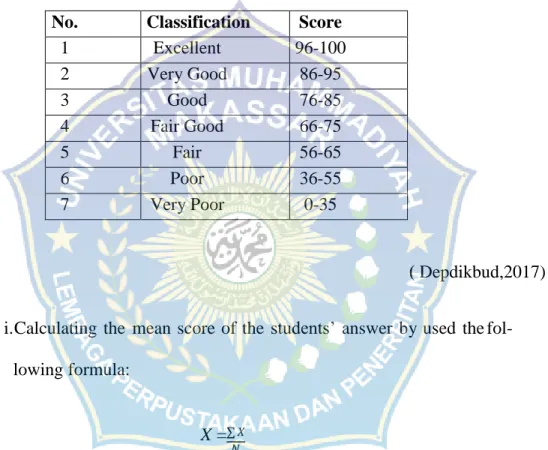
32 2.Classification of scores obtained by students after con- ducting pre- test and post-test. In this case it used the clas- sification of scores from the depdikbud which was convert- ed used a scale of 1-10.
Table 3.1 classification score
No. Classification Score
1 Excellent 96-100
2 Very Good 86-95
3 Good 76-85
4 Fair Good 66-75
5 Fair 56-65
36-55
6 Poor 36-55
7 Very Poor 0-35
( Depdikbud,2017) i. Calculating the mean score of the students’ answer by used the fol-
lowing formula:
X =∑𝑋
𝑁
Note:
X = mean score
X = the sum of all scores N= the total number of students
(Gay, 1981)
33
ii. To find students improvement by used the formula p =𝑥2˗𝑥1
𝑥1 × 100
Note:
P = the percentage of students’ improvement
X1= The mean score of post – test
X2= The mean score of pre- test( Gay,20016
iii. Hypothesis test
This test was carried out to prove that the hypothesis ( H1) and null hypothesis ( HO) are proposed in this study which:
H1: There is a significant increase in student reading ability us- ing team-based-project.
H0: There is no significant incrrease in student reading abilitty us- ing team- based-project.
Then the formula will be used:
34 Where :
D = ∑D N Notation
T =Test of significant
D = The mean score of total deviation
∑D = Sum of total difference
∑𝐷2 = Square of the sum of total score difference
N = The total of the subject 1 = a consonant number (Gay, 2006)
CHAPTER IV
FINDING AND DISCUSSION A. Findings
In this finding explain the result of the research such as students’ score pre-test and post-test. The improvement of students’ reading ability can be see in the following table:
1. The improvement of the students reading ability related supporting idea and main idea:
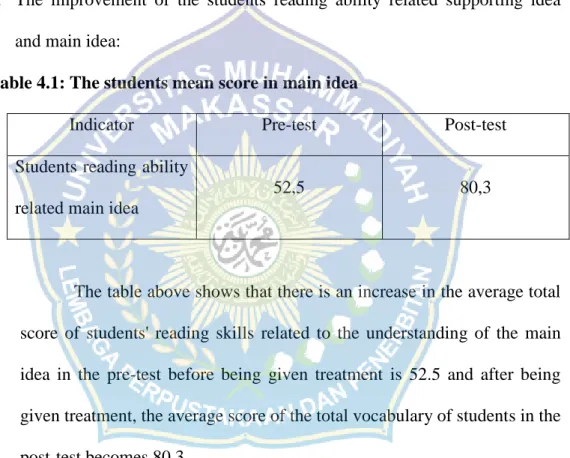
Table 4.1: The students mean score in main idea
Indicator Pre-test Post-test
Students reading ability related main idea
52,5 80,3
The table above shows that there is an increase in the average total score of students' reading skills related to the understanding of the main idea in the pre-test before being given treatment is 52.5 and after being given treatment, the average score of the total vocabulary of students in the post-test becomes 80.3 .
36
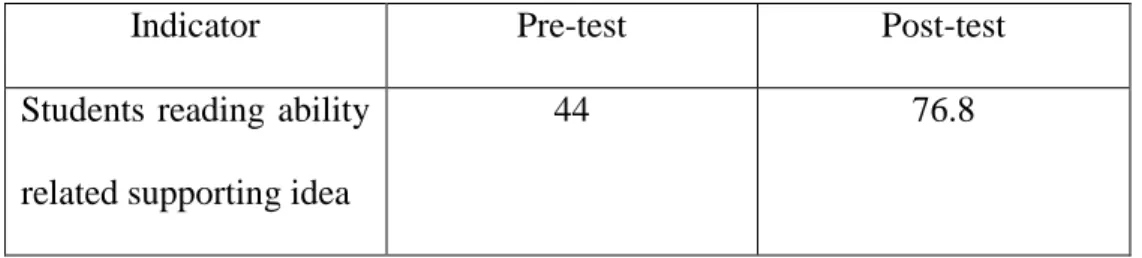
Table 4.2: The students mean score in supporting idea
Indicator Pre-test Post-test
Students reading ability related supporting idea
44 76.8
The table above shows that there is an increase in the total average score of students' reading skills related to understanding of supporting ideas in the pre-test before being given treatment is 44 and after being given treatment, the average score of the total vocabulary of students in the post-test becomes 76.8 .
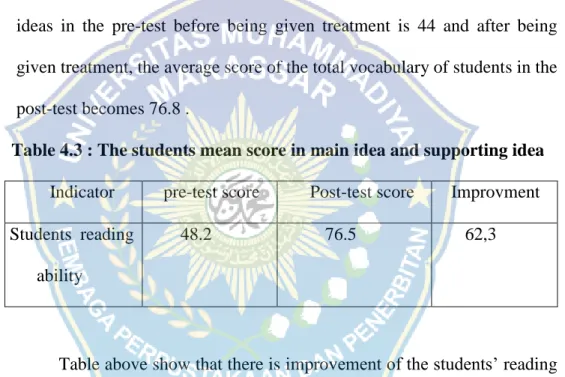
Table 4.3 : The students mean score in main idea and supporting idea Indicator pre-test score Post-test score Improvment Students reading
ability
48.2 76.5 62,3
Table above show that there is improvement of the students’ reading ability totally mean scorein pre-test before gave treatments was 48,2 and af- ter gave treatments students’ vocabulary totally mean score in post-test be- came 76,5. Therefore, it could be summarized that students’ reading ability was improve became 62,3 %.
37
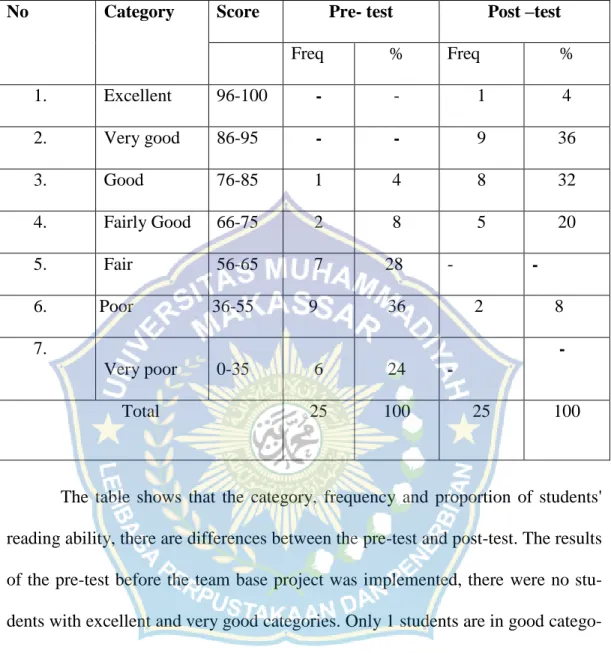
Table 4.4. The students’ all score category
No Category Score Pre- test Post –test
Freq % Freq %
1. Excellent 96-100 - - 1 4
2. Very good 86-95 - - 9 36
3. Good 76-85 1 4 8 32
4. Fairly Good 66-75 2 8 5 20
5. Fair 56-65 7 28 - -
6. Poor 36-55 9 36 2 8 7.
Very poor 0-35 6 24 -
-
Total 25 100 25 100
The table shows that the category, frequency and proportion of students' reading ability, there are differences between the pre-test and post-test. The results of the pre-test before the team base project was implemented, there were no stu- dents with excellent and very good categories. Only 1 students are in good catego- ry, 2 students are in fairly good category and 7 students are in fair category and 9 are in poor category and 6 students are in very poor category.
The post-test results after the team-based project method was applied showed that there were only 2 students in poor category. Only 1 student in the excellent category, 9 students in the very good category, 8 students in the good category and 5 students in the fairly good category.
38
Chart 4.1. The result of The Students’ Pre-test in Main Idea
Based on table 4.5 above, it shows that the student's score before used the team based project method in improving students' reading ability related to main ideas was 52.5 and after used the team based project method the student's score became 80.36.
0 10 20 30 40 50 60 70 80 90
pre-test post-test
39
Chart 4.2: The result of The Students’ Pre-test in supporting idea
Based on table 4.6 above, it shows that the student's score before used the team based project method in improving students' reading ability related to supporting idea was 49.4 and after used the team based project method the student's score became 70.
0 10 20 30 40 50 60 70 80 90
Pre-Test Post-Test
40
Chart 4.3: The result of The Students’ Pre-test and Post-test
Based on table 4.4 above, it shows the students' scores before and after used the team based project method in learning, this shows the students' scores in the pre-test there were 1 (4%) students who got "Good" scores, 2 (8%) students' scores got “Fairly Good”, 7 (28%) students got fair, 9 (36%) students got “poor” 6 (24%) students got “very poor”.
While for the post-test score it shows the students’ scores showed that in the post-test there were 1 (4%) students who “got excellent”, 9 (36%) students got very good, 8 (32%) students got “good”, 5 (20% ) students get fairly good". And only 2 (8%) students got “poor” category.
Based on the explanation above, the post-test students' reading compre- hension scores were better than the pre-test because the post-test scores were higher than the pre-test scores.
0 1 2 3 4 5 6 7 8 9 10
excellent very good good fairly good
fair poor verypoor
pre-test post test
41
Chart 4.4 The mean score students’ reading ability main idea
Based on table 4.4 above, it shows that the student's score before used the team based project method in improving students' reading ability related to main ideas was 52.5 and after used the team based project method the student's score became 80.36.
0 10 20 30 40 50 60 70 80 90
pre-test post-test
42
Chart 4.5 The mean score students’ reading ability supporting idea
Based on table 4.5 above, it shows that the student's score before used the team based project method in improving students' reading ability related to supporting idea was 44 and after used the team based project method the student's score became 76.8.
0 10 20 30 40 50 60 70 80 90
pre-test post-test
43
Chart 4.6 The mean score students’ reading ability
Chart 4.6 shows that the average pre-test score before the treatment of stu- dents was 49.7 while the post-test score after treatment was 80.4. This means that there is an increase in students' reading comprehension after used the team based project method.
B. Hypothesis testing
If the t-test value is greater than t-table, then the alternative hypothesis (H1) is accepted and the null hypothesis (H0) is rejected. This means that there is a significant difference in students' reading comprehension scores before and after being taught using the team based project method. If the t-test value is smaller than t-table, then the null hypothesis (H0) is accepted and the alternative hypothe- sis (H1) is rejected. This means that there is no significant difference in students' reading comprehension scores before and after being taught using the team based project method.
0 10 20 30 40 50 60 70 80 90
Mean score
pre-test post -test
44
To determine the level of significance between the two variables (pre-test and post-test), the researcher used t-test analysis at a significance level (p)
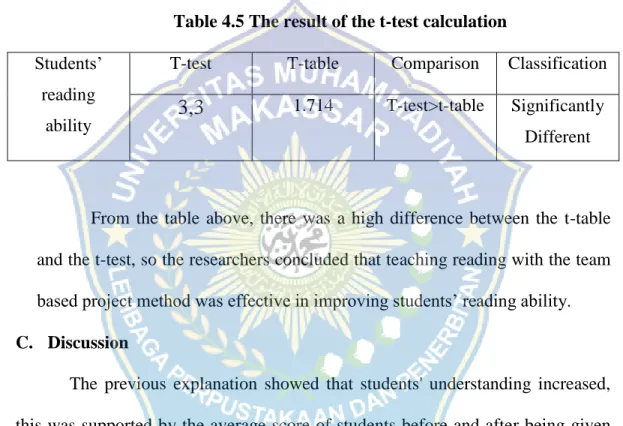
=0,05 with degrees of freedom (df) = N-k, where N = number of students (25 students) and k= The number of variable . The result of the t-table value ob- tained is 1.714. T-test statistic, the analysis for the independent sample is ap- plied. The following table shows the result of the t-test calculation.
Table 4.5 The result of the t-test calculation Students’
reading ability
T-test T-table Comparison Classification
3,3
1.714 T-test>t-table Significantly DifferentFrom the table above, there was a high difference between the t-table and the t-test, so the researchers concluded that teaching reading with the team based project method was effective in improving students’ reading ability.
C. Discussion
The previous explanation showed that students' understanding increased, this was supported by the average score of students before and after being given treatment using the team based project method. Based on the findings above, stu- dents' reading comprehension increased significantly after receiving treatment us- ing the team based project method. Students score data from pre-test and post-test.
The researcher analyzed the data by using the paired sample t-test.
The output of the paired sample statistic shows that the mean values of the pre-test and post-test. The output of the paired sample statistic shows that the mean pre-test score is 52.5 and the post-test mean is 80.36. It can be concluded
45
that students' reading readility has increased after using the team based project method it is also showed at table 4.3. The existing increasing in students' reading ability proves that the advantages of the team-based project proposed by Ahmad Dahlan (2015) where the team-based project can increase student learning motiva- tion, and encourage students' ability to do their learning in this case reading Eng- lish. Further explanation could be presented in the next session.
1. The Increase of Reading Ability through Team-Based-Project
In a study conducted by previous researchers, it was shown that there was an improvement in students' reading ability after getting treatment using the team- based-project method during the reading learning process. This is in accordance with the results of research from Yudi Arifani and Slamet Asari (2013) where the results show that project-based-team can improve students' reading skills. In addi- tion, the improvement in reading ability is also proven from the results of the hy- pothesis in table 4.5 which shows an increase in students' reading ability after us- ing the team-based project method.
By utilizing the understanding of the team-based-project itself, which ac- cording to Mayon and Irawati (2019) team-project-based teachers provide oppor- tunities for students to develop their abilities by discussing with friends in the group. In this case, in the treatment process, the students answered several ques- tions given by the researcher using the team-based project method. The students answered the questions with their peers which improved their focus and ability to learn to read English. For a more complete explanation of the indicators, it is ex- plained in the next session.
46
a. Main Idea
The first indicator that researchers research is the Main Idea of shared narra- tive reading texts. Initially, before doing the treatment, students had difficulty in determining the Main Idea in the reading text, this was proven from the results of the student's pre-test with an average total of 52.5. Then, after conducting treat- ment using a team-based project, researchers used the advantages of the method, namely according to Michaelsen & Parmalee (2009) who said that the implemen- tation of this method can increase student responsibility so that they can answer with their group about the Main Idea.
Then in addition to utilizing the exaggeration of the implementation of the Team-Based Project, researchers also use the advantages of this method which according to Ahmad Dahlan (2015) this method can improve student problem solving, so that in working on assignments with groups, students are required to think critically to get the Main Idea.
b. Supporting Idea
The next indicator that researchers research is Supporting Idea, where students look for Supporting Ideas in narrative reading texts. Before the treatment using the Team-Based Project method, the average student was 44, meaning that students still had difficulty in determining the Supporting Idea. Then, when the treatment is carried out by utilizing the advantages of the Team-Based Project method, namely the creation of a learning group in the learning process takes place to make the atmosphere in the classroom fun so that students and friends in their group can determine each other's Supporting Ideas in the reading text (Ahmad Dahlan,
47
2015).
So that after carrying out the treatment, researchers also carried out post-tests so that they got the average score of students, which was 76.8. This is also record- ed with the results of hypothesis tests which show that there are significant differ- ences before and after getting treatment.
48
CHAPTER V
CONCLUSION AND SUGGESTION
This chapter consist two parts. The first part presents some conclusion based on the data analysis and findings in the previous chapter. The second part present some suggestions based on the findings and conclusion of this research.
A. Conclusion
Based on the results of data analysis, the researcher found that the reading ability of class VIII A students of SMP Negeri 4 Bissappu could be improved through the team based project method. Researchers analyzed the data obtained from students with one class pre-test and post-test. The data consists of the results of the pre-test and post-test. These results prove that this method is effective to improve students' reading ability.
The used of the team based project method in teaching reading can improve students' reading ability because before and after being given treat- ment students compare, before being given treatment students have weak- nesses in reading ability and after being given treatment students have in- creased reading ability by used the team based project method.So, it means that this method is effectively used to improve students' reading ability.
The result of t-test showed that the t-test value was higher than t-table value (3,3>1.714). Therefore, it could be concluded that alternative
hypothesis (H1) was accepted and null hypothesis (H0) was rejected. It means that the use of the team-based project method in teaching reading can improve
49
students' reading ability.
In addition, another finding in this study is the average score of students in the pre-test is 49.7 which is classified as Poor and after the post-test is 80.4 which is classified as Good.
B. Suggestion
Based on the conclusions that have been written, the researcher would like to recommend the following suggestions:
1. For teachers
a. The teacher must know the students' difficulties in reading ability.
b. Teachers must use team based projects as a method in the learning pro- cess because using the team based project method in the teaching and learning process can motivate students in students' reading abilities.
c. The teacher should provide more reading exercises to students, so that they do not have difficulty doing the exercises again.
d. Teachers must be creative in creating new media and methods in the learning process.
2. For students
a. Students should pay attention to the teacher when he is giving lessons.
b. Students should increase their reading practice.
c. Students must be brave to express their ideas and share their opinions.