Genetic improvement of rice for rainfed lowland rice and drought-prone environment using integrated use of conventional and non-conventional breeding methods. Genetic improvement of rice for rainfed lowland rice and drought-prone environment using integrated use of conventional and non-conventional breeding methods. In the Philippines, rainfed lowland and upland areas are considered important rice growing systems.
The continued use of conventional breeding and the recent development of non-conventional approaches offer significant potential for improving crop growth and durable resistance to blast in montane and drought-prone rainfed lowland environments. For cultivar improvement, the continued use of conventional breeding and biotechnological tools such as the anther cultivation technique offers great potential to improve crop growth in rainfed lowland rice environments. The objective of this study is to develop rainfed lowland rice lines with SHZ-2 alleles for durable resistance to rice blast.
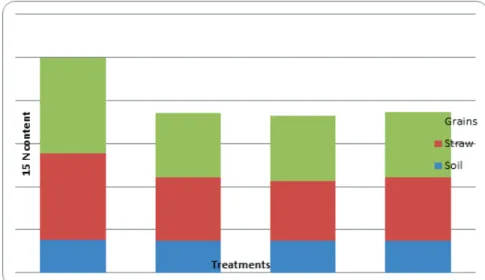
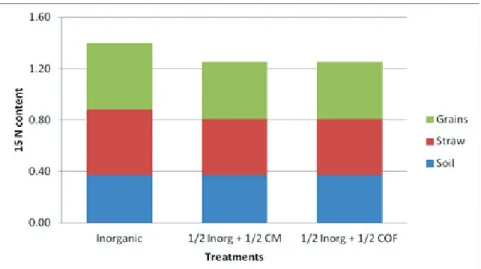
The fate of nitrogen from organic and inorganic fertilizers under irrigated lowland and upland conditions. Field experiments were conducted under irrigated lowland and upland rice conditions with the following treatments: T1= Control; T2= Inorganic Fertilizer (RR);. VVV yield is significantly higher than other treatments except plots treated with half the VVV.
While treatments applied with half of inorganic fertilizer achieved the same 15N content (%) in all samples.
Development Of Thermo-Sensitive Genetic Male Sterile (TGMS) Lines and TGMS-Based Two-Line Hybrid Rice
The aim of the study is to develop new and diverse TGMS lines through hybridization and selection. Research activities on the development of new improved and stable TGMS lines through hybridization and selection at both male sterile environment (MSE) and male fertile environment (MFE) were continued during the year. From the 33 F2 populations and pedigree nurseries grown during the dry season, 1336 plants (725 sterile and 608 fertile) were selected.
The sterile plants were lifted and brought to MFE (Tublay, Benguet) for further testing and to produce seeds, while fertile selections were evaluated as F3 lines at MSE during the 2013 wet season. Selected and brought to Majayjay during the 2013 wet season were 594 sterile plants from F2 and 390 plants from F4 to F7. Ten (10) male sterile lines selected in F6 and F7 were included in the TGMS observation nursery at MSE to evaluate the stability of sterility during the 2013 wet season.
At MSE (Los Baños), two composite TGMS populations, namely: TPP1 and TPP2, were established during the 2013 dry season for recurring selections. Meanwhile, a total of 765 plants were selected from the 571 F2 populations established in the 2013 wet season pedigree nursery at the MSE site for evaluation and selection. During the 2013 dry season, three composite populations, namely: PPI1, PPI2 and PPI3, were established for identification and selection of potential pollen parents.
For evaluation and identification of superior pollen parents in pedigree nurseries, a total of 832 F2 selections (300 during the dry and 532 during the wet season) and 450 in the F3 to F5 were established during the year. Four hundred and ten (410) new experimental hybrids (160 during the dry and 250 during the wet season) with sufficient seeds were produced during the year. Performance of the new hybrids produced during the dry season was evaluated in the hybrid observation nursery during the wet season.
F1 seeds of promising hybrids will be produced this wet season for further testing in the Hybrid Pre-Yield Trial (HPYT). Meanwhile, 160 experimental hybrids were evaluated at the Hybrid Observational Nursery (HON) during the wet season using Mestiso 19 and Mestiso 20 as hybrid checks and PSB Rc 82 and NSIC Rc 222 as inbred control varieties. In the hybrid preliminary yield trial (HPYT), 32 two-line hybrids were evaluated during the dry season.
Ten (10) promising hybrids during the dry and 8 during the wet season comprised the advance yield trial (AYT) conducted during the year. Based on analysis of accumulated data, all the TGMS lines showed complete spikelet sterility when exposed to an average temperature of 270C during the critical stage (25-14 days before heading).
Socioeconomic and Policy Research on Rice in Southern Luzon
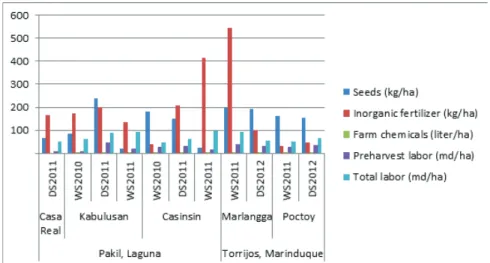
Based on the five-year temperature record, the safest time to establish F1 seed production in Los Banos, Laguna is the months of February through July, when the critical period or sensitive phase of the TGMS parent falls in the third week of April through and the third week of September. While 54% to 59% of farmers had completed the second application cycle and 0% to 3% of farmers had completed the third cycle, across all locations. A cost and yield analysis showed that 68% to 82% of the total cost of rice production was divided by cash costs in Pakil and 66% to 75% in Torrijos.
Among cash costs, fertilizers, seed bed/soil preparation, and harvest and post-harvest preparation accounted for the largest portion of cash costs in Pakil. Whereas in Torrijos, pre-harvest preparation, seed bed and soil preparations, and fertilizers consumed most of the cash costs. Average farm income per unit in Pakil ranged from a loss of P9.75 to a profit of P8.16 in all barangays and seasons.
Otherwise, the farmers incurred a loss of profit if their produce was sold to Manila due to the huge cost of transportation. Areas for future research: 1) integration of the .. biophysical-chemical and socio-economic characterization of rainfed lowland for a more holistic approach to this research and 2) impact assessment of study areas with baseline information and pilot experiments conducted to measure the effectiveness of the technologies. Farmers can grow rice through traditional agricultural practices using indigenous traditional rice cultivars, also coined as farmer's specialty rice.
A rice variety breeding program is essential to improve its quality by using existing traditional rice varieties known as specialty rice by farmers due to their special characteristics such as aromatic, soft to medium cooked rice and with good physical properties such as translucent, white, well ground and long grain, among others. Baseline socio-economic surveys of households and millers were conducted to present the rice paddy supply chain, assessed. The average land holding of all respondent farmers was from 0.5 ha to 1.2 ha in all areas (Table 4).
In Cavite, most farmers were beneficiaries of the Certificate of Land Ownership (CLOA) issued by the Department of Agrarian Reform through the Land Bank of the Philippines. Farmers' specialty rice varieties grown by farmer-respondent across all sites are shown in Table 5. Across all sites, average milling recovery for palay was 57% and 46% for high and low grades, respectively.

Research, development and promotion of Location- Specific Technologies (LST) for Southern Luzon, Regions IV
In addition to this event, PhilRice also organized the launch of Rice Mixed Day and the presentation of Rice Ambassadress, Ms. The NYR dance and poster-making competitions were held as part of the Ceremonial Rice Harvesting program aimed at increasing students' knowledge and awareness of rice and other rice-related products and information. Finally, the expansion of the rice garden project includes the establishment of “Palayan sa Paaralan” in 9 Manila elementary and high schools that have adopted “mini rice garden”.
Integration and diversification utilize and maximize the use of local resources, in this process, farmers are skilled and empowered to determine and adopt agricultural technologies/. The Mangyans of Mindoro are the IP of Mangyans scattered in the islands who are in acute need of timely government assistance and intervention to improve their socio-economic conditions and address their needs and plights. For the past years, PhilRice, from the RSO, saturated some of the areas in Mindoro Occidental.
Daytoy ti mangpalaka iti pannakaorganisar dagiti makipaset iti IP Palayamanan ken iseserrek iti komunidad, ken mangipasigurado iti tarigagay ti IP a mangadaptar iti sistema ti Palayamanan. Ti teknolohia ti Palayamanan ket mangtaming iti adu a kasapulan a panagbalbaliw iti biag dagiti IP. Iti umuna a kuarter ti proyekto ket tinabunuan ti 70 a persona nga addaan iti 50 a Mangyan ken 20 a Tagalog iti Sitio Bagong Baryo ken 47 a Mangyan IP iti Sitio Pambuhan.
Yields were affected by the season, less amount of water supply in the area and pest incidence. FGD, data collection and monitoring with the FFS in the area was done to ensure the success of the project. Pechay, radish, sitao and ampalaya were some of the vegetables they plant in their respective areas.
Some of the formulated recommendations of the LST highlights were as follows: use of 40 kg of certified seeds; use of high quality/high yielding varieties; use of a 400 m2 large flower bed; plant 2-3 seedlings / hill; suitable planting distance; the use of a straight type of planting; the use of organic materials for the preparation of the seed bed; use of organic fertilizer for basal application; integrated pest management; correct handling of fertilizers; water management; use of agricultural machinery; the right time to harvest; use of LCC/MOET. The target respondents were all participating farmers (KK) in the selected location – 33 KK from Brgy. Based on interviews with farmers, data on their management practices, number of key inspections achieved and actual yields were also obtained and analyzed to help assess the best technology and practices in a particular location.
Based on the survey, the use of farm machinery (74.14%) and the right time of harvest (71.21%) generally led to the LST technologies used since the participating farmers (PFs) claimed that the presence of harvest machinery the acceptance helped since hand tractors were owned by 72% of the 64 PFs. Although manual harvesting was applied, there was no shortage of laborers and better scheduling of thresher contributed to the high acceptance of the said recommendation.