This may have been a consequence of the limited knowledge about different contraceptive methods (Bongaarts and Johansson, 2002). According to the UNDP (2004), only 10% of the sexually active population in sub-Saharan Africa uses a contraceptive method.
Why focus on young people?
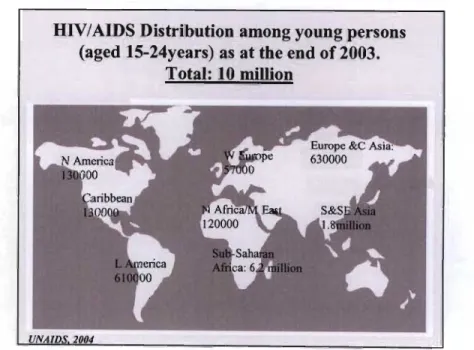
Young people make up a significant proportion (ten million) of the world's population living with HIV/AIDS. They represent 28% of all adults (between 15-49 years old) living with HIV/AIDS in the world.
Justification
Still others have examined sexual and reproductive health problems by specific types of residential areas. Previous research into sexual and reproductive health behaviors and practices among young people has been based on a single approach: either the qualitative or quantitative method.
Aims and objectives
For example, some samples were limited to only rural youth (Harrison et al., 2001 and Jackson and Harrison, 1999), while others focused only on urban youth (Mfono, 1998 and Richter, 1996).
Organisation of dissertation
Precontemplation: Refers to the stage where an individual has a problem (whether they are aware of it or not) but has no intention of solving it. Measure: Refers to the degree to which an individual has been able to maintain consistent behavior change for less than six months.
Theory of Reasoned Action
These attitudes are determined by the individual's beliefs about the likelihood and evaluation of the consequences of performing a certain behavior (Azjen and Fishbein 1980). The theory of reasoned action provides a framework to which each of the above variables relate.
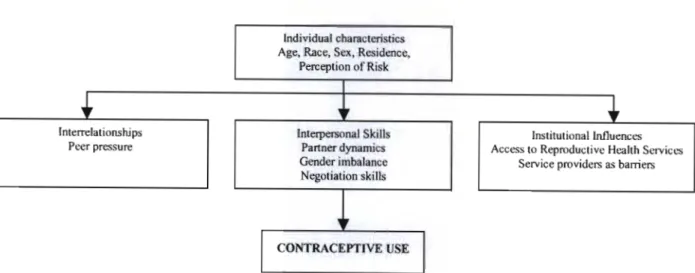
Proposed conceptual framework
Contraception is a woman's responsibility
Recent research has confirmed that, in general, young men believe that purchasing contraceptives and using a contraceptive method to prevent unplanned pregnancy is the responsibility of women (Mfono, 1998; Hulton et al., 2000; Maharaj, 2001 and Nsioka, 2001). Many boys had a child as a means of improving their status, and a man's desire to have a child appears to be a more influential factor than the desire to prevent pregnancy (Hulton et al., 2000).
Barriers to contraceptive use
An "ambivalent" attitude towards pregnancy due to their perception of the risk of HIV infection. In her research among South African youth, Varga (1999) found an "acute" awareness of the presence of HIV in their communities, and this is common. She found that regardless of respondents' race, gender, or educational background, they did not believe HIV/AIDS would pose a threat to their own lives.
According to this study, two-thirds of respondents expressed a desire to change their behavior to reduce the risk of HIV infection. The increase in awareness about the prevalence of HIV infection is now becoming an important factor when considering whether or not to become pregnant. According to Akwara et al. 2003), people in remote areas may not be aware of the risk of unprotected sex because public awareness campaigns do not reach them.
Conclusion
In a study in Kenya, Nsioka (2001) found that rural men were less likely to use modem contraception compared to those living in urban areas. Another reason why people in rural areas may be less likely to use contraception may be their lack of knowledge about the different types of contraceptive methods, their uses and effects. Issues regarding the lack of easy access to contraception have also contributed to a lower prevalence of contraceptive users in non-urban areas.
Introduction
Contextual Background
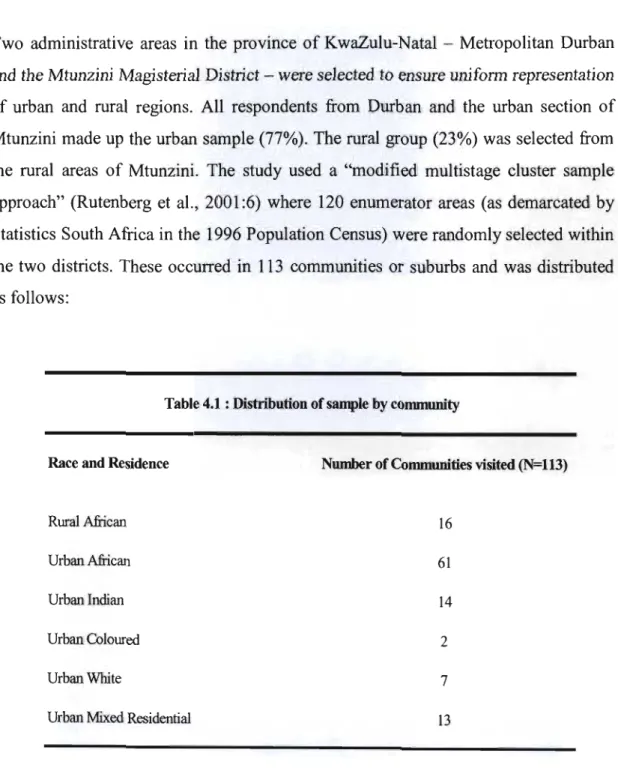
The province of KwaZulu-Natal has the largest number of youth with over 1.9 million in the 14-22 age group in 2004 (STATSSA, 2004b). A comparison of nine provinces in South Africa shows that KwaZulu-Natal has the highest HIV prevalence (SAHR, 2004). The attached map shows the province of KwaZulu-Natal and highlights the two areas (e.g. eThekwini and Mtunzini) from which the sample for this study was drawn.
The findings of this research are based on the first round of the 'Transitions to Adulthood in the Context of AIDS in South Africa' study which was carried out in KwaZulu-Natal in 1999. This is a research project carried out by the School of Development Studies. at the University of Natal, Durban; Project Horizons; Population Council Policy Research Department; A focus on young adults and the MEASURE/Evaluation Project of Tulane University in New Orleans. Part of the survey also contained information on sexual and reproductive health indicators, making it a good source of data for this type of study.
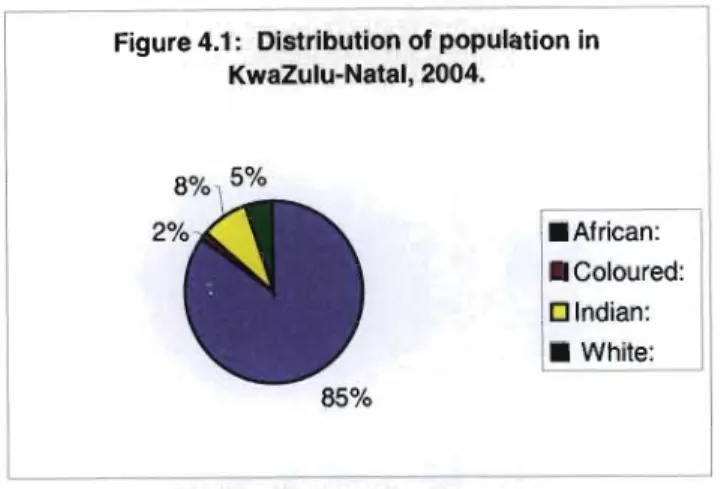
KwaZulu-Natal
Map showing e Thekwini Unicity and Mtunzini magisterial district
Focus Group Discussions
From the anthropological perspective of anthropologists, qualitative researchers attempt to study human action from the perspective of the social actors themselves. The primary goal of the qualitative approach is to describe and understand rather than explain human behavior. In many ways, the focus groups selected for this study served as a microcosm of the processes underlying young people's sexual and reproductive health choices.
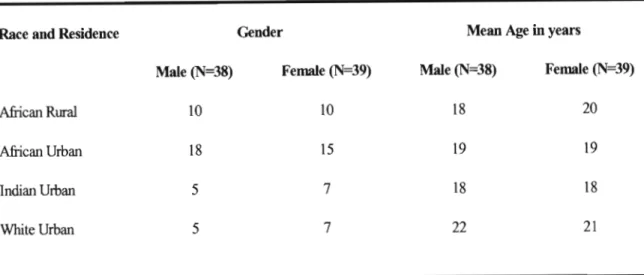
The average age of focus group participants was 19 years, with an average education level of grade 10 or standard 8. One of the most important strategies in qualitative research is the importance of gaining trust and building rapport with the focus groups . Most were currently engaged in post-enrollment activities at the time of the focus group discussions.
Method of Data Analysis: Qualitative Findings
The questions that were selected for analysis in this research report aimed to understand the sexual and reproductive health choices of young people. This included clarifying the concepts and terminology they used, their knowledge, attitudes and perceptions of sexual and reproductive health risks, the timing and motivation of their first and subsequent sexual encounters, and strategies for dealing with sexually transmitted infections and pregnancies. teenagers (sometimes unwanted).
Triangulation
Summary
Introduction
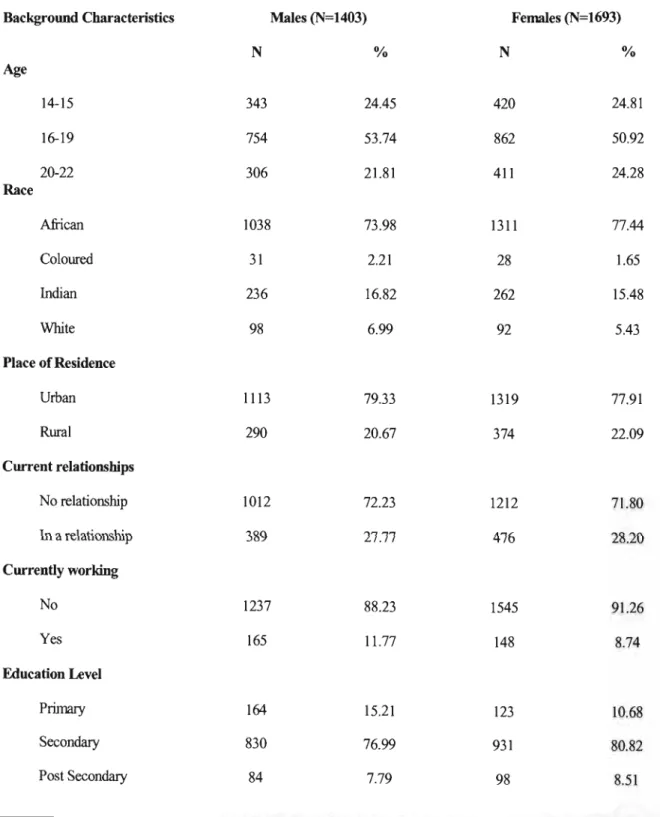
Socio-demographic characteristics of respondents
More women than men reported that they were already parents, although some of them (about 11%) could not remember the age at which they had their first child. According to Mahy and Gupta (2002), much of the high fertility levels in sub-Saharan Africa can be attributed to young age at first sex, young age at first union and young age at first birth. This current study does not examine age at first union, but does analyze age at first birth.
Using retrospective data collected from young men and women in this study, age at first sex was determined. The mean and median age of onset of sexual activity was 16 years for all groups except for white men, which was 18 years. With regard to age of partner at sexual debut, women were more likely to have an older partner, while men tended to choose partners younger than themselves (data not shown).
Attitudes toward family planning
- Perceived risk of pregnancy
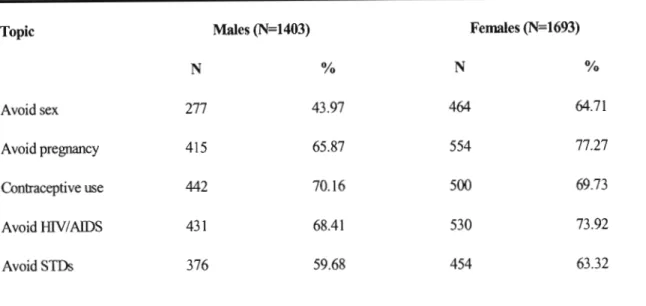
Women were more likely to report that the choice to use contraception was a result of their own decision. However, it is worth noting that women were more likely than men to report that they made the decision to use contraception themselves. An analysis of contraceptive use by sociodemographic background characteristics revealed that urban youth were more likely to use contraception than rural youth, and use appears to increase with age (see Table 5.8).
Regarding relationship status, multivariate logistic regression showed that both men and women who were in a stable relationship were more likely to use contraception than those who were single. Both men and women who were in a stable relationship were found to be more likely to use contraception than their single counterparts. Somewhat surprising was the finding that young rural women were more likely than men to broach the subject of contraceptive use, suggesting their desire to limit or delay childbearing.

Introduction
In the focus group discussions it became clear that some parents (especially those of Indian origin) did not approve of their offspring's choice of marriage partners. From the focus group discussions (except for the urban White group), it appeared that peer pressure played a major role in the lives of teenagers in almost all aspects of their social lives. Some young people encouraged their friends to engage in unprotected sex in order to be accepted as 'sluts'.
Condoms were more commonly used in casual relationships or with partners who were believed to be "asleep". Although interviewed separately, both white men and women strongly believed that the only source of good quality condoms was available from chemists, as shown in the following excerpt. One female participant explained that it is difficult to bring up the topic of condom use “in the heat of the moment.”
Summary
This chapter discusses the results found in both the qualitative and quantitative components of this study. This study's findings regarding relationship status indicate that couples who were in a committed relationship were more likely to practice safe sex. The results of this study show that two-thirds of the young mothers interviewed had their first child between the ages of 15 and 19.
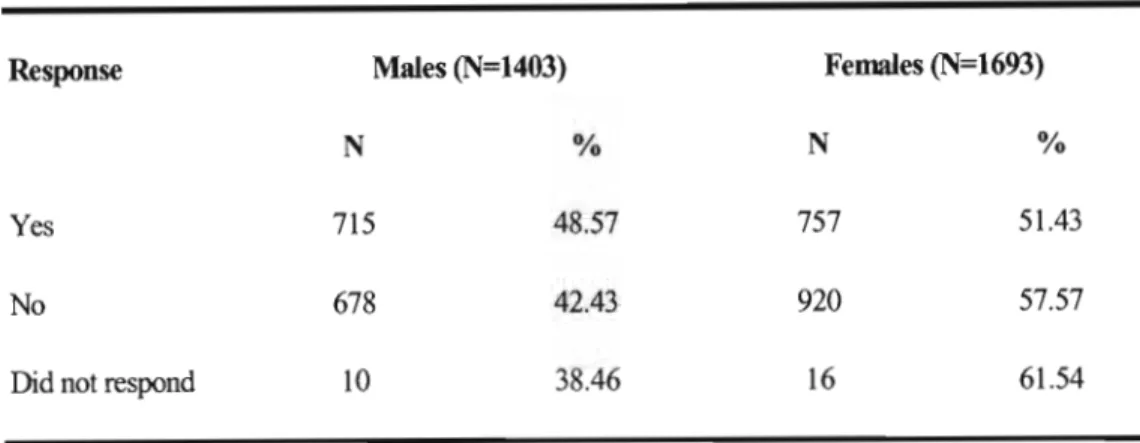
This study found that by their 16th birthday, 70% of Coloured, 63% of African, 51% of Indian and 45% of White men in this study sample had achieved first sexual intercourse. Less than half (47%) of the youth surveyed in this study reported being sexually active; most of them were women and belonged to the 20th-22nd centuries. The apparent low disclosure of sexual activity in this study can be explained by the findings of Mahy and Gupta (2002:8), who stated that "some researchers expressed concern that respondents, especially teenagers, might be uncomfortable with the topic of sexual activity." Because youth may have been embarrassed to provide feedback on this question, it is possible that this section was under-reported.
Knowledge of family planning
34;Future Trends in Contraceptive Prevalence and Method Mix in the Developing World." Studies in Family Planning. 34;Sexual Activity and Contraceptive Use: Components of the Decision-Making Process." Studies in Family Planning. 34; Premarital Fertility in Rural South Africa: A Challenge to Existing Population Policy." Studies in Family Planning.
34; Perceptions of Sexual Activity Risks and Their Consequences Among Ugandan Adolescents." Family Planning Studies. 34; Factors Determining Prevalence of Male Contraceptive Method Use." Family planning studies. 34; Life Beyond Clinics: Conversations and Contraception in Nyanza Province, Kenya.” Family Planning Studies.